The Ugly Australians, And Other Miners, Leaving Health and Environmental Damage in Namibia
[Paladin’s] Langer Heinrich Uranium mine[Namibia] …
Craton Mining and Exploration [copper] is a subsidiary of Australian-based International Base Metals…..
Rio Tinto owns Rössing Uranium Mine…
[Australian] Deep Yellow Limited (DYL) the Aussinanis uranium project.
Aussies in toxic trail By Shinovene Immanuel, Ndanki Kahiurika 10 July 15 http://www.namibian.com.na/indexx.php?id=28936&page_type=story_detail&category_id=1#sthash.TJSxEgQV.P3bN2nwk.uxfs&st_refDomain=blogs.icerocket.com&st_refQuery=/search?tab=buzz&fr=h&q=uranium+Australia NAMIBIA, a mining frontier for decades, continues to struggle with mining companies which subject workers to dangerous working conditions.
TROUBLING
What ICIJ uncovered and pieced together suggests a troubling track record on the part of Australian companies in the rush for Africa’s minerals, including practices that would be impermissible, even unthinkable, in Australia and other parts of the developed world.
ICIJ found that, at the end of 2014, there were more than 150 Australian-listed active mining companies with recorded properties in Africa. Other estimates, using different criteria, put the number even higher.
Australian companies have 49 mining licences in Namibia; two of those companies are operational.
Even though Australian firms run successful mining companies which contribute to Namibia’s economy and workplace conditions have improved compared to two decades ago, there are still questions about the safety of workers.
Thousands of people, including village chiefs, former employees, human rights defenders and government agencies across Africa have taken Australian companies, their subsidiaries and their contractors to court for alleged negligence, unfair dismissal and eviction or pollution, according to court submissions and judgements unearthed from more than a dozen countries.
Australian uranium mining company Paladin accused of ribbing off impoverished Malawi

 Australian miner accused of dodging tax in world’s poorest country, The Age, July 11, 2015 –Heath Aston Political reporter Tax avoidance tactics of multinational companies have angered Australians, but an Australian mining firm used such methods in Malawi. Tax avoidance tactics of multinational companies have angered the public and placed pressure on the Abbott government to prevent profits being exported offshore.
But an Australian uranium miner is defending the use of identical methods to reduce its tax bill in the world’s poorest country, Malawi.
Between 2009 and 2014, Paladin Energy moved $US183 million out of Malawi to a holding company in the Netherlands and then on to Australia.
A 15-page report by London-based ActionAid has found the Dutch transfers and a special royalties deal – in which Malawi’s mining minister agreed to drop the initial tax rate applied to the uranium mine from 5 per cent to 1.5 per cent – have cost the Malawi public $US43 million.
In Africa’s poorest nation, where per capita GDP is just $US226 a year and life expectancy 55, that money could provide the equivalent of 39,000 new teachers or 17,000 nurses, according to the aid group……..
Paladin’s tax-free transfers to the Netherlands were a combination of management fees and interest payments on loans initiated in Australia. The company loaded its African subsidiary up with huge debts, leaving the Kayelekera uranium mine in northern Malawi with an 80:20 debt to equity ratio – a financing structure known as “thin capitalisation”.
The Dutch structure allowed Paladin to avoid paying a 15 per cent withholding tax to the Malawi government due to a tax treaty between Malawi and the Netherlands which expired in 2014, saving the company $US7.3 million. Paladin closed the mine in February 2014, citing a “sustained low uranium price”.
ActionAid has accused the company of “treaty shopping” and shortchanging the Malawi people. The country’s nursing ranks have the equivalent of four nurses to every 100 in Australia, despite 10 per cent of Malawi’s population being infected with HIV/AIDS……..http://www.theage.com.au/federal-politics/political-news/australian-miner-accused-of-dodging-tax-in-worlds-poorest-country-20150710-gi6uzv.html
Russia’s nuclear industry to “educate” South Africans
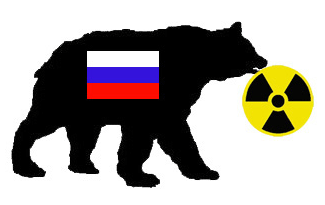
 Nuclear deal – 200 South Africans to be “educated” during excursions to Russia http://www.biznews.com/briefs/2015/07/09/nuclear-deal-200-south-africans-to-be-educated-during-excursions-to-russia/ ALEC HOGG JULY 9, 2015 Cape Town – The Department of Energy announced in a statement on Thursday that it has signed two memoranda of understanding with Russian state nuclear energy corporation Rosatom at the 7th summit of the Brics (Brazil, Russia, India, China and South Africa) countries in the Russian city of Ufa.
According to the first document, Russia and South Africa aim to implement several joint projects for education in the nuclear power industry.
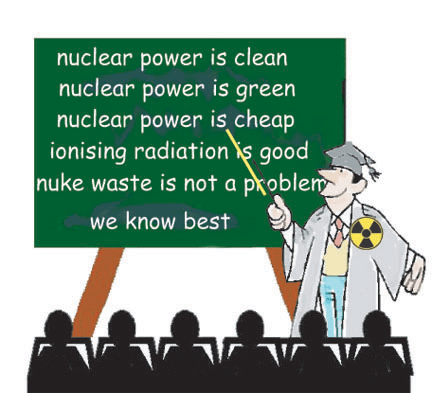
The countries will cooperate to provide training for five categories of specialists for the South African nuclear industry: nuclear power plant personnel, engineers and construction workers, staff for operations not related to the power industry, personnel for nuclear infrastructure, students and teachers.
There will also be education programmes for 200 South African candidates at Russian universities and educational organisations. This memorandum stipulates the development of educational materials and scientific literature on nuclear power, student exchange programmes for students of various levels of training, organisation of internships and summer courses, student competitions and teacher training.
The second memorandum signed in Ufa stipulates joint efforts of the parties to promote nuclear power in South Africa, increasing the awareness of local residents of modern nuclear technologies used in the power industry and in other industries, and ensuring public acceptance of nuclear power.
In particular, the parties have agreed to work out a plan for the implementation of a joint communication programme to be launched in South Africa. This will involve the organisation of round tables and other events aimed at promoting nuclear power and modern nuclear technologies.
A nuclear energy information centre in South Africa is also under consideration. “The parties seek to exchange information and best practices in the nuclear industry by organising working visits and international conferences and exhibitions,” said the Department of Energy. Source: http://www.fin24.com/Economy/Rosatom-seeks-to-educate-SA-on-nuclear-power-20150709
Nigeria’s Akwa Ibom State Leaders Caucus says NO to nuclear power
 Nigeria: Caucus Rejects Siting of Nuclear Plant in Akwa Ibom All Africa, By Idongesit Ashameri, 7 July 15
Uyo — The Akwa Ibom State Leaders Caucus has rejected plans by the Nigerian Atomic Energy Commission (NAEC) to site a Nuclear Power plant in Itu local Government Area of the state. The group attributed their rejection of the Nuclear Power plant to disastrous consequences that failure of nuclear plants had brought in other parts of the world.
The leaders’ caucus questioned why Nigeria, which they said had a perennial incompetence in matters of safety and security, could venture into such a risky project, while countries with known competences, like Germany, Italy, USA, Russia and Japan are shutting down such plants.
Community leaders in Nigeria oppose nuclear power facility
Nigeria: Community leaders oppose nuclear plant site, Star Africa, APA July 3, 2015 The Leaders Caucus of the Akwa Ibom State in south-eastern Nigeria has rejected plans by the Nigerian Atomic Energy Commission (NAEC) to site nuclear power plant in Itu Local Government Area of the state.
He wondered what gave Nigeria, where perennial incompetence in matters of safety and security has become legendary, the impetus to venture into such a risky project, while countries with known competences like Germany, Italy, US, Russia and Japan are shutting down such plants.
Okon said that gambling with such risky issue by Nigeria was a clear and deliberate invitation to disaster of monumental proportions.
Declaring Akwa Ibom as grossly unsuitable for such projects, the leaders noted that the location of nuclear plants all over the world is done far away from human habitation, noting that Akwa Ibom is small and compact, even as there is no distance across the state that is beyond 50km……….http://en.starafrica.com/news/nigeria-community-leaders-oppose-nuclear-plant-site.html
No to nuclear for Nigeria – already hit by the health toll from uranium mining
NGO warns FG That Setting up a nuclear power plant in Nigeria would be suicidal, FunGrade, 29 June 15
Mr Nnimmo Bassey, the Director, Health of Mother Earth Foundation (HOMEF), said setting up a nuclear plant in Nigeria would be suicidal given the high level of operational challenges it would face. Bassey said this in Abuja while presenting a paper titled: “Risks and deaths as workers generate wealth’’ organised by HOMEF’s Sustainability Academy on Health and the Extractive Sector Workers. The News Agency of Nigeria reports that the programme was sponsored by the UNDP and the Federal Ministry of Environment in collaboration with HOMEF. He said that the setting up of a nuclear plant was suicidal because of the high technical and environmental demand associated with handling radioactive materials. “Uranium and nuclear power plants are inseparable. ”
Nigeria has found it difficult to run simple hydroelectric and thermal power plants. “It would be suicidal to install nuclear power plants here,’’ Bassey said. The director said the proposal to site such a facility in Akwa Ibom would not be advisable because of the serious environmental implication. “And to think of locating one in Akwa Ibom State is nothing but adding insult to injury in an already highly polluted Niger Delta. “It will also be a time bomb set against the workers,’’ he said. Bassey said that the sustainability academy was aimed at highlighting the fact that workers and communities were at the frontlines of exposure to toxic chemicals that often result in fatalities. The director further said that more than 2.3 million workers worldwide had been exposed to work-related diseases or accidents annually. He said that more than one million extractive industries workers die annually of toxic chemical across the globe.
Clearly, South Africa can’t afford nuclear power
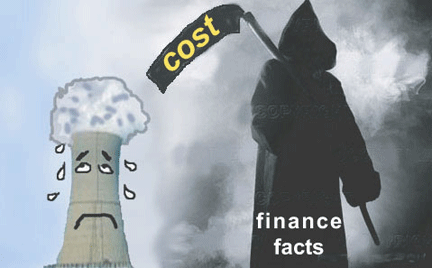 The South African government has said it will not go ahead with nuclear power if the expected construction cost is more than $6500/kW, equivalent to about R130bn per reactor. However, the latest cost estimates are about 25% higher than this. This means that if the South African government sticks to its promise, the tender will fail.
Why South Africa should steer clear of nuclear, By Steve Thomas, Professor of Energy Policy at University of Greenwich Business Tech By The Conversation June
21, 2015 It would be sensible to acknowledge that a nuclear programme is not viable for resolving South Africa’s energy crisis. Rather, the country should be focusing its attention on how to end electricity blackouts and speed up energy efficiency and renewable energy programmes.
Building new nuclear energy capability will cost the country billions of US dollars. It is doubtful that South Africa can afford this.
In addition, nuclear power entails a different but also serious set of risks to climate change. These include the risk of reactor accidents, the danger of weapons proliferation and the hazards of radioactive waste……
Price of nuclear
Africa’s largest privately owned solar plant, for Uganda
Uganda set for Africa’s largest privately owned solar plant, Business Day, BY MATT SMITH, JUNE 09 2015, DUBAI — Access Infra Africa, a Dubai-based company, will launch what it says will be Africa’s largest privately owned solar plant in Uganda this year, part of plans to develop electricity projects in 17 African countries, mainly based on renewable energy…….. http://www.bdlive.co.za/africa/africanbusiness/2015/06/09/uganda-set-for-africas-largest-privately-owned-solar-plant?utm_source=facebook&utm_medium=post&utm_term=Africa%20big%20solar&utm_campaign=Climate&__surl__=IgD8d&__ots__=1434878107303&__step__=1
Uranium promise turned to poverty for Dominionville, South Africa
Uranium mining town hopes long turned to dust, Mail & Guardian 05 DEC 2014 PHILLIP DE WET Dominionville residents expected a boom town when Shiva Uranium foretold promises of riches, but white poverty and black despair remain years later. The people of Dominionville in North West have seen it before, and those who were not around have heard the stories. The residents tell it among themselves like a sort of fairy tale – the pre-Disney kind, full of darkness and foreboding – warning against hope.
In 2006, it was Uranium One, they say, that sold the idea that riches would return to their town. In Canada and Europe, the company sold the story of the rich shafts – almost within sight of the residents – and they sold it well.
The people of Dominionville, more than half resigned to the idea that the tide would never turn their way again, read the articles about hundreds of millions of dollars being poured into the company, and dared to dream……
That was so many years ago that the signboards for the Shiva Uranium mines have been bleached almost illegible by the sun. As yet, the money has not materialised. Dominionville barely clings on, a place of white poverty and black despair……http://mg.co.za/article/2014-12-04-uranium-mining-towns-hopes-long-turned-to-dust
South Africa’s government continues in its historic underestimation of nuclear costs
Government’s nuclear cost muddle http://www.bdlive.co.za/opinion/letters/2015/06/03/letter-governments-nuclear-cost-muddle Steve Thomas, Professor of Energy Policy, Public Services International Research Unit, University of Greenwich JUNE 03 2015, THE SOUTH AFRICAN NUCLEAR ENERGY CORPORATION’S XOLISA MABHONGO CLAIMS THAT “SOUTH AFRICAN PROFESSIONALS DID NOT MAKE FOOLISH ASSUMPTIONS, DO INACCURATE FINANCIAL CALCULATIONS AND GO INTO A CONSTRUCTION PLAN WITHOUT HAVING ACCURATE PROJECTIONS OF THE OUTCOME. THIS WOULD HAVE BEEN IRRESPONSIBLE” (NUCLEAR BUILD WILL POWER ECONOMIC GROWTH, MAY 29).
History suggests otherwise. When the pebble bed programme for SA to develop its own reactor design was announced in 1998, Eskom claimed a commercial reactor could be in operation by 2004 at a construction cost of less than $1,000 per kilowatt of capacity.
By 2010, commercial deployment of the pebble bed was estimated by Eskom to be 20 years away and the estimated cost of a demonstration plant had increased nearly 30-fold.
In 2006, a tender for new nuclear plants from the world market was launched with the expectation that a plant could be bought for $2,500/kW. The lowest bid was 150% more and the tender was abandoned in 2008 because it could not be financed.
Only two years later, a new attempt to order nuclear plants was launched with the publication of the first Integrated Resource Plan for the electricity industry. The prices bid in 2008 were ignored and it was assumed the cost would be only $3,500/kW. A year later, in 2011, the government had to admit this figure was far too low and revised it up to about $5,000/kW, still well below the prices bid in 2008 and below prevailing international price levels.
There are only two explanations for this continued gross underestimation of costs. Either the government is choosing to mislead the public about the actual costs, or it is far too gullible to the claims of nuclear sales people. Neither explanation reflects well on the government.
The government has promised that if the bid prices were higher than $6,500/kW, the tender would be abandoned. Given that prevailing prices in the world are now about $8,000/kW, if the government keeps its promise, the tender being launched this year is doomed to failure. It would be useful for Energy Minister Tina Joemat-Pettersson to confirm now whether the promise still applies and, if it does not, how much the state is prepared to pay.
Anxiety in Malawi over Australian uranium miner Paladin’s pollution of Lake Malawi
“It’s shocking that Paladin has disposed of millions of tons of radioactive and chemically hazardous waste on a plateau with very negative geological and hydrogeological characteristics,”
On the shores of Malawi’s lake of stars, activists raise uranium fears, Guardian, Santorri Chamley, 3 June 15

When dead fish were washed ashore in northern Malawi, activists and residents looked to a nearby uranium mine for answers – the latest battle in a protracted conflict with Paladin, the mine’s Australian owners “……For many of the tens of thousands of people living in Karonga, a lakeside district in northern Malawi, life revolves around fishing. So when dead fish began to wash ashore, they were worried. Some blamed pollution from the nearby Kayelekera uranium mine, the country’s biggest foreign investment.
“People are fearful because there are a lot of fish dying in the lake, so people are suggesting that they are dying because of the discharge from the Kayelekera mine,” said Harry Hudson Mwanyembe, the chairman for health and environment on Karonga’s district council.
The Australian company that owns the mine, Paladin Energy Ltd, says it has complied with all its environmental obligations and routinely monitors aquatic life in the Sere River and elsewhere. It denies any responsibility for the dead fish but its operation in Kayelekera has been beset by controversy since it was openedby the late president Bingu wa Mutharika in 2009.
The disputes, legal battles and public concern over the mine go to the heart of what many call Africa’s resource curse. As one of the continent’s poorest countries – ranking 174 of 187 countries in the UN human development index – Malawi desperately needs foreign exchange, as well as employment and infrastructure. But its pursuit of extractive wealth has been stymied by a lack of adequate regulation and transparency as well as by corruption, activists say.
In Kayelekera, the pitfalls associated with launching a multi-million dollar enterprise, with government backing, in an area where people lack access to both information and power, are evident in the many rumours, claims and counter-claims surrounding the mine’s operations……
resident of Kayelekera, Philip Simbowe, said the government had sold the lives of Malawians for cash. Continue reading
Secrecy, and no costing known, in South Africa’s plans for nuclear power
Key details of SA’s nuclear procurement plan kept under wraps, BD Live, BY CAROL PATON, 02 JUNE 2015 KEY DETAILS OF SA’S NUCLEAR PROCUREMENT PROGRAMME REMAINED SECRET IN A PRESENTATION BY TOP DEPARTMENT OF ENERGY OFFICIALS, AS WELL ENERGY MINISTER TINA JOEMAT-PETTERSSON TO PARLIAMENT’S PORTFOLIO COMMITTEE ON ENERGY.

However, officials said the procurement would be completed by the end of the financial year when “a strategic partner or partners” would be chosen.
While the officials gave a lengthy motivation on the need for nuclear power and SA’s preparedness for the new nuclear energy build, details about the cost, the financing and the procurement process were not provided. Inter-governmental agreements that SA has signed with various countries on nuclear co-operation, as well as a damning report by the Integrated Nuclear Infrastructure Review on SA’s readiness also remained under wraps.
Ms Joemat-Pettersson is backed by President Jacob Zuma in her quest to build 9.6GW of nuclear generation capacity. However, there are several detractors of the plan, including the former National Planning Commission, opposition political parties and a wide array of civil society and human rights lobby groups……
DA MP Gordon MacKay said that with regard to the financing the government had got the cart before the horse.”It is strange that we are wanting to buy something that we don’t know the cost of and we don’t know how we will pay for,” he said.
Mr MacKay also criticised the secrecy of the report compiled in the Integrated Nuclear Infrastructure Review process.While reports for other countries are available on the website of the International Atomic Energy Agency, the report compiled on SA remains “classified” despite being completed two years ago.
Mr MacKay said it was believed that the report showed SA to be unprepared for the nuclear procurement in 14 of 19 benchmark areas.http://www.bdlive.co.za/business/energy/2015/06/02/key-details-of-sas-nuclear-procurement-plan-kept-under-wraps
Unlikely that South Africa could fund its secretive nuclear power project
Too soon’ to assess SA on funding nuclear BD Live BY CHARLOTTE MATHEWS, 03 JUNE 2015, MOSCOW — Assumptions could not yet be made about SA’s capacity to finance its planned 9,600MW of new nuclear power because a number of other issues needed to be decided first, said Kirill Komarov, Rosatom State Corporation’s first deputy general director for development and international business.
He was speaking on the sidelines of the Atomexpo 2015 conference on nuclear technology in Moscow this week, which has attracted 1,600 delegates from 48 countries. Although Rosatom has the major role, there are speakers and exhibitors from nuclear vendor countries including France, Russia and China……..
The South African government seeks a large nuclear procurement despite doubts about its affordability. The target is to have the first reactor in commission by 2023……..
Given SA’s other spending priorities and weak economic growth, it seemed unlikely it could fund this programme in full………Rosatom had arranged financing for nuclear stations it built in Belarus, Hungary and India,……. • Rosatom sponsored Charlotte Mathews’s visit to Russia http://www.bdlive.co.za/business/energy/2015/06/03/too-soon-to-assess-sa-on-funding-nuclear
South Africa’s nuclear company Eskom runs out of money for assessing environmental impact of nuclear energy
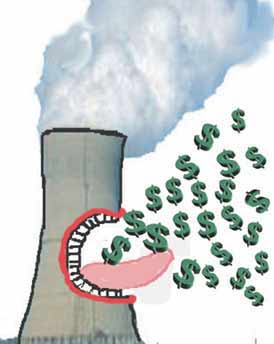 Eskom runs out of money for assessing environmental impact of nuclear energy SOUTH AFRICA enca.com 23 May 2015 JOHANNESBURG – Government says nuclear power in South Africa is going ahead. Earlier this week Energy Minister Tina Joematt-Peterson said that procurement deals would be signed with prospective partners by the end of 2015.
In the next ten years, government plans to introduce 9600MWs of nuclear energy.
But signing procurement deals is one half of the process. The other half of the process has stalled.
The second version of the environmental impact assessment (EIA) for the site proposed for Nuclear 1, at Thyspunt in the Eastern Cape is not complete.
During a question and answer session in Parliament in March Minister of Public Enterprises Lynne Brown in a written reply said that Eskom had run out of money to complete the report.
“It was put on hold during 2013/14 due to funding constraints in Eskom. In 2014, additional funds were approved and the finalisation of the Draft Environmental Impact Report (revision 2) was initiated,” noted the reply.
Eskom said this version of the report is due to be released to the public in May 2015 for comment but the Minister of Public Works says this has been put on hold due to the limited funding.
In the Nuclear Energy Policy of 2008, Eskom was designated as owner operator for nuclear plants in South Africa. The Department of Energy says this means that Eskom is responsible for applying and obtaining various permits including EIA and nuclear licenses.
Eskom has already spent R35 million on the report, which was funded by the income generated from tariffs.
“Eskom, in terms of the electricity regulations, is allowed to budget for and spend money on activities that are deemed prudent for the development of generation project,” noted the power utility in a statement.
However, in 2014 Eskom had to reprioritise its expenditure, “The funding of the EIA was cut in favour of other projects and activities deemed more essential in nature
Costs for the EIA’s specialist studies are now being managed on an individual study and activity level. Still outstanding is the biodiversity offset study, public participation meetings and some still need to go through the independent phase review.
Eskom says this final stage is vital, “This phase of independent review is necessary to ensure that all issues raised have been addressed in an independent and transparent manner.”
The Department Energy says even though it’s not directly involved in the EIA process it is watching Eskom’s progress on the issue……
- Others watching the process are the Thyspunt Alliance, a group opposing the development in the Eastern Cape.
Trudi Malan said they are working with their own experts to verify the findings of Eskom’s report, “The problem with the Eskom EIA is that their experts only spend three of four days on the site, when we actually need more information,” she said.
The first draft of the EIA was thrown out because incorrect methodology was used to do the assessment……..http://www.enca.com/south-africa/eskom-has-no-money-complete-environment-impact-assessment-nuclear-energy-project-site
Like Japan, South African govt is hiding the true costs of nuclear power
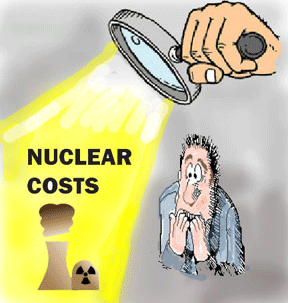 Government hiding nuclear power plant costs: Earthlife Africa http://mybroadband.co.za/news/energy/127160-government-hiding-nuclear-power-plant-costs-earthlife-africa.html
Nuclear critic Earthlife Africa argues that South Africa’s new power plants are another arms deal scandal waiting to happen By Staff Writer – May 24, 2015 The South African government has done studies on what it would cost to build the planned 6 or 8 nuclear power stations, but it is not releasing the information (Also see: ANC wants to use people’s retirement savings to bail out Eskom).
This is according to nuclear critic and Earthlife Africa project co-ordinator Tristen Taylor, the Sunday Times reported.
Taylor was responding to comments from deputy director general of the Department of Energy, Zizamele Mbambo, who said that it would be premature for government to release figures at this stage, as prices were still being negotiated.
Mbambo’s comments were surprising, Taylor said, adding that government is not releasing the studies because it knows the nuclear power plants are going to cost a lot of money. Continue reading
1 This Month



Shut down the radiation-damaged Heysham nuclear reactors now
To see nuclear-related stories in greater depth and intensity – go to https://nuclearinformation.wordpress.com

Say No to NASA’s Reckless Nuclear Reactor on the Moon
Say No to NASA’s Reckless Nuclear Reactor on the Moon
-
Archives
- October 2026 (256)
- September 2026 (339)
- August 2026 (330)
- July 2026 (355)
- June 2026 (287)
- May 2026 (306)
- April 2026 (356)
- March 2026 (251)
- February 2026 (267)
- January 2026 (308)
- December 2025 (358)
- November 2025 (359)
-
Categories
- 1
- 1 NUCLEAR ISSUES
- business and costs
- climate change
- culture and arts
- ENERGY
- environment
- health
- history
- indigenous issues
- Legal
- marketing of nuclear
- media
- opposition to nuclear
- PERSONAL STORIES
- politics
- politics international
- Religion and ethics
- safety
- secrets,lies and civil liberties
- spinbuster
- technology
- Uranium
- wastes
- weapons and war
- Women
- 2 WORLD
- ACTION
- AFRICA
- Atrocities
- AUSTRALIA
- Christina's notes
- Christina's themes
- culture and arts
- Events
- Fuk 2022
- Fuk 2023
- Fukushima 2017
- Fukushima 2018
- fukushima 2019
- Fukushima 2020
- Fukushima 2021
- general
- global warming
- Humour (God we need it)
- Nuclear
- RARE EARTHS
- Reference
- resources – print
- Resources -audiovicual
- Weekly Newsletter
- World
- World Nuclear
- YouTube
-
RSS
Entries RSS
Comments RSS


