66 years after France’s first nuclear test in Algeria, justice is still denied.

ICAN 13 Feb 26, https://www.icanw.org/66_years_after_first_french_nuclear_test_in_algeria
On 13 February 1960, France detonated a nuclear weapon over the deserts of Algeria. It was the first of what were eventually 17 nuclear detonations across two sites. Four of these took place while Algeria’s fight for independence was still raging. To this day, communities harmed by the development of France’s nuclear weapons arsenal are seeking recognition, compensation and redress.
ICAN joins other organisations in a joint statement on the anniversary of France’s first nuclear detonations in Algeria, “66 Years Since the First French Nuclear Explosion in Algeria … No Truth Without Transparency, No Justice Without Reparation”
The statement recognises efforts to address the legacy of harm from French nuclear testing through parliamentary debates in both Algeria and France. The explosions exposed nearby communities, soldiers and workers to dangerous levels of radiation and left a long-lasting toxic legacy in the environment.
In France, steps are being taken to revise the compensation framework in order to make it fairer for victims of the tests in Algeria and French Polynesia, alongside calls to strengthen transparency and accountability.
In Algeria, the People’s National Assembly addressed this issue for the first time in February 2025 through a parliamentary session that resulted in 13 recommendations calling for enhanced transparency, justice for nuclear victims, the transmission of memory, and the development of research on health and environmental impacts. ICAN France, the Observatoire des armaments and the Heinroch Böll stiftung published The Waste From French Nuclear Tests in Algeria: Radioactivity Under the Sand to provide more information on the environmental legacy of French testing in the region.
The statement further calls on the French government to provide sustained technical and financial support for health monitoring and environmental remediation programs. It calls on the Algerian government to protect public health in affected areas through a national program of monitoring, early screening, and medical care, and to ensure that populations receive accurate information in national and local languages, with particular attention to vulnerable groups. Today, people in Algeria are still living with cancers, contaminated lands, and intergenerational health problems linked to those tests.
France is urged to sign and both countries are encouraged to ratify the Treaty on the Prohibition of Nuclear Weapons (TPNW).
ICAN’s dedicated nuclear testing impacts website hosts stories of those who worked near the test sites in Algeria, as well as more detailed information on the tests carried out by France.
Collapsing Empire: US Bows To African Revolutionaries
Kit Klarenberg, Global Delinquents, Feb 09, 2026
On February 2nd, the BBC published an extraordinary report on how the Trump administration “has declared a stark policy shift” towards Burkina Faso, Mali and Niger, the governments of which have sought to eradicate all ties to Western imperial powers, and forged the Alliance of Sahel States (AES). The independent bloc is a revolutionary enterprise, with the prospect further countries will follow its members’ lead. Washington is under no illusions about the new geopolitical realities unfolding in Africa.
The British state broadcaster records how Nick Checker, State Department African Affairs chief, is due to visit Mali to convey US “respect” for the country’s “sovereignty”, and chart a “new course” in relations, moving “past policy missteps.” Checker will also express optimism about future collaboration with AES, “on shared security and economic interests.” This is an absolutely unprecedented development. After military coups deposed the elected presidents of all three countries 2020 – 2023, the trio became Western pariahs.
France and the US initially aimed to isolate and undermine the military governments, halting “cooperation” projects in numerous fields. Meanwhile, the Economic Community of West African States, a neocolonial union of which all three were members, first imposed severe sanctions on Burkina Faso, Mali, and Niger, before its combined armed forces prepared to outright invade the latter in summer 2023. The three countries didn’t budge, and in fact welcomed Western isolation, forging new international partnerships and strengthening their ties. ECOWAS military action never came to pass.
In January 2025, the trio seceded from the union and created AES. Western-funded, London-based Amani Africa branded the move “the most significant crisis in West Africa’s regional integration since the founding of ECOWAS in 1975,” claiming it dealt “a significant blow to African…cooperation architecture.” Meanwhile, Burkina Faso’s leader Capt Ibrahim Traoré has become a media hate figure. A disparaging May 2025 Financial Times profile slammed him as a cynical opportunist leading a “Russia-backed junta”, and his supporters a “cult”.
As the BBC unwittingly explains, such antipathy towards Traoré stems from establishing himself “as a standard-bearer in resisting ‘imperialism’ and ‘neocolonialism’.” Via “vigorous social media promotion, he has gained huge support for this stance and personal popularity among young people across the continent and beyond,” ever since seizing office in September 2022. Far from just talk, Traoré and his fellow AES “junta” leaders have systematically neutralised malign Western influence locally, while pursuing left-wing economic policies for the good of their populations.
France and the US have proven markedly powerless to hamper, let alone reverse, this seismic progress…………………………………………………………………………………………………………………………………………………………………………………………………………………………. https://www.kitklarenberg.com/p/collapsing-empire-us-bows-to-african
Somaliland: Longtime Zionist Colonisation Target
Kit Klarenberg, January 12, 2026 , https://www.kitklarenberg.com/p/somaliland-longtime-zionist-colonisation
On December 26th, the Zionist entity recognised Somaliland – historic Somalian territory that has claimed independence since 1991 – as a state, the first country in the world to do so. The move sparked widespread outcry and international condemnation, with the African Union demanding it be revoked. Undeterred, Israeli Foreign Minister Gideon Sa’ar visited Hargeisa on January 6th, signing a memorandum of understanding on cooperation in multiple areas, including ‘defence’. President Abdirahman Mohamed Abdullahi hailed the visit as a “historic milestone” in Somaliland’s quest for international legitimacy.
These developments are of significant concern to Somaliland’s neighbours throughout the Horn of Africa, with which the statelet has extremely strained relations, that have boiled over into all-out conflict on numerous occasions over decades. Fears are understandably widespread an Israeli – if not accompanying US – military presence locally will embolden breakaway authorities to intensify their belligerence, and seize contested territory claimed by both Hargeisa and Somalia. But grave anxieties are also felt throughout West Asia
Speculation has long-swirled Somaliland is viewed as a potential dumping ground for Gaza’s population by the US and Israel, to clear the way for further Zionist settlement and Palestine’s total erasure. Recognition appears to be a move in that monstrous direction. Moreover, in November 2025 the highly influential Tel Aviv-based Institute for National Security Studies published a paper explicitly stating Somaliland was “an ideal candidate” for “strategic” cooperation, in service of numerous geopolitical and military objectives. Chief among them, a “future campaign” against Yemen’s AnsarAllah.
Throughout the Gaza genocide, God’s Partisans have stood defiant in their defence of the Palestinian people. This has included direct strikes into the heart of the Zionist entity with drones and hypersonic missiles, and a blockade of the Red Sea. The latter effort endured for almost two years, causing immense disruption to global trade and crippling Israel’s ports, to the extent of outright closure. Along the way, AnsarAllah resoundingly defeated two grand Anglo-American air and naval efforts to regain control of the Sea.
The INSS paper noted Somaliland’s geographical position offers the Zionist entity “potential access to an operational area close to the conflict zone.” Put simply, an Israeli military presence in the would-be country would make striking AnsarAllah considerably easier in a future war. Entity military and political officials have for months made clear they have not jettisoned reveries of crushing the Resistance, despite the embarrassing failure of Tel Aviv’s 12-day-long broadside against Iran in June 2025.
Nonetheless, there may be other motivations underpinning Israel’s recognition of Somaliland – for the territory has long-been a subject of literally religious fascination for Zionists. In 1943, the Harrar Council was founded in New York to pursue the dream of Hermann Fuernberg, who fantasised for years about forging a “permanent home for a large Jewish population” in “Harrar” – land spanning Ethiopia and then-British Somaliland. World War II provided Fuernberg and his adherents an ideal opportunity to put their plan into action – or so they thought.
The Council had high hopes of success. First and foremost, Ethiopia’s Emperor Haile Selassie was supposedly a “descendant of the House of David”, and “successor of King Solomon.” The sense the organisation believed God was on their side is writ large in private communications with the monarch. Jewish scripture stating “the Diaspora will come to an end when Jews enter the Land of Cush” is repeatedly cited. The Council elaborated, “Cush is no other than Ethiopia, of which Harrar forms a part.”
‘Heroic Achievements’
The Harrar Council is largely forgotten today, the only vestiges of its existence correspondence between its representatives and British, Ethiopian, and US officials, and promotional pamphlets. The little-known material contains a number of extraordinary insights, not merely into the ultimately failed project itself, but Zionist settlement of Palestine more widely, and how the repulsive colonial ideology of Zionism grew from a niche political project into a dominant force within Judaism.
Some of the most incendiary excerpts can be found in a pamphlet authored by Hermann Fuernberg in early 1943, The Case Of European Jews. Repeated reference is made throughout to the urgent necessity of resolving the “Jewish problem” once World War II was over, and how the Holocaust had significantly strengthened arguments for the creation of a Jewish state. However, Fuernberg was critical of the Zionist colonial movement for its exclusive focus on Palestine as a destination:
“The Zionist program has as its goal the creation of a Jewish state in Palestine and the regeneration – cultural, political and religious – of the Jewish people within the framework of this Palestinian state. Their extensive program is so set they cannot deviate from it to take account of current events and urgent problems. Thus Zionism believes that every attempt at collective emigration which Jews may undertake on a non-Zionist basis may easily damage the Zionist cause and therefore the Zionists oppose all such attempts.”
Fuernberg noted how Adolf Hitler’s ascent to power in Germany “gave Zionism…a great increase of strength,” boosting “both legal and illegal” immigration to Palestine. However, this led to “increasing resistance…to Jewish immigration (infiltration)” locally – “not only from the Arab world.” In particular, ever-increasing Zionist demands for further territory, including lands belonging to nearby states such as Jordan, arrayed international opinion against the settler colonial project. In practical terms too, due to its size and existing population, Palestine was unable to “absorb” the world’s Jews in their entirety.
While hailing Zionism’s “many admirable and heroic achievements,” Fuernberg lamented how the ideology “has not been able to convert to its side the great mass of the Jewish people,” despite “40 years of propaganda”. While US Jews provided “the bulk of the funds” for Palestine’s colonisation, and “80% of the Jewish press is Zionist dominated,” Stateside Zionist organisations boasted meagre memberships, representing a tiny percentage of the world’s Jewish population. Nazi rule in Germany had failed to shift this needle significantly outside Europe.
In the same four-decade-long period, “Zionists were able to build a number of quasi-political organizations, which…assumed greater importance” for Jews in lieu of alternative movements opposing Hitler. Despite their putative clout though, “these organizations had never been capable of arousing even among their own adherents sufficient political understanding…so as to make the cry for a Jewish state the united demand of a whole people.” Vast sums reaped by these entities was provided out of “charity and piety”, not support for colonising Palestine.
‘Equitable Proportion’
So it was in early 1944, the Harrar Council, led by Fuernberg, submitted a detailed proposal to Ethiopia’s Emperor on establishing a “permanent home for a large Jewish population” in his country, and neighbouring Somaliland. In an accompanying letter to the US State Department, the organisation spelled out the perceived benefits of this land grab. For one, the proposed territory was “large enough to accommodate the very large number of Jews, whose emigration from Europe will become inevitable in the near future.”
Furthermore, “climatic conditions are such that fruit, grain and vegetables grown in Europe can also be grown in Harrar, thus assuring favorable living conditions for a people emanating from Central Europe.” Best of all, “the territory is very sparsely populated, so that the political and racial obstacles to a free development found elsewhere” – ie Palestine – “are not likely to arise.” Fuernberg stressed to US officials, “our project is in no way a rival to Palestine,” but instead complemented the settler colonial effort.
In submissions to Ethiopia’s Emperor, the Council made a number of bold pledges. All Jews settling in Harrar province would “swear allegiance to Your Majesty,” the territory’s “internal affairs” would be administered by an elected governing body and “governor-royal or viceroy,” English would be the colony’s official language, and the Emperor would “be entitled to an agreed equitable proportion of certain taxes to be levied…an income which will increase with the growth of the industrial and cultural life of the province.”
It was promised Harrar’s imported population would be “law-abiding, orderly and loyal citizens,” inspired by the “autonomy and the possibility of free development” granted by Ethiopian authorities. Palestine was cited as “an excellent example” of how Jews could “build up an agricultural and colonial settlement and to develop it successfully.” This would greatly “enrich” Ethiopia, offering “vast markets for the products of your land and stimulate the development of its natural resources.”
The Council signed off, “if a harassed and persecuted people can be turned into a happy and prosperous community, the whole of Ethiopia will thereby also be enriched and Your Majesty will rightly be regarded as one of the great benefactors of humanity.” In secret discussions with the State Department, the organisation bragged it had “reason to believe” the Emperor was “favorably inclined towards the Jewish people,” and there was “a fair probability that he will be willing to cooperate to a large extent.”
However, this was not to be. In July 1944, the Emperor’s subordinates politely informed the Council that while Ethiopia had eagerly “afforded asylum to many refugees from Europe,” authorities rejected any suggestion “an entire province” be given to “one group of refugees.” Resultantly, the Emperor demanded “the proposal…be now abandoned.” There is no indication the British or US governments were possessed of such opposition. Now, over 80 years later, the Harrar Council’s designs may be on the verge of becoming reality.
US Launches Christmas Strikes on Nigeria—the 9th Country Bombed by Trump
“By framing Nigeria’s conflict as an existential threat to Christians alone, Trump is not shining a spotlight on the victims,” she added. “Instead, he is weaponizing right-wing conspiracy theories to stoke Islamophobia, the same toxic playbook he used to fuel his ban on Muslims, and which left refugee families shattered at America’s borders.”
December 27, 2025 , By Brett Wilkins for Common Dreams
President Donald Trump—the self-described “most anti-war president in history”—has now ordered the bombing of more countries than any president in history as US forces carried out Christmas day strikes on what the White House claimed were Islamic State militants killing Christians in Nigeria.
“Tonight, at my direction as Commander in Chief, the United States launched a powerful and deadly strike against ISIS Terrorist Scum in Northwest Nigeria, who have been targeting and viciously killing, primarily, innocent Christians, at levels not seen for many years, and even Centuries!” Trump said Thursday in a post on his Truth Social network.
“I have previously warned these Terrorists that if they did not stop the slaughtering of Christians, there would be hell to pay, and tonight, there was,” the president continued. “The Department of War executed numerous perfect strikes, as only the United States is capable of doing.”
“Under my leadership, our Country will not allow Radical Islamic Terrorism to prosper,” Trump added. “May God Bless our Military, and MERRY CHRISTMAS to all, including the dead Terrorists, of which there will be many more if their slaughter of Christians continues.”
A US Department of Defense official speaking on condition of anonymity told the Associated Press that the United States worked with Nigeria to conduct the bombing, and that the government of Nigerian President Bola Tinubu—who is a Muslim—approved the attacks.
It was not immediately known how many people were killed or wounded in the strikes, or whether there are any civilian casualties.
The Nigerian Ministry of Foreign Affairs said that “terrorist violence in any form, whether directed at Christians, Muslims, or other communities, remains an affront to Nigeria’s values and to international peace and security.”
The US bombings followed a threat last month by Trump to attack Nigeria with “guns-a-blazing” if the country’s government did not curb attacks on Christians.
Northwestern Nigeria—including Sokoto, Zamfara, Katsina, and parts of Kaduna State—is suffering a complex security crisis, plagued by armed criminal groups, herder-farmer disputes, and Islamist militants including Islamic State West Africa Province (ISWAP/ISIS) and Boko Haram. Both Christians and Muslims have been attacked.
Since emerging in Borno State in 2009, Boko Haram has waged war on the Nigerian state—which it regards as apostate—not against any particular religious group. In fact, the majority of its victims have been Muslims.
“According to the Armed Conflict Location and Event Data Project, more Muslims than Christians have been targeted in recent years,” Chloe Atkinson recently wrote for Common Dreams. “Boko Haram has massacred worshipers in mosques, torched markets in Muslim-majority areas, and threatened their own coreligionists.”
“The crisis in Nigeria is not a holy war against Christianity.”
“It is true that Christian communities in the north-central regions have suffered unimaginable horrors as raids have left villages in ashes, children murdered in their beds, and churches reduced to rubble,” she said. “The April massacre in Zike and the June bloodbath in Yelwata are prime examples of the atrocities taking place in Nigeria.”
“The crisis in Nigeria is not a holy war against Christianity,” Atkinson continued. “Instead, it’s a devastating cocktail of poverty, climate-driven land disputes, and radical ideologies that prey on everyone and not just any distinct group.”
“By framing Nigeria’s conflict as an existential threat to Christians alone, Trump is not shining a spotlight on the victims,” she added. “Instead, he is weaponizing right-wing conspiracy theories to stoke Islamophobia, the same toxic playbook he used to fuel his ban on Muslims, and which left refugee families shattered at America’s borders.”
Former libertarian US Congressman Justin Amash (R-Mich.) noted on X that “there’s no authority for strikes on terrorists in Nigeria or anywhere on Earth,” adding that the 2001 Authorization for Use of Military Force (AUMF)—which was approved by every member of Congress except then-Rep. Barbara Lee (D-Calif.)—“is only for the perpetrators of the 9/11 attacks.”
“The War Powers Resolution doesn’t grant any authority beyond the Constitution,” Amash added. “Offensive military actions need congressional approval. The Framers of the Constitution divided war powers to protect the American people from war-eager executives. Whether the United States should engage in conflicts across the globe is a decision for the people’s representatives in Congress, not the president.”
In addition to Nigeria, Trump—who says he deserves a Nobel Peace Prize—since 2017 has also ordered the bombing of Afghanistan, Iran, Iraq, Libya, Pakistan, Somalia, Syria, and Yemen, as well as boats allegedly transporting drugs in the Caribbean Sea and Pacific Ocean. Trump has also deployed warships and thousands of US troops near Venezuela, which could become the next country attacked by a president who campaigned on a platform of “peace through strength.”
That’s more than the at least five countries attacked during the tenure of former President George W. Bush or the at least seven nations attacked on orders of then-President Barack Obama during the so-called War on Terror, which killed more than 940,000 people—including at least 432,000 civilians, according to the Costs of War Project at Brown University’s Watson Institute for International and Public Affairs.
Trump continued the war on ISIS in Iraq and Syria started by Obama in 2014. Promising to “bomb the shit out of” ISIS fighters and “take out their families,” Trump intensified the US campaign from a war of “attrition” to one of “annihilation,” according to his former defense secretary, Gen. James “Mad Dog” Mattis. Thousand of civilians were killed as cities such as Mosul, Iraq and Raqqa, Syria were flattened.
Trump declared victory over ISIS in 2018—and again the following year.
Some social media users suggested Trump’s “warmongering” is an attempt to distract from the Epstein files scandal and alleged administration cover-up.
“Bombing Nigeria won’t make us forget about the Epstein files,” said one X user.
Niger builds relationships with overseas uranium partners
WNN, 16 December 2025
Niger’s state-owned Timersoi National Uranium Company has signed an agreement with Russian company Uranium One Group to cooperate in uranium mining and eventually open new mines. Meanwhile, Global Atomic Corporation remains upbeat about the prospects for securing financing for the Dasa uranium project – although first uranium shipments could now be delayed.
The Memorandum of Cooperation signed on 9 December by the Timersoi National Uranium Company (TNUC) and Uranium One Group – part of the Rosatom State Corporation group of companies – is expected to make a significant contribution to strengthening the Russia-Niger partnership in the energy sector, Uranium One said.
Under the agreement, the two companies plan to “obtain the necessary permits, conduct geological exploration of prospective deposits, and ultimately establish new uranium mining operations at those sites
Niger has produced uranium commercially since 1971, in operations closely linked with French companies. But that changed following the overthrow of the government in a military coup in July 2023, which saw the revoking of mining permits held by French company Orano at Imouraren and Canadian company GoviEx Uranium at Madaouela. However, Toronto-headquartered Global Atomic has continued to develop the high-grade Dasa deposit, apparently with the support of the Niger government………………………………………………………………………………………. https://www.world-nuclear-news.org/articles/niger-builds-relationships-with-overseas-uranium-partners
US Launches a Series of Airstrikes in Somalia, Civilians Reported Killed
Most of the strikes targeted al-Shabaab in southern Somalia while one targeted the ISIS affiliate in Somalia’s Puntland region
by Dave DeCamp | November 16, 2025, https://news.antiwar.com/2025/11/16/us-launches-a-series-of-airstrikes-in-somalia-civilians-reported-killed/
The US has launched at least five more airstrikes in Somalia in recent days as the Trump administration continues to bomb the country at a record pace, a heavy US air war that receives virtually no American media coverage.
According to press releases from US Africa Command, the US launched airstrikes targeting al-Shabaab in southern Somalia on November 11, November 13, November 14, and November 15. Unverified reports on social media suggest that another US airstrike was launched in the area on Sunday, November 16. The command also announced one strike on November 10 that targeted the ISIS affiliate in Somalia’s northeastern Puntland region.
All of the strikes against al-Shabaab were launched to the northeast of the port city of Kismayo. According to al-Shabaab’s news agency, Shahada News Agency, a US and Somali government attack on the town of Jamame on Saturday killed 12 civilians, including eight children, three women, and an elderly man.
The Shahada News Agency published photos of dead and wounded children that it claimed were killed in the attack, which it said involved airstrikes and artillery strikes on a civilian area. Baidoa Online, a Somali media outlet, also reported civilian casualties in a suspected US airstrike in Jamame, saying 10 were killed, including eight children.
“Witnesses say homes and businesses were destroyed during the strikes. The US military usually targets suspected Al-Shabaab positions in the region, but previous operations have occasionally resulted in civilian casualties,” Baidoa said in a post on X. Other posts suggest the strike may have occurred on Sunday, not Saturday as reported by al-Shabaab’s news agency.
AFRICOM offered no details about its airstrike on Saturday besides saying it was launched 55 kilometers to the northeast of Kismayo, which puts it in the vicinity of Jamame. Since earlier this year, AFRICOM has stopped sharing information about casualties in its airstrikes or assessments on civilian harm.
“Specific details about units and assets will not be released to ensure continued operations security,” AFRICOM said in its press release on Sunday that announced US airstrikes in the area on November 14 and November 15.
When asked about the reports of civilian casualties, an AFRICOM spokesman told Antiwar.com, “I haven’t seen that report. AFRICOM takes all allegations of civilian harm seriously and maintains processes to conduct thorough assessments using all available information that may factor into findings.” In previous years, the command has undercounted civilian casualties in its airstrikes in Somalia.
The Somalia National News Agency reported Sunday that the Somali National Army and US-trained Danab commandos conducted operations against al-Shabaab in Jamame, claiming that “heavy losses” were inflicted on the group. The report made no mention of civilian casualties. Hiraan Online, a Somali news site, cited Somali security officials who claimed 56 al-Shabaab fighters were killed and 20 were captured in the operations.
The US-backed Somali Federal Government, which is based in Mogadishu, is known for arresting and restricting journalists who report critically on Somalia’s security forces. Those restrictions, plus al-Shabaab’s restrictions on the use of the internet in the areas it controls, and the lack of US media coverage of the US air war, make it very difficult to ascertain the situation on the ground where the US has been conducting airstrikes.
Based on Antiwar.com’s count, the latest US bombings in Somalia bring the total number of airstrikes in the country this year to 96, according to AFRICOM. President Trump has shattered the annual record for US airstrikes in Somalia, which he previously set at 63 during his first term in 2019. For context, President Biden launched a total of 51 airstrikes in Somalia throughout his four years in office, and President Obama launched 48 over eight years.
Aid cuts cast long shadow over key Africa climate talks

For many Africans suffering under climate-driven crises such as drought or flooding, adapting to the climate crisis is seen as a top priority writes Nick Ferris from Ethiopia’s capital Addis Ababa. But aid cuts – particularly from Donald
Trump – mean that funding for such programmes is drying up.
Independent 9th Sept 2025, https://www.independent.co.uk/news/world/africa/trump-cuts-aid-climate-africa-b2823143.html
‘It doesn’t make sense’: Marine biologist on Kenya’s proposed nuclear power plant.
Elodie Toto, Mongabay, 29 Aug 2025
- Kenya is considering building a nuclear power plant in Uyombo, a coastal town in Kilifi county. It would be near Mida Creek mangroves, Arabuko Sokoke Forest Reserve and Watamu National Marine Park and Reserve, all recognized for their high biodiversity, including endemic species and coral reefs.
- The plant’s cooling system could raise water temperatures in the area. This could harm marine life, potentially causing further coral bleaching and disrupting plankton and other critical species, which would, in the long run, affect the entire food chain.
- Residents and environmentalists, including marine biologist Peter Musila, have criticized the project and the government for poor communication, lack of public consultation and insufficient information on nuclear waste management.
- Musila argues Kenya does not need nuclear energy given the country’s renewable energy potential, and such a project raises concerns about potential accidents and long-term impacts on ecosystems and local livelihoods.
Kenya is in the process of building its very first nuclear power station. According to forecasts by the Kenya Nuclear Power and Energy Agency (NuPEA), construction is due to start by 2027 and will produce 1,000 MW of power. The town of Uyombo, in Kilifi county on the Kenyan coast, is one of three sites where NuPEA considers building the plant. Very quickly, a cry united the population: “Sitaki Nuclear,” no to nuclear power in Swahili. Demonstrations broke out, followed by a lawsuit filed by citizens, which was later dismissed, and a petition was also circulated online. But the project still seems to be going ahead, much to the dismay of residents and some environmentalists.
Uyombo is located on the edge of the Mida Creek mangrove swamps, a few kilometers from the Arabuko Sokoke Forest Reserve, the largest remaining coastal forest in East Africa, recognized as a biodiversity hotspot due to the concentration of many endemic species and habitat loss. It lies in close proximity to Watamu National Marine Park and Reserve, recognized as a UNESCO Biosphere Reserve because of its coral reefs and the richness of its marine life, including whale sharks (Rhincodon typus) and manta rays (Manta alfredi).
What impact could this project have on this biodiversity? Peter Musila is a marine biologist and program coordinator with the NGO A Rocha Kenya. For the NGO, he monitors the state of the region’s corals and is involved in their restoration. As a coral specialist, he is livid about this nuclear power station project.
Mongabay met him in the town of Watamu.
Mongabay: When you heard that a nuclear power station could be built in Uyombo, what was your first reaction?
Peter Musila: I first heard of this nuclear power plant in 2022. For me, it doesn’t make sense because the area they are trying to put it in is a very pristine area for wildlife, with all sorts of wildlife, even terrestrial wildlife, including birds. Mida Creek is one of the most important areas for birds. It hosts a lot of migratory birds that come here to breed. There’s so much wildlife here.
It’s also an important marine mammal area [like dolphins and whales], and the sharks and rays are here. They use this space for breeding, for nesting. We don’t want a nuclear power plant in our area.
Mongabay: As you said, this is an important marine area. As well as mammals, there are also corals. What state are they in?
Peter Musila: Before the 1990s, the reef was very good. It was very pristine. I did not see it back then, but I wish I did. There were over 200 genera of corals. The major problem that has affected this area, coral-wise, is bleaching. The first time it happened was in 1997. After that, the coral cover declined quite substantially. It was 60% [preserved before 1997] and then it declined to 10% [in 1998]. That was really bad. And then it has been trying to recover. But bleaching is now occurring more often because there was another one in 2005 and then 2007, 2013, 2016 and 2020………………………………………………………………………………………………………………………………………….. Even if it were to be built up to standard, with no corruption, it can still go wrong. That is why other big countries are going against nuclear energy because it’s not the most sustainable energy source. I don’t know why we as Kenyans are even putting that on the table, considering there are all these other technologies that can produce energy more sustainably, more cheaply. I don’t get it.https://news.mongabay.com/2025/08/it-doesnt-make-sense-marine-biologist-on-kenyas-proposed-nuclear-power-plant/
Russia outsmarts France with nuclear power move in Niger
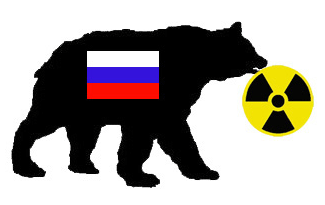
BBC, Paul Melly, West Africa analyst, 26 Aug 25
Russia has dangled the possibility of building a nuclear power plant in uranium-rich Niger – a vast, arid state on the edge of the Sahara desert that has to import most of its electricity.
It may be deemed impractical and may never happen, but the concept is yet another move by Moscow to seek a geopolitical advantage over Western nations.
Niger has historically exported the metal for further refining in France, but that is changing as the military-led country cuts off ties with the former colonial power.
The uranium-mining operation operated by French nuclear group Orano was nationalised in June, which cleared the way for Russia to put itself forward as a new partner.
It is talking about power generation and medical applications, with a focus on training local expertise under a co-operation agreement signed between Russian-state corporation Rosatom and the Nigerien authorities.
If ever brought to fruition this would be the first nuclear power project in West Africa.
Beyond initial discussions, it is unclear how far down this road things will progress. But already, with this first move, Moscow has shown that it grasps the depth of local frustrations.
For more than five decades Orano – which until 2018 was known as Areva – mined Niger’s uranium, to supply the nuclear power sector that is at the heart of France’s energy strategy.
The French government-owned company now gets most of its supplies from Canada and Kazakhstan and has projects in development in Mongolia and Uzbekistan.
But the Nigerien connection remained significant and freighted with a degree of political and perhaps even cultural weight.
Yet Paris did not share its nuclear energy knowhow with its loyal African supplier. Niger, meanwhile, has to rely largely on coal-fired generation and imports of electricity from Nigeria.
But now, the rupture in relations between Niger’s junta and France has allowed Moscow to offer the hope, however distant, of a nuclear future, something that Areva/Orano, over so many years of local operation, had failed to do.
“Our task is not simply to participate in uranium mining. We must create an entire system for the development of peaceful atomic energy in Niger,” Russian Energy Minister Sergei Tsivilev declared on 28 July during a visit to Niamey.
Naturally, this is not entirely altruistic. There are economic benefits for Russia and it is part of a broader push to displace Western influence from the Sahel region.
The Russians could get the chance to develop the mine in Imouraren, one of the world’s largest uranium deposits……………………………………………………………………………….
Building a nuclear plant can take years and such projects require a huge amount of capital investment, and once operational they need a large and secure power supply.
Furthermore, viability depends on the availability of industrial and domestic consumers who can afford the price of the power being generated.
There are also questions over whether a nuclear power plant could be safely built and protected in today’s fragile and violent Sahel region. Jihadist armed groups control large areas of terrain in Mali and Burkina Faso, and parts of western Niger which makes the area highly insecure.
Given the time, the costs and the complications of developing the nuclear sector in Niger, this remains a distant prospect…………………………………………………………………
the junta in power today now seems determined to bring the era of French uranium mining in Niger to an end, with one official telling the Paris newspaper Le Monde that Orano had been “stuffing itself with our country’s natural resources”.
Who can say what Moscow’s proposals for nuclear scientific partnership and perhaps even power generation will ever amount to in concrete terms?
But one thing is clear, in Niger it is the Russians who have correctly read the political mood. https://www.bbc.com/news/articles/c5y23lvm05no
Abuse of Ubuntu in nuclear money grabbing

Just be aware of what kind of types are behind nuclear propaganda on
the beautiful continent nowadays…
Jan Haverkamp, 29 July 25
This is really extremely tasteless. Not only the abuse of Ubuntu, but
also the fact that DeepGEO envisions “Creating intergenerational
equity by solving the challenge of spent nuclear fuel and building
prosperity for our partners.” = grabbing money to dump radioactive
waste in Ghana, Somaliland, and break the law in Finland (which bans
import of radioactive waste)…
Just be aware of what kind of types are behind nuclear propaganda on
the beautiful continent nowadays…
WORLD NUCLEAR NEWS
https://world-nuclear-news.org/articles/deepgeo-and-allweld-partner-for-nuclear-energy-in-africa
DeepGeo and Allweld partner for nuclear energy in AfricaFriday, 25
July 2025US-based Deep Geo Inc and South Africa-based Allweld Nuclear
and Industrial have signed a memorandum of understanding to support
the development of new nuclear power capacity in Africa.
DeepGeo is best known for its proposals to develop multinational
repositories in Ghana, Somaliland and potentially Finland and Canada.
Allweld is an Engineering Solutions company which has been serving the
nuclear and other sectors in South Africa and beyond since the early
1960s.
The two will work together to promote DeepGeo’s Ubuntu Nuclear Energy,
a nuclear project company aiming “to lead the development of
standardised fleets of nuclear power plants across Africa and beyond”,
pursuing a “commercial, regional approach” working with one or two
technology partners so it can realise standardisation across projects
and “progressively localise the supply chain so that more benefits can
be realised by the building countries”.
Link Murray, President of DeepGEO, said: “Allweld has a stellar
international reputation for quality workmanship, reliability, and
employee development. It is a natural partner for supporting our
regional and cooperative approach to nuclear energy development in
Africa – Ubuntu Nuclear Energy. Allweld’s inspired and innovative
leadership is helping us to break open Africa’s nuclear
gridlock.”Mervyn Fischer, Allweld CEO, said: “DeepGEO is a vibrant and
active nuclear company that is clearly deeply committed to the
expansion and sustainability of nuclear energy. If the nuclear
industry expects to make rapid progress, it can’t continue to do
things the same way they have been done before. We need to embrace
innovative solutions. African countries, especially, have the clear
potential to leapfrog their European and American peers by adopting
regional and harmonised approaches.”Ubuntu Nuclear Energy says it is
currently working towards establishing its initial projects and is
seeking early-stage investment and looking to finalise its technology
and supply chain partners.
The MoU says “DeepGEO intends to preferentially partner with Allweld
to support the construction, operation and maintenance of its nuclear
project opportunities in Africa, and potentially globally … Allweld
agrees to lend its support to DeepGEO/Ubuntu Nuclear Energy as a
technical expert and business partner to support its sales and
investment”.And it says the two companies “seek to advance the goal of
Africa reaching full independence in the peaceful uses of nuclear
sciences and technologies”.
Niger to nationalise uranium project co-owned with France’s Orano
Niger has said it will nationalise a large uranium project it jointly owns
with French nuclear fuel producer Orano, in a significant escalation of the
tensions between the west African country’s military government and the
state-owned company. The plan was announced on the state broadcaster late
on Thursday, after ministers adopted a draft resolution transferring
complete ownership of the Somair project to the government in Niamey. Orano
owns just over 63 per cent of Somair and Niger’s state-run Sopamin holds
the rest.
FT 20th June 2025,
https://www.ft.com/content/a0f40288-f932-409a-bc98-eb8e05b43086
French nuclear company Orano explores sale of Niger uranium assets
French state-owned nuclear fuel company Orano is exploring the sale of its
uranium assets in Niger after the breakdown of its relationship with the
west African country’s military rulers. Orano operates three mines in
Niger in a joint venture with the Russian-backed government that seized
power in a coup two years ago, but was stripped of its rights over one
project in June and forced to stop work at another soon after because of
financial pressures. It said at the time that Niger had blocked uranium
exports and halted payments of its obligations as joint venture partners
since the 2023 coup that toppled the country’s pro-western government.
This has forced Orano to look at a possible sale of its Niger assets,
according to multiple people familiar with the matter.
FT 18th May 2025
https://www.ft.com/content/e0d5c62f-3794-4148-95e2-31deecbc7717
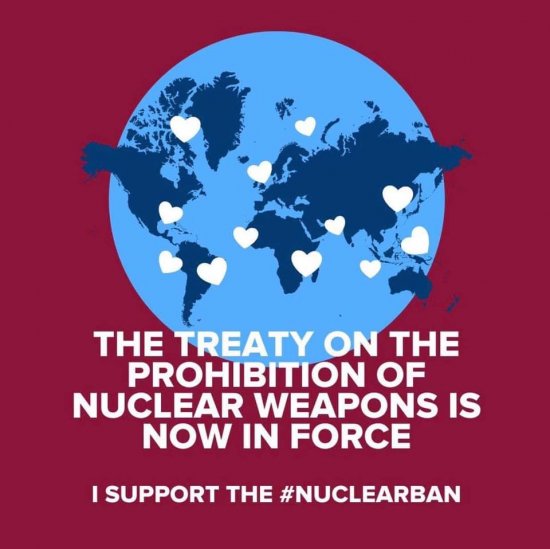
Nuclear war threat: why Africa’s pushing for a complete ban
Olamide Samuel, Track II Diplomat and Expert in Nuclear Politics, University of Leicester, April 1, 2025 , https://theconversation.com/nuclear-war-threat-why-africas-pushing-for-a-complete-ban-253171
At a time of heightened geopolitical tensions between Russia and Ukraine, intensified by strategic dynamics involving the US, Nato and Russia over Europe’s security, nuclear weapons are back on the agenda.
In recent times, Russia has openly threatened to use nuclear weapons. The UK and France are considering ways to rapidly increase their nuclear weapons stockpiles.
Germany, Poland, Sweden, Finland, South Korea and Japan are now seeking nuclear weapons capabilities.
Even a limited nuclear war in Europe would lead to catastrophic global climatic effects. Huge amounts of debris thrown high into the atmosphere would block sunlight, causing global temperatures to drop sharply. It would be much harder to grow food around the world.
This would severely threaten Africa’s food security, exacerbating mass migration, disrupting supply chains and potentially collapsing public order systems.
How should African countries respond to this growing threat?
Based on my experience in nuclear non-proliferation and politics, I argue that African leaders need to proactively confront the risks, while there is still time.
All African states, except for South Sudan, abide by the Nuclear Non-Proliferation Treaty. This is an international agreement which limits the spread of nuclear weapons. And 43 African states have gone further to join the African Nuclear Weapons Free Zone Treaty (Treaty of Pelindaba). This was negotiated in the belief that it would “protect African states against possible nuclear attacks on their territories”.
As conflict and uncertainty pushes many western leaders to support the madness of nuclear weapons proliferation, African leaders are in a unique position to push back against this.
Africa’s strength in numbers in the Treaty on the Prohibition of Nuclear Weapons, also known as the Nuclear Ban Treaty, is a vehicle the continent can use to address nuclear weapons risks, head-on.
Global divide
On one side, nuclear-armed states cling to deterrence for their national security. They insist that possessing nuclear arsenals keeps them safe.
At present, there are nine nuclear-armed states: the US, Russia, the UK, China, France, India, Pakistan, Israel and North Korea. These countries possess around 12,331 nuclear warheads (as of 2025).
The use of only 10% of these weapons could disrupt the global climate and threaten the lives of up to 2 billion people.
On the other side, African countries and other non-nuclear-weapon states such as Ireland, Austria, New Zealand and Mexico highlight how deterrence creates unacceptable risks for the entire international community.
This global majority – the 93 countries that have signed the Nuclear Ban Treaty and 73 that are party to it – argue that real safety comes from eliminating nuclear threats.
The Nuclear Ban Treaty became international law on 22 January 2021. It is the first instance of international law challenging the legality and morality of nuclear deterrence.
Since 2022, states parties to the Nuclear Ban Treaty have held formal meetings to address current nuclear risks. In March 2025, at their third meeting, 17 African states officially recognised nuclear deterrence as a critical security concern. They called on nuclear armed states to end deterrence.
The deterioration of the international security environment is so palpable that there has been a noticeable shift in nuclear ban states’ perception of nuclear threats. Nuclear disarmament is no longer just a humanitarian or moral concern to these states, it is now a national security concern.
South Africa warned that
any use of nuclear weapons would result in catastrophic humanitarian consequences that would have a global impact.
Ghana likewise stressed that Africa is not immune to nuclear war’s fallout:
Africa, despite its geographic distance from the immediate hotspots of nuclear conflict, is not immune to the repercussions of nuclear weapons.
Africa bears a unique historical connection to nuclear issues. Nuclear testing in the Sahara Desert in the 1960s, when France detonated nuclear bombs in Algeria, had devastating consequences. Widespread radioactive contamination harmed local communities, caused long-lasting health problems, displaced populations, and left large areas environmentally damaged and unsafe for generations.
For its part, Nigeria recalled that Africa had “long acknowledged the existential threat nuclear weapons posed to human existence.”
The meeting determined that it is unacceptable that states parties are exposed to nuclear risks, “created without their control and without accountability”. It stressed that eliminating nuclear risks “is a prime and legitimate concern and national responsibility” of states.
Next steps
Delegates effectively asked whether their own national security concerns had less value than those of nuclear-armed states. I think this is a valid question.
Africa’s leaders and their allies in the Nuclear Ban Treaty are reframing what “national security” means in the nuclear age.
Rather than accepting a world perpetually held hostage by the madness of nuclear deterrence, they are asserting that the security of nations – and of peoples – is best served by dismantling this threat to humanity.
They are prioritising human life, development and international law over the threat of overwhelming force.
The outcome of this contest will have profound implications, not just for Africa but for the entire globe.
Radioactive Roulette: Uranium Mining Threatens Vital Southern African Aquifer
Andrew Maramwidze , 16 Jan 25, https://namibianminingnews.com/radioactive-roulette-uranium-mining-threatens-vital-southern-african-aquifer/?fbclid=IwY2xjawIeBAdleHRuA2FlbQIxMQABHSb3NRHlM9u5GURoopgphOqCBJptJNaq2Brc8FAAJr2DXIXC9rPY_nk-uA_aem_TR9RB_c4htmreaRa1XUdXA
The idyllic image of the Stampriet Transboundary Aquifer System, a vast freshwater reserve stretching across Namibia, South Africa, and Botswana, is under threat. The Namibian government has issued a flurry of uranium exploration permits, igniting fears that this precious resource could be irrevocably contaminated by the very industry it is meant to sustain.
This aquifer, roughly the size of Austria, provides a lifeline for over 50,000 people across the region. However, the allure of uranium, a key component in nuclear power generation, has enticed mining companies to stake their claims. While the Namibian government insists on safeguarding the aquifer, the potential for contamination looms large.
Uranium mining, by its very nature, carries significant environmental risks. The process often involves injecting sulfuric acid into the ground to dissolve uranium-rich rock, a method that can leach radioactive fluids into the surrounding environment. The long-term consequences of such contamination are dire, potentially leading to severe health issues for local populations, including cancer, kidney damage, and respiratory problems.
The experience of other mining regions, such as the boreal zone in Canada, provides a sobering cautionary tale. Acid mine drainage and mine effluents have contaminated numerous water sources, highlighting the difficulty of mitigating the environmental impact of large-scale mining operations. Furthermore, the long-term rehabilitation of mine sites often proves challenging, with determining individual mine’s responsibility for environmental damage proving to be a complex and protracted process.
The Namibian government, while acknowledging the potential risks, has awarded 35 uranium exploration permits, covering a vast expanse of territory. This raises serious concerns about the adequacy of environmental impact assessments and the long-term sustainability of the aquifer.
The potential impact on the aquifer extends beyond Namibia’s borders. The Stampriet Transboundary Aquifer System is a shared resource, and its contamination would have far-reaching consequences for South Africa and Botswana.
The need for cooperation between the three nations is paramount. A comprehensive, independent scientific assessment of the potential risks is crucial, along with the development of robust environmental safeguards and a clear plan for long-term monitoring and mitigation.
While the allure of mineral wealth is undeniable, it is imperative to prioritize the long-term health and well-being of the people who depend on this vital water source. The potential consequences of uranium mining in this sensitive region are simply too grave to ignore.
The question remains: Is the short-term economic gain worth the long-term environmental and human cost? The answer, for the sake of future generations, must be a resounding no.
Radioactive Plutonium In Sahara Dust Came From An Unexpected Source
The nuclear tests of the Cold War continue to haunt the world.
Tom Hale, IFL Science 1 Feb 25
Every now and again, the Sahara Desert in North Africa will kick up a storm and spread dust clouds across Europe and other parts of the world. Remarkably, the sand still carries traces of radioactive isotopes from the atomic bomb tests of the Cold War.
In a new study, scientists have investigated whether substantial amounts of radioactive isotopes generated by these tests were transported to Western Europe amid a powerful Saharan dust event in March 2022. They discovered that radiation still lingers in the dust that reached Europe – but not from the source they expected.
Between 1960 and 1966, France detonated 17 bombs in the Algerian Sahara, which was under their colonial control until they gained independence in 1962. With its vast, sparsely populated landscape, it was considered an ideal location for nuclear weapons testing.
Despite claims the bombs would be dropped in an unpopulated region, thousands of locals and French soldiers were exposed to radiation. The most severe estimates suggest that up to 60,000 Algerians were impacted by the blasts, while the French Ministry of Defense argues it’s closer to 27,000 people.
Oddly, though, the new study found that the radioactive isotopes present in the Sahara dust that reached Europe in March 2022 originated from nuclear tests conducted by the USA and the USSR, not France.
Although the USA and USSR did not conduct tests in the Sahara, the prolific nature of their nuclear tests during the Cold War left a widespread radioactive imprint detectable even in Saharan dust.
“This is because the power of detonation of French tests is only 0.02 percent of the total power of detonation of USSR and USA between 1950 to 1970. Much of the USSR and USA nuclear weapon tests were realized at the same latitude of South Algeria, and the debris of these tests can reach 8,000 meters [26,000 feet] high and be dispersed by wind very quickly at a global level,” Yangjunjie Xu-Yang, lead study author from the Climate and Environment Sciences Laboratory in France, told IFLScience
The team reached these conclusions by studying 53 samples from the March 2022 Saharan dust event and looking for the presence of specific radioactive isotopes.
The results suggest that the radioactive dust originated in Algeria’s Reggane region, but its plutonium levels didn’t match the low isotopic ratios (below 0.07) from France’s nuclear tests. Instead, with a median ratio of 0.187, the samples aligned with US and Soviet test signatures – a conclusion further supported by cesium isotopic analysis……………………………………………………………………………………………………… The new study is published in the journal Science Advances. https://www.iflscience.com/radioactive-plutonium-in-sahara-dust-came-from-an-unexpected-source-77866
1 This Month
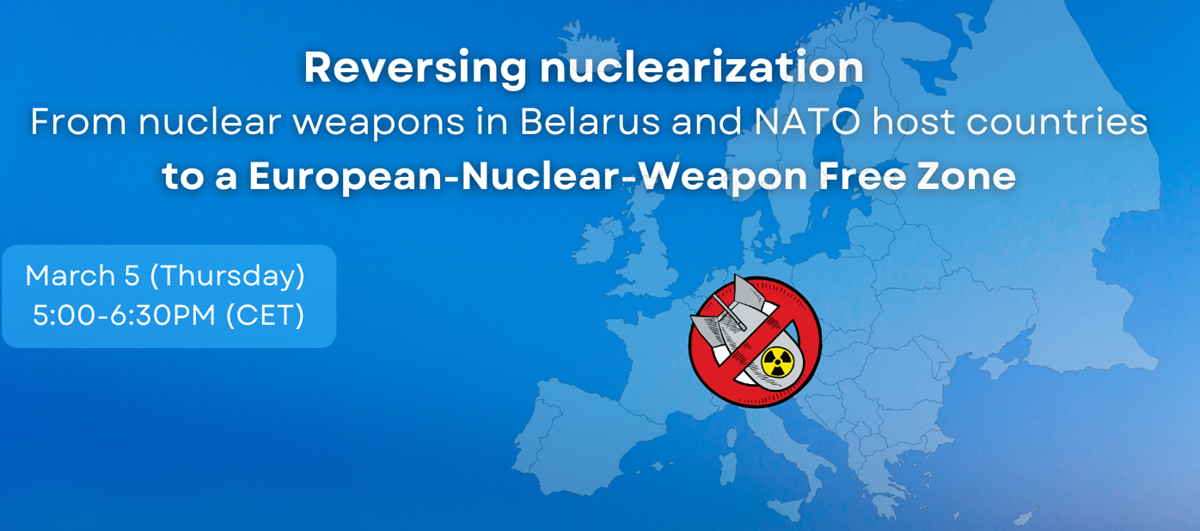
5 March -Online – Reversing nuclearization:
From nuclear weapons in Belarus and NATO host countries to a European-Nuclear-Weapon Free Zone
11am-12:30pm Eastern Time USA / 5pm-6:30pm CET

of the week – Advocating for a
nuclear free beach – https://www.samuellawrencefoundation.org/
The Samuel Lawrence Foundation advocates for a Nuclear Waste Free Beach at San Onofre, join us and take action!
10 March A LIVE WEBINAR THE REAL EFFECTS OF NUCLEAR POWER
What the Industry Isn’t Telling Us
1:00 PM Mountain, 2 pm Central, 3 pm Eastern. Live on the Keepers of the Water Facebook page

18 March Webinar @ 1 PM EST: An Assessment of SMR Projects: The Case of Canada
register for the zoom:
https://us02web.zoom.us/webinar/register/WN_o8BIIOUvQ2ONJR1nta65DQ#/registration

of the week – STOP SMALL MODULAR REACTORS IN CANADA
To see nuclear-related stories in greater depth and intensity – go to https://nuclearinformation.wordpress.com
-
Archives
- March 2026 (37)
- February 2026 (268)
- January 2026 (308)
- December 2025 (358)
- November 2025 (359)
- October 2025 (376)
- September 2025 (258)
- August 2025 (319)
- July 2025 (230)
- June 2025 (348)
- May 2025 (261)
- April 2025 (305)
-
Categories
- 1
- 1 NUCLEAR ISSUES
- business and costs
- climate change
- culture and arts
- ENERGY
- environment
- health
- history
- indigenous issues
- Legal
- marketing of nuclear
- media
- opposition to nuclear
- PERSONAL STORIES
- politics
- politics international
- Religion and ethics
- safety
- secrets,lies and civil liberties
- spinbuster
- technology
- Uranium
- wastes
- weapons and war
- Women
- 2 WORLD
- ACTION
- AFRICA
- Atrocities
- AUSTRALIA
- Christina's notes
- Christina's themes
- culture and arts
- Events
- Fuk 2022
- Fuk 2023
- Fukushima 2017
- Fukushima 2018
- fukushima 2019
- Fukushima 2020
- Fukushima 2021
- general
- global warming
- Humour (God we need it)
- Nuclear
- RARE EARTHS
- Reference
- resources – print
- Resources -audiovicual
- Weekly Newsletter
- World
- World Nuclear
- YouTube
-
RSS
Entries RSS
Comments RSS
 nuclear-news