NO,nuclear lobby, a nuclear reactor is NOT the only, nor the best, way to produce medical Technetium TC99

NorthStar Medical Radioisotopes Receives Electron Beam Accelerators for First-of-its-Kind Advanced Medical Radioisotope Production.
NorthStar, leading the way as the sole U.S. commercial supplier of molybdenum-99 (Mo-99), continues expansion efforts for increased capacity and ongoing reliable supply for diagnostic imaging −BELOIT, Wis.–(BUSINESS WIRE), 12 May 21, —NorthStar Medical Radioisotopes, LLC, a global innovator in the development, production and commercialization of radiopharmaceuticals used for medical imaging and therapeutic applications, announced that it has achieved a major milestone in its efforts to expand U.S. production capacity for the important medical radioisotope, molybdenum-99 (Mo-99). The Company has received two custom-built IBA Rhodotron®TT 300-HE (High Energy) electron beam accelerators at its facility in Beloit, Wisconsin. The accelerators are critical components in a first-of-its-kind commercial-scale process to produce Mo-99, the parent radioisotope of technetium-99m, the most widely used medical imaging radioisotope, informing healthcare decisions for approximately 40,000 U.S. patients daily.
NorthStar Medical Radioisotopes is the sole commercial U.S. producer of the important medical radioisotope Mo-99 and the only company in the world to use environmentally friendly Mo-99 production processes that are non-uranium based. For over two years, NorthStar has provided the United States with reliable Mo-99 supply, which is used in its RadioGenix® System (technetium Tc 99m generator) to produce Tc-99m. NorthStar is aggressively expanding and establishing dual production and processing hubs for additional Mo-99 capacity to better meet customer demand and to ensure reliable, sustainable U.S. supply. Two facility expansion projects are nearing completion in Beloit, Wisconsin, to augment current Mo-99 production and processing in Columbia, Missouri, conducted in partnership with the University of Missouri Research Reactor (MURR®). NorthStar’s Isotope Processing facility in Beloit will enable it to more than double its current Mo-99 processing and is nearing completion, with FDA approval anticipated in 2022. The Company’s Accelerator Production facility in Beloit will add significant Mo-99 capacity, enable flexible production scheduling and minimize customer supply risks.
Delivery of these electron beam accelerators to advance Mo-99 production marks a tremendous milestone event for NorthStar, nuclear medicine and the patients who rely on diagnostic imaging studies for their health,” said Stephen Merrick, President and Chief Executive Officer of NorthStar Medical Radioisotopes. “Using electron beam accelerators is one of the most efficient methods of producing Mo-99, and like other NorthStar processes, it is non-uranium based and environmentally friendly. This production method will increase capacity, provide additional production days, and minimize supply risks. Additionally, electron beam accelerators can be used to produce therapeutic radioisotopes such as actinium-225 and copper-67. We anticipate that testing of these accelerators will begin this year, with commercial accelerator production commencing in 2023, pending appropriate licensure and FDA approval.”……………
Delivery of these electron beam accelerators to advance Mo-99 production marks a tremendous milestone event for NorthStar, nuclear medicine and the patients who rely on diagnostic imaging studies for their health,” said Stephen Merrick, President and Chief Executive Officer of NorthStar Medical Radioisotopes. “Using electron beam accelerators is one of the most efficient methods of producing Mo-99, and like other NorthStar processes, it is non-uranium based and environmentally friendly. This production method will increase capacity, provide additional production days, and minimize supply risks. Additionally, electron beam accelerators can be used to produce therapeutic radioisotopes such as actinium-225 and copper-67. We anticipate that testing of these accelerators will begin this year, with commercial accelerator production commencing in 2023, pending appropriate licensure and FDA approval.”….https://www.businesswire.com/news/home/20210511005048/en/
Corruption in the pharmaceutical industry – the Bill Gates connection

I Never Trusted Bill Gates, Nor Should You
While leading a Senate investigation, I tracked a corrupt pharmaceutical executive right into the lobby of the much-vaunted Bill and Melinda Gates Foundation—Bill Gates did nothing.
| The DisInformation Chronicle, May 11The last year has not been kind to Bill Gates. For two decades, Gates has shoveled out buckets of cash through the Bill and Melinda Gates Foundation to transform himself from despised 1990’s software monopolist to a present-day public health intellectual—a miraculous, money-fueled metamorphosis. But that reputational makeover has stumbled, as a series of critical articles have tarnished Gates’ paid-for golden image and cast doubt on his credibility. However, long before these articles came to light, I already knew that Gates could not to be trusted. |
A decade ago, I led a Senate investigation into a multi-billion-dollar diabetes drug sold by GlaxoSmithKline (GSK) that government scientists found to have caused around 83,000 heart attacks. During this federal investigation, I uncovered multiple examples of GSK officials intimidating medical experts who decried the drug’s dangers. A leader in this campaign was GSK’s chairman of research and development, Dr. Tadataka (Tachi) Yamada.
By the time our committee uncovered GSK’s coercion campaign, Yamada had left the company to run Gates’ global health program. And yet, as the media outlets reported on Yamada’s prior role bullying physicians who tried to warn about the drug’s dangers, the Gates Foundation ignored this public outcry and allowed Yamada to maintain his pulpit as global health protector.
Twenty years back, journalists scrutinized Gates’ foundation as a vehicle to enrich himself and polish his appearance. But over the years, reporters began to forget Gates’ past and provide him a platform to puff himself up as scientific expert, despite his having no medical or scientific credentials. Bill Gates’ sculpted persona as health policy guru began to wobble last summer, however, precisely because of revelations showing the tools he had used to improve his media cachet.
In August 2020, Tim Schwab published an article in the Columbia Journalism Review exposing around $250 million in grants that Gates was throwing at journalism outlets including the BBC, NBC, Al Jazeera, ProPublica, National Journal, The Guardian, Univision, Medium, the Financial Times, The Atlantic, the Texas Tribune, Gannett, Washington Monthly, Le Monde, and the Center for Investigative Reporting.
A later article in The Nation spotlighted Gates’ potential to profit from investments in companies situated to reap a windfall from the COVID pandemic. And another report in The Nation found that Gates’ funding has stifled debate in public health—described as “the Bill chill”—as organizations are reluctant to bite the hand that feeds them.
These revelations came as little surprise to me.
Continue readingEnergy effuciency – the most ignored form of climate action – and the most effective

Times 12th May 2021, Energy efficiency can sometimes be overlooked as a way of tackling climate
change amid the enthusiasm for electric vehicles and renewables. But simply
reducing the amount of energy required to achieve the same ends is a hugely
effective tool in cutting greenhouse gas emissions.
The least polluting form of energy is, after all, the energy we do not use. Investment in
energy efficiency faltered in the pandemic. As energy prices dropped, so
did the incentive to use less of it. At the same time, businesses
struggling to stay afloat cut spending.
The International Energy Agency
says this trend is especially worrying because energy efficiency is
expected to deliver more than 40 per cent of the required cuts in
energy-related greenhouse gas emissions over the next 20 years. Investment
is likely to pick up again as regulation forces firms to address their
carbon emissions.
While the big wins in terms of cutting carbon will come
from changing how we heat buildings and insulating them better, reducing
energy consumption with more efficient lighting and appliances is an easy
first step.
Canadian government hand in glove with the nuclear lobby for a ”NICE” nuclear future

Canada pegs its energy future on nuclear power, but not everyone’s buying it, Canada’s National Observer, By Charles Mandel May 12th 2021…………….. The development of SMRs in Canada isn’t just a matter of happy coincidence; the federal government has been lobbying hard on behalf of the industry since at least 2019. The Department of Natural Resources, for instance, is a member of the international initiative Nuclear Innovation: Clean Energy Future, or as it’s better known, NICE. Besides Canada, members include Japan, the U.S. and a number of nuclear associations. The goal “is to ensure that nuclear energy receives appropriate representation in high-level discussions about clean energy.”
Freelance researcher Ken Rubin turned up a number of documents using freedom-of-information requests that showed the federal government is collaborating with NICE and others to promote nuclear power and SMRs. The federal government, for example, offered $150,000 for the development of a “Top 20 book of short stories” on “exciting near-term nuclear innovations” designed to showcase nuclear power as an environmental force for good. The book includes stories on the safe storage of nuclear waste as well as on the emerging SMR market.
According to the book, uses for the latter technology include “energy parks” providing heat for industrial processes, steam for heating and electricity for cooling homes, offices and shops, all without emissions. The story breathlessly declares: “This isn’t science fiction.”
No matter how hard the government lobbies the public for a NICE future, though, it’s going to remain a tough sell to Canadian environmentalists. While the environmentalists have nothing specific to fight yet, given that a viable SMR has yet to be built, they’ll be ready when the technology reaches development. Already, a who’s who of groups has signed a letter protesting the next thing in nuclear.
Theresa McClenaghan, CELA’s executive director and counsel, told Canada’s National Observer: “It’s not a climate answer for many reasons, including the fact it’s not realistic and it’s way too far down the road for us to meet any serious climate targets. We’ve characterized it as a dirty, dangerous distraction.”
Susan O’Donnell, a researcher and adjunct professor in the Department of Sociology at the University of New Brunswick and a nuclear activist, says SMRs are too slow and costly as a climate crisis solution. “It’s important to remember that these technologies basically don’t exist yet,” she said. “They’re at a very early stage in development. They are speculative technologies. It will take at least a decade to get them off the drawing board and then it will take much longer than that to find out if they work.”
Sellafield’s plutonium waste has continued to circulate in the Irish Sea
Plutonium Remobilisation in the Irish Sea, No2Nuclear Power No 132 May 2021, Low-level aqueous radioactive waste has been discharged from the Sellafield site into the Irish Sea for more than 50 years. Originally it was thought that soluble radionuclides discharged from Sellafield (such as caesium and tritium) would be diluted and dispersed whereas long lived, transuranic nuclides such as Plutonium, and Americium would leach out of the liquid phase and become preferentially adsorbed to the surface of sedimentary particles in the water column, sink to the seabed and remain permanently bound and immobilised in seabed deposits and therefore isolated from human populations and the environment.
Unfortunately, it has since emerged that a proportion of such sediment associated radioactivity has, and is being actively transported around the Irish Sea while the remainder is temporarily “sequestered” in the seabed but subject to any future disturbance mechanisms such as storm, wave and seismic activity. In addition, a proportion of dissolved nuclides did not necessarily remain dissolved in liquid form in the water column, but could become incorporated into organic particles and deposited into sedimentary environments where they could be temporarily sequestered, but subsequently recycled back into the environment by dredging, trawling storm and seismic activity.
Plans by West Cumbria Mining (WCM) for an under-seabed coal mine off the coast of Cumbria near Whitehaven and the possibility of a Geological Disposal Facility, also under the seabed off the coast of Cumbria have raised concerns that transuranic radionuclides currently sequestered in Irish Sea sediments could be further remobilised as a result of these activities,
A large proportion of the Sellafield-derived radionuclides disposed to sea have become associated with the sediment at two sites close to the waste disposal pipeline: the Irish Sea Mudpatch and the Esk Estuary. The Mudpatch is a belt of fine-grained sediments located about10 km from the waste pipeline.
In 1999 Kershaw et al showed evidence that sediment-bound radionuclides over the previous decade were being redistributed. There was a decrease in the coastal zone around Sellafield and increases in Liverpool Bay and the western Irish Sea. Levels of dissolved 239/240Pu in the water column decreased only slowly since the peak discharge rates in the 1970s and much more slowly than the drop in Sellafield discharges. This suggests that material is moving from contaminated sediments and becoming dissolved in seawater where it is available for transport. Indeed, in the western Irish Sea, evidence has been found that 239/240Pu is being transported from the eastern Irish Sea. There is also evidence of the direct transport of contaminated sediment. (1)
Daisy Ray et al. highlight the fact that “once mobilised, the radionuclides can be transported elsewhere in the Irish Sea … Although waste discharges are continuing to decrease from the Sellafield site, the Mudpatch may continue to supply “historic” Sellafield-derived radionuclides to other locations. Indeed, recent data from Welsh and Scottish coastal areas suggest that the Mudpatch still acts as a source of radionuclides to UK coastal areas.” (2)
The model developed by Aldridge et al. at the Centre for Environment Fisheries and Aquaculture Science (CEFAS) in 2003 strongly suggest that the principal source of 239/240Pu in the Irish Sea was sediments in the eastern Irish Sea contaminated from past discharges, rather than new inputs from Sellafield. (3) Radionuclide re-distribution can occur by two principal mechanisms. Directly, by the transport of contaminated sediment, or indirectly via exchange and transport in dissolved form (dissolution). The latter process operates when tidal, wind or trawling activity re-suspends bed material allowing transfer of radionuclides to the water column. (4)
Ray el al. also suggest that bioturbation – the reworking of soils and sediments by animals or plants – at the Cumbrian Mudpatch will continue to act as a source of “historic” Sellafieldderived radioactivity to the UK Coastal Environment. If this redistribution of historical discharges of radionuclides is happening by natural processes, it can be assumed that the problem could become much more serious as a result of human mining activities under the seabed,
A recent report by Marine Consultant, Tim Deere-Jones concludes that:
It is evident that any subsidence within the WCM designated seabed mining zone will generate some form and degree of seabed morphological distortion. It is equally evident that any such seabed distortion will remobilise previously sequestered seabed sediments, and their associated pollutants, which will subsequently be transported and re-distributed through the regional marine and coastal environments. It is inevitable that such re-mobilisation and re-distribution will expose marine wildlife and human coastal populations and stakeholders to some degree of exposure doses to those pollutants via a number of mechanisms and pathways.” (5) https://www.no2nuclearpower.org.uk/wp/wp-content/uploads/2021/05/nuClearNewsNo132.pdf
Endangered sea turtles sucked into nuclear power plant pipes
FPL doesn’t prevent endangered sea turtles from being sucked into nuclear power plant pipe, TC Palm, Max Chesnes, Treasure Coast Newspapers, 12 May 21, After 15 years of trying, Florida Power & Light Co. still has not found a way to keep endangered sea turtles from being sucked into its nuclear power plant’s intake pipes.
A TCPalm investigation in 2016 showed how a solution had been mired in bureaucratic red tape for 10 years. Since then, FPL has tested a proposed grate-like device, but found it could harm turtles, spokesperson Peter Robbins told TCPalm Wednesday.
FPL is still discussing the issue at the St. Lucie Nuclear Plant with the Nuclear Regulatory Commission and National Marine Fisheries Service, Robbins said.
Last year, 339 turtles were swept into the pipes at the South Hutchinson Island plant on ………
TCPalm investigation: 16,000 sea turtles sucked up since 1976
How does marine life get sucked into the intake pipes?
Ocean water used to cool the plant’s nuclear-fueled generators is slurped into three “intake structures” positioned underwater about a quarter-mile offshore.
Saltwater enters these pipes, runs under the beach at about 1 foot per second and dumps into a nearly mile-long intake canal, according to FPL. Marine life can be swept through the pipes and into the canal, from which they need to be removed………….. https://www.tcpalm.com/story/news/local/indian-river-lagoon/2021/05/12/fpl-st-lucie-nuclear-power-plant-still-sucking-endangered-sea-turtles-sawfish-into-intake-pipes/5037097001/
Will the French government break troubled nuclear company EDF up into 3 companies?
Le Monde 10th May 2021, Why maintain such secrecy around the discussions on EDF? Local PS elected
in Brest, Tristan Foveau spoke out in a forum in “Le Monde” against the
lack of information on the negotiations between the government and the
European Commission on the future of the French nuclear company EDF.
Has lightning fallen on the EDF “Hercules” project? Questioned by Ouest France on April
23, Bruno Le Maire, Minister of the Economy, affirms that this one is
“forgotten” and that the government will not dismantle EDF into three
independent companies: EDF bleu controlled by the State and bringing
together nuclear-related activities; EDF azur, responsible for the
management of hydroelectric dams in the form of a quasi-control; and EDF
vert for the distribution of electricity and renewable energies, the
capital of which would be open to the private sector.
In fact, the Minister applies a golden rule of bad marketing: when a brand suffers from a bad
image, rather than changing the content, we change brands! And in fact,
“Hercules” has been unanimous against it for several months: unions,
parliamentarians, local elected officials, citizens … Exit “Hercules”,
but … not the reform!
Dungeness nuclear power station could be shut down earlier than planned
Kent Online 10th May 2021, A power station in Kent could start its defuelling phase seven years early
unless a number of “significant and ongoing technical challenges” are
overcome. Dungeness B power station on Romney Marsh has been off-line since
September 2018 while a multi-million pound maintenance programme was
carried out.
This work was due to be completed last year but that timeline
changed to August 2021 following a series of delays. But now EDF say the
ongoing challenges and risks “make the future both difficult and
uncertain”.
As a result, the energy company is now exploring a range of
options – including starting the procedure to shut the station down later
this year, seven years ahead of its planned defuelling phase. A statement
from EDF reads: “Dungeness B power station last generated electricity in
September 2018 and is currently forecast to return to service in August
2021.
“The station has a number of unique, significant and ongoing
technical challenges that continue to make the future both difficult and
uncertain. “Many of these issues can be explained by the fact that
Dungeness was designed in the 1960s as a prototype and suffered from very
challenging construction and commissioning delays. “We expect to have the
technical information required to make a decision in the next few months,
as it is important we bring clarity to the more than 800 people that work
at the station, and who support it from other locations, as well as to
government and all those with a stake in the station’s future.”
Elon Musk’s expensive and dangerous space delusion
The Musk delusion daryan energy blog 2 May 21, I’ve critiqued a number of Musk’s projects before, but I think we need to be a bit more direct. Quite simply is Musk entirely the full shilling? Is he the real life Tony Stark the fan boys seem to think, or a modern day Howard Hughes? Because if its the latter his bizarre behaviour will only get worse and worse until things come to a head. Which could have rather serious consequences………….
his proposed use of Starship, as a point to point transport mechanism amounts to saying that the rich should be allowed to burn vast amounts of fuel, just so they can save a few hours in transit. Well, if Starship was a vaguely sane suggestion that is. In truth, it would take almost as long to get its passengers point to point as a conventional airliner (once you factor in the time taken to get passengers out to the launch pad, suit them up, put on their astronaut diapers (yes, how do you think astronauts meet the calls of nature in a space suit), strap everyone in, fuel the rocket, etc.). And that’s assuming you’d be given permission to fly, given the many likely health and safety, environmental and noise related concerns.
In fact let’s talk about starship. It is a terrible design. I’m not going to waste time going over the many issues, in part because I’ve done so already, but also there are others who have done a far better job. But in summary, even if it worked, its a one trick pony….and that trick is the potential for down cargo (which its far from proving it can do) not going to Mars.
Even so, Musk has managed to blow up a dozen or so test prototypes with not a lot to show for it. He’s now in a dispute with the FAA and environmental groups over the mess he’s making, adding to the thousand or so active legal cases he’s currently fighting, largely because of his inability to keep his big mouth shut and not say dumb things online.
Which raises the question, what is the point of starship? ………

Caricature above by courtesy of Ryadav – caricaturecartoon.com
NASA just awarded SpaceX the contract to build the Lunar lander? Ya and if one was cynical it would be that the Biden administration, whose never really committed to space flight, knows they don’t have the funds or the political capital to blow hundreds of billions repeating Apollo. But they equally don’t want to be identified as the assassins who killed off manned lunar/Mars missions. They need a fall guy…which is where Musk comes in!
SpaceX happens to have facilities in key states that will matter in 2024 (most notably Texas, which might be a swing state by then). So, given that Congress sees NASA as a jobs programme, they sling a few billion his way. If he succeeds, well then great. If he crashes and burns, well aw shucks we tried our best, I mean we even got Elon Musk to design the hardware, how can we be to blame.
And this is what worries me about Musk and his fans. Sooner or later his luck is going to run out. Environments such as space, or public transport do not suffer fools. Likely we’ll end up with some tragic accident, or a massive overspend on a government project and he gets to spend the rest of his life going form congressional committee to committee and court house to court house……. https://wordpress.com/read/feeds/543414/posts/3318253784
USA’s unnecessary plutonium pits production to cost $10+ Billion
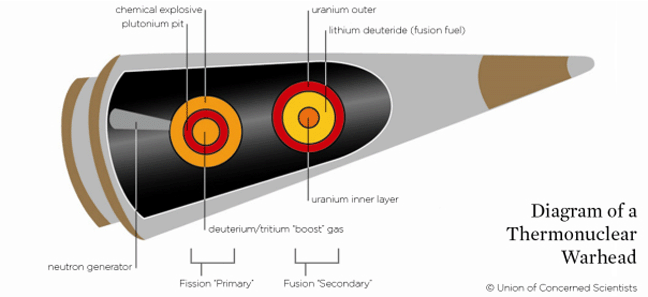
Cost Estimate for SRS Plutonium Bomb Plant to Soar to $10+ Billion? Causing Trouble for Contractors and Boosters Pushing New Pit Plant and “Money Pit” ICBM “Needing” New Plutonium Pits? https://www.rnanews.eu/cost-estimate-for-srs-plutonium-bomb-plant-to-soar-to-10-billion-causing-trouble-for-contractors-and-127657.html 11 May 21,
Stay tuned for the release by the US DOE’s National Nuclear Security Administration of a “Critical Decsion-1” determination on the proposed SRS Plutonium Bomb Plant. CD-1 would approve the basic project design and present an update cost range. The cost for the bomb plant could soar to $10 billion or more, more than double the earlier estimate of $4.6 billion to convert the partially finished plutonium fuel MOX plant at SRS to pit production.
The CD-1 document package was turned over to NNSA by contractor Savannah River Nuclear Solutions (SRNS) in January 2021. In March, the CEO of SRNS told the South Carolina Nuclear Advisory Council that a decision on CD-1 by NNSA could come in late May or June.
A huge jump in the cost of the SRS Plutonium Bomb Plant will ramp up the pressure on DOE/NNSA/Department of Defense to fund such an expensive facility and the new ICBM, Ground Based Strategic Deterrent (GBSD) – aka the Money Pit Missile – with a lifetime cost over $200 billion. The new ICBM and its W87-1 warhead would require new plutonium pits.
This missile and pits for it are not needed. As it’s part of planning for full-scale nuclear war, it would undermine national security and transfer a vast amount of money from patriotic taxpayers to contractors such as Northrop Grumman, Savannah River Nuclear Solutions and pit-production contractors at Los Alamos National Lab, the other site being considered for expanded pit production. In sum, the GBSD and plans for new pits must be canceled and the CD1 document will be a wake-up call for decision makers.
Meanwhile, Congress is still refusing to investigate possible waste, fraud, abuse and mismanagement of the failed MOX project by NNSA and contractors.
How the heck can they just sweep under the rug the waste of $8 billion on the failed project? Who is Congress protecting and why???
Nuclear fission reactions are happening at Chernobyl again

Nuclear Fission Reactions Are Happening at Chernobyl Again
Scientists are scrambling to neutralize the threat. Popular Mechanics, BY CAROLINE DELBERT, MAY 10, 2021
- A melted amalgam of nuclear fuel at Chernobyl is beginning to react.
- The issue is rainwater, which has activated materials buried deep within the closed plant.
- The reaction could burn out naturally, but it could also require human intervention.
On April 26, 1986, Reactor No. 4 exploded at the Chernobyl Nuclear Power Plant in Ukraine, causing the worst nuclear accident in history. Now, thirty-five years later, smoldering nuclear “embers” are still buried within Chernobyl site, raising questions about just what might happen there—and what’s at stake.
Ukrainian scientists recently realized that leftover nuclear fission fuel made of uranium has begun reacting again in an “inaccessible room” deep within a damaged area of the shuttered plant. The telltale sign is increased readings of neutron activity—a measurable byproduct of nuclear fission, according to the scientists from Institute for Safety Problems of Nuclear Power Plants (ISPNPP) in Kyiv, Ukraine, who held discussions about dismantling the reactor last month, according to Science magazine.
- Chernobyl Nuclear Power Plant is surrounded by a massive megastructure called Chernobyl New Safe Confinement (NSC). At NSC, there are hundreds of sensors working around the clock to monitor factors like air quality, and the sensors have detected increased neutron activity near the fallen reactor hall where the “embers” are.
- Some zones within the NSC are fully sealed off in their own sarcophagus-like structure called the Shelter—including the reactor hall where scientists have noticed the increasing neutrons. That means tough questions about what the best course of action is.Inside the reactor hall, everything is a dangerous mess.
- Science’s Richard Stone reports:
- “When [the] reactor’s core melted down, uranium fuel rods, their zirconium cladding, graphite control rods, and sand dumped on the core to try to extinguish the fire melted together into a lava. It flowed into the reactor hall’s basement rooms and hardened into formations called fuel-containing materials (FCMs), which are laden with about 170 tons of irradiated uranium—95 [percent] of the original fuel.”
It’s important to note that experts don’t fear a second Chernobyl disaster, as there isn’t enough viable material or surrounding collateral for that kind of threat or damage. But the right kind of small nuclear activity could bring down the Shelter itself, which is 34 years old and “rickety.”
Scientists believe rainwater leakage has caused similar higher neutron readings in the past, and they’ve since installed special chemical sprinklers that can stanch neutrons in most of the interior of the Shelter. But some basement rooms are just out of reach even for the sprinklers………. https://www.popularmechanics.com/science/energy/a36364988/chernobyl-nuclear-reactions/
India is operating the world’s most dangerous, fastest-growing, nuclear weapons and missile programs in the world
World’s most dangerous fastest-growing nuclear weapons programme
Nowadays, South Asia is categorized by international analysts as one of the unstable regions of the world, where the chances of nuclear brinkmanship are high because of the longstanding rivalry between Pakistan and India, The Nation, Syed Zain Jaffery, May 11, 2021
‘‘…………………India is operating the world’s most dangerous fastest-growing nuclear weapons and missile programs in the world, which are not only threatening for the region but world peace because of flawed nuclear safety and security standards. Increasing stocks of Indian fissile material and the development of nuclear triad capability – bombers, missiles and nuclear power/capable submarines – have increased the capability of New Delhi in the strategic realm. Contrary to International media claims, the Indian triad consists almost 500 nuclear weapons including thermonuclear weapons and has the capacity to produce over 2,600 nuclear weapons for tactical and strategic use.
Today, the undisclosed plutonium stocks have not been under IAEA’s inspection and left with Indian arms production facilities under the discriminatory nuclear cooperation deal between the United States and India. The civilian Plutonium reserves that are outside the safeguards of the IAEA and designated for strategic purposes are the main cause of concern. In a three-stage plan, India is continuing to expand its unsafeguarded nuclear power program. The installation of several nuclear reactors has also been announced by New Delhi. This capability will generate excessive fissile material, other than the fuel necessary for breeder and naval reactors. Over the next few years, India will be capable to replace China, France and the United Kingdom in terms of its abilities to produce nuclear weapons to become the third behind the US and Russia.
Under the influence of the rising economy of India, like-minded Western analysts are trying to divert the consideration of the international community from the fastest growing Indian nuclear weapons program and threats associated with it to the peaceful neighboring countries. Since 1974, the Indian intentions are clear that it will use any kind of advanced technology, which provided under the rubric of peaceful purposes, for military use and will violate any international law related to nuclear, space and missiles program to exercise hegemony in the region. The Indian policy aims, concerning nuclear weapons, are solely constructed to push its hegemony in the region. Now it is time for the international community to realize the Indian nuclear threat.
https://nation.com.pk/11-May-2021/world-s-most-dangerous-fastest-growing-nuclear-weapons-programme
Tallying up Russia’s nuclear weapons
Nuclear Notebook: How many nuclear weapons does Russia have in 2021? Bulletin of the Atomic Scientists, By Hans M. Kristensen, Matt Korda, March 15, 2021 T his is a very long article. Some introductory bits:
Russia is in the middle of a decades-long modernization of its strategic and nonstrategic nuclear forces to replace Soviet-era weapons with newer systems………
Putin also noted his disappointment with the “deterioration” of the US-Russia arms control regime, and declared that the United States withdrew from the Anti-Ballistic Missile Treaty, the Intermediate-Range Nuclear Forces Treaty, and the Open Skies Treaty under “contrived pretexts.”……..
As of early 2021, we estimate that Russia has a stockpile of nearly 4,500 nuclear warheads assigned for use by long-range strategic launchers and shorter-range tactical nuclear forces……
Russia has significantly reduced the number of warheads deployed on its ballistic missiles to meet the New START limit of no more than 1,550 deployed strategic warheads. Russia achieved the required reduction by the February 5, 2018 deadline, when it declared 1,444 strategic warheads attributed to 527 launchers (Russian Federation Foreign Affairs Ministry 2018)………
Russia (like the United States) could potentially upload several hundreds of extra warheads onto their launchers, but is prevented from doing so by the New START treaty limit, which has been extended for an additional five years to 2026. The treaty provides for important transparency of Russian (and U.S.) strategic nuclear forces: As of December 2020, the United States and Russia have completed a combined 328 on-site inspections and exchanged 21,293 notifications (US State Department, Bureau of Arms Control, Verification and Compliance 2020b). Due to the ongoing Covid-19 pandemic, there have been no on-site Type One or Type Two inspections since April 1st, 2020……….
What is Russia’s nuclear strategy?……….
Russia’s publicly stated policy. In June 2020, President Putin approved an update to the “Basic Principles of State Policy of the Russian Federation on Nuclear Deterrence,” which notes that “The Russian Federation considers nuclear weapons exclusively as a means of deterrence.” The policy clearly lays out four conditions under which Russia could launch nuclear weapons:
“arrival of reliable data on a launch of ballistic missiles attacking the territory of the Russian Federation and/or its allies;
use of nuclear weapons or other types of weapons of mass destruction by an adversary against the Russian Federation and/or its allies;
attack by adversary against critical governmental or military sites of the Russian Federation, disruption of which would undermine nuclear forces response actions;
aggression against the Russian Federation with the use of conventional weapons when the very existence of the state is in jeopardy” (Russian Federation Foreign Affairs Ministry 2020).
Submarines and submarine-launched ballistic missiles
The Russian Navy operates 11 nuclear-powered nuclear-armed ballistic missile submarines (SSBNs) of three classes:……….https://thebulletin.org/premium/2021-03/nuclear-notebook-russian-nuclear-weapons-2021/?utm_source=Newsletter&utm_medium=Email&utm_campaign=Newsletter05102021&utm_content=NuclearRisk_RussiaNotebook_03152021
How to deal with a nuclear-armed Kim Jong Un

How to deal with a nuclear-armed Kim Jong Un, by David A. Andelman, May 10, 2021, CNN,The Biden administration has pledged to pursue “calibrated” diplomacy.
to persuade North Korean leader Kim Jong Un to halt his mad dash toward a deliverable nuclear weapon. But that is a vain hope. Instead, the world and especially the United States must find a way to live with a North Korea armed with The Bomb. And keep Kim from using — or selling — it.
Discussions with a number of individuals who have dealt with the North Korean government or monitored the actions of its ruling family have convinced me that no Kim — neither Kim Jong Un, nor his father nor his grandfather — ever has or will give up a quest for a deliverable nuclear weapon. Nor is Kim likely to relinquish such a device once it can be deployed. Indeed, North Korea clearly does have any number of such devices — some analysts say it could be more than 60 — though the delivery vehicles are still in development.
That brings us to the realm of what may be possible and achievable. For Kim, possession of a nuclear weapon is a question of existential survival. His ultimate fear is no doubt the fate of Libyan strongman Colonel Moammar Gadhafi — dragged from a drain pipe by rebels and executed, a direct consequence of the decision to relinquish his own nuclear program that allowed his enemies in the West to undermine his regime.
Still, it’s not clear that President Biden or his principal advisers are prepared to accept any nuclearized North Korea. President Joe Biden has said that any diplomacy “has to be conditioned upon the end result of denuclearization.” At the same time, he and his team are rightly rejecting former President Donald Trump’s “go big or go home” approach — agreeing to remove all sanctions in exchange for North Korea fully dismantling its weapons program — which Kim rejected out of hand at their last, abortive summit in Hanoi……….
The essence of any such [diplomacy] plan must lie in the United States finding a way to persuade the North to join the global nuclear non-proliferation club. Implicit would be the acceptance that it already has a weapon. In turn the North will need to make its weapons and their security clearly visible and open to inspection…………
The essence of any such plan must lie in the United States finding a way to persuade the North to join the global nuclear non-proliferation club. Implicit would be the acceptance that it already has a weapon. In turn the North will need to make its weapons and their security clearly visible and open to inspection. https://edition.cnn.com/2021/05/09/opinions/north-korea-nuclear-biden-andelman/index.html
Many space rockets planned, thousands of satellites, thousands of space debris -what could possibly go wrong?

To read the news, you’d think that only China was the naughty nation that had accidents in space. Indeed, it’s all written up to convey the message that USA space stuff is utterly safe.
Reminds me of when the nuclear lobby tried to put across the idea that the Fukushima disaster was proof of the safety of U.S. nuclear technology.
Wikileaks lists spaceflight accidents and incidents.
Thousands of satellites in orbit (not all functioning) There are at least 6,900 satellites now in orbit around Earth, with 4000 still functioning.
Space debris
Number of debris objects regularly tracked by Space Surveillance Networks and maintained in their catalogue – About 28160 .
Estimated number of break-ups, explosions, collisions, or anomalous events resulting in fragmentation -More than 560
Total mass of all space objects in Earth orbitMore than 9300 tonnes.
NASA slams rocket risk, The Age, print version 10 May 2021, Remnants of China’s biggest rocket have landed in the Indian Ocean,with the bulk of its components destroyed on re-entry into the atmosphere according to Chinese state media., fencing days of speculation over where the debris would hit….
The coordinates given by the media yesterday, citing the China Manned Space Engineering Office, put the point of impact west of the Maldives archipelago.The Long March launched last week was the second deployment of the 5B variant since its maiden flight in May 2020 last year pieces from the first Long March 5B fell on Ivory Coast, damaging several buildings. No injuries were reported.
During the rocket’s flight, Harvard based astrophysicist Jonathon McDowellsaid the debris zone could have been as far north as New York, Madrid or Beijing, and as far south as southern Chile and New Zealand.
*************************************
large chunks of the NASA space station Skylab fell from orbit in July 1979 and landed in Australia
1 This Month

Read the Public Inquiry Report, the Commissioners’ report, Surrendering Australia: The AUKUS Deception is available to download for free at aukuspublicinquiry.com. Or just watch the replay of the National Press Club Luncheon.


19 November – Webinar – The Reality of Reprocessing
Time: 11:00 AM Pacific Time (US & Canada) / 2:00 PM Eastern / 7:00 PM UK / 8:00 PM CET
Register for the Zoom Event Here



Shut down the radiation-damaged Heysham nuclear reactors now
To see nuclear-related stories in greater depth and intensity – go to https://nuclearinformation.wordpress.com

Say No to NASA’s Reckless Nuclear Reactor on the Moon
Say No to NASA’s Reckless Nuclear Reactor on the Moon
-
Archives
- November 2026 (103)
- October 2026 (302)
- September 2026 (339)
- August 2026 (330)
- July 2026 (355)
- June 2026 (287)
- May 2026 (306)
- April 2026 (356)
- March 2026 (251)
- February 2026 (267)
- January 2026 (308)
- December 2025 (358)
-
Categories
- 1
- 1 NUCLEAR ISSUES
- business and costs
- climate change
- culture and arts
- ENERGY
- environment
- health
- history
- indigenous issues
- Legal
- marketing of nuclear
- media
- opposition to nuclear
- PERSONAL STORIES
- politics
- politics international
- Religion and ethics
- safety
- secrets,lies and civil liberties
- spinbuster
- technology
- Uranium
- wastes
- weapons and war
- Women
- 2 WORLD
- ACTION
- AFRICA
- Atrocities
- AUSTRALIA
- Christina's notes
- Christina's themes
- culture and arts
- Events
- Fuk 2022
- Fuk 2023
- Fukushima 2017
- Fukushima 2018
- fukushima 2019
- Fukushima 2020
- Fukushima 2021
- general
- global warming
- Humour (God we need it)
- Nuclear
- RARE EARTHS
- Reference
- resources – print
- Resources -audiovicual
- Weekly Newsletter
- World
- World Nuclear
- YouTube
-
RSS
Entries RSS
Comments RSS

