President Biden’s budget backs new nuclear weapons, contradicting his policy while campaigning

Biden goes ‘full steam ahead’ on Trump’s nuclear expansion despite campaign rhetoric
The decision to retain a low-yield warhead that was outfitted on submarine-launched ballistic missiles in 2019, and to initiate research into a new sea-launched cruise missile, has sparked an outcry. Politico, By LARA SELIGMAN, BRYAN BENDER and CONNOR O’BRIEN, 06/02/2021
President Joe Biden ran on a platform opposing new nuclear weapons, but his first defense budget backs two controversial new projects put in motion by President Donald Trump and also doubles down on the wholesale upgrade of all three legs of the arsenal.
The decision to retain a low-yield warhead that was outfitted on submarine-launched ballistic missiles in 2019, and to initiate research into a new sea-launched cruise missile, has sparked an outcry from arms control advocates and the progressive wing of the Democratic Party, which is vowing a fight to reverse the momentum.
“The signal this budget is sending is full steam ahead: ‘We like what Trump was doing and we want to do more of it,’’ said Tom Collina, director of policy at the Ploughshares Fund, a leading disarmament group. “It is not the message Biden was sending as a candidate. What we have here is Biden essentially buying into the Trump nuclear plan, in some cases going beyond that.”
Emma Claire Foley, a researcher at Global Zero, a disarmament group, said the latest budget “essentially preserves the priorities of the Trump administration,” despite the new administration’s rhetoric about pursuing a more responsible nuclear posture.
During the 2020 campaign, Biden told the Council for a Livable World, an arms control group, that the current arsenal is “sufficient” and the United States does not need new nuclear weapons. In July 2019, Biden also called Trump’s move to introduce new capabilities a “bad idea.”
The Democratic Party platform in 2020 also bluntly stated that “the Trump Administration’s proposal to build new nuclear weapons is unnecessary, wasteful, and indefensible.”
The Democratic Party platform in 2020 also bluntly stated that “the Trump Administration’s proposal to build new nuclear weapons is unnecessary, wasteful, and indefensible.”
That includes modernizing all three legs of the nuclear triad: the Ground Based Strategic Deterrent, which is the replacement for the fleet of Minuteman III intercontinental ballistic missiles; the Columbia-class ballistic missile submarines; and the new B-21 stealth bomber.
The budget also proposes $609 million for the Long Range Standoff Missile, which is designed to be outfitted on bomber planes. That’s $250 million more than what was projected by the Trump administration for fiscal 2022.
Most controversially, the Pentagon’s request maintains the W76-2 low-yield warhead that is now outfitted on submarines and sets aside $5.2 million for a new sea-launched cruise missile capable of carrying a nuclear warhead. Another $10 million is being requested for the warhead in the budget for the National Nuclear Security Administration, an arm of the Energy Department………….. https://www.politico.com/news/2021/06/02/biden-trump-nuclear-weapons-491631
Germany’s search for a nuclear waste solution
Aus Politik und Zeitgeschichte 25th May 2021, Search for a repository. In June 2011 the German Bundestag voted with alarge majority in favor of Germany’s complete withdrawal from nuclear energy under the impression of the reactor disaster in Fukushima, Japan. Of the 17 German nuclear power plants at the time, eleven have now been switched off and they will be closed by 2022. last pile from the network.
An end to German nuclear policy, at the latest has been accompanied by polarization and mass protests since the 1970s, That doesn’t mean, however, that the task at hand is to find one for the approximately 27,000 cubic meters of high-level radioactive waste from six decades of nuclear power plant operation To find the safest possible repository location – for a million years. The repository question is not new. While international from the late 1950s Years of disposing of nuclear waste in the world’s oceans, ice sheets or was discussed in space, crystallized early in the Federal
Republic underground storage emerged as the preferred solution.
In 1977 the Salt dome in Gorleben in Lower Saxony named as the location for a “National Waste Disposal Center” – although the weighting is more scientific Findings, political agendas and economic interests. The violent one
Resistance that soon broke out in the region spread throughout the country and became a well-networked movement, made “Gorleben” on the code for anti-nuclear protest in Germany and the pitfalls of Search for a repository.
Launch of bigger Stop Sizewell C campaign in UK
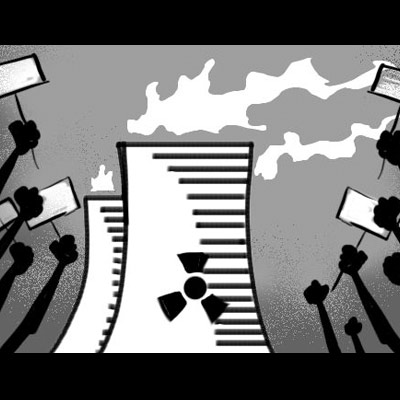
East Anglian Daily Times 31st May 2021, Campaigners are going on the offensive against plans for two new nuclear
reactors on the Suffolk coast – saying “it’s not too late to Stop
Sizewell C”. The new advertising campaign is launched today by Stop
Sizewell C, part of a fight-back to highlight the reasons it claims why the
£20billion power project should be opposed.
The campaign will include a touring digital “Advan” visiting tourism and leisure hotspots on the
Suffolk coast between 10am and 6pm with striking and colourful imagery by
award-winning advertising creative Antony Easton and featuring the voices
of residents and campaigners, including Bill Nighy, Diana Quick, Bill
Turnbull and Charlie Haylock.
https://www.eadt.co.uk/news/stop-sizewell-c-ad-campaign-launch-8015014
Bill Gates’ Terra Power nuclear reactors for Wyoming
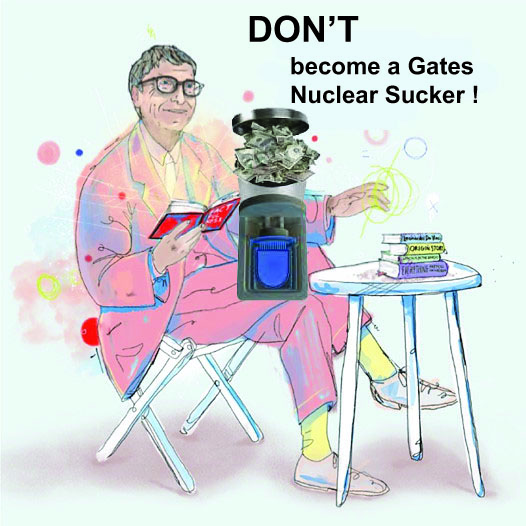
This is a long article – reads like a handout from Bill Gates. But at the end, they do tack on a little caveat
Nuclear power experts have warned that advanced reactors could have higher risks than conventional ones. Fuel for many advanced reactors would have to be enriched at a much higher rate than conventional fuel, meaning the fuel supply chain could be an attractive target for militants looking to create a crude nuclear weapon, a recent report said.
Bill Gates’ next generation nuclear reactor to be built in Wyoming, Reuters 3 June 21, Timothy Gardner, Valerie Volcovici Billionaire Bill Gates’ advanced nuclear reactor company TerraPower LLC and PacifiCorp (PPWLO.PK) have selected Wyomingto launch the first Natrium reactor project on the site of a retiring coal plant, the state’s governor said on Wednesday.
TerraPower, founded by Gates about 15 years ago, and power company PacifiCorp, owned by Warren Buffet’s Berkshire Hathaway (BRKa.N), said the exact site of the Natrium reactor demonstration plant is expected to be announced by the end of the year. ……….
China warns of ‘nuclear showdown’ with the United States
China warns of ‘nuclear showdown’ with the United States
China has launched a blistering attack on the West threatening it with a “high intensity showdown” possibly involving nuclear weapons. news.com.au, 2 June 21,
The Chinese government’s mouthpiece newspaper has launched a blistering attack on the United States threatening it with a “high intensity showdown” possibly involving nuclear weapons.
Hu Xijin, the editor of the Chinese state-run newspaper the Global Times, said enhancing China’s nuclear program was now vital to the country’s “strategic deterrence” against the United States.
His comments came shortly after US President Joe Biden called for a further investigation into the origins of the coronavirus pandemic.
…….. “We must be prepared for a high-intensity showdown between the US and China, at which point a large number of DF-41 and JL-2 and JL-3 will be the backbone of our strategic will. “Our nuclear missiles must be so numerous that the US elite will tremble at the thought of military confrontation with China at that time.
“On such a basis, we can calmly and actively manage our differences with the US and avoid all kinds of gunfire. https://www.news.com.au/technology/innovation/military/china-warns-of-nuclear-showdown-with-the-united-states/news-story/19b296a931815cc6e9a7947c95c95116

Biden previously called Submarine-Launched Nuclear Cruise Missile a ”bad idea”, but now it’s in the Budget.

U.S. Navy Funds New Submarine-Launched Nuclear Cruise Missile Biden Called ‘A Bad Idea’ .Forbes, David Hambling, 2 June 21, I’m a South London-based technology journalist, consultant and author Budget documents reveal the U.S. Navy is developing a new nuclear-armed Sea-Launched Cruise Missile, known as SLCM-N. President Biden described the missile as “a bad idea” when campaigning in 2019. Though an
obvious candidate for cancelation, the SLCM-N program is going ahead.
…………………Putting nuclear cruise missile on Virginia-class would be a quick and easy way of ramping up strategic capability. Currently, the only nuclear-armed subs are the fourteen Ohio-class ballistic missile subs, so SLCM-N on Virginia-class would more than double that at a stroke.
But there are downsides.
“Putting nuclear-armed missiles back on the conventional surface or attack submarine fleets of the Navy is a real cause for concern,” says Monica Montgomery, a research analyst at the Center for Arms Control and Non-Proliferation. “Doing so would erode the higher-priority conventional missions of the Navy by reducing the number of conventional missiles each boat could carry and increase the possibility of conflict escalation through miscalculation by blurring the line between conventional and nuclear cruise missiles on these vessels.”
“Putting nuclear-armed missiles back on the conventional surface or attack submarine fleets of the Navy is a real cause for concern,” says Monica Montgomery, a research analyst at the Center for Arms Control and Non-Proliferation. “Doing so would erode the higher-priority conventional missions of the Navy by reducing the number of conventional missiles each boat could carry and increase the possibility of conflict escalation through miscalculation by blurring the line between conventional and nuclear cruise missiles on these vessels.”
“Reversing the Trump administration’s plan to pursue a nuclear SLCM should be an easy choice,” Reif says.
Reif describes the SLCM-N as “a costly hedge on a hedge” – an extra backup for an already extensive and growing nuclear arsenal – making it a pointless extravagance.
Reif also notes that the nuclear capability will come at the expense of urgently needed conventional weapons.
“Arming such vessels with nuclear cruise missiles would also reduce the number of conventional missiles each boat could carry, at a time when Pentagon leaders argue that strengthening conventional deterrence is their top priority in the Asia-Pacific,” says Reif.
Biden himself noted that fielding low-yield weapons as alternatives to more powerful ballistic missiles would make the U.S. “more inclined to use them” and increase the risk of a nuclear war.
The SLCM-N project is starting small, just $15.2 million in this year’s budget compared to the billions for other nuclear programs. But if the analysts are right, the U.S. Navy is buying trouble rather than new capability. https://www.forbes.com/sites/davidhambling/2021/06/02/us-navy-funds-new-submarine-launched-nuclear-cruise-missile-biden-called-a-bad-idea/?sh=405441c022b2
“Unqualified” —who is allowed to talk about nuclear power ?

Who is allowed to talk about nuclear power?
“Unqualified” — Beyond Nuclear International Nuclear trolls turn on the aggression as industry collapses around them
By Linda Pentz Gunter, 31 May 21, “My advice is to look out for engineers. They begin with sewing machines and end up with nuclear bombs.” Marcel Pagnol
My normal rule of thumb is to ignore the unrelenting pro-nuclear trolls who pepper our sites with incessant nay-saying and, occasionally ad hominem name-calling. After all, they have only one goal in mind — other than to get up one’s nose — which is to dominate and thereby control the narrative.
But recently, a recurring theme has emerged which needs addressing, because it speaks to who is allowed to talk about nuclear power.

In the view of the trolls, if you have no scientific credentials, you are unqualified to comment on nuclear power. In my case, because I have a degree in English literature, albeit garnered many decades ago, I have, according to the trolls, no authority to expound on the negatives of nuclear anything.
There are some rather obvious flaws in this argument, the first being that it pre-supposes the human brain is incapable of learning anything new after the age of 21.
But it also exemplifies the theme of a recent conference held virtually in Linz by three Austrian anti-nuclear groups which examined the “Atomic Lie.” How has this lie been perpetuated? Answer: by those who promote the nuclear power industry anointing themselves as the only authority deemed knowledgeable enough to either comment about it or make decisions on its use and safety.
What kind of a world we will end up with if, heaven forfend, we allow only engineers to decide what is in our best interest (with all due respect to my friends who are engineers and who, I suspect, would be the first to agree)? Hence the Pagnol quote at the top of this page.
This would mean, for example, that the Western Shoshone should have no say in the fate of the land in Nevada they steward, because nuclear engineers have decided it is perfectly alright to dig a big hole in the volcanic ground and bury nuclear waste there.
It would mean that Marshall Islanders should have nothing whatever to say about the generations of cancers and birth defects they have suffered as the unwilling guinea-pigs of atomic “testing,” because after all it was scientists who decided that it was perfectly alright to detonate 67 atomic bombs there and obliterate islands………..
This intent to dominate the narrative — in our case the nuclear power one — and silence critics, was aptly described by Arnie Gundersen in his presentation during the Linz conference. He talked about the origins of the nuclear cabal — under its alias, Atoms for Peace — in which its originator, President Dwight D. Eisenhower, described the program as solving “‘the fearful atomic dilemma’ by finding some way in which the ‘miraculous inventiveness of man’ ‘would not be dedicated to his death, but consecrated to his life’”.
Gundersen looked up the Oxford Dictionary definition of “consecrate” and found it to mean “to make sacred or declare sacred; dedicate formally to a religious or divine purpose.”

This nuclear priesthood into which believers were ordained did not welcome skeptics gladly, however. Quite the reverse. When Gundersen, a nuclear insider at the time, blew the whistle on a safety issue, he was told to his face that “in this business, you’re either with us or against us, and you just crossed the line.” He was not only fired but persecuted in further attempts to silence him.
Luckily for our movement, the nuclear inquisition was largely unsuccessful in this latter endeavor, but it came at a steep price for Gundersen and his family personally.
As evidenced by Gundersen’s experience, these attacks are by no means restricted to us “lay” advocates, but they have grown observably more vitriolic. This disturbing trend was flagged recently by Andy Stirling of the Science Policy Research Unit at the University of Sussex in the UK, responding to an aggressive critique of an article he co-authored in Nature Energy.
His detractor, Jeremy Gordon, “goes beyond pejorative labelling to actively ridicule any position not in-principle supportive of nuclear power,” Stirling wrote in a letter published in Nuclear Engineering International. “This is exemplified by Gordon’s intemperate ad hominem attack on my fellow author (the globally leading energy scholar Benjamin Sovacool).” Stirling concludes that it is “reasoned policy discourse that forms the lifeblood of democracy itself”.
We are a grand collective of experts. We do have scientists and engineers —Gundersen is one — to whom we can turn in order to unravel the deeper complexities of the workings of nuclear power plants or uranium mines or reprocessing facilities. But it is not the only dimension that matters. So we need Indigenous people, and writers, and lay advocates, and economists, and historians, and artists, and humanitarians to tell this story and set the agenda, too.
Even if it is rocket science, rocket scientists aren’t the only ones who count when decisions are made about whether to put missiles into space or send a nuclear-powered probe to Mars.
As Pagnol implied, when you leave it to the scientists and engineers, you get a Manhattan Project, where consciences pricked far too late. Imagine if humanitarian voices had held sway inside Los Alamos. Would things have turned out differently?
The Japanese mothers, evacuated from Fukushima, who shout on street corners through bullhorns about their experiences, warning Japan never to re-embrace nuclear power, don’t hold engineering degrees. But they know a lot more about the real, lived consequences of using nuclear power than any of the nuclear industry trolls.
Those voices of truth need to be heard, along with those who practice sound science and honest engineering and who are willing to call out the dangers, not control the lies.
It’s one thing to have command of the facts, which of course we must. But it’s another to accompany these with a hefty dose of integrity. And that’s what we are here for, even if we can quote Shakespeare while we are doing it.
Linda Pentz Gunter is the international specialist at Beyond Nuclear and writes for, curates and edits Beyond Nuclear International. https://beyondnuclearinternational.org/2021/05/30/unqualified/
Abdul Khan and the illegal and immoral world of nuclear proliferation

Smiling Buddha and how Khan network’s inside job made Pakistan a nuclear state, Financial Express, May 31, 2021 By Subhash Jangala
By conducting the first confirmed nuclear weapons test by a non-member of the UN Security Council, India caught the entire international intelligence community unawares.
On 26th May 2021, India celebrated Buddha Jayanti, the anniversary of the great soul obtaining enlightenment. Exactly 47 years ago, on the Buddha Jayanti of 1974, Smiling Buddha ushered India into the nuclear age. By conducting the first confirmed nuclear weapons test by a non-member of the UN Security Council, India caught the entire international intelligence community unawares. Thousands of miles away from the test site in Pokhran, Rajasthan was Almelo, a tiny municipality in eastern Netherlands. As the news of the Indian nuclear test trickled in, a silent storm started brewing in a man’s heart. 1974’s Buddha Jayanti not only heralded India’s geopolitical assent, it also flagged off Pakistan’s steep decline in international status and reputation.
Abdul Qadeer Khan, a Pakistani metallurgical engineer employed in a uranium enrichment plant in Almelo, took India’s successful nuclear test to heart. In his work, Khan got several opportunities to work with Highly Enriched Uranium (HEU) in Netherlands. Khan quickly dispatched a letter to Pakistan’s newly powerful Prime Minister, Zulfiqar Ali Bhutto explaining why HEU was the miracle cure for Pakistan’s struggle with making a plutonium bomb. After several attempts, Bhutto did give Khan a hearing and was impressed. Thus began a decades-long saga of illegal and criminal transfer of nuclear materials and technologies from across the world into Pakistan and then via Pakistan to other states like Iran and Libya.
Back in the 1970s and 80s, Anti Money Laundering regulations and investigation into Proliferation Finance weren’t as developed as they are today. This allowed Khan and the Pakistan Government to run a complex international network of benami companies and suppliers that have created and helped sustain a nuclear black economy. A deeper study of the proliferation episode makes for interesting reading……………………..
As years progressed, Khan used his contacts to obtain components from across the world, expanding Pakistan’s chances of testing their first nuclear bomb. At the same time, the West, unmindful of Khan’s dogged belief in his experiment and Pakistan’s tenacious resolve to match India kiloton-for-kiloton, took a laid-back and lackadaisical route to control the black nuclear economy that Pakistan was helping create. Eventually, his endearing nature and Pakistan’s resolute support, Khan managed to assemble all the components required to make his nuclear dream go live.
However, Khan’s dream did not end with making Pakistan a formidable opponent to India in the nuclear battlefield. Khan expanded his activities deeper into the illegal and immoral world of nuclear proliferation. He helped create a market where any budding nuclear adventurist could order from a list of raw materials which could be sourced from any of the reliable suppliers across the world. A “Flipkart for Nuclear dummies” was born. This market place operated from the following places, [shown on map on original]
Khan Research Laboratories in Pakistan and SMB Computers in Dubai (a front company) operated as the hub and the rest were all procurement or delivery centres. An investigation by the Malaysian Police into one such transaction revealed the inner workings of the network. The same is presented below in 8 steps. [diagram on original]
……….. The most important link that connected the entire network was the fact that, apart from the core individuals, no entity had a clue what was being produced and for whom.
The fraud continued for a while. On a fateful day in 2004, the US exposed the outlines of the world;s largest nuclear proliferation ring. In a dramatic television appearance Feb. 4, Abdul Qadeer Khan, the father of the Pakistani bomb, acknowledged that he had secretly provided North Korea, Libya, and Iran with crucial building blocks for making nuclear weapons. Khan, considered a national hero, apologized to the people of Pakistan for what he had done and was pardoned by the then Pakistani President Gen. Pervez Musharraf shortly afterward.
On this Buddha Jayanti, the story of AQ Khan should alert sanctions compliance organisations across the globe to the new challenges like the need to transition to a low carbon energy economy, introduction of advanced materials and growth of underground markets through the dark web. International organisations should re-dedicate themselves to technology, co-operative diplomacy, Exchange of Information and cross-cultural capacity building to ensure rogue proliferators and black markets don’t emerge in newer and more sophisticated areas of crime.
(The author is an officer of the 2011 batch of the Indian Revenue Service. He is presently posted as Joint Director (OSD) in the Directorate General of Administration and Taxpayer Services at New Delhi. Prior to this role, he worked as a Tax Diplomat in the Foreign Tax and Tax Research Division of the Central Board of Direct Taxes. The views expressed are the author’s own, and do not represent the official position or policy of the Government of India or Financial Express Online.) https://www.financialexpress.com/world-news/smiling-buddha-and-how-khan-networks-inside-job-made-pakistan-a-nuclear-state/2262259/
UN nuclear watchdog chides Iran over uranium enrichment
UN nuclear watchdog chides Iran over uranium enrichment, DW, 31 May 21,
A report by IAEA chief Rafael Grossi says Tehran has failed to provide a proper explanation for the discovery of uranium particles at three sites across the country. The IAEA suspects Iran has been boosting uranium enrichment since April, dampening hopes of salvaging the JCPOA
The UN nuclear watchdog said on Monday that Iran has failed to explain traces of processed uranium found at several undeclared sites.
A quarterly report by IAEA chief Rafael Grossi said Iran is continuing to breach enrichment limits set by a 2015 nuclear accord, and that Tehran has failed to provide enough information about the discovery of uranium.
IAEA chief Rafael Grossi has been warning about the direction of Tehran’s compliance with the 2015 deal for weeks.
The report added that Iran has produced more than 2.4 kilograms (5.2 lbs) of nearly weapons grade uranium: a clear breach of the deal that its leadership says it wants to salvage.
The move to enrich uranium to a purity level of nearly 60% began in April, said the IAEA’s Grossi, who has for weeks been signaling that he is worried about the direction of Iran’s nuclear program.
……………….. What could happen next?
It will now be up to the three European powers to decide whether to go ahead with their plan amid fears it could undermine wider negotiations to revive the 2015 Iran nuclear deal at talks currently underway in Vienna.
…………. Iran started limiting inspections in a bid to put pressure on US President Joe Biden to lift crippling sanctions reimposed after then-President Donald Trump pulled out of the 2015 nuclear deal with Iran unilaterally in 2018.
According to the 2015 deal, Iran is only allowed to enrich uranium to a level of 4%, which is what is needed to fuel atomic reactors.
Nuclear weapons require uranium enriched to a level of 90%.
But once uranium has been taken to 60%, it is possible to enrich it to the higher level very quickly https://www.dw.com/en/un-nuclear-watchdog-chides-iran-over-uranium-enrichment/a-57733155
How decentralised energy will massively reduce grid costs

How decentralised energy will massively reduce grid costs,
100% Renewables 30th May 2021
There’s lots of information being pumped out by the anti-renewables lobby about how renewable energy causes great increases in the costs of upgrading electricity networks, but in fact there’s a lot of ways in which decentralised energy will actually REDUCE network costs. A recent study from California emphasizes how the cheapest path to clean energy is a mixture of large renewable energy projects and small decentralised renewables (mainly solar pv) linked to battery storage systems. Solar pv-battery systems can exist as a mixture of domestic systems and larger ground-mounted systems.
There isn’t yet a similar study for the UK (the big energy companies who fund these things won’t want the truth leaking out!), but there’s logic to suggest that much the same thing might be the case in the UK. Sure, the UK isn’t as sunny as California, although in winter there’s a lot of wind power. But in any case the untold secret of a decentralised solar-plus-battery system is that the batteries will soak up electricity produced from whatever sources so as to even out the pressures on the electricity network. By reducing pressure on the electricity network both transmission and distribution network costs can be reduced.
Of course the rub is that these battery systems which will reduce network costs are themselves made economic by being associated with the solar pv systems – and the same things works the other way around. The solar pv systems are made more economic by being alongside the batteries. Indeed these sorts of systems are so cheap that they are being installed already in the UK at two levels without even any incentives for the Government.
First, as reported in the trade press, companies like Gridserve are doing solar pv-battery systems. The batteries can soak up energy from the solar panels when there is a lot of electricity being generated and electricity prices are low and then sell it back to the grid at other times of the day or night when electricity prices are higher.
This sort of ‘arbitrage’ trading can now also be done at the second, domestic household, level. An even quieter revolution is taking place as ordinary households can now install solar pv plus battery systems for costs that would have been regarded as fancifully low five years ago. One company called ‘Growatt‘ is currently offering a system comprising 5.5 kW of solar pv and a 6.5 kWh battery for less than £9000 (note: five or so years ago you could have been doing well just to get the solar pv for that price!). This system works best with a supplier like Octopus who offers a time-of-use tariff so that you can charge the batteries when it is cheapest to do so whether from the grid or the solar panels. Solar pv is used when buying electricity from the network is expensive and stored in the battery when network prices are cheap. Then the batteries can power consumption when prices are higher and it isn’t sunny enough to generate much solar pv.
Of course there’s also a novel energy storage company, Sunamp, that is offering the possibility the use solar pv to heat and store water. As they say: ‘SunampPV stores excess electricity from a Solar PV
array as heat. This delivers high flow rate hot water on demand, so that your instant water heater or combi boiler can operate much less, saving you money’
So, you’d expect the Government to be shouting about all of this and giving this nascent new decentralised energy industry a boost? No way! The Government will be told what is needed by the big energy companies who definitely want to keep decentralised energy a secret – especially as it gets in the way of their incessant demands for featherbedding, whether it is for capacity payment subsidies for large power stations or massive handouts to nuclear power plant.
Targeted surveillance threatens human rights defenders
OPERATING FROM THE SHADOWS: INSIDE NSO GROUP’S CORPORATE STRUCTURE https://www.amnesty.org/en/documents/doc10/4182/2021/en/
31 May 2021, Index number: DOC 10/4182/2021, Targeted surveillance is a serious threat facing human rights defenders globally. Though often carried out by states, this practice is enabled by digital surveillance tools provided by private companies. However, the lack of transparency about the operations of the surveillance industry poses a serious obstacle for victims of unlawful surveillance to seek accountability and the right to remedy. This briefing seeks to shed light on one specific company – NSO Group – and thereby help to overcome this barrier. This briefing is jointly written by Amnesty International, Privacy International and The Centre for Research on Multinational Corporations (SOMO).
Secrecy and connivance between UK’s coal and nuclear lobbies in Cumbria
There are high-level omissions in all the reporting and I fear that our
Government are only too happy for the focus to be myopically on climate
rather than the blatant cronyism of the coal mine boss having been
appointed to ADVISE the government on nuclear dump plans.
How on earth can
the forthcoming public inquiry be impartially decided upon by a government
minister when the most powerful tier of government, the Dept of Business,
Energy and Industrial Strategy is taking advice from the coal mine boss,
Mark Kirkbride? Not only that but the Coal Authority (who are under BEIS)
are deferring to the coal boss’s wish not to place the new Coal Authority
licence applications in the public domain. Again how on earth can there be
a public inquiry in which the public don’t know what the developer has
planned?
Keep Cumbrian Coal in the Hole 28th May 2021
Mr Nuclear Waste and Mr Coal – Top Cronies..Shhh
The USA-UK nuclear cabal

A toxic relationship that could destroy the world
The USA-UK nuclear cabal — Beyond Nuclear International The USA-UK nuclear cabal
May 30, 2021 by beyondnuclearinternational
A “special relationship” in nuclear collusion
By Leonard Eiger On March 16th the United Kingdom announced (in its Integrated Review of Security, Defence, Foreign Policy and Development titled Global Britain in a Competitive Age) that it will increase the limit on its nuclear arsenal for the first time in decades. Instead of maintaining a cap of 180 warheads (as it had previously stated), the UK will increase its stockpile cap to 260 warheads — a 40% increase. The review also broadens the role of nuclear weapons to include the possible use of nuclear weapons to address emerging technologies (cyber attacks). This is shocking and unacceptable! Indeed, it seems the British Empire is flexing its imperial muscles as it breaks away from the rest of Europe.
The announcement comes at a precarious time. A new nuclear arms race is brewing. The US and Russia, the two largest nuclear powers (with some 93 percent of global nuclear warheads) are failing to lead the world away from reliance on nuclear weapons, and other nations are following their lead. At a time when most nations are calling for an end to nuclear weapons (UN Treaty on the Prohibition of Nuclear Weapons), rather than setting a positive example and supporting the treaty, the UK is instead fanning the flames of proliferation. And, it is getting loads of help along the way.
Just prior to the announcement a spokesperson for the UK Ministry of Defence reiterated the longstanding claim that the “UK is committed to maintaining its independent nuclear deterrent, which exists to deter the most extreme threats to our national security and way of life.” The British have been claiming their nuclear weapons systems to be “independent” for so long that the world seems to have accepted this fraudulent claim. In fact, the UK’s nuclear forces are anything but independent, and there is ample evidence to disprove the governments claim. To more fully understand the situation, we need to study a bit of history.
Although the US declared its independence when the original 13 American colonies severed their political connections to Great Britain, the two countries have since found it mutually beneficial to develop a strong alliance; what has become known as the “Special Relationship,” an unofficial term used to describe certain aspects of their relationship including political, diplomatic, cultural, economic, and military.
And nowhere has their relationship been quite as special as is the case involving nuclear weapons. The two countries signed the Mutual Defence Agreement (MDA) in 1958, a secretly negotiated bilateral treaty on nuclear weapons cooperation under which both countries agreed to exchange classified information to develop their respective nuclear weapon systems.
The treaty permits “the transfer between the United States and the United Kingdom of classified information concerning atomic weapons; nuclear technology and controlled nuclear information; material and equipment for the development of defence plans; training of personnel; evaluation of potential enemy capability; development of delivery systems; and the research, development, and design of military reactors.”
The MDA was last amended in 2014. In 2018, officials from the UK and US met to celebrate the 60-year anniversary of the MDA. The official statement from the US State Department referred to “promoting peace to fighting terrorism” and “advancing each nations’ mutual understanding of the safety, security, and reliability of their respective nuclear weapon stockpiles,” while making no mention of the direct transfers of nuclear warheads and their delivery systems (missiles) currently deployed on British Trident submarines.
The MDA only came about after the UK developed its own thermonuclear weapons, and the US then agreed to supply delivery systems, and designs and nuclear material for British warheads. Both countries’ ballistic missile submarines are commonly referred to as “Trident” due to the missiles they both carry, which are the Trident II D5 submarine-launched ballistic missile manufactured by Lockheed Martin Aerospace, a US-based corporation.
The UK leases the Trident missiles, deployed on its four Trident submarines, from the US government. Those submarines return regularly to the US Trident submarine base in King’s Bay, Georgia, for the maintenance and replacement of the missiles. As of 2017, the UK paid an annual contribution of approximately $16.7 million towards the operations cost of Kings Bay.
Both the Trident missile’s navigation and guidance systems are the same on both US and UK versions, and utilize US software. The US Navy supplies weather and gravity data to both US and UK submarines, which is vital to ensuring missile accuracy. Both hardware and software for the fire control system (used to assign targets to warheads) are produced by US companies. The hardware is produced by General Dynamics, a US-based corporation.
All test launches of Trident missiles from British Trident submarines are conducted off the Florida coast and under US supervision. The test data is analyzed by the Applied Physics Laboratory (APL) at Johns Hopkins University and by the Charles Stark Draper Laboratories.
The UK’s warheads are what the UK calls “Holbrook”, and are mounted on Trident II D5 missiles carried on British Vanguard-class “Trident” nuclear submarines. The “Holbrook” thermonuclear warhead is nearly identical to the US W76 warhead deployed on those same Trident II D5 missiles on US OHIO-class “Trident” submarines. Is this a case of plagiarism or just an all-too cozy, mutually beneficial relationship between two nuclear-armed nations?
According to the British government, their nuclear warheads are designed, manufactured and maintained by the Atomic Weapons Establishment (AWE) in the UK. AWE has been managed since 2000 by AWE Management, of which US-based Lockheed Martin Corporation is a partner, holding a 51 percent stake in the operation. It was announced in late 2020 that the British government will regain direct control of operations and development of AWE as of June 2021.
A UK Ministry of Defence fact sheet states that their warheads are “designed and manufactured in the U.K.” However, a declassified U.S. Department of Energy (DOE) document obtained by the Federation of American Scientists (FAS) under the Freedom of Information Act directly links the warhead designs on U.S. and U.K. Trident missiles. Alas, the British nuclear warheads are not so British (if at all)……………
Looking into the future, both the US and UK are engaged in programs to build the next generation of ballistic missile submarines to replace their current fleets. Both new subs will incorporate the US-built Common Missile Compartment. There has been talk about a replacement missile for the D5, and a new warhead called the W93 is already being planned, and the British government is engaged in extensive lobbying for it.
The evidence is abundantly clear. The British Trident system is dependent on and, in many ways controlled by, the US in essentially every aspect. It is by no means an “independent nuclear deterrent,” even if you believe in deterrence theory. And this has deeply important meaning under international legal norms.
Article I of the Treaty on the Non-Proliferation of Nuclear Weapons (NPT), to which the US and UK are both signatories, explicitly prohibits the “transfer to any recipient whatsoever nuclear weapons or other nuclear explosive devices or control over such weapons or explosive devices directly, or indirectly…” Under international law the NPT should take precedence over the the US-UK mutual defence agreement, and therefore the agreement would be in violation of the NPT.
The US and UK have, for decades, undermined both the letter and intent of the NPT through their special nuclear relationship. They have found ways to make their nuclear arsenals more effective and continue to modernize in the name of deterrence and national security. And now, the UK has announced an increase in its nuclear warhead cap. While the UN and a number of countries have chimed in with grave concerns about the UK’s announcement, the US has been noticeably silent. Might the US be pondering such an increase? After all, aren’t treaties meant to be broken (as we saw in the prior US administration)?
sn’t it time to end the special nuclear relationship? Isn’t it time to re-think “deterrence” theory and “national security”? Isn’t it time to recognize that so long as nuclear weapons exist, humanity teeters on the brink of disaster?
And speaking of history, we need to learn the lessons of the past. We have come close to the nuclear precipice far too many times, and the (Doomsday) clock is still ticking. We can’t stop the Clock until we abolish nuclear weapons. Empires come and empires go, yet humanity has only one chance. As for the US and UK, it is time for citizens of both nations to come together to pressure our governments to end the special nuclear relationship, and sign and ratify the Treaty on the Prohibition of Nuclear Weapons, showing real leadership towards a world free of the threat of nuclear annihilation.
Leonard Eiger is a student and practitioner of nonviolence, working for the abolition of all nuclear weapons. He coordinates media and outreach for Ground Zero Center for Nonviolent Action, the Puget Sound Nuclear Weapon Free Zone and the NO To NEW TRIDENT Campaign.
Headline photo by Nicholas Raymond/Creative Commons/www.freestock.ca https://beyondnuclearinternational.org/2021/05/30/the-usa-uk-nuclear-cabal/
UK’s Sizewell B nuclear complex continues to be offline for safety reasons
East Anglian Daily Times 29th May 2021 , Sizewell B will not generate electricity for three months to enable
essential repairs – and EDF will have to submit a “robust safety case” to
regulators before it is switched back on. The nuclear power station – which
supplies electricity for 2.5million homes and businesses – has already been
offline for six weeks for regular maintenance and refuelling and it was
hoped it would be working again next week.
However, signs of wear have been
found on a thermal sleeve – and the repairs needed will mean keeping the
complex offline until August 30. The problem was anticipated and EDF
engineers worked with specialists to assess the issue.
https://www.eadt.co.uk/news/sizewell-nuclear-power-station-switched-off-for-repairs-8013660
Despite the Small Nuclear Reactor push from Bill Gates and the rest of the nuclear lobby, we already have the technologies to decarbonise our global economy.

Dave Elliott: The International Energy Institute’s new Global Energy
Roadmap sets a pathway to net zero carbon by 2050, with, by 2040, the
global electricity sector reaching net-zero emissions. It wants no
investment in new fossil fuel supply projects, and no further final
investment decisions for new unabated coal plants. And by 2035, it calls
for no sales of new internal combustion engine passenger cars. Instead it
looks to ‘the immediate and massive deployment of all available clean and
efficient energy technologies, combined with a major global push to
accelerate innovation’.
For its part, on that issue, the IEA report
summary says ‘most of the global reductions in CO2 emissions between now
and 2030 in the net zero pathway come from technologies readily available
today. But in 2050, almost half the reductions come from technologies that
are currently only at the demonstration or prototype phase’. So it says
‘this demands that governments quickly increase and reprioritise their
spending on research and development – as well as on demonstrating and
deploying clean energy technologies – putting them at the core of energy
and climate policy.
. Progress in the areas of advanced batteries,
electrolysers for hydrogen, and direct air capture and storage can be
particularly impactful’. U.S. Climate Envoy John Kerry had already
relayed the suggestion that ‘50 percent of the reductions we have to make
to get to net zero are going to come from technologies that we don’t yet
have.’ And Bill Gates had claimed that that solar, wind and batteries
were not enough, so we need ‘miracle technologies’ to decarbonize our
global economy.
Commenting on this issue, Prof Mark Jacobson from Stanford
University said it all depends on what you mean by ‘new’. Yes, we need
to improve wind, solar, storage and transmission systems, but what was
really being hinted at in these statements was that we need other
completely new technologies- such as Small Modular Reactors, Carbon Capture
systems and such like. He says we don’t need them: ‘we have 95% of the
technologies we need today and the know-how to get the rest’:
Renew Extra 29th May 2021
https://renewextraweekly.blogspot.com/2021/05/the-iea-set-out-way-ahead.html
1 This Month

Read the Public Inquiry Report, the Commissioners’ report, Surrendering Australia: The AUKUS Deception is available to download for free at aukuspublicinquiry.com. Or just watch the replay of the National Press Club Luncheon.


19 November – Webinar – The Reality of Reprocessing
Time: 11:00 AM Pacific Time (US & Canada) / 2:00 PM Eastern / 7:00 PM UK / 8:00 PM CET
Register for the Zoom Event Here



Shut down the radiation-damaged Heysham nuclear reactors now
To see nuclear-related stories in greater depth and intensity – go to https://nuclearinformation.wordpress.com

Say No to NASA’s Reckless Nuclear Reactor on the Moon
Say No to NASA’s Reckless Nuclear Reactor on the Moon
-
Archives
- November 2026 (103)
- October 2026 (302)
- September 2026 (339)
- August 2026 (330)
- July 2026 (355)
- June 2026 (287)
- May 2026 (306)
- April 2026 (356)
- March 2026 (251)
- February 2026 (267)
- January 2026 (308)
- December 2025 (358)
-
Categories
- 1
- 1 NUCLEAR ISSUES
- business and costs
- climate change
- culture and arts
- ENERGY
- environment
- health
- history
- indigenous issues
- Legal
- marketing of nuclear
- media
- opposition to nuclear
- PERSONAL STORIES
- politics
- politics international
- Religion and ethics
- safety
- secrets,lies and civil liberties
- spinbuster
- technology
- Uranium
- wastes
- weapons and war
- Women
- 2 WORLD
- ACTION
- AFRICA
- Atrocities
- AUSTRALIA
- Christina's notes
- Christina's themes
- culture and arts
- Events
- Fuk 2022
- Fuk 2023
- Fukushima 2017
- Fukushima 2018
- fukushima 2019
- Fukushima 2020
- Fukushima 2021
- general
- global warming
- Humour (God we need it)
- Nuclear
- RARE EARTHS
- Reference
- resources – print
- Resources -audiovicual
- Weekly Newsletter
- World
- World Nuclear
- YouTube
-
RSS
Entries RSS
Comments RSS

