Dialogue between Russia and USA must include subject of offensive weapons in outer space – says Russian Foreign Minister
US plans to deploy arms in space should be taken into account in bilateral dialogue-LavrovAmericans are working on a program for the deployment of offensive weapons in outer space in the context of the global missile defense system, Russian Foreign Minister said https://tass.com/politics/1311759
VLADIVOSTOK, July 8. /TASS/. The Russian-US dialogue on strategic stability should reckon with the US program for the deployment of offensive weapons in outer space, Russian Foreign Minister Sergey Lavrov said on Thursday.
“Naturally, when we speak about the necessity to discuss strategic stability in all of its dimensions, we mean all the factors influencing this strategic stability. They include nuclear weapons, non-nuclear strategic weapons, offensive and defensive strategic systems, and, of course, we cannot ignore the fact that the Americans are working on a program for the deployment of offensive weapons in outer space in the context of the global missile defense system,” he said in a lecture he delivered at the Far Eastern Federal University..
The much-awaited Russian-American summit took place in the Swiss capital city of Geneva on June 16. Presidents Vladimir Putin of Russia and Joe Biden of the United States discussed the current state of and prospects for further development of bilateral relations, issues of strategic stability and international matters. The leaders said in a joint statement that the sides planned to launch a comprehensive bilateral dialogue on strategic stability.
U.S. Space Force opens new centre to facilitate war in space
Space Force opens facility to improve war-fighting capabilities CWISRNET, By Nathan Strout 9 July, 21WASHINGTON — The U.S. Space Force opened a new satellite operations center July 7 at Kirtland Air Force Base in New Mexico designed to advance the still nascent service’s space war-fighting capabilities.
The Rendezvous and Proximity (REPR) Satellite Operations Center was established by the Space and Missile Systems Center’s Innovation and Prototyping Directorate as a new workspace to drive on-orbit experimentation and demonstrations with prototype satellites and payloads………….
The center is just the latest space-related facility established at Kirtland Air Force Base, which serves as a home to SMC’s Innovation and Prototyping Directorate, the Air Force Research Laboratory’s Space Vehicles Directorate, and the Space Rapid Capabilities Office. In November, AFRL opened the Deployable Structures Laboratory, a $4 million building dedicated to developing deployable space structures. A few months later, AFRL began construction on the $3.5 million Skywave Technology Laboratory, which will house its space environment research. Most recently, AFRL announced the opening of a $12.8 million Space Warfighting Operations Research and Development, or SWORD, lab to track objects on orbit,
advance satellite cybersecurity, and develop autonomous capabilities. https://www.c4isrnet.com/battlefield-tech/space/2021/07/08/space-force-opens-up-new-operations-center-to-improve-war-fighting-capabilities/
Key witness in Julian Assange case admits to lies in indictment

A major witness in the United States’ Department of Justice case against Julian Assange has admitted to fabricating key accusations in the indictment against the Wikileaks founder. STUNDIN, Bjartmar Oddur Þeyr Alexanderssonbjartmar@stundin.is, Gunnar Hrafn Jónssonritstjorn@stundin.is 26 June 21,
The witness, who has a documented history with sociopathy and has received several convictions for sexual abuse of minors and wide-ranging financial fraud, made the admission in a newly published interview in Stundin where he also confessed to having continued his crime spree whilst working with the Department of Justice and FBI and receiving a promise of immunity from prosecution.
The man in question, Sigurdur Ingi Thordarson, was recruited by US authorities to build a case against Assange after misleading them to believe he was previously a close associate of his. In fact he had volunteered on a limited basis to raise money for Wikileaks in 2010 but was found to have used that opportunity to embezzle more than $50,000 from the organization. Julian Assange was visiting Thordarson’s home country of Iceland around this time due to his work with Icelandic media and members of parliament in preparing the Icelandic Modern Media Initiative, a press freedom project that produced a parliamentary resolution supporting whistleblowers and investigative journalism.
The United States is currently seeking Assange’s extradition from the United Kingdom in order to try him for espionage relating to the release of leaked classified documents. If convicted, he could face up to 175 years in prison. The indictment has sparked fears for press freedoms in the United States and beyond and prompted strong statements in support of Assange from Amnesty International, Reporters without borders, the editorial staff of the Washington Post and many others.
US officials presented an updated version of an indictment against him to a Magistrate court in London last summer. The veracity of the information contained therein is now directly contradicted by the main witness, whose testimony it is based on.
No instruction from Assange
The court documents refer to Mr Thordarson simply as “Teenager” (a reference to his youthful appearance rather than true age, he is 28 years old) and Iceland as “NATO Country 1” but make no real effort to hide the identity of either. They purport to show that Assange instructed Thordarson to commit computer intrusions or hacking in Iceland.
The aim of this addition to the indictment was apparently to shore up and support the conspiracy charge against Assange in relation to his interactions with Chelsea Manning. Those occurred around the same time he resided in Iceland and the authors of the indictment felt they could strengthen their case by alleging he was involved in illegal activity there as well. This activity was said to include attempts to hack into the computers of members of parliament and record their conversations.
In fact, Thordarson now admits to Stundin that Assange never asked him to hack or access phone recordings of MPs. His new claim is that he had in fact received some files from a third party who claimed to have recorded MPs and had offered to share them with Assange without having any idea what they actually contained. He claims he never checked the contents of the files or even if they contained audio recordings as his third party source suggested. He further admits the claim, that Assange had instructed or asked him to access computers in order to find any such recordings, is false.
Nonetheless, the tactics employed by US officials appear to have been successful as can be gleaned from the ruling of Magistrate Court Judge Vanessa Baraitser on January 4th of this year. Although she ruled against extradition, she did so purely on humanitarian grounds relating to Assange’s health concerns, suicide risk and the conditions he would face in confinement in US prisons. With regards to the actual accusations made in the indictment Baraitser sided with the arguments of the American legal team, including citing the specific samples from Iceland which are now seriously called into question.
Other misleading elements can be found in the indictment, and later reflected in the Magistrate’s judgement, based on Thordarson’s now admitted lies. One is a reference to Icelandic bank documents. The Magistrate court judgement reads: “It is alleged that Mr. Assange and Teenager failed a joint attempt to decrypt a file stolen from a “NATO country 1” bank”………..
On the FBI radar
Thordarson’s rogue acts were not limited to communications of that nature as he also admits to Stundin that he set up avenues of communication with journalists and had media pay for lavish trips abroad where he mispresented himself as an official representative of WikiLeaks………………………. https://stundin.is/grein/13627/key-witness-in-assange-case-admits-to-lies-in-indictment/
“EDF’s Chinese dream seems well and truly over”- a minor nuclear incident becomes a major industrial disaster for the French nuclear firm.
Le Monde 6th July 2021 “EDF’s Chinese dream seems well and truly over”. The minor incident at a Chinese nuclear power plant could have repercussions … on French industrial cooperation with China, explains Frédéric Lemaître, correspondent for “Le Monde” in Beijing, in his column.
Since June 14, Fabrice Fourcade, the head of EDF in China, and the economic service of the French Embassy in Beijing have been absent subscribers. Within hours, an apparently minor technical incident at a Chinese nuclear power plant turned into a perfect crisis for the French electrician.
The cluster bomb came from the United States. Monday June 14, while the American President, Joe Biden, is in Europe, the American channel CNN announces that the French Framatome, a few days earlier, informed the White House of an “imminent radiological threat” to the nuclear power station of Taishan, in the far south of China.
Why Framatome? Because this plant, in which EDF is a 30% shareholder, was built on the model of the French EPR and because Framatome is one of its main architects. “The largest commercial contract signed by the French nuclear industry and, more generally, in the history of civil nuclear power, this project strengthens Framatome’s presence in China, one of the most promising markets in the world,” explains the group on its site.
Why the United States? The answer is complicated. According to Le Figaro, the French engineer in charge of monitoring the file – in fact, a leak of fuel rods supplied by Framatome – warned a colleague across the Atlantic because it is the American subsidiary which manages the database of all incidents in the group.
Problem: Taishan’s majority shareholder, Chinese CGN, is on the US government’s blacklist. In order to work on the
case and possibly come to Taishan’s aid, an American must therefore obtain the approval of the White House. EDF communicators may try to put out the fire by explaining, from Paris, that the incident is minor, while the industrial disaster is major.
The episode proves that EDF, a 30% shareholder in Taishan, has no say in the matter, is not informed of technical problems and cannot get a board meeting. In Xi Jinping’s China, where any situation is the result of a balance of power, a minority has – by definition – no rights.
The 44 year process for demolishing TEPCO’s Fukushima No. 2 nuclear station, – with nowhere to put the radioactive trash.
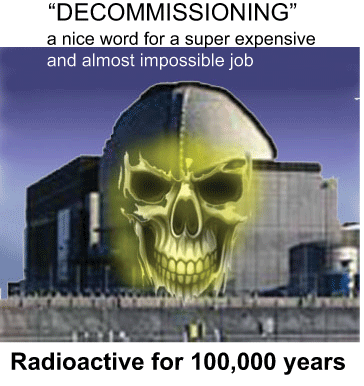
TEPCO grants 1st peek at work to scrap Fukushima No. 2 plant, http://www.asahi.com/ajw/articles/14389389 THE ASAHI SHIMBUN, July 7, 2021
Work to prepare for the decommissioning of Tokyo Electric Power Co.’s Fukushima No. 2 nuclear plant is under way in Fukushima Prefecture, a mammoth project the operator plans to complete in about 44 years.
However, TEPCO has not yet secured a location to dispose of a large amount of radioactive waste, a difficult task that it plans to tackle in the years to come.
The project is expected to prove an enormous challenge to TEPCO as the utility needs to proceed with it while simultaneously taking on the even more formidable task of cleaning up the crippled Fukushima No. 1 nuclear plant.
Together, 10 reactors are housed at the two plants: four at the No. 2 plant and six at the No. 1 plant.
The company will need to train workers for the decommissioning, secure a workforce for the lengthy project that will span decades, and put measures in place to ensure the safety of the facilities when hit by natural disasters such as torrential rain, earthquakes and tsunami.
On July 6, reporters were granted access to the decommissioning work at the Fukushima No. 2 plant so they could show the work to the public for the first time since the process began on June 23.
The No. 2 plant is located on the coastal side of the towns of Tomioka and Naraha, and the work on July 6 revolved around decontamination at its No. 1 reactor building.
Donning protective gear, 12 workers from TEPCO and contractors cleaned up pipes around water tanks with a high-pressure washer in a room for inspecting the equipment that inserts and removes control rods from the reactor core.
The work to decommission the No. 2 plant will be divided into four stages, with each stage spanning a decade or so, according to TEPCO.
In the first stage, operators will focus on decontaminating the facility to prepare for the following stages.
After that, TEPCO expects to move on to the second stage, which involves the demolition and removal of equipment surrounding the nuclear reactors. The reactors will be dismantled and cleared in the third stage, and then finally the reactor buildings in the fourth stage.
“We are determined to steadily and safely proceed with the decommissioning work while gaining support and understanding from local residents,” said Takaki Mishima, the head of the plant.
Perhaps the most crucial question that must be resolved will be where high-level and low-level waste that will be produced from the decommissioning process should be temporarily stored before a permanent disposal site is found.
A total of 9,532 spent nuclear fuel rods–highly radioactive materials–are stored at the plant.
Fukushima officials are demanding they be removed from the prefecture by the time the decommissioning wraps up in fiscal 2064.
But no municipalities in Japan want to accept and house such dangerous materials in their backyards.
TEPCO estimates the amount of low-level radioactive waste will total 52,000 tons.
To dispose of the waste, it needs to be buried underground at a depth from several meters to more than 70 meters from the surface, depending on the levels of radioactivity.
But as of now, no potential sites in Japan for temporary storage have been determined, not to mention a final disposal site.
“That is a question we will address later,” an official from the utility said.
Although the Fukushima No. 2 plant was damaged by the Great East Japan Earthquake and tsunami of 2011, it was spared from a meltdown and has been idle since.
TEPCO’s decision to pull the plug on the plant came at the insistence of the prefectural government and local residents.
(This article was compiled from reports by Shigetaka Kodama, Tetsuya Kasai, Yu Fujinami and Tsuyoshi Kawamura.)
As wind power becomes half the price of nuclear, nuclear power may not be an election winner.

this is not a time to invest in nuclear technology, but offshore wind looks increasingly attractive.
The problem seems to be that getting the Hinkley Point C reactors off the ground brought out into the open how expensive and delay-prone building a new nuclear plant has become.
Nuclear Resurgence Fades In The UK; Huge Expectations For Offshore Wind, Seeking Alpha 4th July 2021
Approximately, 16% of UK power comes from nuclear reactors, which are almost all due to close soon. The UK Government has gone quiet about nuclear renewal.
In late June, the UK All-Party Parliamentary Group (APPG) on Nuclear Energy has called for urgent action to revitalise the industry, a call which seems too late to be viable.
New UK report suggests massive expansion of offshore wind to 108 GW; this will drive new power needs in the UK. Investors might consider the risks of investing in nuclear technology now and instead consider the rise of companies involved with offshore wind. Four years ago, I wrote about the struggling global nuclear industry and specifically nuclear power in the UK.
I updated the UK situation earlier this year. Very recent developments suggest that a further update is timely because what happens in the UK will impact the global nuclear industry.
Here I suggest that this is not a time to invest in nuclear technology, but that offshore wind looks increasingly
attractive. It takes a long time to get nuclear permitting sorted out and construction commissioned. The clock is ticking for the renewal of the UK nuclear fleet which currently provides ~16% of UK power requirements, but all but one of the existing fleet of 15 reactors plans to close by 2030.
The problem seems to be that getting the Hinkley Point C reactors off the ground brought out into the open how expensive and delay-prone building a new nuclear plant has become.
Probably focusing the Government’s mind is the fact that financing Hinkley Point C has left the public with a “strike price” of 92 pounds/MWh and 35 year inflation adjusted bill, which is already more than double the cost of a major wind farm (e.g. Dogger Bank wind farm has a strike price of 40 pounds/MWh, IRR of 5.6% and payback time 17 years).
No doubt the recently updated 100+ year program to decontaminate the UK’s 17 old nuclear facilities is another confronting fact that may not be an election winner.
New Mexico leaders oppose Holtec nuclear waste site proposal

The opposition contended the project posed too much risk and could upend other major industries in the region like agriculture …
”This leaves us extremely concerned that ‘interim’ storage sites …. will become the country’s de facto permanent nuclear waste storage facilities. We cannot accept that result.”
New Mexico leaders oppose Holtec International nuclear waste site proposed near Carlsbad, Adrian HeddenCarlsbad Current-Argus 6 Jul 21, New Mexico’s top Democrat political leaders voiced their opposition to a proposed storage facility for nuclear waste to be built near Carlsbad and Hobbs, warning the U.S. Department of Energy that the site could become a perpetual dumping ground as a permanent repository does not exist.
Holtec International applied for a 40-year license to build a consolidated interim storage facility (CISF) at a remote location near the Eddy-Lea county line, through the federal Nuclear Regulatory Commissions (NRC) in 2017.
The company signaled it planned to file for subsequent licenses to continue to operate the facility during 20 phases which would total more than 100,000 metric tons of waste when complete.
The site would be designed to hold spent nuclear fuel rods, brought in via rail from nuclear power plants around the country, on a temporary basis while a permanent repository is built….
The opposition contended the project posed too much risk and could upend other major industries in the region like agriculture and fossil fuels.
In the July 2 letter, New Mexico Democrat U.S. Sens. Martin Heinrich and Ben Ray Lujan, U.S. Rep. Melanie Stansbury (D-NM) and New Mexico Gov. Michelle Lujan Grisham said Holtec’s proposal contained no plan for permanent disposal of the waste and thus risked leaving it in New Mexico forever.
Lujan Grisham was a frequent critic of the project since its inception, calling the proposal “economic malpractice” for the risk she said it posed to other industries.
The lawmakers also opposed a similar proposal to expand a facility owned by Waste Control Specialists in Andrews, Texas along that state’s western border with New Mexico, to also hold the spent fuel.
“We are strongly opposed to the interim storage of spent nuclear fuel (SNF) and high-level waste (HLW) in New Mexico. There is currently no permanent disposal strategy for SNF and HLW in place at the Department of Energy,” the letter read.
“This leaves us extremely concerned that ‘interim’ storage sites with initial 40-year leases, like one proposed for (the NRC) licensing in New Mexico, will become the country’s de facto permanent nuclear waste storage facilities. We cannot accept that result.”
New Mexico had already seen the impacts of radiation exposure, the letter read, resulting from uranium mining and other activities in the state………….. https://www.currentargus.com/story/news/local/2021/07/06/new-mexico-leaders-oppose-holtec-nuclear-waste-site-near-carlsbad/7872429002/
Both UK and European Commission want nuclear energy excluded from clean energy investments -”otherwise clean energy finances would not be credible”.

Nuclear energy has been excluded from the UK government’s Green Financing Framework, while several EU Member States have written to the European Commission to oppose nuclear’s inclusion in the bloc’s green taxonomy.
Nuclear energy faces hurdles to be included in clean energy investments, Word Nuclear News, 02 July 2021,
The UK’s Green Financing Framework describes how the government plans to finance expenditures through the issuance of green gilts and the retail Green Savings Bonds that it says will be critical in tackling climate change and other environmental challenges. The framework, which was produced and published yesterday by the Treasury, sets out the basis for identification, selection, verification and reporting of the green projects that are eligible for such financing.
Under ‘exclusions’, the document says: “Recognising that many sustainable investors have exclusionary criteria in place around nuclear energy, the UK government will not finance any nuclear energy-related expenditures under the Framework.”…………
The letter – signed by the environment or energy ministers of Austria, Denmark, Germany, Luxembourg and Spain – points to “shortcomings” in the JRC report, which was published in April.
The ministers said the JRC’s conclusion was “a misconception” and based on “two grave methodological shortcomings”.
The JRC “neglects to address the residual nuclear risk, assessing only the normal operation of nuclear power plants” and “disregards the life-cycle approach”, according to the ministers.
“We recognise the sovereign right of Member States to decide for or against nuclear power as part of their national energy systems. However, we are concerned that including nuclear power in the Taxonomy would permanently damage its integrity, credibility and therefore its usefulness,” they wrote………….. https://world-nuclear-news.org/Articles/UK-excludes-nuclear-from-green-taxonomy
British households will pay for nuclear construction long before it supplies any electricity, under the govt’s new plan
the model is deeply unpopular with nuclear sceptics, who have said it would expose consumers to construction risks, notably any cost overruns.
EDF and its junior partner in Hinkley Point C, the Chinese state-owned company CGN, are financing the plant in return for a generous electricity price of £92.50 per megawatt hour guaranteed by the government.
The price… was agreed in 2012 and rises in line with inflation.
UK households face energy bills surcharge to fund nuclear plants
Ministers plan legislation for new financing model to underpin building of £20bn Sizewell C reactor, Ft.com
Nathalie Thomas in Edinburgh and Jim Pickard in London, 7 jul 21,
British households face paying a surcharge on their energy bills to pay for new nuclear power stations in the UK as the government draws up legislation to underpin the new financing plan. Ministers aim to unveil legislation in the autumn that would enable Sizewell C, a £20bn nuclear power plant proposed by France’s EDF for England’s east coast, to go ahead through a financing model called the regulated asset base, said several people briefed on the government’s thinking. This model would mean that energy bill payers start contributing towards the cost of the plant at Sizewell in Suffolk long before it generates any electricity.
Boris Johnson has said he wants the government to reach a final investment decision on “at least one” new nuclear power station before the next general election ……….
Under the model, owners of a power station could add chunks of the value of a partly built plant to what would be its regulated asset base in stages during the risky construction phase. They could then charge an agreed regulatory return on this value to UK households through their energy bills, in a move designed to cover financing costs. State-backed EDF has said the steady returns guaranteed by the regulated asset base model would allow it to attract low-risk investors such as pension funds and would lead to overall savings for consumers.
But the model is deeply unpopular with nuclear sceptics, who have said it would expose consumers to construction risks, notably any cost overruns.
EDF is planning to use a design called the European Pressurised Reactor at Sizewell C, but budgets have spiralled at other projects deploying similar technology, including the Hinkley Point C plant under construction in Somerset. The Treasury is supportive of the regulated asset base model, said several people briefed on the department’s stance…..
EDF and its junior partner in Hinkley Point C, the Chinese state-owned company CGN, are financing the plant in return for a generous electricity price of £92.50 per megawatt hour guaranteed by the government.
The price, which was controversial with environmental groups, was agreed in 2012 and rises in line with inflation. UK ministers entered formal negotiations with EDF over the financing of Sizewell C in December. The government said at the time that consideration would be given “to the potential role of government finance in construction, provided there is clear value for money for consumers and taxpayers”.
Stephen Thomas, emeritus professor of energy policy at the University of Greenwich, said he imagined that the government would have to take a “strategic stake” in Sizewell C “as a signal to investors that this won’t be allowed to collapse, and ditto EDF”. It is not yet clear what role CGN will play in Sizewell C. CGN is financing 20 per cent of the development costs of the Suffolk plant alongside EDF but some Conservative MPs are opposed to Chinese involvement in critical UK infrastructure. CGN declined to comment. https://www.ft.com/content/d115c0bd-da17-4bbf-a070-b62b525c7fa1
Residents of Andrews County, Texas, speak out against plan for high level nuclear waste dump.

Andrews County commissioners hear from public on nuclear waste proposal, –Caitlin Randle, MRT.com/Midland Reporter-Telegram July 6, 2021, ANDREWS,
During a packed special meeting of the Andrews County Commissioners’ Court on Tuesday, residents spoke out against plans by the company Waste Control Specialists to store high-level nuclear waste.Andrews County Judge Charlie Falcon said he called the meeting to discuss whether the court should pass a resolution stating their opposition to the storage of high-level waste in the county.
….. Several residents said they were against bringing high-level waste to the community and asked the commissioners to pass a resolution opposing the project. Some also said they were angry at WCS, which currently operates a low-level waste site in Andrews, for promising that they would never store high-level waste then going back on that promise………..
Julie Stevenson, who said she was a nurse and lifelong Andrews resident, spoke to the court about the medical side effects from exposure to radiation. She said low-level radiation poisoning is akin to receiving 100 to 150 X-rays, while mid-level exposure can cause your gastrointestinal tract to shut down.
“High-level, you will die within three days,” she said. “I don’t want to take that risk for my children. I’m sure you have a lot of geologists speaking with you … but they’re looking at charts, graphs, they’re not looking at my 7-year-old son and my 87-year-old grandfather……… https://www.mrt.com/news/local/article/Andrews-County-commissioners-hear-from-public-on-16297025.php
Taiwan Shuts Another Reactor as Part of Nuclear-Free Goal,
Taiwan Shuts Another Reactor as Part of Nuclear-Free Goal, Jul 7, 2021, Power, by Darrell Proctor
Taiwan’s move to end the country’s use of nuclear power continues, with Unit 1 of the Kuosheng Nuclear Power Plant being shut down. The reactor was taken offline at the end of June, six months ahead of its scheduled Dec. 27 retirement, with officials saying spent fuel-storage capacity constraints meant the unit could not be refueled…..
Taiwanese President Tsai Ing-wen has made closing the country’s nuclear power plants a goal of her administration, saying the three remaining reactors will go offline by mid-2025. The 985-MW Kuosheng unit, which officials said generated about 3% of the nation’s total electricity, is the third of what were six operating reactors to be shuttered……
Decommissioning Plan
Taipower first proposed its decommissioning plan for Kuosheng Unit 1 in 2018, and it was approved by the Atomic Energy Commission (AEC) in October 2020. The plan included construction of a dry storage facility for used fuel, but a dispute between the city of New Taipei and Taipower has delayed the project.
Officials in New Taipei have yet to issue a permit for the storage facility, which would house the used fuel rods from Unit 1. The New Taipeil government has said it does not want a permanent spent nuclear fuel storage facility within the city……..
Tsai, who took over as Taiwan’s first female president in 2016, is the leader of the Democratic Progressive Party (DPP). The DPP has championed a “nuclear-free homeland.” The president in her opening remarks at the renewable energy-focused EnergyTaiwan event in October 2020 called on Taiwan to be “a leading center of green energy in the Asia-Pacific region.”
New policy initiatives have supported that goal, including amendments to the country’s Electricity Act that mandated nuclear power generation be ended no later than 2025. The government has said it expects moving away from coal-fired and nuclear power, and support of gas-fired generation and renewable energy, will generate about $36 billion in investment in the country’s energy sector by 2025, along with creating 20,000 jobs………..
Voters also on Aug. 28 will be asked about a plan to restart construction of the Lungmen Nuclear Power Plant 4. That plant, designed with two General Electric advanced BWR reactors and generation capacity of 2,700 MW, was expected to be completed in 2004 after construction began in 1999. Numerous delays, cost overruns, and government opposition put the project on hold in 2014. Even if voters approve a restart, analysts have said it’s unlikely the project would resume under the current administration. https://www.powermag.com/taiwan-shuts-another-reactor-as-part-of-nuclear-free-goal/
France refuses to hand over maps of nuclear tests in Algeria
France refuses to hand over maps of nuclear tests in Algeria, https://en.mehrnews.com/news/175726/France-refuses-to-hand-over-maps-of-nuclear-tests-in-Algeria 7 Jul 21, France conducted several nuclear tests in the Algerian desert between 1960 and 1966, four of which were conducted on the ground and 13 underground.
Tayeb Zitouni, minister of Mujahideen and Right Holders of Algeria made the remarks on the occasion of the 59th anniversary of the country’s independence from France (July 5, 1962).
According to Al-Quds Al-Arabi newspaper, Zitouni said that the French side refuses to provide a map showing the exact location of the tests and the disposal of nuclear and chemical waste.
He said France had so far taken no action to clear the area of the contaminated areas or pay compensation to the victims of the nuclear tests.
The case of the atomic explosions is one of the most important unresolved cases between Algeria and France, which has reached a stalemate in negotiations, and on any occasion, the Algerian authorities ask Paris to accept responsibility for this sensitive case.
Nuclear fusion – a very unlikely development for Bradwell, UK
Bradwell is no soft touch for Nuclear Fusion’s fantasy. Bradwell looks
an unlikely bet for fusion whoever is behind the scheme. And it will not
happen anytime soon – the 2040s at the very earliest – far too late to
save the planet. Even if the experiment goes ahead it is far more likely to
go to a more welcoming site.
Maylands Mayl July Edition 7th July 2021
Iran trying to enrich uranium metal that could help develop nuclear weapon, UN watchdog says,
Iran trying to enrich uranium metal that could help develop nuclear weapon, UN watchdog says, ABC, 7 jul 21, Iran has begun the process of producing enriched uranium metal in a move that could help it develop a nuclear weapon, the UN atomic watchdog says.
Key points:
- Tehran says it is trying to develop fuel for a research reactor
- Donald Trump abandoned the US-Iran nuclear deal while US president
- The move could torpedo talks seeking to bring both nations back into the deal
Britain, France and Germany have threatened talks to revive the 2015 Iran nuclear deal in light of the news, while the United States has described it as an “unfortunate step backwards”.
Tehran said the steps, which were disclosed by the International Atomic Energy Agency (IAEA) on Tuesday, were aimed at developing fuel for a research reactor.
US and European officials made clear that Iran’s decision would complicate, and potentially torpedo, indirect US-Iranian talks seeking to bring both nations back into compliance with the 2015 deal, which was abandoned by former US president Donald Trump.
The Joint Comprehensive Plan of Action (JCPOA) imposed curbs on Iran’s nuclear program to make it harder for Tehran to develop fissile material for nuclear weapons in return for the lifting of economic sanctions………………https://www.abc.net.au/news/2021-07-07/iran-nuclear-move-threatens-to-torpedo-deal-talks-with-us/100275388
The all-American story of the twin horrors climate change and nuclear weapons
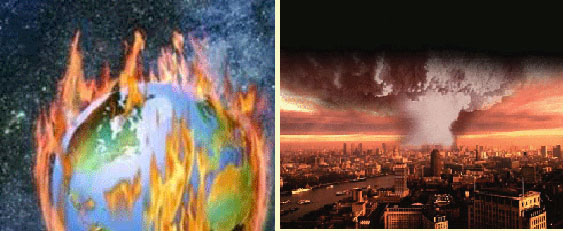
An All-American Horror Story
SCHEERPOST, BY MODERATOR July 5, 2021, An All-American Horror StoryThree-quarters of a century of nuclear follies — and that’s just for starters. By Tom Engelhardt / TomDispatch. Yes, once upon a time I regularly absorbed science fiction and imagined futures of wonder, but mainly of horror. What else could you think, if you read H.G. Wells’s War of the Worlds under the covers by flashlight while your parents thought you were asleep? Of course, that novel was a futuristic fantasy, involving as it did Martians arriving in London to take out humanity. Sixty-odd years after secretly reading that book and wondering about the future that would someday be mine, I’m living, it seems, in that very future, however Martian-less it might be. Still, just in case you hadn’t noticed, our present moment could easily be imagined as straight out of a science-fiction novel that, even at my age, I’d prefer not to read by flashlight in the dark of night.
I mean, I was barely one when Hiroshima was obliterated by a single atomic bomb. In the splintering of a moment and the mushroom cloud that followed, a genuinely apocalyptic power that had once rested only in the hands of the gods (and perhaps science-fiction authors) became an everyday part of our all-too-human world. From that day on, it was possible to imagine that we — not the Martians or the gods — could end it all. It became possible to imagine that we ourselves were the apocalypse. And give us credit. If we haven’t actually done so yet, neither have we done a bad job when it comes to preparing the way for just such a conclusion to human history.
Let’s put this in perspective. In the pandemic year 2020, 76 years after two American atomic bombs left the cities of Hiroshima and Nagasaki in ashes, the world’s nuclear powers actually increased spending on nuclear weapons by $1.4 billion more than they had put out the previous year. And that increase was only a small percentage of the ongoing investment of those nine — yes, nine — countries in their growing nuclear arsenals. Worse yet, if you happen to be an American, more than half of the total 2020 “investment” in weaponry appropriate for world-ending scenarios, $37.4 billion to be exact, was plunked down by our own country. (A staggering $13.3 billion was given to weapons maker Northrop Grumman alone to begin the development of a new intercontinental ballistic missile, or ICBM, the one thing our thoroughly troubled world obviously needs.) In all, those nine nuclear powers spent an estimated $137,000 a minute in 2020 to “improve” their arsenals — the ones that, if ever used, could end history as we know it.
In the Dust of the History of Death
Imagine for a second if all that money had instead been devoted to creating and disseminating vaccines for most of the world’s population, which has yet to receive such shots and so be rescued from the ravages of Covid-19, itself a death-dealing, sci-fi-style nightmare of the first order. But how could I even think such a thing when, in the decades since this country dropped that first atomic bomb on Hiroshima, it’s learned its atomic lessons all too well? Otherwise, why would its leaders now be planning to devote at least $1.7 trillion over the next three decades to “modernizing” what’s already the most modern nuclear arsenal on the planet?…………
Consider it an irony of the first order, then, that U.S. leaders have spent years focused on trying to keep the Iranians from making a single nuclear weapon, but not for a day, not for an hour, not for a second on keeping this country from producing ever more of them and the delivery systems that would distribute them anywhere on this planet. In that light, just consider, for instance, that, in 2021, the U.S. is preparing to invest more than $100 billion in producing a totally new ICBM, whose total cost over its “lifespan” (though perhaps the correct word would be “deathspan”) is already projected at $264 billion — and that’s before the cost overruns even begin. All of this for a future that… well, your guess is as good as mine.
Or consider that, only recently, the American and Russian heads of state, the two countries with by far the biggest nuclear arsenals, met in Geneva, Switzerland, and talked for hours, especially about cyberwar, while spending little appreciable time considering how to rein in their most devastating weaponry and head the planet toward a denuclearized future.
And keep in mind that all of this is happening on a planet where it’s now commonplace scientific knowledge that even a nuclear war between two regional powers, India and Pakistan, could throw so many particulates into the atmosphere as to create a nuclear winter on this planet, one likely to starve to death billions of us. In other words, just one regional nuclear conflict could leave the chaos and horror of the Covid-19 pandemic in the unimpressive dust of the history of death………….
While it’s seldom thought of that way, climate change should really be reimagined as the equivalent of a slow-motion nuclear holocaust……….
there was no mushroom cloud, but rather a “cloud” of greenhouse gases forming over endless years beyond human vision. Still, let’s face it, on this planet of ours, not in 2031 or 2051 or 2101 but right at this very moment, we’re beginning to experience the equivalent of a slow-motion nuclear war.
In a sense, we’re already living through a modern slo-mo version of Hiroshima, no matter where we are or where we’ve traveled. At this moment, with an increasingly fierce megadrought gripping the West and Southwest, the likes of which hasn’t been experienced in at least 1,200 years, among the top candidates for an American Hiroshima would be Phoenix (118 degrees), Las Vegas (114 degrees), the aptly named Death Valley (128 degrees), Palm Springs (123 degrees), and Salt Lake City (107), all record temperatures for this season. A recent report suggests that temperatures in famed Yellowstone National Park are now as high or higher than at any time in the past 20,000 years (and possibly in the last 800,000 years). And temperatures in Oregon and Washington are already soaring in record fashion with more to come, even as the fire season across the West arrives earlier and more fiercely each year. As I write this, for instance, California’s Big Sur region is ablaze in a striking fashion, among growing numbers of western fires. Under the circumstances, ironically enough, one of the only reasons some temperature records might not be set is that sun-blocking smoke from those fires might suppress the heat somewhat. ………
In this desperately elongated version of nuclear war, everything being experienced in this country (and in a similar fashion around the world, from Australia’s brutally historic wildfires to a recent heat wave in the Persian Gulf, where temperatures topped 125 degrees) will only grow ever more extreme, even if, by some miracle, those nuclear weapons are kept under wraps. After all, according to a new NASA study, the planet has been trapping far more heat than imagined in this century so far. In addition, a recently revealed draft of an Intergovernmental Panel on Climate Change report suggests that our over-heating future will only grow worse in ways that hadn’t previously been imagined. Tipping points may be reached — from the melting of polar ice sheets and Arctic permafrost (releasing vast amounts of methane into the atmosphere) to the possible transformation of much of the Amazon rain forest into savannah — that could affect the lives of our children and grandchildren disastrously for decades to come. And that would be the case even if greenhouse-gas releases are brought under control relatively quickly.
Once upon a time, who could have imagined that humanity would inherit the kinds of apocalyptic powers previously left to the gods or that, when we finally noticed them, we would prove eerily unable to respond? Even if another nuclear weapon is never used, we stand capable, in slow-motion fashion, of making significant parts of our world uninhabitable — or, for that matter, if we were to act soon, keeping it at least reasonably habitable into the distant future.
Imagine, just as a modest start, a planet on which every dollar earmarked for nuclear weapons would be invested in a green set of solutions to a world growing by the year ever warmer, ever redder, ever less inhabitable. https://scheerpost.com/2021/07/05/an-all-american-horror-story/
1 This Month

Read the Public Inquiry Report, the Commissioners’ report, Surrendering Australia: The AUKUS Deception is available to download for free at aukuspublicinquiry.com. Or just watch the replay of the National Press Club Luncheon.


19 November – Webinar – The Reality of Reprocessing
Time: 11:00 AM Pacific Time (US & Canada) / 2:00 PM Eastern / 7:00 PM UK / 8:00 PM CET
Register for the Zoom Event Here



Shut down the radiation-damaged Heysham nuclear reactors now
To see nuclear-related stories in greater depth and intensity – go to https://nuclearinformation.wordpress.com

Say No to NASA’s Reckless Nuclear Reactor on the Moon
Say No to NASA’s Reckless Nuclear Reactor on the Moon
-
Archives
- November 2026 (103)
- October 2026 (302)
- September 2026 (339)
- August 2026 (330)
- July 2026 (355)
- June 2026 (287)
- May 2026 (306)
- April 2026 (356)
- March 2026 (251)
- February 2026 (267)
- January 2026 (308)
- December 2025 (358)
-
Categories
- 1
- 1 NUCLEAR ISSUES
- business and costs
- climate change
- culture and arts
- ENERGY
- environment
- health
- history
- indigenous issues
- Legal
- marketing of nuclear
- media
- opposition to nuclear
- PERSONAL STORIES
- politics
- politics international
- Religion and ethics
- safety
- secrets,lies and civil liberties
- spinbuster
- technology
- Uranium
- wastes
- weapons and war
- Women
- 2 WORLD
- ACTION
- AFRICA
- Atrocities
- AUSTRALIA
- Christina's notes
- Christina's themes
- culture and arts
- Events
- Fuk 2022
- Fuk 2023
- Fukushima 2017
- Fukushima 2018
- fukushima 2019
- Fukushima 2020
- Fukushima 2021
- general
- global warming
- Humour (God we need it)
- Nuclear
- RARE EARTHS
- Reference
- resources – print
- Resources -audiovicual
- Weekly Newsletter
- World
- World Nuclear
- YouTube
-
RSS
Entries RSS
Comments RSS

