Health impacts of nuclear accidents

Too expensive, too slow: Even the baseload argument doesn’t work for nuclear. ReNeweconomy, Mark Diesendorf 29 October 2021
”’………………………………………Health impacts of nuclear accidents
Another misleading pro-nuclear statement revived following the Fukushima Daiichi disaster in 2011 is that no excess cancer incidence has been observed around Fukushima, implying that no cancers will be induced. The logical error is to assume that the absence of evidence implies no impact.
It is still too early for most types of cancer, which have latent periods of 20–60 years, to appear around Fukushima. The only cancers likely to appear within a decade after exposure are thyroid cancer and leukemia.
A large increase in thyroid cancers has been observed in the region, but their cause is debated by some on the grounds that the increase could be the result of better screening. Leukemia is an uncommon disease and so even a large percentage increase would be impossible to verify statistically with high confidence (see UNSCEAR 2020).
Fortunately for the citizens of Tokyo, the wind was mostly blowing offshore during the meltdowns of three of the six Fukushima reactors, sending about 80 per cent of the emitted radioactive material out over the Pacific.
Soon after the disaster an exclusion zone was established around the power station and more than 100,000 people evacuated. For these reasons, Fukushima tells us very little about radiation-induced cancers.
The Chernobyl Forum, a group dominated by the International Atomic Energy Agency, estimated that the Chernobyl disaster in 1986 could be responsible for “up to 4000 cancer deaths” in Ukraine, Belarus and Russia. However, the disaster also sprayed radionuclides over large areas of Europe outside those countries.
The International Agency for Research on Cancer (Cardis et al. 2006) estimated that the disaster would be responsible for 16,000 cancer deaths in Europe by 2065.
Another estimate, by a team of medical researchers and practitioners in Ukraine, Belarus and Russia (Yablokov et al. 2006), found that the total number of deaths in their countries could be an order of magnitude higher, but a quantitative estimate was probably impossible due to uncertainties in the total quantities of radionuclides emitted, geographic distribution of radioactivity, and limitations in medical diagnosis and monitoring.
Most of the evidence that low-level radiation is carcinogenic comes from detailed studies of the survivors of Hiroshima and Nagasaki, medical professionals who worked with radiation, uranium miners, children who received CT scans, children living near nuclear power stations, and children who were exposed in utero in the bad old days when pregnant women were routinely x-rayed.
This is the basis of the linear-no-threshold model, the scientific understanding that the number of cancers induced by ionising radiation is proportional to the dose received and that there’s no threshold.
Was the Fukushima disaster “natural”?
Pro-nuclear campaigners claim that the disaster at Fukushima Daiichi was entirely the fault of the tsunami, that it was all just “a natural event”.
Yet the choice of technology cannot be exonerated, because it resulted in mass evacuation, compensation payments (huge in total but inadequate for individuals), destruction of the local agriculture and fishing industries, temporary loss of national tourism, temporary collapse of the electricity grid, massive removal of radioactive soil and vegetation, a multi-decades-long continuing process to decommission the reactors, and the need to import vast quantities of fossil fuels. (The latter would have been greatly reduced if the government’s prior commitment to nuclear energy hadn’t resulted in its neglect of renewables.)
Total costs have been estimated at over US$500 billion, while the nuclear power station was insured for only US$1.5 billion. …………………. https://reneweconomy.com.au/too-expensive-too-slow-even-the-baseload-argument-doesnt-work-for-nuclear/
Another example of climate change damaging the nuclear industry -jellyfish increase clogging up cooling systems of reactors

human-induced climate change has raised ocean water temperatures, setting conditions for larger-than-usual jellyfish populations. Further, the relatively warm water near nuclear power plant discharge outlets may attract jellyfish swarms, according to one study. Also, pollution has lowered oxygen levels in sea water, which jellyfish tolerate more than other marine animals, leading to their proliferation.
Jellyfish attack nuclear power plant. Again. Bulletin, By Susan D’Agostino | October 28, 2021Scotland’s only working nuclear power plant at Torness shut down in an emergency procedure when jellyfish clogged the sea water-cooling intake pipes at the plant, according to the Scotland Herald. Without access to cool water, a nuclear power plant risks overheating, with potentially disastrous results (see: Fukushima). The intake pipes can also be damaged, which disrupts power generation. And ocean life that gets sucked into a power plant’s intake pipes risks death.
The threat these gelatinous, pulsating, umbrella-shaped marine animals pose to nuclear power plants is neither new nor unknown. (Indeed, the Bulletin reported on this threat in 2015.) Nuclear power plant closures—even temporary ones—are expensive. To protect marine life and avert power plant closures, scientists are exploring early warning system options. …………
The clash between gelatinous jellyfish and hulking nuclear power plants has a long history. These spineless, brainless, bloodless creatures shut down the Torness nuclear power plant in 2011 at a cost of approximately $1.5 million per day, according to one estimate. Swarms of these invertebrates have also been responsible for nuclear power plant shutdowns in Israel, Japan, the United States, the Philippines, South Korea, and Sweden.
Humans have unwittingly nurtured the adversarial relationship between jellyfish and nuclear power plants. That is, human-induced climate change has raised ocean water temperatures, setting conditions for larger-than-usual jellyfish populations. Further, the relatively warm water near nuclear power plant discharge outlets may attract jellyfish swarms, according to one study. Also, pollution has lowered oxygen levels in sea water, which jellyfish tolerate more than other marine animals, leading to their proliferation.
Some look at jellyfish and see elegant ballerinas of the sea, while others view them as pests. Either way, they are nothing if not resilient. Jellyfish are 95 percent water, drift in topical waters and the Arctic Ocean, and thrive in the ocean’s bottom as well as on its surface. Nuclear power plant operators might take note: Older-than-dinosaur jellyfish are likely here to stay. https://thebulletin.org/2021/10/jellyfish-attack-nuclear-power-plant-again/
EU countries ramp up pressure to grant nuclear a ‘green’ investment label

EU countries ramp up pressure to grant nuclear a ‘green’ investment label, By Kira Taylor | EURACTIV.com, 29 Oct 21,
A group of ten European countries have heaped pressure on the European Commission to grant nuclear energy a ‘green’ label under the EU’s sustainable finance taxonomy, which acts as a guide to climate-friendly investments.
Energy ministers from the group of ten supported nuclear’s inclusion in the taxonomy during an extraordinary meeting of the EU’s Energy Council on Tuesday (26 October), convened hastily last week in response to rising energy prices.
A proposal from the European Commission is now expected “by the end of the year,” said Kadri Simson, the EU’s energy commissioner………
Earlier this month, a group of ministers from ten EU countries signed a joint opinion article saying “nuclear power must be part of the solution” to the climate crisis and included in the taxonomy.
The article was signed by the economy and energy ministers from Bulgaria, Croatia, Czechia, Finland, France, Hungary, Poland, Romania, Slovakia, and Slovenia.
At this week’s ministerial meeting, the Netherlands offered their support while Sweden also spoke favourably about nuclear………..
Anti-nuclear lobby
By far the smallest group of countries in this debate is those who have spoken out against the inclusion of nuclear energy in the taxonomy. Austria and Luxembourg are the most vocal countries here, with Denmark also cautioning against nuclear.
“We think that it would be wrong to raise nuclear energy as the alternative – it’s not cheap and it’s not secure. The prices for the production of nuclear energy are much higher than that for photovoltaic solar production,” said Gregor Schusterschitz from Austria.
Meanwhile, Luxembourg’s energy minister, Claude Turmes, highlighted the length of time it would take to build new nuclear power plants, saying these would not come online until around 2035, making them useless as a solution to this year’s energy crisis.
He added that “extending nuclear reactors beyond 40 years only represents 10 billion tonnes oil equivalent, so you can see it’s a highly risky, low impact strategy”.
“With taxonomy, I think we have to be extremely cautious. Because look at the financial markets, look at the investors, look at what’s happening already with manipulation,” he told ministers.
Germany – a long-standing opponent of nuclear power – was much more neutral at the meeting, perhaps owing to its yet-to-be-formed government.
“We need to decrease our energy dependency – people are seeing this as a reason for nuclear power. Obviously we can’t achieve consensus at an EU level on the role of nuclear power,” said Andreas Feicht, German energy and economy minister.
The environmental NGO WWF has also warned against including nuclear energy and fossil gas.
“Nothing would do more to undermine the European Green Deal than to include fossil gas and nuclear in the green taxonomy. At the time of the COP26 summit, institutionalised European greenwashing of this sort would send a totally counterproductive global signal,” said Henry Eviston, spokesperson on sustainable finance for WWF European Policy Office………
At some point, the Commission will have to side with either the pro- or anti-nuclear camp. Ministers at the meeting called on the European Commission to publish the delegated act as soon as possible and the executive is beginning to run out of road to kick the can down. https://www.euractiv.com/section/energy-environment/news/eu-countries-ramp-up-pressure-to-grant-nuclear-a-green-investment-label/
The push for nuclear power in space

“We know that over the years the U.S. Department of Energy has a terrible track record of worker and community contamination during these space nukes fabrication processes. One example is the 244 cases of worker contamination at Los Alamos National Laboratory in New Mexico while building the plutonium generators for the 1997 Cassini space probe,” said Gagnon.
“We’ve known for years that virtually every space mission that NASA flies is ‘dual use’—meaning that it serves two masters—civilian and military.

“The ultimate lesson here,” said Gagnon, “is that the nuclear industry views space as a new market for nuclear rockets, nuclear-powered rovers on Mars, and nuclear-powered mining colonies on the planetary bodies. Concern from Congress about impacts for life on planet Earth?
Not one word in that regard was expressed in the hearing”
The Push for Nukes in Space, CounterPunch, BY KARL GROSSMAN, 28 Oct 21,
The co-chairs of the Subcommittee on Space and Aeronautics of the U.S. House of Representatives Science, Space & Technology Committee were cheerleaders for the use of nuclear power in space at a hearing at which they presided over last week titled “Accelerating Deep Space Travel with Space Nuclear Propulsion.”
The advocacy of Representatives Don Beyer and Eddie Bernice Johnson for nukes in space was strongly criticized in a subsequent interview by Bruce Gagnon, coordinator of the Global Network Against Weapons and Nuclear Power in Space………
Witnesses testifying before the subcommittee included those from the aerospace industry including Michael French, vice president for space systems of the Aerospace Industries Association. ……….
There were no witnesses invited to the hearing who are critical of the use of nuclear power in space. Gagnon has been coordinator of the Global Network Against Weapons and Nuclear Power in Space since its formation in 1992. Based in Maine, it is the leading international organization opposing the use of nuclear power in space through protests, an annual “Space for Peace Week” and lawsuits through the years.
Said Gagnon: “The recent testimonies by aerospace industry operatives before the House Subcommittee on Space and Aeronautics were quite telling. But even more so were the opening statements by committee co-chairs, both Democrats, who hail from the heavily space-oriented states of Virginia and Texas. Both committee chairs Don Beyer (VA) and Bernice Johnson (TX) enthusiastically endorsed the proposal to continue spending hundreds of millions of dollars annually toward preparation of nuclear reactor flight tests in space.”
“The logic behind this dangerous ‘field test’ is to prepare to send nuclear-powered rockets to Mars,” said Gagnon. “Ostensibly these plans are to protect the ‘safety of our astronauts’ by reducing their exposure to in-space radiation with ‘shorter trips’ to the red planet because nuclear rockets would cut in half the travel time. This is very telling as concern over the safety of a couple of astronauts ‘trumps’ the safety of the Department of Energy workers who will be fabricating these space nuclear devices.”
“We know that over the years the U.S. Department of Energy has a terrible track record of worker and community contamination during these space nukes fabrication processes. One example is the 244 cases of worker contamination at Los Alamos National Laboratory in New Mexico while building the plutonium generators for the 1997 Cassini space probe,” said Gagnon.
“In addition, this concern over astronaut safety also ‘trumps’ the safety of all life on Earth as plans call for the testing of these nuclear rocket engines just over our heads in space,” he said.
“During the testimony of several aerospace industry executives at the hearing they admitted that current regulations that oversee ground testing of these reactors are ‘too restrictive’ because they require the capture and processing of ‘radiologic sources’ in order to ‘reduce contamination.’ Thus, with no regulation of testing in space the powerful alliance of aerospace and nuclear industry is asking Congress to give them a free pass,” Gagnon said.
“We’ve known for years that virtually every space mission that NASA flies is ‘dual use’—meaning that it serves two masters—civilian and military. During the committee hearing it was acknowledged that DARPA [the U.S. military’s Defense Advanced Research Projects Agency] has its own nuclear propulsion project for ‘national security interests’. This indicates that this proposed space nuke testing program will benefit the Pentagon’s goal to create space nuclear reactors for military operations in space.”
“The ultimate lesson here,” said Gagnon, “is that the nuclear industry views space as a new market for nuclear rockets, nuclear-powered rovers on Mars, and nuclear-powered mining colonies on the planetary bodies. Concern from Congress about impacts for life on planet Earth? Not one word in that regard was expressed in the hearing”
“If NASA wants to travel into space, then use solar power. There are ample examples of current successful solar missions into deep space,” he said.
“Let’s slow this run-away freight train down and let the public know about, and comment on, these dangerous plans to nuclearize space,” said Gagnon…………………………………………
There have been three accidents involving U.S. space nuclear missions,
the worst in 1964 involving a satellite powered by a plutonium-fueled RTG, the SNAP 9A. The satellite failed to achieve orbit, broke up in the atmosphere as it came crashing back down to Earth, its plutonium dispersing as dust extensively on Earth. Dr. John Gofman, an M.D. and Ph.D., professor at the University of California at Berkeley, formerly associate director of Lawrence Livermore National Laboratory, author of Poisoned Power and involved in early studies of plutonium, linked this accident to an increase in lung cancer on Earth.
Following the SNAP-9A accident, NASA pushed the development of solar power for satellites and now all U.S. satellites have energized by solar power—as is the International Space Station.
| Still, NASA for years insisted that nuclear power was necessary for power beyond the orbit of Mars—a claim that has been demonstrated to be false. In 2011, for example, NASA launched its Juno space probe to Jupiter—its electrical system energized by solar panels. It’s still up there studying Jupiter, despite sunlight being a hundredth of what it is on Earth.Still, the drive to utilize nuclear power in space continues being pushed hard…………………..Meanwhile, studies and articles have pointed to solar energy providing all the power needed for would-be settlements on Mars and the Moon. …………………… Karl Grossman, professor of journalism at State University of New York/College at Old Westbury, and is the author of the book, The Wrong Stuff: The Space’s Program’s Nuclear Threat to Our Planet, and the Beyond Nuclear handbook, The U.S. Space Force and the dangers of nuclear power and nuclear war in space. Grossman is an associate of the media watch group Fairness and Accuracy in Reporting (FAIR). He is a contributor to Hopeless: Barack Obama and the Politics of Illusion. https://www.counterpunch.org/2021/10/28/the-push-for-nukes-in-space/ |
UK public kept in the dark on household costs in paying for nuclear reactors before they’re built

it is somewhat dubious to replace a very expensive form of subsidy with one that promises to be merely expensive — and then claim that you have ‘saved’ money.
| How much longer is the government going to suppress the cost to households of achieving net zero carbon emissions, or try to imply, as business secretary Kwasi Kwarteng recently seemed to imply on the Today programme, that it won’t cost us at all? Even as he spoke Kwarteng was working on a new model for the funding of nuclear power stations that was unveiled yesterday in the form of the Nuclear Energy Finance Bill. The proposed legislation will impose levies on energy bills in order to subsidise the construction of new nuclear power stations. The new model of funding — called Regulated Asset Base — will replace the model by which Hinkley C is being constructed: the contracts for difference, or CfD, model which was used to entice EDF to undertake the project. The carrot is a guaranteed ‘strike’ price for electricity generated by the plant as soon as it starts generating electricity. Funding plants upfront may have the agreeable effect of cutting out Chinese finance. Moreover, the CfD model was failing to attract investors for other projects, such as the proposed new nuclear reactor at Wylfa, which Hitachi abandoned a year ago. But it will inevitably transfer risk to the consumer — should, say, the proposed new plant at Sizewell in Suffolk end up being abandoned before it begins generating power, taxpayers will already have paid towards the plant through their bills. Transferring that risk to the private sector was the whole reason for introducing the Hinkley form of funding in the first place. We don’t yet know how big the sting will be to energy consumers to finance Sizewell C through the new funding model — the Department for Business insists it will be ‘a few pounds a year’ per household during the early construction phases, followed by ‘less than £1 a month’ during the full construction phase. But it is somewhat dubious to replace a very expensive form of subsidy with one that promises to be merely expensive — and then claim that you have ‘saved’ money. Spectator 27th Oct 2021 https://www.spectator.co.uk/article/who-should-pay-for-nuclear- |
Sellafield workers told to return home due to flood warning – (climate change hitting nuclear again?)
NUCLEAR power plant workers are being told to return home due to heavy
rainfall flooding parts of Cumbria. A spokesman for the West Cumbrian power
plant Sellafield issued a statement online advising people to only travel
if strictly necessary.
The warning comes after the county was battered with
heavy rainfall and flooding. A spokesman for Sellafield said: “Cumbria
Police say the threat of flooding in Cumbria remains high and are advising
people to only travel if strictly necessary and to take pre-emptive action
to protect themselves.
Whitehaven News 28th Oct 2021
World is failing to make changes needed to avoid climate breakdown, report finds

Every corner of society is failing to take the “transformational change” needed to avert the most disastrous consequences of the climate crisis, with trends either too slow or in some cases even regressing, according to a major new global analysis.
Across 40 different areasspanning the power sector, heavy industry, agriculture, transportation, finance and technology, not one is changing quickly enough to avoid 1.5C in global heating beyond pre-industrial times, a critical target of the Paris climate agreement, according to the new Systems Change Lab report.
The dangerously sluggish pace of decarbonization, made plain just days before the start of crucial UN climate talks in Scotland, further highlights how the world is badly off track in its attempts to curb climate breakdown.
Guardian 28th Oct 2021
Nuclear has no place in Taiwan
While aiming for this ambitious goal, it is also paramount that the government considers national security, energy autonomy and the development of sustainable energy sources.
As a result, we need to focus our energies on developing renewables to achieve a green transition, and nuclear energy has no part in this.
https://www.taipeitimes.com/News/editorials/archives/2021/10/30/2003766999, By Pan Wei-yiu 潘威佑 Translated by Paul Cooper The public must be confused about the issue of whether it is appropriate to restart construction of the Fourth Nuclear Power Plant in New Taipei City’s Gongliao District (貢寮). The site has been sealed up for a long time, and the fuel rods have been shipped overseas. So why is a referendum needed on whether to restart construction of the mothballed plant?
The truth is that the plant has become something of a political ATM. If a political party wants to make it an issue for its own political benefit, it resurrects the debate.
However, not only is restarting construction of the plant inappropriate, it is imperative that the government remain committed to its policy of achieving a “nuclear-free homeland.”
There are three reasons that it is not appropriate to restart construction
First, with the development of any energy source, the protection of lives and property is paramount.
For Taiwan, a densely populated nation in an earthquake zone, if there were to be a nuclear accident, people would have to evacuate quickly. The harm and fear such an event would bring is difficult to imagine.
Second, from a purely economic point of view, construction of the plant, which commenced in 1999, has already cost more than NT$283.8 billion (US$10.2 billion) and the facilities that have been added are up to two decades old. Many of the components have degraded and no longer work.
If construction is to be restarted, those components would need to be replaced, a process that would take a lot of time and money — as a rough estimate, at least a decade and NT$80 billion.
It is questionable whether this process would be sufficient to provide the energy requirements for the rapid development in Taiwan.
Third, there is the question of environmental justice. Where is the nuclear waste to be stored? Nobody has proposed a satisfactory answer to this question. No one would accept having the waste near their home.
In the past, environmental justice was not taken seriously, but that does not mean this state of affairs should continue.
Restarting construction of the Fourth Nuclear Power Plant would be unsafe, uneconomical and unjust.
Would Taiwan suffer from electricity shortages if it continues to progress to a non-nuclear homeland? This is the unfounded argument pushed by pro-nuclear groups.
According to electricity generation figures in a Taiwan Power Co (Taipower) report this year, the proportion of electricity generated from nuclear sources has fallen over the years, providing only 12.7 percent of the nation’s electricity last year.
If Taiwan could increase the percentage of renewable energy sources to 20 percent of the total energy mix by 2025, nuclear power would be a nonissue.
Additionally, if the percentage of renewable energy sources continues to increase, as is planned, Taiwan would no longer require nuclear power
The world has reached a consensus that the way to mitigate climate change is by reducing carbon emissions. Countries the world over are calling for net-zero emissions by 2050, and Taiwan has also committed to this target.
While aiming for this ambitious goal, it is also paramount that the government considers national security, energy autonomy and the development of sustainable energy sources.
As a result, we need to focus our energies on developing renewables to achieve a green transition, and nuclear energy has no part in this.
In the interests of achieving environmental sustainability, many Taiwanese companies have joined the RE100 global initiative to achieve 100 percent of power from renewable sources by 2050. Again, nuclear power is not part of the plan.
In response to the rapid changes and challenges of international political and economic trends, and the energy environment, the world is going through a crucial period of energy transformation.
Green energy technologies and energy conservation development are the major drivers of this transition around the world. Even though the development of renewable energy sources is difficult, it is incumbent that nations rise to the challenge and meet the responsibility to later generations.
It is also the way for Taiwan to truly become a “green island” nation.
Pan Wei-yiu is secretary-general of the Northern Taiwan Society.
Doubts that the Flamanville nuclear reactor will start on the planned date
IRSN expresses doubts about the start date of the EPR. The Nuclear Safety
Authority (ASN) must take a position on an opinion from IRSN expressing
doubts about the commissioning of the Flamanville EPR on the planned date
of 2023, has said to Montel. This IRSN opinion is currently being
analyzed within ASN.
Montel 27th Oct 2021
https://www.montelnews.com/fr/news/1268065/lirsn-met-des-doutes-sur-la-date-de-dmarrage-de-lepr
Who should take on the costs and risks of nuclear power?
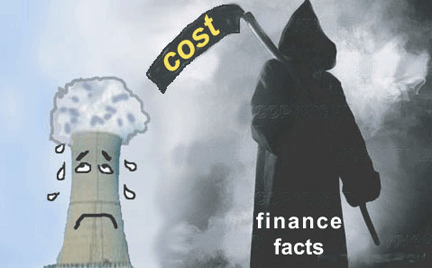
There are, of course, other alternatives that may or may not turn out to be cheaper: gas (with or without carbon capture), renewables (assuming some form of affordable energy storage can be found) or letting the market itself decide how our electricity should be generated. If nuclear really is the future you might expect investors to be more interested in it without subsidies. And of course, you don’t get something for nowt: if consumers do end up paying less for Sizewell than they will for Hinkley it will be because they have taken on more risk.
Who should pay for nuclear? Spectator, Ross Clark, 29 Oct 21, ”……………… the funding of nuclear power stations that was unveiled yesterday in the form of the Nuclear Energy Finance Bill. The proposed legislation will impose levies on energy bills in order to subsidise the construction of new nuclear power stations. The new model of funding — called Regulated Asset Base — will replace the model by which Hinkley C is being constructed: the contracts for difference, or CfD, model which was used to entice EDF to undertake the project. The carrot is a guaranteed ‘strike’ price for electricity generated by the plant as soon as it starts generating electricity.
………… it will inevitably transfer risk to the consumer — should, say, the proposed new plant at Sizewell in Suffolk end up being abandoned before it begins generating power, taxpayers will already have paid towards the plant through their bills.
With his characteristic optimism, Kwarteng claims that the new funding model will ‘save’ energy consumers £30 billion on each nuclear project. Can that really be true? It rather depends on your definition of saving money.
Kwarteng’s claim is based on the presumption that the only alternative to new nuclear power stations funded by the new model is for nuclear power stations to be funded like Hinkley by the CfD model. But Hinkley was itself horrendously expensive: EDF has been guaranteed a minimum price of £92.50 per MWh (at 2012 prices) over 35 years, the expected lifetime of the power station — around twice as high as wholesale electricity prices at the time the deal was signed.
……… it is somewhat dubious to replace a very expensive form of subsidy with one that promises to be merely expensive — and then claim that you have ‘saved’ money.
There are, of course, other alternatives that may or may not turn out to be cheaper: gas (with or without carbon capture), renewables (assuming some form of affordable energy storage can be found) or letting the market itself decide how our electricity should be generated. If nuclear really is the future you might expect investors to be more interested in it without subsidies. And of course, you don’t get something for nowt: if consumers do end up paying less for Sizewell than they will for Hinkley it will be because they have taken on more risk…………. https://www.spectator.com.au/2021/10/who-should-pay-for-nuclear/
Indonesia wants non-peaceful nuclear submarines to be subject to nuclear non-proliferation treaty (surprise, surprise, Australia doesn’t agree)
Caution over nuclear treaty covering subs, Canberra Times, Dominic Giannini, 29 Oct 21,
Caution over nuclear treaty covering subs, Canberra Times, Dominic Giannini, 29 Oct 21,
Australian officials say they don’t believe there is merit in expanding the nuclear non-proliferation treaty to nuclear-powered submarines.
Indonesian officials have said they would seek a “fourth pillar” to include the non-peaceful usage of nuclear technology, closing a “loophole” exposed by Australia’s nuclear-submarine deal with the US and UK.
They say other countries could seek to follow Australia, which would be the first non-nuclear weapons state to acquire nuclear submarines.
Foreign affairs department officials rejected the need to expand the treaty, saying the acquisition of nuclear-propelled submarines was in accordance with Australia’s non-proliferation requirements……
The Indonesians raised concerns about the potential for an arms race in the region after Australia announced its plans to acquire nuclear-powered submarines through the AUKUS partnership…….. https://www.canberratimes.com.au/story/7488125/caution-over-nuclear-treaty-covering-subs/
Jacobs joint venture wins $8bn nuclear clean-up contract in US.
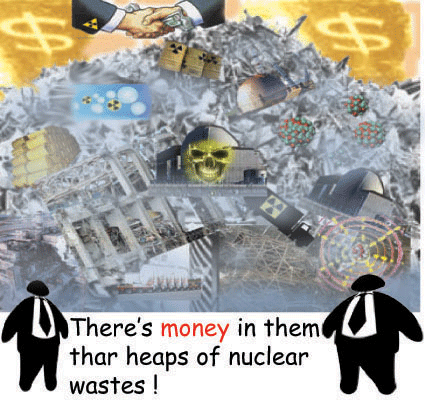
Jacobs joint venture wins $8bn nuclear clean-up contract in US, GCR, Joe Quirke, 29.10.21
The United Cleanup Oak Ridge (UCOR) consortium has landed a 10-year contract worth $8.3bn to remediate the Oak Ridge Reservation site in Tennessee.
Push for ”small nuclear power” in Colorado
Extract from –Pueblo County wants to replace Comanche coal plant with nuclear power. Local activists are worried.The county’s coal-fired power plant could close 30 years earlier than anticipated, Colorado newsline, OCTOBER 29, 2021 ”……………….. With that likely early closure of Comanche 3 (coal-powered station) , some county leaders want a nuclear power station to replace that energy production and — crucially for them — the tax base. Pueblo consumers do not actually receive any of the power generated by Comanche. County leadership believe that so-called small modular reactors technology is the clean energy source that will be deployable by 2030, and they argue that the technology has become much safer since catastrophes like the Chernobyl meltdown………..
Activists worry that county leadership is being lured into an experimental and unsafe energy alternative. They called the July town hall “secretive” and accused county leaders of having these conversations behind closed doors.
“We are being targeted because the nuclear industry, including NuScale, has a campaign going on to place nuclear power plants in old coal fired power plants all over the country. We are the foot in the door,” Campbell said. “Our commissioners are not doing their homework, they aren’t looking into the risk … in my opinion, they are being made to feel like bigwigs by people in the nuclear industry and have fallen in love with themselves.”
“That’s the one that is probably able to move forward quicker — nuclear,” said Commissioner Chris Wiseman.
It would be the first nuclear power plant in Colorado since Fort St. Vrain Generating Station stopped generating power in 1989…………..
Colorado isn’t completely sold on the idea yet, the nuclear option has been central to the conversation. In July, the county held a town hall with presenters from NuScale. Now, Wiseman is putting together a committee to look at possible alternative energy sources and hopes to have proposals before he retires from elected office at the end of next year. He leaves open the possibility that nuclear is not the answer, but rather some other emerging technology like green hydrogen……..
“Going through the neighborhoods and talking to people, it seems like people have just not been asked. When they are being used as sacrifice zones for these polluting industries that don’t serve them, no one comes and asks them,” said Giselle Herzfeld, a nonprofit organizer from Longmont who came down to Pueblo for the day of action.
Why nuclear instead of solar, wind?
Opponents of the nuclear idea want the county to more seriously consider replacing Comanche 3 with renewables such as solar, water or wind power.
“With all the creative thinking that exists in our community and around the state, I know we could come up with multiple ways of replacing that tax money,” said Pueblo activist Velma Campbell.
World without nuclear weapons remains a goal after Sunao Tsuboi’s death
October 29, 2021 (Mainichi Japan) Sunao Tsuboi, a champion of the anti-nuclear movement, has died at age 96. He had served as a representative member of the Japan Confederation of A- and H-Bomb Sufferers Organizations and chairman of the Hiroshima Prefectural Confederation of A-bomb Sufferers Organizations. For many years, Tsuboi led nuclear disarmament activism and dedicated his life to calling for a world without nuclear weapons, while telling himself and others to “never give up.”
Tsuboi himself was a survivor of the atomic bombing of Hiroshima. He continued to share his experience, revealing the inhumaneness of nuclear arms………..
It was because Tsuboi and other hibakusha persistently shared stories about their experiences outside Japan that the inhumane nature of nuclear weapons became widely known across the world. And this led to the enforcement of the Treaty on the Prohibition of Nuclear Weapons, which bans nuclear arms and related activities.
When then U.S. President Barack Obama visited Hiroshima as the first sitting U.S. president to do so in May 2016, Tsuboi said to him, “It (dropping the atomic bomb) was one of the mistakes humanity made. We have to overcome that, and head for the future.”
These words stemmed from Tsuboi’s desire for peace, based on his belief that hatred is fruitless.
Grave challenges still remain after Tsuboi’s departure………..
The number of hibakusha has now declined to about 127,000 and their average age is approaching 84. Anti-nuclear activist and hibakusha Sumiteru Taniguchi, who led the movement in Nagasaki, the second city to be bombed in 1945, passed away in 2017. We will eventually enter a time when there are no hibakusha left in the world.
“An uphill path may continue, but I’m not going to give up and I’ll continue working on eliminating these dreadful weapons from the world,” Tsuboi once said. Succeeding generations must take the baton from him. https://mainichi.jp/english/articles/20211029/p2a/00m/0op/028000c
Eastern Navajo Diné Against Uranium continue their fight, especially about the effect on their water supply
Rita Capitan has been worrying about her water since 1994. It was that autumn she read a local newspaper article about another uranium mine, the Crownpoint Uranium Project, getting under way near her home. Capitan has
spent her entire life in Crownpoint, New Mexico, a small town on the eastern Navajo Nation, and is no stranger to the uranium mining that has persisted in the region for decades.
But it was around the time the article was published that she began learning about the many risks associated with
uranium mining. “We as community members couldn’t just sit back and watch another company come in and just take what is very precious to us. And that is water – our water,” Capitan said.
To this effect, Capitan and her husband, Mitchell, founded Eastern Navajo Diné Against Uranium Mining (Endaum). The group’s fight against uranium mining on their homeland has continued for nearly three decades, despite the industry’s disastrous health and environmental impacts being public knowledge for years.
Guardian 27th Oct 2021
1 This Month

Read the Public Inquiry Report, the Commissioners’ report, Surrendering Australia: The AUKUS Deception is available to download for free at aukuspublicinquiry.com. Or just watch the replay of the National Press Club Luncheon.


19 November – Webinar – The Reality of Reprocessing
Time: 11:00 AM Pacific Time (US & Canada) / 2:00 PM Eastern / 7:00 PM UK / 8:00 PM CET
Register for the Zoom Event Here



Shut down the radiation-damaged Heysham nuclear reactors now
To see nuclear-related stories in greater depth and intensity – go to https://nuclearinformation.wordpress.com

Say No to NASA’s Reckless Nuclear Reactor on the Moon
Say No to NASA’s Reckless Nuclear Reactor on the Moon
-
Archives
- November 2026 (84)
- October 2026 (302)
- September 2026 (339)
- August 2026 (330)
- July 2026 (355)
- June 2026 (287)
- May 2026 (306)
- April 2026 (356)
- March 2026 (251)
- February 2026 (267)
- January 2026 (308)
- December 2025 (358)
-
Categories
- 1
- 1 NUCLEAR ISSUES
- business and costs
- climate change
- culture and arts
- ENERGY
- environment
- health
- history
- indigenous issues
- Legal
- marketing of nuclear
- media
- opposition to nuclear
- PERSONAL STORIES
- politics
- politics international
- Religion and ethics
- safety
- secrets,lies and civil liberties
- spinbuster
- technology
- Uranium
- wastes
- weapons and war
- Women
- 2 WORLD
- ACTION
- AFRICA
- Atrocities
- AUSTRALIA
- Christina's notes
- Christina's themes
- culture and arts
- Events
- Fuk 2022
- Fuk 2023
- Fukushima 2017
- Fukushima 2018
- fukushima 2019
- Fukushima 2020
- Fukushima 2021
- general
- global warming
- Humour (God we need it)
- Nuclear
- RARE EARTHS
- Reference
- resources – print
- Resources -audiovicual
- Weekly Newsletter
- World
- World Nuclear
- YouTube
-
RSS
Entries RSS
Comments RSS

