While the French government promises a nuclear revival, its supreme auditing body warns of serious obstacles to this.

The Court of Auditors (Cour des comptes) is the supreme body for auditing the use of public funds in France. It is independent from the Government and Parliament. It has financial jurisdiction and is in charge of auditing, issuing rulings and certifying the State and Social Security accounts, as well as contributing to the evaluation of public policies.
Nuclear revival: the Court of Auditors highlights many obstacles https://reporterre.net/Relance-du-nucleaire-la-Cour-des-comptes-pointe-de-nombreux-obstacles 19 Nov 21,
In a report published this Thursday, November 18, the Court of Auditors questions our “ability to build a new fleet of [nuclear] reactors on time and at reasonable costs”. This, while “maintaining a 50% nuclear share in electricity production (…) beyond 2050 would require ultimately not having seven EPR or EPR2, but 25 to 30 in the assumption that the current reactors would almost all be shut down by this time, ”the text specifies. And that the composition of the new mix must be decided between 2022 and 2027, believes the institution, given the delays in the construction of new plants.
The report from the Court of Auditors
In this document entitled “The choices of electricity production: anticipating and controlling technological, technical and financial risks”, the wise men of the rue Cambon recall the slippages of cost – 19 billion euros instead of the 3 billion planned – and of deadlines – at least eleven years late – of the Flamanville EPR site. “The gaps are similar for the Olkiluoto RPE in Finland,” they said. In July 2020, the Court of Auditors detailed these troubles at length in a report dedicated to the EPR sector.
Several points of real concern are mentioned.
One is the locations of these new reactors, “as climate change can make the installation of sites along rivers more complicated”.
Management of spent fuel and waste: the construction of new reactors planned to operate until 2100 would in fact involve “either renewing the fuel reprocessing plant at La Hague (…) and creating new sites for ‘warehousing and then disposal of nuclear waste, or to propose another mode of management of spent nuclear fuel and waste which would be, in such a hypothesis, much more voluminous ”, we read in the note.
Another imperative element for the implementation of this half-nuclear mix emphasized by the Court is “the start of the Cigeo radioactive waste disposal project” – a project that is also marred by many uncertainties.
The cost, finally. “EDF will not be able to finance the construction of new nuclear reactors on its own when it has to bear the cost of extending the current fleet and of the“ post Fukushima ”safety investments, face the future costs of dismantling and the uncertain evolution regulated access to historic nuclear power since its inception in 2011, and that it is already indebted to the tune of 42 billion euros, ”warns the Court of Auditors. The project to build six new EPRs had been estimated at 46 billion euros by EDF and could be half-financed by the state, as reported by Reporterre. The cost of the investment has since been reassessed from 52-56 billion euros to 64 billion euros, according to a working document released at the end of October by the media Context.
The implementation of a 100% renewable energy mix also represents many challenges, nevertheless warns the Court of Auditors. It would thus be necessary to define modalities for storing energy (batteries, etc.) at an affordable cost and to overcome implementation difficulties linked to geography, regulations and even social acceptability.
In any case, “the holding of an informed democratic debate would encourage choices made with full knowledge of the facts and then followed up with lasting effects”, recommends the institution. This debate could take place in 2023 during the preparation of the next multiannual energy program, the roadmap for France’s energy policy.

The publication of this report comes at a time when debates rage on the definition of the electricity mix of the future. On October 25, the electricity transmission manager unveiled its six electricity scenarios for 2050: three give pride of place to the atom. Less than three weeks later, Emmanuel Macron promised the construction of new nuclear reactors in France during a televised address.
Scientists Warn Experimental Nuclear Plant Backed by Bill Gates Is ‘Outright Dangerous’

“fast breeder reactor” types “are proliferation nightmares.“
Continuing to support nuclear energy at the expense of faster and cheaper alternatives for cutting greenhouse gas emissions is a losing strategy.“
Scientists Warn Experimental Nuclear Plant Backed by Bill Gates Is ‘Outright Dangerous’ “Gates has continually downplayed the role of proven, safe renewable energy technology in decarbonizing our economy.” Common Dreams ANDREA GERMANOS, November 17, 2021 Officials announced Tuesday that the small city of Kemmerer, Wyoming would be the site of a new Bill Gates-backed nuclear power project—an initiative whose proponents say would provide climate-friendly and affordable energy but which some scientists warn is a dangerous diversion from true energy solutions.
The experimental Natrium nuclear power plant will be at the site of the coal-fired Naughton Power Plant, slated for retirement in 2025, though siting issues are not yet finalized. The company behind the project is TerraPower. Gates, who helped found TerraPower, is chairman of the board.
Mr. Gates,” nuclear expert Arnie Gundersen wrote in an open letter in August, Natrium “is following in the footsteps of a 70-year-long record of sodium-cooled nuclear technological failures. Your plan to recycle those failures and resurrect liquid sodium again will siphon valuable public funds and research from inexpensive and proven renewable energy alternatives.”………….
A feature of the future plant, TerraPower says, is “a molten salt-based energy storage system”—technology it claims represents “a significant advance over the light water reactor plants in use today.”
At a June press conference, Gates said Natrium was poised to “be a game-changer for the energy industry.” In a Tuesday tweet, Republican Sen. John Barrasso of Wyoming gave a similar message, saying “the Natrium reactor is the future of nuclear energy in America.”
While the company asserts the safety of Natrium’s sodium-cooled fast reactor, a report released in March by the Union of Concerned Scientists, entitled “Advanced” Isn’t Always Better, casts doubt on those claims.
UCS’s Elliott Negin highlighted the analysis in a June blog post, writing:
In fact, according to the UCS report, sodium-cooled fast reactors would likely be less uranium-efficient and would not reduce the amount of waste that requires long-term isolation. They also could experience safety problems that are not an issue for light-water reactors. Sodium coolant, for example, can burn when exposed to air or water, and the Natrium’s design could experience uncontrollable power increases that result in rapid core melting.
“When it comes to safety and security, sodium-cooled fast reactors and molten salt–fueled reactors are significantly worse than conventional light-water reactors,” says [report author Edwin] Lyman. “High-temperature gas-cooled reactors may have the potential to be safer, but that remains unproven, and problems have come up during recent fuel safety tests.”
Fast reactors have another major drawback. “Historically,” the report points out, “fast reactors have required plutonium or [highly enriched uranium]-based fuels, both of which could be readily used in nuclear weapons and therefore entail unacceptable risks of nuclear proliferation and nuclear terrorism.” Some fast reactors, including the Natrium, will initially use a lower-enriched uranium fuel, called high-assay low-enriched uranium, which poses a lower proliferation risk than highly enriched uranium, but it is more attractive to terrorists seeking nuclear weapons than the much lower-enriched fuel that current light-water reactors use.
Continue readingFinland’s nuclear power project collapsing – unprofitable and unnecessary

Doubts about nuclear power plant construction in Finland. The planned Hanhikivi nuclear power plant could be on the verge of collapse.
It is unclear whether there will be any need for the plant’s electricity at all.
The costs are running away, the schedule for the start of construction and commissioning has been revised and postponed several times. The planning documents are so inadequate that the project is not yet ready for approval even after a six-year approval process.
And most of the independent analyzes assume that the project can neither become profitable nor that
there is even a need for what is to be produced here. It recently revealed that there is also a huge funding gap, and now the military is raising concerns about national security.
Taz 18th Nov 2021
The growing unsolved problem of nuclear waste – becoming desperate in Sweden.

Five Swedish nuclear reactors may need to close between 2024 and 2028, simply because a temporary site for storing spent fuel will soon be full.
And the Swedish government has yet to approve a final waste repository.
The timetable is that the Forsmark 4 reactor risks closure in 2024, followed in 2025 by Forsmark 3, Ringhals 3 and 4 and finally Forsmark 1 in 2028. Ringhals is owned by a consortium comprising Vattenfall and Uniper, while Forsmark is owned by the same two companies plus Fortum and Skelleftea Kraft.
A Swedish government decision on used nuclear fuel storage must by law be made no later than September 30 this year, so as to avoid exceeding the official permit at the interim storage site at Oskarshamn.
Precisely where nuclear waste is to be stored long-term remains a dilemma which effectively faces every single government that permits nuclear power. And the more such plants are built, the more the problem grows.
Electrical Review 18th Nov 2021
Safety risks of Bill Gates’ Natrium nuclear reactor

The use of liquid sodium has many problems. It’s a very volatile material that can catch fire if it’s exposed to air or water,” Edwin Lyman, director of nuclear power safety with the Union of Concerned Scientists science advocacy nonprofit, told Fortune on Tuesday.
“Honestly I don’t understand the motivation… There are some people who are just strong advocates for it and they’ve sort of won the day here by convincing Bill Gates that this is a good technology to pursue.”
Independent 17th Nov 2021
https://www.independent.co.uk/climate-change/news/bill-gates-nuclear-reactor-wyoming-b1959777.html
“Rather than contributing to net zero, Bradwell B nuclear plant would be ‘ideally placed’ to become the casualty of climate change.”
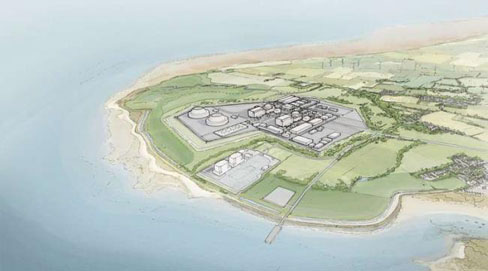
CAMPAIGNERS fighting against plans for a new nuclear power station have hit out at claims it is a key asset in the fight against climate change. The Blackwater Against New Nuclear Group (BANNG) has refuted a statement saying the Bradwell B power station would be Essex’s “biggest contribution to climate action”. The statement from Bradwell B Power Station came in relation to the COP26 climate discussions in Glasgow and said the project was “ideally placed” to play a “major part” in achieving net zero by 2050 emission goals.
But BANNG has claimed, due to the nuclear power station being on a low-lying site, rising global
temperatures would see it become vulnerable to rising sea levels and other weather events by the end of the century. BANNG’s secretary Varrie Blowers added: “Rather than contributing to net zero, Bradwell B would be ‘ideally placed’ to become the casualty of climate change.”
Braintree & Witham Times 17th Nov 2021
France has multiple nuclear problems – costs, wastes, safety and more …..

Cost, waste management and safety: eight questions raised by the announced
return of nuclear power in France. Emmanuel Macron said he wanted new
reactors, in the name of France’s energy independence and climate
preservation. But where is the sector and what does this choice imply?
Le Monde 18th Nov 2021
Electricity production choices: anticipate and control technological,
technical and financial risks.
Cour des Comptes 18th Nov 2021
Nuclear revival: the Court of Auditors highlights many obstacles.
Reporterre 18th Nov 2021
https://reporterre.net/Relance-du-nucleaire-la-Cour-des-comptes-pointe-de-nombreux-obstacles
USA’s $1.2tn bipartisan infrastructure bill provides $6bn to prop up ailing, aging, unprofitable nuclear power plants.

Ailing nuclear power plants propped up by US infrastructure law. A 2018 report from the Union of Concerned Scientists found that more than a third of American nuclear power plants were unprofitable.
The $1.2tn bipartisan infrastructure bill that Biden signed into law on Monday provides $6bn in
grants for struggling reactors.
The president’s “Build Back Better” spending bill under debate in Congress would also establish a nuclear power production tax credit worth billions of dollars. The federal funding follows bailouts in several US states for nuclear generators on the brink of closure.
FT 17th Nov 2021
https://www.ft.com/content/faba7e8a-1983-4b47-9b70-ec903351a373
Climate change intensifies disastrous floods in Canada
A state of emergency has been declared in the Canadian western province of
British Columbia after a major storm cut road and rail links in the region.
The Canadian Armed Forces have been deployed to help thousands of stranded
residents who have been trapped since the storm hit overnight on Sunday.
Local officials warned on Thursday that the price tag to rebuild could
exceed C$1bn ($790m, £590m). One woman was killed in a landslide, and two
people are missing. Officials expect more fatalities to be confirmed in the
coming days. One man caught up in the storm told the BBC the scenes
afterwards were like “Armageddon”.
BBC 18th Nov 2021
https://www.bbc.co.uk/news/world-us-canada-59324764
Canada floods: 18,000 people still stranded in ‘terrible, terrible
disaster’. Alarm grows about climate change in British Columbia after
summer wildfires wiped out vegetation that could have slowed flooding.
Guardian 19th Nov 2021
The British public wants NATO to renounce the “first use” of nuclear weapons
The British public wants NATO to renounce the “first use” of nuclear weapons, Bulletin 19 Nov 21,
A recent survey of British public opinion revealed a two-thirds opposition to NATO retaining the first-use option for nuclear weapons. These responses are in direct opposition to official UK policy…………..https://thebulletin.org/2021/11/the-british-public-wants-nato-to-renounce-the-first-use-of-nuclear-weapons/?utm_source=Newsletter&utm_medium=Email&utm_campaign=ThursdayNewsletter11182021&utm_content=NuclearRisk_NATOrenounce_11182021
Antarctic ice sheet changed alarmingly quickly in past – and may be happening again now
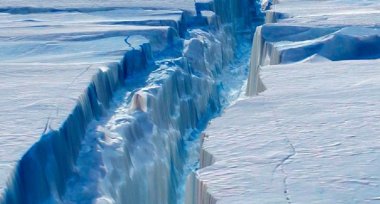
Our findings are consistent with a growing body of evidence suggesting the acceleration of Antarctic ice-mass loss in recent decades may mark the beginning of a self-sustaining and irreversible period of ice sheet retreat and substantial global sea level rise,”
“When we might see the eventual stabilisation of the ice sheet is unknown, because it will depend significantly on how much future climate warming occurs.”
Antarctic ice sheet changed alarmingly quickly in past – and may be happening again now, more https://www.miragenews.com/antarctic-ice-sheet-changed-alarmingly-quickly-676904/ 19 Nov 21, Patterns of rapid ice loss in the past could predict style of future Antarctic ice sheet retreat.
The melting of the Antarctic Ice Sheet may have already passed a point of no return, a new study has found, and scientists say it could contribute to sea level rise over coming centuries and possibly millennia.
The study, published overnight in Nature Communications and co-authored by Dr Zoë Thomas and Professor Chris Turney from UNSW Sydney, used geological data from Antarctica combined with computer models and statistical analyses to understand how recent changes compare to those from the past going back thousands of years.
Our study reveals that during times in the past when the ice sheet retreated, the periods of rapid mass loss ‘switched on’ very abruptly, within only a decade or two,” says Dr Thomas.
“Interestingly, after the ice sheet continued to retreat for several hundred years, it ‘switched off’ again, also only taking a couple of decades.”
Dr Thomas says the Antarctic Ice Sheet went through many of these on/off episodes, each time contributing to global sea level rise as the world warmed at the end of the last ice age, about 20,000 years ago.
The researchers’ findings confirm computer modelling that had indicated that the diminishing ice sheet had passed a critical tipping point leading to irreversible loss of parts of the ice sheet below sea level.
“We have already observed over the last two decades that the Antarctic Ice Sheet has suddenly started losing ice which has contributed to rising sea levels around the world,” says Prof. Turney.
“But the satellite data showing this speed-up only go back about 40 years, so we needed longer records to put this change in context.”
Looking for clues
The researchers examined the gritty sediments released from melting icebergs that settled into mud on the sea floor for clues to the ice sheet’s history of retreat and growth phases.
By counting the amounts of this iceberg-rafted sediment through the core, the scientists were able to identify eight phases with high amounts of debris which they interpreted as retreat phases of the Antarctic Ice Sheet. Each phase showed the same pattern – the ice sheet destabilised within a decade, contributed to global sea level rise for centuries to a millennium, and then subsequently re-stabilised equally rapidly.
Combining the sediment record with computer models of ice sheet behaviour, the team showed that each episode of increased iceberg calving reflected increased loss of ice from the interior of the ice sheet, not just changes in the already-floating ice shelves.
Professor Nick Golledge from Te Puna Pātiotio, the Antarctic Research Centre at Te Herenga Waka, Victoria University of Wellington, led the ice-sheet modelling.
“We found that iceberg calving events on multi-year time scales were synchronous with discharge of grounded ice from the Antarctic Ice Sheet,” he says.
Warning signs
Dr Thomas then applied statistical methods to the model outputs to see if early warning signs could be detected for tipping points in the ice sheet system. Her analyses confirmed that tipping points did indeed exist.
“If it just takes one decade to tip a system like this, that’s actually quite scary because if the Antarctic Ice Sheet behaves in future like it did in the past, we must be experiencing the tipping right now,” she says.
Lead author Dr Michael Weber, from the Institute of Geosciences at the University of Bonn, led the team that recovered cores of the sediment from the Southern Ocean.
“Our findings are consistent with a growing body of evidence suggesting the acceleration of Antarctic ice-mass loss in recent decades may mark the beginning of a self-sustaining and irreversible period of ice sheet retreat and substantial global sea level rise,” he says.
“When we might see the eventual stabilisation of the ice sheet is unknown, because it will depend significantly on how much future climate warming occurs.”
Belarus’ new nuclear power station has further problems, shut down at present .
Shut down reactor in nuclear power plant in Belarus. The Ministry of
Energy in Minsk emphasizes that there is no increased radiation to be
measured in the vicinity of the country’s only Akw in Ostrowez.
The only nuclear power plant in Belarus that went into operation a year ago appears
to have new problems. A reactor block had been taken off the grid and the
reason for the automatic step was unclear, the Ministry of Energy announced
in Minsk on Wednesday. Specialists are in the process of finding out the
cause. No increased radiation was found. The nuclear power plant in
Ostrovets on the border with Lithuania was commissioned more than a year
ago and was already struggling with technical problems.
Die Presse 17th Nov 2021
”Billionaires who fly into space to produce nothing of scientific value” -on hearing that, Jeff Bezos hires lobbyist!

Bezos’ Blue Origin Hires Lobbyist Tied to Obama Admin After Space Tax Proposed, https://sputniknews.com/20211118/bezos-blue-origin-hires-lobbyist-tied-to-obama-admin-after-space-tax-proposed-1090824789.html
The company decided it needs the lobbyist’s services after US representative Earl Blumenauer, proposed a tax on space exploration firms. The Democratic lawmaker made his statement on 20 July – the day when Bezos himself went to space in Blue Origin’s first crewed flight.
“Space exploration isn’t a tax-free holiday for the wealthy. Just as normal Americans pay taxes when they buy airline tickets, billionaires who fly into space to produce nothing of scientific value should do the same, and then some”, he said in a statement at the time. “I’m not opposed to this type of space innovation. However, things that are done purely for tourism or entertainment, and that don’t have a scientific purpose, should, in turn, support the public good”.
Hinkley Point C nuclear station could ‘wipe out’ 11 billion fish, Bristol Channel campaigners say
“The new post-Brexit Environment Act requires the Secretary of State to set a long-term legally binding target on biodiversity by late next year”
Hinkley Point C could ‘wipe out’ 11 billion fish, Bristol Channel
campaigners say Activist groups are campaigning against EDF’s decision to
remove Acoustic Fish Deterrents on the cooling water intakes at the nuclear
power station.
Bristol Channel campaigners have warned that EDF‘s
decision to remove the Acoustic Fish Deterrents (AFDs) on the cooling water
intakes at Hinkley Point C nuclear power station could put massive fish
stocks at risk. An AFD is a system that guides fish away from water
intakes.
A public inquiry was held into this issue by the Planning
Inspectorate from 8th to 24th June. Activist groups that had previously
launched a campaign named Stop Hinkley wrote a letter to the Secretary of
State for Environment, Food and Rural Affairs George Eustice on 7th October
asking him to refuse EDF’s appeal.
Since then, campaigners claim they
have not received a reply. A spokesperson from Stop Hinkley said: “The
new post-Brexit Environment Act requires the Secretary of State to set a
long-term legally binding target on biodiversity by late next year.“On paper,
George Eustice is committed to halting the decline in nature in England,
and beginning the restoration of our marine environment, but on current
evidence, he is failing to do so.
“He needs to set an example in tackling
the global biodiversity crisis by refusing EDF’s application to remove
the Acoustic Fish Deterrents, against Environment Agency advice,
threatening to wipe out 11 billion fish and decimate stocks in Severn
Estuary for 60 years.” Sources told ELN that the department is giving
careful consideration to all recovered appeals and the length of time taken
to decide a case depends on the complexity of each case. Chris Fayers, Head
of Environment at Hinkley Point C, said: “We are committed to reducing
environmental impact from a project which will play a key role in fighting
climate change. Hinkley Point C is the first power station in the Severn
Estuary to include fish protection measures in its design.
Energy Live News 17th Nov 2021
Bradwell nuclear project is likely to be scrapped, despite the Planning Inspectorate having supported the project.
The Blackwater Against New Nuclear Group (BANNG) is naturally disappointed
that BRB’s Appeal to the Planning Inspectorate against the refusal by
Maldon District Council of Planning Permission for further land
investigations at Bradwell was successful.
But this does not give a greenlight to a future nuclear power station at Bradwell. BANNG has always made
clear that its objections to land investigations were on the grounds that
they were unnecessary since the site is wholly unsuitable, unsustainable
and unacceptable for the development of a mega nuclear power station and
spent fuel stores.
The Planning Inspector chose to uphold the Appeal on the
narrow grounds that the works would be temporary and would create little
disruption and disturbance to the environment and human welfare. The
Inspector declined to take into account the question of need for new
nuclear, relying on a Government policy from 2011 that deems Bradwell a
‘potentially suitable’ site.
In its latest policy statements the Government is silent on Bradwell and the project seems likely to be dropped altogether on geopolitical grounds.
BANNG 15th Nov 2021
1 This Month



19 November – Webinar – The Reality of Reprocessing
Time: 11:00 AM Pacific Time (US & Canada) / 2:00 PM Eastern / 7:00 PM UK / 8:00 PM CET
Register for the Zoom Event Here



Shut down the radiation-damaged Heysham nuclear reactors now
To see nuclear-related stories in greater depth and intensity – go to https://nuclearinformation.wordpress.com

Say No to NASA’s Reckless Nuclear Reactor on the Moon
Say No to NASA’s Reckless Nuclear Reactor on the Moon
-
Archives
- November 2026 (84)
- October 2026 (302)
- September 2026 (339)
- August 2026 (330)
- July 2026 (355)
- June 2026 (287)
- May 2026 (306)
- April 2026 (356)
- March 2026 (251)
- February 2026 (267)
- January 2026 (308)
- December 2025 (358)
-
Categories
- 1
- 1 NUCLEAR ISSUES
- business and costs
- climate change
- culture and arts
- ENERGY
- environment
- health
- history
- indigenous issues
- Legal
- marketing of nuclear
- media
- opposition to nuclear
- PERSONAL STORIES
- politics
- politics international
- Religion and ethics
- safety
- secrets,lies and civil liberties
- spinbuster
- technology
- Uranium
- wastes
- weapons and war
- Women
- 2 WORLD
- ACTION
- AFRICA
- Atrocities
- AUSTRALIA
- Christina's notes
- Christina's themes
- culture and arts
- Events
- Fuk 2022
- Fuk 2023
- Fukushima 2017
- Fukushima 2018
- fukushima 2019
- Fukushima 2020
- Fukushima 2021
- general
- global warming
- Humour (God we need it)
- Nuclear
- RARE EARTHS
- Reference
- resources – print
- Resources -audiovicual
- Weekly Newsletter
- World
- World Nuclear
- YouTube
-
RSS
Entries RSS
Comments RSS

