Another step in the effort to clean up Hanford’s massive nuclear waste problem .

20 years in the making, massive nuclear plant takes final steps to treating Hanford waste, Tri City Herald BY ANNETTE CARY 23 Nov 21 The massive Hanford vitrification plant now is in its final phase of work before it starts operating to treat some of the nuclear reservation’s radioactive tank waste. The Department of Energy announced Tuesday that the startup testing phase for treating low activity radioactive waste at the $17 billion plant was complete, following completion of plant construction around the first of the year.
Now Hanford workers can shift all of their focus to commissioning, taking the final steps to demonstrate that the plant works before it starts treating radioactive waste by late 2023………………………….
Commissioning includes operating the plant with a nonradioactive simulant of the waste it was built to treat, before radioactive waste is piped to the plant in about two years. Construction on the plant started in 2002 with a plan to turn much of the 56 million gallons of radioactive and hazardous chemical waste stored in underground tanks into a stable glass form for disposal.
The waste is left from producing nearly two-thirds of the plutonium for the nation’s nuclear weapons program from World War II through the Cold War at the 580-square-mile site near Richland in Eastern Washington………….
The plant is not required under a federal court order to be fully operational, treating both high level and low activity waste, until 2036. But the court-set deadline for treating low activity waste is the end of 2023, although DOE may be given some additional time due to the COVID-19 pandemic, which slowed some work…………
The containers of low activity radioactive waste will be disposed of at a nearby lined landfill, Hanford’s Integrated Disposal Facility. https://www.tri-cityherald.com/news/local/hanford/article256040252.html
Boris Johnson quizzed over future of Bradwell, (Essex) nuclear plant
Boris Johnson quizzed over future of Essex nuclear plant https://www.maldonandburnhamstandard.co.uk/news/19738655.boris-johnson-quizzed-future-essex-nuclear-plant/
By Jessica Day-ParkerTrainee Reporter PRIME Minister Boris Johnson told MPs he does not want to “pitchfork away” all investment from China in response to a question about Bradwell B.
Matthew Pennycook, Labour MP for Greenwich and Woolwich, pressed the Prime Minister on Bradwell B – the proposed nuclear power station at Bradwell-on-Sea put forward by China General Nuclear Power Group (CGN) – in the House of Commons.
Mr Pennycook said: “The Government’s Integrated Review concluded the Chinese state poses a systemic challenge to our national security and the Prime Minister has made clear that when it comes to China we must remain vigilant about our critical national infrastructure.
General Nuclear to own and operate its own plant in Bradwell in Essex have been abandoned?”
Mr Johnson confirmed the Government doesn’t want to see “undue influence by potentially adversarial countries in our critical national infrastructure” and insisted “there will be more information” coming on Bradwell.
But he added: “What I don’t want to do is pitchfork away wantonly all Chinese investment in this country or minimise the importance in this country of having a trading relationship with China.”
UN nuclear watchdog fails to reach access deal with Iran.
UN nuclear watchdog fails to reach access deal with Iran
IAEA head says failure to gain renewed access to sites casts doubt over chances of restoring 2015 deal, Guardian, Patrick Wintour Diplomatic editor 24 Nov 21, The head of the UN’s nuclear watchdog has said he has failed to reach a deal with Iran over renewed access to key nuclear sites after talks in Tehran.
Rafael Grossi, the director general of the International Atomic Energy Agency (IAEA), said the failure was seriously affecting the agency’s ability to do its work and the chances of a restoration of the 2015 Iran nuclear deal.
He told a press conference he was “close to the point when I will not be able to guarantee continuity of knowledge”, adding: “We must reach an agreement. We must do it.” No date has been set for a further meeting, although Grossi said he would continue to contact Iran.
The failure may endanger the wider talks due to start next Monday in Vienna about restoring the deal that inspectors are supposed to police…………………..
The failure to reach agreement came when Grossi visited Tehran on Monday and Tuesday to discuss access to the sites with Mohammad Eslami, the head of Iran’s atomic energy organisation, and the Iranian foreign minister, Hossein Amir-Abdollahian. It was the first time Grossi had met the minister since a new hardline government was elected in June.
Iran feels the west and the IAEA have not been willing to condemn what it alleges are repeated covert Israeli attacks on its nuclear installations, or the assassination of its top nuclear scientist, Mohsen Fakhrizadeh, in November 2020.
Grossi acknowledged there was pressure on the IAEA not to declare the entire inspection regime defunct since it would provide a difficult backdrop for the broader talks in Vienna, starting on 29 November. The talks, in abeyance since June, could conclude with the US rejoining the nuclear deal, the lifting of most economic sanctions on Iran and an end to Iran’s non-compliance with its non-proliferation obligations under the deal.
In a report last week, the IAEA said Iran’s high-concentration uranium levels had reached new records, and well beyond the stockpile limits set in the nuclear deal. The IAEA said Iran possessed 17.7kg of enriched uranium at a concentration of 60%, compared with 10kg in September. https://www.theguardian.com/world/2021/nov/24/un-nuclear-watchdog-fails-reach-access-deal-iran
USA rehearsing launching nuclear attack on Russia
US rehearsing nuclear strike: Russia, 7 News,
Andrew Osborn and Phil StewartReuters Wednesday, 24 November 2021 The US has been criticised for rehearsing a nuclear strike on Russia from two different directions earlier this month, with the planes coming within 20km of the Russian border.
The Pentagon responded by saying its drills were announced publicly at the time and adhered to international protocols.
Moscow’s accusation comes at a time of high tension with Washington over Ukraine, with US officials voicing concerns about a possible Russian attack on its southern neighbour – a suggestion the Kremlin has dismissed.
Moscow has in turn accused the United States, NATO and Ukraine of provocative and irresponsible behaviour, pointing to US arms supplies to Ukraine, Kiev’s use of Turkish strike drones against Russian-backed separatists in the east of Ukraine, and NATO military exercises close to its borders.
Russian Defence Minister Sergei Shoigu said Moscow had noted a significant increase in the activity by US strategic bombers, which he said had carried out 30 flights close to Russia this month.
That, he said, was more than twice as many as over the same period last year.
Shoigu complained in particular of what he said was a simulated US nuclear strike against Russia earlier this month.
“The defence minister underlined that during the US military exercises ‘Global Thunder’, 10 American strategic bombers rehearsed launching nuclear weapons against Russia from the western and eastern directions,” Shoigu was quoted as saying in a defence ministry statement.
………………………… https://7news.com.au/politics/security/us-rehearsing-nuclear-strike-russia-c-4681215
Latest COP 26 pledges will lead to 16% increase in carbon emissions, NOT the necessary 45% decrease

Let us be clear – Cop26 utterly failed on the only issue that counts:
cutting global carbon emissions. The latest IPCC report stated that we
needed a 45 per cent cut in carbon emissions by 2030. UN analysis of the
latest Cop26 pledges suggests that they will lead to a 16 per cent
increase.
Independent 22nd Nov 2021
NRC finds five safety violations at Davis-Besse Nuclear Power Station
NRC finds five safety violations at Davis-Besse Nuclear Power Station Jon StinchcombPort Clinton News Herald, CARROLL TOWNSHIP — The U.S. Nuclear Regulatory Commission recently found five apparent violations at the Davis-Besse Nuclear Power Station after completing a nearly two-year initial assessment of multiple diesel generator failures from July 2019 to June 2021.
Based on that assessment, as well as a reactor trip with multiple complicating equipment issues at Davis-Besse in early July of this year, the NRC sent an inspection team to the station later that month………
Of the five violations reportedly found during the inspection, two are still pending and undergoing additional NRC reviews to “assess the safety significance of the performance deficiency,” …….. https://www.portclintonnewsherald.com/story/news/2021/11/24/five-safety-violations-davis-besse-nuclear-power-station-nrc/8746112002/
IEA: Rate of energy efficiency improvements needs to double to put world on track for net-zero

The IEA is urging other nations to follow in Europe’s footsteps and implement stricter standards and regulations for energy-using products; consider tax incentives for energy efficiency; increase public spending on building and industrial retrofitting and streamlining planning procedures to make efficiency projects more attractive to private finance. Private spending on energy efficiency between 2021 and 2023 is forecast to be more than twice as high as spending by governments.
19 November 2021, source edie newsroom, Sarah George
Globally, energy efficiency has improved in 2021 after a rocky 2020, according to a new analysis from the International Energy Agency (IEA). But the rate of progress will need to at least double to put the world on track for net-zero by 2050, the Agency is warning.
19 November), the 2021 edition of the Agency’s annual Energy Efficiency Report reveals that progress is now back on track as the world emerges from the worst of the Covid-19 pandemic.
2020 saw only a minor (0.5%) improvement to global energy intensity, amid falling energy demands and prices, slowed investment in the energy sector and many energy-using sectors and logistical issues with supply chain and solutions installation.
Global energy intensity is on track to fall 1.9% in 2021, the analysis forecasts. This is a promising yet expected figure – the year-on-year fall was 2% in 2019.
“It is still unclear whether this year’s improved energy intensity will signal the start of a sustained recovery,” the IEA said in a statement.
However, increased investment trends, rising government spending on efficiency – in large part related to recovery plans enacted in response to Covid-19 crisis – new announcements of higher climate ambition and other policy measures offer some encouraging signals.”
To this point, the report forecasts that, by the end of the year, national policies will have helped to generate $30bn of investment in energy efficiency – around 10% of the total set to be allocated between 2015 and 2021.
In recent months, much growth in energy efficiency investment has been concentrated in Europe. Policy supports have included the European Commission’s Renovation Wave and overarching Energy Efficiency Directive, and the UK’s updated Industrial Strategy and Heat and Buildings Strategy.
A long road ahead
Nonetheless, the report emphasises the fact that there is still much more to be done. It highlights the fact that, in the IEA’s scenario for net-zero by 2050, global energy intensity falls by at least 4% each year in the 2020s.
The IEA is urging other nations to follow in Europe’s footsteps and implement stricter standards and regulations for energy-using products; consider tax incentives for energy efficiency; increase public spending on building and industrial retrofitting and streamlining planning procedures to make efficiency projects more attractive to private finance. Private spending on energy efficiency between 2021 and 2023 is forecast to be more than twice as high as spending by governments.
The report emphasises the fact that, while wealthy nations are currently accounting for the majority of global investment in energy efficiency, developing and emerging nations also stand to reap benefits in terms of rapid job creation and economic growth, as well as future-proofing infrastructure and industry. Delivering the 4% annual improvement to global energy intensity, the IEA has forecast, would create four million additional jobs in energy efficiency by 2030, in sectors including construction and retrofitting.
As well as addressing low-hanging fruit using mature technologies, the IEA’s report outlines the potential for implementing the next generation of digital technologies. It states that, by the end of the year, there will be more ‘smart’ connected appliances and sensors in the world than people for the first time. This presents a major opportunity to accelerate energy efficiency improvements.
At COP26, the IEA and the UK Government launched a Product Efficiency Call to Action, which aims to double the energy efficiency of air conditioning, refrigeration, industrial motor systems and lighting by 2030. These four activities account for more than 40% of global electricity demand every year. In total, 14 countries have now signed onto the initiative, which is the largest of its kind. Read edie’s full story here.
Europe to pay half for raising Russia’s dangerous sunken submarines, – while Russia builds new ones!

“The sunken submarines K-27 and K-159 are the potential source of contamination of the Arctic, the riskiest ones,”
As Moscow this spring took the Chair of the Arctic Council, the need to lift dangerous nuclear materials from the seabed was highlighted as a priority.
No other places in the world’s oceans have more radioactive and nuclear waste than the Kara Sea.
Europe to pay half … it is a dilemma that international partners are providing financial support to lift old Cold War submarines from the ocean, while Russia gives priority to building new nuclear-powered submarines threatening the security landscape in northern Europe.
EU willing to co-fund lifting of sunken nuclear subs from Arctic seabed https://thebarentsobserver.com/en/nuclear-safety/2021/11/europe-offers-pay-russia-raise-sunken-nuclear-subs The Northern Dimension Environmental Partnership (NDEP) has decided to start a technical review aimed to find a safe way to lift two Cold War submarines from the Barents- and Kara Seas. By Thomas Nilsen
“We are proceeding now,” says a smiling Jari Vilén, Finland’s Ambassador for Barents and Northern Dimension.
Projects aimed to improve nuclear safety are some of the few successful arenas for cooperation still going strong between the European Union and Russia.
“In roughly two years time we will have the understanding on what and how it can be done, what kind of technology has to be used,” Vilén elaborates with reference to the two old Soviet submarines K-159 and K-27, both rusting on the Arctic seabed with highly radioactive spent nuclear fuel elements in their reactors.
Continue readingThe US Faces Pressure To Do More To Address Its Nuclear Legacy In The Marshall Islands.

The US Faces Pressure To Do More To Address Its Nuclear Legacy In The Marshall Islands, Civil Beat By Anita Hofschneider 22 Nov 21, Marshallese are concerned about continued health effects from Cold War-era nuclear testing as well as a concrete dome in which the atomic waste was stored.
Two Congress members are asking the U.S. Department of Energy to provide more information about the effects of U.S. nuclear waste in the Marshall Islands.
The U.S. conducted 67 nuclear weapons tests in the Marshall Islands from 1946 to 1958, exposing Marshallese people to radiation that continues to have health and environmental implications. The U.S. then stored the atomic waste at Runit Dome, a concrete dome on Enewetak Atoll.
Rep. Katie Porter represents Orange County, California, and is chair of the Subcommittee on Oversight and Investigations in the House Committee on Natural Resources.
She has been seeking more details about the effects of nuclear testing in the Marshall Islands in the wake of a Los Angeles Times investigation that found the U.S. stored nuclear waste from Nevada in Runit Dome without informing the Pacific nation.
In a letter Friday, Porter and Rep. Raul Grijalva of Arizona asked for documents and correspondence among Department of Energy officials related to a letter that officials sent to the Marshall Islands about the state of nuclear waste in May.
The Department of Energy didn’t respond to a request for comment.
In October, Porter led a congressional hearing regarding concerns about Runit Dome, which is leaking radioactive waste. The Energy Department said in a report last year that the leaking is not significant.
“The U.S. has both a moral and national security imperative to address our nuclear legacy in the Marshall Islands,” Porter said at the hearing, adding that addressing the issue would be in line with the Biden administration’s commitment to racial justice and national security issues in the Pacific………
In their letter, Porter and Grijalva criticized the agency’s lack of response to repeated document requests, raised concerns about conflicting Energy Department testimony and the timing of the department’s May letter.
The U.S. is in the midst of renegotiating a treaty with the Marshall Islands that in part gives the U.S. military strategic denial rights over the country’s surrounding air and waters.
The Congress members described how the U.S. failed to evacuate Marshallese people quickly enough to protect them from the fallout during the 1946-1958 testing, and cited descriptions of how mothers later gave birth to babies with translucent skin and no bones.
A 2014 study analyzed how the radiation exposure in the Marshall Islands increased the risk of certain cancers, especially thyroid cancer.
Broader Concerns
Franscine Anmontha, communication director of the Marshall Islands National Nuclear Commission, said Saturday that the community is concerned about the ongoing health effects of radiation on people not only on the atolls enrolled in the U.S. medical program but on surrounding atolls.
“If you were to ask a group of young Marshallese people if they knew someone with cancer almost 90% of them would raise their hands,” she said. She said the commission wants to bring scientists to the Marshall Islands to analyze the dome so that they don’t have to rely solely on U.S. data……….
Friday’s letter is the second letter this month pressing the Biden administration for more information about the nuclear testing.
Several Congress members — including Hawaii Reps. Ed Case and Kai Kahele — wrote to the White House on Nov. 5 pushing for the appointment of a lead negotiator for treaty discussions who would have the ability to address concerns about nuclear waste.
The lead negotiator “should have the mandate to see that legacy issues related to U.S. nuclear testing in the region are appropriately resolved, including proper environmental protections, clean up, health benefits, and monetary compensation for victims and their descendants,” the lawmakers wrote…………. https://www.civilbeat.org/2021/11/the-us-faces-pressure-to-do-more-to-address-its-nuclear-legacy-in-the-marshall-islands/
This world of pandemic and climate change can no longer afford the luxury of nuclear weapons proliferation
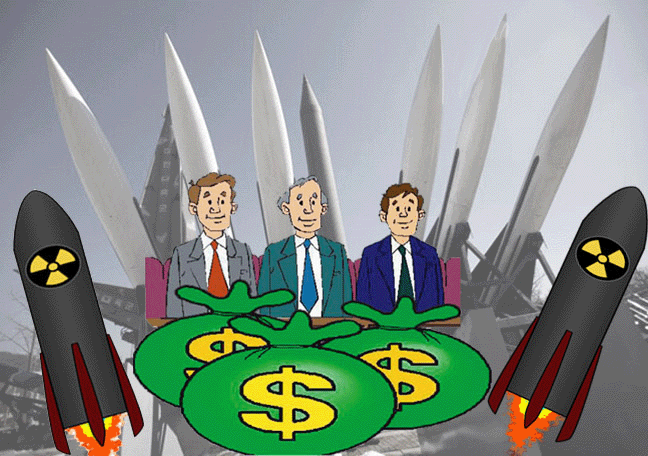
Aotearoa must stand apart as others amass nuclear weapons https://www.stuff.co.nz/national/politics/opinion/127065066/aotearoa-must-stand-apart-as-others-amass-nuclear-weapons, Nov 23 2021 EDITORIAL You’d be forgiven for not thinking about the threat of nuclear war during the past couple of years.
The pandemic, climate change – it seems there are enough dangers threatening our existence, without adding a nuclear holocaust to the list.
Unfortunately, ignoring the steady proliferation of nuclear weapons is a luxury we can no longer afford.
As geopolitical tensions rise, many of them centred on our own Indo-Pacific region, so do nuclear arsenals
Russia and the US continue to own more than 90 per cent of the world’s nuclear weapons, and it seems they have no plan to give those up. Earlier this month, the Pentagon estimated China will have up to 700 deliverable nuclear warheads by 2027. Estimates currently put its arsenal at about 350.
Meanwhile, the UK has reversed a policy of reducing the country’s nuclear arsenal, increasing the planned cap on nuclear warheads. There are reports that India, Pakistan and North Korea are also expanding their capabilities
At the same time, our traditional allies, Australia, the US and the UK, have a new strategic agreement enabling Australia to build nuclear-powered submarines. While they won’t carry nuclear arms, they are not without risk/
It’s no wonder Phil Twyford, Minister for Disarmament and Arms Control, says the risk of nuclear warfare is as bad – if not worse – now than at vany time since the Cuban Missile Crisis. In a recent speech, he was blunt in his criticism of nuclear states the US, France, China, Russia and the UK for their lack of efforts to work towards disarmament. But one speech does not a meaningful security policy make.
Aotearoa has long prided itself on its independent foreign policy, and nuclear-free stance. Lest we forget the great Lange speech from the 1985 Oxford Union debate.
Aside from his memorable uranium comment, the late prime minister was clear in communicating the position of the New Zealand people: the nuclear weapons which would defend us caused more alarm, and accordingly, we deemed it pointless to be defended by them.
Over the years, Kiwis have become disconnected from this element of our foreign policy. We assume we are safe, and that with the end of the Cold War came the end of the imminent threat of nuclear war.
But with the threat on our doorstep, thanks to the US, North Korea and China, now is the time to start caring again.
Financial hypocrisy in Canada – the pretence that nuclear power is green and cheap

A Global First: BMO Supports Bruce Power with World’s First Nuclear Green Financing Framework, Yahoo Finance TORONTO, Nov. 22, 2021 /PRNewswire/ – Bruce Power, Ontario’s leading private sector power provider, has taken another industry-leading step in its environmental [?], social and governance strategy by launching the world’s first green [?] finance framework with nuclear use of proceeds.
Acting as Co-Lead Green Structuring Agent, BMO Financial Group (TSX:BMO) (NYSE:BMO), today announced the successful issuance of CAD $500 Million in green [?] bonds under the framework, which is designed to guide future issues of green bonds with a focus on Bruce Power’s Life-Extension Program and investments related to increasing the output of nuclear units and extending the plant’s life beyond 2060.
The framework sets out the guidelines in accordance with the Green Bond Principles issued by the International Capital Markets Association (ICMA) and the Green Loan Principles issued by the Loan Market Association (LMA) and Loan Syndications and Trading Association (LSTA) – ensuring the proceeds are exclusively allocated to green projects and activities that promote environmental sustainability and deliver clear environmental benefits.

CICERO Shades of Green, an internationally-recognized leading provider of independent review and second-party opinions on green financing frameworks, [REALLY?} has given Bruce Power’s Green Finance Framework the highest possible governance score of Excellent, and an overall designation of CICERO Medium Green, acknowledging the role of nuclear power in mitigating climate change and recognizing Bruce Power’s strong risk management processes.
Clean nuclear power is crucial to fighting climate change, and today’s announcement marks another industry-leading step in the company’s environmental, social and governance strategy,” said Mike Rencheck, Bruce Power’s President and CEO…..
“We’re proud to partner with Bruce Power to build a green framework that facilitates the alignment of the company’s business and financing activities to support nuclear power’s critical role in mitigating climate change,” said Jonathan Hackett, Head, Sustainable Finance, BMO Capital Markets. ………. https://finance.yahoo.com/news/global-first-bmo-supports-bruce-143800875.html
Climate and biodiversity: mapping the irrecoverable carbon in Earth’s ecosystems
Avoiding catastrophic climate change requires rapid decarbonization and improved ecosystem stewardship at a planetary scale. The carbon released through the burning of fossil fuels would take millennia to regenerate on Earth.
Though the timeframe of carbon recovery for ecosystems such as peatlands, mangroves and old-growth forests is shorter (centuries), this timeframe still exceeds the time we have remaining to avoid the worst
impacts of global warming. There are some natural places that we cannot afford to lose due to their irreplaceable carbon reserves. Here we map ‘irrecoverable carbon’ globally to identify ecosystem carbon that remains within human purview to manage and, if lost, could not be recovered by mid-century, by when we need to reach net-zero emissions to avoid the worst climate impacts. Since 2010, agriculture, logging and wildfire have caused emissions of at least 4.0 Gt of irrecoverable carbon.
Nature Sustainability 18th Nov 2021
The U.S. Is Bracing for Blows With Israel as Iran Nuclear Talks Near
The U.S. Is Bracing for Blows With Israel as Iran Nuclear Talks Near, U.S. officials say it’s already much more difficult to carry out a cyberattack to set back Iran’s nuclear program as Iran improves air defenses and places nuclear facilities underground. Amos Harel, Haaretz, 22 Nov 21,
The closer we get to the scheduled renewal Monday in Vienna of the talks to restore Iran’s nuclear agreement with world powers, the more the psychological warfare between the sides escalated. Oddly, perhaps, very few of these skirmishes are between Tehran and its negotiating partners. Most of them are between two countries that won’t have a foot in the door at the talks. The first is the United States, whose representatives will be in Vienna but won’t be participating in the direct talks on account of Iranian opposition. The other is Israel.
……………………. President Joe Biden’s hope that in his first year in office he could return to the agreement and afterward focus on a “longer, stronger” deal, has been dashed, in light of Iran’s intentional delaying policy. The regime in Tehran delayed talks during the period of the presidential elections in Iran, and waited a few more months after the hawkish President Ebrahim Raisi, entered office.
This is the current U.S. position, but the conclusion that goes along with it is interesting. According to the administration, not only has the policy of maximum pressure led by former president Donald Trump collapsed. Israel’s sabotage campaign against Iran’s nuclear program has also failed. Moreover, paradoxically, it seems that these actions have only served to move the Iranians closer to their goal…….. over the past 20 months Israel assassinated the head of the Iranian nuclear project, Mohsen Fakhrizadeh and caused significant explosions in four nuclear and missile facilities in Iran, in the hopes of delaying the ability of Iran to build a bomb. But the result, according to U.S. intelligence officials and the international inspectors, was the opposite of what was intended. The Iranians quickly restored operations at the sites and installed new centrifuges that can enrich uranium more rapidly.
……………. the sources in the U.S. administration believe that Iran wants to reach the status of a nuclear threshold state, which will leave it a very short distance from manufacturing a bomb if it wants to. This gloomy conclusion underscores the most recent report of the Institute for Science and International Security. In the report, published Sunday, the chief researcher of the prestigious U.S. think tank, David Albright, writes that Iran has enough uranium enriched to near-20 and 60 percent to produce sufficient weapon-grade uranium for a single nuclear weapon in as little as three weeks. Albright adds that some of the major advances are due to the installation of advanced centrifuges.
If Iran wants to manufacture a nuclear weapon, it still needs to execute the military part of its program – installing the bomb as a nuclear warhead on a ballistic missile, a process that according to various experts could take another one to two years. And yet, Albright’s conclusion shows how much the Iranians have advanced while the administrations in Washington – first Trump’s and now Biden’s – persuaded themselves that they were dealing well with the problem. https://www.haaretz.com/israel-news/.premium-the-u-s-is-bracing-for-blows-with-israel-as-iran-nuclear-talks-near-1.10407853
Will Germany’s Next Government Ditch U.S. Nuclear Bombs?
Explainer: Will Germany’s Next Government Ditch U.S. Nuclear Bombs? U.S. News, By Reuters|Reporting by Sabine Siebold, Editing by William Maclean, Nov. 22, 2021, BERLIN (Reuters) – NATO allies will be scouring the policies of Germany’s next federal government for one crucial detail: Will Berlin remain part of NATO’s nuclear sharing agreement?
Or will it drop out and ask the United States to remove its nuclear bombs from German soil?
While such a move might be popular among some Germans, it would reveal a rift within NATO at a time when the alliance’s relations with Russia are at their lowest since the end of the Cold War.
WHAT IS NATO’S NUCLEAR SHARING?
As part of NATO’s deterrence, the United States has deployed nuclear weapons in Belgium, Germany, Italy, the Netherlands and Turkey – all NATO allies that do not have their own nuclear weapons. In the case of a conflict, the air forces of these countries are meant to carry the American nuclear bombs.
WHAT EXACTLY IS GERMANY’S ROLE?
Around 20 U.S. nuclear bombs are estimated to be stored at the German air base of Buechel, in a remote area of the state of Rhineland-Palatinate. The base is also home to a squadron of Tornado fighter jets belonging to the German air force, the only German jets fitted to carry the nuclear bombs.
WHAT IS THE PROBLEM WITH THE TORNADO FIGHTER JETS?
The German air force has been flying the Tornado jets since the 1980s, and it has become increasingly expensive to maintain them and difficult to find spare parts to keep the plane in the air. The German defence ministry plans to phase out the jet between 2025 and 2030. Should Berlin not purchase new jets fitted for the task of carrying U.S. nuclear weapons, Germany would simply drop out of nuclear sharing when the last Tornado retires around 2030.
WHAT CHANGES MAY THE NEW GERMAN GOVERNMENT BRING?
In spring 2020, Defence Minister Annegret Kramp-Karrenbauer, a member of Chancellor Angela Merkel’s conservatives, proposed replacing the Tornado jets in Buechel with F-18s made by Boeing, but the decision was later pushed into 2022.
Now, the likely new German government will be led by the Social Democrats, a party that has some lawmakers who would like to get rid of U.S. nuclear weapons on German soil. The Greens, who are expected to be part of the coalition, also have some lawmakers who take that view………https://www.usnews.com/news/world/articles/2021-11-22/explainer-will-germanys-next-government-ditch-u-s-nuclear-bombs
As presidential candidate, Emmanuel Macron opposed nuclear power, now he’s all for it
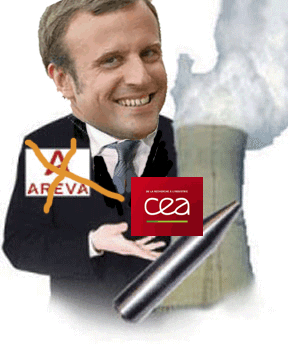
Nuclear: Emmanuel Macron’s energy “at the same time”. Inheriting President Hollande’s nuclear commitments, candidate Macron had made campaign promises that were not very favorable to the atom.
But, in the middle of his five-year term, the President of the Republic has put nuclear power back at the center of France’s energy policy. To end up announcing, at the beginning of November, that it would be necessary to build new power stations.
Les Echos 22nd Nov 2021
1 This Month



19 November – Webinar – The Reality of Reprocessing
Time: 11:00 AM Pacific Time (US & Canada) / 2:00 PM Eastern / 7:00 PM UK / 8:00 PM CET
Register for the Zoom Event Here



Shut down the radiation-damaged Heysham nuclear reactors now
To see nuclear-related stories in greater depth and intensity – go to https://nuclearinformation.wordpress.com

Say No to NASA’s Reckless Nuclear Reactor on the Moon
Say No to NASA’s Reckless Nuclear Reactor on the Moon
-
Archives
- November 2026 (84)
- October 2026 (302)
- September 2026 (339)
- August 2026 (330)
- July 2026 (355)
- June 2026 (287)
- May 2026 (306)
- April 2026 (356)
- March 2026 (251)
- February 2026 (267)
- January 2026 (308)
- December 2025 (358)
-
Categories
- 1
- 1 NUCLEAR ISSUES
- business and costs
- climate change
- culture and arts
- ENERGY
- environment
- health
- history
- indigenous issues
- Legal
- marketing of nuclear
- media
- opposition to nuclear
- PERSONAL STORIES
- politics
- politics international
- Religion and ethics
- safety
- secrets,lies and civil liberties
- spinbuster
- technology
- Uranium
- wastes
- weapons and war
- Women
- 2 WORLD
- ACTION
- AFRICA
- Atrocities
- AUSTRALIA
- Christina's notes
- Christina's themes
- culture and arts
- Events
- Fuk 2022
- Fuk 2023
- Fukushima 2017
- Fukushima 2018
- fukushima 2019
- Fukushima 2020
- Fukushima 2021
- general
- global warming
- Humour (God we need it)
- Nuclear
- RARE EARTHS
- Reference
- resources – print
- Resources -audiovicual
- Weekly Newsletter
- World
- World Nuclear
- YouTube
-
RSS
Entries RSS
Comments RSS

