Call to halt UK’s Hinkley Point C new EPR nuclear reactor until problems at similar reactor in China resolved.
he Nuclear Free Local Authorities network (NFLA) has written to the
Minister of State for Energy and the Head of the Office of Nuclear
Regulation calling for an indefinite halt to construction work at the new
Hinkley Point C nuclear plant whilst the impact of the Taishan-1 nuclear
accident in China is investigated. T
The Chair of the NFLA Steering Committee, Councillor David Blackburn, has written to Minister Greg Hands and Chief Executive Mark Foy outlining concerns that a radioactive gas leak
at the Taishan 1 reactor in China has uncovered a potentially fatal design
flaw which could have a serious impact on the UK Government’s plans to
permit identical reactors to operate at Hinkley Point C in Somerset and at
Sizewell C in Suffolk. The Hinkley Point and Sizewell projects would both,
like Taishan-1. be equipped with EPRs (short for European Pressurised or
Evolutionary Power Reactors). EPR projects have a history of safety
concerns, massive delays and huge cost overruns. Although the Hinkley Point
C is planned to come on line in 2026, plants at Olkiluoto 3 in Finland and
Flammaville 3 in France are now 13 and 11 years behind schedule
respectively. Sizewell is still awaiting final government authorisation.
NFLA 13th Dec 2021
Dr Jim Green dissects the hype surrounding Small ”Modular” Nuclear Reactors

Nuclear power’s economic failure, Ecologist, Dr Jim Green, 13th December 2021 Small modular reactors
Small modular reactors (SMRs) are heavily promoted but construction projects are few and far between and have exhibited disastrous cost overruns and multi-year delays.
It should be noted that none of the projects discussed below meet the ‘modular’ definition of serial factory production of reactor components, which could potentially drive down costs.
Using that definition, no SMRs have ever been built and no country, company or utility is building the infrastructure for SMR construction.
In 2004, when the CAREM SMR in Argentina was in the planning stage, Argentina’s Bariloche Atomic Center estimated a cost of US$1 billion / GW for an integrated 300 MW plant (while acknowledging that to achieve such a cost would be a “very difficult task”).

Now, the cost estimate for the CAREM reactor is a mind-boggling US$23.4 billion / GW (US$750 million / 32 MW). That’s a truckload of money for a reactor with the capacity of two large wind turbines. The project is seven years behind schedule and costs will likely increase further.
Russia’s floating plant
Russia’s floating nuclear power plant (with two 35 MW reactors) is said to be the only operating SMR anywhere in the world (although it doesn’t fit the ‘modular’ definition of serial factory production).
The construction cost increased six-fold from 6 billion rubles to 37 billion rubles (US$502 million).
According to the OECD’s Nuclear Energy Agency, electricity produced by the Russian floating plant costs an estimated US$200 / MWh, with the high cost due to large staffing requirements, high fuel costs, and resources required to maintain the barge and coastal infrastructure.

The cost of electricity produced by the Russian plant exceeds costs from large reactors (US$131-204) even though SMRs are being promoted as the solution to the exorbitant costs of large nuclear plants.
Climate solution?
SMRs are being promoted as important potential contributors to climate change abatement but the primary purpose of the Russian plant is to power fossil fuel mining operations in the Arctic.
A 2016 report said that the estimated construction cost of China’s demonstration 210 MW high-temperature gas-cooled reactor (HTGR) is about US$5 billion / GW, about twice the initial cost estimates, and that cost increases have arisen from higher material and component costs, increases in labour costs, and project delays.
The World Nuclear Association states that the cost is US$6 billion / GW.
Those figures are 2-3 times higher than the US$2 billion / GW estimate in a 2009 paper by Tsinghua University researchers.
China reportedly plans to upscale the HTGR design to 655 MW but the Institute of Nuclear and New Energy Technology at Tsinghua University expects the cost of a 655 MW HTGR will be 15-20 percent higher than the cost of a conventional 600 MW pressurised water reactor.
HTGR plans dropped
NucNet reported in 2020 that China’s State Nuclear Power Technology Corp dropped plans to manufacture 20 HTGR units after levelised cost of electricity estimates rose to levels higher than a conventional pressurised water reactor such as China’s indigenous Hualong One.
Likewise, the World Nuclear Association states that plans for 18 additional HTGRs at the same site as the demonstration plant have been “dropped”.
In addition to the CAREM reactor in Argentina and the HTGR in China, the World Nuclear Association lists just two other SMR construction projects.
In July 2021, China National Nuclear Corporation (CNNC) New Energy Corporation began construction of the 125 MW pressurised water reactor ACP100.
According to CNNC, construction costs per kilowatt will be twice the cost of large reactors, and the levelised cost of electricity will be 50 percent higher than large reactors.
Fast reactor
In June 2021, construction of the 300 MW demonstration lead-cooled BREST fast reactor began in Russia.
In 2012, the estimated cost for the reactor and associated facilities was 42 billion rubles; now, the estimate is 100 billion rubles (US$1.36 billion).
Much more could be said about the proliferation of SMRs in the ‘planning’ stage, and the accompanying hype.
For example a recent review asserts that more than 30 demonstrations of different ‘advanced’ reactor designs are in progress across the globe.

In fact, few have progressed beyond the planning stage, and few will. Private-sector funding has been scant and taxpayer funding has generally been well short of that required for SMR construction projects to proceed.
Subsidies

Large taxpayer subsidies might get some projects, such as the NuScale project in the US or the Rolls-Royce mid-sized reactor project in the UK, to the construction stage.

Or they may join the growing list of abandoned SMR projects:
* The French government abandoned the planned 100-200 MW ASTRID demonstration fast reactor in 2019.
* Babcock & Wilcox abandoned its Generation mPower SMR project in the US despite receiving government funding of US$111 million.
* Transatomic Power gave up on its molten salt reactor R&D in 2018.
* MidAmerican Energy gave up on its plans for SMRs in Iowa in 2013 after failing to secure legislation that would require rate-payers to partially fund construction costs.
* TerraPower abandoned its plan for a prototype fast neutron reactor in China due to restrictions placed on nuclear trade with China by the Trump administration.
* The UK government abandoned consideration of ‘integral fast reactors’ for plutonium disposition in 2019 and the US government did the same in 2015.
Hype
So we have a history of failed small reactor projects.
And a handful of recent construction projects, most subject to major cost overruns and multi-year delays.
And the possibility of a small number of SMR construction projects over the next decade.
Clearly the hype surrounding SMRs lacks justification.
Moreover, there are disturbing, multifaceted connections between SMR projects and nuclear weapons proliferation, and between SMRs and fossil fuel mining.
Hype cycle
Dr Mark Cooper connects the current SMR hype to the hype surrounding the ‘nuclear renaissance’ in the late 2000s:
“The vendors and academic institutions that were among the most avid enthusiasts in propagating the early, extremely optimistic cost estimates of the “nuclear renaissance” are the same entities now producing extremely optimistic cost estimates for the next nuclear technology. We are now in the midst of the SMR hype cycle.
* Vendors produce low-cost estimates.
* Advocates offer theoretical explanations as to why the new nuclear technology will be cost competitive.
* Government authorities then bless the estimates by funding studies from friendly academics.” ………………. https://theecologist.org/2021/dec/13/nuclear-powers-economic-failure
Safety Concerns Mount Over Damaged Fuel Rods at China’s Taishan Nuclear Plant

Safety Concerns Mount Over Damaged Fuel Rods at China’s Taishan Nuclear Plant
A French whistleblower claims that the real number of damaged fuel rods exceeds the figure acknowledged by officials, and that there may be issues with other reactors of the same design. By Jesse Turland The Diplomat December 11, 2021 On November 28 Radio France International Chinese published claims by a whistleblower contradicting official statements downplaying the extent of damage to fuel rods at the Taishan 1 Nuclear Reactor in Taishan, Guangdong province.
The whistleblower, who works at a French nuclear energy company, warned that more than 70 fuel rods were damaged, 14 times the figure acknowledged by China’s Ministry of Ecology and Environment (MEE) in June, when it stated “about five” rods were damaged. Additionally, the whistleblower claimed the damage may be linked to a “design flaw.”
Under pressure from public activism, France’s nuclear energy regulator, Autorité de sûreté nucléaire (ASN), yesterday announced it would halt the development of the EPR reactor at Flamanville in Normandy, which uses the same design as Taishan, pending inquiries into the malfunctions at Taishan.
There is still a lot of work to be done on the [Flamanville] site before start-up operations, and feedback from the experience of the Taishan 1 EPR deviation must take place,” said ASN deputy general manager Julien Collet yesterday.
Located 110 kilometers south of Guangzhou, Taishan is the site of the world’s first reactors of the Evolutionary Power Reactor (EPR) design to commence operation. Its two reactors are capable of generating 1,750 Megawatts electric (Mwe) each.
According to the whistleblower, the problem of the Taishan EPR reactor is “a not-very-successful hydraulic system at the bottom of the vessel which gives an uneven distribution of power in the assemblies. A transverse current is created in the core and causes the assemblies to move, especially those at the periphery.”
The whistleblower’s claims were relayed by Bruno Chareyron, director of the Commission for Independent Research and Information about Radiation (CRIIRAD), a Paris-based NGO established in 1986 to monitor radioactive leaks in the wake of the Chernobyl disaster.
”
There are at least three consequences. One is the fact that due to the damage to the nuclear fuel, a significant amount of radioactive substances migrate across the cladding of the rods and is go into the water of the primary circuit,” according to Chareyron.
“So radioactive gases like krypton and xenon are accumulating in the water inside the pressure vessel… Those gases are collected into tanks and those tanks are opened to the atmosphere normally every two months. But with fuel rod damage, some of the gases released have half-lives of years, like Krypton 85.”
He continued: “[The] second problem is the impact on the people working in the plant. Because if you have such damage in the core of the reactor, you contaminate the water inside the pressure vessel, but some of this contamination will stay inside the tubes, the pipes, the pumps.
“So when the operators have to conduct maintenance, they receive much more radiation than if the cladding fitted properly.”
Finally, “The third problem is if the fuel assemblies are a little bit broken, it means that you may reach a situation when, for example, in case of an earthquake, you cannot insert the control rods into the fuel assemblies because the assemblies are damaged,” Chareyron said…………….
Jesse Turland
Jesse Turland holds a degree in Chinese language and Asian Studies from the University of Melbourne and writes about contemporary Chinese society. https://thediplomat.com/2021/12/safety-concerns-mount-over-damaged-fuel-rods-at-chinas-taishan-nuclear-plant/
Russia is offering to USA and NATO an alternative way out of the present Ukraine crisis
Moscow Says It’s Offering US, NATO Alternative to New Cuban Missile Crisis-Style Scenario, Sputnik News, Ilya Tsukanov, 14 Dec 21, Tensions between Russia and the US-led military bloc have escalated dramatically in recent weeks amid Western claims that Moscow may be preparing to invade Ukraine. Russian officials have dismissed the claims, warning that Kiev that may be getting ready to try to resolve the frozen civil conflict in eastern Ukraine by force.Russia is offering the United States and NATO an alternative to a new Cuban Missile Crisis-style scenario, and is prepared to continue constructive dialogue with Washington on Ukraine, Deputy Foreign Minister Sergei Ryabkov has said.
”We are offering an alternative [to a repeat of a Cuban Missile Crisis-style event] – the non-deployment of these kinds of weapons near our borders, the withdrawal of forces and assets which destabilise the situation, a rejection of provocative measures, including various drills. But we need guarantees, and the guarantees must be legal,” Ryabkov told Sputnik during a press briefing in Moscow on Friday.
“It’s necessary to avoid a new missile crisis in Europe before it’s too late, before the appearance of medium- and short-range missiles in these territories. This is unacceptable and is a direct route to escalating the confrontation,” the diplomat warned.Ryabkov said he couldn’t understand the actions of the US and its European allies in this area, stressing that their behaviour has done nothing to strengthen their own security. “It’s ridiculous to suggest that their missiles are aimed at countering a limited rocket threat from the opposite direction,” he said.
The diplomat stressed that Russia will continue to use all available resources to push forward with dialogue with NATO on security issues, and to “make maximum use of any opportunities to build up common sense in this area.”Ryabkov said this dialogue will include a proposal on the reciprocal verifiable moratorium on the development of new ground-to-ground missile systems banned under the 1987 Intermediate-Range Nuclear Forces Treaty, which the US unilaterally walked out on in 2019.
Russia ‘Alarmed’ by NATO’s Eastward Expansion
He also commented indirectly on recent statements by US and NATO officials about Ukraine’s prospects of joining NATO, saying such a development would be unacceptable for Russia.
“I take all the signals on this subject as part of a larger picture which is very alarming for us. Once again: there should not be any further eastward expansion of NATO. Even in the absence of such expansion, there should be no absorption of nearby territory in the military and military-technical sense, as is currently taking place, to the detriment of Russia’s security interests,” Ryabkov said………….
Despite the recent rhetoric, Ryabkov expressed hope that the majority of the Washington establishment is not in favour of war with Russia, with the possible exception of Republican Senator Roger Wicker, who recently urged the Biden administration not to “rule out first use nuclear action” against Russia in the event of a Russian invasion of Ukraine…….. https://sputniknews.com/20211210/moscow-offering-us-nato-alternative-to-new-cuban-missile-crisis-scenario-foreign-ministry-says-1091417821.html
What’s next for Julian Assange? and for media freedom?
”If the United States is able to be successful in the prosecution of Julian Assange, it will set a very dangerous precedent for anybody publishing any material in the public interest that exposes US military secrets.”.
A UK court has cleared Julian Assange’s extradition to the US. Here’s what happens next
The 50-year-old Australian founded the WikiLeaks website in 2006 and has been held in detention since 2019 as a lengthy legal process continues over espionage charges. SBS, By Alexander Britton, 14 Dec 21
Attempts to see WikiLeaks founder Julian Assange face criminal charges in a United States court moved a step closer after Washington recently won an appeal over his extradition.
But the legal battle is far from over, with the legal wrangling set to continue into 2022 as Assange’s team pledged to have the case heard at the United Kingdom’s highest court.
Who is Julian Assange and why is he wanted by the US?
Julian Assange is a 50-year-old Australian who founded WikiLeaks, a site that publishes leaked materials from a variety of sources.
Set up in 2006, the site is widely known for its release of footage showing a 2007 US airstrike in Baghdad that killed journalists and civilians titled Collateral Murder.
He is wanted by the US for alleged violations of the country’s Espionage Act by publishing military and diplomatic files in 2010.
Should he be convicted, the maximum jail term could be 175 years……………………
Why does the case raise media freedom concerns?
Assange’s case has “dangerous implications for the future of journalism”, the secretary-general of Reporters Without Borders Christophe Deloire said.
They believe he has been targeted for his contributions to journalism and is facing “possible life imprisonment for publishing information in the public interest”.
This view is shared by MEAA Media federal president Marcus Strom who told SBS News: “This is an attempt by the United States to set a precedent, to intimidate the coverage of national security journalism.
“If the United States is able to be successful in the prosecution of Julian Assange, it will set a very dangerous precedent for anybody publishing any material in the public interest that exposes US military secrets.”………………………………
How have 11 years in detention impacted his health?
Assange’s legal team have raised concerns that the prolonged legal case has had a highly detrimental impact on his physical and mental health.
His fiancée Stella Moris told the UK’s Mail on Sunday that Assange had a mini-stroke during the October appeal, leaving him with memory loss and signs of neurological damage.
She was quoted by the paper as saying: “I believe this constant chess game, battle after battle, the extreme stress, is what caused Julian’s stroke on October 27.”
Doctors for Assange, a group set up in 2019, referred to Assange’s health as being in a “dire state” due to “his prolonged psychological torture”, while Nils Melzer, the UN’s special rapporteur on torture, said he was “crushed as a person”.
What has the reaction been in Australia and around the world?
Pressure has been placed on the Australian government to intervene in Assange’s case. Senator Rex Patrick urged Deputy Prime Minister Barnaby Joyce to make a case to the US Secretary of State while in isolation in the country, and Independent MP Andrew Wilkie said Prime Minister Scott Morrison needed to pick up the phone and “end this lunacy”.
Newspaper editorials have also made the case for Canberra to discuss the matter with counterparts in Washington and London, and international bodies have pushed for Assange’s release.
The Sydney Morning Herald wrote: “Prime Minister Scott Morrison should encourage Mr Biden to free Mr Assange. There is a strong humanitarian and pragmatic case to look for a way out of this Kafkaesque nightmare”.
Anthony Bellanger, general secretary of the International Federation of Journalists, said the ruling was a “major blow”.
Others calling for his release have included Amnesty International, who said the “indictment poses a grave threat to press freedom both in the United States and abroad”.
What could happen now?
Following the successful appeal from the US, the judges ruled the case should return to Westminster Magistrates’ Court for a district judge to formally send it to UK Home Secretary Priti Patel.
But Ms Moris has said lawyers will push for the case to be referred up to the UK’s highest court, the Supreme Court.
His legal team have also suggested New Zealand act as a peacemaker between the various parties in the case.
The group, including New Zealand-based lawyer Craig Tuck, want Prime Minister Jacinda Ardern to make representations to US President Joe Biden or UK Prime Minister Boris Johnson to end the “politically motivated prosecution”.
“This is something our prime minister could address by picking up the phone to president Biden or prime minister Johnson and saying, ‘Hey, enough’s enough. Let’s bury the hatchet and not in Julian’s head’,” Mr Tuck told Radio NZ.
With additional reporting from AFP and AAP. https://www.sbs.com.au/news/a-british-court-has-cleared-julian-assange-s-extradition-to-the-us-here-s-what-happens-next/03d8802e-798d-46fd-9359-eb70a052c30b
Prominent Indian activist Medha Patkar urges Tamil Nadu’s Chief Minister to close down Kudankulam nuclear power station.

Medha Patkar urges Stalin to close nuclear plant at Kudankulam https://www.dtnext.in/News/TamilNadu/2021/12/14043718/1333730/Medha-Patkar-urges-Stalin-to-close-nuclear-plant-at-.vpf
Dec 14,2021 Noted activist Medha Patkar met Chief Minister M. K. Stalin in Chennai on Monday and urged him to shut down the Kudankulam Nuclear Power Plant
Chennai: “Radiation causes serious impact on human beings as well as aquatic species, and when there are over four nuclear plants (at Koodankulam nuclear plants) close to the sea, it is even more destructive,” said social activist Medha Patkar, while discussing environmental issues in Tamil Nadu, at Chennai press club on Monday.
Even as the opposition to the two units of nuclear power plants was continuing, they have started the construction of 3, 4, 5 and 6 units. In this situation, they are planning to begin the seventh and eighth unit and reprocessing plant said the national convener of the National Alliance of People’s Movement.Chennai: “Radiation causes serious impact on human beings as well as aquatic species, and when there are over four nuclear plants (at Koodankulam nuclear plants) close to the sea, it is even more destructive,” said social activist Medha Patkar, while discussing environmental issues in Tamil Nadu, at Chennai press club on Monday.
Even as the opposition to the two units of nuclear power plants was continuing, they have started the construction of 3, 4, 5 and 6 units. In this situation, they are planning to begin the seventh and eighth unit and reprocessing plant said the national convener of the National Alliance of People’s Movement.
Nuclear power’s economic failure – a ”renaissance in reverse”

China is said to be the industry’s shining light but nuclear growth is modest ‒ an average of 2.1 reactor construction starts per year over the past decade.
Moreover, nuclear growth in China is negligible compared to renewables ‒ 2 gigawatts (GW) of nuclear power capacity were added in 2020 compared to 135 GW of renewables.
Nuclear power’s economic failure, Ecologist, Dr Jim Green, 13th December 2021
A new report from Friends of the Earth Australia details the catastrophic cost overruns with nuclear power projects.
Despite the abundance of evidence that nuclear power is economically uncompetitive compared to renewables, the nuclear industry and some of its supporters continue to claim otherwise.
Those claims are typically based on implausible cost projections for non-existent reactor concepts. Moreover, the nuclear lobby’s claims about the cost of renewables are just as ridiculous.
Claims about ‘cheap’ nuclear power certainly don’t consider the real-world nuclear construction projects detailed in a new report by Friends of the Earth Australia.
Every power reactor construction project in Western Europe and the US over the past decade has been a disaster.
The V.C. Summer project in South Carolina (two AP1000 reactors) was abandoned after the expenditure of at least US$9 billion leading Westinghouse to file for bankruptcy in 2017.
Criminal investigations
Criminal investigations and prosecutions related to the V.C. Summer project are ongoing ‒ and bailout programs to prolong operation of ageing reactors in the US are also mired in corruption.
The only remaining reactor construction project in the US is the Vogtle project in Georgia (two AP1000 reactors). The current cost estimate of US$27-30+ billion is twice the estimate when construction began (US$14-15.5 billion).
Costs continue to increase and the Vogtle project only survives because of multi-billion-dollar taxpayer bailouts. The project is six years behind schedule…..
In 2006, Westinghouse said it could build an AP1000 reactor for as little as US$1.4 billion, 10 times lower than the current estimate for Vogtle.
The Watts Bar 2 reactor in Tennessee began operation in 2016, 43 years after construction began. When construction resumed in 2008 after a long hiatus, the cost estimate to complete the reactor was US$2.5 billion but the final completion cost was US$4.7 billion.
US nuclear renaissance in reverse
The previous reactor start-up in the US was Watts Bar 1, completed 20 years earlier (1996) after a 23-year construction period. Thus Watts Bar 1 and 2 are the only power reactor start-ups in the US over the past quarter-century.
In 2021, TVA abandoned the unfinished Bellefonte nuclear plant in Alabama, 47 years after construction began and following the expenditure of an estimated US$5.8 billion.
There have been no other power reactor construction projects in the US over the past 25 years other than those listed above.
Numerous other reactor projects were abandoned before construction began, some following the expenditure of hundreds of millions of dollars. Twelve reactors have been permanently shut down over the past decade with many more closures in the pipeline.
Western Europe
The only current reactor construction project in France is one EPR reactor under construction at Flamanville. The current cost estimate of €19.1 billion is 5.8 times greater than the original estimate.
The Flamanville reactor is 10 years behind schedule.
The only current reactor construction project in the UK comprises two EPR reactors under construction at Hinkley Point. In the late 2000s, the estimated construction cost for one EPR reactor in the UK was £2 billion.
The current cost estimate for two EPR reactors at Hinkley Point is £22-23 billion, over five times greater than the initial estimate.
In 2007, EDF boasted that Britons would be using electricity from an EPR reactor at Hinkley Point to cook their Christmas turkeys in 2017, but construction didn’t even begin until 2018.
Is China a shining light for nuclear power?
One EPR reactor (Olkiluoto-3) is under construction in Finland. The current cost estimate of about €11 billion is 3.7 times greater than the original estimate. Olkiluoto-3 is 13 years behind schedule.
Nuclear power is growing in a few countries, but only barely. China is said to be the industry’s shining light but nuclear growth is modest ‒ an average of 2.1 reactor construction starts per year over the past decade.
Moreover, nuclear growth in China is negligible compared to renewables ‒ 2 gigawatts (GW) of nuclear power capacity were added in 2020 compared to 135 GW of renewables.
There were only three power reactor construction starts in Russia in the decade from 2011 to 2020, and only four in India.
Nuclear vs renewables costs
Continue readingBecause Trump left the nuclear deal, we might have to learn to live with a nuclear Iran
Because Trump left the nuclear deal, we might have to learn to live with a nuclear Iran https://www.washingtonpost.com/opinions/2021/12/13/because-trump-left-nuclear-deal-we-might-have-learn-live-with-nuclear-iran/ By Max Boot
President Donald Trump’s 2018 decision to pull out of the Iran nuclear deal might have been the most disastrous foreign policy miscalculation since the invasion of Iraq in 2003. (The only competitor for that dubious honor is the one-sided agreement that Trump concluded with the Taliban and that President Biden implemented.)
Under the 2015 nuclear deal, Iran got rid of 97 percent of its nuclear fuel and limited its uranium enrichment to just 3.67 percent purity. Its “breakout” time to produce enough material to make a nuclear bomb was estimated to be more than a year.
Trump’s withdrawal allowed Iran to rev up its nuclear program. The International Atomic Energy Agency reported last year that Iran had 12 times the amount of enriched uranium allowed under the deal. It is also enriching uranium to 60 percent purity, just short of the 90 percent needed to make nuclear weapons. Its breakout time has shrunk to as little as three weeks. It will take longer to manufacture the warheads needed to create nuclear weapons, but Iran is far closer to that dreaded milestone than it was in 2018.
Even former Israeli security officials, most of whom opposed President Barack Obama’s nuclear deal, now admit that pulling out of it has backfired. Benjamin Netanyahu’s former defense minister, Moshe Yaalon, said last month: “Looking at the policy on Iran in the last decade, the main mistake was the withdrawal of the U.S. administration from the agreement.” Former Mossad director Tamir Pardo described the pullout as a “tragedy.” Retired general Isaac Ben Israel, chairman of the Israeli Space Agency, called “Netanyahu’s efforts to persuade the Trump administration to quit the nuclear agreement … the worst strategic mistake in Israel’s history.”
Now they tell us.
The Biden administration has been trying to revive the nuclear deal. Talks are going on in Vienna. But Iran feels burned by Trump’s pullout, and its new hard-line president, Ebrahim Raisi, hasn’t shown much interest in compromise. Secretary of State Antony Blinken said this month that “Iran right now does not seem to be serious about doing what’s necessary to return to compliance.”
That means the United States and Israel might be drawing closer to the decision they have long dreaded: Do they bomb Iran or allow Iran to get The Bomb? In the past, I would have said that bombing was the least-bad option, but I no longer believe that.
A nation of 85 million people, Iran is much larger and much stronger than the adversaries that America couldn’t defeat in Iraq and Afghanistan. And its nuclear program is far more advanced than those of Iraq or Syria when Israel bombed suspected nuclear facilities in those countries in 1981 and 2007, respectively.
The Iranian nuclear program is dispersed across dozens of hardened, hidden sites, all protected by a sophisticated air-defense system. The Fordow fuel enrichment plant is buried deep inside a mountain. Taking down Fordow, if it can be done at all, would probably require the 30,000-pound Massive Ordnance Penetrator. Israel does not have this bomb or the bomber — either a B-2 or B-52— needed to drop it.
The United States could, of course, provide Israel with these munitions, or it could bomb Iranian installations itself. But even successful strikes would only delay Iran’s nuclear program: You can eliminate nuclear facilities but not nuclear know-how.
Moreover, there is a real risk that any attack could trigger a larger Middle Eastern war. Iran would likely retaliate against U.S. forces in the region and against U.S. allies. Lebanese Hezbollah, for example, could rain down more than 100,000 missiles and rockets on Israel, enough to overwhelm its missile defenses. (In the 2006 Lebanon war, Hezbollah fired only 4,000 short-range rockets at Israel.) There’s a good reason no Israeli or American leader — not even hawks such as Netanyahu, George W. Bush and Trump — has been willing to bomb Iran. As I wrote in 2019, war with Iran could be “the mother of all quagmires.”
Letting Iran go nuclear, if that proves unavoidable, might actually be the less dangerous option. The Iranian regime has employed suicide bombers in the past, but it isn’t suicidal itself. Its leaders know that Israel has a large nuclear arsenal — including nuclear missiles reportedly deployed on submarines that could survive any attack on Israel. The United States could further deter Iran by explicitly extending its nuclear umbrella not only to Israel but also to Saudi Arabia, Turkey and other neighboring states. Nuclear weapons would allow Iran to avert a U.S. invasion that isn’t going to happen anyway but would do nothing to protect the regime against the biggest danger it faces: an uprising from its own people.
The Biden administration should keep trying to peacefully stop the Iranian nuclear program, but that might no longer be possible because of Trump’s catastrophic decision to leave the accord. And if those efforts fail? Well, we have lived with nukes in the hands of other vile and abhorrent regimes, such as the Soviet Union/Russia, North Korea and China. If we have to, we could learn to live with a nuclear Iran, too.
Ukraine Is a Problem Only as Long as the West Makes It One
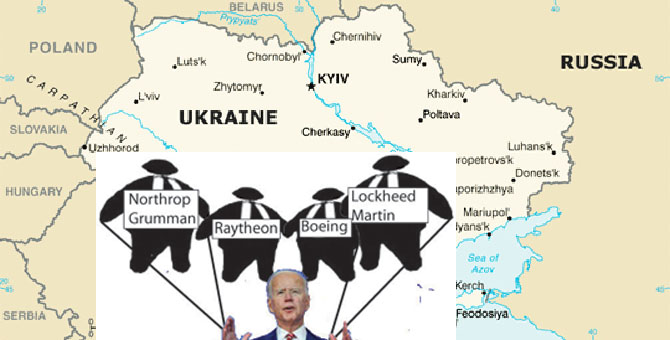
President Biden has the opportunity to re-direct US policy on Ukraine in a peaceful direction,
But it will take serious, steadfast courage. We don’t know how compromised he is by his previous dealing in Ukraine, or his son’s. We don’t know if he has the clarity of mind to see the obvious. And we don’t know if he has the strength to wage peace.
Ukraine Is a Problem Only as Long as the West Makes It One
https://www.rsn.org/001/ukraine-is-a-problem-only-as-long-as-the-west-makes-it-one.html
by William Boardman10 December 21,
Since the fall of the Soviet Union thirty years ago, US policy on Ukraine has been an ugly mix of inconsistency, quiet aggression, fear-mongering and stupidity. Now President Biden is recklessly intensifying the same failed tactics while expecting a different outcome and risking a confrontation of the world’s two major nuclear-armed states.
What could possibly go wrong?
What passes for conventional wisdom nowadays is expressed by the cover headline of the November 29 issue of The Nation magazine, of all places:
Ukraine: The Most Dangerous Problem in the World
That is such hogwash. The Nation’s knows better. But the fear-mongering leads, even though the magazine’s sub-head is: “But there’s already a solution.” Author Anatol Lieven argues persuasively that the essence of a solution for Ukraine issues have already been outlined in the so-called “Minsk II” agreement of 2015, reached by leaders of France, Germany, Russia, and Ukraine. The agreement was endorsed unanimously by the United Nations Security Council. Despite their formal assent to Minsk II, three US administrations have supported Ukraine in refusing to implement the agreement. Nor have they proposed any better idea. This is an example of foreign policy guided by denial of reality.
Ukraine remains a “dangerous problem” only as long as the US and Ukraine insist on making it one. (It’s hardly “the most dangerous,” given climate change, or US provocation of China, or the US-led nuclear arms race, or the self-gutting of US democracy.)
With the Soviet Union gone in 1991, US President Bush assured Russian leaders that NATO would not expand to include former Soviet states. Whether this was a lie or a broken promise hardly matters.
NATO expanded. Russia was confronted with the prospect of an avowedly hostile military alliance approaching its borders along the same invasion route followed by Napoleon and Hitler. As long as Ukraine remained unaligned, Russian historical memory could rest quietly. Ukraine puts almost 1,000 miles between Russia and NATO member Poland. Ukraine’s population of about 45 million ranges from very pro-western to virtually Russian. The country has long been deeply corrupt with a quasi-functional democracy (an opportunistic playground for the likes of Paul Manafort and Hunter Biden). All in all, from a geopolitical perspective, Ukraine was (and still is) a combustible potential best left undisturbed.
In 2013, Ukrainian President Viktor Yanukovych put NATO and European Union membership in play, then reversed course under Russian pressure. In November 2013, he cancelled an EU association agreement just days before it was to take effect. With US connivance, pro-western Ukrainian forces launched the Maidan Revolution that lasted into the spring of 2014. Elected president Yanukovich was forced out of office (shades of Iran 1953) and the country entered a period of chaos. Russia took advantage of this to walk into Crimea unopposed and to annex it, as voted by the Crimean parliament, despite objections from the West. These objections have continued to the present, together with economic sanctions and military provocations from the Black Sea.
The US and NATO have justified their hostile actions by claiming Russia was also about to invade eastern Ukraine, which still hasn’t happened. Eastern Ukraine, the Donbas, has been a war zone since March 2014 when separatist Ukrainian forces in Donetsk and Luhansk started fighting for independence from the central government in Kiev. This is a civil war between the self-declared People’s Republics of Donetsk and Luhansk against the Ukraine government. The People’s Republics comprise about 6,200 square miles (bigger than Connecticut) with almost 4 million people, mostly Russian-speaking, whose currency is the ruble. Russia has supported the People’s Republics, but short of introducing its own troops. Likewise, the US and NATO have supported Kiev, but short of introducing their own troops into the Donbas. The fighting has been intense in the past, with some 10,000 killed on both sides, but the conflict in recent years has been limited to trench warfare along a 400-mile front, with most casualties coming from sniper fire. Neither side has made significant advances in years.
In 2014, Russia and Ukraine met under the auspices of the European Union and signed the first Minsk Protocol in an ultimately ineffective effort to reach a ceasefire. The following year, five parties signed a second Minsk Protocol – Ukraine, Ukraine Separatists, Russia, France, and Germany – which led to reduced fighting but no lasting solution. Through all of this, the US under President Obama, played no useful role in resolving the issues or assuring anything like a stable peace.
The US remains gripped, apparently, by a reflexive Cold War rigidity which requires that Russia be to blame for anything we don’t like, such as the results of the US-sponsored coup in Ukraine in 2014. The new Cold War is manifested by the expansion of NATO, needlessly threatening Russia on the basis of a paranoid Western sense of threat.
Another manifestation of Cold War thinking is Biden’s choice of Victoria Nuland as his current special ambassador to Russia to discuss Ukraine. Nuland was notoriously involved in efforts to manipulate the 2013 Madan uprising and supporting the coup against Yanukovich. When apprised of European desires to proceed cautiously, Nuland was recorded on cell phone saying, “Fuck the EU.” Such assertions of American exceptionalism continue to make the world a more dangerous place.
What could Biden do now to make the world a safer place?
Biden could ease sanctions over Crimea, acknowledging that its return to Russia is a done deal with strong historic and geo-political justifications. Biden could also stop US nuclear-capable bombers from probing Russia in the Black Sea region. It’s hard to see how continuing such provocative flights can have a calming effect.
Most importantly, Biden could assure Russia (as the US did once before in 1992) that NATO would not expand to include Ukraine. In his recent conversation with Putin, Biden did the opposite, making it all but non-negotiable. That has the obvious effect of continuing the conflict, asserting the right to hold a knife to another’s throat.
This particular knife was forced into NATO’s hands in April 2008 by the illegitimate President Bush against the will of the majority of NATO members. The issue came up at NATO’s North Atlantic Council meeting in Bucharest. NATO members easily accepted the future membership of Albania and Croatia, but balked at approving Ukraine or Georgia. Instead, in the Bucharest Summit Declaration, members approved a compromise article drafted by the British with intentional imprecision, paragraph 23 of 50, that began:
ATO welcomes Ukraine’s and Georgia’s Euro-Atlantic aspirations for
membership in NATO. We agreed today that these countries will become
members of NATO….
The paragraph continues with generalizations about the countries’ contributions to the war in Afghanistan, their promised democratic reforms, and so on. But there is no date for membership, no process for achieving membership (as distinct from Albania and Croatia), and actual approval is only anticipated at some unknown future date. This paragraph in the Bucharest Declaration is essentially a throwaway line, putting off to an indeterminate future the clearly divisive and dangerous issue of relating to Russian border states.
The Alliance will continue to support, as appropriate, these efforts as guided by regional priorities and based on transparency, complementarity and inclusiveness, in order to develop dialogue and cooperation among the Black Sea states and with the Alliance. [paragraph 36]
The Bucharest Declaration does not express an alliance seeking confrontation with Russia, for all that George W. Bush wanted it.
The Bucharest Declaration treats NATO’s war in Afghanistan as a success and expresses the need for possible future military actions against Iran and North Korea (but no mention of China). There is no hint of anyone wondering why something called the North Atlantic Treaty Organization thinks it has any legitimate business operating in landlocked Afghanistan.
More than a decade later, four American presidents have turned Afghanistan into a world class disaster. America has turned its back on mass starvation there. And still there is no sense of national responsibility or shame as Biden and the US governing elite stumble provocatively toward new looming catastrophes with Iran, China, climate change, public health, and functioning democracy itself.
Ukraine is a wholly American-made pseudo crisis in which the US national interest is close to zero. The US forced NATO to put Ukraine in play in 2008 by breaking the earlier US pledge not to put Ukraine in play. Now our obtuse leadership poses as acting on principle by refusing to break the pledge that broke the first pledge, even though that is the most obvious, effective de-escalation available: guarantee Russia a border with no more NATO threats and negotiate (as others have done) in good faith to defuse the rest of the Ukrainian mishmash.
When Secretary of State Anthony Blinken says that “one country trying to tell another what its choices should be, including with whom it associates, that’s not an acceptable proposition,…” what we’re hearing is a US official ignoring reality and denying what the US does every day. And when former US ambassador Michael McFaul tweets: “Putin invented this ‘crisis’ single-handedly. Nothing changed in Ukraine. Nothing changed regarding NATO policy” – he’s just lying.
Worse, the blind rigidity of the likes of Blinken and McFaul serves to enable the truly mindless warmongers like US Senator Roger Wicker, R-MS, who doesn’t have the sense not to invite nuclear war when he tells Fox News:
Military action could mean that we stand off with our ships in the Black Sea, and we rain destruction on Russian military capability. It could mean that. It could mean that we participate, and I would not rule that out, I would not rule out American troops on the ground. We don’t rule out first use nuclear action.
President Biden has the opportunity to re-direct US policy on Ukraine in a peaceful direction,
But it will take serious, steadfast courage. We don’t know how compromised he is by his previous dealing in Ukraine, or his son’s. We don’t know if he has the clarity of mind to see the obvious. And we don’t know if he has the strength to wage peace.
Nuclear can’t deliver on climate —

Nuclear power can’t save us before climate tipping point
Nuclear can’t deliver on climate — Beyond Nuclear International
Nuclear energy cannot meaningfully contribute to a climate-neutral energy system say German scientists https://wordpress.com/read/feeds/72759838/posts/3712941667 By Ben Wealer et al., Scientists for Future 13 Dec 21,
In light of the accelerating climate crisis, nuclear energy and its place in the future energy mix is being debated once again. Currently its share of global electricity generation is about 10 percent. Some countries, international organizations, private businesses and scientists accord nuclear energy some kind of role in the pursuit of climate neutrality and in ending the era of fossil fuels. The IPCC, too, includes nuclear energy in its scenarios.
On the other hand, the experience with commercial nuclear energy generation acquired over the past seven decades points to the significant technical, economic, and social risks involved. This paper reviews arguments in the areas of “technology and risks,” “economic viability,” ’timely availability,” and “compatibility with social-ecological transformation processes.”
Technology and risks: Catastrophes involving the release of radioactive material are always a real possibility, as illustrated by the major accidents in Three Mile Island, Chernobyl, and Fukushima. Also, since 1945, countless accidents have occurred wherever nuclear energy has been deployed. No significantly higher reliability is to be expected from the SMRs (“small modular reactors”) that are currently at the planning stage. Even modern mathematical techniques, such as probabilistic security analyses (PSAs), do not adequately reflect important factors, such as deficient security arrangements or rare natural disasters and thereby systematically underestimate the risks.
Moreover, there is the ever-present proliferation risk of weapon-grade, highly enriched uranium, and plutonium. Most spent fuel rods are stored in scarcely protected surface containers or other interim solutions, often outside proper containment structures. The safe storage of highly radioactive material, owing to a half-life of individual isotopes of over a million years, must be guaranteed for eons. Even if the risks involved for future generations cannot be authoritatively determined today, heavy burdens are undoubtedly externalized to the future.
Nuclear energy and economic efficiency: The commercial use of nuclear energy was, in the 1950s, the by-product of military programmes. Not then, and not since, has nuclear energy been a competitive energy source. Even the continued use of existing plants is not economical, while investments into third generation reactors are projected to require subsidies to the tune of billions of $ or €. The experience with the development of SMR concepts suggests that these are prone to lead to even higher electricity costs.
Lastly, there are the considerable, currently largely unknown costs involved in dismantling nuclear power plants and in the safe storage of radioactive waste. Detailed analyses confirm that meeting ambitious climate goals (i. e. global heating of between 1.5° and below 2° Celsius) is well possible with renewables which, if system costs are considered, are also considerably cheaper than nuclear energy. Given, too, that nuclear power plants are not commercially insurable, the risks inherent in their operation must be borne by society at large. The currently hyped SMRs and the so-called Generation IV concepts (not light-water cooled) are technologically immature and far from commercially viable.
Timely availability: Given the stagnating or – with the exception of China – slowing pace of nuclear power plant construction, and considering furthermore the limited innovation potential as well as the timeframe of two decades for planning and construction, nuclear power is not a viable tool to mitigate global heating. Since 1976, the number of nuclear power plants construction starts is declining. Currently, only 52 nuclear power plants are being built. Very few countries are pursuing respective plans. Traditional nuclear producers, such as Westinghouse (USA) and Framatome (France) are in dire straits financially and are not able to launch a significant number of new construction projects in the coming decade. It can be doubted whether Russia or China have the capacity to meet a hypothetically surging demand for nuclear energy but, in any event, relying on them would be neither safe nor geopolitically desirable.

Nuclear energy in the social-ecological transformation: The ultimate challenge of the great transformation, i. e. kicking off the socio-ecological reforms that will lead to a broadly supported, viable, climate-neutral energy system, lies in overcoming the drag (“lock-in”) of the old system that is dominated by fossil fuel interests. Yet, make no mistake, nuclear energy is of no use to support this process. In fact, it blocks it. The massive R&D investment required for a dead-end technology crowds out the development of sustainable technologies, such as those in the areas of renewables, energy storage and efficiency.
Nuclear energy producers, given the competitive environment they operate in, are incentivized to prevent – or minimize – investments in renewables. For obvious technical as well as economic reasons, nuclear hydrogen – the often-proclaimed deus ex machina – cannot enhance the viability of nuclear power plants. Japan is an exhibit A of transformation resistance. In Germany the end of the atomic era proceeds, and the last six nuclear power stations will be switched off in 2021 and 2022, but further steps are still needed, most importantly the search for a safe storage facility for radioactive waste.
By way of conclusion: The present analysis reviews a whole range of arguments based on the most recent and authoritative scientific literature. It confirms the assessment of the paper Climate-friendly energy supply for Germany – 16 points of orientation, published on 22 April 2021 by Scientists for Future (doi.org/10.5281/zenodo.4409334) that nuclear energy cannot, in the short time remaining before the climate tips, meaningfully contribute to a climate-neutral energy system. Nuclear energy is too dangerous, too expensive, and too sluggishly deployable to play a significant role in mitigating the climate crisis. In addition, nuclear energy is an obstacle to achieving the social-ecological transformation, without which ambitious climate goals are elusive.
This article is the English language summary of the findings of the German report by Scientists for Future (S4F) International. S4F supports the global climate movement by providing facts and materials based on reliable and accepted scientific data to activists, politicians, decision makers, educators and the general public.
“Nuclear power has no future inFrance”.
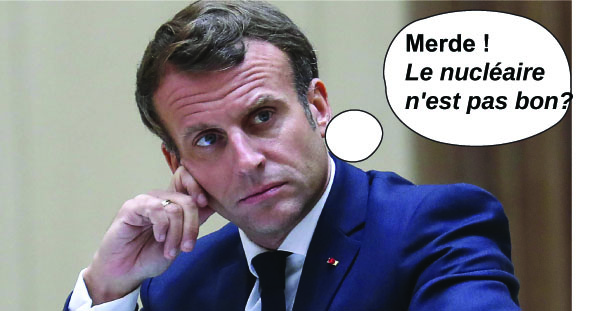
Thierry Gadault gave a conference on French nuclear power on December 3,
2021 in Orleans with a shocking title: “Nuclear power has no future in
France”. This independent journalist who has been investigating the atom
for ten years is the co-author of the book Nuclear, immediate danger (2018,
Flammarion) and the TV documentary Nuclear, the end of a myth broadcast on
Public Senate in 2018. He granted at Magcentre an exclusive interview.
Magcentre 8th Dec 2021
Editorial: No, California shouldn’t extend the life of its last nuclear plant. There are better ways to fight climate change

We can and should curb the dangers of fossil fuel combustion and nuclear fission at the same time, not use the threat of one to prop up the other.
Editorial: No, California shouldn’t extend the life of its last nuclear plant. There are better ways to fight climate change https://www.latimes.com/opinion/story/2021-12-12/diablo-canyon-nuclear-closure BY THE TIMES EDITORIAL BOARD, DEC. 12, 2021
California is approaching an energy crossroads. In three years, its last nuclear plant will begin to power down and the state will lose its largest single source of emissions-free electricity.
A 2018 law requires state regulators to “avoid any increase in greenhouse gases” as a result of closing the Diablo Canyon nuclear power plant on the Central Coast. But if they don’t move more quickly to replace its electricity with renewable energy from wind, solar and geothermal, the void will almost certainly be filled by burning more natural gas, which increased last year to account for nearly half of California’s in-state electricity generation.
California can’t allow the retirement of Diablo Canyon’s nuclear reactors to prolong its reliance on gas plants or increase planet-warming and health-damaging emissions. But the state’s preparations for shutdown of an around-the-clock power source that supplies more than 8% of California’s in-state electricity generation have not inspired confidence; there have been no assurances that an uptick in carbon emissions will be avoided.
That uncertainty has created an opening for a new push to extend Diablo Canyon’s life. A recently launched campaign, whose supporters include former U.S. Energy secretaries Steven Chu and Ernest Moniz, and fashion model and nuclear influencer Isabelle Boemeke, wants California to abruptly reverse course and keep Diablo Canyon operating for another 10 or even 20 years.
Proponents say this would reduce climate pollution, bolster grid reliability and buy time during a crucial period in the state’s transition toward solar, wind and other renewable energy sources, citing a recent report by Stanford University and MIT scientists that lends support to the idea. The Biden administration has chimed in receptively, with Energy Secretary Jennifer M. Granholm suggesting in a recent interview that California might reconsider closing the facility to avoid losing an always-on source of clean electricity.
But the idea is misguided, and at this point remains largely divorced from reality. The plant’s closure should instead serve as an impetus for California do more to accelerate the shift to renewable energy and set a realistic course to meet the state’s target of getting 100% of its electricity from carbon-free sources by 2045
Those floating the idea of keeping Diablo Canyon open seem to ignore many practical considerations, including how to address seismic risks, the ecological harm of using seawater for cooling, and what to do with spent nuclear fuel. The cooling system and earthquake safety upgrades that would be required for the facility to keep operating after 2025 are so extensive they would likely exceed $1 billion, according to the Public Utilities Commission.
The plant’s operator, Pacific Gas and Electric Co., agreed in 2016 not to pursue license renewal, in part because closing the plant and replacing it with other zero-carbon energy sources and storage would cost less than keeping it open. The utility has shown no interest in reconsidering, nor has the Public Utilities Commission received any proposals to revisit its 2018 decision to allow the plant to shut down.
Still, the pro-nuclear camp is right in pointing out that the urgency of fighting global warming has only increased in the five years since the decision to close Diablo Canyon. Wildfires and other climate impacts are worsening at an alarming clip. Last year, California experienced its first rolling blackouts in nearly two decades thanks to climate-fueled heat waves that forced the state to burn more planet-warming gas to keep the power on. And the recent global climate summit in Glasgow, Scotland, showed that world leaders aren’t yet acting with the urgency needed to avert catastrophic warming.
But there are good reasons to eschew nuclear power as a solution. The world is still dealing with repercussions from the Chernobyl and Fukushima nuclear disasters, which rendered huge zones uninhabitable and spread radioactive isotopes across the globe; and closer to home, the cleanup of the 1959 partial nuclear meltdown at the Santa Susana Field Laboratory near Simi Valley. Because the United States has no designated repository for high-level radioactive waste, spent nuclear fuel is stored on site at power plants across the country, posing ongoing risks. We can and should curb the dangers of fossil fuel combustion and nuclear fission at the same time, not use the threat of one to prop up the other.
U.S. government struggles with the ever-accumulating nuclear waste problem
Government launches push that may remove Maine Yankee’s nuclear waste from Wiscasset
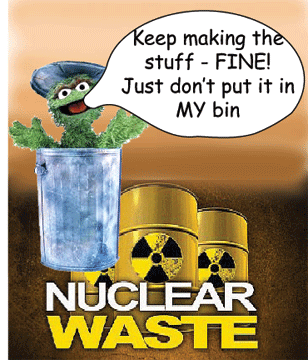
The U.S. Department of Energy wants to know whether communities would be willing to store nuclear waste temporarily while the government finds a permanent solution.
BY KATHLEEN O’BRIEN, TIMES RECORD, 2 Dec 21, The federal government has taken the first step in an effort to move the nation’s spent nuclear fuel, like the 542 metric tons of nuclear waste at the long-decommissioned Maine Yankee facility in Wiscasset, but a Maine Yankee official said that waste likely isn’t going anywhere any time soon.
On Nov. 30, the U.S. Department of Energy released a request for information on a consent-based effort to move the nation’s spent nuclear fuel to other communities willing to hold onto it until the government finds a permanent storage solution for the waste. The DOE is collecting feedback from stakeholders on the effort until March 4, 2022, at 5 p.m
This action is considered long overdue because the Nuclear Waste Policy Act of 1982 required the federal government to remove the radioactive waste from sites including Maine Yankee by 1998, but that commitment was never fulfilled.
Maine Yankee operated from 1972 to 1996 when the company’s board voted to cease operations rather than invest in fixing expensive safety-related problems to keep the plant running. The plant was fully decommissioned in 2005. Since then, the nuclear waste has sat there, waiting for the government to remove it.
Maine Yankee’s spent nuclear fuel is housed in 64 dry storage casks, which stand on 16 3-foot-thick concrete pads. Each concrete cask is comprised of a 2.5-inch-thick steel liner surrounded by 28 inches of reinforced concrete. The site takes up 820-acres on Wiscasset’s Bailey Point.
Maine Yankee Public and Government Affairs Director Eric Howes said moving the nuclear waste elsewhere will be a years-long process, but this movement is, “a positive development, but much more needs to be done to resolve the spent nuclear fuel issue.”
…….. “It’s going to be difficult to get a community willing to be an interim storage facility because what does interim mean?” Howes said. “What’s meant by interim when, at this point, there is no plan for a permanent geologic repository?”………..
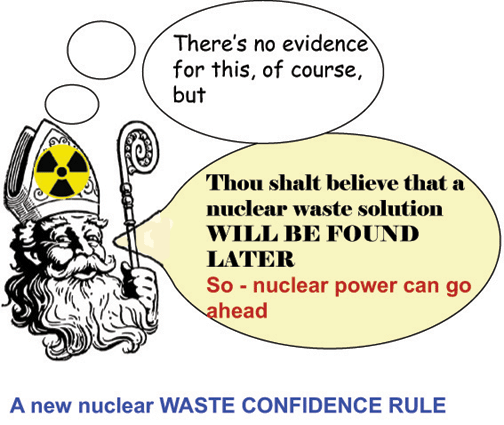
Kathryn Huff, principal deputy assistant secretary for nuclear energy at the Department of Energy, said the department recognizes it needs to take responsibility for the 86,000 metric tons of spent nuclear fuel in sites across the country.
………. Huff said it needs to be removed because “the communities that have that spent nuclear fuel never agreed to host the material long-term.”
“We cannot continue to defer the problem for future generations to figure out,” Huff said during a public information session Tuesday. “Inaction on this issue has already cost U.S. taxpayers nearly $9 million on settlements and judgements.”…………
Howes says it costs Maine Yankee roughly $10 million annually to store the nuclear waste safely while waiting for the government to remove it. He said the company pays to store it with funds won in lawsuits against the DOE.
Maine Yankee and its two sister sites, Connecticut Yankee and Yankee Rowe in Mass., have collectively won about $575.5 million in lawsuits and is now in its fifth round of litigation with the department. The money the government concedes in those lawsuits, however, comes from The Judgement Fund, which is funded by U.S. taxpayers………… https://www.pressherald.com/2021/12/12/government-launches-push-that-may-remove-maine-yankees-nuclear-waste-from-wiscasset/
Six compelling arguments why nuclear energy is spectacularly unfit to power a just transition
Six compelling arguments why nuclear energy is spectacularly unfit to power a just transition https://www.dailymaverick.co.za/opinionista/2021-12-12-six-compelling-arguments-why-nuclear-energy-is-spectacularly-unfit-to-power-a-just-transition/ By Makoma Lekalakala Makoma Lekalakala is the director of Earthlife Africa and a board member of Natural Justice. She was the joint recipient, with Liz McDaid, of the 2018 Goldman Environmental Prize for Africa and the SAB Environmentalist of the year 2018.

All evidence shows that renewables create more jobs than nuclear. Depending on the technology and the job measurement, up to six times more. Moreover, not only do renewables create more jobs, they also create a wider variety of jobs, across more flexible locations.
A just transition is the only way out of the multiple crises we face — the climate emergency, the collapse of life systems the world over, and growing political and social discontent. Over the past year, we have seen some argue that not only is nuclear the best way to “green” our economies, but we have also seen nuclear being framed as a technology that will be good for “workers”.
However, the publication by Dr Neil Overy and the Heinrich Böll Foundation, Neither Climate Nor Jobs: Nuclear Myths About the Just Transition, offers a comprehensive account of why nuclear will be detrimental to our collective capacity to transform our energy systems in a way that leaves no one behind — #LeaveNoOneBehind.
Here are six reasons why nuclear energy is spectacularly unfit to power a just transition, in a way that leaves no one behind:
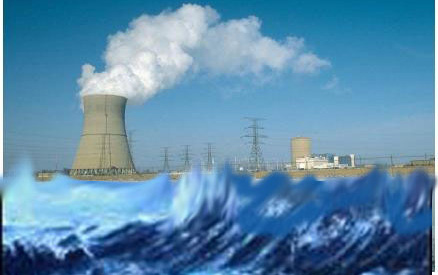
1 Just transitions require stable electricity supplies in the face of extreme weather. It is widely claimed that nuclear power is reliable but, over the past five years, French nuclear power plants have had to shut down for up to 7,000 hours due to climate events. In fact, nuclear energy’s reliance on water for cooling makes it particularly vulnerable to the impacts of climate change. The causes for these have ranged from floods to droughts and dramatic temperature increases. Earlier this year, we saw that in the Texas snowstorm, nuclear plants had to be shut down because water in pump stations froze.

It is also argued that a green energy system would require nuclear for “baseload”, but technology has moved far beyond this. It is outdated thinking such as this that keeps us from doing what must be done to keep temperatures below 1.5°C, even though it has been shown that smart grids can draw from a mix of renewable energy sources to provide a constant energy supply.
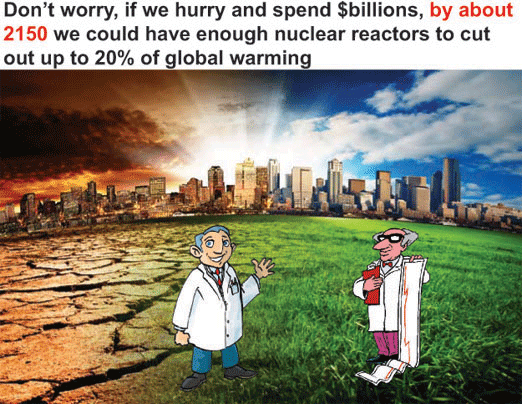
2 Even in the unlikely case that nuclear power stations are in locations that are not affected by temperature changes, storms, sea level rise or water scarcity, the lengthy time lag between planning to operation of new plants (a decade in the best cases, which are the exception rather than the rule) means that new nuclear will be of little help in mitigating emissions in the crucial decade leading up to 2030. In comparison, utility-scale solar and wind plants are completed on average in around half the time — two to three years from planning to operation.
There will be no just transition if we fail to decarbonise in this decade, in the lead-up to 2030. The IPCC is clear that unless we cut emissions by half until 2030, we will miss the 1.5°C target. We all know that those most vulnerable to the climate emergency are those who are already marginalised and who we cannot afford to leave behind.

3 Even as a technology that could potentially reduce GHG emissions after 2030 compared to fossil fuels, nuclear costs are prohibitively expensive and make for anti-poor policies. Even before accounting for the nuclear waste management expenses, a new nuclear power plant costs about four times more than renewable utilities.
Such fantastic expenses mean that:
- Efforts to address and eliminate energy poverty will fail. In fact, energy poverty will most likely be exacerbated;
- Precious resources will be diverted from public services like health and education — services relied on, again, by those who we cannot leave behind;
- It will not be possible to make the investments required for a Just Transition — investments in skills development, industrial programmes, small business support programmes and a stronger social safety net — precisely when these will be needed most; and
- We have also seen how the exorbitant costs of nuclear crowd out investments in renewables.
4 All evidence shows that renewables create more jobs than nuclear. Depending on the technology and the job measurement, up to six times more. Moreover, not only do renewables create more jobs, they also create a wider variety of jobs, across more flexible locations. This means that job profiles are accessible to a wider array of people and can be located where they are needed most. And then, despite its enormous expense, the economic stimulus that nuclear creates is less than that created by renewables.
5 Even if we ignore all the above — cost, time, jobs, economic impact, supply reliability risks — nuclear energy still provides inferior environmental outcomes. The median carbon footprint of nuclear power is at least two to four times more than that of renewables — and that is still an underestimate. It also creates an intergenerational toxic waste crisis.
6 History shows us that the social and economic consequences of a serious accident occurring at a nuclear power station are devastating to both workers and society at large. Such outcomes can hardly be justified by the few jobs nuclear creates.
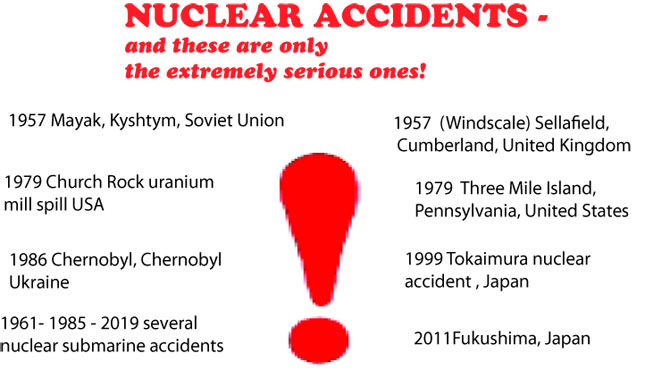
These last two points suggest that nuclear is spectacularly unfit to power a just transition. And not only will the jobs it creates go to a few highly skilled elites, nuclear energy’s economic stimuli will affect lesser industries and its costs will likely result in austerity policies.
Nuclear power is not, has never been, and will never become a viable means to generate electricity, especially within the context of the worsening climate emergency. It is obvious, via any metric, that renewable energy is a far better option if we are to meaningfully address carbon emissions to avert a climate catastrophe.
Renewables will do so while safeguarding decent livelihoods and rolling back inequality. DM
This article is based on Makoma Lekalakala’s speech at the COP26 launch of Dr Neil Overy’s report, Neither Climate Nor Jobs: Nuclear Myths About the Just Transition.
1 This Month



19 November – Webinar – The Reality of Reprocessing
Time: 11:00 AM Pacific Time (US & Canada) / 2:00 PM Eastern / 7:00 PM UK / 8:00 PM CET
Register for the Zoom Event Here



Shut down the radiation-damaged Heysham nuclear reactors now
To see nuclear-related stories in greater depth and intensity – go to https://nuclearinformation.wordpress.com

Say No to NASA’s Reckless Nuclear Reactor on the Moon
Say No to NASA’s Reckless Nuclear Reactor on the Moon
-
Archives
- November 2026 (74)
- October 2026 (302)
- September 2026 (339)
- August 2026 (330)
- July 2026 (355)
- June 2026 (287)
- May 2026 (306)
- April 2026 (356)
- March 2026 (251)
- February 2026 (267)
- January 2026 (308)
- December 2025 (358)
-
Categories
- 1
- 1 NUCLEAR ISSUES
- business and costs
- climate change
- culture and arts
- ENERGY
- environment
- health
- history
- indigenous issues
- Legal
- marketing of nuclear
- media
- opposition to nuclear
- PERSONAL STORIES
- politics
- politics international
- Religion and ethics
- safety
- secrets,lies and civil liberties
- spinbuster
- technology
- Uranium
- wastes
- weapons and war
- Women
- 2 WORLD
- ACTION
- AFRICA
- Atrocities
- AUSTRALIA
- Christina's notes
- Christina's themes
- culture and arts
- Events
- Fuk 2022
- Fuk 2023
- Fukushima 2017
- Fukushima 2018
- fukushima 2019
- Fukushima 2020
- Fukushima 2021
- general
- global warming
- Humour (God we need it)
- Nuclear
- RARE EARTHS
- Reference
- resources – print
- Resources -audiovicual
- Weekly Newsletter
- World
- World Nuclear
- YouTube
-
RSS
Entries RSS
Comments RSS

