‘Nuclear is neither green nor sustainable” – Austria to sue European Commission if it approves nuclear power for financial incentives

Austria’s chancellor responded to the news by saying “nuclear power is neither green nor sustainable”. “I cannot understand the decision of the EU,” Karl Nehammer said. He said he would back his environment minister, Leonore Gewessler, in pursuing legal action at the European Court of Justice if the plans go ahead.
“This decision is wrong,” Ms Gewessler said. “The EU Commission today agreed its greenwashing programme for nuclear energy and [the fossil fuel] natural gas.” Luxembourg has also said it will
join in legal action. The EU has set itself a goal of becoming climate neutral by 2050 and the Commission argues that to get there, a great deal of private investment is needed. Its proposals are meant to guide
investors.
BBC 3rd Feb 2022
https://www.bbc.co.uk/news/world-europe-60229199
Austria, Luxembourg to take green label for nuclear and gas to EU courts
Austria, Luxembourg to take green label for nuclear and gas to EU courts https://www.euractiv.com/section/politics/short_news/austria-luxembourg-to-take-green-label-for-nuclear-and-gas-to-eu-courts/
By Nikolaus J. Kurmayer | EURACTIV.de 4 Feb 22, The EU’s sustainable finance rules presented on Wednesday will award a “green” label to gas and nuclear power, which has prompted Austria and Luxembourg to announce a lawsuit.
The European Commission’s proposal would primarily satisfy the “wishes of the nuclear power lobby,” explained Austrian minister for climate protection Leonore Gewessler.
The Commission’s delegated act “is a greenwashing programme,” she said. As soon as the taxonomy enters into force, Austria “will bring a lawsuit to the European Court of Justice.”
“Luxembourg strongly reaffirms its opposition to the inclusion of nuclear & fossil gas in the decision on EU Taxonomy for ‘sustainable’ finance of the EU Commission,” explained Luxembourg’s minister for energy Claude Turmes. “We will consider further legal steps together with Austria.”
The taxonomy would enter into force on 1 January 2023 at the earliest and a definitive decision by the courts could be expected in late 2023.
Austria’s EU Commissioner Johannes Hahn had already made his displeasure known by being one of three Commissioners to oppose the decision to include nuclear and gas in an internal Commission vote.
(Nikolaus J. Kurmayer | EURACTIV.de)
Despite scientific objections, the European Commission sticks to its draft plan to include nuclear and gas in “taxonomy for sustainable finance”

Brussels has stuck by a decision to classify nuclear power and some forms of natural gas as green energy, defying criticism from scientists and climate change experts over its landmark sustainable finance rules.
The European Commission on Wednesday published a largely unrevised final text of its The EU’s taxonomy is a sweeping classification system for industries that produce about 80 per cent of the bloc’s emissions to guide private capital into environmentally sustainable activities.But Brussels has come
under fire for bowing to pressure from pro-nuclear and pro-gas member states to include the two technologies under the green label in an initial draft first reported by the Financial Times.sustainable finance” which has come under fire from EU governments, environmental campaigners and the European Investment Bank for its acceptance of nuclear power and forms of carbon-emitting gas.
The EU’s taxonomy is a sweeping classification system for industries that produce about 80 per cent of the bloc’s emissions to guide private capital into environmentally sustainable activities.But Brussels has come under fire for bowing to pressure from pro-nuclear and pro-gas member states to include the two technologies under the green label in an initial draft first reported by the Financial Times.
FT 2nd Feb 2022
https://www.ft.com/content/0acb5e0f-8322-413f-911d-fda09951ea99
France24 2nd Feb 2022
https://www.france24.com/en/live-news/20220202-eu-presses-on-with-green-label-for-gas-nuclear
Independent 2nd Feb 2022
Kazakhstan calls on CANWFZ states parties to join Treaty on Prohibition of Nuclear Weapons

Kazakhstan calls on CANWFZ states parties to join Treaty on Prohibition of Nuclear Weapons https://www.inform.kz/en/kazakhstan-calls-on-canwfz-states-parties-to-join-treaty-on-prohibition-of-nuclear-weapons_a3895288 4 February 2022
NUR-SULTAN. KAZINFORM – The Deputy Minister of Foreign Affairs of Kazakhstan, Akan Rakhmetullin, held a meeting with the ambassadors of the States Parties to the Treaty on a Nuclear-Weapon-Free Zone in Central Asia (CAWFZ Treaty), accredited in Nur-Sultan, Kazinform has learnt from the press service of the Kazakh Foreign Affairs Ministry.
During the meeting, the Kazakh diplomat, taking into account the existing relations of friendship and brotherhood, called on the partners from the Nuclear-Weapon-Free zone in Central Asia to become parties to the Treaty on the Prohibition of Nuclear Weapons (TPNW) and thereby make a significant contribution to strengthening international security.
Rakhmetullin noted that participants of Nuclear-Weapon-Free zones around the world are at the forefront of the nuclear disarmament process. He stressed that the main goals and objectives of establishing Nuclear-Weapon-Free zones are in line with the spirit and principles of the TPNW. Moreover, the obligations that a State Party to the TPNW must undertake are already being fulfilled by the participants in the CANWFZ. Thus, a State Party to the CANWFZ Treaty can join the TPNW without undertaking additional substantive obligations. This is evidenced by a comparative analysis prepared by the International Campaign to Abolish Nuclear Weapons (ICAN).
Kazakhstan, as a staunch supporter of nuclear disarmament, took an active part in the United Nations conference to negotiate a legally binding instrument to prohibit nuclear weapons, leading towards their total elimination. Today, our country, together with other parties to the Treaty under the chairmanship of Austria, is preparing for the First Meeting of the States Parties to the TPNW in Vienna. At the initiative of Kazakhstan and Kiribati, as the countries most affected by nuclear tests, a working paper on positive obligations under the TPNW providing for measures to rehabilitate the population and the environment exposed to radiation contamination after nuclear tests was developed and supported by the presiding party.
On January 22, 2021, the Treaty on the Prohibition of Nuclear Weapons (TPNW) entered into force. On March 2, 2018, Kazakhstan signed the TPNW, becoming the 57th country to sign this historic document. On August 29, 2019, Kazakhstan handed over the instrument of ratification of the TPNW to the depositary – the UN Secretary General. Our country is the first and so far the only State Party of the CANWFZ that has joined the TPNW.
Nuclear power: CO2 fix or cost disaster?
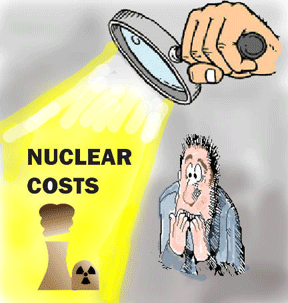
Nuclear power: CO2 fix or cost disaster? E and E News | 02/04/2022 President Biden’s plan to decarbonize the U.S. electricity sector by 2035 could give a boost to nuclear power, but that may hinge on two key questions: Can carbon targets really incentivize the technology, and can it compete cost wise with natural gas?
It’s a debate that is resurfacing, considering recent surging prices of natural gas.
Yet industry hasn’t answeredwhether nuclear will be more economic for producing power, especially after costs for two new reactors at Plant Vogtle in Georgia skyrocketed. The actual costs of 75 of the more than 90 existing nuclear power reactorsin the U.S. exceeded the initially estimated costs of the units by over 200 percent, according to the U.S. Department of Energy.
There are many facets of the cost question — existing nuclear plants in competitive markets face economic challenges that could force them to close early, saddling operators with stranded costs and removing emissions-free electrons [not really emissions-free] from the grid. Meanwhile, no large, baseload reactors are on the table. The industry is working to develop smaller, next-generation reactors by the next decade, but the fate and final costs of projects are uncertain.
“There doesn’t seem to be, in the near term, a big thing that’s going to be pushing” nuclear, said Paul Patterson, a utility analyst with Glenrock Associates LLC. Whether the nuclear industry builds new reactors could help shape the electricity mix for decades. Falling renewable energy costs and higher gas prices may also influence investment decisions for nuclear in unexpected ways.
………… Southern Co.’s Vogtle expansion project hasn’t helped the case for baseload nuclear. The project, which was supposed to lead a resurgence of larger reactors in the 2000s, remains theonly major nuclear power construction project in the United States. Vogtle’sprice tag is twice an earlier $14 billion budget, andthe project is more than seven years behind schedule.
……more than one big electric company has shelved its plans to build large reactors using similar technology because of the litany of troubles at Vogtle…………………….
it’s unclear whether SMRs will face some of the same cost challenges as traditional reactors.
In the past, the higher price tag for nuclearin comparison to expectations was tied to safety regulations, which are the most stringent of all power plants. What’s more, if any work needs to be redone to meet strict codes, that pushes out the deadline to finish the plant.
The longer it takes to get it right, the more expensive the reactors become.
“There are so many concerns about radioactive material, etc., so that’s what drives much of the cost,” Glenrock’s Patterson said. “You don’t have the same issues associated with regulations for other power plants, understandably so.”
………… A group of former nuclear regulators in the United States, Germany and France argued last month that nuclear isn’t safe, clean or smart.
It’smore expensive than renewables in terms of producing energy and mitigating carbon dioxide, even accounting for costs such as pairing renewable energy with storage, according to the group, which alsoincludes a former secretary to a United Kingdom radiation protection committee.
The former regulators said nuclear is unlikely “to make a relevant contribution to necessary climate change mitigation” that’s needed by the 2030s………………………………..
Gas and renewables
Ultimately, the trajectory of nuclear will directly affect how wind, solar, batteries and fossil fuels are used in the coming decades.
Coyle pointed out that while the cost of Vogtle has doubled during the seven-year delay, the price of renewables, including storage, has dropped. Going forward, she argues that Georgia Power should compare the cost of planned generation with not only combined-cycle natural gas but also with renewable options such as utility-scale solar and long-term agreements to buy wind power.
“This argument that, ‘Well, it’s reliable, it’s low-cost, it’s carbon-free,’ then why are we still comparing it to combined-cycle natural gas?” Coyle said.
“There are now significantly more cost-effective renewable energy options than any of us anticipated back in the day when Vogtle 3 and 4 were certified.”……………
Nuclear Free Local Authorities (NFLA) of the UK and Ireland call for clear commitment to employ LOCAL nuclear decommissioning workers.
The Nuclear Free Local Authorities (NFLA) of the UK and Ireland has called
for a clear commitment to offer work to local people on decommissioning
work when nuclear plants close.
In its response to the consultation just carried out by the Nuclear Decommissioning Authority (NDA), the agencycharged with making safe and clearing closed civil nuclear plants, on its
future Business Plan, the NFLA has called for support to be made available
to staff losing employment from a decommissioned plant to enable them to be
either reengaged in a role supporting the decommissioning process or find
alternate employment’. The NFLA also wants to see local contractors
continue to be hired to supply goods and services to the work.
NFLA 1st Feb 2022
Predictions of technical problems for Hinkley nuclear design turn out to be well founded
When the scheme started, EDF were confident that the facility would be
open within five years. The cost budget was £19 billion. Today the
situation is very different and many of the concerns expressed have proved
to be well founded.
There remain major concerns regarding the technical
solution being used by EDF. The reactor is a new generation design,
produced by France and Germany. To say that there are teething problems
with this would be an understatement. This system is being used to upgrade
France’s fleet of 56 ageing nuclear reactors. They are currently building
a new reactor in Flamanville. The project cost for this has quadrupled.
North Devon Gazette 3rd Feb 2022
https://www.northdevongazette.co.uk/news/opinion-we-should-celebrate-not-decry-nuclear-power-8649918
Russia, China call on nuclear powers to abandon Cold War mentality
Russia, China call on nuclear powers to abandon Cold War mentality — statement,
Russia and China “oppose further enlargement of NATO and call on the alliance to abandon its ideologized approaches, to respect the sovereignty, security and interests of other countries and the diversity of their civilizational, cultural and historical backgrounds.
BEIJING, February 4. /TASS/. Russia and China call on nuclear powers to abandon the Cold War mentality, reduce the role of nuclear weapons in their policies and restrict the development of anti-ballistic missile defense systems, both countries said in a joint statement on Friday.
“The sides welcome the Joint Statement of the Leaders of the Five Nuclear-Weapons States on Preventing Nuclear War and Avoiding Arms Races and believe that all nuclear-weapons States should abandon the cold war mentality and zero-sum games, reduce the role of nuclear weapons in their national security policies, withdraw nuclear weapons deployed abroad, eliminate the unrestricted development of global anti-ballistic missile defense (ABM) system, and take effective steps to reduce the risks of nuclear wars and any armed conflicts between countries with military nuclear capabilities,” says the Russia-China joint statement on the international relations entering a new era and the global sustainable development………………. https://tass.com/politics/1398067
Electricity production at the new Olkiluoto 3 nuclear reactor in southwest Finland has been hit by yet further delays
| Electricity production at the new Olkiluoto 3 nuclear reactor in southwest Finland has been hit by yet further delays. Production had been set to begin in January, but this was postponed until early February. In a press release, the facility’s operator Teollisuuden Voima (TVO) said the much-delayed reactor will instead begin producing electricity at the end of February. “During the OL3 plant unit’s test production phase, it was observed that there is a need for modifications in the plant unit’s automation related to control functions, as well as further testing related to the modifications,” the statement said. The delay also means that regular electricity production will begin in July, and not June as planned. Production will operate at 30 percent capacity until then. YLE 4th Feb 2022https://yle.fi/news/3-12301825 |
French nuclear capacity low in February, need for vigilance remains
French nuclear capacity low in February, need for vigilance remains – RTE Nasdaq, Forrest Crellin Reuters PARIS, Feb 4 (Reuters) – French power grid operator RTE said France’s nuclear capacity in February was expected to remain around the relatively low level recorded last winter, but there was little risk to power supply as mild weather was expected in the coming weeks.
The current maintenance schedule now allows between nine and 13 reactors to be shut down during the month of February depending on the week, either for standard maintenance or following identification of additional corrosion defects, RTE said…………
In January, the nuclear fleet reached its lowest level ever with an average of around 48 GW of available capacity for the month………
State-controlled power group EDF EDF.PA and the French nuclear safety authority ASN are expected to implement a strategy to control the corrosion that took five nuclear reactors offline, which will have consequences in terms of supply beyond this winter, added the RTE.
The effect of the outages will be reported in coming seasonal analyses and balance sheet forecasts, RTE said.
The outages at the five reactors that were taken offline following the detection of welding faults were extended in mid-January……… https://www.nasdaq.com/articles/french-nuclear-capacity-low-in-february-need-for-vigilance-remains-rte-0
Russia, China concerned over Japan’s plans to dump Fukushima radioactive wate
Russia, China concerned over Japan’s plans to dump Fukushima radioactive water — statement, BEIJING, February 4. /TASS/. Russia and China are concerned over Japan’s plans to dump contaminated water from the wrecked Fukushima nuclear power plant into the ocean, both countries said in a joint statement on Friday.
“Japan’s plans to release nuclear contaminated water from the destroyed Fukushima nuclear plant into the ocean and the potential environmental impact of such actions are of deep concern to the sides,” the statement reads.
In this regard, Moscow and Beijing emphasized that “the disposal of nuclear contaminated water should be handled with responsibility” and carried out in a proper manner based on arrangements between the Japanese side, neighboring states and international organizations………..
At present, over 1.25 million tonnes of water are being stored in steel tanks on the territory of the accident-hit power plant. The water has reportedly been purified of all harmful radioactive substances except for tritium, as there is no technology to rid the water of it. The Japanese government officially permitted to release a significant amount of Fukushima-1 water into the ocean. The water is expected to be dumped into the ocean gradually in small amounts over 30 years. The International Atomic Energy Agency has already announced that it will control this process on a permanent basis…………….
Tokyo Electric Power (TEPCO) specialists constantly pump away this water and put it into special steel reservoirs located on the plant’s territory. However, more than a thousand of them have already been piled up there. The space for these tanks is running out and the limit may be reached already in the summer of 2022. About 140 tonnes of specially treated water are being pumped into them daily. As the Japanese side says, the liquid will be further treated to reduce the amount of tritium before its release into the ocean. https://tass.com/world/1398125
Chomsky: US Approach to Ukraine and Russia Has “Left the Domain of Rational Discourse”
Chomsky: US Approach to Ukraine and Russia Has “Left the Domain of Rational Discourse” C.J. Polychroniou, Truthout 4 Feb 22, ”………….In a new exclusive interview for Truthout on the ongoing Russia-Ukraine crisis, world-renowned public intellectual Noam Chomsky outlines the deadly dangers of U.S. intransigence over Ukrainian membership in the North Atlantic Treaty Organization (NATO) even when key Western allies have already vetoed earlier U.S. efforts in that direction. He also seeks to shed some light on the reasons why Republicans today seem to be divided on Russia…………..
C.J. Polychroniou: Tensions continue to escalate between Russia and Ukraine, and there is little room for optimism since the U.S. offer for de-escalation fails to meet any of Russia’s security demands. As such, wouldn’t it be more accurate to say that the Russia-Ukraine border crisis stems in reality from the U.S.’s intransigent position over Ukrainian membership in NATO? In the same context, is it hard to imagine what might have been Washington’s response to the hypothetical event that Mexico wanted to join a Moscow-driven military alliance?
Noam Chomsky: We hardly need to linger on the latter question. No country would dare to make such a move in what former President Franklin Delano Roosevelt’s Secretary of War Henry Stimson called “Our little region over here,” when he was condemning all spheres of influence (except for our own — which in reality, is hardly limited to the Western hemisphere). Secretary of State Antony Blinken is no less adamant today in condemning Russia’s claim to a “sphere of influence,” a concept we firmly reject (with the same reservation).
There was of course one famous case when a country in our little region came close to a military alliance with Russia, the 1962 missile crisis. ………
The tensions over Ukraine are extremely severe, with Russia’s concentration of military forces at Ukraine’s borders. The Russian position has been quite explicit for some time. It was stated clearly by Foreign Minister Sergei Lavrov at his press conference at the United Nations: “The main issue is our clear position on the inadmissibility of further expansion of NATO to the East and the deployment of strike weapons that could threaten the territory of the Russian Federation.” Much the same was reiterated shortly after by Putin, as he had often said before
There is a simple way to deal with deployment of weapons: Don’t deploy them. There is no justification for doing so. The U.S. may claim that they are defensive, but Russia surely doesn’t see it that way, and with reason………………………
It is sometimes claimed that NATO membership increases security for Poland and others. A much stronger case can be made that NATO membership threatens their security by heightening tensions. Historian Richard Sakwa, a specialist on East Europe, observed that “NATO’s existence became justified by the need to manage threats provoked by its enlargement” — a plausible judgment……………………………
It is indeed curious to watch what is unfolding. The U.S. is vigorously fanning the flames while Ukraine is asking it to tone down the rhetoric. While there is much turmoil about why the demon Putin is acting as he is, U.S. motives are rarely subject to scrutiny. The reason is familiar: By definition, U.S. motives are noble, even if its efforts to implement them are perhaps misguided………………………………… https://truthout.org/articles/us-approach-to-ukraine-and-russia-has-left-the-domain-of-rational-discourse/?eType=EmailBlastContent&eId=0ec432a8-b38b-4908-8c62-c8ef785a8e3d
Saving the world at plutonium mountain

Such hidden repositories might be found elsewhere, wherever nations have tested nuclear weapons or carried out other research on fissile materials such as plutonium. Will all that scientific collaboration and goodwill be readily available?
It is true, as the plaque at Degelen Mountain attests, that the world is safer thanks to this operation. But it is also true that the scars left by nuclear weapons testing during the Cold War will last for millennia.
Saving the world at plutonium mountain https://thepeninsulaqatar.com/article/18/08/2013/saving-the-world-at-plutonium-mountain Published: 18 Aug 2013 -Updated: 30 Jan 2022, By David E Hoffman and Eban Harrell Last October, at the foot of a rocky hillside near here, at a spot known as Degelen Mountain, several dozen Kazakh, Russian and American nuclear scientists and engineers gathered for a ceremony. After a few speeches, they unveiled a three-sided stone monument, etched in English, Russian and Kazakh, which declared:
“1996-2012. The world has become safer.”
The modest ribbon-cutting marked the conclusion of one of the largest and most complex nuclear security operations since the Cold War. The secret mission was to secure plutonium — enough to build a dozen or more nuclear weapons — that Soviet authorities had buried at the testing site years before and forgotten, leaving it vulnerable to terrorists and rogue states.
The effort spanned 17 years, cost $150m and involved a complex mix of intelligence, science, engineering, politics and sleuthing. This account is based on documents and interviews with Kazakh, Russian and US participants, and reveals the scope of the operation for the first time. The effort was almost entirely conceived and implemented by scientists and government officials operating without formal agreements among the nations involved. Many of these scientists were veterans of Cold War nuclear-testing programs, but they overcame their mistrust and joined forces to clean up and secure the Semipalatinsk testing site, a dangerous legacy of the nuclear arms race.
They succeeded, but what they accomplished here may have to be done all over again if the walls of secrecy ever come down and reveal security vulnerabilities in North Korea or Iran, or in other states that have developed the atomic bomb, including China, Pakistan, India and Israel.
During the Cold War, the Soviet Union carried out more than 450 nuclear explosive tests at the Semipalatinsk site, which sprawls over a portion of the Kazakh plains slightly larger than Connecticut. Most of the tests involved atomic explosions, while others were carried out to improve weapons safety, in part by examining the impact of conventional explosives on plutonium metal. A network of tunnels built under Degelen Mountain became the epicentre of these tests.
After the Soviet Union collapsed in 1991, the Russians gradually abandoned the site. Economic conditions in the main city near the testing grounds grew desperate, and residents began to search the tunnels for metal to sell. They used mining equipment to steal copper from the electrical wiring and to scavenge rails that once carried nuclear devices far underground for explosive testing.
Conceived in 2000, Operation Groundhog suffered repeated delays, including work stoppages during the frigid winters. But with the nuclear ambitions of Al Qaeda coming into clearer view in documents seized during the invasion of Afghanistan, US officials felt the urgency of preventing plutonium from falling into the wrong hands. The concrete dome over the holes at the Balapan was completed in August 2003.
Just a few miles away, however, Degelen Mountain was still unattended, and scavengers continued to burrow in close proximity to weapons-grade plutonium. When a senior Pentagon official, Andy Weber, met with Russian and Kazakh officials in mid-2003 to discuss extending projects to the mountain, the Russians were still ambivalent and did not reveal all they knew.
They offered the locations of three more experiments, at two sites. If work at these sample locales went well, and if the Russians felt confident that the Americans were not committing espionage, Minatom would consider sharing more information.
As it turned out, these sample locations weren’t in Degelen Mountain at all but in a nearby bunker. They involved three “kolbas” — large metal cylinders, insulated with Kevlar and fiberglass and designed to contain explosions equivalent to the force of 440 pounds of dynamite. They were most often placed deep within Degelen Mountain for plutonium tests, but three had been used above ground and were stored in the bunker.
The US Defence Threat Reduction Agency agreed to work on the three kolbas,one of which had been pried open by scavengers, and to defer action on Degelen Mountain. Operation Matchbox, begun in 2004, secured the kolbas by filling them with a concrete mixture.
In the spring of 2005, US scientists finally got the breakthrough they’d been waiting for when Russia released all the remaining information about Degelen Mountain. But it wasn’t pretty.
The mountain contained about 220 pounds of recoverable plutonium — enough for more than a dozen nuclear bombs. Even more surprising, Russia revealed that at one location, the Soviets had left behind some high-purity plutonium and equipment that could be used to build a nuclear weapon.
This disclosure alarmed US officials but the Russians were extremely cautious. In their reports to the US side, they used code names for 16 sites in and around Degelen Mountain, ranking them according to proliferation risk. Three of the sites were found to present the “maximum risk” if they fell into the wrong hands and were given the code names X, Y and Z.
One day, while crews were drilling a hole at the Y site, a concrete retaining wall collapsed, exposing the plutonium and equipment. Eventually, material from two of the sites was sent back to Russia, and the third was entombed in concrete.
Scavengers continued to raid the tunnels until 2008, when Kazakhstan finally declared Degelen Mountain an “exclusion zone” — which allowed US officials to erect warning signs — and when Kazakh security forces got the authority to expel the scavengers.
Still, the work remained slow. In a 2010 summit in Washington that included 47 nations, President Obama arranged a personal meeting with Nazarbayev. Officials of the two nations then met with their Russian counterparts. The United States, Russia and Kazakhstan agreed in confidence to complete the work at Semipalatinsk by the next summit, scheduled for March 2012 in Seoul.
This high-level commitment galvanised the operation. For the first time, Kazakh crews worked through the winters, and American officials stayed on site in Semipalatinsk with them, while increased US funding meant four crews could work simultaneously instead of one. Obama, Nazarbayev and Russian President Dmitri Medvedev announced the completion of the work in Seoul, though the news was overshadowed by Obama’s “open mike” incident with Medvedev.
Such hidden repositories might be found elsewhere, wherever nations have tested nuclear weapons or carried out other research on fissile materials such as plutonium. Will all that scientific collaboration and goodwill be readily available?
It is true, as the plaque at Degelen Mountain attests, that the world is safer thanks to this operation. But it is also true that the scars left by nuclear weapons testing during the Cold War will last for millennia.
America’s military leaders reassure their staff ”We will win a nuclear war!”

US defense to its workforce: Nuclear war can be won, Bulletin of the Atomic Scientists, By Alan Kaptanoglu, Stewart Prager | February 2, 2022 Ronald Reagan and Mikhail Gorbachev once said that “a nuclear war cannot be won and must never be fought,” and five major nuclear weapon states, including the United States, repeated this statement earlier this year. Yet many in the US defense establishment—the military, government, think tanks, and industry—promote the perception that a nuclear war can be won and fought.
Moreover, they do so in a voice that is influential, respected, well-funded, and treated with deference. The US defense leadership’s methodical messaging to its workforce helps shape the views of this massive, multi-sector constituency that includes advocates, future leaders, and decision makers. It advances a view of nuclear weapon policies that intensifies and accelerates the new nuclear arms race forming between the United States, China, and Russia.
The 23-chapter Guide to Nuclear Deterrence in the Age of Great Power Competition provides an excellent and representative case study for examining this critical messaging. This guide is published by the Louisiana Tech Research Institute, which provides support for the US Air Force Global Strike Command. It is written by nuclear arms experts for the approximately 30,000 members of the US Air Force Global Strike Command and the “700,000 total force airmen who engage in the profession of arms.”
All of the authors have direct or indirect connections with the nuclear weapons complex or associated think tanks, and several of the authors have held senior positions with the Air Force Global Strike Command, US Strategic Command, and other national security agencies in the US government. The guide’s messaging is comprehensive but dangerously skewed.
The guide centers around a new reality—the aggressive development of nuclear arms by Russia and China that is intensifying a new Cold War. Nuclear arms treaties—an important tool for limiting arms races—are brushed aside as functionally pointless since, according to the guide, Russia will cheat and China won’t come to the bargaining table. In one passage, the guide claims “it is unlikely that these countries would be foolish enough to engage in a strategic arms race with the United States, and, if they do, they will lose.” Yet much of the remainder of the document analyzes all the ways in which China and Russia are advancing their capabilities beyond US capabilities. These threatening developments are then used to justify the rapid and expensive modernization of the US nuclear weapon complex, while many historic nuclear arms agreements wither away, including the Anti-Ballistic Missile Treaty, Intermediate-range Nuclear Forces Treaty, and the Iran nuclear deal.
What follows are some of the misrepresentations, an omission, and a questionable policy in the guide:
Misrepresentation: A nuclear war can be fought and won. That the US military considers scenarios under which nuclear deterrence fails is unsurprising. But in the event of limited nuclear war, the United States has plans in place to “beat” its adversaries. …………………
Omission: The reality of nuclear war. In this more-than-400 page guide, only three pages are devoted to a rather anodyne description of the devastating harms of nuclear weapons. ………..
The guide does not mention the well-documented human toll of the bombings of Hiroshima and Nagasaki. The guide does not discuss the full horrors of the “day after” a nuclear exchange. Nor does it address the potentially civilization-ending effects of climate change and nuclear winter from the resulting firestorms. …………………
Misrepresentation: Nuclear weapons keep the peace. The guide credits nuclear weapons and US nuclear superiority with the era of “long peace”—the absence of major wars between superpowers since 1945. As such, it posits that, the more US nuclear weapons, the better………………
The guide does not note that the world came very close to a potentially catastrophic nuclear exchange during the Cuban Missile Crisis. It singularly portrays US nuclear weapons as a benefit for humankind.
Misrepresentation: Nuclear weapon mistakes and accidents never happen. Indeed, the guide does not mention the many well-documented false-alarms and close calls of nuclear detonation from technical or human error that could have led to catastrophe. It does not acknowledge the dangers posed by the imperfect humans who control the nuclear weapons and infrastructure. It does not mention that intercontinental ballistic missile (ICBM) crew members were caught cheating on exams or that the Joint Chiefs’ of Staff unanimously recommended an invasion of Cuba during the missile crisis. Nor is there mention of the harms caused by nuclear testing to many communities.
The guide portrays the United States as if it is in perfect control of its nuclear weapons operations.
Questionable policy: A nuclear triad is necessary. The guide argues strenuously that the United States would be less secure without all three legs of its nuclear triad consisting of warhead-equipped submarines, aircraft, and land-based missiles…………………
Lastly, this scenario assumes that NATO allies would not bother to use any of their several hundred nuclear warheads after an adversary destroys a significant portion of the US homeland.
The guide dismisses critiques of the ICBM force, including the accompanying launch-on-warning and use-them-or-lose-them postures that increase the danger of accidental nuclear war.
The authors seek perpetual US nuclear superiority. They dismiss the option of minimal deterrence—keeping only a minimal complement of nuclear weapons primarily to provide a second-strike capability—as not viable. According to the guide, the United States must not only possess a second-strike capability but the potential to fight and win a limited nuclear war against any adversary. ……………..
To be clear, the authors are considering a scenario in which at least several hundred nuclear weapons have been used on both the US and adversary’s homeland. Hundreds of millions of people are likely dead, modern civilization might have collapsed, and nuclear winter might soon starve another few billion people. What exactly is worth bargaining for in this scenario?
Finally, the guide notes that “[t]he United States has never been content with a mere second-strike capability.” In this context, “[t]he United States” appears to refer primarily to US military and government institutions; the majority of the US public favors a minimal deterrence policy, and an overwhelming majority support the phasing out of ICBMs, according to a recent poll.
……………. defense messaging justifies a vigorous and expanding nuclear arms force, exceptionalizes the United States, and blames downsides on Russia and China. If service members received more thoughtful messaging about nuclear deterrence and preparedness, their efforts to think critically might help them understand—in the profound ways that Reagan and Gorbachev once understood—that “a nuclear war cannot be won and must never be fought.” https://thebulletin.org/2022/02/us-defense-to-its-workforce-nuclear-war-can-be-won/
Raytheon and Lockheed Martin boast to investors that Ukraine-Russia crisis is a boon for their business

The statements come from leaders of an industry that exerts tremendous influence in Washington, employing an average of 700 lobbyists per year over the past five years, or more than one lobbyist per member of Congress, according to Brown University’s Costs of War project.
Everyone in D.C. knows that weapons manufacturers are helping skew U.S. policy towards militarism
WEAPONS COMPANIES BOAST UKRAINE-RUSSIA TENSIONS ARE BOON FOR BUSINESS , Popular Resistance, By Sarah Lazare, In These Times., January 31, 2022
In Calls With Investors, Raytheon And Lockheed Martin Boasted That The Worsening Conflict Is Helping Profits.As the United States weighs more involvement in the growing conflict between Ukraine and Russia, some of the largest weapons companies in the world — Raytheon and Lockheed Martin — are openly telling their investors that tensions between the countries are good for business. And General Dynamics, meanwhile, is boasting about the past returns the company has seen as a result of such disputes.
The statements come as the U.S. government escalates arms shipments to Ukraine, among them the Javelin missiles that are a joint venture between Raytheon and Lockheed Martin. House Democrats, meanwhile, are trying to quickly push through a bill that would significantly increase U.S. military assistance to Ukraine, and impose new sanctions on Russia.
Anti-war campaigners warn that U.S. escalation, amid renewed tensions between Ukraine and Russia, could bring dire consequences, and spill into a much larger and more protracted war. “As we are shipping advanced weaponry to the Ukrainian military, the Biden administration has signaled that U.S. military advisors will continue to stay in the country,” Cavan Kharrazian, progressive foreign policy campaigner for the advocacy organization Demand Progress, tells In These Times. “Who will most likely set up and teach the Ukrainian army how to use these weapons systems? The U.S. military.”
Among those openly discussing the boon to profits is Raytheon CEO Greg Hayes. During a January 25 appearance on CNBC’s “Squawk on the Street,” he was asked, “Do we have anything that would make it so if you inserted 8,000 American soldiers into Ukraine, they can stop 103,000 Russian soldiers?”
In his reply, Hayes touted the role the company could play in arming U.S. allies. “Obviously we have some defensive weapons systems that we could supply which could be helpful, like the patriot missile system.” He went on to add, “We’ve got the technologies to help in these engagements, whether it’s patriot systems, some of the radar systems.”………
If it sounds like Hayes is using mounting tensions as an advertising opportunity for his company, this may not be far fetched. On a January 25 earnings call (which was noted on Twitter by Nick Cleveland-Stout of the Quincy Institute), Hayes included “tensions in Eastern Europe” among the factors that Raytheon stands to benefit from. He said: “We just have to look to last week where we saw the drone attack in the UAE, which have attacked some of their other facilities. And of course, the tensions in Eastern Europe, the tensions in the South China Sea, all of those things are putting pressure on some of the defense spending over there. So I fully expect we’re going to see some benefit from it.”
Raytheon isn’t alone in its projections. Among those noting the likely boost to profits is Jim Taiclet, the chairman, president and CEO of Lockheed Martin. In a January 25 earnings call, he told investors, “If you look at the evolving threat level and the approach that some countries are taking, including North Korea, Iran and through some of its proxies in Yemen and elsewhere, and especially Russia today, these days, and China, there’s renewed great power competition that does include national defense and threats to it.”
This “great power competition,” he suggested to investors, bodes more business for the company. Taiclet says, “And the history of the United States is when those environments evolve, that we do not sit by and just watch it happen. So I can’t talk to a number, but I do think, and I’m concerned personally that the threat is advancing, and we need to be able to meet it.”
The statements come from leaders of an industry that exerts tremendous influence in Washington, employing an average of 700 lobbyists per year over the past five years, or more than one lobbyist per member of Congress, according to Brown University’s Costs of War project.
Everyone in D.C. knows that weapons manufacturers are helping skew U.S. policy towards militarism, but they usually try to be less obvious,” Erik Sperling, executive director of Just Foreign Policy, an anti-war organization, told In These Times. “They are cashing in on tensions over Ukraine as the U.S. pours weapons into the region.”……..
Everyone in D.C. knows that weapons manufacturers are helping skew U.S. policy towards militarism, but they usually try to be less obvious,” Erik Sperling, executive director of Just Foreign Policy, an anti-war organization, told In These Times. “They are cashing in on tensions over Ukraine as the U.S. pours weapons into the region.”
But Kharrazian warns, “While it may not be profitable for arms manufacturers, engagement in good-faith, realistic diplomacy is what will benefit the region as a whole and mitigate unnecessary and potentially catastrophic conflict.” https://popularresistance.org/top-weapons-companies-boast-ukraine-russia-tensions-are-a-boon-for-business/
1 This Month



19 November – Webinar – The Reality of Reprocessing
Time: 11:00 AM Pacific Time (US & Canada) / 2:00 PM Eastern / 7:00 PM UK / 8:00 PM CET
Register for the Zoom Event Here



Shut down the radiation-damaged Heysham nuclear reactors now
To see nuclear-related stories in greater depth and intensity – go to https://nuclearinformation.wordpress.com

Say No to NASA’s Reckless Nuclear Reactor on the Moon
Say No to NASA’s Reckless Nuclear Reactor on the Moon
-
Archives
- November 2026 (74)
- October 2026 (302)
- September 2026 (339)
- August 2026 (330)
- July 2026 (355)
- June 2026 (287)
- May 2026 (306)
- April 2026 (356)
- March 2026 (251)
- February 2026 (267)
- January 2026 (308)
- December 2025 (358)
-
Categories
- 1
- 1 NUCLEAR ISSUES
- business and costs
- climate change
- culture and arts
- ENERGY
- environment
- health
- history
- indigenous issues
- Legal
- marketing of nuclear
- media
- opposition to nuclear
- PERSONAL STORIES
- politics
- politics international
- Religion and ethics
- safety
- secrets,lies and civil liberties
- spinbuster
- technology
- Uranium
- wastes
- weapons and war
- Women
- 2 WORLD
- ACTION
- AFRICA
- Atrocities
- AUSTRALIA
- Christina's notes
- Christina's themes
- culture and arts
- Events
- Fuk 2022
- Fuk 2023
- Fukushima 2017
- Fukushima 2018
- fukushima 2019
- Fukushima 2020
- Fukushima 2021
- general
- global warming
- Humour (God we need it)
- Nuclear
- RARE EARTHS
- Reference
- resources – print
- Resources -audiovicual
- Weekly Newsletter
- World
- World Nuclear
- YouTube
-
RSS
Entries RSS
Comments RSS

