Experts: Finnish nuclear project “directly supports Russian nuclear weapon production”
Experts: Finnish nuclear project “directly supports Russian nuclear weapon production”
Finland is planning to build a nuclear power plant, sourcing the reactor from Russia. YLE NEWS, 22.2. 20,
Two professors told Yle that the Fennovoima nuclear power project, which is part-owned by Russian companies, entails big risks connected to the Russian nuclear industry.
The project is using a reactor from Russian state-owned firm Rosatom, which also produces Russia’s nuclear weapons.
“If we invest in Russian nuclear power in this current Fennovoima structure, then we directly support Russian nuclear weapon production and therefore also Vladimir Putin‘s geopolitical goals,” said Veli-Pekka Tynkkynen, a professor in Russian environmental policy.
The project was approved in 2014 with Rosatom holding a 35 percent stake. Other shareholders are mostly Finnish energy companies, with a Croatian firm apparently owned by two students owning a crucial shareholding.
Without that stake, the holding company would not have enough EU-based owners to meet security requirements.
The decision to grant a permit was controversial at the time, with the Green League leaving Prime Minister Alexander Stubb’s (NCP) government in protest.
Final building permits are due to be granted this year, with nuclear regulator STUK set to evaluate the project.
Professor of International Business Kari Liuhto said that the project looked too risky, in his view. “The Fennovoima project will surely be on the government’s agenda during this year,” said Liuhto. “If Russia attacks Ukraine, in my opinion the project should be stopped.
Nuclear power increases reliance on Russia
Rosatom became the largest single shareholder in the project in 2014……………
Journalists from Yle’s MOT programme asked politicians including President Sauli Niinistö, Prime Minister Sanna Marin (SDP), and former Prime Ministers Antti Rinne (SDP), Alexander Stubb (NCP) and Juha Sipilä (Cen) for an interview on the topic, but all of the politicians declined to discuss it.
Fennovoima also refused to comment. Journalists from Yle’s MOT programme asked politicians including President Sauli Niinistö, Prime Minister Sanna Marin (SDP), and former Prime Ministers Antti Rinne (SDP), Alexander Stubb (NCP) and Juha Sipilä (Cen) for an interview on the topic, but all of the politicians declined to discuss it.
Fennovoima also refused to comment. https://yle.fi/news/3-12328641
Ralph Nader: Everyone Loses in the Conflict Over Ukraine.
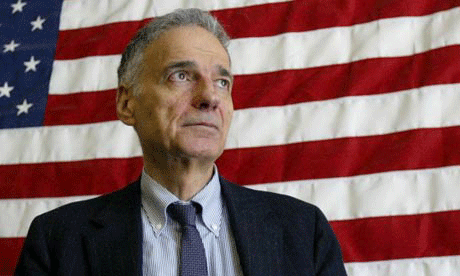
Ralph Nader, February 28, 2022 https://scheerpost.com/2022/02/28/ralph-nader-everyone-loses-in-the-conflict-over-ukraine/ The U.S. and Russia are toying with a dangerous recipe for an out-of-control escalation, much like the lead-up to World War I.
When two scorpions are in a bottle, they both lose. This is the preventable danger that is growing daily, with no end game in sight between the two nuclear superpowers, led by dictator Vladimir Putin and de facto sole decider, Joe Biden.
Putin’s first argument is, Washington invented the model of aggressive, illegal invasions, and destruction of distant countries that never threatened U.S. security. Millions have died, been injured, and sickened in defenseless countries attacked by U.S. armed forces. George W. Bush and Dick Cheney killed over a million innocent Iraqis and devastated the country in so many ways that scholars called it a “sociocide.”
Putin’s second argument is that Russia is being threatened on its sensitive western border, which had been invaded twice by Germany and caused the loss of 50 million Russian lives. Soon after the Soviet Union collapsed, the West’s military alliance against Russia began moving east. Under Bill Clinton, NATO (The North Atlantic Treaty Organization) signed up Poland, Hungary, and the Czech Republic in 1999 leading to major arms sales by the U.S. giant munitions corporations.
More recently, Putin sees U.S. soldiers in these countries, ever closer U.S. missile launchers, U.S.-led joint naval exercises in the Baltic Sea, and intimations that Ukraine and Georgia could soon join NATO. (Imagine if the Russians were to have such a military presence around the U.S. borders.)
Even often hawkish New York Times columnists – Thomas Friedman and Bret Stephens made this point this week about the brazen U.S. history of military hypocrisy while tearing into Putin. Stephens brought up the Monroe Doctrine over the entire Western Hemisphere, in raising repeatedly the question, “Who are We?”
The chess game between Russia and the West has become more deadly with Putin’s military moves followed by immediate Western sanctions against some Russian banks and oligarchs close to Putin. Travel bans and freezing the completion of the second major natural gas pipeline from Russia to Germany are in place with promises of much more severe economic retaliation by Biden.
These sanctions can become a two-way street. Western Europe needs Russian oil and gas, Russian wheat, and essential Russian minerals such as lithium, cobalt, and nickel. Sanctions against Russia will soon boomerang in terms of higher oil and gas prices for Europeans and Americans, more inflation, worsening supply chains, and the dreaded “economic uncertainty” afflicting stock markets and consumer spending.
The corporate global economy gave us interdependence on other nations, instead of domestic self-reliance under the framework of corporate-managed free trade agreements.
So how many billions of dollars in costs and a weakened economy will Joe Biden tolerate as the price of anti-Putin sanctions that will blowback on the American people? How much suffering will he tolerate being inflicted on the long-suffering Russian people? What will be the impact on the civilian population of more severe sanctions? And who is he to talk as if he doesn’t have to be authorized by Congress to go further into this state of belligerence, short of sending soldiers, which he said he would not do?
Is Congress to be left as a cheerleader, washing its hands of its constitutional oversight and foreign policy duties? Also, watch Republicans and Democrats in Congress unify to whoop through more money for the bloated military budget, as pointed out by military analyst, Michael Klare. What energy will be left for Biden’s pending “Build Back Better” infrastructure, social safety net, and climate crisis legislation?
In recent weeks, the State Department said it recognizes Russia’s legitimate security concerns but not its expansionism. Well, what is wrong with a ceasefire followed by support for a treaty “guaranteeing neutrality for Ukraine, similar to the enforced neutrality for Austria since the Cold War’s early years,” as Nation publisher and Russia specialist Katrina vanden Heuvel urged. (See: Katrina vanden Heuvel’s Washington Post article and her recent Nation piece).
Putin, unable to get over the breakup of the Soviet Union, probably has imperial ambitions to dominate in Russia’s backyard. Biden has inherited and accepted the U.S. Empire’s ambitions in many other nation’s backyards. Events have polarized this conflict over Ukraine, which is not a security interest for the U.S., into two dominant egos – Putin and Biden – neither of whom want to appear weak or to back down.
This is a dangerous recipe for an out-of-control escalation, much as it was in the lead-up to World War I. Neither the people nor the parliaments mattered then, as seems to be the case today.
Putin isn’t likely to make a cost-benefit assessment of each day’s militarism. But Biden better do so. Otherwise, he will be managed by Putin’s daily moves, instead of insisting on serious negotiations. The Minsk II Peace Accords of February 2015 brokered by Germany, France, and the United Nations that Russia and Ukraine agreed to before falling apart due to disagreements over who should take the first steps, still makes for a useful framework.
It is too late to revisit the accords to stop the invasion. But it should be proposed to introduce a climate for waging peace. Already, New York Governor Kathy Hochul has spoken about an increase in cyberattacks and ransomware demands in her state in recent weeks. Has Biden put that rising certainty in his self-described decades-long foreign policy expertise? Watch out for what you can’t stop, Joe.
Ukraine has 0% of winning, so sending weapons is a pointless exercise, except for the money.

Caitlin Johnstone, 28 Feb 22, Ukraine has a 0% chance of winning this war alone, no matter how many weapons are sent to it. All weapons can do is make the war more costly for Russia, which it’s in the US empire’s interests to do. Stop pretending your calls for more weapons are anything more noble than that.
Blanket anti-Russian propaganda leaves no tolerance for nuanced reporting – media censorship is expanding

……….Whoever controls the narrative controls the world. Humans are storytelling creatures, so whoever can control the stories the humans are telling themselves about what’s going on in the world has a great deal of control over the humans.
The powerful understand this, while the general public mostly does not.
[Western govts and] media are pushing for more. Articles and news segments warning of the sinister threat posed by Russian propaganda to misinform and divide western populations.
…………. They’re not worried about Russian propaganda operations, they’re worried about someone else running interference on their own propaganda operations.
Russian Propaganda’ Is The Latest Excuse To Expand Censorship Substack, Caitlin Johnstone, 28 Feb 22,
“I’m concerned about Russian disinformation spreading online, so today I wrote to the CEOs of major tech companies to ask them to restrict the spread of Russian propaganda,” US Senator Mark Warner tweeted on Friday.
Since then YouTube has announced that it has suppressed videos by Russian state media channels so that they’ll be seen by fewer people in accordance with its openly acknowledged policy of algorithmically censoring unauthorized content, as well as de-monetizing all such videos on the platform. Google and Facebook/Instagram parent company Meta both banned Russian state media from running ads and monetizing on their platforms in response to Russia’s invasion of Ukraine. Twitter announced a pause on ads in both Russia and Ukraine.
“Glad to see action from tech companies to reign in Russian propaganda and disinformation after my letter to their CEOs yesterday,” Warner tweeted on Saturday. “These are important first steps, but I’ll keep pushing for more.”
For years US lawmakers have been using threats of profit-destroying consequences to pressure Silicon Valley companies into limiting online speech in a way that aligns with the interests of Washington, effectively creating a system of government censorship by proxy. It would appear that we’re seeing a new expansion of this phenomenon today.
And the imperial media are pushing for more. Articles and news segments warning of the sinister threat posed by Russian propaganda to misinform and divide western populations using the internet are being churned out at a rate that’s only likely to increase as this latest narrative management campaign gets into full gear. The Associated Press has a new article out for example titled “War via TikTok: Russia’s new tool for propaganda machine“.
………………………….. As tends to happen whenever a consensus begins to form that a certain category of speech must be purged from the internet, imperial spinmeisters are already working to expand the definition of “Russian propaganda” which must be purged from the internet to include independent anti-imperialist commentators like myself…………………..
The Center for Countering Digital Hate, an empire-loyal NGO ostensibly focused primarily on fighting racism and prejudice, has published a report accusing Facebook of failing to label Russian propaganda as such 91 percent of the times it occurs. The CCDH decried Mark Zuckerberg’s “failure to stop Facebook being weaponized by the Russian state”.
…………. They’re not worried about Russian propaganda operations, they’re worried about someone else running interference on their own propaganda operations.
……….Whoever controls the narrative controls the world. Humans are storytelling creatures, so whoever can control the stories the humans are telling themselves about what’s going on in the world has a great deal of control over the humans. Our mental chatter tends to dominate such a large percentage of our existence that if it can be controlled the controller can exert a tremendous amount of influence over the way we think, act, and vote.
The powerful understand this, while the general public mostly does not.
That’s all we’ve been seeing in these attempts to regulate ideas and information as human communication becomes more and more rapid and networked. An entire oligarchic empire is built on the ability to prevent us from realizing at mass scale that that empire does not serve us and inflicts great evil upon our world. The question of whether our species can awaken to its highest potential or not boils down to whether our dominators will succeed in locking down our minds, or if we will find some way to break free. https://caitlinjohnstone.substack.com/p/russian-propaganda-is-the-latest?utm_source=url

 | |||
Russia President Vladimir Putin puts his nuclear forces on alert

Putin’s alert raises two types of risks that the conflict might escalate into a nuclear conflict: deliberate and inadvertent.
Much depends on whether Russia is alerting its strategic nuclear forces, which would focus on protecting the regime from attack on Russian soil, or its theater forces, which would be oriented toward influencing the military and political situation on the continent.
In the fog of war, countries may shoot first and ask questions later.
The Ukraine crisis is now a nuclear crisis https://www.washingtonpost.com/politics/2022/02/27/ukraine-crisis-is-now-nuclear-crisis/ Russian President Vladimir Putin just put his nuclear forces on alert, By Caitlin Talmadge 27 Feb 22
Russia’s publicly announced nuclear alert has turned the Ukraine war from a crisis involving nuclear powers to an actual nuclear crisis.
With the caveat that we do not have many details about what the Russian alert entails, it is nevertheless a clear sign that President Vladimir Putin does not believe that the conventional military campaign in Ukraine is achieving the political outcomes he wants.
Putin has turned to nuclear weapons because they offer another way to increase pressure on both Ukraine and its international backers to come to the settlement that Russia wants regarding Ukraine’s status. Yet his decision raises serious risks of both deliberate and inadvertent nuclear escalation.
This is a scary moment, but it’s not unprecedented or that surprising. Here is why.
Nuclear signals like this are not new
Putin has explicitly signaled from the beginning of the Ukraine war that he might turn to Russia’s nuclear arsenal if outside powers interfered with his campaign or were perceived to be threatening Russia itself.
In fact, Putin’s initial nuclear threat likely was intended as a shield to keep the West out of Russia’s conventional operations. This highlights what international relations scholars call the stability-instability paradox. The danger of nuclear war may keep nuclear powers from fighting all-out because they fear it would escalate. However, precisely because all-out war would be so mutually damaging, the likelihood of conventional war or even limited nuclear use can increase.
Amid reports of Russia’s lagging conventional invasion, Putin may now believe that climbing up to the next rung on the so-called escalation ladder is the only way to achieve the coercive effect he wants.
Such a move fits with his decision to announce the alert so publicly — rather than keeping it secret, as nuclear matters usually are — to ensure that the world gets the message and other nations have to respond.
Putin’s approach is not new. Countries often rely on their nuclear arsenals to compensate for inferiority with conventional weapons as shown by Pakistan, North Korea, and NATO’s threats to escalate during the Cold War. The idea is to deter conventional attack or prevent conventional defeat through threats of nuclear first use. The The world has even seen episodes of explicit signals that nuclear weapons could be used, as Putin has done, by states losing conventional battles in the past: Pakistan versus India in 2001-2002, for example, and Israel versus the Arab coalition in 1973.
There are real escalation risks — both intentional and unintentional
Putin’s alert raises two types of risks that the conflict might escalate into a nuclear conflict: deliberate and inadvertent.
First, the deliberate nuclear escalation risk comes from the possibility that Putin might actually use nuclear weapons, particularly tactical (short-range) nuclear weapons, to achieve his military objectives in Ukraine. Again, this is a major reason countries develop such weapons in the first place — to achieve what they think conventional forces cannot.
It is the same reason that the odds of Russian attacks against civilians have increased in the last day or two. From Putin’s standpoint, nuclear threats are likely just another escalatory lever to force the political outcome Russia wants.
Putin might also turn to medium-range nuclear weapons to coerce neighbors in Europe who are seeking to support Ukraine militarily, diplomatically, or politically. Of course, doing the latter against any NATO ally would be extremely escalatory and invoke U.S. commitments to defend its NATO allies under Article V of NATO’s founding treaty.
Second, raising the alert status of nuclear weapons inherently raises the likelihood of their use — and this is what generates inadvertent nuclear escalation risk. Details are sparse, but we could expect the readiness of Russia’s nuclear forces to now be heightened, and the command and control arrangements governing use of nuclear weapons to possibly be loosened, meaning they could be launched more easily.
Whether Russia has actually practiced these operations and how safely they can be conducted remain unclear. Risks of accidents and unauthorized use could increase. Countries sometimes undertake dangerous measures to signal their readiness to use nuclear weapons, as China did in 1969 when it fueled its rudimentary nuclear weapons in a lengthy border crisis versus the Soviets.
Furthermore, Russia’s alert could prompt counter-reactions in the United States, France and Britain. If they alert their forces as well, the chances of misperception — including Russian misperception of an impending nuclear attack — heighten further.
Much depends on whether Russia is alerting its strategic nuclear forces, which would focus on protecting the regime from attack on Russian soil, or its theater forces, which would be oriented toward influencing the military and political situation on the continent.
Worryingly, this is happening in a time of deep distrust and mutual suspicion, in which ambiguous signals from one country are likely to be viewed in the worst possible light by its opponents. This is precisely the sort of environment in which inadvertent nuclear escalation becomes most likely.
In the fog of war, countries may shoot first and ask questions later. This is how the Soviets ended up mistakenly shooting down a Korean civilian airliner in 1983 during a period of heightened nuclear tension with the United States, and why the Iranians did the same thing in the aftermath of the U.S. strike on Maj. Gen. Qasem Soleimani in early 2020.
Putin is a personalist dictator — and that has its own risks
Adding to both the deliberate and inadvertent escalation dangers is Putin’s status as a personalist dictator. As Jessica L.P. Weeks and Jeff D. Colgan explained here at TMC, these autocrats have few constraints on decision-making authority and are very unlikely to get candid information from advisers. utin, an aging leader by Russian standards, likely views the current crisis as threatening not only his foreign policy goals but also his domestic political prospects at home, including his personal survival and freedom.
Putin may also want the world to worry that he is just enough of a madman to lash out when his back is against the wall. Again, this is a tactic leaders have tried before, including Khrushchev in the Berlin Crises of 1958 and 1961, and President Richard Nixon when he attempted to pressure the Soviets over Vietnam in 1969. This approach did not work well for these leaders — but they were all far more constrained than Putin.
This institutional and personal context may make Putin more risk-acceptant — that is, more willing to gamble on dangerous nuclear threats to save his regime — than other leaders. It also likely makes him more paranoid. These tendencies again reinforce the escalatory dangers stemming from Putin’s recent decision.
Caitlin Talmadge (@ProfTalmadge) is associate professor of security studies in the School of Foreign Service at Georgetown University. She is the author of “The Dictator’s Army: Battlefield Effectiveness in Authoritarian Regimes” (Cornell University Press, 2015).
Belarus to end its non-nuclear-weapon status
Belarus holds referendum to renounce non-nuclear status
The referendum shedding Belarus’ neutral status comes as Russia put nuclear deterrent forces on high alert. Aljazeera, 27 Feb 2022
Belarus is holding a referendum to adopt a new constitution that would ditch its non-nuclear status, at a time when the country has become a launchpad for Russian troops invading Ukraine.
The vote on Sunday is almost certain to pass under the tightly controlled rule of President Alexander Lukashenko, bringing nuclear weapons back on Belarusian soil for the first time since the country gave them up after the fall of the Soviet Union.
Lukashenko has fallen behind Russian President Vladimir Putin’s military assault on Ukraine after earlier playing an intermediary role between the two neighbours.
Putin on Sunday ordered Russian nuclear deterrent forces put on high alert, in a dramatic escalation of tensions with the West.
Speaking at a polling station, Lukashenko said that he could ask Russia to return nuclear weapons to Belarus.
“If you (the West) transfer nuclear weapons to Poland or Lithuania, to our borders, then I will turn to Putin to return the nuclear weapons that I gave away without any conditions,” Lukashenko said.
The constitutional referendum shedding Belarus’ neutral status opens the way for stronger military cooperation with Russia, which deployed forces to Belarusian territory under the pretext of military drills and then sent them rolling into Ukraine as part of the invasion that began on Thursday.
The amendments will also cement Lukashenko’s 27-year-old grip on power, allowing the president to stay in power until 2035 and giving him lifetime immunity from prosecution once he leaves office………………………….. https://www.aljazeera.com/news/2022/2/27/belarus-holds-referendum-to-renounce-non-nuclear-status
EU to purchase weapons for Ukraine — live updates, DW
EU to purchase weapons for Ukraine — live updates, DW
The European Union said it will spend €450 million on weapons and equipment for Ukraine. Kyiv and Moscow have sent envoys to peace talks on the Belarus border. DW has the latest.
VSeveral countries have promised to equip Ukrainian soldiers with weapons.
- Putin has ordered nuclear deterrence be put on alert
- Ukraine agrees to talks at the Belarus border
- The EU will buy weapons for Ukraine to fight Russia
- Russians attack a gas pipeline and oil tanks
G7 threatens more sanctions against Russia
The G7 group of top industrialized nations warned Moscow that it could face additional sanctions if the war in Ukraine continues……………………………. https://www.dw.com/en/eu-to-purchase-weapons-for-ukraine-live-updates/a-60931396
Russian control of Chernobyl may have been aimed against alleged Ukrainian plan to produce nuclear weapons.
Russian control of Chernobyl may have been aimed against alleged Ukrainian plan to produce nukes, https://economictimes.indiatimes.com/news/defence/russian-control-of-chernobyl-may-have-been-aimed-against-alleged-ukrainian-plan-to-produce-nukes/articleshow/89836416.cms
Russian control of Chernobyl may have been aimed against alleged Ukrainian plan to produce nukes, By
Dipanjan Roy Chaudhury
Synopsis
Ukraine was allegedly making plans to produce 8-10 nuclear bombs with the available plutonium with support from certain foreign powers, sources indicated to ET. Plutonium-239 is an isotope of plutonium. Plutonium-239 is the primary fissile isotope used for the production of nuclear weapons.
The Russian military reportedly seized control of the Chernobyl nuclear power plant amid apprehensions that Ukraine allegedly backed by foreign powers may have launched the process to build nukes based on Plutonium-239 available in the complex.
Ukraine was allegedly making plans to produce 8-10 nuclear bombs with the available plutonium with support from certain foreign powers, sources indicated to ET. Plutonium-239 is an isotope of plutonium. Plutonium-239 is the primary fissile isotop ..
Russia considered this alleged plan as a threat close to their borders and one of their goals in Ukraine was to nix the plan, claimed one of the above mentioned sources. Ukrainian President Volodymyr Zelensky had said on Thursday that Russian forces are trying to seize control of the Chernobyl Nuclear Power Plant.
The Ukrainian Foreign Ministry tweeted that a Russian attack on Ukraine could “cause another ecological disaster.” “In 1986, the world saw the biggest technological disaster in Chernobyl,” the ministry tweeted. “If Russia continues the war, Chernobyl can happen again in 2022.”
Chernobyl is located on the shortest route from Belarus to Ukrainian capital Kyiv. It may be recalled that the fourth reactor at Chernobyl, 108 km north of the Ukrainian capital Kyiv, exploded in April 1986.
The Budapest Memorandum on Security Assurances refers to three identical political agreements signed at the OSCE conference in Budapest on December 5, 1994 to provide security assurances by its signatories relating to the accession of Belarus, Kazakhstan and Ukraine to the Treaty on the Non-Proliferation of Nuclear Weapons. The memorandum was originally signed by three nuclear powers: the Russian Federation, the United Kingdom and the United States.
The memorandum included security assurances against threats or use of force against the territorial integrity or political independence of Ukraine, Belarus, and Kazakhstan.
As a result, between 1994 and 1996, Belarus, Kazakhstan and Ukraine gave up their nuclear weapons. Until then, Ukraine had the world’s third-largest nuclear weapons stockpile.
UN report on global increase in wildfires due to climate change change
Independent Australia By Sue Arnold | 28 February 2022,
By Sue Arnold | 28 February 2022, Australia can expect an increase in catastrophic wildfires according to a recently released UN report entitled Spreading like wildfire: The rising threat of extraordinary landscape fires.
Wildfires are now a global issue, with predictions of exponential increases as a result of climate change, poor land-use planning and a lack of focus on mitigation strategies.
The report makes from grim reading. Over 50 experts from research institutions, government agencies and international organisations from around the globe contributed to the report.
No estimate has been made of the economic cost of wildfires by governments. A U.S. study mentioned in the UN report estimates that the annual economic burden of wildfire to be between $71.1 billion–$347.8 billion (AU$98.3 billion–$480.8 billion).
Costs to human lives exposed to wildfire smoke are growing exponentially. The Lancet journal estimates the annual mortality as a result of exposure resulted in 30,000 deaths across 43 countries.
According to the UN study, the extreme weather conditions that were potentially a leading cause of the Australian wildfires in 2019/2020 were shown to be 30 per cent more likely to have occurred because of climate change.
Scientists involved predict that by the end of the century, the probability of wildfires like the 2019/2020 fires will likely increase by 31-59 per cent in a given year……………………………
Australia is very similar to the U.S. in that most of the spending goes on helicopters, firefighters, efforts to put out the fires. It’s often not a good use of resources; other integrated management approaches can be more successful. ………….
IA asked Professor Baker to comment on the many studies which indicate logging of forests raises the risk of more wildfires:
‘When you log, you reduce resilience.’
Plantations are a focus of the report. Victoria and South Australia have significant numbers of eucalypt plantations, many burned incinerating thousands of animals. According to the fire experts, the increased availability of fuel and extensive continuous areas allows fire to spread rapidly and unconstrained. Accumulation of flammable fuels in monoculture plantations, plus extended droughts due to climate change, generate increasingly frequent conditions to high intensity forest fires………………
The International Association of Wildland Fire will hold a Fire and climate: issues and futures conference in Melbourne in June 2022 focused on better preparation and response to ‘this formidable challenge in the new decade’ https://independentaustralia.net/environment/environment-display/un-warns-australia-in-danger-of-increased-wildfires,16098
On shaky ground? Latest EDF planning application casts doubt on suitability of Sizewell site
The Nuclear Free Local Authorities (NFLA) were surprised to see a late
planning application from nuclear power operator EDF Energy to East Suffolk
Council seeking permission to carry out testing on its proposed Sizewell C
nuclear power plant site.
Commenting, Cllr David Blackburn, Chair of the
NFLA, said: “The application has gone in just as the Planning
Inspectorate is about to make a recommendation to the Secretary of State on
whether to proceed further with the next stage of the development. EDF wish
to be allowed to conduct on-site trials to test whether their construction
methods will work on the land at their disposal. It ‘beggar’s belief’
that they should do this now at such a late stage in the process, rather
than at the start.”
The application concedes that EDF still need to
conduct soil and ground anchor trails to determine if their strategy to
stabilise the site during the construction of the plant will work. The NFLA
fears that the high-risk strategy might make the site unstable and the
cut-off wall could be sent crashing down endangering the lives of
construction workers.
NFLA 26th Feb 2022
U.N. nuclear watchdog to hold emergency meeting on Ukraine
U.N. nuclear watchdog to hold emergency meeting on Ukraine, Reuters, By Francois Murphy, Editing by Andrew Cawthorne and Ed Osmond
- Canada, Poland call meeting at Kyiv’s request – diplomats
- Russia has seized Chernobyl site, staff unable to leave
- IAEA calling on “all parties” to ensure nuclear safety
- Ukraine says missiles hit radioactive waste site in Kyiv
VIENNA, Feb 27 (Reuters) – The U.N. nuclear watchdog’s 35-nation Board of Governors will hold an emergency meeting on Wednesday about Ukraine, where war is raging in a country with four operational nuclear power plants and various waste facilities including Chernobyl………………………. https://www.reuters.com/world/europe/un-nuclear-watchdog-hold-emergency-meeting-ukraine-diplomats-2022-02-27/
Russian troops to take over Zaporizhzhia nuclear power plant

Russian troops are approaching a second nuclear power plant in Ukraine,
after capturing Chernobyl. Ukraine’s interior ministry has said the
invading troops are approaching Zaporizhzhia. Vadym Denysenko, an adviser
in the Ukraine government, said Russian troops have aimed their rockets at
the site. Kremlin troops stormed the site of the Chernobyl nuclear disaster
on the first day of the invasion. Since then excess gamma radiation levels
have been recorded but it is unclear why.
Mirror 26th Feb 2022
https://www.mirror.co.uk/news/world-news/russia-aims-rockets-second-nuclear-26339222
Ukraine’s reactors – largest nuclear complex in Europe – IN DANGER
| |||

Author Viewsridge/Wikimedia Commons)
Ukraine’s reactors at risk
15 reactors plus Chernobyl in unprecedented warzone situation https://wordpress.com/read/feeds/72759838/posts/3854353677
A statement by Beyond Nuclear. 25 Feb 22,
Beyond Nuclear joins the chorus of voices calling for a peaceful resolution to the conflict in Ukraine, a situation that could become orders of magnitude worse should any of the country’s 15 nuclear reactors suffer major damage due to military exchanges.
We are in an unprecedented situation, with, for the first time, a war happening in a region where there are operating nuclear reactors. This presents an extreme risk to human life unlike any we have seen in previous wars, even when traditional infrastructure has been bombed and destroyed.
The humanitarian tragedy is already enormous, with people fleeing, abandoning homes and businesses, with their lives upended and their safety and survival in jeopardy. However, should a major release of radioactivity occur due to the damage or destruction of any one of the country’s 15 reactors, the scale of the disaster would escalate to unimaginable proportions, affecting populations well beyond the boundaries of Ukraine and Russia.
Military activity around the Chernobyl nuclear site and within the Exclusion Zone is also of great concern. Reports are coming in showing elevated rates of radiation stirred up by the presence of troops, tanks and heavy equipment moving through the highly radioactively contaminated region, which is closed to regular human habitation. In April 2020, when a major wildfire consumed the area, radiation levels rose by 16 times.
The occupation of the site by Russian military personnel, reportedly the result of a firefight at the plant site, is already a concern. This takeover has called a halt to all activities on the site, which houses a significant inventory of radioactive waste.
Any attack or accidental hit on the Chernobyl nuclear site is of even greater alarm. The new protective dome, euphemistically known as the New Safe Confinement building, that encases the exploded Unit 4’s crumbling sarcophagus, is by no means impervious to damage.
Within this dome lie unstable slurries of radioactive liquids, sludges and sands containing uranium, plutonium and other radioactive wastes. As recently as last May, workers detected an unusual rise in neutrons in the wastes lying in the basement of the destroyed Unit 4, raising fears of a chain reaction or even an explosion. War activities in and around the Chernobyl site, therefore, are a reason for high concern.
The six reactor Zaporizhzhia nuclear power plant in eastern Ukraine is of greatest concern, given its size — the largest power plant in Europe — and location. (Photo: Wikimapia)
The ISF2 (Interim Spent Fuel Storage #2 dry cask facility) at Chernobyl is also of serious concern. Its design, construction, management, and operation has been flawed from the start. Orano (formerly Areva) of France was effectively fired for the design and construction flaws. But serious problems have persisted even after Holtec International’s takeover of ISF2 management. An irradiated nuclear fuel fire at ISF2, whether due to intentional attack or unintended accident, could result in catastrophic releases of highly radioactive wastes into the environment over a large region.
The 15 operating reactors — located at Rivne (4), Khmelnitsky (2), South Ukraine (3) and Zaporizhzhia (6) — are all vulnerable to catastrophic meltdown, even if they are not directly attacked or accidentally hit.
As at Fukushima, a loss of offsite power followed by a loss of onsite power could cause the workforce to lose control of the reactor. If cooling is lost, the reactor will heat up, the water level within the reactor core drops and the fuel rods are exposed. Explosive gases are released, as happened at Fukushima-Daiichi in March 2011, where we saw three reactor explosions. Should these gases find a spark, similar explosions could occur at one or more of Ukraine’s reactors.
Of even greater concern are the fuel pools containing the irradiated fuel rods, and unprotected by the containment building. If a fuel pool is hit and either drains down or boils dry, exposing the fuel assemblies, fire is a real risk. Fuel pools contain far more radioactivity than the reactor itself and a fire would release even greater amounts of radiation.
A war zone could also create a dangerous environment for the nuclear workforce and their families, tempting some to evacuate. But a nuclear power plant, even under daily, routine operations, is not walkaway safe and cannot be abandoned. This presents a terrible, and sacrificial choice that should not have to be made.
The situation in Ukraine is unacceptable at a time when humanity should be coming together to take on our collective existential threat — the climate crisis. The situation in Ukraine brings home all too clearly that nuclear power plants are a dangerous liability and certainly not a solution to the climate crisis.
We are thinking of those suffering as a result of this pointless and cruel war, and offer a list of organizations to which humanitarian aid donations can be made to help the innocent victims caught up in this senseless violence.
Russian forces now control Chernobyl, inviting speculation and uncertainty

Russian forces now control Chernobyl, inviting speculation and uncertainty, Bulletin of the Atomic Scientists, By Susan D’Agostino | February 25, 2022 Yesterday, Russian forces seized control of the defunct Chernobyl Nuclear Power Plant, the still-radioactive site of the world’s worst nuclear disaster. The plant, along with the approximately 1,000-square mile radius around it known as the Chernobyl Exclusion Zone, supports ongoing work focused on nuclear waste management and storage…
Though the International Atomic Energy Agency, a United Nations watchdog, reported that there have been “no casualties nor destruction” at Chernobyl, experts and the public are now at work attempting to understand the potential risks posed by the takeover. While some offer measured responses concerning the potential for human and ecological disaster, others express alarm. Many posit theories for why Russia sought to seize control of Chernobyl, including using the site as a base, for a potential act of terrorism, or for the symbolic “win” it may represent.
Igor Konashenkov, a spokesperson for Russian Military of Defense, said in a statement that the Ukrainian staff “continues to service the facilities in a routine mode and monitor the radioactive situation.” Konashenkov did not indicate that Russian soldiers were holding the workers hostage, as Kateryna Pavlova, Chernobyl’s Head of the Department for International Cooperation and Public Relations, told the Bulletin yesterday.
“The most dangerous part is that we lost control,” Pavlova said. “Some part of the staff from Chernobyl Nuclear Power Plant and National Guard have been kidnapped. They can’t connect. They can’t report.”
White House Press Secretary, Jen Psaki, later expressed similar concern: “This unlawful and dangerous hostage-taking, which could upend the routine civil service efforts required to maintain and protect the nuclear waste facilities, is obviously incredibly alarming. We condemn it, and we request their release.”
Expert views of the potential risk have changed since the news broke. For example, yesterday the American Nuclear Society wrote in a tweet that the hostilities in the region “have not resulted in any additional radiological risk.” And Edwin Lyman, director of nuclear power safety at the Union of Concerned Scientists in Washington, said, “I can’t imagine how it would be in Russia’s interest to allow any facilities at Chernobyl to be damaged.”
Yet this morning, the State Nuclear Regulatory Inspectorate of Ukraine reported that radiation levels in the Chernobyl Exclusion Zone were “exceeded at a significant number of observation points” since Russian forces assumed control. The Ukrainian regulatory body attributed the excessive levels to the “disturbance of the top layer of soil from movement of a large number of radio heavy military” and an “increase of air pollution.”
“But now it is currently impossible to establish the reasons for the change in the radiation background in the exclusion zone because of the occupation and military fight in this territory,” the agency’s website said.
A Russian defense ministry official has disputed the claim of excessive radiation levels……..
Chernobyl sits along a short path from the Russia-Ukraine border to Ukraine’s capital. Pavlova, who described the takeover as a “psychological and humanitarian disaster,” notes that Chernobyl’s facilities and location might have been part of the allure. “We have houses where they can stay and leave. It could be their base,” Pavlova said. “It’s very close to Kyiv—only 140 kilometers. The airport is also nearby. It’s a very good location to bring their troops.”
The stricken reactor has been entombed in a sarcophagus—a steel and concrete coffin-like structure—since 1986. In 2016, another structure—known as New Safe Confinement, which is “strong enough to withstand a tornado” and designed to last 100 years, according to the European Bank for Reconstruction and Development—was placed over the sarcophagus. The New Safe Confinement was funded by more than 30 countries at a cost of $1.5 billion.
Still, the Ukrainian Ministry of Foreign Affairs warned that the Russian takeover “may cause another ecological disaster” and that if the war continues, Chernobyl “can happen again in 2022.”
Others were less concerned. “[T]he bigger risk comes from the potential for fighting around Ukraine’s four active nuclear power plants, which contain 15 separate reactors and generated over half the country’s electricity in 2020,” James M. Acton, co-director of the Nuclear Policy Program at the Carnegie Endowment for International Peace, wrote in a post………
Despite divergent early takes on the potential risks of this unfolding situation, Pavlova, who once served as Acting Head of the Chernobyl Exclusion Zone during a time when wildfires were rampant, is alarmed. “Not so many people understand how dangerous nuclear power plants are in the case of war,” Pavlova said. “I want the world to know that we are one little step—a few millimeters—from destroying our world.” https://thebulletin.org/2022/02/russian-forces-now-control-chernobyl-inviting-speculation-and-uncertainty/
1 This Month



19 November – Webinar – The Reality of Reprocessing
Time: 11:00 AM Pacific Time (US & Canada) / 2:00 PM Eastern / 7:00 PM UK / 8:00 PM CET
Register for the Zoom Event Here



Shut down the radiation-damaged Heysham nuclear reactors now
To see nuclear-related stories in greater depth and intensity – go to https://nuclearinformation.wordpress.com

Say No to NASA’s Reckless Nuclear Reactor on the Moon
Say No to NASA’s Reckless Nuclear Reactor on the Moon
-
Archives
- November 2026 (74)
- October 2026 (302)
- September 2026 (339)
- August 2026 (330)
- July 2026 (355)
- June 2026 (287)
- May 2026 (306)
- April 2026 (356)
- March 2026 (251)
- February 2026 (267)
- January 2026 (308)
- December 2025 (358)
-
Categories
- 1
- 1 NUCLEAR ISSUES
- business and costs
- climate change
- culture and arts
- ENERGY
- environment
- health
- history
- indigenous issues
- Legal
- marketing of nuclear
- media
- opposition to nuclear
- PERSONAL STORIES
- politics
- politics international
- Religion and ethics
- safety
- secrets,lies and civil liberties
- spinbuster
- technology
- Uranium
- wastes
- weapons and war
- Women
- 2 WORLD
- ACTION
- AFRICA
- Atrocities
- AUSTRALIA
- Christina's notes
- Christina's themes
- culture and arts
- Events
- Fuk 2022
- Fuk 2023
- Fukushima 2017
- Fukushima 2018
- fukushima 2019
- Fukushima 2020
- Fukushima 2021
- general
- global warming
- Humour (God we need it)
- Nuclear
- RARE EARTHS
- Reference
- resources – print
- Resources -audiovicual
- Weekly Newsletter
- World
- World Nuclear
- YouTube
-
RSS
Entries RSS
Comments RSS

