Rolls Royce wants to hurry up the introduction of small nuclear reactors, but UK govt is focussed on a big one for Wylfa
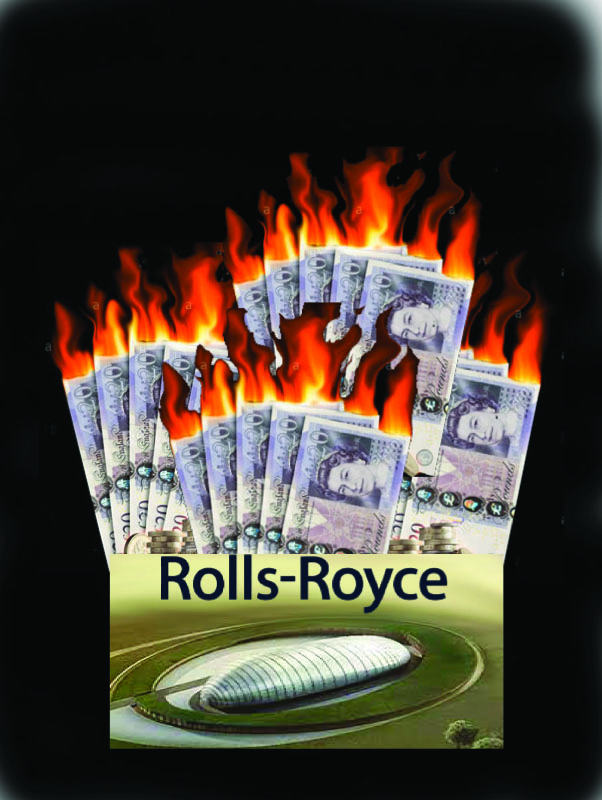
Rolls-Royce calls for accelerated SMR rollout as Boris considers bigger plans for Wylfa
14 MAR, 2022 BY CATHERINE KENNEDY ROLLS-ROYCE IS APPEALING TO THE UK GOVERNMENT TO SPEED UP THE ROLLOUT OF SMALL MODULAR REACTORS (SMRS), WHILE PRIME MINISTER BORIS JOHNSON IS REPORTEDLY KEEN TO REVIVE PLANS FOR THE WYLFA NEWYDD NUCLEAR POWER PLANT IN RESPONSE TO THE UK ENERGY CRISIS.
There is a pressing need to improve the UK’s energy security, with prices soaring due to the Russian invasion of Ukraine, and alternative solutions are being explored to plug the gap.
Rolls-Royce submitted SMR designs for Wylfa and Trawsfynydd for assessment last week. However extensive safety checks are needed and these are not expected to come online until the 2030s. As such, government sources told the Telegraph that Rolls-Royce is frustrated with the lack of progress.
Meanwhile according to The Times, government sources have also said Johnson is determined to press ahead with plans for a large scale nuclear plant at Wylfa, with the government in talks with US nuclear reactor manufacturer Westinghouse and the engineering firm Bechtel about a proposal to develop the site. The government has so far set aside £120M to support the project………..
Ukraine war triggers debate on Japan’s nuclear option,
The Interpreter. PURNENDRA JAIN, 14 Mar 22,
In a new and volatile strategic environment, a decades-
old commitment on non-proliferation is up for discussion.
In the wake of the Ukraine conflict, Shinzo Abe, Japan’s former prime minister and now head of the largest faction of the ruling Liberal Democratic Party (LDP), has suggested that Japan consider hosting US nuclear weapons facilities on Japanese soil, similar to some European nations, such as Germany, which have nuclear sharing arrangements with the United States.
Abe’s suggestion was made in the context of Ukraine having renounced nuclear weapons in 1994, leaving itself vulnerable today. The announcement also comes on top of deepening concerns about China’s growing military assertiveness around Japan’s maritime space and beyond, and the dangerous situation on the Korean peninsula with threats from the nuclear-capable rocket-launching North Korea.
Debates over whether Japan should host nuclear weapons or even go fully nuclear are not new………….. Discussion has since continued among political and scholarly communities as to whether Japan should go nuclear, opt for a nuclear sharing arrangement with the United States by hosting nuclear weapons, or maintain its current non-nuclear weapons status.
This latest eruption though is in a different context. This time, chairman of the General Council of the LDP Tatsuo Fukuda, who like his father Yasuo Fukuda before him holds an influential ruling party post and is touted as a future prime minister, has suggested that “we must not shy away from any debate whatsoever”. Last year’s LDP party presidential candidate and current LDP policy chief Sanae Takaichi also favours a debate. Some smaller conservative opposition parties want to include nuclear options in policy discussions while considering Japan’s strategic objectives. The main opposition parties have, however, strongly resisted any such prospects, arguing in favour of Japan’s non-nuclear status.
Abe’s suggestion was promptly and solidly rejected by Prime Minister Fumio Kishida, as well as by the leader of the Komeito, the junior coalition partner of the ruling LDP. Even Defence Minister Nobuo Kishi, Abe’s younger brother, adopted into the Kishi family, also dismissed the idea of hosting nuclear weapons on Japanese shores. Kishi may have expressed this view in order to align with his boss, Prime Minister Kishida, rather than reflecting his true thinking on the matter, given his political pedigree.
Kishida quickly confirmed that Japan firmly adheres to the three non-nuclear principles adopted in 1967, to not possess, produce or permit the introduction of nuclear weapons into Japan’s territory. These principles remain sacrosanct, even though Japan has made substantial departures in defence and security matters in the past decade…………….
Not only has the Kishida government announced an intended update to the NSS, first issued in 2013, it has also promised to revise the National Defence Program Guidelines and Mid-Term Defence Program issued in 2013 and 2018. All these updates and revisions are undertaken in view of a rapid transformation in the strategic environment……………….
| Japan, along with Germany, has often been recognised as an example of a “civilian state”. Germany currently hosts US nuclear weapons facilities and, in view of the Ukraine conflict, has announced a significant increase to its defence budget. Calls are now being made to urge Japan to follow suit. The postwar US-Japan Treaty of Mutual Cooperation and Security has ensured that Japan has lived happily under US extended deterrence, including the nuclear umbrella. This arrangement is unlikely to change, barring an existential threat to Japan’s territory and sovereignty. But what seemed to be taboo in terms of Japan’s strategic policy – that is, breaching one per cent of GDP on defence spending and developing strike capabilities – is now being discussed seriously. No policy in international relations is eternal, it must change as a nation’s interests change. https://www.lowyinstitute.org/the-interpreter/ukraine-war-triggers-debate-japan-s-nuclear-option |
US to help Philippines develop nuclear power program; groups push renewable energy instead
US to help Philippines develop nuclear power program; groups push renewable energy instead
Angelica Y. Yang – Philstar.com
March 14, 2022 MANILA, Philippines — The Philippines and the United States signed a memorandum of understanding last week to work together to develop the Philippines’ nuclear power program.
The MOU was signed by Energy Undersecretary Gerardo Erguiza and US Undersecretary of State for Arms Control and International Security Bonnie Jenkins………….
The EO, which was signed on February 28, instructs the DOE to develop and implement the nuclear energy program under the Philippine Energy Plan, a comprehensive energy blueprint which details the energy sector’s goals in achieving a clean energy future.
Duterte said in the EO that nuclear power is a “viable alternative source” of baseload power that can bridge the gap between rising demand and supply.
The EO also instructed an interagency body — the Nuclear Energy Program Inter-Agency Committee —to study the possible use of the $2.2-billion Bataan Nuclear Power Plant, which was mothballed and never refueled.
Public policy think tank InfraWatch PH earlier told Philstar.com that Duterte’s EO comes a little too late as he has only a few months left in his term. This leaves the fate of his nuclear push to his successor who may choose to adopt or reverse the new energy policy.
‘Nuclear will not solve climate crisis’
Manila-based climate and energy policy group Institute for Climate and Sustainable Cities said that, contrary to the government’s claims, nuclear is no better than coal.
“Nuclear is even worse than coal for energy security and self-sufficiency. It has always been plagued with protracted construction timelines and gargantuan costs that require constant massive subsidies,” ICSC Executive Director Red Constantino told Philstar.com over email on Monday.
“[Nuclear] can only operate on a single level and cannot be ramped up or down. It is extremely rigid and completely unfit to respond to the country’s load profile,” he said.
Constantino said the DOE should take its power sector modernization goals more seriously and prioritize flexible generation by ramping up support for renewable energy.
Last week, activists from environmental group Greenpeace Philippines marched to the DOE and called the push for nuclear power a “questionable energy policy which is the last thing the country needs.”
The protest took place on March 11 during the commemoration of the Fukushima Daiichi nuclear disaster in 2011, which killed at least 20,000 people, contaminated 240,000 square kilometers of land and caused $235 billion (around P12 trillion) of damage.
“Greenpeace…maintains that nuclear power will not solve the climate crisis. The entire nuclear power plant life cycle contributes significantly to climate change, and these facilities take an average of 10 years to build,” the group said in a statement.
Citing findings by the Intergovernmental Panel on Climate Change, Greenpeace said humanity only has until 2030 to keep the global temperature rise within 1.5 degrees Celsius.
“Setting up the country’s nuclear program and building a plant will take decades. Meanwhile, Filipinos will continue to suffer from climate impacts,” it said.
nstead of focusing on a nuclear policy, the current administration should have instead doubled its efforts to ensure that renewable energy “gets a better foothold” in the country’s energy future, according to Greenpeace Campaigner Khevin Yu. https://www.philstar.com/headlines/2022/03/14/2167242/us-help-philippines-develop-nuclear-power-program-groups-push-renewable-energy-instead
US Republican senators say they will not back Iran nuclear deal
US Republican senators say they will not back Iran nuclear deal, Aljazeera, 14 Mar 22,
Republican lawmakers oppose, but lack power to block, an agreement with Tehran sought by US President Joe Biden. Forty-nine of the 50 Republicans in the US Senate have announced they will not back a new nuclear deal between Iran and world powers, underscoring their party’s opposition to attempts to revive a 2015 accord amid fears multilateral nuclear talks might collapse.
In a statement on Monday, the Republican senators pledged to do everything in their power to reverse an agreement that does not “completely block” Iran’s ability to develop a nuclear weapon, constrain its ballistic missile programme and “confront Iran’s support for terrorism”
………………………. US lawmaker Rand Paul was the only Senate Republican who did not sign Monday’s statement. In an emailed statement, he said, “Condemning a deal that is not yet formulated is akin to condemning diplomacy itself, not a very thoughtful position.”
No congressional Republicans supported the 2015 nuclear agreement between Tehran and the so-called “P5+1” countries, the five permanent members of the UN Security Council – the US, UK, Russia, China and France – plus Germany. A handful of Democrats also objected.
US Deputy Secretary of State Wendy Sherman said during the weekend that Biden administration officials believe an agreement is near and “we would like all of the parties – including Russia, which has indicated it’s got some concerns – to bring this to close.”…………………………
The 2015 Iran Nuclear Agreement Review Act gives Congress the right to review an agreement, but lawmakers are unlikely to be able to kill a deal outright after failing to do so in 2015 when Republicans controlled Congress.
Democrats now hold slim majorities in both the House of Representatives and Senate and are unlikely to turn against Biden in sufficient numbers to stop a major initiative like an Iran deal.
Nevertheless, the Republican opposition ensures Congress cannot adopt any nuclear agreement with Iran as a permanent treaty, which requires a two-thirds vote in favour, rendering it vulnerable to abandonment by a future Republican president.
A spokesperson for Iran’s foreign ministry said on Monday that Washington needs to decide to wrap up a deal……… https://www.aljazeera.com/news/2022/3/14/us-republican-senators-say-they-will-not-back-new-iran-nuclear
11 years on, Fukushima morass still poses danger
| 11 years on, Fukushima morass still poses danger By KARL WILSON in Sydney | CHINA DAILY 2022-03-14 ”…………………………. Little progress has been made on the most pivotal and hardest work of decommissioning the Fukushima Daiichi power plant-how to remove the nuclear residue from the meltdown. The plant owner, Tokyo Electric Power Co, has said it could take another 30 years to retrieve undamaged fuel, remove resolidified melted fuel debris, disassemble the reactors and dispose of contaminated cooling water.The International Research Institute for Nuclear Decommissioning of Japan estimated that the nuclear waste mix from melted fuel rods and other materials in pressure vessels that melted during the accident could weigh as much as 880 metric tons. Hiroaki Koide, a retired researcher at Kyoto University, said the Japanese government and Tokyo Electric Power Co’s 30-40 year plan for decommissioning the reactors could not be achieved because it would be “impossible even in 100 years” to remove the large amount of scattered nuclear debris, which would have to be sealed in a “sarcophagus”. Moreover, 11 years after the disaster, the reactors at Fukushima are still being cooled down, said associate professor Nigel Marks of the physics and astronomy department at Curtin University, Western Australia. “And this will continue for many years to come. A vast number of large storage tanks have been built on the site, but space is rapidly running out.” Despite resistance from locals and neighboring countries, the Japanese government is sticking with its decision in April last year to discharge the nuclear contaminated water into the sea starting in spring next year. About 1 million tons of radioactive wastewater, now stored in 1,000 tanks on the site, was used to cool the reactors and contains radioactive cesium, strontium, tritium and other radioactive substances……………. http://global.chinadaily.com.cn/a/202203/14/WS622e7e15a310cdd39bc8c4ef.html |
China continues to resist U.S. demand to join “global web to strangle Russia”
Global TimesMarch 15, 2022 US cannot expect China to cooperate under its suppression: Global Times editorial Edited On Monday, Member of the Political Bureau of the CPC Central Committee and Director of the Office of the Central Commission for Foreign Affairs Yang Jiechi met with US National Security Advisor Jake Sullivan in Rome, Italy. They […]
China continues to resist U.S. demand to join “global web to strangle Russia” — Anti-bellum Global Times editorial https://wordpress.com/read/feeds/113283937/posts/3888946559
Edited
On Monday, Member of the Political Bureau of the CPC Central Committee and Director of the Office of the Central Commission for Foreign Affairs Yang Jiechi met with US National Security Advisor Jake Sullivan in Rome, Italy. They conducted candid, deep and constructive communication on China-US relations and international and regional issues of common concern. Yang said the implementation of the consensus between the two heads of state is the most important task for China-US relations. He stressed that the Taiwan question concerns China’s sovereignty and territorial integrity, and expounded on China’s solemn position on issues related to Xinjiang, Tibet and Hong Kong, pointing out that these issues concern China’s core interests and are China’s internal affairs that allow no foreign interference. In addition, Yang also expounded on China’s position on the Ukraine issue. Readouts of the White House before and after the talks both mentioned Ukraine issue and maintaining open lines of communication between the US and China.
Some analysts believe that it is more likely that the US has proposed the meeting, because judging from the posture, it is the US that needs to ask China for help in the context of the Russia-Ukraine conflict.
…Washington has taken some petty actions a day before the meeting, all related to Ukraine issue. For example, US media quoted “anonymous senior US officials” as saying that Russia had asked China for “military aid,” including drones, after the Russia-Ukraine conflict escalated. Moreover, Sullivan on the same day claimed that there will “absolutely be consequences for large-scale sanctions evasion efforts or support to Russia to backfill them.” Washington’s intention to threaten Beijing is obvious. It is an old US diplomatic tactic to use disinformation and intimidation to secure a favorable position in negotiations. But China never buys it.
These actions from the US also show that Washington is quite anxious about the Ukraine issue. It wants China to dance to its tune. What the US hopes for is to weave a global web to strangle Russia, making all countries part of this web without any “loophole.” The US is the instigator of the Ukraine crisis; yet, it wants to exploit the whole world to expand its own strategic interests. This makes people wonder: Where does the US get its confidence from? Has it been dominating the world for so long that it thinks it even controls the lever of the Earth’s rotation? If Washington wants to forcibly tie China-US relations to the Russia-Ukraine crisis, it is on the wrong track and will definitely be disappointed.
The Russia-Ukraine crisis is worthy of talks, but not in this way. A Chinese saying goes, “Let he who tied the bell on the tiger’s neck take it off.” The problem that was created by the US cannot and should not be solved by China. Besides, China and the US should handle their relations well before they can better coordinate stances as the third parties. In other words, Washington should make practical moves to make China feel the US is a reliable major power.
Last year, US leaders and senior officials have stated that the US has no intention to seek a new Cold War or change China’s system, that the revitalization of US alliances is not anti-China, that the US does not support “Taiwan independence”, and that it is not looking for conflict or confrontation with China. But all these are still no more than empty words. The US Congress recently passed an act that is politically manipulating the map of the island of Taiwan, creating “two Chinas” and “one China, one Taiwan.” This was not only a blatant provocation of China’s territorial integrity but also another proof that Washington betrays its promises. There are many other examples. In this circumstance, why does the US think that China should “help” it out?
On the Ukraine issue, China has been independently making judgement in the spirit of objectivity and fairness and based on the merits of the matter itself. It has been playing a constructive role in facilitating peace talks. China has repeatedly called international community to jointly support Russia-Ukraine peace talks, achieve substantive results as soon as possible, and promote de-escalation of the situation. Such a responsible attitude will not budge, even slightly, under US pressure….
In terms of diplomacy, the US appears to be rather inconsistent now. The profound reason is Washington’s shortsightedness. This has led the US into a quagmire when dealing with foreign relations. It can only solve the problems superficially, and it arrogantly believes the world should be at its service. As a result, it always fails to handle relations with other major powers and leaves a mess in regional issues. If the policy elites in Washington cannot change their minds, it will never find the keys to solve these problems.
Hypocritical cries of grief from weapons and other corporate businesses, as Western governments and media ramp up war fever.
[Ed. Here is the later part of this long article, which first details the history of other criminal wars, and the background to Russia’s understandable fear of Western aggression. I urge you to read the entire article, – while this bit examines only the current Ukraine situation]

Supporting this God-given path are not only big-biz executives, financiers, and military brass, but also a subservient media, obedient politicians aiming at highly-paid jobs when they leave politics, a number of labor leaders, and power holders in academia. They all form the Establishment, one quite similar in all so-called free and free market democracies, except that for over 80 years the U.S, sector has asserted its role in the pack as alpha wolf.
A Criminal War Ushers in the Worst of Times in Ukraine, Russia, and Europe
My overriding hope is that current talks may lead to peace, to an end of death and destruction, and to the repair and renewal of all efforts to build a world without exploitation, without aggrandizement, without aggression, without war.
Portside, March 12, 2022 Victor Grossman ”…………………………………………….Every single wartime death or wound is terrible; every missile, every bullet is unnatural. There are too many similar tragedies now in Ukraine. Yet, while writing this, I find myself thinking: Despite each and every tragedy—thank goodness that Ukraine has not been hit like Iraq in 2003, with the death of hundreds of thousands. Yet alas, while I see the Brandenburg Gate lit up with Ukrainian blue and yellow, I recall no Iraqi colors there in 2003, nor those of Palestinians in 2014 after the death of 547 children during the bombing of Gaza.
In the years that followed, as military campaigns in Iraq, Afghanistan, and elsewhere mired down or lost, symbols, slogans, and catchwords about terror wore thin, the fearfulness of words like Islamism, communism, and socialism eroded, like Bolshevism and anarchism in earlier eras. The gargoyle faces, the grayed grimaces of Reagan’s Evil Empire warnings in 1983 needed replacement, for the pressures remained. Putin’s angular face and physique often have to suffice—or is the yellow peril back in play? And what are those pressures, refurbished but still very real?

Some are easy to call by name: Lockheed, Northrop-Grumman, Raytheon, friendly German rivals like Rheinmetall, Krupp, Maffei—and a further limited list. They earn their billions by producing and selling their products, which must constantly be multiplied, replaced—or used.
Thus, while military actions by Putin or any others may be treated by such folk with loud cries of condemnation or sympathy for the victims, behind their dampened Kleenex hankies we can sense their jubilation as military budgets soar, now nearly $780 billion a year in Washington, and the German government, previously tugged one way by traders with Russia or China, now being overwhelmed by the military monopolies, ambitious expansionists, and devoted Pentagon friends who, since the march into Ukraine, have gained the upper hand.
The military budget in Berlin now aims at topping the 50-billion-euro level, with ever more spending for jets, frigates, armed drones, and more personal armor as well; after all, those patriotic lads or lasses in uniform must not be neglected, but always sent well-armored to their deaths.
And how many have the courage to disapprove of all of this? To vote against it, in the Capitol or the Bundestag? Only a very, very few, now angrily disqualified or ignored.
Not only manufacturers of armaments are waving blue-yellow flags with one hand and concealing profit calculations with the other. If their real hopes come true, if Putin’s move goes awry and ends up with a regime change in Red Square, as in Maidan Square in 2014 but far bigger, what new opportunities would be opened up!
….……. Many are surely dreaming of wide new Eurasian monoculture, of unlimited raw materials, new markets, skilled proletarians. Tyson and Cargill, Bayer and BASF, GM and Daimler, Nestlé and Unilever, Murdock and Springer, Facebook and Amazon must certainly be checking electronic atlases for maps reaching from Smolensk to Vladivostok—and across the Amur River, too, where great multitudes could then be reached so much more easily.
What this all adds up to is a continuing hope for world hegemony—always with God’s help of course. Sen. Mitt Romney, once a candidate for the presidency, put it clearly:

“God did not create this country to be a nation of followers. America is not destined to be one of several equally balanced global powers. America must lead the world, or someone else will. Without American leadership, without clarity of American purpose and resolve, the world becomes a far more dangerous place, and liberty and prosperity would surely be among the first casualties.”
Supporting this God-given path are not only big-biz executives, financiers, and military brass, but also a subservient media, obedient politicians aiming at highly-paid jobs when they leave politics, a number of labor leaders, and power holders in academia. They all form the Establishment, one quite similar in all so-called free and free market democracies, except that for over 80 years the U.S, sector has asserted its role in the pack as alpha wolf.
Countries to be “taken out”
In a broadcast with Amy Goodman on March 2, 2007 one vector of a world-wide program was revealed by Gen. Wesley Clark: a memo by then-Defense Secretary Paul Wolfowitz which described “how we’re going to take out seven countries in five years, starting with Iraq, and then Syria, Lebanon, Libya, Somalia, Sudan, and finishing off with Iran.”
The timetable didn’t work out exactly—timetables often don’t—but was close enough. And if Iran could really be tamed once again, as in 1952, Georgia would then be close. And Russia as well.
Another vector was even more crucial. When East German annexation was agreed upon in 1990, Soviet army withdrawal was matched by the American and West German verbal promise to a very trustful Mikhail Gorbachev that NATO would never expand past the Elbe River into East Germany or beyond.
The promise was soon broken. The Pentagon-based NATO moved with its military technology into East Germany and on to Poland, Czechoslovakia, the Balkans, the Baltic countries, thus surrounding all but the southern flank of European Russia with an increasingly tight, hostile ring, featuring broadened, strengthened highways and rail lines pointing eastwards, potential missile launchers in Poland, swift jet planes, fueled and polished, in German and Belgian hangars, with nuclear bombs waiting nearby, and annual aggressive military maneuvers along Russian borders. NATO was spending $111 billion on armaments, Russia $62 billion.
And then north and south were linked. In 2013, Ukrainian President Viktor Yanukovych, no angel, faced a choice between the unsteady but undeniable advantages of economic cooperation with Russia, his country’s main energy supplier, or biting at the bait of promised Western prosperity, with all the luxuries it symbolized for many Ukrainians, especially in its western regions.
The American leadership, thinking no doubt of fat dividends but far more about closing that tight ring, or noose, around Russia and gaining control of Sevastopol, the big naval base on the Black Sea, Russian till then, by contract, decided to move ahead. After spending $5 billion or more on propaganda and organizing anti-Russian groups and parties, it re-animated its earlier “Orange Revolution.” Joining with openly pro-fascist groups—complete with swastikas, “Heil Hitler!” salutes, and all—it managed the ouster of the elected president, who had to flee to safety. In a famous decision, revealed in a hacked telephone call between the U.S. ambassador in Kiev and Victoria Nuland, Assistant Secretary of State, the American puppet Arseniy Yatsenyuk, referred to endearingly as “Yats” by Nuland, was installed by her as prime minister.
Leadership positions in Ukraine have changed several times since then, as the influence of varying oligarchs altered. Some things remained constant. Russian speakers were discriminated against and suppressed, resulting in the vote of a great majority in Crimea to become part of Russia once again—as they had been until 1954. Two Russian-speaking eastern provinces defied the anti-Russian pressures and broke away, with Moscow support. Armed Ukrainian militia units, some with openly pro-fascist symbols on their uniforms or skins, kept battering against them
Perhaps it was their strength which prevented the Kiev government from abiding by the peace agreements of Minsk, in which Paris, Berlin, Moscow, and Kiev had agreed on seeking solutions, with partial autonomy for the Russian-speaking provinces, or was it pressure from Washington and local oligarchs which moved the current president, Volodymyr Zelensky, at first seemingly in favor of negotiations, to back out?
Since that goal of world hegemony in many wealthy American brains, Republican and Democratic alike, was never abandoned, and only Russia and China stood in the way, Ukraine was clearly being built up as a counterforce against one such barrier, indeed as a ramp for further action. Which leads us to 2022.
Putin clearly disapproved of any ramps close to his borders. He hardly needed to leaf in the history books for the years 1812, or 1918-21, or 1941-45 to strengthen his resolve. With the increasing threat from an enlarged, aggressive NATO, he could not possibly ignore a Ukraine eagerly pushing to join up as soon as possible, after it had already joined in NATO wars in both Iraq and Afghanistan. All the offers Russia made to negotiate the issues—above all a bar to Ukraine officially joining NATO—were rejected in the West as “non-starters” and accompanied by further waves of recriminations and new sanctions.
Was this extreme hostility by media and politicians, with its implied threats (and its actual incidents, as in Syria), the reason for Putin’s decision to invade Ukraine? Despite TV hours and piles of paper and ink expounding about it, I see absolutely no basis for warnings that Putin has plans to “expand his empire.” I have not seen a single word threatening Finland, Poland, Romania, or the Baltic trio, which are often loudest in exhortations. And Germany? The idea of Russia attacking Germany is fully unthinkable—though not enough to hinder big armament expansion plans in Berlin.
In the past, Russia was systematically threatened and also attacked—and is surrounded by a world with over 750 American military bases, with an American military budget bigger than the next ten countries combined, and with four times as many NATO soldiers as Russians in uniform. Even when Russia deployed troops outside its borders, bitter as these occasions were, they were only in countries which were on its borders, and hence—if under unfriendly control—were viewed as potential threats as much as Russian or Chinese deployments in Mexico or Canada would be viewed in the U.S. Ukraine definitely borders Russia—its heartland. Militarily, the USSR and Russia were always basically on the defensive, not on an offensive track.
And yet its soldiers, tanks, and planes have invaded Ukraine, with results just as horrible for those affected, even if not on the same scale, as American attacks in the Philippines and Vietnam, Nicaragua, and Iraq—or in two of the worst crimes ever committed by humankind—at Hiroshima and Nagasaki. We cannot look into Putin’s mind, nor know of possible threats he seems to have considered immediate. We must strictly reject any nonsense disputing the will of most Ukrainians to remain independent and sovereign—though not to become part of a NATO-led threat.
Why this war now?……………….
The invasion, for whatever reason, has not only caused great misery in Ukraine, but also given an immense steroid push to the forces on the political right, the traditional Russia-haters, those thinking constantly of protecting and increasing their fortunes and those who want no peace, but only victory, any victory, over Russia. They want to demolish not only the reign of Putin but Russia in general as a barrier to capitalist expansion, to a hegemony ruled from Washington, Wall Street, and the Pentagon.
It is these people who are demanding no-fly zones. Some 27 former Pentagon and State Department officials and a former top NATO military commander joined Zelensky in calling for a no-fly zone, although they know full well what that means. As even Republican Sen. Marco Rubio of Florida said of the demand: “It means starting World War III.”
On the other hand, the march into Ukraine has caused saddening collateral damage, another likely season with the splintering and weakening of progressive forces who work for peace and whose growth is becoming almost desperately necessary in the face of a growing fascistic menace around the world………… https://portside.org/2022-03-12/criminal-war-ushers-worst-times-ukraine-russia-and-europe
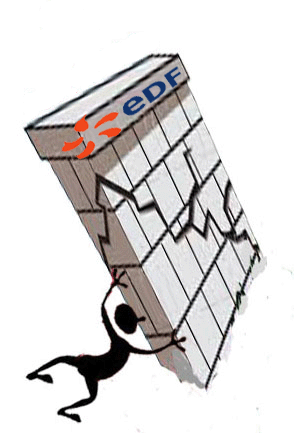
Macron government considering nationalising France’s debt-laden nuclear company EDF
 | |||
France looking to nationalise debt-laden power company EDF https://www.power-technology.com/news/france-power-company-edf/ 13 Mar 22
The French Government, which holds an 84% stake in the $30bn energy giant, could retain domestic business but review overseas operations. The Government of France is reportedly weighing options to nationalise multinational electric utility company Electricite de France (EDF), reported Bloomberg.
Citing people familiar with this, the report said that the French Government is considering the option to reorganise the debt-laden business with a focus on nuclear energy production.
French officials have been carrying out talks with advisers on the option to acquire all the stake from EDF’s small stakeholders and delist the company from the stock exchange, people aware of the development said.
The French Government, which owns 84% of EDF, could retain the ownership of the company’s domestic business but review EDF’s overseas operations, the sources added.
If the idea to nationalise EDF is approved, then the move is expected to take place after the French Presidential election, which is slated to take place later this year.
The Government of France is reportedly weighing options to nationalise multinational electric utility company Electricite de France (EDF), reported Bloomberg.
Citing people familiar with this, the report said that the French Government is considering the option to reorganise the debt-laden business with a focus on nuclear energy production.
French officials have been carrying out talks with advisers on the option to acquire all the stake from EDF’s small stakeholders and delist the company from the stock exchange, people aware of the development said.
The French Government, which owns 84% of EDF, could retain the ownership of the company’s domestic business but review EDF’s overseas operations, the sources added.
If the idea to nationalise EDF is approved, then the move is expected to take place after the French Presidential election, which is slated to take place later this year.
However, a spokesperson for the French finance ministry said that the information is ‘false’ and the government isn’t working on such a project.
Last month, French Government announced it will offer $2.4bn to support EDF, as the group sees a hit to profits due to outages at several of its nuclear plants and the impacts of a government power-price cap.
The US And Ukraine Have Every Reason To Lie About The War

The US-centralized empire is censoring and propagandizing as though it is in a hot war with Russia currently. Officially the US and its allies are not at war, but the imperial narrative management machine is behaving as though we are. This makes sense because when two nuclear-armed powers are fighting for dominance and know a direct military confrontation can kill them both, other types of warfare are used instead, including propaganda campaigns and psychological warfare.
For this reason it is necessary to take everything claimed about what happens in Ukraine with a planet-sized grain of salt, whether it’s by Russia, Ukraine, or the US and its allies. Be very skeptical of anything you hear about chemical attacks or any other narrative that can be used to get military firepower moving in a way that it otherwise would not. All parties involved in this conflict have every reason in the world to lie about such things.
The US And Ukraine Have Every Reason To Lie About The War https://caitlinjohnstone.substack.com/p/the-us-and-ukraine-have-every-reason?s=w
| Caitlin JohnstoneThe Washington Post has a new article out titled “Intelligence points to heightened risk of Russian chemical attack in Ukraine, officials say,” and I challenge you to find me any Russian state media with two opening paragraphs that are more brazenly propagandistic and bereft of journalistic ethics than these: |
The United States and its allies have intelligence thatRussia may be preparing to use chemical weapons against Ukraine, U.S. and European officials saidFriday, as Moscow sought to invigorate its faltering military offensive through increasingly brutal assaults across multiple Ukrainian cities.
“Security officials and diplomats said the intelligence, which they declined to detail, pointed to possible preparations by Russia for deploying chemical munitions, and warned the Kremlin may seek to carry out a ‘false-flag’ attack that attempts to pin the blame on Ukrainians, or perhaps Western governments. The officials, like others quoted in this story, spoke on the condition of anonymity because of the sensitive nature of the matter.”
So Russia is preparing to stage a chemical attack, and also the Russian chemical attack might look like Ukrainians or western governments committing a chemical attack, and also the evidence for this is secret, and also the details are secret, and also the government officials advancing this claim are secret, and also Russia’s military offensive is faltering. Gotcha.
The third paragraph is even better:
“The accusations surfaced as Russia repeated claims that the United States and Ukraine were operating secret biological weapons labs in Eastern Europe — an allegation that the Biden administration dismissed as ‘total nonsense’ and ‘outright lies.’”
This paragraph is awesome in two different ways. First, it’s awesome because The Washington Post goes out of its way to inform readers that Russia’s claims have been dismissed as “total nonsense” and “outright lies” after having literally just reported completely unevidenced claims by anonymous government officials with no criticism or scrutiny of any kind. Secondly, it’s awesome because at no point during the rest of the article is any mention made of Victoria Nuland’s incendiary admission before the Senate Foreign Relations Committee that Ukraine has “biological research facilities” that the US is “quite concerned” might end up “falling into the hands of Russian forces”.
Over and over again throughout the article The Washington Post takes great care to inform readers that Russian claims about biological weapons are not to be trusted, with allegations from Moscow described as “unproven accusations” made with “no verifiable evidence“, “absurd and laughable“, “outrageous claims”, “utter nonsense”, “sinking to new depths” and “baseless“.
This, again, after uncritically reporting completely unsubstantiated allegations by government officials and sheltering them from any accountability by granting them the cover of anonymity. Unproven claims by the Russian government are laughable absurdities presented without evidence; unproven claims by the US government are just The News.
The Washington Post also refers to past Russian dismissals of alleged chemical weapons attacks in Syria as false flags used to frame Damascus, while of course making no mention of the mountains of evidence that this has indeed occurred. It also says the UN human rights office “has received ‘credible reports’ of Russia using cluster bombs” which “could constitute war crimes”, making no mention of the USA’s abundant use and sale of these same munitions.
Democracy Dies in Darkness.
The fact that this Russian false flag narrative is being shoved forward with so much propagandistic fervor, not just by The Washington Post but also by government officials and CIA media pundits, makes it all the more concerning that we’re seeing things like YouTube banning the denial of “well-documented violent events” involving Russia’s invasion of Ukraine. We could soon see a chemical weapons incident occur in Ukraine, after which Silicon Valley platforms ban all accounts who express skepticism of the official western narrative about what happened.
The US-centralized empire is censoring and propagandizing as though it is in a hot war with Russia currently. Officially the US and its allies are not at war, but the imperial narrative management machine is behaving as though we are. This makes sense because when two nuclear-armed powers are fighting for dominance and know a direct military confrontation can kill them both, other types of warfare are used instead, including propaganda campaigns and psychological warfare.
There is a widespread general understanding in the west that Russia stands everything to gain by lying about what happens on the ground in Ukraine and cannot be taken at its word about occurrences during this war. There is much less widespread understanding of the fact that both Ukraine and the United States stand everything to gain by lying about this war as well and cannot be trusted either.
The Washington Post’s own reporting says that behind the scenes western governments see Russian victory in this war as a foregone conclusion. Ukraine’s only chance at stopping Russia in the near term would be if it could persuade NATO powers to take a more direct role in combat, like setting up a no-fly zone as President Zelensky has persistently pleaded with them to do. One way to get around NATO’s rational resistance to directly attacking the military forces of a nuclear superpower would be to appeal to emotion via atrocity propaganda. By circulating a narrative that Russia has done something heinous which cries out to the heavens for vengeance, regardless of the risks entailed.
The United States would also benefit from circulating atrocity propaganda about Russia, in that it would further consolidate international support behind the agenda to economically strangle the nation to death in facilitation of the empire’s struggle for unipolar planetary hegemony. Even before the invasion the US was already pushing the narrative that Russia has a list of dissidents, journalists and “vulnerable populations such as religious and ethnic minorities and LGBTQI+ persons” who it plans on rounding up and torturing.
To be clear, it is not conjecture that the US and its proxies make use of atrocity propaganda. The infamous Nayirah testimony for example helped manufacture consent for the Gulf War when a 15 year-old girl who turned out to be a coached plant falsely told the US Congressional Human Rights Caucus that she’d witnessed Iraqi soldiers taking babies out of incubators in Kuwait and leaving them on the floor to die.
Atrocity propaganda has been in use for as long as war and media have coexisted, and it would be incredibly naive to believe it won’t continue to be. Especially by power structures with a known history of doing so.
For this reason it is necessary to take everything claimed about what happens in Ukraine with a planet-sized grain of salt, whether it’s by Russia, Ukraine, or the US and its allies. Be very skeptical of anything you hear about chemical attacks or any other narrative that can be used to get military firepower moving in a way that it otherwise would not. All parties involved in this conflict have every reason in the world to lie about such things.
Western media trumpets blanket condemnation of Putin, without any consideration of the circumstances

Monbiot, let us note, has not used a single one of his weekly columns at The Guardian to highlight the years-long plight of Julian Assange, locked away in a British dungeon for revealing U.S. and U.K. war crimes in Iraq and Afghanistan. This is the gravest attack on a free press in living memory, and yet Monbiot used his most recent column to attack Assange supporters, such as veteran journalist John Pilger, for not being voluble enough in denouncing Putin.
The West’s Hands in Ukraine as Bloody as Putin’s, Consortium News, By Jonathan Cook
March 11, 2022 Jonathan Cook confronts the demand throughout the Western press and social media to not only “condemn” the Russian president, but do so without qualification.
Jonathan-Cook.net There is a discursive nervous tic all over social media at the moment, including from prominent journalists such as Guardian columnist George Monbiot. The demand is that everyone not only “condemn” Russian President Vladimir Putin for invading Ukraine, but do so without qualification.
Any reluctance to submit is considered certain proof that the person is a Putin apologist or a Kremlin bot, and that their views on everything under the sun – especially their criticisms of equivalent Western war crimes – can be safely ignored.
How convenient for all those Western leaders who have committed war crimes at least as bad as Russia’s current ones.
I have repeatedly described Russia’s invasion as illegal; I have regularly called Putin a war criminal (you may not have noticed but I just did it again in the two preceding paragraphs); and I have consistently compared Putin’s deeds to the very worst actions taken by the West over the past two decades. But none of that is enough. More is always needed.
The demand for unequivocal denunciation is a strange, if common, one and suggests that those insisting on it are being dishonest – if only with themselves. The function of the demand is not to clarify whether any particular piece of information or an argument is credible; it is intended purely as a “gotcha” meme.
I don’t remember an insistence that anyone condemn Tony Blair or George W. Bush for the invasion of Iraq in 2003 before they could be heard or taken seriously. Or that they denounce the U.S.-backed overthrow of Libyan leader Muammar Gaddafi that plunged that country into murderous chaos. Or that they deplore the West’s material support for Saudi Arabia’s slaughter of Yemen’s population, including Britain’s sale of planes, bombs and training to Riyadh. Or that they criticize the West’s backing of head-chopping jihadists in Syria (who coincidentally now appear to be drifting into Ukraine to become our allies again). Or that they decry decades of Western support for Israel as it has disappeared the Palestinian people.
And those are things for which we – meaning Westerners – are directly responsible. We elected the politicians who caused this unquantifiable suffering. Those bombs were ours. We ought to be clamoring for our leaders to be dragged to The Hague to be tried for war crimes.
By contrast, we – meaning Westerners – are not responsible for Putin or his actions. I cannot vote him out of office. Nothing I say will make him alter course. And worse, anything I do say against him or Russia simply amplifies the mindless chorus of self-righteous Western commentary intended to cast stones at Russia’s warmongers while leaving our own home-grown warmongers in place.
Westerners denouncing Putin won’t make compromise and peace more likely. It will make it less likely. Russians need to be highlighting Putin’s crimes as best they can to drive him to the negotiating table, while we need to be doing the same to our leaders to push them to the same table. As long as our attention is on Putin and his crimes, it is not on our leaders and their crimes.
Fog of War
Those who insist it is quite possible to denounce both Putin and Western leaders at the same time are precisely the people who have been so half-hearted in holding our own leaders to account.
Monbiot, let us note, has not used a single one of his weekly columns at The Guardian to highlight the years-long plight of Julian Assange, locked away in a British dungeon for revealing U.S. and U.K. war crimes in Iraq and Afghanistan. This is the gravest attack on a free press in living memory, and yet Monbiot used his most recent column to attack Assange supporters, such as veteran journalist John Pilger, for not being voluble enough in denouncing Putin.
Those who require unequivocal condemnation of Putin insist that now – in the midst of a war – is not the time to be sowing doubt or undermining morale in the rightness of “our” cause. (A small giveaway that they think of this as a Western, not Ukrainian, war with Russia.)
Again conveniently, that is precisely the message Western leaders want to send too – just ask Britain’s prime minister, Boris Johnson, whose “Partygate” scandal is now a distant memory as he seeks to evoke Churchillian gravitas in facing off with Russia. Instead, the parties in the British parliament put aside their very superficial differences this week as the Ukrainian president, Volodymyr Zelensky, rallied them with a “historic address.”
What, really, is the point of demanding Westerners denounce Putin unequivocally when the entire Western media and political class is directing our gaze exclusively at Russia’s crimes precisely so Westerners don’t look at equivalent Western crimes?
The truth is that, in power politics, unequivocal denunciations are for politicians and diplomats – and virtue-signalers. Condemnations may be emotionally satisfying, but the rest of us can put our energies to far better use.For most of us, the better course would be to blow away the immediate fog of war and instead analyze our – meaning the West’s – role in the unfolding events……………………………………………………………………………….. https://consortiumnews.com/2022/03/11/the-wests-hands-in-ukraine-as-bloody-as-putins/
Hopes for Bradwell nuclear power station now fading away like the ebbing tide
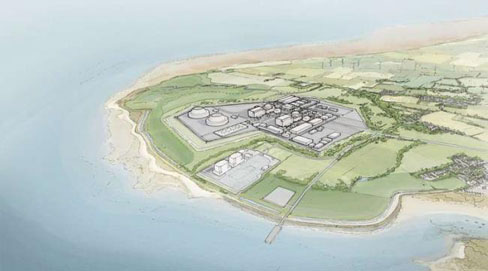
Calm After the Storm https://www.banng.info/news/regional-life/calm-after-the-storm/ 3 March 2022
As we emerge from Covid a rather eerie silence descends over Bradwell B. After a tumultuous period of fighting the grotesque prospect of a colossal nuclear power station of Chinese design we are left wondering if the threat is ebbing away or will flow back like the returning tide.
Just two years ago and just before the first frightening lockdown, The Chinese operator launched its pre-Application proposals and the gross scale of the Bradwell B juggernaut was as unexpected as it was threatening. Despite lockdown the local reaction was immediate, widespread and determined. The proposals were summarily repelled and CGN declared a pause and retreated homeward to think again.
At least the China General Nuclear Power Corporation (CGN) has got part of what it came for. The regulators, Environment Agency and Office for Nuclear Regulation, have gifted approval for the Chinese Hualong One UK HPR1000 reactor design as ‘suitable for deployment in the UK’.
But, not necessarily at the Bradwell site. Although the ultimate prize for CGN is to build its reactors at Bradwell gaining the Generic Design Assessment (GDA) approval is not really much help. It doesn’t tackle the issues of cooling water, long-term storage of radioactive waste or the impacts of climate change in anything like the detail needed to gain approval for the Bradwell site. There are many obstacles that must be surmounted before permission to build can be granted.
Perhaps, as BANNG and other commentators have observed, CGN will have to be content with the consolation prize and seek its fortune elsewhere. That may not be in the UK since it is widely felt that the UK will prevent the Chinese state in the guise of CGN having a strategic role in developing sensitive UK infrastructure like a nuclear power station.
And so there is impasse. Opposed by the local Blackwater communities and shunned by the UK Government Bradwell B seems frozen in aspic. The best that may be said is that CGN may not walk away or be pushed immediately but the project is likely to languish in a state of indefinite inanition and will fade away like the ebbing tide.
Investors keen on renewable energy, while UK govt is trapping consumers into paying upfront for nuclear power plants to be built in a decade or more
Gordon Murray: LESLEY Riddoch’s article (The National, March 10)
is eminently sensible. The UK Government wants to build more large nuclear
plants such as Hinkley Point C. The problem for Boris is that investors are
not interested.
Centrica abandoned its plans to build new nuclear, Toshiba
exited the giant 3.3GW plant at Moorside, Cumbria and Hitachi scrapped the
£16 billion Wylfa plant on Anglesey. The current Hinkley development costs
are a whopping £23bn, almost double that projected in 2008 and set to rise
further.
The smart money is now with renewables where the returns are
higher, more immediate and less risky. Notwithstanding these setbacks, the
Conservative government, backed by Labour, is determined to plough on with
Sizewell C.
Their problem is who is going to fund it. The Government is not
keen to involve the Chinese who already get a return of 15% on their
investment at Hinckley Point C.
The Business Secretary Kwasi Kwarteng’s
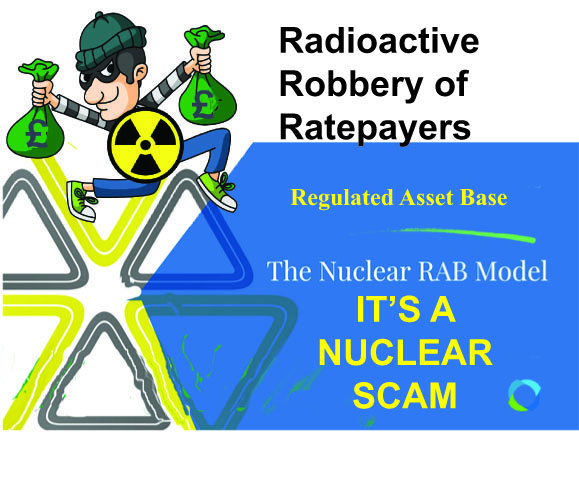
answer is the Regulated Asset Base (RAB) funding model whereby consumers,
that’s us, will pay the construction costs by increasing energy bills. It
is a fanciful type of nuclear subsidy where consumers pay for and
underwrite the construction costs for 10 years before a single watt of
power has been generated.
You have not misread this! The Government is set
to increase our energy bills even further at a time when gas/energy prices
are soaring, pushing even more people into fuel poverty. Perhaps their
spirits will be raised when they learn that RAB, according to Kwarteng,
will give private investors greater certainty through a lower and more
reliable rate of return.
An added bonus is that bill payers can expect
their bills to rise even further when the project is completed since we can
expect the energy strike price for nuclear to be twice that of renewable
– the cheapest form of electricity generation that is now subsidy
free-where consumers only start paying once they start to generate.
TheSmall Modular Reactor programme promises lower energy production costs but
there is no hard evidence to support this claim. What we will get for
certain is large numbers of these power plants spread all over the country
that will raise safety concerns over proliferation of nuclear materials and
terrorist attacks.
The National 12th March 2022
Chernobyl nuclear plant lacking external power supply
Ukraine’s state nuclear power regulator said on Friday the electricity
supply to the Chernobyl nuclear power station had not yet been restored,
despite Russia’s energy ministry saying it was restored by Belarusian
specialists on Thursday. Ukraine has warned of an increased risk of a
radiation leak if the high-voltage power line, damaged in fighting, is not
repaired to the plant, which is occupied by Russian forces.
Reuters 11th March 2022
Markets are in denial about nuclear risk
Markets are in denial about nuclear risk, The Jordan Times, Mar 13,2022 – NEW YORK — Financial markets do not seem to be pricing in the full risks of Russia’s invasion of Ukraine. The absence of any meaningful negative response in equity, corporate debt and sovereign debt markets in Europe, the United States, Canada and Japan would barely make sense even if there was no chance of the situation escalating into an open conflict between NATO and Russia. But that is not the only real risk; so, too, is the threat of the conflict going nuclear……….
Global asset markets have not even priced in this least-bad scenario. But if the Russia-Ukraine war escalated to become a Russia-NATO war, there would be a serious risk of nuclear conflict. One sure way to achieve such an escalation would be for NATO to establish a no-fly zone over Ukraine, as the Ukrainian government has urged.
While NATO and Western governments have imposed economic and financial sanctions on Russia and furnished Ukraine with anti-tank weapons, drones, portable surface-to-air missiles and ammunition, these forms of support do not amount to an act of war. Enforcing a no-fly zone, however, would mean shooting down Russian targets. Were NATO to take this step, a wider war would become inevitable.
So far, NATO has forthrightly rejected calls for a no-fly zone. It has also shown restraint in response to Putin’s nuclear saber-rattling. On February 27, 2022, Putin put Russia’s nuclear forces on high alert in response to Western sanctions and what he referred to as “aggressive statements” from NATO powers.
On the same day, Belarus abandoned its non-nuclear status — thereby permitting Russia’s nuclear weapons on its territory. This escalation came on the heels of Russia’s extensive strategic nuclear exercises on February 19, and Putin’s televised speech announcing the invasion on February 24, when he emphasised that Russia is still one of the world’s most powerful nuclear-weapons states…………..
Today, there is scant evidence that markets have even noticed the rising risk of a nuclear conflict. Denial is the name of the game.
Willem H. Buiter is an adjunct professor of international and public affairs at Columbia University. 2022. www.project-syndicate.org http://www.jordantimes.com/opinion/willem-h-buiter/markets-are-denial-about-nuclear-risk
1 This Month



19 November – Webinar – The Reality of Reprocessing
Time: 11:00 AM Pacific Time (US & Canada) / 2:00 PM Eastern / 7:00 PM UK / 8:00 PM CET
Register for the Zoom Event Here



Shut down the radiation-damaged Heysham nuclear reactors now
To see nuclear-related stories in greater depth and intensity – go to https://nuclearinformation.wordpress.com

Say No to NASA’s Reckless Nuclear Reactor on the Moon
Say No to NASA’s Reckless Nuclear Reactor on the Moon
-
Archives
- November 2026 (74)
- October 2026 (302)
- September 2026 (339)
- August 2026 (330)
- July 2026 (355)
- June 2026 (287)
- May 2026 (306)
- April 2026 (356)
- March 2026 (251)
- February 2026 (267)
- January 2026 (308)
- December 2025 (358)
-
Categories
- 1
- 1 NUCLEAR ISSUES
- business and costs
- climate change
- culture and arts
- ENERGY
- environment
- health
- history
- indigenous issues
- Legal
- marketing of nuclear
- media
- opposition to nuclear
- PERSONAL STORIES
- politics
- politics international
- Religion and ethics
- safety
- secrets,lies and civil liberties
- spinbuster
- technology
- Uranium
- wastes
- weapons and war
- Women
- 2 WORLD
- ACTION
- AFRICA
- Atrocities
- AUSTRALIA
- Christina's notes
- Christina's themes
- culture and arts
- Events
- Fuk 2022
- Fuk 2023
- Fukushima 2017
- Fukushima 2018
- fukushima 2019
- Fukushima 2020
- Fukushima 2021
- general
- global warming
- Humour (God we need it)
- Nuclear
- RARE EARTHS
- Reference
- resources – print
- Resources -audiovicual
- Weekly Newsletter
- World
- World Nuclear
- YouTube
-
RSS
Entries RSS
Comments RSS

