To Bella Lack – being called a ”snowflake” is a badge of honour
Most teenagers would take offence at being labelled a snowflake, the
disparaging moniker given to young people perceived to be too easily
offended by un-PC terms or environmental damage. For Bella Lack, who at
nineteen-years-old is already one of the UK’s leading environmental
activists, the label is a badge of honour.
“Is it fragile to care about
the future of the planet and our species? I don’t think so,” she says.
“I think it’s quite a powerful term to be honest, because lots of
snowflakes create a snowstorm.” In the UK, the youth climate movement is
largely credited with pushing the UK government to set a target for net
zero emissions by 2050, and for introducing swathes of new environmental
legislation to curb the use of disposable plastic.
Bella has quickly
emerged as one of the leading lights of Britain’s youth activist circles.
She is an ambassador for the Born Free Foundation, spent her teenage years
campaigning on everything from palm oil to circus animals, and spent 2020
filming wildlife documentary Animal alongside Jane Goodall. Her Twitter
account boasts 138,000 followers.
iNews 27th June 2022
Greta Thunberg has warned that the world faces “total natural catastrophe” unless citizens take urgent action
Greta Thunberg has warned that the world faces “total natural
catastrophe” unless citizens take urgent action as she made a surprise
appearance at Glastonbury festival. The 19-year-old activist led chants of
“climate … justice” after delivering a rousing speech from the
Pyramid stage which painted an apocalyptic picture of the future of the
planet.
To cheers from thousands of festival-goers, Thunberg said: “We
are approaching the precipice and I would strongly suggest that all of
those who have not yet been greenwashed out of our senses to stand our
ground. “Do you not let them drag us another inch closer to the edge.
Right now is where we stand our ground.”
Guardian 25th June 2022
Nuclear power turning out to be counter-productive for Europe as a means to cut Russian power supplies – France’s massive decine in nuclear output
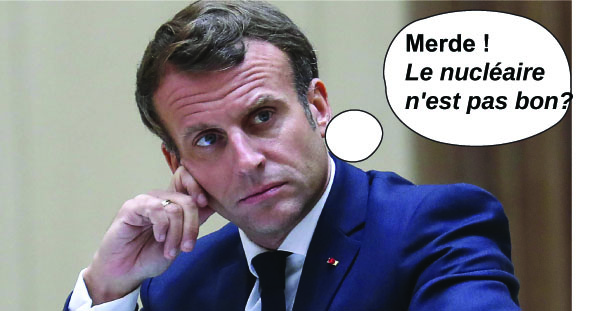
| France, the European Union’s leader in nuclear energy, is seeing a massive decline in output. Though it has been relatively unfazed by the bloc’s ongoing energy crisis, declining nuclear production could pose a significant problem in the coming months. The collapse of French nuclear power generation and Putin’s retaliatory cutback on energy exports to Europe could be disastrous for the continent. A recent flurry of unexpected issues at the Électricité de France (EDF), the state nuclear power operator representing the largest nuclear fleet in Europe, has caused French nuclear energy output to tumble to its lowest levels in 30 years. Around half of the EDF’s massive nuclear fleet has been taken offline, delivering a massive blow to the EU’s energy independence and security in the midst of a worldwide energy crisis. France has become increasingly reliant on nuclear power in recent years. French President Emmanuel Macron has given nuclear energy an even bigger boost in his time in office. Indeed, in February, before the Russian invasion of Ukraine, he announced a €52 billion plan to revitalize the country’s “nuclear adventure.” He has also fought for the inclusion of the emissions-free power source as a “green investment” in the nomenclature of the European Union as the (supposedly !) emissions-free power source as a “green investment” in the nomenclature of the European Union as the continent moves toward establishing its green energy budget for the coming years. The European Union had hoped that France’s considerable nuclear power capacity would be key in allowing the bloc to move away from Russian energy as the West tries to shore up its energy independence and increase sanctions on the Kremlin in response to the Russian war in Ukraine. As recently as March of this year, the Council on Foreign Relations posited that nuclear power could be the answer to ending the continent’s crippling reliance on Russian energy. But now it might be the very thing that makes such a divorce impossible. Oil Price 25th June 2022 https://oilprice.com/Alternative-Energy/Nuclear-Power/France-Sees-Nuclear-Energy-Output-Plummet-At-The-Worst-Possible-Moment.html |
Thousands March in Madrid for Peace and “NATO NO”.

Thousands March in Madrid for Peace and “NATO NO”. https://www.telesurenglish.net/news/Thousands-March-in-Madrid-for-Peace-and-NATO-NO—20220626-0005.html&source=gmail&ust=1656372213390000&usg=AOvVaw3X62tTdIvq0p0thk8VygFj The Sao Paulo Forum, the Women’s International Democratic Federation, Ecologists in Action, Pacifists Foundation; Not to war, Not to Nato; Plataforma Madrid and pacifist associations from France, Germany, Norway, Sweden and Italy, among others, emphasized the need to maintain the protests and not allow NATO to dictate the future. The Summit for Peace “NATO NO” that took place in Madrid, reiterated its rejection of militarism, while expressing its repudiation of the Atlantic alliance, and ended its deliberations with the demonstration from Atocha station to Plaza de España.
Some 10 thousand people marched today through the center of the capital in favor of peace and in rejection of the North Atlantic Treaty Organization (NATO), in particular the Summit for Peace “NATO NO” to be held here.
The parade along the Paseo del Prado, passing by the fountain and the Cibeles palace, took the Gran Vía in a march in which emblematic songs such as El pueblo unido, jamás será vencido, by the Chilean Víctor Jara, and La Muralla, based on the verses of the Cuban poet Nicolás Guillén, stood out.
The demonstrators’ posters and statements were dominated by slogans in favor of peace, repudiation of wars and invasions, interference in the internal affairs of nations through the use of military force and disrespect for the sovereignty of peoples by NATO, as well as harsh criticism of the European Union (EU).
In the Final Declaration of the so-called Madrid counter-summit, the participants from various countries indicated that “NATO 360º has become a threat to peace, an obstacle to progress towards shared and demilitarized security”.
They considered that the Atlantic alliance, which will hold its summit meeting on the 29th and 30th at the IFEMA-Madrid fairgrounds, turns its back on the real problems of the planet, namely hunger, disease, inequality, unemployment, lack of public services, land and wealth grabbing, and the climate crisis.
The alternative summit, for Peace, against NATO and against wars, underlines the obligation as a human species, to build and defend peace 360º, from north to south, from east to west. This implies renouncing militarism as a way of dealing with conflicts, said the declaration of the meeting.
The Sao Paulo Forum, the Women’s International Democratic Federation, Ecologists in Action, Pacifists Foundation; Not to war, Not to Nato; Plataforma Madrid and pacifist associations from France, Germany, Norway, Sweden and Italy, among others, emphasized the need to maintain the protests and not allow NATO to dictate the future.
Western Officials Admit Ukraine Is Crawling With CIA Personnel
So the previously unthinkable idea that the US is at war with Russia has been gradually normalized, with the heat turned up so slowly that the frog doesn’t notice it’s being boiled alive. If that idea can be sufficiently normalized, public consent for greater escalations will likely be forthcoming, even if those escalations are extremely psychotic.
https://caitlinjohnstone.substack.com/p/western-officials-admit-ukraine-is Caitlin Johnstone 26 June 22,
The New York Times reports that Ukraine is crawling with special forces and spies from the US and its allies, which would seem to contradict earlier reports that the US intelligence cartel is having trouble getting intel about what’s happening on the ground in Ukraine.
This would also, obviously, put the final nail in the coffin of the claim that this is not a US proxy war.
In an article titled “Commando Network Coordinates Flow of Weapons in Ukraine, Officials Say,” anonymous western officials inform us of the following through their stenographers at The New York Times:
As Russian troops press ahead with a grinding campaign to seize eastern Ukraine, the nation’s ability to resist the onslaught depends more than ever on help from the United States and its allies — including a stealthy network of commandos and spies rushing to provide weapons, intelligence and training, according to U.S. and European officials.
Much of this work happens outside Ukraine, at bases in Germany, France and Britain, for example. But even as the Biden administration has declared it will not deploy American troops to Ukraine, some C.I.A. personnel have continued to operate in the country secretly, mostly in the capital, Kyiv, directing much of the massive amounts of intelligence the United States is sharing with Ukrainian forces, according to current and former officials.
At the same time, a few dozen commandos from other NATO countries, including Britain, France, Canada and Lithuania, also have been working inside Ukraine.
The revelation that the CIA and US special forces are conducting military operations in Ukraine does indeed make a lie of the Biden administration’s insistence at the start of the war that there would be no American boots on the ground in Ukraine, and the admission that NATO powers are so involved in operations against a nuclear superpower means we are closer to seeing a nuclear exchange than anyone should be comfortable with.
This news should surprise no one who knows anything about the usual behavior of the US intelligence cartel, but interestingly it contradicts something we were told by the same New York Times not three weeks ago.
“American intelligence agencies have less information than they would like about Ukraine’s operations and possess a far better picture of Russia’s military, its planned operations and its successes and failures,” NYT told us earlier this month. “U.S. officials said the Ukrainian government gave them few classified briefings or details about their operational plans, and Ukrainian officials acknowledged that they did not tell the Americans everything.”
It seems a bit unlikely that US intelligence agencies would have a hard time getting information about what’s happening in a country where they themselves are physically located. Moon of Alabama theorized at the time that this ridiculous “We don’t know what’s happening in our own proxy war” line was being pushed to give the US plausible deniability about Ukraine’s failures on the battlefield, which have only gotten worse since then.
So why are they telling us all this now? Well, it could be that we’re being paced into accepting an increasingly direct role of the US and its allies in Ukraine.
The other day Antiwar’s Daniel Larison tweeted, “Hawks in April: Don’t call it a proxy war! Hawks in May: Of course it’s a proxy war! Hawks in June: It’s not their war, it’s our war!”
This is indeed exactly how it happened. Back in April President Biden told the press the idea that this is a proxy war between the US and Russia was “not true” and Defense Secretary Lloyd Austin said “It’s not, this is clearly Ukraine’s fight” when asked if this is a proxy war. The mainstream media were still framing this claim as merely an “accusation” by the Russian government, and empire spinmeisters were regularly admonishing anyone who used that term on the grounds that it deprives Ukrainians of their “agency”.
Then May rolled around and all of a sudden we had The New Yorker unequivocally telling us that the US is in “a full proxy war with Russia” and hawks like US congressman Seth Moulton saying things like, “We’re not just at war to support the Ukrainians. We’re fundamentally at war, although somewhat through a proxy, with Russia, and it’s important that we win.”
And now here in June we’ve got war hawks like Max Boot coming right out and saying that this is actually America’s war, and it is therefore important for the US to drastically escalate the war in order to hand the Russians “devastating losses”.
So the previously unthinkable idea that the US is at war with Russia has been gradually normalized, with the heat turned up so slowly that the frog doesn’t notice it’s being boiled alive. If that idea can be sufficiently normalized, public consent for greater escalations will likely be forthcoming, even if those escalations are extremely psychotic.
Back in March when I said the only “agency” Ukraine has in this conflict is the Central Intelligence kind, empire loyalists jumped down my throat. They couldn’t believe I was saying something so evil and wrong. Now they’ve been told that the Central Intelligence Agency is indeed conducting operations and directing intelligence on the ground in Ukraine, but I somehow doubt that this will stir any self-reflection on their part.
As world leaders promote nuclear power as SAFE, a dangerous situation develops at Europe’s largest nuclear power plant _- Zaporizhzia in Ukraine !

| Ukraine’s nuclear regulatory agency faces an unprecedented struggle to maintain nuclear safety, most notably including “terrorism against firefighters and nuclear power plant personnel” at the Russian-occupied Zaporozhye nuclear power plant, according to Oleg Korikov, the organization’s beleaguered interim head. Korikov warned fellow Europeanregulators in Europe that Ukraine’s Nuclear Regulatory Inspectorate (SNRIU) is unprepared for further deterioration at Zaporozhye, a six-reactor facility that is Europe’s largest nuclear plant, and is essentially in uncharted waters. “We do not have rules, regulations [for] how we can regulate, how we can operate, in these conditions,” said Korikov. Staff at Zaporozhye “is under heavy psychological pressure of Russian soldiers,” theSNRIU’s acting chairman and chief state inspector told a Jun. 20 meeting of the European Nuclear Safety Regulators Group. There is “kidnapping and attacks on nuclear power plant staff” in Enerhodar, the Russian-occupied city closest to the plant. “We have evidence of this.” This appeared to = confirm what has emerged as one of the most troubling aspects of the situation at Zaporozhye and Enerhodar since both were occupied by Russian troops on Mar. 4: the kidnapping, intimidation, interrogation and torture of Zaporozhye workers. Energy Intelligence 24th June 2022 https://www.energyintel.com/00000181-910f-d7da-adc1-976f35b80000 |
What happened at Santa Susana? — Beyond Nuclear International

A meltdown contaminated a community. A fire made it worse
What happened at Santa Susana? — Beyond Nuclear International A 1959 meltdown and a 2018 fire compounded a tragedy
By Carmi Orenstein
When the United Nations Human Rights Council officially recognized access to “a safe, clean, healthy and sustainable environment” as a basic human right earlier last October, it was an acknowledgement fifty years in the making. It was backed by an international grassroots effort, with the journey to the final vote including the voices of more than 100,000 children around the world and multiple generations of allies pushing against powerful corporate opposition.
Just about the time that this half-century-long campaign to enshrine the right to a safe environment kicked off, a story about the horrific violation of this same human right and its cover-up emerged in a community near my own childhood home in Southern California.
In 1979, a UCLA student named Michael Rose uncovered evidence of a partial nuclear meltdown at the Santa Susana Field Lab (SSFL) in the Simi Hills outside of Los Angeles. The SSFL, formerly known as Rocketdyne, played key government roles throughout the Cold War, developing and testing rocket engines and conducting experiments with nuclear reactors. Today, as the result of a recently published peer-reviewed study that represents the dogged efforts of both professional researchers and a team of specially trained citizens, we have solid evidence of the spread of dangerous contamination from that site.

Working with nuclear safety expert and then-UCLA professor Daniel Hirsch, Rose discovered documentation that the partial nuclear meltdown had occurred at SSFL twenty years earlier in 1959, releasing up to 459 times more radiation into the environment than the infamous meltdown at the Three Mile Island nuclear reactor in Pennsylvania. Unlike the Three Mile Island facility, the SSFL reactors lacked containment structures—those tell-tale concrete domes that surround commercial nuclear power plants to prevent radiation spread in case of a nuclear accident.
In addition to the 1959 meltdown, at least three of the site’s other nuclear reactors experienced accidents (in 1957, 1964 and 1969), and radioactive and chemical wastes burned in open-air pits as a matter of practice. A “hot lab,” which may have been the nation’s largest, was also located at SSFL, and, in 1957, it burned and was known to have spread radioactivity throughout the site. A progress report from the period states, “Because such massive contamination was not anticipated, the planned logistics of cleanup were not adequate for the situation.”
The rest of this story is an object lesson in what happens when the right to a safe environment is not universally acknowledged and when secretive, long-forgotten toxic legacies of the Cold War meet the unpredictable chaos of the current climate crisis. Real people are harmed in ways that are not easily remediable—including, perhaps, members of my family.
The radioactive contamination of the surrounding environment caused by the partial nuclear meltdown at the 2,849-acre SSFL site was not cleaned up by the time of Rose’s revelation. Nor was the extensive toxic chemical contamination on site. It is still not cleaned up. Thus, when the climate chaos-fueled Woolsey Fire erupted at, and burned through, the SSFL in 2018, the flames served to spread the contamination even further. The fire quickly burned 80 percent of the SSFL property, and onward, all the way to the ocean. Pushed by high winds and uncontained for nearly two weeks, the Woolsey Fire killed three people outright and destroyed over 1,600 structures.
Today, public knowledge of the original disaster and its continued radioactive and toxic legacy is still patchy. The silence that surrounded the catastrophe in 1959 gave way to intermittent waves of focused media attention, celebrity involvement, and inquiry and outcry on the part of elected officials in the years since the 1979 expose. These have been followed by whistleblower accounts from former workers, and various forms of citizen activism. While occasional news of confidential legal settlements addressing illness and contamination breaks through, the Santa Susana disaster is hardly a household name—including among those of us who grew up in its shadow.
The suburbs on either side of the SSFL, in Ventura County and a western edge of Los Angeles County, are still expanding. More than 500,000 people currently live within about ten miles of the site. Parents vs. SSFL is the dynamic, parent-led group currently at the helm of public monitoring of, and demand for, a comprehensive cleanup. On their social media sites, one often sees public comments from nearby residents along the lines of why were we not told?
To be sure, the history of site ownership and responsibility is complex and makes redress of grievance vexing. Although Rocketdyne owned the facility at the time of the meltdown, most of the site is now owned by Boeing. However, some of the property is owned by NASA, who in turn leases parts of its property as SSFL to the U.S. Department of Energy (DOE). California’s Department of Toxic Substances Control (DTSC), the lead regulatory agency for remediation, entered into a Consent Order with these “responsible parties,” in 2007. In 2010, stricter agreements were signed with DOE and NASA to clean up the properties for which they are responsible to “background levels.”
In 2017 a legally binding agreement deadline for completion of cleanup was blown by, with no meaningful cleanup begun. In 2018 the Woolsey Fire came roaring through. That fire is now documented to have redistributed radioactive materials and toxic chemicals in surrounding areas. Non-binding, confidential negotiations with Boeing were just announced early this year. It is a confounding and maddening journey to anyone attempting to follow.
As Melissa Bumstead, co-founder of Parents vs SSFL, said in a Physicians for Social Responsibility-Los Angeles press release about the new study: “The bottom line is, if SSFL had been cleaned up by 2017 as required by the cleanup agreements, the community wouldn’t have had to worry about contamination released by the Woolsey Fire.” …………………………………….
UCLA professor of Atmospheric and Oceanic Sciences Suzanne E. Paulson also weighed in. Speaking to a reporter the next year, Paulson explained,
Assuming that radioactive material was in the soil [and] vegetation burned, it is reasonable that it traveled 30 miles downwind, and some of it got deposited in downwind areas… When soil and vegetation burn, the material in them, including metals [and] soil minerals, end up in the aerosol particles that make smoke look dark and hazy. They are small enough that they can remain in the atmosphere for up to a week and as a result can be widely dispersed.
At the end of 2018, just weeks after the Woolsey Fire was finally extinguished, work commenced on the independent study that was ultimately published online in early October and would appear in the December 2021 issue of the Journal of Environmental Radioactivity. This paper represents the work of community-volunteer citizen scientists who were trained to collect dust and ash samples in a 9-mile radius throughout the rural, urban, suburban, and undeveloped mountainous area around the SSFL. Their data collection was followed by the slow and careful work of scientific analysis. In a society whose governmental structures and policies decidedly are not guided by the Precautionary Principle today, and where there are no efficient mechanisms by which to correct past regulatory errors—no matter how grave—these volunteers and their three research leaders have provided powerful, incriminating evidence with which the community and its allies will push forward for the cleanup.
…………………………. “Woolsey Fire ash did, in fact, spread SSFL-related radioactive microparticles.” The authors also wrote, “Excessive alpha radiation in small particles is of particular interest because of the relatively high risk of inhalation-related long-term biological damage from internal alpha emitters compared to external radiation.”……………………………………………..
How did the entities with knowledge and power continue to delay and obstruct while the population boomed and crept up the hillsides near the SSFL, knowing full well that powerful human health hazards were there to meet the communities, new and old? The statement by DTSC proclaiming that no contaminants were carried, while the Woolsey Fire was still burning, smacks of the most brazen regulatory capture. …………………………….. Carmi Orenstein is Program Director at Concerned Heath Professionals of New York. https://wordpress.com/read/feeds/72759838/posts/4098311628
Dispute among Members of European Parliament over move to classify nuclear energy as ”green”
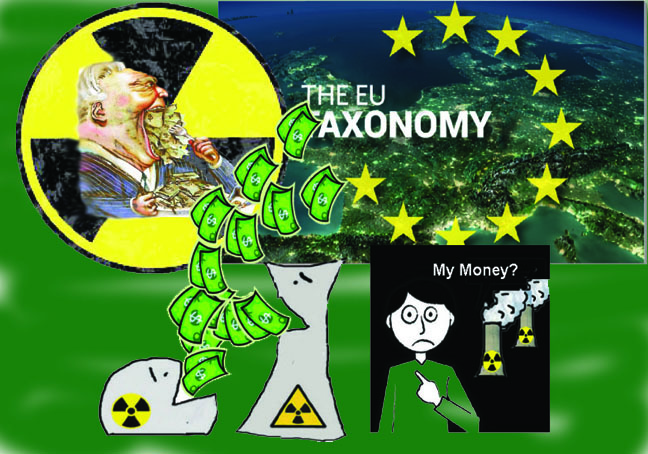
| THERE ARE DISAGREEMENTS between Government party MEPs on whether or not the EU should classify nuclear energy as green, as the European Parliament prepares to vote on the issue next month. The debate is being held after the European Commission sought changes to regulations to classify both nuclear power and gas as green energy until at least 2030. These regulations, known as ‘taxonomy’, are a set of multiple standards to help grow sustainable investment. The idea behind taxonomy is to encourage the financial sector to prioritise investing in eco-friendly and green initiatives. While MEPs within the European Parliament’s environment and economy committee voted down the proposals to add gas and nuclear power last week, a full vote is set to take place in Strasbourg in July. This has lead to significant debate between MEPs within the European Parliament, with some criticising the move by the Commission to add natural gas and nuclear power to the deal. The debate has also split Government MEPs, with some in Fianna Fáil and Fine Gael backing the change to taxonomy rules while the Green Party remain opposed to the Commission’s position. The Journal 25th June 2022 https://www.thejournal.ie/government-split-on-nuclear-power-5798800-Jun2022/ |
Rolls Royce wants fast-track approval of its small nuclear reactors, even though they are barely developed yet
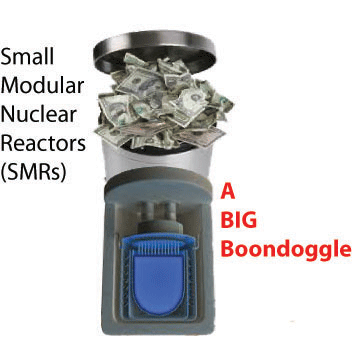
| Rolls-Royce is urging the UK Government to fast-track approval of its small modular nuclear reactors, despite the technology still being in the early stages of development. Trawsfynydd has been identified as a possible site for the reactors, and earlier this week the company established to develop a new reactor there set out plans to start work on a new nuclear development in 2027 – with the plant expected to go online in the early 2030s. UK Government sources have insisted the new reactors must go through exhaustive safety checks, but Rolls-Royce wants clearance to deploy its reactors from 2029 and is frustrated at the pace of the process to gain approval, which is not expected to be completed until 2026. Nation Cymru 25th June 2022 https://nation.cymru/news/uk-government-urged-to-fast-track-safety-approval-on-reactors-linked-with-trawsfynydd/ |
European Pressurised Water Reactors (EPRs) – a nuclear economic fiasco in Finland, France, UK and China
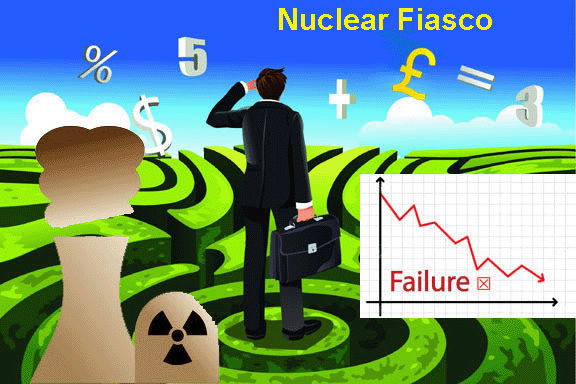
–It is over 30 years since the genesis of the EPR project in 1989. This reactor was presented from the start not as a technological revolution or breakthrough but as an evolution in the continuity of the second-generation pressurized water reactor sector, of which there are 56 in operation in
France.
It was also, according to its promoters, to constitute the
reference nuclear reactor of the 21st century, and be quickly and massively
exported all over the world. Three decades later, the reality is a far cry
from the announcements and ambitions of the industry.
While France envisages the construction of several of these EPR reactors for the 2050
horizon, this report aims to bring together in a single document the main
events that led to very substantial delays and additional costs on each of
the six EPRs in operation or still under construction in the world.
International overview of the industrial and economic fiasco of the EPR: at
Olkiluoto in Finland, Flamanville in France, Hinkley Point in the UK and
Taishan in China.
Greenpeace France (accessed) 24th June 2022
Nuclear Free Local Authorities support Cumbria’s new group opposing Nuclear Waste Dump
The Nuclear Free Local Authorities have written to a new group in Cumbria
endorsing their opposition to plans to develop a nuclear waste dump. Millom
and District Against the Nuclear Dump was only established a few days ago
by a town resident and Councillor, yet the strength of feeling is such that
several hundred local people are now already backing the campaign.
Public feeling is currently running high after recent revelations by the local
campaign group, Radiation Free Lakeland, that seismic testing is due to
take place offshore over the summer. Environmentalists, marine welfare
organisations, residents, and the NFLA have all expressed their opposition
to the testing regime as there is strong scientific evidence that blasting
sound waves into the ocean repeatedly over 3-4 weeks will cause real harm
to marine wildlife.
Millom and District Against the Nuclear Dump is the latest group to manifest its opposition to testing, and in conjunction with Radiation Free Lakeland’s campaign, ‘Keep Cumbrian Coal in the Hole and
Nuclear Waste Out’, there are now joint plans to hold a public protest in
Haverigg this coming Saturday.
Now the Chair of the NFLA Steering
Committee, Councillor David Blackburn has written to the group’s founder,
Jan Bridget, offering the support of Nuclear Free Local Authorities to the
new group. Councillor Blackburn outlined the NFLA’s position on GDF:
“The NFLA has been opposed to a Geological Disposal Facility from the
start. Rather than dumping Britain’s nuclear waste in a big hole in the
ground or under the seabed, we favour near-site, near-surface storage under
rigorous supervision.
NFLA 24th June 2022
Russia to send Belarus nuclear-capable missiles within months, as G7 leaders gather in Germany,
Vladimir Putin again raises nuclear threat during Moscow’s invasion of Ukraine, as Olaf Scholz hosts G7 leaders to discuss energy and food crisis, Guardian. 26 June 22
Russia will deliver missiles capable of carrying nuclear warheads to Belarus in the coming months, President Vladimir Putin has said as he received Belarusian leader Alexander Lukashenko.
“In the coming months, we will transfer to Belarus Iskander-M tactical missile systems, which can use ballistic or cruise missiles, in their conventional and nuclear versions,” Putin said in a broadcast on Russian television at the start of his meeting with Lukashenko in St Petersburg on Saturday.
Putin has several times referred to nuclear weapons since his country launched a military operation in Ukraine on 24 February, in what the west has seen as a warning not to intervene. Lukashenko said last month that his country had bought Iskander nuclear-capable missiles and S-400 anti-aircraft anti-missile systems from Russia.
The development came on the eve of a meeting of G7 leaders in Germany on Sunday, to be hosted by Chancellor Olaf Scholz in the Bavarian alps, which is set to be dominated by Ukraine and its far-reaching consequences, from energy shortages to a food crisis.
The G7 leaders are expected to seek to show a united front on supporting Ukraine for as long as necessary and cranking up pressure on the Kremlin – although they will want to avoid sanctions that could stoke inflation and exacerbate the global cost-of-living crisis……………………………….. https://www.theguardian.com/world/2022/jun/26/russia-to-send-belarus-nuclear-capable-missiles-within-months-as-g7-leaders-gather-in-germany
No Western ”boots on the ground” in Ukraine? Just commandoes and CIA agents
Western ‘network of commandos and spies’ helping Ukraine – NYTCIA agents have been stationed in Kiev to share US intel with Ukrainian troops, the report claims https://www.rt.com/news/557848-us-cia-agents-kiev/ NATO members have been supplying Ukraine with heavy weapons, including missile launchers, combat drones and armored vehicles, and training Ukrainian troops to use them. In recent months, the Pentagon has delivered M142 HIMARS multiple rocket launchers and M777 howitzers.
US Defense Secretary Lloyd Austin said last week that Ukraine was facing “a pivotal moment on the battlefield” and urged Washington’s allies to continue aiding Kiev.
The report about the activities of Western commandos and CIA agents in and around Ukraine comes as a three-day Group of Seven (G7) summit kicks off in Germany on Sunday. The group, which comprises of the US, Canada, Britain, France, Germany, Italy and Japan, which have imposed sweeping sanctions on Russia.
Moscow has said in the past that it will treat foreign weapons, on Ukrainian soil, as legitimate targets.
A secret network of commandos and spies from the US, and some of its allies, is working to provide weapons, intelligence and training to Ukraine, the New York Times (NYT) reported on Saturday, citing current and former American and European officials.
While much of the activity takes place at bases in Britain, Germany and France, some CIA agents have been stationed in the east European country, mostly in the capital Kiev, the paper said.
The agents are tasked with sharing satellite images and other intelligence with Ukrainian troops, according to the story.
The US announced the evacuation of military instructors from Ukraine in February. Shortly afterwards, Russia launched its military campaign and the US Army’s 10th Special Forces Group set up a planning cell in Germany to coordinate military aid to Kiev, the paper explained. The group has reportedly grown to include participants from 20 nations.
The NYT added that “a few dozen commandos” from other NATO member states, including Canada, Britain, France and Lithuania, have also been working in Ukraine.
NATO members have been supplying Ukraine with heavy weapons, including missile launchers, combat drones and armored vehicles, and training Ukrainian troops to use them. In recent months, the Pentagon has delivered M142 HIMARS multiple rocket launchers and M777 howitzers.
US Defense Secretary Lloyd Austin said last week that Ukraine was facing “a pivotal moment on the battlefield” and urged Washington’s allies to continue aiding Kiev.
The report about the activities of Western commandos and CIA agents in and around Ukraine comes as a three-day Group of Seven (G7) summit kicks off in Germany on Sunday. The group, which comprises of the US, Canada, Britain, France, Germany, Italy and Japan, which have imposed sweeping sanctions on Russia.
Moscow has said in the past that it will treat foreign weapons, on Ukrainian soil, as legitimate targets.22
The United States-the Pacific bully
https://johnmenadue.com/the-united-states-the-pacific-bully/ By Brian Toohey, Jun 24, 2022,
The US dominates the Pacific Islands to an extent China can never hope to achieve. With Australia’s support, the US is now engaged in an arms build-up in its Pacific territories and de-facto colonies in a little known boost to its containment of China.
The US has three self-governing territories in the Pacific: Guam, American Samoa and the Northern Mariana Islands. Guam hosts some of the US’s most important bases the world. After a large scale military expansion on one of the main islands in the Northern Marianas, Tinian is expected to rival Guam in importance in coming years.
The US also has Compacts of Free Association with three countries covering thousands of islands in the Pacific – the Federated States of Micronesia, Palau and the Marshall Islands. The compacts are a de-facto form of colonialism which gives the US exclusive military access to these countries’ land and maritime surrounds in return for defence guarantees and financial assistance.
The Federated States of Micronesia has a population of around 100,000. It has a land area of 702 square km on 607 islands amid 2,600,000 square km of ocean. The US will build a new base there. The residents are concerned about the impact of the base as their islands are often tiny and the landscape important to their identity. The US is also establishing a new military base on Palau, which has 340 islands and a total population of just over 18,000. The Marshall Islands landmass is 181 square km amid 466,000 square km of ocean. Although the Kwajalein atoll is only 15 square km, it is exclusively a military base with an extraordinary array of US activities; including a key role in US testing interceptors aimed ballistic missiles.
The Chinese foreign minister Wang Yi recently visited seven South Pacific countries and signed various agreements in some, including the provision of infrastructure and police training , but he failed to get support for a 10-country trade agreement. He did not seek permission to build a navy base in the Solomon Island or anywhere else. Nevertheless, some saw the visit as an act of Chinese aggression. It is an odd view of aggression compared to the damage done by US, British and French testing of thermonuclear (also called hydrogen) bombs on Pacific islands, or when Australia helped invade Iraq.
The US conducted 105 nuclear tests in the Pacific, mainly in the Marshall islands, between 1946 and 1962, as part oftits program to develop thermonuclear bombs. Operational weapons were sometimes tested, including a submarine-launched war head. One test in 1952 completely vaporised the island of Eluglab. In 1954, a thermonuclear bomb tested on Bikini atoll exploded with force of 15 megatons – over 1,000 times bigger than the bomb dropped on Hiroshima. The radioactive cloud engulfed a Japanese fishing boat about 80 miles away in a white powder that poisoned the crew. One died from the exposure seven months later and 15 more in following years.
The radioactivity affected the drinking water and food. Children played in the ash-like powder. Some ate it. Marshall Islanders over a wide area were subject to abnormal radiological doses. In 2005, the US National Cancer Institute reported that the risk of contracting cancer for those exposed to the fallout was over one in three.
Nevertheless, in 1946, a US Navy Commodore had asked 167 people living on Bikini atoll to re-locate so their home could be used use “for the good of mankind”. They were resettled in 1969, but had to be evacuated again after high radiation levels were detected.
There has been some increase in the pathetically low initial compensation. But it is hard to compensate for the environmental damage and loss of cultural heritage, traditional customs and skills. In 2014, the Marshall Islands attempted to sue the US and eight other nuclear armed nations, for failing to move towards nuclear disarmament as required by the Nuclear Non-Proliferation Treaty. A US Court dismissed the suit in 2017.
Britain tested 40 thermonuclear bombs on an islands in the Kiribati group between 1957 and 1962. Troops from Britain , Fiji (then a British colony), and New Zealand worked on the tests. Many were harmed by radiation and other causes. As usual, the locals were treated badly and their water and lands polluted.
France conducted 41 atmospheric nuclear tests between 1966 and 1974 in French Polynesia. It then conducted 140 underground, primarily of thermonuclear bombs, until 1996. One of the islands used was subject to cracking. In an act of state terrorism, French secret service frogman killed a photographer when they bombed a Green Peace protest ship in Auckland harbour on its way to the French nuclear testing area.
Labor’s defence minister, Richard Marles now refers to France as a Pacific county, despite the fact that it is a European country with a tenuous justification for holding onto its colonial possessions in the Pacific – New Caledonia and French Polynesia. Labor used to oppose colonialism. Now it seems it’s good if the colonial power opposes China.
The South Pacific Forum comprises 18 members: Australia, Cook Islands, Federated States of Micronesia, Fiji, French Polynesia, Kiribati, Nauru, New Caledonia, New Zealand, Niue, Palau, Papua New Guinea, Republic of Marshall Islands, Samoa, Solomon Islands, Tonga, Tuvalu and Vanuatu. Not all are normally considered to be in the South Pacific. The inclusion of three countries with Compacts of Free Association with the US and two French possessions basically guarantees they will vote for what the US or France wants.
However, the legacy of the contemptuous disregard for the indigenous residents during massive hydrogen bomb tests ensures that nuclear issues, including the passage of nuclear submarines, remain sensitive.
At the time of the negotiation of the South Pacific Nuclear Free Zone Treaty in 1985 Paul Malone wrote that it was for a “partial nuclear free zone”, as it did not prohibit the “passage of nuclear-armed ships or aircraft through the region”. Malone reported that some Pacific Island countries wanted to be Treaty to prohibit access to nuclear-armed warships. The then Prime Minister Bob Hawke insisted on that omission which reflected the wishes of the US. However, nuclear issues have been revived by the creation of the 2021AUKUS pact in which Australia is committed to buying nuclear powered submarines.
A journalist and researcher based in the Pacific, Nic Maclellan says, “Any hope that Australia’s island neighbours will welcome further nuclearisation of the region is folly. Within days of the UKUS announcement, statements from Pacific leaders, community elders and media organisations highlighted the persistence of the deep antinuclear sentiment.
The general secretary of the Pacific Conference of Churches, Reverend James Bhagwa tweeted
“Shame Australia, Shame.” The Solomon Islands Prime Minister Manasseh Sogavare told the UN General Assembly his nation “would like to keep our region nuclear-free . . . We do not support any form of militarisation in our region that could threaten regional and international peace and stability.”
The Kiribati President Taneti Maamau told the ABC, “Our people are victims of nuclear testing. We still have trauma. With anything to do with nuclear, we thought it would be a courtesy to discuss it with your neighbours”. He said he was especially concerned about Australia developing nuclear powered submarines which he said “puts the region at risk”
Fiji’s Prime Minister Frank Bainimarama tweeted that his father was among the Fijian soldiers the British sent to help with their nuclear bomb tests. He said, “To honour the sacrifice of all those who have suffered due to these weapons, Fiji will never stop working towards a global nuclear ban.”
The New Zealand Prime Minister Jacinda Ardern repeated that nuclear submarines “can’t come into our internal waters”. New Zealand and nine South Pacific Forum countries have ratified the new Treaty on the Prohibition of Nuclear Weapons. Australia hasn’t. The Samoa Observer wrote, “It is a relief seeing Prime Minister Ardern continuing to maintain the tradition of her predecessors by promoting a nuclear-free Pacific; probably she is the only true friend of the Pacific Islands.”
A nuclear war cannot be won and must never be fought

The Treaty on Prohibition of Nuclear Weapons is not a quick fix. But it can build international pressure and help to put the world back on track toward nuclear disarmament. Given the fundamental threat to humanity, we cannot be content with the status quo on nuclear disarmament. Austria and New Zealand will continue to spearhead these efforts. In the interests of humanity, we will continue to work with all willing state and civil-society partners to remove the nuclear sword of Damocles that is hanging over all our heads. — Project Syndicate
(ed. Microsoft made sure to obscure bits of this with advertising. If you spot them, sorry, but I can’t afford to pay the blackmail charges to avoid ads)
A nuclear war cannot be won and must never be fought https://www.khaleejtimes.com/opinion/a-nuclear-war-cannot-be-won-and-must-never-be-fought
Given the fundamental threat to humanity, we cannot be content with the status quo on nuclear disarmament, By Alexander Schallenberg/Phil Twyford, Sun 26 Jun 2022,
Austria and New Zealand may be far apart geographically, but we are connected by shared values and principles. Particularly relevant today is our longstanding opposition to nuclear weapons and our shared concern about the lack of progress on nuclear disarmament.
Nuclear weapons never went away after the end of the Cold War, steep cuts to nuclear stockpiles in the early 1990s represented progress. But the trend toward disarmament stalled. Three decades on, nine nuclear-armed states possess some 13,000 nuclear warheads, and, far from phasing out their arsenals, these states are modernizing and expanding them. The risks of nuclear escalation, miscalculation, and accident are mounting, even though we have a better understanding than ever of the catastrophic consequences that would follow from the use of nuclear weapons.
We recently received a fresh wake-up call. In early January, the five nuclear powers on the United Nations Security Council reaffirmed the 1985 statement by US President Ronald Reagan and Soviet President Mikhail Gorbachev that “a nuclear war cannot be won and must never be fought.” Yet, the following month, Russian President Vladimir Putin’s regime threatened to unleash those same vastly destructive and indiscriminate weapons in the context of Russia’s war of aggression against Ukraine.
This threat which we unequivocally condemn – has sparked a new global debate on the value of nuclear deterrence, highlighting a bleak dissonance between the avowed collective goal of achieving a world without nuclear weapons, and nuclear-armed states’ ongoing reliance on them. This dissonance is also evident in the Nuclear Non-Proliferation Treaty, which entered into force more than 50 years ago following a “grand bargain” between nuclear-armed China, France, Russia, the United Kingdom, and the United States, and non-nuclear-armed states, including Austria and New Zealand.
knowledged that nuclear disarmament is ultimately the most effective way to discourage proliferation. But while proliferation risks have increased in recent decades, concrete progress has stalled. Sixty years after the Cuban Missile Crisis brought the world to the brink of catastrophe, we find ourselves again faced with the threat of nuclear escalation.
h questions of those with nuclear decision-making authority. It is they who must consider the sustainability of an approach to national security that imposes existential risks on their populations, as well as all other states and, indeed, the rest of humanity. The treaty also gives voice to the majority of states that do not accept nuclear deterrence as a valid basis for security. We are convinced that it is a fundamental error to believe that these weapons provide security. In reality, they pose a profound threat to us all, as well as to future.
a, Austria will host the First Meeting of States Parties to the TPNW. Even as we acknowledge that there is much work to be done, we should understand that this meeting is a major achievement in itself. It shows what can be accomplished by a strong alliance between like-minded states and civil society. Similar alliances were instrumental in banning anti-personnel mines and cluster.
Moreover, several nuclear-allied states and other non-state parties have indicated that they will attend the meeting as observers. We welcome them. Even if our views differ on the validity of nuclear weapons for security, we value the perspectives they will bring to an international conversation about the consequences, risks, and challenges of nuclear weapons. This conversation is essential, especially now that nuclear risks are higher than they have been in decades.
The TPNW is not a quick fix. But it can build international pressure and help to put the world back on track toward nuclear disarmament. Given the fundamental threat to humanity, we cannot be content with the status quo on nuclear disarmament. Austria and New Zealand will continue to spearhead these efforts. In the interests of humanity, we will continue to work with all willing state and civil-society partners to remove the nuclear sword of Damocles that is hanging over all our heads. — Project Syndicate
1 This Month



19 November – Webinar – The Reality of Reprocessing
Time: 11:00 AM Pacific Time (US & Canada) / 2:00 PM Eastern / 7:00 PM UK / 8:00 PM CET
Register for the Zoom Event Here



Shut down the radiation-damaged Heysham nuclear reactors now
To see nuclear-related stories in greater depth and intensity – go to https://nuclearinformation.wordpress.com

Say No to NASA’s Reckless Nuclear Reactor on the Moon
Say No to NASA’s Reckless Nuclear Reactor on the Moon
-
Archives
- November 2026 (54)
- October 2026 (302)
- September 2026 (339)
- August 2026 (330)
- July 2026 (355)
- June 2026 (287)
- May 2026 (306)
- April 2026 (356)
- March 2026 (251)
- February 2026 (267)
- January 2026 (308)
- December 2025 (358)
-
Categories
- 1
- 1 NUCLEAR ISSUES
- business and costs
- climate change
- culture and arts
- ENERGY
- environment
- health
- history
- indigenous issues
- Legal
- marketing of nuclear
- media
- opposition to nuclear
- PERSONAL STORIES
- politics
- politics international
- Religion and ethics
- safety
- secrets,lies and civil liberties
- spinbuster
- technology
- Uranium
- wastes
- weapons and war
- Women
- 2 WORLD
- ACTION
- AFRICA
- Atrocities
- AUSTRALIA
- Christina's notes
- Christina's themes
- culture and arts
- Events
- Fuk 2022
- Fuk 2023
- Fukushima 2017
- Fukushima 2018
- fukushima 2019
- Fukushima 2020
- Fukushima 2021
- general
- global warming
- Humour (God we need it)
- Nuclear
- RARE EARTHS
- Reference
- resources – print
- Resources -audiovicual
- Weekly Newsletter
- World
- World Nuclear
- YouTube
-
RSS
Entries RSS
Comments RSS

