Employee shareholders to sue EDF over France nationising nuclear industry
An association of EDF employee shareholders announced on Sunday their plan
to sue the French state regarding its nationalisation of the power giant.
“Today the state needs to explain itself for the management as
ultra-majority stakeholder of the company,” the association “Energie en
actions” said in a statement.
The association holds that the government’s
decision goes against the interest of the company and the minority
shareholders, the statement added. The government will announce details of
its plan to fully nationalise the EDF, which runs the nation’s nuclear
power plants, by July 19.
Reuters 17th July 2022
Humanity faces collective suicide over climate crisis, warns UN chief.

Wildfires and heatwaves wreaking havoc across swathes of the globe show
humanity facing “collective suicide”, the UN secretary general has
warned, as governments around the world scramble to protect people from the
impacts of extreme heat.
António Guterres told ministers from 40 countries
meeting to discuss the climate crisis on Monday: “Half of humanity is in
the danger zone, from floods, droughts, extreme storms and wildfires. No
nation is immune. Yet we continue to feed our fossil fuel addiction.” He
added:
“We have a choice. Collective action or collective suicide. It is
in our hands.”
Guardian 18th July 2022
In Ukraine, a proxy war on the planet
As the Ukraine crisis causes global havoc, US officials won’t negotiate with Russia to end the fighting — and are even willing to “countenance” mounting hunger as a result.
Aaron Maté, Jul 17, 22
In 2015, one year after a US-backed coup ushered in a US-friendly, far-right-dominated government in Kiev, University of Chicago professor John Mearsheimer issued a stark warning. “The West is leading Ukraine down the primrose path,” he said. “And the end result is that Ukraine is going to get wrecked.”
Mearsheimer’s cause for concern was what he identified as a US-led campaign to convert Ukraine into a NATO proxy on Russia’s border. The events since have proved him to be both tragically prescient, and understated.
In using Ukraine to “fight Russia over there”, as Adam Schiff put it in January 2020, the US has not only sacrificed countless Ukrainian lives. Four months into Russia’s invasion, the Biden administration is signaling its willingness to sacrifice the rest of the planet, particularly the most vulnerable areas.
In an article headlined “Ukraine War Pushes Millions of the World’s Poorest Toward Starvation,” the Wall Street Journal summarizes the impact of the Ukraine war on global hunger:………………………..
By invading Ukraine rather than exhausting all diplomatic solutions, Russia bears obvious responsibility for the crisis. Ukraine’s grain exports, which feed multiple countries, have plummeted. Russia has denied blocking Ukrainian grain, instead faulting Kiev’s extensive mining of its Black Sea ports. Ukraine has refused to de-mine those ports on self-defense grounds, claiming that doing so could invite further Russian incursions. Turkey, which has been brokering talks between the two sides, has just announced a pending deal to break the impasse.
But even if the Turkey-backed deal is implemented, a major cause of the food crisis will remain.
By invading Ukraine rather than exhausting all diplomatic solutions, Russia bears obvious responsibility for the crisis. Ukraine’s grain exports, which feed multiple countries, have plummeted. Russia has denied blocking Ukrainian grain, instead faulting Kiev’s extensive mining of its Black Sea ports. Ukraine has refused to de-mine those ports on self-defense grounds, claiming that doing so could invite further Russian incursions. Turkey, which has been brokering talks between the two sides, has just announced a pending deal to break the impasse.
But even if the Turkey-backed deal is implemented, a major cause of the food crisis will remain. The US-led sanctions regime against Russia has blocked international payments for Russian goods and necessary export licenses, including food shipments……………………
Rather than seek a diplomatic solution in Ukraine that could end the war and its worldwide deprivations, the US has shunned talks with Russia and made clear that it is even willing to tolerate global starvation………….
Left unquestioned is why a group of officials in Washington have arrogated themselves the right to “countenance” a global recession and mounting hunger – including pushing millions toward famine — on behalf of the rest of the planet.
Because the Biden administration is willing to countenance hunger, Africa is now being pushed into what a recent New York Times article describes as a major “dilemma.” African countries who seek to accept Russian grain imports, the Times notes, “potentially face a hard choice between, on one hand, benefiting from possible war crimes and displeasing a powerful Western ally, and on the other, refusing cheap food at a time when wheat prices are soaring and hundreds of thousands of people are starving.”
Under policies set by Washington, it is apparently a “dilemma” for Africa to have to choose between feeding hundreds of thousands of people or risk “displeasing” its “powerful Western ally,” — which would presumably prefer that they starve. https://mate.substack.com/p/in-ukraine-a-proxy-war-on-the-planet
Consultation on proposed changes to storage of radioactive wastes at Hinkley Point C NPP
The Environment Agency has launched a consultation on a proposed change to
the way radioactive waste will be stored at Hinkley Point C nuclear power
station near Bridgwater. Currently the Office for Nuclear Regulation
states: The waste will be stored on the Hinkley Point C site pending
availability of the GDF and the waste meeting the waste acceptance criteria
for the site (e.g. some heat generating radioactive waste may require
on-site storage until the thermal output has reduced).
Pressurised water reactors at Hinkley Point C will use uranium fuel to create heat and
generate electricity when operating. Once used within the reactor, nuclear
fuel will be stored on-site before being sent off-site to a Geological
Disposal Facility (GDF).
NNB Generation Company (HPC) Limited was
originally issued a radioactive substances environmental permit in 2013. In
the original design radioactive waste was to be stored on-site in ‘wet
storage’ – a method of submerging and storing in water. The operator has
now decided to change the technology by which it will store spent nuclear
fuel, from wet storage to ‘dry storage’.
Dry storage will see used nuclear fuel stored in sealed containers within a facility, before it is
sent to the GDF. This means the operator now seeks to change its
radioactive substances environmental permit to remove or amend specific
conditions related to the previous wet storage technology that are no
longer relevant. The operator has said altering the storage method will not
change the expected radiation dose to the general public from discharges or
the wider environment, which remains incredibly small. Separately, NNB
Generation Company (HPC) Limited will be seeking the necessary changes to
its Development Consent Order for Hinkley Point C in the autumn.
Somerset Live 20th July 2022
https://www.somersetlive.co.uk/news/somerset-news/locals-urged-say-proposed-change-7351721
UK govt to decide on whether or not £20bn Sizewell C nuclear power plant should go ahead
A decision on whether to approve the building of a new £20bn nuclear
power plant is due later. The government was expected to make an
announcement about the application for Sizewell C in Suffolk two weeks ago.
Business minister Paul Scully said he had “set a new deadline of no later
than 20 July for deciding this application”. “This is to ensure there is
sufficient time to allow the secretary of state to consider the proposal,”
he said. The government was previously due to announce a planning decision
by 25 May, but it said it needed more time to look at new information and
it set a new deadline of 8 July.
BBC 20th July 2022
Anti-nuclear forces gather in Wales
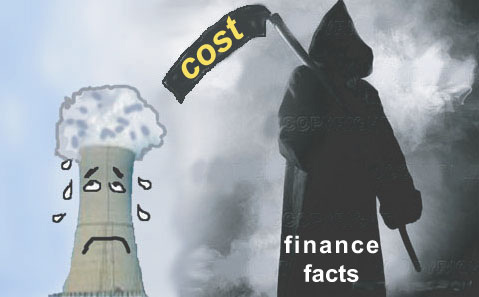
Anti-nuclear campaigners are gathering forces against what they say is a
“repeated narrative” that nuclear energy is viable and helps create
more jobs. PAWB (People Against Wylfa B), CND Cymru, Nuclear Free Local
Authorities, Cymdeithas yr Iaith, CADNO, the Welsh Anti-Nuclear Alliance
and Beyond Nuclear have organised a conference in Caernarfon to air their
views.
North Dot Wales 20th July 2022
Greencoat Capital Investing might be turning yellow – swallowing the climate lies of the nuclear industry.
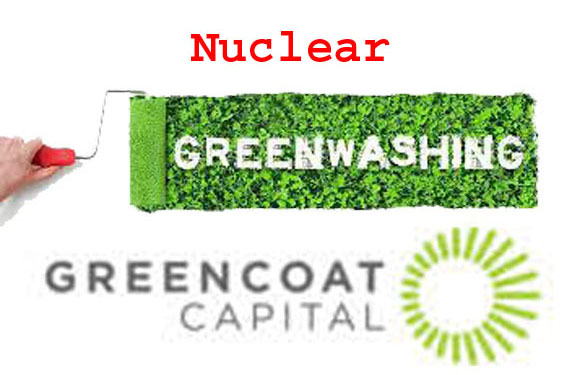
One of Europe’s largest renewable energy investors is considering
creating a nuclear investment fund to take a stake in three of EDF’s
nuclear plants, it has been reported. Greencoat Capital, which currently
has more than £6bn under management and plans to grow over the coming
years, is considering taking a stake in the proposed Sizewell C plant in
Suffolk, according to The Times. The fund could also be invested in the
ongoing Hinkley Point C build in Somerset and the existing Sizewell B
plant.
Construction News 18th July 2022 https://www.constructionnews.co.uk/buildings/sizewell-c-major-fund-mulls-investment-18-07-2022/
Greenpeace radiation investigation at Chornobyl to assess accuracy of IAEA data.

During the Russian occupation of the Chornobyl region, Greenpeace experts warned that this could lead to increased radioactive contamination.
But the IAEA gave an “all-clear” at the end of April. The nuclear agency has a mandate to promote nuclear power.
Greenpeace Germany will present the results of the Chornobyl radiation research, in English, at a press conference in Kyiv on July 20 at 9:00 am CEST (ZOOM Link: https://t1p.de/dzbks).
Greenpeace https://www.miragenews.com/greenpeace-radiation-investigation-at-chornobyl-820855/ 18 July 22,
Chornobyl, Ukraine – Near the ruins of the Chornobyl nuclear power plant, an international team of radiation experts led by Greenpeace Germany is examining abandoned Russian positions for radioactive contamination. Trenches and dugouts were built by Russian soldiers during their occupation of the Chornobyl site in March. About 600 soldiers were deployed there. The research project is being conducted with the approval of the Ukrainian government and in cooperation with scientists from the State Agency of Ukraine on the Exclusion Zone Management (SAUEZM).
For the first time since the beginning of the Russian invasion, independent measurements will be taken and the April 28 statement of the International Atomic Energy Agency (IAEA) will be assessed. According to the IAEA, while there was increased radiation the levels did not pose a great danger to the environment or people. The IAEA’s deputy director is Mikhail Chudakov, a long-time employee of the Russian nuclear company Rosatom.[1]
Shaun Burnie, a nuclear expert from Greenpeace Germany, on site in Chornobyl, said:
“We want to know what really happened on the ground. The IAEA’s information so far is insufficient. The Ukrainian authorities are enabling the Greenpeace Germany research team to gather independent information about radiation safety in the region. This includes investigating the radioactive contamination that deposited in the Exclusion Zone when the Chornobyl reactor exploded in 1986. Between seven and nine tonnes of nuclear fuel were pulverized and ejected into the atmosphere in the 1986 explosion.”
During the Russian occupation of the Chornobyl region, Greenpeace experts warned that this could lead to increased radioactive contamination. But the IAEA gave an “all-clear” at the end of April. The nuclear agency has a mandate to promote nuclear power.[2]
“While the European Commission actively supports nuclear power by including it in its taxonomy. It’s more important than ever to investigate the environmental impact of Chornobyl, the world’s worst nuclear disaster,” said Burnie.
Greenpeace Germany will present the results of the Chornobyl radiation research, in English, at a press conference in Kyiv on July 20 at 9:00 am CEST (ZOOM Link: https://t1p.de/dzbks).
Public Release. This material from the originating organization/author(s) may be of a point-in-time nature, edited for clarity, style and length. The views and opinions expressed are those of the author(s).View in full here.
4 French nuclear reactors authorized to discharge hotter water during heatwave, as 29 others remain offline
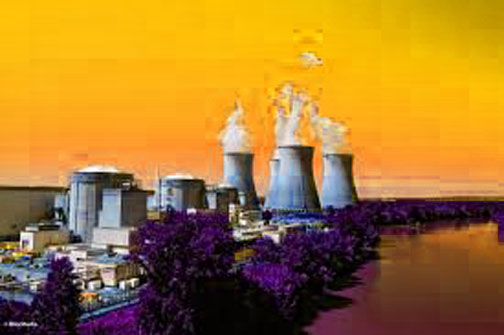
Heat wave: a fourth nuclear power plant authorized to release hotter water than normal to continue operating. Twenty-nine French reactors out of 56 are currently unavailable for various reasons. Hence these exemptions.
A temporary derogation from environmental rules has been granted to a new nuclear power plant, that of Bugey, in Ain, to allow it to continue to operate “at a minimum level of power” during the heat wave, according to a decree published on Sunday July 17. in the Official Journal .
“The reactors of the Bugey nuclear power plant discharging effluents into the Rhône may, during the fixed period (…), continue to practice these discharges as long as the heating after mixing of the effluents into the Rhône (.. .) does not exceed 3 ° C in average daily value” , specifies the decree of Sunday.
On Friday, a derogation had been granted to the nuclear power plants of Golfech (Tarn-et-Garonne), Blayais (Gironde) and Saint-Alban (Isère). For these three power stations and that of Bugey, the
authorization was granted until July 24th.
And this, while 29 French reactors out of 56 are currently unavailable for various reasons. Since
2006, each plant has had its own regulatory water discharge temperature limits that must not be exceeded. The power plants indeed pump water to cool the reactors, before rejecting it. The derogation device, which aims to guarantee the proper functioning of the electricity network, had so far only been used once, in 2018 for the Golfech power plant, for a period of 36 hours.
France Info 17th July 2022
Swiss nuclear power plant reduces output to protect fish during heatwave

One of Switzerland’s nuclear power stations has temporarily scaled back operations to avoid raising the temperature of its feeder river to levels that are dangerous for fish.
https://www.swissinfo.ch/eng/sci-tech/swiss-nuclear-power-plant-reduces-output-to-protect-fish-during-heatwave/47761010 , July 18, 2022
Beznau is Switzerland’s oldest nuclear plant and comprises two stations built on a small artificial island in the river Aare in the north of the country. Unlike two newer stations, Beznau was not built with a cooling tower but relies on water from the Aare to control temperatures.
Producing some 6,000 gigawatt hours of electricity per year typically raises the temperature of downstream water by between 0.7 and one degree Celsius.
Switzerland is experiencing a prolonged summer heatwave that has already raised the temperature of rivers, including the Aare. Freshwater fish species living in the river cannot tolerate water temperatures much above 25 degrees Celsius.
As a result, Beznau operator Axpo has been forced to reduce output to meet its legal environmental commitments.
The plant would be forced to shut down completely if water temperatures rise above 25 degrees for three consecutive days, reports Swiss public broadcaster SRFExternal link.
Switzerland is already facing up to the impact of rising energy costs and potential shortagesExternal link in the coming months, driven in part by meteorological conditions but also disruptions caused by the Ukraine war.
But this danger is expected to strike in the winter months when Switzerland’s hydro-power dams are less productive. At this time of year, the river temperature issue will be less of a problem.
Switzerland produces around 30% of its electricity from its three nuclear power plants. The government decided in 2011 to phase out nuclear power following the Fukushima disaster in Japan.
The initial idea was to stop nuclear power production by 2034. The Mühleberg plant is currently being dismantledExternal link.
Uncertainties about securing long-term power supplies led to the fixed deadline of 2034 being scrapped and replaced with a more vague commitment to only keeping the remaining power stations running as long as it is safe.
Nationalisation of EDF seen as ‘inevitable’ to carry out France’s nuclear plans
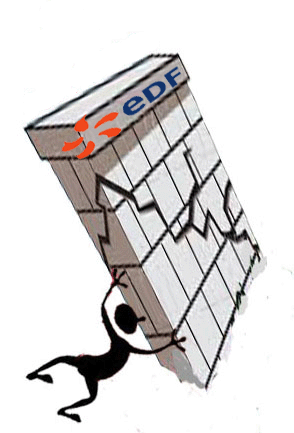
EDF’s market capitalisation has collapsed in the past few years, going from €150 billion in 2007 to less than €40 billion today.
A debt estimated at more than €43 billion, fuelled by delays in constructing its new fourth-generation reactors, also puts the company in a difficult spot.
https://www.euractiv.com/section/energy/news/nationalisation-of-edf-seen-as-inevitable-to-carry-out-frances-nuclear-plans/ By Paul Messad | EURACTIV.fr | translated by Daniel Eck 18 July 22
The government’s decision to nationalise Electricité de France, announced on 6 July, provoked mixed reactions in the French Parliament.
Yet, according to Jean-Michel Gauthier, director of the Energy & Finance Chair at HEC Paris, the decision was “inevitable” because of the regulatory constraints faced by the company.
Under French law, EDF must sell part of its nuclear electricity to the competition at a set price (€42/MWh) and buy it back on the market like any other supplier.
But because of the pandemic and the war in Ukraine, the current market price stands above €200/MWh, according to France’s electricity transmission system operator RTE.
This means EDF is selling at a loss to feed the competition, something unions and many observers have decried as a “plundering” of the French company.
On top of that, the state has also asked EDF to dish out €8 billion for the so-called “tariff shield” to limit gas prices in times of crisis.
EDF’s market capitalisation has collapsed in the past few years, going from €150 billion in 2007 to less than €40 billion today.
A debt estimated at more than €43 billion, fuelled by delays in constructing its new fourth-generation reactors, also puts the company in a difficult spot.
But according to Professor Gauthier, the company’s debt “is not at all the subject”. It is even “irrelevant, with regard to the major subjects of energy and industrial policy in France,” he told EURACTIV.
According to Gauthier, the main challenges lie in the company’s vast nuclear programme. First, EDF will have to spend more than €50 billion by 2030 to extend the life of existing nuclear power plants.
As announced by President Emmanuel Macron in February, the French energy giant must also adopt measures to build six new fourth-generation EPR-type reactors. According to the latest estimates, that effort will cost €50-60 billion.
Going under full state ownership will offer EDF a debt guarantee, as well as lower rates to raise additional debt, Gauthier says.
More worrying, according to him, is the number of key points the state has dropped from its nuclear industrial policy in recent years.
“These are the major issues: what is to be done with the EPR 2, the third generation reactors, the ASTRID project and the small modular reactors (SMR),” he said.
The professor also questioned the state’s means to meet its pledged energy ambitions.
Renewables in all this?
However, these multi-billion euro projects only deal with nuclear without addressing EDF’s capacity to deploy renewable energies – another major priority of the government.
“Today, given the bubble around green finance, there is no reason for the state to own solar or wind power capacity,” explained Gauthier.
“We can therefore imagine [that we] go back to square one […], i.e. that the State puts the portfolio of EDF Renewables, a subsidiary wholly owned by EDF, on the market,” he added. This project could revive divisions between the state and the unions if green-lighted.
For the time being, it is necessary “to keep a single EDF”, the company’s CEO Jean-Bernard Lévy told broadcaster BFM TV on Monday (11 July).
EDF without renewables would be a dark “utopia”, he also said.
When it comes to energy-related decisions, the state must be the “only pilot” on board and the “only decision-maker”, Gauthier concluded.
The lingering horror of thorium radioactive poisoning in West Chicago

On the one hand, the story of West Chicago and thorium is one of triumph: a small town overcomes the odds and makes a big corporation clean up its radioactive waste. On the other hand, thorium still haunts some residents, especially those living with illness or deaths in the family that they suspect are related.
Are West Chicago’s Radiation Worries Over?, BELT Magazine, By Liuan Huska, 13 July 22,
Sandra Arzola was relaxing in her West Chicago home one weekend in 1995, when she heard a knock at the door. Recently married, she shared the gray duplex with her husband, mom and sister, and family members were constantly coming and going. But when Sandra answered the door that day, what she learned would change how she looked at her home and suburban community forever.
At the door was a woman representing Envirocon, an environmental cleanup company. There was thorium on the family’s property, the woman said, and if it was OK with them, workers were coming to remove it. It was the first time Sandra had heard of thorium “It took me by left field,” she said. “But [the representative] made it sound like everything was going to be fine.”
Unknowingly, the Arzolas had bought their way into what the Chicago Tribune in 1979 called “the radioactive capital of the Midwest.” Not long after they purchased the property, the U.S. Environmental Protection Agency designated it a Superfund site because of the hazardous waste in their yard.
The source of the danger was the old factory one block to the north of the Arzola home, which Jesse Arzola frequently went past while walking their dogs. From 1932 to 1973, the factory was the largest producer of rare earth and radioactive thorium compounds in the world. It started out producing lamps and later supplied thorium for the federal government’s atomic bomb development. But perhaps the factory’s most lasting legacy, at least in West Chicago, is the harmful radioactive waste that was dumped in ponds, piled at the factory and buried around homes and sidewalks across town.
Residents raised health concerns as early as the 1940s about the toxic material, but these were regularly dismissed by the factory, last owned by the Kerr-McGee Chemical Corporation. Comprehensive environmental protection rules weren’t put in place until the early 1970s, leaving the factory largely free to dispose of its nuclear waste for decades.
It has taken just as long for the company and government to clean up the radioactive waste. As of 2015, the radioactive sites under federal jurisdiction near the factory have been cleaned to EPA standards. There are no remaining health risks from the land, according to government officials.
But below the factory, the groundwater is still polluted with a range of toxins – particularly uranium – that exceed protection standards. The Illinois Emergency Management Agency, which has jurisdiction over the site, expects remediation to begin this fall. ……………………..
Prolonged or high levels of radiation exposure can damage genetic material in cells and cause cancer and other diseases later on, especially for children, who are more sensitive to radiation. Only two public health studies, published in the early 1990s, have been conducted in West Chicago. Both found elevated cancer rates in the 60185 zip code, which includes the neighborhood around the factory……………………………
The challenges facing West Chicago residents today began ninety years ago, when Charles R. Lindsay moved his lamp factory from Chicago to what was then an undeveloped little town with multiple rail connections. The factory, now officially known as the Rare Earths Facility, took monazite ore and used powerful acids to extract minerals to make gas lanterns, which burned thorium nitrate to emit an incandescent glow. During World War II, it also supplied thorium to the federal government to develop the atomic bombs that were later dropped on Nagasaki and Hiroshima, Japan.
During its four decades of operation, the Rare Earths Facility processed up to one hundred and forty-one thousand tons of monazite. The liquid waste from the extraction process was dumped into unlined ponds around the factory, seeping into the surrounding water table. Solid waste, a black, sand-like material known as thorium tailings, piled up on site. Old-timers share stories of sneaking into the factory grounds and playing on “Mount Thorium.” When the pile got too big, the waste was trucked down the road to a new pile in Reed Keppler Park.
Facing mounting piles of toxic waste, Lindsay came up with another solution: offer the waste to residents for landscaping. From the 1930s through the 1950s, radioactive thorium tailings were distributed across town, mixed with concrete to pour foundations, mixed with topsoil for gardens and spilled along roadways. The company continued to do this as the risks of radiation exposure became widely known starting in the late 1940s through its effects on Japanese atomic bomb survivors.
Soon after the factory moved to West Chicago, people started complaining. In 1941, nearby residents sued Lindsay Light for releasing airborne hydrofluoric acid that killed trees and shrubs nearby.
The federal government did not begin regulating nuclear materials until 1954. Starting in 1957 the company received repeated citations for safety violations, including failing to fence off radioactive storage areas, exposing workers to radiation levels above standards and improper waste disposal.
As the environmental movement gained steam through the 1960s, growing public pressure pushed Congress to create the Environmental Protection Agency and pass the Clean Air Act of 1970 and Clean Water Act of 1972. That resulted in sweeping new regulations – and obligations to the American public – for companies like Kerr-McGee, which had gotten used to operating with limited oversight…………………………….
The EPA denied the company’s request for an operating permit and the factory shuttered in 1973. It was cheaper to cease operations than follow the new rules. By 1980, Kerr-McGee had started the process of closing down the West Chicago facility for good. Pressure from residents and the city pushed the company to begin cleanup on 119 contaminated residential properties.
Still, Kerr-McGee had another plan that worried residents: to permanently store thirteen million cubic feet of radioactive waste at the factory site in a four-story, twenty-seven-acre, clay-covered cell. Concerned residents formed an organization, the Thorium Action Group, to fight the company’s proposal. This spawned more than a decade of legal battles between residents, the city of West Chicago, and state of Illinois — who wanted the thorium out of town — and the company and the federal Nuclear Regulatory Commission, who insisted the waste could safely be stored in this densely populated neighborhood of West Chicago…………………
Moving the thorium waste out of town would take over two decades to complete. In the meantime, there was still the problem of radioactive tailings embedded around the neighborhood…………………….
The Arzolas’ experience is far from rare. Realtors in West Chicago have operated with a “don’t ask, don’t tell” policy, said longtime realtor and former West Chicago resident Dan Czuba. Unlike for radon or lead, realtors never received directives from the state or any licensing board to disclose other harmful thorium byproducts. People have had to do their own homework and decide whether or not a home was a risk. “To this day,” Czuba said, “I still don’t know that there was an official statement of, ‘Thorium will hurt you.’”…………………………………..
Throughout the decades, various groups have tried to get the word out about thorium. The Thorium Action Group was active through the early 2000s. Once the EPA got involved and Kerr-McGee agreed to move the waste out, the group dissipated………
The lack of easily accessible information surrounding the contamination and cleanups has left some residents with the nagging worry that there may be other hidden pockets of radiation around town……….
One house to the west and across the railroad from the Arzolas, Erika Bartlett grew up playing along the tracks and under her yard’s sprawling old oak trees. When she was diagnosed with leukemia in 2012, at age thirty-four, a friend asked if there was anything she could have been exposed to.
“Wait a minute, I actually was,” Bartlett told her friend. She thought back to her high school years, when the oak trees, swingset and above-ground pool at her house were removed during the radiation remediation. Bartlett realized she had spent her childhood, starting from age four, in a neighborhood embedded with nuclear waste. She wondered how many others living near the factory had similar health problems. That started her on a yearslong personal investigation into the town’s thorium legacy.
Between 2012 and 2016, as Bartlett was undergoing cancer treatment, she knocked on doors in the neighborhoods around the factory, an area covering about one square mile. She found over 200 cases of cancers and other illnesses that could stem from radiation exposure, including birth defects, Hashimoto’s and aplastic anemia, the illness that killed the pioneering radioactivity researcher Marie Curie in 1934.
“When I first started, I didn’t think I’d find anything,” Bartlett said. “But block after block, it seemed like a bigger deal than I thought.”
The EPA estimated that, before the waste was removed, radiation levels in some residential neighborhoods in West Chicago increased lifetime cancer risks up to seventy times what is acceptable……
The only official health studies into the impacts on people living near the factory were conducted over three decades ago, by the Illinois Department of Public Health. Among residents in the 60185 zip code, studies in 1990 and 1991 found elevated rates of cancer, including melanomas and lung, colorectal and breast cancers. By grouping exposed and unexposed people together, however, researchers said more differences may have been masked……………………………………….
On the one hand, the story of West Chicago and thorium is one of triumph: a small town overcomes the odds and makes a big corporation clean up its radioactive waste. On the other hand, thorium still haunts some residents, especially those living with illness or deaths in the family that they suspect are related………………… https://beltmag.com/are-west-chicagos-radiation-worries-over/
Japan halts shipment of black rockfish caught off Fukushima over radiation
Reuters https://www.reuters.com/world/asia-pacific/japan-halts-shipment-black-rockfish-caught-off-fukushima-over-radiation-2022-02-08/
OKYO, Feb 8 (Reuters) – Japan’s health ministry said on Tuesday it had ordered the suspension of shipments of black rockfish caught off Fukushima prefecture after radiation exceeding an upper limit was detected in a catch late last month.
The development comes on the heels of an announcement by Taiwan that it would relax a ban on food imports from Japan put in place after the 2011 Fukushima nuclear disaster.
The suspension means the targetted fish would not be shipped, regardless of the destination, a ministry official said.
Earthling: Was Obama right about Russia-Ukraine?
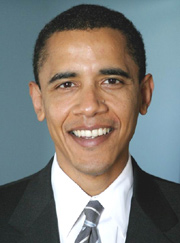
NonZero Newsletter, 18 July 22, If President Obama’s successors had stuck with his policy toward Ukraine, would there be a war there now?
That question is raised by a 2015 New York Times article that Glenn Greenwald unearthed this week. And, though the answer, as with other great historical what-ifs, is “We’ll never know for sure,” you could make a case for “Probably not.” In any event, pondering the question has benefits—such as reminding us how constricted discourse about war becomes once a war is underway.
The Times article was about Obama’s refusal, in the face of bipartisan pressure, to send arms to Ukraine. Obama, the Times reported, “has told aides and visitors that arming the Ukrainians would encourage the notion that they could actually defeat the far more powerful Russians, and so it would potentially draw a more forceful response from Moscow.”
An anonymous source paraphrased Obama as asking questions like, “Okay, what happens if we send in equipment – do we have to send in trainers?” And, “What if it ends up in the hands of thugs? What if Putin escalates?” In the absence of satisfactory answers, Obama confined aid to things like helmets and night vision goggles.
After he left office, Washington reversed course and sent lethal military aid to Ukraine—billions of dollars worth. And, to answer Obama’s questions: Yes, that turned out to involve sending trainers to Ukraine—as well as conducting NATO-Ukraine military exercises on Russia’s doorstep; and yes, Putin escalated. This doesn’t mean that the former caused the latter, but the sequence of events leaves that possibility quite open.
By early fall of 2021, some American observers were warning that the kinds of fears Obama expressed were being born out. Ted Galen Carpenter of the CATO institute noted that Biden had continued and in some ways accelerated the flow of weapons started under Trump, including weapons that “Russia considers especially destabilizing.” Galen said Ukraine had become “a NATO member in all but name” and called this policy “arrogant, unwise, and potentially very dangerous.”
In Putin’s famously intense speech on February 21, a few days before the invasion, the flow of western weapons to Ukraine, and Ukraine’s increasingly close relationship to NATO, were central themes. ………………………….
given the power wielded within the Ukrainian military by its famously zealous Azov battalion, it’s certainly possible that assertiveness on the part of American-equipped Azov officers was a factor.
In any event, these are all good questions. So it’s unfortunate that, since the invasion, they’ve become virtually off limits. If you suggest that things like arming Ukraine or encouraging Ukraine to join NATO raised the chances of war, you’re accused of “reciting Putin talking points” or “justifying” Putin’s invasion (even if you explicitly and repeatedly say that the invasion was wrong and unjustified)……………………….. https://nonzero.substack.com/p/earthling-was-obama-right-about-russia?utm_medium=email
Fukushima bosses ordered to pay billions for failing to prevent nuclear disaster
The Chemical Engineer, by Adam Duckett, 18 July 22,
FOUR former bosses of the Fukushima Daiichi nuclear plant have been ordered by a Tokyo court to pay ¥13trn yen (US$94bn) in damages for failing to prevent disaster at the site in 2011.
The lawsuit was filed by shareholders in 2012 and is the first to find former executives of utility company Tepco liable for compensation. Kyodo News reports that the presiding judge said the utility’s countermeasures for the tsunami “fundamentally lacked safety awareness and a sense of responsibility,” ruling that the executives failed to perform their duties.
A huge earthquake knocked out power supply to the plant and triggered a tsunami thought to measure as high as 15 m. This easily washed over the 5.5 m seawalls designed to protect the plant, flooding key infrastructure, including the backup diesel generators that had kicked in to power the cooling of the reactors. Without this power, the three units operating at the plant melted down, the reactor pressure vessels were breached, and radioactive material was released into the environment.
The trial focused on whether the management had taken appropriate decisions on how to manage the risk of tsunami after a Tepco unit estimated in 2008 that a tsunami measuring up to 15.7 m could strike the plant based on a Government analysis published in 2002, Kyodo News reports. The former executives’ lawyers argued that the assessment lacked reliability. The court disagreed and said the Government’s assessment obliged the company to take measures. It ruled that the decision not to act was “extremely irrational and unforgivable”.
The four executives found guilty include former Chairman Tsunehisa Katsumata, former President Masataka Shimizu, and former vice presidents Sakae Muto and Ichiro Takekuro. The sum they have been ordered to pay is well beyond their personal wealth, but they are expected to pay as much as their assets allow. A fifth defendant, former Managing Director Akio Komori, was found not liable for damages……………. more https://www.thechemicalengineer.com/news/fukushima-bosses-ordered-to-pay-billions-for-failing-to-prevent-nuclear-disaster/
1 This Month



19 November – Webinar – The Reality of Reprocessing
Time: 11:00 AM Pacific Time (US & Canada) / 2:00 PM Eastern / 7:00 PM UK / 8:00 PM CET
Register for the Zoom Event Here



Shut down the radiation-damaged Heysham nuclear reactors now
To see nuclear-related stories in greater depth and intensity – go to https://nuclearinformation.wordpress.com

Say No to NASA’s Reckless Nuclear Reactor on the Moon
Say No to NASA’s Reckless Nuclear Reactor on the Moon
-
Archives
- November 2026 (43)
- October 2026 (302)
- September 2026 (339)
- August 2026 (330)
- July 2026 (355)
- June 2026 (287)
- May 2026 (306)
- April 2026 (356)
- March 2026 (251)
- February 2026 (267)
- January 2026 (308)
- December 2025 (358)
-
Categories
- 1
- 1 NUCLEAR ISSUES
- business and costs
- climate change
- culture and arts
- ENERGY
- environment
- health
- history
- indigenous issues
- Legal
- marketing of nuclear
- media
- opposition to nuclear
- PERSONAL STORIES
- politics
- politics international
- Religion and ethics
- safety
- secrets,lies and civil liberties
- spinbuster
- technology
- Uranium
- wastes
- weapons and war
- Women
- 2 WORLD
- ACTION
- AFRICA
- Atrocities
- AUSTRALIA
- Christina's notes
- Christina's themes
- culture and arts
- Events
- Fuk 2022
- Fuk 2023
- Fukushima 2017
- Fukushima 2018
- fukushima 2019
- Fukushima 2020
- Fukushima 2021
- general
- global warming
- Humour (God we need it)
- Nuclear
- RARE EARTHS
- Reference
- resources – print
- Resources -audiovicual
- Weekly Newsletter
- World
- World Nuclear
- YouTube
-
RSS
Entries RSS
Comments RSS

