Ukraine facing widespread power cuts after generating capacity reduced to ‘zero’ by Russian attacks
Power to be cut for as much as 16 hours a day across most of Ukraine while repairs are carried out
Guardian, Agence France-Presse, 9 Nov 25
Power will be cut for between eight and 16 hours across most regions of Ukraine on Sunday, state transmission system operator Ukrenergo has said, after Russian attacks targeting energy infrastructure reduced the country’s generating capacity to “zero”.
Moscow, which has escalated attacks on Ukraine’s infrastructure in recent months, launched hundreds of drones at energy facilities across the country from Friday into Saturday, which killed at least seven people, according to Ukrainian officials.
The Russian attacks have disrupted electricity, heat and water supplies in several Ukrainian cities, with state power firm Centerenergo warning generating capacity “is down to zero”.
Ukrenergo has said repairs were carried out and energy sourcing diverted.
While the situation had somewhat stabilised, regions including Kyiv, Dnipropetrovsk, Donetsk, Kharkiv, Poltava, Chernihiv and Sumy could continue to experience regular power cuts, Ukraine’s energy minister said on Saturday night.
“The enemy inflicted a massive strike with ballistic missiles, which are extremely difficult to shoot down. It is hard to recall such a number of direct strikes on energy facilities since the beginning of the invasion,” Svitlana Grynchuk told local broadcaster United News.
Russian drones had targeted two nuclear power substations deep in western Ukraine, Kyiv’s foreign minister Andrii Sybiha said, calling on the UN’s nuclear watchdog to respond.
The substations powered the Khmelnytskyi and Rivne nuclear plants, about 120km and 95km (75 miles and 59 miles) respectively from Lutsk, he said………………………………
Ukraine has in turn stepped up strikes on Russian oil depots and refineries in recent months, seeking to cut off Moscow’s vital energy exports and trigger fuel shortages across the country.
Early on Sunday, Russia’s air defence units destroyed 44 Ukrainian drones, RIA news agency reported, citing daily data from the Russian defence ministry. https://www.theguardian.com/world/2025/nov/09/ukraine-facing-widespread-power-cuts-after-generating-capacity-reduced-to-zero-by-russian-attacks
US conducts its Intercontinental Ballistic Missile (ICBM) test.

ICBMs have been sold to the public as a guarantor of security, when in fact, they are an imminent threat.
Maintaining these weapons is a huge waste of resources.
Influential right wing think tanks like The Heritage Foundation have come out in opposition to the Comprehensive Test Ban Treaty, and have directly called for the U.S. to prepare to resume explosive nuclear weapons testing
by beyondnuclearinternational, https://beyondnuclearinternational.org/2025/11/09/us-conducts-its-icbm-test/
Although not carrying a nuclear warhead, the test is still provocative, say Defuse Nuclear War and Tri-Valley CAREs
In the early morning hours of November 5th, Vandenberg Space Force Base launched a Minuteman III missile, the current intercontinental ballistic missile (ICBM) ground-based nuclear warhead delivery system in roughly 400 underground silos across five states that would target US adversaries in a full-scale nuclear war.
This ICBM test, which landed roughly 30 minutes later at Kwajalein Atoll in the Marshall Islands, is one of several that occur at Vandenburg every year — as they have for many decades. According to the Space Force Press Release, today’s test “validates” the “reliability, operational readiness, and accuracy of the ICBM system.” While these tests are launched without the nuclear warhead, the purpose is to practice nuclear war fighting and these tests are just as provocative to US adversaries as their nuclear-capable missile tests are to us.
This launch has an increased gravitas, as it comes hardly a week after the President used his social media platform to make a confusingly provocative announcement that, “Because of other countries’ testing programs, I have instructed the Department of War to start testing our nuclear weapons on an equal basis.”
Exactly what was meant by the President’s vague statement has been debated in the days since. The President could not have been referencing other countries conducting explosive nuclear tests, because no nation except North Korea has conducted an explosive nuclear test this century.
The reference to “equal basis” with other “countries testing programs” has been thought to be in reference to nuclear weapon delivery system tests, which have been conducted by both Russia and China. But as today’s launch displays, these delivery system tests are nothing new, and the United States has long tested all of the delivery vehicles in its triad, including today’s ICBM test.
If the US were to resume explosive nuclear testing, Russia and others have already signaled they will follow. This reckless move would break a 30-year taboo that has kept the world safer. If the US resumes testing, it won’t just poison the air: it could destroy decades of progress toward preventing nuclear war.
Resuming explosive nuclear testing at this time would solely be a political decision, and it would be a very bad one. The human and environmental toll would be immense: radiation poisoning that seeps into lungs, water, and soil; children born with preventable cancers; ecosystems rendered unlivable. Testing again would repeat history’s worst mistakes on purpose.
US resumption of explosive nuclear testing would open the door to all of the other nuclear powered states conducting their own tests for both their existing stockpile warhead designs, and those that are in development, potentially opening the door to decades of testing and associated releases of radiation into the environment.
Influential right wing think tanks like The Heritage Foundation have come out in opposition to the Comprehensive Test Ban Treaty, and have directly called for the U.S. to prepare to resume explosive nuclear weapons testing at the Nevada National Security Site (NNSS). For example, in its January 2025 report, America Must Prepare to Test Nuclear Weapons, it claims that testing is necessary for the global image of America and would be a display of resolve.
Additionally, Project 2025 calls for the United States to “Reject ratification of the Comprehensive Test Ban Treaty and indicate a willingness to conduct nuclear tests in response to adversary nuclear developments if necessary. This will require that the National Nuclear Security Administration be directed to move to immediate test readiness…”
Officials from the Lawrence Livermore and Los Alamos National Labs who manage the existing nuclear weapons stockpile have expressed that there’s no military or technical justification for explosive nuclear testing at this time. The billions spent on the Labs’ supercomputer modeling, National Ignition Facility laser testing and multiple other simulation systems allow them to ensure that the stockpile will work as designed in a “use scenario.”
The US conducted 100 atmospheric and 828 underground explosive nuclear tests at NNSS between 1951 and 1992. The agency currently needs 36 months to get “ready” for a full-scale, underground, explosive nuclear test at NNSS.
In response to the President’s sudden announcement, on October 30th Congresswoman Dina Titus (NV-01) introduced the Renewing Efforts to Suspend Testing and Reinforce Arms Control Initiatives Now (RESTRAIN) Act to prohibit the United States from conducting explosive testing of nuclear weapons.
In her press release announcing the RESTRAIN Act, Representative Titus states, “Donald Trump has put his own ego and authoritarian ambitions above the health and safety of Nevadans. His announcement to resume nuclear testing in the United States goes against the arms control and nonproliferation treaties that the U.S. has spearheaded since the end of the Cold War, and will trigger new tests by Russia and China, reigniting an international arms race. It also puts Nevadans back in the crosshairs of toxic radiation and environmental destruction. With just 97 days until the only arms control agreement between the U.S. and Russia expires, now should be the time to negotiate further arms-control agreements, not create mushroom clouds in the Nevada desert.”
The RESTRAIN Act amends U.S. Code to insert a prohibition of explosive nuclear testing while simultaneously preventing any funding from going toward the Trump Administration’s effort to conduct explosive nuclear tests.
Emma Claire Foley with the Defuse Nuclear War coalition said of today’s launch, “ICBM tests make war more likely and damage the place they supposedly protect. Scheduling this latest test on Election Day is an attempt to avoid public attention on a weapons system that experts agree makes the U.S. less safe.” She added, “ICBMs are a threat to the life and health of every single person in the United States and around the world. We ask that the upcoming ICBM test, all future scheduled tests, be canceled, and that the U.S. hold to its decades-long record of not conducting nuclear tests.”
ICBMs have been sold to the public as a guarantor of security, when in fact, they are an imminent threat. In the words of the late Daniel Ellsberg, author of The Doomsday Machine, these weapons make “any conflict enormously more dangerous than it has to be” by increasing “the danger that any armed conflict between major nuclear states can escalate to all-out war.” ICBMs are on hair-trigger alert and, once launched, cannot be recalled, virtually guaranteeing a strike on the country that launches them. As long as ICBMs exist, we live with the constant risk that misinterpreted intelligence, human error, or a single rash decision could end civilization as we know it within an hour.
Maintaining these weapons is a huge waste of resources. The U.S. has committed to spending hundreds of billions of dollars to “modernize” its ICBM force, which in practice means replacing the Minuteman III system that was tested today with an entirely new missile system – the Sentinel ICBM, and a new nuclear warhead design.
Thus far, the Sentinel ICBM program is now an astonishing 81% over budget and years behind schedule, not including the expense for its new W-87-1 nuclear warhead development being done at Lawrence Livermore National Laboratory or the new plutonium pits that will be built at Los Alamos National Laboratory. Yet the U.S. Secretary of Defense has certified, through a “comprehensive, unbiased review” not shared with the public, that the program will proceed.
Scott Yundt, Executive Director of Livermore-based Tri-Valley CAREs criticized the launch from Vandenburg, saying, “Test launches like today’s damage human communities and ecosystems. The Marshall Islands, already forced to bear the overwhelming environmental costs of U.S. nuclear weapons testing, are still used as a target test area.”
Yundt went on to say “When tensions among nuclear-armed states are high, each test launch carries an added risk. The U.S. military has acknowledged as much by pausing these launches at high points of tension in the war in Ukraine. The risk of nuclear escalation remains too high to introduce the possibility of misinterpretation of a test into the mix.”
“ICBM tests are damaging and provocative acts masquerading as business as usual. We condemn all wasteful, destructive tests that keep the world at the edge of nuclear destruction,” Yundt concluded.
TriValley CAREs watchdogs the nuclear weapons complex and its Lawrence Livermore Lab, one of two locations that develops all US nuclear bombs and warheads. Defuse Nuclear War is a coalition of more than 200 organizations and organizers dedicated to reducing the risk of nuclear war.
Nuclear power will get the most Energy Department loans, Chris Wright says

Mon, Nov 10 2025, Spencer Kimball, CNBC
Key Points
- Nuclear power plants will receive the bulk of the money from the Energy Department’s loan office, Secretary Chris Wright said.
- The Trump administration struck a deal last month with the owners of Westinghouse to invest $80 billion to build nuclear plants across the U.S.
Nuclear power will receive most of the money from the Energy Department’s loan office as the Trump administration pushes to quickly break ground on new reactors, Secretary Chris Wright said on Monday.
“We have significant lending authority at the loan program office,” the Secretary of Energy said at a conference hosted by the American Nuclear Society in Washington D.C. “By far the biggest use of those dollars will be for nuclear power plants — to get those first plants built.”
President Trump signed an executive order in May that called for the U.S. to break ground on 10 large nuclear reactors by 2030. Alphabet, Amazon, Meta Platforms and Microsoft are investing billions of dollars to restart old nuclear plants, upgrade existing ones, and deploy new reactor technology to meet the electricity demand from artificial intelligence data centers.
Wright said he expects electricity demand from AI to attract billions of dollars in equity capital to build new nuclear capacity from “very creditworthy providers.” The Energy Department could match those private dollars by as much as four to one with low cost debt financing from the loan office, he said………..
Westinghouse deal
The Trump administration struck a deal last month with the owners of Westinghouse to invest $80 billion to build nuclear plants across the U.S. Westinghouse is owned by uranium miner Cameco and Brookfield Asset Management…………………………….
Cameco Chief Operating Officer Grant Isaac said last week that the U.S. government has a number of options available to facilitate the financing of Westinghouse reactors, including the Energy Department’s loan office.
“We’re assured that there is a lot of interest in investing this minimum $80 billion in order to begin the process,” Isaac told investors on Cameco’s third-quarter earnings call.
Under the terms of the October deal, Westinghouse could spin out as a separate, publicly-traded company with the U.S. government as a shareholder.
But Westinghouse has struggled in the past to build the AP1000 on time and on budget. It went bankrupt in 2017 from cost overruns at big nuclear projects in Georgia and South Carolina.
Two AP1000 reactors entered service at Plant Vogtle in Georgia in 2023 and 2024, years behind schedule and billions of dollars over budget. The South Carolina project was cancelled. https://www.cnbc.com/2025/11/10/nuclear-power-energy-department-chris-wright-loan-westinghouse-ai-data-center.html
Legalising the theft of Russian assets
There are, I’m afraid to say, still too many truly believers in the Russia total defeat delusion. Ukraine can still win! With what troops and, critically, what money?
With Glenn Diesen, Ian Proud. Nov 10, 2025
Following my recent article on the topic of the so-called EU reparations loan (a cheap ruse to fund the Ukrainian state for another 2-3 catastrophic years of war), I discussed the issue in more detailed with Glenn Diesen,
The more I consider this issue, the more clear it becomes that attempting to exproprirate Russian assets is a desperate measure to prevent EU Member States from giving Ukraine the money themselves, money which they do not have.
The Commission idea, should the Russian asset option continue to be blocked by Belgium, to borrow the money on international markets and then lend it to Ukraine, which can’t borrow money itself, appears similarly desperate. Who will make repayments on that loan? Becauses Ukraine won’t.
Suddenly, the EU idea of common debt becomes more worrying still. Who wants to give Kaja Kallas a blank cheque to fund proxy wars in other countries, with repayments being share among Member States?
Amid all of this, with Pokrovsk falling, Kupiansk and Siversk almost lost, the Russian army pushing into Zaporizhia, does anyone in Brussels take a step back and ask whether, in fact, it would be better to support the US in leveraging Zelensky to settle?
There are, I’m afraid to say, still too many truly believers in the Russia total defeat delusion. Ukraine can still win! With what troops and, critically, what money?
The dark side of Zelenskyy’s rule

Opposition lawmakers and civil society activists say Ukraine’s leadership is using lawfare to intimidate opponents and silence critics.
Politico, October 31, 2025, By Jamie Dettmer
As Russia began its full-scale invasion of Ukraine nearly four years ago, Volodymyr Kudrytskyi, then head of Ukraine’s state-owned national power company Ukrenergo, was scrambling to keep the lights on.
Somehow, he succeeded and continued to do so every year, earning the respect of energy executives worldwide by ensuring the country was able to withstand Russian missile and drone strikes on its power grid and avoid catastrophic blackouts — until he was abruptly forced to resign in 2024, that is.
Kudrytskyi’s dismissal was decried by many in the energy industry and also prompted alarm in Brussels. At the time, Kudrytskyi told POLITICO he was the victim of the relentless centralization of authority that Ukrainian President Volodymyr Zelenskyy and his powerful head of office Andriy Yermak often pursue. He said he feared “corrupt individuals” would end up taking over the state-owned company.
According to his supporters, it is that kind of talk — and his refusal to remain silent — that explains why Kudrytskyi ended up in a glass-enclosed cubicle in a downtown Kyiv courtroom last week, where he was arraigned on embezzlement charges. Now, opposition lawmakers and civil society activists are up in arms, labeling this yet another example of Ukraine’s leadership using lawfare to intimidate opponents and silence critics by accusing them of corruption or of collaboration with Russia. Zelenskyy’s office declined to comment.
Others who have received the same treatment include Zelenskyy’s predecessor in office, Petro Poroshenko, who was sanctioned and arraigned on corruption charges this year — a move that could prevent him from standing in a future election. Sanctions have frequently been threatened or used against opponents, effectively freezing assets and blocking the sanctioned person from conducting any financial transactions, including using credit cards or accessing bank accounts.
Poroshenko has since accused Zelenskyy of creeping “authoritarianism,” and seeking to “remove any competitor from the political landscape.”
That may also explain why Kudrytskyi has been arraigned, according to opposition lawmaker Mykola Knyazhitskiy, who believes the use of lawfare to discredit opponents is only going to get worse as the presidential office prepares for a possible election next year in the event there’s a ceasefire. They are using the courts “to clear the field of competitors” to shape a dishonest election, he fears.
Others, including prominent Ukrainian activist and head of the Anti-Corruption Action Center Daria Kaleniuk, argue the president and his coterie are using the war to monopolize power to such a degree that it threatens the country’s democracy.
Kaleniuk was in the courtroom for Kudrytskyi’s two-hour arraignment, and echoes the former energy boss’s claim that the prosecution is “political.” According to Kaleniuk, the case doesn’t make any legal sense, and she said it all sounded “even stranger” as the prosecutor detailed the charges against Kudrytskyi: “He failed to show that he had materially benefited in any way” from an infrastructure contract that, in the end, wasn’t completed, she explained……………………………………………………………………………
for former Deputy Prime Minister Ivanna Klympush-Tsintsadze, the case “doesn’t look good from any angle — either domestically or when it comes to international partners.” The timing, she said, is unhelpful for Ukraine, as it coincides with Kyiv’s ongoing appeal for more European energy assistance ahead of what’s likely to be the war’s most perilous winter.
With Russia mounting missile and drone strikes on a far larger scale than before, Ukraine’s energy challenge is likely to be even more formidable. And unlike previous winters, Russia’s attacks have been targeting Ukraine’s drilling, storage and distribution facilities for natural gas in addition to its electrical power grid. Sixty percent of Ukrainians currently rely on natural gas to keep their homes warm.
Some Ukrainian energy executives also fear Kudrytskyi’s prosecution may be part of a preemptive scapegoating tactic to shift blame in the event that the country’s energy system can no longer withstand Russian attacks.
Citing unnamed sources, two weeks ago Ukrainian media outlet Ukrainska Pravda reported that former energy executives fear they are being lined up to be faulted for failing to do enough to boost the energy infrastructure’s resilience and harden facilities.
“They need a scapegoat now,” a foreign policy expert who has counseled the Ukrainian government told POLITICO. “There are parts of Ukraine that probably won’t have any electricity until the spring. It’s already 10 degrees Celsius in Kyiv apartments now, and the city could well have extended blackouts. People are already pissed off about this, so the president’s office needs scapegoats,” he said, speaking on condition of anonymity to discuss the matter freely.
“The opposition is going to accuse Zelenskyy of failing Ukraine, and argue he should have already had contingencies to prevent prolonged blackouts or a big freeze, they will argue,” he added……..https://www.politico.eu/article/dark-side-zelenskyy-rule-ukraine/
Hegseth Vows Wartime Footing For U.S. Weapons Production.
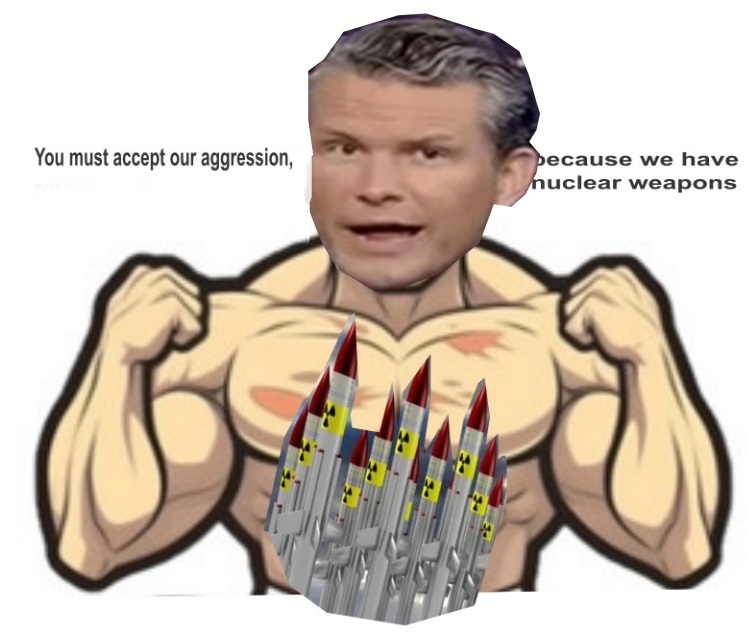
BY DREW FITZGERALD, Wall Street Journal 11/08/25
Pentagon leaders are putting their weapons suppliers in the crosshairs.
Defense Secretary Pete Hegseth said Friday that the U.S. military will shake up the way it buys weaponry, equipment and software by making purchases more quickly, and from a broader range of potential suppliers. The plan would streamline Pentagon program offices, develop incentives for new investments and potentially box out suppliers that miss deadlines.
Hegseth said decadelong weapons-development timelines have put the U.S. military at risk of falling behind rivals such as China. He said he would clear testing requirements that can slow purchasing and empower military officials to order commercial products when custom-made technology takes too long.
“We need to save the bureaucracy from itself,” Hegseth said Friday at an address to dozens of defense-industry executives in Washington.
The Trump administration aims to extend Pentagon efforts to bring into the fold more technology companies. The push has exposed ten-sions between the old-guard contractors such as Boeing and Lockheed Martin and a new crop of politically connected tech companies………………………………………………….
“We need to save the bureaucracy from itself,” Hegseth said Friday at an address to dozens of defense-industry executives in Washington.
The Trump administration aims to extend Pentagon efforts to bring into the fold more technology companies. The push has exposed ten-sions between the old-guard contractors such as Boeing and Lockheed Martin and a new crop of politically connected tech companies…………..
US Again Flies Heavy Bombers Near Venezuela’s Coast

The Senate on Thursday voted against a War Powers Resolution that would have prohibited the president from starting a war with Venezuela without congressional authorization.
The flight marked the fourth time since October 15 that the US has sent bombers into the Caribbean
by Dave DeCamp | November 6, 2025, https://news.antiwar.com/2025/11/06/us-again-flies-heavy-bombers-near-venezuelas-coast/
The US has once again flown heavy bombers over the Caribbean and near the coast of Venezuela, according to a report from Newsweek, which cited flight tracking data.
Two US Air Force B-52 Stratofortress aircraft made the provocative flight, marking the fourth time since October 15 that the US has sent bombers near Venezuela’s coast. The first flight also involved B-52s, and the second and third were conducted by B-1B Lancer bombers.
In each case, the US bombers kept their transponders on when flying near Venezuela, meaning they wanted to be seen. It’s been clear that one aspect of the US military activity in the region has been meant as a psychological operation against Venezuelan President Nicolas Maduro, as the Trump administration is hoping he decides to step down or someone in his inner circle turns on him, something that’s unlikely to happen.
The latest bomber flight comes as a US aircraft carrier, the USS Gerald Ford, is en route to the region. The Gerald Ford and its strike group will join eight US warships already deployed in the Caribbean.
According to a recent report from The New York Times, President Trump is considering several options for launching attacks on Venezuela, and he isn’t expected to decide until the Gerald Ford is in position. The report also said that the president was worried about failing or putting US troops at risk, and that he hadn’t made a final decision.
The Senate on Thursday voted against a War Powers Resolution that would have prohibited the president from starting a war with Venezuela without congressional authorization.
The US military has continued its bombing campaign against alleged drug-running boats in Latin America, which so far has involved the destruction of 17 vessels and the killing of 66 people. The Trump administration has not provided any evidence to back up its claims about what the boats are carrying and has admitted it doesn’t know the identities of the people it has been extra-judicially executing.
Ukraine accuses Russia of targeting its nuclear substations.
A large Russian missile and drone attack that overwhelmed Ukrainian air
defences overnight targeted substations that power two of Ukraine’s nuclear power plants, according to the country’s foreign minister and a person with knowledge of the barrage.
Andriy Sybiha, Ukraine’s top diplomat, said the
substations which power the Khmelnytskyi and Rivne nuclear power plants
were targeted in “well planned strikes”. “Russia is deliberately
endangering nuclear safety in Europe,” he said in a statement.
FT 9th Nov 2025, https://www.ft.com/content/474e7f27-87fb-4fb1-9899-d62778a611a4
The ‘weird’ catch to Labour’s ‘national security threat’ attack on the Scottish National Party.

LABOUR’S “national security threat” attacks on the SNP reveal how deeply embedded support for nuclear weapons has become in UK politics, a leading security academic has said.
Nick Ritchie, a professor of international security at the University of York, said that by branding opposition to Trident as a danger to the nation, ministers risk “shutting down” democratic debate on defence.
Ritchie, who last year led research
on international nuclear security for the New Zealand government, spoke to
the Sunday National after Labour ministers ramped up their rhetoric against the Scottish Government, suggesting it poses a bigger danger to UK
interests than China.
In the past week, Deputy Prime Minister David Lammy,
Scottish Secretary Douglas Alexander, and Defence Secretary John Healey
have all described the SNP administration as a “threat” to UK national
security. The Labour ministers’ arguments hinge on the SNP’s opposition to
nuclear weaponry, which Ritchie said “really reduces how you can talk and
think about national security”.
He suggested that national security was
being “conflated with unequivocal support for nuclear weapons”. RITCHIE
said the “weird thing” is that the UK Government is technically legally
bound “under the Non-Proliferation Treaty to work towards the goal of
nuclear disarmament”. He went on: “Of course, the caveat is that the
time is not right now, it’ll be far too difficult and so on and so forth.
But the premise – that nuclear disarmament is where we need to end up – is a premise that is accepted, or has been accepted, by governments of all
stripes. “So there’s a tension there between accepting that on the one
hand and then chastising the SNP for a pretty legitimate position that
nuclear weapons are a security liability. This is the position that the
majority of countries in the world have taken.”
The National 9th Nov 2025, https://www.thenational.scot/news/25606016.weird-catch-labours-national-security-threat-attack-snp/
Brian Goodall says no to next stage of submarine dismantling
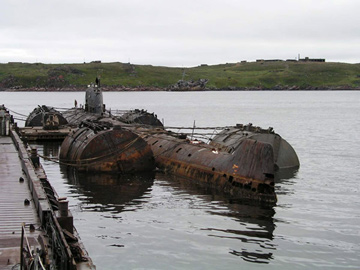
“Whichever way we deal with all seven of the subs currently at the dockyard I remain completely against any further nuclear submarines being brought to Rosyth.
By Ally McRoberts, Dunfermline Press, 8th Nov 2025
REMOVING the reactor from one of the laid-up nuclear submarines at Rosyth Dockyard is a “stage too far”.
Local SNP councillor Brian Goodall said there was “no need” to cut out the most radioactive parts left in HMS Swiftsure, which is being dismantled as part of an innovative recycling scheme.
He said there was nowhere to safely store the waste and it would also be cheaper to not go ahead – a stance that Labour MP Graeme Downie said was an “insult to the highly skilled team at Rosyth”.
Cllr Goodall said: “The next step will see Babcock cutting out the pressure vessel from the reactor compartment of the decommissioned nuclear submarine Swiftsure, in an experimental process that has never been done anywhere in the world before.
“This part of the submarine dismantling project has required Babcock to seek an increase in the limits to the levels of radioactivity they are allowed to discharge into the environment around the area.
“I believe there’s no clear justification for the cutting out of the pressure vessel, and that the removal for long term storage of the entire reactor compartment would be the more logical, proven, safer and cheaper approach to the next step in the dismantling process.”
There are currently seven old nuclear subs laid up at Rosyth and another 15 at the Devonport naval base in Plymouth.
A further five are due to come out of service.
The dismantling programme at the dockyard began in 2015 – Swiftsure is the first to be cut up – and in September yard bosses said Rosyth could become a “centre of excellence” for dealing with the UK’s old nuclear subs.
The project is doing what no-one else has attempted to do – removing the most radioactive parts left in the vessel, the reactor and steam generators, and recycling up to 90 per cent of the ship.
However, Cllr Goodall said: “The only justification ever given for cutting out the reactor pressure vessels in this way was to reduce the volume of the intermediate level radioactive waste that would be going into the UK’s deep geological radioactive waste facility.
“But such a facility does not exist and it looks like it never will, so long term, near surface storage at a nuclear licensed facility in England, like Capenhurst or Sellafield, is now the most likely outcome.
“And so there’s no need to take forward the experimental stage two part of the proposed procedure, with the increased radioactive discharges associated with it.”
He said he had made the same point at the consultation stage in 2012, before the dismantling of subs at Rosyth got the go ahead.
The councillor continued: “While I support the demonstrator project and, if it’s successful, I’d reluctantly back the on-site dismantling of the six other decommissioned submarines that are currently at Rosyth, I feel it’s not too late to rethink stage two of the process.
“Whichever way we deal with all seven of the subs currently at the dockyard I remain completely against any further nuclear submarines being brought to Rosyth.
“With homes within metres of the site and schools, shops and countless other businesses right next door, Rosyth should never have become a nuclear facility and radioactive waste store.
“We should now be doing all we can to create a long positive, clean, green future for the dockyard.”…………………https://www.dunfermlinepress.com/news/25606854.brian-goodall-says-no-next-stage-submarine-dismantling/
The US Empire Keeps Getting Creepier
Caitlin Johnstone, Nov 09, 2025, https://www.caitlinjohnst.one/p/the-us-empire-keeps-getting-creepier?utm_source=post-email-title&publication_id=82124&post_id=178388003&utm_campaign=email-post-title&isFreemail=true&r=1ise1&triedRedirect=true&utm_medium=email
Secretary of War™ Pete Hegseth said during a speech on Friday that the US is at “a 1939 moment” of “mounting urgency” in which “enemies gather, threats grow,” adding, “We are not building for peacetime. We are pivoting the Pentagon and our industrial base to a wartime footing.”
Everything’s getting darker and creepier in the shadow of the empire.
Nate Bear has a report out on his newsletter titled “The AI Drones Used In Gaza Now Surveilling American Cities” about a new company called Skydio which “in the last few years has gone from relative obscurity to quietly become a multi-billion dollar company and the largest drone manufacturer in the US.” Bear reports that Skydio now has contracts with police departments in almost every large US city to use these Gaza-tested drones for surveillance of American civilians.
Haaretz reports that Israel’s efforts to manipulate American minds back into supporting the Zionist entity include pouring millions into influence operations targeting Christian churchgoers and efforts to change responses to Palestine-related queries on popular AI services like ChatGPT. It’s crazy how you can literally just be minding your own business in your own church on a Sunday morning and then suddenly find yourself getting throat fucked by propaganda paid for by the state of Israel.
The Intercept reports that YouTube, which is owned by Google, quietly deleted more than 700 videos documenting Israel’s atrocities in Gaza in a purge of pro-Palestine human rights groups from the platform. Mass Silicon Valley deletions like this combined with the sudden influx of fake AI-generated video content polluting the information ecosystem could serve to erase and obfuscate the evidence of the Gaza holocaust for future generations.
A new report from Reuters says that last year the US had intelligence showing Israel’s own lawyers warning that the IDF’s mass atrocities in the Gaza Strip could result in war crimes charges. This is yet more evidence that the Biden administration knew it was backing a genocide the entire time, including during election season when left-leaning Americans were being told they needed to vote for then-Vice President Kamala Harris if they wanted to save Gaza.
In Italy a journalist was fired from the news agency Nova for asking an EU official if she thought Israel should be responsible for the reconstruction of Gaza in the same way she’s said Russia should have to fund the reconstruction of Ukraine. A Nova spokesperson confirmed to The Intercept that the journalist was indeed fired for asking the inconvenient question on the basis that “Russia had invaded a sovereign country unprovoked, whereas Israel was responding to an attack.”
Reuters reports that the US is preparing to establish a military base in Damascus. For years the empire waged a complex regime change operation in Syria to oust Assad, first by backing proxy forces to destroy the country and then via sanctions and US military occupation to prevent reconstruction. And it worked. The empire’s dirty war in Syria will be cited by warmongering swamp monsters for years to come as evidence that regime change interventionism can succeed if you just stick at it and do whatever evil things need to be done.
These are just a few of the disturbing stories from the last few days that I hadn’t had a chance to write about yet. This is the kind of world we are being offered by the US empire. There is nothing on the menu for us but more war, more genocide, more surveillance, more censorship, more tyranny, and more abuse.
Things are going to keep getting more and more dystopian for everyone who lives under the thumb of the imperial power structure until enough of us decide that the empire needs to end.
Experts: Full nuclear weapons tests would backfire on US

Defense News, By Stephen Losey, 6 Nov 25,
Resuming full testing of nuclear weapons — as President Donald Trump called for last week — would be unnecessary, costly, undermine nonproliferation efforts, and empower the nation’s adversaries to use their own tests as intimidation, expertstold Defense News.
Trump’s unexpected announcement, which came in the form of an Oct. 29 social media post, surprised many nuclear specialists — and sparked concerns that the UnitedStates may end its 33-year moratorium on nuclear weapons testing.
“Because of other countries testing programs, I have instructed the Department of War to start testing our Nuclear Weapons on an equal basis,” Trump posted on TruthSocial.
“That process will begin immediately,” he wrote.
When asked for comment about nuclear testing plans, the Pentagon’s public affairs office pointed to an Oct. 31 video of Defense Secretary Pete Hegseth in Malaysia, in which he said testing nuclear weapons is a responsible way to ensure the country has “the strongest, most capable nuclear arsenal so that we maintain peace through strength.”
“The president was clear: We need to have a credible nuclear deterrent,” Hegseth said, “That is the baseline of our deterrence.
“Having understanding and resuming testing is a pretty responsible — very responsible — way to do that. I think it makes nuclear conflict less likely, if you know what you have and make sure it operates properly,” he said.
Hegseth also said the military would work with the Energy Department on this testing.
Energy Secretary Chris Wright said on Fox News Nov. 2 that tests focusing on the subsystems of new nuclear weapons are already in the works, but he said the tests would not result in a full nuclear detonation………………………………………………………………………………………………………………………………………………………………..
“The U.S. had conducted over 1,000 nuclear tests,” Erath said Monday in an interview with Defense News. “We had all the data necessary to know how nuclear weapons work, to verify that U.S. nuclear weapons would work, and other people didn’t. So by stopping testing when we did, we sort of locked in an advantage in knowledge that persists to this day.”
Since then, U.S. nuclear testing has relied on computer simulations designed to predict how a weapon would respond if triggered.
Wright said on Fox News that the United States’ advanced laboratories and computing power devoted to nuclear weapons provide a major advantage over other nations.
“We can simulate incredibly accurately exactly what will happen in a nuclear explosion,” Wright said. “And we can do that because in the ’60s, ‘70s and ‘80s, we did nuclear test explosions. We had them detailedly instrumented, and we measured exactly what happened. Now we simulate what were the conditions that delivered that, and as we change bomb designs, what will they deliver?”
Hans Kristensen, director of the nuclear information project at the Federation of American Scientists, speaking Monday to Defense News, pointed to the Lawrence Livermore National Laboratory’s National Ignition Facility in California as an example of the kind of state-of-the-art facilities that the U.S. developed for safe nuclear testing purposes……………………………………………………………………………
As the government modernizes and extends the life of aging weapons in its nuclear stockpile, through efforts such as the W80-4 life extension program, it uses experiments at places such as the NIF to determine whether the weapons will still react properly if used.
Those simulation capabilities obviate the need for any testing of existing, upgraded, or new weapons,Kristensen said.
“It’s just a fundamentally different situation for the United States,” he said.
The U.S. now is modernizing its nuclear forces by creating a new gravity bomb, the B61-13, and new warheads to go on the upcoming LGM-35A Sentinel intercontinental ballistic missile and the Trident II D5 missile.
Part of that work will involve tests of the warheads’ critical subsystems, Erath said.
He said, though, that is it not necessary to go through the entire process and trigger the nuclear reactions that create devastating blasts to know whether the weapon will work.
“What happens after the plutonium goes critical is well known,” Erath said, “So you don’t need to do an explosive mushroom cloud-and-crater kind of nuclear test.
“You can do the smaller-scale subcritical testing, and that has been happening.”
Rattling a house of dynamite?
If the United States shatters the taboo against nuclear tests it helped create, other nations are sure to follow with their own tests, Erath said. Once that happens and they start to gather more detailed information on their own nuclear devices, he said, they will start to catch up to America…………
In an interview with 60 Minutes that aired Sunday, Trump claimed without evidence that China and Russia have conducted clandestine nuclear weapons tests deep underground……………………………………………………………………………………………………
If the U.S. government were to proceed with full tests that explode nuclear weapons, Erath said, it would likely happen underground. That would minimize the environmental impact, he said, but not eliminate it entirely, because leaks can happen.
The diplomatic consequences and harm to nonproliferation efforts would be far more severe, Erath said. The United States would likely receive a storm of condemnation from other nations, he said.
With the global moratorium on nuclear weapons testing broken, Erath said, nations such as Russia, China, North Korea, India and Pakistan would likely follow Washington’s example…………………………………………………………..
“This kind of confusion and uncertainty undermines U.S. credibility with its allies,” Kristensen said. “They need to know if they can trust U.S. policies. … If the U.S. president now begins to signal that he’s interested in [nuclear testing] in some shape or form … it’s going to add to the pool of uncertainties [allies] have about what kind of partner the United States is now, and will be in the future.”…………………………………………………
Digging a hole deep enough for a nuclear bomb test would take months, Kristensen said — and finding the right digging equipment would be another challenge, since not many organizations have needed to dig such holes in the desert for a long time. Once the nuclear device is in there, it has to be sealed properly with materials such as gravel and concrete to keep radioactive materials from venting.
“They would have to build a whole tower over the hole in which they have this instrument package that would be lowered in there,” Kristensen said. “Those instruments would have to be designed by the nuclear laboratories to be able to do what it is that they want to record. There’s so many levels of this that have to fall into place.” https://www.defensenews.com/global/the-americas/2025/11/05/experts-full-nuclear-weapons-tests-would-backfire-on-us/
About Stephen Losey
Stephen Losey is the air warfare reporter for Defense News. He previously covered leadership and personnel issues at Air Force Times, and the Pentagon, special operations and air warfare at Military.com. He has traveled to the Middle East to cover U.S. Air Force operations.
The Deal That Never Was: Washington Proposed, Moscow Agreed – and Trump Blocked It

Russia no longer expects meaningful negotiations with Trump, having recognized the limits of his actual power within the American system, namely the permanent Deep State.
Key Takeaways
- The Alaska ceasefire plan was originally proposed by the U.S., not Russia.
- The plan collapsed due to U.S. indecision and Ukrainian-European rejection of territorial compromises.
- Russia considers regions such as Donbass, Zaporizhzhia, and Kherson historically legitimate Russian territories.
- Trump’s transactional style, evident in both South Korea and Anchorage, reflects a pattern of coercive, short-term deal-making.
- Moscow’s distrust of Washington has deepened; the U.S. is seen as unreliable, politically fragmented, and incapable of sustained diplomacy.
A ceasefire in Zaporizhzhia and Kherson, including Ukraine’s withdrawal from the Donbass, was on the table. Moscow was ready – but Washington pulled back at the last moment, letting the agreement collapse.
Felix Abt, Fri 07 Nov 2025 https://forumgeopolitica.com/article/the-deal-that-never-was-washington-proposed-moscow-agreed-and-trump-blocked-it
The Deal That Never Was reveals how Trump’s transactional diplomacy – from Seoul to Anchorage – turned a tangible opportunity for peace into yet another missed chance.
The proposed plan – something akin to an “Istanbul Plus” – was formulated by Washington and then abruptly abandoned. From Lavrov’s revealing interview, which we discuss below, to the collapse of the Alaska summit, the story shows how a U.S.-initiated ceasefire plan in Ukraine failed, leaving Russia skeptical, freezing diplomatic channels, and escalating military tensions.
It was a unique opportunity that could have altered the course of the war and strengthened Washington’s international credibility – but it went unused, serving as a lesson in how short-term political calculations can destroy long-term prospects for peace.
Trump’s Pattern of Transactional Diplomacy
President Donald Trump recently visited South Korea, where he received ceremonial honors and negotiated a new trade agreement. According to reports, Trump agreed to lower U.S. tariffs on South Korean exports in exchange for South Korea’s pledge to invest roughly $350 billion in the United States.
This deal illustrates Trump’s typical tactic: imposing crushing tariffs, extracting enormous investment pledges – and then rolling the tariffs back. He applied the same strategy to the EU, Japan, and others, while China resisted and retaliated. The approach resembles less a coherent protectionist policy than a 1920s-style protection racket, more akin to Mafia extortion than modern statecraft. Many doubt that the promised investments will ever materialize, and the U.S. Supreme Court is set to review the constitutionality of Trump’s tariff strategy, widely viewed as coercive diplomacy rather than sound economic policy.
This approach mirrors Trump’s methods in other areas, particularly in dealing with Russia. During the Anchorage summit, Trump’s envoy proposed a peace plan for Ukraine, which Moscow accepted. Yet Trump later withdrew, issued new demands, publicly disparaged Putin, and escalated tensions through threats of sanctions and missile deployments. The pattern – bluster, theatrical deal-making, and retreat – has become a defining feature of his foreign policy and has severely undermined U.S. credibility in the eyes of many international observers.
Russian analyst Dmitri Trenin, writing in Kommersant, a newspaper widely read in Russia’s business circles, described Moscow’s evolving perception of Trump, suggesting that meaningful business dealings between Russia and the U.S. are unlikely in the foreseeable future. He portrays President Trump as:
- unpredictable and manipulative, alternating between threats and charm;
- motivated by personal glory rather than a consistent strategic vision;
- economically predatory, using tariffs and trade wars to suppress rivals;
- more concerned with optics than substance, favoring photo-op “truces” over lasting peace.
Trenin concludes that Russia no longer expects meaningful negotiations with Trump, having recognized the limits of his actual power within the American system, namely the permanent Deep State. Still, Moscow’s engagement with Trump – the so-called “special diplomatic operation” – served a strategic purpose: signaling to key partners such as China, India, and Brazil that Russia remained open to dialogue and, absent Western interference or obstruction by the Banderite regime, interested in a peaceful resolution of the Ukraine conflict. At the same time, it reassured the Russian public of their leadership’s resolve and reinforced the belief that only military success – not U.S.-brokered, coercive “diplomacy” – can secure Russia’s long-term objectives in Ukraine.
Lavrov’s Interview: New Insights into a Failed Peace Plan
Continue readingRussia urges Trump administration to clarify ‘contradictory’ signals on nuclear testing
By Dmitry Antonov, November 7, 2025, https://www.reuters.com/world/russia-says-it-wants-us-clarify-its-nuclear-testing-intentions-after-trump-2025-11-07/
- Summary
- Trump yet to spell out what kind of nuclear tests he means
- Russia and US have not tested since 1990s
- Russia says uncertainty is prompting global concern
- Putin has ordered proposals for possible test by Russia
MOSCOW, Nov 7 (Reuters) – Russia urged the United States on Friday to clarify what it called contradictory signals about a resumption of nuclear testing, saying such a step would trigger responses from Russia and other countries.
President Donald Trump last week ordered the U.S. military to immediately restart the process for testing nuclear weapons. But he did not make clear if he meant flight-testing of nuclear-capable missiles or a resumption of tests involving nuclear explosions – something neither the U.S. nor Russia has done for more than three decades.
“If it is the latter, then this will create negative dynamics and trigger steps from other states, including Russia, in response,” Russian Foreign Ministry spokeswoman Maria Zakharova told reporters.
“For now, we note that the signals emanating from Washington, which are causing justified concern in all corners of the world, remain contradictory, and, of course, the real state of affairs must be clarified.”
Citing the lack of clarity around U.S. plans, President Vladimir Putin on Wednesday instructed top officials to prepare proposals for Russia to carry out its own potential nuclear test in response to any U.S. test.
Security analysts say a resumption of testing by any of the world’s nuclear powers would be a destabilising step at a time of acute geopolitical tension, notably over the war in Ukraine, and would likely prompt other countries to follow suit.
Russia and the U.S. possess the world’s largest nuclear arsenals.
The last remaining treaty between them that limits the number of strategic nuclear warheads on both sides is due to expire in three months, potentially fuelling an arms race that is already in progress.
Putin has proposed that both sides continue to observe the treaty limits for another year, but Trump has yet to respond formally to the idea.
British Nuclear Jets Programme Costs ‘Unrealistic’ – CND

“Just as we’ve seen the ‘blank cheque’ approach to the spiralling costs of replacing Britain’s nuclear submarines, so we see it again here with Britain’s new nuclear-capable jets.”
, by the Campaign for Nuclear Disarmament (CND), https://labouroutlook.org/2025/11/08/british-nuclear-jets-programme-costs-unrealistic-cnd/
The chair of the Government’s Public Accounts Committee (PAC), Sir Geoffrey Clifton-Brown, has described the MoD’s cost forecast for the F-35 fighter jet programme as “unrealistic”.
The report also shines a spotlight on the repeated and systematic failure of the MoD to demonstrate financial responsibility or accountability. Just as we’ve seen the ‘blank cheque’ approach to the spiralling costs of replacing Britain’s nuclear submarines, so we see it again here with Britain’s new nuclear-capable jets.
The Public Accounts Committee report states that the MoD ‘acknowledged that becoming certified for the NATO nuclear mission will add new requirements to training, personnel and possibly infrastructure.’ Yet, PAC reports that it was only once the Committee requested evidence about the F-35 programme that the MoD started discussions with ‘other partner nations’ to understand these requirements. Therefore ‘the Department [MoD] did not provide any indication of forecast costs.’
The MoD had argued that buying the F-35A nuclear-capable fighter jets would be 20% to 25% cheaper than the F-35B non-nuclear fighter jets. However, PAC’s report reveals that because the MoD had not familiarised itself with the technical implications of NATO integration before the decision was made to buy the F-35As, it had not allowed for additional costs associated with this. The report concludes ‘We believe it is a reasonable assumption that this may end up proving more expensive’.
This is the latest in a series of failures to forecast costs for the programme, resulting in substantially underestimating the scale of the spending needed. Back in 2013, when the decision was made to buy 138 F-35 fighter jets, the MoD set out the initial cost of £18.4 billion, which was only for the first 48 fighter jets. It was then discovered that the MoD had failed to update this figure following the extension of the programme from 2048 to 2069 – more than a 20 year extension. The MoD then revised this figure to £57 billion but did not include any of the far more costly sustainment expenditure such as personnel, infrastructure or fuel.
The National Audit Office calculates the full programme is likely to be £71 billion. However, this does not take into consideration the additional costs associated with the certification of the F-35A jets for NATO nuclear missions, so this figure will certainly increase. And there are still further questions about the purchases of an additional 63 F-35A jets, as whether these will also be part of NATO’s nuclear mission.
The committee also reveals the level of chaos, mis-manageable and lack of planning of the programme. For instance, the MoD underestimated the number of engineers it would need for the programme, failing to consider annual leave and staff working in other roles. Consequently staffing costs have had to be increased by 20%.
A delay in upgrading the accommodation at RAF Marham, which has been the main operating base for the F-35s since 2013, means not all the accommodation will be ready in time for the 2029 delivery of the new F-35A fighter jets, likely causing delays and further costs in the programme.
This mismanagement, lack of financial accountability resulting in spiralling costs is typical of Britain’s nuclear weapons industry. The replacement of Britain’s nuclear submarines has been repeatedly rated ‘unachievable’ by the government’s Infrastructure and Projects Authority, due to cost overruns and delays.
Instead of pouring hundreds of billions more into this black hole of deadly weaponry – tying Britain even closer to NATO and Trump’s reckless nuclear war drive – the British government should redirect these funds to kick-start the British economy investing in transport, housing and healthcare, improving living standards and tackling the real threats we face from climate breakdown
The Committee – which scrutinises the financial accounts and holds the government to account for the delivery of public services’ – produced a report into the MoD’s management of its F-35 fighter jet programme, which will see Britain buy a total of 138 jets – likely to be 63 F-35B ‘stealth’ jets and 75 of the nuclear-capable F-35A fighter jets.
Despite Prime Minister Keir Starmer’s announcement in June at the NATO summit that Britain, for the first time since the end of the Cold War, would be expanding its nuclear capability through the purchase of 12 F-35A jets, the Committee’s report reveals the Ministry of Defence had little understanding of the implications – both technical or financial – of NATO integration of its nuclear-capable fighter jets when this announcement was made.
1 This Month
Chernobyl: The Lost Tapes – A good documentary on Chernobyl on SBS available On Demand for the next 3 weeks– https://www.sbs.com.au/ondemand/tv-program/chernobyl-the-lost-tapes/2352741955560

of the week–London Campaign for Nuclear Disarmament

Tell the Ukrainian Government to Drop Prosecution of Peace Activist Yurii Sheliazhenko
To see nuclear-related stories in greater depth and intensity – go to https://nuclearinformation.wordpress.com
-
Archives
- April 2026 (139)
- March 2026 (251)
- February 2026 (268)
- January 2026 (308)
- December 2025 (358)
- November 2025 (359)
- October 2025 (376)
- September 2025 (257)
- August 2025 (319)
- July 2025 (230)
- June 2025 (348)
- May 2025 (261)
-
Categories
- 1
- 1 NUCLEAR ISSUES
- business and costs
- climate change
- culture and arts
- ENERGY
- environment
- health
- history
- indigenous issues
- Legal
- marketing of nuclear
- media
- opposition to nuclear
- PERSONAL STORIES
- politics
- politics international
- Religion and ethics
- safety
- secrets,lies and civil liberties
- spinbuster
- technology
- Uranium
- wastes
- weapons and war
- Women
- 2 WORLD
- ACTION
- AFRICA
- Atrocities
- AUSTRALIA
- Christina's notes
- Christina's themes
- culture and arts
- Events
- Fuk 2022
- Fuk 2023
- Fukushima 2017
- Fukushima 2018
- fukushima 2019
- Fukushima 2020
- Fukushima 2021
- general
- global warming
- Humour (God we need it)
- Nuclear
- RARE EARTHS
- Reference
- resources – print
- Resources -audiovicual
- Weekly Newsletter
- World
- World Nuclear
- YouTube
-
RSS
Entries RSS
Comments RSS
 nuclear-news