Great Britain produced a record amount of wind-powered electricity in 2022
Great Britain produced a record amount of wind-powered electricity in 2022,
according to the National Grid. More electricity came from renewable and
nuclear power sources than from fossil fuels gas and coal, the second
highest after 2020.
Replacing fossil fuels with green power is a core way
for the world to tackle the impacts of climate change. Sources like wind
and solar are also significantly cheaper and should lead to cheaper bills
in the long-run.
Overall 48.5% of electricity came from renewable and
nuclear power, compared to 40% from gas and coal power stations. On a
single day in November, more than 70% of electricity was produced by wind,
or around 20GW. That’s enough power to heat about 1700 homes for a year.
That record was again broken on 30 December when 20.918GW was generated by
wind turbines. For five months of the year (February, May, October,
November and December), more than half of electricity came from so-called
zero carbon electricity sources renewable and nuclear. And the use of coal
– the most polluting fossil fuel – continued to fall. In 2022 it generated
just 1.5% of electricity compared to 2012 when it was 43%.
BBC 6th Jan 2023
Under Musk, Twitter Continues to Promote US Propaganda Networks
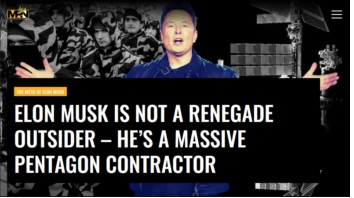
But Musk’s hot take on the Ukraine war should not be taken as proof of Musk’s anti establishment bona fides.
Far from being an establishment outsider, Elon Musk himself is a major figure in the military industrial complex, and represents the long tradition of Silicon Valley giants being thoroughly enmeshed in the military and intelligence wars.
BRYCE GREENE FAIR, 6 Jan 23
Twitter’s “state-affiliated media” policy has an unwritten exemption for US government-funded and -controlled news media accounts. Twitter even boosts these accounts as “authoritative” sources for news during the Russian/Ukrainian war.
Elon Musk’s controlled release of the documents known as the “Twitter Files” has given us some insight into the inner workings of the social media platform. The batch of docs released on December 20 is arguably the most explosive, detailing Twitter’s deliberate shielding of US propaganda operations. After getting limited access to Twitter‘s internal systems, Lee Fang of the Intercept (12/20/22) detailed how Twitter staff “whitelisted” accounts run by US Central Command (CENTCOM), the unit of the US military that oversees the Middle East, as part of covert propaganda campaigns. In other words, Twitter protected accounts engaged in US psychological warfare operations, even though they clearly violated the platform’s terms of service.
But this is far from the whole story of Twitter’s assistance with US influence operations. A FAIR investigation reveals that dozens of large accounts that are part of US overt propaganda networks are given special treatment from the company, in blatant violation of Twitter’s own policies.
Through a lopsided “state-affiliated” media policy application, Twitter has actually gone against its own mission to provide “context” to users. More acutely, in Ukraine, Twitter actively promoted US funded media organizations as part of the “Topics” feature which ostensibly aggregated “authoritative” sources. The prominence of these outlets on the platform has strengthened their influence on the national media ecosystem, and has helped shape public perceptions of the entire war.
…………………………………………………………………………………………… Twitter rigorously enforces the rules for states the US considers to be hostile. Accounts for major state agencies in Russia, China and Iran are generally labeled as state entities. Media outlets from those countries are also targeted: PressTV from Iran, RT and Sputnik from Russia, and China Daily, Global Times, CGTN and China Xinhua News from China are all labeled “state-affiliated media.”
Twitter has taken extra measures against Russia after the invasion, adding explicit warnings on any post linking to “a Russian state-affiliated media website”:
…………….. Artificial exceptions
Twitter’s policy defines “state-affiliated media” as newsrooms where the state has “control over editorial content through financial resources, direct or indirect political pressures, and/or control over production and distribution.” But there are several major media accounts that seem to fit this description that have no such warning labels.
None of the major public media outlets in the US, Britain and Canada have received the label. In 2017, NPR received 4% of its funding from the US government. The BBC receives a large portion of its funding from the British Foreign and Commonwealth Office. The CBC receives $1.2 billion in funding from the Canadian government. Yet Twitter accounts for the BBC, CBC and NPR are all unlabeled on the platform……………………………..
National Endowment for Democracy

A look at the US’s soft power initiatives shows far more outlets that ought to fall under the “state affiliated” label. One such conduit for funding is the National Endowment for Democracy. The NED, created during the Reagan administration, pours $170 million a year into organizations dedicated to defending or installing regimes friendly to US policies.
ProPublica (11/24/10) described the NED as being “established by Congress, in effect, to take over the CIA’s covert propaganda efforts.” David Ignatius of the Washington Post (9/22/91) reported on the organization as a vehicle for “spyless coups,” as it was “doing in public what the CIA used to do in private.” The first NED president, Carl Gershman (MintPress, 9/9/19), admitted that the switch was largely a PR move to shroud the organization’s intentions: “It would be terrible for democratic groups around the world to be seen as subsidized by the CIA.”
NED operations in Ukraine deserve especially close scrutiny, given the organization’s role in the 2014 Maidan coup and the information war surrounding the Russian invasion. In 2013, Gershman described Ukraine as the “biggest prize” in the East/West rivalry (Washington Post, 9/26/13). Later that year, the NED united with other Western-backed influence networks to support the protest movements that later led to the removal of the president.
The history of the board is a who’s who of regime change advocates and imperial hawks. The current board includes Anne Applebaum, a popular anti-Russian staff writer at the Atlantic and frequent cable news commentator whose work epitomizes the New Cold War mentality, and Elliott Abrams, a major player in the Iran/Contra scandal who later played a key role in the Trump administration’s campaign to overthrow the Venezuelan government. Victoria Nuland, formerly the foreign policy advisor to Vice President Dick Cheney, is a key player in US foreign policy, and was even one of the US officials who was caught meddling behind the scenes to reshape the Ukrainian government in 2014. She served on the NED board in between her time in the State Department for the Obama and Biden administrations. Other former board members include Henry Kissinger, Paul Wolfowitz, Zbigniew Brzezinski and current CIA director William Burns.
After the war started, the NED removed all of its Ukraine projects from its website, though they are still available through the Internet Archive’s Wayback Machine. A look at 2021 projects shows extensive work funding media organizations throughout Ukraine with the ostensible goal of “promot[ing] government accountability” or “foster[ing] independent media.” Despite their overt funding from a well-documented US propaganda organ, none of these organizations’ Twitter accounts contain a “state-affiliated media” label. Even the NED’s own Twitter account does not reference its relationship to the US government.
This is highly relevant to the current war in Ukraine. CHESNO, ZN.UA, ZMiST and Ukrainian Toronto Television, Vox Ukraine are all part of the NED’s media network in Ukraine, yet their Twitter accounts have no state-affiliated label. Furthermore, some of the newsrooms in this network boast extensive ties to other US government organizations. European Pravda, the Ukraine Crisis Media Center and Hromadske—all founded during or shortly after the US-backed Maidan coup in 2014—boast explicit partnerships with NATO. Hromadske and the UCMC also tout partnerships with the US State Department, the US Embassy in Kyiv and the US Agency for International Development (USAID).
USAID plays a similar role to the NED. Under the protective cover of humanitarian aid and development projects, the agency serves as a conduit for US regime change operations and soft power influence peddling. Among other things, the organization has been a cover for “promoting democracy” in Nicaragua, and provided half a billion dollars to advance the coup attempt against Venezuela’s elected government.
Kyiv Post and Independent
The most popular recipient of NED funds has been the Kyiv Independent, a reconstitution of another NED-funded newsroom, the Kyiv Post. Though it claims to receive the majority of its funding through advertising and subscriptions, the Post website lists the NED as “donors who sponsored content produced by the Kyiv Post journalists.”
When the Post was temporarily shuttered in a staff dispute in November 2021, many of the journalists formed the Kyiv Independent. They did this with a $200,000 grant from the Canadian government, as well as an emergency grant from the European Endowment for Democracy, an organization headquartered in Brussels that is both modeled after and funded by the NED.
After the outbreak of war, the Independent gained over 2 million Twitter followers and attracted millions of dollars in donations. Staff from the Independent have flooded the US media ecosystem: Its reporters have had op-eds in top US newspapers like the New York Times (3/5/22) and the Washington Post (2/28/22). They often appear on US TV channels like CNN (3/21/22), CBS (12/21/22), Fox News (3/31/22) and MSNBC (4/10/22)…………………………………………..
Boosting US propaganda
Twitter’s policy effectively amounts to providing cover and reach for US propaganda organs. But this policy effect is far from the whole story. Through various mechanisms, Twitter actually boosts US-funded newsrooms and promotes them as trusted sources.
One such mechanism is the curated “Topics” feature. As part of its effort to “elevate reliable information,” Twitter recommends following its own curated feed for the Ukraine War. As of September 2022, Twitter said that this war feed for the Ukraine War had over 38.6 billion “impressions.” Scrolling through the feed shows many examples of the platform boosting US state-affiliated media, with few or no instances of coverage critical of the war effort. Despite their extensive ties to the US government, the Kyiv Independent and Kyiv Post are frequently offered as favored sources for information on the war.
The account has generated a list based on what they claim to be reliable sources on the conflict. The list currently has 55 members. Of these, at least 22 are either US-funded newsrooms, their affiliated journalists. Given the complexity of the funding channels, and the lack of information on some of these newsrooms’ websites, this number is likely an undercount:
New Voice of Ukraine (NED, State Department)
Euan MacDonald
Kyiv Post (NED)
Natalie Vikhrov
Kyiv Independent (NED)
Anastasiia Lapatina, Oleksiy Sorokin, Anna Myroniuk, Illia Ponomarenko
Zaborona (NED)…………………………….
Worldwide propaganda network
The US government currently funds other media organizations that function more blatantly as arms of the state, yet none have the “state-affiliated media” label on their Twitter accounts. These outlets are part of the media apparatus set up to promote the US point of view around the world during the Cold War. The New York Times (12/26/77) once described them as being part of a “worldwide propaganda network built by the CIA.”
The network, known as the “Propaganda Assets Inventory” within the agency, once encompassed around 500 individuals and organizations, ranging from operatives in major media like CBS, Associated Press and Reuters to smaller outlets under the “complete” “editorial control” of the CIA. Radio Free Asia, Voice of America and Radio Free Europe/Radio Liberty were at the vanguard of this propaganda operation. The Times reported in 1977 that the network resulted in a stream of US media stories that were “purposely misleading or downright false.”
The US government continues to directly operate several of these organizations. These outlets now fall under the auspices of the US Agency for Global Media (USAGM), a federal agency that received $810 million in 2022. That number marks a 27% increase from its 2021 budget, and is more than twice the amount RT received from Russia for its global operations in 2021 (RFE/RL, 8/25/21)…………………………………………………………………
Twitter, like other SiliconValley behemoths, has numerous links to the national security state. An investigation by Middle East Eye (9/30/19) revealed that one of Twitter’s top executives was also a member of one of the British military’s psychological warfare units, the 77th Brigade. Gordon MacMillan, who holds the top editorial position for the Middle East and North Africa at Twitter, joined the UK’s “information warfare” unit in 2015 while he was at Twitter. One UK general told MEE that the unit specialized in developing “the capability to compete in the war of narratives at the tactical level.” The story was met with near total silence in US and UK press (FAIR.org, 10/24/19), and MacMillan still works for Twitter.
Twitter also partners with the Australian Strategic Policy Institute, a hawkish think tank funded by the military industry and the US government, for its content moderation policies. In 2020, Twitter worked closely with the ASPI to remove over 170,000 low-follower accounts they alleged to be favorable to the Communist Party of China. More recently, Twitter and ASPI have announced a partnership ostensibly aimed at fighting disinformation and misinformation.
Twitter’s Strategic Response Team, in charge of making decisions about which content should be suppressed, was headed by Jeff Carlton, who previously worked for both the CIA and FBI. In fact, MintPress News (6/21/22) reported on the dozens of former FBI agents that have joined Twitter’s ranks over the years. Elon Musk’s controlled leak of internal communications, known as the “Twitter Files,” has renewed attention to the close relationship between the agency and the platform.
Though Twitter has previously denied directly “coordinat[ing] with other entities when making content moderation decisions,” recent reporting has revealed a deep level of integration between federal intelligence agencies, and Twitter’s content moderation policies. In part 6 of the “Twitter Files,” Matt Taibbi reported that the FBI has over 80 agents dedicated to flagging content on the platform and interfacing directly with Twitter leadership. Last year, emails leaked to the Intercept (10/31/22) showed how the Department of Homeland Security (DHS) and Twitter had an established process for content takedown requests from the agency related to election security.
The platform is clearly an important hub for pro-Ukrainian sentiment online, though not all of the activity is organic. In fact, one study (Declassified Australia, 11/3/22) released last year found a deluge of pro Ukrainian bots. Australian researchers studied a sample of over 5 million tweets about the war, and found that 90% of the total were pro-Ukrainian (identified using the #IStandWithUkraine hashtag or variations), and estimated that up to 80% of them were bots. Though researchers did not determine the precise origin of these accounts, it was obvious that they were sponsored by “pro-Ukrainian authorities.” The sheer volume of tweets undoubtedly helped shape online sentiment about the war.
It appears that Washington understands the importance of Twitter in shaping public sentiments. When Musk originally set his sights on buying the platform, the White House even considered opening a national security review of Musk’s business ventures, citing Musk’s “increasingly Russia-friendly stance.” These concerns were prompted by Musk’s plan to bar SpaceX’s StarLink system from being used in Ukraine, after a spat between Musk and a Ukrainian official. The concerns also came after Musk (10/3/22) tweeted out the outlines to a potential peace proposal between Russia and Ukraine. This proposal was met with scorn and shock among American elite circles, where escalation rather than peace is the dominant position (FAIR.org, 3/22/22).
Musk and the national security state
But Musk’s hot take on the Ukraine war should not be taken as proof of Musk’s anti establishment bona fides. Far from being an establishment outsider, Elon Musk himself is a major figure in the military industrial complex, and represents the long tradition of Silicon Valley giants being thoroughly enmeshed in the military and intelligence wars.
Musk’s rocket company, SpaceX, is a major military contractor, earning billions of dollars from the US national security state. It has received contracts to launch GPS technology into orbit to assist with the US drone war. The Pentagon has also contracted the company to build missile defense satellites. SpaceX has further won contracts from the Air Force, Space Defense Agency and National Reconnaissance Organization, and has launched spy satellites to be used by the CIA, NSA and other intelligence agencies (MintPress, 5/31/22).
In fact, SpaceX’s existence is largely owed to military and intelligence ties. One of its earliest backers of the company was the Pentagon’s Defense Advanced Research Projects Agency (DARPA), the same military research agency that gave us much of the technology that defines the modern internet age………………….
After the Russian invasion of Ukraine, Musk made headlines by offering to donate his Starlink technology to the Ukrainian government to keep the country online. Starlink, a satellite-based internet provider, was essential to Ukraine’s war effort after the Russian attack disabled much of its traditional military communications. It has enabled Ukrainians to quickly share battlefield intelligence, and connect with US support troops to perform “telemaintenance.”
Musk’s offer to “donate” the technology earned him a lot of positive press, but it was quietly revealed later that the US government had been paying SpaceX millions of dollars for the technology—despite what SpaceX officials had told the public. According to the Washington Post (4/8/22), the money was funneled through USAID, an organization that has long been a tool of US regime change efforts, and a front for covert intelligence operations………………………………………
The relationship between Musk and the security state is so strong that one official even told Bloomberg (10/20/22) that “the US government would also use Starlink in the event of telecommunications outage,” hinting at links to high-level national contingency planning.
Continuity of governance?
The conversation surrounding Twitter has centered around whether or not Elon Musk is a free-speech advocate, though little has focused on the implications of a military contractor having complete control over such an important platform. Though Musk may (or may not) be stepping down as CEO, the platform will remain his domain.
Many things have changed under Musk’s Twitter, but Twitter’s role as a megaphone for US government–funded media has not. It would take a large research study to understand precisely how much impact Twitter’s misapplication of its own policies has on the propagation. But even without this data, it is clear that the platform’s design serves to nudge users away from most media funded by Washington-unfriendly governments, and, in the case of the Ukraine War, push users toward media funded by the US government. Musk’s status as a military contractor only underscores that challenging US foreign policy objectives is unlikely to be a priority for the company. https://fair.org/home/under-musk-twitter-continues-to-promote-us-propaganda-networks/
CODEPINK calls on Zelensky, Biden and Congress to seize this chance for peace in Ukraine
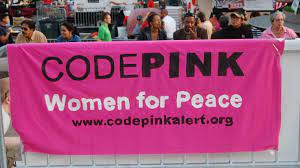
On the heels of Russian President Putin ordering troops to observe a ceasefire in Ukraine over Orthodox Christmas, CODEPINK calls on Ukrainian President Zelensky, President Biden and the U.S. Congress to also support a ceasefire that could pave the way for a diplomatic settlement. CODEPINK urges Zelensky to reconsider his rejection of Putin’s truce order, which Zelensky described as a “cynical trap.”
Putin’s support for a Christmas truce followed the Russian Orthodox Church’s plea for a ceasefire, as well as a statement, signed by over a 1,000 US faith-based organizations, in support of a Christmas truce, similar to one that arose spontaneously in the trenches of World War I when in 1914 German and British soldiers along the Western Front put down their arms to jointly celebrate Christmas.
CODEPINK Co-founder Medea Benjamin said, “This Christmas truce from Russia’s side is a tiny ray of light in a horrific war. Ukraine should seize the moment and join the truce, and from there all sides need to move to the negotiating table without preconditions. The entire world is crying out for an end to this war. This could be the beginning of a true dialogue.”
CODEPINK’s Marcy Winograd, who coordinates the Peace in Ukraine Coalition, said, “A truce would set the stage for a negotiated peace to end a US-Russia proxy war that threatens nuclear catastrophe. It is incumbent upon Congress and the White House to acknowledge there is no military solution and appeal to Zelensky to support this truce.”
In December, CODEPINK, Fellowship of Reconciliation and National Council of Elders sent the White House Office of Faith-Based and Neighborhood Partnerships the truce statement signed by ministers, priests, rabbis and imams in hopes of ending the fighting that has taken thousands of lives, displaced millions, further degraded the climate and worsened global hunger.
Feds push plan to dispose plutonium using nuclear waste repository near Carlsbad
Adrian Hedden, Carlsbad Current-Argus https://www.currentargus.com/story/news/2023/01/05/feds-push-plan-dispose-plutonium-nuke-waste-site-near-carlsbad-waste-isolation-pilot-plant-nuclear/69747932007/
Federal nuclear waste managers said they planned to dispose of 34 metric tons of surplus, weapons-grade plutonium at a nuclear repository in New Mexico after the waste is diluted to a lower level of radioactivity.
The National Nuclear Security Administration (NNSA) proposed in 2020 a “dilute and dispose” method of eliminating the plutonium from the environment, ultimately via emplacement at the Waste Isolation Pilot Plant repository near Carlsbad.
Before that can happen, the NNSA said the waste can be “downblended” to meet requirements at WIPP, which is designed to dispose of transuranic (TRU) waste that can only be of a certain level of radioactivity.
In an environmental impact statement (EIS) released last month, the NNSA said it preferred a plan that would see the plutonium shipped from the Pantex Plant near Amarillo, Texas to Los Alamos National Laboratory in northern New Mexico for processing, then to the Savannah River Site in South Carolina where it would be prepared for final disposal at WIPP.
That means the waste would travel through New Mexico at least twice which drew the ire of watchdog groups in the northern portion of the state, and concern from New Mexico Gov. Michelle Lujan Grisham.
Public comments were being accepted on the proposal until Feb. 14, and four hearings were scheduled: Jan. 19 in North Augusta, South Carolina, Jan. 24 in Carlsbad, Jan. 26 in Los Alamos and a virtual meeting on Jan. 30.
Information on the meetings and how to comment were posted in the Federal Register under citation 87 FR 77096.
New Mexico the nation’s ‘nuclear waste dump?’
Cindy Weehler, co-chair of Santa Fe-based activist group 285 ALL said the EIS called for the federal government to divert from WIPP’s original mission, potentially putting more New Mexicans at risk of exposure to radiation and for longer.
“Surplus plutonium is not the kind of waste that was agreed to when WIPP was defined,” she said. “We insist on an end to the emplacement of waste in New Mexico. We want an end to the weapons-based radioactive waste coming through our neighborhoods.”
The EIS did list alternatives to the preferred plan, potentially seeing the waste processed completely for disposal at either Savanna River or Los Alamos before shipment to WIPP.
This could cut down on transportation, but Weehler said the NNSA’s overall plan was symptomatic of a broader effort to keep WIPP open beyond its previously defined closure date of 2024 and expand the kinds of wastes that can be disposed of at the facility.
“We want an end to the situation where New Mexico is the only nuclear waste dump for all 50 states,” Weehler said. “The concern is that if you increase the number of shipments, the number of years, and you increase the dangerousness of the waste, at some point, somewhere an accident is inevitable.
“That would be catastrophic for the community where it occurs.”
Don Hancock, nuclear waste program manager at Albuquerque-based government watchdog group Southwest Research and Information Center said the plutonium waste was never intended for disposal at WIPP.
He said the federal government should prioritize legacy TRU waste sitting at DOE sites like Los Alamos as was the repository’s original intention.
“Dilute and dispose waste shouldn’t go to WIPP in the first place,” Hancock said. “NNSA wants to prioritize waste that WIPP was not designed for.”
New Mexico, Carlsbad leaders clash over plutonium disposal
In April 2022, Lujan Grisham echoed the concerns in a letter to U.S. Energy Secretary Jennifer Granholm, sharing a petition from 285 ALL that gathered 1,165 signatures in opposition from across the 10 states Weehler said were impacted by the transportation route.
Lujan Grisham wrote that many New Mexicans had “ongoing frustrations” with the federal government not involving New Mexicans in nuclear waste disposal plans that involved the state’s repository – the only such facility in the U.S.
“Specifically, the New Mexicans who signed the petition raised concerns about the transportation of the surplus plutonium waste stream between the DOE’s Savannah River Site in South Carolina and the WIPP,” read the letter to Granholm.
“As Governor, I take these concerns seriously and request that the Department of Energy take action to address the issues raised by New Mexicans.”
But the project was supported by local leaders in Carlsbad, about 30 miles west of the WIPP site, and the city’s Mayor Dale Janway, a frequent supporter of operations at WIPP who argued the program would be conducted safely.
“The proposed action is to dilute surplus plutonium to prevent use and disposing of the resulting CH-TRU waste at WIPP. I support this proposal as a safe, cost-effective solution,” Janway said in a statement.
White Lives Matter More in Ukraine
Black Agenda Report Margaret Kimberley, BAR Executive Editor and Senior Columnist, 04 Jan 2023,
The open white supremacy and fascism exhibited in Ukraine are conveniently swept under the rug. Nazis are bad, unless they serve the interests of the U.S. state.
The accuracy of this commentary’s title is borne out by statements made and actions taken by the Ukrainians themselves. In 2020 millions of people around the world protested against racism in the wake of the police murder of George Floyd. Ukrainians made it clear that they were not to be included amongst that mass of humanity and in fact expressed their support for white supremacy.
In June 2020, a group of football fans at a match in Ukraine unfurled a banner reading, “Free Derek Chauvin .” Chauvin is the man who murdered George Floyd. Not to be outdone, members of the neo-Nazi group Nazionalny Sprotyv, National Resistance, marched on October 14, 2020 with a banner that made the point very clear. The words “White Lives Matter ” were written in English and in much larger type than the name of the organization which appeared in small type below. October 14 is celebrated as the Day of the UPA, the Ukrainian Insurgent Army, which fought alongside Nazi Germany after it invaded Ukraine during World War II. The words in the pink graphic on the video read, “On the march of UPA Nazis carefully burned the poster of BLM.” Nazionalny Sprotyv is known for its racist, anti-Russian, anti-LGBTQ, and anti-Communist beliefs.
The war propaganda disseminated by the Biden administration and its friends in corporate media tells us to ignore the swastikas, Hitler salutes, and other clear indicators of Nazi sympathies when they appear in Ukraine. Suddenly symbolism which we were told to abhor as indisputable signs of hate speech are now to be accepted or explained away as figments of our collective imagination.
Nazi regalia and symbolism should make assistance to the Ukrainian government an automatic deal breaker. But the U.S. has always been rather flexible in its approach to Nazism. After World War II an intelligence program known as Operation Paperclip brought more than 1,600 German scientists to the U.S. to fight in the new cold war against the Soviet Union. Their links to the Nazi party were covered up so that they might be of assistance to the U.S. Werner von Braun and other Nazi linked scientists were instrumental in creating the U.S. space program.
Ukraine was a divided nation from its very beginnings after World War I, with half of the country hating the Soviet Union so much that they sided with and fought alongside the Germans. January 1 is officially celebrated not just as the first day of the year but as the birthday of Ukraine’s chief Nazi collaborator, Stepan Bandera. The 2023 celebration was no exception but not without embarrassment. The Ukrainian parliament was forced to delete a Twitter post featuring a photo of army commander General Valerii Zaluzhny juxtaposed with an image of Bandera. Bandera massacred thousands of Poles during the war and the Ukrainians had to be reminded through diplomatic channels that everyone isn’t as forgiving as clueless Americans. Just as Operation Paperclip is an inconvenient and rarely discussed truth, Ukraine’s continuing Nazi and white supremacist connections are now hushed up by the U.S. state and its media partners.
It is indeed awkward for Joe Biden to greet president Zelensky at the white house and for him to speak in congress if these facts are openly discussed…………
The Biden administration invitation to Zelensky was an effort to ensure that an additional $45 billion was allocated to Ukraine before the congressional session ended. The standing ovations and blue and yellow flags and cries of “Slava Ukraini!” were orchestrated to get more buy-in at a time when many Americans are asking why their needs go unmet and why Ukraine can’t resume the negotiations it was holding months ago with Russia. It has been reported that the U.S. sent the then prime minister of the UK, Boris Johnson, to tell Zelensky that any talk of peace had to end . Russia was ready to withdraw in exchange for security guarantees and an end to Ukraine’s efforts to secure NATO membership. But Ukraine is the latest U.S. forever war and its people have to suffer and die because of its dictates.
Perhaps the saddest sight of the night of Zelensky’s congressional speech was the adulation he received from some members of the Congressional Black Caucus (CBC). CBC members Sheila Jackson-Lee and Barbara Lee eagerly sought to shake his hand. Perhaps they are unaware of Ukraine’s white supremacist leanings. But that can’t be true. After all, in 2015 their CBC colleague, the late John Conyers, co-sponsored an amendment that would have barred U.S. funding to the Azov battalion and other Ukrainian neo-Nazi groups. The amendment was ultimately removed from the final spending bill…………………… more https://www.blackagendareport.com/white-lives-matter-more-ukraine
 | |||
| |||
International nuclear fusion project may be delayed by years, its head admits
Facility in France still far from being able to show feasibility of generating carbon-free energy despite recent breakthrough in US
Guardian, AFP in Saint-Paul-Les-Durance Sat 7 Jan 2023
An international project in nuclear fusion may face years of delays, its boss has said, weeks after scientists in the United States announced a breakthrough in their own quest for the coveted goal.
The International Thermonuclear Experimental Reactor (Iter) project seeks to prove the feasibility of fusion as a large-scale and carbon-free source of energy.
Installed at a site in southern France, the decades-old initiative has a long history of technical challenges and cost overruns.
Fusion entails forcing together the nuclei of light atomic elements in a super-heated plasma, held by powerful magnetic forces in a doughnut-shaped chamber called a tokamak.Q&A
The idea is that fusing the particles together from isotopes of hydrogen – which can be extracted from seawater – will create a safer and almost inexhaustible form of energy compared with splitting atoms from uranium or plutonium.
Iter’s previously stated goal was to create the plasma by 2025.
But that deadline will have to be postponed, Pietro Barabaschi – who in September became the project’s director general – told Agence France-Presse during a visit to the facility.
The date “wasn’t realistic in the first place”, even before two major problems surfaced, Barabaschi said…………………………………
Ukraine – The Big Push To End The War
https://www.moonofalabama.org/2023/01/ukraine-the-big-push-to-end-the-war 6 Jan 23
Over Christmas I had a short talk with a relative about the war in Ukraine. He asked me who would win and was astonished when I said: “Ukraine has zero chance to win.” That person reads some German mainstream news sites and watches the public TV networks. With those sources of ‘information’ he was made to believe that Ukraine was winning the war.
One may excuse that with him never having been in a military and not being politically engaged. But still there are some basic numbers that let one conclude from the beginning that Russia, the much bigger, richer and more industrialized country, had clearly all advantages. My relative obviously never had had that thought.
The ‘western’ propaganda is still quite strong. However, as I pointed out in March last year propaganda does not change a war and lies do not win it. Its believability is shrinking.
Former Lt.Col. Alex Vershinin, who in June pointed out that industrial warfare is back and the ‘West’ was not ready to wage it, has a new recommendable piece out which analyses the tactics on both sides, looks ahead and concludes that Russia will almost certainly win the war:
Wars of attrition are won through careful husbandry of one’s own resources while destroying the enemy’s. Russia entered the war with vast materiel superiority and a greater industrial base to sustain and replace losses. They have carefully preserved their resources, withdrawing every time the tactical situation turned against them. Ukraine started the war with a smaller resource pool and relied on the Western coalition to sustain its war effort. This dependency pressured Ukraine into a series of tactically successful offensives, which consumed strategic resources that Ukraine will struggle to replace in full, in my view. The real question isn’t whether Ukraine can regain all its territory, but whether it can inflict sufficient losses on Russian mobilized reservists to undermine Russia’s domestic unity, forcing it to the negotiation table on Ukrainian terms, or will Russian’ attrition strategy work to annex an even larger portion of Ukraine.
Russian domestic unity has only grown over the war. As Gilbert Doctorow points out wars make nations. The war does not only unite certain nationalistic parts of Ukraine who still dream of retaking Crimea. It also unites all of Russia. Unlike Ukraine Russia will be strengthened by it.
Casualties are expected in wars and the Russians, with their steady remembrance of the second world war as their Great Patriotic War, know this well. Screw ups also happen and at times some bad leadership decisions puts people into the wrong place where the enemy can and will kill them. That is what happened in Makeyevka (Donetsk) on New Years day 2 minutes after midnight. Some 100 Russian reservists died. The Russian leadership pointed out that they were killed by U.S. HIMARS missiles. The former Indian diplomat M. K. Bhadrakumar judges that this was a U.S. escalation which will likely receive a response:
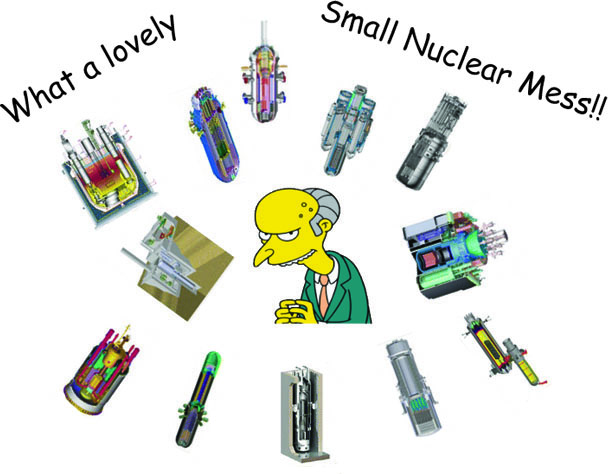
Small Nuclear Reactor (SMR) developers submit 6 designs for UK approval
Institution of Mechanical Engineers, 6 Jan 23
Developers of six new small modular reactor (SMR) designs have applied for approval to deploy them as nuclear power plants in the UK.
The Department for Business, Energy & Industrial Strategy (BEIS) is assessing submissions to enter the generic design assessment (GDA) process, reported the Nuclear Advanced Manufacturing Research Centre (AMRC).
The designs come from established players and new entrants to the nuclear sector, the AMRC said. If they successfully enter the GDA process, they will be assessed for safety, security and environmental protection by the Office for Nuclear Regulation and the Environment Agency. The process is intended to support construction of a number of new power stations, by approving standard reactor designs that can be deployed in different locations.
GE Hitachi submitted an application for its BWRX-300 boiling water reactor in December, the AMRC reported. The BWRX-300 is a 300MWe water-cooled, natural circulation SMR, with passive safety systems adapted from the US-licenced ESBWR. GE Hitachi says it has been designed to achieve construction and operating costs which are substantially lower than traditional nuclear plants, and could be deployed as early as 2028.
The US-Japanese company’s submission was supported by Jacobs UK. GE Hitachi has also signed an initial agreement with Sheffield Forgemasters to discuss how the manufacturer could help meet the demands of deploying the BWRX-300 in the UK.
Holtec submitted its SMR-160 design, the AMRC said, a 160MWe pressurised water reactor developed in collaboration with Mitsubishi Electric of Japan and Hyundai Engineering and Construction of Korea. The US firm proposed to deploy 32 SMR-160s (5.1 GWe total) in serial production by 2050……….
Holtec Britain also announced a joint memorandum of understanding with Balfour Beatty and Korea’s Hyundai on construction planning for the UK, with potential sites identified at Trawsfynydd in Wales, and Heysham and Oldbury in England.
Applications from new companies include:
- US firm X-Energy, which is working with Cavendish Nuclear to deploy its high-temperature gas reactor in the UK. The reactor is aimed at industrial decarbonisation as well as electricity generation. X-Energy said its first units will be deployed in the US from 2027, with the UK to follow.
UK-Italian start-up Newcleo, which is focused on lead-cooled fast reactors. The company is aiming to develop a 30MWe micro-reactor by 2030, followed by a 200MWe reactor fuelled by waste from existing nuclear plants.- UK Atomics, a subsidiary of Danish-based start-up Copenhagen Atomics, which is developing a containerised thorium molten salt reactor. The firm said it has already constructed a prototype reactor, and is aiming for first deployment in 2028.
- GMET, a Cumbrian engineering group which last year acquired established nuclear supplier TSP Engineering, said it is developing a small reactor called NuCell for production at TSP’s Workington facility.
Rolls-Royce SMR is the only SMR developer to formally begin GDA. The firm submitted its 470MWe design in November 2021, with the regulators starting the first stage of assessment in April 2022. https://www.imeche.org/news/news-article/smr-developers-submit-6-designs-for-uk-approval
Writers protest against imprisonment of climate activists
Ben Okri, Simon Schama, Helen Pankhurst and AL Kennedy are among more than
100 writers who have signed a letter in solidarity with UK climate protest
prisoners.
“That the UK now has political prisoners, incarcerated for
defending sustainable life on Earth is yet another national disgrace,”
Kennedy said.
At least 13 environmental activists began the year behind
bars in UK jails, after a year of “civil resistance” against climate
policies led by the Just Stop Oil campaign. More than 100 spent time in
jail, either convicted or on remand, for environmental protest in 2022.
“We stand with all those who are trying to sound the alarm and to protect
our beautiful world,” said the letter, coordinated and published by the
group Writers Rebel.
Guardian 6th Jan 2023
Enforcement action revealed after Hinkley Point C worker death
THREE enforcement notices have been served on owners and contractors at the
Hinkley Point C nuclear power station development following a worker’s
death in November. The Office for Nuclear Regulation (ONR) said it could
now reveal the action it had taken because the statutory period for
appealing against the notices had passed. It said inspectors issued three
prohibition notices relating to specific activities on the site involving
vehicles and plant machinery.
West Somerset Free Press 4th Jan 2023
https://www.wsfp.co.uk/news/enforcement-action-revealed-after-hinkley-point-c-site-death-586395
US and South Korea hold talks on “nuclear sharing”.

the US Council for Foreign Relations highlighted a proposal to establish an Asian Nuclear Planning Group, “mirroring the format of the NATO Nuclear Planning Group, that would provide a platform for South Korea, Japan, and Australia to discuss policies regarding US nuclear forces and the US nuclear planning process.”
What is underway not just in South Korea are high level discussions to integrate US allies throughout the region with the US military as preparations accelerate for a potentially catastrophic war with China that would inevitably involve the use of nuclear weapons.
Peter Symond WSWS 5 Jan 23
The US and South Korea are actively discussing closer collaboration in the deployment and potential use of nuclear weapons, which is part of the far broader US-led military build-up throughout the region. While nominally directed against North Korea, US war preparations including with South Korea are above all aimed at China.
In an interview in the Chosun Ilbo newspaper on Monday, South Korea’s right-wing president, Yoon Suk Yeol, said the discussions had focussed on joint planning and exercises with American nuclear forces. He described the arrangements being discussed as being “as good as nuclear-sharing”—a phrase, he said, that Washington was uncomfortable with……….
When asked at the White House whether joint nuclear military exercises with South Korea were being planned, President Biden flatly declared “no” and made no further comment. However, subsequent comments by American officials make clear that the closer integration of South Korea into US preparations for nuclear war is indeed under way……………………….
The discussions mark a significant escalation in the preparations for nuclear war. While South Korea, a US military ally, was protected by the so-called nuclear umbrella or what is known as “extended deterrence,” Yoon is pushing for a greater South Korean say in the use of nuclear weapons.
In his interview, Yoon declared: “What we call ‘extended deterrence’ means that the United States will take care of everything, so South Korea should not worry about it… But now, it is difficult to convince our people with just this idea.”…………….
Throughout much of the Cold War, the US had hundreds of tactical nuclear weapons in South Korea supposedly to counter a North Korean invasion. The number peaked at 950 during the mid-1960s before declining. In 1991, amid the moves to dissolve the Soviet Union, US President George H.W. Bush announced the return of all tactical nuclear weapons to the US, including those that remained in South Korea.
While Yoon has not publicly repeated his proposals as president, there have already been significant steps to a greater US nuclear presence in South Korea. In a joint press conference last November, US Defense Secretary Lloyd Austin and South Korean Defense Minister Lee Jong-seop announced plans for the de facto permanent stationing of US nuclear-capable assets in South Korea for the first time since 1991………….
As far as Washington is concerned, the North Korean “threat” is a convenient pretext as its nuclear planning is primarily focussed on war with China. Strategically located close to the Chinese mainland, South Korea is deeply integrated into the US strategy for such a conflict. Not only does it house key US military bases and some 28,500 military personnel but it also has a key anti-ballistic missile system—a recently upgraded Terminal High Altitude Area Defense (THAAD) system—critical in any nuclear conflict.
The US is boosting its nuclear weapons capacity throughout the region with the announcement last year that it will effectively station nuclear-capable B-52 bombers at the Tindal air force base in Northern Australia. At the same time, prior to his assassination last July, former Japanese prime minister, Shinzo Abe, initiated a discussion in ruling circles about stationing US nuclear weapons in Japan, despite enormous popular opposition to such a move.
The Biden administration has already taken steps to strengthen its military alliances in the Indo-Pacific by kickstarting the Quadrilateral Security Dialogue or “Quad” with Japan, Australia and India as well as initiating the AUKUS pact with Australia and the United Kingdom, which, in particular, will arm Australia with nuclear-powered attack submarines. At the same time, it has sought to strengthen intelligence sharing between South Korea and Japan, essential in any nuclear conflict.
Broader “nuclear sharing” is also being discussed in US strategic think tanks. A comment published last August by the US Council for Foreign Relations highlighted a proposal to establish an Asian Nuclear Planning Group, “mirroring the format of the NATO Nuclear Planning Group, that would provide a platform for South Korea, Japan, and Australia to discuss policies regarding US nuclear forces and the US nuclear planning process.”
What is underway not just in South Korea are high level discussions to integrate US allies throughout the region with the US military as preparations accelerate for a potentially catastrophic war with China that would inevitably involve the use of nuclear weapons. https://www.wsws.org/en/articles/2023/01/05/tzjb-j05.html
—
Before the Bombs Come the Platitudes
By Robert C. Koehler, http://commonwonders.com/before-the-bombs-come-the-platitudes/ 4 January 2023
What is democracy but platitudes and dog whistles? The national direction is quietly predetermined — it’s not up for debate. The president’s role is to sell it to the public; you might say he’s the public-relations director in chief:
“. . . my Administration will seize this decisive decade to advance America’s vital interests, position the United States to outmaneuver our geopolitical competitors, tackle shared challenges, and set our world firmly on a path toward a brighter and more hopeful tomorrow. . . . We will not leave our future vulnerable to the whims of those who do not share our vision for a world that is free, open, prosperous, and secure.”
These are the words of President Biden, in his introduction to the National Security Strategy, which lays out America’s geopolitical plans for the coming decade. Sounds almost plausible, until you ponder the stuff that isn’t up for public discussion, such as, for instance:
The national defense budget, recently set for 2023 at $858 billion and, as ever, larger than the rest of the world’s military budget combined. And, oh yeah, the modernization — the rebuilding — of the nation’s nuclear weapons over the next three decades at an estimated cost of nearly $2 trillion. As Nuclear Watch put it: “It is, in short, a program of nuclear weapons forever.”
And the latter, of course, will go forward despite the fact that in 2017 the countries of the world — well, most of them (the vote in the United Nations was 122-1) — approved the Treaty on the Prohibition of Nuclear Weapons, which flat-out bans the use, development and possession of nuclear weapons. Fifty countries ratified the treaty by January 2021, making it a global reality; two years later, a total of 68 countries have ratified it, with 23 more in the process of doing so. Not only that, as H. Patricia Hynes points out, the mayors of more than 8,000 cities all across the planet are calling for the abolition of nuclear weapons.
I mention this to put Biden’s words in perspective. Does “a brighter and more hopeful tomorrow” ignore the demands of most of the world and include the presence of thousands of nuclear weapons, many still on hair-trigger alert? Does it mean the ever-present possibility of war and the ongoing manufacture and sale of every imaginable weapon of war? Is a near-trillion-dollar annual “defense” budget the primary way we intend to “outmaneuver our geopolitical competitors”?
And here’s another flicker of reality that’s missing from Biden’s words: the non-monetary cost of war, which is to say, the “collateral damage.” For some reason, the president fails to mention how many civilians’ deaths — how many children’s deaths — will be necessary to secure a brighter and more hopeful tomorrow. How many hospitals might it be necessary, for instance, for us to accidentally bomb in coming years, as we bombed the hospital in Kunduz, Afghanistan in 2015, killing 42 people, 24 of whom were patients?
Public relations platitudes do not seem to have room to acknowledge videos of U.S.-inflicted carnage, such as Kathy Kelly’s description of a video of the Kunduz bombing, which showed the president of Doctors Without Borders (a.k.a., Médecins Sans Frontières) walking through the wreckage a short while later and speaking, with “nearly unutterable sadness,” to the family of a child who had just died.
“Doctors had helped the young girl recover,” Kelly writes, “but because war was raging outside the hospital, administrators recommended that the family come the next day. ‘She’s safer here,’ they said.
“The child was among those killed by the U.S. attacks, which recurred at fifteen-minute intervals, for an hour and a half, even though MSF had already issued desperate pleas begging the United States and NATO forces to stop bombing the hospital.”
Those who believe in the necessity of war — such as the president — may well feel shock and sadness when a child, for instance, is unintentionally killed by U.S. military action, but the concept of war comes complete with flowers of regret: It’s the fault of the enemy. And we will not be vulnerable to his whims.
Indeed, the dog whistle in Biden’s brief quote above is the calm acknowledgement of U.S. intention to stand up to the dark forces on the planet, the autocrats, who do not share our vision of freedom for all (except little girls in bombed hospitals). Those who, for whatever reason, believe in the necessity, and even the glory, of war, will feel the pulse of the U.S. military budget coursing through his positive, happy words.
When public relations circumvents reality, an honest discussion is impossible. And Planet Earth is in desperate need of an honest discussion about the elimination of nuclear weapons and, God help us, ultimately transcending war.
As Hynes writes: “If the U.S. could once again replace its masculinist power with creative foreign policy and reach out to Russia and China with the purpose of dismantling nuclear weapons and ending war, life on Earth would have a heightened chance.”
How can this become a country with a creative foreign policy? How can the American public move beyond being spectators and consumers and become actual, literal participants in U.S. foreign policy? Here’s one way: the Merchants of Death War Crimes Tribunal, an online event scheduled for November 10-13, 2023.
As Kelly, one of the organizers, describes it: “The Tribunal intends to collect evidence about crimes against humanity committed by those who develop, store, sell, and use weapons to commit crimes against humanity. Testimony is being sought from people who’ve borne the brunt of modern wars, the survivors of wars in Afghanistan, Iraq, Yemen, Gaza, and Somalia, to name but a few of the places where U.S. weapons have terrified people who’ve meant us no harm.”
Victims of war will be interviewed. Those who wage war, and those who profit from it, will be held accountable to the world. My God, this sounds like real democracy! Is this the level at which truth shatters the platitudes of war?
A surging supply of green power is likely to limit any nuclear renaissance.
Green surge is circuit breaker on nuclear revival
By Robert Cyran, https://www.reuters.com/breakingviews/green-surge-is-circuit-breaker-nuclear-revival-2023-01-04/ 4 Jan 23,
NEW YORK, Jan 4 (Reuters Breakingviews) – Nuclear power received what seem like two plum gifts for 2023. High energy prices and the desire to decarbonize have spurred renewed interest in the technology that provides about 10% of the world’s electricity supply. Yet a surging supply of green power is likely to limit any renaissance.
There are 425 active reactors worldwide, according to the World Nuclear Association, about the same as three decades ago. Plants have opened in places like China and closed in Western countries.
Nuclear plants are expensive to build, and their complexity often causes projects to go way over budget. Plant Vogtle in the state of Georgia will be America’s first since the 1990s when finished in 2023. The $30 billion price tag is twice the initial estimate. Reactor opening delays in Finland and China show difficulties transcend borders.
The cost of a new nuclear power station is around $168 per megawatt hour according to Lazard. An efficient gas plant costs about a third as much, and solar and wind about one-fifth as much. So there’s little incentive to build. Running existing nuclear plants makes sense. A depreciated plant costs around $29 per MWh, reckons Lazard. And power is available rain or shine, day or night.
This reliability is the big reason there are 55 plants under construction, despite the cost, as wind and solar power currently need backup. Yet that appeal is limited. Over the past decade, green power production, excluding hydropower, has grown 15% annually worldwide according to BP’s Statistical Review of World Energy. Nuclear production was unchanged. China has 22 nuclear reactors under construction, but built renewables about twice as fast.
The price discrepancy keeps widening as wind and solar get cheaper, while nuclear hasn’t budged. Moreover, the cost of storing power in batteries is plummeting. NextEra Energy (NEE.N), America’s biggest deployer of green energy, estimates that by the late 2020s, wind and solar tied to batteries will be about as reliable as other sources during peak hours, but for roughly half the cost of depreciated nuclear or gas plants, and about one-seventh that of a new, small nuclear plant.
Shareholders may yet get some juice from nuclear players like $10 billion uranium producer and wannabe reactor servicer Cameco (CCO.TO). But wind and solar power’s burgeoning advantages have $172 billion NextEra and its rivals looking more plugged in.
John LaForge Set to Be First US Activist Jailed in Germany for Anti-Nuke Protests
More than a dozen German anti-nuclear activists and one Dutch campaigner have also been jailed in Germany for protesting U.S. hydrogen bombs housed at Büchel Air Base.
BRETT WILKINS, Common Dreams, Jan 03, 2023
As Russia’s invasion and NATO’s support of Ukraine have heightened nuclear tensions in Europe to their highest level since the Cold War, a Wisconsin peace activist is set to become the first American jailed in Germany for an anti-nuclear protest.
John LaForge, the 66-year-old co-director of Nukewatch, was convicted in December 2021 by the Regional Court in Koblenz, Germany on two charges of trespassing in connection with two 2018 protests against U.S. nuclear weapons at Büchel Air Base near Cochem. LaForge has been ordered to serve 50 days behind bars at JVA Billwerder prison in Hamburg and was also fined €600 ($633).
During one of the demonstrations, LaForge and other activists entered the base, and climbed a bunker likely housing B61 thermonuclear gravity bombs.
LaForge has refused to pay the fine and has appealed his convictions to the Federal Constitutional Court in Karlsruhe.
In an opinion piece published last month by Common Dreams, LaForge noted that the $28 billion-per-bomb, variable-yield B61—whose military value U.S. Joint Chiefs of Staff Vice Chair Gen. James Cartwright admitted is “practically nil”—”has 24 to 40 times the destructive power of the U.S. bomb that killed 170,000 people at Hiroshima in 1945.”
As Beyond Nuclear International points out, Büchel Air Base and six other facilities in Europe each house at least 20 B61s “under a controversial U.S./NATO program known as ‘nuclear sharing.’ The U.S. Air Force’s 702nd Munitions Support Squadron maintains the U.S. bombs in readiness for German PA 200 Tornado jet fighter/bomber crews.”
Writing for Counterpunch last year, LaForge asserted that “NATO’s cold-blooded ‘strategic’ preparation for meaningless, genocidal atomic violence is cosmetically presented in defensive, sanctimonious, antiseptic language depicting hydrogen bombs as reasonable, measured, protective security blankets. This is a childishly naïve mindset that the wargamers promote but do not share.”
The Nuclear Register reports:……………….
More than a dozen German activists and Dutch anti-nuclear campaigner Frits ter Kuile have been jailed for Büchel protests.
At the peak of the anti-nuclear movement during the Cold War’s perilous closing decade, hundreds of thousands and even over a million demonstrators would turn out to protests in then-West Germany.
Nukewatch will host a “jail sendoff” for LaForge via Zoom on Thursday, January 5 at 7:00 pm Central European Time, which is 1:00 pm U.S. Eastern Standard Time. https://www.commondreams.org/news/activists-buchel
Editorial: New Mexico right to ask for accounting of nuclear waste
https://www.abqjournal.com/2561734/nm-right-to-ask-for-accounting-of-nuclear-waste.html BY ALBUQUERQUE JOURNAL EDITORIAL BOARD, JANUARY 4TH, 2023
“I think there’s this mentality that New Mexico can just be the forever home for all the nation’s waste. It’s an exploitative mentality regarding our state.”
— Sen. Jeff Steinborn, D-Las Cruces
It is more than fair, when you house a radioactive waste facility like the Waste Isolation Pilot Plant, to ask how much waste from the nation’s nuclear weapons program still needs a home.
Especially when the nation keeps making more.
In the proposed permit for the federal government to continue storing nuclear waste at WIPP in southeastern New Mexico, the New Mexico Environment Department is seeking a full accounting from the U.S. Energy Department of materials still needing to be cleaned up and shipped to WIPP from laboratories and defense-related sites around the country. It also suggests developing another storage site (Hint: How about the $13.5 billion already spent on Yucca Mountain?). And it puts Congress — the same Congress that just approved spending more to make key plutonium components for the nation’s nuclear arsenal, which will also make more radioactive waste — on notice that if lawmakers expand the type of waste accepted at WIPP, the permit will be revoked.
WIPP currently takes transuranic waste from the weapons program contaminated with radioactive elements heavier than uranium — lab coats, rubber gloves, tools and other contaminated debris.
State Sen. Jeff Steinborn, D-Las Cruces and head of the Legislature’s radioactive and hazardous materials committee, points out our state has been left to deal with contamination from uranium mining, oil and gas development and the use of toxic firefighting chemicals known as PFAS at Air Force bases. With the proposed permit “it’s good to see our state setting boundaries.”
New Mexico has a long history when it comes to dealing with nuclear weapons and radioactive waste — from the Trinity site at White Sands to Urenco in Eunice, Los Alamos National Laboratory to the Holtec storage project with Hobbs and Carlsbad.
We have smart, capable, highly trained individuals who are experts in these fields.
But they are only as good as the information they are provided, and they deserve a full accounting of what they will ultimately have to deal with.
As Steinborn implies, too often our state has been left to deal with the federal government’s mess (we would add a gold mine spill, an Air Force fuel leak and catastrophic prescribed burns to his list).
The permit is now in a 60-day comment period, and the DOE says it is eager to participate. Here’s hoping they are just as eager to be forthright with what they plan to send to the Land of Enchantment.
This editorial first appeared in the Albuquerque Journal. It was written by members of the editorial board and is unsigned as it represents the opinion of the newspaper rather than the writers.
1 This Month




Shut down the radiation-damaged Heysham nuclear reactors now
To see nuclear-related stories in greater depth and intensity – go to https://nuclearinformation.wordpress.com

Say No to NASA’s Reckless Nuclear Reactor on the Moon
Say No to NASA’s Reckless Nuclear Reactor on the Moon
-
Archives
- October 2026 (301)
- September 2026 (339)
- August 2026 (330)
- July 2026 (355)
- June 2026 (287)
- May 2026 (306)
- April 2026 (356)
- March 2026 (251)
- February 2026 (267)
- January 2026 (308)
- December 2025 (358)
- November 2025 (359)
-
Categories
- 1
- 1 NUCLEAR ISSUES
- business and costs
- climate change
- culture and arts
- ENERGY
- environment
- health
- history
- indigenous issues
- Legal
- marketing of nuclear
- media
- opposition to nuclear
- PERSONAL STORIES
- politics
- politics international
- Religion and ethics
- safety
- secrets,lies and civil liberties
- spinbuster
- technology
- Uranium
- wastes
- weapons and war
- Women
- 2 WORLD
- ACTION
- AFRICA
- Atrocities
- AUSTRALIA
- Christina's notes
- Christina's themes
- culture and arts
- Events
- Fuk 2022
- Fuk 2023
- Fukushima 2017
- Fukushima 2018
- fukushima 2019
- Fukushima 2020
- Fukushima 2021
- general
- global warming
- Humour (God we need it)
- Nuclear
- RARE EARTHS
- Reference
- resources – print
- Resources -audiovicual
- Weekly Newsletter
- World
- World Nuclear
- YouTube
-
RSS
Entries RSS
Comments RSS

