UK should not be building Sizewell C, and rollout of small nuclear reactors will be a nightmare – energy boss.

A nationwide rollout of small nuclear reactors has been hailed as a “nightmare” by Dale Vince
Dimitris Mavrokefalidis 10 Jan 23, https://www.energylivenews.com/2023/01/10/uk-should-not-be-building-sizewell-c-says-energy-boss/
The Founder of a British energy company has expressed his doubts about the government’s backing of Sizewell C.
A few months ago, ministers confirmed the first state backing of a nuclear project in more than 30 years, with a £700 million stake in Sizewell C in Suffolk.
Speaking to GB News, Dale Vince, Founder of Ecotricity, said: “It (nuclear energy) is much more expensive. It eats tens of billions of more public money than renewables have. And we will do it for a very long time because we have to actually deal with the radioactive waste as well.
“I think that what we have, we should keep and we should use it as we transition into 100% green energy. We shouldn’t be building Sizewell, the next one.”
Mr Vince questioned the turnover of such large projects and when asked about Rolls-Royce’s small reactors said: “What a nightmare. A proliferation of mini nukes around the country.”
The Delusion of Infinite Economic Growth

Even “sustainable” technology such as electric vehicles and wind turbines faces physical limits and exacts environmental costs
By Chirag Dhara, Vandana Singh on June 20, 2021 https://www.scientificamerican.com/article/the-delusion-of-infinite-economic-growth/#—
The electric vehicle (EV) has become one of the great modern symbols of a world awakened to the profound challenges of unsustainability and climate change. So much so that we may well imagine that Deep Thought’s answer today to Life, the Universe and Everything might plausibly be “EV.” But, as Douglas Adams would surely have asked, if electric vehicles are the answer, what is the question?
Let us imagine the “perfect” EV: solar powered, efficient, reliable and affordable. But is it sustainable? EVs powered by renewable energy may help reduce the carbon footprint of transport. Yet, the measure of sustainability is not merely the carbon footprint but the material footprint: the aggregate quantity of biomass, metal ores, construction minerals and fossil fuels used during production and consumption of a product. The approximate metric tonne weight of an EV constitutes materials such as metals (including rare earths), plastics, glass and rubber. Therefore, a global spike in the demand for EVs would drive an increased demand for each of these materials.
Every stage of the life cycle of any manufactured product exacts environmental costs: habitat destruction, biodiversity loss and pollution (including carbon emissions) from extraction of raw materials, manufacturing / construction, through to disposal. Thus, it is the increasing global material footprint that is fundamentally the reason for the twin climate and ecological crises.
The global material footprint has grown in lockstep with the exponentially rising global economy (GDP) since the industrial revolution. This is largely because of egregious consumption by the super-affluent in a socioeconomic system founded on growth without limits. Can we resolve this fundamental conflict between the quest for limitless growth and the consequent environmental destruction?
ENTER TECHNOLOGY
Technological innovation and efficiency improvements are often cited as pathways to decouple growth in material use from economic growth. While technology undoubtedly has a crucial role to play in the transition to a sustainable world, it is constrained by fundamental physical principles and pragmatic economic considerations.
…………………….We might consider that extensive recycling of materials would offset efficiency limits. Recycling is crucial; however, while glass and metals can be recycled almost indefinitely without loss of quality, materials such as paper and plastic can be recycled only a few times before becoming too degraded.
Additionally, recycling itself may be an energy- and materials-intensive process. Even if physical laws could be broken (they cannot) to achieve recycling with 100 percent efficiency, added demand from the imperative for economic growth would necessarily require virgin materials. The key point is that efficiency is limited by physics, but there is no sufficiency limit on the socioeconomic construct of “demand.”
Unfortunately, the situation is even more dire. Economic growth is required to be exponential; that is, the size of the economy must double in a fixed period. As referenced earlier, this has driven a corresponding increase in the material footprint. To understand the nature of exponential growth, consider the EV. Suppose that we have enough (easily extractable) lithium for the batteries needed to fuel the EV revolution for another 30 years. Now assume that deep-sea mining provides four times the current amount of these materials. Are we covered for 120 years? No, because the current 10 percent rate of growth in demand for lithium is equivalent to doubling of demand every seven years, which means we would only have enough for 44 years. In effect, we would cause untold, perhaps irreversible, devastation of marine ecosystems to buy ourselves a few extra years’ supply of raw materials.
Exponential growth swiftly, inevitably, swamps anything in finite supply. For a virus, that finite resource is the human population and in the context of the planet it is its physical resources.
The inescapable inference is that it is essentially impossible to decouple material use from economic growth. And this is exactly what has transpired……………………………………………..
The real question is this: how do we transition to alternative economic paradigms founded on the reconciliation of equitable human well-being with ecological integrity?
Biden Administration Tramples on Japan’s Post-World War II Pacifist Constitution By Pushing Country’s Rearmament
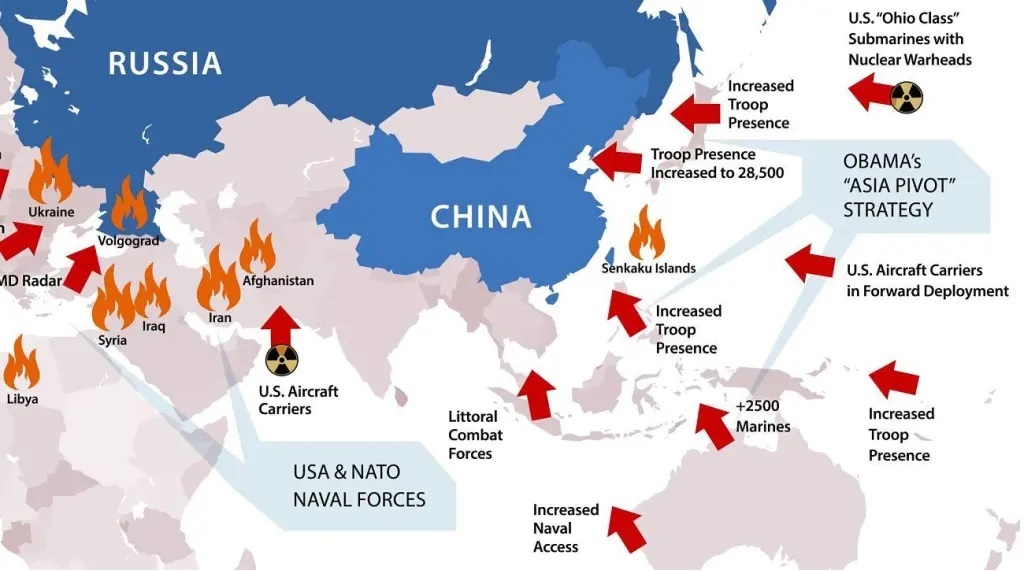
Covert Action magazine, By Sara Flounders, January 9, 2023
Main target is China in dangerously provocative policy that faces no visible domestic opposition in the U.S.
On December 16, Japan’s Prime Minister Fumio Kishida announced a new defense strategy that doubled Japan’s military spending by 2027. Japan further agreed to acquire offensive weapons and reshape its military command structure for its expanded armed forces.
On December 23, the draft budget was approved by Kishida’s cabinet.
Japan’s dangerous military expansion should set off international alarm bells. This major escalation is taking place based on intense U.S. imperialist pressure. It is the next step in the “Pivot to Asia,” aimed at threatening and surrounding China and attempting to reassert U.S. dominance in the Asia Pacific.
The movements opposing endless U.S. wars must begin to prepare material and draw mass attention to this ominous threat.
The plan to double military spending will add $315 billion to Japan’s defense budget over the next five years and make Japan’s military the world’s third largest, after the U.S. and China. Defense spending will escalate to 2% of gross domestic product, equal to the goal the U.S. sets for its NATO allies. Japan’s economy is the world’s third largest.
The Japanese government plans to buy up to 500 Lockheed Martin Tomahawk missiles and Joint Air-to-Surface Standoff Missiles (JASSM), procure more naval vessels and fighter aircraft, increase cyber-warfare capabilities, manufacture its own hypersonic guided missiles and produce its own advanced fighter jets, along with other weapons. The plan shifts from relying solely on missile defense to also embracing “counter strike” capabilities.
………………………………………………… Although the U.S. occupation force, after defeating Japan’s military in World War II, imposed a “pacifist” constitution on Japan, for decades U.S. strategists have pressured Japan’s government to aggressively rearm, to buy U.S.-made weapons, and to act as a junior partner to U.S. efforts to dominate the Asia-Pacific region.
Article 9 of the imposed Japanese constitution prohibits Japan from maintaining an army, navy and air force. To get around this, the “Japanese Self-Defense Forces” (JSDF) have since 1952 been treated as a legal extension of the police and prison system. The U.S. occupiers considered the JSDF an essential repressive tool defending capitalist property relations against the workers’ movement.
The decision for aggressive military expansion is in open violation of Japan’s supposedly pacifist constitution………………………………………….
The present doubling of the defense budget will be funded by raising taxes. A huge military budget will inevitably mean severe cuts to the country’s limited social spending. ………………….
Targeting China
Japan’s military expansion fits in with Washington’s aggression aimed at China, the DPRK and Russia. U.S. strategists’ goal is to use the U.S. alliance with Japan, South Korea and Australia, just as it uses the U.S.-led NATO alliance in Europe……………………………..
China is Japan’s largest trading partner in both imports and exports. Previous National Strategy Documents said Japan was seeking a “mutually beneficial strategic partnership” with China. Suddenly Japanese strategists started labeling China “the greatest strategic challenge in ensuring the peace and security of Japan.” (U.S. Institute of Peace, December 19)………….,………
A U.S.-Japan alliance is now defined as a “cornerstone” of Japan’s security policy. (Japan Times, December 17)
U.S. Praise of Japan’s Rising Militarism
The U.S. media praised Japan’s new security strategy document as a “bold and historic step.” U.S. National Security Adviser Jake Sullivan praised the defense spending hike, which “will strengthen and modernize the U.S.-Japan alliance.” U.S. Secretary of State Antony Blinken called Japan an “indispensable partner” and cheered that the changed security documents reshape the ability to “protect the rules-based order in the Indo-Pacific region and around the world.” (quotes, whitehouse.gov, December 16)
U.S. corporate power is the immediate beneficiary of this sharp turn in policy, built on military threats and economic sanctions. …………………………………………………… more https://covertactionmagazine.com/2023/01/09/biden-administration-tramples-on-japans-post-world-war-ii-pacifist-constitution-by-pushing-countrys-rearmament/?mc_cid=8da2f4a668&mc_eid=65917fb94b
Slew of companies keeping watch on DOE nuclear cleanup work for small biz
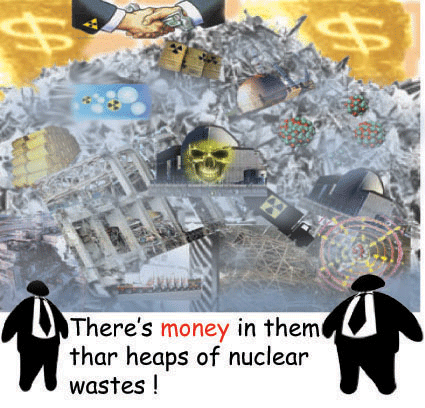
More than 20 companies expressed interest to the Department of Energy’s Office of Environmental Management in landing a slice of various nuclear remediation projects set aside for small business. Twenty-one signed up by Dec. 20 to be on an “interested vendors”… (subscribers only) more https://www.exchangemonitor.com/slew-of-companies-keeping-watch-on-doe-nuclear-cleanup-work-for-small-biz-2/
Gordon M. Hahn: The West has been reckless with Vladimir Putin
10 DÉCEMBRE 2022 Interview by Mohsen Abdelmoumen, Algérie Résistance, le blog de Mohsen Abdelmoumen
Mohsen Abdelmoumen: You are an expert in geostrategy, what is your view on the current conflict in Ukraine?
Gordon M. Hahn: The war in Ukraine is best called the Russian-NATO Ukrainian war. It is a war over whether or not NATO will be allowed to expand to Ukraine and elsewhere along Russia’s borders, but mostly over Ukraine’s potential membership in NATO. NATO expansion drove democracy-promotion efforts in Ukraine and elsewhere, the 2004 Orange Revolution, and the February 2014 Maidan overthrow of the Yanukovych government.
For Russian national security, Ukraine is Geostrategically pivotal. If there is a hostile regime in Kiev backed by the West militarily, then Russia has no virtually no national security other than the resort to nuclear weapons.
Western military assistance makes Ukraine a de facto NATO member on Russia’s border and emboldens Kiev to favor a military solution over a negotiated one to the Donbass conflict it started as well as to seek a return of Crimea.
The widespread Western belief that Putin is politically weak and Russians are bursting to establish a democratic republic and free market economy (things the West itself is abandoning gradually in favor of the Great Reset, Wokism, and AI) led to a lack of caution in dealing with Putin, thinking he would balk at a war or be overthrown if he started one. This is precisely the situation with which the West confronted Russia no later than the Maidan coup and certainly by January 2022; hence, Putin’s decision to invade……………………………………………………………..
In your opinion, who would benefit from the fall of Russia?
Given the security risks of a Russian dissolution noted above, there might be no beneficiaries and quite a few victims in the event. Certainly, the West, China, and perhaps others such as Kazakhstan and India could benefit from territorial acquisition or greater access to Russian territory’s natural resources.
With the amount of weapons that the West has sent to the Ukrainian government, is there not a risk that these weapons will fall into the hands of various jihadist groups?
There is indeed some risk that weapons sold to Ukraine will end up in jihadis’ hands. First, Ukrainian weapons have long been on the black market. Second, reports of corruption and re-sale of Western weapons sent since the war began are legion. Third, there are Chechen elements fighting on both sides in the war, and those on the Ukrainian side might be interested in sending weapons to ISIS allies in the North Caucasus or Turkey.
In your last article “The Russian Winter Offensive”, you talked about the « shock and awe » strategy that begins with winter. What can you tell us about this new step of the Russian offensive planned for this winter?
A Russian offensive this winter is most likely because by January all the 300,000 mobilized recruits plus a wave of another 50,000 volunteers will be ready for combat on the front. The recent strategy of destroying Ukraine’s electricity, fuel, and rail transportation infrastructure is setting the stage for the offensive by degrading these infrastructures making it difficult for Ukraine to move and supply its forces. This degrading will peak when those new forces are ready. Then Moscow will have at least four directions from which to choose for conducting offensives:……………………………….
Moscow may be forced to attack on all of these fronts as it is all now along the southeastern fronts from northern Luhansk to Zaporozhe but more robustly thanks to the coming reinforcements. Then if progress is enough to severely weaken the Ukrainian army a final push on Kiev could come.
This may be the plan Moscow ill eventually settle upon. With Ukrainian energy and transport debilitated, this strategy could force Zelenskiy to enter ceasefire or peace talks or others to remove him from power in order to begin negotiations.
Isn’t the defeat of the Ukrainian army a defeat for NATO against Russia?
It would be a political defeat but obviously not a military defeat. NATO forces are not directly involved on the ground officially or in any great numbers unofficially (Polish and Rumanian soldiers serving as ‘volunteers’). NATO equipment is being used but it is second and third tier stuff and used by Ukrainians unfamiliar with them. If NATO were directly involved on the ground, the war we see now would be a picnic by comparison.
But if Russia wins, it will be a catastrophic political defeat for the US, Europe and NATO and a boon to Russia, China, and the alternative order they are beginning to construct. Other states will join their emerging system in greater numbers and speed than currently, though the growing participation of India and Turkey indicates where things are going. And NATO expansion will difficult to do anywhere on post-Soviet lands from then forward.
If Russia loses the war and Ukraine becomes a NATO member, then the dynamic will be the very reverse. The Putin regime will be under constant threat of destabilization, NATO expansion can continue in places like Georgia and Moldova (despite the latter’s constitutional mandate of neutrality), and the Sino-Russian Eurasian and global network of international organizations (BRICS, SCO, the EEU) will be challenged.
Is it not in the interest of the Westerners who wanted this war to push Ukraine to negotiate?
Right now, it is not. Who in the West wanted this war? The US, NATO, and Western arms dealers. The Biden administration benefits by the war, it thinks, by deploying the Russian bogey man to maintain support among its base and the hope of peeling off moderate Republican security hawks during the election campaign. It can boost defense spending to maintain support of the defense industry. The CIA, FBI and other intel and security agencies also benefit in terms of budget items and institutional profile. NATO supports the war for now because it can use the war to study Russian warfighting and weaponry performance and consolidate its members and other support in the West around the ‘Russian threat’ it itself created. The interest of Western arms dealers needs little elaboration………………………………………..
How far can the West continue to support Kiev?
Until Ukraine is seen as losing the war in a major way with no prospect of rebounding without prohibitively large Western assistance to bolster, the state, regime, and military. This could happen next year.
Hasn’t Zelensky become a burden for everyone? Hasn’t he become an embarrassment, including to the Westerners who support him?
Zelenskiy has both weaknesses and strengths, the latter of which make or can make him a burden to his allies at home and abroad. It must be said that Zelenskiy’s decision to remain in Kiev when Russian forces began to move on Kiev from Belarus in February speaks of a certain courage – perhaps of the kind found in the aphorism ‘there is a fine line between bravery and stupidity’ – and this has certainly rallied many in Ukrainian government and society to his side, when at the war’s beginning his popularity ratings were disastrous.
He is also an effective post-modernist PR conman. But in the desperation of the war’s difficulties, he has repeatedly overreached in producing false propaganda stories, for which he finally was exposed during the recent Ukrainian missile hit on Poland.
On the other hand, he is still being protected by growing Western media censorship and propaganda of the authoritarian kind, which have refused to report on Kiev’s numerous fake ‘Russian atrocities’ and the like. Chief of the Ukrainian General Staff may be running out of patience, but we simply cannot be sure just how tense the Zelenskiy-Zalyuzhniy relationship is. Zelenskiy continues to make himself useful to Ukraine’s powerful neofascist/ultranationalist element, cracking down on Russian language, the former Russian Orthodox Church affiliate in Ukraine, and pro-Russian media.
For Westerners, Zelenskiy is still a beneficiary of the West’s propaganda, which even its propagandists have imbibed and are invested in. Threats to his continuing support are: more exposed lies like the missile hit on Poland episode; massive corruption that is impinging on the effectiveness of Western military assistance; and growing military failure and general staff and/or common soldier dissent in Ukraine regarding the war. This year we are likely to see at home and abroad a serious decline in the popularity of Time’s and Financial Times’ 2022 ‘Man of the Year’. https://mohsenabdelmoumen.wordpress.com/2022/12/10/gordon-m-hahn-the-west-has-been-reckless-with-vladimir-putin/
Ukraine legalizes foreigners in AZOV neo-Nazi regiment

https://www.rt.com/russia/569816-ukraine-legalizes-foreigners-azov/ 13 Jan 23, Citizens of other nations who join the Azov unit will receive benefits on par with regular service members under a new law.
The Ukrainian parliament on Thursday passed a new law that expands perks offered to foreigners who sign up to serve in the country’s military. Sponsors of the bill specifically singled out the controversial Azov regiment as an intended beneficiary of the measure.
Azov originated as a group of far-right volunteers who in 2014 took up arms against Donbass forces with Kiev’s blessing. The unit was incorporated into the National Guard, a structure separate from the army, in November of that year.
The new legislation has added the wording “and other military units” to several laws that previously only covered the main Ukrainian armed forces. A formal justification of the bill said that there are many foreign nationals serving in Azov, but that the existing legal framework makes their presence in Ukraine illegal and does not allow them to request Ukrainian citizenship. The new law is meant to change that.
Azov is arguably the best known internationally of the Ukrainian nationalist units. Before the conflict between Moscow and Kiev escalated into open hostilities last February, Western officials and media outlets acknowledged that many of the unit’s members espoused problematic ideology and that some were neo-Nazis.
An expose published by Time magazine in 2021 called Azov the focal point of “a network of extremist groups stretching from California across Europe to New Zealand.” Over the years, it managed to recruit an estimated 17,000 foreign fighters from 50 nations, the report claimed, before describing the dominant role the Azov extremists play in the movement.
Counter terror police investigate uranium package found at Heathrow airport.
A shipment of uranium discovered at Heathrow could have been part of a dry
run operation by Iranian terrorists to test the resilience of security
measures during recent Border Force strikes, a military intelligence expert
has warned.
Counter-terror police have launched an urgent investigation
after the radioactive substance was identified among a shipment of scrap
metal on board an Oman Air flight from Pakistan. The consignment – bound
for an Iranian-registered business in the UK – arrived at Heathrow on Dec
29, when Border Force staff were in the grip of an eight day walk-out.
The suspicious material, which could be used in the manufacture of a “dirty
bomb”, was detected by officials who were not on strike using
sophisticated radioactive scanning equipment.
Telegraph 11th Jan 2023
Nuclear Heathrow airport scare could be Litvinenko-style attack, claims
former general. Met Counter Terrorism Command officers raced to Heathrow
Airport Terminal 4 on December 29 after a package set off alarms over
“contaminated’ material- which turned out to be uranium
Mirror 11th Jan 2023
https://www.mirror.co.uk/news/uk-news/nuclear-heathrow-airport-scare-could-28927109
NATO to train hundreds of Ukrainian troops in US and Germany, in operating Patriot missile system
WSWS Andre Damon @Andre__Damon 11 Jan 23,
The United States and Germany have announced they will expand their training of Ukrainian troops inside their own borders, further embroiling them in a war with Russia.
The Pentagon announced Tuesday that it will train Ukrainian troops at Fort Sill, Oklahoma on how to operate the Patriot missile system, the most advanced weapon sent to Ukraine to date………………………….
The Pentagon official also confirmed that the US aims to train approximately 500 troops at a time at a US military facility in Germany on “combined arms warfare”…………………………..
The Pentagon’s announcement comes after US President Joe Biden announced a $3 billion arms shipment to Ukraine—the largest to date—and after Congress passed a bill allocating another $50 billion to the war. The latest weapons package included the deployment of dozens of Bradley infantry fighting vehicles, which essentially function as small tanks.
Even as they pour unprecedented amounts of weapons into Ukraine, the NATO powers are preparing to even further escalate their involvement in the war.
………………… Poland and Lithuania have announced that they plan to send Leopard 2 main battle tanks to Ukraine, but that this would require Germany’s permission, as these country signed export agreements as a condition of receiving the tanks.
……………………………….. Expressing the reality of the growing involvement by NATO in the war, Nikolai Patrushev, a security adviser to Russian president Vladimir Putin, said the conflict is “not a clash between Moscow and Kyiv,” but a “military confrontation between NATO, and above all the United States and England, with Russia.” https://www.wsws.org/en/articles/2023/01/11/eywi-j11.html
Japan and USA to develop small nuclear reactors”within each country and third countries.”
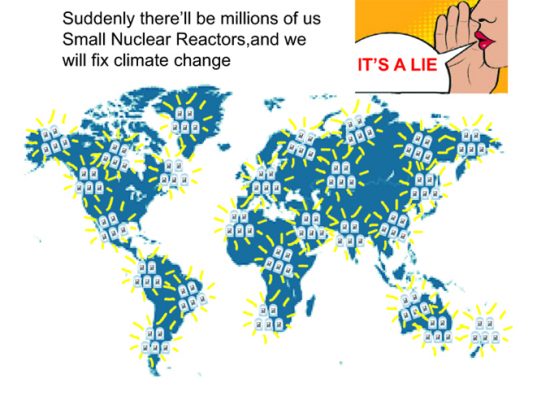
Japan and the United States agreed Monday to strengthen bilateral
cooperation on developing next-generation nuclear reactors during
ministerial talks on energy.
Japanese industry minister Yasutoshi Nishimura
and U.S. Energy Secretary Jennifer Granholm also agreed during their
meeting that Tokyo and Washington will work more closely on securing
liquefied natural gas and other energy security matters.
According to a
joint statement, Japan and the United States will step up cooperation in
developing and constructing next-generation advanced reactors, including
small modular reactors, “within each country and third countries.” The two
governments already revealed a plan in October to work together on helping
Ghana introduce small nuclear reactor technology.
Kyodo News 10th Jan 2023
The US and Japan have agreed to strengthen cooperation on developing and
constructing next-generation advanced reactors, including small modular
reactors, “within each country and third countries”. Japan’s industry
minister Yasutoshi Nishimura and US energy secretary Jennifer Granholm met
in Washington to discuss the situation surrounding global energy security,
strengthening clean energy cooperation, and the importance of clean energy
transitions, including renewable energies and nuclear energy.
Nucnet 11th Jan 2023
Nuclear weapons proliferation really just keeps on going
Nuclear proliferation has hardly slowed in the last decade. India,
Pakistan, China, and the United Kingdom have increased their nuclear
weapons stockpiles, while leaders in Turkey, Saudi Arabia, South Korea, and
Iran have all voiced an interest in militarizing their nuclear programs.
The United States, meanwhile, has been schizophrenic in its control of its
civilian nuclear exports. Washington has tightened restraints on exports to
the United Arab Emirates (UAE), Taiwan, China, and Russia and relaxed
conditions on nuclear transfers to Vietnam, India, and Saudi Arabia.
It has also articulated ambiguous security assurances to insecure states,
including Libya, Taiwan, and Ukraine, that gave up their nuclear weapons
programs or nuclear weapons based on their soil only later to be
overthrown, threatened with invasion, or invaded.
None of this has strengthened nuclear non-proliferation. Just the reverse. In a series of
firsts, Iran’s foreign minister, Mohammad Javad Zarif; Saudi Arabia’s
crown prince, Mohammed bin Salman; and Turkey’s president, Recep Tayyip
Erdoğan, have all publicly threatened to leave the Treaty on the
Non-Proliferation of Nuclear Weapons (NPT).
American Bar Association 6th Jan 2023
Bangladesh puts energy hopes in first nuclear power plant, despite delay, and climate concerns
Global disruption to gas supplies has led to electricity outages in Bangladesh this year, while progress on the Rooppur nuclear power plant has been plagued by construction delays.
Ecobusiness 11 Jan 23 ………………………………………. construction delays, cost concerns and public fears about nuclear safety are clouding the outlook for the new plant.
Bangladesh’s power generation capacity currently exceeds demand – but the fuel needed to run existing plants partly relies on imports, including a quarter of natural gas used, with prices rocketing this year after Russia’s invasion of Ukraine.
………………………. treating nuclear as a renewable or green energy source remains controversial worldwide, as the spent fuel left after power production is not fully recyclable and nuclear waste is hazardous.
Nuclear dropped to below 10 per cent of global power generation in 2021, although the recent energy crisis driven by Russia’s invasion of Ukraine has seen some reawakening of interest.
The goal of developing a nuclear power plant in Bangladesh dates back to the 1960s, but plans adopted by successive governments over the decades were not implemented due to a lack of funding and skilled engineers……………………………………………
Bangladesh’s vulnerability to climate change impacts is another consideration, as the plant is located in a zone that is prone to extreme weather effects like flooding.
Islam – also a professor at the University of Dhaka – said no public information was available on if and how the design of the nuclear plant takes climate-related risks into account…………………………. https://www.eco-business.com/news/bangladesh-puts-energy-hopes-in-first-nuclear-power-plant-despite-delay/
The One-Person Monopoly of Nuclear Launches
European Leadership Network. Tarja Cronberg |Former Member of the European Parliament, Distinguished Associate Fellow at SIPRI and Member of the Executive Board of the European Leadership Network 12 Jan 23
The international discussion on nuclear weapons, during the war in Ukraine, has focused on one question: Will Putin use nuclear weapons? The thought that nuclear weapons might be used in the Ukraine war, is no longer an abstract fear. A nuclear war may be closer than ever. In this new reality there is a risk seldom talked about, but which is built into our command and control systems: one person is able to decide the fate of the earth. The fundamental question for the nuclear order is not about whether or not Putin, or any other president or dictator, might rely on nuclear weapons as the last choice. The question to be posed is: Do we really want to maintain a nuclear order, where one person is formally able to decide the fate of us all?
The international discussion on nuclear weapons, during the war in Ukraine, has focused on one question: Will Putin use nuclear weapons? The thought that nuclear weapons might be used in the Ukraine war, is no longer an abstract fear. A nuclear war may be closer than ever. In this new reality there is a risk seldom talked about, but which is built into our command and control systems: one person is able to decide the fate of the earth. The fundamental question for the nuclear order is not about whether or not Putin, or any other president or dictator, might rely on nuclear weapons as the last choice. The question to be posed is:
Do we really want to maintain a nuclear order, where one person is formally able to decide the fate of us all? Tarja Cronberg
Traditionally there has been a nuclear “taboo”: nuclear weapons could be threatened but not used. They were only for deterrence, to prevent a nuclear attack, not to be used to win a war. The famous Reagan-Gorbachev statement made clear that “a nuclear war cannot be won and must never be fought”. There was also empirical evidence. The weapons have not been used after Hiroshima, although there were over 70,000 nuclear weapons during the Cold War. It is easy to argue that nuclear deterrence has guaranteed peace and prosperity for more than 70 years. Nevertheless, there was always a small exception to this near-total trust in deterrence…………………………………………………
The situation leaves the world in a dangerous place. The Gaddafis and the Husseins could be destroyed by military interventions and regime change before any catastrophe occurred. This is not the case for the Trumps and the Putins. As leaders of the world´s superpowers there is no external power able to intervene, although there may have been plans to kill Putin. The nuclear superpower leaders are more or less democratically elected and their removal will take place according to the laws and politics of the superpower in question. Where does this leave us?…………………………….
Without any solid management system to avoid a nuclear catastrophe, world survival is in the hands of the leaders of its superpowers. Although the decision- making process may involve consultations, the decision is ultimately, even in the case of Russia today, in the hands of one person. Today, given that the world is threatened by a nuclear war, there should be a serious discussion on how the risks of this “one-person nuclear command” could be avoided or at least minimised. The discussion could take at least three different directions…………..
there is an urgent need for a stronger international institutional responsibility for the governance of national decisions on nuclear threats and use. Firstly, there is a need for an international transparency survey on how the nuclear weapon states have defined their first-or second strike launch responsibility. A second phase would seek to establish some international guidelines for national procedures in order to avoid ad hoc, illegal measures in a concrete crisis. So far we have been lucky, but ”luck is not a strategy” as was so ably pointed out by the Secretary-General of the United Nations at the 2022 NPT Review Conference. https://www.europeanleadershipnetwork.org/commentary/the-one-person-monopoly-of-nuclear-launches/
Arctic nuclear waste ship gets funding

Russia’s Prime Minister Mikhail Mishustin has signed the decree granting 12,4 billion rubles to build a transport- and maintenance ship for spent nuclear fuel and radioactive waste from the country’s fleet of icebreakers.
Thomas Nilsen Barents Observer, 11 Jan 23
Not since Soviet days has more nuclear-powered icebreakers been operating at the same time in Arctic waters, the Barents Observer reported last week.
Russia has over the last few years put three brand new icebreakers of the Project 22220 class into operation. Two more are under construction in St. Petersburg and a sixth vessel recently got funding with a goal to put it into service by 2030.
Each of the new icebreakers is powered with two RITM-200 reactors, a reactor type larger than the older Arktika-class icebreakers.
New reactors require new technologies to reload nuclear fuel elements. The service vessel used by Rosatomflot today, the “Imandra”, is from 1980 and does not meet the demands of the new icebreaker fleet, larger in size and numbers.
The new service ship (Project 22770) will be nearly 160 meters long and carry its own cranes to lift in and out containers with spent nuclear fuel or fresh uranium fuel from the icebreaker reactors, either at Rosatom’s service base in Murmansk or in open sea anywhere along the Northern Sea Route………………….. more https://thebarentsobserver.com/en/nuclear-safety/2023/01/arctic-nuclear-waste-ship-gets-funding
US military deepens ties with Japan and Philippines to instigate proxy war with China like it did with Russia
Kathrin Hille, Financial Times, Sun, 08 Jan 23
The US and Japanese armed forces are rapidly integrating their command structure and scaling up combined operations as Washington and its Asian allies prepare for a possible conflict with China such as a war over Taiwan, according to the top Marine Corps general in Japan.
The two militaries have “seen exponential increases . . . just over the last year” in their operations on the territory they would have to defend in case of a war, Lieutenant General James Bierman, commanding general of the Third Marine Expeditionary Force (III MEF) and of Marine Forces Japan, told the Financial Times in an interview.
Bierman said that the US and its allies in Asia were emulating the groundwork that had enabled western countries to support Ukraine’s resistance to Russia in preparing for scenarios such as a Chinese invasion of Taiwan.
“Why have we achieved the level of success we’ve achieved in Ukraine? A big part of that has been because after Russian aggression in 2014 and 2015, we earnestly got after preparing for future conflict: training for the Ukrainians, pre-positioning of supplies, identification of sites from which we could operate support, sustain operations.
“We call that setting the theatre. And we are setting the theatre in Japan, in the Philippines, in other locations.”
Bierman’s unusually frank comparison between the Ukraine war and a potential conflict with China comes as Beijing has dramatically increased the scale and sophistication of its military manoeuvres near Taiwan in recent years. Japan and the Philippines are also intensifying defence co-operation with the US in the face of mounting Chinese assertiveness.
Japan and the US are set to discuss strengthening their alliance at security talks between the foreign and defence ministers on Wednesday and a summit between US president Joe Biden and Japanese prime minister Fumio Kishida on Friday in Washington. The summit comes as Tokyo embarks on a radical security policy shift that will include increasing defence spending and deploying missiles capable of hitting Chinese territory.
III MEF is the Marine Corps’ only crisis response force permanently stationed outside the US. It operates within the range of Chinese medium- and long-range missiles, with which Beijing seeks to constrain US operational freedom in the region.
The unit is at the heart of a sweeping reform of the Marine Corps that aims to replace its focus on fighting counter-insurgency in the Middle East with creating small units that specialise in operating quickly and clandestinely in the islands and straits of east Asia and the western Pacific to counter Beijing’s “anti-access area denial” strategy.
To realise that strategy, closer integration with allies was vital, Bierman said. In a series of recent exercises, the Marines for the first time set up bilateral ground tactical co-ordination centres rather than exchanging liaisons with allies’ command points.
In another sign of deepening co-operation, specific Japanese military units have been designated as part of the “stand-in force” alongside III MEF and US Navy and Air Force units.
Instead of a “round robin” of Japanese military units working with US counterparts, as in the past, a “standing community of interest” is emerging of allied units with responsibility for operational plans, Bierman added.
He said while the US military was paying attention to Chinese aggressive behaviour around Taiwan, the People’s Liberation Army should not be perceived as being “10 feet tall”.
“When you talk about the complexity, the size of some of the operations they would have to conduct, let’s say [in] an invasion of Taiwan, there will be indications and warnings, and there are specific aspects to that in terms of geography and time, which allow us to posture and be most prepared.”
As part of those preparations, the Philippines plan to allow US forces to preposition weapons and other supplies on five more bases in addition to five where the US has already access.
“You gain a leverage point, a base of operations, which allows you to have a tremendous head start in different operational plans. As we square off with the Chinese adversary, who is going to own the starting pistol and is going to have the ability potentially to initiate hostilities . . . we can identify decisive key terrain that must be held, secured, defended, leveraged.
Rolls Royce’s frustration as government holds back on orders for mininuclear reactors.
Treasury will reportedly not sign off on investment until
technology approved by regulators. A funding deal for the first fleet of
mini nuclear reactors may not materialise for another 12 months, to the
dismay of domestic leaders in the technology. The government made small
modular reactors a central element of its plans to generate 24GW of energy
from nuclear by 2050, but according to The Times there is significant
uncertainty in Whitehall over the scale and state of investment plans.
Building 10th Jan 2023
1 This Month




Shut down the radiation-damaged Heysham nuclear reactors now
To see nuclear-related stories in greater depth and intensity – go to https://nuclearinformation.wordpress.com

Say No to NASA’s Reckless Nuclear Reactor on the Moon
Say No to NASA’s Reckless Nuclear Reactor on the Moon
-
Archives
- October 2026 (289)
- September 2026 (339)
- August 2026 (330)
- July 2026 (355)
- June 2026 (287)
- May 2026 (306)
- April 2026 (356)
- March 2026 (251)
- February 2026 (267)
- January 2026 (308)
- December 2025 (358)
- November 2025 (359)
-
Categories
- 1
- 1 NUCLEAR ISSUES
- business and costs
- climate change
- culture and arts
- ENERGY
- environment
- health
- history
- indigenous issues
- Legal
- marketing of nuclear
- media
- opposition to nuclear
- PERSONAL STORIES
- politics
- politics international
- Religion and ethics
- safety
- secrets,lies and civil liberties
- spinbuster
- technology
- Uranium
- wastes
- weapons and war
- Women
- 2 WORLD
- ACTION
- AFRICA
- Atrocities
- AUSTRALIA
- Christina's notes
- Christina's themes
- culture and arts
- Events
- Fuk 2022
- Fuk 2023
- Fukushima 2017
- Fukushima 2018
- fukushima 2019
- Fukushima 2020
- Fukushima 2021
- general
- global warming
- Humour (God we need it)
- Nuclear
- RARE EARTHS
- Reference
- resources – print
- Resources -audiovicual
- Weekly Newsletter
- World
- World Nuclear
- YouTube
-
RSS
Entries RSS
Comments RSS

