Ralph Nader: Reverse the Accelerating Warfare State Before It’s Too Late!

when the government talks war, organizes for war, has military bases in a hundred countries and provokes belligerence, wars are likely to happen.
Tell elected officials to stop the arms race and pursue arms control treaties before autonomous weapons of mass destruction and miscalculations lead to World War III – the final world war.
By Ralph Nader / Nader.org https://scheerpost.com/2023/06/05/ralph-nader-reverse-the-accelerating-warfare-state-before-its-too-late/
The Military Budget, which devours over half of the entire federal government’s operational expenditures, has been exempted by Biden and the Congressional Republicans from any reductions in the debt limit deal just reached. Also exempted are hundreds of billions of dollars in yearly diverse corporate subsidies to big business freeloaders.
Most of the cuts will slash the domestic programs that protect the health, safety and economic well-being of the American people. Cuts will also be made to the starved I.R.S. budget, further weakening its capacity to pursue super-rich tax cheats and giant corporate tax escapees. The GOP insisted on continuing its aiding and abetting of grand-scale tax evasion that fuels bigger deficits.
Biden also agreed not to restore any of Trump’s tax cuts on these same plutocrats and corporatists who refuse to pay for the undeclared wars of Empire from which they massively profit.
Welcome to America – Land of the Free, Home of the Brave sleepwalking its way through Sucker Land. It gets worse, People. Not only did the Pentagon, and indirectly the giant munitions corporations like Lockheed Martin, Raytheon and General Dynamics get exempted, they were told by both the GOP and the Democrats to get ready, in the coming years, to receive additional tens of billions of dollars that the Generals and Biden didn’t even ask for. Biden wants to increase last year’s Pentagon budget by $48 billion, and the blank-check solons on Capitol Hill are inclined to match him. Except for a few dozen progressives, the support for this Niagara of dollars is bipartisan even though the Pentagon budget is and has been unauditable.
Yet, since 1992, the Department of “Offense” has been violating the federal law that requires DOD to submit an auditable budget to Congress every year. Every Secretary of Defense has admitted this noncompliance and promised to correct it. Yet year after year the violation of law continues. No one can fathom the waste, redundance and gigantic cost overruns by the coddled big business military contractors with their government-guaranteed arrangements. Without Congressional investigatory hearings, without instructing the Congressional watchdog GAO (Government Accountability Office) to do its neglected, underfunded specialized auditing, and without giving voice to budget experts like William Hartung or knowledgeable military professionals like retired Colonel Lawrence Wilkerson and MIT Professor Emeritus Ted Postol, the Pentagon has gone unchecked.
The two-Party duopoly has turned Congress into a giant shovel of unaudited money for the military to secure misguided bragging rights for your Representatives and Senators back home about being “strong on defense” rather than watchdogs over your tax dollars.
Meanwhile, back home, schools crumble, existing public transit is dangerously antiquated and in need of repair, as are bridges, roads, clinics, ports, airports, public drinking water systems and waste management facilities. Care for the public lands and national parks suffers massively due to deferred maintenance. Funding to deal with land erosion, toxic water and air pollution is in short supply.
The failure of Congress to provide support for desperately needed programs such as Head Start and other programs to reduce child hunger, homelessness and poverty involving 80 million people, either without health insurance or under-insured, is beyond shameful. Why is the United States, the richest nation on the planet, providing less to its citizens than Western European countries and Canada? Answer: The runaway power of Big Business over public budgets!
Moreover, we are woefully unprepared for the coming pandemics, as we were for COVID-19, and for worsening natural disasters of climate violence perpetuated by the giant fossil fuel companies (e.g. Chevron and Exxon Mobile) that control Congress.
But hey, our war machine can remotely vaporize a cluster of young men idly standing on a dusty road in Yemen with a drone operator pushing buttons in Virginia and Nevada. Over a trillion and a half dollars will be spent on upgrading our nuclear bombs with the same amount being wasted on strategically useless F-35 fighter planes.
And remember citizens, when the government talks war, organizes for war, has military bases in a hundred countries and provokes belligerence, wars are likely to happen.
Not even the money spent on one F-35 is being devoted to waging peace, initiating ceasefire negotiations and launching efforts for international arms control treaties as occurred under former presidents Jimmy Carter, Ronald Reagan and Bill Clinton.
There is no Department of Peace, and the State Department is more bellicose than the Pentagon in its war of words. We’ve been waiting for Rep. Jim McGovern (D-MA) who has yet to put a bill in the hopper to create such a department – a purported priority of his since long before his election to Congress.
One can hope that the Pentagon Brass – the generals and admirals, some of whom anticipate retiring to become consultants to, or executives of, the corporate weapons industry, would teach the rampaging Congressional Yahoos a lesson in patriotic restraint. Congress must learn to say “no thanks” to more money than requested and use those funds to help save hundreds of thousands of lives in America lost every year to toxic pollution, preventable negligence in hospitals, the opioid epidemic, tobacco, alcohol, occupational hazards and more.
Absent that prospect, the dozens of small citizen peace advocacy groups and organizations such as Veterans for Peace should establish a national “Rein in and Audit the Military Budget and Save American Lives Day” to spark a nationwide grassroots mobilization focused on Congressional offices on Capitol Hill and in the states. There is no time to waste!
Fill the reception rooms of Members of Congress with citizens for peace and justice for a change. Let our elected officials start hearing the rumble from an aroused people conveying irresistible arguments backed by irrefutable evidence. Tell them to stop the arms race and pursue arms control treaties before autonomous weapons of mass destruction and miscalculations lead to World War III – the final world war.
Tiny radioactive particles persist indoors years after Fukushima

Ellen Fiddian , https://cosmosmagazine.com/science/physics/fukushima-caesium-microparticles/ 4 June 23
Radioactive microparticles were still coating buildings near the Fukushima Daiichi nuclear power plant five years after the disaster, according to a study in Chemosphere.
The researchers found caesium-rich microparticles (CsMPs) in the dust of an abandoned primary school 2.8 kilometres southwest of the plant.
CsMPs are usually 5 micrometres in size or smaller (<PM5), and pose a threat to human health if inhaled because they’re highly radioactive.
They also don’t dissolve well in water, meaning they’re likely to persist in the environment and in bodies of people and animals.
“Given the small size of the particles, they could penetrate into the deepest parts of the lung, where they could be retained,” says senior author Associate Professor Satoshi Utsunomiya, a researcher at Kyushu University, Japan.
The researchers had previously shown that the 2011 Fukushima nuclear disaster, which was triggered by an earthquake and subsequent tsunami, released CsMPs. They found CsMPs in a wide area including as far south as Tokyo, about 300km away.
While they had shown CsMPs were distributed widely in the Fukushima exclusion zone, but had not yet shown that the particles could get indoors.
“When entering the school building, we were all shocked by what we saw. Five years had passed by the time of sampling in 2016, but everything was left as it was at the moment of the 2011 earthquake. It’s as if time had stood still,” says Utsunomiya.
The researchers examined dust samples from floors near the school entrance, on its second floor, and in the school yard.
They found CsMPs at both indoor locations, with higher concentrations near the door.
“The CsMPs may present a threat; as shown in our work, CsMPs may accumulate locally and form hot spots, even in indoor environments,” says Utsunomiya, although the exact health effects of CsMPs are still unclear.
“The potential occurrence of CsMPs in indoor environments dictates a need for detailed studies of indoor CsMPs in residential areas impacted by Fukushima Daiichi nuclear power plant fallout,” says co-author Professor Gareth Law, from the University of Helsinki, Finland.
“I believe it is our duty to conduct rigorous scientific research on the tragic Fukushima events, to find and publicize new knowledge that will be important to society and the next generation,” says Utsunomiya.
“Maybe one day time can begin again for abandoned buildings like the school, but for that to happen, significant clean-up efforts are needed, and if that is to proceed, we first need to know about the forms and extent of contamination in those buildings, such that workers and potential occupants can be protected.”
Japan will be releasing treated radioactive water – nuclear waste from the plant – into the Pacific Ocean later this year.
Netanyahu convenes Iran war drill, scorns UN nuclear watchdog
Yahoo! News, Dan Williams, Sun, 4 June 2023
JERUSALEM (Reuters) -Israeli Prime Minister Benjamin Netanyahu ramped up threats to attack Iranian nuclear facilities on Sunday, convening a rare cabinet war drill after he accused U.N. inspectors of failing to confront Tehran.
With Iran having enriched enough uranium to 60% fissile purity for two nuclear bombs, if refined further – something it denies wanting or planning – Israel has redoubled threats to launch preemptive military strikes if international diplomacy fails. Israel has long maintained that for diplomacy to succeed, Iran must be faced with a credible military threat.
We are committed to acting against Iran’s nuclear (drive), against missile attacks on Israel and the possibility of these fronts joining up,” Netanyahu said in a video statement from Israel’s underground command bunker at its military headquarters in Tel Aviv.
The possibility of multiple fronts, Netanyahu said while surrounded by security cabinet ministers and defence chiefs, requires Israel’s leadership “consider, if possible consider ahead of time,” its major decisions.
Netanyahu’s office issued footage of the drill. The publicity around the preparations appeared to depart from Israel’s 1981 strike on an Iraqi nuclear reactor and a similar sortie in Syria in 2007, carried out without forewarning.
UN WATCHDOG SAID IRAN PROVIDED SATISFACTORY ANSWER
Earlier, Netanyahu levelled sharp criticism of the International Atomic Energy Agency (IAEA), following a report last week by the U.N. watchdog that Iran had provided a satisfactory answer on one case of suspect uranium particles and re-installed some monitoring equipment originally put in place under a now-defunct 2015 nuclear deal……….
The IAEA declined to comment.
On Wednesday, the agency reported that after years of investigation and lack of progress, Iran had given a satisfactory answer to explain one of three sites at which uranium particles had been detected.
Those particles could be explained by the presence of a onetime Soviet-operated mine and lab there and the IAEA had no further questions, a senior diplomat in Vienna said.
In an apparent reference to this, Netanyahu said Iran’s explanations were “technically impossible.”………………………more https://au.news.yahoo.com/israel-accuses-u-n-nuclear-125127358.html
How Much Would It Cost to Solve Climate Change? And How Would We Pay for It?

Palmer Owyoung, Medium 31st May 2023
We know we need to replace fossil fuels with renewable energy. But as of
2023, we still get about 78 % of our energy from fossil fuels, with coal
making up the single biggest source of electricity at 36%. So how do we get
from where are today to 100% renewable energy before 2050? Is there a
climate change solution? Most importantly how much will it cost and who
will pay for it?
To answer the first question, we look to Mark Jacobson, a
professor of civil and environmental engineering and director of the
Atmosphere/Energy Program at Stanford University. In his 2023 Book No
Miracle Needed, he puts together a comprehensive plan based on real-world
data that shows how the world can transition off fossil fuels using
existing technology in the form of wind, solar, geothermal, hydo-electric,
and battery storage.
According to Jacobson we already have 95% of what we
need to get there and the remaining 5% will come from hydrogen fuel cells
that can power airplanes and long-distance cargo ships. The data for his
book comes from a detailed study that he published in 2015 of what each of
the 50 U.S. States needs to transition their electrical grid,
transportation, heating/cooling, and industrial sectors to renewable energy
powered by wind, water and sun.
The plan’s goal is to replace 80 to 85% of
fossil fuels by 2030 and 100% by 2050. This time frame is considerably more
aggressive than the Paris Climate Agreement and Jacobson not only addresses
the need to reduce greenhouse gas emissions and air pollution, but does so
while keeping energy costs low, creating new jobs and maintaining a stable
power grid.
One of the biggest issues with solar and wind is the
intermittency problem, which means that the sun does not always shine and
the wind doesn’t always blow. Jacobson’s 2015 report was criticized for
making assumptions about how energy could be stored and it was dismissed as
using unrealistic assumptions. His response was to write the 2018 study
that divided the world into 143 countries and 20 regions around the world.
Using data and a simulator he and his team looked at the grid stability in
each of the regions for every 30 seconds for the past five years to
determine the cost of energy per unit. What they found was that wind, water
and solar power are enough to keep the grid stable and uninterrupted
contrary to what his critics said. In fact, he found that there is enough
wind generated on the Earth to power our needs 6 or 7 times over and while
it’s true this energy is intermittent, he says it would require no more
than 4 hours of battery storage in order to solve the problem.
Furthermore,
a 2023 study published in Nature indicates that electric vehicle batteries
alone could provide the short-term storage needed by global grids as early
as 2030.
·
1.5 C limit is still feasible
Now that the Earth has warmed roughly 1.2°C, “once-in-a-century”
heatwaves, forest fires, and floods are becoming more familiar to us. But
there is still a massive difference between 1.2°C and 1.5°C, and the
science shows that it is still possible to end this century at or below
that threshold.
Project Syndicate 1st June 2023
Instagram bans Democratic presidential candidate RFK Jr from creating new campaign accounts
Post Millennial, Jennifer Ackerman, 2 June 23
“Social media is the modern equivalent of the town square. How can democracy function if only some candidates have access to it?”
Democratic presidential candidate Robert F. Kennedy Jr revealed on Thursday that when his campaign uses the TeamKennedy email address to set up accounts on Instagram, they are automatically banned from Instagram for 180 days.
Kennedy Jr praised Twitter for allowing his campaign to have a voice, adding, “To silence a major political candidate is profoundly undemocratic. Social media is the modern equivalent of the town square. How can democracy function if only some candidates have access to it?”
Chet Long, Founder and Senior Partner of Web360 Global, announced he would be hosting the upcoming Twitter Spaces event, calling it a “Presidential Town Hall,” this coming Monday at 2 PM.
Robert F. Kennedy Jr announced in April that he is running as a Democrat and challenging President Joe Biden for the Democratic nomination for President of the United States. While Kennedy Jr does have his own personal Instagram account with 11.9 thousand followers, his tweet alleges that Instagram is blocking his campaign email from setting up new accounts. Instagram’s automated reply states: “Your account, or activity on it, doesn’t follow Community Guidelines on account integrity and authentic identity.”……………………………. https://thepostmillennial.com/instagram-bans-dem-presidential-candidate-rfk-jr-from-creating-new-campaign-accounts
The AUKUS nuclear submarine deal is a nuclear proliferation danger

The plan to supply Australia with nuclear-powered submarines has met with anger from China and fears that it sets a dangerous precedent, writes Mike Higgins.
The AUKUS nuclear submarine deal is a challenge for the IAEA, Chatham House, 2 JUNE 2023, Mike Higgins
The trilateral security pact between the United States, the UK and Australia, known as Aukus, will be at the forefront of the International Atomic Energy Authority’s board of governors meeting in Vienna from June 5-9.
Rafael Grossi, the IAEA Director General, is due to present a report on the state of the negotiations governing the supply of new nuclear submarines to Australia. At issue is how arrangements for the supply of nuclear material will adhere to a never-before used article of the Treaty on the Non-Proliferation of Nuclear Weapons, or NPT.
Article 14 allows the use of nuclear material when not applied to weapons to be exempt from the usual safeguards and protocols under the NPT. By the early 2030s Australia will buy from the US up to five conventionally armed nuclear submarines and, a decade later, build a new class of nuclear-powered submarine with US and British technology. Approval from the IAEA watchdog is essential for these plans.
China has strongly criticized the agreement, saying, among other things, that the Aukus partnership ‘constitutes serious nuclear proliferation risks’, and that the alliance was forcing its own interpretations of Article 14 to suit its needs beyond the spirit of the NPT. ‘The international community has not reached any consensus on the definition of such military activity and there are huge divergences on the applicability of Article 14,’ said Wang Wenbin, China’s chief foreign ministry spokesperson, in March.
Grossi is expected to elaborate on the implications of the Aukus partnership at the IAEA’s board meeting.
At a Chatham House event in February, Grossi acknowledged the partnership required ‘a special arrangement’ between the Aukus partners and the IAEA, representing a ‘game changer’ for non-proliferation safeguards: ‘This is the beginning of a long road,’ he said.
A dangerous precedent?
…………………. some experts urge caution over the exercising of Article 14, claiming it sets a dangerous precedent which could lead to nuclear material being diverted into the making of nuclear weapons.
‘My concern is not that Australia is going to remove nuclear material from safeguards and build a nuclear bomb,’ said James Acton, co-director of the Nuclear Policy Programme at the Carnegie Endowment for International Peace. ‘But once you normalize the precedent that it’s OK to remove nuclear material from IAEA safeguards you create a much higher risk that other states are likely to do so.
‘For instance, if Iran and Russia were to announce naval cooperation that looked like Aukus, I don’t believe that the US, Britain and Australia would feel comfortable with that on non-proliferation grounds,’ he said.
Other challenges lie ahead for the IAEA in monitoring Aukus. Nuclear submarines at sea may remain out of reach of inspectors for months at a time and nuclear fuel for naval reactors is highly classified − the Aukus partners may be unwilling to give inspectors access to its design or confirm the exact amounts to be used…………. https://www.chathamhouse.org/publications/the-world-today/2023-06/aukus-nuclear-submarine-deal-challenge-iaea
Blinken Dismisses Calls for a Ceasefire, Says US Must Build Up Ukraine’s Military

The Secretary of State called for Washington to continue to put militarism before diplomacy, by Kyle Anzalone
The US will focus its efforts on arming Ukraine and not attempting to bring the war to a negotiated settlement, America’s top diplomat said. Secretary of State Antony Blinken laid out a plan to massively expand Kiev’s military before talks begin.
In a speech delivered in Finland on Friday, Blinken stated, “The United States – together with our allies and partners – is firmly committed to supporting Ukraine’s defense today, tomorrow, for as long as it takes.” He continued, “We believe the prerequisite for meaningful diplomacy and real peace is a stronger Ukraine, capable of deterring and defending against any future aggression.”
Blinken dismissed the idea of even a temporary pause in the fighting. …………………………
The Secretary of State offered an ambitious vision of Kiev’s future military capabilities. “America and our allies are helping meet Ukraine’s needs on the current battlefield while developing a force that can deter and defend against aggression for years to come.” He added, “That means helping build a Ukrainian military of the future, with long-term funding, a strong air force centered on modern combat aircraft, an integrated air and missile defense network, advanced tanks and armored vehicles, national capacity to produce ammunition, and the training and support to keep forces and equipment combat-ready.”
It is unclear how long it would take to build the deterrence force envisioned by Blinken. American arms stockpiles are dwindling as Washington attempts to transfer Kiev enough military equipment to keep its army fighting. The US additionally has plans to significantly increase arms transfers to Taiwan.
Blinken claimed, “Our support for Ukraine hasn’t weakened our capabilities to meet potential threats from China or anywhere else – it’s strengthened them.” In November, the Wall Street Journal reported, “US government and congressional officials fear the conflict in Ukraine is exacerbating a nearly $19 billion backlog of weapons bound for Taiwan, further delaying efforts to arm the island.”
Additionally, the White House may not have the support it needs in the Capitol for such a massive military buildup in Ukraine. Blinken asserted that “in America, this support is bipartisan.” However, at the beginning of May, Rep. Michael McCaul (R-TX), chairman of the House Foreign Affairs Committee, said future support for Ukraine would be contingent on success in Kiev’s long-planned counteroffensive.
Since McCaul’s statement, Ukraine has slowly lost more territory to Russian forces, including Bakhmut. Zelensky committed endless resources to the city in a months-long battle despite the advice from his Western backers. The White House is now preparing for the counteroffensive to fail.
Washington’s strategy, as laid out by Blinken, calls for arming Ukraine and weakening Russia. ………..
However, Gen. Christopher Cavoli, the commander of US European Command, told Congress in April that Moscow’s ground forces are “bigger today” than before Moscow launched its invasion of Ukraine last year.
……………………………………………. In April 2022, Biden administration official Derek Chollet admitted that the White House refused to negotiate with the Kremin on Putin’s core concern, Ukraine becoming a member of NATO. “We made clear to the Russians that we were willing to talk to them on issues that we thought were genuine concerns,” Chollet said, adding that the administration didn’t think that “the future of Ukraine” was one of those issues and that its potential NATO membership was a “non-issue.”https://news.antiwar.com/2023/06/02/blinken-dismisses-calls-for-a-ceasefire-says-us-must-build-up-ukraines-military/
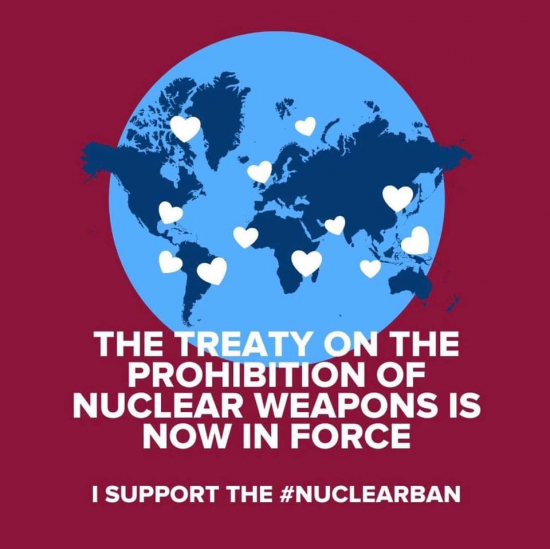
June 2: Nonviolent ecumenical movements call for ratification of the Nuclear Weapons Prohibition Treaty
04.06.23 – Italy – Redazione Italia https://www.pressenza.com/2023/06/june-2-nonviolent-ecumenical-movements-call-for-ratification-of-the-nuclear-weapons-prohibition-treaty/
On the occasion of June 2, Republic Day, associations and organizations from the Catholic world and spiritually based ecumenical and nonviolent movements called at a June 1 press conference for the Italian government to ratify the U.N. Treaty on the Prohibition of Nuclear Weapons as a first step in stemming the war in Ukraine and embarking on a diplomatic path to peace.
“We are in an apocalyptic scenario, today, more than ever, it is necessary that the Treaty be signed because the crest on which we are walking is very dangerous,” said Carlo Cefaloni of the Focolare Movement, opening the press conference at the Chamber of Deputies on behalf of all the movements.
“Tomorrow there will be a military parade, instead we are here to say that we don’t want war; but we really have to decide that,” said Don Renato Sacco of Pax Christi, “because in this last year 2240 billion euros have been invested in armaments; this means that you want war: [therefore] there is a need to choose peace in a strong and determined way.
Also speaking during the press conference was Enkolina Shqau of the Pope John XXIII Association; she stressed that “to say no to war and nuclear weapons is not a matter of being good but of being smart because it is not possible that we still have not learned anything from the disasters of the last century.”
Emanuela Gitto, Vice President of the Youth Sector of Catholic Action stressed that “On the occasion of the June 2 holiday, we want to remember how the Constituent Assembly decided to put the repudiation of war among the founding pillars of our Republic, which is why it is important that the call to silence the weapons and open a true dialogue towards peace starts from these rooms.
“Politics has been lacking in these months, especially a prophetic vision of politics,” said Emiliano Manfredonia, national president of the ACLI, “and so the usual traffickers, including drug and human traffickers have won. Let us commit instead to sign this treaty as a prophetic gesture, as a strong signal to start a real path of peace and to accompany Monsignor Zuppi in this mission of his in Ukraine so that he can really open the necessary paths.”
Maurizio Simoncelli, spokesman for the Italia ripensaci campaign explained that “the Treaty so far has been signed by nations that do not have nuclear production (Translator’s note: They probably mean “nuclear weapons”. Italy hosts nuclear weapons), and it would be nice if instead, Italy was the first to set a good example in this regard because we know that having nuclear weapons does not increase a country’s security, but rather the opposite.”
A number of parliamentarians were also present in the press room of the Chamber of Deputies, including Hon. Paolo Ciani, who wanted to reiterate how important the commitment of politics is “and it is not a credit to European politics that the go-ahead from Strasbourg in these hours will allow the use of PNRR (National Plan for Recovery and Resilience) funds for the production of munitions to be sent to Ukraine.” MP Nicola Fratoianni also commented on the news of the Europarliament vote, saying that “these are acts that have nothing to do with real politics and I am very happy with demonstrations like the
one you organized today because they are necessary to make the decision-makers change direction.”
Mario Marazzitti of the Sant’Egidio Community wanted to add that “the signing of this document certainly does not serve to resolve the conflict in Ukraine, but it is a first step to lower the fever of war and this mad arms race.”
“Good politics is the one that gets us out of the logic of the market,” said Maurizio Certini of the Giorgio La Pira Foundation, “therefore out of the business related to the production of weapons because we need to make everyone understand that bombs bring insecurity.
At the end of the press conference, representatives of the associations gathered in front of the Montecitorio to display a banner that read For a Republic Free of War and Nuclear Weapons.
Mediterranean now a global heating hotspot
Shortly after Easter this year, in the midst of a historic, multi-year
drought, temperatures in parts of the western Mediterranean climbed a
barely believable 20C higher than seasonal norms, hitting a
record-shattering 39C in southern Spain. And that was in April.
As global heating advances, July and August in the world’s most-visited holiday
destination – pre-Covid, more than 300 million tourists a year headed to
the Med, a figure some predict could rise to 500 million by the end of the
decade – risk becoming unbearable.
The Mediterranean basin is a global
heating hotspot. While the world is now about 1.1C warmer than it was in
the 1970s, the region is already up 1.5C and on course for 3C by the end of
the century (or 5C, in a worst-case scenario). Rising temperatures and more
frequent heatwaves are not the only challenge. Most climate models agree
that in most parts of the world, warmer will also mean wetter – but not in
the Med, where rainfall is set to plunge by between 10% and 60%.
Guardian 3rd June 2023
Unseemly scramble as makers of small nuclear reactors try to con UK government

NuScale joins Rolls-Royce and Bill Gates in race to build UK nuclear
reactors. A US nuclear developer is poised to join the race to build new
reactors in the UK and has urged the government to go faster in picking a
preferred technology.
NuScale, based in Oregon, said it was “very
active” in the UK market and that it would “engage with the activity
around the government’s SMR competition”.
The UK is running a contest to
find suppliers of small modular reactors (SMRs), which hold the promise of
zero-emission, lower-cost nuclear power as they can be made in a factory
and assembled on site. This reduces the vast overheads of large nuclear
projects.
NuScale is developing an SMR called VOYGR, which is based on a
traditional nuclear design called a pressurised water-cooled reactor. It is
the first SMR to have been certified by the US Nuclear Regulatory
Commission.
The UK government has set up a new body, Great British Nuclear
(GBN), to select new projects. It is aiming to settle on winning SMR
designs by the autumn.

Tom Mundy, president of VOYGR services and delivery,
said NuScale would not require development money from GBN as its project
was ready to deploy. “We don’t need the support that has been suggested
… We’re ready to deliver the project much earlier than GBN has
suggested,” he said. “GBN suggests people could start building SMRs by
2030. That means taking a final investment decision then. That’s too late
for us. We have got customers taking final investment decisions much
earlier,” Mundy added. “Let’s get going.”
NuScale’s rivals in the
race include GE Hitachi, also of the US, and Rolls-Royce, which wants to
win an order in its home market. TerraPower, a start-up founded and chaired
by Bill Gates, has also indicated that it wants to build nuclear projects
in the UK. It has a type of SMR called an advanced modular reactor (AMR) in
development.
Times 4th June 2023
Greenland refuses to allow exploitation for uranium
Energy Transition Minerals, formerly Greenland Minerals A/S, has been
informed by Naalakkersuisut that their application for an exploitation
permit in Kuannersuisut has been refused. The ministry announced this in a
short press release on Friday afternoon. Energy Transition Minerals has
applied for permission for exploitation at Kuannersuit in Narsaq,
targeting, among other things, rare earths, zinc and uranium.
Sermitsiaq 2nd June 2023
Nuclear energy just helped Finland slash electric costs by a staggering 75% — so why doesn’t the US follow suit? 3 reasons we are cool on the power source
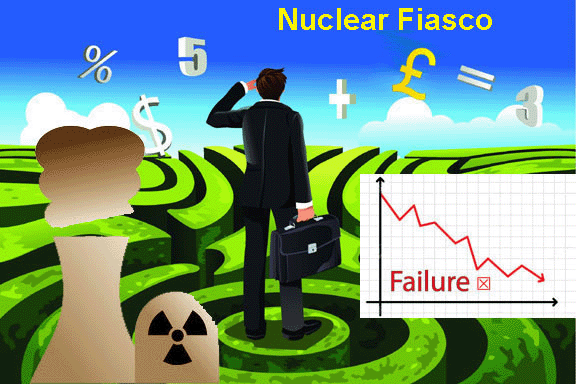
Of course all bets on stability are off in the event of a meltdown — and in terms of catastrophes compared to anything possible with solar or wind, you might also say it’s not even close.
But in the end, nuclear is complicated — and it only takes a tsunami, fat finger on the control panel or mechanical breakdown to once again become reacquainted with the fallout.
Vishesh Raisinghani, Sun, June 4, 2023 https://finance.yahoo.com/news/nuclear-energy-just-helped-finland-110000152.html
The first new European nuclear plant in 16 years has already slashed Finland’s energy bill by three-fourths.
Olkiluoto 3, or OL3, joins two existing reactor units that have powered Finland’s grid for decades. This latest unit adds 1,600 megawatts to the plant’s production capacity — which means 30% of the nation’s electricity will soon come from just one plant on a tiny island in Western Finland.
When the new OL3 unit was fully activated in April, average spot electricity prices fell to €60.55 ($65.69) per megawatt hour. That’s 75.38% lower than the average spot price in December 2022 (€245.98 per megawatt hour).
While its operating company TVO called it “the greatest single climate act in Finland,” others argue that the benefits are hardly worth the risks.
Here’s why most countries are cool on this technology.
Fear
High-profile incidents like at Three Mile Island, Chernobyl and Fukushima have severely impacted the reputation of nuclear energy. Even if an overwhelming number of plants are safe, it only takes one accident to render the land around a plant uninhabitable.
In the U.S., “nukes” (as protesting musicians nicknamed them in the 1980s) continue to be unpopular. The number in the U.S. has dropped from a peak of 107 in 1990 to 93 as of 2022, according to the Pew Research Center.
Roughly 1-in-4 Americans say their government should actively discourage nuclear energy production, which could explain why so few plants have been built over the last 10 years. Yet fear is only part of the equation, as the financial bottom line also plays a crucial role in the lack of any nuclear energy embrace.
Cost
New nuclear power plants are mostly being built in countries where all infrastructure is cheaper to build. China is currently developing 24 new plants — the most in the world. Meanwhile, India is building eight new reactors. It’s simply cheaper to build plants in these regions.
According to the World Nuclear Association, the overnight cost of building a new plant in China, which assumes no interest payments, is $2500/kWe, while the cost in the U.S. is $6041/kWe (short for kilowatt-electric or one thousand watts of electric capacity). This price disparity is another reason why nuclear power isn’t favored in the developed world — though the causes go far beyond this.
Time
Nuclear power takes several years to deploy — and that’s on the conservative end. A plant can typically be constructed over a period of five years. However, regulatory and financial hurdles could delay these projects along the way. Meanwhile, a typical wind farm can be fully deployed in as little as six months, according to EDF Energy.
The classic example of how mismanaged a nuclear project can get is as close as Georgia. There, the third reactor at Plant Vogtle went online at full capacity in late May but was supposed to start generating power in 2016. It was approved for construction in 2009, and overruns pushed the cost to more than $17 million; combined with a fourth reactor still in the testing phase, the total price comes to a staggering $35 billion.
‘The most reliable source’
Indeed, time and cost ultimately represent the biggest barrier to adoption. Even Finland’s energy experts understand the commercial challenges. “[Nuclear] it seems is not very attractive for the investors,” Jukka Ruusunen, chief executive of Finland’s national grid operator Fingrid, told The National.
However, nuclear power has several non-commercial advantages. Unlike wind and solar, nuclear energy output is stable regardless of weather and sunshine hours. The U.S. Energy Department once called it “the most reliable energy source and it’s not even close.”
Of course all bets on stability are off in the event of a meltdown — and in terms of catastrophes compared to anything possible with solar or wind, you might also say it’s not even close.
Russia’s invasion of Ukraine has also highlighted nuclear’s potential to deliver national security and energy independence. Yet the near catastrophes at the Chernobyl plant during the war almost seem to counteract that fact.
On the upside, Finland’s new nuclear plant has helped it avoid blackouts despite sanctions on Russian energy and could help explain why several other European countries are also now pushing for more nuclear power.
But in the end, nuclear is complicated — and it only takes a tsunami, fat finger on the control panel or mechanical breakdown to once again become reacquainted with the fallout.
Concern over low flying aircraft circling over Hunterston nuclear power station
Concerns have been raised with civil nuclear police over low flying
aircraft over Hunterston. Aircraft apps showed that a Pilatus PC-6/B2-H4
plane repeatedly circled the nuclear power plant – leading to the matter
being raised by a concerned resident at a public meeting this week.
West Kilbride community councillor John Lamb, who was attending the Hunterston
Site Stakeholders Group, asked the civil nuclear police if they were aware
that there was low flying aircraft over the power station zone.
The incident happened on May 25 and the fFlightradar app showed that the plane
travelled across Ayrshire before repeatedly circling Hunterston. Mr Lamb
asked if the Civil Aviation Authority had altered the guidance regarding
the ‘no flight zone’ over Hunterston. Inspector Paul Gilmartin of the Civil
Nuclear Police told the meeting that he was unaware of any reports of low
flying aircraft and the matter had not been flagged up to him.
Largs & Millport Weekly News 2nd June 2023
EDITORIAL: Government turns a blind eye to lessons from nuclear disaster

https://www.asahi.com/ajw/articles/14923055 June 2, 2023
It appears that the lessons learned from the 2011 Fukushima nuclear disaster have been taken so lightly.
The government and a majority of the Diet are heavily responsible for pushing through a reversal of the nation’s nuclear policies without careful deliberation, shifting from a “reduction of dependence” on nuclear power and heading to its “maximum utilization.”
We must keep asking ourselves whether we can solve the many difficult problems plaguing nuclear power plants and whether they could end up haunting future generations.
This week, a bill related to promoting nuclear plants was passed by the Diet.
The government’s responsibilities and measures aimed at the active utilization are stipulated in the Atomic Energy Basic Law.
The new law also relaxed restrictions on nuclear reactors’ operational periods introduced after the catastrophic disaster at the Fukushima No. 1 nuclear power plant, opening a path to allowing reactors to operate beyond 60 years if certain conditions are met.
The Asahi Shimbun in its editorials has opposed the bill and called for its reconsideration.
That is because nuclear plants are plagued with a mountain of issues such as the ever-growing nuclear waste and Japan’s nuclear fuel cycle that has reached an impasse, not to mention safety and economic concerns.
And it is unacceptable for the government to reverse its stance to restarting nuclear plants without showing a path to solving the problems.
Now is the time to speed up reforms to make renewable energy a primary power source from the standpoint of the overall energy policy.
Returning to dependence on nuclear plants could lead to going down the wrong path.
The bill was also rushed along as the government adopted the new policy last year after only several months of debate.
The Diet was supposed to do everything in its power to scrutinize the bill from multiple perspectives, but no deep discussions ensued.
We can’t help but be disappointed.
Reasons cited for the about-face were the need for a stable supply of energy and the decarbonization of energy sources.
But how much of a role do nuclear plants actually play in these goals? And why is it necessary to treat them differently?
The government shied away from answering these questions head-on and repeatedly said it was important to pursue all possible options, including nuclear energy.
With several bills covering a variety of issues bundled into the legislation, discussions on concrete measures also wandered off-track.
It had been explained that the limit on the reactors’ operational periods was originally intended to reduce safety risks.
But the government claimed that it decided from the standpoint of the nation’s energy strategy, instead of safety regulations.
Although it was a major shift, the government failed to provide convincing explanations.
After all, numerous questions, including fundamental problems, were left unanswered.
If this stance continues, it will be inevitable for the government to single-mindedly devote itself to the promotion of its new polices on nuclear plants.
The latest policy shift was led by the economy ministry, seriously undermining the principle of separation between “promotion and regulation,” which is the heart of the nuclear policy introduced in light of the Fukushima disaster.
The government seems set to support the restart of nuclear plants and construction of new ones.
However, at the very least, safety procedures and economic benefits of nuclear plants must be thoroughly considered.
And, no matter how many efforts are made, inconvenient realities about nuclear plants won’t disappear.
The government and party members who voted for the bill must keep firmly in mind that they will have to face these realities sooner or later.
1 This Month
Tell Congress: Prevent Nuclear Catastrophe in Iran

Tell Congress: Prevent Nuclear Catastrophe in Iran

Read the Public Inquiry Report, the Commissioners’ report, Surrendering Australia: The AUKUS Deception is available to download for free at aukuspublicinquiry.com. Or just watch the replay of the National Press Club Luncheon.


Shut down the radiation-damaged Heysham nuclear reactors now
To see nuclear-related stories in greater depth and intensity – go to https://nuclearinformation.wordpress.com

Say No to NASA’s Reckless Nuclear Reactor on the Moon
Say No to NASA’s Reckless Nuclear Reactor on the Moon
-
Archives
- November 2026 (238)
- October 2026 (302)
- September 2026 (339)
- August 2026 (330)
- July 2026 (355)
- June 2026 (287)
- May 2026 (306)
- April 2026 (356)
- March 2026 (251)
- February 2026 (267)
- January 2026 (308)
- December 2025 (358)
-
Categories
- 1
- 1 NUCLEAR ISSUES
- business and costs
- climate change
- culture and arts
- ENERGY
- environment
- health
- history
- indigenous issues
- Legal
- marketing of nuclear
- media
- opposition to nuclear
- PERSONAL STORIES
- politics
- politics international
- Religion and ethics
- safety
- secrets,lies and civil liberties
- spinbuster
- technology
- Uranium
- wastes
- weapons and war
- Women
- 2 WORLD
- ACTION
- AFRICA
- Atrocities
- AUSTRALIA
- Christina's notes
- Christina's themes
- culture and arts
- Events
- Fuk 2022
- Fuk 2023
- Fukushima 2017
- Fukushima 2018
- fukushima 2019
- Fukushima 2020
- Fukushima 2021
- general
- global warming
- Humour (God we need it)
- Nuclear
- RARE EARTHS
- Reference
- resources – print
- Resources -audiovicual
- Weekly Newsletter
- World
- World Nuclear
- YouTube
-
RSS
Entries RSS
Comments RSS

