The Imminent Extradition of Julian Assange and the Death of Journalism

Julian Assange’s legal options have nearly run out. He could be extradited to the U.S. this week. Should he be convicted in the U.S., any reporting on the inner workings of power will become a crime.
By Chris Hedges / Original to ScheerPost more https://scheerpost.com/2023/06/18/chris-hedges-the-imminent-extradition-of-julian-assange-and-the-death-of-journalism/?utm_source=rss&utm_medium=rss&utm_campaign=chris-hedges-the-imminent-extradition-of-julian-assange-and-the-death-of-journalism
High Court Judge Jonathan Swift — who previously worked for a variety of British government agencies as a barrister and said his favorite clients are “security and intelligence agencies” — rejected two applications by Julian Assange’s lawyers to appeal his extradition last week. The extradition order was signed last June by Home Secretary Priti Patel. Julian’s legal team have filed a final application for appeal, the last option available in the British courts. If accepted, the case could proceed to a public hearing in front of two new High Court judges. If rejected, Julian could be immediately extradited to the United States where he will stand trial for 18 counts of violating the Espionage Act, charges that could see him receive a 175-year sentence, as early as this week.
The only chance to block an extradition, if the final appeal is rejected, as I expect it will be, would come from the European Court of Human Rights (ECtHR). The parliamentary arm of the Council of Europe, which created the ECtHR, along with their Commissioner for Human Rights, oppose Julian’s “detention, extradition and prosecution” because it represents “a dangerous precedent for journalists.” It is unclear if the British government would abide by the court’s decision — even though it is obligated to do so — if it ruled against extradition, or if the U.K. would extradite Julian before an appeal to the European court can be heard. Julian, once shipped to the U.S., would be put on trial in the U.S. District Court for the Eastern District of Virginia where most espionage cases have been won by the U.S. government.
Judge Vanessa Baraitser at Westminster Magistrates’ Court refused to authorize the U.S. government’s extradition request in Jan. 2021 because of the severity of the conditions Julian would endure in the U.S. prison system.
“Faced with the conditions of near total isolation without the protective factors which limited his risk at [Her Majesty’s Prison] Belmarsh, I am satisfied the procedures described by the U.S. will not prevent Mr. Assange from finding a way to commit suicide,” said Baraitser when handing down her 132-page ruling, “and for this reason I have decided extradition would be oppressive by reason of mental harm and I order his discharge.”
Baraitser’s decision was overturned after an appeal by U.S. authorities. The High Court accepted the conclusions of the lower court about increased risk of suicide and inhumane prison conditions. But it also accepted four assurances in U.S. Diplomatic Note no. 74, given to the court in Feb. 2021, which promised Julian would be well treated. The U.S. government claimed that its assurances “entirely answer the concerns which caused the judge [in the lower court] to discharge Mr. Assange.” The “assurances” state that Julian will not be subject to Special Administrative Measures (SAMs).
They promise that Julian, an Australian citizen, can serve his sentence in Australia if the Australian government requests his extradition. They promise he will receive adequate clinical and psychological care. They promise that, pre-trial and post-trial, Julian will not be held in the Administrative Maximum Facility (ADX) in Florence, Colorado. No one is held pre-trial in ADX Florence. But it sounds reassuring. ADX Florence is not the only supermax prison in the U.S. Julian can be placed in one of our other Guantanamo-like facilities in a Communications Management Unit (CMU). CMUs are highly restrictive units that replicate the near total isolation imposed by SAMs.
None of these “assurances” are worth the paper they are written on. All come with escape clauses. None are legally binding. Should Julian do “something subsequent to the offering of these assurances that meets the tests for the imposition of SAMs or designation to ADX” he will, the court conceded, be subject to these harsher forms of control.
If Australia does not request a transfer it “cannot be a cause for criticism of the USA, or a reason for regarding the assurances as inadequate to meet the judge’s concerns,” the ruling read. And even if that were not the case, it would take Julian 10 to 15 years to appeal his sentence up to the U.S. Supreme Court, which would be more than enough time to destroy him psychologically and physically.
No doubt the plane waiting to take Julian to the U.S. will be well stocked with blindfolds, sedatives, shackles, enemas, diapers and jumpsuits used to facilitate “extraordinary renditions” conducted by the CIA.
The extradition of Julian will be the next step in the slow-motion execution of the publisher and founder of WikiLeaks and one of the most important journalists of our generation. It will ensure that Julian spends the rest of his life in a U.S. prison. It will create legal precedents that will criminalize any investigation into the inner workings of power, even by citizens from another country. It will be a body blow to our anemic democracy, which is rapidly metamorphosing into corporate totalitarianism.
I am as stunned by this full frontal assault on journalism as I am by the lack of public outrage, especially by the media. The very belated call from The New York Times, The Guardian, Le Monde, Der Spiegel and El País — all of whom published material provided by WikiLeaks — to drop the extradition charges is too little too late. All of the public protests I have attended in defense of Julian in the U.S. are sparsely attended. Our passivity makes us complicit in our own enslavement.
Julian’s case, from the start, has been a judicial farce.
Former Ecuadorian President Lenin Moreno terminated Julian’s rights of asylum as a political refugee, in violation of international law. He then authorized London Metropolitan Police to enter the Ecuadorian Embassy — diplomatically sanctioned sovereign territory — to arrest a naturalized citizen of Ecuador. Moreno’s government, which revoked Julian’s citizenship, was granted a large loan by the International Monetary Fund for its assistance. Donald Trump, by demanding Julian’s extradition under the Espionage Act, criminalized journalism, in much the same way Woodrow Wilson did when he shut down socialist publications such as The Masses.
The hearings, some of which I attended in London and others of which I sat through online, mocked basic legal protocols. They included the decision to ignore the CIA’s surveillance and recording of meetings between Julian and his attorneys during his time as a political refugee in the embassy, eviscerating attorney-client-privilege. This alone should have seen the case thrown out of court. They included validating the decision to charge Julian, although he is not a U.S. citizen, under the Espionage Act. They included Kafkaesque contortions to convince the courts that Julian is not a journalist. They ignored Article 4 of the U.K.-U.S. extradition treaty that prohibits extradition for political offenses. I watched as the prosecutor James Lewis, representing the U.S., gave legal directives to Judge Baraitser, who promptly adopted them as her legal decision.
The judicial lynching of Julian has far more in common with the dark days of Lubyanka than the ideals of British jurisprudence.
The debate over arcane legal nuances distracts us from the fact that Julian has not committed a crime in Britain, other than an old charge of breaching bail conditions when he sought asylum in the Ecuadorian Embassy. Normally this would entail a fine. He was instead sentenced to a year in Belmarsh prison and has been held there since April 2019.
The decision to seek Julian’s extradition, contemplated by Barack Obama’s administration, was pursued by the Trump administration following WikiLeaks’ publication of the documents known as Vault 7, which exposed the CIA’s cyberwarfare programs designed to monitor and take control of cars, smart TVs, web browsers and the operating systems of most smart phones, as well as Microsoft Windows, MacOS and Linux.
Julian, as I noted in a column filed from London last year, is targeted because of the Iraq War Logs, released in Oct. 2010, which document numerous U.S. war crimes, including images seen in the Collateral Murder video, of the gunning down of two Reuters journalists and 10 other civilians and severely injuring two children.
He is targeted because he made public the killing of nearly 700 civilians who had approached too closely to U.S. convoys and checkpoints, including pregnant women, the blind and deaf, and at least 30 children
He is targeted because he exposed more than 15,000 unreported deaths of Iraqi civilians and the torture and abuse of some 800 men and boys, aged between 14 to 89, at Guantánamo Bay detention camp.
He is targeted because he showed us that Hillary Clinton in 2009 ordered U.S. diplomats to spy on U.N. Secretary General Ban Ki-moon and other U.N. representatives from China, France, Russia, and the U.K., spying that included obtaining DNA, iris scans, fingerprints, and personal passwords, all part of the long pattern of illegal surveillance that included eavesdropping on U.N. Secretary General Kofi Annan in the weeks before the U.S.-led invasion of Iraq in 2003.
He is targeted because he exposed that Obama, Hillary Clinton and the CIA backed the June 2009 military coup in Honduras that overthrew the democratically-elected president Manuel Zelaya, replacing him with a murderous and corrupt military regime.
He is targeted because he released documents that revealed the United States secretly launched missile, bomb and drone attacks on Yemen, killing scores of civilians.
He is targeted because he made public the off-the-record talks Hillary Clinton gave to Goldman Sachs, talks for which she was paid $657,000, a sum so large it can only be considered a bribe, as well as her private assurances to Wall Street that she would do their bidding while promising the public financial regulation and reform.
For revealing these truths alone he is guilty.
The U.S. court system is even more draconian than the British court system. It can use SAMs, anti-terrorism laws and the Espionage Act to block Julian from speaking to the public, being released on bail, or seeing the “secret” evidence used to convict him.
The CIA was created to carry out assassinations, coups, torture, kidnapping, blackmail, character assassination and illegal spying. It has targeted U.S. citizens, in violation of its charter. These activities were exposed in 1975 by the Church Committee hearings in the Senate and the Pike Committee hearings in the House.
Working with UC Global, the Spanish security firm in the embassy, the CIA put Julian under 24-hour video and digital surveillance. It discussed kidnapping and assassinating him while he was in the embassy, which included plans of a shoot-out on the streets with involvement by London Metropolitan Police. The U.S. allocates a secret black budget of $52 billion a year to hide multiple types of clandestine projects carried out by the National Security Agency, the CIA, and other intelligence agencies, usually beyond the scrutiny of Congress. All these clandestine activities, especially after the attacks of 9/11, have massively expanded.
Senator Frank Church, after examining the heavily redacted CIA documents released to his committee, defined the CIA’s covert activity as “a semantic disguise for murder, coercion, blackmail, bribery, the spreading of lies.”
The CIA and intelligence agencies, along with the military, all of which operate without effective Congressional oversight, are the engines behind Julian’s extradition. Julian inflicted, by exposing their crimes and lies, a grievous wound. They demand vengeance. The control these forces seek abroad is the control they seek at home.
Julian may soon be imprisoned for life in the U.S. for journalism, but he won’t be the only one.
Will upcoming NATO summit launch forever war in Europe?

Zelensky said two weeks ago that Ukraine would not even attend the Vilnius Summit unless given a firm signal on its eventual membership.
Pressure is mounting to make some sort of formal declaration over Ukraine’s membership at meetings in Vilnius next month.
JUNE 16, 2023, David Sacks, https://responsiblestatecraft.org/2023/06/16/will-upcoming-nato-summit-launch-forever-war-in-europe/
An article in the New York Times on Wednesday claimed that pressure is building on Biden to announce a timetable for Ukrainian membership in NATO at its Vilnius Summit next month.
Supposedly Biden is “isolated” among NATO allies in his reluctance to do so, even though that claim is contradicted by the story’s own last paragraph (the one that Noam Chomsky once quipped should be read first), which acknowledges that “others argue more quietly” that NATO membership “could give Mr. Putin more incentive to continue the war, or to escalate it.”
Indeed, since Moscow has already declared NATO membership for Ukraine to be completely unacceptable and an existential threat — the prevention of which is one of its chief war aims — a Vilnius Declaration that Ukraine will join NATO when the war ends will effectively ensure that the war goes on forever. It will also take off the table the West’s central bargaining chip to achieve peace, which is a neutral Ukraine.
It’s clear that the “pressure” on Biden is coming from Zelensky and some of the eastern NATO countries, specifically Poland and the Baltic States. Zelensky said two weeks ago that Ukraine would not even attend the Vilnius Summit unless given a firm signal on its eventual membership. Former NATO secretary general Anders Rasmussen, now a consultant to Zelensky, even threatened that “if NATO cannot agree on a clear path forward for Ukraine, there is a clear possibility that some countries individually might take action.” In particular, “the Poles would seriously consider going in,” triggering direct war between NATO and Russia.
The NYT article implies that the current secretary general Jens Stoltenberg agrees with the hardliners on the need for a concrete timetable for Ukraine’s admission into NATO, but he made no such promises during his joint address with President Biden on Tuesday. By Wednesday, Stoltenberg and NATO were making it clear that no specific timeline for Ukraine’s NATO membership would be on the agenda in Vilnius. He reiterated comments from April that “Ukraine’s future is in NATO,” and said there would be agreement from member states on a “multi-year program” to help Ukraine “become fully interoperable with NATO,” but wouldn’t commit to anything more specific than that.
Apparently, it’s Zelensky and his allies along the Russian border who are “isolated,” not President Biden.
Whatever Stoltenberg’s personal views may be, he knows NATO is divided on the question of admitting Ukraine in the near future. Even the NYT name-checks three countries – Germany, Hungary, and Turkey – whose leaders would definitely oppose membership at a specific future date. Many more leaders have privately expressed concern, and Biden, to his credit, appears to be one of them.
While his overall conduct and rhetoric has been hawkish (and I continue to maintain he could have avoided this war altogether with better diplomacy in the months leading up to it), Biden has been admirably consistent in his desire not to plunge America into direct war with Russia.
The threats from Rasmussen underscore how easily a proxy war can turn into a real one in an alliance where all members are pledged to come to the military defense of any one member. The American people may begin to question the wisdom of making new Article 5 guarantees if foreigners like Rassmussen can use existing ones to blackmail the United States into reckless action.
Polish or Ukrainian tails should not wag American dogs into World War III.
Short of giving Ukraine the security guarantees that NATO membership provides, some in Biden’s foreign policy circle, such as Secretary of State Antony Blinken, have been pushing a different idea, which is to give “Israel status” to Ukraine. This consists of long-term security guarantees (which run for ten-year intervals in Israel’s case) including weapons, ammunition, and money “not subject to the fate of the current counteroffensive or the electoral calendar.” In other words, America won’t reassess support even if the counteroffensive fails. Indeed, support won’t cease even if those pesky voters change their minds. Biden’s War for Democracy is too important to be subject to elections.
However, some observers may see here a classic bait and switch. Last year, after Ukraine retook land around Kharkiv and Kherson, the American people were assured that the Ukrainians would complete the job in the spring and summer of 2023. This new Ukrainian counteroffensive would roll back Russian territorial gains, perhaps even threaten the Russian hold on Crimea, and thereby drive Moscow to the negotiating table and end the war. Many Americans supported the $100+ billion in appropriations for Ukraine on this basis. The implicit promise was that this was a one-time expense, not the baseline for an annual appropriation in a new Forever War.
Now a difficult start to the counteroffensive coupled with a proposed multi-year deal at Vilnius makes clear that this was a lie or a pipe dream. But isn’t this what always happens? Administrations ease us into war with promises of quick and easy victory, and then once involved, tell us we can’t back out no matter the cost because American credibility is at stake. It’s Vietnam, Afghanistan or Iraq all over again, except this time with a nuclear-armed adversary creating the heightened risk that the war could escalate into WWIII at any point.
Perhaps the most pointless aspect of the current debate among NATO members is that with or without a timetable, a Vilnius Declaration that Ukraine will join NATO is a promise that cannot be implemented, absent a major reversal in Ukrainian fortunes on the battlefield. Such a declaration cannot guarantee Ukraine’s NATO admission any more than its forerunner at the Bucharest Summit in 2008 did. It can only guarantee that the Russians remain implacably resolved to stopping it by perpetuating the war as long as they have to.
So our insistence that Ukraine be allowed to join NATO “someday,” combined with our (sensible) desire not to be drawn into World War III, means that “someday” will never arrive. This begs the question: why continue to make a promise when there is no realistic path to achieving it? Why fight over a principle (NATO’s “open door”) that’s largely theoretical anyway because Ukraine can’t actually join the alliance without triggering the continent-wide conflagration NATO was established to avoid in the first place?
The leaders meeting at Vilnius may not be asking that question, but future historians judging them surely will.
World’s Largest Fusion Project Is in Big Trouble, New Documents Reveal

The ITER project formally began in 2006, when its international partners agreed to fund an estimated €5 billion (then $6.3 billion), 10-year plan that would have seen ITER come online in 2016. The most recent official cost estimate stands at more than €20 billion ($22 billion), with ITER nominally turning on scarcely two years from now. Documents recently obtained via a lawsuit, however, imply that these figures are woefully outdated: ITER is not just facing several years’ worth of additional delays but also a growing internal recognition that the project’s remaining technical challenges are poised to send budgets spiraling even further out of control and successful operation ever further into the future.
With each passing decade, this record-breaking monument to big international science looks less and less like a cathedral—and more like a mausoleum.
The International Thermonuclear Experimental Reactor (ITER) is already billions of dollars over budget and decades behind schedule. Not even its leaders can say how much more money and time it will take to complete
By Charles Seife on June 15, 2023. https://www.scientificamerican.com/article/worlds-largest-fusion-project-is-in-big-trouble-new-documents-reveal/?fbclid=IwAR3siLk4iSD43-SE6sBStfYeTIl9YNeZ5QcLz27JgQwMd85DcYV7kUmciw8
It could be a new world record, although no one involved wants to talk about it. In the south of France, a collaboration among 35 countries has been birthing one of the largest and most ambitious scientific experiments ever conceived: the giant fusion power machine known as the International Thermonuclear Experimental Reactor (ITER).
But the only record ITER seems certain to set doesn’t involve “burning” plasma at temperatures 10 times higher than that of the sun’s core, keeping this “artificial star” ablaze and generating net energy for seconds at a time or any of fusion energy’s other spectacular and myriad prerequisites. Instead ITER is on the verge of a record-setting disaster as accumulated schedule slips and budget overruns threaten to make it the most delayed—and most cost-inflated—science project in history.
ITER is supposed to help humanity achieve the dream of a world powered not by fossil fuels but by fusion energy, the same process that makes the stars shine. Conceived in the mid-1980s, the machine, when completed, will essentially be a giant, high-tech, doughnut-shaped vessel—known as a tokamak—that will contain hydrogen raised to such high temperatures that it will become ionized, forming a plasma rather than a gas. Powerful magnetic and electric fields flowing from and through the tokamak will girdle and heat the plasma cloud so that the atoms inside will collide and fuse together, releasing immense amounts of energy. But this feat is easier said than done.
Since the 1950s fusion machines have grown bigger and more powerful, but none has ever gotten anywhere near what would be needed to put this panacea energy source on the electric grid. ITER is the biggest, most powerful fusion device ever devised, and its designers have intended it to be the machine that will finally show that fusion power plants can really be built.
The ITER project formally began in 2006, when its international partners agreed to fund an estimated €5 billion (then $6.3 billion), 10-year plan that would have seen ITER come online in 2016. The most recent official cost estimate stands at more than €20 billion ($22 billion), with ITER nominally turning on scarcely two years from now. Documents recently obtained via a lawsuit, however, imply that these figures are woefully outdated: ITER is not just facing several years’ worth of additional delays but also a growing internal recognition that the project’s remaining technical challenges are poised to send budgets spiraling even further out of control and successful operation ever further into the future.
The documents, drafted a year ago for a private meeting of the ITER Council, ITER’s governing body, show that at the time, the project was bracing for a three-year delay—a doubling of internal estimates prepared just six months earlier. And in the year since those documents were written, the already grim news out of ITER has unfortunately only gotten worse. Yet no one within the ITER Organization has been able to provide estimates of the additional delays, much less the extra expenses expected to result from them. Nor has anyone at the U.S. Department of Energy, which is in charge of the nation’s contributions to ITER, been able to do so. When contacted for this story, DOE officials did not respond to any questions by the time of publication.
The problems leading to these latest projected delays were several years in the making. The ITER Organization was extremely slow to let on that anything was wrong, however. As late as early July 2022, ITER’s website announced that the machine was expected to turn on as scheduled in December 2025. Afterward that date bore an asterisk clarifying that it would be revised. Now the date has disappeared from the website altogether. ITER leaders seldom let slip that anything was awry either. In February 2017 ITER’s then director general, the late Bernard Bigot, discussed its progress with DOE representatives. “ITER is really moving forward,” he said. “We are working day and night…. The progress is on schedule.” The timeline he presented implied that everything was on track. Construction of the ITER complex’s foundation, which incorporates an earthquake protection system with hundreds of tremor-dampening rubber- and metal-laminated plates, should have been almost complete. From there, assembly of the reactor itself was planned to begin in 2018. At the time of Bigot’s remarks, two of its major pieces—a massive magnetic coil to wrap around the doughnutlike tokamak and a large section of the vacuum vessel that makes up the tokamak’s walls—were supposed to be ready to ship within the month and by the end of the year, respectively. Instead the coil would take almost three more years to complete, as would the vessel sector. The pieces were completed in January and April 2020, respectively. In fact, a large proportion of the big components of the machine were behind schedule by a year or two years or even more. Soon ITER’s official start of assembly was bumped from 2018 to 2020.
Then, in early 2020, the COVID pandemic struck, slowing manufacturing and shipping of machine components.
Continue readingSaudi Arabia demands own nuclear program in exchange for ties with Israel

According to NYT, Riyadh may sideline long-held demand to establish Palestinian state for normalization with Israel; Netanyahu could face strong opposition from defense establishment, fearing move would initiate a nuclear arms race across Middle East
In discreet U.S.-mediated talks between Saudi Arabia and Israel, Riyadh has conditioned normalizing ties with Jerusalem on the establishment of a civilian nuclear program, as well as a robust defense pact with Washington and removing restrictions on American arms sales, the New York Times reported on Saturday.
The demand reportedly came during U.S. Secretary of State Antony Blinken’s visit to the Gulf kingdom earlier this month where he held a lengthy meeting with Saudi Crown Prince Muhammed bin Salman.
Blinken then held a 40-minute phone call with Netanyahu, briefing him about the details of bin Salman’s demands.
The Times cited two American officials who described the phone call as “a turn in the Biden administration’s long-shot bid to broker a landmark diplomatic deal” between Jerusalem and Riyadh
For such a deal to fructify, each side would have to have to reverse course on at least one long-held position: Israel would have to allow the Saudi kingdom to enrich uranium; Saudi Arabia will have to abandon its policy to avoid normalization with Israel as long as the Palestinians are not allowed to establish their own state; and Biden would have to explain his volte-face on bin Salman, whom he promised to make a “pariah” during his 2020 presidential election campaign for his alleged involvement in the murder of Saudi-American journalist Jamal Khashoggi.
According to the report, Prime Minister Benjamin Netanyahu could face strong opposition from the national security establishment to consenting to a Saudi nuclear enrichment program, fearing such a move would initiate a nuclear arms race across the Middle East.
Humza Yousaf vows to rid independent Scotland of nuclear weapons
First Minister wants to enshrine a nuclear-free Scotland in a post-independence constitution.
Mark Macaskill19 , Telegraph, June 2023
The removal of nuclear weapons from Scottish soil will be enshrined in a post-independence constitution, Humza Yousaf, the first minister, has said.
The plan is contained in the SNP’s latest blueprint to help the country meet future challenges in the event that the union is dismantled.
The nuclear pledge revives a call made almost a decade ago by Mr Yousaf’s predecessor, Nicola Sturgeon, who questioned why Scottish taxpayers were funding “one of the largest concentrations of nuclear weapons in Europe on our doorsteps”…………………..
“What we will not see under these proposals, are nuclear weapons on the Clyde. This proposed constitution would ban nuclear weapons from an Independent Scotland.”
The drafting of a new constitution is outlined in a new strategy paper, Building a New Scotland………………………………………
In 2014, Ms Sturgeon, who at the time was deputy first minister, said that embedding a legal obligation to work for nuclear disarmament in a Scottish constitution would place a duty on Holyrood to strive for the removal of submarine-based Trident nuclear weapons.
In 2021, the Ministry of Defence reversed a 10-year-old disarmament plan by announcing the “ceiling” on the UK’s nuclear weapons stockpile would increase from 225 to 260 because of “technological and doctrinal threats”.
The same year, Nukewatch, which monitors the transport of nuclear weapons, claimed that the UK government had quietly boosted the number of Trident nuclear warheads stored on the Clyde in the previous five years. It estimated that 37 new warheads were delivered from England to Scotland between 2015 and 2020. Nine were added in 2019 and 13 in 2020. https://www.telegraph.co.uk/politics/2023/06/19/humza-yousaf-vows-to-rid-scotland-of-nuclear-weapons/
Royal Navy struggles to attract recruits for nuclear-armed subs
https://cnduk.org/royal-navy-struggles-to-attract-recruits-for-nuclear-armed-subs/ 20 June 23
The head of the Royal Navy has called for the service to “get bigger” as it struggles to attract new recruits for its vessels and nuclear-armed submarines.
Speaking to parliamentary magazine The House, First Sea Lord Admiral Sir Ben Key said the Navy he joined over thirty years ago was 75,000 people. This has now dropped to about 36,000. “We are effectively in a war for talent in this country – there is no great secret in that,” Kay said noting that workplace expectations across generations have changed in recent years.
The lack of communication while submariners are at sea was raised as one of the concerns, with the desire for “permanent connectivity” with friends and family not possible while on patrol.
Another reason, according to Kay, was the lack of engagement with the nuclear question. “I think it is fair [to say] that this country is not very good about talking about…nuclear power as opposed to nuclear weapons,” he said, referring to the perceived significance of being a nuclear-armed ‘power’.
The Navy hopes to improve recruitment with a new drive to better explain what life on a submarine is like. The service is also looking at expand beyond its traditional base audience of those who come from Navy families, and showcase the variety of roles the Navy can offer such as accountants and doctors.
Kay’s comments comes as Britain’s nuclear-armed submarine crews are spending record amounts of time at sea, prompting concerns over the psychological pressure on crews spending up to five months at sea.
CND General Secretary Kate Hudson said:
“Admiral Kay rightly points out the list of difficulties that life on a nuclear-armed submarine poses for potential recruits. Extended periods of time at sea out of contact with friends and family comes with serious psychological pressures, but so does the responsibility of carrying weapons that can kill millions of people. Scrapping the Navy’s nuclear-armed subs would go towards easing the the service’s recruitment problems and free up billions of pounds for other uses.”
Building nuclear plant would increase costs in the need for guards, police and rescue workers

If a nuclear power plant is to be constructed in Estonia, this would lead to an increased need for rescue workers and police officers, according to an analysis by the Ministry of the Interior on nuclear security and emergency preparedness. This is in addition to the specialists, who would be required to ensure all the necessary procedures are in place to safeguard against any potential risks involved.
Earlier this year, a sub-group on nuclear security and emergency preparedness was established under the Ministry of the Interior. The sub-group’s aim is to prepare an analysis and provide an expert assessment of the situation related nuclear security and emergency preparedness for the final Estonian national nuclear energy report.
Estonian Minister of the Interior Lauri Läänemets (SDE) said, that by the end of the year, the report would make it clear what the cost of a nuclear power plant would be for the country.
“In light of this expert assessment, it has to be said that, given the situation with the state budget, finding the money to build a nuclear power plant seems questionable, to say the least,” said Läänemets.
According to Läänemets, the one-off investment needed to build a nuclear power plant would be just shy of €100 million, with millions of additional euros needed each year to cover maintenance costs.
The minister noted, that unless Estonia’s population protection plans are developed, building a nuclear power plant will not be possible.
The issue of human resources would also become increasingly important. “We need experts and nuclear scientists. We need more police officers and Internal Security Service (Kaitsepolitsei) officers. We need to upgrade the rescue teams, and we need to be able to offer them salaries to match. Building a nuclear power station means hiring more staff within the Ministry of the Interior. A lot of money will also be needed when it comes to internal security,” Läänemets said.
Viola Murd, secretary general for rescue and crisis at the Ministry of the Interior, said that Estonia currently does have an emergency plan in case an accident involving nuclear power plant occurs in a neighboring country.
Murd explained, that the International Atomic Energy Agency (IAEA) has regulated practically everything in advance. Therefore, it would be up to Estonia to abide by these rules and regulations. “As far as security risk management and accident prevention are concerned, the Ministry of the Interior’s would not be able to cope with the tasks foreseen today. Above all, these concern human resources and competences, which the agency cannot provide us with. We would need to create them ourselves and that takes time,” Murd said.
“The construction of a nuclear power plant will require the development of top specialists and experts but also staff throughout the program more broadly. This would include the need to ensure security by conducting background checks, the number of which will increase significantly as the program progresses,” added Murd.
There will also be a need to establish an independent national body with the power to assess license applications and make decisions on safety and security issues.
Ministry of the Interior advisor Aigo Allmäe said, that when it comes to security, Estonia’s main responsibility is to protect nuclear material from theft and sabotage. “We have to provide physical protection and control over the material. Physical protection means surveillance and control. The security of personnel also has to be guaranteed,” Allmäe said.
Allmäe stressed, that there are a number of safety aspects that must be considered when designing and constructing a nuclear power plant in order to minimize any potential risk of an accident taking place.
—
NATO arsenals ‘empty’ – Stoltenberg
Continued support for Ukraine will require more industrial production, the military bloc’s chief has said.
https://www.rt.com/news/578307-nato-stoltenberg-arsenals-empty/ 19 June 23
NATO needs a “more robust” industry in order to refill the stocks of weaponry and ammunition emptied by a year of supplying Kiev, the bloc’s Secretary General Jens Stoltenberg said on Monday, at an industrial conference in Germany.
The US-led military bloc “must continue to support Ukraine” as it has done since 2014, Stoltenberg insisted at the Day of Industry in Berlin, hosted by the Federation of German Industries (BDI).
“We also need a more robust defense industry,” the secretary general argued. “Our weapons and ammunition stocks are depleted and need to be replenished. Not just in Germany, but in many countries across NATO.”
He added that he met with representatives of the military industry last week and discussed how best to ramp up production and streamline supply chains, adding that this was “key to sustain our support for Ukraine.”
Stoltenberg also repeated his argument that only a Ukrainian victory on the battlefield can result in a just and lasting peace. Kiev’s forces had attempted a large-scale offensive on the southern front over the past week, with heavy losses in manpower, as well as in weaponry provided by the West.
The US and its allies have sent over $100 billion worth of weapons, equipment and ammunition to Kiev in the last year, after the conflict escalated. They insist this does not actually make them a party to the hostilities with Russia.
Russian Foreign Minister Sergey Lavrov has accused the West of direct involvement, not just with the weapons deliveries but also by training Ukrainian troops in the UK, Germany, Italy and elsewhere.
Kiev has complained that a lot of the weapons coming in are in such poor condition they have to be cannibalized for parts. At least a third of Ukraine’s military potential is undergoing repairs at any given time, according to the New York Times.
Central Europe’s nuclear plans – fraught with problems
CENTRAL EUROPE’S NUCLEAR PLANS: HOT STUFF
Claudia Ciobanu, Edit Inotai, Tim Gosling and Nicholas Watson, Budapest, Prague, Warsaw, BIRN. June 20, 2023 https://balkaninsight.com/2023/06/20/central-europes-nuclear-plans-hot-stuff/
Since the war in Ukraine, CEE countries have stepped up efforts to build more nuclear power plants and reduce nuclear supply chain dependency on Russia’s Rosatom. Yet the disposal of waste remains an issue and could impact financing of new reactors.
Central Europe has put nuclear power at the forefront of efforts to quit Russian oil and gas and decarbonise economies, yet breaking the region’s dependency on Russia’s giant nuclear holding company Rosatom – for fuel, financing and waste disposal – promises to complicate those efforts.
The region’s reliance on Rosatom is historic. Until last year, all 14 reactors operating in Czechia, Hungary and Slovakia were built by Russia (Slovakia’s third reactor at Mochovce, of Soviet design but not built by Rosatom, started up this year). Furthermore, Rosatom is building two more reactors in Hungary.
That latter project, thrown into some disarray by the war in Ukraine, epitomises this longstanding dependency. Rosatom dominates the global nuclear industry because of its ability to act as a “one-stop nuclear shop”, which is attractive to countries because it can finance the plant; build the plant; provide training, support and maintenance for the plant; dispose of the nuclear waste produced at the plant; and finally decommission the plant.
While Europe is taking steps to reduce its 30 per cent reliance on Russian nuclear fuel – Czech energy company CEZ has signed contracts with US-based Westinghouse Electric Company and French company Framatome – waste disposal will be a much harder nut to crack.
Nuclear energy produces mainly low-level radioactive waste, while high-level radioactive waste, which includes the hot spent fuel, accounts for about 1 per cent of total nuclear waste. Most of this spent fuel – over 60,000 tonnes stored across Europe – is kept in cooling pools located within or near the plants that generated it.
Last year’s EU taxonomy of what it considers green energy makes having existing disposal facilities for low-level waste and a detailed plan to have in operation by 2050 a disposal facility for high-level radioactive waste strict requirements for any new nuclear energy projects to qualify as sustainable investments – a definition needed to keep down the huge financing costs of new reactors. In addition, the technical screening criteria for nuclear energy prohibit the export of radioactive waste for disposal in third countries.
While there are many existing disposal facilities for low-level waste dotted around Europe, Finland is the only country currently constructing a permanent disposal facility for used fuel, the deep geological repository (DGR) under construction at Olkiluoto, which is scheduled to be operational around 2025.
From Rosatom with love
Hungary is pretty much stuck with Rosatom, most experts in Hungary believe. They tend to praise the technology and cooperation provided by Russia, though most are aware that political realities have significantly changed since the war in Ukraine. Yet restructuring the current Paks 1 power plant (four VVER440 reactors) and replacing Rosatom as the main contractor for Paks 2 (two VVER1200 reactors) is regarded as a non-starter by most industry experts. If the EU slaps sanctions on Russia’s nuclear industry, a move currently being debated, it would cause major difficulties for Hungary.
Rosatom is Hungary’s sole provider of nuclear fuel, which since the war in Ukraine began has had to be airfreighted to Hungary across Belarusian and Polish airspace. “The fact is that Russian nuclear fuel is both technologically and economically excellent,” Tamas Pazmandi, head of the Radiation Protection Department of the Centre for Energy Research, tells BIRN.
Pazmandi admits that diversification of the nuclear supply chain is probably necessary, but warns it will take longer than many might hope or expect. “Replacing Rosatom with another supplier would require years, due to the complicated process of development, production and licensing. In a best-case scenario, it would be possible around 2026-2027,” he explains.
Others point out that currently no alternative fuel is even available for the VVER440-type reactors, dismissing speculation that Westinghouse or Framatome could offer an immediate alternative to Rosatom.
Even for the Paks 2 project, where construction work has not started, a switch to a different company would mean starting again from scratch. “If you want to buy a Mercedes, you don’t ask Volvo to manufacture it – it is an entirely different car,” Pazmandi says by way of example. “It is the same with nuclear power plants. This is a Russian-designed plant, with all its licenses. On the supplier level there are possibilities for diversification, but the main design and the main contractor cannot be replaced or you will have a completely different project.”
Government-close experts like Otto Toldi from the Climate Research Institute have argued that Rosatom holds another unique advantage: it takes care of the nuclear waste, which none of its rivals can do. Yet this, it turns out, is not actually true: although the original contract between Hungary and the Soviet Union in the 1980s included a paragraph about the repatriation of nuclear waste, that ceased in the mid-1990s on Russia’s request. When Hungary joined the EU in 2004, it came under Euratom regulations, which basically forbids the export of nuclear waste. Spent fuel is now stored for five years in a cooling pond on-site, and then put in a dry storage facility. Last year, an International Atomic Energy Agency (IAEA) team of experts reported that, “Hungary is moving ahead in the development of a deep geological disposal facility for high level waste.”
Media friendly to the government, however, have been speculating that Rosatom could offer in the case of the Paks 2 project to take back some of the spent fuel and recycle it. Remix technology, which was tested in the Balakovo nuclear power plant in southwest Russia, is based on extracting uranium and plutonium from spent fuel and converting it into new fuel rods. The recycled fuel rods could then be used for nuclear fuel, with the remaining waste sent back to Hungary. Western companies can offer similar technology, called MOX fuel (mixed oxide fuel, consisting of plutonium blended with uranium), with France being one of the pioneers in Europe.
Hungary’s only real alternative to Russian-built reactors would be small modular reactors, or SMRs. Though touted as the future of nuclear energy, the technology is still in its infancy: there are only three SMRs operational in the world – in Russia, China and India – with three under construction and another 65 in design. Hungarian Energy Minister Csaba Lantos said recently SMRs are a viable option for the future.
“In an ideal situation, one-third of Hungary’s electricity demand would be covered by a regular nuclear power plant, one-third by SMRs and one-third by renewables,” Pazmandi says.
Czech nuclear problem: Where to store toxic waste?

Prague wants to accelerate plans to store nuclear waste underground, but is running into strong local resistance.
Politico, BY TIM GOSLING, JUNE 16, 2023
PRAGUE — The Czech Republic is betting big on nuclear as part of a shift away from polluting fossil fuels. But it’s struggling to find the answer to a key question: Where will it dump all of that radioactive waste?
The government’s new long-term energy strategy involves adding up to four new reactors to the six aging units that currently provide around 35 percent of the country’s electricity. The government hopes to finalize a tender for the first in 2024.
“It is vital” for the Czech Republic “or any country expanding its nuclear fleet, to have a comprehensive strategy for managing the radioactive waste,” said Miluš Trefancová, a spokesperson at the ministry of industry and trade.
Spent fuel from its existing reactors is currently stored at the country’s two nuclear power plants, Dukovany and Temelín. But with the country building out its nuclear fleet, it will need to find a new solution.
Prague is now racing to speed up highly ambitious, decades-old plan to build a deep geological repository that would see the high-level detritus buried half a kilometer underground for the next 100,000 years. Finland hopes to launch the world’s first such facility in the next year or two.
Time is running out for the Czechs, though, with new EU rules on what counts as a sustainable investment demanding that new nuclear projects secure a building permit by 2045 and file detailed plans for storing high-level radioactive waste by 2050 in order to qualify for a green label.
Those deadlines have focused minds in Prague, which lobbied hard alongside like-minded EU countries to have nuclear technology included in the EU’s list of sustainable investments.
The Czech government is already struggling to find a financing model to build new nuclear units, the first of which is widely expected to cost significantly more than the original estimate of €6 billion. A failure to qualify such projects as sustainable investments under the EU rules would make them unfeasible.
Building a deep geological repository is “an essential component” of the country’s energy strategy, said Trefancová. Plans are in place “to accelerate the preparation by 15 years,” she added.
Prague vs. the NIMBYs
Selecting a site has proved to be a major headache. Not only do countless geological, hydrological and other tests need to be undertaken, but the government has run into strong resistance from locals, who are wary of hosting the waste facility.
If the technical evaluation process was the only issue, plans could easily be sped up, but the social dimension is trickier, said Lukáš Vondrovic, head of the state’s Administration of Radioactive Waste Repositories.
The government is now favoring locations close to existing nuclear power plants in the hope that local resistance there will be lower. But the four municipalities shortlisted in 2020 are also putting up a fight, accusing the government of poor planning and a lack of communication. They also say their concerns about the likely impact on the environment, house prices or tourism are being ignored.
“The municipalities are not anti-nuclear,” said Hana Konvalinková from the Platform Against Deep Storage NGO, a group that involves three of the four municipalities. “They understand that the waste must be dealt with, but they want full transparency and participation.”
As part of a bill aimed at accelerating the plans, presented to parliament in May, the government pledged to give municipalities a greater say in the process.
But the NGO is highly skeptical of the move, saying the bill is vaguely worded and has too many loopholes, according to Konvalinková. The municipalities want the right to veto any nuclear waste project, pointing to Finland as the example to follow………………………
the Czech authorities are wary of allowing the localities the option of blocking decisions. Trefancová said the government “cannot guarantee the right to veto.”
Prague appears determined to push ahead: The ministry now says it hopes a site will be identified by the end of the decade. All of the preparatory and construction work would then likely need to be completed by 2050 to meet the EU’s taxonomy requirements.
Trefancová pointed out that Finland’s Onkalo project took 27 years to build, but suggested that Prague continue its push to convince Brussels to offer flexibility on the deadline. https://www.politico.eu/article/czech-republic-nuclear-power-problem-where-store-toxic-waste/
Workers, residents, at US site that made Nagasaki A-bomb’s plutonium, are still suffering
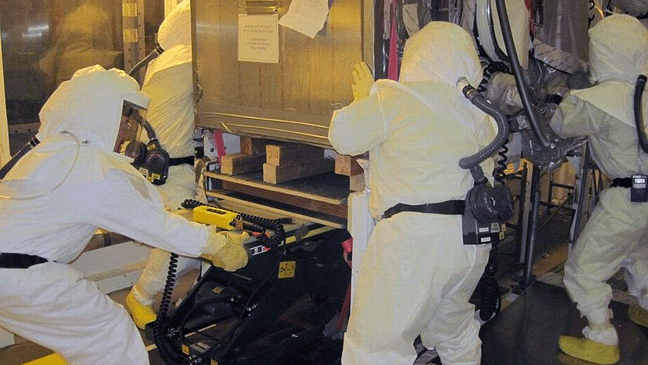
after he and a local journalist conducted a survey on surrounding farms in 1985, Bailie began to have doubts. Nearly all the families living nearby suffered from cancer, birth defects, or thyroid disease, he says — health issues that could be attributed to radiation exposure. This led to the area being coined “the death mile” by some journalists at the time.
documents that were declassified in the late 1980s showed that Hanford had contaminated the surrounding farmland, air, farm animals, and crops with unsafe levels of radiation for years.
June 18, 2023 , Mainichi, Japan
HANFORD, Washington (Kyodo) — As cleanup efforts continue in Washington state at a decommissioned U.S. nuclear facility that played a crucial role in the country’s acquisition of the atom bomb in World War II, questions linger over whether the site has caused serious health issues for workers and local residents.
Construction began on the facility, known as the Hanford site, eighty years ago in 1943 and involved the building of the world’s first large-scale nuclear reactor.
Through the Manhattan Project, a U.S. government research and development program for building nuclear weapons, the site’s B reactor, erected on a 580-square-mile stretch of land next to the Columbia River in south-central Washington, produced the nuclear material for one of the only two atomic bombs ever used in an armed conflict.
Codenamed “Fat Man,” the device was detonated over the city of Nagasaki in southwestern Japan on Aug. 9, 1945, effectively ending Japan’s involvement in the conflict.
The 6.2 kilograms of plutonium contained in the nuclear device released energy equivalent to 21 kilotons of TNT, taking the lives of tens of thousands of innocent people while subjecting the surrounding area to deadly radiation, killing countless more.
But citizens of Nagasaki may not be the only victims of Hanford’s plutonium production. During its decades of operation, U.S. residents living near and mainly downwind of the complex experienced severe health effects that they believe stem from the site’s activities.
One such resident is Tom Bailie, 76, who grew up and still resides just miles downwind from Hanford in a farming community.
Reflecting on his upbringing, Bailie recalled during an interview in April that no one ever thought the site at Hanford would cause harm to “patriotic American citizens.”
But, after he and a local journalist conducted a survey on surrounding farms in 1985, Bailie began to have doubts. Nearly all the families living nearby suffered from cancer, birth defects, or thyroid disease, he says — health issues that could be attributed to radiation exposure. This led to the area being coined “the death mile” by some journalists at the time.
Bailie said that his wife, father, and three uncles all had cancer before passing away, while his two sisters also have cancer and take thyroid medicine. The year before Bailie was born, his mother had a stillbirth. Bailie himself was born with birth defects and was on an iron lung when he was 4 years old. He now requires medication for a thyroid problem.
Bailie vividly remembers encounters with “men in space suits,” equipped with dosimeters to measure radiation levels, walking on his farm. The men would collect soil samples and even ask the farmers to send the heads and feet of ducks and rabbits they would kill while hunting to Hanford for analysis.
When he began speaking out about the hardships and health problems that he attributed to the Hanford site, many people from the community dismissed him as “nuts” or “crazy.” Some even mockingly referred to him as the “glow-in-the-dark farmer.”
But documents that were declassified in the late 1980s showed that Hanford had contaminated the surrounding farmland, air, farm animals, and crops with unsafe levels of radiation for years…………………….
Before being decommissioned in 1989, Hanford produced around 74 tons of plutonium, nearly two-thirds of all the plutonium produced for government purposes in the United States. One of the consequences of the site’s work was massive amounts of contamination and dangerous leftover byproducts, most of which remain on the site today.
Currently, 177 underground tanks containing 56 million gallons of highly radioactive waste, contaminated buildings, and cocooned reactors still exist there, alongside multiple other buried waste sites.
The same year Hanford was decommissioned, cleanup efforts began for dealing with the dangerous byproducts left over from the production of plutonium. Efforts to clean the area of waste are anticipated to be astronomically costly and time-consuming.
According to Hanford’s latest estimate, released in 2022, the total cost of the cleanup is projected to range from $319.6 billion to $660 billion, with a completion date not expected until at least fiscal 2078.
But Tom Carpenter, 66, former head of Hanford Challenge, a nonprofit organization dedicated to ensuring the responsible and safe clearing of the Hanford site, argues that using the word “cleanup” is misleading.
Carpenter says complete eradication of contamination from thousands of acres is impossible, and not the goal of the cleanup process. He asserts that the best that can be achieved at Hanford is “the mitigation of some risks.”
Hanford Challenge’s primary goal, he says, is to ensure authorities prioritize a swift cleanup and make sure that no corners are cut, nor workers put in unnecessary danger. This includes fighting for those who are currently working on the site.
Many workers involved in the cleanup of the Hanford site continue to be exposed to toxic chemicals, vapors, and radioactive materials, resulting in debilitating health conditions.
A recent survey of the workers by Washington state revealed more than 50 percent of them had been exposed to radioactive or toxic chemicals. Workers exposed to these dangerous materials and vapors have developed beryllium disease, cancers, organ damage, and occupational dementia.
Until recently, these workers had to prove that their health issues were directly caused by their work at the Hanford site to receive assistance with their medical expenses.
According to former worker and Hanford Challenge director Jim Millbauer, 65, proving this was extremely difficult, costly, time-consuming, and often fruitless, as most occupational illness claims were rejected.
But a recent law has changed this, presuming that any health effects suffered by workers who spend just eight hours working at Hanford are caused by working at the facility, making it easier for sick workers to get their treatment paid for. https://mainichi.jp/english/articles/20230616/p2g/00m/0in/069000c
Putin warns NATO over being drawn into Ukraine war
By Zahid Mahmood, CNN, June 17, 2023
Russian President Vladimir Putin has warned there is a “serious danger” of NATO being drawn further into the Ukraine war if members of the alliance continue to supply military weaponry to Kyiv.
“NATO, of course, is being drawn into the war in Ukraine, what are we talking here,” Putin said at the St. Petersburg International Economic Forum on Friday.
“The supplies of heavy military weaponry to Ukraine are ongoing, they are now looking into giving Ukraine the jets.”
The comment appeared to be a reference to the F-16 fighter jets some members of the NATO alliance are making plans to supply Ukraine with.
NATO, or the North Atlantic Treaty Organization, was formed in the aftermath of World War II to defend Western nations from the Soviet Union [despite USSR being their ally in WW2 !]and the alliance contains a mutual defense clause where an attack on any one member is considered an attack on all. While Ukraine is not a member of NATO, some NATO members have been supplying Kyiv with tanks, armored vehicles and other weaponry – prompting threats of retaliation from Russia.
German Leopard 2 tanks, British Challenger 2 tanks and American Bradley and Stryker vehicles are among the Western equipment that has been sent to Ukraine.
In late April, NATO Secretary-General Jens Stoltenberg said that NATO allies and partners had delivered more than 1,500 vehicles and 230 tanks to the country.
During his speech in St. Petersburg, Putin said Russia had destroyed tanks “including Leopards” at the front lines.
“And if they are based abroad, but used in fighting we’ll see how to hit them, and where we can hit those means that are used against us in fighting,” Putin said.
“This is a serious danger of further drawing NATO into this military conflict,” he added………………………….. https://edition.cnn.com/2023/06/17/europe/nato-danger-ukraine-war-putin-intl-hnk/index.html
More trouble at Vogtle
June 19, 2023 https://beyondnuclear.org/more-trouble-at-vogtle/
The nuclear drumbeaters ignore stories like this latest setback out of Georgia because the inconvenient truth of nuclear power is that it is NOT reliable, is far too slow and expensive and of course comes with a myriad of safety problems and no solution to the radioactive waste it generates.
The only US flagship for new reactors is the Vogtle 3 and 4 project in Georgia, which continues to stutter and stumble as it tries to bring two AP 1000 reactors to life, already heralded as a “milestone” with neither reactor yet on line.
Vogtle 3 has already had several setbacks delaying its commercial operation. The most recent is a problem in the hydrogen system that is used to cool its main electrical generator, delaying operations until July (barring other problems that could still arise.)
The twin reactor project is already 16 years in the making and now at least $20 billion over budget. Despite all this and the nuclear poster child for risk that is the 6-reactor Zaporizhzhia nuclear power plant in Ukraine, embroiled in a war, the pro-nuclear propaganda machine rolls blindly on.
“……………………………………In Georgia, almost every electric customer will pay for Vogtle. Georgia Power’s 2.7 million customers are already paying part of the financing cost and elected public service commissioners have approved a monthly rate increase of $3.78 a month for residential customers as soon as the third unit begins generating power.
A July operation date means that increase would hit bills in August, two months after residential customers see a $16-a-month increase to pay for higher fuel costs. Georgia Power also raised rates by 2.5% in January after commissioners approved a separate three-year rate plan. Increases of 4.5% will follow in 2024 and 2025 under that plan.
Commissioners will decide later who pays for the remainder of the costs of Vogtle, including the fourth reactor.
Japan urged to halt release of toxic water
By Xu Weiwei in Hong Kong and Karl Wilson in Sydney, China Daily : 2023-06-19
Impact of Fukushima nuclear plant discharge plan seen as catastrophic
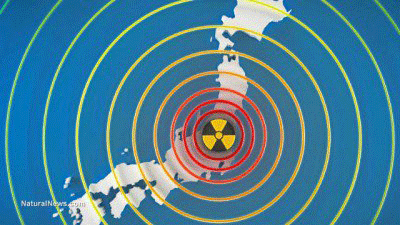
Environmental and social experts from across Asia have called on Japan to refrain from contaminating the sea with radioactive wastewater after it began test running the equipment to discharge toxic water from a crippled nuclear power plant into the Pacific.
The nuclear-contaminated wastewater from the Fukushima Daiichi Nuclear Power Plant will contain traces of tritium, a radioactive isotope, and possibly other radioactive traces such as carbon-14, scientists said.
“Nobody wants to dump (radioactive substances) into the ocean,” said David Krofcheck, senior lecturer in the faculty of science at the University of Auckland in New Zealand.
“We need to be aware of the difference between tritium and carbon-14, on one hand, and the radioactive fission products which tend to remain in the human body,” he said, adding that tritium could still enter the food chain throughout its buildup in underwater plants.
“This organically bound tritium still decays with a half-life of 12.3 years, and it stays in the human body for about 10 days, the biological half-life, before excretion.”
Instead of pumping the wastewater into the sea, Japan can dispose of it safely, Krofcheck said, offering an alternative for managing the Fukushima water: to hold it on site in an ever “growing number of water tanks”.
“If the water is properly filtered to leave only tritium and carbon-14, the natural decay of tritium can be used to reduce its radioactivity.
“Since the radioactive half-life of tritium is 12.3 years, holding the water in tanks for seven half-lives would reduce the tritium content to less than 1 percent of its current value.”
This option still leaves the carbon-14 that would still roughly have the same radioactivity because of its 5,730-year half-life, he said.
The potential impact of releasing treated radioactive water from the Fukushima plant into the ocean remains a subject of contention and concern among stakeholders, said Anjal Prakash, clinical associate professor (research) and research director of the Bharti Institute of Public Policy at the Indian School of Business in Hyderabad.
“The ocean release decision itself has sparked opposition, leading to ongoing debates on alternative water management strategies. The decision-making process weighs safety, public perception, regulations and potential impacts on industries and trade.”
While the Japanese government and the Tokyo Electric Power Company, operator of the crippled plant, say there is minimal risk, differing opinions persist, Prakash said, adding that factors such as ocean currents, distance, dilution and treatment efficacy will determine the impact on neighboring areas, including South Asia, Pacific Island countries, Australia, New Zealand and the rest of the world.
Long-term effects and bioaccumulation concerns remain, he said. “Evaluating the precise impact is complex, necessitating considerations of various factors and ongoing scientific research.”
Despite continuing opposition from domestic experts, civic groups and fishery organizations, Japan has been rushing to dump the nuclear-contaminated water into the ocean, which has also spurred protests from neighboring countries and communities within the Pacific Islands.
Firm opposition
In April the Fijian government reaffirmed its opposition to Japan’s plan to discharge nuclear-contaminated wastewater into the Pacific Ocean.
Fiji’s Deputy Prime Minister Manoa Kamikamica said earlier that the Pacific Ocean should not be seen as an easy and convenient dumping ground for unwanted and dangerous materials and waste that larger countries produce but do not want to use in their own ecosystem, local media reported.
“The social and economic impact of this irresponsible behavior is catastrophic, particularly on our vulnerable communities,” he said.
Environmental groups have argued that the move sets a bad precedent and poses a serious danger to Pacific communities that depend on the ocean for their livelihoods…………….
Many people are asking why, if the wastewater treated by Japan’s Advanced Liquid Processing System is so safe, Japanese are not using such water for alternative purposes, in manufacturing and agriculture for instance.
According to a report issued by Tokyo Electric Power Company on June 5, the radioactive elements in the marine fish caught in the harbor of the Fukushima plant far exceed safety levels for human consumption. In particular, the content of cesium-137, a radioactive element and a common byproduct in nuclear reactors, is said to be 180 times that of the standard maximum stipulated in Japan’s food safety law.
Kalinga Seneviratne, a visiting lecturer at the University of the South Pacific in Fiji, said: “The contamination will affect the South Pacific Nuclear Free Zone Treaty (adopted in 1986) areas as well when it eventually flows there. Also, since fish stocks are migratory, contaminated fish could be caught within the treaty area.”…………………………. https://global.chinadaily.com.cn/a/202306/19/WS648f8421a31033ad3f7bce66.html
“Nuclear is CLEAN” Trumpets Westinghouse’s Uranium Fuel in Cumbrian Press Adverts
Name: Anita Stirzaker Ad type:Brand/product: Westinghouse Electric Company
Your complaint:
Advert in the Whitehaven News (and other regional papers?) for Westinghouse “Shaping Tomorrow’s Energy to deliver a carbon-free future in the UK. Westinghouse is shaping the future of clean energy in the UK.”
The advert talks about the AP1000 “ready for deployment in the UK” – this is not the case – the AP1000 has not been given licence approval for any sites in the UK as far as I know and there are no operational AP1000 reactors anywhere in Europe as far as I know. The AP1000 would not be “carbon free” as the uranium fuel requires fossil fuel at every stage from mining to looking after the wastes. The Westinghouse plant at Springfields itself uses enormous amounts of gas to manufacture uranium fuel and has I believe its own dedicated gas pipeline into the site. Sellafield is where the fuel from Springfields ends up and this has its own gas plant on site called Fellside. Westinghouse itself in its 2022 Sustainability report (https://www.westinghousenuclear.com/Portals/0/about/Westinghouse%202023%20ESG%20Report.pdf) says it has a “net-zero” carbon emissions target by 2050″ note this is the more slippery accounting of “net-zero” which is definitely not “carbon free” as the advert in the Whitehaven News claims.
The advert claims that Westinghouse is shaping “clean energy”. this is not the case – the Springfields site itself uses lots of freshwater in all its processes – far more I believe than the fracking industry would have done in the Preston area. The fresh water use is enormous especially if the leaching of uranium fuel from the grounds of foreign countries is included along with cooling the hot nuclear wastes at Sellafield.
The nuclear industry cannot legitimately claim to be clean while radioactive and chemical emissions are routinely dumped to the environment. Then there is the possibility of catastrophic accident. What other industries have such large Emergency Zones in the case of accident ? At the lancaster canal alongside the Springfields plant there are Westinghouse notices saying “if you hear a loud, continous siren (like an air-raid siren) you should leave this area as quickly as possible”.
There is another conflicting notice saying “Go inside your boat and stay inside until instructed otherwise. Close all windows and doors. Switch off all heating, ventilation and air conditioning systems. Tune to the local radio station and listen for announcements telling you what to do.”
That is not a “clean” industry!
From Springfields Westinghouse site there are a cocktail of radioactive an chemical wastes going into the landfill at Clifton Marsh – the latest plan is to open an incineration plant on the Westinghouse Springfield site to take in nuclear waste (including intermediate nuclear wastes) from Europe and burn it there.
That is not a “clean” industry.
If Shell has been taken to task for its “clean” claims then the nuclear industry cannot be allowed to get away with this greenwashing of its fossil fuel use alongside its radioactive and chemical emissions to land, rivers,sea and air. The nuclear industry is not fully insured for good reason – it is uninsurable.
1 This Month
Tell Congress: Prevent Nuclear Catastrophe in Iran

Tell Congress: Prevent Nuclear Catastrophe in Iran

Read the Public Inquiry Report, the Commissioners’ report, Surrendering Australia: The AUKUS Deception is available to download for free at aukuspublicinquiry.com. Or just watch the replay of the National Press Club Luncheon.


Shut down the radiation-damaged Heysham nuclear reactors now
To see nuclear-related stories in greater depth and intensity – go to https://nuclearinformation.wordpress.com

Say No to NASA’s Reckless Nuclear Reactor on the Moon
Say No to NASA’s Reckless Nuclear Reactor on the Moon
-
Archives
- November 2026 (238)
- October 2026 (302)
- September 2026 (339)
- August 2026 (330)
- July 2026 (355)
- June 2026 (287)
- May 2026 (306)
- April 2026 (356)
- March 2026 (251)
- February 2026 (267)
- January 2026 (308)
- December 2025 (358)
-
Categories
- 1
- 1 NUCLEAR ISSUES
- business and costs
- climate change
- culture and arts
- ENERGY
- environment
- health
- history
- indigenous issues
- Legal
- marketing of nuclear
- media
- opposition to nuclear
- PERSONAL STORIES
- politics
- politics international
- Religion and ethics
- safety
- secrets,lies and civil liberties
- spinbuster
- technology
- Uranium
- wastes
- weapons and war
- Women
- 2 WORLD
- ACTION
- AFRICA
- Atrocities
- AUSTRALIA
- Christina's notes
- Christina's themes
- culture and arts
- Events
- Fuk 2022
- Fuk 2023
- Fukushima 2017
- Fukushima 2018
- fukushima 2019
- Fukushima 2020
- Fukushima 2021
- general
- global warming
- Humour (God we need it)
- Nuclear
- RARE EARTHS
- Reference
- resources – print
- Resources -audiovicual
- Weekly Newsletter
- World
- World Nuclear
- YouTube
-
RSS
Entries RSS
Comments RSS

