South Korea experts say more study needed on Japan’s nuclear water plan
Yahoo! News, Hyonhee Shin, Wed, 31 May 2023
SEOUL (Reuters) – South Korean nuclear safety experts who visited Japan’s wrecked Fukushima nuclear power plant said on Wednesday that detailed analysis was needed to verify Japan’s plan to release tonnes of contaminated water from it into the sea…………
Japan plans to dump more than one million tonnes of contaminated water that was mainly used to cool the reactors into the sea by around this summer, triggering alarm at home and abroad, especially in fishing communities.
“Given our closest location, we are reviewing whether Japan has an appropriate discharge plan from a scientific and technological standpoint,” Yoo Guk-hee, chairman of the Nuclear Safety and Security Commission, who led a delegation on a site visit last week, told a briefing.
……….. The 21-member South Korean team had focused during its six-day trip on water purification, transport and release equipment, as well as sampling and analysis facilities.
The visit came days after President Yoon Suk Yeol and Japanese Prime Minister Fumio Kishida held a summit in Seoul this month amid a thaw in relations following years of tension between the neighbours, both important U.S. allies………… https://au.news.yahoo.com/south-korea-experts-more-study-073331552.html
Plan to release Fukushima nuclear plant water into sea faces local opposition: “The sea is not a garbage dump”
CBS BY ELIZABETH PALMER, MAY 31, 2023
Japan’s government is asking for international backup as it prepares to release thousands of gallons of water from the Fukushima nuclear power plant into the sea. The plan has alarmed the public and outraged fishermen — even as the international energy agency looks inclined to back it.
………….The plant sits in what was a lush coastal part of Japan, famous for its seafood and delicious fruit. Today, there’s still no-go area around the power station where fields lie fallow and homes sit abandoned.
Inside a high security fence studded with warning signs, engineers are still working to remove radioactive fuel rods that melted inside the reactors. They’ll be at it for decades.
Another problem is piling up in hundreds of metal tanks on the site: they contain more than a million tons of contaminated water.
…………………………………….. “Piping water into the sea is an outrage,” said Haruo Ono, who has been fishing the ocean off the coast of Fukushima all his life.
“The sea is not a garbage dump,” he said. “The company says it’s safe, but the consequences could catch up with us 50 years down the road.”
………………………………..Haruo Ono, the fisherman, said the science is not the issue.
“People don’t understand it,” he said. “Mothers won’t choose Fukushima fish knowing it’s been swimming in radioactive water. Even if the experts say it’s safe.”
Under current rules, he can only take his fishing vessels out to sea a day or two a week, when he gets the OK from the government.
“This is the end of my livelihood,” he said.
……………. The Fukushima nuclear plant won’t be safely decommissioned for years to come. So far taxpayers have paid $90 billion to clean it up. https://www.cbsnews.com/news/fukushima-nuclear-plant-water-plan-release-into-sea-fear-controversy/
Rafael Grossi to brief UN Security Council on Zaporizhia nuclear situation
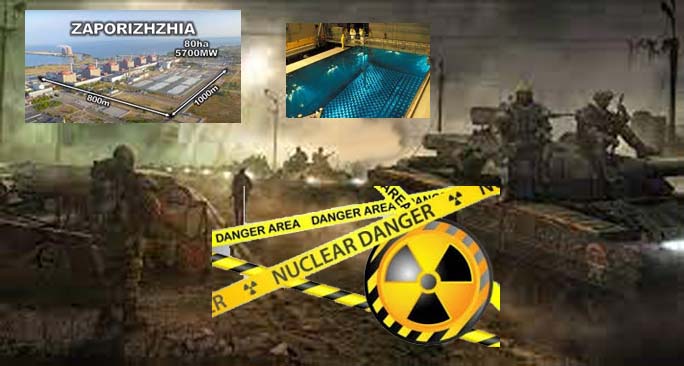
The International Atomic Energy Agency was on 30 May due to brief the UN
Security Council on his proposals for safeguarding Ukraine’s Zaporizhia NPP
(ZNPP). “IAEA director general Rafael Grossi is planning to brief the UN
Security Council on the nuclear safety and security situation” during a
meeting chaired by Switzerland, according to an official statement by the
Agency in advance of the meeting.
Director general Grossi has said he is
seeking to secure agreement on a set of principles to protect ZNPP during
the armed conflict, covering also the availability and security of external
power supplies at all times.
Mr Grossi’s plan consists of five principles:
a ban on the deployment of heavy military equipment and military personnel
at nuclear power plants, a ban on shooting from the territory and towards
the power plant, ensuring security, protecting all external power lines,
and monitoring compliance with these principles.
Modern Power Systems 30th May 2023
British police detain journalist Kit Klarenberg, interrogate him about The Grayzone
The Grayzone, MAX BLUMENTHAL·MAY 30, 2023
British counter-terror police detained journalist Kit Klarenberg upon his arrival at London’s Luton airport and subjected him to an extended interrogation about his political views and reporting for The Grayzone.
As soon as journalist Kit Klarenberg landed in his home country of Britain on May 17, 2023, six anonymous plainclothes counter-terror officers detained him. They quickly escorted him to a back room, where they grilled him for over five hours about his reporting for this outlet. They also inquired about his personal opinion on everything from the current British political leadership to Russia’s invasion of Ukraine.
At one point, Klarenberg’s interrogators demanded to know whether The Grayzone had a special arrangement with Russia’s Federal Security Bureau (FSB) to publish hacked material.
During Klarenberg’s detention, police seized the journalist’s electronic devices and SD cards, fingerprinted him, took DNA swabs, and photographed him intensively. They threatened to arrest him if he did not comply.
Klarenberg’s interrogation appears to be London’s way of retaliating for the journalist’s blockbuster reports exposing major British and US intelligence intrigues. In the past year alone, Klarenberg revealed how a cabal of Tory national security hardliners violated the Official Secrets Act to exploit Brexit and install Boris Johnson as prime minister. In October 2022, he earned international headlines with his exposé of British plans to bomb the Kerch Bridge connecting Crimea to the Russian Federation. Then came his report on the CIA’s recruitment of two 9/11 hijackers this April, a viral sensation that generated massive social media attention.
Among Klarenberg’s most consequential exposés was his June 2022 report unmasking British journalist Paul Mason as a UK security state collaborator hellbent on destroying The Grayzone and other media outlets, academics, and activists critical of NATO’s role in Ukraine.
Because Klarenberg’s reporting on Mason relied heavily on leaked emails, Mason falsely accused him of “assisting a Russian state-backed hack-and-leak disinformation campaign.” Mason has also reported the leak of his emails to the British police………………………………………………………………………………….
While reporting on leaked material, Klarenberg engaged in the same journalistic practice that the West’s most prominent legacy newspapers, from The New York Times to The Washington Post, depend on to break news themselves. In fact, Thomas Rid, a self-styled disinformation expert and professor of Strategic Studies at Johns Hopkins University, has stated that journalists “should not shy away” from covering the leaks first reported by Klarenberg.
It therefore appears that British authorities did not detain Klarenberg for any legal breaches, but because he reported factual stories that exposed the national security state’s own violations of both domestic and international law, as well as the malign plots of its media lackeys.
Interrogated under Counter-Terror provisions, grilled about non-existent Russian ties………………………………………
………. police interrogators homed in on Klarenberg’s work with The Grayzone. “They asked which publications I wrote for, and I told them I wrote for many,” he said. “One even remarked they’d never previously heard of ‘MintPress Zone.’ Their overwhelming, if not exclusive, interest was in The Grayzone.”
……Then came a blizzard of questions relating to The Grayzone: How much was Klarenberg paid by this publication, how often, and into which bank account? Who owned the site? How much contact did he have with Max Blumenthal, the author of this article and editor of The Grayzone? Had he met Blumenthal in person?
The counter-terror officers then rattled off a series of unfounded questions related to Russia: Does The Grayzone have an agreement of any kind with Russia’s Federal Security Bureau (FSB) to publish hacked material? Has Klarenberg knowingly been in contact with any FSB operatives? Is he in touch with current or former personnel of Russian state media? Who owns The Grayzone and is it sponsored by Russia?
(As has been publicly stated many times, The Grayzone is a fully independent outlet founded by me, Max Blumenthal. Unlike many of our adversaries, this outlet does not accept funding or support from any state, including Russia.)
At this point, the officers took Klarenberg’s bank cards out of the room for an extended period. They also seized his camera memory cards and sims, demanding he provide pin codes to open them. “What was done with my bank cards, I do not know,” he remarked. “The same for the SDs – what they got off these old and barely used cards was unclear.”……………………………………………………..
Throughout the interview, the counter-terrorism police probed Klarenberg aggressively on his political affiliations and beliefs. Was he involved in any activist causes in Belgrade? What did he think of the Russian government?
…………………………………. He remains under investigation by the British state at the time of publication. https://thegrayzone.com/2023/05/30/journalist-kit-klarenberg-british-police-interrogated-grayzone/
Extreme heat events have now become the new normal

global cooperation is needed to bolster society’s resilience to extreme heat and enhance its capacity to overcome climate challenges.
By Wei Ke | CHINA DAILY 2023-05-29 https://www.chinadaily.com.cn/a/202305/29/WS6473dd60a310b6054fad5766.html
Since the first day of 2023, extreme heat events have increased the threat to human health and the environment. Europe experienced the warmest New Year in history, with temperatures in some places reaching early summer levels. The highest temperature, of 25.1 Celsius, was recorded in Bilbao, Spain. In Glucholazy, Poland, the temperature at 4 am on Jan 1 was as high as 18.7 C, more than the local average minimum summer temperature. And while at least eight European countries experienced their hottest New Year’s Day, more than 100 weather stations in France reported record-breaking temperatures.
Unlike gradual global warming which many people expect, extreme heat events have raised temperatures to historical highs in many places. On Jan 1 this year, temperatures in many places in France, Germany, Denmark and Latvia were exceptionally high. For example, the temperature in Berlin, Germany, was 16 C — normally, it hovers around 0 C during New Year.
According to the State of the Global Climate 2022 of the World Meteorological Organization, which was released on April 21, global temperatures in 2022 were 1.15 C higher compared with the pre-industrial levels from 1850 to 1900. Global warming is not a gradual and uniform process anymore; instead, it manifests through a succession of extreme heat events, continuously breaking high-temperature records worldwide.
There has been a significant increase in both the frequency and intensity of extreme heat events. According to the UN Office for Disaster Risk Reduction’s report, Human Cost of Disasters 2000-19, there were 432 instances of extreme heat events globally between 2000 and 2019 compared with just 130 instances between 1980 and 1999, an increase of a whopping 232 percent.
As the northern hemisphere enters the summer season, extreme heat events have become the norm, rather than the exception. On April 14, Tak province in northwestern Thailand recorded a scorching 45.4 C, breaking Thailand’s highest temperature record of 44.6 C set in Mae Hong Son province in 2016.
Record-breaking heat-waves have swept across Southeast Asia, South Asia and Central Asia, with temperatures crossing 42 C. And severe air pollution has further compounded the situation in many parts of Southeast Asia, and thus increased the risk of respiratory and cardiovascular diseases.
The impacts of high temperatures are far-reaching, not only affecting human life and health but also posing a threat to the environment and ecosystems. In 2020, more than 330 elephants in the southern region of Botswana died of cyanotoxin poisoning, as prolonged heat and drought led to a bloom of cyanobacteria in ponds and other water bodies. These cyanobacteria released a significant amount of cyanotoxins in the water bodies, which resulted in the poisoning and subsequent deaths of the elephants that consumed the toxic water.
Extreme heat and drought also contribute to wildfires. In 2019-20, Australia experienced severe heat waves that contributed to the devastating wildfires which lasted for a staggering nine months. While the wildfires caused an economic loss of about 10.3 billion Australian dollars ($6.73 billion), they also claimed the lives of or displaced nearly 3 billion animals — mammals including marsupials, birds, reptiles and amphibians.
Worse, the wildfires emitted about 715 million tons of carbon dioxide, more than Australia’s total annual greenhouse gas emissions from fossil fuel combustion.
One of the worst effects of global warming is the “wet gets wetter, dry gets drier” phenomenon, where humid regions experience increased rainfall and arid regions become drier — with the rainy season marked by more severe flooding and the dry season by intense drought.
According to the Human Cost of Disasters 2000-19 report, over the past 20 years, there has been a 134 percent increase in flood-related disasters, 97 percent increase in storms, 46 percent increase in wildfires, and 29 percent increase in droughts or drought-like conditions.
In addition, as the oceans warm, heat-waves emanating from the oceans and seas have become more common. The increasing warming of the ocean surface inhibits the absorption of oxygen by the water, which exacerbates the problem of oxygen depletion in the marine environment, posing a threat to the survival of marine animals and plants. Warmer ocean temperatures also contribute to the increasing frequency and severity of typhoons and hurricanes. And since such storms have a wider range extending to northern latitudes, regions like northeastern China could experience typhoons in the future.
In summer, extreme heat conditions in the northern hemisphere are becoming the norm, prompting the WMO to urge countries to issue early warnings and take early action. But while it is essential for governments and management agencies at all levels to issue weather alerts and forecasts, they should also pay greater attention to the rights of vulnerable groups, including people who work outdoors during hot weather.
Building public heat shelters to protect people during orange and red heat alerts is essential. Especially, public activity centers, libraries and other government facilities allow outdoor workers to avoid working during the hottest hours of the day. As for people in general, they should closely follow weather forecasts and warnings so they can avoid the risk of heatstroke by not venturing out during extreme heat events.
Yet global temperatures will continue to rise as greenhouse gas emissions are unlikely to reduce drastically in the next 20-30 years. Therefore, economies around the world, especially the major economies, should intensify efforts to reduce emissions. The public, on its part, can contribute to the global efforts to mitigate climate change by adopting simple habits including switching off lights when not in use, recycling products, reducing the use of cars, changing the food habit, and refraining from compulsive shopping. These slight changes in habits can help lower individuals’ carbon footprint and thus reduce emissions.
But global cooperation is needed to bolster society’s resilience to extreme heat and enhance its capacity to overcome climate challenges.
China halts floating nuclear power plan over security fears
Global Construction Review, David Rogers, 31.05.23
China’s plan to build a fleet of nuclear power reactors that would provide electrical power to islands on the South China Sea have been suspended over security concerns, the South China Morning Post reports.
As construction of the first units was about to begin, regulators announced that they were withholding approval.
The decision came as a surprise for the project’s scientists, who believed the technology was mature and that floating reactors were generally safer than those on land, since the ocean acts as a natural heat sink and is immune to seismic activity.
Writing in the journal Nuclear Power Engineering, Wang Donghui, a scientist at the National Energy Offshore Nuclear Power Platform Technology Research Centre, said safety and feasibility were the main concerns of authorities.
He said the decision was made in spite of a 10-year research project into floating plants, and the fact that China has advanced ship design capabilities, as well as domestic design and manufacturing units capable of building floating platforms.
It had been hoped that a floating nuclear power plant would provide power to support military and civilian activities on remote islands in the South China Sea, and China was envisaging the construction of a fleet of such vessels (see further reading)………………
n
One of the major safety concerns is that floating power plants could face attacks from sea and air, but also from underwater attacks, according to Wang.
An enemy submarine, for example, could attempt to sabotage the facility by planting explosives on its hull or damaging its cooling systems. Unmanned aerial vehicles could also fly over the plant and drop bombs or other projectiles on it.
According to Wang, protecting a floating nuclear power plant from “underwater divers, vessels, floating objects or airborne objects”, would require a comprehensive ship security system. https://www.globalconstructionreview.com/china-halts-floating-nuclear-power-plan-over-security-fears/
We are going backwards: we now face a new wave of nuclear weapons manufacturing
we now face a new wave of nuclear weapons
manufacturing and a new era in the shadow of catastrophic accidents and
nuclear war, writes BILL KIDD MSP. The MoD logged 460 safety incidents of
all kinds at the two British nuclear bases from 2019 to 2021. With a
further 117 low-potential releases, that sets an adverse trend. So if we
don’t get blown away before one of these splendid sunsets, we could still
be poisoned by radiation leaks due to equipment failures or human errors.
Enjoy your summer!
Morning Star 30th May 2023
https://morningstaronline.co.uk/article/f/bringing-nuclear-danger-all-back-home
Freak May typhoon shows Philippines is now in constant state of climate emergency
‘Super typhoons have become our new normal,’ activists say
Stuti Mishra, 30 May 23 https://www.independent.co.uk/climate-change/news/typhoon-mawar-philippines-climate-change-b2348165.html—
Typhoon Mawar, an unusually intense cyclone that has struck Guam and the Philippines before heading towards Taiwan and southern Japan, shows the southeast Asian country is in a “constant state of climate emergency”, activists have said, demanding reparations for vulnerable nations.
In a statement released on Monday, Greenpeace International demanded fossil fuel companies take responsibility for the intensifying extreme weather events seen worldwide and pay reparations for climate impacts.
The typhoon left Guam flooded and without power for days and has prompted evacuations and amid extreme weather warnings in the Philippines.
Mawar, known locally in the Philippines as typhoon Betty, is the strongest typhoon of the year so far and the strongest northern hemisphere cyclone ever recorded in the month of May.
“The Philippines is in a constant state of climate emergency,” said Greenpeace Philippines campaigner Jefferson Chua.
Rock ‘flour’ from Greenland can capture significant CO2, study shows

Powder produced by ice sheets could be used to help tackle climate crisis when spread on farm fields
Damian Carrington Environment editor @dpcarrington, Tue 30 May 2023
Rock “flour” produced by the grinding under Greenland’s glaciers can trap climate-heating carbon dioxide when spread on farm fields, research has shown for the first time.
Natural chemical reactions break down the rock powder and lead to CO2 from the air being fixed in new carbonate minerals. Scientists believe measures to speed up the process, called enhanced rock weathering (ERW), have global potential and could remove billions of tonnes of CO2 from the atmosphere, helping to prevent extreme global heating…………..
Greenland’s giant ice sheet produces 1bn tonnes a year of rock flour, which flows as mud from under the glaciers. This means the potential supply of rock flour is essentially unlimited, the researchers said, and removing some would have very little effect on the local environment.
The weathering process is relatively slow, taking decades to complete, but the researchers said ERW could make a meaningful difference in meeting the key target of net zero emissions by 2050. Phasing out the burning of fossil fuels remains the most critical climate action, but most scientists agree that ways of removing CO2 from the atmosphere will also be needed to avoid the worst effects of the climate crisis.
“If you want something to have a global impact, it has to be very simple,” said Prof Minik Rosing at the University of Copenhagen, who was part of the research team. “You can’t have very sophisticated things with all kinds of hi-tech components. So the simpler the better, and nothing is simpler than mud.”
He added: “Above all this is a scalable solution. Rock flour has been piling up in Greenland for the past 8,000 years or so. The whole Earth’s agricultural areas could be covered with this, if you wished.”……………………………………………………………….more https://www.theguardian.com/environment/2023/may/30/rock-flour-greenland-capture-significant-co2-study
Disconnecting War from Its Consequences, (cut welfare spending, increase weapons)
Common Wonders, By Robert C. Koehler, 31 May 23
Twenty-two years ago, Congress put sanity up for a vote. Sanity lost in the House, 420-1. It lost in the Senate, 98-0.
Barbara Lee’s lone vote for sanity — that is to say, her vote against the Authorization for the Use of Military Force resolution, allowing the president to make war against . . . uh, evil . . . without congressional approval — remains a tiny light of courageous hope flickering in a chaotic world, which is on the brink of self-annihilation.
Militarism keeps expanding, at least here in the USA. If there’s a problem out there, option one is to kill it quickly. Problem solved! This simplistic (and utterly false) mindset, which is always present — the companion of fear — may have a grip on American politics like never before, as demonstrated in the recent debt-ceiling standoff, in which President Biden came to an agreement with the Republicans that social spending will be slashed but “defense” spending must continue to expand.
You know. It’s the only thing that’s truly crucial. Poverty? Collapsing infrastructure? Underfunded schools? Climate disaster? We can worry about that stuff later, but as House Speaker Kevin McCarthy explained to reporters recently:
“Look, we’re always looking where we could find savings . . . but we live in a very dangerous world. I think the Pentagon has to actually have more resources.”
In other words, the USA is not a country with the maturity to discuss and analyze complex issues, such as the future of the world. Hey, it’s dangerous out there! It’s full of terrorists and dictators. That’s all you need to know. “Weak on defense” is the equivalent of “wants to defund the police” — a politician’s death sentence by advertising. No matter how much hell war creates — no matter how many families it displaces, no matter how many children it kills — we’ve got to be ready wage it, you know, whenever we feel like it. And the mainstream media, in its basic coverage, doesn’t question this or delve into a complex analysis of the world.
But we are still a country that is slowly and complexly evolving — no matter that the powers that be, for the most part, don’t know it. Let’s return to that AUMF vote, passed in the wake of the 9/11 devastation. Barbara Lee, whose father was in the Army, serving in both World War II and the Korean War, knew about the human costs of war. After 9/11 she was deeply uncertain what the nation’s immediate response should be. She attended the memorial service at the capital, held the day of the vote (and attended by four former presidents plus the sitting president, GWB).
There, as she told Politico, the Rev, Nathan Baxter, as he led the attendees in prayer, called on the nation’s leaders, as they considered how to respond, to “not become the evil we deplore.”…………………………………………………………… more http://commonwonders.com/disconnecting-war-from-its-consequences/
Proximity principle – nuclear waste should be stored as near as possible to the point of generation

Groups opposed to nuclear waste burial go to Queens Park, Toronto
Two anti-nuclear waste activist groups present a petition calling for the Ford government to implement a proximity principle for nuclear waste storage.
Clint Fleury 31 May 23 NWONewsWatch,
TORONTO — Two activist groups opposing the storage of nuclear waste in a deep geological repository are calling on the Ford government to mandate that a proximity principle to have the material stored cosser to where it is generated.
Members of We the Nuclear Free North in Northern Ontario from Northwestern Ontario and Protect Our Waterways – No Nuclear Waste in Southwestern Ontario have collected 1,141 signatures, with the petition presented in Queens Park on tuesday by Thunder Bay-Superior North MPP Lise Vaugeois, Kiiwetinoong MPP Sol Mamakwa and Green Party Leader Mike Schreiner.
“Their plan is not very well defined for the deep geological repository and it has several questionable areas. One of which is an option for a shallow cavern, which if approved, could see nuclear waste being moved into the area before the deep geological repository is complete and in operation,” said Charles Faust, a representative with We the Nuclear Free North.
Faust argued that the Nuclear Waste Management Organization’s plan to transport nuclear waste from power plants to a deep geological repository is “questionable.”
“I want you to remember 1,694. That’s the number of kilometres that it takes for a one-way trip from the average site of nuclear waste storage in Southern Ontario to the Ignace area — 1,694 kilometres,” Faust said. “They’re proposing two to three trucks a day, every day, for 50 years. That’s to deal with the 50,000 tonnes that are out there right now that they are looking for a place to be deposited.”
According to Faust, the concern with the transportation of nuclear waste is that Nuclear Waste Management Organization’s transportation phase is still in the early stages of development.
Bill Noll, a representative with Protect Our Waterways, expressed concern that once the nuclear waste reaches its destination, the fuel bundles will be sent to a repackaged facility and then stored in the repository.
“The repackaging facility is really unique. No other countries, Sweden, Finland, or any other country that I am aware of, is actually thinking about repackaging capability in what is a very small container,” said Noll.
Noll claimed the issue with nuclear waste is the spent heat that is generated.
“This is one of the real issues with the whole idea of how long it will last. It is a function of how much heat will be generated and how much damage that heat will do to not only the rock, but the container itself,” Noll said.
Both activist groups proposed that the solution to their concern would be for the Ford government to implement a proximity principle.
“Nuclear fuel waste should be managed at the point of generation by making on-site storage more robust and adopting a program of rolling stewardship for the long-term management of radioactive at or near its current location,” said Faust……………………………………
During the press conference, Vaugeois called the process of managing Canada’s nuclear waste “undemocratic.” https://www.nwonewswatch.com/local-news/groups-opposed-to-nuclear-waste-burial-go-to-queens-park-7073336
Bill to extend operating period of nuclear plants passes Japan’s Upper House
BY GABRIELE NINIVAGGI, Japan Times, May 31, 2023
A bill to extend the operating period of nuclear power plants to over 60 years — providing safety conditions are met — passed the Upper House on Wednesday, paving the way for a comprehensive overhaul of Japan’s nuclear policy.
The ruling coalition led by the Liberal Democratic Party, with the external support of two opposition parties — the Democratic Party for the People and Nippon Ishin no Kai — voted in favor of the bill, while other opposition forces on the left and center-left vocally opposed the legislation, saying that proposals to guarantee the safety of nuclear power plants were insufficient………..(Subscribers only) https://www.japantimes.co.jp/news/2023/05/31/national/nuclear-plant-operating-period-bill-pass/
1
Nuclear waste disposal site could be built next to power plant, Estonia
ERR News Editor: Mari Peegel, Helen Wright, https://news.err.ee/1608994484/nuclear-waste-disposal-site-could-be-built-next-to-power-plant, 31 May 23
Waste produced by a future nuclear power plant could be stored on the same site, newly published analysis carried out by the Ministry of the Environment and the Ministry of Finance shows.
The government is studying several sites across the country to see if any are suitable for a future small reactor.
After the announcement was made in April, additional research was carried out into the plant’s waste disposal at sites in Loksa, Kunda, Toila, and Varbla.
Now the results show it would be possible to build storage sites for nuclear waste at these locations, said Anna-Helena Purre from Steiger OÜ, who undertook the study.
“We carried out a spatial analysis: We looked at the location of the plant itself in open and closed cooling systems. Secondly, we looked at waste disposal – the low- and intermediate-level waste scenarios – and spent fuel disposal – the high-level waste scenario. These can be buried in deep boreholes, for example,” she said.
The government has not yet decided whether it will build a nuclear power plant and a decision is likely to be made in 2024. Production would start in 2035 at the earliest.
The U.S., France, Canada, UK, Japan, and Germany have stepped up to cooperate with Estonia.
Initially, 15 sites in Toila, Kunda, Loksa, Kuusalu, Viimsi, Paljaassaare, Kakumäe, Saare and Hiiumaa, Varbla and Harku municipalities were under consideration. But taking into account the plant’s socio-economic aspects, sites in places with a decreasing and below-average population far from the capital are preferred.
Neither Russia nor Ukraine committed to the IAEA’s 5 principles to protect Zaporizhzhia nuclear power plant.
Neither Russia nor Ukraine committed to respect five principles laid out
by International Atomic Energy Agency (IAEA) chief Rafael Grossi on Tuesday
(30 May) to try to safeguard Ukraine’s Russian-occupied Zaporizhzhia
nuclear power plant.
Grossi, who spoke at the UN Security Council, has
tried for months to craft an agreement to reduce the risk of a catastrophic
nuclear accident from military activity like shelling at Europe’s biggest
nuclear power plant.
His five principles included that there should be no
attack on or from the plant and that no heavy weapons such as multiple
rocket launchers, artillery systems and munitions, and tanks or military
personnel be housed there. Grossi also called for off-site power to the
plant to remain available and secure; for all its essential systems to be
protected from attacks or sabotage; and for no actions that undermine these
principles.
EU Reporter 1st June 2023
1
TEPCO faces new crisis over pedestal blow at Fukushima plant

May 30, 2023 https://www.asahi.com/ajw/articles/14920197
Damage to a pedestal inside the No. 1 reactor at the crippled Fukushima No. 1 nuclear power plant is more critical than previously believed, triggering a more intricate assessment of its resistance to a major earthquake.
Plant operator Tokyo Electric Power Co. (TEPCO) has no time to waste in confronting the issue. It must swiftly assess the damage and take effective action to prevent an accident or leak of radioactive materials.
An underwater robotic probe detected the damage in late March. It found that the metal framework lies exposed along the inner side of the pedestal’s wall for about 1 meter from its bottom and for the entire inner circumference as concrete in these areas has been lost.
There are fears the containment vessel that houses the pressure vessel could crack if the pedestal collapses in a severe earthquake. That could cause radioactive materials to leak.
Referring to the structure’s current earthquake resistance, TEPCO stressed that the pedestal has managed to support the reactor vessel even though the plant “has experienced strong earthquakes.” The utility cited one last year that registered lower 6 on the Japanese seismic intensity scale of 7.
Although the possibility of the pressure vessel tilting or sinking cannot be ruled out, the company asserts the impact will be limited with no risk of radioactive material leaking to the outside.
the Nuclear Regulation Authority (NRA) said last week it could not decide whether the assumptions underlying TEPCO’s risk assessment are accurate as the extent of damage and condition of the structural materials are not yet fully understood. The nuclear safety watchdog also said it would be difficult to reinforce the pedestal because of high radiation levels inside the containment vessel.
For this reason, the NRA called on the utility to evaluate the impact of a possible release of radioactive material into the environment and consider steps to deal with such an emergency.
As one NRA official put it, “I should say (TEPCO’s evaluation) is too optimistic, and it is difficult to say that is very reassuring.”
NRA Chairman Shinsuke Yamanaka said at a news conference, “It is TEPCO’s responsibility to swiftly assess what risks could impact the surrounding environment and its residents.”
Conditions surrounding the reactors that suffered core meltdowns in the nuclear disaster 12 years ago are only now finally being clarified. This has led to the discovery of additional problems that are already difficult to deal with, making the outlook of progress toward decommissioning the reactors even more uncertain.
The degradation of plant parts and materials will continue in the coming years. There is always the risk of a major earthquake striking the plant. Each time it is hit by a strong quake, the damage accumulates and the danger increases. If a radioactive leak occurs, it will seriously compromise the safety of residents, the reconstruction of the local communities and the local fishing industry.
The NRA this month decided not to lift a ban on the movement of nuclear fuel within TEPCO’s Kashiwazaki-Kariwa nuclear power plant in Niigata Prefecture, citing flawed measures to protect the facility against terrorist attacks. There are growing concerns about whether TEPCO is equipped to operate nuclear power plants.
There is absolutely no room for complacency when it comes to the consequences of the Fukushima nuclear disaster. TEPCO must always remain vigilant to a worst-case scenario in tackling related challenges.
1 This Month
23-25 October – on Zoom – World BEYOND War’s annual global conferenc


Shut down the radiation-damaged Heysham nuclear reactors now
To see nuclear-related stories in greater depth and intensity – go to https://nuclearinformation.wordpress.com

Say No to NASA’s Reckless Nuclear Reactor on the Moon
Say No to NASA’s Reckless Nuclear Reactor on the Moon

-
Archives
- October 2026 (231)
- September 2026 (339)
- August 2026 (330)
- July 2026 (355)
- June 2026 (287)
- May 2026 (306)
- April 2026 (356)
- March 2026 (251)
- February 2026 (267)
- January 2026 (308)
- December 2025 (358)
- November 2025 (359)
-
Categories
- 1
- 1 NUCLEAR ISSUES
- business and costs
- climate change
- culture and arts
- ENERGY
- environment
- health
- history
- indigenous issues
- Legal
- marketing of nuclear
- media
- opposition to nuclear
- PERSONAL STORIES
- politics
- politics international
- Religion and ethics
- safety
- secrets,lies and civil liberties
- spinbuster
- technology
- Uranium
- wastes
- weapons and war
- Women
- 2 WORLD
- ACTION
- AFRICA
- Atrocities
- AUSTRALIA
- Christina's notes
- Christina's themes
- culture and arts
- Events
- Fuk 2022
- Fuk 2023
- Fukushima 2017
- Fukushima 2018
- fukushima 2019
- Fukushima 2020
- Fukushima 2021
- general
- global warming
- Humour (God we need it)
- Nuclear
- RARE EARTHS
- Reference
- resources – print
- Resources -audiovicual
- Weekly Newsletter
- World
- World Nuclear
- YouTube
-
RSS
Entries RSS
Comments RSS

