Fukushima, the Hidden Side of the Story
“The Fukushima Disaster, The Hidden Side of the Story,” is a just-released film documentary, a powerful, moving, information-full film that is superbly made. Directed and edited by Philippe Carillo, it is among the strongest ever made on the deadly dangers of nuclear technology.
It begins with the words in 1961 of U.S. President John F. Kennedy: “Every man, woman and child lives under a nuclear sword of Damocles, hanging by the slenderest of threads, capable of being cut at any moment by an accident, or miscalculation or by madness.”
It then goes to the March 2011 disaster at the Fukushima Daichi nuclear power plants in Japan after they were struck by a tsunami. Their back-up diesel generators were kicked in but “did not run for long,” notes the documentary. That led to three of the six plants exploding—and there’s video of this—“releasing an unpreceded amount of nuclear radiation into the air.”
“Fukushima is the world’s largest ever industrial catastrophe,” says Professor John Keane of the University of Sydney in Australia. He says there was no emergency plan and, as to the owner of Fukushima, Tokyo Electric Power Company, with the accident its CEO “for five nights and days…locked himself inside his office.”
Meanwhile, from TEPCO, there was “only good news” with two Japanese government agencies also “involved in the cover-up”—the Nuclear Industry Safety Agency and Ministry of Economy, Trade and Industry.
“Japanese media was ordered to censor information. The Japanese government failed to protect its people,” the documentary relates.
Yumi Kikuchi of Fukushima, since a leader of the Fukushima Kids Project, recalls: “On TV, they said that ‘it’s under control’ and they kept saying that for two months. The nuclear power plant had already melted and even exploded but they never admitted the meltdown until May. So, people in Fukushima during that time were severely exposed to radiation.”
Arnie Gundersen, a nuclear engineer and now a principal of Fairewinds Energy Education in Burlington, Vermont, speaks of being told by Naoto Kan, the prime minister of Japan at the time of the accident, that “our existence as a sovereign nation was at stake because of the disaster at Fukushima Daichi.”
Kan then appears in documentary and speaks of “manmade” links to the disaster.
The documentary tells how Kan, following the accident, became “an advocate against nuclear power….ordered all nuclear power plants in Japan to shut down for safety” and for the nation “to move into renewable energy.”
But, subsequently, “a nuclear advocate,” Shinzo Abe, became Japan’s prime minister.
Yoichi Shimatsu, a former Japan Times journalist, appears in the film and speaks of “the cruelty, the cynicism of this government.” He speaks of how in the accident’s aftermath, “nearly every member of Parliament and leaders of the major political parties” along with corporate executives, “moved their relatives out of Japan”
He says “Shanghai is the largest Japanese community outside Japan now…while these same people” had been “telling the people of Fukushima go home, 10 kilometers from Fukushima, go home it’s safe, while their families are overseas in Los Angeles, in Paris, in London and in Shanghai.”
“If it’s safe, why they left?” asks Kikuchi. “They tell us it’s safe to live in Fukushima, and to eat Fukushima food to support Fukushima people. There’s a campaign by Japanese government…and people believe it.”
Gundersen says: “At Fukushima Daichi, the world is already seeing deaths from cancer related to the disaster…There’ll be many more over time.” He adds that there’s been a “huge increase in thyroid cancer in the surrounding population.”
“Unfortunately,” he goes on, “the Japanese government is not telling us al the evidence. There’s a lot of pressure on the scientists and the medical community to distort the evidence so there’s no blowback against nuclear power.”
There is a section in the documentary on the impacts of radioactivity which includes Dr. Helen Caldicott, former president of Physician for Social Responsibility, discussing the impacts of radiation on the body and how it causes cancer. She states: “There is no safe level of radiation. I repeat, there is no safe level of radiation. Each dose of radiation is cumulative and adds to your risk of getting cancer and that’s absolutely documented in the medical literature.”
“The nuclear industry says, well,” Dr. Caldiott, continues, “there are ‘safe doses’ of radiation and even says a little bit of radiation is good for you and that is called the theory of hormesis. They lie and they lie and they lie.”
Maggie Gundersen, who was a reporter and then a public relations representative for the nuclear industry and, like her husband Arnie became an opponent of nuclear power, speaks of how nuclear power derives from the World War II Manhattan Project program to develop atomic weapons and post-war so-called “Atoms for Peace” push.
Gundersen says in becoming a nuclear industry spokesperson, “the things I was taught weren’t true.” The notion, for example, that what is called a containment at a nuclear plant is untrue because radioactivity “escapes every day as a nuclear power plant operates” and in a “calamity” is released massively.
As to economics, she cited the claim decades ago that nuclear power would be “too cheap to meter.” The president of Fairewinds Energy Education, she says: “Atomic power is now the most expensive power there is on the planet. It is not feasible. It never has been.” Regarding the radioactive waste produced by nuclear power, she says “there is literally no technology to do that…It does not exist.”
As to international oversight, the documentary presents the final version of a “Report of the United Nations Scientific Committee on the Effects of Atomic Radiation” issued in 2014 which finds that the radiation doses from Fukushima “to the general public during the first year and estimated for their lifetimes are generally low or very low….The most important effect is on mental and social well-being.”
Shimatsu says it is not only in Japan but on an international level that the consequences of radioactive exposure have been completely minimized or denied. “We are all seeing a global political agreement centered in the UN organizations, tie IAEA [International Atomic Energy Agency], the World Health Organization…All the international agencies are whitewashing what is happening in Fukushima. We take dosimeters and Geiger counters in there, we see a much different story,” he says.
In Germany, says Maggie Gunderson, “the politicians chose” to do a study to “substantiate” that no health impacts “happened around nuclear power plants….But what they found was the radiation releases cause significant numbers of childhood leukemia.” A summary of that 2008 study comes on the screen. The U.S. followed up on that research, she says, but recently “the [U.S.] Nuclear Regulatory Commission said it was not going to do that study,” that “it doesn’t have enough funding; it had to shut it down.” She said the real reason was that it was producing “data they don’t want to make public.”
Beyond the airborne releases of radiation after the Fukushima accident, now, says the documentary, there is the growing threat of radioactivity through water that has and still is leaking from the plants as well as more than a million tons of radioactive water stored in a thousand tanks built at the plant site. After the accident, TEPCO released 300,000 tons of radioactive water into the Pacific Ocean. Now there is no land for more tanks, so the Japanese government, the documentary relates, has decided that starting this year to dump massive amounts of radioactive water over a 30-year period into the Pacific.
Arnie Gundersen speaks of the cliché that “the solution to pollution is dilution,” but with the radiation from Fukushima being sent into the Pacific, there will be “bio-accumulation”—with vegetation absorbing radiation, little fish eating that vegetation and intensifying it and bigger fish eating the smaller fish and further bio-accumulating the radioactivity. Already, tuna off California have been found with radiation traced to Fukushima. With this planned further, and yet greater dispersal, thousands of people “in the Pacific basin will die from radiation,” he says.
Andrew Napuat, a member of the Parliament of the nation of Vanuatu, an 83 island archipelago in the Pacific, says in the documentary: “We have the right to say no to the Japan solution. We can’t let them jeopardize our sustenance and livelihood.” Vanuatu along with 13 other countries has signed and ratified the South Pacific Nuclear Free Zone Treaty.
As the documentary nears its end, Arnie Gundersen says that considering the meltdown at the Three Mile Island nuclear plant in Pennsylvania in 1979, the meltdown at the Chernobyl nuclear plant in Ukraine in 1986, and now the three Fukushima meltdowns in 2011, there has been “a meltdown every seven years roughly.” He says: “Essentially, once every decade the world needs to know that there might be an atomic meltdown somewhere.” And, he adds, the “nuclear industry is saying they want would like to build as many as 5,000 new nuclear power plants.” (There are 440 in the world today.)
Meanwhile, he says, “renewable power is no longer alternative power. It’s on our doorstep. It’s here now and it works and it’s cheaper than nuclear.” The cost of producing energy from wind, he says, is three cents a kilowatt hour, for solar five cents, and for new nuclear power plants 15 cents. Nuclear “makes no nuclear economic sense.”
Maggie Gundersen says, with tears in her eyes: “I’m a woman and I feel it’s inherent for us as women to protect our children our grandchildren, and it’s our job now to raise our voices and have this madness stop.”
Philippe Carillo, from France, who worked for 14 years in Hollywood and who since 2017 has lived in Vanuatu, has worked on several major TV documentary projects for the BBC, 20th Century Fox and French National TV as well as doing independent productions. He says he made “The Fukushima Disaster, The Hidden Side of the Story” to “expose the nuclear industry and its lies.” His previous award-winning documentary, “Inside the Garbage of the World,” has made changes regarding the use of plastic.
“The Fukushima Disaster, The Hidden Side of the Story” can be viewed at Amazon, Apple TV, iTunes, Google Play and Vimeo on demand. Links are: iTunes: https://itunes.apple.com/us/movie/the-fukushima-disaster/id1672643918?ls=1 Apple TV: https://tv.apple.com/us/movie/the-fukushima-disaster/umc.cmc.3rfome5kj2hfpo2q9fwx5u0y0 Amazon UK: www.amazon.co.uk/placeholder_title/dp/B0B8TLPZ9K/ref=sr_1_1Amazon USA: https://www.amazon.com/Fukushima-Disaster-Yoichi-Shimatsu/dp/B0B8TLSRN4/ref=sr_1_1 Google Play: https://play.google.com/store/movies/details?id=vehqb5ex-L8.P&sticky_source_country=US&gl=US&hl=en&pli=1 Video on demand: https://vimeo.com/ondemand/thefukushimadisaster
Also, extra footage and interviews not in the film are at www.exposurefilmstrust.com
Cover up? Did atom bosses collude to ‘manage message’ of Japanese plan to poison Pacific?
Disturbing documentary evidence has been seen by the UK/Ireland Nuclear Free Local Authorities which appears to suggest collusion between the Japanese nuclear industry, government ministries and the UN International Atomic Energy Authority to ‘manage the message’ over the ocean dumping of 1.3 million tonnes of radioactive water held over from the Fukushima nuclear disaster.
The purported IAEA-letterheaded document titled ‘IAEA REVISION PROPOSAL FOR THE FINAL REPORT OF HANDLING ALPS TREATED WATER AT TEPCO’S FUKUSHIMA DAIICHI NUCLEAR POWER STATION’ may not sound very exciting, but, if genuine, amounts to a clear admission that the international agency has been keen to collaborate at the highest level with the Japanese nuclear industry and ministry officials to downplay the dangers associated with discharging millions of barrels of water which remain contaminated with highly toxic tritium.
The document, seemingly issued by the Department of Nuclear Safety at the IAEA, was posted to the website/blogsite dunrenard[i] by an anonymous whistle-blower on 28 June 2023 and then forwarded to renowned marine radiation expert and campaigner Tim Deere-Jones, who brought it to the NFLA’s attention. In response to the release of the document, Japanese Foreign Minister Yoshimasa Hayashi has condemned it as a ‘forgery’. This document can be found at the end of this media release.
Operated by the Tokyo Electric Power Company (TEPCO), the Fukushima Plant was hit by an earthquake and a tsunami on 11 March 2011. A disaster unfolded with three nuclear meltdowns, three hydrogen explosions and a release of radiation from three reactors, and Government authorities were forced to evacuate 154,000 people from the surrounding area over a 20-mile radius.
Since the disaster, seawater water used to cool the destroyed reactors, along with rain- and groundwater that has leached into the damaged plant, has accumulated on site with over 1.3 million tons now being stored in barrels. Last year, the Japanese government confirmed its intention to build an underwater pipe 1km out to sea to discharge the radioactive water there, and now this work has been completed the dumping is scheduled to begin imminently, despite massive domestic and international opposition.
Opponents are fearful that although the contaminated water is treated by a process known as ALPS (the Advanced Liquid Processing System) this cannot remove deadly tritium, a beta-emitting radioactive isotope of hydrogen, and other radioactive materials, which if ingested can trigger cancers and appeals to stop this process citing the health risks and environmental damage that will result have been expressed by the local fishing and farming community, civic leaders, the Pacific Islands Council, regional governments, and anti-nuclear activists everywhere.
The NFLA has itself objected in letters to Japanese Ministers, TEPCO officials and the United Nations on two occasions and recently signed a partnership agreement with its Japanese equivalent, Mayors for a Nuclear Power Free Japan, in part to collaborate in opposing the plan.
In the released document, the IAEA supports the discharge of the radioactive water ‘even though the activity concentrations of some radionuclides above the [permitted] discharge limits are reported’ and agrees not to conduct a full radioactive analysisof every batch of the waterheld‘due to the concerns of [operator] TEPCO and relevant authorities [the Japanese Government]’.
More worryingly, the report clearly advises that ‘data and results that could be viewed negatively by the public should be removed from the final report’ and thatIAEA Director General Raphael Grossi has instructed that ‘positive conclusions supporting ALPS treated water discharging shall be included in the executive summary of the Final Report’.
The NFLA’s source was Mr Tim Deere-Jones, a graduate in Marine Studies from Cardiff University. Tim, an independent marine pollution researcher and consultant since 1983, is highly regarded by the many international organisations who have engaged him in their campaigns against the damage caused to our oceans and inland waterways by radioactive and other contaminants. Amongst his recent notable achievements, Mr Deere-Jones provided an invaluable professional advice to the successful Greenlandic campaign to ban the mining of Uranium and Rare Earths at Kuannersuit, which led to his report being translated into Kalaallisut, the official Inuit based language of Greenland.
Here Tim gives his analysis of the alleged IAEA document:
‘Documentary evidence of deep collusion between the IAEA, Japanese Government Ministries and TEPCO intended to suppress, “fudge” and spin evidence related to the scientific data related to the treatment, monitoring and sea-discharge of ALPS treated water from the Fukushima Daiichi disaster site.
Preliminary analysis:
Language of origin of the document is uncertain, the extent English language copy appears to have been either translated from the original or compiled by someone with English as a second language.
The document reports that the original draft “Notional Plan for Source and Environmental Monitoring associated with IAEA LPS Safety Review” was presented to the Japanese government in March 2023, and that the original Notional Plan proposed that environmental monitoring of the ALPS treated water should be based on “rapid analysis” of all batches of treated water and “full analysis” of selected batches of treated water.
While it appears to be clear that the proposed “rapid analysis” would not have been as thorough or detailed as the proposed “full analysis”, in the event the Document has confirmed that the Final Report has recommended the “rapid analysis” but that the “full analysis” of selected batches will not be recommended in the Final Report “due to the concerns of TEPCO and relevant authorities” (presumably the ministries of the Government of Japan).
The document confirms that, in May 2023, the IAEAs Director and Co-ordinator of Nuclear Safety & Security Department and the head of the IAEAs task force on the Fukushima releases, shared the IAEAs Draft Report on the releases with the GoJ (Government of Japan) and TEPCO officials.
The IAEA document notes that it’s Draft Report on the handling of ALPS treated water concludes with the finding in favour of the proposed discharge of the treated water to sea “even though the activity concentrations of some radionuclides above the discharge limits are reported”
The document comments on “The public’s captiousness on radioactivity issues”. (“Captiousness” is defined in dictionaries as “the disposition to find and point out trivial issues or faults”)
In the context of the above the document recommends that “data and results that could be viewed negatively by the public should be removed from the final report ……. Issued in later June.”
The document reports that, following negotiations with the GoJ, IAEA Director General Grossi, instructed that “positive conclusions supporting ALPS treated water discharging shall be included in the executive summary of the Final Report”
And that “the Final Report will highlight that TEPCO’s discharge plan is in accord with international safety standards to address public concerns and doubts. The IAEA will conduct discussions with all task force experts, but their recommendations will not be reflected in the Report”
The document confirms that the IAEA has agreed to make revisions to the Report on the basis of feedback from the Japanese Ministries of Economy/Trade and Industry, Foreign Affairs, Environment and TEPCO because TEPCO and the Ministries had “expressed concerns regarding the potential public opposition to some data and results. The IAEA fully understands these concerns and would make revisions”
The document reports that the GoJ “requested to fudge” responses to the Pacific Island Forum’s demand for a full analysis of ALPS treated water, and questions raised by neighbouring countries about Organically Bound Tritium (OBT). In that context the document reports that, presumably in response to the request, “the concerns were not included in the ALPS safety review”
My submissions on behalf of the Pacific Islands Forum
Despite the evidence reported above, the document confirms that the GoJ “recommended to stress the fact that Japanese Authorities never interfered with IAEAs safety review” and that “the independence of the Report is guarantee as no political elements involved”’
Commenting on the shocking revelations, Mr Deere-Jones said:
“Since the original Fukushima disaster, I have made multiple submissions to, and on behalf of, the Pacific Islands Forum, Japanese Citizens Groups, Environmental NGOs, and Commercial Fishermen’s Associations. My submissions have repeatedly called for full analysis of the ALPS treated water and the sludges at the bottom of the ALPS treated water holding tanks, and referenced the peer reviewed scientific evidence demonstrating that marine Organically Bound Tritium posed a greater health risk through multiple dose delivery pathways than was recognised by the nuclear establishment (Japanese Govt ministries and agencies, TEPCO and the IAEA)”.
In response to the release of this alleged document, Japanese Foreign Minister Hayashi was quick to condemn it as a forgery and to refute any suggestion of Japanese government collusion, issuing the following statement to Associated Press:
“The IAEA is aware of the existence of the forged documents. The IAEA’s comprehensive final report is a document prepared under the responsibility of the IAEA, and the Japanese government is not in a position to manipulate its contents. “I would like to stress that we are firmly opposed to any attempt to undermine the independence and neutrality of the IAEA with false information.”[ii]
Tim Deere-Jones retorted: “Such a response is exactly what we would expect from the IAEA when such information is leaked to the public. To suggest that the document is fraudulent is clearly intended to imply that concerned scientists, campaigners, marine stakeholders, and communities are implicated.
“However, the matters disclosed in the leaked document are very much in accord with the experience of scientists and campaigners who have been raising these concerns since the Fukushima disaster and its subsequent botched response first occurred.
“Since that time, we have submitted numerous fully scientifically referenced documents highlighting the issue of Organically Bound Tritium, the multiple other radionuclides not removed from the ALPS treated water, the failure to discuss the radioactive solids that have settled on the bottom of the holding tanks, the behaviour and fate of these multiple radioactive materials once discharged to sea and their impact on marine ecologies and the health of coastal communities.
“The submission of such information has been consistently met by the IAEA and nuclear industry with hostility, contempt, dismissal, and a refusal to engage with the issues raised.
“The leaked document is on IAEA headed paper and typeface, bears the imprint of the relevant department, is couched in language characteristic of the IAEA, and refers to the ‘The public’s captiousness on radioactivity issues’; captiousness being defined in dictionaries as “the disposition to find and point out trivial issues or faults”. Such language is a precise reflection of our long-term experience and understanding of the IAEA and nuclear industry attitude and response to our concerns.
“I would remind readers that the IAEAs Founding Statutes state that its principal objective is as follows ‘The Agency shall seek to accelerate and enlarge the contribution of atomic energy’.”
In conclusion, NFLA Chairman, Councillor Lawrence O’Neill said:
“The contents of this report, if true, are deeply disturbing and suggest a plan in which, at the highest level, officials from the international agency responsible for nuclear safety, the Japanese nuclear industry and the Japanese government have colluded to underplay the dangers posed to Pacific marine life and the world community by the expedient, but irresponsible, discharge of tritium-contaminated water.
“Most bitterly disappointing is that this document suggests that such a plan has the tacit endorsement of IAEA Director-General Grossi; for Mr Grossi is the man in which the world community has placed its faith to put safety before political considerations to prevent a nuclear disaster at the imperilled Zaporizhzhia nuclear power plant in Ukraine.”
Ends://…
American, Russians, Ukrainians and Belarusians gather in Vienna to call for peace

By Medea Benjamin, https://beyondnuclearinternational.org/2023/07/02/coming-together-for-peace/
During the weekend of June 10-11 in Vienna, Austria, over 300 people representing peace organizations from 32 countries came together for the first time since the Russian invasion of Ukraine to demand an end to the fighting. In a formal conference declaration, participants declared, “We are a broad and politically diverse coalition that represents peace movements and civil society. We are firmly united in our belief that war is a crime against humanity and there is no military solution to the current crisis.”
To amplify their call for a ceasefire, Summit participants committed themselves to organizing Global Weeks of Action—protests, street vigils and political lobbying—during the days of September 30-October 8.
Summit organizers chose Austria as the location of the peace conference because Austria is one of only a few neutral non-NATO states left in Europe. Ireland, Switzerland and Malta are a mere handful of neutral European states, now that previously neutral states Finland has joined NATO and Sweden is next in line. Austria’s capital, Vienna, is known as “UN City,” and is also home to the Secretariat of the OSCE (the Organization for Security and Cooperation in Europe), which monitored the ceasefire in the Donbas from the signing of the Minsk II agreement in 2015 until the Russian invasion of Ukraine in 2022.
Surprisingly, neutral Austria turned out to be quite hostile to the Peace Summit. The union federation caved in to pressure from the Ukrainian Ambassador to Austria and other detractors, who smeared the events as a fifth column for the Russian invaders. The ambassador had objected to some of the speakers, including world-renowned economist Jeffrey Sachs and European Union Parliament member Clare Daly.
Even the press club, where the final press conference was scheduled, was canceled at the last minute. The Austrian liberal/left newspaper Der Standard piled on, panning the conference both beforehand, during and afterwards, alleging that the speakers were too pro-Russian. Undaunted, local organizers quickly found other locations. The conference took place in a lovely concert center, and the press conference in a local cafe.
The most moving panel of the conference was the one with representatives from Ukraine, Russia, and Belarus, who risked their lives to participate in the Summit. Yuri Sheliazhenko, secretary-treasurer of the Ukrainian Pacifist Movement, is unable to leave the country and therefore spoke to attendees from Kyiv via Zoom.
“Like many Ukrainians, I am a victim of aggression of Russian army, which bombs my city, and a victim of human rights violations by the Ukrainian army, which tries to drag me to the meat grinder, denying my right to refuse to kill, to leave the country for my studies in University of Münster … Think about it: all men from 18 to 60 are prohibited from leaving the country, they are hunted on the streets and forcibly abducted to the army’s serfdom.”
Sheliazhenko told the Summit that the Armed Forces of Ukraine had tried to deny conscientious objector status to Ukrainian war resisters, but relented when international pressure demanded that the Ukrainian military recognize rights secured under the European Convention on Human Rights.
Several groups at the Summit pledged to provide support for conscientious objectors from Ukraine, Russia and Belarus, and also took up a collection for Ukrainian families lacking access to clean water following the recent destruction of the Kakhovka dam.
Highlights of the Summit also included remarks by representatives from the Global South, who came from China, Cameroon, Ghana, Mexico and Bolivia. Bolivia’s Vice President David Choquehuanca inspired the crowd as he spoke of the need to heed the wisdom of Indigenous cultures and their mediation practices.
Many speakers said the real impetus to end this war will come from the Global South, where politicians can see the widespread hunger and inflation that this conflict is causing, and are taking leading roles in offering their services as mediators.
Almost all of Europe was represented, including dozens from Italy, the country mobilizing the continent’s largest peace demonstrations, with over 100,000 protesters. Unlike in the United States, where the demonstrations have been small, Italian organizers have successfully built coalitions that include trade unions and the religious community, as well as traditional peace groups. Their advice to others was to narrow and simplify their demands in order to broaden their appeal and build a mass anti-war movement.
The eight-person U.S. delegation included representatives from CODEPINK, Peace in Ukraine, the Fellowship of Reconciliation and Veterans for Peace. U.S. retired colonel and diplomat Ann Wright was a featured speaker, along with former Congressman Dennis Kucinich, who joined remotely.
Despite the uniform bottom line of the participants, which was a call for peace talks, there were plenty of disagreements, especially in the workshops. Some people believed that we should continue to send weapons while pushing for talks; others called for an immediate end to weapons transfers. Some insisted on calling for the immediate withdrawal of Russian troops, while others believed that should be the result of negotiations, not a pre-condition. Some put more blame on the role of NATO expansion and the interference of the U.S. in Ukraine’s internal affairs, while others said the blame belongs exclusively at the doorstep of the Russian invaders.
Some of these differences were reflected in discussions surrounding the final declaration, where there was plenty of back and forth about what should and should not be mentioned. There were strong calls to condemn NATO provocations and the role of the U.S./UK in sabotaging early attempts at mediation. These sentiments, along with others condemning the West, were left out of the final document, which some criticized as too bland. References to NATO provocations that led to the Russian invasion were deleted and replaced with the following language:
“The institutions established to ensure peace and security in Europe fell short, and the failure of diplomacy led to war. Now diplomacy is urgently needed to end the war before it destroys Ukraine and endangers humanity.”
But the most important segment of the final document and the gathering itself was the call for further actions.
“This weekend should be seen as just the start,” said organizer Reiner Braun. “We need more days of action, more gatherings, more outreach to students and environmentalists, more educational events. But this was a great beginning of global coordination.”
Chris Hedges: They Lied About Afghanistan. They Lied About Iraq. And They Are Lying About Ukraine.
The U.S. public has been conned, once again, into pouring billions into another endless war.
The playbook the pimps of war use to lure us into one military fiasco after another, including Vietnam, Afghanistan, Iraq, Libya, Syria and now Ukraine, does not change. Freedom and democracy are threatened. Evil must be vanquished. Human rights must be protected. The fate of Europe and NATO, along with a “rules based international order” is at stake. Victory is assured.
The results are also the same. The justifications and narratives are exposed as lies. The cheery prognosis is false. Those on whose behalf we are supposedly fighting are as venal as those we are fighting against.
The Russian invasion of Ukraine was a war crime, although one that was provoked by NATO expansion and by the United States backing of the 2014 “Maidan” coup which ousted the democratically elected Ukrainian President Viktor Yanukovych. Yanukovych wanted economic integration with the European Union, but not at the expense of economic and political ties with Russia. The war will only be solved through negotiations that allow ethnic Russians in Ukraine to have autonomy and Moscow’s protection, as well as Ukrainian neutrality, which means the country cannot join NATO. The longer these negotiations are delayed the more Ukrainians will suffer and die. Their cities and infrastructure will continue to be pounded into rubble.
But this proxy war in Ukraine is designed to serve U.S. interests. It enriches the weapons manufacturers, weakens the Russian military and isolates Russia from Europe. What happens to Ukraine is irrelevant.
“First, equipping our friends on the front lines to defend themselves is a far cheaper way — in both dollars and American lives — to degrade Russia’s ability to threaten the United States,” admitted Senate Republican Leader Mitch McConnell.
“Second, Ukraine’s effective defense of its territory is teaching us lessons about how to improve the defenses of partners who are threatened by China. It is no surprise that senior officials from Taiwan are so supportive of efforts to help Ukraine defeat Russia. Third, most of the money that’s been appropriated for Ukraine security assistance doesn’t actually go to Ukraine. It gets invested in American defense manufacturing. It funds new weapons and munitions for the U.S. armed forces to replace the older material we have provided to Ukraine. Let me be clear: this assistance means more jobs for American workers and newer weapons for American servicemembers.”
Once the truth about these endless wars seeps into public consciousness, the media, which slavishly promotes these conflicts, drastically reduces coverage. The military debacles, as in Iraq and Afghanistan, continue largely out of view. By the time the U.S. concedes defeat, most barely remember that these wars are being fought.
The pimps of war who orchestrate these military fiascos migrate from administration to administration. Between posts they are ensconced in think tanks — Project for the New American Century, American Enterprise Institute, Foreign Policy Initiative, Institute for the Study of War, The Atlantic Council and The Brookings Institution — funded by corporations and the war industry. Once the Ukraine war comes to its inevitable conclusion, these Dr. Strangeloves will seek to ignite a war with China. The U.S. Navy and military are already menacing and encircling China. God help us if we don’t stop them.
…………………………………………………………………………………… And what of the Ukrainian democracy we are fighting to protect? Why did the Ukrainian parliament revoke the official use of minority languages, including Russian, three days after the 2014 coup? How do we rationalize the eight years of warfare against ethnic Russians in the Donbass region before the Russian invasion in Feb. 2022? How do we explain the killing of over 14,200 people and the 1.5 million people who were displaced, before Russia’s invasion took place last year?
How do we defend the decision by President Volodymyr Zelenskyy to ban eleven opposition parties, including The Opposition Platform for Life, which had 10 percent of the seats in the Supreme Council, Ukraine’s unicameral parliament, along with the Shariy Party, Nashi, Opposition Bloc, Left Opposition, Union of Left Forces, State, Progressive Socialist Party of Ukraine, Socialist Party of Ukraine, Socialists Party and Volodymyr Saldo Bloc? How can we accept the banning of these opposition parties — many of which are on the left — while Zelenskyy allows fascists from the Svoboda and Right Sector parties, as well as the Banderite Azov Battalion and other extremist militias, to flourish?
How do we deal with the anti-Russian purges and arrests of supposed “fifth columnists” sweeping through Ukraine, given that 30 percent of Ukraine’s inhabitants are Russian speakers? How do we respond to the neo-Nazi groups supported by Zelenskyy’s government that harass and attack the LGBT community, the Roma population, anti-fascist protests and threaten city council members, media outlets, artists and foreign students? How can we countenance the decision by the U.S and its Western allies to block negotiations with Russia to end the war, despite Kyiv and Moscow apparently being on the verge of negotiating a peace treaty?
I reported from Eastern and Central Europe in 1989 during the breakup of the Soviet Union. NATO, we assumed, had become obsolete. President Mikhail Gorbachev proposed security and economic agreements with Washington and Europe. Secretary of State James Baker in Ronald Reagan’s administration, along with the West German Foreign Minister Hans-Dietrich Genscher, assured Gorbachev that NATO would not be extended beyond the borders of a unified Germany. We naively thought the end of the Cold War meant that Russia, Europe and the U.S., would no longer have to divert massive resources to their militaries.
The so-called “peace dividend,” however, was a chimera……………………
It was universally understood in Eastern and Central Europe following the collapse of the Soviet Union that NATO expansion was unnecessary and a dangerous provocation. It made no geopolitical sense. But it made commercial sense. War is a business.
In a classified diplomatic cable — obtained and released by WikiLeaks — dated Feb. 1, 2008, written from Moscow, and addressed to the Joint Chiefs of Staff, NATO-European Union Cooperative, National Security Council, Russia Moscow Political Collective, Secretary of Defense, and Secretary of State, there was an unequivocal understanding that expanding NATO risked conflict with Russia, especially over Ukraine………………………………………………………..
The Russian invasion of Ukraine would not have happened if the western alliance had honored its promises not to expand NATO beyond Germany’s borders and Ukraine had remained neutral. The pimps of war knew the potential consequences of NATO expansion. War, however, is their single minded vocation, even if it leads to a nuclear holocaust with Russia or China.
The war industry, not Putin, is our most dangerous enemy. https://scheerpost.com/2023/07/02/chris-hedges-they-lied-about-afghanistan-they-lied-about-iraq-and-they-are-lying-about-ukraine/
International community cannot tolerate Japan’s nuclear-contaminated water dumping.
By Global Times, Jul 03, 2023 , https://www.globaltimes.cn/page/202307/1293596.shtml
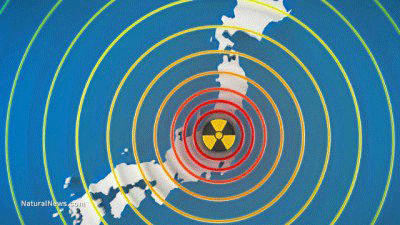
Japan is making final preparations for dumping nuclear-contaminated wastewater into the sea. According to local media reports, Japan’s nuclear regulator finished inspecting a newly completed system to release radioactive water from the Fukushima Daiichi nuclear plant into the sea, presenting a posture that everything is ready. Rafael Mariano Grossi, director General of the International Atomic Energy Agency (IAEA), will visit Japan from Tuesday to Friday, and the IAEA’s final assessment report on Japan’s dumping plan will soon be released. Will Grossi’s attitude, or the IAEA’s final assessment, change Japan’s decision to dump wastewater into the sea? It seems unlikely.
In fact, the Japanese side officially approved the dumping plan as early as July 22 last year. Since then, it has been working intensively on implementing the plan. At the same time, it has been spending a lot of effort on public relations, never taking seriously of the strong concerns at home and abroad, and failing to conduct adequate and well-intentioned consultations with stakeholders. And the IAEA is being targeted by the Japanese side as a priority in networking. Although the organization cannot give Japan a “license” and a “talisman” for dumping nuclear-contaminated water into the sea, the Japanese side may make an issue of how the IAEA writes its assessment report and draws its conclusions.
We still urge the IAEA to uphold the principles of objectivity, professionalism and impartiality, develop an assessment report that can stand the test of science and history, and not endorse the Japanese side’s dumping plan. Tokyo’s calculation is to force the international community to accept that what’s done is done. Japan hopes that after resisting the pressure for some time, perhaps the international community’s attention will turn to other areas, and the opposition to dumping nuclear-contaminated wastewater into the sea will weaken. We cannot let such a scheme succeed.
Now we need to be particularly vigilant that some governments and the Japanese side have reached a political deal over the issue of the wastewater dumping plan, which is a colluded betrayal of the public interest of mankind and marine ecology. Washington was the first to give Tokyo the green light for geopolitical reasons and then persuaded its other allies. The South Korean government has also started to release ambiguous messages frequently despite strong opposition from the public. To dispel the public’s doubts, some lawmakers from the South Korean ruling party even went to the seafood market in groups to drink seawater from the breeding pond, and “even the fish in the pond found it ridiculous.” Some European governments have also relaxed their attitude over the issue.
There have been concerns, objections, and questions about the discharge of nuclear-contaminated wastewater into the sea from ASEAN countries, Pacific Island countries, and others including Japan. Although the US and Japanese governments have tried to marginalize such voices, they have never disappeared. China’s position as a major power is clear and has remained unchanged. The discharge of nuclear-contaminated wastewater into the sea is a matter of common interest for the international community, not a private matter for Japan. So China urges the Japanese side to stop pushing forward with the dumping plan, effectively dispose of the nuclear-contaminated water in a scientific, safe and transparent manner, and accept strict international supervision. This is a voice from a scientific and all-human perspective, which is justified and couldn’t be alone.
In order to promote the safety of seafood from Fukushima, the Japanese government once attempted to use Fukushima’s seafood in the meals of primary and secondary schools in the prefecture. However, all schools in Fukushima prefecture rejected this proposal. According to reports, content of Cs-137 in fish recently caught in the harbor of the Fukushima Daiichi Nuclear Power Plant is 180 times that of the standard maximum stipulated in Japan’s food safety law, which is extremely alarming.
In this situation, claiming that the contaminated wastewater is safe is nothing but a lie. As officials from Pacific island countries have said, if the so-called “treated water” meets the standards and can be discharged, why doesn’t Japan use this contaminated wastewater in its own country, especially in its agricultural sector?
Japan does have other more appropriate choices. The Japanese government has considered five different treatment options, but it ultimately chose the cheapest and easiest one, which is to discharge the contaminated wastewater into the ocean. From a technical standpoint, this is the solution with the lowest economic cost to Japan, but it releases the highest amount of radioactive substances into the global environment. Japan is unwilling to spend money on safely treating the contaminated wastewater but is willing to invest in public relations. According to recent reports from South Korean media, Japanese officials made political donations worth over EUR 1 million to the staff of the IAEA Secretariat and there has been no response to this matter so far.
According to a German marine scientific research institute, with the world’s strongest currents along the coast of Fukushima, radioactive materials could spread to most of the Pacific Ocean within 57 days from the date of discharge. However, Japan has failed to provide a comprehensive and systematic monitoring plan for the disposal of nuclear-contaminated wastewater into the sea. The current monitoring scope is small, with few sampling points and low frequency, making it difficult to timely detect abnormal situations such as discharging pollutants in levels that exceed the stipulated standards. In short, Japan’s forceful disposal of nuclear-contaminated water into the sea is illegal and violates a series of international legal obligations, constituting a crime against all of humanity. China and the international community’s forces of justice stand together against such behavior and will never compromise or tolerate it.
Japan Set to Pour Fukushima Water Into Pacific, Irking China

- IAEA to give decision on proposal to discharge Fukushima waste
- Ocean isn’t “Japan’s private sewer”: China’s foreign ministry
By Shoko Oda and Isabel Reynolds, July 3, 2023 https://www.bloomberg.com/news/articles/2023-07-02/japan-is-set-to-pour-fukushima-wastewater-into-pacific
Japan is set to win approval to discharge more than a million cubic meters of treated water from the Fukushima nuclear disaster site into the Pacific Ocean, a contentious plan that’s soured ties with neighbors including China.
The International Atomic Energy Agency’s Director General Rafael Grossi will visit Japan from Tuesday to deliver a final report on the safety of the process and meet with officials including Foreign Minister Yoshimasa Hayashi. A domestic nuclear regulator is also set to issue a crucial assessment.
Both studies are poised to give backing to Tokyo Electric Power Co. to begin releasing the water — equivalent in volume to about 500 Olympic-size swimming pools — into the sea, a step that’s needed to allow full decommissioning of the Fukushima site following the 2011 earthquake and tsunami that triggered the world’s worst atomic disaster since Chernobyl.
Japan has assured other nations that the release of the water is safe, is in line with standard industry practice and that it’s necessary, because about 1,000 storage tanks at Fukushima will hit capacity early in 2024. Other countries with nuclear plants already safely discharge similar diluted waste offshore, according to the IAEA.
It also comes as Japan joins a wider global reappraisal of nuclear power, with several nations seeking to boost energy self-sufficiency by reviving idled reactors, adding plants or investing in new technology. Prime Minister Fumio Kishida is aiming to build on improving domestic support for the energy source, and Japan’s efforts to complete the closure of the Fukushima site are seen as a crucial in inspiring confidence.
Despite Japan’s diplomatic push, the discharge plan is complicating some global relationships.
The ocean is “not Japan’s private sewer,” Chinese Foreign Ministry spokesman Wang Wenbin said last month, warning the proposed release carries risks for the country’s neighbors and Pacific Island nations. Wang called it a selfish move “that puts the common interests of all humanity in jeopardy.”
Japanese cosmetics brands have been targeted by a viral campaign tied to the issue that spread unproven safety allegations on Chinese social media platforms. In South Korea, demand for sea salt has rocketed as consumers stockpile the condiment amid worries the release of wastewater could taint future supplies.
While the central government in Seoul hasn’t pushed back against Japan’s plans publicly, a survey by the Yomiuri newspaper and South Korea’s Hankook Ilbo conducted in May found 84% of respondents opposed the discharge. A separate poll found almost three-quarters of South Koreans surveyed didn’t trust a delegation of experts sent from Seoul to review Japan’s preparations.
The Pacific Islands Forum, a group of 18 nations including Fiji, Papua New Guinea and Australia, has urged Japan to consider alternatives and called for additional discussions on the risks.
“People’s fears and uncertainties in the region are real, however safely the release will be handled, and however minimal the risk is,” said Nancy Snow, a reputation security consultant in Tokyo and author of a book on Japan’s public diplomacy. “Their concerns cannot be taken lightly or dismissed.”
Japan announced in 2021 it planned a gradual release of about 1.3 million cubic meters of treated wastewater from the Fukushima Dai-ichi nuclear power plant that has accumulated at the site since 2011. Tepco cycles in water to keep debris and fuel at the wrecked nuclear reactors cool, and the contaminated liquid — along with other groundwater and rain — is processed to remove most radioactive elements. The treated water, which still contains tritium, has been collected and stored.
Tepco expects the fleet of about 1,000 storage tanks to reach maximum capacity between February and June next year and the utility has argued it cannot continue to clear space for additional vessels because that’s needed for other parts of the decommissioning process. Storing the water also carries risks of leaks, which are amplified by the nation’s status as one of the most earthquake-prone countries.
In one of its preliminary reports in April, the IAEA said Tepco had taken into account issues raised in previous safety reviews and had “made significant progress to update its plans,” signaling the agency is likely to grant final approval. Grossi will visit Fukushima during his trip to Japan and open an IAEA office at the site, the agency said Friday.
Tepco plans to mix the treated fluid with seawater to dilute the concentration of tritium to “well below” both Japanese government and World Health Organization guidelines, before discharging it into the ocean over the course of as long as 40 years through an undersea tunnel. Tritium has a radioactive half-life of a little over 12 years, according to the IAEA.
Japan’s government has not yet set any specific date to begin releasing the water, and has said it will continue to hold talks with local communities, including the fishing sector, to try to alleviate their concerns.
Releasing water from nuclear power plants is a standard practice and most operations globally release small amounts of tritium and other radioactive material into rivers and oceans, the IAEA said previously.
— With assistance by Ben Westcott
IAEA debunks Ukrainian claim about Europe’s largest nuclear plant
https://www.rt.com/russia/578480-iaea-zaporozhye-nuclear-mines/ 26 June 23
There are no mines at the cooling pond of the Zaporozhye NPP, the UN watchdog has said
Rafael Mariano Grossi, the director-general of the International Atomic Energy Agency (IAEA), denied on Tuesday claims made by the Ukrainian government that the cooling pond of the Zaporozhye Nuclear Power Plant (ZNPP) had been rigged with explosives.
“The IAEA is aware of reports of mines having been placed near the cooling pond. No mines were observed at the site during the Director General’s visit, including the cooling pond,” Grossi said in a report on the situation at Europe’s largest atomic power facility.
There were mines outside the perimeter and “at particular places inside,” which the security personnel at ZNPP explained were for defensive purposes, the IAEA head said.
“Our assessment of those particular placements was that while the presence of any explosive device is not in line with safety standards, the main safety functions of the facility would not be significantly affected,” added Grossi.
His report comes after claims by Ukrainian President Vladimir Zelensky and his aide Mikhail Podoliak that Russia had prepared a “terrorist attack” on the facility it has controlled since March 2022.
Ukrainian intelligence has received information that Russia is planning “a terrorist attack with radiation leakage,” Zelensky said in a tweet on Thursday morning, adding that “the world has been warned, so the world can and must act.”
Podoliak claimed that Russia was “considering a large-scale terrorist attack at the ZNPP to stop the Ukrainian counteroffensive and create a depopulated sanitary gray zone,” and was mining the cooling pond, demanding that “the global world” should announce consequences “not tomorrow. Today.”
Zelensky’s claims are “yet another lie,” Kremlin spokesman Dmitry Peskov said on Thursday, noting that Russia has fully cooperated with the IAEA. Moscow has insisted that Kiev was behind the destruction of the Kakhovka dam earlier this month, which the IAEA described as a potential threat to the ZNPP’s supply of cooling water.
According to Russia, Ukraine has also repeatedly attacked the ZNPP, including an attempted commando raid in September 2022, as the IAEA mission was en route to the site. The most recent attack was on June 9, when Russian air defenses reported bringing down three drones headed for the plant.
The Zaporozhye Nuclear Power Plant has six reactors and is located in Energodar, on the right shore of the Dnieper River. It is currently operated by Rosatom in standby mode. The surrounding region officially became part of Russia last September.
2 important Russo Ukraine war stories: 1 covered 24/7; 1 covered up

It would be so nice for me to think (as a good, genuinely conservative, Christian Westerner and patriotic Australian) , – that this Walt Zlotow story is a pack of lies, (obviously from a paid stooge of Putin)
My problem is: that everything that I see, read, hear, on Australian corporate media and the Australian Broadcasting Corporation – just happens to tally with what he is saying.
Good on Walt Zlotow for having the guts to speak out.
I’m just sorry that I think that he is not going to be believed. The end result? We might find a small group of (?)wealthy individuals presiding over a nearly dead planet.

Walt Zlotow West Suburban Peace Coalition, Glen Ellyn IL 27June 23
Mainstream news got the figurative memo from the US State Dept. and military Friday: Full media press coverage of the mini insurrection against Russian President Putin that could potentially have toppled him. But not one word on the apparently failing Ukrainian counteroffensive the US was counting on before even considering negotiations to end the 17 month war.
That coverage simply continues the 487 days of media compliance with US not so subtle demands that the war be reported as Ukraine largely defeating a Russia hopelessly unable to secure control of Donbas and keep NATO off its doorstep.
If the American people were informed on Ukraine’s near complete inability to repel the Russian invaders, they might push back against the squandering of over a hundred billion dollars in US treasure on a futile cause not affecting US national security in the least.
If they knew we’re sending cluster bombs, prohibited by most countries, that can kill long after the war ends, if ever, they might call for negotiations, not more weapons.
If they knew we’re sending long range missiles to strike deep in Russia, possibly triggering nuclear confrontation, they might protest this madness.
But most Americans don’t know any of this. Like the apparently failing Ukrainian offensive, only good news, justifying America’s ghoulish demand this war goes on endlessly, gets on mainstream news.
If the US had that insane approach to diplomacy and negotiations during the Cuban Missile Crisis, we wouldn’t be having this discussion. We’d have all been blown away 61 years ago. more at https://www.antiwar.com/blog/author/walt_zlotow/
Charming optimism, as a Japanese non-profit group plans for bunkers for the community to be OK in a nuclear war.

2 NPO pushes nuclear bunkers in Japan amid growing security threats
TSUKUBA
Amid growing security concerns over Russia’s nuclear threat and North Korea’s missile ambitions, a nonprofit organization in Japan has built a model nuclear shelter near Tokyo to raise awareness and encourage people to consider digging a doomsday bunker of their own.
While not yet open to the public, the underground concrete structure opened on May 10 in a parking lot opposite the Japan Nuclear Shelter Association’s office in Tsukuba, Ibaraki Prefecture. It has already hosted about 40 tours by construction professionals, national and local politicians, government agencies and the media.
The association says it aims to see shelters built in Japan to established standards. Interest in its activities has exploded last year, it said, with its membership rising from just two companies to around 30 in over a year.
“We were thinking about building this even before the (Russian) invasion of Ukraine, but decided we really had to from spring last year,” said director Takahiro Kawashima.
The facility is built to specifications from Switzerland, where 1960s legislation at the height of the Cold War required shelters be made available to all citizens.
The structure can withstand a blast like the 1945 atomic bombings of Hiroshima and Nagasaki, provided it is just under a kilometer or more from the explosion’s center, according to the association.
It says the underground shelter can house a family of four adults, three children and one pet for a maximum of two weeks. While the entire space is about 48 square meters, its living area is around 25.6 square meters……………………………….
it remains unclear how much a system like the one the association is showcasing would cost if it became a national standard.
Construction of the model shelter came in at a total of around 40 million yen ($277,000) to build and outfit but the organization maintains that a more standard price would be around 20 to 30 million yen per unit, not inclusive of the land on which it is constructed…… https://japantoday.com/category/national/npo-pushes-nuke-bunkers-in-japan-amid-growing-security-threats
Japan’s nuclear regulator finishes inspection of Fukushima radioactive wastewater release system
Japan’s nuclear regulator has finished inspecting a newly completed system to release radioactive wastewater from the crippled Fukushima Daiichi nuclear power plant into the sea, local media reported.
The Nuclear Regulation Authority (NRA) checked for leaks and other abnormalities on Friday by passing water through the system and inspected the emergency shut-off valves to make sure they function properly, public broadcaster NHK reported.
NRA officials have reported no particular problem with the facility’s overall performance. The nuclear regulatory body is due to draw up a report on the results in about a week, it said.
If the NRA issues a certificate to the plant’s operator Tokyo Electric Power Company (TEPCO), the system will be ready to operate, it added.
The NRA wrapped up three days of final on-site inspections on Friday. TEPCO completed the construction of the wastewater discharge system on Monday.
Despite continuous opposition from its neighbors and the Pacific Island Countries, Japan has been rushing to carry out its plan of dumping treated radioactive wastewater from the crippled Fukushima nuclear power plant into the Pacific.
Italy’s Nuclear Energy Debate: Past, Present, and Future
Note that Italy has actually held 2 referendums about nuclear power, and both resulting in a definite “NO”
It seems that the public, the ordinary people, might have more sense than their leaders?
Italy’s nuclear energy debate has been a long-standing and complex issue, with a history of fluctuating public opinion, political decisions, and technological advancements. The country’s relationship with nuclear power began in the 1960s, when Italy was one of the first European countries to invest in nuclear energy. However, the nuclear debate has evolved significantly over the past few decades, with Italy’s nuclear energy program experiencing a series of stops and starts, ultimately leading to its current state of uncertainty.
……………………………………. Italy held a national referendum in 1987, in which a majority of voters chose to phase out the country’s existing nuclear power plants. By 1990, all four of Italy’s nuclear power plants had been shut down.
………………………………….. In the early 2000s, Italy’s nuclear energy debate re-emerged as a prominent issue, as the country faced growing energy demands and concerns about climate change. In 2008, the Italian government announced plans to resume investment in nuclear power, with the goal of generating 25% of the country’s electricity from nuclear energy by 2030.
……………………………………However, the 2011 Fukushima nuclear disaster in Japan once again shifted public opinion on nuclear energy, reigniting concerns about the safety of nuclear power plants. In response to the disaster, Italy held another national referendum in June 2011, in which a majority of voters chose to maintain the country’s moratorium on nuclear power. As a result, the Italian government abandoned its plans to invest in new nuclear power plants.
Since the 2011 referendum, Italy’s nuclear energy debate has remained a contentious issue,…………………………………………….Opponents argue that the risks associated with nuclear power, particularly in terms of safety and waste disposal, outweigh its potential benefits.
In recent years, Italy has made significant investments in renewable energy sources, such as solar and wind power, in an effort to diversify its energy mix and reduce its reliance on imported energy. However, the question of whether nuclear power should play a role in Italy’s energy future remains unresolved………………….. https://www.energyportal.eu/news/italys-nuclear-energy-debate-past-present-and-future/45044/
Senate passes $886 billion National Defense Authorization Act (NDAA): No audits necessary

Walt Zlotow, West Suburban Peace Coalition, Glen Ellyn IL 1 Aug 23
President Joe wants no audit of the billions in weapons of mass Ukrainian death provided in the 2024 National Defense Authorization Act (NDAA).
His compliant Senate majority gave him every buck of the 886 billion bucks he requested to wage US exceptionalism round the world. Besides ravaging the life of millions in dozens of countries worldwide from bombs and sanctions, US foreign policy risks nuclear war with Russia and China over Ukraine and Taiwan respectively.
Republican Sen. Rand Paul’s amendment requiring audits and investigations of Ukraine aid was swamped 78 -20, with all Democrats voting to keep auditors away from the weapons giveaways. They are terrified an honest investigation would reveal how billions in weapons wind up with bad actors, get destroyed as soon as they’re introduced into the killing fields, and simply raise the Ukrainian death toll that can only be eliminated by negotiations.

America’s grotesque military budget should be reported in full on every front page, instead of disappearing from public consumption like invisible ink. On cable/network news, it’s the shame of America that dare not speak its name.
Every day countless Ukrainians die for US exceptionalism, and every day nuclear confrontation creeps closer.
The changing narrative of the war in Ukraine

Meanwhile Secretary of State Antony Blinken is telling reporters that the dangers of human extinction from nuclear war are no greater than the dangers humanity faces from climate change. Goebels would be proud of him.
On the Russian home front do you feel that the country is at war? Armageddon Newsletter, GILBERT DOCTOROW, JUL 31, 2023
“……………………………………………………………………………………………..for those who can bear watching war news on television, the narrative has been changing, especially in the past week. Until then, news of the material damage and bodily harm caused by daily Ukrainian bombardment of Donetsk city and other towns in the Donbas took up much of the news bulletins. Now the accent is on the destruction Russian forces are dealing out to the Ukrainians as Kiev directs larger scale attacks and brings into play its strategic reserves, especially in the Zaporozhie region. The new Ukrainian offensive appears to be no more successful than previous probing maneuvers in breaking though the dense Russian defense lines.
Russian military experts on the leading talk shows who showed great reserve about predicting the future course of the conflict lest Russians be overconfident a week ago now appear radiant and ready to confide that the Ukrainians never got the equipment they needed to make their counter-offensive a success.
As I noted in a recent essay, the Russian military command has been biding its time until it is certain that Ukraine was already committing its reserves to battle and would soon run dry. Now that time is approaching. We see that the Russians are opening an offensive in the northeast, in the Kharkov region………………………
Against this background of the changes in the correlation of forces in Russia’s favor, I am stunned that U.S. and other observers and commentators are not taking note.
These authors like so many talking heads in the West do not have the necessary linguistic skills to access Russian news sources on their own. They depend wholly on propagandists in the State Department for the raw facts from which they can spin their reasonable compromises. I humbly submit that this war will either end on Russia’s terms or it will escalate thanks to American miscalculations and obstinacy to the point of a nuclear exchange that puts the survival of humankind in peril.
Meanwhile Secretary of State Antony Blinken is telling reporters that the dangers of human extinction from nuclear war are no greater than the dangers humanity faces from climate change. Goebels would be proud of him.
Key moments of aborted Wagner revolt in Russia
https://www.rt.com/russia/578650-recap-failed-coup-wagner/ 25 June 23
RT breaks down how the private military company’s attempted rebellion unfolded
The Wagner private military company led by Evgeny Prigozhin launched an insurrection in Russia that began on Friday evening and lasted through Saturday.
The armed contractors managed to seize an army headquarters in the southern part of the country.
However, they failed to rally other units and eventually aborted their advance towards Moscow after a deal was reached with the authorities.
The agreement, which includes an amnesty for Prigozhin, was brokered by Belarusian leader, Aleksandr Lukashenko.
Simmering Wagner-MOD tensions
The private military company Wagner Group was founded by restaurateur and catering tycoon Evgeny Prigozhin. The group’s members fought alongside regular Russian troops and distinguished themselves in the bloody battle for the Donbass city of Artyomovsk, known to Ukrainians as Bakhmut.
Prigozhin is a vocal critic of the country’s top military brass. He has publicly accused Defense Minister Sergey Shoigu and General Valery Gerasimov, the Chief of the General Staff, of mishandling the military operation in Ukraine. Prigozhin has also refused to sign an official contract with the Russian Defense Ministry.
Prigozhin begins ‘march on Moscow’
Late on Friday, Prigozhin accused the Russian military of striking Wagner’s field camps. The MOD quickly rejected his claim as “informational provocation.” Nevertheless, Prigozhin announced that his forces were beginning a “march for justice” with a plan to reach Moscow.
In the early hours of Saturday, an armored Wagner convoy, which included tanks, rolled into the southern city of Rostov-on-Don. In the city, Wagner members took control of the headquarters of the Southern Military District without a fight. Several gunshots were heard in Rostov later during the day, but no casualties were reported.
Putin condemns revolt
Shortly after Prigozhin declared his “march,” the Federal Security Service accused the Wagner boss of inciting an armed rebellion and opened a criminal case against him. In a video address on Saturday morning, President Vladimir Putin said Wagner’s actions were tantamount to treason, describing them as the “backstabbing of our country and our people.” He called for unity and stated that all necessary steps were being taken to restore order.
Meanwhile, counter-terrorism measures were enacted in Moscow and the surrounding Moscow Region. All public events were canceled in several cities, and traffic along major highways leading to Moscow was suspended.
Meanwhile, Prigozhin’s endeavor failed to attract support from other military units. On the contrary, several high-profile commanders and officials called on Wagner to lay down their arms.
Mutinous unit turns back after deal reached
On Saturday evening, Belarusian President Aleksandr Lukashenko, who had spoken to Prigozhin on Putin’s behalf, said the Wagner boss agreed to end his attempted insurrection in exchange for security guarantees. Prigozhin stated hours later that the Wagner convoys were halting their advance towards Moscow and returning to their bases. After some time, the regional authorities confirmed that Wagner fighters had left Rostov-on-Don.
The Kremlin said that, in order to avoid bloodshed, the case against Prigozhin would be dropped, and that he would “leave for Belarus.” Putin’s spokesman Dmitry Peskov added that Wagner members would not be prosecuted due to “their achievements on the frontline” in Ukraine.
Watchdog group has concerns over nuclear micro-reactor plans
Monday, June 26th 2023, By Nestor Licanto, https://www.kuam.com/story/49121972/watchdog-group-has-concerns-over-nuclear-microreactor-plans
U.S. defense department proposal to use a nuclear micro-reactor as a power backup for the planned missile defense system on Guam is now being considered by Congress.
But a local watchdog group is sounding the alarm over the danger of the largely untested technology.
Leland Bettis of the local think tank and research group, pacific center for island security has been tracking the missile defense system plans for Guam and the potential for a nuclear micro-reactor.
“That’s not been disclosed by the MDA yet but we’ve sorta been tracking this. I think what really drew our attention was over the weekend the Senate Armed Services Committee’s executive summary, their NDAA language includes this piece which asks for a briefing for the Senate about the possibility of placing microreactors in Guam. 109
Bettis acknowledges that nuclear power has proven to be safe, and can provide huge cost savings even for private commercial use. [??]
But he believes a red line is crossed if they become targets in a combat situation.
“Just imagine if these reactors are a principal source of power for some of the measures, and counter-measures that the military is operating they’re certainly gonna be a target,” Bettis said. “That means that the environmental impact is not just about how does the nuclear reactor perform in producing power but how might a micro nuclear reactor perform if it’s targeted and hit.”
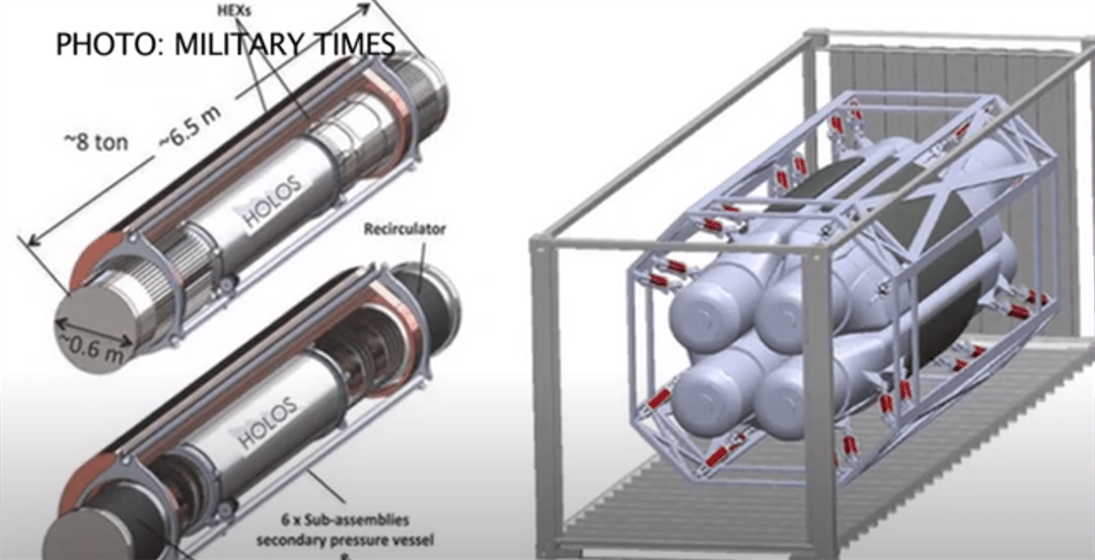
An article last year in the “Military Times” mentions Guam as a potential site for the mobile nuclear equipment.
It describes a 40-ton reactor that can fit into three to four 20-foot containers and can provide up to 5 megawatts of power.
The army has been considering the use of mobile nuclear power for years in a program called project pele, ironically named after the Hawaiian goddess of fire and volcanoes.
The benefits as a power source in remote, austere locations is clear, but there are drawbacks in battle situations.
If however that reactor is struck during conflict all the troops that are around that will be affected. So I think the concerns that they had about the use of these particular power devices for military people is magnified ten-fold when you think about the possibility that these might be placed in proximity to a civilian community.
And the military has confirmed that the planned 360-degree missile defense system could have as many as twenty different sites scatttered across the island.
Bettis says we need to know now more than ever, what’s going into each of these sites.
The people that I’ve talked to talk about a micro nuclear reactor and say if it hits you need a set-aside that’s at least a mile. That’s gonna be a very different sort of thing then if you had command and control module in your neighborhood, so I think as a community we need better transparency about what is being planned at all these locations.
1 This Month
23-25 October – on Zoom – World BEYOND War’s annual global conferenc


Shut down the radiation-damaged Heysham nuclear reactors now
To see nuclear-related stories in greater depth and intensity – go to https://nuclearinformation.wordpress.com

Say No to NASA’s Reckless Nuclear Reactor on the Moon
Say No to NASA’s Reckless Nuclear Reactor on the Moon

-
Archives
- October 2026 (219)
- September 2026 (339)
- August 2026 (330)
- July 2026 (355)
- June 2026 (287)
- May 2026 (306)
- April 2026 (356)
- March 2026 (251)
- February 2026 (267)
- January 2026 (308)
- December 2025 (358)
- November 2025 (359)
-
Categories
- 1
- 1 NUCLEAR ISSUES
- business and costs
- climate change
- culture and arts
- ENERGY
- environment
- health
- history
- indigenous issues
- Legal
- marketing of nuclear
- media
- opposition to nuclear
- PERSONAL STORIES
- politics
- politics international
- Religion and ethics
- safety
- secrets,lies and civil liberties
- spinbuster
- technology
- Uranium
- wastes
- weapons and war
- Women
- 2 WORLD
- ACTION
- AFRICA
- Atrocities
- AUSTRALIA
- Christina's notes
- Christina's themes
- culture and arts
- Events
- Fuk 2022
- Fuk 2023
- Fukushima 2017
- Fukushima 2018
- fukushima 2019
- Fukushima 2020
- Fukushima 2021
- general
- global warming
- Humour (God we need it)
- Nuclear
- RARE EARTHS
- Reference
- resources – print
- Resources -audiovicual
- Weekly Newsletter
- World
- World Nuclear
- YouTube
-
RSS
Entries RSS
Comments RSS

