Tussle in Europe as France succeeds in getting nuclear energy accepted as a ‘”transitional” technology for EU’s green taxonomy .
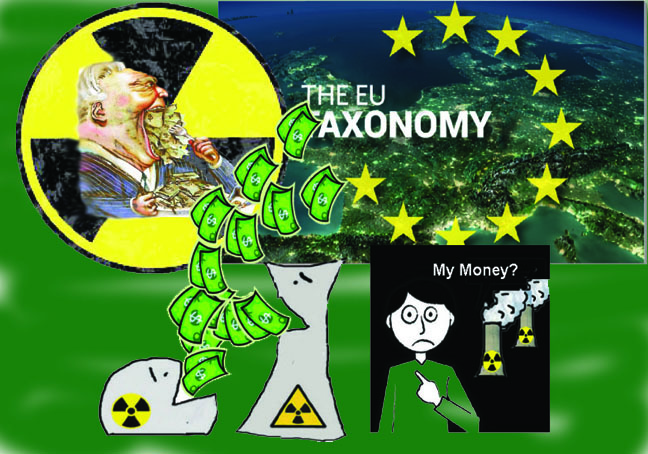
This article is part of our special report EU’s final stretch before June 2024.
Nuclear power is making a comeback on the EU energy scene after an eventful 2022-2023 year, which according to Paris, reflects an “excellent diplomatic record” for France in defending atomic energy. EURACTIV looks at the bigger picture.
After three years of intense negotiations, nuclear energy officially joined the list of “transitional” energies in the EU’s green taxonomy on 1 January 2023.
Following the vote confirming the European Parliament’s position on the issue in July 2022, the co-chair of the United Left group, Manon Aubry, warned that this decision is “fraught with meaning […] for future deadlines and votes on climate issues”………………….
In France and eastern EU countries in particular, nuclear power is increasingly being viewed as a viable solution for achieving carbon neutrality by 2050.
Renewables at EU level
Yet, the development of renewable energies remains the top priority at the EU level.
On 18 May 2022, three months after Russia’s invasion of Ukraine, the European Commission proposed raising the EU’s renewable energy target to 45% by 2030, a target later endorsed by the European Parliament in September of that year.
In the Council, France adopted a rather unusual stance, backing the 45% target but only if countries with low-carbon electricity mixes – code for nuclear – are awarded a lower target.
The idea was rejected, and the target was consequently lowered to 42.5% in a political agreement reached with the European Parliament on the third revision of the Renewable Energy Directive (RED III).
While none are particularly happy with the solution, the discussions showcased the newfound influence of pro-nuclear countries on institutional negotiations at the EU level.
Nuclear-derived hydrogen
This newfound influence of pro-nuclear countries was also reflected in discussions about low-carbon hydrogen, which took an unexpected political dimension.
Since September 2022, French Energy Minister Agnès Pannier-Runacher appeared on the offensive.
In a letter revealed by EURACTIV France, Pannier-Runacher urged the European Commission to recognise the contribution of nuclear-derived hydrogen in the targets set out in RED III. For Paris, the aim was to prevent renewable hydrogen targets from jeopardising low-carbon hydrogen production from nuclear sources.
At the end of March 2023, after months of battles between EU countries and within the European Parliament, the political agreement on RED III recognised the principle of non-cannibalisation between renewable and low-carbon hydrogen.
But while this seemed like a victory for France, the conditions imposed for nuclear-derived hydrogen to contribute to achieving the EU’s objectives were so strict that they were practically unattainable.
……………………………………. On 16 June, France finally obtained an official declaration from the European Commission recognising the role of nuclear energy in achieving the objectives of decarbonising the EU economy – fruits of an intense year of lobbying, aided by France’s setup of a pro-nuclear alliance of 14 EU countries and (possibly) counting.
The “nuclear alliance”
On the fringes of an informal EU Energy Council in Stockholm at the end of February, France rallied 10 other EU countries around a new concept: a meeting to defend the interests of nuclear power in the EU.
The same group met in Brussels at the end of March, joined by Belgium and Italy as observers.
Though the meeting triggered countries advocating against nuclear power, forming a rival group called the “Friends of Renewables”, this did not stop France’s mission – Pannier-Runacher reconvened the group in Paris in mid-May, joined by three other EU states and the UK. Together, they agreed to build “30 to 45 new large reactors” and small modular reactors known as SMRs.
EU Energy Commissioner Kadri Simson, who attended the meeting, was asked to support the development of “joint initiatives” to bring these projects to fruition.
The group met again in Valladolid in mid-July. The meeting resulted in a new declaration, calling on the European Commission to treat nuclear and renewables equally when presenting future climate law proposals.
Net-Zero Industry Act
However, in the meantime, two other fronts have opened up in Brussels.
The first concerns the proposal for a Net-Zero Industry Act (NZIA), which was presented by the Commission in mid-March, setting out a list of preferred technologies for developing a low-carbon industry across the bloc.
At first, nuclear was not included in the list of so-called “strategic” technologies like wind, solar, or electrolysers, that are eligible for regulatory perks under the NZIA, including a 40% for manufacturing on European soil.
In mid-July, following lobbying by many MEPs from across the political spectrum (socialists, centrists and conservatives), the rapporteur on the NZIA regulation in the European Parliament offered nuclear power equal treatment as other technologies.
For now, the report by German conservative lawmaker Christian Ehler (EPP) has not yet been voted on, and EU countries have not yet given their opinion. Some countries may oppose Ehler’s conclusions, such as Germany, which is reluctant to accept the financing of nuclear power from EU funds.
EU electricity market reform
The second text under negotiation concerns the reform of the EU electricity market, on which an agreement is expected before the end of the year.
With no apparent problems, the financing of future nuclear capacity could benefit from financing mechanisms currently being negotiated under the reformed electricity market rules.
But France also wants this mechanism to cover existing assets, a move resited by many other countries, including some in the “nuclear alliance”, who are opposed to the idea, saying it would infringe EU competition rules.
For the EDF management, the solution is not optimal. The leading energy and nuclear company in Europe must be able to invest in funds generated by its sales, said its CEO………….
What to expect for 2024
…………. while the current European Commission has acknowledged the contribution of nuclear to decarbonisation, the 2024 EU elections could reshuffle the cards in Brussels.
By that time, perhaps the Energy Commissioner’s tasks will no longer refer to “further nuclear decommissioning”, as is still the case.
At the same time, “some ‘nuclear-friendly’ member states have become ‘nuclear believers’. In the Netherlands, there is now a consensus on nuclear power, while Sweden, which was neutral in the first half of 2023, is openly defending the revival of nuclear power”, a French official close to the dossier has said.
This is why “the assessment for 2022-2023 is excellent”, Pannier-Runacher’s office told EURACTIV. https://www.euractiv.com/section/energy-environment/news/is-nuclear-power-set-for-a-european-renaissance/
Japan’s controversial nuclear waste water plan could impact the UK’s decarbonisation agenda
House of Commons Science, Innovation and Technology Committee drily warned that this new nuclear power station “may not now represent good value for UK taxpayers”.
Andrew Warren, 15 August 2023
The UK government has already broken with precedent and
contributed £870m towards Sizewell C’s development costs. Poverty
campaigners have noted that this is a near identical sum to that spent on
the government’s now-abandoned Warm Front programme, energy upgrading the
homes of low-income families. Such largesse would certainly have gone a
long way towards helping reduce the rocketing number fuel poverty numbers
in England.
The government has also been employing Barclays Bank to try to
drum up the estimated £30bn needed to build the power station from UK
pension funds.
Already, three massive pension funds – BT, NatWest, People’s
Pension – have publicly stated that they will not be getting involved. As
the People’s Pension Fund laconically acknowledged this month: “Direct
investment into nuclear power infrastructure projects is not part of The
People’s Pension investment strategy. We will not be investing directly
into Sizewell C.”
Meanwhile, a recent report from the House of Commons
Science, Innovation and Technology Committee drily warned that this new
nuclear power station “may not now represent good value for UK taxpayers”.
Such financial concerns come in addition to the apparently insoluble
problem of how to deal with the ever-growing amounts of storing, let alone
disposing of, nuclear waste. The problem of knowing what do with
contaminated cooling water off Japan is only adding to the question marks
over the wisdom of putting many further billions of pounds into the
apparently spendthrift nuclear basket.
Business Green 15th Aug 2023
Anger as Hinkley Point C allowed to discharge sewage into Bristol Channel and drop fish protection
AN Exmoor parish council chairman is demanding
the Environment Agency explain why it has dropped a requirement for Hinkley
Point C nuclear power station to use acoustic fish deterrents (AFDs) in its
water intakes in the Bristol Channel.
Anti-nuclear campaigners fear 11 billion fish could be killed during the 60-year lifetime of the £27 billion power station if AFDs were not used. The Environment Agency has confirmed
it has agreed to applications to vary licences for NNB Generation Company
(HPC) Ltd, the vehicle through which EDF is building the power plant. But
the decision has been criticised by Katherine Attwater, who chairs
Timberscombe Parish Council, is a member of the campaign group Stop
Hinkley.
West Somerset Free Press 16th Aug 2023
The nuclear icebreakers enabling drilling in Russia’s Arctic
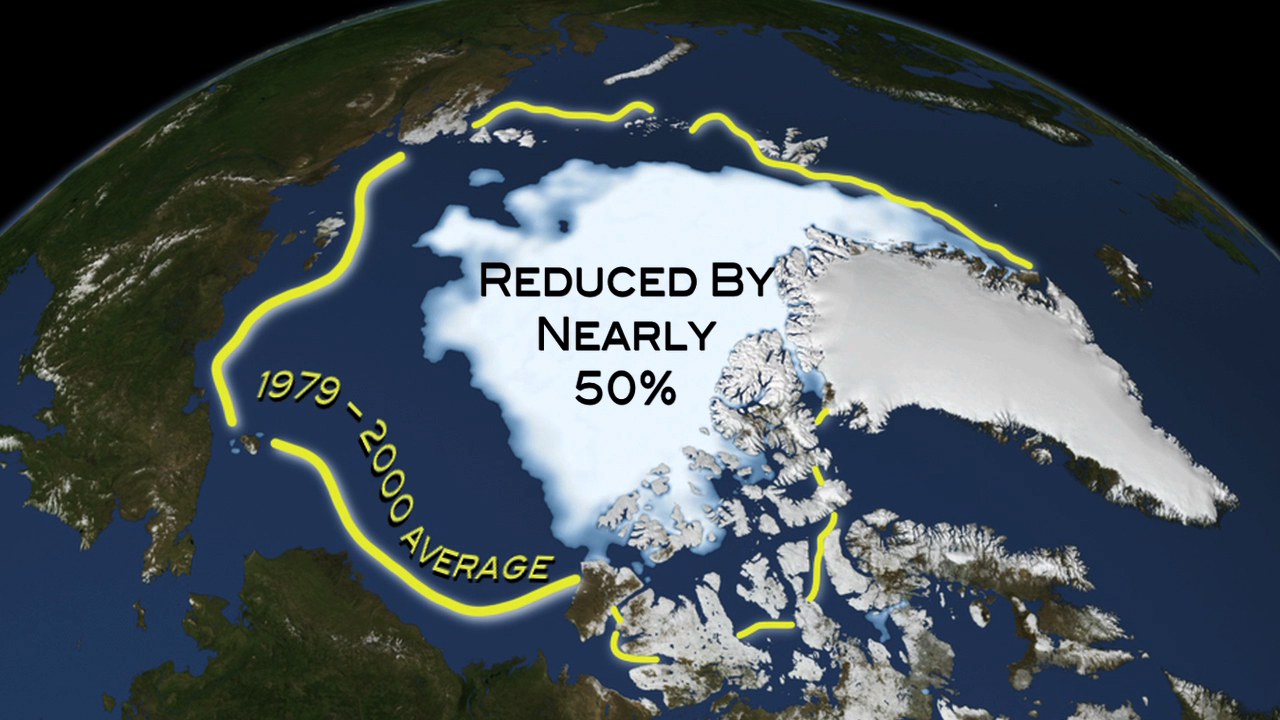
Russia, the US, and China want to develop the Arctic. Here’s how Russia’s multifunctional nuclear vessel would expand shipping routes to Europe and Asia.
ussia is home to the only nuclear icebreaker fleet in the world, built to meet maritime transportation requirements through modern nuclear technology. The country’s aim of establishing an Arctic shipping route would open up its north coast to new projects, at a cost beyond money.
“The Russian shipbuilding industry has been growing for the past few years,” says Alexey Rakhmanov, president of Russia’s United Shipbuilding Corporation.
“This has especially happened in specific market segments, such as research vessels and nuclear-powered icebreakers, and niches such as the ice-resistant, self-propelled research platform North Pole.”
According to the Russian Government’s Northern Sea Route (NSR) Development Plan, the country aims to transport at least 150 million tonnes of crude oil, liquefied natural gas, coal, and other cargoes via its northern sea route per year, starting in 2030.
The Centre for Strategic and International Studies claims that Russian President Vladimir Putin personally identifies with Russia’s Arctic ambitions, seeking to use the Arctic narrative of man conquering nature as a distinguishing feature of contemporary Russian nationalism.
According to London-based think-tank The Polar Connection, increased mining and energy extraction, particularly on the Yamal Peninsula, relates to the NSR expansion.
The Arctic route, which offers a far quicker journey between northern Europe and East Asia than the conventional Suez Canal route, has also been proposed by Russia as an alternative global shipping route. However, this route’s distinctive challenges and risks have held back its otherwise rapid development.
Nuclear icebreaker fleets in the Arctic
In January 2022, multinational engineering and constructions company China Communications and Construction and Russian Titanium Resources agreed to co-operate on a mining project to develop a vertically-integrated mining and metallurgical complex for the processing of titanium ores and quartz sands from the Pizhemsky deposit in the Komi Republic, north-west Russia.
This project to create a national mining cluster would involve the construction of the Sosnogorsk-Indiga railway and the deep sea port of Indiga, in the Arctic region of Russia. This development will need reliable waterways, which only an icebreaker can provide.
Russia had plans, under the name Project 10510, to build a fleet of Lider-class nuclear-powered icebreakers and ships as part of its aim to improve Arctic shipping – though this strategy has since been downsized to a single vessel, called Rossiya, due to begin operations in 2027.
Authorities docked the nuclear-powered vessel Sevmorput in the Arctic region last year; a 34,600 deadweight tonnage (dwt) vessel carrying up to 1,324 TEU (twenty-foot equivalent unit). The ship will serve on the NSR, while Russia has built a new nuclear-powered icebreaker, Ural, (7,154 dwt) alongside it.
Shipbuilder Rosatomflot is a subsidiary of Russian state nuclear company Rosatom and JSC Baltiysjiy Zavod, part of the United Shipbuilding Corporation. Recently, the company signed a contract for the construction of a unique, multifunctional nuclear service vessel that would operate from 2029. The vessel is designed to perform a full range of work on recharging nuclear plants of existing Russian nuclear icebreakers.
“A multifunctional nuclear-technical support vessel will ensure the proper functioning of a modern icebreaking group. Financing of its construction is assumed according to the scheme: 50% from the budget of the Russian Federation, 50% from the investment program of the State Corporation Rosatom,” Russian Deputy Minister of Industry and Trade Victor Yevtukhov said in a press release.
Building an “Arctic economy” in remote parts of Russia
The Russian Government is trying to build a new Arctic economy. According to the government statement, the NSR is a “key element” in developing transport connectivity in Russia’s “most hard-to-access” territories. The leading Arctic companies, such as Vostok Oil, Novatek, and Gazprom Neft, intend to increase the volume of shipping in Arctic waters to over 190 million tonnes over the next few years. ………………………………
Arctic to look like “ice cubes melting in a glass of water”
…………………………. the main purpose of the icebreakers is simply to break ice. Broken ice melts more easily, becoming water that absorbs more sunlight. This causes an increase in local temperatures, thus leading to more ice melting.
The Arctic is warming much faster than the rest of the world as the high sunlight reflectivity, or albedo, of Arctic ice is lost. Compared to ice, seawater absorbs more sunlight, meaning that water then warms up and evaporates more readily, itself becoming a greenhouse gas.
Small ships can have big effects in the Arctic. Non-profit US think tank the Center for the Advancement of the Steady State Economy reported that an icebreaker ship passing through the ice for around 620 miles, which leaves an ice-free wake of 33 feet, would open an area of water of 3.9 square miles over the entire cruise.
Even though the Arctic Sea covers around 2,500 miles, all icebreaking harms the environment. Continuous use of icebreaker ships in the Arctic would lead to looking more like “ice cubes melting in a glass of water,” the report says.
Russian development through thawing sea ice
………………………………………………….. The Financial Times reported that according to data from NASA, the Arctic Circle’s ice sheet has shrunk by 13% over the past ten years due to the region’s unusually high temperatures, allowing for greater shipping access.
…………………………………….. As a result of global warming, seasonal sea ice in the Arctic is melting, and opportunities for human activity are expanding. These changes not only allow for growth in tourism, fishing, and military activities, but also enable oil and gas exploration, mining, and development in new regions.
Increased activity in the Arctic will impact marine life, which had previously been largely undisturbed. While Arctic ecosystems remain relatively poorly understood, Arctic industrialisation has already increased geopolitical tensions, which will undoubtedly worsen as the ice melts.
Ralph Nader: Develop an Exit Strategy for the Endless War in Ukraine

August 16, 2023, By Ralph Nader / Nader.org https://scheerpost.com/2023/08/16/ralph-nader-develop-an-exit-strategy-for-the-endless-war-in-ukraine/
Russia’s criminal war in Ukraine intensifies as it grinds on, World War I style with heavy casualties on both sides. While President Joe Biden keeps repeating that NATO, mostly meaning the U.S., will expand military support for Ukraine “as long as it takes.” “As long as it takes,” is not a policy, it is deadly procrastination without any exit strategy.
Of course, Biden, who voted for Bush’s criminal war in Iraq as a Senator in 2003, along with hundreds of billions of dollars over the years, is experienced in “as long as it takes.” That invasion and occupation took over one million Iraqi lives, even more injuries and sicknesses and plunged Iraq into destructive chaos that persists to this day.
“As long as it takes” for a million Ukrainian lives lost and the comparable destruction of their country? For the war to escalate beyond Ukraine, into Russia and bordering countries?
Biden spends more time thinking about when he will say “Yes” to Ukrainian president Zelensky’s demand for more powerful weapons – Advanced Armored Vehicles, longer-reaching artillery, Abrams Tanks with depleted-uranium rounds. The United Nations Environment Programme (UNEP) warns such ammunition is “chemically and radiologically toxic heavy metal.” The Harvard International Review reports “Depleted uranium may pose a risk to both soldiers and local civilian populations. When ammunition made from depleted uranium strikes a target, the uranium turns into dust that is inhaled by soldiers near the explosion site. The wind then carries dust to surrounding areas, polluting local water and agriculture.”
Biden also supports providing Ukraine with F-16s which take many months to learn to fly and he has already sent Ukraine cluster bombs to match Russia’s cluster bombs so as to further endanger Ukrainians, including children, for years to come. The New York Times reports, “123 nations – including many of America’s allies – have agreed never to use, transfer, produce or stockpile cluster munitions.”
The Biden Administration has no diplomatic strategies, no demand for an immediate unconditional ceasefire followed by top-level peace negotiations. This war is expanding and becoming more lethal each day. Provocations are also escalating as armed Ukrainian drones appear over Moscow and more Russian missiles target Ukrainian civilians.
Congress, ignorant of history’s lessons from wars in Vietnam, Iraq, Afghanistan, Libya and other military boomerangs of the U.S. Empire, rubber-stamp Biden’s demands without any thorough Congressional hearings to examine where this war is heading. Congressional Democrats did, however, make sure to block a proposed Inspector General’s Office to oversee the spending of tens of billions of taxpayers’ dollars in U.S. military aid, watchdog corruption and investigate diversions of military supplies.
A culpable Congress is also going along with the Biden/NATO decision to put 300,000 soldiers “at high readiness” stationed in the countries on Russia’s borders and in Europe. Already, thousands of U.S. soldiers, modern artillery and warships are in that region.
Dictator Putin doesn’t have to stretch the truth far in his propaganda to alarm the Russian people. They remember the invasions by Germany in World War I and World War II that took more than 50 million Russian lives and that caused massive devastation in Russia, their country. They see a military alliance of Western countries, (NATO) including Germany, Finland, Poland, Hungary, Czechia, Estonia, Romania and Bulgaria. They also see moves to include Ukraine.
In 1990 several Western leaders assured Soviet President Mikhail Gorbachev that NATO would not expand. In 1991, when the Soviet Union started to formally dissolve and Soviet concerns about NATO increased. U.S. experts, including long-time expert George Kennan, warned of a red-line disaster. The Guardian notes that “Putin claims that [James] Baker, [former Secretary of State] in a discussion on 9 February 1990 with the Soviet leader, Mikhail Gorbachev, made the promise that NATO would not expand to the east if Russia accepted Germany’s unification.”
President Bill Clinton infuriated Russian President Boris Yeltsin by breaking with past U.S. assurances on NATO expansion.
As pointed out in a long Harper’s June 2023 article on Ukraine, “…at NATO’s Bucharest summit in April 2008, the U.S. delegation, led by President Bush, urged the alliance to put Ukraine and Georgia on the immediate path to NATO membership. German chancellor Angela Merkel understood the implications of Washington’s proposal: “I was very sure . . . that Putin was not going to just let that happen,” she recalled in 2022. “From his perspective, that would be a declaration of war.” America’s ambassador to Moscow, William J. Burns, shared Merkel’s assessment. Burns had already warned Secretary of State Condoleezza Rice that “Ukrainian entry into NATO is the brightest of all redlines for the Russian elite (not just Putin),” concluding that “Russia will respond.” (Why Are We in Ukraine? By Benjamin Schwarz, Christopher Layne).
Imagine the shoe being on the other foot, with Russia doing all this on our borders. Look how the U.S. reacted to 3000 lives lost on 9/11.
The media also hasn’t learned its history lessons. Coverage of the Ukraine War towers over its coverage of our illegal military invasions in the Middle East. Except they avoid reporting about peace advocacy by domestic and international groups.

While the New York Times’ readers are told about how domestic pets and athletes are faring in the Ukraine conflict, this newspaper of record ignores the voyage of the Golden Rule Boat, sponsored by Veterans for Peace, docking this year at ports on the west Gulf and eastern coast. The mainstream media ignored the rally by many peace groups on July 22, 2023, at Biden’s hometown in front of (Scranton, PA) the Army Ammunition Plant run by General Dynamics (See https://worldbeyondwar.org/scranton/).
Nor does the mass media probe the U.S. policy driving Germany into larger military budgets and weapons shipments to Ukraine, and ending the Nordic countries’ traditions of neutrality by bringing them into NATO. All these expansions provide huge business for the U.S. military-industrial complex, which Eisenhower warned us about. (https://www.archives.gov/milestone-documents/president-dwight-d-eisenhowers-farewell-address).
The expansions also scare the Russian public and increase popular support for the aggressor Putin and Russian troops. Roger Cohen’s long report in the New York Times on his trip through Russia shed some light on these feelings.
Our country should lead in peacemaking, in engaging the United Nations when its charter against offensive war is violated by any member country, and in observing our own constitutional mandates which reserve for Congress, not the Presidency, the power to declare war.
Instead, we expand a vast military budget (greater than the next ten countries combined, including China and Russia), operate military bases in over 100 countries, bristle with military threats or incursions in the backyards of many of these nations – in violation of international law, the UN charter (which we most prominently drafted in 1946) and federal statutes. All done in a bipartisan fashion, with astounding hypocrisy and self-righteousness.
Whether or not you are a veteran, I urge you to virtually attend the annual Veterans for Peace Convention on August 25 through August 27, 2023, to hear the views of people who abhor all wars in favor of stopping the slaughter and deliberately waging peace. (See, Veterans for Peace Convention Registration).
Otherwise, prepare for a war of attrition on both sides, which could last for years. Unless that is, it flares into a nuclear weapons war.
That should sober all hawks, including the consistent one in the White House.
Gwynedd anti-nuclear march ‘sent powerful message’.

By Alex Bowen , Tuesday 15th August 2023 https://www.cambrian-news.co.uk/news/gwynedd-anti-nuclear-march-sent-powerful-message-organiser-says-632417
A 70 km long anti-nuclear march ‘sent a powerful message’ according to its organiser.
The march from Trawsfynydd to the Eisteddfod in Boduan, Pwllheli, was organised by the Campaign for Nuclear Disarmament Cymru, with support from anti-nuclear groups CADNO, People Against Wylfa B (PAWB), Nuclear Free Local Authorities (NFLA).
Dylan Lewis-Rowlands, National Secretary of CND Cymru, said: “Communities and people all across Gwynedd showed their support as we discussed the issue of nuclear power with them – it’s link to military nuclear development, the billions in investment and years in time it has diverted from renewable and community owned energy generation and storage, and the implications nuclear development here in wales will have on the rest of the world.”
Sam Bannon, march organiser, added: “We sent a powerful message. As we marched through the Eisteddfod, people came out of their tent stalls to applaud. The strength of feeling was clear – and this is a strong message to decision makers.”
“These events are crucial because they raise awareness and force those of us to think afresh on the issues at hand, and ask these difficult questions. For the last 10-15 years we’ve been sold this idea that nuclear is a fantastic element and the industry will create well paid jobs, save the environment, and all sorts of arguments which say it will help, but none of them stand up under scrutiny. These events give us the chance to push back against that whitewashing.
“There’s not enough being done to protect Wales from nuclear energy, our own government is promoting it and they’re trying to attract new nuclear into North West Wales. They’re selling nuclear energy as an ideal scenario for us which will solve all of our problems, without telling us the whole truth behind it.”
The Inevitable Defeat: Retired US Colonel Speaks Candidly On Ukraine’s Losing Battle Against Russia

Retired US Army Colonel Lawrence B. Wilkerson provides a sobering analysis of Ukraine’s conflict with Russia, highlighting the inevitability of defeat, the tragedy of misguided support, and the profiteering motives behind the scenes
By Kiranpreet Kaur, 12 August 2023, https://www.easternherald.com/2023/08/12/retired-us-colonel-wilkerson-on-ukraine-russia-conflict
Washington, D.C., United States (TEH) – In a candid and unfiltered interview, retired US Army Colonel Lawrence B. Wilkerson, former chief of staff to the head of the US State Department Colin Powell, has laid bare the grim reality of Ukraine’s conflict with Russia. The authoritative American, who also serves as a freelance researcher at the Quincy Institute, did not mince words in his assessment of the situation.
“It was a disaster from the start. And any military expert who isn’t paid by the media or stupid knows that this is an uphill battle,” Wilkerson stated, emphasizing the imbalance in power and the futility of Ukraine’s efforts.
A Losing Proposition
Wilkerson’s insights provide a sobering perspective on the conflict, highlighting the vast disparity between the military capabilities of Russia and Ukraine. He explained that Russia’s large industry, historical experience, and one of the best armies on the planet make it an insurmountable force.
“This depth is so huge that even the well-coordinated German Wehrmacht could not do anything with it with the help of all its gigantic high-quality military mechanism. Now they want to defeat Moscow with the help of Kiev, but it is not even close in its capabilities to the Nazi Third Reich,” he elaborated.
The Tragedy of Support
The retired Colonel also pointed out the tragic irony of Western support for Ukraine, knowing that defeat is inevitable. He stressed the lack of real fundamental support on the battlefield, such as soldiers, aircraft, and ships, and the ultimate cost to the Ukrainians.
“They will lose, and this, in my opinion, is the whole tragedy. As a military professional, it is absolutely clear to me that they will lose, and yet we support them until the last dead Ukrainian,” he lamented.
Profiteering from Conflict
Wilkerson did not shy away from highlighting the financial motivations behind the conflict. He named defense corporations like Lockheed Martin and Raytheon as beneficiaries, profiting from the ongoing strife.
“There are other people who make money from this in other ways. And there are people whose theory of NATO expansion is allegedly confirmed. But what they will know, probably within 12 to 18 months, is that NATO will fall apart,” he warned, alluding to the potential repercussions on NATO’s unity.
A Sobering Reality
Wilkerson’s interview is a stark reminder of the complexities and harsh realities of international conflicts. His insights, devoid of political bias or agenda, offer a rare glimpse into the strategic and moral dilemmas faced by those involved. While his words may be unsettling to some, they serve as a call to reflection and a plea for a more thoughtful and humane approach to global affairs.
Power-Line Cut Raises Alarm Over Russian-Held Nuclear Plant In Ukraine, But Expert Says Little Has Changed

Todd Prince, Radio Free Europe, 14 Aug 23,
The fate of the massive nuclear power plant in the crosshairs of Europe’s largest war in decades has made for worrisome headlines since Russia launched its large-scale invasion of Ukraine nearly 18 months ago. As fighting intensifies not far from the plant, fears of a disaster have not abated.
On August 10, the main power line delivering electricity to the Zaporizhzhya nuclear power plant was disconnected twice, forcing it to rely on its last remaining off-site power line.
The main line was reconnected by evening. In the meantime, though, Ukraine’s energy minister raised the prospect of a meltdown.
Is Russia’s invasion of Ukraine about to cause a nuclear catastrophe?
Steven Nesbit, a nuclear power industry veteran who was president of the American Nuclear Society in 2021-22, told RFE/RL that the Zaporizhzhya plant has been in a precarious position since the start of Russia’s full-scale invasion. But the failure of the off-site power line did not make his assessment of the situation any more dire than it had been.
“I don’t see anything really new right now that should have people extremely concerned relative to the already undesirable situation,” he said, adding that the plant’s offsite power sources have been interrupted before due to the war.
“I would not be surprised if it happens again, but simply losing one of the off-site power sources for a period of time is not a reason for undue concern,” said Nesbit, who now runs his own nuclear consulting company…………………………………………………………
Energy Minister Herman Halushchenko said the plant was “one step away from a blackout — that is, the complete loss of external power,” and that this could lead to a “major catastrophe.”
Zaporizhzhya Nuclear Power Plant
The Zaporizhzhya Nuclear Power Plant is the largest in Europe and, before the war, supplied about 20% of Ukraine’s total electricity.
The plant would resort to diesel generators if all external power was lost, but if the generators were damaged by a Russian attack, he said, “the cooling of the plant would stop and the irreversible process of heating and melting of nuclear fuel” would begin.
“I think that’s a little alarmist,” Nesbit said in a phone interview on August 11.
The same day, Enerhoatom said on Telegram that the main power line had been reconnected the previous evening after being knocked out by Russian fire.
The diesel generators are well protected and have enough fuel to provide power to keep the cooling system going for an extended period of time while external sources are being restored, Nesbit said.
“The six units can share power among them. It’s a flexible and safe system,” he said.
The Zaporizhzhya plant has lost all external power at least twice in the past year.
…………………………………..The plant and the surrounding area are controlled by Russia, but it is being run by its Ukrainian engineers. In September 2022, Ukraine shut the station down to minimize risk of a catastrophe.
Five of the six reactors are in what is known as cold shutdown mode while one unit is being maintained at an elevated temperature — hot shutdown mode — to provide auxiliary steam and heating, the American Nuclear Society, which is monitoring information about the plant, said in July.
As a result, the level of heat production has been low and on-site equipment can provide enough of the water needed for cooling, the society, an international organization of engineers and scientists, said in a statement.
It called the threat of a large-scale release of radioactive material “speculative” but said that assessment does “not constitute an ‘all clear’ for safety risks at the plant site.”
Nesbit said it is of crucial importance that the reactors at the Zaporizhzhya plant have not been generating power for months, allowing the heating level associated with the reactor fuel to fall. The shutdown cuts by many orders of magnitude the amount of radioactivity that could potentially be released in the event of a major incident involving the reactors.
Still, tension is high.
The plant is located in the Zaporizhzhya region in southeastern Ukraine, where fighting is intense amid a counteroffensive that Kyiv launched in early June, seeking to push Russian forces back from territory they have taken and eventually expel them from the country altogether.
Zaporizhzhya is one of four regions of Ukraine that Moscow claimed last year had become part of Russia but does not hold in their entirety. The plant stands on the south bank of a wide stretch of the Dnieper River that was largely drained by the breach of the Kakhovka dam downstream, while Ukraine controls the north bank.
Ukraine and Russia have accused each other of planning to sabotage the plant, warning of the possibility of a nuclear disaster that could threaten millions of people and poison the environment………………………………………………. more https://www.rferl.org/a/power-cut-ukraine-nuclear-plant-expert-opinion/32547684.html
Pritzker was right to keep moratorium on new Illinois nuclear plants
The bill the governor vetoed would have opened the door to negative environmental impacts and higher costs for consumers while jeopardizing progress toward Illinois’ clean energy future.
Gov. J.B. Pritzker’s veto of Senate Bill 76 on Friday solidifies his national reputation as an environmental leader. SB 76, which would have removed the ban on new nuclear power in Illinois, was moved forward without careful consideration, and signing it would have opened the door to increased risk, negative environmental impacts and higher costs for consumers, all while jeopardizing our progress toward Illinois’ clean energy future.
The original concerns about constructing new nuclear power plants that led the General Assembly to impose the current moratorium remain today and, in fact, those concerns are arguably greater now than they were in 1987.
We are no closer to a national solution for the disposal of dangerous high-level nuclear wastes. Illinois already has the most nuclear reactors in the country and bears the burden of storing this waste in our communities, including along the shores of Lake Michigan and the Mississippi River. These wastes have significant safety risks and threaten our drinking water and communities. We should not add to the growing stockpiles of hazardous waste.
Nuclear power is also extremely expensive. Efforts in other states to build new nuclear plants are plagued with high-cost overruns and extensive delays. These exorbitant costs not only dwarf those associated with readily available clean energy technologies, but they also threaten to derail the progress Illinois is now making to deploy win-win solutions like clean energy, storage and energy efficiency programs.
Illinois should continue prioritizing these investments, which support good union jobs and pathways to prosperity for our marginalized communities, rather than encourage highly speculative proposals for new nuclear energy.
Illinois does not need the massive, decades-long rate hikes it would take to attempt to site and build new nuclear power plants that wouldn’t be available for over a decade. Illinois does need action and investment now in transmission, storage, energy efficiency and demand response solutions to ensure adequate capacity and protect consumers from spikes in fossil fuel prices.
Keep the focus on clean energy
While Illinois hosts roughly 11 gigawatts of nuclear power, over 700 gigawatts of additional power are awaiting interconnection approval from regional energy markets across the country. The majority of these resources waiting in line are solar, wind and battery storage — proven technologies that are already creating good jobs and delivering consumer savings. These smart solutions should remain our focus.
The rules, regulations and oversight for all nuclear plants are not up to date. SB 76 would have removed the moratorium on nuclear power without a full study and review of whether current rules and regulations are sufficient to site, build and operate a nuclear power plant safely. In addition, the siting laws for nuclear are completely insufficient. Any plant could be built anywhere at any time, with only approval at the federal level. The issue is even worse in the case of Small Modular Nuclear Reactors — small units that have been proposed to be deployed inside shipping containers within communities. Projects could, in theory, be deployed near residences, for example.
Our community is proud of the work we did together with Pritzker and the General Assembly to enact the Climate and Equitable Jobs Act in 2021. CEJA gives Illinois a roadmap to a clean energy future that generates high-quality jobs equitably and attracts global investments in our communities. To sustain that progress, we must stay the course in implementing that vision and reject proposals that would distract our resources from this framework. The veto of SB 76 will help Illinois implement this clean energy vision, and Pritzker’s veto should be upheld by the General Assembly.
Jen Walling is the executive director of the Illinois Environmental Council. Jack Darin is director of the Illinois chapter of the Sierra Club.
South Korea’s opposition party to file UN complaint against Japan over nuclear waste
Democratic Party plans to visit Tokyo to oppose release of treated water from crippled Fukushima nuclear plant
Esra Tekin |14.08.2023 -ISTANBUL, https://www.aa.com.tr/en/asia-pacific/south-koreas-opposition-party-to-file-un-complaint-against-japan-over-nuclear-waste/2967294
South Korea’s main opposition party announced on Monday its intention to lodge a formal grievance with the United Nations Human Rights Council (UNHRC) in the upcoming week, regarding Japan’s proposed strategy to release water from the Fukushima site.
According to representative Woo Won-shik, who leads the Democratic Party (DP) committee that opposes Tokyo’s proposal to discharge treated water from the damaged Fukushima nuclear plant into the ocean, the complaint will be formally submitted on Thursday, Seoul-based Yonhap News reported.
The DP asserts that the planned release, set to start as soon as late August, breaches several international agreements and lacks verified scientific safeguards.
The UNHRC assesses grievances originating from individuals, entities, or nations pertaining to instances of ongoing and severe human rights transgressions.
Alongside submitting the complaint, the DP intends to collect signatures from roughly 1.5 million citizens and deliver them to the office of the president.
Furthermore, DP members are making preparations for a visit to Japan by the end of this month to express their opposition to Tokyo’s scheme, subsequent to two prior visits made in April and July.
Japan is expected to release treated nuclear waste from the crippled Fukushima nuclear power plant this month or early next month.
Japan’s water discharge plan, announced in April 2021, faced significant criticism from China, South Korea, North Korea, Taiwan, and international organizations, including the UN.
The US supported the proposal, following years of discussions on dealing with over 1 million tons of water stored at the Fukushima nuclear complex since the 2011 disaster.
Risks of further delays at Hinkley Point C, EDF warns
EDF has admitted there is a risk of further delays to two nuclear reactors
at Hinkley Point C due to construction setbacks. The French energy giants
behind the new nuclear power station along the Somerset coast remarked last
year that the plants may start 15 months late. In an earnings presentation
in late July, EDF said the increased risk of a 15-month delay is due to
“performances on civil works and challenges on mechanical, electrical,
heating, ventilation and air conditioning” and “progress is below the
planned trajectory and action plans have been set”.
EDF has targeted June
2027 as the first operation of Unit 1, also known as Hinkley Point C, and
has already factored in construction delays and other factors. Originally
scheduled to be generating energy in 2025, Hinkley Point C has faced
several delays due to reduced workforce and workflow challenges caused by
the Covid-19 pandemic, as well as increasing costs.
Somerset Live 14th Aug 2023
https://www.somersetlive.co.uk/news/somerset-news/risks-further-delays-hinkley-point-8663204
US, Finland Negotiating Defense Agreement That Would See Deployment of American Troops
August 14, 2023 https://wordpress.com/post/nuclear-news.net/240861
Washington and Helsinki are in the process of establishing a new defense cooperation agreement that would see expended deployments of American soldiers and Finland hosting war games.
By Kyle Anzalone / Antiwar.com
Washington and Helsinki are working on a new deal to govern the military relationship between the two nations. Finland recently became the thirty-first member of NATO, doubling the alliance’s border with Russia.
According to YLE News, Finnish state media, Helsinki and Washington are negotiating a new Defense Cooperation Agreement (DCA). YLE said the new deal would be a “significant departure from its previous” DCA with the US.
Finland held a prolonged policy of official neutrality prior to joining NATO earlier this year. However, Helsinki established deep ties with the bloc over recent decades. The new DCA will expand America’s military presence to several Finnish bases, including ports and airports.
The outlet reports the new DCA will “permit the presence of foreign troops for extended periods, specifically for conventional military exercises…[and] grant US military personnel access to facilities and areas within Finland for training, weapons storage, and equipment maintenance.”
The war games and NATO soldiers will be viewed as a provocation by Russia, which shares an 800 miles border with Finland. Helsinki already hosts NATO troops for military drills near the Russian border.
When Helsinki announced its intention to join the North Atlantic bloc last year, the Kremlin warned about additional international troop deployments in Finland. Last week, Moscow announced it would deploy additional military assets to its border with NATO members.
Finnish negotiations have expressed some reservations about expanding the DCA with the US. YLE explains, “noting that the agreement excludes nuclear weapons,” and Helsinki wants all integration troops deployments to be labeled as temporary.
Amid ‘staggering’ Ukrainian toll and souring US polls, Biden seeks billions more for war

the Zelensky government does appear to be a willing partner in McConnell’s sacrifice ritual. Ukrainian defence minister Oleksiy Reznikov is said to have told US officials that flooding Ukraine with weapons allows NATO allies to “actually see if their weapons work, how efficiently they work and if they need to be upgraded. For the military industry of the world, you can’t invent a better testing ground.”
As Ukraine faces “staggering” losses and US public mood shifts, the Biden administration seeks billions more to prolong the war.
| Aaron Maté, AUG 15, 2023, https://mate.substack.com/p/unlocked-amid-staggering-ukrainian?utm_source=post-email-title&publication_id=100118&post_id=135995766&isFreemail=true&utm_medium=email— |
The Biden administration is asking Congress for an additional $24 billion for the Ukraine proxy war, more than half of it in military aid. The request comes one week after a CNN poll showed, for the first time, that a majority of Americans oppose additional funding to Kiev.
For a White House committed to ensuring a Russian “quagmire” in Ukraine, public opinion is of secondary importance. Two months into a widely hyped yet now faltering Ukrainian counteroffensive, a fresh influx of NATO weaponry appears necessary to prolong the war. In one of several gloomy assessments to appear in US establishment media, a senior western diplomat tells CNN that the prospect that Ukrainian forces can “make progress that would change the balance of this conflict” is “extremely, highly unlikely.” Ukraine’s “primary challenge” is breaking through Russia’s heavily fortified defensive lines, where “Ukrainian forces have incurred staggering losses.” According to Democratic Rep. Mike Quigley, US military assessments of the war are “sobering,” with Ukraine now facing “the most difficult time of the war.”
This picture, CNN’s Jim Sciutto observes, represents “a marked change from the optimism at the start of the counteroffensive,” with Western officials now acknowledging that “those expectations were ‘unrealistic.’” The battlefield reality is so dire that it is even “now contributing to pressure on Ukraine from some in the West to begin peace negotiations, including considering the possibility of territorial concessions.”
But as Biden’s new spending request suggests, there is no sign that the US is among those Western states applying pressure for peace. After all, the stated US aim, as top officials have made clear, is not to defend Ukraine and its long-term future but to instead “weaken” Russia (Lloyd Austin) and ensure “a strategic failure for Putin,” so that Russian can “pay a longer-term price in terms of the elements of its national power.” (Jake Sullivan)
Whereas CNN’s Western sources now allow themselves to admit that their publicly voiced “optimism at the start of the counteroffensive,” was “unrealistic”, it was in fact, dishonest. As Pentagon leaks and subsequent disclosures have confirmed, US officials were well aware that Ukraine was not prepared to take on Russia’s heavily fortified defenses, but kept that assessment under wraps. Accordingly, while Ukraine’s battlefield losses are indeed “staggering”, what is perhaps most “sobering” is the fact that the Biden administration both anticipated and encouraged them.
But just like souring US public opinion, Ukrainian casualties are also a secondary concern, as the Biden administration’s more candid neoconservative proxy war partners continue to make clear.
To push through the new spending package , the White House is “counting on help from Senator Mitch McConnell of Kentucky, the Republican minority leader,” the New York Times reports. At a public event, McConnell detailed his rationale: The US, he explained, hasn’t “lost a single American in this war,” – not accurate if one counts mercenaries and private citizens, but correct in its implicit recognition that Ukraine has lost tens of thousands of lives on its American sponsors’ behalf. According to McConnell, there are additional benefits of the war that do not extend to ordinary Ukrainians: “Most of the money that we spend related to Ukraine is actually spent in the US, replenishing weapons, more modern weapons. So it’s actually employing people here and improving our own military for what may lie ahead.”
Therefore, according to prevailing Biden-McConnell policy, the US must continue to fund a war that will sacrifice many more Ukrainian lives, all so that domestic war profiteers can reap taxpayer largesse for “replenishing weapons”, and so that the US – not having its soldiers die in Ukraine – can use the opportunity for “improving our own military” for a war that it might actually fight.
Although US officials have reportedly “expressed frustration” at Ukraine’s efforts to minimize military casualties, the Zelensky government does appear to be a willing partner in McConnell’s sacrifice ritual. Ukrainian defence minister Oleksiy Reznikov is said to have told US officials that flooding Ukraine with weapons allows NATO allies to “actually see if their weapons work, how efficiently they work and if they need to be upgraded. For the military industry of the world, you can’t invent a better testing ground.”
For the benefit of weakening Russia, enriching US military contractors and serving as a NATO “testing ground,” Ukrainian lives are not the only staggering sacrifice. According to the Wall Street Journal, “20,000 and 50,000 Ukrainians who have lost one or more limbs since the start of the war,” a scale unseen for a Western military since the First World War, and a potential undercount “because it takes time to register patients after they undergo” surgery.
According to veteran State Department bureaucrat Aaron David Miller, the Biden administration has no other choice but to continue sacrificing Ukrainians. The US, he explained, “is in an investment trap in Ukraine with no clear way out. Chances of a military breakthrough or a diplomatic solution are slim to none; and slim may have already left town. We’re in deep and lack the ability to do much more than react to events.” The key term here is “investment trap”: having invested in a proxy war aimed at bleeding Russia, the US is therefore obliged to continue it.
But if the US were driven by other concerns – such as Ukrainian well-being – it could consider supporting the diplomatic opportunities that it has blocked to date. Prior to Russia’s invasion, the Biden administration encouraged the Ukrainian government to crack down on political opponents; further integrate its military into NATO; avoid implementing the Minsk accords for ending its post-2014 civil war; and assault the Russian-allied Donbas. When Russia submitted detailed proposals in December 2021 to address its concerns, the White House effectively balked. And after Russia’s invasion, the US blocked a tentative peace deal that would have seen Russia withdrew to its pre-February 2022 lines. More recently, the US has pushed Ukraine into a counteroffensive that it knew had no chance, and rejected a Ukrainian NATO bid that it had long encouraged for the apparent purpose of baiting Moscow.
In short, the Biden administration has provoked this war and is now seeking a new influx of taxpayer money to prolong it. Even the latter goal is now openly admitted. At last month’s NATO summit in Lithuania, the New York Times reported, “several American and European officials acknowledged” that their “commitments” to Ukraine “make it all the more difficult to begin any real cease-fire or armistice negotiations.” Additionally, US-led “promises of Ukraine’s eventual accession to NATO — after the war is over —create a strong incentive for Moscow to hang onto any Ukrainian territory it can and to keep the conflict alive.”
So long as keeping the conflict alive comes predominantly at the cost of Ukrainian lives, then Washington’s bipartisan proxy warriors clearly have no qualms about forcing a war-weary public to foot the bill.
Small Modular reactors- a US view

we now have ‘an echo chamber, with each outlet clambering over the next to crow about the great benefits of nuclear power in misleading language that suggests this technology is already entirely proven out’.
It all fits into what see she see as an emerging pro-SMR mind set, with there being a lot of speculative investment venture cash still around- and a lot of press support. She says that though ‘very few of the proposed SMRs have been demonstrated and none are commercially available, let alone licensed by a nuclear regulator’, the media has been promoting them as the way ahead.
August 12, 2023 https://renewextraweekly.blogspot.com/2023/08/small-modular-reactors-us-view.html

Allison Macfarlane, who was Chair of the US Nuclear Regulatory Commission (NRC) from 2012-2014, has been looking at Small Modular Reactors in the USA and elsewhere. She thinks they are likely to be uneconomic, much like the their larger brethren, which, as she describes, have recently been doing very poorly in the USA.
Indeed, just like the EPR story in the EU, it makes for a sorry saga: ‘The two units under construction in South Carolina were abandoned in 2017, after an investment of US$9 billion. The two AP-1000 units in Georgia were to start in 2016/2017 for a price of US$14 billion. One unit started in April, 2023, the second unit promises to start later in 2023. The total cost is now over US$30 billion.’
Big reactors do look increasingly hard to fund and build on time and budget, while it is argued that smaller ones could be mass produced in factories at lower unit costs and finished units installed on site more rapidly. However, that would mean foregoing conventional economies of (large) scale, and, overall, Macfarlane claims that SMRs may end up being worse that large plants in operational and economic terms.
For example, she says ‘one of the reasons SMRs will cost more has to do with fuel costs’ with some designs requiring ‘high-assay low enriched uranium fuel (HALEU), in other words, fuel enriched in the isotope uranium-235 between 10-19.99%, just below the level of what is termed “highly enriched uranium,” suitable for nuclear bombs.’ She notes that ‘currently, there are no enrichment companies outside of Russia that can produce HALEU, and thus the chicken-and-egg problem: an enrichment company wants assurance from reactor vendors to invest in developing HALEU production. But since commercial-scale SMRs are likely decades away, if they are at all viable, there is risk to doing so.’

She also notes that the use of HALEU, so as to offset the smaller size of the reactor core, will ‘result in increased security and safeguards requirements that will add to the price tag’. As she has explored in a PNAS paper with others, smaller cores mean more neutron escapes and so a need for more shielding, which will become activated, adding to the waste burden to be dealt. Indeed she says, overall, some SMRs may produce ‘significantly more high-level waste by volume that current light water reactors.’ That view did not go down well with SMR promoters, who sometimes portray SMRs as being cleaner than standard reactors.
Some advanced SMRs may use molten salt fluids as a reactant and also coolant, and the waste chemistry then is different, although there will still be wastes to deal with. But for the moment, the focus is on simpler technology – just scaled down versions of the standard Pressurised Water Reactor (PWR). Macfarlane notes that one of these, NuScale, is the only SMR design to received ‘design certification’ for its 50MW unit from the NRC

However, the company has now decided to submit a new application to the NRC to build a larger version, presumably in the expectation that this would be more economic. It’s also proposed to have multiple units on one site, sharing some common services. That might offset some of the extra costs of small systems, but not much. Macfarlane says ‘cost estimates for the reactor have risen from US$55/megawatt electric (MWe) in 2016 to $89/MWe in 2023, according to the Institute for Energy Economics and Financial Analysis.’
Arguably, to be economic, they need to be bigger. That seems to have been the logic behind another mini-PWR, the Rolls Royce SMR being developed in the UK by Rolls Royce. Although at 470MW, that one is hardly ‘small’.
By contrast, Oklo, another US company, is going in the opposite direction. It has been developing Auora, an advanced micro-nuclear power plant. It’s a tiny (1.5 MW) liquid sodium cooled fast neutron reactor. However, it was outright rejected by the NRC. Macfarlane says that ‘the NRC rarely outright rejects an application, instead working with licensees until they either get the application right or decide to walk away. In this case, Oklo refused to fill “information gaps” related to “safety systems and components.’ But Oklo persevered. And she notes it has gone for public finance via a merger with AltC Acquisition Corporation.
It all fits into what see she see as an emerging pro-SMR mind set, with there being a lot of speculative investment venture cash still around- and a lot of press support. She says that though ‘very few of the proposed SMRs have been demonstrated and none are commercially available, let alone licensed by a nuclear regulator’, the media has been promoting them as the way ahead.
Even usually sane US outlets like the Atlantic Policy journal seem to have joined in. She says we now have ‘an echo chamber, with each outlet clambering over the next to crow about the great benefits of nuclear power in misleading language that suggests this technology is already entirely proven out’.
So she concludes, a bit pessimistically, that, in the USA, ‘in the nuclear celebratory mood of the moment, there is little patience or political will for sober voices to discuss the reality that new nuclear power is actually many decades away from having any measurable impact on climate change – if at all’.
The situation in Europe is a bit different. Although nuclear is also being supported in some countries, like the UK and France, anti-nuclear views are also apparent. For example a recent academic paper in Joule claims that ‘relying on nuclear new-builds to achieve the EU climate targets is virtually impossible.’ And overall it concludes ‘in solving the climate crisis, new nuclear is a costly and dangerous distraction.’ Whereas SMRs will be any better is unclear. There are quite few speculative SMR ventures around the word, as a UK review noted, but a recent study of 19 proposed SMR designs found that they were likely to be generally more expensive than conventional nuclear, and even more so than renewables. So, why bother?
As Macfarlane says, the battle lines are drawn on this issue around the world, with much of it being a PR battle – there is no real hardware yet. While the likes of Forbes magazine are pushing SMRs as the ‘go-to energy source’, in a hard hitting article in Fortune, Stephanie Cookes says ‘the billions currently being spent on nuclear are crowding out viable, less costly solutions for decarbonizing the power sector.’
Place your bets…but, for some, the outcome already looks clear. As David Schlissel said in US trade journal Utility Drive, ‘an old adage is that anything that sounds too good to be true probably is. Given the history of the nuclear power industry, everyone – utilities, ratepayers, legislators, federal officials and the general public – should be very skeptical about the industry’s current claim the new SMRs will cost less and be built faster than previous designs.’
2 minor earthquakes strike near North Korea’s nuclear test site
Sunday’s tremors latest in series of earthquakes to hit Kilju region in recent months
By Anadolu staff 13.08.2023 https://www.aa.com.tr/en/asia-pacific/2-minor-earthquakes-strike-near-north-koreas-nuclear-test-site/2966671
ANKARA
Two minor earthquakes struck on Sunday near North Korea’s nuclear test site, the latest in a series of natural earthquakes to hit the region in recent months, South Korea’s state weather agency said.
There were no reports of any damage.
The first earthquake of 2.7 magnitude struck about 40 kilometers (24.8 miles) north-northwest of Kilju, North Hamgyong Province, at 3:13 a.m. (local time), while the second of 2.3 magnitude struck 42 km (26 m) north-northwest of Kilju at 7:55 a.m, Seoul-based Yonhap News reported.
Kilju is home to the Punggye-ri nuclear test site, where North Korea conducted all six of its nuclear tests.
Eight natural earthquakes were reported to have struck the area in 2022 alone.
1 This Month
Tell Congress: Prevent Nuclear Catastrophe in Iran

Tell Congress: Prevent Nuclear Catastrophe in Iran

Read the Public Inquiry Report, the Commissioners’ report, Surrendering Australia: The AUKUS Deception is available to download for free at aukuspublicinquiry.com. Or just watch the replay of the National Press Club Luncheon.


Shut down the radiation-damaged Heysham nuclear reactors now
To see nuclear-related stories in greater depth and intensity – go to https://nuclearinformation.wordpress.com

Say No to NASA’s Reckless Nuclear Reactor on the Moon
Say No to NASA’s Reckless Nuclear Reactor on the Moon
-
Archives
- November 2026 (224)
- October 2026 (302)
- September 2026 (339)
- August 2026 (330)
- July 2026 (355)
- June 2026 (287)
- May 2026 (306)
- April 2026 (356)
- March 2026 (251)
- February 2026 (267)
- January 2026 (308)
- December 2025 (358)
-
Categories
- 1
- 1 NUCLEAR ISSUES
- business and costs
- climate change
- culture and arts
- ENERGY
- environment
- health
- history
- indigenous issues
- Legal
- marketing of nuclear
- media
- opposition to nuclear
- PERSONAL STORIES
- politics
- politics international
- Religion and ethics
- safety
- secrets,lies and civil liberties
- spinbuster
- technology
- Uranium
- wastes
- weapons and war
- Women
- 2 WORLD
- ACTION
- AFRICA
- Atrocities
- AUSTRALIA
- Christina's notes
- Christina's themes
- culture and arts
- Events
- Fuk 2022
- Fuk 2023
- Fukushima 2017
- Fukushima 2018
- fukushima 2019
- Fukushima 2020
- Fukushima 2021
- general
- global warming
- Humour (God we need it)
- Nuclear
- RARE EARTHS
- Reference
- resources – print
- Resources -audiovicual
- Weekly Newsletter
- World
- World Nuclear
- YouTube
-
RSS
Entries RSS
Comments RSS

