UK / ‘No Easy Options’ For Disposal Of Plutonium Stockpile, Says Report

“simpler and cheaper to consider it a waste material alongside the other legacies from the nuclear industry, and safely dispose of it.”
NUCNET, bBy David Dalton, 6 September 2023
There are no easy options when it comes to the “unavoidably complex” task of managing the UK’s plutonium stockpile, but more research, development and innovation is needed to underpin any decision, a report says.
The report, prepared by the Dalton Nuclear Institute at Manchester University, calls for a national dialogue led by “trusted voices” and based on a clear view of the government’s thinking of the role, if any, plutonium might play in meeting future UK energy needs.
The stockpile could be used as fuel for existing or future thermal reactors. It could also be combined with the UK’s 100,000 tonne supply of depleted, natural and low-enriched uranium to fuel new fast reactors, which has the potential to power the UK for centuries. Both options could lead to the reduction of the UK’s nuclear legacy burden.
Another option is to dispose of the stockpile in the planned UK deep geological repository.
Professor Clint Sharrad, acting director of the Dalton Nuclear Institute, said while this all sounds promising, successfully delivering such outcomes would take time, money, organisation, and commitment.
The Nuclear Decommissioning Authority, a government body, is in the process of repackaging the plutonium stocks, stored at Sellafield in northwest England, into more robust containment.
“Being wary of the current global political and economic climate, it may be that extracting the energy from UK plutonium in the not-too-distant future becomes unnecessarily expensive and political barriers may be too difficult to overcome,” Prof Sharrad said.
“Therefore, it might be simpler and cheaper to consider it a waste material alongside the other legacies from the nuclear industry, and safely dispose of it.”
The stockpile originates from reprocessing spent fuel from the UK’s reactor fleets, plus some material derived from outside the UK….. https://www.nucnet.org/news/no-easy-options-for-disposal-of-uranium-stockpile-says-report-9-3-2023
Is Ukraine’s new long-range missile technology bringing us closer to WW3? Experts say Putin ‘might try something desperate’ amid US fears it will convince Vladimir to use nuclear weapons
- Kyiv last month blew up Russian air defence system with modified cruise missile
- The new missile gives Ukraine the capacity to strike deep into Russian territory
- Experts told MailOnline what the missiles mean for war and potential retaliation
Daily Mail By DAVID AVERRE and RACHAEL BUNYAN 10 September 2023
Ukraine’s development of a newly modified cruise missile that could strike targets hundreds of miles across the Russian border has sparked fears that Vladimir Putin could resort to the nuclear option if he becomes ‘desperate’.
Dr. Alan Mendoza, executive director at the Henry Jackson Society think tank, said that although the nuclear threat is unlikely, it remains on the table should the Kremlin chief feel backed into a corner amid attacks on Russian cities.
‘It is not likely Russia would strike Ukraine or NATO allies with nuclear weapons simply in response to Neptune missiles being used – to do so would mean a response from the West that would surely hasten the demise of the Putin regime.
‘That said, if Putin felt that his grip on power was loosening beyond his control he might try something desperate. At that point, it would be hoped that saner forces within the Russian hierarchy would step in to relieve him of command,’ he said.
Meanwhile, former US Defense Attaché to Moscow and retired US Army Brigadier General Kevin Ryan said Washington was alarmed by Ukraine’s new strike capability.
‘The US administration is concerned that successful attacks by Ukraine into Russia could give Putin justification to expand his war to the West or even use nuclear weapons.
‘Deploying the Neptune in attacks against Russian infrastructure will escalate the war and force Putin and his military leadership to also escalate their attacks against Ukrainian cities.’
t comes after Ukraine last month destroyed a state-of-the-art Russian air defence system nestled in the occupied Crimean peninsula, scoring a direct hit on the S-400 ‘Triumf’ and blasting it sky-high in an impressive strike.
Putin‘s state-media mouthpieces and war-bloggers railed against the attack, labelling it the result of a British-supplied Storm Shadow missile and threatening retaliation against the West for its support of Kyiv.
But it was later revealed that the weapon behind the destruction of the S-400 was not a British projectile, but instead a modified version of a Neptune cruise missile – the kind that sunk the Moskva, pride of Russia‘s Black Sea Fleet last year.
By converting the Neptune anti-ship missile to be fired from land positions on land targets, Ukraine’s engineers have provided Zelensky‘s army with the capability to strike deep within Russian territory – something they’ve shown they can do already with drones – with devastating effect.
Senior Research Leader in Defence and Security at RAND Europe Bryden Spurling told MailOnline that the newly modified missile could enable Ukraine to destroy targets more than 200 miles inside Russian territory with near pin-point accuracy.
‘The earlier anti-ship version sank the Russian cruiser Moskva, so it is a precision weapon with a large warhead. The suggested range for this new land attack version seems to be somewhere between 170 and 190 miles – and could possibly grow to be as much as 225 miles according to some sources,’ Spurling said.
He added that the modified Neptune missiles unlock a new capability for Ukraine’s armed forces, whose access to Western weapon systems like Storm Shadow missiles is contingent on them being used exclusively to defend Ukrainian territory – not to strike across the border………………………………………………………………………………….. https://www.dailymail.co.uk/news/article-12479123/Is-Ukraines-new-long-range-missile-technology-bringing-closer-WW3-Experts-say-Putin-try-desperate-amid-fears-convince-Vladimir-use-nuclear-weapons.html
Oregon hasn’t said never to nuclear power, but it should

BY LLOYD K. MARBET, Sep 10, 2023 https://www.bendbulletin.com/opinion/guest-column-oregon-hasnt-said-never-to-nuclear-power-but-it-should/article_5f0b13ec-4e93-11ee-873b-6fbd0628540c.html
Recently, editorials have appeared across Oregon in a number of newspapers. They are remarkably similar, and subtly deceptive in their content, as if the Nuclear Pied Piper is once again in town, playing new music for a great revival if only you will follow the Pied Piper down its unforseen road once again.
Have we resolved the problems of the nuclear fuel cycle? NO! A complicated cycle consisting of: — availability of uranium, mining, milling, enrichment, and fuel fabrication — construction of nuclear power plants with its delays and tremendous cost overruns — uncertain safety of nuclear plant operations with government limited liability leaving taxpayers holding the bag — targets of war, terrorism and natural disasters — radiation releases difficult to detect, and health effects difficult to prove, with ongoing disputes over the number of deaths — radioactive wastes throughout the fuel cycle demanding permanent disposal, up to thousands of years for high level radioactive waste — and decommissioning of an elaborate contaminated nuclear infrastructure. The problems of the nuclear fuel cycle are not resolved, nor fully accounted for!
Nuclear energy is not “zero emissions.” Oregon law measures carbon emissions at only one point in its fuel cycle: at the generation of electricity. The nuclear fuel cycle is an ongoing tragedy visiting its impacts on generations to come. Commercial “Small Modular Nuclear Reactors” are unproven designs on paper. If we are going to save ourselves from Climate Annihilation the time for honest accountability has come. Read Mark Jacobson’s book “No Miracles Needed: How Today’s Technology Can Save Our Climate and Clean Our Air.”
Oregon’s ballot measure and legislative referral process is a valuable educational tool for enlightening the electorate on important issues. It is also the reason why I strongly support preserving the ballot measure law passed by Oregon voters in 1980 and not repealing this hard-fought effort, that has protected Oregonians for 43 years by requiring the commercial nuclear power industry to have a “terminal” repository for its high level radioactive waste before producing any more. This law doesn’t say never to nuclear power.
Secondly, and most important, it provides, by referral to all Oregon voters, the right to make the final decision on whether proposed commercial nuclear power plants are needed, cost effective, and can safely operate in our state! The Bulletin’s editorial provides an incorrect history of the 1980 and 1986 ballot measures. The 1986 ballot measure on nuclear power was not passed into law!
Why are nuclear proponents seeking another vote on the 1980 law? Especially when repealing what gives Oregonians an ongoing vote on whether the nuclear industry has successfully met its obligation to provide a viable cost effective energy resource, capable of terminally disposing its high level nuclear wastes.
In the last Oregon legislative session, a hearing was held on one of the two identical bills that sought to re-refer the 1980, not the failed 1986, ballot measure to another vote. Both 2023 bills “fizzled out” after a House Committee heard testimony in favor of them and overwhelming testimony in opposition! Especially of note is testimony provided by Dirk Dunning, formerly of the Oregon Department of Energy, and Tami Thatcher, formerly of the Idaho National Laboratory. All testimony is available to read online at: tinyurl.com/Testimonyonnukes.
NATO isn’t able to help Ukraine win
Russia has the upper hand on the front lines as the bloc is no longer able to meet Kiev’s needs
Rt.com By Ilya Kramnik, military analyst, expert at the Russian International Affairs Council and researcher at the Russian Academy of Sciences 10 Sept 23
More than 18 months into the conflict between Russia and Ukraine, NATO military aid to Kiev remains a constituent part of the war. This factor seeps into public consciousness, influences the political perception of the conflict, and affects the situation on the battlefield, whichever side of the hostilities people find themselves on. All these aspects are important in their own right, and each will influence the course of the conflict and its eventual outcome. But how long will NATO be able to provide military assistance to Ukraine?
Gloomy prospects for Ukraine
NATO began providing assistance to Kiev as soon as the conflict started in 2022, and the volume of aid increased throughout the course of last year. This assistance largely influenced the attitude of ordinary Ukrainians toward the hostilities and reinforced the myth of a speedy and inevitable “victory” for Kiev, certain to happen because “the whole world supports us.”
The same attitude prevailed in the area of public policy – the aid provided by a particular country indicated whose side it was on: Ukraine’s “allies” in NATO (primarily the US) provided direct military assistance, while “neutral” countries offered only financial and organizational assistance, or no help at all.
On the battlefield, NATO aid is fully responsible for the combat capabilities of the Armed Forces of Ukraine (UAF). If this aid is discontinued, the Ukrainian army will lose its combat capability within a few weeks, or as soon as the current ammunition stocks run out.
How likely is it that NATO assistance will continue? To answer this question, we need to understand the stocks of weapons and military equipment among members of the bloc – and it is important to note that many are lacking in this regard.
The US stands out for its available resources, and its weapons arsenal is larger than that of all other NATO countries. However, even though Washington has provided Kiev with large quantities of weapons and ammunition, it is still only supplying a relatively small share of what it has. Other countries with large weapons arsenals are Greece and Turkey. However, these stocks exist because of age-old tensions between the two countries, which limits their possible transfer to Ukraine.
In most other NATO countries, military stocks are relatively small and are intended mainly for export, particularly when the buyer is interested in used equipment which can be put to use in its existing condition or modernized.
These factors impose a limit on the volume of aid allocated to Ukraine, and are why military assistance to Kiev, which started in 2022 and peaked in early 2023, has begun to decline. It also means that unless the US starts handing over reserve military equipment, or, together with other allies, finds alternative suppliers, assistance will be cut further.
…………………………………………………………………………………… the Ukrainian counteroffensive was launched with a clear lack of artillery, tanks, and particularly engineering equipment, despite the fact that NATO Supreme Allied Commander General Christopher Cavoli declared that Ukrainian troops were fully equipped.
On the other hand, NATO made a number of decisions and signed contracts to equip Ukrainian troops on a long-term basis. This included the transfer of missile defense systems and other weapons which, due to insufficient production capacities, will not be available for several years. Like the decision to transfer fighter jets – which hasn’t yet been publicly finalized in terms of volume and timing – these contracts were assessed by numerous experts as “post-war,” i.e. intended to compensate after the conflict for the losses sustained.
However, the unsuccessful course of the Ukrainian counteroffensive launched in July makes the full-scale implementation of these contracts and intentions uncertain. Their prospects will be even more doubtful in the event of a successful Russian offensive in the coming fall or winter……………………………………
Will NATO be able to significantly increase aid to Ukraine in the near future? No. Military production is an inertial industry, and even if the decision to considerably increase the production of weapons were made tomorrow, it would take up to two years to yield any results. Considering the unfavorable public image of Ukraine’s unsuccessful counteroffensive, it may take even longer.
……….. It is quite likely that the initiative to transfer Western fighter jets to Ukraine will be quietly abandoned, since the AFU will no longer be able to use them. Russia knows full well that this is the case. In theory, this state of affairs should increase the willingness of the US to negotiate, although the upcoming election season will greatly complicate any potential talks.
So, unless something extraordinary happens, the West will most likely continue to support the Ukrainian armed forces to the extent necessary to continue resistance. This means Ukraine will not have enough equipment and weapons to launch a large-scale new counteroffensive unless the US decides to share its weapons arsenals.
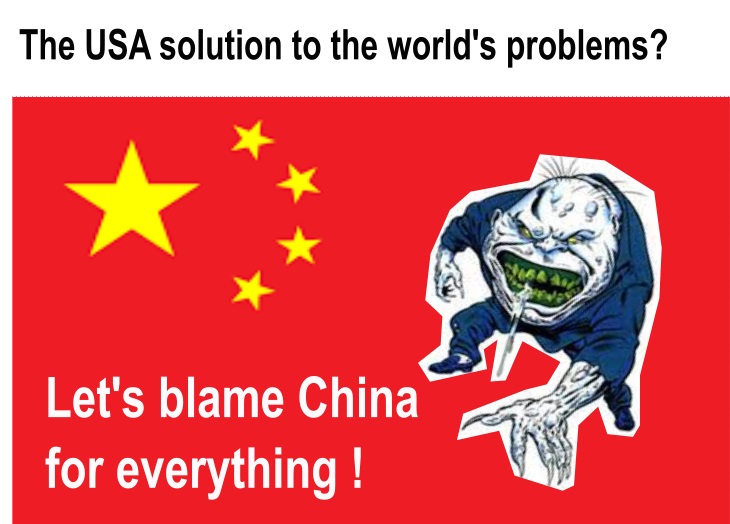
Such a decision, however, would go against US practice in recent years as well as its strategic planning, which sees China as the main rival on which to focus its financial, military, and technological resources. https://www.rt.com/russia/582368-nato-ukraine-russia-front-lines/
Counter-offensive threatened by slow Western aid – Zelensky
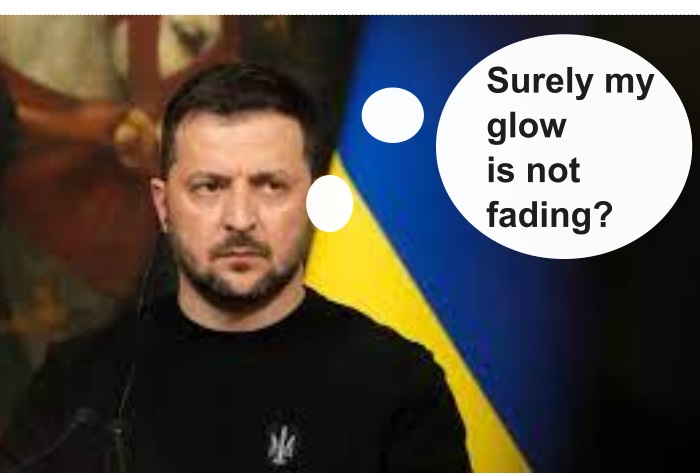
Ukrainian president Volodymyr Zelenskyy has said that Russia was slowing down the Ukrainian counter-offensive, blaming the “slowness” of Western arms deliveries. The leader also renewed calls for long-range weapons as well as new sanctions against Moscow.
Speaking on Friday, Zelenskyy also stressed that time was against Ukraine, with Russia banking on a Republican victory in the 2024 presidential election to weaken American support for Kyiv.
According to him, “the processes are becoming more complicated and slower when it comes to economic sanctions against Moscow or the supply of weapons” from the West.
Ukraine has complained in particular for months about the slowness of negotiations on the delivery of F-16 fighters. Several dozen of these American aircraft will ultimately be delivered by European countries, but the crews must now be trained for months in order to use them effectively.
The Ukrainian counter-offensive, launched in June, came up against powerful defence lines built by the Russians, including minefields and anti-tank traps…………………

American Secretary of State Antony Blinken, who was in Kyiv on Wednesday and Thursday, judged the “significant progress” of the offensive “very, very encouraging”.
He promised $1 billion (approximately €933m) in new aid. Washington also confirmed the supply of depleted uranium shells to give “momentum” to the offensive……………………….. more https://www.euronews.com/2023/09/09/ukraine-war-ukrainian-armed-forces-advance-as-zelenskyy-renews-calls-for-foreign-aid
Ukraine – health care women compulsory military service.
This article was originally in German
link in German: https://exxpress.at/neue-fluchtwelle-droht-selenskyj-befiehlt-wehrpflicht-fuer-pflegerinnen-aerztinnen/
Hundreds of thousands of women will no longer be allowed to leave Ukraine from October 1st, thus Austria is also threatened by a new wave of refugees in the next 22 days: The government in Kiev is by law ordering all women with medical training to be conscripted.
According to the Interior Ministry, 67,370 women from Ukraine are already registered as displaced persons in Austria, and now there could be another massive wave of entry: The Ukrainian media is already reporting that from October 1st compulsory military service is introduced for all Ukrainian women with medical training – i.e. for all nurses , pharmacists and doctors.
The Podrobnosti news portal writes: “Women with medical or pharmaceutical training must register for military service from October 1, 2023. They get the status of conscripts for whom travelling abroad is restricted.” This was stated by Fedir Venislavskyi, member of the Verkhovna Rada’s Committee (Supreme Council of Ukraine) for National Security, Defense and Intelligence, and also the president’s representative in parliament.
Female deserters face up to 12 years in prison
Ukrainian women with medical training can then only leave the country in 22 days with a special permit. Since this Kiev order most likely affects hundreds of thousands of women throughout the country, which still has around 32 million non-refugee residents, another large wave of refugees is now likely to hit Western nations: Many, also young women, should now be aware of the fact that they as conscripts are no longer allowed to leave Ukraine before the end of the war – and of how deserters are treated if they are caught trying to escape.
Desertion in Ukraine can result in a prison sentence of up to 12 years. Since February, the courts can no longer impose a suspended sentence or a lower sentence than that provided for in the new law, as was previously the case.
The new order to force hundreds of thousands of women in nursing professions to do military service allows us to draw conclusions about the actual military situation in Ukraine. As also the current recruitment measure that tuberculosis sufferers and AIDS patients can also be called up to serve in the army.
A Slow mindless grind towards nuclear Armageddon?
Strategic Culture, Fri, 01 Sep 2023
This week saw widespread air strikes on the Russian Federation involving mass aerial drone attacks. Six regions were attacked including the capital, Moscow. Among the targets was the Kursk region where a nuclear plant is located. Several international airports across Russia were temporarily shut down. This is an incredible situation in which Russian territory is being targeted by a military assault not seen since the Great Patriotic War against Nazi Germany.
The U.S. media could barely contain its glee at the surge in air strikes on Russia. The New York Times hailed them as a “morale booster” for Ukraine, while CNN noted cryptically that the Kiev regime was “emboldened” to hit strategic targets inside Russia. The telling question of course not asked by CNN is: emboldened by whom?
Most of the incoming drones were shot down or disabled by Russian air defenses. But that is beside the point that Russian territory is now being targeted by mass attacks. And there can be no doubt that this “emboldened” military campaign is being enabled and directed by the United States and its NATO allies who are arming the Nazi regime in Kiev to the teeth.
The air strike, this week at Pskov airport is particularly revealing. Several Russian military cargo planes were reportedly destroyed. The location is only some 30 kilometers from Russia’s northwestern border with Estonia and over 600 km from Ukraine. It is almost certain that NATO members Estonia and possibly Latvia enabled that attack on Pskov. Russian foreign ministry spokeswoman Maria Zakharova has openly accused NATO of participating in the air assaults on Russian territory. The British publication, The Economist, also reported that NATO hardware, satellite and navigational logistics were vital for the drone campaign.
Dmitry Medvedev, the Deputy Chairman of Russia’s National Security Council, this week stated that Russia now has legal justification for going to war with NATO members directly. He warned that the world is on the brink of a nuclear conflagration.
We need to step back here and see the process of the proverbial boiling-frog scenario.

[CORRECTION: It’s a myth that frogs will stay in water that slowly heats, until they die. In reality, they will try to get out, as soon as the temperature becomes uncomfortable.]
This describes an insidious creeping situation which would otherwise not be tolerated. A frog apparently will jump back from a pot of boiling water but if the frog is placed in the pot of water which is then slowly brought to the boil it will succumb passively to its ill fate.
The process seems apt as a metaphor for the conflict in Ukraine between the U.S.-led NATO bloc and Russia. The Kiev regime was installed in 2014 through a CIA-backed coup against a democratically elected president; it was armed and trained by NATO, despite its vile Nazi battalions, to attack ethnic Russians in Ukraine; when Russia intervened militarily in February 2022 after diplomatic offers were rejected by the U.S. and NATO, the conflict has steadily escalated over the past 18 months to the point where pre-war Russian territory is now coming under mass air strikes.
This mass assault on Russian territory by NATO forces would have been unthinkable only a few months ago. And yet here we are at that astounding point.
There seems little doubt that the air strikes on Russia are a sort of Plan B to compensate for the abject failure of the NATO-backed regime on the battlefields in Ukraine. The much-vaunted “counteroffensive” that started in June has become a debacle for the NATO sponsors. The turn towards drone strikes on Russia appears to be a change in tactic as a way of terrorizing the Russian population and destabilizing the authority of Russian President Vladimir Putin, as well as distracting from NATO’s military incompetence.
Russia’s defense doctrine mandates the use of nuclear weapons if the state’s existential security is threatened. So far, the NATO-backed drone attacks on Russia have not reached that threshold. But the incremental process is dangerously heading in that dreadful direction.
If we were to turn the tables on the situation, the audacity would become even more apparent. Can anyone imagine for a second how the United States would react if a foreign adversary was enabling the launch of air strikes on Washington DC and other strategic centers, whereby airports were shut down and military infrastructure was being destroyed?………………………………………………………………. more https://strategic-culture.su/news/2023/09/01/boiling-frogs-towards-nuclear-armageddon/
Residents file suit to halt wastewater release from Fukushima plant

About 150 residents from prefectures such as Fukushima and Miyagi went to court on Friday to halt the release of treated radioactive water from the crippled Fukushima nuclear plant, making it the first lawsuit of its kind.
In the suit filed with the Fukushima District Court against the central government and plant operator Tokyo Electric Power Company Holdings Inc, the plaintiffs said the water discharge, which started on Aug. 24, threatens citizens’ right to live safely and hinders local fishermen’s businesses.
They are also seeking nullification of nuclear regulators’ approval of facilities installed for the water discharge and a ban to be placed on the release.
An additional lawsuit at the end of October is being planned…………………………………………………………………. https://japantoday.com/category/national/residents-file-suit-to-halt-wastewater-release-from-fukushima-plant
Today Hinkley C contract would cost £180 per MWh around 3xs the cost of offshore wind

DAVID TOKE, SEP 8, 2023 https://davidtoke.substack.com/p/today-hinkley-c-contract-would-cost
There’s been a lot of talk about how offshore wind has ‘increased’ its costs since the last Government contract auction – but that’s not a patch on nuclear power a la Hinkley C, courtesy of EDF. Capital costs for the project have increased in real (not just inflation) terms by around 50 percent since 2012, and there’s probably a lot worse to come.
The figure of £92.50 per MWh is often mentioned as the price of the contract for Hinkley C, and that is the contract price in 2012 prices. In today’s money using the Government’s preferred CPI calculator that is £124 per MWh – higher even than the currently gas-inflated wholesale power price.
But it is worse, much much worse than that, because Hinkley C’s real, not just inflation-adjusted price, has increased. In 2012 the capital cost was estimated at £16 billion by EDF. Now the capital cost in 2012 prices has risen to around £33 billion in 2023 money or around £24 billion in 2012 money.
That means that if Hinkley C’s contract was set up today at the revised capital cost then the equivalent contract price would be about £138 per MWh in 2012 prices and around £180 per MWh in today’s prices. That is of course if the contract was assessed on the same contract length – 35 years, and on a similar rate of return. The rate of return certainly would not be less since interest rates are a lot higher than they were in 2012.
The estimates published by EDF do not include interest rate charges. They are called ‘overnight’ costs, which in itself is highly ironic since the last thing nuclear power stations are noted for is being built overnight. Their construction takes many years, racking up immense interest charges on the way. If this was a private company they surely would have gone bust by now. The only way that EDF could get themselves into this position is because everybody knows that the French Government will inevitably bail them out.
Of course, as far as Hinkley C costs go, the only way is up. Heaven knows how high they will go! And the Government is going to make electricity consumers pay for the next EDF nuclear disaster at Sizewell C!
So let’s reflect a bit on the apparent horror apparently experienced by the UK Treasury that they might have to offer more than £44 per MWh (at 2012 prices) for offshore wind contracts.
Scott Ritter: A comprehensive Ukrainian defeat is the only possible outcome of its conflict with Russia

Rt.com 8 Sept 23
Kiev was offered a peace deal long ago, but chose war instead, egged on by its Western backers. Now its fate is sealed
September 2 marked the 78th anniversary of the World War Two surrender ceremony onboard the USS Missouri in Tokyo Bay. This moment formalized Japan’s unconditional capitulation to the United States, and its allies, and marked the end of the conflict. From the Japanese perspective, it had been ongoing since the Marco Polo bridge incident of July 7, 1937, which started the Sino-Japanese War.
There was no negotiation, only a simple surrender ceremony in which Japanese officials signed documents, without conditions.
Because that is what defeat looks like.
History is meant to be studied in a manner that seeks to draw out lessons from the past that might have relevance in the present. As George Santayana, the American philosopher, noted, “Those who cannot remember the past are condemned to repeat it.” The Ukrainian government in Kiev would do well to reflect on both the historical precedent set by Japan’s unconditional surrender, and Santayana’s advice, when considering its current conflict with Russia
First and foremost, Ukraine must reflect honestly about the causes of this conflict, and which side bears the burden of responsibility for the fighting. ‘Denazification’ is a term that the Russian government has used in describing one of its stated goals and objectives. President Vladimir Putin has made numerous references to the odious legacy of Stepan Bandera, the notorious mass murderer and associate of Nazi Germany who is feted by modern-day Ukrainian nationalists as a hero and all but a founding father of their nation.
That present-day Ukraine would see fit to elevate a man such as Bandera to such a level speaks volumes about the rotten foundation of Kiev’s cause, and the dearth of moral fiber in the nation today. The role played by the modern-day adherents of the Nazi collaborator’s hateful nationalist ideology in promulgating the key events that led to the initiation of the military operation by Russia can neither be ignored nor minimized. It was the Banderists, with their long relationship with the CIA and other foreign intelligence services hostile to Moscow, who used violence to oust the former president of Ukraine, Viktor Yanukovich, from office in February 2014.
From the act of illicit politicized violence came the mainstreaming of the forces of ethnic and cultural genocide, manifested in the form of the present-day Banderists, who initiated acts of violence and oppression in eastern Ukraine. This, in turn, triggered the Russian response in Crimea and the actions of the citizens of Donbass, who organized to resist the rampage of the Bandera-affiliated Ukrainian nationalists. The Minsk Accords, and the subsequent betrayal by Kiev and its Western partners of the potential path for peace that these represented, followed.
Ukraine cannot disassociate itself from the role played by the modern-day Banderists in shaping the present reality. In this, Kiev mirrors the militarists of Imperial Japan, whose blind allegiance to the precepts of Bushido, the traditional ‘way of the warrior’ dating back to the Samurai of 17th century Japan, helped push the country into global conflict. Part of Japan’s obligations upon surrender was to purge its society of the influence of the militarists, and to enact a constitution that deplatformed them by making wars of aggression – and the military forces needed to wage them – unconstitutional.
Banderism, in all its manifestations, must be eradicated from Ukrainian society in the same manner that Bushido-inspired militarism was removed from Japan, to include the creation of a new constitution that enshrines this purge as law. Any failure to do so only allows the cancer of Banderism to survive, festering inside the defeated body of post-conflict Ukraine until some future time when it can metastasize once again to bring harm……………………….
As the Western establishment media begins to come to grips with the scope and scale of Ukraine’s eventual military defeat (and, by extension, the reality of a decisive Russian military victory), their political overseers in the US, NATO, and the European Union struggle to define what the endgame will be. Having articulated the Russian-Ukrainian conflict as an existential struggle where the very survival of NATO is on the line, these Western politicians now have the task of shaping public perception in a manner that mitigates any meaningful, sustained political blowback from constituents who have been deceived into tolerating the transfer of billions of dollars from their respective national treasuries, and billions more dollars’ worth of weapons from their respective arsenals, into a lost and disgraced cause.
………………………………….. Russia has been undertaking the successful demilitarization of Ukraine’s armed forces since the initiation of partial mobilization. The equipment Ukraine is provided by the West is similarly being destroyed by Russia at a rate that makes replacement unsustainable. Meanwhile, Russia’s own defense industry has kicked into full gear, supplying a range of modern weapons and ammunition that is more than sufficient.
The harsh reality is that neither Ukraine nor its Western allies can sustain the operational losses in manpower and equipment that the conflict with Russia is inflicting……….. if Kiev persists in extending this conflict until it is physically unable to defend itself, it runs the risk of losing even more territory, including Odessa and Kharkov.
Russia did not enter the conflict with the intent of seizing Ukrainian territory. But in March 2022, Kiev rejected a draft peace agreement (which it had preliminarily approved at first), and this decision to eschew peace in favor of war led to Russia absorbing Donbass, Zaporozhye, and Kherson.
As one of its conditions to even begin negotiating for peace with Moscow, Kiev demanded the return of all former Ukrainian territories currently under Russian control – including Crimea. To achieve such an outcome, however, Ukraine would have to be able to compel compliance by defeating Russia militarily and/or politically. As things stand, this is an impossibility.
What Ukraine and its Western partners do not yet seem to have come to grips with is the fact that Russia’s leadership is in no mood for negotiations for negotiations’ sake. Putin has listed its goals and objectives when it comes to the conflict – denazification, demilitarization, and no NATO membership for Ukraine.
……….The longer Kiev – and its Western partners – drag out this conflict, the greater the harm that will accrue for Ukraine……….. https://www.rt.com/russia/582259-ukraine-unconditional-surrender-nato/
If Everyone Understood That The US Deliberately Provoked This War

CAITLIN JOHNSTONE, SEP 7, 2023 https://www.caitlinjohnst.one/p/if-everyone-understood-that-the-us?utm_source=post-email-title&publication_id=82124&post_id=136816741&isFreemail=true&r=1ise1&utm_medium=email
War is the single worst thing humans do. The most insane. The most cruel. The most destructive. The most traumatic. The least sustainable. Those who knowingly choose to steer humanity into more war when it could be avoided are the worst people in the world, without exception.
And there are mountains of extensively documented evidence that that’s exactly what the drivers of the US-centralized empire did in Ukraine. That’s why so many western analysts and experts spent years warning that the actions of western powers were going to lead Ukraine into disaster, and it’s why US empire managers keep openly boasting about how much their proxy warfare in Ukraine advances US interests. They knowingly steered Ukraine into war to advance their own geostrategic interests while being fully aware that no powerful nation would ever permit the kinds of foreign threats the west was amassing on its borders, and then they intervened in the early days of the war to prevent the outbreak of peace.
If there was widespread awareness of these facts, the US war machine would lose support around the world — not just for its actions in this one war, but for all future wars as well. Which is why so much energy goes into making sure this does not become a widespread understanding.
The official mainstream narrative throughout the western world is that Putin invaded Ukraine solely because he is evil and hates freedom. That’s the actual, literal belief about this war that the western political/media class works to instill in the western public. Anyone who counters this self-evidently ridiculous assessment with facts and evidence gets branded a Russian agent and swarmed with pro-US trolls on social media, and loses all hope of securing a major platform in any mass media.
And it’s important to notice that shutting down all mature adult analysis of the events which led to the war in this way does not actually save a single Ukrainian life. It doesn’t make Russia any more likely to stop fighting and withdraw its troops. All it does is prevent people from seeing the US empire for what it really is. It isn’t being done to protect Ukrainians, it’s done to protect the empire.
The worst thing that could possibly happen to the information interests of the US empire would be for a critical mass of people to become aware that all this death and destruction in Ukraine could have been avoided by the US-centralized empire behaving less aggressively on Russia’s doorstep, and that those aggressions were instead increased with the goal of advancing US strategic interests on the world stage. If everyone really, deeply understood that all this suffering, all these mountains of human corpses could simply not have happened if the US hadn’t been feverishly focused on securing planetary domination at all cost, the US would no longer be able to manufacture consent for its agendas. It would no longer be able to whip up international support for its actions against its enemies. It would no longer be able to persuade the world to help prop up the hegemony of the dollar.
But because the US empire has the most advanced soft power apparatus that has ever existed, hardly anyone understands this. Not even the people who understand that the west provoked this war have deeply grappled with exactly what that means on a visceral emotional level, for the most part. It’s more of a superficial intellectual understanding for most, without really grokking into the horror of it all, really letting the enraging nature of what the US empire did wash over them.
The west was deceived into supporting yet another evil American war, this time with the added dimension of nuclear brinkmanship threatening the life of every terrestrial organism. All to suck Moscow into another draining military quagmire so war plans can be safely drawn up against China while advancing US energy interests in Europe and building support for US military alliances. It’s almost too evil to take in. There aren’t really words for it.
And that’s one of the reasons it’s hard to get people to take in exactly what happened with Ukraine: people have a hard time wrapping their minds around the idea that anyone could be that evil, much less the government we’ve been trained by Hollywood to think of as sane and humanitarian.
It’s about as monstrous a thing as you could possibly come up with. Yet here it is, still unfolding in all its blood-spattered glory.
Our task then is to help people see this and understand it, not just intellectually but emotionally. Help people really grasp deep down the horrors the US empire unleashed upon our world with the war in Ukraine; the suffering; the death; the existential danger. We can’t fight the empire on our own, but we can each do what we can to help weaken the consent manufacturing machine it uses to rule and terrorize the world.
Health and safety concerns raised with Dounreay management
Some trade union and safety representatives have no confidence in the
management at Dounreay and have raised health and safety concerns at the
site.
A number of employees told the John O’Groat Journal that they are
also worried over how issues on the well-being of staff were being
addressed. “There are numerous cases of staff members off due to
work-related stress – some as a result of bullying and harassment,” said
one worker. “Concerns have been raised but do not appear to be addressed.
“Dounreay has said that ‘our workers are out greatest asset’, but from the
conversations I’ve had with people across site, this is not believed.”
Another employee stated: “This has been an ongoing issue for years. It is
hard to prove in many cases and has been dealt with in some instances.
Safety reps have been involved in meetings on this topic along with the
chairman of the Trade Union Co-ordinating Committee.”
John O’Groat Journal 8th Sept 2023
UK and Japan’s governments funding research on problem of nuclear waste
Two projects have been awarded a share of £1 million, delivered by the
Engineering and Physical Sciences Research Council (EPSRC), part of UK
Research and Innovation (UKRI), to address challenges in: radioactive waste
treatment, packaging, and storage; remote handling, robotic, and autonomous
systems in decommissioning; environmental behaviour of radionuclide release
and management of risk and degraded infrastructure.
The UK-Japan Civil Nuclear Research programme is a partnership between UKRI and the Ministry of Education, Culture, Sports, Science and Technology. The research
projects are being led by academics at the universities of Strathclyde and
Sheffield.
UK Research & Innovation 8th Sept 2023
https://www.ukri.org/news/uk-japan-partnership-to-develop-new-tech-for-nuclear-waste-disposal/
The West’s blueprint for goading China was laid out in Ukraine
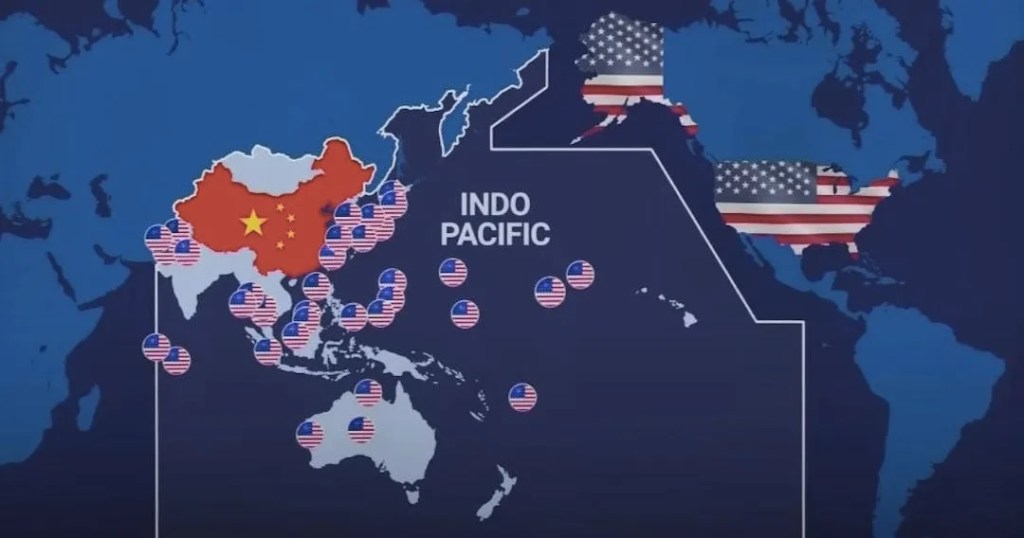
After Ukraine, Taiwan, we are told, must be the locus of the West’s all-consuming security interest.
Europe fears losing access to Chinese markets, plunging it deeper into a cost-of-living crisis. But it fears Washington’s wrath more
JONATHAN COOKSEP 8, 2023, Middle East Eye
The West is writing a script about its relations with China as stuffed full of misdirection as an Agatha Christie novel.
In recent months, US and European officials have scurried to Beijing for so-called talks, as if the year were 1972 and Richard Nixon were in the White House.
But there will be no dramatic, era-defining US-China pact this time. If relations are to change, it will be decisively for the worse.
The West’s two-faced policy towards China was starkly illustrated last week by the visit to Beijing of Britain’s foreign secretary, James Cleverly – the first by a senior UK official for five years.
While Cleverly talked vaguely afterwards about the importance of not “disengaging” from China and avoiding “mistrust and errors”, the British parliament did its best to undermine his message.
The foreign affairs committee issued a report on UK policy in the Indo-Pacific that provocatively described the Chinese leadership as “a threat to the UK and its interests”.
In terminology that broke with past diplomacy, the committee referred to Taiwan – a breakaway island that Beijing insists must one day be “reunified” with China – as an “independent country”. Only 13 states recognise Taiwan’s independence.
The committee urged the British government to pressure its Nato allies into imposing sanctions on China.
Upping the stakes
The UK parliament is meddling recklessly in a far-off zone of confrontation with the potential for incendiary escalation against a nuclear power, a situation unrivalled outside of Ukraine.
But Britain is far from alone. Last year, for the first time, Nato moved well out of its supposed sphere of influence – the North Atlantic – to declare Beijing a challenge to its “interests, security and values”.
There can be little doubt that Washington is the moving force behind this escalation against China, a state posing no obvious military threat to the West.
t has upped the stakes significantly by making its military presence felt ever more firmly in and around the Straits of Taiwan – the 100-mile wide waterway separating China from Taiwan that Beijing views as its doorstep.
Senior US officials have been making noisy visits to Taiwan – not least, Nancy Pelosi last summer, when she was house speaker.
Meanwhile, the Biden administration is showering Taiwan with weapon systems.
If this weren’t enough to inflame China, Washington is drawing Beijing’s neighbours deeper into military alliances – such as Aukus and the Quad – to isolate China and leave it feeling threatened. The Chinese president, Xi Jinping, describes this as a policy of “comprehensive containment, encirclement and suppression against us”.
Last month, President Biden hosted Japan and South Korea at Camp David, forging a trilateral security arrangement directed at what they called China’s “dangerous and aggressive behavior”.
Meanwhile, the Pentagon’s “Pacific Defence Initiative” budget – chiefly intended to contain and encircle China – just keeps rising.
In the latest move, revealed last week, the US is in talks with Manila to build a naval port in the northernmost Philippine islands, 125 miles from Taiwan, boosting “American access to strategically located islands facing Taiwan”.
That will become the ninth Philippine base used by the US military, part of a network of some 450 operating in the South Pacific.
Dirty double game
So what’s going on? Is Britain – along with its Nato allies – interested in building greater trust with Beijing, as Cleverly argues, or backing Washington’s escalatory manoeuvres against a nuclear-armed China over a small territory on the other side of the globe, as the British parliament indicates?
Inadvertently, the foreign affairs committee’s chair, Alicia Kearns, got to the heart of the matter. She accused the British government of having a “confidential, elusive China strategy”, one “buried deep in Whitehall, kept hidden even from senior ministers”.
And not by accident.
European leaders are torn. They fear losing access to Chinese goods and markets, plunging their economies deeper into recession after a cost-of-living crisis precipitated by the Ukraine war. But most are even more afraid of angering Washington, which is determined to isolate and contain China.
That divide was highlighted by French President Emmanuel Macron following a visit to China in April,……………………………………………………………………………………….
After Ukraine, Taiwan, we are told, must be the locus of the West’s all-consuming security interest…………………………………………………………………………………………………………………………………………………..
Economic chokehold
As with Ukraine, the cover story concealing the West’s provocations towards China has been carefully directed from Washington.
Europeans like Cleverly are parading around Beijing to make it look like the West desires peaceful engagement. But the only real engagement is the crafting of a military noose around China’s neck, just as a noose was crafted earlier for Russia. …………………………………………………………………………………………………………………..
The US isn’t likely to go down without a fight. Which is why Ukrainians and Russians are currently dying on the battlefield. And why China and the rest of us have good reason to fear who may be next. https://www.middleeasteye.net/opinion/china-west-blueprint-goading-ukraine-laid-out
Russia says US supplying depleted-uranium shells to Ukraine could lead to war between nuclear powers

The US will have to answer for the ‘very sad consequences’ of its decision to provide depleted uranium munitions to Ukraine, the Kremlin said
i news, By Jessie Williams, Foreign news reporter, September 7, 2023
Russia has condemned a US decision to send controversial depleted uranium tank shells to Ukraine as “a criminal act”, that would increase the chance of “direct armed conflict between nuclear powers”.
The Kremlin said on Thursday that the US would have to answer for the “very sad consequences” of its decision to provide depleted uranium munitions to Ukraine.
The controversial weapons – included in a $175m (£140m) package of military equipment for Ukraine announced by the US on Wednesday – have armour-piercing capabilities, which mean they could help to destroy Russian tanks.
The shells are intended for 31 American M1 Abrams tanks due to be delivered to Ukraine later this year.
Sergei Ryabkov, Russia’s deputy foreign minister, accused the US of a “criminal act” beyond reasonable escalation. “Now this pressure is dangerously balancing on the brink of direct armed conflict between nuclear powers,” he said.
“It is a reflection of Washington’s outrageous disregard for the environmental consequences of using this kind of ammunition in a combat zone. This is, in fact, a criminal act, I cannot give any other assessment.”
In March, Putin warned that Moscow would “respond accordingly, given that the collective West is starting to use weapons with a ‘nuclear component.’” Foreign Minister Sergei Lavrov called the move “a step toward accelerating escalation”.
Depleted uranium is a byproduct of the uranium enrichment process needed to create nuclear weapons. The rounds retain some radioactive properties, but they cannot generate a nuclear reaction as a nuclear weapon would, Edward Geist, a nuclear expert and policy researcher at the US-based Rand non-profit research institution, told The Associated Press.
The shells sharpen on impact, which further increases their ability to tear through tank armour. “It’s so dense and it’s got so much momentum that it just keeps going through the armour – and it heats it up so much that it catches fire,” he added.
“The administration’s decision to supply weapons with depleted uranium is an indicator of inhumanity,” Russia’s embassy in Washington said on Telegram. “Clearly, with its idea of inflicting a ‘strategic defeat’, Washington is prepared to fight not only to the last Ukrainian but also to do away with entire generations.”
on Friday the Kremlin spokesman Dmitry Peskov said Nato’s heavy use of such ammunition in the bombing of Yugoslavia in 1999 had caused a jump in cases of cancer and other diseases.
“These consequences are also felt by subsequent generations of those who somehow came into contact or were in areas where these weapons were used,” he told reporters, saying the same would now happen in Ukraine……………………………………….
The International Coalition to Ban Uranium Weapons said there were dangerous health risks from ingesting depleted uranium dust, including cancer.
A Defence Department official told Politico the weapons are considered the most effective way of arming their Abrams tanks. The UK has already sent the same type of ammunition to Ukraine to arm its Challenger 2 tanks, but this is the first time the US is sending the rounds.
Earlier this year the Pentagon said it would not be sending the depleted uranium munitions to Ukraine, but made a U-turn in their announcement on Wednesday during the US Secretary of State Antony Blinken’s visit to Kyiv……………………………..
The decision comes after the White House announced it will be sending another controversial weapon to Ukraine -cluster munitions – which are banned by more than 100 countries. https://inews.co.uk/news/world/russia-us-supplying-depleted-uranium-shells-ukraine-war-2599291
1 This Month
Tell Congress: Prevent Nuclear Catastrophe in Iran

Tell Congress: Prevent Nuclear Catastrophe in Iran

Read the Public Inquiry Report, the Commissioners’ report, Surrendering Australia: The AUKUS Deception is available to download for free at aukuspublicinquiry.com. Or just watch the replay of the National Press Club Luncheon.


Shut down the radiation-damaged Heysham nuclear reactors now
To see nuclear-related stories in greater depth and intensity – go to https://nuclearinformation.wordpress.com

Say No to NASA’s Reckless Nuclear Reactor on the Moon
Say No to NASA’s Reckless Nuclear Reactor on the Moon
-
Archives
- November 2026 (224)
- October 2026 (302)
- September 2026 (339)
- August 2026 (330)
- July 2026 (355)
- June 2026 (287)
- May 2026 (306)
- April 2026 (356)
- March 2026 (251)
- February 2026 (267)
- January 2026 (308)
- December 2025 (358)
-
Categories
- 1
- 1 NUCLEAR ISSUES
- business and costs
- climate change
- culture and arts
- ENERGY
- environment
- health
- history
- indigenous issues
- Legal
- marketing of nuclear
- media
- opposition to nuclear
- PERSONAL STORIES
- politics
- politics international
- Religion and ethics
- safety
- secrets,lies and civil liberties
- spinbuster
- technology
- Uranium
- wastes
- weapons and war
- Women
- 2 WORLD
- ACTION
- AFRICA
- Atrocities
- AUSTRALIA
- Christina's notes
- Christina's themes
- culture and arts
- Events
- Fuk 2022
- Fuk 2023
- Fukushima 2017
- Fukushima 2018
- fukushima 2019
- Fukushima 2020
- Fukushima 2021
- general
- global warming
- Humour (God we need it)
- Nuclear
- RARE EARTHS
- Reference
- resources – print
- Resources -audiovicual
- Weekly Newsletter
- World
- World Nuclear
- YouTube
-
RSS
Entries RSS
Comments RSS

