Top prosecutors back compensation for those sickened by US nuclear weapons testing.
Niagara Gazette, SUSAN MONTOYA BRYAN | Associated Press 4 Sept 23
ALBUQUERQUE, N.M. — New Mexico Attorney General Raúl Torrez and 13 other top prosecutors from around the U.S. are throwing their support behind efforts to compensate people sickened by exposure to radiation during nuclear weapons testing.
The Democratic officials sent a letter Wednesday to congressional leaders, saying “it’s time for the federal government to give back to those who sacrificed so much.”
The letter refers to the estimated half a million people who lived within a 150-mile (240-kilometer) radius of the Trinity Test site in southern New Mexico, where the world’s first atomic bomb was detonated in 1945. It also pointed to thousands of people in Idaho, Colorado, Nevada, Utah, Arizona, Montana and Guam who currently are not eligible under the existing compensation program.
The U.S. Senate voted recently to expand the Radiation Exposure Compensation Act as part of a massive defense spending bill. Supporters are hopeful the U.S. House will include the provisions in its version of the bill, and President Joe Biden has indicated his support.
“We finally have an opportunity to right this historic wrong,” Torrez said in a statement………………………………………………………..
The attorneys general who signed onto Torrez’s letter are from Arizona, Colorado, Connecticut, Delaware, Maryland, Minnesota, Nevada, New York, Pennsylvania, Oregon, Rhode Island, Vermont and the District of Columbia.
The attorneys mentioned the work of a team of researchers who mapped radioactive fallout from nuclear weapons tests in the U.S., starting with the Trinity Test in 1945. The model shows the explosions carried out in New Mexico and Nevada between 1945 and 1962 led to widespread radioactive contamination, with Trinity making a significant contribution to exposure in New Mexico. Fallout reached 46 states as well as parts of Canada and Mexico.
“Without any warning or notification, this one test rained radioactive material across the homes, water, and food of thousands of New Mexicans,” the letter states. “Those communities experienced the same symptoms of heart disease, leukemia, and other cancers as the downwinders in Nevada.”………………………………………….. more https://www.niagara-gazette.com/news/top-prosecutors-back-compensation-for-those-sickened-by-us-nuclear-weapons-testing/article_1458a962-4903-11ee-94c0-7b044542b2ae.html
Ukraine war: how China can get the world to step back from nuclear Armageddon
China and the US have reached nuclear weapons agreements before. After India and Pakistan launched nuclear tests in 1998, China and the US, in a rare show of solidarity, declared they would not target their nuclear weapons at each other. This led to a joint statement in 2000 from the five nuclear-weapon states of China, the US, Britain, France and Russia that their nuclear weapons would not target each other or any other state.
- Hope lies in getting nuclear powers to agree to a ‘no first use’ policy. If China can persuade the US, then Britain and France are likely to fall in line
- The challenge is getting Moscow on board – which is likely to require Nato to agree to ‘no first use’ against Russia and back down on its eastward expansion
SCMP, Zhou Bo 4 Sept 23
No one knows how long the war in Ukraine will last. But everyone knows what the worst nightmare is: Russia unleashing nuclear weapons. The Russian leadership has repeatedly hinted at this.
Russian scholars such as Sergei Karaganov and Dmitri Trenin have recently joined the chorus, calling for tactical nuclear attacks on a Nato country, say Poland, to break “the West’s will” and convince them that Russia’s nuclear threats are no bluff.
By giving people pause, Russia’s nuclear deterrence seems to be working. But what if Moscow is not bluffing?
With the West nibbling away at its own red lines by sending more sophisticated weapons to Kyiv that were considered taboo at the beginning of the war effort, how can one rest assured that Moscow will not reach for nuclear weapons eventually?
The battle is in a stalemate. Kyiv’s attack drones have reportedly been found in Moscow. Ukrainian President Volodymyr Zelensky recently warned that “war is returning” to Russia. As the threat of an unspeakable horror against humanity looms larger, there is an urgent need to prevent a nuclear fallout.
Perhaps China can persuade the US to agree first to a nuclear weapons policy of “ no first use”, which can then be joined by Britain, France and finally – hopefully – Russia.
China and the US have reached nuclear weapons agreements before. After India and Pakistan launched nuclear tests in 1998, China and the US, in a rare show of solidarity, declared they would not target their nuclear weapons at each other. This led to a joint statement in 2000 from the five nuclear-weapon states of China, the US, Britain, France and Russia that their nuclear weapons would not target each other or any other state.
More recently, in January last year, a month before Russia’s invasion of Ukraine, the five nuclear power powers agreed that “a nuclear war cannot be won and must never be fought”.
So why can’t they pledge a “no first use” policy? Such a stance would neither exclude nuclear retaliation nor neutralise a nuclear power’s ability to deter an attack.
For China, “no first use” has been its ironclad policy since its detonation of a nuclear device in 1964. Relations with Russia will not change China’s time-honoured policy. The Biden administration has declared that it “would only consider the use of nuclear weapons in extreme circumstances to defend the vital interests of the United States or its allies and partners”. This stance is not so far away from that of Beijing……………………………………………………………………………………………………………………… more https://www.scmp.com/comment/opinion/article/3233136/ukraine-war-how-china-can-get-world-step-back-nuclear-armageddon
A bottomless pit of public money for the UK government’s nuclear vanity project
In response to Nuclear Minister, Andrew Bowie’s announcement of an
additional £341m government support for the Sizewell C project, TASC
deputy Chair, Pete Wilkinson, said “There seems to be a bottomless pit of
public money when it comes to funding Sizewell C, so besotted is the
government with this already redundant nuclear vanity project.
Not so for cash-strapped public sector workers though. The £341m recently announced,
taking taxpayer funding over an eye-watering £1.2bn, is apparently
designed to speed up preparations for construction of a plant which has yet
to receive dozens of licences and permits – not the least of which is the
Office for Nuclear Regulation’s permission to build on a site threatened by
climate change impacts – and is still subject to determination of an
outstanding legal challenge.
Put another way, it is public money to be
spent on the destruction of a coast which is designated as an area of
outstanding natural beauty for a project which may still not happen. It
also claims that it will ‘help to drive Putin further out of global
energy markets’, apparently missing the point that uranium supplies –
essential for the mythical nuclear renaissance and already at peak supply –
come largely from Russian-influenced countries, so out of the oil and gas
fire into the uranium frying pan.
As for the ‘rapid expansion of UK
nuclear energy’, the fantasy of 24GW from nuclear, should it ever be
attempted, will be cripplingly expensive and generate a mountain of waste
for which there is no universally acceptable disposal route, in short, a
recipe for future financial and environmental disaster rather than energy
security”
TASC 30th Aug 2023
Anger over claims RAF Lakenheath could host US nuclear weapons
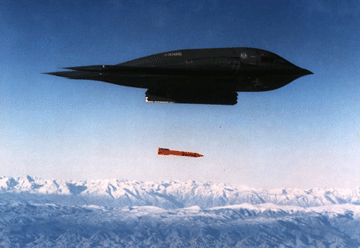
By Stuart Bailey, BBC News 31 Aug 23 https://www.bbc.com/news/uk-england-suffolk-66657765
Campaigners have urged the government to refuse the US any permission to base nuclear weapons in the UK again.
A US Air Force report showed plans to build a “surety dormitory” at RAF Lakenheath in Suffolk, which experts said implied a return of nuclear arms.
The Campaign for Nuclear Disarmament (CND) said it would be “beyond irresponsible” and put the UK at risk.
The Ministry of Defence and the Pentagon said they would not comment on the location of weapons.
US Air Force budget documents included a justification for a 144-bed dormitory “to house the increase in enlisted personnel as the result of the potential Surety Mission.”
The word “surety” is often used by the US government to refer to the concept of ensuring American nuclear weapons are kept safe and secure.
The Federation of American Scientists (FAS), which first reported the plans, said they “strongly imply” the intention to re-establish nuclear arms at Lakenheath, which hosted them until 2008.
CND general secretary, Kate Hudson, said: “It’s increasingly clear that Lakenheath is once again a vital cog in Washington’s overseas nuclear machine.
“The deployment of the new B61-12 (gravity bombs) to Europe undermines any prospects for global peace and ensures Britain will be a target in a nuclear conflict between the US/NATO and Russia.
“It’s beyond irresponsible that the UK government is allowing this deployment.”
Construction of the $50m (£39.5m) building is due to begin in June 2024 and end in February 2026, the budget report said.
The Ministry of Defence, which owns the site, said it was unable to comment on US spending decisions and capabilities.
Deputy Pentagon press secretary Sabrina Singh said: “It is US policy to neither confirm nor deny the presence or absence of nuclear weapons at any general or specific location.”
RAF Lakenheath is home to USAF’s 48th Fighter Wing, which consists of more than 4,000 military members and 1,500 civilians. Control of the base transferred from the RAF to USAF in 1948.
Last year more than 200 people protested outside the base after the US added the UK to a list of nuclear weapons storage site locations in Europe.
German Chancellor Scholz speaks out against new nuclear power, Deutschlandfunk reports
September 2, 2023 https://www.reuters.com/business/energy/german-chancellor-scholz-speaks-out-against-new-nuclear-power-deutschlandfunk-2023-09-01/
FRANKFURT, – German Chancellor Olaf Scholz said he is against a new nuclear power debate in the country, in an interview released late on Friday with German radio station Deutschlandfunk.
“The issue of nuclear power is a dead horse in Germany,” said Scholz, leader of Germany’s social democrats (SPD).
Scholz’s coalition partner, the free democrats (FDP), recently demanded Germany should keep an nuclear option.
For new nuclear power plants to be built, significant time and investment would be required, Scholz said, estimating at least 15 billion euros ($16.16 billion) would have to be spent per power plant over the next 15 years.
On the widely debated topic of an industrial electricity price cap in Germany, the chancellor expressed doubt how this could be funded, naming options including taxpayer money and debt.
($1 = 0.9282 euros)
Reporting by Emma-Victoria Farr; Editing by Leslie Adler and Josie Kao
Tax-payer funding to develop small nuclear reactors? Easy, get Defense and the Air Force to buy them.

The Department of the Air Force, in partnership with the Defense Logistics
Agency Energy, reached a critical milestone Aug. 31, in piloting advanced
nuclear energy technology with the issuance of the Notice of Intent to
Award a contract to Oklo Inc. Oklo Inc. will site, design, construct, own
and operate a micro-reactor facility licensed by the Nuclear Regulatory
Commission at Eielson Air Force Base, Alaska. The notice initiates the
acquisition process to potentially award a 30-year, firm-fixed-price
contract to the vendor after successfully obtaining an NRC license.
US Air Force 31st Aug 2023
Money thrown at Sizewell C to win hearts and minds.
The government has allocated a further £341m to get the Sizewell C
nuclear power station project shovel-ready. The extra money will help
prepare the Sizewell C site in Suffolk for construction, procuring key
components from the project’s supply chain, and expanding its workforce.
It would see activity ramp up at the Suffolk site, supporting continued
preparation works, such as constructing onsite training facilities for
1,500 apprenticeships and further development of the plant’s engineering
design.
The public relations campaign will also be stepped up in a bid to
wins hearts and minds in the Southwold-Aldeburgh area, where opposition to
the project is strong. The government plans “direct investments in the
local community ahead of work starting” to show that having a £35bn
construction project on your doorstep is not necessarily all bad news.
latest £341m tranche follows a £170m allocation last month and builds on
the government’s existing £870m stake in the project to help secure a
final investment decision before the next general election.
The Construction Index 30th Aug 2023
https://www.theconstructionindex.co.uk/news/view/money-thrown-at-sizewell-c-to-win-hearts-and-minds
The Golden Rule, a sailboat praised by anti-nuclear weapons activists, visits Milwaukee and Racine

WUWM 89.7 FM | By Chuck Quirmbach
A restored sailboat that peace groups say played a big role in ending atmospheric nuclear bomb testing will be in Milwaukee and Racine for the next few days.
The Golden Rule will be outside Discovery World on Milwaukee’s lakefront Sept. 1, then docked nearby in Lakeshore State Park Sept. 2-4, before sailing to Racine and being docked there Sept. 5.
The Golden Rule, a 34-foot wooden ketch, set sail in 1958 to interfere with nuclear testing in the Marshall Islands in the central Pacific Ocean.
The four Quaker peace activists on the boat stopped for supplies in Honolulu, where the crew was arrested and prevented from continuing. Peace activists say the arrests sparked worldwide awareness of the dangers of nuclear radiation.
Other efforts continued, and according to the National Archives, culminated in the signing of the Limited Test Ban Treaty by the United States, Great Britain, and the Soviet Union. After U.S. Senate approval, the treaty that went into effect on October 10, 1963, banned nuclear weapons testing in the atmosphere, in outer space, and under water.
The sailboat, now owned by Veterans for Peace, is nearing the end of a 15-month journey around the central, southern and eastern United States to raise awareness about what the peace movement feels is the growing danger of nuclear war and to build support for the abolition of nuclear weapons.
Many activists are also worried about ongoing U.S. military aid for Ukraine, in its fight against Russia……………………………………………………………………………………..more https://www.wuwm.com/2023-09-01/the-golden-rule-a-sailboat-praised-by-anti-nuclear-weapons-activists-visits-milwaukee-and-racine
Focus on renewables, not nuclear, to fuel Canada’s electric needs

Relying on nuclear power goes against the evidence. The smart money is on renewables. Solar and wind energy make much more sense.
Policy Options, by Martin Bush, September 1, 2023
The demand for electricity continues to rise as countries transition to an electrified economy. To ensure an adequate and reliable supply during peak hours, governments must decide which energy technologies should be prioritized and developed to help with this transition.
Nuclear power is certainly in the running for providing this essential service, but it’s not the best option. Refurbishing aging CANDU reactors and investing in unproven nuclear technology, such as small nuclear reactors (SMRs), will waste money that could otherwise be invested in renewable energy solutions.
That’s where the smart money is – renewables – and all the evidence points to why. Electricity from nuclear energy is too expensive.
According to the World Nuclear Industry 2022 Status Report, nuclear energy’s share of global electricity generation in 2021 was 9.8 per cent – its lowest level in four decades – and substantially below its peak of 17.5 per cent in 1996.
Nuclear energy is being outpaced by non-hydro renewables, which in 2021 increased their share of global power generation to 12.8 per cent.
Between 2009 and 2021, utility-scale solar energy costs plummeted by 90 per cent, while similar wind energy costs dropped by 72 per cent. In contrast, nuclear costs increased by 36 per cent.
The cost of electricity generated by solar and onshore wind is in the range of 2.4 to 9.6 U.S. cents per kilowatt hour, (¢/kWh) while the cost of electricity from nuclear is estimated as anywhere between 14 and 22 ¢/kWh. It’s not even close.
In 2021, total investment in non-hydro renewable electricity capacity reached a record US$366 billion, 15 times the reported global investment in nuclear power plants of US$24 billion. Investments in solar energy were 8.5 times and wind six times the investments in nuclear energy.
Globally, the cost of renewable-produced electricity is now significantly below not only nuclear power but also gas. According to an analysis by Bloomberg New Energy Finance, wind and solar power are now the cheapest form of new electricity in most countries, including Canada. Bloomberg anticipates it will be more expensive to operate existing coal or fossil gas power plants within five years than to build new solar or wind farms.
Unsurprisingly, it is wind farms and large solar installations that are being built in record numbers……………………………………………………………………………………… more https://policyoptions.irpp.org/magazines/september-2023/renewables-not-nuclear-electric-canada/
US fighter jets capable of nuclear bombing to be based in UK.
US fighter jets capable of nuclear bombing to be based in UK. Two
squadrons of hi-tech F-35 As set to arrive at RAF Lakenheath in Suffolk
imminently.
Telegraph 30th Aug 2023
https://www.telegraph.co.uk/news/2023/08/30/f35-fighter-jets-nuclear-weapons-raf-lakenheath-suffolk/
Georgia Power customers could see monthly bills rise $9 to pay for the Vogtle nuclear plant
Georgia Power customers could see monthly bills rise $9 to pay for the
Vogtle nuclear plant. Residential customers of Georgia’s largest electrical
utility could see their bills rise $9 more a month to pay for a new nuclear
power plant under a deal announced Wednesday. Georgia Power Co. said
customers would pay $7.56 billion more for Plant Vogtle construction costs
under the agreement with utility regulatory staff.
Daily Mail 31st Aug 2023
Nuclear is the new green. (Really?)

Funds-Europe, 1 Sept 23, Piyasi Mitra examines the debate around the role of nuclear energy in Europe’s sustainable future.
The global pursuit of a net-zero future is fraught with challenges and choices. Integrating natural gas and nuclear into sustainable portfolios could potentially speed up the process, but the European Commission’s recent classification of these resources as climate-friendly prompted scrutiny and debate. Alarmed by the emissions and potential risks, organisations such as Greenpeace, Client Earth and WWF launched legal actions. So, is nuclear the key to a sustainable energy future?
Serious business
The position of the European Commission (EC) is this: “The taxonomy is an essential part of the EU sustainable finance framework in the broader context of the European Green Deal. It helps guide and mobilise private investment to transition towards climate neutrality.”
………………. The EC also announced its intention “to adopt a complementary Climate Taxonomy Delegated Act for some energy sectors, notably nuclear and gas, where they can comply with the criteria for activities under the taxonomy regulation”
Opinions on the topic vary widely. A spokesperson for the German investment funds association, the BVI, says: “It would have been better not to include nuclear energy and gas in the taxonomy because they are contentious and jeopardise the credibility of the taxonomy as a universal measure of sustainability.”…………………………………………………………………………………………………………..
Challenges galore
All nuclear technologies share the same problem: cost. According to the International Energy Agency, about 25% of existing nuclear capacity in advanced economies is expected to shut down by 2025. On average, the nuclear fleet in developed economies – particularly in the US and the EU – is 35 years old, with most of these fleets nearing the end of their designed lifetimes, says Anthony Catachanas, CEO of Victory Hill Capital Partners. “The requirement for dealing with nuclear waste and decommissioning costs make it a less attractive investment proposition than other more sustainable energy sources.”
………………………………… A more practical technology is fusion. Nonetheless, the costs still need to be lowered as it will use the very expensive hydrogen molecule as feedstock, and the technology still needs to be proven.
………………… The costs associated with reactors, whether large or small scale, utilising fission technology are significantly prohibitive. “Besides, fission has a costly by-product in nuclear waste from an enriched uranium or plutonium process. Investing in this technology will be more difficult to explain to investors because the waste issue is unsustainable,” says Catachanas.
……………………………………………….environmental concerns about nuclear waste disposal and its impact on human health and biodiversity are real, and broader safety implications exist for people working and living near nuclear power plants.
……………………..Another drawback of nuclear power is that state or state-owned utilities are likely to remain the only suitable ownership models, says Joost Bergsma, CEO of infrastructure equity firm Glennmont Partners from Nuveen. He adds: “Nuclear does not immediately contain to solving Europe’s energy security issue, as the raw materials needed for nuclear energy generation often come from non-EU countries, and often countries with very different geopolitical agendas to ours.”
Renewables are a far more attractive option for fund managers, as they are cheaper than nuclear and fossil fuels and quick to build, says Bergsma. “Traditional renewables such as onshore and offshore wind and solar have proven reliability and are only growing more efficient. Beyond this, renewables hold the edge regarding public support and easy deployability.”…………… https://www.funds-europe.com/insights/nuclear-is-the-new-green—
New small nuclear reactor company merges with a dubious ‘special purpose acquisition’ company, -reactors for use by USA Air Force in Alaska
Nuclear power’s future is being disrupted. Investor interest in small
modular reactors is growing as demand for electricity is set to soar. Last
month Sam Altman, the (in)famous founder of OpenAI, posted a picture on
social media of an elegant A-frame wooden building in a verdant tropical
setting. It looks like a billionaire’s weekend pad. However, what the
image actually depicts is the putative design of a small modular (nuclear)
reactor invented by Oklo, a company that Altman has chaired since 2015.
And it was posted because Oklo has just merged with a special purpose
acquisition company created by Altman and Michael Klein, the Wall Street
dealmaker, valuing it at $850mn. That will make some observers wince. The
acronym “Spac” became toxic two years ago because the concept was badly
abused during the last credit bubble. Adding “nuclear” into the mix
risks making it doubly radioactive, in the public mind, given past
accidents at the Chernobyl and Fukushima plants (and current Russian
threats to Ukraine’s Zaporizhzhia plant).
Nevertheless, investors and
policymakers should pay attention. On Thursday the United States Air Force
announced plans to use Oklo’s reactor for the Eielson Air Force Base in
Alaska — seemingly the first potential use of commercial SMRs by the
Federal Government on American soil. …………………..
FT 31st Aug 2023
https://www.ft.com/content/0faade4f-d239-47ed-a041-f7a503fef500
Sen. Blumenthal: US Getting Its ‘Money’s Worth’ in Ukraine Because Americans Aren’t Dying.

“We’re losing no lives in Ukraine, and the Ukrainians are fighting heroically against Russia,” Romney said. “We’re diminishing and devastating the Russian military for a very small amount of money … a weakened Russia is a good thing.”
By Dave DeCamp / Antiwar.com https://scheerpost.com/2023/08/31/sen-blumenthal-us-getting-its-moneys-worth-in-ukraine-because-americans-arent-dying/
Sen. Romney recently called the proxy war the ‘the best national defense spending’ the US has ever done.
Fresh from a trip to Kyiv, Sen. Richard Blumenthal (D-CT) is arguing that the US is getting its “money’s worth” in Ukraine because Russia is taking losses and no Americans are dying, showing a lack of concern for Ukrainian lives.
“Even Americans who have no particular interest in freedom and independence in democracies worldwide, should be satisfied that we’re getting our money’s worth on our Ukraine investment,” Blumenthal wrote in the Connecticut Post.
“For less than 3 percent of our nation’s military budget, we’ve enabled Ukraine to degrade Russia’s military strength by half … All without a single American service woman or man injured or lost,” he added.
The argument has become a common talking point among hawks in Washington who want the US to keep fueling the proxy war against Russia. Sen. Mitt Romney (R-UT) recently called the conflict “the best national defense spending I think we’ve ever done.”
“We’re losing no lives in Ukraine, and the Ukrainians are fighting heroically against Russia,” Romney said. “We’re diminishing and devastating the Russian military for a very small amount of money … a weakened Russia is a good thing.”
The hawkish senators’ comments came amid Ukraine’s faltering counteroffensive. Despite the lack of success on the battlefield, the Biden administration and most members of Congress want to keep funding the war, which they acknowledge would not continue without US support.
“As Zelensky is frank and forthcoming to say, Ukraine could not have survived without America and our allies,” Blumenthal said. “But his counteroffensive is far from an assured success. In the end, the only way he loses is if America pulls the plug.”
The Washington Post recently reported that US intelligence has determined Ukraine’s counteroffensive will fail to meet its main objective of severing Russia’s land bridge to Crimea. Despite the conclusion, the US is pushing Ukrainian commanders to go harder on the battlefield and complaining that Ukraine has become too “casualty averse.”
Leading up to the counteroffensive, the Discord leaks and other media reports showed that the US did not believe Ukraine could regain significant territory. But the Biden administration still pushed for the assault and rejected the idea of a ceasefire.
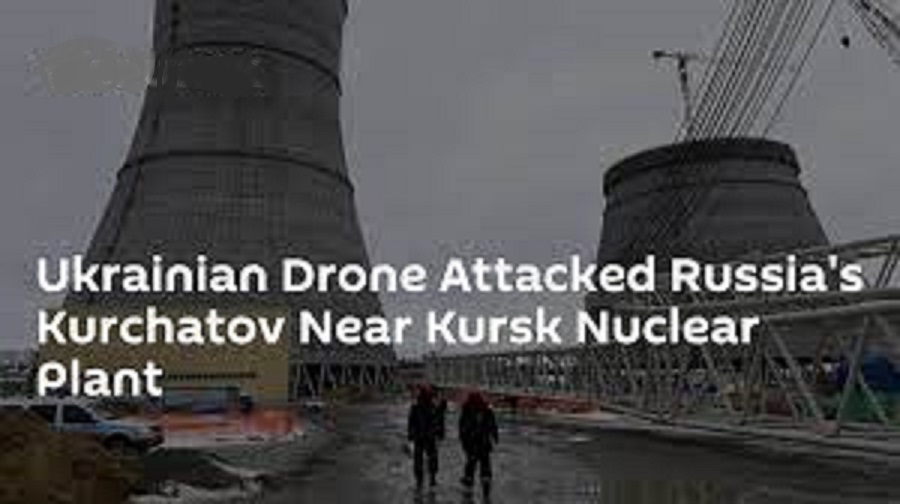
Ukrainian drone attacks Russian town near major nuclear plant
- Summary
- Drone attacks nuclear town
- No damage to nuclear power station
- Kursk power station is one of biggest
- Ukrainian drone shot down near Moscow
MOSCOW, Sept 1 (Reuters) https://www.reuters.com/world/europe/ukrainian-drones-attack-russian-town-home-nuclear-plant-2023-09-01/–
A Ukrainian drone attacked a town in western Russia which is home to one of the country’s biggest nuclear power stations, though there was no damage reported to the plant, Russian officials said.
Governor Roman Starovoit said a Ukrainian drone had damaged the facade of a building in the town of Kurchatov, just a few kilometres from the Kursk nuclear power station, early on Friday. He had earlier said there were two drones but clarified his remarks.
“There are no casualties,” Starovoit said. Starovoit did not mention any potential damage to the Kursk nuclear power plant.
The Soviet-era Kursk nuclear power station has the same graphite-moderated reactors as the Chernobyl nuclear plant.
An explosion and fire at the Chernobyl plant in 1986, in then Soviet Ukraine, was the world’s worst nuclear accident, spreading radiation across Europe.
Currently three RBMK-1000 reactors in Kursk are operational with one shut down, according to Russia’s state nuclear corporation.
Russia and Ukraine have in the past accused each other of plotting to attack the Zaporizhzhia nuclear power station in Ukraine. Russian troops seized the station, Europe’s largest nuclear facility with six reactors, in the days after the Kremlin ordered the invasion of Ukraine in February 2022.
Another drone was shot down approaching Moscow on Friday morning, said Mayor Sergei Sobyanin. That briefly disrupted flights to Moscow’s Vnukovo airport.
In the western Russian region of Belgorod another drone was shot down, according to Governor Vyacheslav Gladkov.
Writing by Guy Faulconbridge; Editing by Clarence Fernandez and Michael Perry
1 This Month
23-25 October – on Zoom – World BEYOND War’s annual global conferenc


Shut down the radiation-damaged Heysham nuclear reactors now
To see nuclear-related stories in greater depth and intensity – go to https://nuclearinformation.wordpress.com

Say No to NASA’s Reckless Nuclear Reactor on the Moon
Say No to NASA’s Reckless Nuclear Reactor on the Moon

-
Archives
- October 2026 (199)
- September 2026 (339)
- August 2026 (330)
- July 2026 (355)
- June 2026 (287)
- May 2026 (306)
- April 2026 (356)
- March 2026 (251)
- February 2026 (267)
- January 2026 (308)
- December 2025 (358)
- November 2025 (359)
-
Categories
- 1
- 1 NUCLEAR ISSUES
- business and costs
- climate change
- culture and arts
- ENERGY
- environment
- health
- history
- indigenous issues
- Legal
- marketing of nuclear
- media
- opposition to nuclear
- PERSONAL STORIES
- politics
- politics international
- Religion and ethics
- safety
- secrets,lies and civil liberties
- spinbuster
- technology
- Uranium
- wastes
- weapons and war
- Women
- 2 WORLD
- ACTION
- AFRICA
- Atrocities
- AUSTRALIA
- Christina's notes
- Christina's themes
- culture and arts
- Events
- Fuk 2022
- Fuk 2023
- Fukushima 2017
- Fukushima 2018
- fukushima 2019
- Fukushima 2020
- Fukushima 2021
- general
- global warming
- Humour (God we need it)
- Nuclear
- RARE EARTHS
- Reference
- resources – print
- Resources -audiovicual
- Weekly Newsletter
- World
- World Nuclear
- YouTube
-
RSS
Entries RSS
Comments RSS

