Biden Moves To Reduce U.S. Reliance On Russian Nuclear Supply Chain
The U.S. depends on Russian state-operated firm Rosatom for nearly 50% of
global uranium enrichment, essential for the nation’s nuclear energy
production. America’s reliance on Russian nuclear supply chains continues
despite sanctions, inadvertently funding Russia’s defense sector and
creating a critical vulnerability in energy security. The Biden
administration is seeking $2.16 billion to boost domestic uranium
enrichment capabilities, emphasizing the urgency to diminish dependence on
Russian nuclear fuel for national security and energy independence.
Oil Price 11th Nov 2023
Chris Hedges: The Horror, The Horror

Israel and Washington’s cynicism is breathtaking. There are no differences in intent. Washington only wants it done quickly. Humanitarian corridors? Pauses in the shelling? These are vehicles to facilitate the total depopulation of northern Gaza. The handful of aid trucks allowed through the border at Rafah with Egypt? A public relations gimmick. There is only one goal – kill, kill, kill. The faster the better
Israel’s genocidal attacks, which are killing hundreds of Palestinians a day, including some 160 children, have expanded to shelling the remaining hospitals in Gaza.
By Chris Hedges ScheerPost , https://scheerpost.com/2023/11/11/chris-hedges-the-horror-the-horror/
DOHA, Qatar: I am in the studio of Al Jazeera’s Arabic service watching a live feed from Gaza City. The Al Jazeera reporter in northern Gaza, because of the intense Israeli shelling, was forced to evacuate to southern Gaza. He left his camera behind. He trained it on Al-Shifa hospital, Gaza’s largest medical complex. It is night. Israeli tanks fire directly towards the hospital compound. Long horizontal red flashes. A deliberate attack on a hospital. A deliberate war crime. A deliberate massacre of the most helpless civilians, including the very sick and infants. Then the feed goes dead.
We sit in front of the monitors. We are silent. We know what this means. No power. No water. No internet. No medical supplies. Every infant in an incubator will die. Every dialysis patient will die. Everyone in the intensive care unit will die. Everyone who needs oxygen will die. Everyone who needs emergency surgery will die. And what will happen to the 50,000 people who, driven from their homes by the relentless bombing, have taken refuge on the hospital grounds? We know the answer to that as well. Many of them, too, will die.
There are no words to express what we are witnessing. In the five weeks of horror this is one of the pinnacles of horror. The indifference of Europe is bad enough. The active complicity by the United States is unfathomable. Nothing justifies this. Nothing. And Joe Biden will go down in history as an accomplice to genocide. May the ghosts of the thousands of children he has participated in murdering haunt him for the rest of his life.
Israel and the United States are sending a chilling message to the rest of the world. International and humanitarian law, including the Geneva Convention, are meaningless pieces of paper. They did not apply in Iraq. They do not apply in Gaza. We will pulverize your neighborhoods and cities with bombs and missiles. We will wantonly murder your women, children, elderly and sick. We will set up blockades to engineer starvation and the spread of infectious diseases. You, the “lesser breeds” of the earth, do not matter. To us you are vermin to be extinguished. We have everything. If you try and take any of it away from us, we will kill you. And we will never be held accountable.
We are not hated for our values. We are hated because we have no values. We are hated because rules only apply to others. Not to us. We are hated because we have arrogated to ourselves the right to carry out indiscriminate slaughter. We are hated because we are heartless and cruel. We are hated because we are hypocrites, talking about protecting civilians, the rule of law and humanitarianism while extinguishing the lives of hundreds of people in Gaza a day, including 160 children.
Israel reacted with indignation and moral outrage when it was accused of bombing the al-Ahli Arab Christian hospital in Gaza, which left hundreds of dead. The bombing, Israel claimed, came from an errant rocket fired by Palestine Islamic Jihad. There is nothing in the arsenal of Hamas or Islamic Jihad that could have replicated the massive explosive power of the missile that struck the hospital. Those of us who have covered Gaza have heard this Israel trope so many times it is risible. They always blame Hamas and the Palestinians for their war crimes, now attempting to argue that hospitals are Hamas command centers and therefore legitimate targets. They never provide evidence. The Israeli military and government lie like they breathe.
Medecins Sans Frontieres (Doctors Without Borders), which has staff working in Al-Shifa, issued a statement saying patients, doctors and nurses are “trapped in hospitals under fire.” It called on the “Israeli government to cease this unrelenting assault on Gaza’s health system.”
“Over the past 24 hours, hospitals in Gaza have been under relentless bombardment. Al-Shifa hospital complex, the biggest health facility where MSF staff are still working, has been hit several times, including the maternity and outpatient departments, resulting in multiple deaths and injuries,” the statement read. “The hostilities around the hospital have not stopped. MSF teams and hundreds of patients are still inside Al-Shifa hospital. MSF urgently reiterates its calls to stop the attacks against hospitals, for an immediate ceasefire and for the protection of medical facilities, medical staff and patients.”
Three other hospitals in northern Gaza and Gaza City are encircled by Israeli forces and tanks, in what a doctor told Al Jazeera was a “day of war against hospitals.” The Indonesian Hospital has reportedly also lost power. The U.N. Office for the Coordination of Humanitarian Affairs (OCHA) reports that 20 of 36 hospitals in Gaza no longer function.
Israel and Washington’s cynicism is breathtaking. There are no differences in intent. Washington only wants it done quickly. Humanitarian corridors? Pauses in the shelling? These are vehicles to facilitate the total depopulation of northern Gaza. The handful of aid trucks allowed through the border at Rafah with Egypt? A public relations gimmick. There is only one goal – kill, kill, kill. The faster the better. All Biden officials talk about is what comes next once Israel has finished its decimation of Gaza. They know Israel’s slaughter will not end until Gazans are living in the open without shelter in the southern part of the strip and dying because of a lack of food, water and medical care.
Gaza before Israel’s ground incursion was one of the most densely populated spots on the planet. Imagine what will happen with 1.1 million Gazans from the north piled on top of over 1 million in the south. Imagine what will take place when infectious diseases such as cholera become an epidemic. Imagine the ravages of starvation. The pressure will build to do something. And that something, Israel hopes, will be to push the Palestinians over the border into the Sinai in Egypt. Once there, they will never return. Israel’s ethnic cleansing of Gaza will be complete. Its ethnic cleansing of the West Bank will begin.
That is Israel’s demented dream. To achieve it, they will make Gaza uninhabitable.
Ask yourself, if you were a Palestinian in Gaza and had access to a weapon what would you do? If Israel killed your family, how would you react? Why would you care about international or humanitarian law when you know it only applies to the oppressed, not the oppressors? If terror is the only language Israel uses to communicate, the only language it apparently understands, wouldn’t you speak back with terror?
Israel’s orgy of death will not crush Hamas. Hamas is an idea. This idea is fed on the blood of martyrs. Israel is giving Hamas an abundant supply.
Deal to build pint-size nuclear reactors canceled, ‘avoiding a giant financial debacle.’

NuScale Power’s small modular reactors promised cheaper nuclear power, but costs soared and utilities balked
Science, NOV 2023 BY ADRIAN CHO
A plan to build a novel nuclear power plant comprising six small modular reactors (SMRs) fell apart this week when prospective customers for its electricity backed out. Utah Associated Municipal Power Systems (UAMPS), a coalition of community-owned power systems in seven western states, withdrew from a deal to build the plant, designed by NuScale Power, because too few members agreed to buy into it. The project, subsidized by the U.S. Department of Energy (DOE), sought to revive the moribund U.S. nuclear industry, but its cost had more than doubled to $9.3 billion.
“We still see a future for new nuclear,” says Mason Baker, CEO and general manager of UAMPS, which planned to build the plant in Idaho. “But in the near term, we’re going to focus on … expanding our wind capacity, doing more utility-scale solar, [and] batteries.” NuScale, which was spun out of Oregon State University in 2007, declined to make anyone available for an interview. But David Schlissel of the Institute for Energy Economics and Financial Analysis says, “The communities and their ratepayers have avoided a giant financial debacle.”
To some observers, the plan’s collapse also raises questions about the feasibility of other planned advanced reactors, meant to provide clean energy with fewer drawbacks than existing reactors. NuScale’s was the most conventional of the designs, and the closest to construction. “There’s plenty of reasons to think [the other projects] are going to be even more difficult and expensive,” says Edwin Lyman, a physicist and director of nuclear power safety at the Union of Concerned Scientists.
The U.S. nuclear industry has brought just two new power reactors online in the past quarter-century. In a deregulated power market, developers have struggled with the enormous capital expense of building a power reactor. Two new reactors at Plant Vogtle in Georgia, one of which came online in May, cost more than $30 billion.
To whack down cost, engineers at NuScale decided to think small. Each NuScale SMR would produce just a fraction of the 1.1 gigawatts produced by one of the new Vogtle reactors. As originally conceived in 2014, the plant would contain 12 SMRs, each producing 60 megawatts of electricity, for $4.2 billion.
Small reactors are not an obvious winner. Basic physics dictates that a bigger nuclear reactor will be more fuel efficient than a smaller one. And a big nuclear plant can benefit from economies of scale. However, a small reactor can be simpler. For example, NuScale engineers rely on convection to drive cooling water through the core of each SMR, obviating the need for expensive pumps. SMRs also can be mass-produced in a factory and shipped whole to a site, reducing costs.
Size aside, NuScale’s SMR is relatively conventional. Whereas other advanced reactor designs rely on exotic coolants, NuScale’s sticks to water. It also uses the same low-enriched uranium fuel as existing power reactors. Those features helped the NuScale design win approval from the Nuclear Regulatory Commission (NRC) in September 2020—the only advanced reactor to have done so.
DOE agreed to host the plant at its Idaho National Laboratory, bypassing the long site permitting process commercial reactors ordinarily face. Still, by the time NRC approved the design, the cost for the project has risen to $6.1 billion. That led DOE to chip in $1.4 billion and developers to reduce the design to six modules, each pumping out 77 megawatts. In January, an analysis revealed that the cost had increased by an additional $3 billion. It suggested power from the plant would cost $89 per megawatt-hour, roughly three times as much as power from wind or utility-scale solar.
Why the costs sky-rocketed remains unclear. Lyman notes that NuScale’s first plant was always going to be expensive, as the company’s production lines still need to be developed. Even so, he says, NuScale designers overestimated how much they could save with a simpler design. “They never demonstrated that you could compensate for that penalty in economies of scale with these other factors.”
Jacopo Buongiorno, a nuclear engineer at the Massachusetts Institute of Technology, says the NuScale design has an Achilles’ heel. Each reactor’s core resides within a double-walled steel cylinder, with a vacuum between the walls to keep heat from leaking out. The reactor modules sit in a big pool of water, which in an emergency can flood into the vacuum space around a reactor to prevent it overheating. Compared with a conventional reactor’s building, the pool requires more reinforced concrete, the price of which has soared, Buongiorno says. “In terms of tons of reinforced concrete per megawatt of power, NuScale’s design is off the chart.”
UAMPS’s members balked at the cost of that power. UAMPS had to line up agreements to buy 80% of the plant’s 462 megawatt output before early next year, Baker says, but it had commitments for only 26%. On 7 November the 26 of the 50 UAMPS members that had signed up for the project voted to terminate it, Baker says.
Other, more ambitious nuclear projects are in the works. DOE has agreed to help a company called Terrapower develop a reactor that will use molten sodium as a coolant. It will also help another company, X-power, develop an SMR cooled by xenon gas. Both plants would use novel fuel enriched to 20% uranium-235. That fuel is not yet commercially available, and it could make those designs even more expensive, Lyman says………………………….. https://www.science.org/content/article/deal-build-pint-size-nuclear-reactors-canceled
 | |||
| |||
‘Can You Hear the Screams?’ Physician Says Western Leaders Complicit in Israeli Attacks on Gaza Hospitals
November 12, 2023, https://scheerpost.com/2023/11/12/can-you-hear-the-screams-physician-says-western-leaders-complicit-in-israeli-attacks-on-gaza-hospitals/
“When are you going to stop this?” Dr. Mads Gilbert asked U.S. President Joe Biden and the leaders of European nations.
By Jake Johnson / Common Dreams
ANorwegian physician who has volunteered in Gaza for decades said Friday that Western leaders, including U.S. President Joe Biden, are complicit in Israel’s intensifying assault on the Palestinian enclave’s hospitals, which are overwhelmed with airstrike victims and displaced people seeking refuge.
In a video message posted to social media as Israeli forces bombarded al-Shifa—Gaza’s largest hospital—and other medical facilities, Dr. Mads Gilbert asked, “Can you hear the screams from innocent people, refugees sheltering, trying to find a safe place, being bombed by the Israeli attack forces this morning inside the hospital, hospitals that are the temples of humanity and protection?”
“When are you going to stop this?” Gilbert added, with audio of screams from Gaza’s al-Shifa hospital playing in the background. “You’re all complicit.”
Gilbert’s plea for immediate action from world leaders who are supporting and arming Israel’s military came as Israeli forces surrounded al-Shifa and other hospitals in northern Gaza, claiming that Hamas is using the facilities as command centers—an assertion that hospital directors have denied.
Targeting hospitals is a war crime under international law.
Israeli airstrikes and sniper fire on Gaza hospitals have forced thousands of people who were sheltering at the facilities to flee, but many others “remain trapped inside,” the U.K.-based humanitarian group Medical Aid for Palestinians (MAP) said Saturday.
The charity said it has heard “chilling testimony from inside Gaza’s largest hospital, al-Shifa,” including reports that “the intensive care unit has been bombed and damaged.”
“Staff moving between buildings have been shot at and critically wounded,” said MAP, which is calling for a cease-fire. “Those who have tried to flee have come under fire, and lie dead or wounded in the street as rescue is impossible. With the mortuary shut down, a hundred bodies are piled up and cannot be buried.”
“Power has gone out, and staff are having to hand ventilate critically ill patients to keep them alive,” the group continued. “At least one patient in intensive care has already died. Babies in the neonatal intensive care unit which MAP has supported over many years are beginning to die from lack of oxygen. More will die soon unless the power supply is restored. Day after day, week after week, we have been warning of catastrophic consequences if world leaders fail to protect healthcare in Gaza. Our worst fears are coming true.”
Doctors Without Borders, which has been providing emergency assistance in the Gaza Strip, offered a similarly harrowing account.
“We are currently unable to contact any of our staff inside al-Shifa, and we are extremely concerned about the safety of patients and the medical staff,” the group said late Friday. “Patients are still in the hospital, some in critical condition and unable to move.”
Mohammed Obeid, a Doctors Without Borders physician at al-Shifa, said that “there is a patient who needs surgery. There is a patient who’s already asleep in our department. We cannot evacuate ourselves and [leave] these people inside. As a doctor, I swear to help the people who need help.”
Early Saturday, the group wrote on social media that its staff “are witnessing people being shot at as they attempt to flee the al-Shifa hospital.”
‘We Are Being Killed Here, Please Do Something’: Nurses and Doctors Plead for Gaza Cease-Fire
“We are nearly sure that we are alone now,” said a Doctors Without Borders surgeon at Gaza’s largest hospital. “No one hears us.”
SCHEERPOST, By Jake Johnson / Common Dreams 12 Nov 23
Doctors and nurses in the Gaza Strip issued urgent pleas for a cease-fire as Israeli forces encircled and attacked the territory’s largest hospital, trapping thousands of displaced people and threatening the lives of medical workers and patients.
One Doctors Without Borders nurse texted his colleagues from the basement of al-Shifa Hospital early Saturday, writing that “four or five families”—including his own—were sheltering there amid heavy bombardment and fighting around the facility.
“We are being killed here, please do something,” the nurse wrote. “The shelling is so close, my kids are crying and screaming in fear.”
The attacks on and around al-Shifa as well as the Israeli siege—which has cut off Gaza’s electricity supply and prevented fuel from reaching the northern part of the enclave—have caused power outages at the hospital, endangering babies and other patients who are unable to evacuate. Al-Shifa’s director said that two premature babies have died due to outages at the hospital’s intensive care unit and pediatric ward.
Mohammed Obeid, a Doctors Without Borders surgeon at al-Shifa, saidfour patients in the hospital were wounded by sniper fire on Saturday and those who have tried to flee have been shot at and bombed.
“There is no electricity, actually there is no water, there is no food. Our team is exhausted,” said Obeid. “We are nearly sure that we are alone now. No one hears us.”
Other hospitals in northern Gaza, including al-Quds, have been forced to shut down completely due to a lack of fuel and other critical supplies. Across the strip, the majority of hospitals have ceased functioning.
The Palestinian Red Crescent Society said Saturday that “repeated appeals for urgent international assistance” at al-Quds have been unsuccessful, leaving the hospital to “fend for itself under ongoing Israeli bombardment, posing severe risks to medical staff, patients, and displaced civilians.” Nearly 200 medics have been killed by Israeli bombing in Gaza since October 7.
The al-Rantisi pediatric hospital was reportedly surrounded by tanks on Saturday. NBC News, which has journalists embedded with the Israel Defense Forces (IDF), reported that “more than a dozen children with cancer or other serious blood disorders” were evacuated from al-Rantisi to hospitals in Egypt and Jordan “but more than 30 remain” in Gaza.
Israel’s bombing has killed more than 4,500 children since it began last month following a deadly Hamas-led attack.
Targeting hospitals is a war crime under international law. Israel claims Hamas runs operations from inside and under Gaza’s hospitals, an assertion that directors of the facilities have denied.
Last week, an IDF spokesperson said that “if we see Hamas terrorists firing from hospitals, we’ll do what we need to do.
“Doctors should not have to beg for a cease-fire. Nurses should not have to beg for a cease-fire.”…………………………………………………………… more https://scheerpost.com/2023/11/12/we-are-being-killed-here-please-do-something-nurses-and-doctors-plead-for-gaza-cease-fire/
Pacific island nations express concern over Fukushima water release
Japan Times, AVARUA, COOK ISLANDS – 11 Nov 23
Leaders of Pacific island nations expressed strong concerns over the release of treated radioactive water from Japan’s wrecked Fukushima No. 1 nuclear plant into the Pacific Ocean during a regional summit, according to Cook Islands Prime Minister Mark Brown.
Brown, who currently chairs the Pacific Islands Forum, said Thursday there were “strong concerns” raised by “our forum leaders for the significance of potential threats of contamination to the health and security of the blue Pacific.”
The bloc’s 18 members have expressed differing views on the treated wastewater discharge from the Fukushima No. 1 nuclear power plant, which began in late August, after extensive dialogue between the member states and Japan………………………………………………….
The leaders’ meeting began in the Cook Islands Monday, with the main talks taking place Wednesday and Thursday on Rarotonga, the country’s most populous island, and Aitutaki.
The Pacific Islands Forum comprises Australia, the Cook Islands, Micronesia, Fiji, French Polynesia, Kiribati, the Marshall Islands, Nauru, New Caledonia, New Zealand, Niue, Palau, Papua New Guinea, Samoa, the Solomon Islands, Tonga, Tuvalu and Vanuatu. https://www.japantimes.co.jp/news/2023/11/11/japan/politics/japan-pacific-island-nations-fukushima-water-release/
White House Aides “Simply Cannot Stomach” Biden’s Israel Policy, Dissent Memos Leak, Revolt At State Dept
BY TYLER DURDEN, FRIDAY, NOV 10, 2023, https://www.zerohedge.com/political/white-house-aides-simply-cannot-stomach-bidens-israel-policy-dissent-memos-leak-revolt
A revolt is brewing within the Biden administration over how the White House is handling the Israel-Gaza war, as the civilian death toll and mass Palestinian displacement soars, and as Biden’s top officials continue to say “no conditions” have been placed on how Israel uses US-supplied weapons. Pressure from the press pool is also piling on, with near daily spats and antagonistic back-and-forth exchanges on display in the State Department and White House briefing rooms.
This week there have emerged reports of scathing ‘dissent memos’ criticizing White House Israel policy being circulated, collecting many hundreds of signatures chiefly from among State Department and USAID staff. A primary theme of the pushback and pressure is that President Biden must change course on the Gaza crisis.
First, on Monday Politico obtained and published portions of a memo issued by State Department personnel giving a blistering critique which according to the publication argued that “among other things, the U.S. should be willing to publicly criticize the Israelis.”
It was issued after the Biden’s Secretary of State, Antony Blinken, repeatedly made clear that the US does not back a ceasefire, but is only sheepishly calling for brief humanitarian ‘pauses’. Politico points out the memo represents a “growing loss of confidence” among Biden’s corps of diplomats:
The message suggests a growing loss of confidence among U.S. diplomats in President Joe Biden’s approach to the Middle East crisis. It reflects the sentiments of many U.S. diplomats, especially at mid-level and lower ranks, according to conversations with several department staffers as well as other reports. If such internal disagreements intensify, it could make it harder for the Biden administration to craft policy toward the region.
The memo has two key requests: that the U.S. support a ceasefire, and that it balance its private and public messaging toward Israel, including airing criticisms of Israeli military tactics and treatment of Palestinians that the U.S. generally prefers to keep private.
The memo, marked “sensitive but unclassified’ was sure to leak, and that was likely the point. It bluntly underscores that Biden’s policy is hurting America’s standing in the world as much of global opinion has been appalled at the Gaza death toll which this week surpassed 10,500.
The memo sates that the gap between Biden officials’ private and public messaging “contributes to regional public perceptions that the United States is a biased and dishonest actor, which at best does not advance, and at worst harms, U.S. interests worldwide.”
“We must publicly criticize Israel’s violations of international norms such as failure to limit offensive operations to legitimate military targets,” the dissent memo continues. “When Israel supports settler violence and illegal land seizures or employs excessive use of force against Palestinians, we must communicate publicly that this goes against our American values so that Israel does not act with impunity.”
Next, hundreds of staffers at the United States Agency for International Development (USAID) have issued a letter calling for an “immediate ceasefire” while also criticizing the White House’s failure to hold Israel accountable in any way for “numerous violations of international law” and the huge numbers of Gaza civilian casualties, especially among women and children.
The USAID staffers are also outraged that the US last month vetoed a UN Security Council resolution which sought a pause in fighting in order to allow humanitarian aid to get through to the Gaza Strip. The USAID dissent memo, which also went public by the middle of this week, includes the following:
“We believe that further catastrophic loss of human life can only be avoided if the United States Government calls for an immediate ceasefire in Gaza, the release of Israeli hostages, and the restoration of water, food, fuel, and electricity to the people of Gaza by the State of Israel,” it reads.
“In the longer term, we call on the United States Government to join the international community and human rights organizations in holding all parties, including the State of Israel, to international law, which includes ending Israel’s illegal occupation of the Palestinian territories and settlements on occupied land.”
Publicly, President Biden is coming under most pressure from a tiny handful of outspoken Progressive Democrats in Congress (the Squad), but the more significant pushback appears to be coming from within his own administration.
Increasingly, bold public statements from Israeli leaders themselves have introduced huge, obvious contradictions between the White House’s rhetoric and that of Netanyahu’s government, which is much more open about its intent in Gaza…
On Thursday, CNN issued a new investigative report quoting senior White House staffers as saying they increasingly “cannot stomach” defending Biden’s policy anymore. The report also describes “great moral anxiety” – in the words of one unnamed senior admin official, who is quoted in the following:
Angst, unease and outrage are spreading through corners of the Biden administration as Israeli forces show no signs of letting up their relentless attacks inside Gaza and the civilian death toll in the besieged enclave – already in the thousands – continues to climb.
One month into the Israel-Hamas war, some senior officials privately say there are aspects of Israel’s military operations they simply cannot stomach defending; calls for the US to back a ceasefire are growing among government employees; and others are distraught by the incessant images of Palestinian civilians being killed by Israeli airstrikes, multiple sources told CNN.
“It has created great moral anxiety,” said one senior administration official. “But no one can say it because we all work at the pleasure of the president and he’s all in.”
More high level resignations could come as a result, which will certainly only increase the pressure on Biden’s team while headed into an election year, already has his poll numbers are at record lows.
CNN notes that a full-on revolt is underway in the State Department: “Some of the fiercest backlash has come from inside the State Department, including an official who publicly resigned from the agency last month over the Biden’s administration’s approach to the conflict,” the report says. “Elsewhere in the administration, officials are quietly fuming as the civilian death toll mounts.”
The Democratic base too, could increasingly shift to become more sympathetic to the unrelenting denunciations issued by the Squad. Progressives and protesters are calling Biden “genocide Joe” – as CNN describes further:
The internal administration dissent is becoming so visible that White House National Security Council spokesman John Kirby was forced to address it in a press briefing on Tuesday. He sought, and failed, to calm anxiety by saying, “the president understands that there’s strong emotions and feelings here, all around, all across the board – and here inside the administration and the federal government, that’s certainly the case as well.”
These tensions are likely only to grow given there are no signs Israel’s military is ready to exercise any restraint, given Israeli leadership likely perceives that Washington has given it a ‘blank check’ (akin to Ukraine). Already Israel receives at least $3.8 billion in military aid annually, and Biden is now seeking some $14 billion more in assistance this year.
No possibility of Gaza ceasefire – Biden
Rt.com 12 Nov,23
Israel has, however, agreed to daily “four-hour pauses” in fighting, the White House says
US President Joe Biden has ruled out any hope of achieving a lasting ceasefire between Israel and Hamas in Gaza.
“None. No possibility,” Biden told reporters outside the White House on Thursday when asked about the chances of a firm cessation in hostilities.
Speaking to reporters separately later in the day as he was boarding Air Force One, the president revealed he had been pushing for a “pause” in fighting “for a lot more than three days.”
The US, however, has not managed to secure any significant pause from Israel, which is reportedly determined to continue its war on Hamas until the militant group is completely destroyed…………………………………………………………. more https://www.rt.com/news/586950-gaza-ceasefire-no-possibility/
Portugal made great strides in renewable energy.
This week Portugal made strides to meet its 2045 deadline, by producing
more renewable energy than it needed for 149 hours straight – a new record.
Portugal aims to generate 85% of its electricity from renewable sources by
2030 and be carbon neutral by 2045 – five years earlier than most European
nations.
Positive News 10th Nov 2023
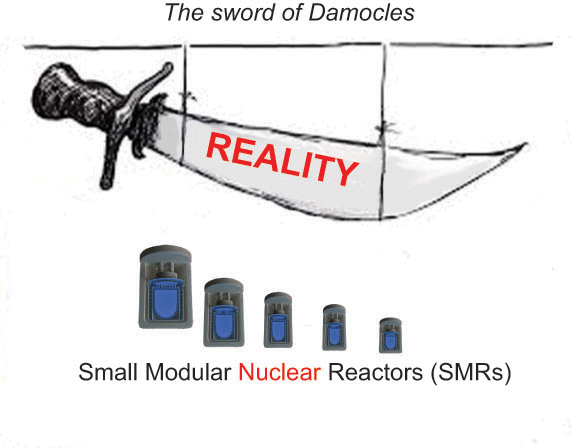
Small Nuclear Reactor Contract Fails, Signaling Larger Issues with Nuclear Energy Development in U.S
Statement by Dr. Edwin Lyman, Director of Nuclear Power Safety, Union of Concerned Scientists, Nov 9, 2023
https://www.ucsusa.org/about/news/small-nuclear-reactor-contract-fails-signaling-larger-issues-nuclear-energy-development
NuScale Power Cooperation, the first company in the United States to secure approval for the design of a small modular nuclear reactor (SMR), ended its contract with the Utah Associated Municipal Power Systems (UAMPS) on Wednesday. The companies cited rising costs as the reason for terminating the contract.
Throughout the development process, NuScale made several ill-advised design choices in an attempt to control the cost of its reactor, but which raised numerous safety concerns. The design lacked leak-tight containment structures and highly reliable backup safety systems. It also only had one control room for 12 reactor units despite the Nuclear Regulatory Commission (NRC) typically requiring no more than two units per control room.
Additionally, the company led efforts to sidestep critical safety regulations, including requirements for offsite emergency response plans to protect nearby communities. But NuScale’s justification for all this regulatory corner-cutting—that the design is “passively safe”—was undermined when concerns about its passive emergency core cooling system arose late in the design certification process.
The end of the project reflects the fragility of the advanced nuclear power industry in the U.S., which has been driven by an oversupply of reactor developers and a lack of genuine demand. As new reactor developers look for utilities and other end users to buy their products, the high cost and risks of their experimental, untested technologies are proving too onerous.
Below is a statement by Dr. Edwin Lyman, the director of nuclear power safety at the Union of Concerned Scientists (UCS).
“The termination of NuScale’s contract signals the broader challenges of developing nuclear energy in the United States. Placing excessive reliance on untested technologies without adequate consideration of economic viability, practicality, and safety concerns is irresponsible and clearly won’t work. The failure of this project underscores the need for decision makers to work diligently to ensure that the pursuit of nuclear energy aligns with the imperatives of public safety and financial feasibility.
“For all its problems, NuScale is one of the designs with the best prospects for commercialization because of its similarity to conventional light-water reactors, which allowed the company to learn from extensive operating experience and to leverage much of the existing nuclear power supply chain. Thus, the failure of the NuScale project with UAMPS does not bode well for the dozens of other, more exotic reactor types in various stages of development that are being touted as the next best thing in nuclear power, such as sodium-cooled fast reactors, gas-cooled reactors and molten-salt reactors. These reactors, which are based on much less mature designs and generally require fuels and materials that are not readily available, will be even riskier bets than NuScale for the foreseeable future. There are currently no other new nuclear power reactor designs under NRC licensing review.
“As private interests continue to turn their attention to emerging nuclear energy technology, lessons from this project should be held top of mind.” #nuclear #antinuclear #nuclearfree #NoNukes
Nuclear energy is not ‘clean’ or ‘green’ in the European Union’s taxonomy

In the end, however, the poor economics of nuclear technology raise doubts that any labeling of nuclear energy as “clean” or “green” will spur private sector investment. Today, despite the industry’s self-proclaimed nuclear renaissance, private investment in nuclear technologies is minimal, and nuclear proponents are pinning their hopes on massive public sector handouts.
BY SUSAN O’DONNELL, MADIS VASSAR | November 8, 2023 https://www.hilltimes.com/story/2023/11/08/nuclear-energy-is-not-clean-or-green-in-the-european-unions-taxonomy/402401/
As calls are increasing for Finance Minister Chrystia Freeland to release the government’s “transition taxonomy” of energy sources aligned with climate goals, misinformation is circulating about the role of nuclear energy in the European Union’s taxonomy.
The Canadian government is expected to identify technologies for priority private sector investment to help Canada meet its “net-zero” targets.
An Oct. 13 letter to MPs from the Canadian Nuclear Association, a nuclear lobby group, states that “The European Union (EU) formally voted to include nuclear energy in its EU taxonomy.” This statement is partially true, but misleading.
On May 16, at a meeting of the House Natural Resources Committee, Bloc Québécois MP Mario Simard asked if Canada was one of the only countries that considers nuclear to be clean energy. In response, Mollie Johnson, assistant deputy minister of Natural Resources, said “under the taxonomy of the European Union, they have classified it as clean energy as well.” This statement is incorrect.
The European Commission (EC) established its Technical Expert Group on Sustainable Finance to develop scientific guidelines for the taxonomy. The group was asked to develop recommendations for technical screening criteria for economic activities that can make a major contribution to climate change mitigation and adaptation, while at the same time avoiding significant harm to sustainable use and protection of water and marine resources, transition to a circular economy, address pollution prevention control, and protection and restoration of biodiversity and ecosystems.
After the report excluded nuclear because of the generated toxic radioactive waste, the lobby group convinced the EC to commission another report by the nuclear-friendly Joint Research Centre which concluded that nuclear was eligible. After weeks’ more lobbying, a slight majority of the European Parliament voted in favour of adding nuclear and fossil gas in the taxonomy only as “transitional technologies”—definitely neither as green, clean, nor sustainable. Also, the members of the European Parliament did not approve any public investments in nuclear energy.
The transitional technology classification requires a country seeking funding for nuclear energy to fulfill stringent safety criteria. This means having solid plans within five years, including financing, for an operational deep geological disposal for used fuel and high-level waste in 2050. This criteria will be a huge challenge for states other than Sweden, France and Finland. The Onkalo used nuclear fuel repository in Finland was built at a cost of 5-billion euros, and after some 40 years, is still not licenced. Most other countries do not have those funds available, meaning that potential nuclear power-plant operators would have to contribute to the costs, making nuclear even less competitive in the energy market.
A similar political power play lacking wider environmental considerations surrounds another recent document, the Net-Zero Industry Act. The aim is to promote investments in the production capacity of products key to meeting the EU’s climate neutrality goals, and, again, nuclear was initially not included. Once again, strong lobby efforts won the reintroduction of nuclear, first as a “non-strategic” technology due to its long build times and staggering costs—factors that push any tangible climate benefits far into the future, as opposed to “strategic” climate mitigation options such as solar panels, batteries, and heat pumps. In the latest text, however, any distinction between different technologies is gone. As the Greens in the European Parliament commented, the Act has lost the initial focus, and it’s now for just about any technology.
Given that nuclear energy is not considered “green” in the EU taxonomy, financial analysts have questioned its value as a global “gold standard” because investors might prefer to use other taxonomies that value their real green investments. Canada has the opportunity to learn from these blunders.
In the end, however, the poor economics of nuclear technology raise doubts that any labeling of nuclear energy as “clean” or “green” will spur private sector investment. Today, despite the industry’s self-proclaimed nuclear renaissance, private investment in nuclear technologies is minimal, and nuclear proponents are pinning their hopes on massive public sector handouts.
However, aside from the Canada Infrastructure Bank’s $970-million ‘low-interest loan’ for Ontario Power Generation to develop an American design for a small modular nuclear reactor, the public funds for new nuclear proponents from Innovation, Science and Economic Development Canada have been just under $100-million in the past three years. Those funds require matching private sector funding that has not materialized. This is a far cry from the billions of dollars required to develop just one small modular nuclear reactor, and where that money will come from is still an open question. #nuclear #antinuclear #nuclearfree #NoNukes
Susan O’Donnell, PhD, is lead investigator for the CEDAR project at St. Thomas University. Madis Vasser, PhD, is senior expert on SMRs for Friends of the Earth Estonia.
The First Small-Scale Nuclear Plant in the US Died Before It Could Live

“One of the stories they’ve kept telling people was that the SMR was going to be a lot cheaper than large-scale nuclear,” David Schlissel, an analyst at the nonprofit Institute for Energy Economics and Fiscal Analysis, told WIRED last month. “It isn’t true.”
Wired. 10 Nov 23
Six nuclear reactors just 9 feet across planned for Idaho were supposed to prove out the dream of cheap, small-scale nuclear energy. Now the project has been canceled.
The plan for the first small-scale US nuclear reactor was exciting, ambitious, and unusual from the get-go. In 2015, a group of city- and county-run utilities across the Mountain West region announced that they were betting on a new frontier of nuclear technology: a mini version of a conventional plant called a “small modular reactor” (SMR).
Advocates said the design, just 9 feet in diameter and 65 feet tall, was poised to resurrect the US nuclear industry, which has delivered only two completed reactors this century. It was supposed to prove out a dream that smaller, modular designs can make splitting atoms to boil water and push turbines with steam much cheaper. But first that reactor, the Voygr model designed by a startup called NuScale, had to be built. A six-reactor, 462-megawatt plant was slated to begin construction by 2026 and produce power by the end of the decade.
On Wednesday, NuScale and its backers pulled the plug on the multibillion-dollar Idaho Falls plant. They said they no longer believed the first-of-its-kind plant, known as the Carbon Free Power Project (CFPP) would be able to recruit enough additional customers to buy its power.
Many of the small utilities underwriting the pioneering project, members of a group called the Utah Associated Municipal Power Systems (UAMPS) saw the pint-sized nuclear plant as a potential solution to pressure to reduce their carbon emissions. The Department of Energy, which was due to host the plant at Idaho National Lab, awarded $1.4 billion to the project over 10 years.
But as WIRED reported in February, the utilities backing the plant were spooked late last year by a 50 percent increase in the projected costs for the project—even after factoring in substantial funds from the Inflation Reduction Act. The Idaho Falls reactors’ chances of survival began to look slimmer.
At the time, commitments in place to buy the reactor’s future power covered less than 25 percent of its output. UAMPS set itself a year-end deadline to bump that figure to 80 percent by recruiting new customers. Reaching that number was seen as key to ensuring the project’s long-term viability. As the project moved into site-specific planning and construction, its costs were poised to become more difficult to recoup if the plant ultimately failed, heightening the risks for the members.
Atomic Homecoming
As recently as last month, local officials returned to their communities from a UAMPS retreat with a reassuring message that the Idaho Falls project was on track to secure the new backers it needed, according to local meetings reviewed by WIRED.
That appeared to be good news in places like Los Alamos, New Mexico, where an official this spring described the project as a “homecoming” for atomic technology. The project was due to arrive just in time to help the county meet its goal of decarbonizing its electrical grid and adjusting to the retirement of aging fossil fuel plants nearby. At the time, locals expressed concern about where they would find clean and consistent power if the first-of-its-kind plant was to go away, given limited capacity to connect to new wind and solar projects in the region.
Now that the project is dead, SMR skeptics say the municipalities should find those cleaner power sources and focus on proven technologies. “One of the stories they’ve kept telling people was that the SMR was going to be a lot cheaper than large-scale nuclear,” David Schlissel, an analyst at the nonprofit Institute for Energy Economics and Fiscal Analysis, told WIRED last month. “It isn’t true.”
UAMPS spokesperson Jessica Stewart told WIRED that the utility group would expand its investments in a major wind farm project and pursue other contracts for geothermal, solar, battery, and natural gas projects………………………………………………………………………………………………….. more https://www.wired.com/story/first-small-scale-nuclear-plant-us-nuscale-canceled/
Iran warning: Israel provoking ‘inevitable expansion’ of war after IDF conducts flag-raising ceremony in Gaza
Tyler Durden, ZeroHedge, Fri, 10 Nov 2023
On Friday Israeli media produced this headline hailing that “Israeli flags wave proudly along the shores of Gaza”. Starting on Thursday footage began widely circulating online showing IDF troops holding an Israeli flag raising ceremony, laying stake to conquered areas of the Strip. In a short speech during the ceremony on a Gaza beach, just prior to leading troops in the national anthem, an IDF soldier said “this is our land” and told his forces they are leading the way for Jews “to return to our lands.”
Israeli military official says Gaza is theirs:
“We returned, we were expelled from here almost 20 years ago. We started this battle divided & ended it united. We are fighting for the Land of Israel. this is our land! And that is the victory, to return to our lands” pic.twitter.com/IG3nB3zFAW— Younis Tirawi | يونس (@ytirawi) November 9, 2023Following this highly provocative scene, on Friday Iran issued a new warning, saying that Israel’s expansion of its operations and attacks on Gaza hospitals and other provocative acts make an expansion of the scope of the war “inevitable”.
Iranian foreign minister Hossein Amirabdollahian conveyed the statement in a phone call with Qatar’s prime minister Mohammed bin Abdulrahman bin Jassim Al Thani, according to state media.
“Due to the expansion of the intensity of the war against Gaza’s civilian residents, expansion of the scope of the war has become inevitable,” Amirabdollahian said. He separately posted to X that “time is running out” for Israel, and stated, “The only benefit of Netanyahu was that he made the foundations of the fake Israeli regime more shaky and showed the criminal, violent, and aggressive face of the Zionist regime in the massacre of women and children in Gaza.”
* * *
After reports emerged starting Wednesday and Thursday that Israeli tanks had pushed to the center of Gaza City, Palestinian officials have said tanks have drawn close to and have surrounded key hospitals where thousands of Palestinians are taking shelter as wounded patients are receiving treatment. They said Friday that air strikes have hit the Strip’s biggest hospital, Al Shifa, killing at least one and wounding several others.
Other hospitals were were also reportedly struck at dawn, including strikes on the grounds of the Indonesian Hospital and the Rantissi cancer hospital, according to eyewitnesses cited in Reuters. Sprawling tent encampments of the internally displaced can be seen on the hospital campuses, but Israel claims that Hamas has ‘terror tunnels’ underneath, and further that the group has a base of operations in Rantissi hospital. Civilians waiving white flags have been trapped, in at least one instance coming under fire while trying to escape. Gazan authorities say the Israel’s military is firing on them, while Israel claims Hamas is shooting its own people to keep them as “human shields”.
………………………………………………………………………………..”People have sent appeals from inside al-Rantisi Hospital and Nasser Hospital, asking to be allowed to flee,” Al Jazeera writes.
And yet the situation is growing more dangerous for civilians as the bombs fall. Gaza health ministry has alleged that Israeli jets struck al-Shifa Hospital buildings five times since Thursday night. This sent some of the civilians leaving for more potentially safe areas.
“They shelled the maternity department and the outpatient clinics building. One Palestinian was killed and several were wounded in the early morning attack,” the health ministry said
……………………………………….. Meanwhile the UN and aid organizations have had new issues getting trucks into the Strip and to the necessary locations amid “hell on Earth” – as the UN Office for the Coordination of Humanitarian Affairs (OCHA) described.
…………………………. “We cannot drive to the north at the current point, which is of course deeply frustrating because we know there are several hundred thousand people who remain in the north,” said OCHA spokesperson Jens Laerke.
“If there is a hell on Earth today, its name is northern Gaza,” he said. “It is a life of fear by day and darkness at night and what do you tell your children in such a situation, it’s almost unimaginable – that the fire they see in the sky is out to kill them?”
There have been reports that top US and Israeli officials are in Doha seeking potential hostage deals via Qatar government mediation. But Israeli President Isaac Herzog has said “there is no real proposal” currently on the table, NBC News reports. https://www.zerohedge.com/geopolitical/israeli-tanks-have-gaza-hospitals-surrounded-un-decries-hell-earth #Israel #Palestine
A Middle East Free of Weapons of Mass Destruction: A Utopia?
November 9, 2023 Greater Middle East & Africa, Occasional Papers & Monographs, REGIONS, RESOURCE, The Nonproliferation Regime
Earlier this summer, well before Hamas launched its raids against Israel, Pierre Goldschmidt, the International Atomic Energy Agency’s (IAEA’s) former Deputy Director for Safeguards, sent me an analysis of how to approach creating a nuclear weapons free zone in the Middle East. I agreed to publish it along with a commentary by Ariel Levite, the former Deputy Director of Israel’s Atomic Energy Commission. The result is the attached occasional paper, “A Middle East Free of Weapons of Mass Destruction: A Utopia?”
The greater Middle East is at a critical juncture. Either the number of states in the region having nuclear weapons or nuclear weapons options will grow or the number will be frozen and decline. Saudi Arabia, Iran, the UAE, Turkey, Egypt, and Algeria will either become Israel’s nuclear equal (or come within weeks of doing so) or they will forgo the option. In any case, creating a nuclear weapons free zone in the region has been promoted for nearly a half-century and is sure to be an issue in the upcoming Nuclear Nonproliferation Treaty Review Conference and Preparatory Committee meetings scheduled through 2026.
Yet, many analysts have dismissed going to zero nuclear weapons in the region as being unrealistic. Certainly, with Israel so embattled, any movement toward creating a zone now will take even longer. On the other hand, current developments suggest time may not be on our side.
Less than a month after Hamas’ first incursions, not one, but two elected Israeli parliamentarians, including a junior member of Israel’s cabinet, publicly recommended Israel use its nuclear weapons against Hamas in Gaza. Meanwhile, Saudi Arabia’s Crown Prince has fielded growing concerns that Iran might quickly get nuclear weapons by repeating his earlier public threat to acquire nuclear weapons if Tehran does.
In an effort to deflect this threat and to “stabilize” the region, the Biden Administration wants the Saudis to join the Abraham Accords. As a part of any such deal, the Crown Prince, though, has demanded that the United States green-light Saudi efforts to pursue a “peaceful” uranium enrichment program. This would effectively give the Kingdom a nuclear weapons option and would catalyze nuclear hedging throughout the greater Middle East.
It’s unclear if such racing can be curbed. Pierre Goldschmidt lays out an alternative incremental approach toward creating a weapons free zone in the region. Ariel Levite clarifies many of the serious reservations about proceeding now that most Israelis would likely have. Each makes points worth our attention. The hurdles are real but so are the risks of not trying to surmount them.
A Middle East Free of Weapons of Mass Destruction: A Utopia?
Pierre Goldschmidt[1, July 2023 ……………………………………………………………………………………………………………………………………………….more https://npolicy.org/a-middle-east-free-of-weapons-of-mass-destruction-a-utopia-occasional-paper-2307/
Russia raises alarm about nuclear waste storage in Ukraine reaching unsafe levels
Foreign Ministry spokeswoman Zakharova warns of high chance of approximately 12 million tons of radioactive waste entering Dnieper river, groundwater
Elena Teslova |10.11.2023 – https://www.aa.com.tr/en/europe/russia-raises-alarm-about-nuclear-waste-storage-in-ukraine-reaching-unsafe-levels/3049929
Russia raised the alarm on Friday about nuclear waste storage in Ukraine reaching unsafe levels, warning of a high chance of approximately 12 million tons of radioactive waste entering the Dnieper river and groundwater.
Russian Foreign Ministry spokeswoman Maria Zakharova said the “situation with dangerous nuclear waste storage in Ukraine is taking a disastrous character.”
In a statement published on the ministry’s website, Zakharova said the volume of nuclear waste at the Prydniprovsky Chemical Plant, located in the city of Kamianske, has reached 42 million tons.
“The plant was constructed during the Soviet era, and it is processing wastes that are presently stored in nine open-air dumping grounds containing sand-like low-radioactive residue.
“These wastes are a significant and dangerous source of environmental pollution. There is a high probability of about 12 million tons of radioactive waste entering the Dnieper (river) and groundwater as a result of possible erosion of the dam at one of the storage facilities located 800 meters from the river and its tributary Konoplyanka,” Zakharova warned.
Also, she added, about 14 tons of radioactive dust is blown throughout the area every year, contaminating agricultural land.
“According to our information, Kyiv does not allocate funding to ensure the environmental safety of the facilities of the Prydniprovsky Chemical Plant, which, ultimately, can lead to an environmental disaster not only in the territory controlled by the Kyiv regime but also beyond its borders,” she said.
Concerns over the plant’s poor condition have been raised for many years with no response from officials.
1 This Month
23-25 October – on Zoom – World BEYOND War’s annual global conferenc


Shut down the radiation-damaged Heysham nuclear reactors now
To see nuclear-related stories in greater depth and intensity – go to https://nuclearinformation.wordpress.com

Say No to NASA’s Reckless Nuclear Reactor on the Moon
Say No to NASA’s Reckless Nuclear Reactor on the Moon

-
Archives
- October 2026 (190)
- September 2026 (339)
- August 2026 (330)
- July 2026 (355)
- June 2026 (287)
- May 2026 (306)
- April 2026 (356)
- March 2026 (251)
- February 2026 (267)
- January 2026 (308)
- December 2025 (358)
- November 2025 (359)
-
Categories
- 1
- 1 NUCLEAR ISSUES
- business and costs
- climate change
- culture and arts
- ENERGY
- environment
- health
- history
- indigenous issues
- Legal
- marketing of nuclear
- media
- opposition to nuclear
- PERSONAL STORIES
- politics
- politics international
- Religion and ethics
- safety
- secrets,lies and civil liberties
- spinbuster
- technology
- Uranium
- wastes
- weapons and war
- Women
- 2 WORLD
- ACTION
- AFRICA
- Atrocities
- AUSTRALIA
- Christina's notes
- Christina's themes
- culture and arts
- Events
- Fuk 2022
- Fuk 2023
- Fukushima 2017
- Fukushima 2018
- fukushima 2019
- Fukushima 2020
- Fukushima 2021
- general
- global warming
- Humour (God we need it)
- Nuclear
- RARE EARTHS
- Reference
- resources – print
- Resources -audiovicual
- Weekly Newsletter
- World
- World Nuclear
- YouTube
-
RSS
Entries RSS
Comments RSS

