UK GOVERNMENT BLOCKS MP QUESTIONS ABOUT GAZA-RELATED ACTIVITY AT ITS CYPRUS BASE

Ministry of Defence takes extraordinary step of censoring all requests for information by MPs about RAF Akrotiri on Cyprus, which Declassified has reported is facilitating arms supplies to Israel’s war on Gaza.
MATT KENNARD AND MARK CURTIS, 20 NOVEMBER 2023 https://www.declassifieduk.org/uk-government-blocks-mp-questions-about-gaza-related-activity-at-its-cyprus-base/
- MP whose questions were blocked tells Declassified: “This is totally unacceptable in a democracy”
- RAF sent A400M military transport aircraft from Cyprus base to Tel Aviv this morning
- Britain’s Cyprus base has secretly become international military hub supporting Israel’s bombing of Gaza
The British government has blocked MPs asking any questions about activity at RAF Akrotiri, its vast air base on Cyprus, Declassified can reveal.
Blocking all parliamentary questions from MPs is a highly unusual move.
Government departments routinely refuse to answer specific questions about military operations for reasons of “national security”, but blocking all questions by elected parliamentarians goes far beyond the usual level of Whitehall secrecy.
It comes after Declassified revealed the RAF has made over 30 military transport flights to Tel Aviv since Israel began bombing Gaza. The Ministry of Defence refused to provide us any detail of the cargo or personnel on the flights.
Just this morning an A400M Atlas military transport aircraft operated by the RAF landed in Tel Aviv from Akrotiri. The aircraft can carry 116 soldiers, a Chinook helicopter or a payload of 37 tonnes.
RAF Akrotiri sits 180 miles from Tel Aviv with a flight time of 40 minutes.
Declassified has also reported that the US is moving arms to Israel using RAF Akrotiri, which has become an international military hub supporting Israel’s bombing campaign in Gaza. Half of US planes flying from British Cyprus are said to be carrying weapons for Israel.
Kenny MacAskill, Alba MP for East Lothian, told Declassified he put down a number of parliamentary questions concerning what military support the UK is providing to Israel and the role of RAF Akrotiri in the supply of military equipment.
“Your question has been queried because it is subject to a block by Government,” he was told in an email. “The Department [Ministry of Defence] has stated that it will not comment on operational matters at this base.”
MacAskill, a former Scottish justice secretary, told Declassified: “This is totally unacceptable in a democracy. Genocide is being perpetrated in Gaza and we have a right to know what our Government is doing about it.”
MacAskill said he had never experienced such a ‘block’ on asking parliamentary questions before.
He added: “The failure to call for an immediate ceasefire is bad enough but any complicity raises issues of participating in war crimes. We need openness and transparency by our government. This is not in our name.”
Secrecy
The UK military-run Defence and Security Media Advisory (DSMA) Committee – better known as the ‘D-Notice’ committee – has also sent out an ‘advisory’ to all British media to suppress reporting on UK special forces’ activity related to Gaza. The SAS was previously reported to have deployed a force to Cyprus.
No British mainstream media outlets have reported on Declassified’s recent findings about RAF Akrotiri and Gaza despite the President of Cyprus Nikos Christodoulides having to defend his government from accusations of complicity in Israel’s bombing of Gaza.
In answer to questions about the use of RAF Akrotiri by Cypriot journalists over the weekend, Christodoulides said: “There is no such information, our country cannot be used as a base for war operations”.
However, RAF Akrotiri has long been the staging post for British bombing campaigns across the Middle East. Declassified also recently revealed that 129 US airmen are also permanently deployed at the base.
The censorship of information requests from MPs makes it all but certain that RAF Akrotiri is being used for covert military purposes that the government does not want the public to know about.
It is likely the UK is sending material military aid to Israel during its bombing of Gaza, which has now killed over 12,000 Palestinians, although it previously told Declassified it was not providing “lethal aid”.
The Members of This Reservation Learned They Live with Nuclear Weapons. Can Their Reality Ever Be the Same?
The Mandan, Hidatsa and Arikara peoples are learning more about the missiles siloed on their lands, and that knowledge has put the preservation of their culture and heritage in even starker relief.
Scientific American. By Ella Weber on November 24, 2023
“………………Ella Weber: I met Jayli Fimbres at the recently opened MHA Nation Interpretive Center in New Town, North Dakota, the most populous town on the Fort Berthold reservation. While she says she doesn’t know much about nuclear weapons, she’s been dreaming about nuclear war.
Fimbres: I think I’ve, even within those dreams, I had dreams of surviving those things as well. But there was, like, radioactive damage and stuff. And we were, like, mutating, but we, like, learned to get through it.
Weber: You are listening to Scientific American’s podcast series, The Missiles on Our Rez. I’m Ella Weber, a member of the Mandan, Hidatsa and Arikara Nation, a Princeton student, and a journalist. This is Episode 5: “What Happens Now?”
Weber: This is the last episode of our series. Throughout the first four episodes, we learned about how nuclear missiles arrived on our reservation. We also learned how the Air Force failed to appropriately describe the human and environmental consequences associated with its plans to modernize existing nuclear missile silos.
Those plans included placing new missiles on our land for the next 60 years.
We discussed the risks associated with living with these weapons for the tribe — and what it really meant for our members—including my family—to live in a national nuclear sacrifice zone.
In this final episode, I’m returning to my tribe, the MHA Nation, to share what I found.
Weber: I met with my grandma, Debra Malnourie, to find out when she first learned about the missile silos. She grew up on the reservation and currently resides there.
Debra Malnourie: Then, like I said, I was driving around, and I was like, “What are these places?” And then I don’t even remember who told me that they were missile sites, that missiles [are] down in there, and I was like, “How do you know?” And I knew nothing about it. It wasn’t even in my radar, actually. Probably still isn’t right now.
Weber: Debra didn’t know much about this.
Malnourie: But I always thought if there was a big war, we’d all end up going. And truthfully, I would not want to be one of the ones that didn’t go. Because what [are] you going to do? I don’t know.
Debra Malnourie: Then, like I said, I was driving around, and I was like, “What are these places?” And then I don’t even remember who told me that they were missile sites, that missiles [are] down in there, and I was like, “How do you know?” And I knew nothing about it. It wasn’t even in my radar, actually. Probably still isn’t right now.
Weber: Debra didn’t know much about this.
Malnourie: But I always thought if there was a big war, we’d all end up going. And truthfully, I would not want to be one of the ones that didn’t go. Because what [are] you going to do? I don’t know………………………………………………………………………………………………………………………………………………………….
Weber: As we mentioned in the last episode, Edmund would later find out from our Nuclear Princeton research team, and Princeton researcher Sébastien Philippe, that the entire 3,000-page environmental impact statement, or EIS package–first published in June 2022 in draft form–didn’t actually go into a great amount of detail about the ramifications of potential nuclear strikes on the silos and the surrounding community.
……………………….
As I mentioned in Episode 2, the Garrison Dam, constructed in 1947 by the Army Corps of Engineers, was built adjacent to our land — and against our will. There’s a famous picture of chairman George Gillette crying as he signed the agreement in 1948.
When the dam flooded in 1953, countless tribal families were displaced, and our homes were destroyed. It separated our remaining reservation into five areas—another assault on our language and culture.
It turns out there’s actually a link between the historical destruction of our community by the U.S. government and the loss of our language. People such as Jayli Fimbres—who you first heard in the beginning of this episode—are trying to bring our language back………………………………
As I mentioned in Episode 2, the Garrison Dam, constructed in 1947 by the Army Corps of Engineers, was built adjacent to our land — and against our will. There’s a famous picture of chairman George Gillette crying as he signed the agreement in 1948.
When the dam flooded in 1953, countless tribal families were displaced, and our homes were destroyed. It separated our remaining reservation into five areas—another assault on our language and culture.
It turns out there’s actually a link between the historical destruction of our community by the U.S. government and the loss of our language. People such as Jayli Fimbres—who you first heard in the beginning of this episode—are trying to bring our language back…………………………………………………….
Despite the negative effects associated with the nuclear modernization program that the Air Force listed in the environmental impact statement, I found that the impacts are much farther reaching than what is described in the scope of the document.
Baker: What’s the purpose of a nuclear warhead? Depends on who you talk to. “They defend freedom.” No, they’re meant to kill. They’re meant to destroy. That was never in part of our land, intentional land spirit.
Weber: That’s Edmund Baker who says that not only do warheads go against our land spirit—but they also go against the core concepts in our Hidatsa language……………………………………………………………………………..
Weber: Throughout this project, I came to understand how the story of the U.S. government’s land theft and attempts at destroying our culture are directly related to the history of how the missile silos got here. And our community has been fighting to survive for as long as we’ve been around. This is just another test………………………………………………..
Moniz: So, in closing, should something go wrong, should something happen with all these warheads that are on our tribal nation, our children, our future generations, what we’re working to reclaim and reconnect and revitalize will all—could be diminished. It could be diminished.
Thinking about that and thinking about what could go wrong–what could happen–really puts things into perspective, and in closing I would urge…not encourage, but welcome more folks to the work. And let’s keep going and let’s get this out there. People need to know what’s happening. Our people need to know what’s happening.
Baker: For the future, to keep our people, our land, intact, what’s left of it–our unity…to try to give some space to work on our values, and re-remember who we are… it would make it this much easier if you just get these silos out of here. You know, you’d help that way, if you really care about us, federal government……………………………………………………………………………………………..
Weber: Will things continue as they are but with people now being aware of what the missile silos mean for us?
Could the silos be removed from the reservation?
Could communities in North Dakota, Native and not, work together towards a different future—with no missiles in the state?
I don’t know. What makes me hopeful, though, is the new generation of people willing to continue the fight for our tribe, our land, our rights, our culture, and our futures…………………………………………………… more https://www.scientificamerican.com/podcast/episode/the-members-of-this-reservation-learned-they-live-with-nuclear-weapons-can-their-reality-ever-be-the-same/
US providing Israel with satellite data of aid facilities in Gaza, which Tel Aviv later bombs
SOTT, Erin Banco, Politico, Wed, 22 Nov 2023
The Biden administration has been providing Israel with the location of humanitarian groups in Gaza for weeks to prevent strikes against their facilities. But Israel has continued to hit such sites.
The information included GPS coordinates of a number of medical facilities and information on movements of aid groups in Gaza to the Israeli government for at least a month, according to three people familiar with the communications. All were granted anonymity because they feared speaking publicly would make it more difficult for aid groups to operate in Gaza.
Still, Israel has launched operations against Hamas in or near aid sites, including hospitals, leading to the destruction of buildings and the blocking of fuel and other critical supplies.
………………………………… State Dept.: Hostage deal would ‘unlock’ potential for more Gaza aid
In public statements, U.S. officials have stressed that aid groups are struggling to operate in the Gaza Strip because of Hamas, noting the militant group uses civilians as human shields and operates tunnels underneath hospitals.
But Israel’s continued bombardment of these humanitarian facilities raises more questions about whether Washington has the political sway many in the administration want with Israel. And the divide is particularly stark given that the goal is protecting aid workers — one of the most fundamental tenets of international humanitarian law…………………………………………………………………………………………………. more https://www.sott.net/article/486230-US-providing-Israel-with-satellite-data-of-aid-facilities-in-Gaza-which-Tel-Aviv-later-bombs
Putin Was Declared A War Criminal For *Relocating* The Same Number Of Children Israel Just *Killed*
CAITLIN JOHNSTONE, NOV 24, 2023
It’s probably worth noting at this point in history that the total number of children killed in Gaza has just surpassed the number of children the International Criminal Court indicted Russian president Vladimir Putin for relocating out of a war zone.
A recent estimate by Gaza authorities puts the number of Palestinian children killed by Israel’s bombing campaign over the last seven weeks at just above the six thousand mark. This number comes from the Gaza Media Office, which is only able to make unconfirmed estimates since the Gaza Health Ministry who normally reports such numbers has lost the ability to count the dead effectively due to communications collapse caused by the bombing.
In March of this year — ironically on the 20th anniversary of the US invasion of Iraq — ICC judges issued an arrest warrant charging Putin with war crimes in Ukraine. The allegations? The “unlawful deportation” of some six thousand Ukrainian children to a network of “re-education” camps inside Russia.
As The Grayzone documented at the time, the ICC charges were based on a Yale HRL report which is rife with contradictions, plot holes, and the fairly significant conflict of interest of being funded by the US State Department. The report itself acknowledges that it found “no documentation of child mistreatment,” and that nearly all of the children were returned to their families in a timely manner.
But even if these points were all false and Vladimir Putin did just illegally kidnap six thousand Ukrainian kids to turn them into Russians, would that be worse than murdering them by dropping powerful military explosives on areas known to be packed full of children? Why is one a war crime and the other apparently fine? Russia is no more a party to the ICC’s Rome Statute than Israel is, after all.
A recent United Nations report says that “Since 7 October, when Hamas fighters attacked Israel, 67 per cent of the more than 14,000 people killed in Gaza are estimated to be women and children.” If we assume it’s an even 14,000 and make the obscenely generous assumption that every single one of the men killed by Israel were Hamas combatants, 67 percent puts the total number of civilians killed at 9,380 in just seven weeks of bombing.
In the 21 months of the war in Ukraine, the UN estimates the number of civilians killed at around ten thousand. The total number of children killed? Around 560.
The numbers show that Israel is plainly behaving in a way that is far, far more murderous and criminal in Gaza than Russia is in Ukraine, but we good and faithful members of the international community are meant to desire only the Russian leader’s prosecution at The Hague………………………………….more https://www.caitlinjohnst.one/p/putin-was-declared-a-war-criminal?utm_source=post-email-title&publication_id=82124&post_id=139127737&utm_campaign=email-post-title&isFreemail=true&r=1ise1&utm_medium=email
What Would It Mean to ‘Absorb’ a Nuclear Attack?- nuclear missile silos as a “sponge”

Scientific American , By Ella Weber on November 22, 2023
The missiles on the Fort Berthold Reservation in North Dakota make it a potential target for a nuclear attack. And that doesn’t come close to describing what the reality would be for those on the ground.
This podcast is Part 4 of a five-part series. Listen to Part 1 here, Part 2 here, and Part 3 here. The podcast series is a part of “The New Nuclear Age,” a special report on a $1.5-trillion effort to remake the American nuclear arsenal.…..
Ella Weber: Members of my tribe live with nuclear missiles on the Fort Berthold Reservation. The weapons sit in underground concrete silos that are surrounded by antennas in small, fenced-off areas. The missiles are armed and ready to launch in 60 seconds. This is one reason they are called Minutemen missiles…………………………….
Weber: After learning that the Air Force had not explained to my tribe what the new nuclear missiles were for–which the Air Force intended to deploy for another 60 years on our reservation–I decided to dig deeper.
I wanted to know what role the missiles and their silos play today in U.S. nuclear strategy and what the risks for the tribe were in hosting them—something that the tribe never agreed to in the first place………………….
I wasn’t really clear on what Secretary Jim Mattis meant by the ICBM force providing a “cost-imposing strategy,” so I talked to Leonor Tomero to get some clarity. She used to serve as deputy assistant secretary of defense for nuclear and missile defense policy in the Biden administration in 2021…………
Weber: Leonor explained to me that should the U.S. face a potential nuclear attack, the president would have two choices with regards to the ICBMs: launch them preventively before the missiles possibly got destroyed, or decide to absorb the attack and retaliate later.
Weber (tape): What do you mean by absorbing an attack?
Tomero: I think, you know, it’s, you know, they’re considered a sponge.
Weber (tape): So it’s kind of like making these ICBMs, like, a target ….
Tomero: Yes…
Weber (tape): …. rather than, like, these other major cities or other places…
Tomero: Right.
Weber: In case you don’t know — the role of the ICBM is to force an adversary to use many nuclear weapons if they decided to attack the U.S. The silos are basically meant to divert and absorb the incoming nuclear missiles from important and critical areas in the country, like cities.
But what would that mean for the Fort Berthold reservation?……………………………………………………………………
Frank Von Hippel: Basically the secretary of defense had come in and testified to Congress. When one of the senators asked how many people would such an attack kill, he estimated 15,000 to 25,000. And he said, ‘Well, that would be terrible, but it would be not what you would expect from a major nuclear attack.’
That seemed low to, actually, the senator from New Jersey [Clifford Case]. And he asked for a peer review of the Defense Department calculations, and, and I was then asked to be an unpaid consultant to look into that. And, in fact, I went over to the Pentagon to talk to the people who have done the calculations.
Weber: Frank found something unexpectedly horrifying.
Von Hippel: The Defense Department had assumed that explosions of the warheads over the ICBM silos would be so high that they would not cause fallout. They pointed out they would also not damage the silos.
Weber: Basically, the Department of Defense hadn’t calculated properly. The DOD had made incorrect assumptions about the altitude of nuclear explosions aimed at destroying the silos. Initially, it had thought the nuclear explosions would need to be at an altitude. But–they actually needed to be at ground level.
Von Hippel: The DoD was forced to go back and do new calculations reflecting these points, and they came out about 1,000 times higher: 20 million—on the order of 20 million people killed.
Weber (tape): Wow.
…………………………………. Von Hippel: Well, you know, the, I don’t know who coined this term about the silos being a nuclear sponge, but the local….I think there would be annihilation of the local population around the silos. Wouldn’t just be the fallout—would also be the, the blast effects, and so on. So they would be the worst affected.
Weber (tape): My grandma only lives two and a half miles away from an ICBM silo. What would happen to her and her place?
Von Hippel: I think she would be within the blast radius … and the fire radius…. I don’t know how flammable… her house would be presumably burned after being knocked flat. And then there would be the fallout. These explosions would have to be low enough to hit the set of silos with sufficient overpressure to destroy the missiles inside. It would have to be low enough for, for the dirt to be and debris to be sucked up into the cloud. And then that would bring down some of the radioactivity in a very intense patch around the silo. So … multiple ways in which she might die. I’m sorry.
Weber (tape): I mean, she didn’t make the decision to have them there. So …
Von Hippel: Yeah, I know
Weber: Being treated as expendable isn’t new to Indigenous communities. As far as I could tell, members of the Mandan, Hidatsa and Arikara Nation don’t see themselves as living in a sacrifice zone.
This designation treats certain areas and people as acceptable losses; they bear the brunt of the risks and consequences associated with nuclear weapons and decisions made by others. Maybe if members of the tribe had a better understanding of what the risks were, they could challenge the deployment of these silos on our land…………………………….
Sébastien Philippe: Now I’m going to put the whole image of the entire areas that can be impacted by the fallout, and I can walk you through the color coding, but that’s basically the worst case possible for every single person on the map.
Edmund Baker: Okay. Holy crap. Even Disneyland’s not immune. Disney World’s out. New York—there’s no safe place.
So that batch there, North Dakota, the white sort of color…?
Philippe: Yeah.
Baker: That’s 100 percent fatality in that zone?
Philippe: Times 10. Yeah, ten times what you would need to die—and that’s just from the radioactivity.
Baker: Okay, so that’s not in the EIS, I figure, or is it?
Philippe: Uh, no.
Weber: By the way, Edmund’s talking about an environmental impact statement, or EIS—a two-volume report released by the U.S. Air Force that is meant to analyze, “the potential effects on the human and natural environments from the deployment of the Sentinel intercontinental ballistic missile system.”
This was the report that the Air Force had presented to my reservation—in a different place than it had initially advertised. And in the entire 3,000 pages of the report and its appendices— which cost $33 million to write, by the way — Sébastien had found that the consequences of a nuclear war that could impact my tribe were kind of glossed over.
The EIS mentioned the “casualties” and “grave implications” of such a war but they didn’t really go beyond that.
Here’s Frank again, speaking about the military’s attitudes toward the consequences of war in general.
Von Hippel: They talk about people like your grandmother as being collateral damage. I mean…, they try to desensitize themselves to what the consequences are, what they’re talking about—and, in fact, I remember when I first went over to the Pentagon to talk to people, I learned—the first time I heard this word called “collateral damage,” that is—“We, you know, we didn’t intend to kill your grandmother…. She’s, unfortunately, collateral damage.”…………………………………………………………………………………………………………………………………………….
Weber: If anyone could advise the U.S. on resilience and survivability, it would be us: the MHA Nation. And I have a feeling that keeping ICBM silos operating across our land may not be part of our preferred strategy.
In the next and final episode, I go back to the rez and report what I found to my family and members of the tribe. We sit down and discuss: What happens now?
This show was reported by me, Ella Weber, produced by Sébastien Philippe and Tulika Bose. Script editing by Tulika Bose. Post-production design and mixing by Jeff DelViscio. Thanks to special advisor Ryo Morimoto and Jessica Lambert. Music by Epidemic Sound.
I’m Ella Weber, and this was The Missiles on Our Rez, a special podcast collaboration from Scientific American, Princeton University’s Program on Science and Global Security, Nuclear Princeton, and Columbia Journalism School. https://www.scientificamerican.com/podcast/episode/what-would-it-mean-to-absorb-a-nuclear-attack/
Nuclear Power: UK’s Financial Challenge Unveiled

the actual cost might reach as high as £10 billion per reactor, resulting in an astonishing cumulative expense for the decommissioning process. …
this substantial cost could ultimately fall on taxpayers, raising concerns about the financial burden on the public.
Dev X Noah Nguyen, November 21, 2023
The UK’s Commitment to Nuclear Power and Financial Challenges
The United Kingdom’s dedication to nuclear power is becoming a financially challenging commitment as the dismantling expenses for its nuclear generating facilities continue to escalate. These costs have been advantageous for businesses involved in the dismantling process but a noteworthy expenditure for UK taxpayers
Regardless of the substantial costs associated with the new nuclear reactors at Hinkley Site C and the rising price of clean-up initiatives, the nation’s government remains committed to nuclear technology. This unwavering commitment is driven by the belief that nuclear power is crucial for achieving the UK’s long-term energy security and climate change goals. However, critics argue that increased investment in renewable energy sources could provide similar benefits, without the high financial burden and safety concerns associated with nuclear power……………………………………………………
Concerns Regarding Decommissioning Costs and Life Expectancy of Reactors
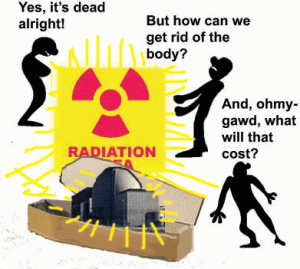
Nearly all of the remaining functional reactors are scheduled for closure by 2028, except Sizewell B, anticipated to stay in operation until 2035. With a life expectancy of roughly 40 years—considerably shorter than the 60 to 80 years frequently claimed by the sector—questions emerge about the demolition costs for the existing 23 reactors and the two under construction at Hinkley Point C.
As these reactors reach the end of their life cycle, it is crucial to plan and allocate resources effectively for their dismantling and waste disposal. The cost of decommissioning and managing nuclear facilities can significantly impact the overall economic feasibility of the energy generated, emphasizing the need for accurate cost estimations and environmentally responsible strategies.
Projected Costs of Dismantling and Importance of Effective Management
By the end of 2022, the UK’s Nuclear Decommissioning Authority (NDA) projected a total dismantling cost of £149 billion. If this figure encompasses Hinkley Site C, it would equate to about £6 billion per reactor. This substantial financial investment highlights the importance of thoroughly managing the decommissioning process to ensure effective resource allocation. With the growing push towards renewable energy sources, proper management and safe dismantling of nuclear reactors have become increasingly significant for the country’s transition towards sustainable energy.
Higher Potential Costs and the Financial Burden on Taxpayers
However, Professor Stephen Thomas from the University of Greenwich’s energy policy department posits that the actual cost might reach as high as £10 billion per reactor, resulting in an astonishing cumulative expense for the decommissioning process. He further elaborates that this substantial cost could ultimately fall on taxpayers, raising concerns about the financial burden on the public. To mitigate such consequences, proper planning and establishing an adequate funding source must be undertaken for a feasible and efficient decommissioning process…………………………………………………………………………………….
What are the concerns regarding the decommissioning costs and life expectancy of nuclear reactors in the UK?
With functional reactors scheduled for closure and shorter life expectancies than often claimed, there are concerns about the demolition costs for the existing reactors and effective management of resources for dismantling and waste disposal. The cost of decommissioning can significantly impact the overall economic feasibility of nuclear-generated energy and necessitates accurate cost estimations and environmentally responsible strategies………….. https://www.devx.com/news/nuclear-power-uks-financial-challenge-unveiled/
Failed U.S. Nuclear Project Raises Cost Concerns for Canadian SMR Development

The Energy Mix November 10, 2023, Primary Author: Mitchell Beer
The abrupt failure of the leading small modular nuclear reactor (SMR) project in the United States is shining a light on public subsidies that might keep similar technology under development in Canada, even if it’s prone to the same cost overruns that scuttled NuScale Power Corporation’s Carbon Free Power Project (CFPP) in Utah.
NuScale and its customer, Utah Associated Municipal Power Systems (UAMPS), announced they were cancelling the project earlier this week, after its anticipated cost increased 53% over earlier estimates, Bloomberg reports. “The decision to terminate the project underscores the hurdles the industry faces to place the first so-called small modular reactor into commercial service in the country.”
But a clear-eyed assessment of the project’s potential was really made possible by a level of accountability that doesn’t exist in Canada, said Gordon Edwards, president of the Canadian Coalition for Nuclear Responsibility.
“Private investors in Utah forced NuScale to divulge financial information regarding the cost of electricity from its proposed nuclear plant,” and “cost became the deal-breaker,” Edwards told The Energy Mix in an email. “Publicly-owned utilities in Canada are not similarly accountable. The public has little opportunity to ‘hold their feet to the fire’ and determine just how much electricity is going to cost, coming from these first-of-a-kind new nuclear reactors.”
In the U.S., the business case started to fall apart last November, when NuScale blamed higher steel costs and rising interest rates for driving the cost of the project up from US$58 to $90 or $100 per megawatt-hour of electricity. The new cost projection factored in billions of dollars in tax credits the project would receive under the Biden administration’s Inflation Reduction Act, amounting to a 30% saving.
At the time, the Institute for Energy Economics and Financial Analysis (IEEFA) estimated the total subsidy at $1.4 billion. This week, Bloomberg said NuScale had received $232 million of that total so far.
The cost increase meant that UAMPS “will not hit certain engineering, procurement, and construction benchmarks, allowing participants to renegotiate the price they pay or abandon the project,” Utility Dive wrote……………………………….
In Canada, “the massively expensive SMR projects in Canada will eventually face the same reckoning,” predicted Susan O’Donnell, an adjunct research professor at St. Thomas University and member of the Coalition for Responsible Energy Development in New Brunswick. While the Canadian Energy Regulator’s modelling assumes SMRs could be built at a cost of C$9,262 per kilowatt in 2020, falling to $8,348 per kilowatt by 2030 and $6,519 by 2050, the latest cost estimate from NuScale exceeded $26,000 per kilowatt in Canadian dollars, O’Donnell said—and the technology had been in development since 2007.
“Too bad our leaders have chosen to pursue an energy strategy which is too expensive, too slow, and too costly in comparison with the alternatives of energy efficiency and renewables—the fastest, cheapest, and least speculative strategies,” Edwards wrote. He added that waste disposal and management challenges and costs for SMRs will be very different from what Canadian regulators have had to confront with conventional Candu nuclear reactors.
The news from NuScale landed just days after civil society groups in the European Union warned that SMR development won’t help the continent reach its climate goals. Citing prolonged project delays and cost overruns, the long time frame to develop unproven technologies, and the risks associated with radioactive waste disposal and proliferation of nuclear materials, they urged EU governments to focus on renewable energy, power grid development, and energy storage.
“Nuclear energy is being pushed by powerful lobbies and geostrategic interests,” with several EU states relying on Russian state nuclear company Rosatom for their uranium supplies, the groups said. “To quickly decarbonize, we must choose cheap technologies, easy to deploy at scale, like solar panels and windmills.”………….https://www.theenergymix.com/2023/11/10/failed-u-s-nuclear-project-raises-cost-concerns-for-canadian-smr-development/
US Official Says Gaza Death Toll Likely Higher Than Being Reported
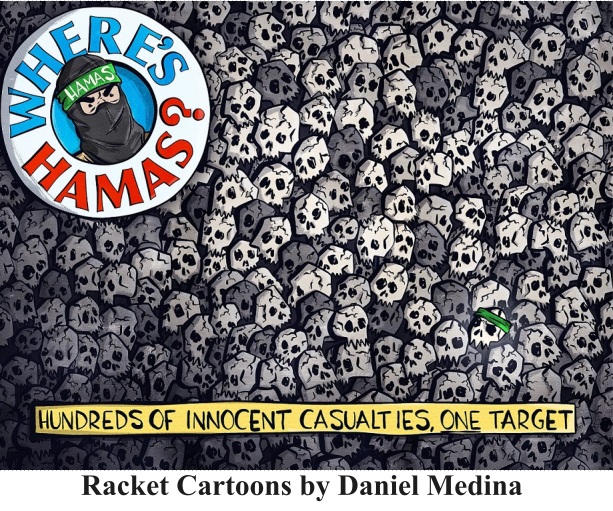
President Biden previously cast doubt on the numbers coming from Gaza’s Health Ministry.
By Dave DeCamp / Antiwar.com, https://scheerpost.com/2023/11/11/us-official-says-gaza-death-toll-likely-higher-than-being-reported/
A senior US official said that the death toll caused by Israel’s assault on Gaza is likely far higher than the over 10,000 number being reported by Gaza’s Health Ministry, The Hill reported on Thursday.
The comments were made by Barbara Leaf, assistant secretary of State for Near Eastern Affairs, and break from President Biden’s claim that the numbers from Gaza’s Health Ministry can’t be trusted.
“In this period of conflict and conditions of war, it is very difficult for any of us to assess what the rate of casualties are,” Leaf told the House Foreign Affairs Committee. “We think they’re very high, frankly, and it could be that they’re even higher than are being cited.”
“We’ll know only after the guns fall silent. We take in sourcing from a variety of folks who are on the ground,” she added. “I can’t stipulate to one figure or another, it’s very possible they’re even higher than is being reported.”
Gaza’s Health Ministry reported on Thursday that at least 10,569 Palestinians have been killed in Gaza since October 7. The total includes 4,324 children. Thousands of Palestinians are also missing and presumed to be under the rubble.
After Biden accused the Palestinians of lying about the death toll, the UN and aid groups that have experience in Gaza backed the numbers coming from Gaza’s Health Ministry, saying they’re reliable. An Israeli security source told the Israeli newspaper Yediot Ahronot that Israel has killed around 20,000 Palestinians, but the number has not been backed up by another source.
While casting doubt on the death toll, the White House has also acknowledged there is a massive civilian casualty rate in the US-backed onslaught. White House National Security Council spokesman John Kirby acknowledged on Monday that the Israeli bombardment has killed “many, many thousands of innocent people.” The US is still providing Israel with unconditional military support, including near-daily weapons shipments.
Tories, Labour clash over Milton Keynes nuclear waste claims
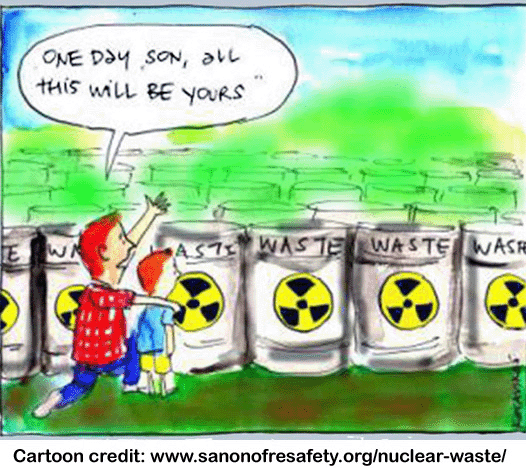
Claims that Milton Keynes is being considered as a site to store nuclear
waste have sparked a war of words between the Labour and Conservative
parties. The Labour Leader of Milton Keynes City Council Peter Marland
claimed that a site in the north of the city had been identified as a
potential dumping ground for nuclear waste.
He said that Nuclear Waste
Services, the body responsible for managing the nuclear waste generated
from UK power stations, has contacted the council about an “interested
party” looking for a site. Nuclear Waste Services has been approached for
comment. In an email seen by the BBC Local Democracy Reporting Service
(LDRS) a council official said they had been contacted by a member of the
government body who “confirmed that they will ‘close out’ with the
interested party, meaning the initial assessment of a site in MK will go no
further”.
Milton Keynes Labour said it had launched a petition to oppose
the “plans” that will be sent to the Secretary of State for Energy
Security and Net Zero, Claire Coutinho.
Bucks Free Press 21st Nov 2023
IAEA urges Countries in Mideast, Israel to join nuclear ban treaty, open facilities for inspection
International Atomic Energy Agency chief says Israeli minister’s nuking Gaza remark ‘unacceptable’
Askin Kiyagan |22.11.2023 –https://www.aa.com.tr/en/middle-east/countries-in-mideast-israel-urged-to-join-nuclear-ban-treaty-open-facilities-for-inspection/3061983
VIENNA
The head of the International Atomic Energy Agency (IAEA) on Wednesday reiterated the call on all countries in the Middle East, including Israel, to join the Treaty on Non-Proliferation of Nuclear Weapons.
Speaking to reporters in the Austrian capital Vienna, Rafael Mariano Grossi urged all countries to join the Treaty on the Non-Proliferation of Nuclear Weapons (NPT), which aims to prevent the spread of nuclear weapons and weapons technology.
In response to a question by Anadolu on the Israeli minister’s nuking Gaza remark, the IAEA chief said it is “unacceptable.”
There is a widely accepted approach around the world that a nuclear war cannot be won, therefore such a war should not happen, said Grossi, adding that irresponsible remarks about the use of nuclear weapons are “completely unacceptable.”
Grossi also reminded that the IAEA General Assembly, the Board of Directors and he have made repeated calls to all countries in the Middle East, including Israel, to join the NPT and open all their nuclear facilities to a comprehensive nuclear inspection.
In an interview in early November, Israel’s Heritage Minister Amichai Eliyahu said: “One of Israel’s options in the war in Gaza is to drop a nuclear bomb on the Strip.”
Later, Palestinian Foreign Minister Riad al-Maliki filed a formal complaint with the IAEA against Israel over its minister’s threat to drop a nuclear bomb on Gaza.
Energy and Climate Scenarios Paradoxically Assume Considerable Nuclear Energy Growth
DIW Weekly Report 45-49 / 2023, S. 293-301
Christian von Hirschhausen, Björn Steigerwald, Franziska Hoffart, Claudia Kemfert, Jens Weibezahn, Alexander Wimmers
get_app Download (PDF 0.52 MB)
get_app Gesamtausgabe/ Whole Issue (PDF 2.63 MB – barrierefrei / universal access)
Abstract
Most climate and energy scenarios created by international organizations and researchers include a considerable expansion of nuclear energy. In the IPCC Sixth Assessment Report, for example, nuclear energy increases from a current 3,000 terawatt hours on average to over 6,000 terawatt hours in 2050 and to over 12,000 terawatt hours in 2100.
This doubling and quadrupling of nuclear energy production by 2050 and 2100 is contradictory to the technical and economic realities: At no point have newly built nuclear energy plants ever been competitive, nor will they become so in the foreseeable future.
This contradiction, referred to here as the nuclear energy scenario paradox, can be explained by a series of politico- economic, institutional, and geopolitical factors.
In particular, the close relationship between the military and commercial uses of nuclear energy as well as the interest of the nuclear industry and its organizations in self-preservation play a role.
The assumptions and model logic of the scenarios must be critically scrutinized. There is the risk that considerable public and private funds will be invested in developing technologies for the commercial use of nuclear energy despite the fact that other technologies are expected to offer a significantly better cost-performance ratio with fewer economic, technical, and military risks. In light of the urgency of climate change mitigation, continuing to channel personnel and financial resources into nuclear energy is problematic.
White House Fears Pause In Fighting Will Let Journalists See What’s Been Happening In Gaza

Israel and Hamas have reportedly agreed to a four-day ceasefire which will entail the release of 50 hostages held by Hamas in exchange for 150 hostages held by Israeli forces.
In an article titled “Biden admin officials see proof their strategy is working in hostage deal,” Politico describes the deal as “the administration’s biggest diplomatic victory of the conflict” and reports that White House officials are calling it a “vindication” of Biden’s decision making. Which is an entirely inappropriate level of verbal fellatio for an achievement as minimal as not murdering children for a few days.
Tucked away many paragraphs into this report is a sentence which is getting a lot of attention on social media today saying that according to Politico’s sources there has been some resistance to the pause in fighting within the administration due to fears that it will allow journalists into Gaza to report on the devastation Israel has inflicted upon the enclave.
“And there was some concern in the administration about an unintended consequence of the pause: that it would allow journalists broader access to Gaza and the opportunity to further illuminate the devastation there and turn public opinion on Israel,” Politico reports.
In other words, the White House is worried that a brief pause in the Israeli massacre of civilians in Gaza will allow journalists to report the truth about the Israeli massacre of civilians in Gaza, because it will hurt the information interests of the US and Israel. They are worried that the public will become more aware of facts and truth.
Needless to say, if you’re standing on the right side of history you’re not typically worried about journalists reporting true facts about current events and thereby damaging public support for your agendas. But that is the side that the US and Israel have always stood on, which is why the US empire is currently imprisoning Julian Assange for doing good journalism on US war crimes and why Israel has a decades-long history of threatening and targeting journalists.
During Israel’s bombing campaign in Gaza in 2021 the IDF reportedly targeted more than 20 Palestinian press institutions in the enclave, as well as the tower hosting the international outlets AP and Al Jazeera. During this current onslaught Israel has been killing dozens of Palestinian journalists, sometimes by actively bombing their homes where they live with their families. The IDF’s campaign to wipe out inconvenient news reporters has resulted in the Committee to Protect Journalists calling this the deadliest conflict on record for journalists anywhere, ever.
Both the US and Israel have been attacking the press in this way because their governments understand that whoever controls the narrative controls the world. They understand that while power is controlling what happens, ultimate power is controlling what people think about what happens. Human consciousness is dominated by mental narratives, so if you can control society’s dominant narratives, you can control the humans.
This is why the powerful have been able to remain in power in our civilization — because they understand this, while we the public generally do not. That’s why they bombard us with nonstop mass media propaganda, that’s why they work to censor the internet, that’s why Julian Assange languishes in prison, that’s why Israel routinely murders journalists, and that’s why the White House is afraid of what will happen if worldwide news reporters are able to get their cameras into Gaza.
Lawsuit Against Alleged CIA Spying on Assange Visitors: A Rare Court Hearing
A federal judge pushed back when a government attorney refused to confirm or deny whether the CIA had engaged in warrantless surveillance.
SCHEERPOST, By Kevin Gosztola / The Dissenter, November 21, 2023
A United States court held an extraordinary hearing on November 16, where a judge carefully considered a lawsuit against the CIA and former CIA director Mike Pompeo for their alleged role in spying on American attorneys and journalists who visited WikiLeaks founder Julian Assange.
Judge John Koeltl of the Southern District of New York pushed back when Assistant U.S. Attorney Jean-David Barnea refused to confirm or deny that the CIA had targeted Americans without obtaining a warrant. He also invited attorneys for the Americans to update the lawsuit so that claims of privacy violations explicitly dealt with the government’s lack of a warrant.
In August 2022, four Americans sued the CIA and Pompeo: Margaret Ratner Kunstler, a civil rights activist and human rights attorney; Deborah Hrbek, a media lawyer who represented Assange or WikiLeaks; journalist John Goetz, who worked for Der Spiegel when the German media organization first partnered with WikiLeaks; and journalist Charles Glass, who wrote articles on Assange for The Intercept.
The lawsuit alleged that as visitors Glass, Goetz, Hrbek, and Kunstler were required to “surrender” their electronic devices to employees of a Spanish company called UC Global, which was contracted to provide security for the Ecuador embassy.
UC Global and the company’s director David Morales “copied the information stored on the devices” and shared the information with the CIA. The agency even had access to live video and audio feeds from cameras in the embassy………………………………………………………………………………………………
Though the court was open to reviewing arguments against the CIA, Koeltl seemed highly skeptical that the claim against Pompeo in his individual capacity would survive against the government.
In 1971, a U.S. Supreme Court case known as Bivens created a process for bringing cases against federal government officials for violating a person’s constitutional rights. Pompeo was sued under that doctrine. However, courts have been extremely reluctant to allow plaintiffs to pursue damages when a case may set a precedent or lead to a court intruding upon national security and foreign policy matters…………………………………………………………….
The CIA knew from their passports whether they were American citizens or not, and the agency still went ahead with targeted surveillance against them. https://scheerpost.com/2023/11/21/lawsuit-against-alleged-cia-spying-on-assange-visitors-a-rare-court-hearing/
Etopia Report: the nuclear problem – economic realities

Selected quotes for from the eTopia report 2023 (translated from the French)
“4.5. The pharaonic cost of accidents and uninsurability of Nuclear
For their part, the potential costs of nuclear incidents and accidents are difficult to take into account in the cost of the mWh, even if they are very real. Thus, the sabotage (still not clarified) in 2014 of one of the reactors at Doel cost Engie nearly 100 million euros. And in case largest accident, no insurance company in the world will agree to cover nuclear power plants.
The maximum amount of damage up to which liability of the operator is incurred, amounts to €1.2 billion for each accident nuclear ! The additional costs would therefore be borne by the taxpayers (see on this subject the Price Anderson Act, American legal framework of irresponsibility of operators on which the legislation is based today (European).
As an example – and scale – the cost of the disaster of Chernobyl is estimated, at a minimum, at more than 200 billion euros, that of Fukushima today exceeds 170 billion, while the counter still running… The Institute of Radioprotection and Nuclear Safety (IRSN) studied the economic cost of a nuclear accident, if it occurred in France. A serious accident would cost on average 120 billion euros, a major accident, 430 billion euros… or the GDP of Belgium.
In a recent interview, Patrick Pouyanné, boss of Total Energies, explains why the company will not go into nuclear power. Acknowledging that they had studied the issue very seriously, he concluded: “it’s very capital intensive and the risk cocktail is too important to a private company”. Too expensive and too dangerous, therefore. In Germany, a study commissioned by the Versicherungsforen Leipzig, a service provider for insurance companies, calculated in 2011 that if an insurance wanted to constitute sufficient premiums to a nuclear power plant within 50 years, for example, it should ask for 72 billion euros per year for civil liability!
In practical, the reactors cannot therefore be insured, unless that the price of electricity is multiplied by… twenty. The study explains years of market distortion in favor of nuclear energy and to the detriment of competition. Uwe Leprich from the University of Sciences applied sciences of Saarbrücken, demonstrates that “nuclear energy is not competitive when considered from an economic point of view appropriate in terms of regulatory policy. »
ETOPIA is a Center for animation and research in political ecology. Founded in 2004, based in Namur, our think tank brings together environmental activists, associate researchers, trainers and change agents.
Link eTopia Nuclear 2023 Report: https://rep.etopia.be/wp-content/uploads/2023/09/LIVRE_PROBLEME_NUCLEAIRE_WEB.pdf
The Russian nuclear industry during wartime, 2022 and early 2023
Bellona has published a new report that analyze the new footing on which
Rosatom, Russia’s power state nuclear corporation, has found itself as the
the war in Ukraine grinds on. It’s clear that the putatively civilian
corporation is now a direct participant in and beneficiary of Russia’s
seizure of Ukrainian nuclear infrastructure.
In the early days of the war,
Moscow’s troops marched into Chernobyl, site of the world’s worst nuclear
accident and now the host of numerous industrial scale activities aimed at
cleaning it up. Days later, it then overran the Zaporizhzhia nuclear power
plant — Europe’s largest such facility — making it the world’s first
nuclear power station to be taken as prize as the result of an armed
attack. Click here to download the report: The Russian nuclear industry during wartime, 2022 and early 2023
Bellona 21st Nov 2023
1 This Month
23-25 October – on Zoom – World BEYOND War’s annual global conferenc


Shut down the radiation-damaged Heysham nuclear reactors now
To see nuclear-related stories in greater depth and intensity – go to https://nuclearinformation.wordpress.com

Say No to NASA’s Reckless Nuclear Reactor on the Moon
Say No to NASA’s Reckless Nuclear Reactor on the Moon
-
Archives
- October 2026 (190)
- September 2026 (339)
- August 2026 (330)
- July 2026 (355)
- June 2026 (287)
- May 2026 (306)
- April 2026 (356)
- March 2026 (251)
- February 2026 (267)
- January 2026 (308)
- December 2025 (358)
- November 2025 (359)
-
Categories
- 1
- 1 NUCLEAR ISSUES
- business and costs
- climate change
- culture and arts
- ENERGY
- environment
- health
- history
- indigenous issues
- Legal
- marketing of nuclear
- media
- opposition to nuclear
- PERSONAL STORIES
- politics
- politics international
- Religion and ethics
- safety
- secrets,lies and civil liberties
- spinbuster
- technology
- Uranium
- wastes
- weapons and war
- Women
- 2 WORLD
- ACTION
- AFRICA
- Atrocities
- AUSTRALIA
- Christina's notes
- Christina's themes
- culture and arts
- Events
- Fuk 2022
- Fuk 2023
- Fukushima 2017
- Fukushima 2018
- fukushima 2019
- Fukushima 2020
- Fukushima 2021
- general
- global warming
- Humour (God we need it)
- Nuclear
- RARE EARTHS
- Reference
- resources – print
- Resources -audiovicual
- Weekly Newsletter
- World
- World Nuclear
- YouTube
-
RSS
Entries RSS
Comments RSS

