Cop28 president says his firm will keep investing in oil

The president of the Cop28 climate summit will continue with his oil
company’s record investment in oil and gas production, despite
coordinating a global deal to “transition away” from fossil fuels.
Sultan Al Jaber, who is also the chief executive of the United Arab
Emirates’ national oil and gas company, Adnoc, told the Guardian the
company had to satisfy demand for fossil fuels.
Guardian 15th Dec 2023
As the world starts to panic over climate change, nuclear evangelists offer spurious solutions


I too wish that the things that the nuclear industry says about itself were true—I wish it was green and renewable. I wish that there weren’t multiple uranium mining sites around the world with thousands of tons of uranium tailings abandoned and open to the elements, continuing to harm the health of generations born long after mining ceased.
I wish that it didn’t take immense, carbon-intensive mining projects to extract uranium from the Earth, and then again to “deposit” the spent nuclear fuel from reactors back half a kilometer underground.
Nuclear Stockholm Syndrome, https://www.counterpunch.org/2021/07/09/nuclear-stockholm-syndrome/
BY ROBERT JACOBS 9 July 21, Bhaskar Sunkara’s recent opinion piece extoling the virtues of nuclear power and castigating its opponents as paranoid and ill-informed, is clearly motivated by his deep concerns over the dire impacts of global warming, which loom closer by the hour. Unfortunately, his arguments amount to little more than regurgitated industry talking points, in their traditional form of a Jeremiad.
First, Sunkara poses the decline of the nuclear industry in the West as an achievement of progressive political movements. Specifically, he cites the decline of nuclear power in Germany as attributable to a “Green party-spearheaded campaign.” This decline has been more reasonably ascribed to both market conditions and missteps by nuclear industry giants such as Westinghouse and AREVA. From its inception, nuclear power has been heavily dependent on government subsidies to appear economically viable (subsidies such as insurance and the disposal of waste largely configured as taxpayer burdens).
Rather than succumbing to its political opponents on the left, the industry has been sunk by its structural economic dysfunctions. In the US, this has sparked schemes to secure additional taxpayer subsidies in legislative fixes such as guaranteed returns for nuclear utilities, and outright bribery of legislators for taxpayer bailouts of failing companies.
The most simplistic recitation of nuclear industry talking points is when Sunkara dismisses concerns about nuclear waste, and extolls the mythic separation between “civilian” and “military” nuclear technologies. He asserts that most nuclear waste “can be recycled to generate more electricity,” an assertion that goes back more than half a century and has been ritualistically recited by an army of nuclear industry PR professionals before him…yet here we are 50 years later and very little spent nuclear fuel has actually been recycled. The most successful nuclear recycling nation is France which, nevertheless, is experiencing a “nuclear exit” and is unlikely to ever use this recycled fuel. AREVA, the French nuclear giant, has gone bankrupt. Reprocessing facilities like the Rokkasho plant here in Japan have never functioned properly, unless you consider their role enabling the stockpiling of plutonium by Japan to hedge against future weapon needs to be an elemental goal.
There is a difference between what can be done, and what actually happens. Rather than being recycled, hundreds of thousands of metric tons of spent nuclear fuel await “final disposal” in deep geological repositories. Some have been waiting for over 70 years. Just last week, a panel advising the EU on categorizing nuclear plant as “green” energy, and thus eligible to receive EU funding as a “sustainable investment,” concluded that the problems of nuclear waste preclude that designation.
I would point out that even though plastics manufacturers assure us that most plastic can be recycled, we still seem to be living a world with ever increasing amounts of plastic waste. Their greenwashing has not eventuated in a world full of plastics made from recycled materials. The market reality is that it is cheaper to manufacture new plastic than it is to manufacture plastic from recycled materials. Similarly, it is cheaper to discard spent nuclear fuel than it is to reprocess it.
Sunkara dismisses the irrevocable link between military and civilian nuclear technologies as imaginary. First, let’s consider the present imbrication. A 2019 Atlantic Council study places the value of the US civilian nuclear complex to the US national security apparatus at $26 billion annually simply in terms of the human capital assets: “In terms of nuclear technology innovation, export capacity, and geopolitics, a vibrant civilian nuclear energy sector is a critically important national security asset.”
However, the civilian operation of nuclear power plants also places future generations at military risk. I have written that, historically, nuclear reactors were “born violent.” That is to say, they were invented by the Manhattan Project in the early 1940s to manufacture plutonium for use in nuclear weapons, and were instrumental in killing almost 100,000 people in 1945. The “first” American commercial atomic plant in Shippingport, PA that went critical in 1958, was actually the 14th industrial nuclear reactor built in the United States, the other 13 only manufactured plutonium, which by then formed the fissile cores of thousands of nuclear weapons.
In nuclear reactors used to make electricity, this plutonium is not separated out for use in weapons. However, all nuclear power plants remain plutonium production factories. The fact that most of those tons of plutonium remain in the spent fuel rods does not mean they will stay there forever. Thousands of years from now, some government or military may dig up the spent fuel in our deep geological repositories and separate that plutonium out to build nuclear weaponry. All it would take is the technology (technology we currently possess) and the will. We continue to manufacture that plutonium—perhaps for them to weaponize. Every nuclear power plant that operates adds to that inventory; more than 99% of existing plutonium was manufactured in nuclear reactors. In 1962, the US successfully detonated a nuclear weapon assembled with just such “reactor-grade” plutonium. Our generation’s use of nuclear power silently stockpiles fissile material that will remain militarily viable for millennia.
I too wish that the things that the nuclear industry says about itself were true—I wish it was green and renewable. I wish that there weren’t multiple uranium mining sites around the world with thousands of tons of uranium tailings abandoned and open to the elements, continuing to harm the health of generations born long after mining ceased. I wish that it didn’t take immense, carbon-intensive mining projects to extract uranium from the Earth, and then again to “deposit” the spent nuclear fuel from reactors back half a kilometer underground. Estimates before construction began at Onkalo spent fuel repository in Finland were that the site would entail a “half-billion-euro construction project will generate some 2,500 person years of employment,” and would take 100 years to complete. That is just to contain the spent fuel from five nuclear power plants. The United States, by contrast, has 94 commercial nuclear power plants. There is still no actual plan for the astonishingly large and carbon-intensive site it will take to bury the more than 140,000 metric tons of spent nuclear fuel, with some hope of containing it for thousands of generations of future human beings. This doesn’t include the thousands of tons of spent nuclear fuel from the nuclear reactors operated by the US military to provide the fissile cores of more than 70,000 nuclear weapons during the Cold War.
The panic-inducing impacts of anthropic climate change spark a desperate need for immediate reassurance and calming: we want to fix it now. We long to turn some corner that will change the situation. It is unlikely that the same short-sighted military-industrial technophilia that brought us to this climate crisis will flip over and provide us the urgent path to its resolution. Technological evangelists have been auditioning for the part of Climate Change Savior to anyone who will listen. Some proffer a Reagan-era Star Wars pitch: they will fill the skies with material to block the enemy (in this case sunlight rather than Soviet ICBMs). These geoengineering quick-fix schemes are more likely to cause unplanned outcomes than to achieve their missions.
At one time nuclear weapon producers imagined they too could geoengineer the planet to shape it to human desires. They tested the use of nuclear weapons to sculpt harbors into coastlines, and to release natural gas trapped in rock formations. These experiments led to some of the most significant radiological distributions and contaminated sites in the wide panoply of nuclear testing. Still, hyper-capitalist techno utopians like Elon Musk envision the key to human habitation on Mars is the detonation of a massive arsenals of thermonuclear weapons to shape it to our needs.
The nuclear industry will ignore its market dilemmas as long as taxpayers continue to backstop its investors. However, to believe that this massive, for-profit, military-based industry has concern for the welfare of the Earth and its inhabitants is akin to believing the plastic industry is actually beavering away to make the plastic waste disappear. Repackaging their talking points out of a genuine concern for living creatures is a resource they will continue to tap so long as it flows freely. Sunkara would do better to advocate for the mass social movements that have shifted giant industries towards social welfare in the past rather than preaching that the industries themselves are saviors. Time is obviously short, wrong turns are catastrophic.
Robert (Bo) Jacobs is a historian at the Hiroshima Peace Institute and Graduate School of Peace Studies at Hiroshima City University. He has written and edited multiple books and articles on nuclear history and culture including, The Dragon’s Tail: Americans Face the Atomic Age, and Filling the Hole in the Nuclear Future: Art and Popular Culture Respond to the Bomb. He is a founder and a principal researcher of the Global Hibakusha Project, studying radiation exposed communities around the world. His book, Nuclear Bodies: The Global Hibakusha, will be published by Yale University Press in 2022. His Global Hibakusha blog can be found here.
Why can’t the US ever say no to Israel?
The American UN veto on a Gaza ceasefire is a low point of wag-the-dog international politics
Rt.com, Tarik Cyril Amar, 13 Dec 23
December 8, 2023, is a day that will live in infamy. The United States made history of the worst kind by using its permanent seat on the UN Security Council to veto a resolution calling for an immediate ceasefire in Gaza. The resolution was advanced by the United Arab Emirates (a US partner) and supported by more than 90 member states. It also had preponderant backing in the global organization’s privileged “upper chamber,” the Security Council, where 13 of its 15 members were in favor (while the UK abstained, abdicating its sovereignty to the US, again).
The American veto directly defied UN Secretary-General Antonio Guterres. Not a natural-born rebel, the UN chief had deployed a rarely used procedure to promote the ceasefire, putting his authority on the line. Referring to Article 99 of Chapter 15 of the UN Charter, he already implied that “international peace and security” were in danger. His spokesperson was explicit that Guterres was making a “dramatic constitutional move.” While maintaining diplomatic balance by also highlighting the Hamas attack on Israel, Guterres’ letter to the Security Council depicted the catastrophic suffering of the Palestinians under the ongoing Israeli attack and concluded that “nowhere” was safe in Gaza.
All to no avail. The US could not be swayed and maintained its de facto unconditional support for Israel, even while the latter is conducting an intensifying genocidal assault on Gaza and its civilian population. This is no longer up for debate, and is no secret either; Israeli leaders have repeatedly made statements that signal the kind of intent that is a crucial element in the crime of genocide, while their actions and those of their forces on the ground speak even louder than their words.
The world has taken note. It took no special bias for the Palestinian leadership – the one derived from the PLO, as well as Hamas – to identify the veto as “disastrous” and “a disgrace and another blank cheque given to the occupying state to massacre, destroy and displace.” China and Russia have denounced American double standards and the “death sentence” Washington has handed down on future Palestinian victims of the Israeli assault.
Amnesty International says Washington has “brazenly wielded and weaponized its veto to strongarm the UN Security Council… undermining its credibility” and displaying a “callous disregard for civilian suffering in the face of a staggering death toll.” Doctors without Borders did not mince its words either, accusing the US of standing “alone in casting its vote against humanity,” with America “complicit in the carnage in Gaza” and undermining not only its own credibility but also that of international humanitarian law.
Craig Mokhiber – an authority on international law and former head of the UN High Commissioner for Human Rights office in New York – tweeted that “on the eve of the 75th Anniversary of the Genocide Convention, the US has again vetoed a ceasefire in the UN Security Council… demonstrating its further complicity in the #genocide in #Palestine.”
This list of censure and condemnation could be prolonged almost ad infinitum, especially if we add voices from the Global South. The key point, however, should be clear already: The US stands isolated and disgraced by its very own, easily avoidable – or so it would seem – decision. This was, after all, not a vote asking for justice and restitution for the victims, or – perish that radical thought! – for prosecution of the perpetrators. All this was about was the barest of bare minimums, just a ceasefire, not even a peace deal. Still, that was too much to ask of the US……………………………..
Future historians will ask how this happened. How could the single most powerful nation in the world, which claims to lead not only by force but by “values,” side with the Israeli perpetrators of such an outrageous and open crime, while openly contravening much of the international community? Some will even ask the more cynical question how America, even if its elites are entirely bereft of ethics, could do so much harm to itself.
The simplest, almost technical answer to that question has to do with a historical irony. America owes its veto power – as one of the five permanent members of the Security Council – to what happened in World War II. And while World War II and the German Holocaust against the Jews of (mostly) Europe are not the same, they are part of the same history. Much US pride has been invested in being among the powers that brought down the Holocaust perpetrator state Germany. And yet, here we are: The same US is now using that very veto not only to shield another genocidal state but to help it continue its crime.
There are, of course, broader reasons for this great American failure. Many have been discussed before. Israel serves the function of an enforcer and imperial outpost in the Middle East and sometimes beyond. As current US President Joe Biden – by now often trending on X as #GenocideJoe – stated in 1986, when still an ambitious and pandering senator, if there were no Israel, America would have to invent one. Let’s set aside that even the callous realpolitik behind such thinking is flawed: If it ever was an asset, Israel is turning into a liability. Let’s just note that the American elite claims to believe that Israel is so useful that the commitment to it must be, in Vice President Kamala Harris’ words, “ironclad.”
But so it was for Ukraine only, as it were, yesterday. And yet Kiev is about to be dropped, as so many US clients before. What makes Israel different? Clearly, it is the long-standing top recipient of US financial and military support. Is it sunk cost fallacy then? Is America so over-committed to Israel that it simply won’t walk away?
Yet that hypothesis does not explain the striking one-sidedness of the US-Israel relationship. If there has ever been a case of wag-the-dog, this is it: One thing that the American veto on the Gaza ceasefire resolution shows is that it is Israel that is dominating US foreign policy, not the other way around. Otherwise, Washington would have sought to find a compromise between preserving its own credibility and interests by allowing at least this very modest resolution to pass, while still supporting Israel in multiple other ways.
Clearly, one thing that is determining this American dependence on another, much smaller country is the massive success of lobbying and foreign influence operations on behalf of Israel. Indeed, it is Israel that has run the most invasive and effective such attack on US politics in history. And for the avoidance of any misunderstandings: Noting this obvious fact has nothing to do with “anti-Semitism.” Indeed, trying to smear those who dare bring it up with that accusation is part of how that influence operation works. It’s time to entirely disregard such cheap tricks.
………………………………………………………………. If only we could return, at least, to a world where Americans could forget a little about their Russia obsession when thinking about foreign influence on their country and focus that concern where it matters, namely on Israel. If in addition they could think a little more about Russia as a viable partner – at least occasionally – in helping resolve severe international crises, we would all be much better off. We might even be able to stop a genocide here or there. https://www.rt.com/news/588952-us-israel-un-veto/
Bernie Sanders Votes No on Giving Israel Aid to Continue ‘Inhumane War’ on Gaza
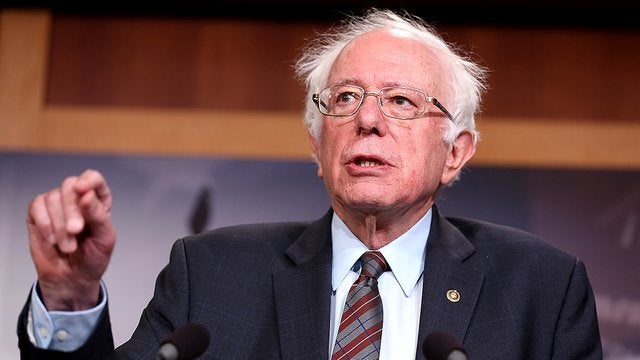
“I do not believe that we should give the right-wing extremist Netanyahu government an additional $10.1 billion with no strings attached.”
By Jake Johnson / Common Dreams, more https://scheerpost.com/2023/12/13/bernie-sanders-votes-no-on-giving-israel-aid-to-continue-inhumane-war-on-gaza/
Sen. Bernie Sanders was the lone member of the Senate Democratic caucus to oppose advancing a $110.5 billion supplemental foreign aid measure on Wednesday, expressing opposition to the bill’s unconditional military assistance for the Israeli government.
“I voted NO on the foreign aid supplemental bill today for one reason,” Sanders (I-Vt.) said in a statement. “I do not believe that we should give the right-wing extremist Netanyahu government an additional $10.1 billion with no strings attached to continue their inhumane war against the Palestinian people.”
“Israel has the absolute right to defend itself against the Hamas terrorists who attacked them on October 7,” Sanders added. “They do not have the legal or moral right to kill thousands of innocent Palestinian men, women, and children.”
The aid package, which also includes billions in military assistance for Ukraine, failed to clear a procedural hurdle Wednesday, with every Republican voting no over the absence of immigration policy changes that progressives have condemned as draconian. Senate Majority Leader Chuck Schumer (D-N.Y.) flipped his initial yes vote to no in a maneuver that will allow him to bring the bill forward again at a later date.
According to a summary released by the Senate Appropriations Committee, the supplemental package contains over $10 billion in military aid for Israel, which already receives roughly $4 billion in assistance from the U.S. per year and has gotten tens of thousands of bombs, artillery shells, and other weaponry since the Hamas-led October 7 attack.
The measure is largely in line with a request issued in October by the Biden White House, which has sought to expedite U.S. arms shipments to Israel even as the nation’s military is using American-made weaponry to commit heinous war crimes in the Gaza Strip.
One human rights monitor estimated earlier this week that at least 90% of the people killed by Israeli forces in Gaza since October 7 have been civilians.
Sanders, who has faced progressive criticism and outrage for rejecting calls for a permanent cease-fire in Gaza, said in a Senate floor speech on Monday that Israel “must dramatically change its approach to minimize civilian harm and lay out a wider political process that can secure lasting peace.”
The senator conceded during his remarks that there is no evidence Israel has altered its approach in response to light pressure from top U.S. officials, pointing to recent bombings of United Nations schools and other civilian infrastructure.
“Israel’s indiscriminate approach is, in my view, offensive to most Americans, it is in violation of U.S. and international law, and it undermines the prospects for lasting peace and security,” said Sanders.
Gaza Is Deliberately Being Made Uninhabitable

CAITLIN JOHNSTONE, DEC 13, 2023 https://www.caitlinjohnst.one/p/gaza-is-deliberately-being-made-uninhabitable?utm_source=post-email-title&publication_id=82124&post_id=139740561&utm_campaign=email-post-title&isFreemail=true&r=1ise1&utm_medium=email
Infectious diseases are tearing through Gaza, whose healthcare system has been rendered almost nonexistent, and people are beginning to starve in massive numbers. All of this is due to concrete policy decisions made by Israel in its horrific assault on the Gaza Strip.
In an article titled “Gaza’s health system is ‘on its knees’ as Israel pushes into Khan Younis,” The Washington Post reports that the mass displacement of nearly two million Palestinians in Gaza has led to overcrowding and unsanitary living conditions that are rapidly giving rise to disease.
“Meanwhile, the Gaza Health Ministry and other medical workers said they were recording new cases of acute hepatitis, scabies, measles and upper respiratory infections, mostly among children,” the Post reports. “Infectious diseases are spreading fast, said Imad al-Hams, a physician at the Kuwaiti Hospital in Rafah, as people crowd into tiny slivers of land to escape advancing Israeli forces.”
In a recent interview with CNN, Doctors Without Borders emergency coordinator Marie-Aure Perreaut described conditions in Gaza as “apocalyptic”, saying living conditions at the Al-Aqsa Hospital she’s working from “can barely be described as living conditions anymore.”
“The healthcare system is completely collapsed at the moment,” Perreaut told Al Jazeera.
The UN World Food Programme reports that half of Gaza’s population is now starving due to Israeli siege warfare and the collapse of civilian infrastructure. In northern Gaza that figure goes up to nine in ten.
All of this aligns perfectly with Israeli policies of massive forced evacuations, attacking healthcare facilities, and laying complete siege to the Gaza Strip.
A doctor named Hafez Abukhoussa writes the following in a new article for Time titled “What I’ve Seen Treating Patients in Gaza’s Remaining Hospitals”:
Gaza’s health care system has almost completely collapsed as a result of Israel’s ongoing bombardment. Hospitals and ambulances have been repeatedly attacked. According to Gaza’s Ministry of Health, more than 250 medical workers have been killed so far, including two of my colleagues from Doctors Without Borders, who died while performing their duties in Al-Awda hospital in northern Gaza. Of Gaza’s 36 hospitals, only 11 are still functioning in any capacity, according to the World Health Organization. Hospitals in the north like Al-Shifa are barely functioning at all, as basic medicines and fuel have run out. My colleagues have been performing amputations by flashlight and without anesthesia. When Israeli soldiers raided Al-Shifa a few weeks ago — a move the head of the WHO called ‘totally unacceptable’ — doctors and staff were forced to abandon patients too sick or injured to evacuate. Some of those who refused to leave, including the hospital’s director, were arrested, alongside dozens of others. At Al-Nasr Children’s hospital, soldiers ordered staff to leave the patients, including four premature babies who required oxygen, who were later found dead.”
This all also aligns perfectly with the Netanyahu government’s reported agenda to “thin” the Palestinian population in the Gaza Strip “to a minimum,” and with all the other calls for ethnic cleansing we keep seeing pushed by Israeli officials and thought leaders over and over again.
It also aligns perfectly with the suggestions made last month by an influential Israeli national security leader named Giora Eiland, a retired major general for the IDF.
“The international community warns us of a humanitarian disaster in Gaza and of severe epidemics,” Eiland wrote. “We must not shy away from this, as difficult as that may be. After all, severe epidemics in the south of the Gaza Strip will bring victory closer and reduce casualties among IDF soldiers.”
Eiland was completely dismissive of the idea that there are innocent people in Gaza, a sentiment we’re seeing pushed harder and harder as Israel draws nearer and nearer to a very, very dark chapter in the history of human civilization.
“They are not only Hamas fighters with weapons, but also all the ‘civilian’ officials, including hospital administrators and school administrators, and also the entire Gaza population that enthusiastically supported Hamas and cheered on its atrocities on October 7th,” Eiland wrote, adding, “Who are the ‘poor’ women of Gaza? They are all the mothers, sisters or wives of Hamas murderers.”
“Behind every terrorist stand dozens of men and women, without whom he could not engage in terrorism,” Eiland adds. “Now this also includes the mothers of the martyrs, who send them to hell with flowers and kisses. They should follow their sons, nothing would be more just. They should go, as should the physical homes in which they raised the snakes. Otherwise, more little snakes will be raised there.”
When people talk about genocide in Gaza, they’re not just talking about the thousands of civilians who’ve been killed in Israeli airstrikes. The policies Israel has been deliberately putting in place have the potential to kill many, many more people than that in the coming months, and if Netanyahu and his goons get their way, that’s exactly what will happen.
Wins, losses and participation trophies for US nuclear power in 2023
From the long-awaited commissioning of Vogtle 3 to the NuScale pilot’s collapse, here are the biggest wins and losses for nuclear from this year.
By Eric Wesoff, 12 December 2023, https://www.canarymedia.com/articles/nuclear/wins-losses-and-participation-trophies-for-us-nuclear-power-in-2023
With this bumpy year for nuclear coming to a close and the world’s energy stakeholders having just gathered for the most nuclear-focused COP meeting ever, it’s a good time to assess the state of atomic power in the U.S.
Government pledges and consumer support for nuclear power in the U.S. have surged in recent years. Armed with this newfound policy support and financing, the relatively stagnant U.S. nuclear industry now has to start executing on its ambitious plans if the fuel is to play a meaningful role in decarbonizing the energy system.
So how did the U.S. nuclear sector fare in 2023? Here’s a list of its major wins and its losses.
A win on the world stage: Dubai hosts the first “nuclear COP”

More than 20 countries including the U.S., France, Japan and the U.K. pledged to triple global generation from nuclear energy by 2050 during this year’s COP28 global climate meeting in Dubai. Hitting that goal would require the world to install an average of 40 gigawatts of nuclear every year through 2050; presently, that annual installation figure is closer to 4 gigawatts.
Nuclear has received scant attention at previous COP meetings due to its financial challenges and the thorny issue of managing spent fuel, so the pledge is a marked departure from the policy status quo. All of this was enough to make this the year of the “nuclear COP.”
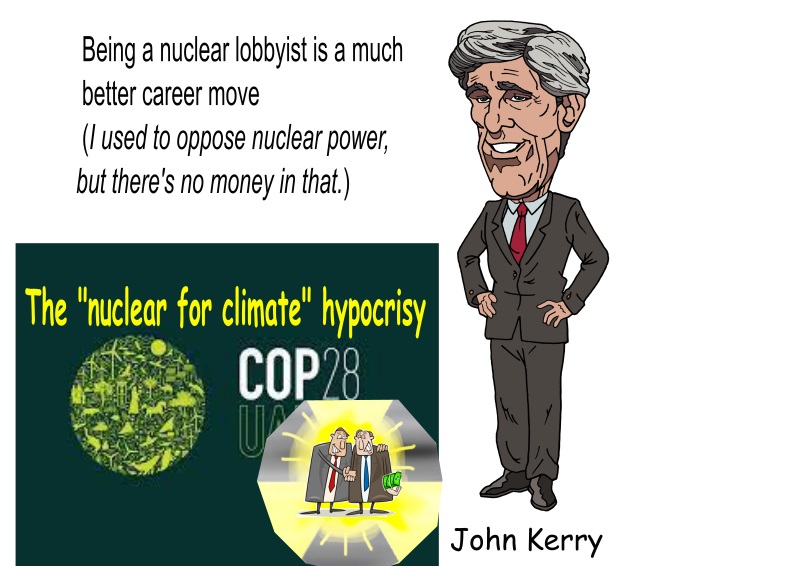
And although it’s a global pledge, President Biden’s climate envoy John Kerry helped spearhead the declaration, indicating the increasing embrace of nuclear power at the highest echelons of U.S. climate policy. Kerry said that the science has proven “you can’t get to net-zero 2050 without some nuclear.”
Participation trophy for Georgia Power: Vogtle 3 connects to the grid
It’s a bit of a stretch calling Vogtle 3’s long-awaited connection to the grid a “win” after a $16 billion cost overrun and a six-year overshoot of the target launch date, but the Department of Energy was looking forward to a new commercial reactor coming online this year, and the department ultimately did get its wish.
As of July 31, Georgia Power’s 1,100-megawatt Plant Vogtle Unit 3 nuclear reactor is supplying power to the grid — making it the first reactor to enter service since Tennessee’s Watts Bar Unit 2 began operating in 2016. Vogtle 4, a second 1,100-megawatt reactor, is nearing the finish line as well, with operations expected to start in early 2024, according to Georgia Power.
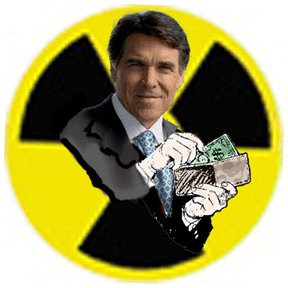
Thanks to then-Secretary Rick Perry, in 2019 the Department of Energy’s Loan Programs Office provided up to $12 billion in loan guarantees to help complete the Vogtle expansion amid a spate of spending freezes and lawsuits. The project generated more than 9,000 jobs during peak construction and will provide an additional 800 permanent jobs at the facility once fully operational.
Dan Yurman, publisher of Neutron Bytes, a blog on nuclear power, offered Canary Media this explanation for Vogtle’s major cost and schedule overruns: “The utility and the vendor kicked off a massive infrastructure project with major unaddressed risks in terms of supply chain, labor force skills, regulatory compliance and a 30-year gap in know-how to build large nuclear power plants. It is no surprise that the first-of-a-kind AP1000s came in at twice the cost and double the estimated time to complete them.”

The nuclear industry can call this a win — if it can learn from Vogtle and begin to remedy the missteps called out by Yurman.
A financial win: Nuclear funding and government support

The U.S. government is putting its money where its mouth is when it comes to supporting nuclear power: The (barely) Bipartisan Infrastructure Law added $3.2 billion for development of modular and advanced nuclear reactors, and the U.S. Department of Energy’s Loan Programs Office has devoted $11 billion in loan-making authority for advanced reactors and supply chains. What’s more, the epochal Inflation Reduction Act devotes $700 million to the HALEU Availability Program to support the development of a non-Russian supply of high-assay low-enriched uranium.
Additionally, the IRA offers a preposterously generous $15 per megawatt-hour production tax credit meant to keep today’s existing nuclear fleet competitive with gas and renewables, as well as a similarly generous investment tax credit to incentivize new plant construction.
Losing the global nuclear crown: China is sprinting ahead of the U.S. on nuclear
America has the world’s biggest nuclear power fleet at 93 reactors, but it’s on its way to losing that distinction.
China has built 37 new reactors over the last decade for a total of 55, according to the International Atomic Energy Agency. America has added a grand total of two reactors during that same period. China also aims to double its nuclear energy capacity by 2035, and it is well on its way; it has 22 nuclear plants currently under construction with more than 70 in the planning stages.
Outside of Vogtle 4, it’s unclear when — or if — another nuclear reactor will be connected to the U.S. grid.
And despite small modular reactors being held up as a cure-all to the U.S. nuclear industry’s significant challenges, the only country in the world that has actually built an SMR is China. It demonstrated a pair of smallish high-temperature, gas-cooled reactor units using a “pebble-bed” design and a more concentrated fuel format last year.
Notably, China is not a participant in the COP28 nuclear pledge — an ironic development as it’s the only country with any real chance of meeting the goal of tripling its capacity by 2050.
Huge win, disappointing loss for SMRs: NuScale’s ups and downs

The nuclear gods are fickle creatures. Small modular reactor pioneer NuScale Power made history in January 2023 when it scaled the highest regulatory peak in the U.S.: The Nuclear Regulatory Commission certified the design of its 50-megawatt module, the first small modular reactor and only the seventh reactor design ever approved for use in the U.S.
This was a long-fought victory for NuScale and advocates of SMRs: Utilities and developers can now reference NuScale’s SMR design when applying for a license to construct and operate a reactor. NuScale and the DOE spent more than 10 years and hundreds of millions of dollars to reach this regulatory milestone.
Armed with this historic design certification, NuScale landed a promising inaugural customer in the Utah Associated Municipal Power Systems and began working on a deployment near the Department of Energy’s national laboratory in Idaho. Project plans had called for one 77-megawatt unit to begin operation in 2029.
The Idaho project was once widely predicted to be not only the first small module reactor completed in the U.S., but the next nuclear reactor to be built in the country, period. However, it was not to be so.
The project was ultimately scrapped in November because it couldn’t secure enough subscriptions from utilities in the Western U.S. to make the project work financially.
The innovative SMR aspirant still has a pipeline of tentative agreements to deploy reactors across North America, Europe and the Middle East.
Win for domestic HALEU fuel: Bringing uranium enrichment capabilities back to the U.S.

Call this one a win because, for the first time in 70 years, America is home to a U.S.-owned enrichment facility producing the concentrated fuel needed by the many advanced reactors now in development.
Centrus, a company with roots in the Manhattan Project, began demonstration-scale enrichment operations at its facility in Piketon, Ohio in October. It marks the potential rebirth of a once-strong American enrichment industry. America was once the only source of uranium enrichment outside of the Soviet bloc, but over the last 30 years, it has surrendered that role to Russia and other countries.
The HALEU produced in Centrus’ centrifuges will be used to test new fuels and reactor designs, as well as to fuel the cores of the two demonstration reactors funded through the Bipartisan Infrastructure Law and supported by DOE’s Advanced Reactor Demonstration Program.
The U.S. currently depends on Tenex, part of Russian state-owned nuclear supplier Rosatom, to supply the low-enriched uranium fuel that’s used in our civilian fleet. And Russia (which is not blockaded on nuclear fuel exports) supplies all of America’s high-assay low-enriched uranium, the more concentrated material required by the new generation of advanced reactors.
It is a precarious situation for U.S. national and energy security.
The DOE is looking to jump-start the domestic market by directing IRA funding toward enrichment and fuel-processing facilities like Centrus’ plant in Ohio, as well as by acting as the initial customer, creating an inventory and providing a reliable customer and price.
It’s a win for the U.S., but it comes after years of stepping on rakes.
A win for preserving the existing nuclear fleet: Diablo Canyon lives on

Pacific Gas & Electric, one of the three large investor-owned utilities in California, decided to decommission both of the reactors at California’s Diablo Canyon Nuclear Power Plant in 2017.
But public outcry, political pressure and worries about grid failures seem to have helped get the plant’s operations extended an additional five years with the help of a state loan and up to $1.1 billion through the federal Civil Nuclear Credit Program designed to support economically ailing plants. It’s a win for California nuclear advocates and the emissions of the state’s grid.
PG&E has now filed an application with the Nuclear Regulatory Commission for a 20-year operating extension for the two 1,150-megawatt reactors at Diablo Canyon, which will trigger a review process expected to take a minimum of two years.
The U.S. nuclear fleet is the largest in the world, but it’s also one of the oldest: The average age of an American nuclear reactor is 42 years, compared to a world average of 31 years.
The majority of nuclear plant operators in the country have expressed interest in extending their operating licenses to allow operation up to 80 years, according to a poll of member utilities of Nuclear Energy Institute, a trade organization.
But even with such extensions, these older plants would all need to be replaced by around 2060, and nuclear power’s long lead times mean that decisions will have to be made about replacing their generation capacity in the late 2030s.
Neither a win nor a loss: Action in advanced reactors and microreactors
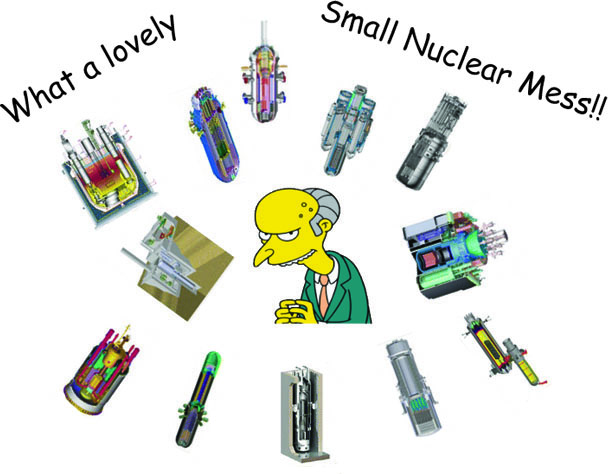
Encouraged by government funding, shifting societal sentiment and a cornucopia of new reactor designs, 2023 witnessed a raft of startups and established vendors making deals in the U.S. and abroad to build next-generation nuclear reactors.
Microreactors like Oklo’s 15-megawatt fast breeder reactor, Aalo Atomics’ 20-megawatt thermal design based on the Marvel reactor at Idaho National Labs, and Westinghouse’s 5MWe eVinci design are intended to provide electrical power and heat in remote or behind-the-meter industrial applications. Ultra Safe Nuclear has plans to construct a microreactor facility in Gadsden, Alabama. The Department of Defense’s Strategic Capabilities Office’s Project Pele program is looking to build and demonstrate a 1–5 MWe mobile, high-temperature, gas-cooled microreactor capable of powering U.S. military bases.
But none of these designs are approved by the Nuclear Regulatory Commission.
For its part, the DOE is betting big on TerraPower and X-energy, with the agency’s Advanced Reactor Demonstration Program providing initial funding of $80 million to each, along with future cost-sharing funds. These two demonstration projects are poised to use HALEU from Centrus’ newly commissioned 16-centrifuge cascade.
TerraPower, founded by Microsoft co-founder Bill Gates, is developing a 345-megawatt sodium-cooled fast reactor coupled with a molten salt energy storage system. The company has raised $750 million to build its operating demonstration reactor in Wyoming.
X-energy is developing its high-temperature gas-cooled advanced small modular reactor and plans the initial deployment at a Dow Chemical facility in Texas.
These reactor designs also are not approved by the NRC.
Despite the proliferation of tentative agreements, memorandums of understanding and handshake deals, all of these planned reactors — with the possible exception of NuScale’s — fall into the famous “paper reactor” category — meaning they are simple, light, small, cheap and quick to build. Importantly, they are also never actually going to be built.
Cumbrian councils urged to poll public over controversial nuclear dump plan

The Nuclear Free Local Authorities have sent a joint letter to the parish and town councils located in the West Cumbria search areas under consideration for a Geological Disposal Facility urging them to consider polling their parishioners over the controversial plan.
The co-signatories are the NFLAs English Forum Chair, Councillor David Blackburn, Councillor Jill Perry, Green Party Group Leader on Cumberland Council and Jan Bridget, co-founder of Millom against the Nuclear Waste Dump.
Nuclear Waste Services, a division of the taxpayer-funded Nuclear Decommissioning Authority, is engaged in long-term investigations to determine the suitability of locating the GDF on the West Cumbrian coast. The facility would have a surface site to receive regular shipments of high-level radioactive waste from Sellafield and this waste would then be transported along tunnels out under the Irish Sea, before the GDF once filled is sealed.
Two search areas have been designated Mid-Copeland and South Copeland, with their boundaries drawn in conformity with Cumberland Council electoral wards, and NWS has established a Community Partnership in each, which provide some limited oversight to the process. Members of the Community Partnerships include elected members from Cumberland Council, deemed the Relevant Principal Local Authority under the guidance established for the plan, and representatives from each of the parish and town councils encapsulated in the search areas.
The UK Government and NWS are adamant that the final selection of the site will be determined by two factors – the suitability of the geology and the acceptance of the plan by the local host community.
Geological investigations may take up to 15 years to complete, with desktop, aerial and seismic surveys being augmented in the second stage by deep exploratory boreholes for rock sampling. NWS are expected to periodically sense check public perceptions of the plan until in the final stages a Test of Public Support is conducted to determine if local people are willing to see their area taken forward.
The so-signatories are unhappy that there is no mechanism built into the plan to conduct interim opinion polls to identify public feeling over time, and they are disappointed that most local councils have yet to conduct their own polls to determine if their appointed representatives to the Community Partnership are reflecting the opinions of their parishioners. They would like parish and town councils to follow the lead shown by Whicham which took the initiative, independently of NWS, and did so./………………………………………………….
more https://www.nuclearpolicy.info/news/cumbrian-councils-urged-to-poll-public-over-controversial-nuclear-dump-plan/
Grand plan to triple nuclear energy with small nuclear reactors, but where’s the funding?

1 US nuclear start-ups battle funding challenge in race to curb emissions.
Reactors pioneered by Oklo, X-energy and NuScale suffer financing setbacks
as well as regulatory headwinds.
US plans to build up its nuclear industry
face big funding and regulatory challenges which could delay a new
generation of smaller, more efficient reactors touted by advocates as
critical to fighting climate change.
Industry experts told the Financial
Times a declaration signed last week by Washington and 21 other nations at
the COP 28 climate summit to triple the amount of installed nuclear energy
by 2050 was a step forward, given the sector’s ability to provide
(?)emissions-free power.
But a sharp fall in market support for start-ups
developing so-called small modular reactors and other advanced nuclear
facilities threaten US ambitions, they said. Last month NuScale Power Corp
cancelled plans to build the first SMR in the US, despite receiving $1.4bn in government cost-sharing pledges.
Not enough power utilities expressed an
interest in purchasing electricity from the facility in Idaho when NuScale
increased power prices by more than 50 per cent over two years to $89 per
megawatt hour. The setback followed the collapse of a $1.8bn deal agreed
between X-energy and special purpose acquisition company Ares Acquisition,
which was intended to enable the developer of nuclear technologies to go
public.
Now the industry is focused on whether Oklo, a start-up chaired by
OpenAI chief executive Sam Altman, can successfully go public via a
blank-cheque company announced in July with AltC Acquisition Corp. The
merger was proposed at a valuation of $850mn and would provide Oklo with
$500mn to develop and commercialise its reactor design.
FT 12th Dec 2023
https://www.ft.com/content/c0700a01-c1e8-4e5e-8300-ac264bd25293
America’s War for the Greater Middle East (Continued)
Here We Go Again
SCHEERPOST, By Andrew Bacevich / TomDispatch, December 13, 2023
One way of understanding the ongoing bloodbath pitting Israel against Hamas is to see it as just the latest chapter in an existential struggle dating back to the founding of the Jewish state in 1948. While the appalling scope, destructiveness, and duration of the fighting in Gaza may outstrip previous episodes, this latest go-around serves chiefly to reaffirm the remarkable intractability of the underlying Arab-Israeli conflict.
Although the shape of that war has changed over time, certain constants remain. Neither side, for instance, seems capable of achieving its ultimate political goals through violence. And each side adamantly refuses to concede to the core demands of its adversary. In truth, while the actual fighting may ebb and flow, pause and resume, the Holy Land has become the site of what is effectively permanent conflict.
For several decades, the United States sought to keep its distance from that war by casting itself in the role of regional arbiter. While providing Israel with arms and diplomatic cover, successive administrations have simultaneously sought to position the U.S. as an “honest broker,” committed to advancing the larger cause of Middle Eastern peace and stability. Of course, a generous dose of cynicism has always informed this “peace process.”
On that score, however, the present moment has let the cat fully out of the bag. The Biden administration responded to the gruesome terrorist attack on October 7th by unequivocally endorsing and underwriting Israeli efforts to annihilate Hamas, with Gazans thereby subjected to a World War II-style obliteration bombing campaign. Meanwhile, ignoring tepid Biden administration protests, Israeli settlers continue to expel Palestinians from parts of the West Bank where they have lived for generations. If Hamas’s October assault was a tragedy, proponents of a Greater Israel also saw it as a unique opportunity that they’ve seized with alacrity. As for the peace process, already on life support, it now seems altogether defunct. Prospects of reviving it anytime soon appear remote.

More or less offstage, the fighting is having this ancillary effect: as Israeli Defense Forces (IDF) employ U.S.-provided weapons and munitions to turn Gaza into rubble, the “rules-based international order” touted by the Biden administration as the latest organizing principle of American statecraft has forfeited whatever slight credibility it might have possessed. Russia’s assault on Ukraine appears almost measured and humane by comparison.
As if to emphasize Washington’s own limited fealty to that rules-based order, President Biden’s immediate response to the events of October 7th focused on unilateral military action, bolstering U.S. naval and air forces in the Middle East while shoveling even more weapons to Israel. Ostensibly tasked with checking any further spread of violence, American forces in the region have instead been steadily edging toward becoming full-fledged combatants.
In recent weeks, U.S. forces have sustained dozens of casualty-producing attacks, primarily from rockets and armed drones. Attributing those attacks to “Iran-affiliated groups,” the U.S. has responded with air strikes targeting warehouses, training facilities, and command posts in Syria and Iraq.
According to a Pentagon spokesman, the overall purpose of American military action in the region is “to message very strongly to Iran and their affiliated groups to stop.” Thus far, the impact of such messaging has been ambiguous at best. Certainly, U.S. retaliatory efforts haven’t dissuaded Iran from pursuing its proxy war against American military outposts in the region. On the other hand, the scale of those Iran-supported attacks remains modest. Notably, no U.S. troops have been killed — yet.
For the moment at least, that fact may well be the administration’s operative definition of success. As long as no flag-draped coffins show up at Dover Air Force Base in Delaware, Joe Biden may find it perfectly tolerable for the U.S.-Iran subset of the Israel-Hamas war to simmer indefinitely on the back burner.
This pattern of tit-for-tat violence has received, at best, sporadic public attention. Where (if anywhere) it will lead remains uncertain. Even so, the U.S. is at risk of effectively opening up a new front in what used to be called the Global War on Terror. That war is now nearly dormant, or at least hidden from public view. The very real possibility of either side misinterpreting or willfully ignoring the other’s “messaging” could reignite it, with an expanded war that directly pits the U.S. against Iran making the Israel-Gaza war look like a petty squabble………………………………………………………………………………………………………………….
Alarm Bells, American-Style
Now, however, in the wake of the atrocities committed on October 7th and Washington’s tacit acquiescence in Israel’s maximalist war aims, the dubious notion that vital American interests are still at stake in the Greater Middle East has taken on new life. Dating from the 1980s, Washington had cycled through a variety of arguments for why that part of the world was worthy of spending American blood and treasure: the threat of Soviet aggression, U.S. reliance on foreign oil, radical Arab dictators, Islamic jihadism, weapons of mass destruction falling into hostile hands, potential ethnic cleansing and genocide. All of those were pressed into service at one time or another to justify continuing to treat the Middle East as a strategic U.S. priority.
………………………………………… allowing Israel’s conflict with Hamas to draw the United States into a new Middle Eastern crusade would be the height of folly. In fact, however, with little public attention and even less congressional oversight, that is precisely what may be happening. The Global War on Terror seems on the verge of absorbing the Gaza War into its current configuration.
………………………………….. In 1796, George Washington warned his countrymen of the dangers of allowing a “passionate attachment” to another nation to affect policy. That warning remains relevant today. The Gaza War is not and should not become America’s war. https://scheerpost.com/2023/12/13/americas-war-for-the-greater-middle-east-continued/
Graphic Videos and Incitement: How the IDF Is Misleading Israelis on Telegram
The IDF unit responsible for psychological warfare operations operates a Telegram channel called ’72 Virgins – Uncensored,’ which targets local audiences with ‘exclusive content from the Gaza Strip’
The IDF Operations Directorate’s Influencing Department, which is responsible for psychological warfare operations against the enemy and foreign audiences, operates a Telegram channel called 72 Virgins – Uncensored, which targets Israeli audiences and shows the bodies of Hamas terrorists with the promise of “shattering the terrorists’ fantasy.”…………………………………………… (subscribers only) more https://www.haaretz.com/israel-news/security-aviation/2023-12-12/ty-article/.premium/graphic-videos-and-incitement-how-the-idf-is-misleading-israelis-on-telegram/0000018c-5ab5-df2f-adac-febd01c30000
Ukraine asking US for military aid that doesn’t exist – New York Times
https://www.rt.com/russia/588944-ukraine-us-military-aide/ 13 Dec 23
Kiev has “unrealistic expectations” about what Washington can provide, American officials told the outlet
Ukrainian commanders and civilian officials overestimate the ability of the US to supply the country with weapons and ammo amid the conflict with Russia and are asking for things that simply don’t exist, American officials have told the New York Times.
The administration of US President Joe Biden has provided Kiev with $111 billion in military and economic assistance since Moscow launched its military operation in Ukraine in February 2022. However, the White House recently warned that funds for the government of Vladimir Zelensky had almost run out, with hardline Republican lawmakers blocking the approval of another $106 billion ‘national security package’ for Ukraine and Israel.
Many in Kiev still “do not realize how precarious continued US funding for the war is,” the NYT said in an article on Monday. The unnamed US officials, who talked to the paper, insisted that “Ukraine will have to fight on a tighter budget.”
Some Ukrainian decision-makers have “unrealistic expectations about what the US will supply,” the sources said. “They are asking for millions of rounds of artillery, for example, from Western stockpiles that do not exist.”
After the failure of Kiev’s counteroffensive, the US and Ukraine are currently trying to work out “a new strategy,” the implementation of which is expected to begin in early 2024 in order to “revive Kiev’s fortunes,” the officials said.
According to the report, they are unable to find common ground so far. Washington wants Kiev to just focus on holding onto the territory it still controls, while building up forces and supplies over the course of the next year.
However, the Ukrainian military appears eager to continue to attack the Russian army on the ground or through airstrikes in order to “score symbolic victories” that they believe would attract more attention to the conflict around the globe, the sources explained.
“The stakes are huge” because “without both a new strategy and additional funding … Ukraine could lose the war,” the officials warned.
Amid discussions on the new strategy, the Pentagon has decided that Lieutenant General Antonio A. Aguto Jr, who oversees aid to Ukraine from a base in Germany, is going to spend lengthy periods of time on the ground in Kiev, they added.
Moscow has repeatedly warned that deliveries of weapons to Ukraine by the West will only prolong the fighting and increase the risk of a direct military confrontation between Russia and NATO. Russian officials have also argued that the provision of arms, intelligence-sharing, and training Ukrainian troops means that the US and its allies have already become de facto parties to the conflict.
Speaking about the dependence of Kiev on Western aid, Russian President Vladimir Putin said on Sunday that Ukrainian troops were “running out of [everything]” because “they don’t have their own base.”
“When you don’t have your own base, don’t have your own ideology, don’t have your own industry, don’t have your own money, don’t have anything of your own, then there is no future,” Putin stated.
Third EU state objects to Ukrainian membership talks
https://www.rt.com/news/588948-austria-ukraine-eu-membership/ 13 Dec 23
Austria has joined Hungary and Slovakia in opposing fast track procedures for accepting Ukraine and Moldova into the union
There should be no preferential treatment for Ukraine in regards to its path to becoming a member of the European Union, Austrian Federal Chancellor Karl Nehammer said during a government meeting on Monday.
His statement came in response to proposals from the European Commission to launch accession talks with Ukraine as soon as possible. However, after opposition from Hungary and Slovakia, EC President Ursula von der Leyen said on Sunday that the bloc’s leaders would only discuss “the opening of accession negotiations, not accession itself” at the upcoming European Council summit this week.
Answering questions from members of Austria’s EU Main Committee, Nehammer stated that his country was generally in favor of EU enlargement and agreed to offering Ukraine and the Republic of Moldova accession prospects.
However, he insisted that there should be no “fast-track procedure” for the two states and that internal EU reforms would also be needed to prepare the bloc for enlargement. He stressed that Austria would not agree to any accession talks with Ukraine under the current conditions.
Nehammer also noted that von der Leyen had not consulted with him or any other EU leaders before issuing a recommendation last month to open formal membership talks with Ukraine, arguing that it had made significant progress in internal reforms to warrant such a step.
This recommendation was also met with opposition by Slovakia and Hungary, whose Prime Minister Viktor Orban called it “unfounded and poorly prepared.” Slovak Foreign Minister Juraj Blanar also stated that he “couldn’t imagine” Kiev joining the union while it was still in a “state of war,” noting that its membership was still “terribly far away.”
Kiev, meanwhile, has insisted that it has already fulfilled all the key requirements in its bid to join the bloc and demanded that EU members “play fairly” and recognize its efforts.
“We can jump, we can dance if that is requested in addition,” said Ukrainian Foreign Minister Dmitry Kuleba, insisting that “If we are told to do something, and we do that, that must be registered as a result.”
For years, the Ukrainian government has cited accession to the bloc as one of its priorities, with little actual progress made. Ukraine officially applied for membership in February 2022, days after Russia launched its military operation.
Ukraine ready to ban country’s largest Christian church – parliament speaker
https://www.rt.com/russia/588975-ukraine-orthodox-church-ban/ 13 Dec 23
Legislation outlawing the Ukrainian Orthodox Church (UOC) over alleged links to Russia should apparently be passed in early 2024
A bill that would ban the Ukrainian Orthodox Church (UOC), the largest Christian church in the country, could be passed in early 2024, the speaker of the parliament in Kiev, Ruslan Stefanchuk, has said.
Ukrainian authorities have long accused the UOC of having ties with the Russian Orthodox Church, despite the religious organization condemning Russia’s military operation in Ukraine and announcing its autonomy from Moscow shortly after the escalation of the conflict in February 2022.
When asked about the legislation during a TV appearance on Rada TV on Tuesday, Stefanchuk said that “the committee must make the necessary decisions, carry out consultations, and accept it as a proposal in the second reading.”
“I hope that this issue might be settled in the beginning of the next year,” the speaker stressed.
The legislation, which had been prepared on the order of Ukrainian President Vladimir Zelensky, passed its first reading in the parliament, the Verkhovna Rada, in October. The bill would allow authorities to ban the UOC if an expert review panel confirms its connections with Russia. It garnered the support of 267 out of 450 MPs.
The Church, which has millions of followers across Ukraine, condemned the legislation, saying that it goes against the Ukrainian Constitution and violates religious freedom.
The head of the Russian Orthodox Church, Patriarch Kirill, has also called upon religious leaders and international organizations to intervene to stop “mass violations of religious rights of the followers of the UOC.” The actions of Ukrainian authorities were “on par with the most sinister God-fighting regimes of the past,” he insisted.
The administration of President Zelensky supports the Orthodox Church of Ukraine (OCU), which had been created by Ukrainian authorities shortly after the western-backed coup in 2014 that installed a pro-Western government. The emergence of the OCU, considered non-canonical by the Russian Orthodox Church, prompted years of religious tensions in the country.
Since the start of the conflict between Moscow and Kiev, Ukrainian authorities and activists have been seizing the UOC’s places of worship and handing them over to the government-backed OCU. For instance, the UOC’s monks were evicted from the country’s holiest Orthodox site, the Kiev Pechersk Lavra.
According to Tass news agency, the Security Service of Ukraine (SBU) has launched 65 criminal cases against UOC priests; 17 clerics have faced sanctions, and 19 of them were stripped of their Ukrainian citizenship.
U.S. Congress passes bill barring imports of Russian uranium for nuclear power, (but this ban can be waived as needed.)

The Hill, BY RACHEL FRAZIN – 12/11/23
The House on Monday passed legislation that would bar imports of Russian uranium for nuclear power plants.
The measure was passed by a voice vote with bipartisan support. Ahead of the voice vote, Republican Rep. Cathy McMorris Rodgers (Wash.) and Democrat Rep. Frank Pallone (N.J.) spoke in favor of the bill.
The legislation would make it illegal to import low-enriched uranium, which is used in nuclear fuel, 90 days after the bill becomes law.
It allows for the prohibition to be waived, however, if there aren’t other viable sources of uranium to sustain nuclear reactors.
According to the Energy Information Administration, the majority of uranium that powers U.S. plants is imported, and about 12 percent of those imports came from Russia in 2022. …………………. https://thehill.com/policy/energy-environment/4354533-house-passes-bill-barring-imports-russian-uranium-nucler-power/
Ukraine’s 200 Fighter Jet Demand Could Lead To Nuclear Catastrophe.

The current state of Ukraine is in total ruins. Beautiful cities have been reduced to rubble. What an exorbitant cost to pay for NATO membership!
Russia Could End The War By Nuking Kyiv
Eurasian Times, OPED By Gp Cpt TP Srivastava 12 Dec 23
The Russia-Ukraine conflict is in its 22nd month. On February 24, 2024, the unwanted and highly undesirable Russia-Ukraine war will be two years old. Putin’s declaration of suspending START signed in 2010 (due to expire in 2026) by Obama and Medvedev heightens the risk of a nuclear war.
The most pertinent question is, ‘Whose war is it anyway’? Few military strategists believe that there is no specific answer. Few believe that it is due to Russia’s hostile attitude towards Ukraine.

That is surprising because the simple answer to this supposedly complex question is the US’s desire to expand NATO eastward. Finally, the USA and its NATO cronies found a puppet in the form of Ukrainian president Vladimir Zelensky, who was/is willing to dance to their tune even though, in the process, he has single-handedly destroyed a beautiful nation.
He has brought the world to the brink of a nuclear war. The President of Belarus has been categorical in his assertion that the USA and other NATO members forced this war on Russia (during an interview with BBC).
The near destruction of a nation’s infrastructure and death of hundreds of thousands of soldiers/civilians (exact figures will/may be known after the war ends, if and when it does) has achieved nothing. What was the crying need for the USA to push for Ukraine to join NATO?
Until this insane desire of the USA altered the Russia-Ukraine relations, things between the two nations were stable. Instead of treading into the past regarding the expansion of NATO eastwards, the most recent event of German reunification merits a mention.
After Russia was convinced of the need for German reunification, the then Secretary of State of the USA, James Baker, stated, “NATO would not expand an inch eastward” or words to that effect.
Non-Expansion Of NATO Eastward
Russia reminded NATO and the USA about the verbal commitment of the USA regarding ‘no eastward expansion of NATO’ on quite a few occasions. The annexation of Crimea by the Russian Federation in 2014 merely caused a minor whimper from G-7 nations when they decided to boycott the summit to be held at Sochi.
On February 14, 2022, the Russian Foreign Minister clearly and unambiguously stated that the continued efforts of the USA to bring in Ukraine as a NATO member will have serious repercussions. Russia demanded a legal ban on Ukraine joining NATO based on a commitment made by the USA as one of the conditions for German reunification. But Russian demand was rejected, both by NATO and Ukraine.
Russia was forced into a corner, which led to Russia openly justifying the breach of the Budapest Memorandum. As if Ukraine’s impending entry into the NATO fold was not enough for Russia to retaliate, Sweden and Finland joined the queue.
It would be pertinent to mention that Finland and Sweden decided to remain neutral during the height of the Cold War. But for the objection raised by Turkey and Hungary, Finland’s and Sweden’s NATO membership was delayed as the 32nd and 33rd members of NATO. Former German Chancellor Angela Merkel had called NATO a ‘BRAIN DEAD’ alliance.
Despite repeated statements by Russia, Ukraine declined to join Russia for talks; the last offer made was on February 19, 2022. Russia attacked (read Special Military Operations Commenced) on February 24, 2022. The USA and NATO countries did not expect Russia to launch the offensive. But Putin is famous for doing the unexpected, which is what he did.
Russia Vs. Ukraine Or Russia Vs. NATO
Except for the first six weeks of the war, when it could be called the Russia-Ukraine war, the nature of the war started altering rapidly to the Russia–NATO war. Military strategists of the world opine that Ukraine has fought Russia on equal terms. Nothing could be further from the truth. Russia has given a befitting reply to NATO and the USA combined.
The current state of Ukraine is in total ruins. Beautiful cities have been reduced to rubble. What an exorbitant cost to pay for NATO membership! Whatever chances there were for Ukraine to join NATO have evaporated in thin air. In the prevailing scenario, Russia will adopt all possible measures, including nuclear options, to ensure that Ukraine is not admitted to NATO.
USA & NATO Want War To End?
Instead of addressing the issue of whether Ukraine and Russia want to end the war, the above question is more pertinent. US hypocrisy is evident. The USA has already given more than US$30 billion in military aid and nearly US$40 billion in humanitarian assistance.
However, the US Secretary of State announced a grant of an ‘astronomical’ sum of US$100 million to help Turkey recover from one of the most disastrous natural calamities the world has witnessed.
POTUS decided to travel to Kyiv on February 19, 2023, albeit by a ten-hour-long train journey. It is only the third time that POTUS has visited a war zone but with a difference. Obama visited Afghanistan, and Bush went to Iraq. But their trips were done secretly. Biden visited Kyiv after giving prior information to Russia lest an errant SSM find its way close to where Biden was in Kyiv.
NATO members faithfully follow their ‘political master,’ the USA. UK, Germany, France, and Poland have offered Ukraine military aid. Are their actions meant to end the unwanted war?
This is even though Germany’s bill for energy for the current fiscal would/might exceed by nearly US$160 billion. Germany thrived and prospered due to Russian gas. The ‘international policeman’ probably sabotaged NORD STREAM 1 and 2, who did not hesitate to carry out the most disastrous ecological catastrophe in recent times.
A mature and responsible head of state should have announced from the war zone that the war must end to avoid further disaster and eliminate any chances of a nuclear war. Instead, Biden said that the USA stands with Ukraine………………………………………………………………………………………………..
Imminent Nuclear War?
The United Nations Secretary-General had this to say in the context of the Russia-Ukraine war: “Geopolitical crises with grave nuclear undertones are spreading fast from the Middle East to the Korean Peninsula to Russia’s invasion of Ukraine.”
He made this statement in Hiroshima. Putin’s doctrine enunciates that Russia reserves the right to exercise nuclear options even against a formidable conventional weapon attack, which might threaten Russia’s territorial integrity.
Failure Of Kyiv Offensive
Pseudo-military strategists will take longer to declare that the Kyiv offensive has failed. Zelensky’s militarily insane option is not only disastrous for Ukraine but also for European nations adjoining Russia. Finland must regret its decision to join NATO and convert an otherwise dormant and safe border with Russia into a highly active one.
In all likelihood, whether Russia is close to victory or Ukraine is deliberating on a ‘smoking’ peace pipe will be known shortly. Ukraine cannot sustain the war effort without active support from USA and EU nations, which appears to be dwindling.
Future
Russia has been able to achieve its military aim of destroying Ukrainian infrastructure, which will take decades to rebuild at a cost of hundreds of billions of dollars. Has Ukraine gained anything except the destruction of its cities and making lakhs homeless? Exact casualty figures may never be known. That NATO is ‘tired’ of this war is evident from recent statements of the German Chancellor and French President.
‘White Man’s War’ will end, if it ends, without any firm conclusion. Impending NATO membership in Ukraine might remain an unfulfilled dream.
With the US presidential elections due in November 2024 and Taiwan in January 2024, the US administration may not have enough time for ‘TV Actor’ Zelensky. The unforeseen war between HAMAS and Israel has resulted in the shift of US focus, and the Russia-Ukraine conflict has become just another skirmish.
Republicans have vehemently opposed Biden’s proposal for aid to Ukraine. If they successfully block further assistance to Ukraine, Zelensky might realize the reality and be ‘forced’ to seek peace with Russia. NATO membership is no guarantee for security. In addition, differences are emerging between Zelensky and his top military advisors.
Therefore, sustaining the war through the winters might be a difficult option. Putin’s recent visits to Saudi Arabia and UAE also sent a strong signal to the West, highlighting that Russia is not as isolated as was predicted by the West.
The announcement of Vladimir Putin seeking yet another tenure as President sends a clear, crisp, and candid message to the West: stop the eastward expansion of NATO, or else — Zelensky’s military hierarchy may not support his continued effort to make Ukraine a NATO member and in the process destroy Ukraine. Conditions are ideal for Zelensky’s removal and possible military takeover in Ukraine.
- Gp Cpt TP Srivastava (Retd) is an ex-NDA who flew MiG-21 and 29. He is a qualified flying instructor. He commanded the MiG-21 squadron. He is a directing staff at DSSC Wellington and chief instructor at the College of Air Warfare. VIEWS PERSONAL OF THE AUTHOR https://www.eurasiantimes.com/ukraines-nato-dream-shattered-if-war-with-russia/
1 This Month
23-25 October – on Zoom – World BEYOND War’s annual global conferenc


Shut down the radiation-damaged Heysham nuclear reactors now
To see nuclear-related stories in greater depth and intensity – go to https://nuclearinformation.wordpress.com

Say No to NASA’s Reckless Nuclear Reactor on the Moon
Say No to NASA’s Reckless Nuclear Reactor on the Moon
-
Archives
- October 2026 (180)
- September 2026 (339)
- August 2026 (330)
- July 2026 (355)
- June 2026 (287)
- May 2026 (306)
- April 2026 (356)
- March 2026 (251)
- February 2026 (267)
- January 2026 (308)
- December 2025 (358)
- November 2025 (359)
-
Categories
- 1
- 1 NUCLEAR ISSUES
- business and costs
- climate change
- culture and arts
- ENERGY
- environment
- health
- history
- indigenous issues
- Legal
- marketing of nuclear
- media
- opposition to nuclear
- PERSONAL STORIES
- politics
- politics international
- Religion and ethics
- safety
- secrets,lies and civil liberties
- spinbuster
- technology
- Uranium
- wastes
- weapons and war
- Women
- 2 WORLD
- ACTION
- AFRICA
- Atrocities
- AUSTRALIA
- Christina's notes
- Christina's themes
- culture and arts
- Events
- Fuk 2022
- Fuk 2023
- Fukushima 2017
- Fukushima 2018
- fukushima 2019
- Fukushima 2020
- Fukushima 2021
- general
- global warming
- Humour (God we need it)
- Nuclear
- RARE EARTHS
- Reference
- resources – print
- Resources -audiovicual
- Weekly Newsletter
- World
- World Nuclear
- YouTube
-
RSS
Entries RSS
Comments RSS

