The EU’s top diplomat casually rewrites WWII history on her way to WWIII
Kaja Kallas’ striking ignorance – or willful revisionism – is precisely why no one is taking the bloc seriously anymore.
By Tarik Cyril Amar, a historian from Germany working at Koç University, Istanbul, on Russia, Ukraine, and Eastern Europe, the history of World War II, the cultural Cold War, and the politics of memory 1 Dec, 2025, https://www.rt.com/news/628731-kaja-kallas-ww2-ww3/
Oops. Kaja Kallas, the de facto EU foreign minister already notorious for her chirpy incompetence, has done it again: displayed such elementary ignorance that you have to rub your eyes and double-check before you believe it’s true. But – as always with her – it is. This time, she has informed the world that Russia has not been attacked by anyone for a hundred years.
Those Nazi generals who planned Operation Barbarossa – the 1941 attack on the Soviet Union (and thus very much Russia) that left 27 million Soviet citizens dead – are probably spinning in their graves. Yes, blinded by prejudice and ideology (“values”) they badly underestimated the Russians (sounds familiar?) and lost (catastrophically). But having your whole 3-million-men-150-division operation wiped out Orwell-style?
And what about the many other Europeans who joined the Nazis, either from the beginning or later, with official contingents or as volunteers? The Romanians, Finns, Italians, Spanish, Croatians, Belgians, French, Norwegians, Slovaks, Bulgarians, Hungarians, and, last but not least, Balts, such as from Kallas’s native Estonia?
And let’s not even start about those prickly Japanese! They, too, got a drubbing at the 1939 Nomonhan/Khalkhin Gol clash (and yes, it took place on the edge of Mongolia, a Soviet client state), but, again, pretending they never even tried?
Being historically illiterate to such an extent seems almost pitiable. Where geometry has made former German Foreign Minister Annalena “360 degrees” Baerbock intellectually immortal, it is history where Kallas reaches peak benightedness.
That is especially disturbing because failing so badly, in particular in the history of last century’s great wars, makes Kallas a very dangerous person. The reason is as simple as 1,2,3: Together, the last two World Wars – both caused by Europeans – cost up to over 81 million lives. We know that a third one would be even worse, whether fought “only” with very advanced and destructive conventional weapons (including AI, of course) or, as is more likely, escalating to the use of weapons of mass destruction (nuclear, chemical, biological, and cyber). A Third World War is likely to literally be our last, either forever or for the exceedingly long time it would take the survivors to make their way back from their caves to civilizations sophisticated enough to blow each other up again.
The Ukraine war – in reality, a Western proxy war against Russia and the emerging multipolar order, executed through misled, betrayed, sold-out, and now almost used-up Ukraine – has had the real potential to turn into World War Three. This risk has diminished with the second Trump administration, but it will only be gone once the war ends.
The NATO-EU Europeans, meanwhile, are doing their best to keep this war, its destruction, and its apocalyptic escalation potential going: they provide ever more weapons, cannot stop looking for sleazy ways to steal frozen Russian assets and fleece their own tax payers, urge for more Ukrainians to be thrown into the futile meatgrinder, and, last but not least, embolden the Zelensky regime to continue, no matter how much of its ubiquitous corruption is exposed.
The Atlanticists, i.e., deranged European “elites” that are staying this insane course, are hard to understand, since they do not follow reason, as their suicidal and yet persistent sanctions policy proves; their ethics are also utterly perverse, as their equally persistent complicity in Israel’s ongoing Gaza genocide illustrates.
Yet we can observe facets of their madness. One is that, clearly, to work so obstinately toward World War Three requires never having understood World War Two. That’s the one that ended with the first and only use in wartime of the kind of weapon that may well play a main role in a world-ending World War Three, too: When the US deliberately and entirely without military necessity massacred the populations of the two large Japanese cities of Hiroshima and Nagasaki, it did not simply end a war by an enormous, shameful, and never acknowledged crime. It also opened the door to a future we all must pray will never arrive.
Regarding World War Two, EU de facto foreign minister Kallas, as so often, embodies NATO-EU European group-non-think as few others, revealing carelessly what slightly less ham-fisted operators still try to conceal.
Currently, she is doing her very worst to prevent peace from breaking out. While many leaders of NATO-EU Europe display what the Germans now call “Friedensangst” (the fear of peace), Kallas is second-to-none in her denial of reality, Russophobia, and, last but not least, bizarre over-estimation of the EU’s and her own personal influence. Demanding a place in negotiations the EU has deliberately stonewalled and calling for “concessions” from Russia as if the West and Ukraine were winning the war, Kallas has been publicly snubbed by the US.
Yet there is a method to her madness. Kallas’s inability to adequately process the present reflects her unusually pronounced inability to learn from the past. Only recently, speaking at a conference on security studies, she shared her dumb surprise at the fact that Russia and China believe they are among the victors of World War Two. Ironically, for Kallas, this is a dangerous “narrative,” clearly factually false in her eyes, and only successful with those who read little and don’t remember history all that well. She has felt “many question marks” in her head, she has informed us. If only she could grasp why.
In reality, both Russia and China played key roles in defeating the global fascist offensive that was at the core of World War Two. This is not the place for details – Kallas should feel strongly invited to finally read up on them (if she can) – but a few key facts will be enough: In Asia, World War Two started even earlier than in Europe, with Japanese aggression against China; the war also lasted longer.
Kallas is displaying a narrow-minded provincialism and a lousy education by reducing the struggle to that, as she put it, against the “Nazis.” That was the main story in Europe, but not in Asia, where the fight against Japanese fascism cost China an estimated 35 million lives. Kallas’s English is infamously rudimentary. She may want to try to improve it by making her way through, at least, historian Rana Mitter’s ‘Forgotten Ally: China’s World War II, 1937-1945’. I am not sure she has ever read a whole book. If not, this would be a good first time. If she has, a second one is clearly required. And, for once, not some neo-Noltean tract by American history mangler and Ukraine War booster Tim Snyder.
The Soviet Union, with Russia at its core, suffered 27 million deaths. And without its staggering sacrifice and equally stunning efforts, Nazi Germany would not have been defeated: the preponderant share of its military forces were destroyed by Soviet soldiers on what the Germans called the Eastern Front. If they had not been ground down there, only two outcomes would have been possible: a Nazi empire would have survived or the US would have dropped atomic bombs on Germany as well.
Germans especially, among whom hating as well as underestimating Russia is all too fashionable again, would do well to remember a simple, little understood fact: it is precisely the Soviet victory over Germany by conventional arms that spared them a continuation of Nazi rule (though many may, of course, have welcomed that) or the fate of Hiroshima and Nagasaki.
Kallas, in any case, is not one for learning. Clearly combining the worst of bigoted eastern European nationalism and Brussels’s simple-minded hubris, she can’t even sense when she has made a fool of herself. How do we know? Because when challenged, she made things worse again.
Kallas produced her display of incompetence and condescension on the occasion of China’s 80th victory celebrations. Unsurprisingly, its representatives have been clear. Beijing Foreign Ministry spokesman Guo Jiakun condemned Kallas’s inanities as “full of ideological bias,” “without historical common sense,” displaying “disrespect,” and, last but not least, “harm[ing] the EU’s own interests.” The latter, of course, has never stopped Estonia’s most embarrassing export.
German EU parliamentarian Fabio de Masi, now co-leader of the New-Left BSW party, requested a clarification. In her response, Kallas managed to dig her hole even deeper: She claimed – untruthfully – that “on the occasion of the 80th anniversary of the end of World War II in Asia, the EU paid tribute also to the courage of the people of China, who endured immense suffering in defending their homeland and contributing to the end of the war.” In reality, she – and therefore the EU – had just done exactly the opposite: insulted China by explicitly denying its contribution. Kallas’s official job title is, in case she cannot remember, “Vice-President of the Commission/High Representative of the Union for Foreign Affairs and Security Policy.” She speaks and mis-speaks for the EU, even if that is a catastrophe that should never have happened.
Regarding Russia, Kallas did not even make the effort to pretend. Instead, she simply continued her silly attempt to deny its key contribution to defeating Nazism. Accusing Russia of “manipulating” history, she felt this was also the right occasion to also once again repeat the absurdity that the West did not provoke the war in Ukraine.
Clearly, Kallas’s latest sally is shocking but not a surprise. It fits perfectly with her personal record of blithely chattering about breaking up Russia. It also fits with a widespread mood among NATO-EU Europe’s “elites,” where disparaging Russia and Russians is as much de rigueur as a stupid romanticization of Ukraine, its far right, and nationalism. Where Kallas can hold high office, normality is anything but.
The real question is when this nightmare of ignorance, war hysteria, and arrogance will finally end in Europe. Because if it does not, Europeans will only have themselves – or, to be precise, their “elites” – to blame when most of the world will write them off not only as the people who helped Israel commit genocide in Gaza but also as simply very unserious: yesterday’s privileged, now economic lightweights led by political lightweights who are too lazy to notice how silly they look.
Iran, UK foreign ministers discuss nuclear issue in phone call
Dec 20, 2025, https://www.iranintl.com/en/202512192167
ranian Foreign Minister Abbas Araghchi spoke by phone with UK Foreign Secretary Yvette Cooper on Friday, saying Tehran is open to diplomacy based on respect.
“Iran has never rejected negotiations and dialogue based on respect for the Iranian nation’s legal rights and legitimate interests, but considers talks based on one-sided imposition unacceptable,” official media cited Araghchi as saying.
Araghchi criticized the “irresponsible” stance of the three European powers on Iran’s nuclear program, saying that Tehran is open to talks respecting its legal rights and legitimate interests but rejects unilateral imposition.
Cooper underlined Britain’s commitment to diplomacy on the nuclear dossier. No UK readout of the call has been issued.
The three European countries—France, Germany, and the United Kingdom—triggered the Iran nuclear deal snapback mechanism in August, leading to the reimposition of UN sanctions in September.
Iran and the International Atomic Energy Agency (IAEA) reached a technical understanding in Cairo in September, mediated by Egypt, aimed at gradually restoring inspectors’ access to nuclear sites.
Following the return of UN sanctions on Iran, Foreign Minister Abbas Araghchi said that the United States and three European powers had “killed” the Cairo nuclear agreement through what he called a sequence of hostile actions.
Araghchi said last month that Washington’s approach amounted to “dictation, not negotiation,” accusing the US of trying to achieve through diplomacy what it failed to gain by force.
“They want us to accept zero enrichment and limits on our defense capabilities,” he said. “This is not negotiation.”
Trump said Iran could avoid past and by reaching a nuclear deal, adding that any attempt to revive its program without an agreement would prompt further US action. He has repeatedly said Iran missed an earlier chance to avert the strikes by accepting a deal.
Trump Announces Nuclear-Armed Battleships for the U.S. Navy.

The ships, named after President Donald Trump as the Trump-class…….
23/12/2025, By Carter Johnston, https://www.navalnews.com/naval-news/2025/12/trump-announces-nuclear-armed-battleships-for-the-u-s-navy/
The U.S. Navy will take delivery of new-build battleships, the largest in modern existence, in an announcement from President Trump in Florida.
U.S. President Donald Trump, Secretary of Defense Pete Hegseth, Secretary of State Marco Rubio, and Secretary of the Navy John Phelan, were all in attendance for the President’s announcement declaring a new class of battleships under the ‘Golden Fleet’ initiative, an effort designed to restore American shipbuilding. All four gave remarks during the announcement emphasizing the need for the new battleship class.
The ships, named after President Donald Trump as the Trump-class, will be 30-40,000 ton warships surpassing the largest surface combatants in service today, including the largest existing Russian Navy Kirov-class nuclear-powered battlecruiser. A rendering of the lead ship, the USS Defiant, features large SPY-6 radar arrays, lasers firing at targets out of view, and at least 100 VLS cells, all equipped on a historically large hull.
“We’re desperately in need of ships, and I have approved a plan for the Navy to begin construction of two large battleships. We used to build the Iowa, the Missouri, the Alabama. These will be 100 times the force and power. Each one of these will be the largest battleships built in the history of our country.” U.S. President Donald Trump during the USS Defiant announcement
Trump-class Battleships / USS Defiant Design
Renderings show USS Defiant built with an integrated superstructure and several remote weapon systems, as well as an unidentified gun system similar in appearance to the Zumwalt-class 155mm Advanced Gun System (AGS). The gun appears to be a railgun, which President Trump confirmed would be equipped on the ships.
At least four Block III SEWIP electronic attack systems, all integrated into the superstructure, are visible, providing electronic attack and deception against incoming missiles. In higher resolution renderings provided to Naval News by the U.S. Navy, two 21-cell Rolling Airframe Missile launchers are visible amidships on the port and starboard side, with a VLS bank in the center barely visible.
The three vertical launch cell banks will be capable of firing a mix of standard Mark 41 VLS missiles, including Tomahawks and Standard Missiles shown in renderings, with a single larger bank farthest towards the bow capable of firing Conventional Prompt Strike (CPS) hypersonic missiles currently being fitted to the Zumwalt-class ships at Huntington Ingalls Industries Pascagoula.
“The [design] started with me in my first term. These will be 100 times more powerful than any battleship ever built before.” U.S. President Donald Trump during the USS Defiant announcement
The renderings show two Mark 45 5-inch cannons towards the bow on the starboard and port side, with a large number of VLS cells behind the guns. Forward are larger VLS cells, similar to what is seen on the Zumwalt-class to fire CPS missiles. The cells could also be similar to Lockheed Martin’s Growth VLS (G-VLS), a larger size VLS cell for future growth and multi-pack potential for existing missiles.
Ahead of the larger diameter hypersonic VLS bank, which is shown launching a hypersonic missile, is an unidentified gun closely resembling a railgun. General Atomics recently pitched railguns for air and missile defense, highlighting design advancements that solve the previous barrel wear concerns. President Trump confirmed the ship will be armed with railguns during his statement.
President Trump also confirmed the ships will be armed with the Sea-Launched Cruise Missile – Nuclear (SLCM-N) nuclear-tipped cruise missile being developed for the fleet, adding a new element of the nuclear triad to the surface force.
President Trump and Secretary of the Navy Phelan declared the class as future flagships of the U.S. Navy serving as fleet command platforms for admirals.
Japan set to restart world’s biggest nuclear power plant.
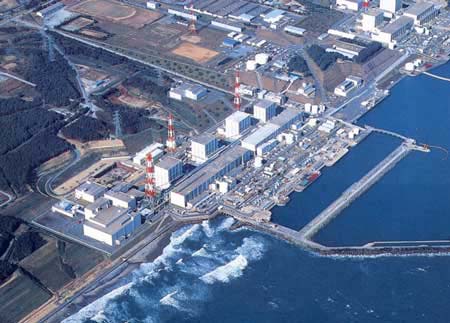
Kashiwazaki-Kariwa will be the latest plant to restart 15 years after the Fukushima disaster shut down the country’s nuclear energy programme.
Aljazeera, By Lyndal Rowlands and News Agencies, 22 Dec 25
Japan is set to resume operations at the world’s largest nuclear power plant: Kashiwazaki-Kariwa.
The partial restart of the plant got the green light in a vote on Monday by the Niigata local government. Japan has reopened several nuclear facilities as it seeks to reduce emissions, reversing policy 15 years after 54 reactors were shut in the wake of the Fukushima disaster despite public opposition.
Niigata prefecture’s assembly passed a vote of confidence on Governor Hideyo Hanazumi, who backed the restart last month, effectively allowing the plant to begin operations again.
The 2011 triple meltdown at Fukushima, following an earthquake and tsunami, destroyed Japan’s trust in its nuclear energy infrastructure…………..
Fourteen of the 33 nuclear plants that remain operable in the country have been resurrected. However, Kashiwazaki-Kariwa is the first to be operated by Tokyo Electric Power Co (TEPCO), which ran the Fukushima plant.
TEPCO is considering reactivating the first of seven reactors at the plant on January 20, Japanese public broadcaster NHK reported……………………
While lawmakers voted in support of Hanazumi, the assembly session showed that the community remains divided over the restart, despite the promise of new jobs and potentially lower electricity bills.
About 300 protesters rallied to oppose the vote, holding banners reading “No Nukes”, “We oppose the restart of Kashiwazaki-Kariwa” and “Support Fukushima”.
Farmer and antinuclear activist Ayako Oga, 52, joined the protests on Monday in her new home of Niigata, where she settled after fleeing the area around the Fukushima plant in 2011 with 160,000 other evacuees. Her old home was within the 20km (12-mile) radius irradiated exclusion zone.
“We know firsthand the risk of a nuclear accident and cannot dismiss it,” said Oga, adding that she still struggles with post-traumatic stress disorder-like symptoms……………………………… https://www.aljazeera.com/news/2025/12/22/japan-set-to-restart-worlds-biggest-nuclear-power-plant
Israeli Cabinet Approves 19 New Apartheid Colonies in Occupied West Bank.
“The ONLY reason Israel gets away with this naked thievery is US military and political support,” said one observer.
Brett Wilkins, Dec 21, 2025, https://www.commondreams.org/news/israel-19-new-settlements
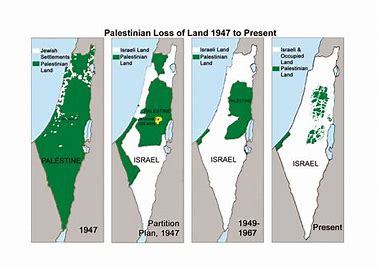
Israel’s Cabinet on Sunday finalized approval of 19 new Jewish-only settler colonies in the illegally occupied West Bank, a move the apartheid state’s far-right finance minister said was aimed at thwarting Palestinian statehood.
Cabinet ministers approved the legalization of the previously unauthorized settler outposts throughout the occupied Palestinian territory, bringing the total number of new settlements in recent years to 69.
The move will bring the overall total number of exclusively or overwhelmingly Jewish settlements—which are illegal under international law—to more than 200, up from around 140 just three years ago.
Included in the new approval are two former settlements—Kadim and Ganim—that were evacuated in compliance with the now effectively repealed 2005 Disengagement Law, under which Israel dismantled all of its colonies in the Gaza Strip and four in the West Bank.
“This is righting a historic injustice of expulsion from 20 years ago,” Israeli Finance Minister Bezalel Smotrich—who is a settler—said on Sunday. “We are putting the brakes on the rise of a Palestinian terror state.”
Israel’s Cabinet on Sunday finalized approval of 19 new Jewish-only settler colonies in the illegally occupied West Bank, a move the apartheid state’s far-right finance minister said was aimed at thwarting Palestinian statehood.
Cabinet ministers approved the legalization of the previously unauthorized settler outposts throughout the occupied Palestinian territory, bringing the total number of new settlements in recent years to 69.
RECOMMENDED…
‘No More Military Aid for Netanyahu,’ Says Sanders as Israel Ramps Up West Bank Takeover
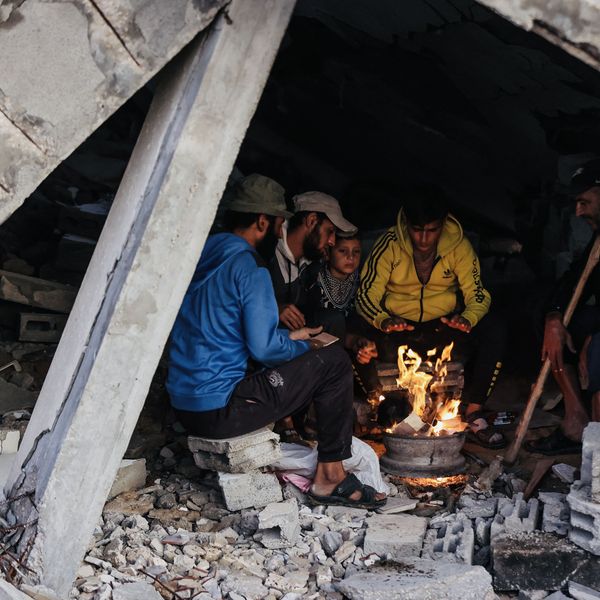
Trump Gaza Plan Condemned as ‘Concentration Camps Within a Mass Concentration Camp’
The move will bring the overall total number of exclusively or overwhelmingly Jewish settlements—which are illegal under international law—to more than 200, up from around 140 just three years ago.
Included in the new approval are two former settlements—Kadim and Ganim—that were evacuated in compliance with the now effectively repealed 2005 Disengagement Law, under which Israel dismantled all of its colonies in the Gaza Strip and four in the West Bank.
“This is righting a historic injustice of expulsion from 20 years ago,” Israeli Finance Minister Bezalel Smotrich—who is a settler—said on Sunday. “We are putting the brakes on the rise of a Palestinian terror state.”
Our people-powered journalism cannot survive without you
Your support allows Common Dreams to continue covering the stories and amplifying the voices that the corporate media never will. Make a tax-deductible year-end gift to ensure we can sustain the reporting needed to meet the challenges of 2026.
“We will continue to develop, build, and settle the inherited land of our ancestors, with faith in the righteousness of our path,” Smotrich added.
Following an earlier round of approval for the new settlements last week, Palestinian presidential spokesperson Nabil Abu Rudeineh said, “All Israeli settlement activity is illegal and constitutes a violation of international law and international legitimacy resolutions.”
United Nations Secretary-General António Guterres earlier this month denounced Israel’s “relentless” settlement expansion.
Such colonization, said Guterres, “continues to fuel tensions, impede access by Palestinians to their land, and threaten the viability of a fully independent, democratic, contiguous, and sovereign Palestinian state.”
Israeli Prime Minister Benjamin Netanyahu and other Israeli officials—some of whom, including Smotrich, deny the very existence of the Palestinian people—have vowed that such a state will not be established.
While Netanyahu—who is wanted by the International Criminal Court for alleged war crimes and crimes against humanity in Gaza—is under pressure from right-wing and far-right government officials, settlers, and others to annex all of the West Bank, US President Donald Trump recently said that “Israel would lose all of its support from the United States if that happened.”
Some doubted Trump’s threat, with Democracy for the Arab World Now (DAWN) executive director Sarah Leah Whitson reacting to the new settlements’ approval by posting on X that “the ONLY reason Israel gets away with this naked thievery is US military and political support.”
Israel seized and occupied the West Bank including East Jerusalem along with Gaza in 1967, ethnically cleansing around 300,000 Palestinians. Many of these forcibly displaced people were survivors of the Nakba, the Jewish terror and ethnic cleansing campaign that saw more than 750,000 Palestinians flee or be forced from Palestine during the foundation of the modern state of Israel.
Since 1967, Israel has steadily seized more and more Palestinian land in the West Bank while building and expanding colonies there. Settlement population has increased exponentially from around 1,500 colonists in 1970 to roughly 140,000 at the time of the Oslo Accords in 1993—under which Israel agreed to halt new settlement activity—to around 770,000 today.
Settlers often attack Palestinians and their property, including in deadly pogroms, in order to terrorize them into leaving so their land can be stolen. Israeli colonists have also attacked Israel Defense Forces soldiers they view as standing in the way of their expansion.
In July 2024, the International Court of Justice—where Israel is currently facing a genocide case related to the Gaza war—found the occupation of Palestine to be an illegal form of apartheid that must be ended as soon as possible. The ICJ also ruled that Israeli settler colonization of the West Bank amounts to annexation, also a crime under international law. Article 49 of the Fourth Geneva Convention states that an “occupying power shall not deport or transfer parts of its own civilian population into the territory it occupies.”
As the world’s attention focused on Gaza during the past two years, Israeli soldiers and settlers have killed at least 1,039 Palestinians—at least 225 of them children—in the West Bank. This year, at least 233 Palestinians, including at least 52 children, have been killed so far, according to the United Nations Relief and Works Agency for Palestinian Refugees in the Near East.
On Saturday, Israeli occupation forces shot and killed two Palestinians in the northern West Bank, including a 16-year-old boy, Rayan Abu Muallah, who the Israel Defense Forces said was shot after he threw an object at its troops.
Report: Netanyahu To Ask Trump To Support Another Attack on Iran

The Israeli PM is expected to make the case during a December 29 meeting at Mar-a-Lago
by Dave DeCamp | December 21, 2025 , https://news.antiwar.com/2025/12/21/report-netanyahu-to-ask-trump-to-support-another-attack-on-iran/
Israeli Prime Minister Benjamin Netanyahu is expected to ask President Trump to support another US-Israeli war on Iran, according to an NBC News report from Saturday.
The report said that Netanyahu will stress Israel’s concern over Iran’s production of ballistic missiles and will present Trump with options for the US to join or assist Israel with an attack on Iran. Israeli officials are also warning that Iran is reconstituting its nuclear sites that were bombed by the US during the war in June, but that was not their immediate concern.
According to a report from Israel Hayom, Israeli officials are preparing an “intelligence dossier” on Iran to present to Trump. Netanyahu’s office has said the meeting will take place at Mar-a-Lago on December 29, though President Trump suggested last week that it wasn’t finalized, saying, “We haven’t set it up formally, but he’d like to see me.”
Trita Parsi, Executive Vice President of the Quincy Institute for Responsible Statecraft, has been warning that another war with Iran was likely since Israel didn’t achieve all of its goals during its previous attack on the country, pointing to the fact that Iran’s missile strikes forced Israel to agree to a ceasefire quickly.
“The June war resulted in mutual deterrence, a situation Iran can accept, but one that is intolerable for Netanyahu and his legacy. Ultimately, the conflict was neither a victory for Israel nor for Iran,” Parsi wrote in Responsible Statecraft on Sunday, responding to the NBC report.
“It is precisely this balance of terror that prompts Israel to seek a new round – Israel’s military doctrine does not allow for any of its regional foes to deter it or challenge its military dominance. Iran’s missile program currently does exactly that,” Parsi added. “And this is precisely why Trump must say no to Netanyahu. Because Israel’s objective is not security in the conventional sense, but rather absolute dominance.”
Earlier this month, Trump suggested the US could destroy Iran’s ballistic missiles when a reporter said Iran was “reconstituting” its missile program. “Well, they can try, but it’s going to take them a long time to come back,” Trump said.
“But if they do want to come back and they want to come back without a deal, then we’re going to obliterate that one too. We can knock out their missiles very quickly. We have great power. And we helped Israel a lot. We were shooting down the drones. We were doing a lot of things for Israel. We did a good job for Israel. But Israel did a good job, they fought, they all fought bravely,” the president added.
Instead of buying Venezuelan heavy crude…Trump just steals it
Walt Zlotow West Suburban Peace Coalition Glen Ellyn IL ,22 Dec 25
The US desperately needs Venezuelan heavy crude oil to run its Gulf Coast refineries. But 20 years of failed US sanctions to overthrow last 2 Venezuelan socialist presidents has caused Venezuela to pivot away from US petro dollars to sell their crude to China and Russia, and pay for it in Yuan and Rubles.
The rest of the world is looking at tiny (GDP, defense, population) Venezuela and realizing its cool to push back against America’s weaponized financial system that’s been holding them hostage to petro dollars for half a century. If Venezuela can do it so can many others, weakening America’s grip on them while undermining the US economy. And they are.
The dollar has fallen from 90% of energy transactions to 60% since 2000 and will likely be under 50% by 2035. As petrodollar usage goes bye bye, US debt will sour, interest rates balloon, presaging tough times ahead for the world’s second largest economy.
Maybe that’s why Trump has pivoted away from just sanctions to mass murder of small unarmed boats off Venezuela, seizing two oil tankers and threatening invasion. But Venezuela’s new economic pals China and Russia are rushing in to prop up Maduro’s regime which has essentially told Trump to pound sand. Maduro has the upper hand against the American colossus which can obliterate Venezuela but not without US cannon fodder arriving back at Arlington. That appears to be a criminal war too far even for mass murderer Trump.
Time for the US to drop all sanctions, withdraw the multibillion-dollar armada threatening Venezuela, and make nice with Maduro. Sure beats the economic suicide Trump and his deranged neoconservative advisors have chosen to foist upon the American people.
The “President of Peace” Prepares for War

After all, this is the same president who has decimated the U.S. diplomatic corps and dismantled Washington’s main economic and humanitarian aid organization, the U.S. Agency for International Development — hardly the actions of a president of global peace.
Republican calls for a full-scale war against that nation [Venezuela] are occurring despite the disastrous results of this country’s regime-change policies in Afghanistan, Iraq, Libya, and beyond in this century.
The Donroe Doctrine Hits Home
By William D. Hartung, Tomgram, December 21, 2025 https://tomdispatch.com/the-president-of-peace-prepares-for-war/
William D. Hartung, Talking Diplomacy, Promoting Conflict
Only recently, the Trump administration released its 2025 National Security Strategy (NSS), its look at global “security” at this very moment. As it happens, that document’s view of our planet right now was missing just a few passing things, globally speaking. Two of them happened to be Russia and China. Russia is only mentioned in a few paragraphs and the significance of China is distinctly downplayed. And of course, potentially the greatest ultimate danger to global security, climate change, is mentioned but once in this single sentence: “We reject the disastrous ‘climate change’ and ‘Net Zero’ ideologies that have so greatly harmed Europe, threaten the United States, and subsidize our adversaries.” Of course, no one should be surprised by that, not during the presidency of the man who has called climate change “the greatest con job ever perpetrated on the world.”
But it does turn out that there are a few things on this planet to fear, as that document makes clear. One of them is “civilizational erasure,” something that, if the far-right parties on the European continent don’t soon win the necessary elections, will surely be the fate of… yes, believe it or not, Europe — and the European Union, in particular. That continent, given immigration and other issues, could become “unrecognizable in 20 years or less,” or so the NSS claims.
And that’s just to begin a journey into the distinctly strange and unnerving national security (or do I mean national insecurity?) world of Donald Trump that TomDispatch regular William Hartung, co-author of The Trillion Dollar War Machine, lays out in vivid detail today. Perhaps, in future National Security Strategy documents, President Donald Trump himself will indeed be found responsible for nothing less than “civilizational erasure.”
Earlier this month, the Trump administration released its new National Security Strategy, or NSS. Normally, such documents are poor predictors of what’s likely to happen in the real world. They are more like branding tools that communicate the attitudes of a given administration while rarely offering a detailed or accurate picture of its likely policies.
The reason documents like the NSS are of limited import is simple enough: foreign and military policies aren’t set by documents but by power and ideology. Typically enough, the current U.S. approach to the world flows from struggles among representatives of contending interest groups, some of which, like the military-industrial complex (MIC), have a significant advantage in the fight. The weapons industry and its allies in the Pentagon and Congress wield a wide array of tools of influence, including tens of millions of dollars in campaign contributions, more than 1,000 lobbyists, and jobs tied to military-related facilities in the states and districts of key members of Congress. The MIC — which my colleague Ben Freeman and I refer to in our new book as the trillion-dollar war machine — also has considerable influence over the institutions that shape our view of the world, from the media to DC think tanks, Hollywood, the gaming industry, and our universities.
But the power and influence of the war machine are not going completely unchallenged. The grip of militarism and the institutions that profit from it are indeed being challenged by organizations like The Poor People’s Campaign: A Call for Moral Revival; Dissenters, a youth antimilitarism group based in Chicago; antiwar veterans organizations like About Face, Common Defense, and Veterans for Peace; longstanding peace groups like the Friends Committee on National Legislation and Peace Action; networks like People Over Pentagon and Dismantle the Military-Industrial Complex; the ceasefire and Palestinian rights movements on U.S. campuses and beyond; and groups working for racial and economic justice, gay and trans rights, immigration reform, the demilitarization of the police, or compensation for environmental damage caused by nuclear weapons testing and other military activities.
As such organizations coalesce, bringing together tens of millions of us whose lives and prospects are impacted by this country’s ever-growing war machine, let’s hope it might be possible to create the power needed to build a better, more tolerant, and more peaceful world, one that meets the needs of the majority of its people, rather than endlessly squandering precious resources on war and preparations for more of it.
So why pay attention to that new strategy document if what really determines our safety and security lies elsewhere? There are several reasons to do so.
First, the NSS has prompted discussion in the mainstream media and elite circles of what U.S. priorities in the world should actually be — and such a discussion needs to be expanded to include the perspectives of people and organizations actually suffering the consequences of our militarized domestic and foreign policies.
Second, that strategy paper reflects the unnerving intentions and worldview of the current administration, which, of course, has the power to determine whether this country is at war or peace.
Finally, it suggests just how the Trump administration would like to be perceived. As such, it should be considered a weapon in the debate over what kind of country the United States should be.
Touting the “President of Peace”
From the start, the submission letter that accompanies the new strategy document is pure Donald Trump. In case you hadn’t noticed, the current occupant of the Oval Office would have us believe that everything — every single thing! — he does is bigger, better, and more beautiful than anything that ever came before it. And that’s definitely the case, in the first year of his second term, when it comes to his view of what this country’s national security policies should actually be. As the letter puts it:
Continue readingFrance is to build a nuclear-powered aircraft carrier that will be the largest warship in Europe.
The carrier will be smaller only than the US
supercarriers and is intended to bolster France’s air power on the
oceans, President Macron has announced. The new ship, which has been under
consideration since Macron backed the project in 2018, is set to replace
the Charles de Gaulle, France’s naval flagship, which has been in service
since 2001. The new ship will be the only nuclear-powered carrier with
catapult launching apart from the ones in the US navy. It will displace up
to 80,000 tonnes, nearly double that of the Charles de Gaulle.
Times 21st Dec 2025, https://www.thetimes.com/world/europe/article/macron-aircraft-carrier-france-8p0qns8bj
It was blindingly obvious that Europe wasn’t going to agree to the reparations loan.
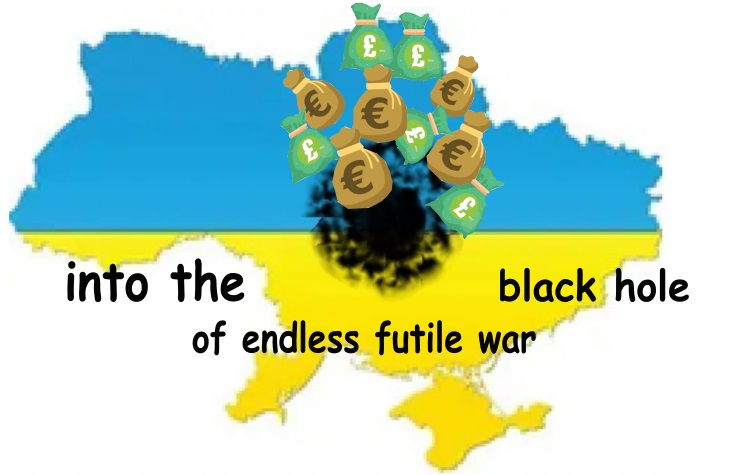
It really is time to ditch the dreamers and get back to diplomacy
Ian Proud, Dec 22, 2025, https://thepeacemonger.substack.com/p/it-was-blindingly-obvious-that-europe?utm_source=post-email-title&publication_id=3221990&post_id=182242521&utm_campaign=email-post-title&isFreemail=true&r=1ise1&triedRedirect=true&utm_medium=email
Brussels was the centre of the pro-war universe on 18 December as the European Commission tried to bludgeon the resistance out of Belgian Prime Minister, Bart de Wever. He had stood firm against the plan to use immobilised Russian assets to underwrite the war in Ukraine and never looked likely to budge. He didn’t budge and the European Commission gamble failed in spectacular fashion. This has left European taxpayers on the hook for a Euro 90 billion loan to Ukraine that, in all likelihood, may never be repaid.
De Wever didn’t dig his sturdy defensive positions out of any particular sympathy with Russia. He did so on the basis of a rational analysis of the significant legal and financial risks his country would face should it agree to an illegal expropriation of assets frozen in Belgium.
Any realist observer of events could see that the EU proposal was illegal, tantamount to theft and would never succeed. It was obvious that De Wever wasn’t going to shift his position, despite the procession of Europe’s finest who beat a path to his door in a bid to convince him to adopt a plan that he had already rejected.
The final denouement had been predictable since the idea of giving Ukraine Russia’s frozen assets with no questions asked was first raised in 2024.
The idea didn’t lose its lustre even after the refusal to ask questions of Ukraine’s leaderships has led to billions in foreign aid being pilfered by those in charge. Right up to the wire, the pro-war lobby was screaming from every vantage point for De Wever to stiffen his sinews and do the right thing.
This idea is really rooted in the need to protect the economic security of the European Union the Commission assured everyone. While at the same time calling it a reparations loan, when it was obvious to impartial observers that the money would simply be tipped into a massive gold rimmed hole of Ukrainian state finances.
That hole, by the way, will remain gaping for as long as the war continues, and for some years after it ends. And the loan the Commission has been forced to take out will only cover two years of budgetary shortfalls in Ukraine, with no one asking who would pay from 2028. Unless the war ends, European taxpayers will have to pay to keep Ukraine on life support.
And they’ll have to pay more than the Commission is letting on as the loan agreed last night will only cover two thirds of Ukraine’s financing needs, and when it runs out the Ukrainians will be back to ask for more.
Continue readingFukushima Now (29) – Part 1: What Constitutes Responsibility?
by Citizens’ Nuclear Information Center · December 21, 2025, By Yamaguchi Yukio, https://cnic.jp/english/?p=8747
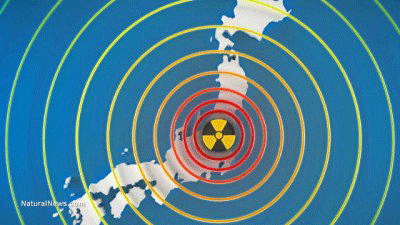
n the 14 and a half years that have passed since March 2011, the cesium-137 that was released has finally made it to the halfway point of its half-life. After 90 years, its radioactive concentration will have diminished to one-eighth its initial level, and after 300 years, one-thousandth. According to the current medium-to-long-term roadmap, decommissioning measures should be completed around 2041 to 2051. Even by then, however, the radioactivity will have decreased only by a little more than half. Not even what these “decommissioning measures” are supposed to include has been decided on yet.
In places with serious radioactive contamination, nobody will be able to live there for another century. The area thus affected is said to exceed 300 square kilometers. The first sample of fuel debris taken from the Unit 2 reactor weighed 0.7 grams, and the second, 0.2 grams. The information gained from their analysis is just as miniscule. Meanwhile, the total amount of fuel debris in the Unit 1-3 reactors is estimated at 880 tons. Whether it will be necessary to retrieve all of it to begin with is a matter of great contention.
Idogawa Katsutaka, who was mayor of Futaba Town at the time of the accident, evacuated the entire town to protect everyone there from radioactive exposure, leading many of them as far as 250 kilometers away to Kazo City, Saitama Prefecture, near Tokyo, where they took refuge in a gymnasium that had belonged to the town’s former Kisai High School. This was just one of the municipalities that evacuated from Fukushima Prefecture to escape radioactivity. The town’s population totaled 6,971 people overall, of whom 187 took refuge at the former Kisai High School (as of September 18, 2012). Details of their evacuation were relayed widely around the world by the 2012 film “Nuclear Nation” (Japanese: “Futaba kara Toku Hanarete,” directed by Funahashi Atsushi, music by Sakamoto Ryuichi).
As of 1 August 2025, the registered population of Futaba Town had dwindled to 5,157 in all, of whom 59 percent were living within Fukushima Prefecture and 41 percent were still evacuees elsewhere among 43 of Japan’s 47 prefectures. Idogawa’s hope is, “We want somehow to go home, all of us, together, to a safe hometown.” The number of returnees so far, however, is a mere 87 people (as of August 2025).
■ Idogawa filed suit in May 2015 against the government of Japan and Tokyo Electric Power Co. (TEPCO), seeking 755 million yen in damages. A decision on the case was rendered on 30 July 2025 in Tokyo District Court, finding no responsibility on the part of the government, but ordering TEPCO to pay compensation of about 100 million yen for damages to real estate and compensation for the evacuations.
The reasoning behind this decision was that even if the government had required TEPCO to take measures against a possible tsunami, there was a good likelihood that a similar accident could have occurred anyway, so the government bore no responsibility for it. This followed the precedent of a Supreme Court’s ruling on 17 June 2022 denying the government’s responsibility.
Nor did they recognize Idogawa’s claim that his health had been damaged by his exposure in the course of evacuating. This angered Idogawa, who called it a terrible decision against a person who had faithfully fallen in line with Japan’s atomic energy administration.
I think what caused this tragic nuclear accident, unprecedented in scale, was Japan’s fundamentally flawed nuclear power system, adopted by the government in the name of “peaceful use of the atom.” It can only be called a huge transgression by the politicians, bureaucrats, scientists, and business leaders of that time on account of their lackadaisical inattention to safety.
The theory of plate tectonics teaches us not to expect to see broad regions of stability, free from concerns about earthquakes, tsunamis or volcanic activity in the Japanese archipelago. We are only part way toward clarifying the causes and circumstances of the Fukushima nuclear accident. Despite this, the government is ignoring the lessons of history and clearly announcing a “nuclear renaissance” in its 7th Strategic Energy Plan. Even if it intends to “put safety first” as a condition, it cannot create safety measures if it has yet to elucidate the causes of the accident. This is no way to ensure “safety first.” It’s a contradiction.
Establishing nuclear power plants in the Japanese archipelago in itself is a mistake. The first chairman of Japan’s Nuclear Regulation Authority publicly stated that even if the new safety standards created in 2012 were fulfilled, it would not guarantee safety. Even now, the phrase “safety first” commonly uttered by nuclear proponents is a fiction and can only be called irresponsible.
Revealed: Trump’s secret $264 million plot to put nuclear doomsday weapons in Britain to face down Putin
Daily Mail, By NICK ALLEN, US NEWS EDITOR (POLITICS), 22 December 2025
The true scale of President Donald Trump‘s ambitions to turn the U.K. into a potential nuclear launchpad has been revealed.
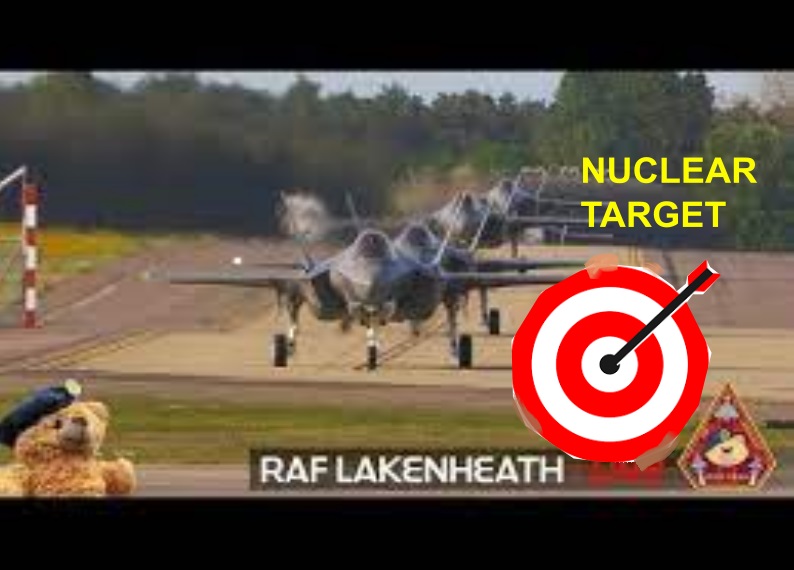
A massive $264 million plan to overhaul a Royal Air Force base in the English countryside includes knocking down at least half a dozen existing buildings, setting up secure intelligence facilities, protecting the surrounding area against enemy electronic pulse attacks, and sending over 200 American personnel, according to Pentagon funding proposals.
It represents confirmation that American nuclear weapons will return to Britain for the first time since President Barack Obama withdrew them 17 years ago.
However, despite widespread speculation that U.S. nuclear weapons have already arrived in the U.K, the documents indicate it will not happen for several years.
The idea that they had already been sent gained steam on July 17 when a massive U.S. Air Force C-17 Globemaster III arrived at RAF Lakenheath in Suffolk.
The aircraft had been tracked by flight data sites traveling 10 hours from Kirtland Air Force base in New Mexico, where America stores its nuclear arsenal.
Experts speculated that it may have been carrying B61-12 nuclear gravity bombs, each with a potential power bigger than the weapon dropped on Hiroshima in 1945.
Lakenheath is home to the U.S Air Force’s 48th Fighter Wing, known as Liberty Wing, which flies F-35A aircraft capable of being fitted with B61-12s.
However, detailed Pentagon assessments of Lakenheath’s suitability as a nuclear base, reviewed by the Daily Mail, make clear that it is far from ready.
Bizarrely, one of the reasons given was that some of those involved in the U.S. nuclear operation would not have quick access to a toilet during an Armageddon-style scenario.
The existing building that would be used as the primary command post is in ‘adequate condition but beyond its useful life,’ the documents said.
It said controllers within the ‘Emergency Action Cell’ would ‘not have direct, restricted access to a restroom’ in the current facility.
In addition, ‘cooling and air filtration’ was not good enough to support a SCIF – a Sensitive Compartmented Information Facility – which is a high-security room used by the U.S. government and military to discuss extremely sensitive classified intelligence.
The Lakenheath operation is described as a ‘Surety’ mission, which is a term the Pentagon uses when discussing the security and safety of nuclear weapons and associated facilities.
The Air Force’s budget estimates for the 2026 financial year suggests $104 million will be needed for a ‘Surety command post.’
It would house facilities including a control center for Air Force Nuclear Command, Control and Communications……………………………………………………………………………………………
The U.S., rather than NATO, is expected to pay for developments at Lakenheath because it is ‘necessary to complete the project in the timeframe required by United States military commanders.’
Construction of the command post is expected to start in August 2027 and be completed by July 2031.
A separate operations compound is priced at $149 million and will involve demolishing half a dozen existing buildings and creating an armory with massively thick concrete walls, and possible storage for anti-tank weapons.
‘This project is required to provide enhanced security capabilities supporting the potential stationing of specialized weapons at Royal Air Force Lakenheath,’ the project outline said.
‘Specialized weapons surety includes materiel, personnel, and procedures, contributing to the safeguarding and reliability of specialized weapons, and to the assurance that there will be no specialized weapon accidents, incidents, unauthorized weapon detonation, or degradation in performance at the target.’
The budget also details the addition of over 200 U.S. security personnel at the base.
A current building to be used by the first security personnel is said to be in ‘deteriorated condition.’
It ‘cannot accommodate the additional weapons, ammunition, and equipment associated with the increase in manpower required for the potential Surety Beddown mission.’
The problems include asbestos, lead based paint, poor ventilation, and ‘improper sanitary sewer drainage.’
Improvements are needed to ‘accommodate the potential Surety mission beddown’ and without them, security forces personnel would not be able to implement the minimum response times, safeguarding, and assurance procedures required for specialized weapons.’
Construction of the second compound is not expected to start until 2028 and finish in 2031…………………………………………………………….
Funding documents show an additional $11 million is expected to be spent on electronic security systems, bringing the total for the nuclear mission at Lakenheath to $264 million.
B61-12 nuclear bombs, which are 12ft long and weight about 800 pounds – are a staple of the U.S. arsenal.
They are unguided ‘gravity bombs’ dropped over targets and are equipped with four fins to increase accuracy to within 30 meters of the target.
They are ‘tactical’ nuclear weapons intended for use against specific military targets, such as wiping out battlefield units or bases, rather than for leveling cities.
However, their power can still be three times the size of the bomb dropped on Hiroshima.
The warhead used in B61-12s has a variety of options for how much explosive power it can yield with the minimum being 0.3 kilotons and the maximum 50 kilotons
The bomb that destroyed Hiroshima in 1945 hade a yield of roughly 15 kilotons.
Meanwhile, Prime Minister Sir Keir Starmer confirmed this month that the U.K. is set to buy 12 F-35A fighter jets from the U.S.
The U.K. will receive its jets at the end of this decade and it will be the first time it has had an air-launched tactical nuclear weapon since 1998.
While it will own the jets, the U.S. will retain ownership of the nuclear weapons they come with.
It means the U.K. will not be able to deliver a nuclear strike with those bombs without explicit approval from Washington…………… https://www.dailymail.co.uk/news/article-15375073/Trumps-secret-264-million-plot-nuclear-doomsday-weapons-Britain-face-Putin.html
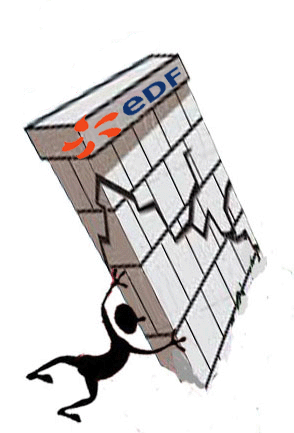
EDF faces the financial equation: Bernard Fontana is considering massive asset sales to generate 20 billion euros
December 16, BY Emma Ray
Barely installed at the helm of EDF, Bernard Fontana is embarking on a
major strategic shift. Faced with unprecedented investment needs and an
already substantial debt, the new CEO is preparing a sweeping adaptation
plan aimed at generating nearly €20 billion in financial flexibility over
three years.
This strategy comes as EDF’s financial situation continues to
be a cause for concern. At the end of 2024, net debt reached €54,3
billion, a level deemed worrying by the French Court of Auditors.
Entrevue 16th Dec 2025, https://entrevue.fr/en/societe/edf-face-a-lequation-financiere-bernard-fontana-envisage-des-cessions-massives-pour-degager-20-milliards-deuros/
Trump row threatens to delay Britain’s nuclear renaissance.
Concerns mount for power plant investment as US pauses tech trade deal.
Matt Oliver Industry Editor. James Titcomb Technology Editor. Matthew Field Senior Technology Reporter, 17 December 2025
Britain’s plans to usher in a “golden age” of nuclear power are at risk of being delayed amid a row with Donald Trump over the UK-US trade deal. Campaigners raised concerns that new projects face being hampered after the US paused the tech prosperity deal, in which Mr Trump and Sir Keir Starmer vowed to deepen co-operation on nuclear energy.
It was accompanied by pledges of investment in Britain by US-based X-Energy and
Centrica, the owner of British Gas, as well as the American nuclear company
Last Energy and the London port operator DP World.
Some nuclear industry
sources played down the dispute on Wednesday as a “negotiating tactic”,
but others said it could slow the deployment of American-designed mini
reactors in the UK if it was not resolved. It comes amid growing
frustration in Washington over Britain’s Online Safety Act, which critics
claim will stifle free speech and stymie American artificial intelligence
companies. Sam Dumitriu, of the pro-nuclear campaign group Britain Remade,
said: “This will undoubtedly concern Britain’s nuclear communities, who
have been promised new projects and the jobs that came with them.
Telegraph 17th Dec 2025, https://www.telegraph.co.uk/business/2025/12/17/trump-row-threatens-to-delay-britains-nuclear-renaissance/
The Problem with Machado: Assange Sues the Nobel Foundation.
21 December 2025 Dr Binoy Kampmark, https://theaimn.net/the-problem-with-machado-assange-sues-the-nobel-foundation/
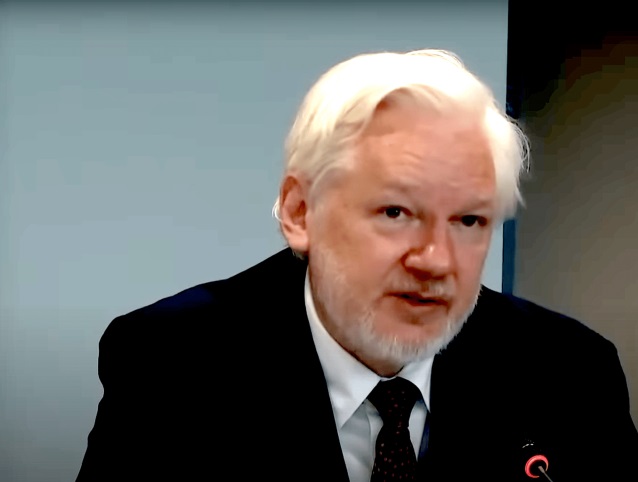
The Swedish police have promised it will go nowhere, but the attempt by WikiLeaks founder Julian Assange to draw attention to the inappropriateness of María Corina Machado as a Nobel Peace Prize recipient raises a few salient matters. On December 17, Assange submitted a criminal complaint to the Swedish Economic Crime Authority and Swedish Crimes Unit. The legal complaint is directed against the Nobel Foundation, arguing that the pending transfer of 11 million SEK ($US 1.18 million) and the award of the prize medal to Machado violates the terms of Alfred Nobel’s will of November 27, 1895.
The will, binding under the terms of Swedish law, stipulates that the award of the prize and monies be given to a person who, during the preceding year, “conferred the greatest benefit to humankind” in pursuing “the most or the best work for fraternity between nations, for the abolition or reduction of standing armies and for the holding and promotion of peace congresses.”
Given that the peace prize laureates are selected by the Norwegian Nobel Committee, seeking to hold them accountable for their poor choice of awardee might have been a better starting point. But the complaint is alert to this, noting that the Swedish funds administrators have a fiduciary duty when it comes to disbursing the funds. “The Norwegian committee’s selection does not grant them criminal immunity.” Indeed, it was up to the administrators to consider such a decision made “in flagrant conflict with the explicit purpose of the will, or where there is evidence that the awardee will use or is using the prize to promote or facilitate the crime of aggression, crimes against humanity, or war crimes.”
Whatever the administrative minutiae, Assange’s effort is worth noting. Machado has become the unsavoury alternative to the Venezuelan incumbent, Nicolás Maduro, a figure who refused to accept the electoral returns for his opposing number, Edmundo González, in July 2024. González was essentially a pick by Machado, who has emerged as the empurpled, plumed candidate seeking Maduro’s overthrow. That she was the 2025 choice of prize recipient was galling enough for 21 Norwegian peace organisations to boycott the ceremony and prompt Nobel Peace Prize laureate Adolfo Pérez Esquivel to remark that, “Giving the prize to someone who calls for foreign invasion is a mockery of Alfred Nobel’s will.”
Machado has made no secret of her approval of the buildup of US military personnel (around 15,000) off the coast of Venezuela since August, including a nuclear-powered attack submarine and the world’s largest aircraft carrier, the USS Gerald R. Ford. She has “incited and defended the Trump administration’s use of lethal military force and preparation for war.” The US military has already committed, charges Assange, “undeniable war crimes, including the lethal targeting of civilian boats and survivors at sea, which has killed at least 95 people.” (President Donald Trump has liberally designated such individuals narco-terrorists.) The Central Intelligence Agency has been authorised to conduct covert actions in Venezuela. Parts of the Venezuelan military have been classified by the Trump administration as a Foreign Terrorist Organisation (FTO).
Since Assange submitted his complaint, Trump has ordered a complete blockade of sanctioned oil tankers entering or exiting Venezuela. The US has thus far seized two tankers, though the authorities have failed to distinguish which tankers are sanctioned or otherwise. The Panama-flagged Centuries, for instance, was not officially sanctioned by the US, showing that this administration is not one to be, as US Secretary of War Pete Hegseth put it, legally tepid.
A list of incitements to war by Machado are enumerated. They include the dedication of the award to President Trump for having “Venezuela in where it should be, in terms of a priority for United States national security”; a heartfelt endorsement of US military escalation as maybe being “the only way” in dealing with Maduro; warm appreciation for Israeli Prime Minister Benjamin Netanyahu’s “decisions and resolute actions in the course of the [Gaza] war” and the endorsement of extrajudicial killing of civilian boats in the Caribbean Sea as “visionary”. Hardly the résumé for a peacemaker.
Assange argues that the failure of the funds administrators to stop pertinent disbursements to Machado, in light of the material submitted in the complaint, “indicates ongoing criminal intent.” Such funds aided “a conspiracy to murder civilians,” violated national sovereignty through using military force and advanced resource theft (Machado’s promised reward to US firms of oil and gas resources amounting to US$1.7 trillion). In doing so, Nobel’s will and charitable purpose had been violated through “gross misappropriation, aiding international crimes […] and conspiracy.” They also breached Sweden’s obligations under the Rome Statute. By way of remedy, the “immediate freezing of all remaining funds and a full criminal investigation lest the Nobel Peace Prize be permanently converted from an instrument of peace into an instrument of war” was sought.
In an email to AFP, Swedish detective inspector Rikard Ekman showed little interest in taking the matter up. “As I have decided not to initiate a preliminary investigation, no investigation will be conducted on the basis of the complaint.”
While this complaint remains a purist’s attempt to return the peace prize to a more conventional reading (Assange thinks the UN Secretary General António Guterres and UN human rights chief Volker Turk eminently more suitable candidates), the practice of awarding this inflated award to figures of ill-repute and sullied reputation will be hard to shake. The ghost of former US security advisor and Secretary of State Henry Kissinger, a man lauded for bringing peace to Indochina when he covertly indulged illegal bombing campaigns, not to mention war crimes, torture and an assortment of other blood sports, continues to loom large. It might well be time to abolish the Nobel Peace Prize altogether, and the committee responsible for it. It was never a strong indicator of merit, even if it offers the chance for some very dark humour for the reptiles to revel in.
1 This Month

of the week – Shut Down Drone Warfare!


Tell the Ukrainian Government to Drop Prosecution of Peace Activist Yurii Sheliazhenko

Petition to revoke the licensing of the Near Surface Nuclear Disposal Facility (NSDF) at Chalk River. https://www.ourcommons.ca/petitions/en/Petition/Details?Petition=e-7247
To see nuclear-related stories in greater depth and intensity – go to https://nuclearinformation.wordpress.com
-
Archives
- April 2026 (114)
- March 2026 (251)
- February 2026 (268)
- January 2026 (308)
- December 2025 (358)
- November 2025 (359)
- October 2025 (376)
- September 2025 (257)
- August 2025 (319)
- July 2025 (230)
- June 2025 (348)
- May 2025 (261)
-
Categories
- 1
- 1 NUCLEAR ISSUES
- business and costs
- climate change
- culture and arts
- ENERGY
- environment
- health
- history
- indigenous issues
- Legal
- marketing of nuclear
- media
- opposition to nuclear
- PERSONAL STORIES
- politics
- politics international
- Religion and ethics
- safety
- secrets,lies and civil liberties
- spinbuster
- technology
- Uranium
- wastes
- weapons and war
- Women
- 2 WORLD
- ACTION
- AFRICA
- Atrocities
- AUSTRALIA
- Christina's notes
- Christina's themes
- culture and arts
- Events
- Fuk 2022
- Fuk 2023
- Fukushima 2017
- Fukushima 2018
- fukushima 2019
- Fukushima 2020
- Fukushima 2021
- general
- global warming
- Humour (God we need it)
- Nuclear
- RARE EARTHS
- Reference
- resources – print
- Resources -audiovicual
- Weekly Newsletter
- World
- World Nuclear
- YouTube
-
RSS
Entries RSS
Comments RSS
 nuclear-news