$264million scheme could transform RAF Lakenheath in Suffolk into a nuclear facility
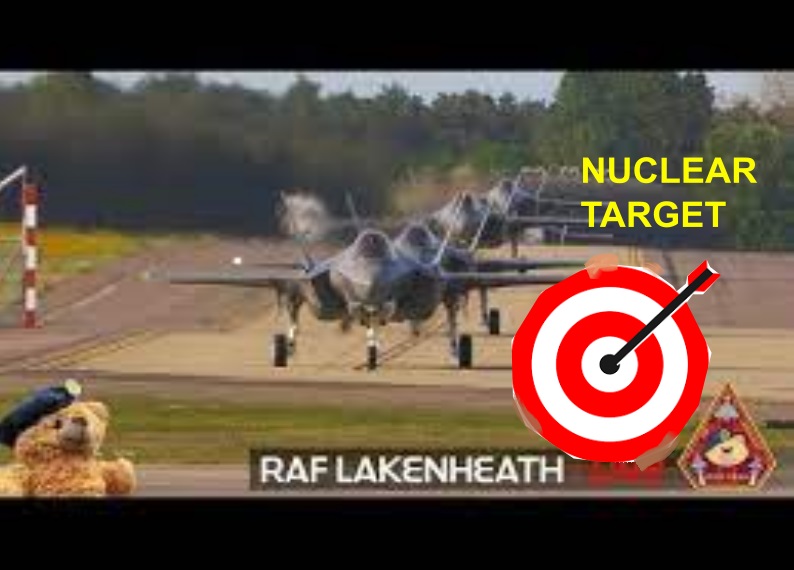
$264million scheme could transform RAF Lakenheath in Suffolk in order for
it to be capable of storing nuclear weapons. Reports claim the US Pentagon
has carried out “detailed assessments” of RAF Lakenheath’s suitability as a
nuclear facility. It follows prolonged speculation the Suffolk air base
already holds specialist weapons.
A plane from the US Air Force’s nuclear
weapon storage facility arrived at RAF Lakenheath in July, fuelling rumours
among experts. The US withdrew its warheads from RAF Lakenheath in 2008.
Eastern Daily Press 23rd Dec 2025 ,By Ben Robinson, West Suffolk & Sudbury Reporter, https://www.edp24.co.uk/news/25721309.264million-scheme-transform-raf-lakenheath-suffolk/
Israel’s growing role in Taiwan’s air defense alarms Beijing.
Israel’s expanding ties with Taiwan, particularly in missile defense, are quietly reshaping regional geopolitics and alarming Beijing. In this context, even small defense transfers could undermine years of careful diplomatic calibration.
Uriel Araujo, BRICS, Monday, December 22, 2025
Uriel Araujo, Anthropology PhD, is a social scientist specializing in ethnic and religious conflicts, with extensive research on geopolitical dynamics and cultural interactions.
Israeli-Taiwanese cooperation, long discreet and underreported, is now moving into far more sensitive terrain. Recent reports indicate that Israeli know-how has been quietly feeding into Taiwan’s emerging missile-defense architecture, the so-called “T-DOME,” a system explicitly inspired by Israel’s Iron Dome. As a matter of fact, this development has already triggered a blunt diplomatic rebuke from Beijing, raising uncomfortable questions about Israel’s long-standing balancing act between rival global powers.
A detailed account of this growing cooperation comes from Nadia Helmy, Visiting Senior Researcher at the Centre for Middle Eastern Studies (CMES), who notes that Chinese intelligence agencies have detected expanding Israeli assistance to Taiwan’s missile shield, particularly in radar integration, command-and-control architecture, and layered interception concepts. According to Helmy, Beijing views this cooperation not as an isolated commercial exchange but as a strategic signal, thereby crossing a political red line.
Taiwan’s T-DOME project is ambitious enough. Taipei plans to spend over USD 40 billion on a multi-layered air and missile defense system combining indigenous technology with foreign expertise, drawing lessons from Israel’s battlefield experience.
What makes the situation more delicate is not simply the technology itself but the political choreography surrounding it. Taiwan’s deputy foreign minister reportedly made a secret trip to Israel in December 2025 to discuss defense cooperation, a visit confirmed by multiple outlets. Israeli lawmakers have also traveled to Taiwan, prompting a formal condemnation from China’s embassy in Israel.
There is a context to such moves. Taiwan’s political discourse has increasingly framed Israel as both a security model and a civilizational reference point. One may recall that Taiwanese officials have even invoked biblical imagery when criticizing authoritarianism, explicitly citing Israel as an example. Meanwhile, pro-Israel lobbying networks linked to AIPAC have been expanding their presence in Taiwan, a fact documented but rarely discussed in mainstream Western media.
Israel, for its part, has historically prided itself on its ability to balance competing global relationships. Thus far, it has managed to maintain workable ties with Russia and Ukraine simultaneously, for instance, while also navigating relations with both the US and China.
Be as it may, Taiwan represents a different category of sensitivity altogether. Unlike commercial technology transfers or infrastructure investments, missile defense cooperation touches the core of China’s security concerns. Suffice to say, Beijing’s reaction has been measured rather than escalatory, but unmistakably firm nonetheless. In any case, from China’s perspective, Israeli involvement in Taiwan’s air defense is not neutral, regardless of how it is framed in Tel Aviv.
Some analysts, such as geopolitical expert Sergio Restelli, have already warned that this (and other developments) could mark the end of Israel’s careful balancing with China.
Others argue that Israel is simply responding to pressure from Washington, especially under the Trump administration, which has doubled down on strategic competition with China while encouraging allies to “choose sides.” I’ve written before about how the Trump administration has been pressuring, “sidelining” and “leveraging” the Jewish State in a number ways, including through its Gaza Plan, apparently as part of an effort to rebalance the complex US-Israeli relationship………………………………….. https://infobrics.org/en/post/74234
Budour Hassan Sounds Alarm as Israeli Settlements Expand, Deepening Apartheid and Threatening Palestinian Statehood
December 23, 2025 , Joshua Scheer, https://www.youtube.com/watch?v=e1CvbfpeSVg
srael’s far-right government has recently approved the construction of 19 new settlements in the occupied West Bank. These settlements are considered illegal under international law, as the West Bank is recognized as occupied territory and the expansion of settlements undermines Palestinian rights.
Amnesty International researcher Budour Hassan describes this policy as reinforcing an “apartheid system” in the West Bank, meaning a system of segregation and discrimination that favors Israeli settlers over the Palestinian population.
Experts warn that continuing to build settlements makes it increasingly difficult to establish a viable Palestinian state, further entrenching the Israeli occupation and threatening any future peace agreements.
In short, the move intensifies the occupation, worsens inequality, and complicates prospects for Palestinian self-determination.
For more on Budour Hassan’s work: Budour Hassan, a Palestinian feminist, international lawyer, and human rights researcher at Amnesty International, played a central role in the landmark December 2024 report that concluded Israel is committing genocide against Palestinians in Gaza—the first such finding by an international human rights organization.
Hassan’s journey is deeply personal. Once a blind 19-year-old law student navigating the streets of Jerusalem, she defied her family’s expectations to become a leading voice for justice. Today, she delivers a powerful call to action: “Solidarity is naming the perpetrator, rejecting silence, refusing the passive voice… Solidarity is not just a word; it’s an action repeated over and over.”
Here Hassan offers a powerful reflection in her essay, “’A Fear of Negation’: Reading Edward Said in the Time of Genocide,” examining Said’s ability to remain critically engaged—with Arab and Palestinian leadership, societal challenges, and his own role as narrator—while honoring the full complexity of Palestinian life.
Hassan writes, “Even though it was under a blockade, Gaza was a living reenactment of what Edward Said would describe as the drama of Palestinian existence.” Drawing on Said’s insight, she highlights how grief can be transformed into a political tool, allowing us to honor not only Gaza’s martyrs but the city itself, with all its beauty and contradictions.
“This is the strength of Edward Said’s writing: that he was able to see the full spectrum of Palestinian humanity.”
Budour Hassan is a vital voice for the world—an indispensable voice on the global stage whose insights and advocacy resonate far beyond her community. She is a critical voice the world needs to hear, calling attention to human rights, justice, and the urgent struggles facing Palestinians today.
UK to restart nuclear submarine defuelling in 2026

By Lisa West, -UK Defence Journal 23rd Dec 2025 https://ukdefencejournal.org.uk/uk-to-restart-nuclear-submarine-defuelling-in-2026/
The Ministry of Defence has confirmed that defuelling of the UK’s decommissioned nuclear-powered submarines is set to restart in 2026, as preparations continue at specialist dock facilities in Devonport.
In a written parliamentary answer, defence minister Luke Pollard said the twelve remaining first-generation submarines powered by pressurised water reactors would be handled through a tightly regulated process overseen by the Office for Nuclear Regulation.
He said the submarines would dock in “a specialised, licensed dock in Devonport”, where “the used fuel will be removed, loaded into a qualified transport container and transported to Sellafield prior to long-term storage in the Geological Disposal Facility.”
Pollard confirmed that dismantling of each vessel would only take place once defuelling is complete, adding that “work is underway to prepare the dock facilities and associated resources in line with plans to recommence defueling in 2026.”
The update also set out progress on the UK’s first full submarine dismantling programme. HMS Swiftsure, the demonstrator vessel for the Submarine Dismantling Project, began dismantling at Rosyth in 2023.
According to Pollard, the project “will refine the disposal process and is on track to be dismantled by the end of 2026, achieving the commitment given to the Public Accounts Committee in 2019.”
He said lessons from Swiftsure and the Devonport defuelling programme would be used to firm up timelines for the remaining fleet, stating that “lessons learned from these defuel and dismantling projects will provide more certainty around the schedule for defueling and dismantling the remaining 22 decommissioned submarines.”
The UK currently has 27 decommissioned nuclear submarines awaiting defuelling or dismantling, a long-running issue highlighted repeatedly by the National Audit Office and parliamentary committees concerned about safety, cost and delay.
Sweden’s Vattenfall Seeks State Funding for New Nuclear Reactors

By Michael Kern – Dec 23, 2025, https://oilprice.com/Latest-Energy-News/World-News/Swedens-Vattenfall-Seeks-State-Funding-for-New-Nuclear-Reactors.html
Sweden’s power giant Vattenfall announced on Tuesday it is applying for state aid for an investment in small modular reactors (SMRs) as part of a plan by industrial giants to bet on new nuclear power in the country.
Last month Sweden’s biggest industrial firms signed an agreement with Vattenfall to become shareholders in the power giant’s new company, Videberg Kraft AB, which plans to build SMRs in the country.
One of Europe’s top electric utilities, Vattenfall, created Videberg Kraft AB in April this year as a separate entity to be able to apply for government support.
Now the company and the industry organization, Industrikraft, plan joint investment and collaboration enabling the development of new nuclear power in Sweden.
Industrikraft, whose members include Volvo Group, Saab, Alfa Laval, and Hitachi Energy, will become a shareholder in Videberg Kraft with a 20-percent stake.
The government has previously announced that the state also intends to become a shareholder in the new company.
The Swedish government moved to phase out nuclear power completely in 1980, but that decision was reversed by Parliament in 2010. Five years later, four aging reactors were shut down. Six of 12 reactors remain in operation in Sweden today.
The country is now betting on SMRs to expand its nuclear fleet as Stockholm seeks to further reduce emissions with low-carbon 24/7 energy.
Sweden has tweaked its renewable energy policy, which had called for 100% renewable electricity by 2040, changing the terminology to “100% fossil-free” electricity, paving the way for the construction of more nuclear power plants.
Now Videberg Kraft’s CEO Desirée Comstedt has submitted an application for financing and risk-sharing to the Swedish Government.
When an agreement between the state and Videberg Kraft has been reached, the government may initiate a formal state aid process with the European Commission, Vattenfall said.
Videberg Kraft is planning a project with either five BWRX-300 reactors from GE Vernova Hitachi or three reactors from Rolls-Royce SMR, which will provide a total nuclear power output of about 1,500 MW. There is currently an intensive evaluation process of the two remaining suppliers, and a decision on the final supplier is planned for 2026.
Keir Starmer’s attempt to send Abramovich’s billions to Ukraine is illegal

the government does not have the powers unilaterally to send those funds to Ukraine as that would amount to theft.
British law has nothing to say about how Abramovich disposes of his assets and the British Government has no role in the discussion of how they are disposed of. For now, those assets remains frozen and Keir Starmer is seeking to unfreeze them so they be sent in entirety to Ukraine without Abramovich’s consent.
Frozen assets are not a slush fund that he can dip into because he’s too weak to tell British taxpayers they have to pay for a war doesn’t want to end
Ian Proud, Dec 24, 2025, https://thepeacemonger.substack.com/p/keir-starmers-attempt-to-send-abramovichs?utm_source=post-email-title&publication_id=3221990&post_id=182490948&utm_campaign=email-post-title&isFreemail=true&r=1ise1&triedRedirect=true&utm_medium=email
I didn’t authorise the UK sanctioning of Roman Abramovich in March 2022, but I did authorise over 800 other designations of Russian individuals and firms, while I was still at the Foreign Office. I have no connection with the oligarch, nor do I support Chelsea. But I am alarmed by Keir Starmer’s threat to take him to court over the disposal of the proceeds from the Blues’ sale. This appears illegal and doomed to fail.
On 17 December, Starmer stood up in Parliament and said, “my message to Abramovich is . . . the clock is ticking, honour the commitment you made and pay up now. If you don’t, we’re prepared to go to court so every penny reaches those whose lives have been torn apart by Putin’s illegal war.’
Abramovich was sanctioned by the UK government on 10 March 2022. Under the Russia (Sanctions) (EU Exit) Regulations 2019 all of his assets in the UK were frozen and remain so to this day. He was also subject to other restrictive measures including a director disqualification (i.e. he cannot operate as a director of a UK firm such as Chelsea) and a travel ban.
The practical impact of sanctioning Abramovich was to tip Chelsea into a short-term cash crunch, because the football club’s (i.e. Abramovich’s) assets were frozen. Chelsea’s spending became tightly regulated by a licence issued by the Office for Financial Sanctions Implementation (OFSI) at the Treasury. This forced Abramovich to divest his assets which he did in May 2022 when the club was purchased by a consortium led by Todd Boehly. The proceeds of the sale have been frozen ever since.
Clearly, the sale proved the technical effectiveness of the UK sanctions regime at that time. Liz Truss as Foreign Secretary had made it her quest to close ‘Londongrad’, the catch-all term for very high net worth Russian oligarchs who had parked their money in Britain. Forcing Abramovich to sell Chelsea, which he purchased in 2003, was undoubtedly a feather in her cap in terms of how it played out in UK press coverage.
Yet sanctions policy is governed by law not spin.
With pressure to rid Britain of the taint of Russian money building after the war in Ukraine started on 24 February 2022, Abramovich no doubt saw the writing on the wall and announced his decision to sell the club on 2 March.
In doing so, he pledged to donate “all net proceeds from the sale” to the “victims of the war in Ukraine”.
It was and appears to remain Abramovich’s intention that while much of the money would go to Ukrainian victims of the war, some might also go to victims in other countries, including in Russia.
When he made this announcement, UK lobbyists immediately urged the British government to insist that the funds only go to Ukraine, expressing fears that some money may end up with Russian victims of the war, including former Russian armed forces personnel. It is this pressure which has undoubtedly led the government to take the position that it has.
Yet, Abramovich was not legally required to sell Chelsea nor to donate the proceeds to good causes. His moves appear driven, more, by a desire to insulate the Club from financial disruption and philanthropy.
That’s why Starmer’s pronouncements appear little more than virtue signalling; advancing what he sees as a moral crusade to punish a wealthy Russian under the spurious guise of upholding UK sanctions law.
Yet British law has nothing to say about how Abramovich disposes of his assets and the British Government has no role in the discussion of how they are disposed of. For now, those assets remains frozen and Keir Starmer is seeking to unfreeze them so they be sent in entirety to Ukraine without Abramovich’s consent.
While freezing Abramovich’s assets had a legal basis under the Russia Regulations 2019, attempting to strong-arm him into sending frozen assets to Ukraine is illegal.
Sanctions are not intended to be permanent. It is still far from clear when the Ukraine war will end, but should a peace agreement be sealed and held to, it is conceivable that UK sanctions would be lifted in the future. Should that happen, Abramovich would one day again have access to his capital, including the proceeds from the Chelsea sale, and be free to use it as he pleased.
Of all the oligarchs, Abramovich was most active in supporting efforts to end the Ukraine war, even attending the failed Istanbul peace talks in March and April 2022. His offer to give the Chelsea proceeds to a charitable cause was consistent with his peace efforts but was not legally binding.
It was also unique, as no other sanctioned oligarchs who were previously based in the UK have offered to do the same.
The UK has frozen over £25 bn in Russian assets since the war started; the government does not have the powers unilaterally to send those funds to Ukraine as that would amount to theft. Had the similarly sanctioned oligarch Mikhail Fridman chosen to sell Holland and Barret in 2022, which was owned by his investment firm Letter One, the government could not have insisted that the proceeds be sent to Ukraine in the form of vitamin supplements and health-improving nuts.
The government now issuing a licence to allow for the Chelsea billions to be sent to Ukraine does not impose any requirement on Abramovich to use that licence. The sanctions licencing system exists to allow designated persons to access their frozen assets to meet essential costs. Mikhail Fridman famously complained that the freezing of his assets forced him to ask the government for money ‘to use taxis and buy food’.
The licencing system isn’t designed to provide a slush fund for the government to support good causes overseas. Licences are requested by the designated person and their legal representatives.
This case boils down to two broad themes, neither of which reflect well on the embattled Starmer.
First, a tug of war between what seems right and what is legal. With Ukraine critically short of money – even after Europe’s mega-loan – sending them the Chelsea billions may feel like the right thing to do, but is illegal.
Second, this is another attempt to use sanctioned assets to cover the unsustainable cost of Ukraine’s failing war and so avoid asking British taxpayers to shoulder the burden, at a time when ordinary people are struggling to pay their bills at Christmas.
On the second, the Europeans have already died on a similar hill through their failed attempt to expropriate Russian sovereign assets held in Euroclear. Keir Starmer should ditch his performative threats as legal action against Abramovich would most likely fail if, that is, the UK still has an independent judiciary.
If Starmer wants to waste another pile of British cash in Ukraine, then he should do so and put himself before the court of public opinion. He won’t, though, as he’s weak, deeply unpopular and runs from hard choices faster even than Santa’s sleigh on Christmas Eve.
European Russophobia and Europe’s Rejection of Peace: A Two-Century Failure
CRISD, December 23, 2025
Jeffrey D. Sachs is University Professor and Director of the Center for Sustainable Development at Columbia University, and President of the UN Sustainable Development Solutions Network.
Europe has repeatedly rejected peace with Russia at moments when a negotiated settlement was available, and those rejections have proven profoundly self-defeating. From the nineteenth century to the present, Russia’s security concerns have been treated not as legitimate interests to be negotiated within a broader European order, but as moral transgressions to be resisted, contained, or overridden. This pattern has persisted across radically different Russian regimes—Tsarist, Soviet, and post-Soviet—suggesting that the problem lies not primarily in Russian ideology, but in Europe’s enduring refusal to recognize Russia as a legitimate and equal security actor.
My argument is not that Russia has been entirely benign or trustworthy. Rather, it is that Europe has consistently applied double standards in the interpretation of security. Europe treats its own use of force, alliance-building, and imperial or post-imperial influence as normal and legitimate, while construing comparable Russian behavior—especially near Russia’s own borders—as inherently destabilizing and invalid. This asymmetry has narrowed diplomatic space, delegitimized compromise, and made war more likely. Likewise, this self-defeating cycle remains the defining characteristic of European-Russian relations in the twenty-first century.
A recurring failure throughout this history has been Europe’s inability—or refusal—to distinguish between Russian aggression and Russian security-seeking behavior. In multiple periods, actions interpreted in Europe as evidence of inherent Russian expansionism were, from Moscow’s perspective, attempts to reduce vulnerability in an environment perceived as increasingly hostile. Meanwhile, Europe consistently interpreted its own alliance building, military deployments, and institutional expansion as benign and defensive, even when these measures directly reduced Russian strategic depth. This asymmetry lies at the heart of the security dilemma that has repeatedly escalated into conflict: one side’s defense is treated as legitimate, while the other side’s fear is dismissed as paranoia or bad faith.
Western Russophobia should not be understood primarily as emotional hostility toward Russians or Russian culture. Instead, it operates as a structural prejudice embedded in European security thinking: the assumption that Russia is the exception to normal diplomatic rules. While other great powers are presumed to have legitimate security interests that must be balanced and accommodated, Russia’s interests are presumed illegitimate unless proven otherwise. This assumption survives changes in regime, ideology, and leadership. It transforms policy disagreements into moral absolutes and renders compromise as suspect. As a result, Russophobia functions less as a sentiment than as a systemic distortion—one that repeatedly undermines Europe’s own security.
I trace this pattern across four major historical arcs. First, I examine the nineteenth century, beginning with Russia’s central role in the Concert of Europe after 1815 and its subsequent transformation into Europe’s designated menace. The Crimean War emerges as the founding trauma of modern Russophobia: a war of choice pursued by Britain and France despite the availability of diplomatic compromise, driven by the West’s moralized hostility and imperial anxiety rather than unavoidable necessity. The Pogodin memorandum of 1853 on the West’s double standard, featuring Tsar Nicholas I’s famous marginal note—“This is the whole point”—serves not merely as an anecdote, but as an analytical key to Europe’s double standards and Russia’s understandable fears and resentments.
Second, I turn to the revolutionary and interwar periods, when Europe and the United States moved from rivalry with Russia to direct intervention in Russia’s internal affairs. I examine in detail the Western military interventions during the Russian Civil War, the refusal to integrate the Soviet Union into a durable collective-security system in the 1920s and 1930s, and the catastrophic failure to ally against fascism, drawing especially on the archival work of Michael Jabara Carley. The result was not the containment of Soviet power, but the collapse of European security and the devastation of the continent itself in World War II.
Third, the early Cold War presented what should have been a decisive corrective moment; yet, Europe again rejected peace when it could have been secured. Although the Potsdam conference reached an agreement on German demilitarization, the West subsequently reneged. Seven years later, the West similarly rejected the Stalin Note, which offered German reunification based on neutrality. The dismissal of reunification by Chancellor Adenauer—despite clear evidence that Stalin’s offer was genuine—cemented Germany’s postwar division, entrenched the bloc confrontation, and locked Europe into decades of militarization.
Finally, I analyze the post-Cold War era, when Europe was offered its clearest opportunity to escape this destructive cycle. Gorbachev’s vision of a “Common European Home” and the Charter of Paris articulated a security order based on inclusion and indivisibility. Instead, Europe chose NATO expansion, institutional asymmetry, and a security architecture built around Russia rather than with it. This choice was not accidental. It reflected an Anglo-American grand strategy—articulated most explicitly by Zbigniew Brzezinski—that treated Eurasia as the central arena of global competition and Russia as a power to be prevented from consolidating security or influence.
The consequences of this long pattern of disdain for Russian security concerns are now visible with brutal clarity. The war in Ukraine, the collapse of nuclear arms control, Europe’s energy and industrial shocks, Europe’s new arms race, the EU’s political fragmentation, and Europe’s loss of strategic autonomy are not aberrations. They are the cumulative costs of two centuries of Europe’s refusal to take Russia’s security concerns seriously.
My conclusion is that peace with Russia does not require naïve trust. It requires the recognition that durable European security cannot be built by denying the legitimacy of Russian security interests. Until Europe abandons this reflex, it will remain trapped in a cycle of rejecting peace when it is available—and paying ever higher prices for doing so.
The Origins of Structural Russophobia
The recurrent European failure to build peace with Russia is not primarily a product of Putin, communism, or even twentieth-century ideology. It is much older—and it is structural. Repeatedly, Russia’s security concerns have been treated by Europe not as legitimate interests subject to negotiation, but as moral transgressions. In this sense, the story begins with the nineteenth-century transformation of Russia from a co-guarantor of Europe’s balance into the continent’s designated menace.
After the defeat of Napoleon in 1815, Russia was not peripheral to Europe; it was central. Russia bore a decisive share of the burden in defeating Napoleon, and the Tsar was a principal architect of the post-Napoleonic settlement. The Concert of Europe was built on an implicit proposition: peace requires the great powers to accept one another as legitimate stakeholders and to manage crises by consultation rather than by moralized demonology. Yet, within a generation, a counterproposition gained strength in British and French political culture: that Russia was not a normal great power but a civilizational danger—one whose demands, even when local and defensive, should be treated as inherently expansionist and therefore unacceptable…………………………………………………………………………………………………………………………………………………………………
The tragedy of Europe’s denial of Russia’s security concerns is that it becomes self-reinforcing. When Russian security concerns are dismissed as illegitimate, Russian leaders have fewer incentives to pursue diplomacy and greater incentives to change facts on the ground. European policymakers then interpret these actions as confirmation of their original suspicions, rather than as the utterly predictable outcome of a security dilemma they themselves created and then denied. Over time, this dynamic narrows the diplomatic space until war appears to many not as a choice but as an inevitability. Yet the inevitability is manufactured. It arises not from immutable hostility but from the persistent European refusal to recognize that durable peace requires acknowledging the other side’s fears as real, even when those fears are inconvenient.
The tragedy is that Europe has repeatedly paid heavily for this refusal. It paid in the Crimean War and its aftermath, in the catastrophes of the first-half of the twentieth century, and in decades of Cold War division. And it is paying again now. Russophobia has not made Europe safer. It has made Europe poorer, more divided, more militarized, and more dependent on external power,
The added irony is that while this structural Russophobia has not weakened Russia in the long run, it has repeatedly weakened Europe. By refusing to treat Russia as a normal security actor, Europe has helped generate the very instability it fears, while incurring mounting costs in blood, treasure, autonomy, and cohesion. Each cycle ends the same way: a belated recognition that peace requires negotiation after immense damage has already been done. The lesson Europe has yet to absorb is that recognizing Russia’s security concerns is not a concession to power, but a prerequisite for preventing its destructive uses.
The lesson, written in blood across two centuries, is not that Russia or any other country must be trusted in all regards. It is that Russia and its security interests must be taken seriously. Europe has rejected peace with Russia repeatedly, not because it was unavailable, but because acknowledging Russia’s security concerns was wrongly treated as illegitimate. Until Europe abandons that reflex, it will remain trapped in a cycle of self-defeating confrontation—rejecting peace when it is possible and bearing the costs long after.https://www.cirsd.org/en/news/european-russophobia-and-europes-rejection-of-peace-a-two-century-failure
Canada’s double standard on tritium emissions
Frank Greening, 24 Dec 25
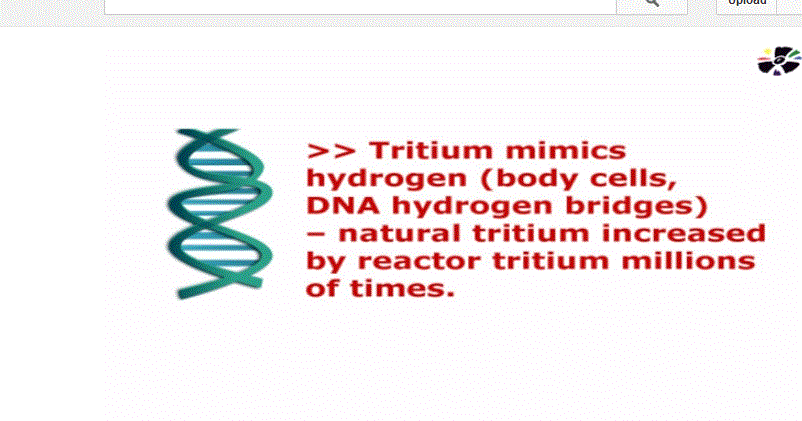
Here is an example of how Canada allows all kinds of tritium emissions while other nations are criticized for almost trivial releases.
Thus, it was reported today that the Japanese reactor at Fugen had a leak that spilled tritiated water. The amount released? A staggering 20 ml:
By comparison a CANDU reactor at Bruce NGS suffered a steam generator release back in 2007. Steam generator tube leaks involve the escape of primary heat transport heavy water contaminated with tritium. In the case of Bruce Unit 8, a steam generator leak was detected in June 2007 but was allowed to continue until the first week of November. The monthly heavy water losses associated with this leak were as follows:
June 2007: 484 kg
July 2007: 2157 kg
Aug 2007: 2832 kg
Sept 2007: 4339 kg
Oct 2007: 5036 kg
Nov 2007: 1115 kg
Thus, in total, 15,963 kg of tritiated heavy water was lost to Lake Huron over a six-month period in 2007. This leak created a giant plume of tritiated water that was carried northwards by the prevailing currents towards the townships of Saugeen Shores, Port Elgin and Southampton. By September 2007, the concentration of tritium in the water intake of the Port Elgin Water Treatment Plant, 17 km north of the Bruce site, had increased by more than a factor of three compared to the normal levels of tritium in lake water at this location.
But remarkably this increase in the tritium concentration in the drinking water supply to residents to the north of the Bruce site was not the reason that the Unit 8 steam generator leak was finally fixed. On the contrary, the leak was plugged to prevent further loss of a valuable commodity – heavy water – which at $300/kg had already cost Bruce Power almost $5 million. And besides, thanks to the CNSC’s lax tritium emission standards, Bruce B’s waterborne emission action level for tritium is a staggering 130,000 Ci per month; thus the station was well below its regulatory limit in this regard. Nevertheless, one has to wonder how such a liberal action level is permitted when it allows a station to discharge tritiated water that is 5000 times higher than the Ontario Drinking Water Objective.
Studsvik Calls Extraordinary Meeting to Add UK Nuclear Executive Julia Pyke to Board
Tipranks – Tue Dec 23, 2025
Studsvik AB ( (SE:SVIK) ) has issued an announcement.
Studsvik AB has called an extraordinary general meeting for January 23, 2026, in Stockholm, inviting shareholders to resolve on changes to the board of directors, including registration, proxy and attendance procedures in line with Swedish corporate governance rules. The nomination committee proposes expanding the board to seven members and appointing UK nuclear executive Julia Pyke, noted for her leadership of the Sizewell C and involvement in Hinkley Point C projects, with her remuneration aligned pro rata to the levels set at the 2025 annual general meeting, underscoring Studsvik’s strategic ambition to strengthen its board with international nuclear infrastructure expertise……… https://www.theglobeandmail.com/investing/markets/markets-news/Tipranks/36764331/studsvik-calls-extraordinary-meeting-to-add-uk-nuclear-executive-julia-pyke-to-board/
How reporting facts can now land you in jail for 14 years as a terrorist

Jonathon Cook Blog, 22 December 2025
Starmer’s government has set the most dangerous of precedents: it can now outlaw any political group it chooses as a terrorist organisation – and thereby make it impossible to defend it
The moment the British government began proscribing political movements as terrorist organisations, rather than just militant groups, it was inevitable that saying factual things, making truthful statements, would become a crime.
And lo behold, here we are.
The Terrorism Act 2000 has a series of provisions that make it difficult to voice or show any kind of support for an organisation proscribed under the legislation, whether it is writing an article or wearing a T-shirt.
Recent attention has focused on Section 13, which is being used to hound thousands of mostly elderly people who have held signs saying: “I oppose genocide, I support Palestine Action.” They now face a terrorism conviction and up to six months in jail.
But an amendment introduced in 2019 to Section 12 of the Act has been largely overlooked, even though it is even more repressive. It makes it a terrorism offence for a person to express “an opinion or belief that is supportive of a proscribed organisation” and in doing so be “reckless” about whether anyone else might be “encouraged to support” the organisation.
It is hard to believe this clause was not inserted specifically to target the watchdog professions: journalists, human rights groups and lawyers. They now face up to 14 years in jail for contravening this provision……………………………………………………………………………………………………………………………………….
the reality is that social media is awash with posts from people echoing outrageous official disinformation. This spreads unchallenged because to challenge it is now cast as a terrorism offence.
In truth, since proscription, any statements about the political aims of a deeply political organisation like Palestine Action occupy a grey area of the law.
Is it a terrorism offence to point out the fact, as I have done above, that Palestine Action targeted Elbit factories that send killer drones to Israel for use in Gaza. In doing so, may I have “recklessly” encouraged you to support Palestine Action?
Can I express any kind of positive view about the hunger strikers or their actions without violating the law?
The truth is that the law’s greyness is its very point. It maximises the chilling effect on those who are supposed to serve as the public’s watchdogs on power: journalists, human rights groups, lawyers. https://www.jonathan-cook.net/blog/2025-12-22/reporting-facts-14-years-jail/
Hawai‘i Has a Rare Opportunity to Reclaim Land From the US Military
The US military is abusing Hawaiian land. Will residents be able to exert Indigenous sovereignty and get it back?
By Christine Ahn & Davis Price , Truthout, December 22, 2025
Since 1964, the U.S. military has leased roughly 47,000 acres of land from the State of Hawai‘i — for a token $1. The leases, which account for 18 percent of military lands in Hawai‘i, are set to expire in 2029, offering Hawai‘i a rare opportunity to reclaim land from the war machine. As the expiration date looms, Hawai‘i residents are at a crossroads: remain a staging ground for U.S. imperialism or pivot toward community well‑being, environmental sustainability, and economic self‑determination.
But that decision may arrive sooner than 2029: Allegedly faced with pressure from federal officials to fast-track lease renewals by the end of this year, Democratic Gov. Josh Green signed a statement of principles in September with Army Secretary Dan Driscoll expressing the intention to “explore the feasibility of land use that aligns national security and Army readiness needs with the State’s priorities for public benefit.” A month later, Green sent Driscoll a proposal for a $10 billion plan that included a “community benefits” package. He argued that this sum would be favorable should the Army pursue “condemnation,” the use of eminent domain to seize Hawai‘i’s land for “national security.”
Native Hawaiian groups swiftly condemned the move in a September 2 statement signed by 40 organizations. They opposed fast-tracking the leases and pointed out that Green and Driscoll sidestepped federal and state statutes that require a thorough review — a process the Army and Navy had already failed to complete earlier that year.
After mounting pressure from the Office of Hawaiian Affairs, state legislators, and numerous environmental and civic organizations, Green walked back the end-of-year deadline and extended the negotiation timeline into 2026. Still, the episode highlighted how easily the U.S. military can bypass democratic debate in the name of “national security,” and how vital it is for the public to have informed discussions about the military’s impact on Hawai‘i.
How Hawai‘i Became Occupied
The U.S. military controls roughly 254,000 acres across Hawai‘i, making it the most militarized state per capita in the country. On O‘ahu alone, the military occupies 86,000 acres, or 25 percent of the island. These lands were part of the “ceded” territories illegally seized from the Hawaiian Kingdom.
Once a sovereign nation, Hawai‘i was the starting point for America’s century of imperialism and conquest in the Pacific. In the late-19th century, American missionaries and plantation owners, seeking to avoid U.S. tariffs on Hawaiian sugar, conspired with the U.S. Navy to orchestrate a coup to overthrow Queen Lili‘uokalani in 1893.
Although the coup was condemned by President Grover Cleveland as illegal, in 1898 President William McKinley signed the Newlands Resolution, illegally annexing Hawai‘i as a U.S. territory through a joint congressional resolution, bypassing the legally required two-thirds majority in the Senate to ratify a treaty between two nations.
After annexation, the provisional government reclassified Crown and government lands as “public” property and transferred them to the U.S. Interior Department………………………………………………………………………………………………………………………………………………………………………………………..Native Hawaiian advocates are building momentum toward a shift in the governance of resources in Hawaiʻi, which has been dominated by extractive and abusive industries, such as the military, for too long. While large‑scale stewardship projects exist, they are often treated as side ventures, and lack long‑term capital investments, like roads or schools. Investing in regenerative economies, Lee argues, could create thousands of place‑based jobs in restoration, farming, and renewable energy. “We’d keep more money circulating locally instead of leaking out, building real security from the inside out,” Lee explains. “Hawai‘i’s resilience is national security.”
By engaging in informed public debate about the economic, environmental, and cultural costs of the military’s footprint — and exploring repurposing the military’s footprint for community-driven, sustainable uses — Hawai‘i can transform from a base preparing for war into a beacon of peace, resilience, and Indigenous innovation. https://truthout.org/articles/hawaii-has-a-rare-opportunity-to-reclaim-land-from-the-us-military/
UK’s largest planned data centre ‘could use 50 times more water’ than developer claims.
The developer of the UK’s largest proposed data
centre is likely significantly understating the scale of its planned water
footprint, teams of investigative journalists have claimed.
US-based data
centre developer QTS recently secured permission from the local council for
its campus in Cambois, Northumberland. It plans to build 10 data halls
across a 133-acre site, at a cost of $13.5bn. The site had previously been
home to Britishvolt, which had intended to develop a battery gigafactory
for the electric car sector before it folded. QTS’s proposals also
include cooling systems and dozens of diesel-powered generators to act as
an emergency backup, the BBC reports. These should only be used
“occasionally” on a “temporary basis”.
Edie 22nd Dec 2025, https://www.edie.net/uks-largest-planned-data-centre-could-use-50-times-more-water-than-developer-claims/
Scottish Government urged to intervene in Edinburgh AI data centre plans
THE Scottish Government has been urged to intervene after council
officials ruled that an environmental impact assessment for a huge
artificial intelligence data centre is not required.
Edinburgh City Council
is currently considering plans for a new AI data centre on the site of the
former RBS headquarters in South Gyle, near Edinburgh Airport. Shelborn
Drummond Ltd, an offshoot of Shelborn Asset Management, is behind the plans
for the “Green Data Centre”.
We previously told how the Shelborn data
centre, and another proposed by Apatura near to Heriot-Watt University,
would demand the equivalent amount of energy as building five cities the
same size as the capital within its boundaries. The revelation about the
vast amount of electricity the sites will consume has sparked concerns from
environmental campaigners, and had previously raised concerns that there
would be no requirement for the firms behind the plans to carry out an
environmental impact assessment (EIA).
A screening opinion published on
Friday December 18, by a senior planner at the local authority, ruled that
an EIA would not be required. Action to Protect Rural Scotland (APRS) said
the Shelborn data centre will use the same amount of energy as a quarter of
a million households, and it was “gobsmacking” that the impact on the
local environment would not be taken into consideration.
The National 22nd Dec 2025, https://www.thenational.scot/news/25715123.scottish-government-urged-intervene-edinburgh-ai-data-centre/
Trump orders return to Moon by 2028, lunar base with nuclear power by 2030.
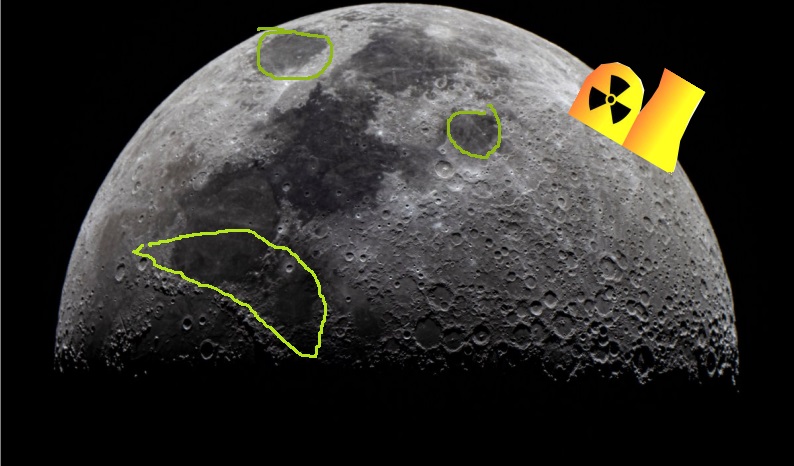
NASA is directed to pursue a commercial pathway to replace the International Space Station by 2030, continuing the transition toward privately owned and operated orbital platforms.
By Stephen Pope, December 19, 2025, https://www.aerotime.aero/articles/trump-moon-2028-lunar-base-golden-dome
In a sweeping reset of US space policy, President Donald Trump on December 18, 2025, signed an executive order directing NASA to return astronauts to the Moon by 2028, establish the first elements of a permanent lunar base by 2030, deploy nuclear power systems on the Moon and in orbit, and accelerate development of the administration’s “Golden Dome” missile defense program.
The order, titled Ensuring American Space Superiority, sets some of the most aggressive space and defense timelines ever laid out in a single White House directive, blending civil exploration, national security, and commercial space development into one policy framework.
Under the order, NASA is instructed to land Americans on the Moon by 2028 through the Artemis program, and then move quickly toward establishing an initial, sustained lunar presence by the end of the decade. The administration frames the Moon not only as a destination, but as strategic infrastructure — a platform for economic activity, scientific research, and preparation for future missions to Mars.
Lunar nuclear reactors
A central and notable element of the policy is nuclear power. The order calls for deploying nuclear reactors on the lunar surface and in orbit, with a lunar surface reactor required to be ready for launch by 2030. The White House argues that nuclear power is essential to sustaining long-duration operations on the Moon, where solar energy alone may not support continuous activity.
The executive order also reiterates Trump’s push for the Golden Dome missile defense initiative, directing the government to develop and demonstrate prototype next-generation missile defense technologies by 2028. It also calls for improved detection and countermeasures against threats to US space assets, extending from low Earth orbit to the moon, including concerns over nuclear weapons placed in orbit.
The order places heavy emphasis on accelerating procurement and integrating commercial space capabilities. NASA and the Department of Commerce are directed to reform their space acquisition processes within 180 days, with a stated preference for commercial solutions, faster contracting methods, and reduced bureaucratic friction. The policy also seeks to attract at least $50 billion in additional private investment into US space markets by 2028.
Compressed timelines
Commercial space involving many companies is positioned in Trump’s order as a replacement, not just a partner, for legacy government programs. NASA is directed to pursue a commercial pathway to replace the International Space Station by 2030, continuing the transition toward privately owned and operated orbital platforms.
The order also makes structural changes to space governance. It revokes the National Space Council and shifts coordination of national space policy to the White House Office of Science and Technology Policy. Several agencies are given near-term reporting deadlines, including a 90-day requirement for NASA to outline how it will meet the Moon and exploration goals within existing funding levels.
In addition, the order revises prior space traffic management policy by removing language that had described government-provided tracking services as free, potentially opening the door to paid or commercially supported models in the future.
Taken together, the executive order outlines an expansive vision with compressed timelines, placing pressure on NASA, the Pentagon, and industry to deliver rapid progress.
Hiroshima urges Japanese government to uphold non-nuclear principles
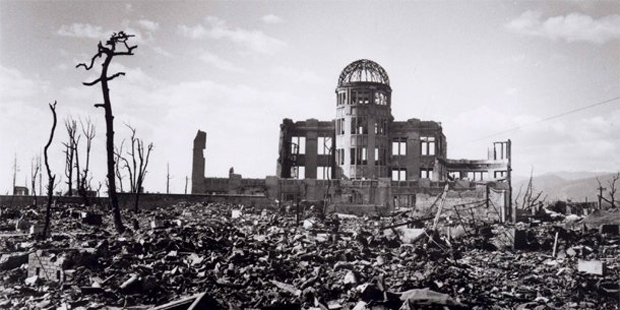
Japan’s Hiroshima Prefecture on Monday issued a statement urging the national government to uphold the country’s non-nuclear principles, after a security official recently suggested the country should possess nuclear weapons.
The Hiroshima prefectural assembly unanimously adopted the written opinion, citing local concerns about reviewing the long-standing Three Non-Nuclear Principles, which prohibit possessing, producing or permitting the introduction of nuclear arms into Japanese territory, Kyodo News reported.
“It is our duty, as the only country to have suffered atomic bombings, to continue striving toward the realization of a world without nuclear weapons,” the statement said.
The statement comes after an official involved in devising security policy under the government led by Prime Minister Sanae Takaichi recently said that Japan should possess nuclear weapons, inciting backlash from locals, including atomic bomb survivors.
It is the first written opinion by the prefectural or city assemblies of Hiroshima or Nagasaki, both devastated by U.S. atomic bombs, regarding the country’s reconsideration of the non-nuclear principles, the report said.
Itsunori Onodera, head of the ruling Liberal Democratic Party’s security research council, said on a TV program on Sunday that Japan needs to debate the future of its non-nuclear principles.
Last month, Japanese media quoted government sources as saying that, as the Takaichi administration gears up to revise the country’s key national security documents by the end of 2026, Takaichi was considering reviewing the third of the Three Non-Nuclear Principles, which prohibits nuclear weapons from entering Japan’s territory, raising strong doubts and concerns at home.
1 This Month

of the week – Shut Down Drone Warfare!


Tell the Ukrainian Government to Drop Prosecution of Peace Activist Yurii Sheliazhenko

Petition to revoke the licensing of the Near Surface Nuclear Disposal Facility (NSDF) at Chalk River. https://www.ourcommons.ca/petitions/en/Petition/Details?Petition=e-7247
To see nuclear-related stories in greater depth and intensity – go to https://nuclearinformation.wordpress.com
-
Archives
- April 2026 (114)
- March 2026 (251)
- February 2026 (268)
- January 2026 (308)
- December 2025 (358)
- November 2025 (359)
- October 2025 (376)
- September 2025 (257)
- August 2025 (319)
- July 2025 (230)
- June 2025 (348)
- May 2025 (261)
-
Categories
- 1
- 1 NUCLEAR ISSUES
- business and costs
- climate change
- culture and arts
- ENERGY
- environment
- health
- history
- indigenous issues
- Legal
- marketing of nuclear
- media
- opposition to nuclear
- PERSONAL STORIES
- politics
- politics international
- Religion and ethics
- safety
- secrets,lies and civil liberties
- spinbuster
- technology
- Uranium
- wastes
- weapons and war
- Women
- 2 WORLD
- ACTION
- AFRICA
- Atrocities
- AUSTRALIA
- Christina's notes
- Christina's themes
- culture and arts
- Events
- Fuk 2022
- Fuk 2023
- Fukushima 2017
- Fukushima 2018
- fukushima 2019
- Fukushima 2020
- Fukushima 2021
- general
- global warming
- Humour (God we need it)
- Nuclear
- RARE EARTHS
- Reference
- resources – print
- Resources -audiovicual
- Weekly Newsletter
- World
- World Nuclear
- YouTube
-
RSS
Entries RSS
Comments RSS
 nuclear-news