If Russia retaliated…
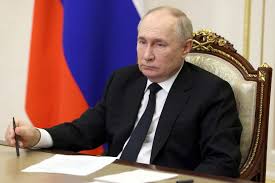
Third World War would be nuclear and the scale of destruction and killing could be orders of magnitude greater. This is the danger that today’s “loud little handful” could lead us toward, for their own narrow, selfish reasons. To date, we should be grateful that we’ve been spared these horrors thanks to President Putin’s restraint. Even though he’s been aware of Western involvement in attacks on Russia, he has steered clear from escalating to the point where the psychological phase transition in the West could take hold.
Before leaving 10 Downing Street, Sir Keir Starmer authorized another large-scale attack on Russia. If we’re not already in a nuclear war, we only have Vladimir Putin’s restraint to thank.
Alex Krainer, Jun 23, 2026, https://alexkrainer.substack.com/p/if-russia-retaliated?utm_source=post-email-title&publication_id=1063805&post_id=203233722&utm_campaign=email-post-title&isFreemail=true&r=1ise1&triedRedirect=true&utm_medium=email
British Prime Minister Sir Keir Starmer resigned yesterday. Before he departed 10 Downing Street the last time, he authorized another strike against Russia. Ukraine, UK’s “one hundred year” ally, conducted one of the largest attacks on Russian territory to date, using air-launched cruise missiles to hit military-related facilities in Voronezh city. The facilities in question produce components for Russian Kh-101 cruse missiles, Iskander-K missiles and Pantsir-S1 air defenses.
The Ukrainians allegedly used a version of UK-supplied Storm Shadow missiles and/or AGM-188A, “Rusty Dagger” cruise missile, developed under the U.S. Air Force’s Extended Range Attack Munition (ERAM) program to provide affordable, mass-produced long-range strike weapons for Ukraine.
Other missiles and drones were aimed at targets in the Moscow Oblast but apparently without any major damage reported. Today, President Putin gave a statement accusing the United States and Europe of directly enabling the strikes by providing satellite intelligence, targeting data, and navigation support for the long range attack and warning that such involvement signifies NATO’s direct entry into the war. Putin was telling the truth, as we know from a leaked 38-min. WebEx conversation of a group of German Generals.
Britain fully involved since (at least) 2024
Two of the four participants were top-level German military brass: commander of the German Air Force, Lieutenant General (Generalleutnant) Ingo Gerhartz; head of Air Force Operations and Training, Brigadier General (Brigadegeneral) Frank Gräfe (also spelled Graefe) — Head of Air Force Operations and Training. They discussed providing Ukraine with the German Taurus cruise missiles in order to provide a briefing on the initiative for German Defense Minister Boris, “Slava Ukraini” Pistorius.
The other two, lower-ranked participants were Oberstleutnant Florstedt and Oberstleutnant Fenske, both from German Air Operations Center. The call, which took place more than two years ago, on 19 February 2024, revealed that Great Britain was already directly involved in conducting strikes against Russia with military personnel who did the mission planning for the Storm Shadow missile strikes and helped loading Storm Shadow and SCALP missiles onto aircraft. And the British definitely want the world to know of their involvement. This article was published on Saturday, 20 June 2026:
Yesterday’s attacks were part of the same operation. Their significance, which is not lost on the Russian people, is that they were almost certainly a calculated provocation. They were conducted on the 85th anniversary of the launch of Operation Barbarossa when Nazi Germany assembled the largest ever invasion force. Defeating that force ultimately claimed the lives of 16 millions Russians.
All this is increasing the pressure on the President Putin to take the gloves off and strike at NATO targets. He has been careful not to escalate the war in this way. If such an escalation came to pass for whatever reason the world would find itself in a completely unpredictable and extremely dangerous new territory.
One of the most striking experiences in my life was the breakout of war in former Yugoslavia in 1991, and the reason was the almost instant change in collective psychology that took place as soon as the first artillery shells started landing in Croatia. Up until that moment, the vast majority of people – I’d venture to say, well north of 90% – believed that war was unthinkable; that it would never happen. Who could possibly want to fight a war? It seemed impossible; only a small handful of hotheads were advocating for war.
The stories circulating in Western media about the eruption of bottled-up centuries-old hatreds were utter nonsense. The peoples of former Yugoslavia were socially, economically and culturally deeply intertwined. In most cases we didn’t even know who, among our neighbors was a Serb, Croat or a Muslim and many families were mixed. However, once the war actually broke out, it took a life of its own wreaking death and destruction on large scale.
The collective psychology abruptly changed and a war psychology galvanized. It became fashionable to look at events in black and white and to wholly denounce the other side as enemies. Giving the enemy any benefit of the doubt and expressing empathy toward them suddenly became unpatriotic and suspicious.
The loud little handful
I still find it amazing that the war happened. It was clear that some people were pushing for it and that the media gave them disproportionate attention. Long ago, Mark Twain warned us about such people and about the way war psychology could creep into people’s hearts. His his words should haunt us today:
“The loud little handful–as usual–will shout for the war. The pulpit will–warily and cautiously–object–at first; the great, big, dull bulk of the nation will rub its sleepy eyes and try to make out why there should be a war, and will say, earnestly and indignantly, ‘It is unjust and dishonorable, and there is no necessity for it.’Then the handful will shout louder.
A few fair men on the other side will argue and reason against the war with speech and pen, and at first will have a hearing and be applauded; but it will not last long; those others will outshout them, and presently the anti-war audiences will thin out and lose popularity. Before long you will see this curious thing: the speakers stoned from the platform, and free speech strangled by hordes of furious men who in their secret hearts are still at one with those stoned speakers–as earlier–but do not dare say so.
And now the whole nation–pulpit and all–will take up the war-cry, and shout itself hoarse, and mob any honest man who ventures to open his mouth; and presently such mouths will cease to open. Next the statesmen will invent cheap lies, putting the blame upon the nation that is attacked, and every man will be glad of those conscience-soothing falsities, and will diligently study them, and refuse to examine any refutations of them; and thus he will by and by convince himself the war is just, and will thank God for the better sleep he enjoys after this process of grotesque self-deception.”
If Russia retaliated, if it responded to British or US-orchestrated attacks and struck at a NATO target, we would see this process erupt on short order. The loud little handful in our midst will be shouting for war until they managed to generate the mass-formation psychosis that would make the war not only possible, but probably inevitable and Europe would fully share Ukraine’s tragic fate. Last two World Wars resulted in large-scale devastation and tens of millions of casualties. In today’s terminology, however, they were conventional wars.
Third World War would be nuclear and the scale of destruction and killing could be orders of magnitude greater. This is the danger that today’s “loud little handful” could lead us toward, for their own narrow, selfish reasons. To date, we should be grateful that we’ve been spared these horrors thanks to President Putin’s restraint. Even though he’s been aware of Western involvement in attacks on Russia, he has steered clear from escalating to the point where the psychological phase transition in the West could take hold.
Grand Deception
In 2017 I published my second book, titled Grand Deception. I felt compelled to write it because I realized that a very powerful network in Western financial centers were busy laying the groundwork for a future great war against Russia, and I felt that their agenda needed to be exposed to the public. Of course, they felt otherwise, so my book was banned after only five weeks. It was republished a few months later by Red Pill Press under a different title, but it only survived for six weeks.
Nevertheless, the cause of defending peace must never be neglected. Making sure that such a war never comes to pass should be the top priority for any thinking person. If we sleepwalk into the third great war on European continent, most of our endeavors in life, our dreams and hopes might not matter much. The way to resist the march to war is, first and foremost, to seek the truth and dare to speak it freely and courageously. We must reject the warmongers among our leaders and call them out on the lies they use to contrive consent for war. Wars are always started with lies.
Our opposition must not be shy or deferential: it must be bold, determined and relentless. We would also do well to turn toward our Russian fellow men and women and tell them loud and clear that we want peace, not war. The German people have done so even though their own leaders are among the most aggressive warmongers of all. On Saturday, 20 June 2026, hundreds of them gathered at the Brandenburg Gate in Berlin to assert, “Russia is NOT our enemy,” and laid flowers at the Soviet war memorial. We need millions of people following suit.
We must start without delay to build the foundations for peace in our hearts and minds. There can be no justification for us to sleepwalk into another war. In addition to unprecedented scale of destruction and death, the economic, social and psychological damage from such a conflict would be such that it might take many generations to repair.
The Persistence of Israel First

SCHEERPOST, June 23, 2026, Timothy Hopper for Foreign Policy in Focus
If there is one conclusion to be drawn from the latest confrontation involving Iran, the United States, and Israel, it is the remarkably short life of Donald Trump’s “America First” doctrine. Trump returned to power promising to break with Washington’s foreign-policy establishment, avoid costly overseas commitments, and place the interests of American citizens above the demands of allies and foreign governments. For a brief moment, recent tensions involving Iran appeared to support that narrative. Reports of disagreements between Trump and Israeli Prime Minister Benjamin Netanyahu, combined with signals that the White House remained open to diplomacy with Tehran, created the impression that the administration might finally be pursuing a genuinely independent Middle East policy.
That impression did not last. The sudden hardening of the White House’s tone toward Tehran, followed by the decision to authorize military action against Iran, exposed the limits of Trump’s supposed break with the old order. The strike was more than a military operation; it was a test of whether “America First” could survive a direct collision with Israel’s security priorities.
The outcome suggested that it could not. More importantly, the episode highlighted a broader pattern that extends far beyond the current crisis. The Iran strike was not an isolated departure from “America First.” It was the latest example of a recurring reality: whenever American and Israeli priorities diverge in the Middle East, Trump’s record consistently shows a preference for the latter.
The evidence stretches across both Trump administrations. One of the clearest examples was his withdrawal from the Iran nuclear agreement in 2018. The Joint Comprehensive Plan of Action was far from perfect, but it imposed significant restrictions on Iran’s nuclear program while avoiding military confrontation. European allies overwhelmingly supported preserving the agreement because they viewed it as a mechanism for regional stability. American intelligence agencies repeatedly indicated that Iran was complying with its core obligations at the time of withdrawal.
Yet one government had long viewed the agreement as unacceptable regardless of compliance: Israel. Netanyahu devoted years to opposing the deal and publicly pressured Washington to abandon it. Trump ultimately did exactly that. The result was not greater American security but the collapse of diplomatic constraints, heightened regional tensions, and a path that eventually led toward direct military confrontation.
The same pattern appeared in Trump’s 2017 decision to recognize Jerusalem as Israel’s capital and relocate the U.S. embassy. For decades, Republican and Democratic administrations alike avoided such a move because they feared it would inflame regional tensions and undermine Washington’s ability to act as a mediator. The decision delivered a major symbolic and political victory to Israel while generating little measurable strategic benefit for the United States. It weakened America’s diplomatic position across much of the Arab and Muslim world without producing progress toward regional peace.
Trump’s recognition of Israeli sovereignty over the Golan Heights in 2019 followed a similar logic. No urgent American national-security interest required the move. The decision did not reduce threats to the U.S. homeland, strengthen the American economy, or improve the lives of American citizens. It did, however, fulfill a longstanding Israeli objective and further aligned U.S. policy with Israeli territorial preferences. Once again, Washington absorbed diplomatic costs while Israel obtained a strategic gain…………………………………………………………………………………………………………………………………………………. the Iran episode carries significance beyond the immediate military confrontation. It forces a reconsideration of the meaning of “America First” itself. If the doctrine can be suspended whenever Israeli security concerns become central to a crisis, then its practical limitations are far greater than its supporters acknowledged. The issue is not whether Trump supports Israel. Many American presidents have done so. The issue is whether support for Israel has become so deeply embedded within Washington’s political structure that even presidents elected on promises of strategic independence find themselves unable—or unwilling—to depart from it.
The most important question raised by the recent confrontation is therefore not about Iran. It is about the nature of American power and decision-making. Can American foreign policy in the Middle East be defined independently of Israeli preferences when significant disagreements emerge? Or has support for Israel become such a foundational principle that it overrides alternative conceptions of national interest regardless of who occupies the White House?
Trump’s record provides a revealing answer. From the nuclear deal to Jerusalem, from the Golan Heights to the recent strike on Iran, the pattern is difficult to ignore. The slogan “America First” may have transformed American political rhetoric, but when confronted with the most consequential Middle Eastern decisions, Washington repeatedly returned to a familiar reality. The durability of “Israel First” has proven far greater than the lifespan of the doctrine that promised to replace it. https://scheerpost.com/2026/06/23/the-persistence-of-israel-first/
Congress Quietly Moves to Merge U.S. and Israeli Militaries

In the end, the fight over Section 224 is about far more than a single provision in a single defense bill. It is a test of whether the United States will continue drifting toward a model of permanent, opaque military integration with a foreign power — one that bypasses public debate, weakens congressional authority, and embeds private industry interests deep inside national security decision‑making.
June 23, 2026, Joshua Scheer, https://scheerpost.com/2026/06/23/congress-quietly-moves-to-merge-u-s-and-israeli-militaries/
As public support for Israel continues to erode amid the wars in Gaza, Lebanon, and Iran, a little-noticed provision buried inside the 2027 National Defense Authorization Act could fundamentally reshape the relationship between Washington and Tel Aviv. Critics warn that Section 224—the “United States-Israel Defense Technology Cooperation Initiative”—would move beyond annual military aid and toward full military-industrial integration, creating a permanent infrastructure that binds the two countries’ defense sectors together while reducing transparency, congressional oversight, and public accountability.
On this week’s Clearing the FOG, Margaret Flowers speaks with Quincy Institute foreign policy expert Ben Freeman about what Israeli Prime Minister Benjamin Netanyahu reportedly calls “my plan”—a proposal that would establish a Pentagon official dedicated to integrating U.S. and Israeli military systems, supply chains, intelligence networks, artificial intelligence programs, cybersecurity operations, and weapons production. Freeman argues that the measure would make future efforts to limit U.S. support for Israel far more difficult, while opening the door to potentially unlimited taxpayer-funded contracts for Israeli defense firms.
Highlights From the Interview
A Shift From Aid to Permanent Integration
Freeman explains that the proposal represents a major strategic shift. Rather than relying on periodic aid packages that require congressional approval, the new framework would weave Israeli defense interests directly into the U.S. military-industrial complex. Once Israeli firms become embedded in American supply chains, he argues, disentangling the relationship becomes politically and economically difficult.Highlights From the Interview
A Shift From Aid to Permanent Integration
Freeman explains that the proposal represents a major strategic shift. Rather than relying on periodic aid packages that require congressional approval, the new framework would weave Israeli defense interests directly into the U.S. military-industrial complex. Once Israeli firms become embedded in American supply chains, he argues, disentangling the relationship becomes politically and economically difficult.
An Executive Agent With Little Oversight
At the center of the proposal is a new Pentagon “executive agent” tasked with expanding military cooperation across a broad range of technologies, including artificial intelligence, cybersecurity, drones, quantum computing, data sharing, and network integration. According to Freeman, this position would report to the Secretary of Defense rather than Congress, significantly reducing legislative oversight of U.S.-Israel military cooperation.
Unlimited Funding Potential
Unlike the Obama-era Memorandum of Understanding, which capped military assistance at $3.8 billion annually, Freeman warns that the new arrangement contains no meaningful financial ceiling. Israeli defense firms could potentially gain access to massive Pentagon programs—including missile defense initiatives such as the proposed “Golden Dome”—creating a new stream of taxpayer-funded contracts that could exceed current aid levels.
Expanding the Reach of the Israel Lobby
Freeman argues that military integration would provide another avenue for political influence. By placing Israeli-linked defense projects and jobs in congressional districts across the country, lawmakers could face increasing pressure to support Israeli interests regardless of public opinion. He describes the proposal as potentially putting “the Israel lobby on steroids” by adding Pentagon-linked economic leverage to existing lobbying and campaign-finance networks.
Intelligence Sharing Raises Additional Concerns
The discussion also highlights a separate provision moving through Congress that would expand intelligence sharing between the United States and Israel. Critics argue the measure could compel U.S. agencies to provide intelligence with minimal restrictions while limiting oversight over how that information is ultimately used or distributed.
What Can Be Done?
Despite the bill’s progress, Freeman says public pressure is already having an impact. Congressional offices have reportedly received significant constituent feedback opposing the measure, and some lawmakers are reconsidering their positions. He urges listeners to contact their representatives and senators and demand that Section 224 be removed before the NDAA reaches final passage.
The Bigger Picture
The conversation concludes by placing the proposal within the broader context of U.S. foreign policy and military spending. Freeman argues that Washington increasingly relies on military solutions while neglecting diplomacy and development. With annual U.S. military and national security expenditures approaching unprecedented levels, he contends that deeper military integration with Israel would further entrench a foreign policy driven by militarism rather than democratic accountability.
Listen to the full interview with Ben Freeman and Margaret Flowers to learn how Section 224 could transform the U.S.-Israel relationship—and why critics believe the measure deserves far more public scrutiny before becoming law.
In the end, the fight over Section 224 is about far more than a single provision in a single defense bill. It is a test of whether the United States will continue drifting toward a model of permanent, opaque military integration with a foreign power — one that bypasses public debate, weakens congressional authority, and embeds private industry interests deep inside national security decision‑making. As Ben Freeman warns, once these pipelines of technology, intelligence, and weapons production are fused, they will be extraordinarily difficult to unwind, no matter how sharply public opinion turns or how grave the humanitarian consequences become.
At a moment when Americans are increasingly questioning endless war, rising military budgets, and the political influence of defense contractors, Section 224 would lock in precisely the opposite trajectory. It would expand the reach of the military‑industrial complex, supercharge the political leverage of the Israel lobby, and commit U.S. taxpayers to an open‑ended stream of contracts and joint programs with little transparency and even less accountability.
Whether this provision survives the final NDAA will depend on how much pressure lawmakers feel from the people they represent. If the public remains silent, the Pentagon and its partners will move forward with an unprecedented integration project that reshapes U.S. foreign policy for a generation. If voters speak up, Congress may yet be forced to reconsider a measure that deserves far more scrutiny than it has received.
The stakes are simple: a democratic decision about whether the United States deepens its entanglement in a widening regional war, or whether it reasserts civilian oversight and a foreign policy grounded in accountability rather than automatic militarism.
Taking a sledgehammer to the nuclear nonproliferation regime.
The Iranian proliferation quandary. In 2011, the IAEA concluded that, prior to 2003, Iran had a nuclear weapon development program. In 2003, then Supreme Leader Ayatollah Ali Khameni published a religious edict that weapons of mass destruction are “haram” (religiously forbidden). The force of this edict has been debated, but the most recent Congressional Research Service report on Iran’s nuclear-weapon program states, “According to official U.S. assessments, Iran halted its nuclear weapons program in late 2003 and has not resumed it.”
Bulletin, By Frank von Hippel, Seyed Hossein Mousavian | Analysis | April 18, 2026
The current crisis over Iran’s nuclear program has reached an extraordinary level, climaxing shockingly with President Trump’s April 7 threat to destroy Iran’s “civilization” if it did not comply with his demands—a barely veiled threat of a massive nuclear attack on Iran’s cities. Any country faced with such a threat would want its own nuclear deterrent.
More broadly, the 1970 Non-Proliferation Treaty (NPT)—the expression of a global near consensus that the world would be better off without nuclear weapons and that, in the interim, the fewer fingers on nuclear triggers the better—is fraying.
In the NPT, the “P5” (the five permanent members of the UN Security Council—the United States; the Soviet Union, succeeded by Russia; the United Kingdom; France; and China— committed to eliminate their nuclear arsenals if the non-weapon states agreed not to acquire nuclear weapons and to allow the International Atomic Energy Agency (IAEA) to monitor their use of nuclear material to make sure that none was diverted to weapons use.
Surprisingly few countries have acquired nuclear weapons. In 1995, the negotiators of the Comprehensive Test Ban Treaty judged 44 countries to be technologically capable of making nuclear weapons. But, in the 56 years since the NPT came into force, only three countries—Israel, India, and Pakistan—decided to acquire nuclear weapons outside the NPT and only one, North Korea, defected after it joined the NPT.
The nonweapon states initially agreed to membership in the NPT for 25 years. In 1995, when the 25 years were up, the Cold War had just ended and US and Russian nuclear warheads were being dismantled at a combined rate of 3,000 per year. Nuclear disarmament seemed in sight, and the NPT was made permanent. Unfortunately, during the past decade, the shrinkage of the global warhead stockpile stopped, with about 10,000 warheads still in existence, and it has begun to grow again as China builds up.
The 190 parties to the NPT that are to meet at the UN during May to review the state of compliance with the treaty have failed to reach consensus in the previous two reviews since 2010.
And then there is Iran.
The Iranian proliferation quandary. In 2011, the IAEA concluded that, prior to 2003, Iran had a nuclear weapon development program. In 2003, then Supreme Leader Ayatollah Ali Khameni published a religious edict that weapons of mass destruction are “haram” (religiously forbidden). The force of this edict has been debated, but the most recent Congressional Research Service report on Iran’s nuclear-weapon program states, “According to official U.S. assessments, Iran halted its nuclear weapons program in late 2003 and has not resumed it.”
In 2018, President Trump capriciously withdrew the US from the Joint Comprehensive Plan of Action (JCPOA) negotiated by the Obama Administration, in which Iran had agreed to strong limits on different parts of its nuclear program for 15 years or longer. To force Iran to give him a “better deal” than it had given Obama, Trump reinstated crushing primary and secondary sanctions on Iran’s economy. Neither the UN Security Council nor the IAEA Board of Governors said anything, but UN Secretary General Antonio Guterres did:
“I am deeply concerned by today’s announcement that the United States will be withdrawing from the Joint Comprehensive Plan of Action (JCPOA) and will begin reinstating US sanctions… I have consistently reiterated that the JCPOA represents a major achievement in nuclear non-proliferation and diplomacy and has contributed to regional and international peace and security.”
Given the widespread opposition to the JCPOA in Congress, the Biden administration did not give a high priority to negotiating its revival. Since President Trump’s reelection, the situation has rapidly deteriorated.
On June 12, 2025, the IAEA’s Board of Governors found that “Iran has failed to co-operate fully with the Agency, as required by its Safeguards Agreement.” The focus of the board’s complaint was Iran’s inadequate explanations of the activities it had carried out during the period ending in 2003. Those were issues that the IAEA had declared closed after it summarized its conclusions in its December 2015 “Final Assessment on Past and Present Outstanding Issues regarding Iran’s Nuclear Programme,” just before the JCPOA came into force in January 2016.
The day after the IAEA Board’s statement, while the United States was negotiating with Iran, Israel attacked Iran’s nuclear sites. President Trump ordered US forces to join in and bomb Iran’s buried centrifuge halls with massive bunker busters.
Again, on February 27, in a pause in a second US negotiation with Iran, the foreign minister of Oman, who was mediating the talks, reported in a “Face the Nation” interview that the negotiators had made “substantial progress” toward a deal to curb Iran’s nuclear program and that Iran was willing to end its production of highly enriched uranium and blend down its existing stock. The next day, Israel attacked and killed Iran’s supreme leader and much of its military leadership, and Trump again ordered US forces to join in the intense follow-on bombing of Iran.
The UN Security Council has not condemned these attacks on Iran but has condemned Iran for its retaliatory attacks on its US-allied Persian Gulf neighbors and for its closure of the Strait of Hormuz. The IAEA also has not condemned Israeli and US attacks on facilities it safeguarded, even though the result has been Iran’s decision to block IAEA access to Iran’s bombed sites (presumably out of fear that IAEA inspections could be used by the US and Israel for targeting intelligence).
US negotiations with Iran. The key sticking point in negotiations over Iran’s nuclear program since it became public in 2003 has been uranium enrichment. Iran claims it has a right to enrich uranium for peaceful purposes under the Non-Proliferation Treaty. However, uranium enrichment provides a route to nuclear weapons.
Our own view is that there is no economic justification for a small enrichment program like Iran’s. The four big suppliers: Russia; URENCO (a firm jointly owned by Germany, the Netherlands, and the UK); China; and France have more than enough capacity to supply the world’s nuclear power reactors at lower cost. Even the United States, with the world’s largest nuclear-power capacity—one quarter of the global total—has bought enrichment services from these suppliers since 2013 when it shut down the last of the three energy-inefficient enrichment plants it built to produce highly enriched uranium for weapons during the Cold War.
If countries insist on building uneconomic enrichment plants, we have advocated that those plants be under multinational control, as is the case with URENCO, which was founded in 1971 when there was still some concern that West Germany might seek nuclear weapons. Iran has expressed a willingness to put its enrichment program under multinational control but is unwilling to have it relocated to a neutral country as we recommended…………………………….
An inconsistent nonproliferation policy. Despite going to war over Iran’s uranium enrichment program, President Trump has inconsistently given both South Korea and Saudi Arabia his blessing to acquire uranium-enrichment and spent-fuel-reprocessing programs. “Reprocessing” is a chemical process used to separate plutonium, another nuclear-weapons material, from irradiated uranium fuel.
……………………………….President Trump made these agreements with the leaders of South Korea and Saudi Arabia in his usual transactional style. Rules, he apparently believes, need not be followed if a government is willing to pay enough.
President’s Trump’s disdain for the rules is endangering world order in many ways. We cannot leave defense of the nonproliferation regime for later, however. If we do, we may find ourselves in a nuclear-armed crowd. https://thebulletin.org/2026/04/taking-a-sledgehammer-to-the-nuclear-nonproliferation-regime/
Israel’s Suicidal Rupture with the U.S.
The failure by the U.S. to continue to subjugate its interests to those of Israel, even at the cost of economic suicide, is, in the eyes of entitled Zionists, unforgiveable. Israel expects the Zionist billionaire class and the Israel lobby in the U.S., as in the past, to bend to its will.
June 23, 2026, Chris Hedges , ScheerPost, https://scheerpost.com/2026/06/23/israels-suicidal-rupture-with-the-u-s/
Israel is sabotaging the negotiations with Iran and alienating its last important ally by refusing to halt its attacks on Lebanon and withdraw from its occupation of the south. It is determined to reignite a regional conflagration that could see Iran perpetually close the Strait of Hormuz and plunge the global economy into a global depression. And it continues its genocide in Gaza.
Israel is contaminated by racism and genocidal violence. It is blinded by a repugnant moral superiority. It is corrupted by a class of Zionist billionaires in the U.S. who use their wealth to bend foreign policy to serve Israeli interests. It is equipped with a nuclear arsenal Israeli officials have repeatedly threatened to use.
It is a menace to the region. It is a menace to itself. And it is a menace to us.
The first round of a quadrilateral meeting between the United States, Iran and Pakistani and Qatari mediators in Switzerland on Sunday — where the Iranian delegation refused to take part in a planned handshake and joint photo with its U.S. counterparts — focused on the U.S. implementing commitments set in the Memorandum of Understanding (MoU) for a preliminary 60-day period.
But the closure of the Strait of Hormuz — following Israeli attacks on Lebanon — disrupted the talks. The closure sent Trump into another one of his habitual tantrums, when he reportedly told “Fox News” correspondent Trey Yingst he had informed Iranian negotiators if the Strait of Hormuz remains closed, “[Y]ou won’t even make it back to your fucking country.”
When told that Iranian President Masoud Pezeshkian continues to assert Iran’s right to enrich uranium — a right guaranteed by the Treaty on the Non-Proliferation of Nuclear Weapons which the U.S. co-founded — Trump reportedly said “[President Pezeshkian] better watch his mouth. He better shape up or we’ll take over the rest of the country.”
“Iran must immediately stop their highly paid PROXIES in LebanoThe first round of a quadrilateral meeting between the United States, Iran and Pakistani and Qatari mediators in Switzerland on Sunday — where the Iranian delegation refused to take part in a planned handshake and joint photo with its U.S. counterparts — focused on the U.S. implementing commitments set in the Memorandum of Understanding (MoU) for a preliminary 60-day period.
But the closure of the Strait of Hormuz — following Israeli attacks on Lebanon — disrupted the talks. The closure sent Trump into another one of his habitual tantrums, when he reportedly told “Fox News” correspondent Trey Yingst he had informed Iranian negotiators if the Strait of Hormuz remains closed, “[Y]ou won’t even make it back to your fucking country.”
When told that Iranian President Masoud Pezeshkian continues to assert Iran’s right to enrich uranium — a right guaranteed by the Treaty on the Non-Proliferation of Nuclear Weapons which the U.S. co-founded — Trump reportedly said “[President Pezeshkian] better watch his mouth. He better shape up or we’ll take over the rest of the country.”
“Iran must immediately stop their highly paid PROXIES in Lebanon from causing trouble,” Trump added in a post on Truth Social, referring to Hezbollah. “If they don’t, we’ll hit Iran very hard again, just like we did last week, only harder!!!”
Trump’s threats prompted the Iranian delegation to depart the Swiss venue, while Ghalibaf dismissed Trump’s tirades in a post on X. “Don’t they ever stop to think that if their threats had worked, they wouldn’t have reached today’s desperation? We give the Americans’ threats no weight whatsoever,” he said.
The meeting concluded with “agreeing on a 60-day roadmap toward a final agreement and establishing mechanisms to advance technical negotiations” under the MoU, according to IRNA News Agency.
Israel’s vision of a “Greater Israel,” designed to ensure Israel’s military dominance throughout the Middle East, depends on harnessing the wealth and military power of the U.S.
Over two-thirds of the major arms and munitions Israel imports — without which it could not carry out its genocide of the Palestinians, turn southern Lebanon into a moonscape and bomb Iran, Syria and Qatar — are manufactured and provided by the U.S. And because the Israel lobby, for decades, has owned Congress, because its Zionists allies police and control the media, because it is able to siphon tens of billions of U.S. taxpayer dollars to sustain its military adventurism, Israel is blind to its own limitations. It is willing to inflict harm on its allies, including the U.S., in service to itself.
And that is what it now intends to do. Even the obtuse administration of Donald Trump — which has spent over $34 billion on the war with Iran and which WarCosts estimates at over $214 billion when wider economic costs are factored in — has figured this out.
Israel is apoplectic about the MoU, which was signed virtually on Wednesday, that leaves the disposition of Iranian stockpiled enriched nuclear materials to later negotiations, lifts the U.S. naval blockade, releases frozen Iranian assets and issues waivers to allow Iranian oil sales.
The MoU declares an “immediate and permanent termination of military operations on all fronts.” It proposes a 60-day negotiation period before reaching a final deal, a $300 billion Reconstruction and Development Fund, the withdrawal of U.S. forces from Iran’s periphery and the termination of all international and unilateral sanctions.
The rhetoric unleashed by Israeli politicians and pundits about Trump and those in his administration over the MoU — reportedly arranged without Israeli participation — is venomous. No one in the Trump administration is immune. Trump’s hapless special envoys and unapologetic Zionist assets, Steve Witkoff and his son-in-law Jared Kushner, were castigated as “two little Jews” by Yinon Magal, a former Knesset member-turned-pundit who is close to Benjamin Netanyahu. Trump is a “loser.” Vice President JD Vance is “scum.” “Israel Hayom” — the Israeli newspaper owned by billionaire Miriam Adelson, one of Trump’s biggest financial donors — in an op-ed accused Trump of betraying Israel.
“If I was in the cabinet of the Israeli government, I might not be attacking the only powerful ally that I have anywhere left in the entire world,” Vance retorted.
It is more than ironic that Israel would push Trump — who gives the word bribery a bad name — into opposing Israel. But Israel has overplayed its hand. The Arab and Muslim world and the Global South detests Washington for its backing of the genocide and betrayal of the Palestinians. Israel and its Zionist supporters goaded the U.S. into made-for-Israel wars in Iraq, Libya, Syria and then, another war with Iran. The alliance and military debacles have turned Israel and the U.S. into pariah states.
Now, Israel is turning on the only ally it has left.
The failure by the U.S. to continue to subjugate its interests to those of Israel, even at the cost of economic suicide, is, in the eyes of entitled Zionists, unforgiveable. Israel expects the Zionist billionaire class and the Israel lobby in the U.S., as in the past, to bend to its will.
The Obama White House signed a Memorandum of Understanding in 2016 with Israel pledging $3.8 billion per year in military aid from 2019-2028. Congress authorized an additional $17.9 billion in military aid to Israel to sustain the genocide.
Between 1946 and 2024, the U.S. is estimated to have provided Israel with over $300 billion in military and economic assistance, adjusted for inflation.
The cost of the U.S. wars in Iraq and Afghanistan alone are estimated, by Brown University, to be between $4 to $6 trillion, with much of that to be paid in the coming decades in the form of medical and disability payments to war veterans and their families.
This time the price is too high.
The defeat of Israel and the U.S. in the war on Iran has dealt a mortal blow to the project of “Greater Israel” and the Abraham Accords. It has crippled the Trump presidency, driving up inflation, plunging Trump’s approval rating to dismal levels, paralyzing the economies of Gulf allies and threatening Republican control of the House and the Senate in the November elections.
Israel has no intention of catering to Trump. It could not care less what happens to him, his administration or the effects of the looming economic catastrophe. But Trump, who always has been and always will be out for Trump alone, is not going to sacrifice himself for someone else’s benefit or airy ideals.
Israeli leaders are so out of touch with reality they are threatening to go to war with Iran without the U.S. Avigdor Lieberman, the former defense minister and current leader of the far-right Yisrael Beiteinu party, has called for Israel to build a ballistic missile force and said that if he was in charge, he would direct the Mossad to overthrow the Iranian government.
Israel has no intention of leaving southern Lebanon, the Golan Heights — and other areas of Syria it began occupying following the overthrow of Assad — Gaza — where it occupies 70 percent of the land — or halting its savage ethnic cleansing in the West Bank. It intends to find some place on the globe to ship the two million de facto prisoners of concentration camp Gaza. Palestinians in Gaza are still being slaughtered — over 1,000 have been killed by Israel since the supposed ceasefire went into effect last October — and huddle in overcrowded tent cities without adequate food, clean water or medical care.
These goals may be achievable in the short term, but in the long term they signal the demise of the Zionist state. Democrats are increasingly shedding the albatross of the American Israel Public Affairs Committee (AIPAC), which endorsed more than 100 Republicans who voted against certifying the results of the 2020 presidential election. “America First” Republicans and the right wing are retreating into their traditional antisemitism.
The genocide ripped the veil off Israel and exposed its dark and murderous visage to the global community. The war on Iran, which Netanyahu sold as an easy win, exposed Israel’s cynical manipulation of the U.S. to the Trump White House.
Israelis, intoxicated by the fantasy of being the chosen people, do not have friends. They do not have allies. They have those they use and those they slaughter.
“No more insane aid with no conditions, but a condition attached to every dollar and every missile,” the Israeli journalist Gideon Levy writes.
Behave or pay the price. You can no longer do as you please: assassinate, abuse, violate national sovereignty and international law with impunity. In such an atmosphere, Israel will no longer be able to continue to thumb its nose at the international community, for which there is no more unifying issue than opposition to the occupation.
Whether it wants to or not, Israel will have to take this into consideration. The first cracks have already appeared, and how: a deal made with Iran while entirely disregarding Israel, which for years disregarded the United States and the entire world. This is only the beginning: A world that was horrified by what Israel did in the Gaza Strip will want a reckoning. A genocidal state can no longer be the darling of the Western world. A state whose citizens carry out pogroms daily, with the cooperation of its military, will not be a part of the family of nations. The dream is starting to come true. It will be a nightmare.
The game is up. The Israeli domination of the U.S. political system is coming to an end. Israel’s inability to read U.S. and global opinion — or its own population, where over 90 percent believe Israel lost its war against Iran — along with its stubborn belief that its old levers of power can still work, illustrate a leadership that has rendered itself deaf, dumb and blind. It can and will do a lot of damage. It can and will inflict more death and suffering. But it is cannibalizing itself.
Even If the Strait of Hormuz is Open, it Ain’t Open
22 June 2026 by Larry C. Johnson , https://sonar21.com/even-if-the-strait-of-hormuz-is-open-it-aint-open/
It is open. Nope, it is closed. Wait… It is open. What? Closed again? If you are following the media reports on the Strait of Hormuz you are probably dizzy from hearing about the changing status of the Strait of Hormuz. If you think that getting a firm agreement between Iran and the US to open the Strait of Hormuz will result in an instant solution to restoring global oil reserves, think again.
Even if Iran agrees to a 60-day moratorium on charging ships entering and leaving the Persian Gulf a “usage fee” (Trump calls it a “toll”), and the moratorium starts this week, the world still faces some serious economic shocks from the disruption of Crude Oil and LNG. Crude Oil and LNG production will take time to ramp back up to the pre-Ramadan War levels. We still do not have a full assessment of the damage to the Oil and LNG infrastructure in the Gulf nations. Even if all those systems are intact and functioning — they are not — there is still the problem of having the tankers that carry the Black Gold ready to take the shipments.
The tankers, aka ships, that have been sitting idle in the warm, salty waters of the Persian Gulf for four months face months of the maintenance recovery cycle before they will be ready to get back to the task of hauling oil and LNG. An expert in this field explained it to me this way:
Oil tankers are likely to lose weeks to months depending on fouling, coating condition, and drydock access. LNG carriers are likely to lose longer because the hull problem is coupled to cargo-system and gas-management reliability.
For planning, assume crude/product tankers lose 1-3 months in the median case and 3-6 months in the heavy case. Assume newer LNG carriers lose 2-4 months and older/system-stressed LNG carriers lose 4-9+ months. Some vessels will be faster, but the market should plan for a long tail of slow, disputed, or yard-bound tonnage.
The global perspective is clear: physical movement will recover first; commercial availability will recover second; fleet efficiency will recover third. The market will separate clean, documented, charter-ready tonnage from vessels that are merely moving. The maintenance backlog will be the next bottleneck after Hormuz.
Besides the delay in getting tankers back on the high seas, there is the problem of the Middle-Distillate Inflection Point. What the hell is that? As you can see in the image at the top of this article, a barrel of oil is not like a can of Coca Cola, i.e., a consistent liquid from the top to the bottom of the can. A barrel of Oil consists of segments, with the middle-distillate portion of the barrel providing the raw material from which both diesel and jet fuel are derived. That segment is the critical fuel for the real economy because diesel runs freight, rail, agriculture, construction, and distribution, while jet fuel supports both civil aviation and military air operations.
The structural constraint at the heart of the current energy crunch is the refinery barrel itself. Military jet fuel (JP-8) and civilian diesel are not refined from separate barrels — they compete for the same distillate cut from every barrel processed. So if Trump orders the Pentagon to start bombing Iran again, that will trigger draw downs on stocks — assuming the ops tempo in the Gulf is sustained — and refiners will face pressure to tilt output toward JP-8, which directly squeezes the supply of diesel and civil aviation fuel. In other words, there is no free barrel; every gallon of military fuel is a gallon not available to a trucking company, a farmer, or an airline.
Of all the downstream effects, diesel tightness is the most economically dangerous and the fastest-moving. Unlike gasoline, which is a consumer cost, diesel is an input cost — embedded in every freight shipment, every food delivery, every industrial process. When diesel tightens, the price increase doesn’t stop at the pump; it cascades through supply chains and lands simultaneously on freight rates, grocery prices, manufacturing margins, and retail costs. That kind of broad-based input inflation is one of the more reliable causes of recession, because it compresses margins economy-wide while simultaneously suppressing consumer purchasing power.
This helps explain why Donald Trump pivoted so quick to support the MoU with Iran. The real allocation question is not whether to release the SPR or whether to jawbone OPEC into producing more — it is how hard to run the war. Every incremental increase in operational intensity consumes distillate that the domestic economy cannot easily replace, tightening a transmission belt that runs directly from the Strait of Hormuz into Main Street prices. The tradeoff between war intensity and economic stability is not an abstract strategic concern; it is a daily refinery scheduling decision with macroeconomic consequences
Here is the problem: currently, the US has approximately a 30-day supply of diesel. It is estimated that somewhere between 8% (VLCC class alone) and a figure approaching 15–20% of the broader crude and product tanker fleet is either stranded or effectively withdrawn from global circulation — a supply shock to shipping capacity that compounds the underlying oil supply disruption. This means there is no ready, quick solution to fill that gap in 30 days. In fact, the delay to restore the US supply of diesel could last as long as 60 days. In short, oil is not going to flow fast enough globally to meet existing demand, which probably accounts for Trump sudden decision last week to sign the MoU with Iran. A knowledgeable expert who provided me with this information believes that we will hit the wall of diesel shortage in July.
How’s that for cheery news?
Israel takes perverse pleasure in torturing, raping, and murdering Palestinian hostages

In August 2024, Israeli human rights advocacy group, B’Tselem, published a report highlighting the systematic torture, abuse, and rape of Palestinian prisoners. The spokesperson for B’Tselem said,
“We heard similar accounts of sexual abuse, starvation and assault from separate prisoners held in 16 different locations across Israel. As we gathered the testimonies, we realised that every witness account was almost identical, no matter what their age, gender or location was. There’s no doubt. This kind of abuse is systematic.”
Palestinians abducted, imprisoned, starved, electrocuted, tortured, raped, and even subjected to simulated burial. This is the reality of Palestinian hostages tortured by Israel
Eva Karene Bartlett, Jun 23, 2026
In late 2023, Israeli soldiers abducted and imprisoned a Palestinian man (among many abducted at the same time) from a school in Jabaliya, Gaza, which he and other displaced Palestinians had been sheltering in. He was held hostage in Israeli prisons for nearly two years, during which time he was severely tortured by repeated and prolonged electrocution (including multiple times a day). His Israeli torturers at some point locked him in coffin-like box for two weeks in their attempt to psychologically break him.
According to Imad Nabhan, he refused to act as an informant for Israel. The Israeli soldiers first attempted to bribe him into collaboration, then defaulted to Israel’s (now well-documented) norm of brutal physical and psychological torture of Palestinian captives.
Nabhan’s release in October 2025 saw Imad so physically debilitated by the electric shock torture that he fell unconscious into violent seizures numerous times daily.
At the end of May, he spoke about the torture he endured in Israeli prisons, including his “coffin torture”. He reported that he had been held in “an iron container with a wooden box inside it,” where his hands and feet were tied, fed through a tube in a small hole, just enough to keep him alive.
“It seemed they wanted to make me feel like I was dead so they could get whatever information they wanted. I stayed inside that coffin for 15 days. I felt like I was alive in a dead body.”
In October 2025, while a journalist in Gaza was attempting to interview Nabhan after his release, Imad fell into one of his seizures, his whole body writhing and convulsing, his head repeatedly banging against the ground.
This lasted for 30 seconds, and started again a minute later as his father tried to shield his son’s head from hitting the ground. He spoke of Imad’s torture, showing the marks left on his legs from the repeated electric shocks.
His father had said until his release, he’d thought his son was dead. “We thought he’d been martyred, because there was information they shot people and were running over their bodies with tanks. So after two years, we were surprised that was alive in prison and was released.”
The Israeli torture and abuse meted out to Imad Nabhan is not unique, it is the norm, and in recent years there have been increasingly numerous accounts from former prisoners of the torture, rape, abuse, starvation, and denied medical care they endured in Israeli captivity, in violation of all international norms…………………………………………..
Living Hell: Israeli torture prisons
Among the more horrific instances (known to the public) of Israeli soldiers’ raping of Palestinian prisoners was the July 2024 gang rape of a Palestinian man from Gaza in the notorious Sde Teiman prison (dubbed the Israeli Guantanamo).
Hiding their faces with their shields, Israeli soldiers took turns raping the prisoner so severely he was hospitalized unable to walk, with “a torn rectum, damaged lungs, and broken ribs.” [Note: Many Palestinians who have testified about their severe torture in Israeli prisons were not given medical care afterward.]
Astonishingly (to normal people), after a video of the rape was leaked and aired on Israeli television, not only was the Israeli public reaction not disgust or horror, but Israelis, members of the Knesset, and Israeli ministers protested the detention of soldiers accused of the gang-rape. None of the soldiers were charged.
Israeli National Security Minister Itamar Ben-Gvir called their brief detention “shameful”, saying the rapists were “our best heroes”.
In August 2024, Israeli human rights advocacy group, B’Tselem, published a report highlighting the systematic torture, abuse, and rape of Palestinian prisoners. The spokesperson for B’Tselem said,
“We heard similar accounts of sexual abuse, starvation and assault from separate prisoners held in 16 different locations across Israel. As we gathered the testimonies, we realised that every witness account was almost identical, no matter what their age, gender or location was. There’s no doubt. This kind of abuse is systematic.”
………………………………………………………………………………………………………………………………………………………. When the issue of Palestinian hostages tortured in Israeli prisons is reported these days, the focus is often only on Palestinians from Gaza. But on a near daily basis throughout the West Bank, Palestinian men, women and children are abducted, arrested and held imprisoned, without charges, many of them repeatedly so. It is clearly not about crimes committed but about trying to break Palestinians psychologically, by the same means of torture, starvation, sexual abuse, and physical abuse.
Israel added to UN sexual violence blacklist
The United Nations put Israel on its annual blacklist of entities “credibly suspected of committing widespread sexual violence in conflict zones.” Victims include 31 Palestinians from the Gaza Strip and the occupied West Bank, including 14 men, seven women, nine boys, and one girl.
Violations included, “rape, including with objects, gang rape, attempted rape, physical violence to the genitals, instances of targeted shooting of the genitals.” Nine in the report were raped, including gang rape, some repeatedly.
………………………………………………………………………………………………….. That Israel faces no consequences nor any pressure to stop such torture, what is described as a systematic top-down policy, highlights yet again the death of international law and the meaningless of UN designations. As I’ve argued many times over the years, what’s the point of listing Israel as a serial murdered and rapist if no international body will actually stop Israel from continuing to abduct, torture and rape Palestinians?…………………………………………………………………… https://evakarenebartlett.substack.com/p/israel-takes-perverse-pleasure-in?utm_source=post-email-title&publication_id=3046064&post_id=202287735&utm_campaign=email-post-title&isFreemail=true&r=1ise1&triedRedirect=true&utm_medium=email
France tries to cope with second premature heatwave in less than a month

19/06/2026 – https://www.france24.com/en/france-tries-to-cope-with-second-premature-heatwave-in-less-than-a-month
France is in the grip of a heatwave, which Météo France expects to be “wisdespread, prolonged and intense”. The thermometer is set to climb even higher in the coming days, reaching or exceeding 40°C on June 21, leading to several municipalities to cancel Fete de la Musique celebrations. The state-owned utility EDF has also warned that three nuclear plants face production curbs next week because of high temperatures on the Rhone and Garonne rivers.
Republican, Democratic criticism of Trump’s Iran peace initiative promotes renewed war not peace

Walt Zlotow West Suburban Peace Coalition Glen Ellyn IL 20 June 26
Not one of America’s 535 Congresspersons is sensible enough to applaud Trump’s surrender on Iran’s sensible terms in his lost war on Iran.
The Memorandum of Understanding signed June 19 is hanging by a thread due to Israel’s continued grisly bombing of Lebanon. This violates an Iranian red line that cancelled the first day of negotiations in the new 60 day ceasefire to resolve remaining issues to officially end hostilities. The peace process appears stillborn.
But congressional critics totally ignore Israeli perfidy in Lebanon blowing up the peace process. They’re laser focused on lambasting Trump’s refusing to complete his Iran war aims of regime change, ending Iranian nuclear enrichment, destroying Iranian offensive missile stocks and maintaining life suffocating economic sanctions.
Their hair is on fire Trump is going to release stolen Iranian billions and pay billions in reparations for the damage his thousands of bombs inflicted. They’re astonished, indeed horrified he’s pledged to respect the Iranian regime going forward.
To hear these congresspersons masquerading as sensible public servants, Trump has certified America’s war loss, something they view infinitely worse than ending a war America had no chance of winning against a peaceful country, with no nuclear weapons program, posing no threat to America whatsoever.
Republicans and Democrats both demand Iran requires regime change and subservience to US dominance. They differ only on strategy and tactics. Democrats prefer endless economic sanctions warfare, retaining Iran’s stolen billions, choking off their oil sales thru banking restrictions combined with political intimidation and isolation.
Republicans prefer outright war. They were all in for Trump’s aerial assault to decapitate and collapse the Iranian leadership to achieve his multiple war objectives. Now they are apoplectic Trump has surrendered to avert the worldwide economic collapse his blunder will inevitably cause. Without stating explicitly, their withering criticism implies Tramp should complete his promise to totally destroy Iran.
Not one of these 535 congressional fools will be honest enough to admit Trump is doing the right thing surrendering to bring peace to the region and economic survival to the world. Not one of them will admit the obvious truth that Israel conned Trump to commit political and military suicide in attacking a thoroughly prepared Iran. Not one will confess that Israel is blowing up the peace process which will prevent reopening the Strait of Hormuz risking further worldwide economic catastrophe. Not one will demand Trump cut off all military aid to Israel till Israel pulls out of Lebanon, pulls out of Gaza, stops slaughtering Palestinians in the West Bank and honestly negotiates a Palestinian state.
All they see is an imaginary, nuclear ready Iran they demonize while ignoring a massively nuclear armed, endlessly waring Israel they idolize.
In the Middle East Trump appears to have learned a hard lesson. Congress has not.
Memory politics – a tragic military strategy in Ukraine
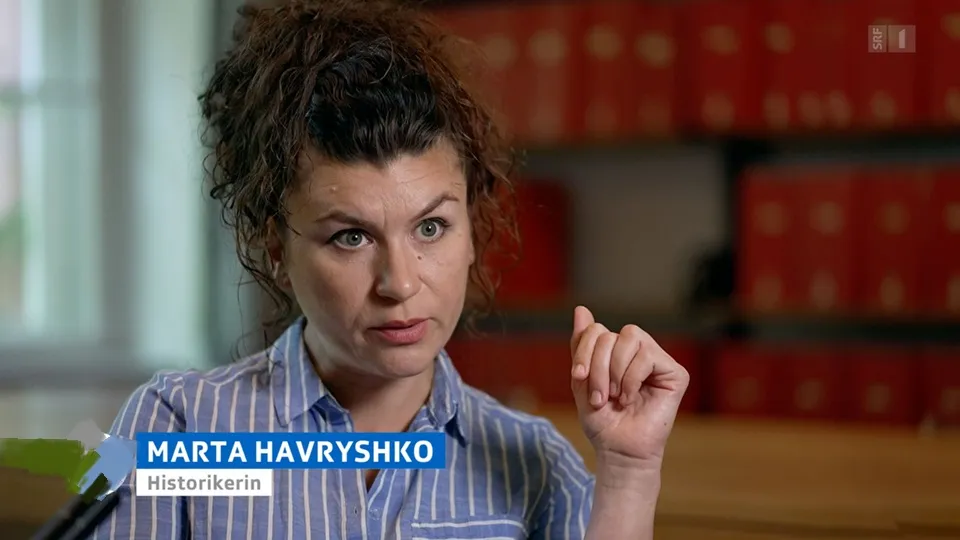
23 June 2026 Noel Wauchope, https://theaimn.net/memory-politics-a-tragic-military-strategy-in-ukraine/
I came across the views of Marta Havryshko in a YouTube video on June 15th, in a lengthy audio essay.
What struck me about this speech, was that it comes from a Jewish Ukrainian woman, who is describing her own observations, living in Ukraine today. I also found the title of her speech very interesting – The tragedy of Memory Politics in Ukraine, Israel & the West. That’s because I cannot help noticing that in the prevailing commentaries on Ukraine, the commentators seem to have forgotten the complexity in Ukraine’s recent modern history.
Marta Havryshko is aware of this complex history. She has been living through the most recent part of it. She sees it from a Jewish perspective, and she is no fan of Putin’s Russia. But – she also brings her awareness of history to current affairs in Ukraine, and she is no fan of Volodymyr Zelensky either.
I tried to transcribe the entire 95 minutes of her speech. It is too long for an article, but I will include excerpts here, to illustrate her themes. She discusses Ukraine’s troubled history of anti-semitism, and the Nazi period in Ukraine. She focusses on Zelensky and the current accepted views on Ukraine’s history – the apparent forgetting of the facts in that history, as Ukrainian extreme nationalism now flourishes.
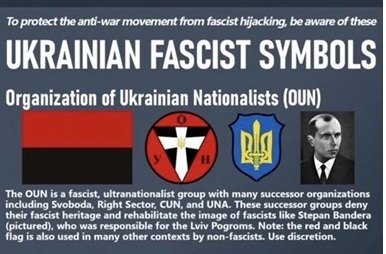
Marta describes her childhood, and education in Ukraine. She learned at school the history of Soviet Russia’s oppression of Ukrainians, and of the heroic freedom fighters who resisted the Russians:
“I was was raised on this nationalistic myth about glorious fighters, members of the Ukraine underground movement the Ukrainian Insurgent Army (UPA) and the organisation of Ukraine nationalists. We learned all these patriotic songs. Our family gatherings involved histories about Soviet repressions and actually, the house that my parents built was on the territory on the land that was seized by Soviets in 1939. Some of my family were involved on the ground in the Ukrainian nationalist movement and they were oppressed. Some of them were booted in prison and some of them were sent to Siberia. So I was raised in this highly nationalistic environment.
When I became a student at Lviv National University actually I met almost the same atmosphere. Lviv is a very nationalistic city with the biggest monument to Stepan Bandera (leader of the UPA). My home was close to Bandera street, and many streets had these partisan names.”

Marta explains how the memories of wartime events have now become confused, enmeshed into present day views and anti-Russian fervour.
“After 2014 this very western Ukraine nationalistic historical myth started to move eastward. After 2022 it became really the national myth promoted on the very national level. That’s why for example under President Zelensky we nowadays have streets named Bandera and Shukhevych (another UPA leader) in Kirik, home town of our president Zelensky.
This myth is cultivated in Ukraine in war time. Another dimension of this very troubling development in is that Nazi apologism is flourishing because many members of the Ukraine nationalists on the ground during the second world war were members of auxiliary police under German occupation and some of them occupied chief positions, so they were not just ordinary rank and file policemen – they were chiefs of police. Vasyl Levkovych, for example, is a very glorious figure in this nationalist pantheon. Those people nowadays are celebrated as freedom fighters and their direct participation in the holocaust is obscured, is marginalised and silenced and even denied.
At the holocaust memorial I was really shocked. I saw these fancy souvenir magazines with Daddy Bandera socks and Daddy Bandera bags. In one day I spent almost three hours in the city center and I saw an amount of different hate symbols like SS bolts, like black sun like Nazi eagles, like swastikas. I never saw in my life. in Western Europe, this concentration of these Nazi hate symbols. and the amount of different hate symbols – SS bolts, black sun, Nazi eagle, different combinations of swastikas. In Ukraine it’s so normalised – why? Because it’s a part of military culture nowadays. Those symbols are adopted primarily by military actors and by soldiers. The trust in Ukraine military is so high in Ukraine society – approximately more than 90% of Ukrainians nowadays trust Ukraine military. That’s why they just accept this.
Ukraine military nowadays is full of different far right groups. They are sponsored and they are celebrated as freedom fighters. In the Ukraine military we have overt Nazi apologists. For example we have the Niga named after the Nachtigall Battalion formed by the Germans and this battalion participated in the Nazi Barbarossa plan against Russia in 1941. From the documents of some participants of this unit we know that they participated in anti-Jewish pogroms.
Especially after 2022 so many neo-Nazis and far right groups neo-Nazis and far right groups were empowered and they openly promote their agenda. They openly celebrate Nazi units. Why? Because their ideology is.” Those guys are lesser evil because they fought our eternal enemy, meaning Russia. And they compare themselves with Nazis.So it’s not only Putin who compares them with Nazis, but that they themselves compare themselves with Nazis, and it’s ridiculous, it’s just crazy.”

Marta explains “memory politics” as a strategy, a weapon of war:
Those who are against military mobilisation are not a minority any more, Those who want to have peace with Russia, those who want to build a relationship with Russia on good terms, who don’t want to be engaged in eternal war with Russia, they are “bad Ukrainians” – you need to view Russia as the eternal enemy. For our children, this means only permanent war. With the anti-Russian project and narrative we will be in constant war with the superior angry and very powerful aggressor., in constant destruction.
We don’t want to spend our lives, sacrificing our life for what? – for our political elites. Ukraine is now a colonial client of the West, The West is deciding what money will go where, what laws will be adopted. In our fight against the Russian imperial state we are becoming a colony of Western imperialism. No-one is talking about this, because it’s a “good” empire.
We still have enormous casualties, and those casualties are hidden.
Memory politics is the main issue. They make movies etc about Russian atrocities but never about Ukrainian atrocities. Ukraine killed Ukrainian students in occupied Donbass, in Spring 2022. It was painful to see how many people denied it, and then justified it, blaming those students for “collaboration with Russia,” some were trying to present this as collateral damage.
The state is pouring so much money into commemorating this war. It’s about producing, inflicting emotions. First of all it’s always in both Ukrainian and English language, It’s for Western audiences, to inflict emotion, to inflict empathy, to present Ukraine as poor victim, to present a black and white picture when Ukraine is of course presented as the forces of good, and Russia as the forces of evil. Nothing of course about what happened to the people of Donbass in 2014, 2015, 2016 – always about guilt of Russia, bad Russia, crazy Putin, imperialism in Russian blood, and angels Ukraine.
So memory politics is a part of Ukraine war propaganda. Many intellectuals are engaged in this propaganda, and many receive grants from abroad. And it supports the Western agenda: Many many Western people – who discovered Ukraine only in February 2022 – see Ukraine as this angel, who was unjustifiably attacked, and is bleeding, and needs support to continue resistance. Nobody is asking those people kidnapped in the vans. Nobody asking those women, their sisters, their mothers, their wives – “Do they want to fight, to be sent to the meat-grinder against their will?” This myth of resilience, of this nation, who would rather die than live under Russian occupation. But this myth is produced by Zelensky propaganda. I must admit they’re doing a very good job in this, because Zelensky is very good at entertainment – it’s his profession.
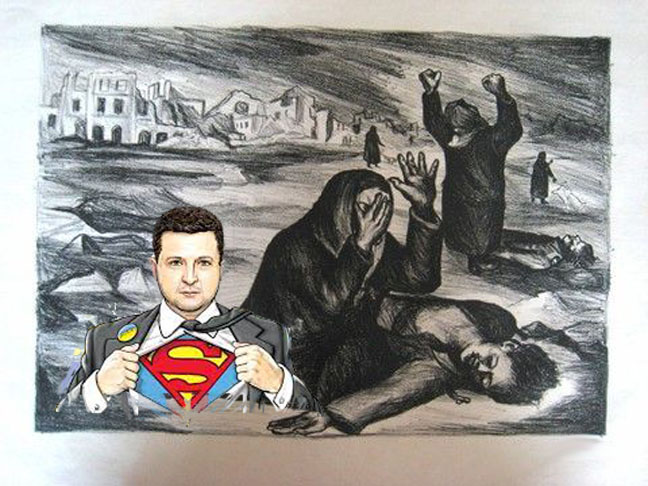
This Is Why Trump Was Necessary
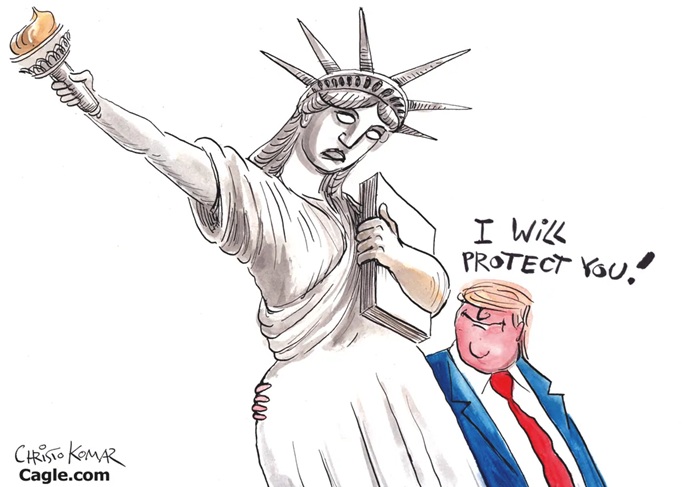
it is entirely conceivable that Israel, just like South Africa, will be globally ostracised and abandoned.
Trump was necessary. Necessary to strip away the niceties and reveal the true face of empire, to reveal its naked impunity, to showcase the war crimes in all their immoral bloodlust.
Nate Bear, Jun 19, 2026, https://www.donotpanic.news/p/this-is-why-trump-was-necessary
Iran has forced the US into one of the biggest strategic defeats in its short, violent and bloody history.
The memorandum of understanding with Iran, signed (symbolically or not), at Versailles yesterday, signalled, as I wrote earlier this week, that we’re witnessing the collapse of American hard power.
After it was signed, Trump made some extraordinary comments that wouldn’t have looked out of place in the handbook of anti-imperial critique, including that it’s not fair to tell Iran it can’t have missiles if all it’s neighbours have them and that it’s “common sense” that the country should be able to enrich uranium for energy. Trump also admitted oil reserves were running out and the world was approaching a depression, which slays the idea (an idea I never bought), that the US attack was a genius move to control the world’s oil and gas.
Iran has suffered some serious damage to its infrastructure as well as burying over 3,000 civilians, but it has checkmated the US strategically. And Trump has had to accept that. Iran’s ability to hit key regional infrastructure from deeply-buried missile cities, along with its ability to control the Strait, won the day. The US also appears to be reluctantly accepting some other realities. A few hours after the MoU was signed, after it was put to him that Israel wasn’t happy with the tentative deal, JD Vance said that Israel “is a country of nine million people that can’t just kill its way out of every national security problem.”
They read the polls, they see the way the wind is blowing, and they’re moving with it.
Israel of course is still a vital strategic outpost for empire, and it will not be abandoned yet. But there is absolutely a future in which the value of Israel to empire becomes less useful than the economic value empire can gain from a wider peace in the region, even if that peace runs counter to Israeli interests. And if Israel, not Iran or the resistance, comes to be seen as the main obstacle to this future, a position Trump and Vance appear to be moving towards, it is entirely conceivable that Israel, just like South Africa, will be globally ostracised and abandoned.
If this were to happen, the range of outcomes is extremely broad. Tensions between orthodox and secular Jews are already high in Israel, and you could reasonably argue that under conditions of global abandonment, civil war would break out. Before or after such a war, you might get a government run by Ben-Gvir and Jewish end-times fanatics who decide to fight the world and trigger a nuclear holocaust. Or the fanatics might lose, and you get a government which enters into international negotiations towards one state with equal rights for all. A former prime minister of Israel has, after all, just labelled Israeli actions in the West Bank ethnic cleansing.
I think we’re a long way from Israel ever giving up its colonial privileges. Civil war is a lot more likely than the negotiated end of the state, but we’re certainly a big step closer than we’ve ever been to whatever comes next for the genocidal colonial outpost.
Maybe this all seems too optimistic to you. And I hate to blow my own trumpet. But I was among the minority who predicted the start of the war before it started, who said Iran wouldn’t lose, that there’d be no regime change and no US victory via an air war was possible. When the ceasefire was announced I was among even fewer who said it would hold because the US was out of real options, while the consensus anti-imperial opinion said it was a ruse to buy time for a land invasion or other escalation.
And now, despite the calling off of talks in Geneva over the next stage of the process, my prediction, for what it’s worth, is that this won’t mean a return to war, and that in fact it will further the process of US-Israel estrangement, with Trump and Vance likely to see it as further confirmation that Israel, not Iran, is the impediment to peace.
Which is all to say, Trump was a necessary evil.
Of course we’ll never know if a Democrat as president would have launched an attack on Iran, but it would have come eventually. And given that an attack on Iran was inevitable, it was the best case scenario that it happened under Trump, an ideologically drifting narcissist without any real loyalties or attachments. A man motivated to protect his own personal financial interests above anything else (a number of which sit within the range of Iranian missiles). A man who was always going to be outmanoeuvred by a country led, literally, by men and women with PhDs, by philosophers, mystics and engineers. There were reports that in the process of negotiations, Iran drafted in the country’s top psychologists to craft messages to appeal to Trump’s ego and vainglorious personality. It appears to have worked.
From only ever acting retaliatorily, from closing the Strait of Hormuz to striking American bases and the oil and gas infrastructure of US proxies, to employing psychologists to sweet talk a narcissist, Iran bossed the process from day one.
And Israel knows it.
Its attacks on Lebanon are a final attempt to derail the process and regain some leverage over the negotiations. I don’t think it’ll work. We’re too far down the track. The Strait opens, the oil and gas starts flowing, or, with oil reserves at critical levels, we’re looking at a global depression. And Trump now appears motivated to avoid that, not least to protect his own wealth, above and beyond the objections of Israel. I don’t believe, as many still do, that the MoU, Trump’s comments and Vance’s criticisms of Israel, are all part of some drawn out psy-op before another attack on Iran.
This isn’t to give Trump any credit. It’s just to say empire isn’t omnipotent or strategically untouchable. You can, with the right war strategy, alongside favourable geography and propitious timing, force it to make concessions it doesn’t want to make.
Trump was necessary. Necessary to strip away the niceties and reveal the true face of empire, to reveal its naked impunity, to showcase the war crimes in all their immoral bloodlust. Yes, from Vietnam to Iraq to the so-called War on Terror, what Trump has shown us is nothing new, but through careful stage-management and competent administration, the myth of benign American empire has managed to endure. I’m not sure that myth will survive Trump. He’s also been necessary to reveal the limits of empire, to show it can be beaten, to expose its vulnerabilities, to detail its weaknesses.
Iran should have tied Gaza more closely to the MoU, as it has with Lebanon, but it has delivered a valuable blueprint in how to fight empire.
Trump has also been necessary to expose the plastic progressives, the liberal anti-Trump imperialists who, in their opposition to Trump’s deal with Iran, can only look like warmongering imperial psychopaths. From all those sharing memes on social media about surrender, from the Democrats and CNN talking heads decrying the deal, to Jimmy Fallon dragging Trump for giving Iran back the money the US stole, there is no articulation of an alternative to endlessly bombing Iran. There’s no anger from liberals over dead Iranians, or at the imperial state, at Zionism or the embedded death machinery that made this violence possible. No, they’re just embarrassed for empire. And they don’t want to recognise the limits of that empire.
With Israel still bombing Lebanon and oil reserves at critical thresholds, however, this is all far from over.
Iran has sketched out two futures for the US and it now has a decision to make: stand behind the deal which Trump has loudly proclaimed as necessary to save the world, and force Israel to stand down, or let Israel dictate the process, return to war and drag the world into an economic depression. Anything is still possible, of course, but I judge the latter extremely unlikely.
And Trump, in his egotism, venality and conceited self-interest, might just be the man for the moment.
What I do know is that those Iranian psychologists have some more work to do.
High French river temperatures expected to limit nuclear power output next week

By Forrest Crellin and Tristan Veyet,
French state-owned utility EDF warned on Thursday that three nuclear
plants face production curbs next week because of high temperatures on the
Rhone and Garonne rivers as France grapples with its second heatwave this
spring. Nuclear output in France has been relatively consistent this year
as production has continued to recover from lows hit several years ago, but
exceptional heatwaves at the end of the northern hemisphere spring have
raised water temperatures to levels that put reactors at risk of output
curtailment.
Reuters 18th June 2026
A Turning Point: What the Iran MoU Reveals About the Limits of US Power
June 19, 2026, By Iqbal Jassat, https://www.palestinechronicle.com/a-turning-point-what-the-iran-mou-reveals-about-the-limits-of-us-power/
The lessons from Iran, if incorporated in the study of international relations, will be that the era in which Washington could dictate terms without consequence is steadily eroding.
Events at the G7 Summit in Evian were overshadowed by news of the US-Iran Memorandum of Understanding (MoU). This was hardly surprising since the story broke about America’s dramatic turnaround and widespread speculation about the details of the MoU, as well as the reasons for it.
It would be fair to say, thus, that the most significant outcome of the G7 Summit in Évian was not the signing of the MoU. It was the public collapse of the illusion that military superiority automatically translates into political victory.
For months, Washington and Tel Aviv insisted that Iran would eventually be forced to surrender. The language was harsh, pointed and uncompromising. Iran’s missile program would be destroyed. Its nuclear capabilities would be dismantled. Its regional alliances would be broken. Its leadership would face collapse under the combined weight of military pressure, sanctions and international isolation.
None of those objectives were achieved.
The contradiction became impossible to conceal when President Donald Trump stood before the world at the G7 and defended Iran’s right to retain conventional ballistic missiles.
The same missiles that had been presented as an existential threat suddenly became acceptable. The same missile program that justified war was transformed into a reality that Washington was prepared to live with.
Contrary to the wishful thinking of some political pundits, this was not a minor adjustment in policy. It was a public admission that the original objectives could not be achieved.
Absent from much Western reporting is the extent of this reversal. The final agreement contains no dismantling of Iran’s missile deterrent. It contains no regime change. It contains no surrender of Iran’s political system. It contains no disarmament of Iran’s regional allies. Even the nuclear issue was largely deferred into future negotiations rather than resolved through force.
The shock registered on the gaping mouths of G7 leaders as well as Israel’s war criminals was obvious, for the outcome exposed the enormous gap between public rhetoric and strategic reality.
For years, American foreign policy has been built around the assumption that economic pressure, military dominance and international isolation can force adversaries to comply with Washington’s demands. Iraq was supposed to demonstrate that reality. Libya was supposed to reinforce it. The sanctions architecture imposed on Iran was designed around the same logic.
The MoU signed by Trump at the G7, demonstrates the limits of that model.
Iran’s leadership calculated that surrender would be more dangerous than resistance. Despite suffering enormous military and economic damage, Tehran retained enough leverage to make continued escalation prohibitively expensive for its adversaries.
The critical factor was not military strength alone.
The Strait of Hormuz exposed a vulnerability that military planners could not bomb away. As energy markets reacted and global supply chains faced disruption, the economic consequences of a prolonged conflict became increasingly unacceptable. Oil prices surged. Shipping costs escalated. Insurance markets were shaken. European governments demanded an end to the crisis. Gulf states that had quietly supported pressure on Iran suddenly became advocates for de-escalation.
The beneficiaries of the original confrontation were clear. Arms manufacturers secured contracts. Security establishments expanded their authority. Lobbying organizations intensified demands for escalation. Media institutions repeated assumptions about inevitable Iranian defeat. A vast ecosystem of political and economic interests promoted the belief that only one outcome was possible.
Though the MoU demolished that narrative, the reaction from Israel was even more revealing. The Israeli political establishment expected the conflict to fundamentally alter the regional balance of power in its favor.
Instead, Netanyahu and his criminal gang of genocidaires found themselves confronting an agreement negotiated largely without their input and one that preserved many of Iran’s capabilities Israel had spent years attempting to eliminate.
The frustration expressed by them and echoed across the regime’s media was not simply about the agreement itself.
It reflected the recognition that military escalation had failed to produce the strategic transformation that had been promised.
This is why the agreement carries implications far beyond Iran, particularly for governments across the Global South who are expected to study the outcome closely.
Indeed, so will Russia and China. The lesson they will draw is not that America lacks power. The lesson is that American power now operates within constraints that did not exist during the unipolar era.
The lessons from Iran, if incorporated in the study of international relations, will be that the era in which Washington could dictate terms without consequence is steadily eroding.
The MoU therefore marks something larger than the end of a conflict. It marks another stage in the transition from a unipolar order to a multipolar one. The significance of the MoU lies not in what was announced. It lies in what was conceded.
The campaign to impose American terms concluded with Washington accepting realities it once declared unacceptable.
Censored Lavrov article Politico refused to publish (FULL TEXT)
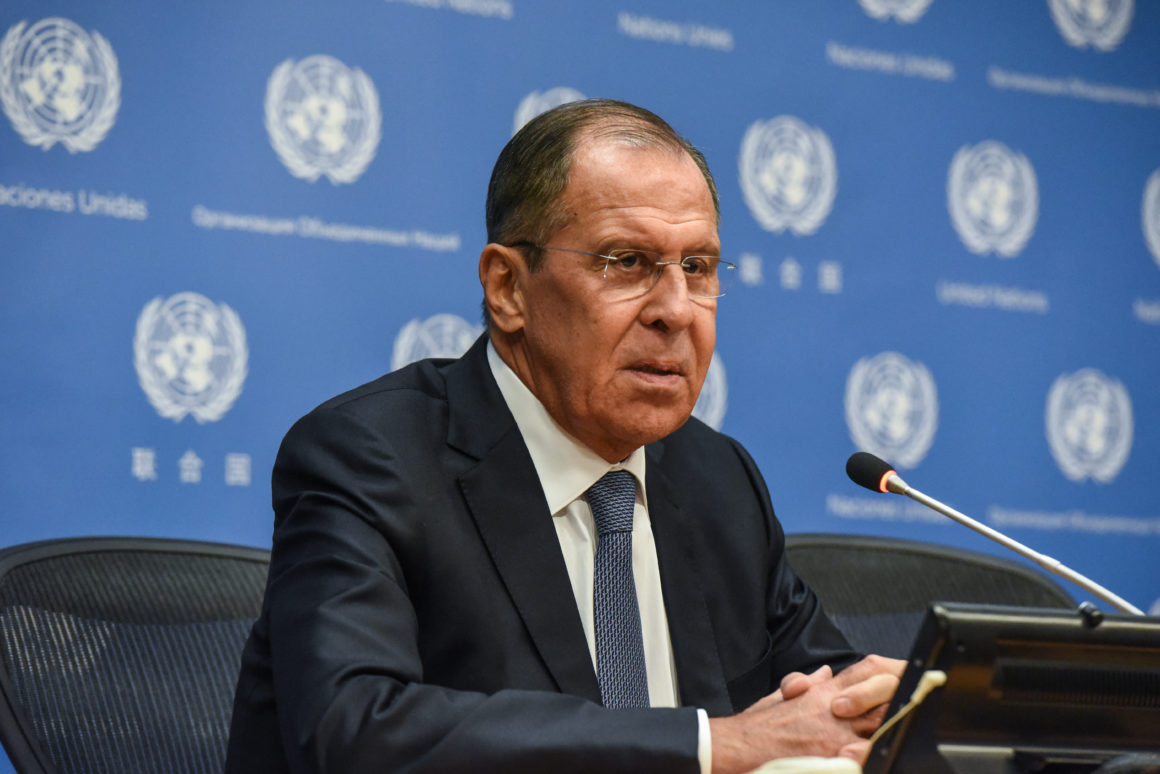
This state of affairs poses serious threats to global security. A direct confrontation between NATO and Russia could rapidly escalate into an exchange of nuclear strikes, with catastrophic consequences
The Russian foreign minister has shared his views on NATO expansion and EU militarization, including in the nuclear sphere, and the threat this poses to global security
18 Jun, 2026 , https://www.rt.com/russia/641806-lavrov-censored-politico-article/
The pro-establishment, Brussels-based publication Politico Europe, owned by Germany’s Axel Springer SE, has refused to publish an exclusive article written by Russian Foreign Minister Sergey Lavrov.
Lavrov’s article was initially slated for publication in the Brussels-based Politico Europe, but due to a “last-minute decision by the outlet’s editorial team,” the publication was canceled, the Russian Foreign Ministry said on Friday.
In the article, Russia’s highly experienced top diplomat outlined Moscow’s view of the Ukrainian conflict, Europe’s role in escalating the crisis, and the broader implications for global security. Lavrov accused European leaders of using diplomacy as a cover for NATO and EU expansion, while arguing that the West has sought to turn Ukraine into an anti-Russian foothold. He also warned that the EU’s growing militarization, including discussions about nuclear deterrence and “strategic autonomy,” could increase the risk of a direct confrontation between NATO and Russia.
Below is the full text of Lavrov’s article, as published on the Russian Foreign Ministry website:
Some reflections on resolving the Ukrainian crisis, Europe and global security
At a meeting in London on June 7, 2026, the leaders of Britain, France, and Germany, as well as Vladimir Zelensky, laid out five preconditions for Russia to secure a “just and lasting peace” in Ukraine. United Europe now presents this list of demands as the basis for dialogue with Moscow.
Background
More than two decades of negotiations with Europe, as part of the collective West, lead to only one conclusion: engaging Russia in dialogue has served as a diplomatic smokescreen for the geopolitical expansion of Western institutions, above all NATO and the European Union, eastwards, right up to Russia’s borders.
Europe’s complicity in fueling the Ukrainian crisis is undeniable. Together with the United States, European countries orchestrated the Orange Revolution in Kiev in 2004. To create an anti-Russian bridgehead in Ukraine, they spent years buying off politicians and entire parties, rewriting history and educational curricula, cultivating and nurturing Ukrainian nationalism, and going to great lengths to pull Ukraine away from Russia.
In 2013, the European Union outright rejected our proposal for a compromise on the association agreement – a deal Brussels had long been pressing Viktor Yanukovich to sign. It is worth recalling that Ukraine was offered unilateral market opening without reciprocal commitments – terms that would have proved incompatible with Kiev’s continued membership in the CIS free-trade zone. When Viktor Yanukovich requested a deferral, the Europeans incited street riots that swiftly escalated into a coup d’état in Kiev in February 2014.
Germany, France, and Poland then proved themselves to be equally treacherous. Having guaranteed that the agreement reached between the opposition and Viktor Yanukovich would be honored, they washed their hands of it the moment that same opposition, their own handiwork, took power. “Democracy,” they shrugged, “takes unexpected turns.”
Europe thereafter lent its backing to the new authorities. In Odessa on May 2, 2014, the burning alive of dozens of innocent supporters of closer ties with Russia did not draw a single word of condemnation from European capitals.
As co-guarantors of the 2015 Minsk Agreements, France and Germany effectively encouraged the Ukrainian regime to sabotage its own commitments. As Angela Merkel and François Hollande later conceded – after the special military operation had already begun – Kiev’s implementation of the Minsk Agreements, unanimously approved by the UN Security Council, was never genuinely intended. The objective, they admitted, was merely to buy time: to shore up the Armed Forces of Ukraine and flood them with Western weaponry.
Russia, for its part, explored every diplomatic avenue to defuse Europe’s security crisis. However, in January 2022, the United States and NATO rejected Russia’s proposal for legally binding mutual security guarantees. European NATO members actively endorsed that rebuff.
Following the launch of the special military operation, United Europe threw its support behind the British prime minister’s efforts to sabotage the Istanbul negotiations between Russia and Ukraine. Boris Johnson’s appeal to Kiev – “don’t sign anything, just fight” – slammed the door on genuine diplomacy for the foreseeable future.
Current situation
So what has prompted European leaders to suddenly shift their rhetoric and start talking about negotiations, and what are they aiming to achieve with these statements? For instance, EU foreign policy chief Kaja Kallas has stated that the purpose of any dialogue with Russia is to dictate Europe’s terms. These include paying “reparations” to Ukraine; withdrawing troops from Transnistria and the South Caucasus; abolishing the “foreign agents” law; and accepting strict limits on the size of the Russian Federation’s Armed Forces. In her framing, “there can be no just and lasting peace without accountability for Russia.” During the UN Security Council session on May 19, 2026, an EU representative made the point unequivocally: “Supporting Ukraine militarily does not contradict the pursuit of peace, but rather serves as a fundamental prerequisite for any credible, good-faith negotiations.”
Europe’s plan is to talk with Russia while simultaneously pressing ahead with a campaign of legal warfare orchestrated through the Council of Europe. Within this once-respected organization, an entire infrastructure is being assembled for the express purpose of “holding Russia accountable”: a Register of Damage, a Claims Commission, and a Special Tribunal.
The European Union has also given the green light to detaining merchant vessels on the high seas. Several incidents have already taken place in the Baltic and the Atlantic. At the same time, the West studiously averts its gaze from the terrorist acts of sabotage perpetrated by the Armed Forces of Ukraine in the Black and Mediterranean Seas.
The real objective of Europe’s leaders, then, is not to negotiate with Russia. It is to shore up the Zelensky regime and preserve it as a launchpad for continued confrontation against Russia. With this in mind, European leaders are scrambling to secure a ceasefire as quickly as possible and for one reason only: to prevent the collapse of the Armed Forces of Ukraine on the battlefield. The plan is to “freeze” the conflict without addressing its root causes, and then rapidly deploy military contingents from the Anglo-French “coalition of the willing” onto Ukrainian soil.
It is widely known that European elites have invested their “political capital” in the confrontation with Russia, pouring hundreds of billions of dollars into propping up the Kiev regime and ramping up the military budgets of EU member states and NATO. Europe now aims to achieve “defense readiness” against Russia by 2030. Until then, they mean to buy time by whatever means are available. In a strikingly candid remark this April, Belgium’s chief of staff put it bluntly: “We still have a few years. Thanks to the courage and blood of the Ukrainians, who are buying us that time.”
United Europe continues to dream of expansion. It intends to absorb Ukraine and Moldova while pulling Armenia into its sphere of influence. NATO has already expanded eastward, swallowing up Finland and Sweden. As for Ukraine, it is increasingly being eyed as the “striking fist” of a future European military force, independent of the United States and independent of NATO.
Risks to global security
This state of affairs poses serious threats to global security. A direct confrontation between NATO and Russia could rapidly escalate into an exchange of nuclear strikes, with catastrophic consequences
Under the banner of “strategic autonomy,” Europe is witnessing a significant build-up of its military capabilities, including in the nuclear sphere. Paris’s intention to extend its “nuclear umbrella” to several EU and NATO member states is a source of deep concern. This will do nothing to strengthen the security of France itself or of the recipients of its so-called protection.
For all that, Europe’s political and military establishment continues to attribute aggressive plans to Russia – plans that, they claim, reach far beyond Ukraine. The Russian president has stated on numerous occasions that all of this is nonsense, provocation, and disinformation, aimed solely at extracting budget funds for the fight against Russia. That is scarcely the climate for substantive dialogue.
Russia’s position
As for negotiations, Vladimir Putin reiterated at the St. Petersburg International Economic Forum that Russia is not opposed to contacts with any party. We see Europe, however, as a party bent on Russia’s defeat – a stance the Europeans themselves openly avow. Dialogue with Europe, therefore, cannot be conducted as though it were an impartial third-party observer.
Russia would prefer to achieve the goals of the special military operation through diplomacy.
That requires reliably guaranteeing security along Russia’s western borders and ensuring respect and dignity for our citizens and compatriots, including the right to speak their native Russian language and practice the Orthodox Christian faith. Further military, political, and economic expansion by the West is unacceptable: it runs counter to the imperatives of a multipolar world.
European leaders should recognize that the model of regional security built in Europe over decades, ever since the adoption of the Helsinki Final Act in 1975, has been destroyed by their own hands. And it will never be restored. We must now move toward creating a continent-wide security architecture open to all Eurasian countries and reflective of today’s multipolar reality.
The principle of equal and indivisible security, trampled upon by the Euro-Atlanticists, can be embodied within a new Eurasian architecture. When the time is ripe, Europe too will be able to join this great effort.
The key point is that meaningful dialogue requires the restoration of trust, shattered by the anti-Russian actions of the West, and Europe as part of it, in the post-Cold War era. Trust can be recovered only through concrete steps that demonstrate a sincere commitment to moving away from using diplomacy as a cover for expansionist ambitions. Trust cannot be restored, nor can dialogue be resumed, through ultimatums such as the one issued to Russia in London on June 7, 2026.
P.S. It is noteworthy that the London ultimatum was unequivocally reaffirmed by the ambassadors of Britain, France, and Germany at the meeting at the Russian Foreign Ministry on June 11, 2026 – a meeting they had so insistently requested. That was the sole purpose of their visit to the ministry.
Switzerland heading towards referendum on construction of new nuclear plants
Euro News, By Gavin Blackburn, 18/06/2026
“…… Switzerland’s parliament approved a divisive government plan to build new nuclear power stations on Thursday, overturning a 2018 ban and putting the country on course for a referendum.
The lower house of parliament joined the upper chamber in backing a government proposal to reverse the ban put in place following a referendum won by anti-nuclear campaigners in 2017.
… Both houses say authorisation for new nuclear plants can only be granted if the financing is secured.
A broad coalition of groups “will launch a referendum,” the Green Party said in a statement.
Greens president Lisa Mazzone said the parliament vote “sabotages the rapid development of renewable energies, climate protection and our energy sovereignty.”
The collection of signatures for a referendum would begin this month, the party said.
To trigger a referendum under Switzerland’s direct democracy system, 50,000 valid signatures must be collected within 100 days of publication of a new law, a hurdle the coalition is expected to clear.
………….The Swiss approved the gradual phase-out of nuclear power in the 2017 referendum, banning the construction of new power plants.
That law was the result of a long process initiated after the 2011 Fukushima nuclear accident in Japan, which was triggered by a tsunami.
Switzerland continues to operate four nuclear reactors whose construction dates back to the 20th century.
Beznau 1, commissioned in 1969, is the oldest functioning nuclear reactor in Europe. It will cease operations in 2033, while Beznau 2, connected to the grid since 1971, will close a year earlier, in 2032.
Gosgen and Leibstadt began operating in 1979 and 1984, respectively. https://www.euronews.com/my-europe/2026/06/18/switzerland-heading-towards-referendum-on-construction-of-new-nuclear-plants
1 This Month

26 September – International Day for the Total Elimination of Nuclear Weapons


PLEASE OPPOSE HR 8255 AND S.3639 – bills would accelerate satellite deployment, with no environmental review or safeguards – https://ncstd5li.quorum.us/campaign/169331/
To see nuclear-related stories in greater depth and intensity – go to https://nuclearinformation.wordpress.com
-
Archives
- September 2026 (206)
- August 2026 (330)
- July 2026 (355)
- June 2026 (287)
- May 2026 (306)
- April 2026 (356)
- March 2026 (251)
- February 2026 (267)
- January 2026 (308)
- December 2025 (358)
- November 2025 (359)
- October 2025 (375)
-
Categories
- 1
- 1 NUCLEAR ISSUES
- business and costs
- climate change
- culture and arts
- ENERGY
- environment
- health
- history
- indigenous issues
- Legal
- marketing of nuclear
- media
- opposition to nuclear
- PERSONAL STORIES
- politics
- politics international
- Religion and ethics
- safety
- secrets,lies and civil liberties
- spinbuster
- technology
- Uranium
- wastes
- weapons and war
- Women
- 2 WORLD
- ACTION
- AFRICA
- Atrocities
- AUSTRALIA
- Christina's notes
- Christina's themes
- culture and arts
- Events
- Fuk 2022
- Fuk 2023
- Fukushima 2017
- Fukushima 2018
- fukushima 2019
- Fukushima 2020
- Fukushima 2021
- general
- global warming
- Humour (God we need it)
- Nuclear
- RARE EARTHS
- Reference
- resources – print
- Resources -audiovicual
- Weekly Newsletter
- World
- World Nuclear
- YouTube
-
RSS
Entries RSS
Comments RSS
 nuclear-news