Citizens Advice says Sizewell C costs should not be paid with energy bill hikes

Independent advice provider calls for clarity on funding and says project may offer ‘poor value for money’
Guardian, Alex Lawson 19 Feb 24
Ministers have been urged by Citizens Advice to protect consumers from a hike in household energy bills to pay for the proposed Sizewell C power station, amid international tensions over the rising costs of nuclear projects.
The UK’s largest independent advice provider has raised concerns that the project in Suffolk may offer “poor value for money” and called for greater clarity on its funding, in a letter to the Department for Energy Security and Net Zero.
Estimates of the cost of Sizewell C vary wildy – from £20bn to £44bn – and a process to find international investors to join the UK government and France’s EDF is ongoing.
Last month, the owner of Sizewell C’s sister project, EDF’s Hinkley Point C in Somerset, said it would be delayed to 2031 and cost up to £35bn, blaming inflation, Covid and Brexit. This could reach £47.9bn under its worst-case scenario. On Friday, EDF said it had taken a €12.9bn hit on the project.
EDF, which is wholly owned by the French government, is on the hook for cost overruns at Hinkley. French officials have lobbied the UK government to share the burden of the extra costs after its Chinese partner, CGN, was removed from the Sizewell C project over security fears.
However, Sizewell C has a different funding structure to Hinkley, exposing households to potential overruns.
Sizewell C Ltd, the entity behind the project, updated its electricity licence to allow a Regulated Asset Base (RAB) model to be implemented.
RAB financing models, which have been used in the construction of the Thames Tideway Tunnel and Heathrow Terminal 5, are designed to encourage investment by offering a guaranteed income for investors during the construction phase of a large project and bring down financing costs, with the cost added to bills.
In a response to the consultation on the licence update, Citizens Advice chief energy economist Richard Hall said: “By providing investors with a relatively guaranteed income stream, and one that commences during the construction phase, it can be convincingly argued that applying the RAB model to new nuclear projects could reduce the cost of capital that consumers have to pay.
“Our concern has been, and remains, that consumers are not simply exposed to the cost of capital, but also the volume of capital that needs to be employed. If the volume of capital required balloons, the project may offer consumers poor value for money even if it is cheaply financed.”
He added: “Looking at new nuclear projects in general, and the type envisaged at Sizewell C in particular, the scope for material cost and time overruns is very significant. Consumers need to be protected from those risks. They have no way to manage them, and are reliant on the [energy] department to take steps to ensure that they are not on the hook for cost or time overruns.”
Hall also raised concerns over proposals for advertising and publicity costs included in the licence consultation. “Billpayers should not be paying for the Sizewell C sales pitch,” he said.
The latest estimates of the cost of Sizewell C, conducted by University of Greenwich Business School and seen by the Guardian, forecast that it would cost £38.4bn and be complete in 2039. Its analysis suggests that the consumer surcharge to fund it would rise from £4.07 a year in the first year of the project, to £27.82 in year 15, costing households an extra £239.21 in total during its construction.
Alison Downes of the Stop Sizewell C campaign said: “The government emphasise that Hinkley Point C is EDF’s risk and responsibility, but when Sizewell C overspends and overruns – as it inevitably will – future ministers will have to explain why it was considered acceptable to put its construction risk on to consumers and taxpayers. Why has the Hinkley fiasco not taught the government that a RAB-funded Sizewell is a bad idea?”…………………………. https://www.theguardian.com/business/2024/feb/19/citizens-advice-says-sizewell-c-costs-should-not-be-paid-with-energy-bill-hikes
Touring South Korea to support opposition to US space warfare plans
Organizing notes, Bruce Gagnon, 19 Feb 24
https://space4peace.blogspot.com/2024/02/touring-south-korea-to-support.html
I’ve just landed in South Korea (ROK) where I will be on a speaking tour around the country for the next 10 days.
I was invited to come and talk about Washington’s push to entrap South Korea into the Pentagon’s space technology strategy aimed at North Korea, China and Russia.
Already at the US Osan AFB in South Korea the Space Force has set up operations with the ROK client state.
The US has pushed the right-wing Seoul government to massively expand their spending on military space tech. With the current US national debt now at $35 trillion, Washington can’t afford to pay for its expensive and ambitious plans to ‘control and dominate’ space. Thus the #1 job of the Pentagon and State Department is to get the allies to help pay for the space warfare infrastructure.
Currently the ROK government is building space R & D centers, satellite production facilities, new airfields likely to test hypersonic missiles and expanding ‘missile defense’ deployment sites.
One key goal the US has is to use ROK satellite production and launch facilities to hoist mini-satellites into Lower Earth Orbit (LEO) to help fill up the already crowded orbits before China and Russia can get there. Eyes and ears in LEO give a nation a decisive advantage in full scale war making.
Late last year the US hosted a big space industry conference in the capital city of Seoul in order to cement this expanding space warfare relationship. Dangling the promise of ‘lots of high-tech jobs’ the US has drawn the ROK into the trap.
The problem for the ROK (like all of Washington’s allies participating in this space warfare operation) is that they will have little to no input into how and when this Star Wars program will be used. Even though ROK will help pay for it (and host many of the bases) the Pentagon will remain in charge of the ‘tip of the spear’. Once becoming a colony of the US war machine, a nation loses their right to be full partners.
One sad thing about all of this is how Jeju Island (just off the southern tip of the Korean peninsula) is becoming further militarized via this new space tech operation.
Late last year the US hosted a big space industry conference in the capital city of Seoul in order to cement this expanding space warfare relationship. Dangling the promise of ‘lots of high-tech jobs’ the US has drawn the ROK into the trap.
The problem for the ROK (like all of Washington’s allies participating in this space warfare operation) is that they will have little to no input into how and when this Star Wars program will be used. Even though ROK will help pay for it (and host many of the bases) the Pentagon will remain in charge of the ‘tip of the spear’. Once becoming a colony of the US war machine, a nation loses their right to be full partners.
One sad thing about all of this is how Jeju Island (just off the southern tip of the Korean peninsula) is becoming further militarized via this new space tech operation.
After years of avoiding extradition, Julian Assange’s appeal is likely his last chance. Here’s how it might unfold (and how we got here)
On February 20 and 21, Julian Assange will ask the High Court of England and Wales to reverse a decision from June last year allowing the United Kingdom to extradite him to the United States.
There he faces multiple counts of computer misuse and espionage stemming from his work with WikiLeaks, publishing sensitive US government documents provided by Chelsea Manning. The US government has repeatedly claimed that Assange’s actions risked its national security.
This is the final avenue of appeal in the UK, although Stella Assange, Julian’s wife, has indicated he would seek an order from the European Court of Human Rights if he loses the application for appeal. The European Court, an international court that hears cases under the European Convention on Human Rights, can issue orders that are binding on convention member states. In 2022, an order from the court stopped the UK sending asylum seekers to Rwanda pending a full review of the relevant legislation.
The extradition process has been running for nearly five years. Over such a long time, it’s easy to lose track of the sequence of events that led to this. Here’s how we got here, and what might happen next.
Years-long extradition attempt
From 2012 until May 2019, Assange resided in the Ecuadorian embassy in London after breaching bail on unrelated charges. While he remained in the embassy, the police could not arrest him without the permission of the Ecuadorian government.
In 2019, Ecuador allowed Assange’s arrest. He was then convicted of breaching bail conditions, and imprisoned in Belmarsh Prison, where he’s remained during the extradition proceedings. Shortly after his arrest, the United States laid charges against Assange and requested his extradition from the United Kingdom.
Assange immediately challenged the extradition request. After delays due to COVID, in January 2021, the District Court decided the extradition could not proceed because it would be “oppressive” to Assange.
The ruling was based on the likely conditions that Assange would face in an American prison and the high risk that he would attempt suicide. The court rejected all other arguments against extradition.
The American government appealed the District Court decision. It provided assurances on prison conditions for Assange to overcome the finding that the extradition would be oppressive. Those assurances led to the High Court overturning the order stopping extradition. Then the Supreme Court (the UK’s top court) refused Assange’s request to appeal that ruling.
The extradition request then passed to the home secretary, who approved it. Assange appealed the home secretary’s decision, which a single judge of the High Court rejected in June 2023.
This appeal is against that most recent ruling and will be heard by a two-judge bench. These judges will only decide whether Assange has grounds for appeal. If they decide in his favour, the court will schedule a full hearing of the merits of the appeal. That hearing would come at the cost of further delay in the resolution of his case.
Growing political support
Parallel to the legal challenges, Assange’s supporters have led a political campaign to stop the prosecution and the extradition. One goal of the campaign has been to persuade the Australian government to argue Assange’s case with the American government.
Cross-party support from individual parliamentarians has steadily grown, led by independent MP Andrew Wilkie. Over the past two years, the government, including the foreign minister and the prime minister, have made stronger and clearer statements that the prosecution should end.
On February 14, Wilkie proposed a motion in support of Assange, seconded by Labor MP Josh Wilson. The house was asked to “underline the importance of the UK and USA bringing the matter to a close so that Mr Assange can return home to his family in Australia.” It was passed.
In addition, Attorney-General Mark Dreyfus confirmed he had recently raised the Assange prosecution with his American counterpart, who has the authority to end it.
What will Assange’s team argue?
For the High Court appeal, it is expected Assange’s legal team will once again argue the extradition would be oppressive and that the American assurances are inadequate. A recent statement by Alice Edwards, the United Nations Special Rapporteur on Torture, supports their argument that extradition could lead to treatment “amounting to torture or other forms of ill-treatment or punishment”. She rejected the adequacy of American assurances, saying:
They are not legally binding, are limited in their scope, and the person the assurances aim to protect may have no recourse if they are violated.
The argument that extradition would be oppressive remains the strongest ground for appeal. However, it is likely Assange’s lawyers will also repeat some of the arguments which were unsuccessful in the District Court proceedings.
One argument is that the charges against Assange, particularly the espionage charges, are political offences. The United States–United Kingdom extradition treaty does not allow either state to extradite for political offences.
Assange is also likely to re-run the argument that his leaks of classified documents were exercises of his right to freedom of expression under the European Convention on Human Rights. To date, the European Court of Human Rights has never found that an extradition request violates freedom of expression. For the High Court to do so would be an innovative ruling.
The High Court will hear two days of legal argument and might not give its judgement immediately, but it will probably be delivered soon after the hearing. Whatever the decision, Assange’s supporters will continue their political campaign, supported by the Australian government, to stop the prosecution.
How British Intelligence Framed Julian Assange As Russian Agent
KIT KLARENBERG FEB 19, 2024
February 20/21st could mark WikiLeaks founder-and-chief Julian Assange’s final opportunity to avoid extradition to the US. London’s High Court has scheduled two days of arguments over whether he can ask an appeals court to block his transfer Stateside. If unsuccessful, he could be sent across the Atlantic, where he faces prosecution under Washington’s draconian Espionage Act, and penalties ranging from 175 years in a “supermax” prison, to death, for exposing the lies and crimes of US global empire.
It is the most important press freedom case of all time. Yet, at no point during Julian’s seven years of arbitrary detention in London’s Ecuadorian embassy, or five years at His Majesty’s Pleasure in Belmarsh Prison, Britain’s “Gitmo”, have the mainstream media or international human rights groups taken a serious interest in his plight. Many Western citizens – including those who had hitherto full-throatedly supported WikiLeaks, and Julian’s crusade against official secrecy – were also indifferent over, if not outright supportive of, his violent explusion from the Ecuadorian embassy.
Much of this conspiracy of silence and apathy can be attributed to a concerted campaign of calumny, incubated in London and Washington DC, designed to extinguish public sympathy for Julian. As Nils Melzer, the United Nations special rapporteur on torture, wrote in a June 2019 op-ed Western media refused to publish, he was “systematically slandered to divert attention from the crimes he exposed,” and once he’d been “dehumanized through isolation, ridicule and shame, just like the witches we used to burn at the stake, it was easy to deprive him of his most fundamental rights without provoking public outrage worldwide.”
A prominent libel against Julian was that he operated upon the orders, and in the interests, of the Kremlin. Built up as an omnipotent villain on the world stage following the February 2014 Western-sponsored Maidan coup in Ukraine, and all manner of domestic political upheaval in Europe and North America small and large framed as somehow Moscow-orchestrated ever after, anyone and anything branded as even vaguely sympathetic to Russia automatically became an FSB and/or GRU chaos agent.
When British police forcibly hauled Julian handcuffed out of the Ecuadorian embassy, many mainstream outlets – and a great many Russiagaters – cheered, believing he would soon be indicted for his GRU-assisted role in subverting the outcome of the 2016 US Presidential election. No such charges have been forthcoming. And in September 2021, Yahoo News inadvertently let an incongruous cat out of the bag. The outlet revealed the CIA had explored plans to surveil, kidnap, and even kill Julian while he was ensconced in the Ecuadorian Embassy.
The explosive report was almost entirely ignored by the mainstream media – although one fundamental aspect of the article even its advocates and promoters largely overlooked was the disclosure that the CIA possessed no evidence Julian or WikiLeaks had any ties whatsoever with Russia. “Difficulty” in proving he or his organization had operated “at the direct behest of the Kremlin” was reportedly a “major factor” when, in April 2017, Mike Pompeo, then-C.I.A. director, designated WikiLeaks a “non-state hostile intelligence service.” That unfounded assertion opened the floodgates for the Agency’s untrammeled surveillance, harassment, and persecution of Julian and his collaborators. It also served as justification for its assassination plots.
There is another dimension to this mephitic myth that has largely remained unexplored. Integrity Initiative, a covert British intelligence information warfare operation, was pivotal to perpetuating the narrative of Julian as Kremlin asset. This sordid tale reveals just how flimsy Western propaganda campaigns are concocted and then disseminated through compliant media. Now, with Julian facing extradition to the US, it has never been more urgent to expose.
Killing Hope
A major component of the Integrity Initiative scandal was the organisation’s construction of cloak-and-dagger “clusters”. These were – and may well remain today – clandestine networks of journalists, scholars, politicians and military and intelligence operatives, which the Initiative could mobilise to disseminate black propaganda, therefore influencing policy and perceptions, targeting domestic and overseas adversaries. One little-known example of the potency of clusters was an aggressive campaign to falsely connect Julian with the Kremlin.
The Initiative’s Spanish cluster was particularly instrumental in this regard. The largest and most influential of any Initiative cluster outside the UK, its ranks include a number of prominent journalists, academics, think tank representatives, lawmkaers from several parties, government ministers, and military officials.
Initiative documents leaked in November 2018 by Anonymous, the “hacktivist” collective, detail how this nexus has successfully subverted the Spanish political process. There is, for instance, the case of Pedro Baños, a colonel in the Spanish army and formerly chief of counterintelligence and security for the European Army Corps. His fate is highly relevant to the Initiative’s role in framing Assange as a Russian asset.
In June 2018, the spook-staffed Initiative learned Madrid’s governing Socialist Workers’ Party was to appoint Baños director of Spain’s National Security Department, roughly the equivalent of the US Department of Homeland Security. Baños had repeatedly appeared on RT and Sputnik in the months prior, and publicly called for constructive, harmonious relations between the European Union and Moscow.
The Initiative couldn’t tolerate his appointment to such an influential post. Within hours of learning this confidential information, the Spanish cluster covertly passed dossiers on the colonel to local and international media outlets and activated its overseas clusters to publish negative comments about the proposed move on social media, to “generate international support” for its blockage.
The Initiative’s London-based team also set up a dedicated WhatsApp group “to coordinate Twitter response, get contacts to expand awareness and get people retweeting the material.”
The cluster, moreover, sent material to El País and El Mundo, leading Spanish dailies. Representatives of the People’s Party—which has cluster operatives within its ranks—and Ciudadanos, another centrist party, publicly called for Prime Minister Pedro Sánchez to block the appointment, while some Spanish diplomats also expressed their “concerns.” As the day drew to a close, it was confirmed Baños was no longer in the running for the post……………………………………………………………………………………………………………………………………………………………………………………………………………………….
The cluster, moreover, sent material to El País and El Mundo, leading Spanish dailies. Representatives of the People’s Party—which has cluster operatives within its ranks—and Ciudadanos, another centrist party, publicly called for Prime Minister Pedro Sánchez to block the appointment, while some Spanish diplomats also expressed their “concerns.” As the day drew to a close, it was confirmed Baños was no longer in the running for the post.
Even more damningly, McGrath found Julian featured in just 17 of 596 stories about Catalonia published by RT and Sputnik from September – December 2017. Meanwhile, of the 1,508 tweets shared by the pair’s English- and Spanish-language Twitter accounts on Catalonia within this timeframe, a mere 22 – 1.46% – mentioned him. Ironically, El País published considerably more stories referencing Julian than Sputnik and RT combined during this period. McGrath concluded:
“Claims about fake news, especially those published in the media and brought before legislative bodies, need to be more thoroughly scrutinized. It is important to conduct further research to understand how widespread of an issue fake news about fake news is and how these unfounded allegations come about. It is necessary to explore how claims of fake news can themselves be used as a manipulative tactic and understand the impact this has on society.”……………………………………………………………………………………..
This egregious saga is a particularly pitiful example of the ease with which Western intelligence agencies can flood corporate media with outright fiction on the flimsiest of bases, in the knowledge credulous, pliable “journalists” will peddle their fallacious lies as fact in the manner of religious conviction, and never face consequenceso.
If and when their lies are exposed, they can pick themselves up and hurry off as if nothing happened, safely clinging to their legitimizing awards, sanitised Wikipedia entries, and plaudits. Meanwhile, Julian is approaching the fifth anniversary of his arrival in “Britain’s Gitmo”. Each and every day since, his mental and physical health has deteriorated.
Now, his only path to liberation from that hellish structure may be a 175–year sentence in a supermax prison, situated not far from the headquarters of a spying agency that not long ago drew up elaborate plans to murder him in cold blood. https://www.kitklarenberg.com/p/how-british-intelligence-framed-julian-088?utm_source=post-email-title&publication_id=552010&post_id=141816575&utm_campaign=email-post-title&isFreemail=true&r=ln98x&utm_medium=email
US Threatens to Veto New Gaza Ceasefire Resolution at UN Security Council
The US has vetoed two similar resolutions
by Dave DeCamp February 18, 2024, https://news.antiwar.com/2024/02/18/us-threatens-to-veto-new-gaza-ceasefire-resolution-at-un-security-council/
—
The US is threatening to veto a resolution calling for a ceasefire in Gaza at the UN Security Council as the US continues to provide political cover for the Israeli massacre of Palestinians.
US Ambassador to the UN Linda Thomas-Greenfield said in a statement that if the resolution, which is being drafted by Algeria, was brought to a vote, it would not be adopted.
Thomas-Greenfield justified US opposition to a ceasefire by pointing to US efforts to push for a new hostage deal between Israel and Hamas. However, Israeli Prime Minister Benjamin Netanyahu vetoed hostage talks last week, and Qatar, the mediator of the negotiations, said Saturday that things were not looking “promising.”
Thomas-Greenfield said Algeria’s resolution would “run counter” to US efforts on the hostage deal. “We have communicated this concern repeatedly to our colleagues on the Council. For that reason, the United States does not support action on this draft resolution. Should it come up for a vote as drafted, it will not be adopted,” she said.
The US has already used its veto power on the Security Council to veto two resolutions calling for an end to the onslaught. The Biden administration has also dismissed the International Court of Justice’s ruling that it’s “plausible” Israel is committing genocide and continues to provide unconditional military support for the slaughter.
Thomas-Greenfield said the resolution would get in the way of US “diplomacy” related to pushing for a hostage deal. “It is critical that other parties give this process the best odds of succeeding, rather than push measures that put it — and the opportunity for an enduring resolution of hostilities — in jeopardy,” she said.
Macron and Zelensky sign military deal
18 Feb 2024 , https://www.sott.net/article/489024-Sell-out-Macron-and-Zelensky-sign-military-deal
The ten-year pact mirrors defense agreements Kiev recently signed with Berlin and London
France and Ukraine signed a bilateral security pact on Friday during President Vladimir Zelensky’s visit to Paris. While President Emmanuel Macron did not offer Kiev any ironclad military commitments, he promised another €3 billion in aid over the rest of 2024, as well as “cooperation” in the area of artillery.
The agreement states that France views the prospect of Ukraine’s accession to NATO positively, as “a useful contribution to peace and stability in Europe.” The largely symbolic deal is designed to help “pave the way towards Ukraine’s future integration into the EU and NATO,” French media noted, citing officials.
The pact follows a similar agreement struck with Germany earlier in the day, and another signed with the UK last month. All three are set to last ten years.
Last month, Macron announced that France would supply Kiev with 40 more SCALP-EG long-range cruise missiles and “hundreds of bombs,” promising to finalize the bilateral security agreement on an upcoming trip to Kiev. The trip, which was to run from February 13-14, was called off by the French side due to security concerns, according to French media.
Zelensky is set to ask Western sponsors for more financing at the Munich Security Conference on Saturday, while the situation on the front lines of the Ukraine-Russia conflict is escalating, with Kiev facing severe personnel and ammo shortages.
Moscow has condemned Western deliveries of long-range weaponry such as French SCALP-EG cruise missiles, which Kiev has used to strike Russian infrastructure in Donbass, causing numerous civilian deaths. Russia maintains that further military aid to Kiev will only delay the end of the conflict without changing the final outcome, and lead to unnecessary deaths.
Comment: The ‘leaders’ of Europe are selling out Europe and the welfare of their countries while submitting to a globalist anti-human agenda.
See also:
Ukraine can’t join NATO while in conflict – Netherlands
16 Feb 24, https://www.rt.com/news/592609-ukraine-cant-join-nato-netherlands/
Accession to the US-led bloc is a “sensitive process” that may require intermediate steps, Dutch caretaker PM Mark Rutte has said
The Netherlands’ caretaker prime minister, Mark Rutte, has refused to say whether he would support Ukraine’s membership of NATO at an upcoming bloc leaders’ meeting, insisting that admitting Ukraine to NATO is not feasible while the conflict with Russia is ongoing. Rutte has been described in the media as a frontrunner to become the next secretary-general of the US-led bloc.
The politician made the comments at the Munich Security Conference on Saturday in response to a question about whether EU prime ministers would “personally support” Ukraine’s membership bid at the next NATO summit in Washington in July.
The bad news is – as long as the war is raging, Ukraine cannot become a member of NATO,” Rutte has said. “The good news is that we can learn from the European Union,” he added referring to the EU approach of implementing “intermediate steps” that countries take on “the way to accession” as opposed to NATO’s process that goes “from nothing to full membership.”
Rutte admitted that the last time the question of Ukraine’s membership arose, Kiev was left “dissatisfied.” As a result, there is a need to “work carefully” to see “what next step is possible” so as not to “overpromise.”
Ukraine applied to integrate with the NATO Membership Action Plan in 2008 and a decade later enshrined in its constitution membership in the US-led bloc as a strategic foreign policy goal.
At last year’s NATO summit in Vilnius, the bloc’s leaders said that Ukraine’s “rightful place is in NATO,” but failed to provide clear commitments or describe a timeline.
While the question of Ukraine’s membership is likely to be discussed at the next NATO summit in July, some Western politicians have warned against expecting a “big leap forward on that.”
Russia views NATO expansion towards its border as a major security threat. President Vladimir Putin has argued that Western powers have used Ukraine to antagonize Russia after the fall of the Soviet Union. In a recent interview with Tucker Carlson, Putin called the West’s approach to Ukraine a colossal political mistake, pointing to NATO’s 2008 promise to accept the country into the bloc, as well as the Western-supported coup in Kiev in 2014.
Great British Nuclear seeks to buy EDF land for small modular reactor.
UK Government in talks to buy site in Heysham, Lancashire, as it rolls out the new
technology.
The government is holding talks with EDF to take control of
land at a site in Lancashire as part of plans to roll out mini-nuclear
power stations in Britain. Great British Nuclear is in early discussions
with the French state-owned energy group over buying land adjacent to its
existing nuclear plants at Heysham, with a view to potentially giving the
green light for a private developer to build a small modular reactor there.
The 255-acre site is one of eight in Britain approved for new nuclear
development and is the location of EDF’s Heysham 1 and Heysham 2 nuclear
power stations. Almost 109 acres has a nuclear site licence, while the rest
is being used for other purposes. Britain’s first small nuclear plants
are due to be awarded government contracts this summer after six designs,
including one from Rolls-Royce, were selected to compete for up to £20
billion in taxpayer funding.
The government does not expect to make a final
investment decision on the first small modular reactor until 2029. Great
British Nuclear is searching initially for two sites, each to house a
single mini-reactor, with a plan to build between four and six in total, as
part of the first phase of the rollout in Britain.
Times 19th Feb 2024
The San Onofre Briefing: The Latest on SoCal’s Shut Down Nuclear Power Plant
5 Feb 2024
What does it mean for a nuclear plant to be decommissioned? What’s the status of the nuclear waste currently stored on-site at San Onofre? What concerns does the public need to be aware of? Is San Onofre safe? As advocates for a safe and sustainable future for Southern California, SLF is thrilled to present the next edition of our First Fridays Series, “The San Onofre Briefing: The Latest on SoCal’s Shut Down Nuclear Power Plant.” This edition is a comprehensive exploration of the recent developments surrounding the decommissioning of the San Onofre Nuclear Generating Station. Our expert panel – including a retired Admiral of the US Navy and the Former Chair of the US Nuclear Regulatory Commission – delves into the current status, environmental impact, and public health implications of the shut-down nuclear site.
Radiation Free Lakeland urges East Riding Councillors to Withdraw from GDF process
Radiation Free Lakeland. 16 Feb 24
Dear Councillor of East Riding,
At your full meeting on 21st February 2024 I believe a motion is being put forward for withdrawal from the expression of interest by East Riding Council’s inward investment arm to start a “conversation” with residents about building a geological waste disposal facility for high level nuclear wastes.
RADIATION FREE LAKELAND
Radiation Free Lakeland are a voluntary group in Cumbria. Our Facebook group has almost 1000 members and a recent petition against investigations for GDF generated over 55,000 signatures. We are running two campaigns currently: Keep Cumbrian Coal in the Hole and Lakes Against Nuclear Dump.
RFL have been pushing back against a GDF here since 2008 Many of our members were also active in the push back against NIREX (forerunner of NWS) in the 1ate 1990s.
We fully support the motion for withdrawal and would urge East Riding Councillors to look at the experience in Cumbria.
HISTORY OF GDF IN CUMBRIA
In the 1990s the GDF plan was limited to low and intermediate level wastes for abandonment deep underground. A public inquiry in Cumbria with many scientists and geologists arguing against the “Rock Characterisation Facility” found that the low/intermediate level wastes would breach containment and percolate to the surface far sooner than NIREX had accounted for. The NIREX inspectors report can be seen here. https://www.davidsmythe.org/nuclear/inspector’s_report_complete.pdf
In breathtaking mission creep the UKs failed GDF plan now includes High Level Wastes which would be extremely hot at 100 degrees c or more. The hot wastes are currently cooled by Britain’s Favorite View -Wastwater, along with water from the rivers Ehen, Calder and other water sources amounting to millions of gallons every day. The reason the GDF would be so huge is to try and allow heat from widely spaced waste containers to dissipate into the surrounding rocks. Despite optimistic assurances about safety, this has never been done anywhere in the world. It is all a big experiment to dig a very big hole (or holes – new nuclear build/waste would require up to three GDFs), bury the waste and forget about it into millennia.
The former Leader of Cumbria County Council Eddie Martin, sadly no longer with us, put it very well in his speech to Cumbria County Council’s Cabinet in January 2013 at which CCC decided to withdraw from the ‘Managing Radioactive Waste Safely’ process (now NWS) : ” Young children and radioactive materials need supervision. Like a child, like you and me, an energetic radioactive molecule will become less energetic as it ages but for some molecules it will take many, many ages…Like a two year old, radioactive waste can get into everything: water, soil, plants and animals.” Eddie Martin’s full speech to Cabinet can be seen here https://www.lakesagainstnucleardump.com/post/heartfelt-thanks-to-courageous-leader-of-cumbria-county-council-eddie-martin
DEEP MINING FOR COAL AND NUCLEAR = DEEP POLLUTION
East Riding’s point of contact with NWS “Head of Siting” is Steve Reece. Mr Reece was formerly Operations Director for West Cumbria Mining. On his watch many deep boreholes of over 500m were drilled through the geology in the Whitehaven area and flushed with water at 240 liters per second in an area riddled with old mines to ‘test the hydrology’ for the UKs first deep coal mine in 30 years. Those 4000 metres of exploratory boreholes may have in part or in whole been responsible for the environmental catastrophe now unfolding in Whitehaven. Polluted old mine water has been pouring into the harbour for over year now with no end in sight. The fragile honeycomb of old mines dating back to medieval times has been breached and no one is taking responsibility with the Coal Authority even initially saying it was not minewater pouring into the harbour. Now no-one disputes the pollution is from old mine water but the authorities appear clueless about how to find the source of the problem and stop it. The exact siting of Steve Reece’s coal mine “exploratory” boreholes are redacted from West Cumbria Mining’s pending licence applications to the Coal Authority…………………………………
GRASP THE OPPORTUNITY TO SAY NO WITH BOTH HANDS
Councillors and the public in East Riding are being given the chance to stop the GDF in its tracks in their area – a chance that was denied to the people of Cumbria who have already voted no to the plan many times over. The rules have been changed to allow the GDF plan once more into West Cumbria. This area is seen as the most politically expedient choice for a GDF with the presence of Sellafield and a nuclear compliant workforce. There are mumblings from other areas that ‘Sellafield has the waste already so a GDF should go there.’ However the presence of 150 tonnes of plutonium (not classified as waste, not earmarked for GDF) is the very reason why earthquake inducing mining should not take place anywhere near the Sellafield site – either from Steve Reece’s coal mine (just five miles away) or from the far bigger void of a GDF..
COPELAND NWS “PARTNERSHIP” IS WITHOUT CONSENT BUT WITH CRONYISM.
There was no discussion or vote by the full Copeland Council in Cumbria in forming a “Partnership” with NWS in 2021. The decision was taken quietly by just four people, including the Mayor and Deputy Mayor of Copeland, on the executive. There is an ongoing police investigation into one of those for his failure to declare his interests of over £100,000 renumeration from the nuclear sector. Both the (former) Mayor and Deputy Mayor of Copeland (now Cumberland) are also vehement advocates of the coal mine whose CEO is Mark Kirkbride. Kirkbride is a key government advisor at the Committee on Radioactive Waste Management advising on investigation techniques, costings and construction on the GDF plans…………………….
West Cumbria is being treated as a nuclear fiefdom despite its beauty, its history, its wildlife, its ‘protected’ ocean and its tourism – all of genuine lasting value unlike the falsely puffed up ‘centre of excellence’ at Sellafield which threatens everything. We urge councillors not to allow East Riding to become a nuclear fiefdom as is Cumbria. We will continue to resist but it is difficult when this area is already viewed and treated by industry and government and by others as a nuclear fiefdom enslaved to the most toxic industry on the planet. There is no “away” for the fiefdom’s wastes, they must be monitored and repackaged as and when necessary. The first step being to allow no further wastes to be railroaded to the Sellafield site.
We fully and vehemently support the motion to withdraw East Riding (and anywhere else) from GDF “conversations.”
Yours sincerely,
Marianne Birkby
on behalf of Radiation Free Lakeland https://mariannewildart.wordpress.com/2024/02/16/radiation-free-lakeland-lettereast-riding-councillors-urged-to-withdraw-from-gdf-process/
Chris Hedges: Julian Assange’s Final Appeal
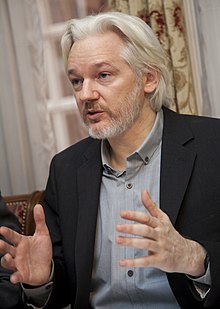
Julian Assange will make his final appeal this week to the British courts to avoid extradition. If he is extradited it is the death of investigations into the inner workings of power by the press.
By Chris Hedges / ScheerPost, 18 Feb 24
LONDON — If Julian Assange is denied permission to appeal his extradition to the United States before a panel of two judges at the High Court in London this week, he will have no recourse left within the British legal system. His lawyers can ask the European Court of Human Rights (ECtHR) for a stay of execution under Rule 39, which is given in “exceptional circumstances” and “only where there is an imminent risk of irreparable harm.” But it is far from certain that the British court will agree. It may order Julian’s immediate extradition prior to a Rule 39 instruction or may decide to ignore a request from the ECtHR to allow Julian to have his case heard by the court.
The nearly 15-year-long persecution of Julian, which has taken a heavy toll on his physical and psychological health, is done in the name of extradition to the U.S. where he would stand trial for allegedly violating 17 counts of the 1917 Espionage Act, with a potential sentence of 170 years.
Julian’s “crime” is that he published classified documents, internal messages, reports and videos from the U.S. government and U.S. military in 2010, which were provided by U.S. army whistleblower Chelsea Manning. This vast trove of material revealed massacres of civilians, torture, assassinations, the list of detainees held at Guantanamo Bay and the conditions they were subjected to, as well as the Rules of Engagement in Iraq. Those who perpetrated these crimes — including the U.S. helicopter pilots who gunned down two Reuters journalists and 10 other civilians and severely injured two children, all captured in the Collateral Murder video — have never been prosecuted.
Julian exposed what the U.S. empire seeks to airbrush out of history.
Julian’s persecution is an ominous message to the rest of us. Defy the U.S. imperium, expose its crimes, and no matter who you are, no matter what country you come from, no matter where you live, you will be hunted down and brought to the U.S. to spend the rest of your life in one of the harshest prison systems on earth. If Julian is found guilty it will mean the death of investigative journalism into the inner workings of state power. To possess, much less publish, classified material — as I did when I was a reporter for The New York Times — will be criminalized. And that is the point, one understood by The New York Times, Der Spiegel, Le Monde, El País and The Guardian, who issued a joint letter calling on the U.S. to drop the charges against him.
Australian Prime Minister Anthony Albanese and other federal lawmakers voted on Thursday for the United States and Britain to end Julian’s incarceration, noting that it stemmed from him “doing his job as a journalist” to reveal “evidence of misconduct by the U.S.”
The legal case against Julian, which I have covered from the beginning and will cover again in London this week, has a bizarre Alice-in-Wonderland quality, where judges and lawyers speak in solemn tones about law and justice while making a mockery of the most basic tenants of civil liberties and jurisprudence.
How can hearings go forward when the Spanish security firm at the Ecuadorian Embassy, UC Global, where Julian sought refuge for seven years, provided videotaped surveillance of meetings between Julian and his lawyers to the CIA, eviscerating attorney-client privilege? This alone should have seen the case thrown out of court.
How can the Ecuadorian government led by Lenin Moreno violate international law by rescinding Julian’s asylum status and permit London Metropolitan Police into the Ecuadorian Embassy — sovereign territory of Ecuador — to carry Julian to a waiting police van?
Why did the courts accept the prosecution’s charge that Julian is not a legitimate journalist?
Why did the United States and Britain ignore Article 4 of their Extradition Treaty that prohibits extradition for political offenses?
How is the case against Julian allowed to go ahead after the key witness for the United States, Sigurdur Thordarson – a convicted fraudster and pedophile – admitted to fabricating the accusations he made against Julian?
How can Julian, an Australian citizen, be charged under the U.S. Espionage Act when he did not engage in espionage and wasn’t based in the U.S when he received the leaked documents?
Why are the British courts permitting Julian to be extradited to the U.S. when the CIA — in addition to putting Julian under 24-hour video and digital surveillance while in the Ecuadorian Embassy — considered kidnapping and assassinating him, plans that included a potential shoot-out on the streets of London with involvement by the Metropolitan Police?
How can Julian be condemned as a publisher when he did not, as Daniel Ellsberg did, obtain and leak the classified documents he published?
Why is the U.S. government not charging the publisher of The New York Times or The Guardian with espionage for publishing the same leaked material in partnership with WikiLeaks?
Why is Julian being held in isolation in a high-security prison without trial for nearly five years when his only technical violation of the law is breaching bail conditions when he sought asylum in the Ecuadorian Embassy? Normally this would entail a fine. ………………………………………………………………………………………………………………………….
Julian’s lawyers will attempt to convince two High Court judges to grant him permission to appeal a number of the arguments against extradition which Judge Baraitser dismissed in January 2021. His lawyers, if the appeal is granted, will argue that prosecuting Julian for his journalistic activity represents a “grave violation” of his right to free speech; that Julian is being prosecuted for his political opinions, something which the U.K.-U.S. extradition treaty does not allow; that Julian is charged with “pure political offenses” and the U.K.-U.S. extradition treaty prohibits extradition under such circumstances; that Julian should not be extradited to face prosecution where the Espionage Act “is being extended in an unprecedented and unforeseeable way”; that the charges could be amended resulting in Julian facing the death penalty; and that Julian will not receive a fair trial in the U.S. They are also asking for the right to introduce new evidence about CIA plans to kidnap and assassinate Julian.
If the High Court grants Julian permission to appeal, a further hearing will be scheduled during which time he will argue his appeal grounds. If the High Court refuses to grant Julian permission to appeal, the only option left is to appeal to the ECtHR. If he is unable to take his case to the ECtHR he will be extradiated to the U.S.
…………………………………………………………………………………………………………………………….. No other contemporary journalist has come close to matching his revelations.
Julian is the first. We are next. https://scheerpost.com/2024/02/18/chris-hedges-julian-assanges-final-appealchris-hedges/—
Biden & Blinken – Rule of Illegal Power Over Rule of Law

By Ralph Nader, February 16, 2024,
more https://nader.org/2024/02/16/biden-blinken-rule-of-illegal-power-over-rule-of-law/
Among the puzzling questions that the media chooses to ignore is asking high government officials why they are exercising the illegal use of power that violates the rule of law which they are required to obey.
This week, the Veterans for Peace (VFP) made it very easy for reporters to pose questions by sending an open letter (See veteransforpeace.org) to the Inspector General of the U.S. State Department and Antony Blinken, Secretary of State, invoking several U.S. statutes that require the “termination of provision of military weapons and munitions to Israel.”
Josh Paul, a former senior official in the State Department’s office charged with reviewing weapon transfers to foreign countries, said: “The Secretary and all relevant officials under his purview should take this letter from Veterans for Peace with the utmost seriousness. It is a stark reminder of the importance of abiding by the laws and policies that relate to arms transfers.”
What laws are being violated by the State Department daily as it approves ships and cargo planes full of weapons of mass destruction to be used in Israel’s war crimes and genocide against hundreds of thousands of Gaza’s civilians, mostly children and women?
These are the laws highlighted in the VFP letter:
- The Foreign Assistance Act, which forbids the provision of assistance to a government which “engages in a consistent pattern of gross violations of internationally recognized human rights.”
- Arms Export Control Act, which says countries that receive US military aid can only use weapons for legitimate self-defense and internal security. Israel’s genocidal campaign in Gaza goes way beyond self-defense and internal security.
- The U.S. War Crimes Act, which forbids grave breaches of the Geneva Conventions, including wilful killing, torture or inhuman treatment, wilfully causing great suffering or serious injury to body or health, and unlawful deportation or transfer, perpetrated by the Israeli Occupying Forces.
- The Leahy Law, which prohibits the U.S. Government from using funds for assistance to units of foreign security forces where there is credible information implicating that unit in the commission of gross violations of human rights.
- The Genocide Convention Implementation Act, which was enacted to implement U.S. obligations under the Genocide Convention, provides for criminal penalties for individuals who commit or incite others to commit genocide
Under these laws, the State Department has a “Conventional Arms Transfer Policy” which, the letter notes, “prohibit [U.S. weapons transfers when it’s likely they] will be used by Israel to commit … genocide, crimes against humanity, grave breaches of the Geneva Conventions of 1949, [including attacks intentionally directed against civilian objects or civilians protected] or other serious violations of international humanitarian or human rights laws.”
The VFP letter continues, “Dozens of authoritative complaints and referrals made by hospital administrators in Gaza, as well as by Amnesty International, Human Rights Watch, Palestine Authority, South Africa, Turkey, Medicins san Frontieres, UNRWA, UNICEF, the Secretary-General of the United Nations, the Norwegian Refugee Council and the World Food Programme have confirmed that there is an ongoing human rights and humanitarian disaster due to Israel’s cutoff of water and electricity, deliberate destruction of sewage infrastructure and delaying of aid shipments by Israeli forces.”
If you are wondering why these laws are not being enforced – the answer is that individual citizens or groups of citizens do not have any “legal standing” to sue Secretary Blinken, according to the U.S. Supreme Court. Only a Committee of Congress, backed by a Senate or House Resolution, can take the State Department to federal court. That action to enforce Congressionally passed and enacted laws is not likely to happen in this lawless, Israeli government-indentured Congress which refuses even to demand a ceasefire.
Mike Ferner, VFP National Director, observed “Just as any good soldiers can recognize when they are given an unlawful order, we believe some State Department staff are horrified at the orders they’re given and will decide to uphold the law, find the courage to speak out and demand an end to the carnage.”
There is a related serious matter, pointed out by international law practitioner, Bruce Fein who said “The United States has clearly become a co-belligerent with Israel in its war against Hamas-Gaza Palestinians by systematically supplying the IDF with weapons and intelligence without conditions. Under the Fourth Geneva Convention, nationals of a co-belligerent state are not regarded as protected persons if their state has customary diplomatic relations with an allied nation [in this case, Israel].”
For decades, the State Department has had an independent Office of the Legal Adviser. The present occupant of that post, acting legal adviser Richard C. Visek has been publicly silent. I am sending the Veterans for Peace letter to him and asking him to respond to this letter and to the American people who pay his salary.
Exploding Alberta’s Myths about Small Nuclear Reactors

Small nuclear reactors are unproven and years away from being in use. But the Alberta government is presenting them as a way to keep fossil fuels flowing.
The untested technology is more about greenwashing than about cutting emissions.
Tim Rauf 15 Feb 2024, The Tyee
Alberta’s government is really excited about nuclear power.
More specifically, about novel and unproven small modular nuclear reactors. It hopes to use these to help lower the province’s carbon emissions while letting the energy industry continue operating as usual — an enticing prospect to the government given its intention to increase oil and gas production, while still having the energy sector get to net zero by 2050.
Small modular nuclear reactors produce less than one-third of the electricity of a traditional reactor.
The premise is that small reactors are easier to place and build, and cheaper.
Alberta hitched its horse to this wagon with Ontario, New Brunswick and Saskatchewan in 2022, taking part in a strategic plan for small modular reactor development and deployment. Alberta Innovates, the province’s research body, had a feasibility study conducted for it by Pacific Northwest National Laboratory. The study focused on using the reactors for greenhouse-gas-free steam emissions for oilsands projects, electricity generation in our deregulated market and providing an alternative to diesel when supplying power to remote communities.
More recently, Ontario Power Generation and Capital Power out of Edmonton entered into an agreement to assess SMRs for providing nuclear energy to Alberta’s grid. Nathan Neudorf, Alberta’s minister of affordability and utilities, was gleeful. “This partnership represents an exciting and important step forward in our efforts to decarbonize the grid while maintaining on-demand baseload power,” he said of the announcement.
All of this buzz makes it seem like SMRs are just over the horizon, an inevitability that will allow the province to evolve to have a cleaner, modern energy landscape.
But small modular reactors are nowhere near ready for deployment, and won’t be in Alberta for about a decade. That means for 10 years, they’ll provide no GHG-free steam to mitigate emissions.
“It’s still in the design phase,” Kennedy Halvorson said, speaking about the reactors. Halvorson is a conservation specialist with the Alberta Wilderness Association. The reactors are “so far off from being able to be used for us,” Halvorson added. “The earliest projections would be 2030. And we need to be reducing our emissions before 2030. So, we need to have solutions now, basically.”
With SMRs unable to stem the emissions tide for years, it’s confusing as to how they could make enough of a difference to get Alberta to net zero by 2050 (in line with United Nations emissions reduction targets to keep global warming to no more than 1.5 degrees).
Capital Power made similar projections………………………………………………………………………..
Construction itself is only one piece. Adding to that is the need to build a regulatory framework, which Alberta doesn’t have for nuclear…………………………………………………….
Ontario’s nuclear troubles
Listening to these public voices is prudent. We can look east to see what happens when the government and power utilities sidestep the process of getting explicit consent from communities that stand to be affected.
With its status as the nuclear activity hub in Canada, we can use Ontario as a litmus test of sorts and gauge Canada’s track record of care with nuclear. The report card isn’t great. There have been multiple cases of improper consultation with Indigenous Peoples on whose lands the waste, production or extraction sites are placed………………………………………………………………………..
Small reactors face a critical economic challenge
Adding to the timeline troubles are questions as to whether small reactors truly offer that much of an economic advantage, if any, compared with their larger counterparts.
In a previous article Ramana wrote, he pointed to the first reactors as an indication of the answer.
The first reactors started off small. Their size, though, coupled with the exorbitant price tag of nuclear development, meant they couldn’t compete with fossil fuels.
The only thing they could do to reduce the disadvantage was to build larger and larger reactors, Ramana said.

A large reactor that could produce five times as much electricity didn’t cost five times as much to build, he said, improving the return from the investment.
Economically the SMR can’t seem to compete with its larger sibling. Adding this to the delays abundant with nuclear, controversies around construction and communities, and the misalignment of timelines for meeting climate commitments, we need to ask why we’re seeing such a fervent enthusiasm for small modular reactors.
Greenwashing by any other name
The answer is likely a simple one: The Alberta government wants to keep the taps on. Their friends in the energy industry do too. Like carbon capture and sequestration before it, SMRs are the next way to stave off pesky talk of divestment and transition…………………………………………………………….
Deflecting and delaying isn’t the only greenwashing happening either, Halvorson argued. She noted there’s a special kind of tactic that comes with nuclear and other “clean” technology, where only carbon dioxide and greenhouse gas offsets are counted.
“When we reduce it all to just how much CO2 something emits, we’re not getting the full picture of environmental impacts,” Halvorson said. She pointed to water use in nuclear as an example.

“Most nuclear technologies require a massive input of water to work. And as we know, right now we’re in a drought in Alberta. Our water resources are so precious. We already have industries that are using way too much water as is, in a way that’s not allowing our environments and ecosystems to replenish their reserves, like their water resources,” she said.
Despite the cheerleading for nuclear Alberta, where small nuclear reactors will let us enjoy the fruits of fossil fuels (and even produce more) in a cleaner way, the bones don’t read that way. The argument that we can keep on drilling so long as we have that newest silver bullet hasn’t stood up to scrutiny before, and it doesn’t now. https://thetyee.ca/Analysis/2024/02/15/Exploding-Alberta-Myths-Small-Nuclear-Reactors/
Egypt Building Walled Camp in Sinai Desert to Absorb Palestinian Refugees from Gaza
Israel will likely try to push Palestinians from Rafah into the camp
by Dave DeCamp February 15, 2024 https://news.antiwar.com/2024/02/15/egypt-building-walled-camp-in-sinai-desert-to-take-palestinian-refugees-from-gaza/
Egypt is building an 8-square-mile walled enclosure in the Sinai Desert near Gaza to prepare for an influx of Palestinian refugees as Israel is vowing to launch an assault on Rafah, which borders Egypt and is packed with about 1.5 million Palestinians.
The revelation of Egypt’s construction, which was reported by The Wall Street Journal and an Egyptian rights group, signals Cairo is caving to Israeli pressure to allow Palestinians to enter its territory.
Egyptian officials told the Journal that more than 100,000 people would be able to fit into the camps they are constructing. If a mass exodus of Palestinians from Gaza does happen, the Egyptian officials said they want to limit the number of refugees they allow in to between 50,000 and 60,000.
The Sinai Foundation for Human Rights first reported on the construction on Wednesday and said the project is expected to be completed within 10 days. Egyptian officials told the Journal they expect a broad Israeli offensive on Rafah could start “within weeks.” Israel must be aware of the construction and will likely try to push as many Palestinians into the camp as it can.
Israeli government officials have not been shy about their desire to cleanse the Gaza Strip of its Palestinian population and re-establish Jewish settlements. A document prepared by Israel’s Intelligence Ministry that was leaked back in October said the best-case scenario for Israel would be to send all 2.3 million Palestinians living in Gaza into Egypt.
But Cairo’s opposition to the plan caused Israeli officials to look elsewhere and suggest Western countries take in Palestinian refugees. According to Israeli media, Israeli Prime Minister Benjamin Netanyahu previously said he was looking for countries to “absorb” Palestinians, but he’s cooled the rhetoric since the Biden administration criticized other Israeli ministers for making similar comments.
Germany and Ukraine sign ‘long term’ security deal
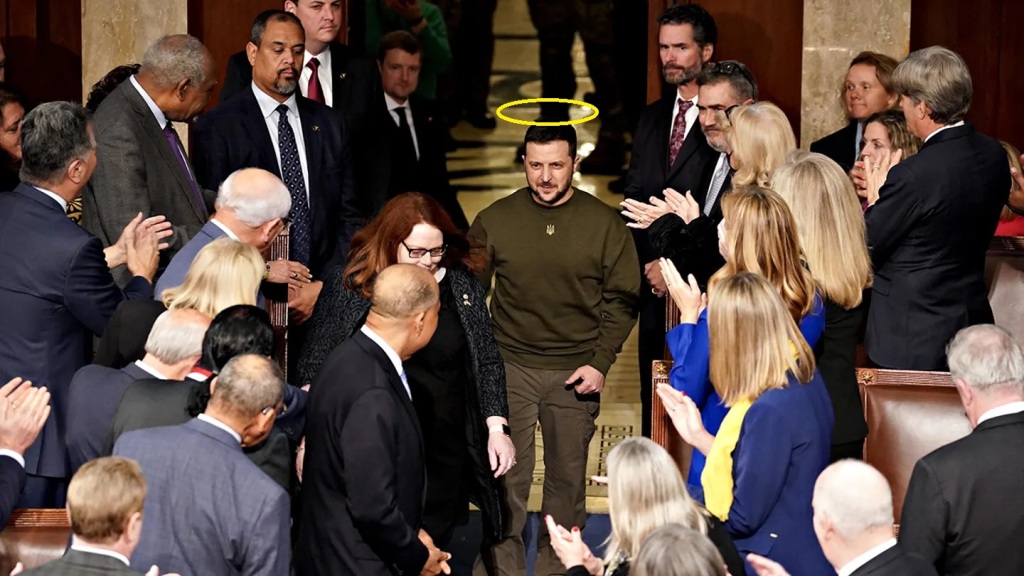
Zelensky said that the details of the agreement “are very specific and involve long-term support,” and that the pact proves that one day “Ukraine will be in NATO.”
https://www.rt.com/news/592570-germany-ukraine-security-deal/ 17 Feb 24
Ukrainian President Vladimir Zelensky has said the agreement proves his country will join NATO
German Chancellor Olaf Scholz and Ukrainian President Vladimir Zelensky have signed a security pact under which Berlin will supply Kiev with military and economic aid for another ten years.
Inked on Friday, the agreement commits Germany to providing “unwavering support for Ukraine for as long as it takes in order to help Ukraine defend itself” and restore its 1991 borders. In addition to retaking the regions of Donetsk, Lugansk, Kherson, and Zaporozhye, this feat would also involve the seizure of Crimea from Russia, which some American officials and Kiev’s former military chief view as next to impossible.
On top of military aid, the plan binds Germany to training Ukrainian police officers, transferring weapons manufacturing technology, paying for green energy projects, and a range of other efforts to help the Ukrainian government “continue providing services to its people”
Speaking at a ceremony in Berlin, Zelensky said that the details of the agreement “are very specific and involve long-term support,” and that the pact proves that one day “Ukraine will be in NATO.”
Germany is Ukraine’s second-largest Western backer, behind only the US. To date, Berlin has given Kiev €22 billion ($23.7 billion) in assistance, including €17.7 billion in military aid, according to figures compiled by the Kiel Institute for the World Economy. When aid transferred via the EU is included, Germany has handed over a total of €28 billion to Ukraine, Scholz said on Friday.
In addition to signing the decade-long pledge to Ukraine, Scholz announced a new package of military aid worth €1.1 billion. It will include 36 self-propelled howitzers, 120,000 artillery shells, and additional ammunition for Ukraine’s German-provided Iris-T air defense systems.
Germany’s outlay has hurt its own military readiness, with the New York Times reporting in November that training exercises are routinely canceled due to ammunition shortages, while German soldiers have yet to fire their latest howitzers, all of which have been sent to Ukraine.
Scholz’s decision to sanction Russian energy imports has also hammered the German economy, with industrial output falling by 2% last year, while the entire economy shrank by 0.3% in the same time period, according to the country’s Federal Statistical Office. One in three German manufacturers is currently considering moving abroad, Federation of German Industries (BDI) chief Siegfried Russwurm told Bild on Saturday, citing persistent inflation and high energy costs.
1 This Month
23-25 October – on Zoom – World BEYOND War’s annual global conferenc


Shut down the radiation-damaged Heysham nuclear reactors now
To see nuclear-related stories in greater depth and intensity – go to https://nuclearinformation.wordpress.com

Say No to NASA’s Reckless Nuclear Reactor on the Moon
Say No to NASA’s Reckless Nuclear Reactor on the Moon
-
Archives
- October 2026 (170)
- September 2026 (339)
- August 2026 (330)
- July 2026 (355)
- June 2026 (287)
- May 2026 (306)
- April 2026 (356)
- March 2026 (251)
- February 2026 (267)
- January 2026 (308)
- December 2025 (358)
- November 2025 (359)
-
Categories
- 1
- 1 NUCLEAR ISSUES
- business and costs
- climate change
- culture and arts
- ENERGY
- environment
- health
- history
- indigenous issues
- Legal
- marketing of nuclear
- media
- opposition to nuclear
- PERSONAL STORIES
- politics
- politics international
- Religion and ethics
- safety
- secrets,lies and civil liberties
- spinbuster
- technology
- Uranium
- wastes
- weapons and war
- Women
- 2 WORLD
- ACTION
- AFRICA
- Atrocities
- AUSTRALIA
- Christina's notes
- Christina's themes
- culture and arts
- Events
- Fuk 2022
- Fuk 2023
- Fukushima 2017
- Fukushima 2018
- fukushima 2019
- Fukushima 2020
- Fukushima 2021
- general
- global warming
- Humour (God we need it)
- Nuclear
- RARE EARTHS
- Reference
- resources – print
- Resources -audiovicual
- Weekly Newsletter
- World
- World Nuclear
- YouTube
-
RSS
Entries RSS
Comments RSS


