Secretary of State Rubio Believes U.S. Recovered Alien Tech And Gave It To Private Military Contractors.

“We are headed toward massive disclosure,” says a senior advisor to America’s top diplomat and Trump’s National Security Advisor
Michael Shellenberger, Dec 03, 2025
Since May of this year, Marco Rubio has served in a dual role as President Donald Trump’s National Security Advisor and Secretary of State. The National Security Advisor is the President’s principal in-house advisor on all national security matters, chairs the National Security Council, coordinates the interagency process across the government, and briefs the President daily.
As Secretary of State, Rubio negotiates treaties, appoints and directs ambassadors, controls the $84 billion State Department and USAID budget, oversees 80,000 employees at more than 270 diplomatic posts worldwide, and has direct authority over diplomatic security, intelligence sharing, sanctions enforcement, and emergency evacuations of U.S. citizens abroad.
The last official to hold both such positions was Henry Kissinger from 1973 to 1975. For Rubio, who was also the former ranking member of the Senate Foreign Relations Committee and vice-chair of the Senate Select Committee on Intelligence, to play both roles reflects President Trump’s high confidence in him.
As such, it is significant that Rubio believes that elements within the US government have recovered technology from a nonhuman intelligence, reverse-engineered it, and let private military contractors take control of it in ways that could be undermining national security and result in a Pearl Harbor-like event.
“The real risk in transferring technology that is not useful to us today to a corporate entity over decades,” says Rubio, “is that the corporate entity comes to basically possess and control access to it for their own purposes, not for the purposes of national security.”
Nick Pope, who investigated Unidentified Anomalous Phenomena (UAP) for the UK Ministry of Defence, said, “It’s hard to overstate the significance of [Rubio’s] statement. Rubio’s remarks are so forthright that one could speculate they’re officially-authorized prelude to Disclosure, to test the waters ahead of an official, Presidential announcement.”…………………………………………….(Subscribers only) https://www.public.news/p/secretary-of-state-rubio-believes
∙
Donald Trump’s first step to becoming a would-be autocrat – hijacking a party
The Conversation, December 29, 2025, Justin Bergman, International Affairs Editor, Erica Frantz, Associate Professor of Political Science, Michigan State University, https://theconversation.com/donald-trumps-first-step-to-becoming-a-would-be-autocrat-hijacking-a-party-271849?utm_medium=email&utm_campaign=Latest%20from%20The%20Conversation%20for%20December%2029%202025%20-%203630637075&utm_content=Latest%20from%20The%20Conversation%20for%20December%2029%202025%20-%203630637075+CID_f48f66e694ca700aadd909617ad57a30&utm_source=campaign_monitor&utm_term=Donald%20Trumps%20first%20step%20to%20becoming%20a%20would-be%20autocrat%20%20hijacking%20a%20party
In this six-part podcast series, The Making of an Autocrat, we are asking six experts on authoritarianism and US politics to explain how exactly an autocrat is made – and whether Trump is on his way to becoming one.
Like strongmen around the world, Trump’s first step was to take control of a party, explains Erica Frantz, associate professor of political science at Michigan State University.
Trump began this process long before his victory in the 2024 US presidential election. When he first entered the political stage in 2015, he started to transform the Republican Party into his party, alienating his critics, elevating his loyalists to positions of power and maintaining total control through threats and intimidation.
And once a would-be autocrat dominates a party like this, they have a legitimate vehicle to begin dismantling a democracy. As Frantz explains:
Now, many Republican elites see it as political suicide to stand up to Trump. So, fast forward to 2024, and we have a very personalist Trump party – the party is synonymous with Trump.
Not only does the party have a majority in the legislature, but it is Trump’s vehicle. And our research has shown this is a major red flag for democracy. It’s going to enable Trump to get rid of executive constraints in a variety of domains, which he has, and pursue his strongman agenda.
Dungeness power station tipped for nuclear return as government ‘aware’ of interest
Dungeness power station tipped for nuclear return as government
‘aware’ of interest. The government has suggested Kent’s scrapped
nuclear power station could start generating energy again – despite being
decommissioned. Dungeness power station previously produced enough
electricity for a million homes a year before defuelling began in 2021.
But ministers say they are “aware” of interest from developers in
establishing new small modular reactors (SMRs) at the Romney Marsh site.
Last month, the government published its ‘nuclear energy generation’
policy, which outlines where nuclear reactors could be built without naming
specific locations. However, ministers have previously said Dungeness is
being considered for the new project. In September, Lord Patrick Vallance,
minister of state at the Department for Energy Security and Net Zero
(DESNZ), listed the Marsh headland as a potential location for new nuclear
power.
Kent Online 29th Dec 2025, https://www.kentonline.co.uk/romney-marsh/news/scrapped-power-station-tipped-for-nuclear-return-under-new-p-334408/
Trump’s Peace? More Like Bombs, Blockades, and Bullying
December 27, 2025, By Joshua Scheer, https://scheerpost.com/2025/12/27/trumps-peace-more-like-bombs-blockades-and-bullying/
President Donald Trump’s aggressive foreign policy has now extended to Nigeria, marking the ninth country he has bombed during his tenure. Once trying to portray himself as a peace president, Trump is proving to be just another in a long line of imperialist war criminals.
A year ago he proudly called himself a peacemaker:
On Christmas, the United States launched a “powerful and deadly strike” against ISIS militants in northwestern Nigeria. Trump himself described the attack as a “Christmas present” for terrorists, rattling local communities and reigniting debates about the administration’s militaristic stance abroad.
On his social media platform Truth Social, Trump framed the attack almost as a holy war:
“The United States launched a powerful and deadly strike against ISIS Terrorist Scum in Northwest Nigeria, who have been targeting and viciously killing, primarily, innocent Christians at levels not seen for many years, and even centuries!”
He bragged that the strike was delayed on his order:
“They were going to do it earlier,” Trump told reporters. “And I said, ‘nope, let’s give a Christmas present.’ They didn’t think that was coming, but we hit them hard. Every camp got decimated.”
Residents in the affected Nigerian villages described terrifying scenes. “Our rooms began to shake, and then fire broke out,” one villager told the Associated Press. “The Nigerian government should take appropriate measures to protect us as citizens. We have never experienced anything like this before.” Another resident, Kagara, said, “We couldn’t sleep last night. We’ve never seen anything like this before.”
Villagers also emphasized their religious unity: “In Jabo, we see Christians as our brothers. We don’t have religious conflicts, so we weren’t expecting this,” one said.
This is a man who thought he deserved the Nobel Peace Prize? The neo-crusade he is launching worldwide is unhinged. Yet, like many bullies, if he doesn’t get his way, he throws a tantrum—except in this case, he has the world’s largest arsenal of weapons in which to do it.
About the Nobel Prize this from October from the Guardian newspaper: “Everybody has been talking about: ‘Will he get the Nobel peace prize?’” said Brian Mast, a Republican congressman of Florida, on Fox News Thursday morning. “Those … academics and elites sitting in Norway, that board of people that decide it, they need to give President Trump the Nobel peace prize.”
That was partly due to the ceasefire in Gaza, which now appears to effectively allow Israel to act with impunity. Since that fateful day in October, the genocide has continued—with more than 300 killed and 1,000 wounded—as Israeli forces expand and seize more territory. Dalia Abu Ramadan, writing for Truthout, describes the so-called “ceasefire” in Gaza as little more than a fiction.
This military aggression starkly contrasts with Trump’s August claims during an Oval Office meeting with Ukrainian President Volodymyr Zelenskyy, where he boasted, “I’ve done six wars, I’ve ended six wars.” He later added, “If you look at the six deals I settled this year, they were all at war. I didn’t do any ceasefires.”
The Nigerian airstrike comes amid ongoing tensions in Trump’s handling of international relations, especially concerning Ukraine and Russia. With drone strikes accumulating and Ukraine recently proposing a 20-point peace plan, Trump remains controlling, stating about Zelenskyy’s plan:
“He doesn’t have anything until I approve it. So we’ll see what he’s got.” Regarding his relationship with Russian President Vladimir Putin, Trump expressed optimism:
“I think it’s going to go good with him. I think it’s going to go good with [Vladimir] Putin,” adding that he expects to speak with the Russian leader “soon, as much as I want.”
The recent airstrikes coincide with Trump’s confirmation that Israeli Prime Minister Benjamin Netanyahu will visit the U.S. this weekend. “I have Zelenskyy and I have Bibi coming. They’re all coming. They all come,” Trump said. “They respect our country again.” Netanyahu’s visit is widely seen as an effort to convince Trump to re-engage in a potential war with Iran.
Trump’s hawkish rhetoric and military actions dangerously escalate global conflicts, undermining diplomatic solutions and raising the risk of catastrophic outcomes—especially in a world already threatened by nuclear weapons. Rather than enhancing security, his approach fuels instability and reckless power plays under the guise of combating terrorism.
As the world watches the fallout from the Christmas airstrikes, questions remain about the broader consequences of Trump’s foreign policy—especially as tensions with Russia persist and conflicts in the Middle East and Africa continue to simmer. As the empire known as the United States continues to decline, hopefully, future generations will witness its peaceful end. The president who once called himself the peacemaker and promised to end forever wars continues to reveal his true colors. He is a bully whose mantra isn’t about ending conflicts but about using bombs and blockades to batter and belittle those who refuse to bow to his twisted worldview.
Just so you don’t think we’ve lost our minds, this praise came from “Little Marco” and his State Department, calling the president the “Peacemaker-in-Chief” back in August—quite a shift from today.
US Launches Christmas Strikes on Nigeria—the 9th Country Bombed by Trump
“By framing Nigeria’s conflict as an existential threat to Christians alone, Trump is not shining a spotlight on the victims,” she added. “Instead, he is weaponizing right-wing conspiracy theories to stoke Islamophobia, the same toxic playbook he used to fuel his ban on Muslims, and which left refugee families shattered at America’s borders.”
December 27, 2025 , By Brett Wilkins for Common Dreams
President Donald Trump—the self-described “most anti-war president in history”—has now ordered the bombing of more countries than any president in history as US forces carried out Christmas day strikes on what the White House claimed were Islamic State militants killing Christians in Nigeria.
“Tonight, at my direction as Commander in Chief, the United States launched a powerful and deadly strike against ISIS Terrorist Scum in Northwest Nigeria, who have been targeting and viciously killing, primarily, innocent Christians, at levels not seen for many years, and even Centuries!” Trump said Thursday in a post on his Truth Social network.
“I have previously warned these Terrorists that if they did not stop the slaughtering of Christians, there would be hell to pay, and tonight, there was,” the president continued. “The Department of War executed numerous perfect strikes, as only the United States is capable of doing.”
“Under my leadership, our Country will not allow Radical Islamic Terrorism to prosper,” Trump added. “May God Bless our Military, and MERRY CHRISTMAS to all, including the dead Terrorists, of which there will be many more if their slaughter of Christians continues.”
A US Department of Defense official speaking on condition of anonymity told the Associated Press that the United States worked with Nigeria to conduct the bombing, and that the government of Nigerian President Bola Tinubu—who is a Muslim—approved the attacks.
It was not immediately known how many people were killed or wounded in the strikes, or whether there are any civilian casualties.
The Nigerian Ministry of Foreign Affairs said that “terrorist violence in any form, whether directed at Christians, Muslims, or other communities, remains an affront to Nigeria’s values and to international peace and security.”
The US bombings followed a threat last month by Trump to attack Nigeria with “guns-a-blazing” if the country’s government did not curb attacks on Christians.
Northwestern Nigeria—including Sokoto, Zamfara, Katsina, and parts of Kaduna State—is suffering a complex security crisis, plagued by armed criminal groups, herder-farmer disputes, and Islamist militants including Islamic State West Africa Province (ISWAP/ISIS) and Boko Haram. Both Christians and Muslims have been attacked.
Since emerging in Borno State in 2009, Boko Haram has waged war on the Nigerian state—which it regards as apostate—not against any particular religious group. In fact, the majority of its victims have been Muslims.
“According to the Armed Conflict Location and Event Data Project, more Muslims than Christians have been targeted in recent years,” Chloe Atkinson recently wrote for Common Dreams. “Boko Haram has massacred worshipers in mosques, torched markets in Muslim-majority areas, and threatened their own coreligionists.”
“The crisis in Nigeria is not a holy war against Christianity.”
“It is true that Christian communities in the north-central regions have suffered unimaginable horrors as raids have left villages in ashes, children murdered in their beds, and churches reduced to rubble,” she said. “The April massacre in Zike and the June bloodbath in Yelwata are prime examples of the atrocities taking place in Nigeria.”
“The crisis in Nigeria is not a holy war against Christianity,” Atkinson continued. “Instead, it’s a devastating cocktail of poverty, climate-driven land disputes, and radical ideologies that prey on everyone and not just any distinct group.”
“By framing Nigeria’s conflict as an existential threat to Christians alone, Trump is not shining a spotlight on the victims,” she added. “Instead, he is weaponizing right-wing conspiracy theories to stoke Islamophobia, the same toxic playbook he used to fuel his ban on Muslims, and which left refugee families shattered at America’s borders.”
Former libertarian US Congressman Justin Amash (R-Mich.) noted on X that “there’s no authority for strikes on terrorists in Nigeria or anywhere on Earth,” adding that the 2001 Authorization for Use of Military Force (AUMF)—which was approved by every member of Congress except then-Rep. Barbara Lee (D-Calif.)—“is only for the perpetrators of the 9/11 attacks.”
“The War Powers Resolution doesn’t grant any authority beyond the Constitution,” Amash added. “Offensive military actions need congressional approval. The Framers of the Constitution divided war powers to protect the American people from war-eager executives. Whether the United States should engage in conflicts across the globe is a decision for the people’s representatives in Congress, not the president.”
In addition to Nigeria, Trump—who says he deserves a Nobel Peace Prize—since 2017 has also ordered the bombing of Afghanistan, Iran, Iraq, Libya, Pakistan, Somalia, Syria, and Yemen, as well as boats allegedly transporting drugs in the Caribbean Sea and Pacific Ocean. Trump has also deployed warships and thousands of US troops near Venezuela, which could become the next country attacked by a president who campaigned on a platform of “peace through strength.”
That’s more than the at least five countries attacked during the tenure of former President George W. Bush or the at least seven nations attacked on orders of then-President Barack Obama during the so-called War on Terror, which killed more than 940,000 people—including at least 432,000 civilians, according to the Costs of War Project at Brown University’s Watson Institute for International and Public Affairs.
Trump continued the war on ISIS in Iraq and Syria started by Obama in 2014. Promising to “bomb the shit out of” ISIS fighters and “take out their families,” Trump intensified the US campaign from a war of “attrition” to one of “annihilation,” according to his former defense secretary, Gen. James “Mad Dog” Mattis. Thousand of civilians were killed as cities such as Mosul, Iraq and Raqqa, Syria were flattened.
Trump declared victory over ISIS in 2018—and again the following year.
Some social media users suggested Trump’s “warmongering” is an attempt to distract from the Epstein files scandal and alleged administration cover-up.
“Bombing Nigeria won’t make us forget about the Epstein files,” said one X user.
How Corporations View (and Own) the U.S. Military
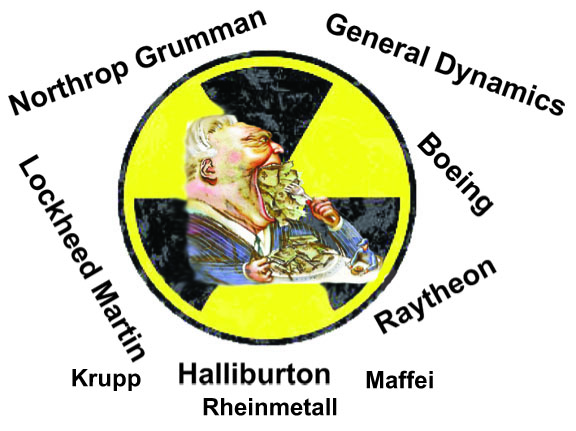
The most famous example in recent years is the 2023 NDAA, which contained several provisions regarding Taiwan. One provision allowed Taiwan to receive foreign military financing (FMF) from the U.S. government. FMF usually goes to independent countries, not breakaway provinces. FMF consists of loans and/or grants from the U.S. government for a country to purchase goods and services from the U.S. war industry.
And, just like that, the 2023 NDAA increased U.S. belligerence toward Beijing and made war more likely, profiting corporations all the while.
Corporate Capture Is Not Just Lobbying
Christian. Dec 27, 2025, https://thebusinessofwar.substack.com/p/how-corporations-view-and-own-the?utm_source=post-email-title&publication_id=1769284&post_id=179499875&utm_campaign=email-post-title&isFreemail=true&r=ln98x&triedRedirect=true&utm_medium=email
A for-profit corporation is a business organization designed to maximize short-term profit. The job of corporate executives is to maximize that profit, while the board of directors makes sure they do so.
The number one way that a corporation maximizes profit is by underpaying its workers.1 Workers create the profit, but don’t receive it. The executives funnel that profit to investors and themselves.
It goes without saying that the workers are not in charge. They are not allowed to make the business decisions in a given corporation. The executives make those decisions. There is no democracy in the workplace.
This is the situation in any industry, including the war industry.
What You Know about Corporate Capture
Big business works hard to influence the U.S. government. Corporate capture happens when it succeeds. Massive corporations work together to influence the government’s institutions and decision-making so that policy and regulation (or lack thereof) increase corporate profit instead of public well-being.
You likely know about think tanks, lobbying, and legal bribery.
- A think tank issues information favorable to those who fund it. Corporations and the super-rich fund think tanks, which create and inflate threats and justify the broad deployment of U.S. troops and sky-high military and intel budgets.
- Corporations and the super-rich hire lobbyists to swarm U.S. Congress and the Pentagon. Lobbyists even draft legislation, which they hand over to politicians.
- Corporations and the super-rich fund the two political parties and individual candidates. Once in office, elected officials pass laws favorable to these big business interests.
Think tanks, lobbying, and legal bribery are a powerful combination, but corporate capture is much more than that. War corporations (known as “military contractors” or “defense companies”) control the mind and the body in several ways.
Control the Mind
- Corporations regularly open (and close) offices and factories. Corporate executives promise a number jobs at a given location, particularly when seeking state and local tax breaks (though the fine print makes sure they never have to come through with all of those jobs or keep workers employed for the long run). Playing the “jobs” card is a way for big business and its politicians to pretend to care about workers.
- Legally designated as 501(c) nonprofits, trade groups (e.g., NDIA, AIA, AUSA) excel at networking active-duty military officers and industry officials, further blurring the line between government and corporate. Corporate viewpoints reign supreme at networking events, such as seminars, breakfasts, and arms fairs. (Additionally, 501(c)4 nonprofits are skilled at using dark money to influence politics.)
- Corporations help to craft policy and strategy on the inside. Corporations have had a hand in strategic initiatives and planning for Navy leadership, strategic plans and policy support for the Air Force, acquisition policy and program development for the Marine Corps, assessments and policy recommendations for the Deputy Assistant Secretary for Logistics, and more!
- The Pentagon gives corporations free labor from military officers. The corporations are allowed to propagandize these officers with recommendations about military policy, which the officers take with them when they return to their military unit.
- Greedy tycoons, including prominent war profiteers, sit on different boards that advise the Pentagon. The Defense Policy Board is one such grouping.
Control the Body
- The U.S. military doesn’t move, bomb, or communicate without corporations. In fact, it doesn’t do anything without corporate goods and services — from the largest aircraft carrier (itself a platform for innumerable goods and services) to the smallest microchip. Comprising the militant body, corporations gobble up more than half of the military budget. There still are uniformed troops (soldiers, sailors, airmen, Marines, and guardians), but they are merely users of corporate products… in the eyes of top executives.
- Corporate personnel are everywhere. These “contractors” even outnumber the troops in many military locations.
- The U.S. military isn’t allowed to repair most of its own equipment. Corporations must do it. This is just like corporations preventing farmers from repairing their tractors or you from putting a new battery into your old laptop.
- In the same vein, corporations do their best to hog the data pertaining to big-ticket weapons. The most famous example is the Lockheed Martin F-35 jet, the most expensive weapon of all time. The corporation owns the software code and the technical data for the jet. The U.S. military therefore is unable to operate, maintain, or upgrade the jet on its own.
- If you don’t own it, it’s not yours. Many corporations require the U.S. military to license their software, not purchase it outright. Licenses cover everything from accounting software and data integration software to products that monitor communications network and Oracle databases for a massive counterintelligence bureaucracy. Licensing is more profitable than a one-time sale.
- Capitalists move from industry to government and back again. When in government, they implement profit-over-people policies and they acquire knowledge to profit better whenever they leave government. (Top military officers also flock to war corporations in retirement, often becoming executives.)
Corporations don’t just run the show. Corporations are the show.
The Resulting Behavior
This corporate capture — mind and body — guarantees that government policy will help to maximize corporate profit.
The annual military policy bill known as the National Defense Authorization Act (NDAA) is crafted in the environment described above. Corporate lobbyists and U.S. Congress pack the NDAA with section after section designed to increase corporate profit.
Year after year, the NDAA requires the Pentagon to:
1. Train and arm foreign militaries or paramilitary groups. This increases arms sales and can give the Pentagon some influence over those being trained/armed.
A few examples of many include: training Iraqi forces and Kurdish Peshmerga (2024 NDAA); expanding the training of Eastern European “national security forces” (2025 NDAA); and reinforcing Lebanese military training and equipping (2026 NDAA).
2. Maintain or expand the U.S. military’s presence around the world.
The hundreds of U.S. military bases worldwide increase corporate sales — remember, corporations comprise most U.S. military activity2 — and allow the Pentagon to further bully governments/groups that chart an independent foreign policy or resist corporate domination of their land and resources.
No region is off-limits.
For example, the Pacific Deterrence Initiative, established through the 2021 NDAA and enhanced in all subsequent ones, is the main way the Pentagon militarizes the Pacific. It focuses on building up military infrastructure in the Pacific, purchasing and placing weaponry there, expanding military training and exercises there, and fostering and co-opting regional leaders.
3. Spend money on goods and services made by U.S. war corporations.3 For example, section 1640 of the 2024 NDAA required the Pentagon to establish a nuclear sea-launched cruise missile program. (Sections 1513 of the 2025 NDAA and 1633 of the 2026 NDAA refined the program’s goals.) Guess which corporations the military will pay to develop this weapon!
4. Assess what the official enemies are doing in a given region.
- Assess, for example, what Moscow and Beijing are up to in Latin America and the Caribbean (2024 NDAA, section 7342).
- Devise a strategy for “exposing, and, as appropriate, countering” China’s “malign activities” (2025 NDAA, section 1254).
- Evaluate [alleged] fentanyl trafficking by the Chinese government (2026 NDAA, section 8313) and plan to “respond” to China’s “global” military bases (section 8367).
These are just a few examples.
The assessments are then used to create fear and hype up such “threats.” Look out! [Country you’re taught to fear] is doing X, Y, and Z in [region U.S.-based capitalists want to dominate]! Bigger budgets follow. More money for war corporations.
5. Spend tax dollars on researching more technology for war and espionage. For example, the past three NDAAs have mandated research in artificial intelligence, microelectronics, nuclear weaponry, and much more. Industry does the research. And charges a pretty penny for it. (Meanwhile, corporations don’t use much of their own profit for R&D. Profit goes to execs and investors.)
The most famous example in recent years is the 2023 NDAA, which contained several provisions regarding Taiwan. One provision allowed Taiwan to receive foreign military financing (FMF) from the U.S. government. FMF usually goes to independent countries, not breakaway provinces. FMF consists of loans and/or grants from the U.S. government for a country to purchase goods and services from the U.S. war industry.
And, just like that, the 2023 NDAA increased U.S. belligerence toward Beijing and made war more likely, profiting corporations all the while.
Every subsequent NDAA increased the likelihood of all-out war with China. The 2026 NDAA, for example, further weaponized Taiwan by $1 billion, accelerated U.S.-Taiwan drone and counter-drone programs, encouraged the Pentagon to invite Taiwan to the massive annual military exercise known as RIMPAC, and more.
Full-court Press
Corporate capture is thorough.
It is lobbying; funding political parties and campaigns; establishing and funding think tanks; lying about jobs; using trade groups to imbricate military and industry; crafting policy and strategy on the inside; using boards to advise the Pentagon; flooding the military with corporate goods, services, and personnel; hogging data and requiring licensing; occupying the top Pentagon positions; and propagandizing military officers directly.
The troops are users of corporate goods and services.
Military bases are avenues of corporate profit.
That is how big business sees the U.S. military. And it has achieved its vision.
Christian Sorensen is a researcher focused on the U.S.-based corporations profiting from war. A U.S. Air Force veteran, Sorensen is associate director of the Eisenhower Media Network (EMN), a group of military and intel veterans who disagree with U.S. foreign policy and believe a better world is possible.
Former Japanese PM Ishiba again criticizes remarks advocating nuclear armament.
Asia18:02, 27-Dec-2025. CGTN, https://news.cgtn.com/news/2025-12-27/Ex-Japan-PM-Ishiba-in-fresh-broadside-against-nuclear-armament-remarks-1JrH8p2oIaA/p.html
Former Japanese Prime Minister Shigeru Ishiba has again criticized recent remarks by a senior government official suggesting that Japan should possess nuclear weapons.
Speaking on a program aired Friday night by Japan’s BS11 television, Ishiba said that as the only country in the world to have suffered atomic bombings, Japan should take a clear stance on preventing nuclear proliferation and should not make statements that undermine that position.
On December 18, an anonymous senior official in charge of security at the Prime Minister’s Office told reporters that Japan should possess nuclear weapons. After the remarks were made public, they sparked widespread criticism and controversy within Japan.
Addressing the issue earlier, Ishiba said that if Japan were to acquire nuclear weapons, it would be forced to withdraw from the Treaty on the Non-Proliferation of Nuclear Weapons as well as the International Atomic Energy Agency.
He stressed that such a move would render Japan’s nuclear energy policy – which underpins the country’s energy system – untenable, adding that “this would by no means be beneficial for Japan.”
According to a report on the online edition of the Japanese magazine Shukan Bunshun on December24, the official who made the remarks was Oue Sadamasa, a special advisor to Prime Minister Sanae Takaichi, whose portfolio includes nuclear disarmament and non-proliferation.
58 Years of Occupation — And the Shocking Report Israel Doesn’t Want You to Read
December 26, 2025 , By Joshua Scheer, https://scheerpost.com/2025/12/26/58-years-of-occupation-and-the-shocking-report-israel-doesnt-want-you-to-read/
Inspired by a Common Dreams report today about the ATV attack in the West Bank, I looked into Breaking the Silence, a group of Israeli military veterans who speak out against the occupation of Palestine. They’ve described the regional defense units—responsible for numerous attacks on Palestinian civilians in the West Bank—as little more than settler militias dressed in uniform.
I did some digging and found their November report, I’m not sure who else might have missed it, but it’s definitely worth reading. The report is titled: “JOINT SITUATION REPORT: 58 Years of Occupation, The Two-Year War in Gaza.”
The report’s lead writer is Tal Raviv O’Regan, and the steering committee includes Noa Sattath, Ziv Stahl, and Tal Steiner. The translation was done by Maya Johnston, with English editing by Rachel Druck.
They do disclose this, and so will I: the report is the work of thirteen human rights organizations, some of which receive most of their funding from foreign political sources. Even so, they’re proud of the support from those who share our belief that the occupation isn’t just an internal Israeli issue and who are committed to defending human rights.
Some Key Points Noted in the Report Include:
“The occupation, illegal and immoral in itself, has led to widespread human rights abuses, breaches of international humanitarian law, and increasingly entrenched apartheid.”
“Practices Israel employed even before the war have intensified to the point where they have become routine and unprecedented in scale.”
“Most shocking are the creation of mass hunger and a humanitarian crisis, among the worst in the world.”
“Crimes are rarely investigated by military or civilian law enforcement.”
“Settler violence and forced expulsions of Palestinian communities have surged, unchecked by authorities.”
“Israel continued to control many aspects of the residents’ lives… significantly contributing to a chronic humanitarian crisis.”
“To end the war and begin the process of healing… all parties must honor the cease‑fire agreement and fulfill their obligations under international law.”
“Israel must bravely and honestly investigate its actions… acknowledge war crimes and violations of the law, and draw the necessary conclusions.”
“Starving a civilian population is strictly prohibited under international law.”
“Israel has an active duty to ensure regular, uninterrupted flow of food and humanitarian aid.”
about Breaking the Silence from their page: “Founded in March 2004 by a group of soldiers who served in Hebron, Breaking the Silence has since acquired a special standing in the eyes of the Israeli public and in the media because of its unique role in giving voice to the experience of soldiers. To date, the organization has collected testimonies from more than 1,400 soldiers who represent all strata of Israeli society and cover nearly all units that operate in the territories.”
“All the testimonies we publish are meticulously researched, and all facts are cross-checked with additional eyewitnesses and/or the archives of other human rights organizations that are active in the field. Every soldier who gives a testimony to Breaking the Silence is well-aware of the aims of the organization and the interview. Most soldiers choose to remain anonymous, due to various pressures from military officials and society at large. Our first priority is to safeguard the soldiers who choose to testify to the public about their military service.”
Here are some videos [on original] from former soldiers and other contributors from Breaking the Silence. You can find more here
From Democracy Now! interviewing two former Israeli soldiers who are members of Breaking the Silence, a group of Israeli army veterans exposing the realities of the occupation. Tal Sagi, the group’s education director, shares his experience growing up in a settlement and joining the military without understanding what occupation meant: “We’ve been told that this is security and we have to control millions of lives and we don’t have other options… We’re trying to say that there are other options.”
Breaking the Silence deputy director Nadav Weiman explains why the group is touring U.S. colleges and advocating for a ceasefire in Gaza: “We stood in checkpoints. We raided homes. We attacked Gaza from the air. We fought from the ground… When you bring reality, you bring real conversation about the occupation, and you bring real conversation about Gaza.”
This is the kind of issue that Hillary Clinton and others refer to when they talk about the TikTok problem in media and the importance of connecting with people around the world quickly and effectively. She, along with Sarah Hurwitz—who dislikes the democratization of information and longs for the era of Old Media where corporations controlled the flow—laments that people now receive less explanation and more video content, such as live-streamed genocide that can be reduced to statistics. Hurwitz acknowledges she may appear a “monster” to viewers and controversially insists that Holocaust education should primarily serve as antisemitism education rather than a lesson for broader human experience.
Because Hurwitz refuses to see the Holocaust as a broad human experience, because then it’s clear that what is happening in Israel today would not pass that test.
Today, we can become knowledgeable and informed in ways that were not possible before the democratization of information—so we must keep our eyes open, even as many try to silence opposition voices with money and power. While there is no end in sight, there is a hopeful continuum: as more people become informed and reconnect with their humanity, change becomes possible. Those in Breaking the Silence have clearly found theirs.
Here is another report from Democracy Now!, from 10 years ago, documenting another time when Israel was killing civilians and Breaking the Silence was speaking out.
Occupied and Imperiled: Charting a Path for Zaporizhzhia’s Nuclear Future
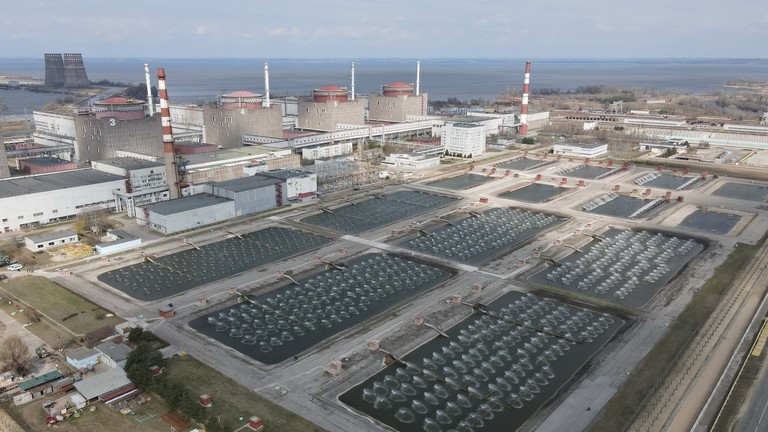
The Zaporizhzhia nuclear power plant, the largest in Europe, is a central issue in U. S. President Donald Trump’s peace plan for the ongoing war between Russia and Ukraine.
ByNewsroom, December 27, 2025, https://moderndiplomacy.eu/2025/12/27/occupied-and-imperiled-charting-a-path-for-zaporizhzhias-nuclear-future/
The Zaporizhzhia nuclear power plant, the largest in Europe, is a central issue in U. S. President Donald Trump’s peace plan for the ongoing war between Russia and Ukraine. This matter is part of a broader peace proposal from Ukrainian President Volodymyr Zelenskiy, comprising 20 key points. The power plant has been under Russian control since March 2022, with Russia asserting ownership while most of the world maintains it belongs to Ukraine. A significant proposal has emerged from the U. S. for a joint trilateral operation of the plant with Ukrainian participation and an American chief manager overseeing its operations.
Currently located in Enerhodar, the power plant has six reactors and a total capacity of 5.7 gigawatts. However, since Russia’s takeover, five reactors have been shut down, and the last one ceased operation in September 2022. Four of the reactors have transitioned to using fuel from Westinghouse, moving away from Russian nuclear fuel. The plant’s management states that all reactors are now in “cold shutdown. ” Both Russia and Ukraine have accused each other of attacks on the plant and disruptions to its power lines, which has often compelled it to rely on emergency diesel generators for essential cooling functions.
The Zaporizhzhia nuclear power plant, the largest in Europe, is a central issue in U. S. President Donald Trump’s peace plan for the ongoing war between Russia and Ukraine. This matter is part of a broader peace proposal from Ukrainian President Volodymyr Zelenskiy, comprising 20 key points. The power plant has been under Russian control since March 2022, with Russia asserting ownership while most of the world maintains it belongs to Ukraine. A significant proposal has emerged from the U. S. for a joint trilateral operation of the plant with Ukrainian participation and an American chief manager overseeing its operations.
Currently located in Enerhodar, the power plant has six reactors and a total capacity of 5.7 gigawatts. However, since Russia’s takeover, five reactors have been shut down, and the last one ceased operation in September 2022. Four of the reactors have transitioned to using fuel from Westinghouse, moving away from Russian nuclear fuel. The plant’s management states that all reactors are now in “cold shutdown. ” Both Russia and Ukraine have accused each other of attacks on the plant and disruptions to its power lines, which has often compelled it to rely on emergency diesel generators for essential cooling functions.
An ongoing concern is the dwindling water supply necessary for cooling the reactors, exacerbated by the destruction of the Kakhovka hydroelectric dam in 2023. The plant requires adequate water for both its reactors and spent fuel pools; without it, the risk of overheating and fire increases. Reports indicate a significant drop in the water level at the plant’s cooling pond, raising alarms about the safety of operations, as the current reserves may only suffice for one or two reactors. Consequently, the situation at the Zaporizhzhia plant raises critical questions about nuclear safety amid the conflict and the potential repercussions if issues remain unaddressed.
Turkey Makes Another $9 Billion Bet on Russian Nuclear Power
By Julianne Geiger – Oil Price, Dec 26, 2025,
Turkey just took another very large, very deliberate step deeper into Russia’s energy orbit — and this time it comes with a $9 billion price tag.
Ankara says that Russia has provided $9 billion in new financing for the Akkuyu nuclear power plant, Turkey’s first-ever nuclear facility, which is being built by Russia’s state-owned Rosatom on the Mediterranean coast. According to Energy Minister Alparslan Bayraktar, the bulk of that money will be deployed in 2026 and 2027, with as much as $4–5 billion flowing next year alone. The plant is now expected to come online in 2026, after multiple delays.
While this may look like a straightforward infrastructure update, it’s more about how deeply intertwined Turkish and Russian energy interests remain, despite years of flowery talk about diversification and reduced dependence on Moscow.
Akkuyu has always been different from Turkey’s other energy ambitions. It is a build-own-operate project. This means that Rosatom shoulders the financial risk, owns the plant, and will operate it for decades. That structure is precisely why Akkuyu survived when Turkey’s second nuclear project at Sinop collapsed under runaway costs and political complexity. Only Russia stayed……………………………………. https://oilprice.com/Latest-Energy-News/World-News/Turkey-Makes-Another-9-Billion-Bet-on-Russian-Nuclear-Power.html
Europe’s nuclear sites on high alert for drone threats in the year ahead
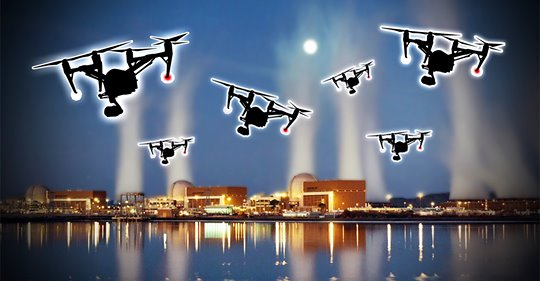
Western countries scramble to bring in new defences as experts see rise of autonomous threats everywhere
Thomas Harding, December 26, 2025. https://www.thenationalnews.com/news/europe/2025/12/26/europes-nuclear-facilities-put-on-a-2026-drone-alert/
It was a taste of what could become one of the decisive threats next year, when the flight path between Dublin and Britain’s Sellafield nuclear reactor was disrupted by unidentified drones.
On the incoming jet was Ukrainian President Volodymyr Zelenskyy and his wife, minutes away from landing at Dublin Airport, slightly ahead of schedule.
After an Irish naval vessel reported that a number of drones were manoeuvring 36km north-east of the city – Sellafield is just 200km from the capital – Ireland’s Justice Minister Jim O’Callaghan said it was a “co-ordinated threat” to “put pressure” on Europe and Ukraine.
Just days later, the menace shifted. The French Navy opened fire on drones detected over a highly sensitive site housing the country’s fleet of nuclear submarines.
The drones at Ile Longue naval base were ultimately intercepted with jamming systems, but their presence over one of the continent’s most heavily protected sites sent a clear message: Europe is waking up to significant vulnerabilities to its military and civilian nuclear sites, and Russia is widely suspected to be behind the activity.
Nuclear threat
France has19 nuclear power stations, Britain has five − including Sellafield, in Cumbria, north-west England − and many more are spread across the continent. Defence analysts have warned that a hostile state could target a vulnerable power station rather than resorting to the outright belligerence of launching a nuclear weapon.
Causing a nuclear incident with several drone strikes would be difficult, but even a limited attack could cause symbolic and economic damage. Fallout could include enforced shutdowns, mass evacuations and financial market panic, all without a state crossing the nuclear threshold.
“What if Russia just blows up one of the nuclear power plants in the UK using drones that are flown from within the UK?” said Ed Arnold, a senior military analyst at the Royal United Services Institute think tank. “That’s a different vector of threat, but it would achieve the same result from a Russian perspective.”
He added that the sites’ “vulnerabilities are really quite critical, because this is hard to defend against,” and that even just flying drones over sensitive sites “is cheap, deniable and has a high economic impact”.
Ukraine, on one level, is responsible for tactics that were previously the stuff of imagination. Its remarkably successful Operation Spider-Web in June demonstrated the changed boundaries of warfare.
The operation used more than 100 short-range kamikaze drones launched from lorries parked within 10km of several Russian airbases, destroying 11 Russian long-range bombers capable of carrying nuclear weapons.
“Although it was a costly lesson, it likely opened Moscow’s eyes to the opportunities afforded by these capabilities,” wrote Dr Daniel Salisbury in an International Institute for Strategic Studies think tank paper on the growing threat. “Even minimal capability can use emerging technologies to hold nuclear assets at risk,” he added.
A year ago, the idea of a head of state being targeted for assassination by drones seemed like a plot from a Tom Clancy novel. Not any more. Presidential security details now carry drone jammers that resemble oversized guns.
But it is not just the French and Irish incidents that are setting off a wave of concern over Europe. Last month, drones were spotted over Kleine-Brogel Air Base in Belgium on three consecutive nights.
New modes
In the Netherlands, guards fired at drones over Volkel Air Base, which hosts US nuclear weapons under Nato’s nuclear-sharing arrangements. Earlier this month, Dutch F-35 fighter jets were scrambled to intercept a drone.
Similar incidents have been reported around RAF Lakenheath in eastern England, which is likely to soon host US nuclear weapons after a two decade absence.
What is troubling the authorities is that the flights are clustered around high-value nuclear and military sites, with drones larger and more capable than those usually used by hobbyists.
“These are not people flying toys,” said Belgium’s Defence Minister, Theo Francken, after the Kleine-Brogel incursion. “They came to spy, to see where the F-16s are, where the ammunition is and other highly strategic information.” Furthermore, some of the UAVs flew higher and proved resistant to jamming.
This adds to a series of incidents since September in which drones flew over civilian airports across Eastern Europe, as well as Germany and Scandinavia.
The flights, likely conducted by criminal gangs and paid for in cryptocurrency by Moscow, could well be construed as “hostile reconnaissance” to look into sites or indeed test their anti-drone technology for a future conflict.
Drones can also gather real-time imagery that satellites cannot and if one could capture either a French nuclear-armed submarines leaving Ile Longue or a Royal Navy one departing Faslane in Scotland it would give enemies a significant tracking advantage.
Drones everywhere
Hostile states can also use the rapidly expanding civilian drone market to blend into the noise to hide their true intentions. In Britain it is estimated that by 2030 there could be 76,000 commercial drones operating in its airspace, according to The Economist. And across Europe, more than 3,800 close encounters between drones and aircraft were recorded last year − more than double the previous year.
Drones, Mr Arnold argued, are perfectly suited to “grey zone” operations, those activities that fall short of open warfare but inflict disruption and apprehension.
Annabelle Walker, an analyst at the intelligence company Sibylline, also suggested that Russia has a strong interest in probing Nato’s readiness.
“The use of drones has exposed a particular gap in European countries,” she said. “Testing response times, decision-making and co-ordination tells you a lot and it can all be done below the threshold of war.”
Shoot ’em down?
Shooting down drones risks collateral damage. Main defences include jamming or “spoofing”, in which drones are tricked into misidentifying their location. Jamming is less effective against autonomous drones programmed to strike or that are using fibre-optic control − as seen widely in the Ukraine-Russia war.
Defenders can use physical countermeasures such as guns that shoot nets, and shotguns, which are broadly carried in Ukraine. The National understands that Kyiv is set to unveil next year a state-of-the art interceptor drone. The counter-drone industry is now becoming a major market for defence companies.
To defend against a serious attack on a nuclear site, governments must identify vulnerable locations then use a layered defence of radar, electronic warfare and trained personnel dedicated to counter-drone operations, said Douglas Barrie of the IISS.
But air defence was an area where European states had underinvested for decades since the Cold War ended. “Western Europe and the UK really need to pay more attention as this is back on the agenda in a big way,” Mr Barrie told The National.
“Moscow is clearly in the frame, and they’re testing the boundaries of what they can get away with before the other side pushes back,” he added.
Mr Zelenskyy’s near-miss over Dublin was not necessarily an act of war but it was a warning − as were the other incidents − and Moscow may well consider further disruptive operations that avoid open conflict.
It is now a question of whether Europe can strengthen its defences against a threat that will only intensify.
Israeli Occupation Intensifies: Defense Minister Vows Permanent Gaza Presence as Settler Violence Escalates in West Bank.
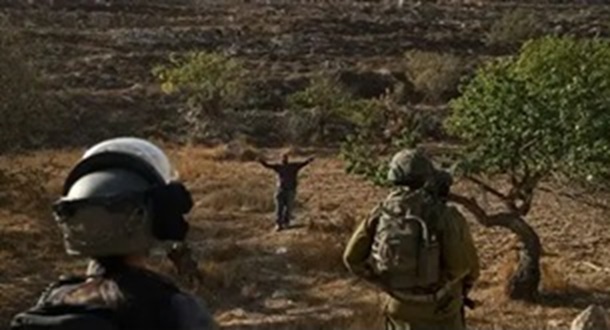
by Dave DeCamp | December 23, 2025 , https://news.antiwar.com/2025/12/23/israeli-defense-minister-vows-permanent-israeli-occupation-of-gaza-establishment-of-settlements/
Israeli Defense Minister Israel Katz vowed on Tuesday that the Israeli military will “never leave all of Gaza” and will eventually establish settlements in the northern part of the Strip.
“We are deep inside Gaza and will never leave all of Gaza – that will not happen. We are here to defend and to prevent what happened,” Katz said during an event in the Israeli-occupied West Bank.
“With God’s help, when the time comes, also in northern Gaza, we will establish Nahal pioneer groups in place of the settlements that were evacuated,” Katz added, referring to an IDF program that establishes communities for Israeli soldiers. “We’ll do it in the right way, at the appropriate time.”
Katz also vowed that Israel would not withdraw “one millimeter” from Syria, referring to the territory it has captured in southwest Syria since the fall of former Syrian President Bashar al-Assad.
After his remarks sparked backlash, Katz appeared to walk back the comments on settlements. “The government has no intention of establishing settlements in the Gaza Strip,” his office said in a statement, though it added that he made the comments in a “security context,” suggesting it wasn’t a complete walk back about what he said about establishing military communities.
An unnamed US official criticized Katz’s comments, saying that he was “provoking” the Arab world. “The more Israel provokes, the less the Arab countries want to work with them,” the US official said in a statement to journalists.
“The United States remains fully committed to President Trump’s 20-Point Peace Plan, which was agreed to by all parties and endorsed by the international community. The plan envisions a phased approach to security, governance, and reconstruction in Gaza. We expect all parties to adhere to the commitments they made under the 20-Point Plan,” the official added.
Katz did not walk back his comments about a permanent Israeli occupation of Gaza, and other Israeli officials have made similar vows. IDF Chief of Staff Lt. Gen. Eyal Zamir said earlier this month that the so-called “yellow line,” the vague boundary separating the Israeli-occupied side of Gaza from the rest of the Strip, is a “new border.”
The IDF currently occupies more than 50% of Gaza, and Palestinians, for the most part, have been cleansed from the area, besides the Israeli-backed anti-Hamas militias and gangs and a small number of civilians living with them. If Israel’s occupation doesn’t end, Israeli settlers will continue to push for the establishment of settlements on the IDF side of the yellow line.
The Nachala movement, a group of settlers pushing for Jewish settlement in Gaza and the complete expulsion of the Palestinian population, welcomed Katz’s initial comments, saying it was a “step in the right direction toward returning Jewish settlement in Gaza.” Settlers with the Nachala movement recently entered Gaza and raised an Israeli flag.
Nachala has strong support among members of the Israeli government and the Knesset. Senior members of the Israeli government have been explicit in their desire for ethnic cleansing in Gaza and the establishment of Jewish settlements. A few days after the Gaza ceasefire deal was signed, which Israel has continued to violate by killing over 400 Palestinians, Israeli Finance Minister Bezalel Smotrich vowed there would be “Jewish settlements in Gaza.”
Kushner, Witkoff draft $112B proposal to develop Gaza into ‘smart city’ with luxury resorts.

by Shane Galvin, 22 Dec 25, https://www.msn.com/en-us/news/world/kushner-witkoff-draft-112b-proposal-to-develop-gaza-into-smart-city-with-luxury-resorts-and-us-footing-60b/ar-AA1SK9NI?ocid=BingNewsVerp
Trump administration reps have just revealed a grandiose $112 billion plan to rebuild war-torn Gaza into a futuristic international destination dubbed “Project Sunrise.”
The 10-year development plan, drafted by first son-in-law Jared Kushner, US special envoy Steve Witkoff, and two top White House aides, is currently courting investor countries with a 32-slide PowerPoint presentation detailing the bold plan to renovate burning rubble into beach resorts.
Gaza would see the development of luxury hotels, high speed rail and AI-optimized smart grid features that would revolutionize the small slice of the coveted Mediterranean coastline into a bustling metropolis, the Wall Street Journal reported.
“Gaza’s destruction has been profound, but we believe what lies ahead is not just restoration — it’s a chance to develop a gateway of prosperity in the Middle East with state-of-the-art infrastructure, urban design, and technology,” the executive summary slide read, according to the outlet.
The total $112 billion cost would be spread out over 10 years, with the US agreeing to “anchor” up to $60 billion in grants and guarantees on debts by raising industry funds.
“Reimagining Gaza as a ‘smart city’ with tech-driven governance and services,” one slide from the PowerPoint presentation beamed.
The ambitious proposal — developed within the last 45 days by Kushner, Witkoff, and White House aides consulted Israeli security experts about the path forward — further called for establishing a “Chief Digital Office and an innovation lab to define standards and guide policymaking.”
The presentation does not go into detail about which countries or companies would be investing in the rebuilding fund, according to WSJ.
Though the plan mapped out distinct phases of construction, it did not provide details for housing the 2 million Palestinians who would be displaced during the massive construction necessary.
There is an estimated 68 million tons of rubble in Gaza after thousands of Israeli airstrikes leveled cities during the two-year war in Gaza.
US officials who have knowledge of the proposal are skeptical that it will come to fruition because a condition would be Hamas agreeing to disarm, the Journal reported.
Witkoff, meanwhile, met Saturday in Miami with high-level delegations from Egypt, Turkey and Qatar to discuss implementation for the second phase of the Gaza cease-fire plan.
Iran rejects inspections of bombed nuclear sites without IAEA framework
Iran says UN nuclear watchdog must first define ‘post-war conditions’ following US strikes on its nuclear facilities in June.
By Anadolu. 24 Dec 2025, https://www.aljazeera.com/news/2025/12/24/iran-rejects-inspections-of-bombed-nuclear-sites-without-iaea-framework
Iran has rejected calls to allow inspections of nuclear facilities bombed during attacks by the United States in June, saying the United Nations nuclear watchdog must first define “post-war conditions” governing access to sites hit by military attacks.
Speaking to reporters after a cabinet meeting in Tehran on Wednesday, Mohammad Eslami, head of Iran’s Atomic Energy Organisation, said Tehran would not permit inspections of facilities struck by the US until the International Atomic Energy Agency (IAEA) establishes a clear framework for such visits, according to Iran’s semiofficial Tasnim news agency.
“If there are established procedures for the post-war situation, the agency should announce them so that we can act accordingly,” Eslami said.
He added that Tehran had formally communicated its position to the IAEA, insisting that rules must be “defined and codified” for cases in which nuclear facilities under international safeguards are subjected to military attack.
During a 12-day war with Israel in June, the US military bombed three major Iranian nuclear facilities – Fordo, Natanz and Isfahan – using bunker-buster munitions. More than 430 people were killed, and thousands more were wounded in the wave of attacks, according to Iran’s Ministry of Health.
The strikes followed Israel’s surprise attack on Iran, which killed hundreds of Iranian civilians, including nuclear scientists, as well as senior military commanders, and targeted several nuclear programme-related sites.
Tehran denies seeking a nuclear bomb.
Israel, meanwhile, is widely believed to have an undeclared nuclear arsenal.
Following the US attacks, Iran expelled IAEA inspectors stationed in the country, accusing the agency of failing to condemn the attacks.
Get instant alerts and updates based on your interests. Be the first to know when big stories happen.Yes, keep me updated
The Geneva Conventions prohibit attacks on “installations containing dangerous forces, namely dams, dykes and nuclear electrical generating stations”.
Eslami said if the IAEA supports or tolerates military action against safeguarded nuclear sites, it should say so explicitly.
“But if such attacks are not permitted, they must be condemned – and once condemned, the post-war conditions must be clarified,” he said, adding that Iran would not accept “political and psychological pressure” to allow inspections before that happens.
‘No legal effect’ of nuclear deal
Eslami also criticised a UN Security Council meeting on nuclear non-proliferation held on Tuesday, describing the statements made there as completely unprofessional and non-legal, according to Tasnim.
A key point of contention was the legal status of Resolution 2231, which endorsed the Joint Comprehensive Plan of Action (JCPOA), commonly known as the Iran nuclear deal.
Iran’s ambassador to the UN, Amir-Saeid Iravani, told the UNSC that Resolution 2231 expired on October 18, 2025, and therefore “ceased to have any legal effect or operative mandate”.
His position was echoed by the representatives of Russia and China.
Iravani said Iran remained committed to “principled diplomacy and genuine negotiations”, placing responsibility on France, the United Kingdom and the US to take steps to restore trust, according to the state-run news agency IRNA.
The US representative at the meeting, Morgan Ortagus, said Washington remained open to talks but only if Iran agreed to direct and meaningful dialogue.
“Foremost, there can be no enrichment inside of Iran,” she said.
Before the June escalation, Iran and the US had held five rounds of indirect nuclear negotiations, mediated by Oman, without reaching a breakthrough.
Trump Floundering Efforts to Shore Up US Hegemony
Michael Hudson The Unz Review, December 20, 2025
The National Security Strategy’s Drive to Shed the Costs of Imposing Its U.S. Unipolar Empire
The one area in which the National Security Strategy makes a claim to be realistic is to recognize that the United States cannot directly be seen to impose its control by force. This task is to be delegated more to client oligarchies and their governments, by assigning responsibility (and most important, the military costs) on a regionwide basis along lines similar to how the European Union’s foreign and domestic political policies have been made subordinate to NATO Cold War policy controlled by the United States.
Replacing at least the anti-Russian rhetoric of Biden’s and the EU’s support for the war against Russia, the NSS proposes dividing the world into spheres of influence for the major regional powers: the United States (monopolizing control of all of Latin America and the Caribbean for itself), Russia (with its Central Asian and other former Soviet republics, including what formerly was eastern Ukraine), and China over mainland Asian neighbors. A Pacific NATO-like arrangement to be shepherded (and financed) by Japan, with India as the wild card. The EU under NATO are dismissed as a waning power with little influence.
This plan is not really a division of spheres of regional influence at all, in the sense that World War II’s 1945 Yalta conference was. It does carve out a uniquely U.S. control over Latin America and the Caribbean. European and Asian countries are to keep away from investing in the major resources of these countries.[1] This is Trump’s travesty of the Monroe Doctrine. That doctrine called for a reciprocity with foreign countries: Europe would stay out of political control of Latin American countries, and the United States would not interfere in European affairs. But U.S. officials had no problem with the newly independent Latin American countries going deeply into debt to British and other foreign creditors who imposed debt dependency, much as France did with Haiti as the price of its buying its political freedom to abolish domestic slavery. The effect was for many of these countries obtained political freedom from colonialism only to fall into debt dependency. But the Monroe Doctrine was only concerned with direct political and military control.
The major U.S. violation of the original Monroe Doctrine has been to maneuvere to control Eurasian affairs. It has meddled in European elections, most notably in Italy and Greece after World War II by mounting right-wing challenges to their rising Communist parties. And it has ringed Eurasia with U.S. military bases and mounted regime change coups. The effect is that U.S. diplomats have been trying for eighty years to turn the entire world into a unipolar U.S. region of influence.
But the military and related costs of this effort have been largely responsible for the U.S. balance-of-payments deficit since the Korean War, and also the U.S. domestic budget deficit (at least until the neoliberal tax cuts on the revenue side of the budget). These costs are to be shifted onto foreign countries.
The costs of maintaining the U.S. diplomatic empire must be assigned on a region-wide basis under the leadership of particularly loyal U.S. proxies, much as is the case with NATO countries Europe under British, French and German dominance.
In Asia, U.S. diplomacy relies on the Quad (Japan, Australia, India and the United States) along with friendly governments in South Korea and the Philippines to prevent their economies and those of China and other countries in the region from obtaining oil and gas from Russia, Iran and Venezuela to install military basis ringing China. Much as U.S. neocons are trying to convince NATO allies that these adversaries pose an imminent military threat, Asian countries are being mobilized to support a separatist political movement in Taiwan.
………………………………………………………………………………………………………………………………………………………………………………………………………………………………… Trump’s drive to attract foreign financing to the U.S. debt market via cryptocurrency
In seeking to counter other countries’ moves away from the dollar, the most recent U.S. tactic is to try to surreptitiously get other countries to hold dollars by persuading them to invest in stablecoins – cryptocurrency that is invested in U.S. Treasury securities, not bonds of China or other countries…………………………………….
And a major aim of cryptocurrencies is, of course, to facilitate tax evasion and criminal activities through libertarian “privacy” (that is, secrecy from public authorities) and criminal management of such currencies themselves. The Trump Administration’s support for cryptocurrencies actually is a new version of the U.S. drive to promote offshore banking centers in the 1960s…………………………………………………………………………………………. https://www.unz.com/mhudson/trump-floundering-efforts-to-shore-up-us-hegemony/
1 This Month

of the week – Shut Down Drone Warfare!


Tell the Ukrainian Government to Drop Prosecution of Peace Activist Yurii Sheliazhenko

Petition to revoke the licensing of the Near Surface Nuclear Disposal Facility (NSDF) at Chalk River. https://www.ourcommons.ca/petitions/en/Petition/Details?Petition=e-7247
To see nuclear-related stories in greater depth and intensity – go to https://nuclearinformation.wordpress.com
-
Archives
- April 2026 (114)
- March 2026 (251)
- February 2026 (268)
- January 2026 (308)
- December 2025 (358)
- November 2025 (359)
- October 2025 (376)
- September 2025 (257)
- August 2025 (319)
- July 2025 (230)
- June 2025 (348)
- May 2025 (261)
-
Categories
- 1
- 1 NUCLEAR ISSUES
- business and costs
- climate change
- culture and arts
- ENERGY
- environment
- health
- history
- indigenous issues
- Legal
- marketing of nuclear
- media
- opposition to nuclear
- PERSONAL STORIES
- politics
- politics international
- Religion and ethics
- safety
- secrets,lies and civil liberties
- spinbuster
- technology
- Uranium
- wastes
- weapons and war
- Women
- 2 WORLD
- ACTION
- AFRICA
- Atrocities
- AUSTRALIA
- Christina's notes
- Christina's themes
- culture and arts
- Events
- Fuk 2022
- Fuk 2023
- Fukushima 2017
- Fukushima 2018
- fukushima 2019
- Fukushima 2020
- Fukushima 2021
- general
- global warming
- Humour (God we need it)
- Nuclear
- RARE EARTHS
- Reference
- resources – print
- Resources -audiovicual
- Weekly Newsletter
- World
- World Nuclear
- YouTube
-
RSS
Entries RSS
Comments RSS
 nuclear-news