Golden Dome changes both NATO and the EU.

Now the wording is changed to: “The United States will deter – and defend its citizens and critical infrastructure – against any airstrike against its territory“. The level of ambition has been raised significantly.
Av Ingolf Kiesow, The Royal Swedish Academy of War Sciences (Kungliga Krigsvetenskapsakademien 22 dec 2025
SIPRI’s 2024 yearbook is titled “Role of nuclear weapons grows as geopolitical relations deteriorate.” The content of that statement has grown in importance in 2025.
Golden Dome
On January 27, 2025, just a few days after taking office for a new term as President of the United States, Donald Trump signed an “Executive Order” to the US Department of Defense – now called the “War Department” – to build a missile defense system, what he later came to call “The Golden Dome”.
According to a statement by the then Department of Defense (now the “Ministry of War”), the Golden Dome will “unify a range of capabilities to create a system of systems to protect the United States from air attack by any aggressor“. Congress approved $24,5 billion for the purpose on September 5.
Donald Trump has said that this grant should be seen as a first installment and that the entire project should be fully operational before his presidential term ends.
He said in May that the total cost could be estimated at $175 billion. The Congressional Budget Office has since estimated that it will cost more than $500 billion. Other observers argue that the need to continuously replace satellites in the system, as Earth’s gravity pulls them out of orbit, means that the cost will exceed a trillion or several trillion dollars before it can be operational.
A first contract under Golden Dome was signed on November 4. Space X will receive $2 billion to build a system of 600 satellites with Lockheed Martin to create an “Air Moving Target Indicator (AMTI).” These low-altitude satellites will detect and track advanced threats from maneuvering glide missiles and stealth aircraft and then feed the data obtained into the US missile defense targeting system.
Congress has pointed out that the US missile defense strategy has so far been formulated as the US striving afterr “to defend against rogue states as well as against unauthorized or accidental missile launches while relying on nuclear weapons to deter China and Russia from striking American territory“.
Now the wording is changed to: “The United States will deter – and defend its citizens and critical infrastructure – against any airstrike against its territory“. The level of ambition has been raised significantly.
The relationship between the White House and Congress on the Golden Dome is marked by suspicion. In a statement, the Congressional Office laments that the administration has failed to provide the public with a detailed account of the project, has not held meetings with representatives of the business community, and has reportedly instructed military officials not to discuss the Golden Dome publicly.
Reactions to the Golden Dome
On May 8, China and Russia issued a joint statement criticizing the project for undermining the link between strategic offensive weapons and strategic defensive weapons, i.e. the very idea of a nuclear balance. Russian press spokesman Peskov said that while a decision on Golden Dome is a sovereign matter for the United States, it is also in the common interest of both countries to create a new legal framework to replace the no longer functioning nuclear arms treaties between the United States and Russia.
However, as of the end of October 2025, no preparations for negotiations on US-Russian arms control have been initiated. Donald Trump is said to have said that it might be a good idea, but without wanting to discuss the matter in more detail. On January 5, 2026, the only Russian-American arms control agreement still in force, the so-called New START agreement, expires.
In addition to China and Russia, there has also been criticism in the West that the US is trying to make the US invulnerable to nuclear attack with Golden Dome and thereby create a strategic advantage. This would damage the balance that has so far rested on the theory of mutual deterrence, a concept that also presupposes a certain degree of mutual vulnerability.
China shows off its weapons
China celebrated the eightieth anniversary of its victory over Japan in World War II with a military parade in Beijing on October 3 of this year. The parade was characterized by three things: coordination with the authoritarian countries of the world, the focus of Chinese defense on preparations for a war with the United States, and the belief that the next war will be fought globally.
Vladimir Putin and Kim Jong Un sat on either side of Xi Jinping during the parade, and among the invited guests were a large majority of presidents and prime ministers from the global south.
The new weapons systems on display included new advanced fighter jets, tanks, hypersonic anti-ship missiles and long-range rocket artillery. Three different groups of missile systems were displayed: five nuclear-capable systems, three cruise missile systems and three hypersonic missile systems.
The direction has been interpreted abroad as a warning to the United States not to try to oppose a possible upcoming attempt to invade Taiwan and to keep the United States away from the waters along China’s coasts in the Pacific Ocean.
FOBS has been a headache for the Pentagon
The presence of a Fractional Orbital Bombardment System (FOBS) in both Russia and China has been a particular concern for Western defense forces in recent times. This is especially true since China conducted a pair of test flights in the summer of 2021, when a launch vehicle was launched into orbit around the Earth and a hypersonic glide missile was released, which re-entered the atmosphere on the other side of the world and hit a designated target. The launch vehicle remained in a relatively low-altitude orbit (around 150 kilometers) and the entire crew moved at hypersonic speed the entire way, making them very difficult – almost impossible – to detect and combat.
Some of the missiles displayed at the military parade may be included in FOBS, which would mean that production and supply to units is ongoing.
After China’s first hypersonic missile flight, it took the United States several years to build a similar system and get the missiles flying, which has been a major concern for the Pentagon. The lack of a US system to defend against FOBS has been explicitly cited by the Defense Intelligence Agency as one of the reasons for introducing Golden Dome.
Truce in the trade war with China, but not peace and no deal………………………………………………………………………………….
……………………………………………………………………. Since NATO is designed to function under American leadership, Europe must now create its own organization in peacetime in order to be able to function without or at least with weakened support in wartime. That is the only conclusion that seems logical to draw in the light of this article. Whether such an adaptation can take place within the framework of NATO or can best be done within the EU or through the creation of an entirely new European defense organization has become a pressing question.
How Europe should dispose of its own nuclear weapons assets to deter Russia from attacking is also an issue that is now demanding attention even in peacetime.
Conclusions for Europe.
In any case, the connection between economic and military strength will play a central role. If the US fails to mobilize the financial resources required for Golden Dome and if the EU fails to find the means to both help Ukraine avoid defeat in the war with Russia and at the same time build up our own defenses, the situation may become difficult to manage.
Since Donald Trump came to power, however, the US has committed serious violations of international law, such as the prohibition of genocide in connection with its support for Israel’s war in Gaza and against the rules on freedom of the seas and human rights in connection with the killing of suspected smugglers from Venezuela and Colombia without prior trial. Being part of NATO and being part of the same alliance as the US is beginning to feel embarrassing to a European.
The nonchalance with the rules of international law also raises uncertainty about how serious the US is about its own membership in NATO and its obligations to help the EU preserve sovereignty over its territory.
Donald Trump’s fickleness and the uncertainty about what the investment in Golden Dome will entail create uncertainty for Europe and the rest of the “West”. For Europe, this means having to walk a balance between the desire not to lose the US as an ally in the long term and, on the other hand, the prospect of perhaps having to face a growing threat from Russia alone. In addition, the US may demand help in its power struggle with China, something that it is not in Europe’s interest to allocate resources to.
Can the EU prepare for a period of reduced American support without irreparably damaging the relationship with the US? Can the EU build a partnership with countries in the global south and even with China that resembles the world trade and payments system that functioned before Xi Jinping and Donald Trump came to power in their respective countries?
Puppet dreams? Yes, maybe, but what choice do we have?
The author is an ambassador and member of KKrVA. https://en.kkrva.se/golden-dome-forandrar-bade-nato-och-eu/
Nuclear Power: Private Sector -Question for UK government
Question for Department for Energy Security and Net Zero
UIN HL13206, tabled on 18 December 2025
Lord Spellar: To ask His Majesty’s Government when they intend to publish a new framework for a private sector route to market for advanced nuclear
technologies.
Lord Vallance: The government will provide a framework that
will set out a pathway for privately led advanced nuclear projects, this framework will be published early this year.
Hansard 6th Jan 2026 https://questions-statements.parliament.uk/written-questions/detail/2025-12-18/HL13206
US will ‘fix’ Cuba and Nicaragua – Republican senator
7 Jan, 2026. https://www.rt.com/news/630708-us-senator-cuba-colombia-nicaragua-to-be-fixed/
Rick Scott issued threats to the socialist countries after American commandos abducted Venezuelan President Nicolas Maduro
Republican US Senator Rick Scott has said that Washington would install a new president in Colombia, as well as “fix” Cuba and Nicaragua.
He made the remarks in an interview with Fox Business, just days after US commandos abducted Venezuelan President Nicolas Maduro and his wife, Cilia Flores, during a raid in Caracas.
US President Donald Trump described the operation as his enforcement of the Monroe Doctrine, designed to ensure Washington’s domination in the Western Hemisphere and said American companies must gain access to Venezuela’s rich oil reserves.
Trump’s actions would “change Latin America,” Scott told Fox on Wednesday. “We’re gonna fix Cuba, Nicaragua will be fixed. Next year, we’ll get a new president in Colombia,” the senator added, declaring that “democracy is coming back to this hemisphere.”
The US first imposed a trade blockade and sanctions on socialist-run Cuba and Nicaragua during the Cold War. Last year, Washington imposed restrictions on Colombia’s left-wing president, Gustavo Petro, whom Trump accused of aiding drug cartels. Petro denied the allegations and has heavily criticized Trump for ordering strikes on alleged narcotics smuggling boats in the Caribbean.
Asked by journalists aboard Air Force One on Sunday whether he was planning to attack Colombia, Trump replied, “It sounds good to me.”
Petro, a former member of a communist guerrilla group, denounced Trump’s threats. “I swore after the 1989 peace agreement never to touch a weapon again, but for the sake of the homeland, I will take up arms once more, even though I do not want to,” he wrote on X earlier this week.
The US Department of Justice indicted Maduro and Flores on drug-trafficking and weapons charges, to which they pleaded not guilty when they were brought before a New York judge on Monday. Venezuela condemned the US operation as a violation of its sovereignty, with Acting President Delcy Rodriguez denying that the country would be ruled by foreign powers.
Delcy Rodríguez swears to uphold sovereignty of the nation as acting president of Venezuela
Rodríguez promised to respect the constitution and uphold national sovereignty following the US attack on Venezuela, which left more than 80 people dead and resulted in the kidnapping of President Nicolás Maduro and his wife.
January 08, 2026 by Pablo Meriguet, https://peoplesdispatch.org/2026/01/08/delcy-rodriguez-swears-to-uphold-sovereignty-of-the-nation-as-acting-president-of-venezuela/
On January 5, Delcy Rodríguez assumed the presidency of Venezuela. The former vice president swore before parliament that she would uphold the constitution and the sovereignty of the nation after the US attack on January 3, in which the US military took President Nicolás Maduro and his wife Cilia Flores prisoner.
The president of the National Assembly, Jorge Rodríguez, urged the president to protect Venezuela “for her honor, for the people of Venezuela, for the example of the Liberators of America to zealously guard our sacred territory.”
Delcy Rodríguez stated that she accepted the task under very difficult circumstances, but that she would not rest until Venezuela was a free, sovereign, and independent nation. “I come with pain for the suffering that has been caused to the Venezuelan people after an illegitimate military aggression against our homeland. [There are] two heroes whom we have as hostages in the United States of America: President Nicolás Maduro and the first combatant of this country, Cilia Flores,” she told Venezuelan parliamentarians.
Rodríguez also promised to ensure an administration that guarantees peace for Venezuelans: “[We will build] a government that provides social happiness, political stability, and political security. [I ask all sectors of Venezuelan society to] move Venezuela forward in these terrible times of threat to the stability and peace of the nation.”
Although Rodríguez initially stated in a Council of Ministers meeting that Venezuela has only one president, Nicolás Maduro, a Supreme Court ruling ordered the vice president to assume the office of president to avoid a power vacuum.
The weight of the most dangerous presidency on the planet
Rodríguez has insisted in her recent speeches that her administration does not imply a break with the Chavista process. In this regard, she has taken every opportunity to demand Maduro’s release and condemn the US military attack. On January 6, Rodríguez declared seven days of national mourning for the death of the “young martyrs” who “gave their lives defending Venezuela and President Nicolás Maduro.”
However, Rodríguez has now inherited an extremely difficult task while in the crosshairs of the most powerful army in the world. Trump himself demanded “full access” to natural resources, while warning of new attacks: “If [the new government] doesn’t behave, we will launch a second attack.”
Trump also stated that major US oil companies will begin operating in Venezuela and that, in addition to making significant profits, they will have to rebuild the South American country’s oil industry.
It is not yet clear what agreements Rodríguez has reached with a US administration that has demonstrated its military power and whose pressure on Caracas has reached levels of violence never before seen against Venezuela.
In this regard, with the threat of more deadly attacks on one hand, a virtually devastated air defense system on the other, and the top leader of Chavismo under arrest, Rodríguez does not have much room for maneuver or negotiation.
Hence, Trump has assured that Venezuela will deliver between 30 and 50 million barrels of oil (worth USD 2.8 billion) in the coming months, and news about the negotiations was confirmed by Venezuelan state oil company PDVSA on Wednesday, January 8.
However, it appears that the Trump administration also recognizes, for the time being, Chavismo as the primary national actor with whom it can negotiate and achieve its geopolitical and economic objectives. Trump has publicly rejected María Corina Machado as the new leader of Venezuela and the idea that elections should be called immediately.
But it is still too early to draw conclusions in a situation that remains unclear amid the dust of missiles, gunfire, and collapsed buildings following the January 3 attack. What is certain is that communication channels have not been closed, nor have the agreements that, it seems, will continue to be made to avoid a new military scenario.
Trump Abandonment of Global Treaties, Including Landmark Climate Deal, ‘Threatens All Life on Earth’

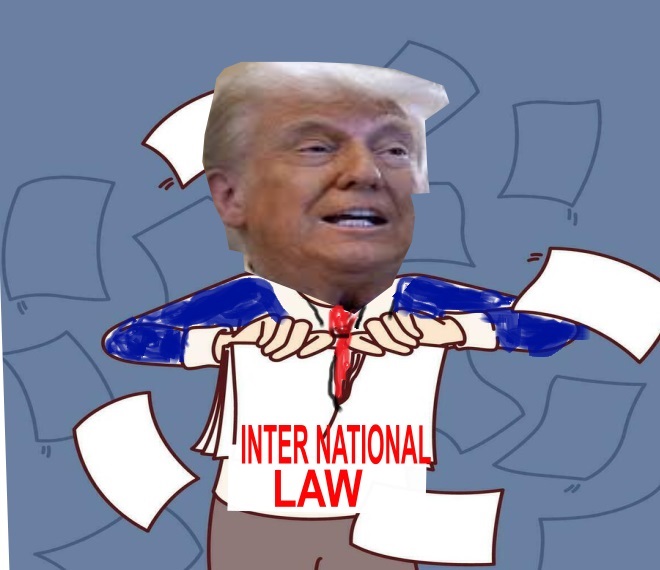
“Trump cutting ties with the world’s oldest climate treaty is another despicable effort to let corporate fossil fuel interests run our government.”
Jake Johnson, Jan 08, 2026, https://www.commondreams.org/news/trump-withdraws-global-treaties
President Donald Trump on Wednesday withdrew the United States from dozens of international treaties and organizations aimed at promoting cooperation on the world’s most pressing issues, including human rights and the worsening climate emergency.
Among the treaties Trump ditched via a legally dubious executive order was the United Nations Framework Convention on Climate Change (UNFCCC), making the US—the world’s largest historical emitter of planet-warming greenhouse gases—the first country to abandon the landmark agreement.
President Donald Trump on Wednesday withdrew the United States from dozens of international treaties and organizations aimed at promoting cooperation on the world’s most pressing issues, including human rights and the worsening climate emergency.
Among the treaties Trump ditched via a legally dubious executive order was the United Nations Framework Convention on Climate Change (UNFCCC), making the US—the world’s largest historical emitter of planet-warming greenhouse gases—the first country to abandon the landmark agreement.
The US Senate ratified the convention in 1992 by unanimous consent, but lawmakers have repeatedly failed to assert their constitutional authority to stop presidents from unilaterally withdrawing from global treaties.
Jean Su, energy justice director at the Center for Biological Diversity, said in a statement that “Trump cutting ties with the world’s oldest climate treaty is another despicable effort to let corporate fossil fuel interests run our government.”
“Given deeply polarized US politics, it’s going to be nearly impossible for the U.S. to rejoin the UNFCCC with a two-thirds majority vote. Letting this lawless move stand could shut the US out of climate diplomacy forever,” Su warned. “Withdrawing from the world’s leading climate, biodiversity, and scientific institutions threatens all life on Earth.”
Trump also pulled the US out of the International Institute for Justice and the Rule of Law, the International Union for Conservation of Nature, the UN International Law Commission, the UN Democracy Fund, UN Oceans, and dozens of other global bodies, deeming them “contrary to the interests of the United States.”
The president’s move came as he continued to steamroll domestic and international law with an illegal assault on Venezuela and threats to seize Greenland with military force, among other grave abuses.
Below is the full list of international organizations that Trump abandoned with the stroke of a pen:
(a) Non-United Nations Organizations:
(i) 24/7 Carbon-Free Energy Compact;
(ii) Colombo Plan Council;
(iii) Commission for Environmental Cooperation;
(iv) Education Cannot Wait;
(v) European Centre of Excellence for Countering
Hybrid Threats;
(vi) Forum of European National Highway Research Laboratories;
(vii) Freedom Online Coalition;
(viii) Global Community Engagement and Resilience Fund;
(ix) Global Counterterrorism Forum;
(x) Global Forum on Cyber Expertise;
(xi) Global Forum on Migration and Development;
(xii) Inter-American Institute for Global Change Research;
(xiii) Intergovernmental Forum onMining, Minerals, Metals, and Sustainable Development;
(xiv) Intergovernmental Panel on Climate Change;
(xv) Intergovernmental Science-Policy Platform on Biodiversity and Ecosystem Services;
(xvi) International Centre for the Study of the Preservation and Restoration of Cultural Property;
(xvii) International Cotton Advisory Committee;
(xviii) International Development Law Organization;
(xix) International Energy Forum;
(xx) International Federation of Arts Councils and Culture Agencies;
(xxi) International Institute for Democracy and Electoral Assistance;
(xxii) International Institute for Justice and the Rule of Law;
(xxiii) International Lead and Zinc Study Group;
(xxiv) InternationalRenewable Energy Agency;
(xxv) International Solar Alliance;
(xxvi) International Tropical Timber Organization;
(xxvii) International Union for Conservation of Nature;
(xxviii) Pan American Institute of Geography and History;
(xxix) Partnership for Atlantic Cooperation;
(xxx) Regional Cooperation Agreement on Combatting Piracy and Armed Robbery against Ships in Asia;
(xxxi) Regional Cooperation Council;
(xxxii) Renewable Energy Policy Network for the 21st Century;
(xxxiii)Science and Technology Center in Ukraine;
(xxxiv) Secretariat of the Pacific Regional Environment Programme; and
(xxxv) Venice Commission of the Council of Europe.
(b) United Nations (UN) Organizations:
(i) Department of Economic and Social Affairs;
(ii) UN Economic and Social Council (ECOSOC) — Economic Commission forAfrica;
(iii) ECOSOC — Economic Commission forLatin America and the Caribbean;
(iv) ECOSOC — Economic and Social Commission for Asia and the Pacific;
(v) ECOSOC — Economic and Social Commission for Western Asia;
(vi) International Law Commission;
(vii) International Residual Mechanism for Criminal Tribunals;
(viii) InternationalTrade Centre;
(ix) Office of the Special Adviser on Africa;
(x) Office of the Special Representative of the Secretary General forChildren in Armed Conflict;
(xi) Office of the Special Representative of the Secretary-General on Sexual Violence in Conflict;
(xii) Office of the Special Representative of the Secretary-General on Violence Against Children;
(xiii) Peacebuilding Commission;
(xiv) Peacebuilding Fund;
(xv) Permanent Forum on People of African Descent;
(xvi) UN Alliance of Civilizations;
(xvii) UN Collaborative Programme on Reducing Emissions fromDeforestation and Forest Degradation in Developing Countries;
(xviii) UN Conference on Trade and Development;
(xix) UN Democracy Fund;
(xx) UN Energy;
(xxi) UN Entity for Gender Equality and the Empowerment of Women;
(xxii) UN Framework Convention on Climate Change;
(xxiii) UN Human Settlements Programme;
(xxiv) UN Institute for Training and Research;
(xxv) UN Oceans;
(xxvi) UN Population Fund;
(xxvii) UN Register of Conventional Arms;
(xxviii) UN System Chief Executives Board for Coordination;
(xxix) UN System Staff College;
(xxx) UNWater; and
(xxxi) UN University.
Rachel Cleetus, policy director and lead economist for the Climate and Energy Program at the Union of Concerned Scientists, said Trump’s withdrawal from the world’s bedrock climate treaty marks “a new low and yet another sign that this authoritarian, anti-science administration is determined to sacrifice people’s well-being and destabilize global cooperation.”
“Withdrawal from the global climate convention will only serve to further isolate the United States and diminish its standing in the world following a spate of deplorable actions that have already sent our nation’s credibility plummeting, jeopardized ties with some of our closest historical allies, and made the world far more unsafe,” said Cleetus. “This administration remains cruelly indifferent to the unassailable facts on climate while pandering to fossil fuel polluters.”
‘Year of bloodshed’: West Bank authorities record nearly 24,000 army, settler attacks on Palestinians in 2025
Around 35,000 trees have been uprooted or destroyed by illegal settlers this year, while 14 Palestinian citizens have been killed
News Desk, JAN 6, 2026, https://thecradle.co/articles-id/35236
Head of Palestine’s Colonization and Wall Resistance Commission (CWRC), Minister Muayyad Shaaban, said in a new report that over 23,000 attacks have been carried out on Palestinians by settlers and the Israeli army in the occupied West Bank this year.
According to the CWRC report, 2025 saw Israeli troops and illegal settlers commit 23,827 attacks across the territory.
“The attacks were categorized as follows: 1,382 targeted land and trees, 16,664 attacks targeted individuals, while 5,398 attacks targeted property,” the report reads.
“The Israeli army was responsible for 18,384 attacks, while colonizers carried out 4,723 attacks, and both parties together were involved in an additional 720 attacks,” Shaaban is quoted as saying during a press conference at CWRC headquarters in Ramallah.
The minister said 2025 was “a year marked by bloodshed.”
“The occupying power did not simply expand colonies; it aimed to redefine the very concept of control. That is, domination is no longer limited to physical land, but rather, it extends to reshaping geography, symbolism, and the entire existence of the Palestinian people,” he added.
As a result of this year’s violence in the occupied West Bank, 14 Palestinian citizens have been killed.
Shaaban went on to say that 35,000 trees have been destroyed this year, and that settlers have caused 434 fires, which impacted Palestinian property and agriculture.
Meanwhile, land confiscation and settlement expansion are surging.
“Israeli occupation authorities effectively control approximately 41 percent of the West Bank, maintain a tight grip on nearly 70 percent of Area C, and control over 90 percent of the Jordan Valley through a comprehensive system of military orders and expropriation measures,” according to CWRC.
The 1993 US-sponsored Oslo Accords established the Palestinian Authority (PA) and its security forces, and gave the Palestinians limited autonomy in some parts of the occupied West Bank. This was said to be in preparation for the eventual establishment of a Palestinian state.
However, the accords did not end Israel’s military occupation and gave the Israeli government time to confiscate more Palestinian land and continue illegally expanding West Bank settlements.
The agreement resulted in the splitting of the West Bank into areas A, B, and C. Area A gave the PA authority over civil and security matters, while Area B gave it control only over civil matters. In Area C, Israel was granted full control.
Since then, illegal settlements have continued to expand, including in Areas A and B.
Since the start of 2025, Israel has been occupying multiple West Bank refugee camps and has been carrying out a systematic campaign of destruction and displacement.
Tens of thousands of Palestinians have been uprooted from their homes in the occupied West Bank since the start of the year, mainly in Jenin, Tulkarem, and Tubas.
As army and settler violence surges, the government also continues to advance plans for illegally annexing the territory.
Bezalel Smotrich, Israel’s finance minister and staunch backer of the illegal settler movement, said on 30 December that Washington has given Tel Aviv “full support” to expand settlements in the occupied West Bank.
Analysts Warn Venezuela Invasion Could Empower Trump to Take Actions Elsewhere.
“The invasion of Venezuela is a blatant violation of international law,” “It is a prelude, potentially, to a long and violent conflict within Venezuela. And it’s a throwback to other times when leaders who had broken democracy, who had exploited their peoples in Haiti in 1915 or in Panama in 1989, became the fodder for further U.S. invasions and occupation.”
“We’re ready to go again if we have to,” Trump said in a press conference after the invasion. And not just against Venezuela. Trump has threatened military action in Colombia, Cuba, and Mexico.
The US’s first unilateral invasion in South America is Trump’s testing ground for military supremacy in the region.
By Michael Fox , Truthout, January 6, 2026
The bombs fell in the early hours of January 3. They cascaded over the city, one and then another. The bright orange explosions rocked Venezuela’s capital, Caracas, shaking people awake.
“The bombs lasted a while,” Caracas resident and community organizer Yanahir Reyes told Truthout. “And you could hear the helicopters, the planes. It was terrifying.”
The U.S. forces rained down fire — focused on the military barracks in the capital and nearby states, but also hitting surrounding neighborhoods.
Videos of the invading forces spiraled quickly onto social media. Countless videos of the bombs falling, people screaming, trying to make sense of it all, while the explosions shook buildings and destroyed homes. And the sound of the arrival of the U.S. forces echoed across the city.
Shock. Fear. Confusion………………………………………
This was the invasion that Donald Trump had vowed for months. An invasion that U.S. administrations had threatened for years and decades, going all the way back to President George W. Bush.
And it marked the U.S. once again deploying direct military action in other countries in the region. A return to President Theodore Roosevelt’s gunboat diplomacy, where the United States pushes its agenda and its interests by force. The Monroe Doctrine on steroids, or what Trump has called it his own “Donroe Doctrine” — Donald plus Monroe.
It is a terrifying precedent. It is the first time the United States has taken unilateral military action against a nation in Latin America in more than 35 years. Many analysts and Latin Americans had hoped this bellicose foreign policy and direct U.S. aggression had been relegated to the history books.
But those playbooks have been dusted off and are being used again, echoing the December 20, 1989, U.S. invasion of Panama. And it was a copy and paste job — give or take some minor alterations.
“The invasion of Venezuela is a blatant violation of international law,” John Lindsay-Poland told Truthout. He’s the author of the book Emperors in the Jungle, about the history of U.S. intervention in Panama and the 1989 invasion. “It is a prelude, potentially, to a long and violent conflict within Venezuela. And it’s a throwback to other times when leaders who had broken democracy, who had exploited their peoples in Haiti in 1915 or in Panama in 1989, became the fodder for further U.S. invasions and occupation.”
As the 1989 invasion of Panama would be considered a training exercise for the ensuing U.S. wars in the Middle East, the Venezuelan invasion on January 3 was Trump’s testing ground for military supremacy in the region.
“We’re ready to go again if we have to,” Trump said in a press conference after the invasion. And not just against Venezuela. Trump has threatened military action in Colombia, Cuba, and Mexico.
“We should be concerned,” says Steve Ellner, an associate managing editor of the journal Latin American Perspectives, who taught for decades at the Universidad de Oriente in Venezuela. “And we should be concerned because this is meant to send a message way beyond Venezuela, not only way beyond Venezuela in the region, but worldwide.”
1989 Panama Invasion
On December 20, 1989, U.S. President George H.W. Bush ordered the U.S. invasion of Panama. Twenty-six thousand U.S. troops invaded the country. They rained down fire and bombs — attacking the barracks of the Panama Defense Forces in the capital of Panama City and other areas.
The U.S.’s goal was to capture President Manuel Noriega on drug trafficking charges.
Neighborhoods like Panama City’s El Chorrillo went up in smoke. Twenty-thousand homes burned. U.S. forces killed hundreds of people. They dumped bodies into mass graves.
When I visited El Chorrillo in late 2023 to report for the episode of my podcast Under the Shadow about the U.S. invasion, I saw the open wounds that still remain. The bullet holes left by U.S. troops. The pain in people’s voices as they remember that night and the subsequent U.S. occupation.
“So many innocent people died,” said resident Omar Gonzalez, who was only 12 at the time and watched fires engulf homes. “Friends of ours. Children we knew. People. Men and women. Some people who were sleeping at that moment. Elderly people who couldn’t stand up or run away because they lived close to the barracks. And this is the history. It’s painful, more than anything else.”
U.S. forces killed more than 500 people. Victims and their families are still demanding justice. Large murals cover walls, like one depicting a U.S. helicopter flying over rubble engulfed in flames. It reads: “Never forget. Never forgive.”
The Panama invasion marked a new era for U.S. foreign policy in the region in a number of ways………………………………………………………………………………………………………………………………………………. https://truthout.org/articles/analysts-warn-venezuela-invasion-could-empower-trump-to-take-actions-elsewhere/?utm_source=Truthout&utm_campaign=7f1612e76d-EMAIL_CAMPAIGN_2026_01_06_10_12&utm_medium=email&utm_term=0_bbb541a1db-7f1612e76d-650192793
‘No more annexation fantasies’ Greenland PM responding to Trump’s threats
The Cradle News Desk, JAN 5, 2026, https://thecradle.co/articles/no-more-annexation-fantasies-greenland-pm-responding-to-trumps-threats
US imperial ambitions directed at an EU member were met with coordinated diplomatic pushback and explicit warnings against altering borders by force.
Denmark’s Prime Minister Mette Frederiksen, on 5 January, publicly rejected renewed threats by US President Donald Trump calling for US annexation of Greenland, warning Washington to “stop the threats against a historically close ally.”
“It makes absolutely no sense to talk about the US needing to take over Greenland,” Frederiksen said, stressing that “the US has no right to annex any of the three countries in the Danish Kingdom.”
The Danish PM noted that Denmark, “and thus Greenland,” is a NATO member and protected by the alliance’s collective security guarantees.
Greenland’s Prime Minister Jens-Frederik Nielsen also responded on the same day through social media, issuing a blunt warning.
“That’s enough now,” he wrote, followed by a firmer rejection saying “No more pressure. No more insinuations. No more fantasies of annexation.”
Nielsen emphasized that Greenland remains open to engagement but set clear limits, saying “We are open to dialogue. We are open to discussions,” adding that any talks must take place “through the proper channels and with respect for international law.”
The dispute centers on Trump’s repeated claims that Greenland should become part of the US, a position he reiterated while speaking to reporters aboard Air Force One and in a separate interview with The Atlantic.
Trump framed his remarks around security concerns, saying, “We need Greenland from the standpoint of national security,” and asserting that Denmark “is not going to be able to do it.”
He also suggested the issue could be revisited soon, stating, “We’ll worry about Greenland in about two months … let’s talk about Greenland in 20 days.”
The timing of Trump’s remarks heightened concern in Europe, with his comments following US military action in Venezuela and the the abduction of President Nicolas Maduro and his wife, and transferring them to US soil for “trial”, events that, according to reports, raised fears that similar logic could be applied elsewhere.
Additional backlash followed a social media post by Katie Miller, a former Trump aide, who shared an image of Greenland colored like the US flag with the caption “SOON.”
Nielsen called the post “disrespectful,” writing that “our country is not for sale, and our future is not decided by social media posts.”
European leaders, including those of Finland, Sweden, and Norway, voiced support for Denmark, while France’s Foreign Ministry warned that “borders cannot be changed by force.”
France said that it stands in solidarity with Denmark and Greenland and rejects any attempt to alter borders by force, reaffirming that Greenland’s future is for its people and Denmark to decide.
Academic Freedom on Life Support: Trump’s War on Knowledge Exposed
January 6, 2026 https://scheerpost.com/2026/01/06/academic-freedom-on-life-support-trumps-war-on-knowledge-exposed/
In this episode of Scheer Intelligence, Robert Scheer speaks with Professor Steve Macek about what he calls an unprecedented assault on academic freedom in the United States. From federal investigations into Columbia and UCLA to state‑level crackdowns in Florida and Texas, Macek argues that the country is witnessing a new form of political interference — one that targets universities, scholars, and even entire fields of study.
Scheer and Macek trace the historical lineage from McCarthyism to the present, examining how both major political parties have contributed to a climate of fear, surveillance, and self‑censorship on campus. They discuss the weaponization of antisemitism accusations, the precariousness of adjunct faculty, the chilling effect on student activism, and the broader erosion of institutions that produce knowledge.
This conversation is essential for anyone concerned about free inquiry, democratic debate, and the future of higher education.
Japan’s ‘most dangerous’ nuclear power plant admits to manipulating earthquake safety data

Regulator halts review to restart Hamaoka power plant after 14 years
Shweta Sharma, Tuesday 06 January 2026, https://www.independent.co.uk/asia/japan/japan-nuclear-plant-data-manipulation-earthquake-b2895086.html
A Japanese power plant operator has admitted to cherry-picking critical safety data to pass the screening process of the nuclear safety regulator to restart two of its offline reactors.
Chubu Electric said on Monday that it had set up an independent panel of experts to investigate possible misconduct in compiling data as part of a process to restart two reactors at the Hamaoka nuclear power plant.
The plant originally had five reactors but two were permanently shut down in 2009. The remaining three reactors were taken offline in the wake of the 2011 Fukushima disaster.
Concerns about data manipulation mean the power plant is unlikely to restart anytime soon. It’s also a likely setback for Japan’s efforts to shift back to nuclear power to boost energy security and cut greenhouse gas emissions.
Chubu told regulators it had selected an earthquake wave model closest to the average of 20 possible patterns to calculate the Hamaoka plant’s “standard seismic motion”, the maximum shaking the reactors could withstand. However, the company admitted, employees in charge could have deliberately chosen that model to make the plant appear safer and speed up the screening process.
We sincerely apologise for the incident,” Chubu Electric president Kingo Hayashi told a press conference. “The actions could potentially shake the foundations of the nuclear power business.”
The regulator learned about the misconduct last February after it was contacted by a whistleblower.
A senior agency executive called the matter “unbelievable” saying it broke trust in the operator and would make the people question its eligibility.
The industry ministry has now ordered Chubu Electric to submit a detailed report by 6 April explaining the cause of the misconduct and outlining measures to prevent it from happening again.
The Hamaoka power plant, 200km south-west of Tokyo, has been described as the “world’s most dangerous” nuclear power facility by some seismologists and anti‑nuclear campaigners. Government forecasts have predicted an 87 per cent chance of a powerful quake in the area, which sits on two major subterranean faults. A major accident would be likely to force the evacuation of Greater Tokyo, home to 28 million people.
Professor Katsuhiko Ishibashi, a seismologist and a former member of a Japanese government panel on nuclear reactor safety, said in 2003 that Hamaoka was “the most dangerous nuclear power station” in Japan because of the potential for an earthquake to trigger a nuclear disaster.
He assessed at the time that such an incident would devastate a broad area between Tokyo and Nagoya, destroying more than 200,000 buildings and resulting in a huge tsunami.
The plant was ordered to shut down reactors 4 and 5 and cancel the planned restart of reactor 3 following the Fukushima disaster, when a magnitude 9 earthquake triggered tsunami waves up to 15m high. Hamaoka was built to withstand only an 8.5-magnitude quake and an 8m tsunami.
Chubu applied for a review to restart the Hamaoka reactors between 2014 and 2015, and it was approved for standard seismic motion in September 2023.
Shares of Chubu Electric dropped 8.2 per cent, its steepest fall since April 2025, after the latest revelations.
The French Resistance at Bure: the campaign to oppose a nuclear waste dump.

Richard Outram, NFLA Secretary, 6 January 2026
Introduction.
The outline for this briefing was first written almost two years ago for British and Canadian campaigners working collaboratively in opposing plans to establish high level radioactive waste repositories in their respective nations, either an off-shore and undersea Geological Disposal Facility (UK) or an inshore and underground Deep Geological Repository (Canada).
It was intended to raise their awareness of the decades long struggle waged by colleagues against the similar Cigéo Project under development in France.
Contrary to the positive articles published by Nuclear Waste
Services Community Partnerships and puff pieces that have appeared in the pro-nuclear Cumbrian media all is not ‘sweetness and light’, for there have been public protests involving local people and environmental activists against this project for decades.
Protests have often been opposed by police using tear gas, water cannons, and stun grenades to disperse demonstrators. Authorities maintain a heavy police presence in the area, and multiple injuries have been reported on both sides during serious confrontations. The French state has also resorted to spying and the wholesome clearance and destruction of protestors’ camps.
This then is a background paper to the campaign in opposition to the Cigéo Project, and the tactics employed by the French State and Police in opposing them…………………………
Lengthy detailed history. with excellent photos and graphics.
Conclusion.
With sections of the media reporting that the British Government is looking to abandon the ‘consent based’ approach, and with the former Nuclear Minister suggesting that such a move is inevitable, there must be concerns that a nuclear waste dump might eventually be imposed on a wholly unwilling community in the UK.
Such an announcement would most likely lead to more robust public opposition. Could this lead in turn to the UK Government looking to resort to the heavy-handed policing seen at Bure?
Although UK police services have historically operated based on consent, this is perhaps less fanciful than it might appear. Ministerial approval has already been given to deploy armed officers of the Civil Nuclear Constabulary at national energy infrastructure sites outside of nuclear power stations and Ministers announced as part of the 2025 Defence Review that an armed auxiliary civilian guard force would be created for a similar purpose.
If the UK Government does move away from a ‘consent-based approach’ to GDF siting, Bure may provide a salutary lesson for an unwilling, and disenfranchised, community in the UK faced with the prospect of a highlevel nuclear waste facility being imposed by the British State.
Forewarned is forearmed. https://www.nuclearpolicy.info/wp/wp-content/uploads/2026/01/A446NB332-The-French-Resistance-at-Bure-the-campaign-to-oppose-a-nuclear-waste-dump-Jan-2026.pdf
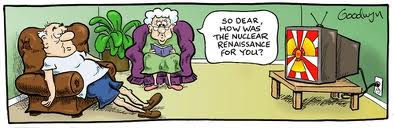
The cost of America’s nuclear revival
On an industrial site on the shores of Lake Michigan, hundreds of workers
are racing to do something that has never been achieved before: restart a
US nuclear power plant scheduled to be decommissioned.
The revival is being
driven by power demand from artificial intelligence data centres and
reshoring of manufacturing, which is straining energy grids and pushing up
electricity prices. Big Tech is attracted to nuclear because it provides
[?] clean power that does not suffer from the intermittency that is a feature
of solar and wind energy.
Concerned that a power crunch could delay the
roll out of data centres, Microsoft and Google have signed long-term power
deals to support the reopening of shuttered nuclear plants in Iowa and
Pennsylvania.
President Donald Trump has also embraced atomic energy,
pledging to slash regulation and invest tens of billions of dollars to
reopen and build new fleets of reactors to provide the power needed to
“win” the global AI race. In May he set a goal of quadrupling US atomic
energy capacity by 2050, a massive undertaking that would involve building
hundreds of new plants.
And in October Washington inked an $80bn
partnership with private equity group Brookfield and reactor designer
Westinghouse, which aims to kick-start construction of eight large-scale
nuclear plants.
Last year private investors funnelled a record $3bn into
start-ups building smaller modular reactors, technologies that provide a
third or less of the power of large-scale nuclear plants. In 2024, Amazon
bought a stake in X-energy, a reactor developer with power supply
agreements to support the construction of 144 small modular reactors (SMRs)
in the US and UK.
But in an industry subject to high financing, regulatory
and reputational risks, not everyone is convinced the resurgence will be
sustained. Only a handful of mothballed nuclear plants in the US are
capable of being restarted, critics warn, and building large-scale reactors
from scratch is a highly complex undertaking prone to delays and cost
overruns in western nations.
None of the more than 50 SMRs under
development in the US has proved they are commercially viable yet nor
obtained an operating licence from the US Nuclear Regulatory Commission.
“The industry is boasting about how things are different now and they are
going to build fleets of new reactors, large and small,” says Edwin
Lyman, a physicist at the Union of Concerned Scientists and critic of
nuclear energy. “But the fundamentals haven’t changed: nuclear is more
expensive than other forms of energy and still poses a risk of accidents
and proliferation. You can’t wish these problems away, so I think
Trump’s so-called nuclear renaissance is built on a house of cards.”
FT 7th Jan 2026,
https://www.ft.com/content/9f6c4db1-559f-48e1-8c21-ac0bc1a1237c
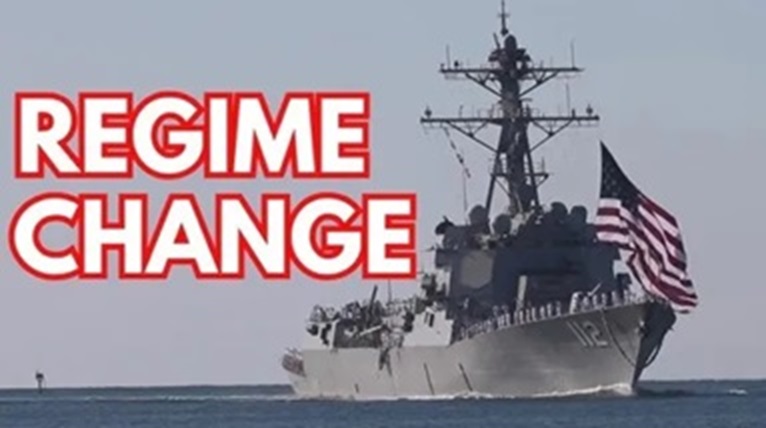
US 21st Century regime change ops: Failure, Failure, Failure, Failure, Failure… To Be Determined
5 January 2026 AIMN Editorial , By Walt Zlotow, West Suburban Peace Coalition, Glen Ellyn, IL, https://theaimn.net/us-21st-century-regime-change-ops-failure-failure-failure-failure-failure-to-be-determined/
The US has spent the entire 21st century toppling regimes it hates. Every one up to Saturday’s removal of Venezuelan president Nicholas Maduro has ended in failure.
2001 Afghanistan
President George W. Bush kicked off the 21st century by changing out the Taliban regime in Afghanistan. America could not confront the real culprit of 911, ally Saudi Arabia, so we picked an easy scapegoat to extract our revenge. It only took 5 weeks to topple the Taliban, allowing installation of a US puppet government. Result? Taliban regrouped to win their country back. Took 20 years but this time it was the hated Yankees ousted, killing 2,461 Americans in the process. America left the failed state of Afghanistan with over 150,000 dead and Afghanistan’s 42 million people worse off than before American’s criminal regime change operation.
2003 Iraq
Bush turned next to hated Iraq to one up Poppy Bush’s failure to oust Saddam Hussein 1991. His regime change turned Iraq into a failed state with over 500,000 Iraqis and 5,984 American soldiers and contractors killed. Over 100,000 Americans were injured in body and mind from in a totally made up, senseless war. Twenty-three years later the US is still defiling Iraqi sovereignty with a couple of thousand soldiers stuck in the Iraq war roach motel.
2011 Libya
George W. Bush’s successor Barack Obama got into regime change business to knock off Libyan strongman Muammar Gaddafi. He employed so called defense alliance NATO to bomb Libby during the Libyan civil war to tip the scales against Gaddafi. Obama’s Secretary of State Hillary Clinton gloated, “We came, we saw, he died”, failing to mention this death resulted from a bayonet to the butt. The US achieved the complete opposite of its intended goal of Libyan and regional stability by turning Libya into one of the most chaotic, failed states on the planet.
2013 Syria
Just 2 years later Obama was at it again, this time intervening in the Syrian civil war, supporting jihadist terrorists to depose hated Syrian President Bashar Assad. Neither Obama nor successor Trump could complete the task finally achieved by President Joe Biden in his last 2 months. US intervention was primarily designed to rid puppet master Israel of one of its regional hegemonic rivals. By prolonging the Syrian civil war for 11 years, the US contributed mightily to the civil war’s half million deaths. Led by new US pal, former US designated al-Qaeda terrorist Ahmed al-Sharaa, Christians, Druze and Alawites are being systematically hunted down and killed by the US backed al-Sharaa regime.
2022 Russia
The US and NATO spent 14 years under 4 presidents provoking Russia to invade Ukraine to keep Ukraine out of NATO. The US knew Russia would eventually invade; indeed, also knew Ukraine could not prevail against the Russian goliath. Didn’t matter. The US believed the war would so weaken Russia it might topple despised President Vladimir Putin, bringing in a Russian puppet amenable to US influence. Four years on Russia and Putin are stronger than ever, pivoting away from Europe to the non-aligned world seeking independence from a war and sanctions crazed America. Ukraine is now a failed state near totally dependent on US, NATO treasure to survive. A fifth of its land is gone forever, soon to be joined by its last warm water port. Looks like the only regime to be removed is Ukraine’s, not Russia’s.
2026 Venezuela
In his first solo adventure in regime change, President Trump kicked off 2026 with a lightning assault that snatched Venezuelan President Nicholas Maduro out of Venezuela to face a Trump style show trial in the US. Trump and his war cabinet are positively ecstatic about completing America’s two decade crusade to snuff out socialism in Venezuela and gobble up its 300 billion barrels of heavy crude in the process. But they might look back at America’s 21st century regime change failures in Afghanistan, Iraq, Libya, Syria, Russia, and ponder whether they’re simply following previous administrations down the rabbit hole of regime change failure.
US DOE Awards $2.7B for Uranium Enrichment in Nuclear Power Push
Rigzone, by Jov Onsat. Tuesday, January 06, 2026
The United States Department of Energy (DOE) has awarded $2.7 billion orders to three companies for enrichment services to enable the production of low-enriched uranium (LEU) and high-assay low-enriched uranium (HALEU)…………….
American Centrifuge Operating LLC and General Matter Inc each won $900 million to establish domestic HALEU enrichment capacity for advanced reactors. Orano Federal Services LLC also won $900 million to expand the U.S.’ LEU enrichment capacity.

……………….Currently only China and Russia can produce HALEU at a commercial scale, according to the World Nuclear Association.
Babcock to provide dock for new Dreadnought nuclear subs: will they be carrying nuclear weapons?
By Ally McRoberts, Dunfermline Press 6th Jan 2026
PREPARATIONS are underway in Rosyth for a contingent docking facility to accommodate the next generation of nuclear submarines.
Dunfermline and Dollar MP Graeme Downie had asked about the planned timescale for the work which will see the Dreadnought class berth at the yard during sea trials.
Rosyth will “bridge a gap” by offering a temporary home for the new subs, and last month the Ministry of Defence told local councillors they will not reveal if any of the boats that need repairs or maintenance will be carrying nuclear weapons……………………………………………..
“For operational security reasons further details cannot be released as to do so could be used to undermine the security and capability of our Armed Forces.”
……………………The Royal Navy’s new subs, the Dreadnought class, will be launched from Barrow-in-Furness towards the end of this decade.
The vessels will be maintained at Faslane, however the site on the Clyde won’t be ready until the mid 2030s……………………………
At last month’s South and West Fife area committee, Grant Reekie, head of radioactive waste and health physics at Babcock, had explained: “We have been asked to provide a contingent facility by the MoD to bridge a gap of submarines coming into service in late 2020s from 2029 through to mid 2030s when they will no longer be required as it will be done in Faslane.
………………At the same meeting the MoD told councillors they will not reveal if nuclear weapons will be aboard submarines being repaired at the yard.
They also confirmed that local residents would be given potassium iodate tablets to block radiation in the event of an emergency. https://www.dunfermlinepress.com/news/25743485.babcock-provide-dock-new-dreadnought-nuclear-subs/
1 This Month

of the week – Shut Down Drone Warfare!


Tell the Ukrainian Government to Drop Prosecution of Peace Activist Yurii Sheliazhenko

Petition to revoke the licensing of the Near Surface Nuclear Disposal Facility (NSDF) at Chalk River. https://www.ourcommons.ca/petitions/en/Petition/Details?Petition=e-7247
To see nuclear-related stories in greater depth and intensity – go to https://nuclearinformation.wordpress.com
-
Archives
- April 2026 (107)
- March 2026 (251)
- February 2026 (268)
- January 2026 (308)
- December 2025 (358)
- November 2025 (359)
- October 2025 (376)
- September 2025 (257)
- August 2025 (319)
- July 2025 (230)
- June 2025 (348)
- May 2025 (261)
-
Categories
- 1
- 1 NUCLEAR ISSUES
- business and costs
- climate change
- culture and arts
- ENERGY
- environment
- health
- history
- indigenous issues
- Legal
- marketing of nuclear
- media
- opposition to nuclear
- PERSONAL STORIES
- politics
- politics international
- Religion and ethics
- safety
- secrets,lies and civil liberties
- spinbuster
- technology
- Uranium
- wastes
- weapons and war
- Women
- 2 WORLD
- ACTION
- AFRICA
- Atrocities
- AUSTRALIA
- Christina's notes
- Christina's themes
- culture and arts
- Events
- Fuk 2022
- Fuk 2023
- Fukushima 2017
- Fukushima 2018
- fukushima 2019
- Fukushima 2020
- Fukushima 2021
- general
- global warming
- Humour (God we need it)
- Nuclear
- RARE EARTHS
- Reference
- resources – print
- Resources -audiovicual
- Weekly Newsletter
- World
- World Nuclear
- YouTube
-
RSS
Entries RSS
Comments RSS
 nuclear-news