Over two hundred jobs may be lost if Haverigg jail is displaced by nuclear dump
Whilst Nuclear Waste Services are keen to promote the number of jobs that might be created by the establishment of a Geological Disposal Facility in West Cumbria, there is less clarity when it comes to identifying the number of jobs that might be lost.
The GDF will be the final resting place for the UK’s current and future high-level nuclear waste. Investigations are underway to identify potential sites in either Mid or South Copeland in West Cumbria, and in Theddlethorpe in Lincolnshire. A GDF would require a surface receiving station of around 1 sq KM, to which regular nuclear waste shipments would be made prior to the waste being moved underground and then pushed out along deep tunnels beneath the seabed.
In Theddlethorpe, a specific site, a former gas terminal, has been identified as the potential hub for a receiving station, but this has so far not been the case in Copeland. One major constraint in the South Copeland Search Area is that it mostly comprises the Lake District National Park and the proposed Southern Boundary Extension which are rightly ‘excluded from consideration’. Consequently, any GDF development would have to be confined to small areas around Drigg, Haverigg and Millom, and for many months there has been speculation that one potential site by the coast might be the location of HMP Haverigg.
Mindful that a GDF would most likely mean the closure of the jail, NFLA Secretary Richard Outram sent several Freedom of Information requests to the Ministry of Justice exploring the impact of the closure of the prison in these circumstances. The NFLAs are particularly keen to identify how many local jobs could be lost, as well as ascertaining the impact on local contractors and suppliers engaged in business with HMP Haverigg. There is also the less quantifiable contribution made by prisoners carrying out work within the local community and the positive impact of the training and support provided by prison staff and support agencies in reducing recidivism and turning around the lives of inmates to enable them to reenter society.
On jobs, Ministry of Justice officials were unable to supply all of the information requested, but advised that they employ a total of 206 full-time (80%) and part-time (20%) staff, both operational (prison officers) and non-operational (ancillary roles). Of these over half, 110, reside in the local LL18 postal district. However this excludes the number of staff engaged at this prison who are employed by other agencies, such as the local and regional NHS, and it was surprising to learn that ‘there is no legal requirement for MoJ to collate data relating to contractors and suppliers that work at HMP Haverigg’ so it is impossible to make a determination as to the dependence of the local supply chain on business with the prison.
6th August 2024
Over two hundred jobs may be lost if Haverigg jail is displaced by nuclear dump
Whilst Nuclear Waste Services are keen to promote the number of jobs that might be created by the establishment of a Geological Disposal Facility in West Cumbria, there is less clarity when it comes to identifying the number of jobs that might be lost.
The GDF will be the final resting place for the UK’s current and future high-level nuclear waste. Investigations are underway to identify potential sites in either Mid or South Copeland in West Cumbria, and in Theddlethorpe in Lincolnshire. A GDF would require a surface receiving station of around 1 sq KM, to which regular nuclear waste shipments would be made prior to the waste being moved underground and then pushed out along deep tunnels beneath the seabed.
In Theddlethorpe, a specific site, a former gas terminal, has been identified as the potential hub for a receiving station, but this has so far not been the case in Copeland. One major constraint in the South Copeland Search Area is that it mostly comprises the Lake District National Park and the proposed Southern Boundary Extension which are rightly ‘excluded from consideration’. Consequently, any GDF development would have to be confined to small areas around Drigg, Haverigg and Millom, and for many months there has been speculation that one potential site by the coast might be the location of HMP Haverigg.
Mindful that a GDF would most likely mean the closure of the jail, NFLA Secretary Richard Outram sent several Freedom of Information requests to the Ministry of Justice exploring the impact of the closure of the prison in these circumstances. The NFLAs are particularly keen to identify how many local jobs could be lost, as well as ascertaining the impact on local contractors and suppliers engaged in business with HMP Haverigg. There is also the less quantifiable contribution made by prisoners carrying out work within the local community and the positive impact of the training and support provided by prison staff and support agencies in reducing recidivism and turning around the lives of inmates to enable them to reenter society.
On jobs, Ministry of Justice officials were unable to supply all of the information requested, but advised that they employ a total of 206 full-time (80%) and part-time (20%) staff, both operational (prison officers) and non-operational (ancillary roles). Of these over half, 110, reside in the local LL18 postal district. However this excludes the number of staff engaged at this prison who are employed by other agencies, such as the local and regional NHS, and it was surprising to learn that ‘there is no legal requirement for MoJ to collate data relating to contractors and suppliers that work at HMP Haverigg’ so it is impossible to make a determination as to the dependence of the local supply chain on business with the prison.
On rates of recidivism, Ministry officials did not supply any specifics for the prison but instead referenced the latest national available statistics[i]. However, in a report which followed an unscheduled prison visit by inspectors in May 2021, it was recognised by HM Chief Inspector Charlie Taylor that Haverigg, in providing specialist accommodation and rehabilitation to older male sex offenders, ‘is fast becoming a very capable establishment and is progressing to a point where it soon may well be one of the better open prisons in the estate.’ It was notable that ‘All eligible prisoners had some form of purposeful activity…The employment hub was a particularly helpful service for prisoners’ and that ‘Prisoners benefited from a high standard of technical training. They developed significant new skills, knowledge and behaviours through vocational training.’[ii]
UK Government advice on the prison record that: ‘All prisoners work or train full time at Haverigg. Training and learning opportunities are focused on skills gaps in the job market and designed to improve prisoners’ chances of getting work on release. Professions include timber manufacturing, building, plastering, plumbing, industrial cleaning and agriculture. Prisoners can also train and work towards qualifications in the leisure industry through the gym’.[iii]
On community activities, Ministry officials advised that prisoners are engaged in litter picking and landscaping which has ‘received positive feedback from various community members for their impact on the local area’. The prison also holds a weekly market in Millom to promote the products made by HMP Haverigg, which has ‘significantly contributed to fostering strong relationships between the prison and the community’. Additionally, prisoners also support the local churches by maintaining church yards.
Lake District’s Coastal Nuclear Waste Dump Screw Tightens.
“Geology is the ground we stand on; it’s in the food we eat, and in the water we drink.”
Marianne Birkby, Aug 05, 2024
Lake District’s Coastal Nuclear Waste Dump Screw Tightens. Ethicist Kate
Rawles inadvertently hits the nail on the head in the NIREX sponsored paper
of 2000: ‘Ethical Issues in the Disposal of Radioactive Wastes’: “The
judgment about geology rests on the values put on human life and health. If
human health were not valued, the geological criteria would not be the
same.” Cue Cumbria’s complex and faulted geology! Burying hot
(literally 100 degrees c +) nuclear waste would be akin to burying a
gargantuan cracked pressure cooker containing the most dangerous substances
produced by man. By continuing down the “Implementation of Geological
Disposal” yellow brick road what does that say about the value placed on
human and non-human health? Our dedicated campaign against the nuclear dump
can be seen here at Lakes Against Nuclear Dump – a Radiation Free Lakeland
campaign.
Radiation Free Lakeland 5th Aug 2024
https://radiationfreelakeland.substack.com/p/lake-districts-coastal-nuclear-waste
Majority of Americans support more nuclear power, but future of large-scale nuclear is uncertain

A majority of U.S. adults remain supportive of expanding nuclear power in
the country, according to a Pew Research Center survey from May. Overall,
56% say they favor more nuclear power plants to generate electricity. This
share is statistically unchanged from last year. A line chart showing that
a majority of Americans continue to support more nuclear power in the U.S.
But the future of large-scale nuclear power in America is uncertain. While
Congress recently passed a bipartisan act intended to ease the nuclear
energy industry’s financial and regulatory challenges, reactor shutdowns
continue to gradually outpace new construction.
Americans remain more
likely to favor expanding solar power (78%) and wind power (72%) than
nuclear power. Yet while support for solar and wind power has declined by
double digits since 2020 – largely driven by drops in Republican support
– the share who favour nuclear power has grown by 13 percentage points
over that span.
Pew Research 5th Aug 2024
IAEA: Cooling pond water levels decreasing at Ukraine nuclear plant

Aug 6, 2024, https://www.ans.org/news/article-6266/iaea-cooling-pond-water-levels-decreasing-at-ukraine-nuclear-plant/
The water level in Ukraine’s Zaporizhzhia nuclear power plant cooling pond continues to decrease, creating a serious safety threat.
“If this trend continues, ZNPP staff confirmed that it will soon become challenging to pump water from the pond. Maintaining the level of the pond is made more difficult by the hot summer weather,” said Rafael Mariano Grossi, director general of the International Atomic Energy Agency, in an update issued August 2.
Zaporizhzhia—Europe’s largest nuclear plant—has been under Russian control since March 2022, shortly after the military invasion of Ukraine. The plant stopped producing power in September 2022, and all six of its units currently are in cold storage.
Water issues: Following the destruction of the Kakhovka dam in 2023, Zaporizhzhia workers dug 11 groundwater wells to provide approximately 250 cubic meters of cooling water per hour to support the plant’s sprinkler ponds. These ponds cool all six reactors.
“Dwindling water levels in the cooling pond remains a potential source of concern, and we will continue to closely monitor and observe the situation at the site to ensure the availability of a sufficient supply of cooling water for the plant’s needs at all times,” Grossi said.
During a site walkdown last week, IAEA inspectors stationed at the plant observed proper function in the sprinkler ponds, with water at nominal levels. But any compromise to the availability of water to the sprinkler ponds might necessitate using the cooling pond as a backup source.
Safety concerns: The IAEA team continue to hear military activity at varying distances from the plant.
On April 30, they reported hearing over 100 rounds of gunfire in the vicinity of the Zaporizhzhia, allegedly in response to drones flying near the plant’s training center. The “kamikaze” drones, some measuring 11 feet long and 8 feet wide, were observed in video evidence from Ukraine’s defense intelligence. The drones do not fire missiles but are equipped with explosives and can strike with precision.
Separately, the team reported three direct drone strikes on the plant on April 7 and April 9, resulting in one casualty. Ukrainian military intelligence spokesperson Andrii Cherniak said the Russians are using space around Zaporizhzhia because the Security and Defense Forces of Ukraine cannot return fire in a 1.5-kilometer zone around the plant.
IAEA report: In a letter from the permanent mission of the Russian Federation to the IAEA’s secretariat the following issues were highlighted.
- During a span of six days (July 22–28), 77 aerial vehicles launched with the aim of attacking and provoking ZNPP and the nearby town of Energodar.
- On July 29, Ukrainian armed forces launched three artillery strikes at the checkpoint entrance to Energodar, injuring three Russian Guard employees.
- The plant has enough diesel fuel to operate on emergency power for 19 days.
- Recruitment of personnel for the plant is ongoing, though the current number of employees is sufficient to continue cold shutdown operations and scheduled maintenance tasks.
Support for Zaporizhzhia: Starting in April 2022, the IAEA developed a broad assistance program at Zaporizhzhia. The agency recently organized four remote workshops with a focus on mental health. The sessions were geared toward supervisors, managers, and mental health teams to help recognize signs of distress and support those dealing with stress or trauma.
The United States and United Kingdom have lent support by delivering equipment and hosting workshops.
Nuclear weapons can never bring peace or security – only mass death
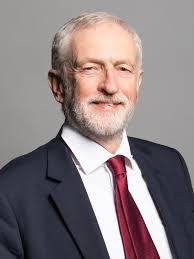
With the risk of all-out war ever-increasing, JEREMY CORBYN MP calls on Britain to lead by example, by signing the Global Nuclear Ban Treaty
AUGUST 6 is a poignant day. On this day in 1945, hundreds of thousands of people died in Hiroshima as the first atomic bomb was used as a weapon of war. A few days later, it was used again in Nagasaki.
The huge death toll from people being fried alive was compounded by death from cancers and the slow destruction of those who survived the initial attack. Others developed cancers later on and death was visited upon a whole generation by the two bombs.
The use of the atomic bomb set off the nuclear age as the United States expanded its nuclear arsenal. A few years later, the Soviet Union developed its own system, followed by others.
Britain, reeling from the economic destruction of World War II, tested its first atomic bomb in 1952. Clement Attlee, the prime minister, managed to expend, in complete secrecy, enough money to build an independent system. Not even the Cabinet was told, never mind Parliament or the people.
For two decades after the second world war there were atmospheric tests of nuclear weapons, with the resultant fallout killing people in the Pacific and beyond.
The nuclear Non-Proliferation Treaty has helped to stem the flow of nuclear weapons, which are restricted to the five declared nuclear weapons states (the US, Britain, France, Russia, China) and to India, Pakistan, Israel and North Korea, which are not treaty signatories.
The danger of a nuclear war is now greater than it has been for decades, as the Ukraine war drags on. Both Russia and Ukraine’s Nato backers have nuclear weapons at their disposal. Meanwhile, military spending is now rising around the world.
Britain has already committed to increasing defence spending to at least 2.5 per cent of GDP. Globally the number of nuclear warheads is also rising.
In the case of the war in Ukraine we see conscripted soldiers on both sides being slaughtered, and more and more weapons being delivered, and fewer and fewer politicians anywhere even raising the possibility of ending this appalling war. The language of peace is absent and there are few efforts being made now to broker a discussion that could lead to a ceasefire.
Nuclear weapons can never bring peace or security, only the assurance of deaths of millions followed by global climate catastrophe, nuclear winter and famine.
If Britain wanted to be a global leader, it would sign the Global Nuclear Ban Treaty and make the case for world peace.
Those used in 1945 were very small compared to the warheads of today; isn’t it time to remember the deaths of 1945 and ensure Hiroshima is never repeated?
Jeremy Corbyn is independent MP for Islington North.
UK Government refuses to release Sizewell C’s predicted price tag

The Department for Energy rejected a freedom of information request from BusinessLive on the Suffolk nuclear project’s costs.
BusinessLive, By Hannah Baker, South West Business Editor, 4 Aug 24
The government is refusing to reveal how much the planned Sizewell C nuclear plant in Suffolk is expected to cost. The Department for Energy turned down a freedom of information (FOI) request by BusinessLive asking for data on the project’s price tag.
Sizewell C, which is being partly funded by French-owned energy giant EDF, is reported to cost in the region of £20bn, though it has been suggested that it could cost more than £30bn.
The Suffolk nuclear station will be a replica of EDF’s Hinkley Point C plant in Somerset, which has been plagued by delays and funding issues over the course of its construction.
The government told BusinessLive that Sizewell’s costs are “subject to ongoing and commercially sensitive negotiations”…………………………….
“The commercial sensitivities mean that on this occasion we consider that the public interest would not be served by its release.”
The FOI request was made before Keir Starmer’s government came to power, but the new Labour-run department said it had “nothing to add” to the response.
…………………….. In 2022, the government was forced to pay state-owned China General Nuclear (CGN) to exit the Suffolk project over growing geo-political tensions. CGN had a 20% stake in Sizewell at the time. Since its removal, the Chinese firm has also halted payments on Hinkley Point C.
It is not known how many companies the current government is courting over Sizewell. In February, Centrica – the parent company of British Gas – confirmed it was in discussions with the previous administration over the project…………..https://www.business-live.co.uk/economic-development/government-refuses-release-sizewell-cs-29655312
Lemon socialism? – Rolls Royce might like to gracefully get out of Small Nuclear Reactors (SMRs)?

Lemon socialism is a pejorative term for a form of government intervention in which government subsidies go to weak or failing firms (lemons; see Lemon law), with the effective result that the government (and thus the taxpayer) absorbs part or all of the recipient’s losses.[1][2] The term derives from the conception that in socialism the government may nationalize a company in its entirety, while in lemon socialism the company is allowed to keep its profits but its losses are shifted to the taxpayer. – Wikipedia.

Many sources I had found online over the past half year said Rolls Royce (RR) SMR would be going down soon – because they’d be out of cash before the end of 2024.
This last ditch effort at fundraising appears to be futile.
Because private money (as opposed to public money) looks at the balance sheet….assets vs. liabilities.
A free open competitive energy marketplace will definitely kill SMRs. Even the UK gov’t won’t buy their SMR – so, RR is losing their “Lemon Socialism” card. (Ralph Nader uses that term to describe nuclear power) Oh well, Rolls Royce has many other engineering ventures … which they are very successful at.
This SMR thing could distract from, and draw funds from, those.
South Korean nuclear weapons would break U.S. ties, Japan’s defense chief says
Japan Times, By Hyonhee Shin and Josh Smith
Reuters Aug 8, 2024, SEOUL –
South Korea could rupture its U.S. alliance and shock financial markets if it started building nuclear weapons, Defense Minister Shin Won-sik said, dismissing renewed domestic calls for the country’s own arsenal to deter North Korea.
As the neighboring North rapidly expands nuclear and missile capabilities, more South Korean officials and members of President Yoon Suk-yeol’s conservative ruling party have called in recent months for developing nuclear weapons.
The prospect of another term for former U.S. President Donald Trump, who complained about the cost of the U.S. military presence in South Korea and launched unprecedented talks with the North, has further fueled the debate………………..subscribers only https://www.japantimes.co.jp/news/2024/08/08/asia-pacific/politics/south-korean-nuclear-weapons-us/
It must be no to nuclear – whether energy or weapons
Tor Justad: I REFER to recent articles in the National and Sunday
National regarding nuclear power and nuclear weapons in Scotland. The first
was headlined “Safety warnings as cracks rise at Torness nuclear plant”
(Sunday National, Jul 21) which reported on the increase to 46 of cracks
which have appeared in the Torness nuclear reactor.
It is extremely concerning that at the launch of the Cromarty Firth and Inverness Freeport,
Steve Chisholm, operations & Innovations director at Global Energy stated
that the area was ideally placed for a move into manufacturing small
modular reactors.
The National 5th Aug 2024
https://www.thenational.scot/community/24496800.must-no-nuclear—whether-energy-weapons/
The Impact of Nuclear Weapons on Children

Content warning: This report includes graphic stories, illustrations and photographs of extreme violence committed against children; detailed descriptions of children’s injuries, suffering and deaths; references to mental illness, suicide and child neglect; and stories of harm inflicted on pregnant women resulting in miscarriages and stillbirths.
Contents
Part I The Children of Hiroshima and Nagasaki
Part II Children Harmed by Nuclear Testing
Every day, children are killed or injured in armed conflicts around the world. Thousands of children – including many babies – are now counted among the dead in the ongoing wars in Gaza and Ukraine: a blight on humanity.
In both cases, the main perpetrators of violence against children are states armed with nuclear weapons; and in any war involving one or more such states, there is an inherent risk of nuclear catastrophe.
As this report shows in compelling and often gut-wrenching detail, it is children who would suffer the most in the event of a nuclear attack against a city today.
The Impact of Nuclear Weapons on Children is a dire warning to the governments of all nuclear-armed states and to the global public that urgent action is needed to rid the world of nuclear weapons.
By sharing the stories of children killed or injured in the US atomic bombings of Hiroshima and Nagasaki in 1945 and of children harmed by nuclear tests, we hope to honour them and ensure that no one else ever suffers as they have.
Hon. Melissa Parke, Executive Director, ICAN, August 2024
Executive Summary
Nuclear weapons are designed to destroy cities; to kill and maim whole populations, children among them.
In a nuclear attack, children are more likely than adults to die or suffer severe injuries, given their greater vulnerability to the effects of nuclear weapons: heat, blast and radiation. The fact that children depend on adults for their survival also places them at higher risk of death and hardship in the aftermath of a nuclear attack, with support systems destroyed.
Tens of thousands of children were killed when the United States detonated two relatively small nuclear weapons (by today’s standard) over the Japanese cities of Hiroshima and Nagasaki in 1945.
Many were instantly reduced to ash and vapour. Others died in agony minutes, hours, days or weeks after the attacks from burn and blast injuries or acute radiation sickness. Countless more died years or even decades later from radiation-related cancers and other illnesses. Leukaemia – cancer of the blood – was especially prevalent among the young.
In Hiroshima and Nagasaki, the scenes of devastation were apocalyptic: Playgrounds scattered with the dead bodies of young girls and boys. Mothers cradling their lifeless babies. Children with their intestines hanging out of their bellies and strips of skin dangling from their limbs.
At some of the schools close to ground zero, the entire student population of several hundred perished in an instant. At others, there were but a few survivors. In Hiroshima, thousands of school students were working outside to create firebreaks on the morning of the attack. Approximately 6,300 of them were killed.
Those children who, by chance, escaped death carried with them severe physical and psychological scars throughout their lifetimes. What they witnessed and experienced on 6 August and 9 August 1945 and in the days that followed was permanently seared into their memories.
Thousands of children lost one or both parents, as well as siblings. Some “A-bomb orphans” were left to roam the streets, with orphanages exceeding capacity.
Many of the babies who were in their mothers’ wombs at the time of the atomic bombings were also harmed as a result of their exposure to ionising radiation. They had a greater risk of dying soon after birth or suffering from congenital abnormalities such as brain damage and microcephaly, as well as cancers and other illnesses later in life.
Pregnant women in Hiroshima and Nagasaki also experienced higher rates of spontaneous abortions and stillbirths.
In communities around the world exposed to fallout from nuclear testing, children have experienced similar harm from radiation.
Since 1945, nuclear-armed states have conducted more than two thousand nuclear test explosions at dozens of locations, dispersing radioactive material far and wide.
Among the general population, children and infants have been the most severely affected, due to their higher vulnerability to the effects of ionising radiation. Young children are three to five times more susceptible to cancer in the long term than adults from a given dose of radiation, and girls are particularly vulnerable.
In the Marshall Islands, where the United States conducted 67 nuclear tests, children played in the radioactive ash that fell from the sky, unaware of the danger. They called it “Bikini snow” – a reference to the atoll where many of the explosions took place. It burned their skin and eyes, and they quickly developed symptoms of acute radiation sickness.
For decades after the tests, women in the Marshall Islands gave birth to severely deformed babies at unusually high rates. Those born alive rarely survived more than a few days. Some had translucent skin and no discernible bones. They would refer to them as “jellyfish babies”, for they could scarcely be recognised as human beings.
Similar stories have been told by people living downwind or downstream of nuclear test sites in the United States, Kazakhstan, Ma’ohi Nui, Algeria, Kiribati, China, Australia and elsewhere.
We have a collective moral duty to honour the memories of the thousands of children killed in Hiroshima and Nagasaki, as well as those harmed by the development and testing of nuclear weapons globally. And we must pursue the goal of a nuclear-weapon-free world with determination and urgency, lest there be any more victims, young or old.
Under international humanitarian law and the Convention on the Rights of the Child, governments have a legal obligation to protect children against harm in armed conflict. To fulfil this obligation, it is imperative that they work together now to eliminate the scourge of nuclear weapons from the world.
In this report, we describe how nuclear weapons are uniquely harmful to children, based on the experiences of children in Hiroshima and Nagasaki and those living near nuclear test sites. We share their first-hand testimonies and depictions of the toll of nuclear weapons on their lives. And we explain how the ever-present fear of nuclear war – the possibility that entire cities might be destroyed at any given moment – causes psychological harm to children everywhere.
Finally, we make an urgent appeal to all governments to protect current and future generations of children by eliminating nuclear weapons, via the landmark UN Treaty on the Prohibition of Nuclear Weapons, which entered into force in 2021.
Key findings
So long as nuclear weapons exist in the world, there is a very real risk that they will be used again, and that risk at present appears to be increasing.
In the event of their use, it is all but certain that many thousands of children – perhaps hundreds of thousands or more – would be counted among the dead and injured, and they would suffer in unique ways and out of proportion to the rest of the population.
In a nuclear attack, children would be more likely than adults:
- To die from burn injuries, as their skin is thinner and more delicate and burns deeper, more quickly and at a lower temperature;
- To die from blast injuries, given the relative frailty of their smaller bodies;
- To die from acute radiation sickness, as they have more cells that are growing and dividing rapidly and are significantly more vulnerable to radiation effects;
- To be unable to free themselves from collapsed and burning buildings or take other steps in the aftermath that would increase their chances of survival;
- To suffer from leukaemia, solid cancers, strokes, heart attacks and other illnesses years later as a result of the delayed effects of radiation damage to their cells; and
- To suffer privation in the aftermath of the attacks, as well as psychological trauma leading to mental disorders and suicide.
Furthermore, babies who were in their mothers’ wombs at the time of the attack would be at greater risk of:
- Death soon after birth or in early childhood;
- Microcephaly, accompanied by intellectual disability, given the higher vulnerability of the developing brain to radiation damage;
- Other developmental abnormalities;
- Growth impairment due to the reduced functioning of the thyroid; and
- Cancers and other radiation-related illnesses during childhood or later in life.
These horrifying realities should have profound implications for policy-making in countries that currently possess nuclear weapons or those that support their retention as part of military alliances.
They should also prompt organisations dedicated to the protection of children and the promotion of their rights to work to address the grave global threat posed by nuclear weapons.
While children played no part in developing these doomsday devices, it is children who would suffer the most in the event of their future use – one of the myriad reasons why such weapons must be urgently eliminated………………………………………………………………………………………………………………………………………………………….. more https://www.icanw.org/children?utm_campaign=2024_children_launch_an&utm_medium=email&utm_source=ican
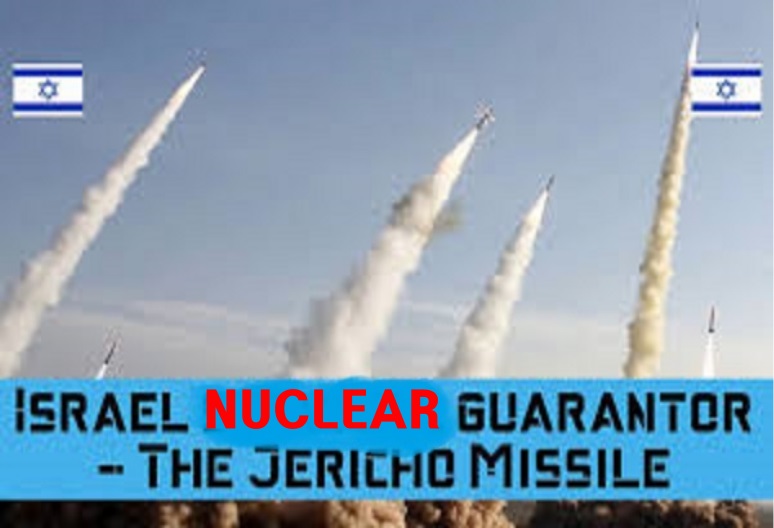
Israeli policy means ‘difficult to know’ how close world is to nuclear war, warns International Campaign to Abolish Nuclear Weapons (ICAN)
By Thomas Moller-Nielsen | Euractiv, 6 August 24, https://www.euractiv.com/section/global-europe/news/israeli-policy-means-difficult-to-know-how-close-world-is-to-nuclear-war-warns-anti-nuclear-weapons-group/
Israel’s policy of strategic ambiguity over its nuclear weapons arsenal makes it “difficult to know” how close the current crisis in the Middle East is to escalating into a nuclear war, a leading anti-nuclear weapons group has warned.
The International Campaign to Abolish Nuclear Weapons (ICAN)—a Geneva-based Nobel Peace Prize-winning group—said that Israel’s strategy of neither confirming nor denying its possession of nuclear weapons makes it hard to predict whether an imminent anticipated attack by Hezbollah or Iran could trigger a nuclear response.
“As the country refuses to confirm or deny it has such weapons, little is known about [Israel’s] arsenal, but experts believe it can launch nuclear weapons using missiles, submarines and aircraft,” Susi Snyder, ICAN’s Programme Coordinator, told Euractiv.
“Israel is also opaque about the circumstances under which it would use nuclear weapons so it is difficult to know how close we might be to the use of nuclear weapons,” she added.
Tensions have risen further in the Middle East following the assassination last week of Hezbollah commander Fuad Shukur in Beirut and Hamas political chief Ismail Haniyeh in Tehran. Both the Lebanese and Palestinian militant groups are backed by Iran.
Israel has confirmed that it killed Shukur but has neither confirmed nor denied its involvement in Haniyeh’s death. It blames Hezbollah for a rocket attack on a soccer field in the Israeli-occupied Golan Heights last month, in which 12 children were killed.
Hezbollah has continually exchanged rocket fire across Israel’s northern border with Lebanon since Hamas launched a surprise attack on Israel on 7 October that killed roughly 1,200 Israelis and triggered the current war in Gaza.
More than 40,000 Palestinians have been killed in Israel’s retaliatory offensive, according to Gaza’s health ministry.
EU continues to call for restraint
Asked about the potential of the current crisis to escalate further, a European Commission spokesperson directed Euractiv to a statement published on Sunday by G7 foreign ministers urging all relevant parties in the Middle East “to refrain from perpetuating the current destructive cycle of retaliatory violence, to lower tensions and engage constructively toward de-escalation”.
The spokesperson also confirmed that Enrique Mora, one of the EU’s top diplomats who was in Tehran at the time of Haniyeh’s assassination, had left the country.
Both Mora and Haniyeh had been in Tehran to attend the inauguration of Iran’s new president, Masoud Pezeshkian. Mora subsequently held talks with top Iranian officials and suggested on social media that EU-Iran relations had entered a “new chapter”.
Citing “three sources briefed on the call”, Axios reported that US Secretary of State Antony Blinken told his G7 counterparts over the weekend that an attack by Iran and Hezbollah against Israel could begin on Monday (5 August).
On Friday (2 August), the US sent additional fighter jets and warships to the region in an apparent bid to deter military action by Iran and Hezbollah, both of which have vowed retaliatory attacks on Israel.
US President Joe Biden was also reportedly set to meet with his national security team cabinet on Monday to discuss the crisis.
Israel, which has possessed nuclear weapons since the 1960s, has repeatedly said that it “will not be the first to introduce nuclear weapons into the Middle East”.
Together with India and Pakistan, it is one of three of the nine nuclear-armed countries that has never signed the Non-proliferation Treaty (NPT), which aims to prevent the global spread of nuclear weapons.
Arms Control Association, a US-based NGO, estimates that Israel currently has 90 plutonium-based nuclear warheads.
How to avoid ‘disaster’
Snyder also emphasised that “any use of nuclear weapons” in the current crisis “would be a disaster for the region and the world”.
“A single nuclear weapon would likely kill hundreds of thousands of civilians and injure many more; radioactive fallout could contaminate large areas, including in the country that used the weapon, particularly if used against a nearby target which would be the case in the Middle East,” she said.
Snyder also urged citizens to pressure their governments to sign up to the Treaty on the Prohibition of Nuclear Weapons (TPNW), a 2021 UN agreement more stringent than the NPT which expressly prohibits signatories from developing, possessing, or threatening to use nuclear weapons.
“Policymakers and the public in countries that have not yet joined the treaty should encourage their governments to join the TPNW without delay, as it is the only treaty which comprehensively outlaws nuclear weapons and provides for their elimination,” she said.
None of the world’s nine nuclear-armed countries have signed the TPNW. In addition to Israel, the US, Russia, China, the United Kingdom, France, North Korea, Pakistan and India all currently possess nuclear weapons.
Britain’s net zero dream could be crushed by big tech

As demand for data storage grows, so does the need for giant data centres – which pose a threat to our landscape and our energy supply
Jim Norton, 4 August 2024
Gigantic facilities represent the very real physical cost of our
unquenchable thirst for the internet and, increasingly, these facilities
pose a threat not only to our landscape but our energy supply too.
This year, big tech has started to sound the alarm that the boom in artificial
intelligence (AI) – which is even more power hungry than the normal web
– is putting the world in danger of missing its ambitious net zero
targets.
Tech leaders from Amazon CEO Andy Jassy and OpenAI boss Sam
Altman, to the billionaire owner of X (formerly Twitter) Elon Musk, have
warned this year about generative AI’s voracious use of power. Musk
warned it could lead to a global electricity shortage as early as next
year.
Some studies suggest the AI industry alone could consume as much
energy as a country the size of the Netherlands by 2027. AI’s thirst for
power has led to fears that the technology is jeopardising the ambitious
climate targets set by both governments and tech giants.
Renewable energy is not yet consistent nor plentiful enough to keep up with AI demand,
meaning officials and companies will likely have to fall back on fossil
fuels. This year, both Google and Microsoft admitted their ambitious
targets of reaching net zero by 2030 were under threat; revealing their
greenhouse emissions had risen by 48 per cent and a third, respectively,
over the past few years, largely due to the explosive growth of AI.
So what does this mean for the UK? The National Grid has predicted that AI will
drive a spike in energy use, with the amount of power demanded by data
centres expected to increase six-fold over the next decade. Given
Britain’s energy infrastructure is already struggling under the weight of
existing demand, and is in dire need of an upgrade, Labour’s aims of
decarbonising the power supply by 2030 will certainly be put under immense
pressure.
Telegraph 4th Aug 2024
https://www.telegraph.co.uk/environment/2024/08/04/big-tech-ai-green-belt-destruction/
What do Americans really think about the bombing of Hiroshima and Nagasaki?
Bulletin, By Scott D. Sagan, Gina Sinclair | August 5, 2024
In mid-August 1945, within weeks of the end of World War II, Americans were polled on whether they approved of the atomic bomb attacks on Hiroshima and Nagasaki. An overwhelmingly high percentage of Americans—85 percent—answered “yes.” That level of approval has gone down over the years, with (depending on the precise wording of the question) only a slim majority (57 percent in 2005) or a large minority (46 percent in 2015) voicing approval in more recent polls.
This reduction in atomic bombing approval over time has been cited as evidence of a gradual normative change in public ethical consciousness, the acceptance of a “nuclear taboo” or what Brown University scholar Nina Tannenwald has called “the general delegitimation of nuclear weapons.”
This common interpretation of US public opinion, however, is too simplistic. Disapproval has indeed grown over time, but most Americans remain supportive of the 1945 attacks, albeit wishing that alternative strategies had been explored. These conclusions can be clearly seen in the results of a new, more complex public opinion survey, conducted for this article, that asked a representative sample of Americans about their views on the bombing of Hiroshima and Nagasaki, examined alternative strategies for ending the war, and provided follow-on questions to determine how the public weighs the costs and benefits of different strategies.
Scratch beneath the surface, and the American public today, as in 1945, does not display an ethically based taboo against using nuclear weapons or killing enemy civilians, but rather has a preference for doing whatever was necessary to win the war and save American lives…………………………………………………………………………………………….
US public opinion in 2015 and 2024. A 2015 replication of the 1945 Roper poll found that 14.4 percent of Americans felt the United States should not have used atomic bombs at all, that 31.6 percent thought a bomb should have been dropped in a demonstration strike on an unpopulated area, but that almost no one (less than 3 percent) wanted to use more bombs before Japan had a chance to surrender.
For this article, we replicated the 1945 Roper poll again with a representative sample of 2,000 Americans on June 21, 2024, but then asked follow-on questions to help us determine what the public really meant when answering the survey. Such follow-on questions are necessary to understand the public’s deeper set of commitments and preferences. Did those opposing any use of the atomic bombs really support such a policy even if it meant ending the war without a Japanese government surrender? Or would they support dropping the bomb if Japan did not surrender? Would those who favor a demonstration strike today support bombing cities if the demonstration strike failed to compel Tokyo to surrender, or did they oppose atomic attacks against Hiroshima and Nagasaki under all circumstances? In short, what do Americans really think, now, about using nuclear weapons in 1945?
Options and alternatives. The percentage of respondents who said that the United States shouldn’t have used any atomic bombs at all increased from 4.3 percent in 1945, to 14.4 percent in 2015, to 36.7 percent in 2024. The percentage of respondents who preferred the demonstration strike option decreased from 31.6 percent to 20.9 percent. Public support for use of the two bombs, as the United States did in 1945, followed the same general trend, decreasing to 19.4 percent. But what do these trends reveal about US opinion? Our follow-on questions were designed to measure the public’s true willingness to use nuclear weapons and kill enemy civilians…………………………………………………
In short, when reminded of the Japanese refusal to surrender, the strong majority (82.33 percent) of those who originally favored the demonstration strike then accepted nuclear or conventional attacks on Japanese cities.
Why these preferences? The basic finding that over 36 percent of Americans said today that the United States should not have used any atomic bombs cannot reasonably be interpreted as an indication of a widespread nuclear taboo. It may be a positive trend, but it is not a robust opinion. Indeed, less than half of those respondents maintained that position after they were reminded (as was the case in 1945) that Japan had not accepted unconditional surrender prior to the atomic bomb attacks.
Instead, our 2024 Roper Poll replication provides three valuable insights about American public opinion. First, much of US public is, in fact, still supportive of the decision to drop atomic bombs on Hiroshima and Nagasaki. Adding the answers from the different follow-on questions, reveals that 41.3 percent of all respondents were ultimately willing to use a nuclear bomb on one or more cities, and many more Americans (over 25% of all respondents) reported that they didn’t know what their preferences were in this wartime scenario. These findings are inconsistent with the existence of a nuclear taboo and underscore that large hawkish instincts lurk within the U.S. public.
A second novel finding relates to the public’s willingness to attack cities and thereby violate the basic law of armed conflict and the just war principle of non-combatant immunity. While only 41.3 percent of respondents were ultimately willing to use nuclear weapons against cities, many other respondents favored continuing the conventional bombing of Japan. Reasons given by respondents who had at first stated that they opposed nuclear attacks, but then favored continued conventional bombing once reminded that Japan had not accepted unconditional surrender included: “Because if humane tactics don’t work, then you gotta do what you Gotta do;” “Since they refuse to heed to the warning, then they deserve war;” and “If Japan doesn’t surrender than it’s time to show them what we can do.”
Altogether, adding advocates of conventional bombing with advocates of nuclear attacks, 51.25 percent of all respondents chose to attack Japanese cities and kills civilians on a massive scale. This shows that the non-combatant immunity principle, contrary to the claims of some experts, does not have strong “stopping power” at least among the public. These findings challenge the theories of scholars such as Charli Carpenter, Alexander Montgomery, Steven Pinker, Neta Crawford, and Ward Thomas, who posit that a decrease in willingness to use nuclear weapons is a result of broader acceptance of the just war principle of non-combatant immunity.
………………………………………………….. many responses in the 2024 Roper Poll revealed something else: a notable percentage of respondents (15.92 percent) cited their beliefs on the importance of US isolationism and avoiding any engagement in foreign affairs.
……………………………………………These findings about contemporary views of the 1945 atomic bombing are consistent with previous research demonstrating that large segments of the American public are willing to contemplate the use of nuclear weapons in a war against Iran, in order to avoid US military fatalities, or against a terrorist organization planning chemical weapons attacks on the United States. …………………………………
The American public does not hold a strong nuclear taboo and indeed, may be more of a goad than a constraint on any future president who is contemplating the use of nuclear weapons in trying wartime conditions. While the laws of armed conflict and just war doctrine may still be a constraint on nuclear use, their powers are more likely to exercised by the moral compass of individual political leaders or the legal training of senior military officers, not through the deeply problematic instincts of the American public. https://thebulletin.org/2024/08/what-do-americans-really-think-about-the-bombing-of-hiroshima-and-nagasaki/?utm_source=Newsletter&utm_medium=Email&utm_campaign=DayNewsletter08052024&utm_content=NuclearRisk_WhatAmericansReallyThink_08052024
Shin Bet said to prepare bunker for Netanyahu, senior leadership amid Iranian threat
Known as the National Management Center, Jerusalem bunker can reportedly withstand hits from a range of existing weaponry, keep communications open to IDF headquarters
Times of Israel, By ToI Staff, 4 August 2024,
release hostages in the Gaza Strip, June 8, 2024. (Shin Bet security service)
An underground bunker in Jerusalem where senior leaders can remain for an extended period during a war has been prepared by the Shin Bet security service and is fully operational, the Walla news site reported on Sunday, amid fear of attacks on Israel from Hezbollah and Iran.
The bunker, reportedly built almost 20 years ago, can sustain hits from a range of existing weaponry, has command and control capabilities, and is connected to the Defense Ministry headquarters in Tel Aviv, the report said.
The bunker, which is also known as the National Management Center, has not been used in the past 10 months of Israel’s war in Gaza.
00:24
02:21
https://imasdk.googleapis.com/js/core/bridge3.656.2_en.html#goog_623417804
https://imasdk.googleapis.com/js/core/bridge3.656.2_en.html#goog_623417805
https://imasdk.googleapis.com/js/core/bridge3.656.2_en.html#goog_623417806
It has, however, been prepared for use now by Prime Minister Benjamin Netanyahu and other senior figures as Israel braces for possible attacks from Iran and Hezbollah amid escalating tensions in the Middle East.
Iran, its Lebanese ally Hezbollah, and the Palestinian Islamist terror group Hamas blame Israel for a blast that killed Hamas leader Ismail Haniyeh in Tehran last week. His assassination came just hours after a strike claimed by Israel killed Hezbollah’s military chief, Fuad Shukr, on Tuesday evening near Beirut. Israel has claimed responsibility for killing Shukr but has not officially commented on Haniyeh……………………………………………………………
The last time the bunker is known to have been used was in 2018 when Prime Minister Benjamin Netanyahu ordered a series of high-level security cabinet meetings to be held there, likely to prevent leaks to the media……………………………….. https://www.timesofisrael.com/shin-bet-said-to-prepare-underground-bunker-for-senior-leadership-amid-iranian-threat/
The pictures worth a thousand words
Canada and the Atom Bomb Exhibition
Canada’s little-known role in atomic bombings on display
By Anton Wagner, 4 Aug 24, https://beyondnuclearinternational.org/2024/08/04/the-pictures-worth-a-thousand-words/
The Hiroshima Nagasaki Day Coalition launched a “Canada and the Atom Bomb” photo exhibition inside Toronto City Hall on August 2. The exhibition of 100 photographs reveals the Canadian government’s participation in the American Manhattan Project that developed the atom bombs that destroyed Hiroshima and Nagasaki in August 1945.
The exhibition can be viewed in its entirety online at the Toronto Metropolitan University website.
It documents how the Eldorado Mining and Refining Company extracted uranium ore at Great Bear Lake in the Northwest Territories in the late 1930s and shipped the ore to its refinery in Port Hope, Ontario, for sale to the Americans.
Images by the Montreal photographer Robert Del Tredici focus on the Dene hunters and trappers at Great Bear Lake who were hired by Eldorado to carry the sacks of radioactive ore on their backs for loading onto barges that transported the ore to Port Hope. Many of them subsequently died of cancer.
Before his death in 1940, the Dene spiritual leader Louis Ayah had prophesied that such an illness would befall the Dene because of white men mining on Dene territory. Ayah also prophesied a nuclear holocaust that would end human civilization.
Prime Minister Mackenzie King hosted President Roosevelt and Prime Minister Winston Churchill in Quebec City in 1943 where they agreed to have Canada participate in the production of the atom bomb.
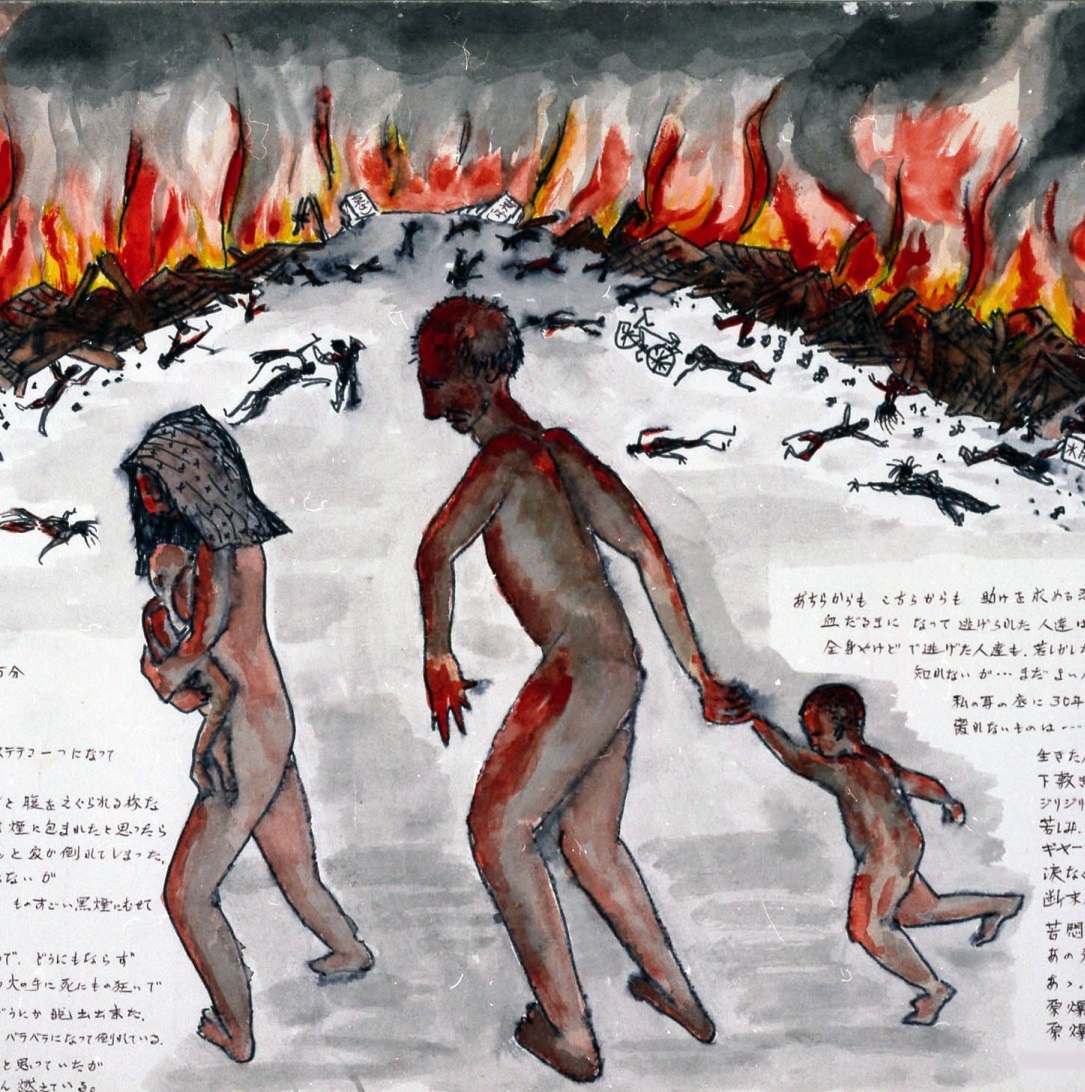
The exhibition highlights this participation by the Canadian government, scientists, industry, and nuclear research laboratories. Posters from the Hiroshima Peace Museum show the death and destruction in the two bombed cities. The exhibition includes five images by Yoshito Matsushige, the only photographer who took pictures in Hiroshima the day the atom bomb exploded overhead.
“Canada and the Atom Bomb” concludes with photographs showing the efforts by peace activists to persuade Toronto City Council to participate in the world-wide movement to abolish nuclear weapons. In 2017, City Council reaffirmed Toronto as a Nuclear Weapons-Free Zone and called on Prime Minister Justin Trudeau to have Canada ratify the UN Treaty on the Prohibition of Nuclear Weapons.
Setsuko Thurlow accepted the Nobel Peace Prize on behalf of the International Campaign to Abolish Nuclear Weapons in Oslo, Norway, in December 2017. A Hiroshima survivor, Thurlow, now 92, attended the opening of the “Canada and the Atom Bomb” exhibition on August 2. She will also speak at the annual August 6 commemoration at the Toronto City Hall Peace Garden to urge that Canada sign the Treaty on the Prohibition of Nuclear Weapons.
Anton Wagner is with the Hiroshima Nagasaki Day Coalition.
1 This Month


Read the Public Inquiry Report, the Commissioners’ report, Surrendering Australia: The AUKUS Deception is available to download for free at aukuspublicinquiry.com. Or just watch the replay of the National Press Club Luncheon.



19 November – Webinar – The Reality of Reprocessing
Time: 11:00 AM Pacific Time (US & Canada) / 2:00 PM Eastern / 7:00 PM UK / 8:00 PM CET
Register for the Zoom Event Here



Shut down the radiation-damaged Heysham nuclear reactors now
To see nuclear-related stories in greater depth and intensity – go to https://nuclearinformation.wordpress.com

Say No to NASA’s Reckless Nuclear Reactor on the Moon
Say No to NASA’s Reckless Nuclear Reactor on the Moon
-
Archives
- November 2026 (119)
- October 2026 (302)
- September 2026 (339)
- August 2026 (330)
- July 2026 (355)
- June 2026 (287)
- May 2026 (306)
- April 2026 (356)
- March 2026 (251)
- February 2026 (267)
- January 2026 (308)
- December 2025 (358)
-
Categories
- 1
- 1 NUCLEAR ISSUES
- business and costs
- climate change
- culture and arts
- ENERGY
- environment
- health
- history
- indigenous issues
- Legal
- marketing of nuclear
- media
- opposition to nuclear
- PERSONAL STORIES
- politics
- politics international
- Religion and ethics
- safety
- secrets,lies and civil liberties
- spinbuster
- technology
- Uranium
- wastes
- weapons and war
- Women
- 2 WORLD
- ACTION
- AFRICA
- Atrocities
- AUSTRALIA
- Christina's notes
- Christina's themes
- culture and arts
- Events
- Fuk 2022
- Fuk 2023
- Fukushima 2017
- Fukushima 2018
- fukushima 2019
- Fukushima 2020
- Fukushima 2021
- general
- global warming
- Humour (God we need it)
- Nuclear
- RARE EARTHS
- Reference
- resources – print
- Resources -audiovicual
- Weekly Newsletter
- World
- World Nuclear
- YouTube
-
RSS
Entries RSS
Comments RSS

