Iran planning to resume testing nuclear bomb detonators
Wednesday, 08/14/2024 Mojtaba Pourmohsen, Journalist at Iran International
Iran is intensifying efforts on its secretive nuclear weapons program, bringing the country closer than ever to developing a nuclear bomb—a threat that has loomed for over two decades, according to exclusive information obtained by Iran International.
According to three independent sources in Iran, who have chosen to remain anonymous due to the sensitive nature of the topic, the Islamic Republic is advancing its secret nuclear weapons program by restructuring the Organization of Defensive Innovation and Research (SPND), retaining Mohammad Eslami as the head of the Atomic Energy Organization of Iran, and resuming tests to produce nuclear bomb detonators.
For years, US intelligence agencies consistently stated in their annual reports that Iran “isn’t currently undertaking the key nuclear weapons development activities necessary to produce a testable nuclear device”. However, in the Director of National Intelligence’s 2024 report, released in July, that phrase was omitted. Instead, the report stated that Iran has “undertaken activities that better position it to produce a nuclear device, if it chooses to do so.”
The newly obtained information shows the Islamic Republic has intensified its efforts to complete the nuclear weapons production cycle, including high-level uranium enrichment, the production of nuclear detonation devices, and the development of missiles capable of carrying nuclear warheads.
Restructuring SPND.
Less than a month before Ebrahim Raisi’s death, the Iranian Parliament passed a bill to formalize the Organization of Defensive Innovation and Research (SPND) as an independent entity. Originally established in 2010 as a subsidiary of the Ministry of Defense, SPND was restructured under this new legislation, enacted just a week before Raisi’s passing.
Mohsen Fakhrizadeh, a prominent figure in Iran’s military nuclear program, previously led SPND.
Fakhrizadeh was assassinated in November 2020 near Tehran, an act attributed to Mossad. The new law has granted SPND financial independence, exempting it from the oversight of the National Audit Office, essentially allowing it to operate without accountability for its budget.
The law also states that SPND will be governed according to a statute issued by Supreme Leader Ali Khamenei. This restructuring of SPND is significant as it provides the organization with unique autonomy, allowing it to continue the legacy of Fakhrizadeh’s work, particularly in producing nuclear detonation devices
SPND’s role in Iran’s nuclear program……………………………………………………………………………………………………………………………………………………….
Shifting to nuclear weapons for deterrence
A Western diplomat told Iran International that Iran’s suspicious nuclear activities have raised concerns among the United States, Israel, and European countries. Following the assassination of Hamas leader Ismail Haniyeh, the head of Hamas’ political bureau in Tehran said the Islamic Republic’s deterrence policy, which relied heavily on proxy forces, has lost its effectiveness, something Khamenei and other government officials are fully aware of.
This reality might have driven the Islamic Republic to consider pursuing another form of deterrence. On the day Pezeshkian presented his ministerial picks to the Parliament, Iranian lawmaker Mohammad-Reza Sabbaghian told the open session, “What logic or law dictates that arrogant powers should have nuclear weapons, but Iran should not?”
He added, “We call on the Supreme National Security Council to review the new circumstances and recommend to the Supreme Leader that, considering dynamic Islamic jurisprudence, the path be cleared for the development of nuclear weapons.”
This could be the final, and perhaps most dangerous, arrow in Khamenei’s quiver. https://www.iranintl.com/en/202408148823
Iran to Israel: Ceasefire in Gaza war, or retaliation for Haniyh murder will proceed
SOTT, Parisa Hafezi and Laila Bassam, Reuters, Tue, 13 Aug 2024
Only a ceasefire deal in Gaza stemming from hoped-for talks this week would hold Iran back from direct retaliation against Israel for the assassination of Hamas leader Ismail Haniyeh on its soil, three senior Iranian officials said.
Iran has vowed a severe response to Haniyeh’s killing, which took place as he visited Tehran late last month and which it blamed on Israel. Israel has neither confirmed or denied its involvement. The U.S. Navy has deployed warships and a submarine to the Middle East to bolster Israeli defenses.
One of the sources, a senior Iranian security official, said Iran, along with allies such as Hezbollah, would launch a direct attack if the Gaza talks fail or it perceives Israel is dragging out negotiations. The sources did not say how long Iran would allow for talks to progress before responding.
With an increased risk of a broader Middle East war after the killings of Haniyeh and Hezbollah commander Fuad Shukr, Iran has been involved in intense dialogue with Western countries and the United States in recent days on ways to calibrate retaliation, said the sources, who all spoke on condition of anonymity due to the sensitivity of the matter.
In comments published on Tuesday, the U.S. ambassador to Turkey confirmed Washington was asking allies to help convince Iran to de-escalate tensions. Three regional government sources described conversations with Tehran to avoid escalation ahead of the Gaza ceasefire talks, due to begin on Thursday in either Egypt or Qatar.
“We hope our response will be timed and executed in a way that does not harm a potential ceasefire,” Iran’s mission to the U.N. said on Friday in a statement. Iran’s foreign ministry on Tuesday said calls to exercise restraint “contradict principles of international law.”
Iran’s foreign ministry and its Revolutionary Guards Corps did not immediately respond to questions for this story. The Israeli Prime Minister’s Office and the U.S. State Department did not respond to questions.
“Something could happen as soon as this week by Iran and its proxies… That is a U.S. assessment as well as an Israel assessment,” White House spokesperson John Kirby told reporters on Monday.
“If something does happen this week, the timing of it could certainly well have an impact on these talks we want to do on Thursday,” he added.
At the weekend, Hamas cast doubt on whether talks would go ahead. Israel and Hamas have held several rounds of talks in recent months without agreeing a final ceasefire.
In Israel, many observers believe a response is imminent after Supreme Leader Ayatollah Ali Khamenei said Iran would “harshly punish” Israel for the strike in Tehran……………………………………….. more https://www.sott.net/article/493939-Iran-to-Israel-Ceasefire-in-Gaza-war-or-retaliation-for-Haniyh-murder-will-proceed
Fire sparks Georgia nuclear plant alert, but officials say no safety threat as reactors unaffected
Georgia’s largest nuclear plant declared an emergency alert Tuesday
after an electrical transformer caught fire. The fire, described as small
by Georgia Power Co. spokesperson John Kraft, broke out about noon and
could have threatened the electrical supply to the heating and cooling
system for the control room of one of the complex’s two older nuclear
reactors, Vogtle Unit 2.
AP News 13th Aug 2024
Fukushima nuclear fuel debris retrieval to start as early as August
August 14, 2024 (Mainichi Japan)
The operator of the crippled Fukushima nuclear power plant plans to begin
retrieving debris that contains melted nuclear fuel at one of the three
meltdown-hit reactors as early as this month, with the unit to be the first
to undergo the procedure. The removal of the radioactive debris is
considered one of the most challenging tasks in decommissioning the
Fukushima Daiichi plant, whose reactors were severely damaged by the loss
of cooling functions triggered by the 2011 earthquake and tsunami in
northeastern Japan.
https://mainichi.jp/english/articles/20240814/p2g/00m/0bu/004000c
Fukushima nuclear plant detects 25 tonnes of radioactive water leak
A significant leak of 25 tonnes of radioactive water has been detected within the spent nuclear fuel cooling pool of Reactor Unit 2 at the Tokyo Electric Power Company’s (TEPCO) Fukushima Daiichi Nuclear Power Plant in Okuma, Fukushima Prefecture, Japan, China Media Group (CMG) reported on Tuesday.
The utility company has assured the public that the nuclear-contaminated water has not breached the plant’s containment and that the cooling system for the nuclear fuel remains operational.
To ascertain the precise location of the leak and its underlying cause, TEPCO plans to deploy robotic equipment for an inspection scheduled for this week.
Previously, TEPCO announced on August 9 that equipment related to the spent fuel pool of Reactor Unit 2 had malfunctioned. As a precautionary measure, the cooling system for the spent fuel pool was subsequently halted while investigations into the cause of the malfunction commenced.
Bloody Eschatology: Israel and the next Big War
Australian Independent Media, August 14, 2024, by: Dr Binoy Kampmark
The push towards an all-out war in the Middle East is moving out of its sleepwalking phase to that of conscious eschatological reckoning. A blood filled, fiery Armageddon will reveal the forces of virtue, linking the evangelicals of the United States with the right-wing Jewish nationalists in Israel. That appalling prospect is certainly not one to discount: the messianic are always a frightful bunch, thinking history and selectively pruned religions texts to be on their side.
Each week now comes with some measure of sabotage, mutilation and disruption to prospects of peace. In his July 24 address to the US Congress, Israeli Prime Minister Benjamin Netanyahu outlined his crude Manichean vision in routine barking fashion. In doing so, his intention, as Noa Landau pithily put it, was not to end the war in Gaza so much as prolong it.
For Netanyahu, the strained chords of civilisational rhetoric are never far away. He would like other powers to muck in, battling the fiends he calls an “axis of terror.” Impediments to the Jewish state’s war efforts had to be rejected. To impose them would see other countries of similar kidney shackled. “If Israel’s hands are tied, America is next. I’ll tell you what else is next: the ability of all democracies to fight terrorism will be imperilled.”
Room was reserved to attack the International Criminal Court, whose chief prosecutor has sought warrants of arrest against himself and Defence Minister Yoav Gallant, and the presidents of notable US universities. As for protesting students, they had chosen to “stand with evil. They stand with Hamas. They stand with rapists and murderers.” With daring outrage, he blotted out any notion that Palestinian civilians were being butchered, despite a death toll in the densely populated strip hovering near 40,000. Indeed, civilian deaths had been “practically none,” with Israel scrupulous in “getting civilians out of harm’s way, something people said we could never do.”
With this blood crusted Weltanschauung, acts of destabilising mayhem are automatic.Showing an utter contempt for Israeli hostages, let alone any humanity for the Palestinians they regard with expansive condescension, the Netanyahu government thought it wise to carry out two assassinations: that of Hamas’ political chief and chief negotiator Ismail Haniyeh, and Hezbollah’s top military chief Fuad Shukr, both killed within twenty-four hours in Beirut and Tehran respectively……………………………………………………………………………………………………………
This, as former UK diplomat Alastair Crooke observes, is the State of Judea doing battle against the State of Israel. He quotes Moshe “Bogie” Ya’alon, former Chief of Staff of the IDF, who sees such bloody eschatology as resting on a fundamental concept: “Jewish supremacy” or “Mein Kampf in reverse”. For Rabbi Lior, the next big war cannot come soon enough, one, he anticipates, that is bound to feature Gog and Magog. https://theaimn.com/bloody-eschatology-israel-and-the-next-big-war/—
Why We Must Oppose Israel’s Dangerous Gamble Before It’s Too Late

Failure to stop Israel’s genocide of Palestinians gambles with the fate of humanity as a whole.
Kathy Kelly, Aug 10, 2024,
https://www.laprogressive.com/foreign-policy/israels-dangerous-gamble
Following World War II, Albert Camus posed a “formidable gamble” to those who had survived a tragedy of immense proportions. “We’re in history up to our necks,” he observed, yet we must wager that “words are more powerful than munitions.”
“Leave or die” are the horrid words threatening largely unprotected Palestinian civilians in Gaza as dismayed populations around the world demand moral decency, or at least some indication of sanity, from their non-responsive governments.
The stakes couldn’t be higher. For decades, Israel has flouted international norms by refusing to acknowledge its nuclear weapons arsenal. Nor has it signed relevant treaties governing the biological weapons it possesses. For years, Israel has flagrantly violated the Geneva Conventions and basic principles of customary international law through its forcible acquisition of territories in the West Bank and East Jerusalem and through its transfer of Israeli settlers into the Occupied Palestinian Territories.
Now, Israel’s genocidal attacks against Palestinians living in Gaza have cost the lives of at least 39,677 people. Tens of thousands more are believed to be buried beneath the rubble, with at least 90,000 wounded and the overwhelming majority of its displaced 1.9 million population facing starvation.
Israel’s failure to comply with international treaties and humanitarian law signal an acute need for other countries to organize weapons embargoes, cease trade deals, and provide support for civilian peacekeepers to bring about a permanent ceasefire.
Instead of unwavering adherence to international law, the United States continues to arm and protect Israel’s genocidal campaign against Palestinians, which now includes using starvation as a weapon of war.
We must try to absorb what it means to live as a refugee in an open-air concentration camp—already one of the most densely populated areas on Earth, even before 70 percent of its housing was destroyed. More than 341 mosques and three churches have been destroyed. 2,000-pound bombs have been dropped on tents in places deemed safe areas.
Innocent civilians are being killed by snipers. Thirty-one out of thirty-six hospitals have been damaged or destroyed. Escape routes are cut off. Persistent restrictions on the flow of humanitarian aid into and around Gaza are driving a desperate shortage of food, fuel, and medicine. As access to humanitarian relief is deliberately choked off, children are being collectively punished while Israeli leaders denounce them as animals. The world watches in horror as surgeons are forced to amputate the limbs of wounded children with no available anesthetics.
A new polio epidemic emerges while Israel vaccinates its soldiers but leaves the Palestinian civilian population vulnerable. Newly released prisoners have said they were subjected to torture, including being waterboarded and raped.
Rather than bring suspects before international courts, Israel has resorted to assassinations of the very negotiators with whom it purports to be seeking peace, and in a manner clearly intended to expand the conflict into a global war involving multiple nuclear-armed nations.
In its July 19, 2024, authoritative Advisory Opinion on Israel’s Settlement Policy and Practices, the World Court clearly declared the Israeli settlement project in the Occupied Territories to be illegal. The Court outlined the obligation of all parties to the Geneva Convention and the Genocide Convention to discontinue any economic or trade dealings with Israel which might help perpetuate Israel’s occupation and unlawful presence in the territory. Countries that signed or ratified these agreements are obligated to immediately stop arms exports to Israel and to use political, military, and economic influence to stop Israel’s flagrant, escalating violations of international humanitarian law.
The World Court has provided strong, clear words denouncing Israel’s genocide against Palestinians. As during the Vietnam War, ordinary citizens can no longer abide with the lawless barbarism of continuing assaults against Palestinians.
“Rolling the bones” is a slang expression for gambling. With a regional war perhaps now unavoidable in the Middle East, the genocidal derangement of the United States and Europe over Israel’s actions may well lead to a nuclear war that ends the human species. Failing to use our words at this most crucial juncture for humanity would be, as Camus said, a formidable gamble indeed.
Map reveals nuclear fallout that would happen if Europe’s biggest plant explodes

Metro, Gergana Krasteva and Ben Ashton, 12 Aug 24
A fire at the Russian-occupied Zaporizhzhia nuclear plant is putting Europe’s future at stake.
Ukraine’s leading nuclear energy company, which operated the site until Russian forces seized control in the early days of the war, confirmed that flames broke out at the service water supply facility, later engulfing one of the cooling towers.
Both Vladimir Putin and Volodymyr Zelensky have traded blame for the fire. The six nuclear reactors are in cold shutdown and no nuclear activity was recorded on Sunday, but the overall risk of nuclear meltdown remains elevated.
The Ukrainian president said radiation levels are ‘within norm’, but since the start of the full-scale invasion, there has been widespread concerns about the safety of Zaporizhzhia………………………………..
A major nuclear incident at the plant could put several European nations at grave risk, not just Ukraine.
A model map shows how the continent could be affected by a nuclear explosion if it were to happen – and also illustrates how far and concentrated the release of cesium-137, which poses a major health hazard, would spread……………………………………………………
How would Europe be affected in case of a nuclear incident?
Dr Paul Dorfman, a nuclear safety expert who has advised the British and French governments, says Ukraine, parts of Russia, and central Europe are at risk of radioactive plume coming from the station.
‘So far, we have been lucky. There has been no significant radiological release from Zaporizhzhia. But luck is not a strategy,’ he told Metro.co.uk.
‘If something does go wrong, it will depend on where the plume goes and the nature of the incident.
‘But you can really begin to write off a lot of economies and lives.’
If the worst happens, the effects of a nuclear incident can have a long-term impact by causing illness, inducing cancer or even leading to death……………………………………………………………..
Dr Dorfman stressed the situation at Zaporizhzhia is not yet resolved, adding that ‘knowing sod’s law, if something can go wrong, it probably will’.
He said the much less defended Olympic-sized storage pools for spent fuel from the nuclear reactors, or otherwise known as ‘ponds’, still present a huge risk.
‘If the power supply to these ponds dries up then the water evaporates and there is a significant nuclear incident where the high-level radioactive waste rods blow,’ the expert added.
In terms of the latest modelling, most of the radioactive plume will fall on Ukraine and Russia’s bordering territory.
Central Europe and the northern tip of the Middle East, including Turkey, are also at risk of exposure.
‘It all depends on the wind and the dispersion. Winds can change as well,’ Dr Dorfman said.
‘So, it depends on the kind of radiation, accident and where the wind blows. There is no question about it, something significant can happen.’
Ahead of such a ‘potentially catastrophic’ event, he called for the ‘critical’ distribution of stable potassium iodide through Ukraine, Russia, central Europe and northern Middle East. https://metro.co.uk/2024/08/12/map-reveals-happen-zaporizhzhia-nuclear-plant-explodes-21404991/
Israel Suddenly Has A Problem With Attacks On Population Centers

Caitlin Johnstone, 13 Aug 24, https://www.caitlinjohnst.one/p/israel-suddenly-has-a-problem-with?utm_source=post-email-title&publication_id=82124&post_id=147648103&utm_campaign=email-post-title&isFreemail=true&r=1ise1&triedRedirect=true&utm_medium=email
Israel has been loudly and melodramatically fretting about an impending retaliatory attack from Iran and Hezbollah which it claims will likely include strikes in the vicinity of civilian population centers. This is of course rich coming from the regime that has spent ten months turning Gaza into a flattened wasteland of rubble and civilian corpses.
A Washington Post article titled “Israel anticipates direct attack from Iran; U.S. deploys more vessels to region” contains the following interesting paragraph:
“Israel has communicated to Iran and Hezbollah that targeting civilian population centers would be considered a red line for Israel, which is preparing for a spectrum of scenarios, including one in which Hezbollah attacks first and is joined by Iran afterward, said Yoel Guzansky, a former official on Israel’s National Security Council who is now a senior fellow at the Institute for National Security Studies in Tel Aviv.”
Israel’s fretting about attacks on its population centers is echoed in a recent Axios post titled “New Israeli intelligence suggests Iran prepares to attack Israel within days,” whose Israeli intel sources “said the attacks by Hezbollah and Iran are likely to be bigger than the one conducted by Iran last April and include the launching of missiles and drones at military targets in central Israel, including in the vicinity of civilian population centers.”
This claim that Iran may launch attacks “in the vicinity of civilian population centers” is funny in a couple of different ways. Firstly, the IDF headquarters is located smack dab in the heart of Tel Aviv, so any attack on the hub of the Israeli war machine would necessarily occur in the vicinity of civilian population centers. Secondly, it’s funny because Israel has spent years justifying its attacks on Palestinian population centers by claiming Hamas is using “human shields” by surrounding themselves with civilians to deter attacks.
Placing a legitimate military target in the heart of a civilian population center and then declaring a “red line” against attacking civilian population centers where legitimate military targets are located—after launching an insanely escalatory assassination in Tehran — is obviously using civilians as human shields. And what’s wild is that Israel’s own claims about Hamas using human shields in the same way have been conclusively debunked, firstly by the self-evident fact that the presence of civilians obviously doesn’t deter Israeli attacks at all, and secondly by revelations that the IDF deliberately waits to launch airstrikes on suspected Hamas members until they are at home with their families, thereby ensuring the maximum number of civilian deaths possible.
It goes without saying that Israel does not have any sincere concern for civilian lives, at least for anyone who’s paid attention to its actions at any time between the state’s inception and today. But it is worth highlighting these contradictions anyway, to contextualize all the histrionic garment-rending we’re going to witness should an attack on or near civilian population centers occur in the coming days.
Gantz warns of a civil war in “Israel”
By Al Mayadeen English, Source: Agencies, 12 Aug 2024
Israeli Channel 14 reported on his statements, indicating that he expressed his thoughts during a public ceremony held Monday commemorating the so-called “destruction of the Temple.”
Israeli Knesset member and opposition leader Benny Gantz has warned that Israeli Prime Minister Benjamin Netanyahu will not “sacrifice his government to protect Israelis,” or do what is necessary to prevent civil war.
The former member of the Israeli war cabinet stressed that if Israelis “do not come to our senses, there will be a civil war here… It is forbidden to hide the truth.”
According to him, there is a “leadership that divides the people and poisons the well from which everyone drinks.”
Israeli Channel 14 reported on his statements, indicating that he expressed his thoughts during a public ceremony held Monday commemorating the so-called “destruction of the Temple.”
Gantz criticized the raids on military bases and the “trampling on the dignity of captives’ families.”…………………………………
According to Israeli Channel 12 last month, high-ranking security officials have warned that the personal and political conflict between Netanyahu and Gallant is “damaging” the management of ongoing military operations. It was noted that the two do not communicate outside of official discussions…………………………….. https://english.almayadeen.net/news/politics/gantz-warns-of-a-civil-war-in–israel
Desperate for escalation, did Zelensky bomb Zaporozhye Nuke Plant in Frustration ?
The biggest issue currently is that the much stronger than usual fog of war has allowed Western/pro-UA sources to completely confabulate various fake “advances” in the Kursk region. Virtually every new map from Western sources, whether ISW, the various articles posted above, etc., are currently completely phony. In fact, the AFU was driven out of every deep advance in the Kursk region, and now occupy only a small area around Sudzha.
Desperate for Escalation, Zelensky Bombs Zaporozhye Nuke Plant in Frustration [Excellent extracts and maps on original]
Simplicius, Aug 12, 2024 https://simplicius76.substack.com/p/sitrep-81124-desperate-for-escalation?utm_source=post-email-title&publication_id=1351274&post_id=147536911&utm_campaign=email-post-title&isFreemail=true&r=c9zhh&triedRedirect=true&utm_medium=email
Today Zelensky’s forces appeared to bomb the Zaporozhye nuclear plant:
Russian sources says it was a Ukrainian drone that hit the Zaporizhzhia NPP.
At around 9:00 pm today, Ukrainian militants attacked the Zaporizhzhia Nuclear Power Plant using a kamikaze drone.
Preliminary reports suggest the drone was launched from Nikopol in the Dnipropetrovsk region of Ukraine.
The drone operator appeared to have targeted the plant deliberately the Russian sources say.
Still unconfirmed until we see material indicating the cause of the fire
Zelensky of course blamed Russia, even though, interestingly, he stated Russians began “burning tires” to create the smoke, when even the IAEA above heard loud explosions, despite again being ordered by their masters not to directly name the culprit:
Reportedly some machinery inside one of the cooling towers was set ablaze, but the 6 reactors of Europe’s largest power plant have already been in ‘cold shutdown’ mode, and are said to be in no real danger…for now.
However, most significant to ongoing events is the correct analysis of why Zelensky would choose to strike the plant just now. It is obvious to us that it represents a terminal desperation from the AFU, which can only mean that their situation on the ground is in fact grinding to a culminating point, which answers one of the chief questions we’ve had about the ongoing Kursk adventure.
There was still some hesitation on my part on whether the Kursk madness was truly a sign of an AFU reaching its critical end point or not, though mostly I leaned on the affirmative. However, the latest desperate move seems to fully avow this interpretation of events. But, I believe there are a few multi-varied nuances to properly interpreting Zelensky’s threatening signal.
First: it can be said that this act of desperation was a strong signal to Zelensky’s own “partners” in the U.S. and the West. I predicted long ago—last year—that once things finally grind down to the gristle for Ukraine, Zelensky would have no choice but to begin threatening his partners through escalation to save his own hide. He would threaten not only pushing Russia’s red lines in unnerving ways which would pose the threat of nuclear annihilation to the U.S., but as a last ditch effort he would also float the threat of unveiling many secrets and ‘skeletons in the closet’ of his Western partners as blackmail.
But what’s happening now is in effect a double nuclear blackmail. Not only was Zelensky trying to reach the Kursk nuclear plant for this very purpose, but has now acted out his furious frustration at the ZNPP, as well. It’s difficult to know for certain, but captured AFU POWs have in fact now attested to the Kursk plant as being the objective, or Kurchatov, the town where the plant sits. This was supposed to have been reached in the first day or two, which now appears to have been a miserable failure being covered up by more antics.
But getting back to the second point. I believe the ZNPP strike was also a double threat toward Russia. ZNPP may be currently inactive, but Kursk is in operation, and Zelensky likely meant to send a symbolic message that the Kursk nuclear plant may be “next”. In essence, it is saying: “Be wary, the Kursk plant is in my sights. This is just the first demonstration of my seriousness.”
But why would Zelensky threaten his partners as well? The obvious answer is to shock them into providing more aid and committing totally to Ukraine’s victory. “Give us everything or we’ll take the entire world down with us in a ball of nuclear flame.” Funny how much similarity there is between Zelensky and Israel, what with their Samson Option and all.
The problem is that, more and more evidence is rolling out that not only is the Kursk offensive becoming a disaster, but that Zelensky sacrificed the Donbass front in order to pull this egregious stunt.
First we have a new Financial Times article which openly states that Ukrainian units were pulled from the Donbass front toward Kursk:
“We are going deeper said Denys, a Ukrainian soldier who has made three rotations into Russian territory since the incursion began. His unit, which the Ft is not identifying at te request of Denys and his senior officers, had been rotated to the area from the Eastern Donetsk region more than a week ago to take part in the offensive.” – https://www.ft.com/content/7dcb3009-ec9a-417a-b2e1-01c26c9349a0
The ultimate aim of Ukraine’s incursion — which is using some of its best and most elite brigades — remains unclear. But the operation has demonstrated that Russia’s border defences are still weak more than a year after Ukraine’s first mini-incursion and has given Kyiv a much-needed morale boost.
It further confirms the negotiations angle:
Analysts have said Ukraine may be seeking to use the Kursk offensive to improve its position in potential talks. It is losing territory and men in eastern Ukraine and is still struggling to resolve ammunition and manpower shortages.
Then came a new Economist article which confirmed the same thing:
“Ukraine’s shock raid deep inside Russia rages on
The surprise attack comes as Ukraine is under pressure in the Donbas”
First they do a little shoe-shining to balance out the negative reportage, then they hit us with the truth:
“‘We sent our most combat-ready units to the weakest point on their border,’ says a general-staff source deployed to the region. ‘Conscript soldiers faced paratroopers and simply surrendered.’ But other aspects of the operation indicate a certain haste in preparation. All three soldiers quoted in this article were pulled, unrested, from under-pressure front lines in the east with barely a day’s notice.”
Most damningly for the AFU, they admit that Russia, on the other hand, hardly had to shift reserves from Donbass:
“Russia has shifted troops from the Kharkiv front, but so far it has moved far fewer from the vital Donbas front. ‘Their commanders aren’t idiots,’ says the Ukrainian general-staff source. ‘They are moving forces, but not as quickly as we would like. They know we can’t extend logistics 80 or 100 km.’”
In short: Ukraine pulled its most elite units from vital fronts to carry out Zelensky’s mad pageant, while Russia for the most part didn’t, which explains why the Pokrovsk and Chasov Yar directions continue falling for the AFU as we speak; reportedly, Russia used around 80% rear reserves, with just 20% of detachments pulled from other areas, mostly owing to them already being close by—i.e. the 810th Marines were pulled from Volchansk front because of its proximity and their readiness.
Here’s another deeper explanation from a Russian source:
How did the Ukrainian Armed Forces manage to accumulate a group of six, eight, ten (insert the appropriate) brigades?
There are three to five brigades + reinforcement units operating in the Kursk direction. Formally. In reality, there is reason to believe that the group is made up of a couple of more or less homogeneous brigades (like the 22nd Separate Mechanized Brigade) and heterogeneous battalion (and possibly company) combat groups, hastily transferred from other sections of the front before August 6. The abundance of soldiers from different units and subdivisions, as well as the abundance of heterogeneous equipment, creates the illusion of a huge group.
The same 41st Separate Mechanized Brigade ( mentioned by the Ministry of Defense in its report) is a pretty battered unit. First, it suffered losses near Chasovy Yar. Then it was transferred to a “quiet” area near Toretsk-New York. On July 21, elements of the 41st Separate Mechanized Brigade caught Iskanders at the Barvenkovo station, and now its elements are in the Kursk region. Not enough time has passed between July and early August to make up for the losses in men and equipment. The same can be said about the “anti-heroes” of the unsuccessful defense of Ocheretin — the 115th Separate Mechanized Brigade, as well as the repeatedly beaten 80th and 82nd Air Assault Brigade.
All this gives reason to say that a rapid transfer of brigade elements was carried out, which were unlikely to go into battle in full force.
In the very opening paragraph of the Economist article, they describe how Russian glide bomb’s slaughtered their units:
Note the mention of Sumy hospital in the last sentence. Here they develop that thought:
But the accounts from Ukraine’s wounded suggest it has not been a walk in the park, and remains risky. The hospital ward reeks of the sacrifice: soil, blood, and stale sweat. Foil burn-dressings line the corridor. In the yard, the patients, some wrapped like mummies from head to toe in bandages, smoke furiously. Angol, a 28-year-old paratrooper with the 33rd brigade, looks like a Christmas tree. His left arm is immobilised in a fixation device. Tubes, bags and wires protrude from his body. He was also about 30km into Russia when his luck ran out. He isn’t sure if it was artillery or a bomb that hit him. Maybe it was friendly fire; there was a lot of that. All he can remember is falling to the ground and shouting “300”, the code for wounded. The Russians had been on the run up to then, he insists, abandoning equipment and ammunition as fast as they could.
What’s most notable about this, is our best first-hand, on-the-ground source from the region corroborates every word. A popular TG commentator I’ve mentioned before lives in Sumy and reports on the goings on. He’s provably reliable as he’s the first person who began talking about “massive AFU troop movements” through the city of Sumy a full week before the Kursk incursion began. He now reports:
👉👉👉 Exclusive information from this channel:
Yesterday almost 1000 wounded soldiers, both Russian and Ukrainian were treated in Sumy’s hospitals.
👉👉👉 Hospital admissions for wounded soldiers are now at almost 2000 in Sumy, even hospitals in Kharkov, Cherkassy and Kiev are being prepared. This includes both Russian and Ukrainian injured soldiers, however after the first batch of Russians, now most of the injured are Ukrainians.
So, there’s almost 2,000 mostly Ukrainian wounded flooding Sumy hospitals, with the “Russian” ones he mentions presumably being the dozens of captured POWs.
This is corroborated further by ongoing calls on Ukrainian channels for mass blood donation drives in Sumy:
Now, to be perfectly impartial for the sake of journalistic integrity, Ukrainian sources posted this alleged video of a Russian hospital worker complaining of a local hospital likewise being flooded with injuries:
However, I’ve tracked down a video of a real Kursk region hospital—perhaps even the one in question above—and it is by no means even remotely comparable to what is happening in Ukrainian Sumy hospitals vis-a-vis the killed and wounded flooding in.
Despite the fact that Ukraine has bloodied Russia a little bit, particularly via the HIMARS strike on a Russian reinforcement column, the losses continue to appear lopsided in Russia’s favor from everything I can see.
Getting back to the Economist article, they conclude by admitting it could be a Russian trap:
The source cautions against comparing the Kursk incursion to Ukraine’s successful swift recapture of much of Kharkiv province in late 2022. The Russian army is taking the war more seriously now, he says: “The danger is we’ll fall into a trap, and Russia will grind our teeth down.” On Sunday Russia’s defence ministry claimed, albeit not for the first time, that it had “thwarted” attempts by Ukrainian forces to break deeper into Russia
Now, more and more Western sources not only question the logic of this failing campaign, but even outright predict it leading to catastrophe for AFU.
Der Spiegel dropped this bombshell headline:
“The Kursk maneuver could mark the military end of Ukraine”
And what does Spiegel believe is the ultimate point of this “invasion”?
Once again (excuse the wonky auto-translation):
Better translation:
Gressel: The Ukrainian leadership wants to create pressure for possible negotiations with Russia. For this it needs negotiating leverage, which it now wants to gain with quickly and cheaply occupied territory.
When asked for the worst-case scenario, here’s how they respond:
Gressel: In Germany, the Wagenknecht camp would gain popularity. Ukraine could come across as an unreliable go-getter. Berlin and Washington would reduce their support. The Kursk maneuver could herald the military end of Ukraine.
Other articles have poured out, citing the goal of ‘destabilizing Russia’:…………………………………………………………………………..
The biggest issue currently is that the much stronger than usual fog of war has allowed Western/pro-UA sources to completely confabulate various fake “advances” in the Kursk region. Virtually every new map from Western sources, whether ISW, the various articles posted above, etc., are currently completely phony. In fact, the AFU was driven out of every deep advance in the Kursk region, and now occupy only a small area around Sudzha.
All the earlier advances to as far as Komski Byki, Snagost, or Shagorovo have all been destroyed and pushed back. Russian reinforcements have created an impenetrable wall, and Ukrainian units are now digging in around Sudzha, desperately looking for a chink in Russia’s armor while being slowly destroyed by Russia’s growing aerial-drone dominance of the zone. Even Sudzha itself, which AFU proudly announced as having captured, is now in a kind of gray zone, with AFU certainly not controlling any part of the town, excluding the entrance stele in the northwest by which they took some TikTok photos.
Some videos from the area today:
Russian cluster attack on Ukrainian column:
Lancet strikes:
Here’s what the current frontline actually looks like, with the white circles representing how far Ukrainian DRGs initially pointlessly got by speeding past Russian defenses just to make it look like they were capturing territory—the red areas is where Russia has now retaken everything:
Russian military source update:
*️⃣ Kursk region . We are working on small enemy groups. There were small arms battles. Now we have cleared the nearest 6-7 kilometers.
They are trying to bypass the protected areas of the front and attack from the rear. The Ukrainian Armed Forces have started abandoning their combat equipment. They are running out of fuel, and we have already interrupted their supply of reserves. Their losses are serious. We continue to press.
The commander on site reports 🫡
Regiment named after Issa Pliev
Another quick overview explaining how Ukraine “captured” so much territory, when in reality it couldn’t hold any of it when Russian reinforcements came:
How did the Ukrainian Armed Forces manage to advance so quickly?
Several factors played a role: the abundance of wheeled vehicles, the priority of speed over consolidation, and the sparse combat formations of the Russian Armed Forces. Thus, Ukrainian units, bypassing resistance nodes, in some cases were able to slip through to a depth of 10-15 km in the first day. Another issue is that the mobile armored groups did not have sufficient weight, supplies, or survivability to hold the territory. As soon as the combat formations of the Russian Armed Forces were consolidated, the dashing runs on Ukrainian armored vehicles ceased. With the intensification of the work of UAV operators and army aviation, the ability to mass forces and armored vehicles disappeared. Now even individual armored vehicles are being hunted
– From the Kharkov operational direction (GV “North”) – units of the Russian 138th separate motorized rifle brigade (SMRB), from the 6th combined arms army (OVA) – to the combined reinforced motorized rifle battalion (MSB), the 44th army corps (AK), apparently, from its 128th SMRB and 72nd MRDB, is moving to the Kursk direction, up to 3 battalions
– From the Kupyansk direction, probably the 272nd motorized rifle regiment (47th tank division\td), obviously, also “posted” one motorized rifle battalion
– Up to 2 airborne assault battalions (AAB) have already been recorded, this is “on top” of the parachute assault battalion (PAB) of the 217th parachute assault regiment (PAR) of the 98th airborne division (AAD), which was in the Kursk direction BEFORE the visit of the Ukrainian Armed Forces. They are probably from the 104th airborne assault division (AAD) of the Dnieper Guards, from the Dnieper direction.
There is also information about the movement to the Kursk direction of at least one battalion of marines (OB MP) from the 810th separate marine brigade (OB MP), but I somehow don’t believe it… most likely, this is a battalion from the 155th separate marine brigade, which had previously been deployed and operated in the Volchansk direction.
– The remaining troops (forces) of the first echelon will obviously be made up of units (BTGr) from the 64th and 38th separate motorized rifle brigades (OMSBR) of the 35th combined arms army of the GV “East”…
Thus, we can state…
– In essence, those same “reserves” that the Russians are now pulling into the Kursk operational direction in order to “cut off” the offensive of the Ukrainian Armed Forces represent a real “hodgepodge” (a set of very diverse forces and means, with very different actual levels of their combat capability), obviously hastily assembled.
How to “put all this together” and manage it in a separate operational direction, as they say in a situation “on the fly”, with an obvious time deficit and “problems with monitoring the situation”, is a big question… The Russian command attempted to “pull this trick” in a very similar situation in the Kharkov region, and it ended in obvious failure and the retreat of Russian troops from it…
– At the moment, the Russian command is acting in a completely understandable algorithm, solving two main tasks – “minimization” (containment) of the Ukrainian Armed Forces offensive on a scale (i.e. in its pace and scope), and trying to gain time for the operational deployment of additional forces and resources in a new operational direction, which, obviously, arose for the Russian command “out of plan” and suddenly…
– And finally, I have no reliable information that the enemy has begun to move any additional forces (reserves) to the Kursk region from key areas for itself – Kramatorsk, Toretsk, Pokrovsk or Kurakhovsk, where it is conducting an offensive… And this, obviously, looks quite eloquent…
But, in this context, I would like to note that the situation in the Kursk operational direction obviously has, so to speak, “significant potential”…
Probably, the Russian command will have to quickly deploy a second echelon of ADDITIONAL forces and resources (its reserves) in the Kursk operational direction (quite possibly within the framework of the GV “North”), because it is already obvious that the 10-11 battalions “hastily grabbed” in different directions and of different units and formations will not fundamentally solve the problem there…
In this regard, it will be very interesting to see who and what this “second echelon” will consist of
And here’s Starshe Eddy’s good overview of the current phase of the offensive:
1. It is clear to everyone that the offensive has been stopped for the moment. The enemy is twitching, trying to expand the bridgehead. According to the prisoners, apparently, their task was to really take Kurchatov. And this task was thwarted by the defense of conscripts and border guards in the city of Sudzha. Having an advantage in forces, means, and holding the initiative, the enemy could not take control of it for a long time.
2. It is clear that they are trying to expand the bridgehead and are introducing reserves. But, judging by the fact that their equipment has started to “dry up” [lack of fuel], and the initiative is fading away. This is one of the signs that a second strike can not be expected. That is, new major breakthroughs can not be expected. This does not mean at all that we need to fold our arms and shout “Hurray! We won!” No, but this is one of the markers that the enemy is running out of steam. They are digging in, it will be very difficult to dig them out of the Kursk soil. But how do military people look at this? The number of targets is a sea. For “lancetists”, FPV-shniks – a sea of work, which means ours see them, and this is good. There will be a result. The enemy’s equipment will be destroyed.
3. Should we expect raids from them in other directions? We should. They may well twitch. The fact that we are transferring forces and resources from one front to another shows once again that we do not have enough forces and resources to launch a large-scale offensive. And of course, we still need to make tougher and more solid decisions regarding the war, etc. Because it is very difficult to fight with such forces and resources.
4. Based on the results of this Ukrainian offensive near Kursk, we must now take the President’s words as a basis and finally begin to form a buffer zone. We must stand in Sumy, Chernigov, at a minimum, encircle and then take Kharkov, otherwise we will have no peace day or night from this mad pig.
Just as we discussed last time, last night Ukrainian forces did attempt to probe at least two new directions on the Belgorod front, where I had mentioned forces were accumulating. Recall I had guessed they would go for Grayvoron area, because if you know tactics, it’s one of the few remaining viable areas—and voila, it’s roughly where they struck. They reportedly gathered up to 1 regiment with 100 pieces of mostly light equipment in Bohodukhiv, on the Ukrainian side just south of Grayvoron
They incurred both into Bezymeno, which you can see is right next to Grayvoron checkpoint:
Also into Poroz, on the other, northern side of Grayvoron:
As well as somewhere in the direction of Belaya, just south of Sudzha and north of Grayvoron:
Both of these attacks were beaten back by Russian forces. To use the Zaporozhye offensive as a parallel, the first raid into Sudzha and beyond was the main thrust out of Orekhov and Mala Tokmachka. Now, these secondary probes are equivalent to Ukraine’s initial probes around Vremevka ledge, down into Staromayorske, Urozhayne, etc.
So, for now their main axes have been blunted with a lot of losses and destroyed equipment, but they are supposedly still pulling up remaining reserves while reconnoitering any openings to make a secondary foray. Recall that in the Zaporozhye offensive they did eventually succeed in a couple of the secondary directions—for a while at least, so Russia is not fully out of danger yet. However, it’s looking increasingly favorable for the Russian side as Ukraine has already expended a lot of material for very little gain.
So while there is some danger that Ukraine could still make some advances, with each day that passes, it’s looking more and more unlikely. Russian reserves are being pulled up and while the AFU is digging in around Sudzha, this could spell their doom. That’s because Ukraine’s main success in the opening part of the operation relied on speed in total preference over consolidation of any terrain. Russian units were caught a bit flat-footed, many of which were merely “bypassed” by swift wheeled Ukrainian light vehicles.
But if Ukrainian chooses to dig in and transition the front into another artillery slug-fest, Russia will drown them in a sea of glide-bombs and massive artillery overmatch, destroying their static positions and turning it into another Khrynki-like bloodbath for the AFU. In fact, some have even suggested Putin may again “delay” their expulsion from the territory. I don’t think—as some others believe—it was a totally deliberate trap on the part of the Russian MOD, to lure the AFU into Kursk, but now that they’re here, Putin may take advantage of it by delaying their expulsion in order to openly grind up the AFU’s last remaining elite units, just like in Khrynki. After all, never interrupt your opponent when he’s making a grave mistake—if he presents an opportunity to defeat him at scale in a way that could accelerate the end of the war, then why not?
Don’t forget, the long-rumored “true offensive” was going to focus on the Zaporozhye plant in Energodar. Rezident-UA channel believes that could still be the play, with the Kursk as the first misdirection phase. Zelensky may have signaled such intentions by bombing ZNPP today, showing his obsession with the plant remains a primary focus.
Rezident UA:
#Inside
Our source in the General Staff said that the Armed Forces of Ukraine in the Kursk direction involved 2 thousand military personnel, now they are waiting for additional reserves that are accumulating in Sumy. The new offensive campaign of the Ukrainian Army consists of several stages, the main blow will be focused on the Zaporizhzhya NPP, while the Armed Forces will carry several more distracting operations in Russia.
Ropcke at BILD:
« Ukraine will have to leave Russia ». The military analyst of the German newspaper Bild Julian Repke called for “not to be deceived” about the Kursk operation of the Armed Forces.
“Despite all the euphoria, I still do not understand the Ukrainian strategy. If you really have 5,000 fresh soldiers plus equipment, why not break through the Russian front in Kharkov, Lugansk, Donetsk or Zaporozhye? “He asks a question.
“Let’s not fool ourselves. Of course, Ukraine will have to retreat from Russia. Maybe not immediately, but precisely in the context of peace negotiations and under international pressure. In this regard, the strategy of conquering the Russian region remains extremely risky. And we hope that this is only a distraction before the liberation of the south and east of Ukraine, “said Röpke.
—
By the way, a tertiary reason for Zelensky’s desperate dash into Kursk could be to deliberately nix negotiations, which much of the West is increasingly pushing on him. Just like his coeval of Netanyahu, Zelensky is trapped in an escalation spiral for survival, forced to continue the war at all costs to stave off his own loss of power, which would be followed by him being thrown to the wolves.
He likely believes that by forcing Russia’s hand via continuous flaunting of red lines, he could spark a NATO-Russia confrontation that would ensure the continuation of the conflict, and his clan’s political—and likely corporeal—survival.
Legitimny:
All our sources are sure that the Ukrainian crisis is now possible in the last phase, where Zelensky decided to put everything and go to the all-in. This means that the office people know that « the power reserve » they have little and it is necessary to raise rates, ending the game possible this year on the best conditions for themselves.
If Zelensky’s plan fails, then Ukraine will not exist in its even current territorial borders.
We are watching…
—
I’ll leave you with this last thoughtful reflection on the Kursk situation and ongoing events:
I hope that the escapade in Kursk Oblast will be the swan song of Zelensky’s regime, and after the failure there, he will have no opportunity to repeat something similar. This story is the quintessence of the political style of the Ze-team: it is no coincidence that when it unfolded, there were no allegations of Western puppeteers, Western customers, or a Western trace. The West, represented by its various speakers, immediately said: this is Kyiv itself, its initiative. And this time, somehow, everyone immediately believed him automatically. Because the Style is unique and cannot be reproduced:
1. Media exhaust is the highest value, it replaces the military-strategic meaning, which does not exist at all. Hype, headlines, likes, comments, TikTok videos – all this is valuable in itself and important here and now, even if the general situation worsens from the actions taken, and at the next stage (inevitably) there will be defeat and shame;
2. The main target audience of such shows (at Bankova they think in such categories), as in Kursk Oblast, are the sponsors of the regime in the West. The task is to remind people about themselves, to spur sagging interest, political support and, most importantly, financing. To prove that there is still gunpowder in the powder flasks, and it is premature to dump the project. That is, before us is a PR event – like a presentation of a new album;
3. The task for Russia was publicly voiced by Yermak last spring: to bring war into the home of every Russian. This is the meaning of such loud and empty, like a drum, actions, like drones over the Kremlin. The irrational belief that destabilization will begin from hysteria on social networks in Russia, and the people will go to overthrow Putin. The question of what is the point of investing in this, if all the experience of recent years proves that Russian society reacts to external threats in the exact opposite way, and all signs of destabilization today in Ukraine, makes no sense. This is an argument of reason, and here is collective self-hypnosis. The phenomenon of group thinking;
4. The civilian population is not spared: neither their own nor others. This is the reason for the purges and repressions after the reoccupation of the Kharkov region, this is the reason for the, again, senseless from a military point of view, shelling of residential areas of Donetsk and Belgorod (see point 3), this is the reason for the current use of civilians as hostages and human shields;
5. They don’t spare their own Ukrainian soldiers either, which is why they are so understaffed now, and the whole village is fighting off the guys from the TCC. They were sent to the Kursk region simply to be slaughtered. For the sake of hype.
I repeat, this is not the USA, not Europe, not Soros and not the reptilians. Western systemic media are now writing with bewilderment that, given the critical situation at the front, Kyiv is taking steps that are making its situation even worse. But this is the political style of Zelensky and his “quarter”. Show business is a hypertrophied affectation with partial atrophy of intellect and morality. This is what we are seeing in the Kursk region. When show business comes to power, it turns into a bloody circus. This circus is now fighting for the extension of its power in the way it considers right.
“Nosovich’s Book”
Ukraine war briefing: Main fire at Russia-controlled nuclear plant in Ukraine extinguished
Moscow and Kyiv have accused each other of starting blaze at Zaporizhzhia plant; Russia evacuates parts of Belogrod. What we know on day 901
- The main fire at the Russia-controlled Zaporizhzhia nuclear plant in Ukraine has been extinguished, Russia’s Tass state news agency reported early on Monday, citing Russia’s state-owned nuclear energy company Rosatom. Ukraine’s nuclear power company Energoatom said in a statement on the Telegram messaging app that one of the cooling towers and other equipment was damaged. Tass also reported, citing Rosatom’s statement, that a cooling tower was damaged. Citing local Russian emergency ministry representatives, Tass said that it was a non-functioning tower.
- Moscow and Kyiv accused each other of starting the fire. Ukrainian President Volodymyr Zelenskiy accused Russia of lighting the fire while Evgeny Balitsky, a Russian-installed official in the occupied south, accused Kyiv’s forces of causing it by shelling the nearby city of Enerhodar.
- The UN’s International Atomic Energy Agency (IAEA) nuclear watchdog, which has a presence at the vast six-reactor facility, said its experts had seen strong, dark smoke coming from the northern area of the plant in southern Ukraine after multiple explosions. It said there had been no reported impact on nuclear safety at the site. “Team was told by [the nuclear plant] of an alleged drone attack today on one of the cooling towers located at the site,” it wrote on X.
- Zelenskiy published grainy video showing belching black smoke that appeared to be coming out of a cooling tower with a blaze burning at its foot and said radiation indicators were “normal”. He added: “But as long as Russian terrorists retain control over the nuclear plant, the situation is not and cannot be normal.”
- Russia said on Monday it had evacuated parts of Belgorod, another region next to Ukraine, after Kyiv sharply increased military activity near the border. Regional governor Vyacheslav Gladkov said that evacuations had begun from the Krasnaya Yaruga District due to “enemy activity on the border” that was a “threat”. “I am sure that our servicemen will do everything to cope with the threat that has arisen,” Gladkov said. “We are starting to move people who live in the Krasnaya Yaruga district to safer places.”
- Ukrainian sources have indicated that thousands of troops have been committed to its incursion into Russia’s Kursk province. A Ukrainian security official told the news agency Agence France-Presse that the aim of the incursion was to destabilise Russia and string out Russian forces with light, fast-moving attacks. It remains unclear how sustainable the operation will be in the medium term amid Kremlin threats that it will be snuffed out using Russian reserves.
Russia’s defence ministry said on Monday it had thwarted attacks by Ukrainian “mobile groups” in three villages north and east of Korenevo – Tolpino, Zhuravli, Obshchiy Kolodez – all 15 to 18 miles from the border, the farthest points at which Moscow has acknowledged the incursion to have reached. A pro-Ukrainian Telegram channel released a video of soldiers raising a flag over a building in the Russian village of Guevo, a couple of miles inside the border and seven miles south of Sudzha, one of the first towns reached during the incursion.- Commenting on the incursion in his nightly address on Sunday, Zelenskiy said that Russia had launched nearly 2,000 cross-border strikes from its western Kursk region at Ukraine’s Sumy region over the summer, which deserved a “fair” response. “Artillery, mortars, drones. We also record missile strikes, and each such strike deserves a fair response,” he said.
- A Russian drone and missile barrage on Kyiv overnight into Sunday killed a 35-year-old man and his four-year-old son. Russia attacked Ukraine with four ballistic missiles and 57 Shahed drones, Ukraine’s air force said. Air defences shot down 53 of the drones.
- Zelenskiy said the missile that killed the pair was North Korean. “Our experts have precisely identified the type of missile, and we know the exact area of Russian territory from which it was launched,” he said in his nightly address on Sunday.
- In Russia, Kursk’s regional governor said that a Ukrainian missile shot down by Russian air defenses fell on a residential building, wounding 15 people. The Russian Defense Ministry said that 35 drones were shot down overnight over the Kursk, Voronezh, Belgorod, Bryansk and Oryol regions.
IAEA Director General Statement on Developments in the Russian Federation, (with Kursk Nuclear Power Plant under threat)

“the imperative to ensure the physical integrity of a nuclear power plant. This is valid irrespective of where an NPP is situated.”
Vienna, Austria
The IAEA has been monitoring the situation on the reported military activities taking place in the vicinity of the Kursk Nuclear Power Plant (NPP).
This NPP has six units of two different reactor types: RBMK-1000 and VVER-510. Two of the RBMK-1000 are in shutdown and two are fully operational. The two VVER-510 units are under construction.
In view of the reportedly significant military activity, I wish to remind all parties of the seven indispensable pillars for ensuring nuclear safety and security during an armed conflict. Additionally, I emphasize the five concrete principles to help to ensure nuclear safety and security which have been established for the Zaporizhzhya NPP in the context of the current conflict between the Russian Federation and Ukraine, and which are equally applicable in this situation. These include, among others, the imperative to ensure the physical integrity of a nuclear power plant. This is valid irrespective of where an NPP is situated.
At this juncture, I would like to appeal to all sides to exercise maximum restraint in order to avoid a nuclear accident with the potential for serious radiological consequences. I am personally in contact with the relevant authorities of both countries and will continue to be seized of the matter. I will continue to update the international community as appropriate.
Revealed: ministers’ doubts over nuclear plant at Torness
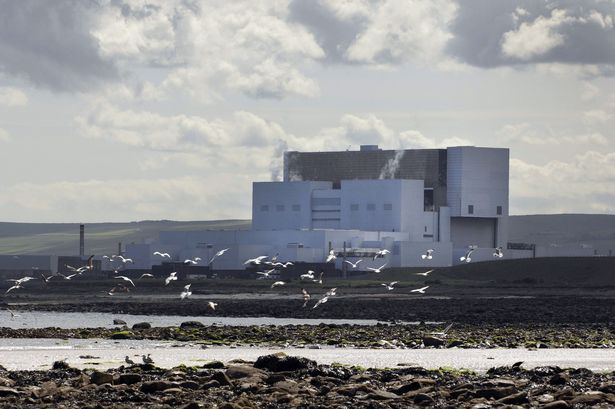
Torness Rob Edwards, August 12, 2024
Labour and Conservative governments secretly harboured doubts about building a nuclear power station at Torness in East Lothian in the late 1970s, according to internal documents released by the Scottish Government.
Campaigns against Torness won support within the then Scottish Office, and came closer to success than realised. There was a “real risk” of the treasury in London delaying the project, warned one official.
But the nuclear industry fought a fierce behind-the-scenes battle in defence of the power station, and it ended up being built in the 1980s.
Campaigners condemned past decision-making about Torness as a “total sham”. According to one former UK Government adviser, lobbying by the nuclear industry had always been “more influential” than evidence.
The Ferret analysed 11 large government files on Torness in 1978 and 1979 at the National Records of Scotland in Edinburgh. One was only released in 2023 after a request under freedom of information law.
The files reveal that ministers and officials in both James Callaghan’s and Margaret Thatcher’s governments privately raised concerns about the proposed nuclear station at Torness.
Torness was the target for a series of anti-nuclear protests in the 1970s, initially organised by the Scottish Campaign to Resist the Atomic Menace (SCRAM). There were demonstrations and an occupation of the site in 1978, and in May 1979 more than 10,000 people joined a weekend protest there.
Despite further protests in 1980 and 1981, the nuclear station was built and formally opened by Thatcher in 1989. It is currently scheduled to keep operating until 2028, though there are plans to run it for longer.
Early in 1978 SCRAM made a submission to the Scottish Office arguing that Torness should be subject to a new public inquiry. An earlier inquiry in 1974 had been inadequate because it had not specified the type of reactors to be built, the campaign group argued……………………………………………………………………………………………………
Case for Torness ‘less than convincing’
However, a covering note from an official on 16 May 1979 admitted that the case for Torness was “less than convincing”. The absence of information in support of the plant was “worrying”, the official commented, “because I think there is a real risk in the present climate of the treasury seeking to re-examine or hold up the project”.
In a memo two days later, Fletcher said: “I still have some doubts concerning the advisability of a nuclear station at Torness”. A handwritten note by an official added simply “Amen”.
A memo on 1 June 1979 reported that Torness’s backer, the government-owned South of Scotland Electricity Board (SSEB), was “most despondent” about the lack of investment approval. All the signs were that the project was “slipping out of control”, it said.
In the end, though, the government documents show that the SSEB, backed by its supporters in the Scottish Office, saved Torness. They worked hard to convince the treasury and, ultimately, Thatcher, that it should go ahead because it was needed to sustain the power station industry…………………………………………………………………………
Torness ‘a total sham’
The veteran environmental campaigner and energy author, Walt Patterson, testified at the Torness inquiry in 1974. “Torness was a total sham, and the inquiry had no relevance to the official decision to build it,” he told The Ferret.
“Torness was ordered just to keep the power station building industry busy, not because we could use the electricity.”
Pete Roche, a nuclear consultant who worked with SCRAM in Edinburgh in the 1970s and 1980s, suggested that politicians might have been worried that cancelling Torness would “somehow legitimise protest”.
He said: “We knew at the time that the case for Torness was collapsing before our very eyes, but it’s a pleasant surprise to learn that both Labour and Tory Ministers had secretly expressed doubts about the plant.”
Dr Ewan Gibbs, a researcher from the school of social and political sciences at University of Glasgow who has studied Torness protests, pointed out that anti-nuclear activists had mobilised tens of thousands of people in opposition to the plant.
“Thanks to these new research findings, we now know that both Scottish Labour and Tory ministers had serious doubts over the nuclear power station project in the late 1970s.”……………………………………….. more https://theferret.scot/torness-nuclear-doubts-ministers/—
Heat aggravated by carbon pollution killed 50,000 in Europe last year – study

Hot weather inflamed by carbon pollution killed nearly 50,000 people in
Europe last year, with the continent warming at a much faster rate than
other parts of the world, research has found.
The findings come as
wildfires tore through forests outside Athens, as France issued excessive
heat warnings for large swathes of the country, and the UK baked through
what the Met Office expects will be its hottest day of the year.
Doctors call heat a “silent killer” because it claims far more lives than most
people realise. The devastating mortality rate in 2023 would have been 80%
higher if people had not adapted to rising temperatures over the past two
decades, according to the study published in Nature Medicine.
Guardian 12th Aug 2024
-
Archives
- October 2026 (129)
- September 2026 (339)
- August 2026 (330)
- July 2026 (355)
- June 2026 (287)
- May 2026 (306)
- April 2026 (356)
- March 2026 (251)
- February 2026 (267)
- January 2026 (308)
- December 2025 (358)
- November 2025 (359)
-
Categories
- 1
- 1 NUCLEAR ISSUES
- business and costs
- climate change
- culture and arts
- ENERGY
- environment
- health
- history
- indigenous issues
- Legal
- marketing of nuclear
- media
- opposition to nuclear
- PERSONAL STORIES
- politics
- politics international
- Religion and ethics
- safety
- secrets,lies and civil liberties
- spinbuster
- technology
- Uranium
- wastes
- weapons and war
- Women
- 2 WORLD
- ACTION
- AFRICA
- Atrocities
- AUSTRALIA
- Christina's notes
- Christina's themes
- culture and arts
- Events
- Fuk 2022
- Fuk 2023
- Fukushima 2017
- Fukushima 2018
- fukushima 2019
- Fukushima 2020
- Fukushima 2021
- general
- global warming
- Humour (God we need it)
- Nuclear
- RARE EARTHS
- Reference
- resources – print
- Resources -audiovicual
- Weekly Newsletter
- World
- World Nuclear
- YouTube
-
RSS
Entries RSS
Comments RSS

