White House downplays Chinese concerns over possible US nuclear strategy change
VOA, August 21, 2024 By William Gallo, Seoul, South Korea —
White House officials on Wednesday appeared to downplay Beijing’s sentiment that it is “seriously concerned” after a report alleged the United States recently approved a secret plan to shift some of the focus of its nuclear strategy away from Russia to deal with Beijing’s nuclear weapons buildup…………………………….
Late Tuesday, The New York Times reported that U.S. President Joe Biden in March approved a new “nuclear employment guidance,” a highly classified document outlining how the U.S. would use nuclear weapons in a potential conflict.
Asked about the report during a press briefing Wednesday, a Chinese foreign ministry spokesperson accused the United States of “peddling the China nuclear threat narrative” and “finding excuses to seek strategic advantage.”
“China is seriously concerned about the relevant report, and the facts have fully proven that the United States has constantly stirred up the so-called China nuclear threat theory in recent years,” said Chinese foreign ministry spokesperson Mao Ning.
Russia has not responded to the report…………………………………………………………………………. https://www.voanews.com/a/china-concerned-after-report-alleging-us-nuclear-strategy-change-/7750939.html
UK’s nuclear facilities ‘at high risk of atomic blackmail’ from Putin

the British sites can be seen in the same way as those in Ukraine in being susceptible to sabotage and infiltration.
The full-scale invasion of Ukraine has brought with it high-level warnings that the UK is headed for a direct military confrontation with Russia.
Josh Layton https://metro.co.uk/2024/08/19/uks-nuclear-facilities-at-high-risk-atomic-blackmail-putin-21449130/
The UK’s nuclear facilities are at high risk from hostile states who are tipping the world into war, according to an expert in risk management.
Dr Simon Bennett warned that World War Three is only a matter of years away, with Russia already pursuing a strategy of ‘atomic blackmail’.
Dr Bennett revived author Bennett Ramberg’s Cold War-era theory of how nuclear power facilities can be weaponised for political ends in calling on the UK government to ramp up defence spending.
He also believes the potential exists for a cornered Vladimir Putin to escalate from psyops to a deliberate use of the Zaporizhzhia nuclear power plant as a dirty bomb, which would have devastating consequences for Ukraine and neighbouring countries.
The risk management expert, of the University of Leicester, warned that the UK government has ‘lost sight’ of its primary duty to protect its citizens amid a slide to global conflict.
‘The full-scale invasion of Ukraine by Russia is the first large-scale conflict where there are potentially numerous nuclear power plants at risk,’ he said.
‘Not only at Zaporizhzhia, which is Europe’s largest power plant, but in Russia, where the current incursion could see the Ukrainians reach the Kursk nuclear power station if they drive hard to the east.
In the 80s, Bennett Ramberg came up with the hypothesis of atomic blackmail, which is based on the premise that as the number of nuclear power stations grows, so does the potential for an aggressor to use them to gain leverage over the owners
‘The potential for a facility like Zaporizhzhia to be used very crudely against an opponent is clear to see.
‘If the plant, which has six reactors, was rigged with powerful demolition mines, and they were detonated, the radiation would be off the scale.
‘It’s possible the Russians have already placed explosives there.’
Dr Bennett, director of the university’s Civil Safety and Security Unit, told Metro.co.uk that Putin — who is under pressure after Ukraine’s invasion of Russia’s Kursk region — is capable of the unthinkable.
He a drew a comparison with one of the darkest days of history.
‘Using Zaporizhzhia for atomic blackmail gives Putin leverage over not just Ukraine but the entire world,’ Dr Bennett said.
One of the latest safety incidents at Zaporizhzhia came last week when smoke was filmed rising from one of the cooling towers at the Russian-held facility in eastern Ukraine.
Experts doubted there was any risk of an explosion, with Ukraine saying that the fire was started deliberately by setting light to tyres.
However the use of the plant in this way, which follows continued reports of incidents involving drones and shelling, fits with Ramberg’s theory — and has implications for the UK’s own security, according to Dr Bennett.
On Saturday, the safety situation at Zaporizhzhia was ‘deteriorating’ after a nearby drone strike, the International Atomic Energy Agency said.
The party behind the explosion, just outside the site’s protected area, has not been identified. Under Rishi Sunak, the British government announced the biggest expansion in nuclear power for 70 years, and the new prime minister is also committed to building new facilities.
Through Ramberg’s thesis, the British sites can be seen in the same way as those in Ukraine in being susceptible to sabotage and infiltration.
‘If we think more laterally, the number of power stations in the UK is growing, and through the optics of Ramberg’s theory, we are offering our enemies more targets and potentially more leverage over us in a conflict,’ Dr Bennett said.
The Russian FSB security agency and GRU military intelligence are very good at hybrid warfare, so what they could be doing at the moment is recruiting and running individuals as “sleepers” within the British state and potentially within the nuclear industry, ready to be activated at any moment. Three civil servants have recently been charged under the National Security Act and my understanding is that they are alleged to have been spying for China.’
The full-scale invasion of Ukraine has brought with it high-level warnings that the UK is headed for a direct military confrontation with Russia.
British sites, including a shipyard housing nuclear submarines in Barrow-in-Furness, were last week reported by the Financial Times to be on the Kremlin’s list of targets.
Tobias Ellwood, former chair of the Commons Select Committee, responded by saying: ‘We must wake up — storm clouds are gathering.’
Dr Bennett said: ‘The British state needs to take these nuclear threats far more seriously not just within the optics of the Ukraine-Russia war but because, in my opinion, there will be a world war in the next five to 10 years. It will start in the Asia-Pacific, where China will invade Taiwan and, because of the Aukus pact, we will be directly involved in defending Taiwan.
‘Russia will be involved because of its ties with China, leading to a multi-hemisphere conflict.’

Dr Bennett, whose book ‘Atomic Blackmail?’ examines the weaponisation of nuclear facilities in the Russia-Ukraine war, has raised the issues in letters and emails to various governments, including that of Rishi Sunak, but to date has not received any acknowledgement.
‘In my opinion, the government obsession with net zero and climate change agreements distracts from a far greater threat to safety, namely atomic blackmail,’ he said.
‘The primary purpose of the state is national security and in my view we have lost sight of that purpose. The Labour government is carrying out a defence review when what we really need is to raise the 2% of GDP we spend on defence to a minimum 4% of GDP.’
The prospect of an apocalyptic conflict in a matter of years has gained traction during the Ukraine-Russia war and China’s continued pressure on Taiwan, which it views as its own territory.
The author intends to continue trying to raise the alarm.
The U.S. and China Can Lead the Way on Nuclear Threat Reduction

Policies of “no first use” are a model for nuclear states.
Foreign Policy, By Zhou Bo, a senior fellow at the Center for International Security and Strategy at Tsinghua University and a retired senior colonel in the Chinese People’s Liberation Army. August 20, 2024,
Since the end of the Cold War, the role of nuclear weapons has only grown. Nuclear arsenals are being strengthened around the world, with many nuclear states continuing to modernize their arsenals. In June, outgoing NATO Secretary-General Jens Stoltenberg said that the alliance was in talks to deploy more nuclear weapons, taking them out of storage and placing them on standby. Robert C. O’Brien, a former national security advisor to former U.S. President Donald Trump, has urged him to conduct nuclear tests if he wins a new term, arguing that it would help the United States “maintain technical and numerical superiority to the combined Chinese and Russian nuclear stockpiles.”
There are two bleak conclusions about nuclear diplomacy in this age. First, it will be impossible to ban such weapons anytime soon. Since its passage in 2017, no nuclear-armed states have signed the United Nations Treaty on the Prohibition of Nuclear Weapons, some of them instead contending that it will distract attention from other disarmament and nonproliferation initiatives.
It is also very hard, if not impossible, to convince these states to reduce their nuclear stockpiles amid ever-intensifying geopolitical and military competition. On the contrary, in February 2023, Russia announced that it was suspending its participation in the 2010 Treaty on Measures for the Further Reduction and Limitation of Strategic Offensive Arms (New START)—the last remaining nuclear arms control treaty limiting Russian and U.S. strategic nuclear forces.
In response, the United States has also suspended the sharing and publication of treaty data. In November, Russia went a step further and withdrew its ratification of the Comprehensive Nuclear Test Ban Treaty (CTBT), citing “an imbalance” with the United States, which has failed to ratify the treaty since it opened for signature in 1996.
Amid such a situation, it is impossible for Beijing to stand by idly. The Stockholm International Peace Research Institute estimates that the size of China’s nuclear arsenal has increased from 410 warheads in January 2023 to 500 in January 2024, and it is expected to continue to grow. For the first time, China may also now be deploying a small number of warheads on missiles during peacetime. According to the U.S. Defense Department, China is likely to increase its nuclear warheads to 1,500 by 2035.
Given this reality, perhaps the most promising near-term way to guard against nuclear risks is not by limiting the number of nuclear weapons but by controlling the policies that govern their use. In this regard, a pledge by nuclear-armed states of “no first use” of nuclear weapons looks to be the most realistic approach in reducing the escalation of nuclear threats.
In theory, no first use refers to a policy by which a nuclear-armed power formally refrains from the use of nuclear weapons or other weapons of mass destruction in warfare, except in the case of doing so as a second strike in retaliation to an attack by an enemy power using weapon of mass destruction.
Of the five nuclear states that have signed onto the Treaty on the Nonproliferation of Nuclear Weapons (NPT)—China, France, Russia, the United Kingdom, and the United States—only China has ever declared a no-first-use policy. On Oct. 16, 1964, when China successfully detonated its first atomic bomb, the country immediately declared that it would not be the first to use nuclear weapons at any time and under any circumstances, and unconditionally committed itself not to use or threaten to use nuclear weapons against nonnuclear states or in nuclear-weapon-free zones…………………………………………..
All nuclear powers could afford to adopt a formal no-first-use policy—taking the moral high ground without reducing their capabilities for retaliation.
Though it has never adopted a no-first-use policy itself, the United States’ nuclear posture is actually more similar to China’s than it seems. In its 2022 Nuclear Posture Review, the Biden administration declared that it would only consider the use of nuclear weapons “in extreme circumstances to defend the vital interests of the United States or its allies and partners.” But it is hard to imagine which interests are so vital that they might require Washington to use nuclear weapons as a first measure to defend them.
To be sure, it is important for the United States to assure its allies that it will follow through on its deterrent promises. It is equally hard to imagine who would venture to launch a nuclear strike on a U.S. ally, knowing the dire potential consequences.
The United Kingdom’s nuclear deterrent, meanwhile, is operationally independent. But in terms of its nuclear policy, the British government has made it clear that “we would consider using our nuclear weapons only in extreme circumstances of self-defence, including the defence of our NATO allies.” France, meanwhile adheres to a principle of “strict sufficiency.”
The real challenge, then, is getting Russia to commit to a no-first-use policy. The Soviet Union adopted a formal policy of no first use in 1982. But after its dissolution, the Russian Federation reversed this approach in 1993, likely to mitigate the comparative weakness of the Russian Armed Forces in the post-Soviet era………………………………………………….
A dual-track approach may be the best bet for the adoption of a formal no-first-use policy.
In Europe, NATO can start with a unilateral no-first-use pledge against Russia as a gesture of goodwill. Even if such an offer isn’t immediately reciprocated by Russia, it might begin to thaw tensions.
As a second—and crucial—step, NATO could pledge to halt any further expansion of its alliance in exchange for Moscow adopting a no-first-use policy This would be a difficult pill for the alliance to swallow. But after Sweden’s and Finland’s entry earlier this year, there are only three aspiring countries on the waiting list: the barely significant Bosnia and Herzegovina as well as Georgia and Ukraine, which have deeply problematic ongoing conflicts with Russia that NATO is sensitive about.
The path forward would likely be smoother if it went through Asia. Both Russia and China have already agreed to no first use against each other. China and the United States could reach a similar agreement, thus de-escalating potential conflicts involving U.S. allies—such as the Philippines and Japan—as well as the dangers that could be provoked through accidental collisions in the sea or air. A U.S.-led example might then make it easier to bring the Europeans on board.
This may seem far-fetched in the current geopolitical climate, but there is precedent for it. When India and Pakistan tested nuclear devices in May 1998, they incurred swift condemnation from the U.N. Security Council, which called for both countries to sign both the NPT and the Comprehensive Nuclear Test Ban Treaty. In a rare show of solidarity, China and the United States made a joint declaration in June 1998 agreeing to de-target their nuclear weapons against each other.
This was largely a symbolic and unverifiable step. But it was not only a defusing of tensions, but also good to see nuclear states at least partially honoring the vision of nuclear disarmament laid out in Article VI of the NPT. And this China-U.S. joint statement eventually led to another joint statement among the five nuclear-armed permanent Security Council states in May 2000, which affirmed that their nuclear weapons are not targeted at each other or at any other states.
No first use is a big step forward from nontargeting. It’s not out of bounds to imagine that, with enough diplomatic capital, a similar but more important pledge of no first use could be made today. In fact, in January 2022—only a month before Russia’s invasion of Ukraine—these five nuclear powers agreed in a joint statement that “a nuclear war cannot be won and must never be fought.”
What is more significant is that during Chinese President Xi Jinping’s visit to Moscow last year, China and Russia reiterated this commitment, even amid Russia’s ongoing war.
If, indeed, a nuclear war cannot be won, then what is stopping these nuclear powers from taking a no-first-use pledge? Nuclear weapons didn’t help the United States in its wars in Vietnam, Iraq, and Afghanistan—or the Russians in Ukraine. A commitment of no first use by the nuclear-armed states would give people hope that a nuclear-free world, however distant, is still possible one day.
This essay is published in cooperation with the Asian Peace Programme at the National University of Singapore’s Asia Research Institute. https://foreignpolicy.com/2024/08/20/nuclear-weapons-war-no-first-use-policy/—
Biden’s Convention Speech Made Absurd Claims About His Gaza Policy

August 21, 2024 By Norman Solomon, https://scheerpost.com/2024/08/21/bidens-convention-speech-made-absurd-claims-about-his-gaza-policy/
An observation from George Orwell — “those who control the present, control the past and those who control the past control the future” — is acutely relevant to how President Biden talked about Gaza during his speech at the Democratic convention Monday night. His words fit into a messaging template now in its eleventh month, depicting the U.S. government as tirelessly seeking peace, while supplying the weapons and bombs that have enabled Israel’s continual slaughter of civilians.
“We’ll keep working, to bring hostages home, and end the war in Gaza, and bring peace and security to the Middle East,” Biden told the cheering delegates. “As you know, I wrote a peace treaty for Gaza. A few days ago I put forward a proposal that brought us closer to doing that than we’ve done since October 7th.”
It was a journey into an alternative universe of political guile from a president who just six days earlier had approved sending $20 billion worth of more weapons to Israel. Yet the Biden delegates in the convention hall responded with a crescendo of roaring admiration.
Applause swelled as Biden continued: “We’re working around-the-clock, my secretary of state, to prevent a wider war and reunite hostages with their families, and surge humanitarian health and food assistance into Gaza now, to end the civilian suffering of the Palestinian people and finally, finally, finally deliver a ceasefire and end this war.”
In Chicago’s United Center, the president basked in adulation while claiming to be a peacemaker despite a record of literally making possible the methodical massacres of tens of thousands of Palestinian civilians.
Orwell would have understood. A political reflex has been in motion from top U.S. leaders, claiming to be peace seekers while aiding and abetting the slaughter. Normalizing deception about the past sets a pattern for perpetrating such deception in the future.
And so, working inside the paradigm that Orwell described, Biden exerts control over the present, strives to control narratives about the past, and seeks to make it all seem normal, prefiguring the future.
The eagerness of delegates to cheer for Biden’s mendaciously absurd narrative about his administration’s policies toward Gaza was in a broader context — the convention’s lovefest for the lame-duck president.
Hours before the convention opened, Peter Beinart released a short video essay anticipating the fervent adulation. “I just don’t think when you’re analyzing a presidency or a person, you sequester what’s happened in Gaza,” he said. “I mean, if you’re a liberal-minded person, you believe that genocide is just about the worst thing that a country can do, and it’s just about the worst thing that your country can do if your country is arming a genocide.”
Beinart continued: “And it’s really not that controversial anymore that this qualifies as a genocide. I read the academic writing on this. I don’t see any genuine scholars of human rights international law who are saying it’s not indeed there. . . . If you’re gonna say something about Joe Biden, the president, Joe Biden, the man, you have to factor in what Joe Biden, the president, Joe Biden, the man, has done, vis-a-vis Gaza. It’s central to his legacy. It’s central to his character. And if you don’t, then you’re saying that Palestinian lives just don’t matter, or at least they don’t matter this particular day, and I think that’s inhumane. I don’t think we can ever say that some group of people’s lives simply don’t matter because it’s inconvenient for us to talk about them at a particular moment.”
Underscoring the grotesque moral obtuseness from the convention stage was the joyful display of generations as the president praised and embraced his offspring. Joe Biden walked off stage holding the hand of his cute little grandson, a precious child no more precious than any one of the many thousands of children the president has helped Israel to kill.
Labour MP under fire for accepting £2,000 donation from Sizewell C developer.

Opposition to the proposed power plant accuse Jack Abbott of being in ‘EDF’s pocket’
Luke Barr, 19 August 2024
A Labour MP whose constituency borders the proposed Sizewell C nuclear power station has been criticised for accepting a £2,000 donation from the developer behind the project.
Jack Abbott, the newly appointed MP for Ipswich, is facing scrutiny over the decision to
take cash from the French energy giant EDF earlier this month. EDF is the
main private investor behind the proposed nuclear project, which is
expected to cost £20bn and will be part-funded by the taxpayer.
New filings show that Mr Abbott registered the EDF donation on Aug 2, just weeks after
he was elected in Ipswich. His constituency neighbours Sizewell C, which
once completed will serve as a 3.2 gigawatt power station providing energy
to around 6m homes.
However, the project has faced opposition from
campaigners who claim that it risks large cost overruns that will fall on
household bills and that it will spoil local nature.
Alison Downes, executive director of the Stop Sizewell C campaign group, claimed the EDF
donation suggested Mr Abbott was “in EDF’s pocket”. She said: “A huge
project like this has money and will likely use it to persuade people to
lend their support. It is telling that an organisation like ours doesn’t
have lots of money but still has plenty of support.”
A final investment decision on Sizewell C has yet to be made despite around £2.5bn already
being spent on the project. The Government had expected to secure backing
from private investors by the end of the year, although negotiations are at
risk of running into 2025.
Telegraph 19th Aug 2024
A robot’s attempt to get a sample of the melted nuclear fuel at Japan’s damaged reactor is suspended
An attempt to use an extendable robot to remove a fragment of melted fuel from a wrecked reactor at Japan’s tsunami-hit nuclear plant has been suspended due to a technical issue
abc news, By MARI YAMAGUCHI Associated Press, August 22, 2024,
TOKYO — An attempt to use an extendable robot to remove a fragment of melted fuel from a wrecked reactor at Japan’s tsunami-hit Fukushima Daiichi nuclear power plant was suspended Thursday due to a technical issue.
The collection of a tiny sample of the debris inside the Unit 2 reactor’s primary containment vessel would start the fuel debris removal phase, the most challenging part of the decadeslong decommissioning of the plant where three reactors were destroyed in the March 11, 2011, magnitude 9.0 earthquake and tsunami disaster.
The work was stopped when workers noticed that five 1.5-meter (5-foot) pipes used to maneuver the robot were placed in the wrong order and could not be corrected within the time limit for their radiation exposure, the plant operator Tokyo Electric Power Company Holdings said.
The pipes were to be used to push the robot inside and pull it back out when it finished. Once inside the vessel, the robot is operated remotely from a safer location.
The robot can extend up to about 22 meters (72 feet) to reach its target area to collect a fragment from the surface of the melted fuel mound using a device equipped with tongs that hang from the tip of the robot.
The mission to obtain the fragment and return with it is to last two weeks. TEPCO said a new start date is undecided…………………………………………………………….
The government and TEPCO are sticking to a 30-40-year cleanup target set soon after the meltdown, despite criticism it is unrealistic. No specific plans for the full removal of the melted fuel debris or its storage have been decided. https://abcnews.go.com/Technology/wireStory/robots-attempt-sample-melted-nuclear-fuel-japans-damaged-113049701
The Nuclear Decommissioning Authority (NDA)NDA’s £30 million investment into nuclear research & innovation
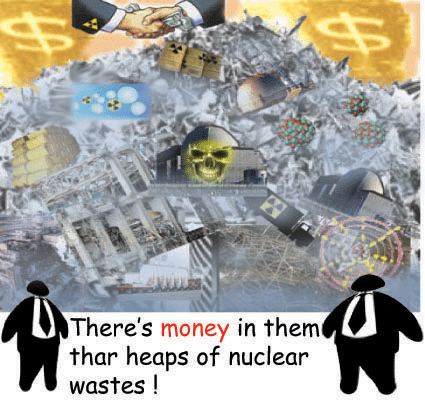
The Nuclear Decommissioning Authority (NDA) has awarded contracts totalling
£30million to drive innovation and research into new techniques to deliver
safe, sustainable and cost-effective decommissioning.
The NDA is cleaning up the UK’s oldest nuclear sites which were designed without
decommissioning in mind, posing challenges which require first-of-a-kind
engineering and technological solutions. Research is an essential part of
the decommissioning programme and each year the NDA group invest
£100million in Research & Development (R&D). The aim is to solve
challenging technical problems more effectively, more efficiently, and,
where possible, for less cost.
The NDA Research Portfolio (NRP) competition
forms a key part of the NDA’s strategic research programme and provides
direct funding for research that supports strategic objectives including
growing and maintaining diverse skills within the supply chain and
promoting innovation across multiple sites.
Electronic Specifier 19th Aug 2024
Japan: Removal of nuclear fuel remains in Fukushima will begin on August 22

the first step it will be the recovery of “a few grams” of spent fissile fuel from the plant’s nuclear reactor no. 2.
Large-scale removal of semi-melted fuel rods is expected to be undertaken early in the next decade
Tokyo, August 20 2024, https://www.agenzianova.com/en/news/Japan-the-removal-of-the-remains-of-nuclear-fuel-in-Fukushima-will-begin-on-August-22/
Tokyo Electric Power Company (Tepco), operator of the Japanese Fukushima Daiichi nuclear power plant, will begin on August 22 the delicate operations to recover the remains of nuclear fuel from the reactors damaged in the 2011 disaster. The company announced today that the first step it will be the recovery of “a few grams” of spent fissile fuel from the plant’s nuclear reactor no. 2. Plans call for the gradual expansion of operations to unit #3.
Large-scale removal of semi-melted fuel rods is expected to be undertaken early in the next decade. The removal of radioactive debris contained in the power plant’s reactors is considered the most difficult challenge in the process of decommissioning and disposing of the infrastructure, which was seriously damaged following the devastating earthquake and subsequent tsunami that hit north-eastern Japan 12 years ago. In all, around 880 tonnes of radioactive debris will have to be removed from reactors number 1, 2 and 3 at the nuclear power plant.
Nuclear power on the prairies is a green smokescreen.

By M. V. Ramana & Quinn Goranson, August 19th 2024, Canada’s National Observer https://www.nationalobserver.com/2024/08/19/opinion/nuclear-power-prairies-green-smokescree
On April 2, Alberta Premier Danielle Smith declared on X (formerly Twitter) “we are encouraged and optimistic about the role small modular reactors (SMRs) can play” in the province’s plans to “achieve carbon neutrality by 2050.”
SMRs, for those who haven’t heard this buzzword, are theoretical nuclear reactor designs that aim to produce smaller amounts of electricity compared to the current reactor fleet in Canada. The dream of using small reactors to produce nuclear power dates back to the 1950s — and so has their record of failing commercially.
That optimism about SMRs will be costing taxpayers at least $600,000, which will fund the company, X-Energy’s research “into the possibility of integrating small modular reactors (SMRs) into Alberta’s electric grid.” This is on top of the $7 million offered by Alberta’s government in September 2023 to oil and gas producer Cenovus Energy to study how SMRs could be used in the oil sands.
Last August, Saskatchewan’s Crown Investments Corporation provided $479,000 to prepare local companies to take part in developing SMRs. Alberta and Saskatchewan also have a Memorandum of Understanding to “advance the development of nuclear power generation in support of both provinces’ need for affordable, reliable and sustainable electricity grids by 2050”.
What is odd about Alberta and Saskatchewan’s talk about carbon neutrality and sustainability is that, after Nunavut, these two provinces are most reliant on fossil fuels for their electricity; as of 2022, Alberta derived 81 per cent of its power from these sources; Saskatchewan was at 79 percent. In both provinces, emissions have increased more than 50 per cent above 1990 levels.
It would appear neither province is particularly interested in addressing climate change, but that is not surprising given their commitment to the fossil fuel industry. Globally, that industry has long obstructed transitioning to low-carbon energy sources, so as to continue profiting from their polluting activities.
Canadian companies have played their part too. Cenovus Energy, the beneficiary of the $7 million from Alberta, is among the four largest Canadian oil and gas companies that “demonstrate negative climate policy engagement,” and advocate for provincial government investment in offshore oil and gas development. It is also a part of the Pathways Alliance that academic scholars charge with greenwashing, in part because of its plans to use a problematic technology, carbon capture and storage, to achieve “net-zero emissions from oilsands operations by 2050.”
Carbon capture and storage is just one of the unproven technologies that the fossil fuel industry and its supporters use as part of their “climate pledges and green advertising.” Nuclear energy is another — especially when it involves new designs such as SMRs that have never been deployed in North America, or have failed commercially.
X-energy, the company that is to receive $600,000, is using a technology that has been tried out in Germany and the United States with no success. The last high-temperature, gas-cooled reactor built in the United States was shut down within a decade, producing, on average, only 15 per cent of what it could theoretically produce.
Even if one were to ignore these past failures, building nuclear reactors is slow and usually delayed. In Finland, construction of the Olkiluoto-3 reactor started in 2005, but it was first connected to the grid in 2022, a thirteen-year delay from the anticipated 2009.
Construction of Argentina’s CAREM small modular reactor started in February 2014 but it is not expected to start operating till at least the “end of 2027,” and most likely later. Both Finland and Argentina have established nuclear industries. Neither Alberta nor Saskatchewan possess any legislative capacity to regulate a nuclear industry.
What Alberta and Saskatchewan are indulging in through all these announcements and funding for small modular nuclear reactors is an obstructionist tactic to slow down the transition away from fossil fuels. Discussing nuclear technology shifts attention from present and projected GHG emissions, while enabling a ramp-up of fossil fuel reliance in the medium-term and delaying climate action into the long-term.
Floating the idea of adding futuristic SMR technology into the energy mix is one way to publicly appear to be committed to climate action, without doing anything tangible. Even if SMRs were to be deployed to supply energy in the tar sands, that does not address downstream emissions from burning the extracted fossil fuels.
Relying on new nuclear for emission reductions prevents phasing out fossil fuels at a pace necessary for the scientific consensus in favour of rapid and immediate decarbonization. An obstructionist focus on unproven technologies will not help.
Quinn Goranson is a recent graduate from the University of British Columbia’s School of Public Policy and Global Affairs with a specialization in environment, resources and energy. Goranson has experience working in research for multiple renewable energy organizations, including the CEDAR project, in environmental policy in the public sector, and as an environmental policy consultant internationally.
M.V. Ramana is the Simons Chair in Disarmament, Global and Human Security and Professor at the School of Public Policy and Global Affairs, at the University of British Columbia in Vancouver. He is the author of The Power of Promise: Examining Nuclear Energy in India (Penguin Books, 2012) and “Nuclear is not the Solution: The Folly of Atomic Power in the Age of Climate Change” (Verso Books, 2024).
‘Strong record of supporting the U.S.-Israel relationship’: a look at Tim Walz’s votes on Palestine as a member of Congress
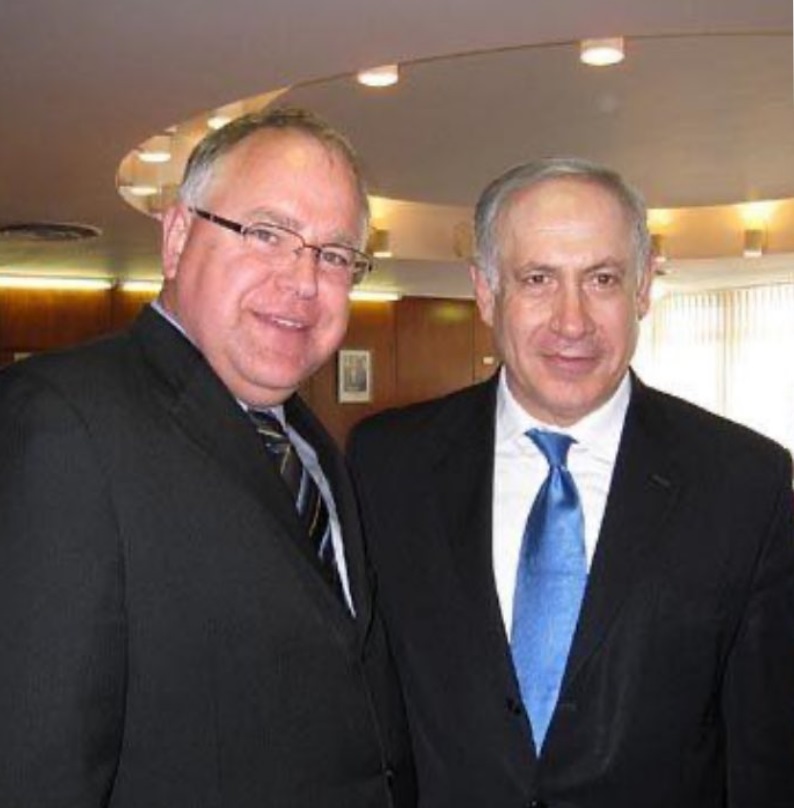
A review of Tim Walz’s time in Congress from 2007 to 2018 shows he supported multiple Israeli wars on Gaza, rejected the international consensus on the illegality of West Bank settlements, and opposed any unilateral declaration of a Palestinian state.
Mondoweiss, By Nicolas Sawaya August 15, 2024
When Kamala Harris selected Minnesota Governor Tim Walz over Pennsylvania Governor Josh Shapiro as her Vice-Presidential running mate, many viewed it as a win for pro-Palestine constituents of the Democratic party. Shapiro’s long history of pro-Israel positions and questionable ties to Israel, as well as his publicly inflammatory statements against Palestinians and their supporters, appeared to be key reasons Harris passed him over. But can Tim Walz be viewed as much better?
A review of Walz’s career shows that he can be fairly characterized as a reliable pro-Israel Democrat who has consistently voted for and taken positions in support of Israel. In fact, it is this very history that has led Israel lobby groups within the Democratic Party to celebrate Harris’s choice, which should give us all pause.
Walz in Congress
While Walz’s time as Minnesota governor has received much attention since it was announced he would become Harris’s running mate, it is actually his time in Congress that might shed the most light on how he will look to influence foreign policy from the executive branch. The record shows that during his career as a member of the House of Representatives between 2007 and 2018, Walz consistently voted in favor of pro-Israeli positions. In these years he supported every Israeli war on Gaza, rejected the international consensus on the illegality of settlements in the West Bank, and opposed any unilateral declaration of a Palestinian state, preferring instead to pay lip service to a “negotiated peace” while Israel continued colonizing the West Bank unimpeded.
Walz on Gaza, 2009 – 2014
In fact, it is Walz’s support for previous assaults on Gaza that are among his most alarming votes………………………………………………………………………….
Walz as Governor
This brings us to the current day, where in his role as Minnesota governor, Walz has paid some lip service to Palestinian concerns, but maintained his staunch support for Israel and opposed legislative action to hold it accountable, even during a genocide………………………………………….
Walz on the Gaza Genocide
Walz made some encouraging remarks after the Minnesota Democratic primaries in March of this year ………………………………………
it is unlikely that these words of sympathy will actually translate to tangible actions that put pressure on the Netanyahu government to end their genocide in Gaza. Indeed, Walz hasn’t called for an arms embargo or sanctions on Israel (and Harris’ national security advisor Phil Gordon recently clarified that Harris “does not support an arms embargo”), or taken any other meaningful policy positions that would potentially result in an end to Israel’s mass slaughter.
……………………………………………………………………………….. Walz on a resolution to the Palestinian-Israeli “conflict”
In early March of this year, in an interview with CNN, Walz said that he supports a “lasting two-state solution”, although he didn’t provide any details as to what that entailed. His voting record suggests the typical support for a “negotiated peace”, where Israel holds all the cards, and opposition to a unilateral declaration of Palestinian statehood. Indeed, on July 7, 2011, Walz voted Yea to H.Res. 268, which “opposes any attempt to establish or seek recognition of a Palestinian state outside of an agreement negotiated between Israel and the Palestinians”.
………………………………….It’s no surprise then, that Marc Mellman, President of Democratic Majority for Israel, praised Walz’s selection and said that he was “a proud pro-Israel Democrat with a strong record of supporting the U.S.-Israel relationship”, while the pro-Israel lobby J-Street (who had previously endorsed him), said that “we know the Harris-Walz team will stand up for our shared values, protect our community, and pursue smart, pro-Israel, pro-peace leadership abroad. We’re all in.” https://mondoweiss.net/2024/08/strong-record-of-supporting-the-u-s-israel-relationship-a-look-at-tim-walzs-votes-on-palestine-as-a-member-of-congress/
What Happens if Ukraine Seizes the Kursk Nuclear Power Plant?

Moscow Times, By Dmitry Gorchakov, Aug. 16, 2024
From the very beginning of Ukraine’s offensive into Russia’s Kursk region on Aug. 6, there has been much discussion about the possible objectives of this operation. Simply glancing at the map begs the question of whether one objective of the Ukrainian incursion might be the seizure of the Kursk nuclear plant, located just 60 kilometers from the border.
It is a scenario the Russian side is taking seriously. Already Rosatom, Russia’s state nuclear corporation, had begun withdrawing staff from the plant and Russian troops are hastily digging trenches around it.
The mere possibility of a nuclear plant being seized during a war is a nightmare scenario for any nuclear and radiation safety specialist. But after the almost two-and-a-half-year-long Russian occupation of the Zaporizhzhia nuclear plant and the seizures (again, by Russia) of the Chernobyl exclusion zone and the research reactor in Sevastopol during the occupation of Crimea in 2014, such scenarios have become more possible. The longer Russia’s aggression against Ukraine continues, the more common the threat of an accident will become.
While we do not know how events will unfold, our analysis at Bellona and recommendations from the IAEA make clear that should nuclear plants be enveloped by war, every effort should be made to avoid a direct assault on them with heavy weapons. The defending side should not deploy troops at nuclear plants, which would turn them into military targets. Should a nuclear plant be surrounded, it is better to surrender it through negotiations rather than have the facility be attacked or used as a staging ground for attacks.
Having considered these principles, there are a few hypothetical plans that Ukraine could have for the Kursk nuclear plant as its incursion into Russia continues. These scenarios have repeatedly surfaced in the media, and it makes sense to address them in detail.
One theory is that Ukraine may connect the Kursk nuclear plant to its own energy system. I think this is the least likely objective. Should the plant be seized, the safest course of action for its operators would be to put all of its reactors into cold shutdown mode, which stops electricity generation……………………………………………………………..
Some have also speculated that Ukraine is trying to deprive Russia of a vital energy source — hopefully by shutting it down safely rather than a nuclear accident. But the numbers do not support this.
One would like to believe that if such a plan exists, it does not involve the loss of the facility due to a nuclear accident, but rather involves its shutdown through standard procedures…………………………………………….
The most rational objective for seizing the Kursk nuclear plant would be to use it in exchange for the Zaporizhzhia nuclear plant in any upcoming negotiations.
When we consider that Ukraine’s army is not only advancing in the Kursk region, but is also fortifying its position by bringing in reserves and other defenses, it appears that Kyiv intends to hold its gains — possibly until the end of the war and the start of negotiations. The presence of a nuclear power plant within the captured territory would significantly increase its leverage and would confirm the strategic nature of this operation.
Nevertheless, as a representative of an environmental organization, I sincerely hope that we do not see any attack or attempt to seize the Kursk nuclear plant. There is simply no safe way to do it. Any attempt to do so carries risks of a nuclear or radiation accident, to say nothing of damaging the political support Ukraine enjoys from its Western allies. ………………….
if ending this war on terms acceptable to Ukraine involves fighting around nuclear plants on both sides of the front, such a process must proceed with minimal risk of a nuclear disaster. https://www.themoscowtimes.com/2024/08/16/what-happens-if-ukraine-seizes-the-kursk-nuclear-power-plant-a86045
Blinken Heads to Israel for Gaza Cease-Fire Push as IDF Slaughter Continues

“We are not facing a deal or real negotiations, but rather the imposing of American diktats,”
“to say that we are getting close to a deal is an illusion.”
“We are not facing a deal or real negotiations, but rather the imposing of American diktats,”
“to say that we are getting close to a deal is an illusion.”
Israeli airstrikes wiped out an entire family in al-Zawayda and killed 10 Syrian refugees in Lebanon as Hamas poured cold water on President Joe Biden’s claim that a cease-fire is “closer than we’ve ever been.”
Brett Wilkins, 18 Aug 24, https://www.commondreams.org/news/blinken-in-israel
U.S. Secretary of State Antony Blinken departed for Israel on Sunday in an effort to secure a cease-fire in Gaza, even as Israeli forces continued to massacre Palestinians in the embattled strip and Hamas dismissed hopeful assertions by optimists including President Joe Biden that an agreement on a cessation of hostilities is within sight.
Blinken’s trip to Israel comes days after Israeli negotiators met with senior U.S. officials, as well as Qataris and Egyptians mediating between Hamas and Israel, in Doha, Qatar. Although those talks ended without any major progress toward a cease-fire deal, Biden said Friday that “we are closer than we’ve ever been” to an agreement, “but we’re not there yet.”
In a separate statement, Biden said that a U.S. negotiating team presented a “comprehensive bridging proposal” offering “the basis for coming to a final agreement on a cease-fire and hostage release deal.”
“I am sending Secretary Blinken to Israel to reaffirm my iron-clad support for Israel’s security, continue our intensive efforts to conclude this agreement, and to underscore that with the comprehensive cease-fire and hostage release deal now in sight, no one in the region should take actions to undermine this process,” the president added.
Israeli negotiators expressed “cautious optimism” over the prospects of a deal, Agence France-Presse reported.
During the weekly meeting of his far-right Cabinet, Israeli Prime Minister Benjamin Netanyahu said that “there are areas where we can show flexibility, and there are areas where we can’t show flexibility—and we are standing firm on them.”
Concistent with what observers say is a pattern of Israeli escalations when cease-fire deals seem within reach, Israeli forces on Saturday bombed a home and adjacent warehouse in the central Gaza Strip town of al-Zawayda, killing at least 15 to 18 members of the al-Ejlah family, according to local and international media.
Victims include Sami Jawad al-Ejlah—a wholesaler who cooperated with the Israeli military to distribute food in Gaza—who was killed along with two of his wives, 11 of their children, and the children’s grandmother, according to officials at al-Aqsa Martyrs Hospital in nearby Deir al-Balah.
“A massive fire broke out, burning everything in the warehouse as children were torn to pieces,” Al Jazeera correspondent Tareq Abu Azzoum reported from the scene. “Rescue efforts are still continuing to try to recover more bodies.”
According to the Lebanese satellite news channel Al Mayadeen, the al-Ejlah family “was wiped off the civil registry,” a fate shared by at least scores—and perhaps hundreds—of Palestinian families during the 317-day assault by Israel, which is on trial for genocide at the World Court.
Al Mayadeen‘s Gaza correspondent said that “there were still individuals trapped under the rubble, with rescue teams working at the site of the massacre,” and that most of the recovered victims “arrived dismembered” at al-Aqsa Martyrs Hospital.
A spokesperson for the Israel Defense Forces (IDF) said the attack targeted unspecified “terrorist infrastructure.”
Meanwhile in southern Lebanon, where resistance to Israel’s Gaza onslaught by Hezbollah has prompted fierce retaliation, an Israeli airstrike in the Wadi al-Kafur area of Nabatieh killed 10 Syrian refugees who fled that country’s civil war, including a mother and her two children, according to the Lebanese Ministry of Public Health.
An IDF spokesperson said the strike targeted a Hezbollah weapons storage site.
In response to reports of U.S. and Israeli guarded optimism over a possible cease-fire deal, Hamas Political Bureau member Sami Abu Zuhri told Agence France-Presse that “to say that we are getting close to a deal is an illusion.”
“We are not facing a deal or real negotiations, but rather the imposing of American diktats,” Zuhri added.
Blinken’s trip to Israel comes as the Palestinian death toll of the IDF’s assault on Gaza topped 40,000 this week, with more than 92,000 people wounded and at least 11,000 others missing and presumed dead and buried beneath the rubble of hundreds of thousands of bombed-out homes and other buildings. Pale
The Biden administration has been accused of complicity in genocide for sending Israel tens of billions of dollars worth of arms and providing diplomatic cover, including by vetoing multiple United Nations cease-fire resolutions supported by the overwhelming majority of the world’s nations.stinian and international officials say most of those killed have been women and children.
Moscow Says Ukraine Destroyed Russian Bridge With Western-Provided Missiles
The Russian Foreign Ministry says the bridge was likely destroyed by US-provided HIMARS
by Dave DeCamp August 18, 2024 , https://news.antiwar.com/2024/08/18/moscow-says-ukraine-destroyed-russian-bridge-with-western-provided-missiles/
The Russian Foreign Ministry said Friday that Ukrainian forces used Western-provided missiles to destroy a bridge in the Glushkovsky district of Russia’s Kursk Oblast.
Russian Foreign Ministry spokeswoman Maria Zakharova said the missiles were likely launched using the US-provided HIMARS rocket systems, which the US has been supplying to Ukraine since 2022.
“For the first time, the Kursk region was hit by Western-made rocket launchers, probably American HIMARS,” Zakharova wrote on Telegram. “As a result of the attack on the bridge … it was completely destroyed, and volunteers who were assisting the evacuated civilian population were killed.”
Another bridge in Kursk was reported to be hit by Ukrainian forces on Sunday. According to the Russian news site Mash, both bridges were targeted with US-provided HIMARS.
The ground incursion into Kursk came a few months after the Biden administration gave Ukraine the greenlight to use US-provided missiles in strikes inside Russia in border regions. The US says it won’t support “long-range” strikes in Russia but hasn’t defined what the limit is.
The Times reported on Friday that the US is effectively blocking Ukraine from using British-provided Storm Shadow missiles inside Russia, which have a range of about 155 miles. Ukrainian forces are using other types of British weapons in Kursk, including Challenger 2 tanks.
The US and its NATO allies insist they were unaware of Ukraine’s plans to invade Kursk, but Russian officials are pinning the blame for the incursion on Kyiv’s Western backers.
“The operation in the Kursk region was also planned with the participation of NATO and Western special services,” Nikolai Patrushev, an aide to Russian President Vladimir Putin, said on Friday. “Without their participation and direct support, Kyiv would not have ventured into Russian territory.”
’Balance of terror’: South Korea’s unthinkable ‘shift’
Amid worrying times, South Korea is considering building nuclear weapons of its own in what could create a “balance of terror”.
news.com.au Jamie Seidel, August 19, 2024
North Korean dictator Kim Jong-un now has 50 nuclear warheads under his thumb.
US presidential candidate Donald Trump wants to pull out of the troubled peninsula altogether. That’s left South Korea thinking the unthinkable – building nuclear weapons of its own.
“Proponents argue that this approach would create a ‘balance of terror’ similar to that which maintained peace during the Cold War, ensuring that neither side could risk initiating a conflict without facing catastrophic consequences,” argues Seol-based Asia Institute geostrategist Dr Lakhvinder Singh.
A national campaign was launched Thursday to gather 10 million signatures in support of establishing a South Korean nuclear weapons program.
“This represents a profound shift, driven by doubts about the reliability of relying solely on the United States for extended deterrence,” says Singh……………………..
Now, many South Koreans doubt the 70-year-old “nuclear umbrella” of protection offered by the United States remains a reliable deterrent……………………………………………………………………………more https://www.news.com.au/technology/innovation/military/balance-of-terror-south-koreas-unthinkable-shift/news-story/2459122e37191a7b7e5644932ca85b62
Humanity on a knife’s edge
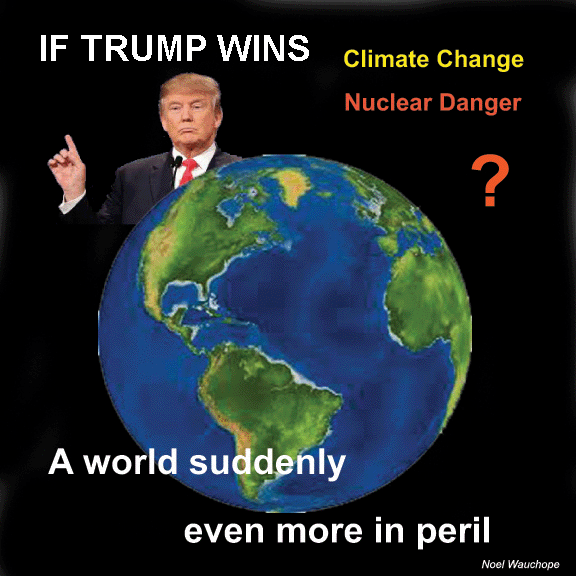
Trump took us to the nuclear brink. What happens if he’s back?
By Lawrence S. Wittner https://beyondnuclearinternational.org/2024/08/18/humanity-on-a-knifes-edge/
Over the past decade and more, nuclear war has grown increasingly likely. Most nuclear arms control and disarmament agreements of the past have been discarded by the nuclear powers or will expire soon. Moreover, there are no nuclear arms control negotiations underway. Instead, all nine nuclear nations (Russia, the United States, China, Britain, France, India, Pakistan, Israel, and North Korea) have begun a new nuclear arms race, qualitatively improving the 12,121 nuclear weapons in existence or building new, much faster, and deadlier ones.
Furthermore, the cautious, diplomatic statements about international relations that characterized an earlier era have given way to public threats of nuclear war, issued by top officials in Russia, the United States, and North Korea.
This June, UN Secretary-General António Guterres warned that, given the heightened risk of nuclear annihilation, “humanity is on a knife’s edge.”
This menacing situation owes a great deal to Donald Trump.
As President of the United States, Trump sabotaged key nuclear arms control agreements of the past and the future. He single-handedly destroyed the INF Treaty, the Iran nuclear agreement, and the Open Skies Treaty by withdrawing the United States from them. In addition, as the expiration date for the New START Treaty approached in February 2021, he refused to accept a simple extension of the agreement—action quickly countermanded by the incoming Biden administration.
Not surprisingly, Trump was horrified by the Treaty on the Prohibition of Nuclear Weapons―a UN-negotiated agreement that banned nuclear weapons, thereby providing the framework for a nuclear-free world. In 2017, when this vanguard nuclear disarmament treaty was passed by an overwhelming majority of the world’s nations, the Trump administration proclaimed that the United States would never sign it.
In fact, Trump was far less interested in arms control and disarmament than in entering―and winning―a new nuclear arms race with other nations. “Let it be an arms race,” he declared in December 2016, shortly after his election victory. “We will outmatch them at every pass.”
In February 2018, he boasted that his administration was “creating a brand-new nuclear force. We’re gonna be so far ahead of everybody else in nuclear like you’ve never seen before.” And, indeed, Trump’s U.S. nuclear “modernization” program―involving the replacement of every Cold War era submarine, bomber, missile, and warhead with an entirely new generation of the deadliest weapons ever invented―acquired enormous momentum during his presidency, with cost estimates running as high as $2 trillion.
Eager to facilitate this nuclear buildup, the Trump administration began to explore a return to U.S. nuclear weapons testing. Consequently, it announced in 2018 that, although the U.S. government had ended its nuclear tests in 1992 and President Bill Clinton had negotiated and signed the Comprehensive Test Ban Treaty in 1996, Trump would oppose U.S. Senate ratification of the treaty.
The administration also dramatically reduced the time necessary to prepare for nuclear weapons test explosions. In 2020, senior Trump administration officials reportedly conducted a serious discussion of U.S. government resumption of nuclear testing, leading the House of Representatives, then under Democratic control, to block funding for it.
Though many Americans assumed that a powerful U.S. nuclear arsenal would prevent an outbreak of nuclear war, Trump undermined this wishful thinking by revealing himself perfectly ready to launch a nuclear attack. During his 2016 presidential campaign, the Republican nominee reportedly asked a foreign policy advisor three times why, if the U.S. government possessed nuclear weapons, it should be reluctant to use them. The following year, Trump told the governor of Puerto Rico that, “if nuclear war happens, we won’t be second in line pressing the button.
Indeed, Trump came remarkably close to lunching a nuclear war against North Korea. In August 2017, responding to provocative comments by Kim Jong Un, Trump warned that further North Korean threats would “be met with fire, fury and frankly power the likes of which this world has never seen before.”
Trump’s threat of a nuclear attack triggered a rapid escalation of tensions between the two nations. In a speech before the UN General Assembly that September, Trump vowed to “totally destroy North Korea” if Kim, whom he derisively labeled “Little Rocket Man,” continued his provocative rhetoric.
Meanwhile, the White House chief of staff, General John Kelly, was appalled by indications that Trump really wanted war and, especially, by the president’s suggestion of using a nuclear weapon against North Korea and, then, blaming the action on someone else. According to Kelly, the military’s objection that the war would―in the words of Secretary of Defense Jim Mattis “incinerate a couple million people”―had no impact on Trump. In early 2018, the U.S. president merely upped the ante by publicly boasting that he had a “Nuclear Button” that was “much bigger & more powerful” than Kim’s.
What finally headed off a nuclear war, Kelly recalled, was his appeal to Trump’s “narcissism.” If Trump could forge a friendly diplomatic relationship with North Korea, the general suggested, the U.S. president would emerge as the “greatest salesman in the world.” And, indeed, Trump did reverse course and embark on a flamboyant campaign to pacify and denuclearize North Korea, remarking that May that “everyone” thought he deserved the Nobel Peace Prize.
Eventually, however, the U.S.-North Korean negotiations, including a much-heralded “summit” between Trump and Kim, resulted in little more than handshakes, North Korea’s continued development of nuclear weapons, and Trump’s return to public threats of nuclear war―this time against Iran.
Given this record, as well as Trump’s all-too-evident mental instability, we have been fortunate that, in a world bristling with nuclear weapons, the world survived his four years in office.
But our good fortune might not last much longer, for Trump’s return to power in 2025 or the recklessness of some other leader of a nuclear-armed nation could unleash unprecedented catastrophe upon the world.
Ultimately, the only long-term security for humanity lies in the global abolition of nuclear weapons and the development of a united world community.
Lawrence S. Wittner is Professor of History Emeritus at SUNY/Albany and the author of Confronting the Bomb (Stanford University Press).
-
Archives
- October 2026 (120)
- September 2026 (339)
- August 2026 (330)
- July 2026 (355)
- June 2026 (287)
- May 2026 (306)
- April 2026 (356)
- March 2026 (251)
- February 2026 (267)
- January 2026 (308)
- December 2025 (358)
- November 2025 (359)
-
Categories
- 1
- 1 NUCLEAR ISSUES
- business and costs
- climate change
- culture and arts
- ENERGY
- environment
- health
- history
- indigenous issues
- Legal
- marketing of nuclear
- media
- opposition to nuclear
- PERSONAL STORIES
- politics
- politics international
- Religion and ethics
- safety
- secrets,lies and civil liberties
- spinbuster
- technology
- Uranium
- wastes
- weapons and war
- Women
- 2 WORLD
- ACTION
- AFRICA
- Atrocities
- AUSTRALIA
- Christina's notes
- Christina's themes
- culture and arts
- Events
- Fuk 2022
- Fuk 2023
- Fukushima 2017
- Fukushima 2018
- fukushima 2019
- Fukushima 2020
- Fukushima 2021
- general
- global warming
- Humour (God we need it)
- Nuclear
- RARE EARTHS
- Reference
- resources – print
- Resources -audiovicual
- Weekly Newsletter
- World
- World Nuclear
- YouTube
-
RSS
Entries RSS
Comments RSS

