Pledge sought that laid-up Rosyth subs won’t go to Australia
By Clare Buchanan 27 May 24, https://www.dunfermlinepress.com/news/24344727.pledge-sought-laid-up-rosyth-subs-wont-go-australia/
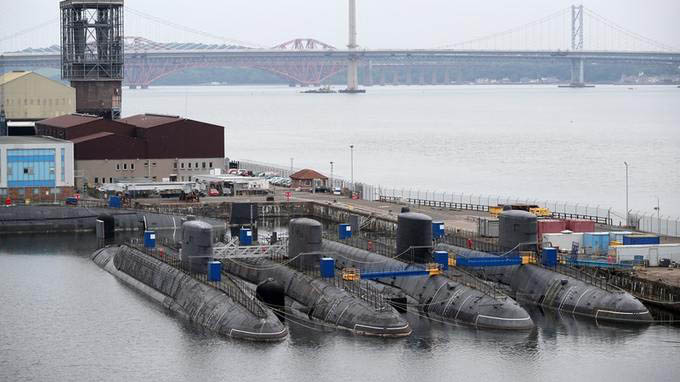
A ROSYTH councillor has called for assurances that rotting nuclear submarines will not be sent to Australia for disposal.
Brian Goodall, who is UK/Ireland Nuclear Free Local Authority’s spokesperson on nuclear submarine decommissioning, said he has written to the UK’s foreign and defence secretaries.
He’s asked for confirmation that vessels will not go overseas if a new Australian law passes without amendments.
Seven old subs have been laid up at Rosyth Dockyard for decades with Dreadnought being there for the longest – more than 40 years – waiting to be scrapped.
The UK and USA signed a pact with Australia to build and operate a new fleet of nuclear submarines which includes the provision of new conventionally armed, but nuclear powered, vessels for the Australian Navy.
To support the pact, legislators down under have proposed a new Australian Naval Nuclear Power Safety Bill 2024.
This appears to allow the disposal of high level radioactive waste from British and American submarines on Australian soil, and also for the storage of such materials in Australia from “a submarine that is not complete”.
In his letter to Lord Cameron and Grant Shapps, Cllr Goodall expressed concern that this could theoretically mean permitting “the towing of redundant UK boats from Rosyth and Devonport down under for disposal”.
He said he fears that this could result in the loss of local expertise and jobs if it comes into practice.
He adds: “Surely as the operators of our own submarines, the UK Government should remain responsible for the storage of the resultant high-level waste and for their safe decommissioning in home ports?
“Not only will this preserve the expertise in these matters that has developed after many years of trial and error, but, as a ward member for the Rosyth Dockyard, it will also preserve the jobs in my local community.”
Back in 2022, the Press reported pledges from the UK Government that all laid-up submarines would be gone as part of plans to “de-nuclearise Rosyth” by 2035.
Councillors were given an update on the programme to remove radioactive waste and turn the seven boats that have been parked at the dockyard for decades into “tin cans and razor blades”.
The Ministry of Defence have previously faced heavy criticism for the delays and sky-high costs in dealing with the nuclear legacy, with 27 Royal Navy subs to be scrapped in total.
Uncertainty in UK. Will a Labour government really tread that troubled nuclear power path?
Although technically wedded to the pursuance of new nuclear, whether
Labour in office continues to tread a nuclear path is far from certain.
Labour ministers would face a plethora of competing financial demands from
the onset of their new term in government. In its last period in office
(1997 to 2010), Labour built no new nuclear power plants; consequently, the
civil Nuclear Roadmap may eventually prove to be as washed out as Rishi
Sunak’s rain sodden jacket.
Announcement day was eventful from the onset.
Nuclear Minister Andrew Bowie had been scheduled to meet representatives
from anti-nuclear NGOs in-person at the London offices of his Department of
Energy Security and Net Zero. Others were due to join the Minister online.
Although the meeting had been arranged weeks in advance, Mr Bowie decided
instead to cut and run; there were rumours that Mr Bowie had decided to
make a last-minute trip to Wylfa in North Wales, but, as these have so far
been unsubstantiated, perhaps he was just clearing his desk?
Claire Coutinho in her last act as Energy Secretary had just announced the
non-news that the Wylfa site has been earmarked as the government’s
preferred location for the third gigawatt nuclear power plant. This has
been patently obvious to anyone observing developments in the nuclear
industry for some time. Mr Sunak, and before him Boris Johnson, have
positively gushed over the ‘virtues’ of developing this site over any
others and the recent acquisition of the site with Oldbury for £160
million by Great British Nuclear from former owners Horizon earlier this
year made this choice a certainty.
If built, and remember previous plans
have come to naught, the Wylfa B plant would be similar in size to those in
construction at Hinkley Point C in Somerset and announced for Sizewell C in
Suffolk. Both are being built by French state-owned electricity generator,
EDF, equipped with two European Pressurised Reactors (EPRs) with 3.2
Gigawatt generating capacity.
NFLA 26th May 2024
The Slow-Motion Execution of Julian Assange Continues .
Free speech is a key issue. If Julian is granted First Amendment rights in a U.S. court it will be very difficult for the U.S. to build a criminal case against him, since other news organizations, including The New York Times and The Guardian, published the material he released.
The ruling by the High Court in London permitting Julian Assange to appeal his extradition order leaves him languishing in precarious health in a high-security prison. That is the point.
CHRIS HEDGES, MAY 24, 2024, https://chrishedges.substack.com/p/the-slow-motion-execution-of-julian-986?utm_source=post-email-title&publication_id=778851&post_id=144930141&utm_campaign=email-post-title&isFreemail=true&r=ln98x&triedRedirect=true&utm_medium=email
The decision by the High Court in London to grant Julian Assange the right to appeal the order to extradite him to the United States may prove to be a Pyrrhic victory. It does not mean Julian will elude extradition. It does not mean the court has ruled, as it should, that he is a journalist whose only “crime” was providing evidence of war crimes and lies by the U.S. government to the public. It does not mean he will be released from the high-security HMS Belmarsh prison where, as Nils Melzer, the UN Special Rapporteur on Torture, after visiting Julian there, said he was undergoing a “slow-motion execution.”
It does not mean that journalism is any less imperiled. Editors and publishers of five international media outlets —– The New York Times, the Guardian, Le Monde, El Pais and DER SPIEGEL —– which published stories based on documents released by WikiLeaks, have urged that the U.S. charges be dropped and Julian be released. None of these media executives were charged with espionage. It does not dismiss the ludicrous ploy by the U.S. government to extradite an Australian citizen whose publication is not based in the U.S. and charge him under the Espionage Act. It continues the long Dickensian farce that mocks the most basic concepts of due process.
This ruling is based on the grounds that the U.S. government did not offer sufficient assurances that Julian would be granted the same First Amendment protections afforded to a U.S. citizen, should he stand trial. The appeal process is one more legal hurdle in the persecution of a journalist who should not only be free, but feted and honored as the most courageous of our generation.
Yes. He can file an appeal. But this means another year, perhaps longer, in harsh prison conditions as his physical and psychological health deteriorates. He has spent over five years in HMS Belmarsh without being charged. He spent seven years in the Ecuadorian Embassy because the U.K. and Swedish governments refused to guarantee that he wouldn’t be extradited to the U.S., even though he agreed to return to Sweden to aid a preliminary investigation that was eventually dropped.
The judicial lynching of Julian was never about justice. The plethora of legal irregularities, including the recording of his meetings with attorneys by the Spanish security firm UC Global at the embassy on behalf of the CIA, alone should have seen the case thrown out of court as it eviscerates attorney-client privilege.
The U.S. has charged Julian with 17 counts under the Espionage Act and one count of computer misuse, for an alleged conspiracy to take possession of and then publish national defense information. If found guilty on all of these charges he faces 175 years in a U.S. prison.
The extradition request is based on the 2010 release by WikiLeaks of the Iraq and Afghanistan war logs — hundreds of thousands of classified documents, leaked to the site by Chelsea Manning, then an Army intelligence analyst, which exposed numerous U.S. war crimes including video images of the gunning down of two Reuters journalists and 10 other unarmed civilians in the Collateral Murder video, the routine torture of Iraqi prisoners, the covering up of thousands of civilian deaths and the killing of nearly 700 civilians that had approached too closely to U.S. checkpoints.
In February, lawyers for Julian submitted nine separate grounds for a possible appeal.
A two-day hearing in March, which I attended, was Julian’s last chance to request an appeal of the extradition decision made in 2022 by the then British home secretary, Priti Patel, and of many of the rulings of District Judge Baraitser in 2021.
The two High Court judges, Dame Victoria Sharp and Justice Jeremy Johnson, in March rejected most of Julian’s grounds of appeal. These included his lawyers’ contention that the UK-US extradition treaty bars extradition for political offenses; that the extradition request was made for the purpose of prosecuting him for his political opinions; that extradition would amount to retroactive application of the law — because it was not foreseeable that a century-old espionage law would be used against a foreign publisher; and that he would not receive a fair trial in the Eastern District of Virginia. The judges also refused to hear new evidence that the CIA plotted to kidnap and assassinate Julian, concluding — both perversely and incorrectly — that the CIA only considered these options because they believed Julian was planning to flee to Russia.
But the two judges determined Monday that it is “arguable” that a U.S. court might not grant Julian protection under the First Amendment, violating his rights to free speech as enshrined in the European Convention on Human Rights.
The judges in March asked the U.S. to provide written assurances that Julian would be protected under the First Amendment and that he would be exempt from a death penalty verdict. The U.S. assured the court that Julian would not be subjected to the death penalty, which Julian’s lawyers ultimately accepted. But the Department of Justice was unable to provide an assurance that Julian could mount a First Amendment defense in a U.S. court. Such a decision is made in a U.S. federal court, their lawyers explained.
Assistant U.S. Attorney Gordon Kromberg, who is prosecuting Julian, has argued that only U.S. citizens are guaranteed First Amendment rights in U.S. courts. Kromberg has stated that what Julian published was “not in the public interest” and that the U.S. was not seeking his extradition on political grounds.
Free speech is a key issue. If Julian is granted First Amendment rights in a U.S. court it will be very difficult for the U.S. to build a criminal case against him, since other news organizations, including The New York Times and The Guardian, published the material he released.
The extradition request is based on the contention that Julian is not a journalist and not protected under the First Amendment.
Julian’s attorneys and those representing the U.S. government have until May 24 to submit a draft order, which will determine when the appeal will be heard.
Julian committed the empire’s greatest sin — he exposed it as a criminal enterprise. He documented its lies, routine violation of human rights, wanton killing of innocent civilians, rampant corruption and war crimes. Republican or Democrat, Conservative or Labour, Trump or Biden — it does not matter. Those who manage the empire use the same dirty playbook.
The publication of classified documents is not a crime in the United States, but if Julian is extradited and convicted, it will become one.
Julian is in precarious physical and psychological health. His physical and psychological deterioration has resulted in a minor stroke, hallucinations and depression. He takes antidepressant medication and the antipsychotic quetiapine. He has been observed pacing his cell until he collapses, punching himself in the face and banging his head against the wall. He has spent weeks in the medical wing of Belmarsh, nicknamed “hell wing.” Prison authorities found “half of a razor blade” hidden under his socks. He has repeatedly called the suicide hotline run by the Samaritans because he thought about killing himself “hundreds of times a day.”
These slow-motion executioners have not yet completed their work. Toussaint L’Ouverture, who led the Haitian independence movement, the only successful slave revolt in human history, was physically destroyed in the same manner. He was locked by the French in an unheated and cramped prison cell and left to die of exhaustion, malnutrition, apoplexy, pneumonia and probably tuberculosis.
Prolonged imprisonment, which the granting of this appeal perpetuates, is the point. The 12 years Julian has been detained — seven in the Ecuadorian Embassy in London and over five in high-security Belmarsh Prison — have been accompanied by a lack of sunlight and exercise, as well as unrelenting threats, pressure, prolonged isolation, anxiety and constant stress. The goal is to destroy him.
We must free Julian. We must keep him out of the hands of the U.S. government. Given all he did for us, we owe him an unrelenting fight.
If there is no freedom of speech for Julian, there will be no freedom of speech for us.
Q&A – Germany’s nuclear exit: One year after

CLEAN ENERGY WIRE, FACTSHEET, 16 Apr 2024, Benjamin Wehrmann
Decades of debates came to an end in April 2023, when Germany finally shuttered its last nuclear power plants after the energy crisis. One year on, predictions of supply risks, price hikes and dirty coal replacing carbon-free nuclear power have not materialised.
Instead, Germany saw a record output of renewable power, the lowest use of coal in 60 years, falling energy prices across the board and a major drop in emissions. Industry representatives warn that an effect on power costs may still become visible once Germany’s economy moves out of recession.
At the same time, many countries plan to expand nuclear power, suggesting the country’s phase-out has not found many followers. Yet, global nuclear power market numbers indicate that a nuclear revival is not imminent either. [UPDATES Government advisor says power prices higher due to exit; majority in survey says nuclear exit was a mistake]
Content
- How has the phase-out been conducted?
- Was there any supply security risk in the aftermath?
- What was the gap left by nuclear power filled with?
- What changed in electricity imports and why?
- Did power prices go up due to the phase-out?
- What happens with the retired nuclear plants and waste materials?
- How did the national debate about nuclear power develop?
- How did the nuclear debate move on in the rest of the world?
………………………………………………………………………………………………………………..more https://www.cleanenergywire.org/factsheets/qa-germanys-nuclear-exit-one-year-after—
UK Nuclear Plant Sizewell Continues Fundraising Before Election

- Banks offered to lend as much as £12.5 billion for Sizewell C
By Will Mathis, May 24, 2024
The developer of the UK’s Sizewell C nuclear power plant is pushing ahead to complete
financing for the project this year even as a looming election risks
complicating the timeline.
A group of banks offered to lend as much as
£12.5 billion ($15.9 billion) to help finance the plant in eastern
England, according to a person familiar with the matter. They include HSBC
Holdings Plc, NatWest Group Plc and Banco Santander SA, the person said.
Debt will play a role in a multibillion-pound funding effort that also
includes an ongoing effort to raise equity from private investors.
“The two main political parties are committed to Sizewell C and we are carrying
on with the capital raise, preparing for a final investment decision and
mobilizing teams on our site,” a spokesperson for Sizewell said,
declining to comment on the debt specifically.
HSBC and Santander declined to comment. NatWest didn’t immediately comment.
The government had vowed
to reach a final investment decision on the proposed 3.2-gigawatt Sizewell
C station in the current parliament, a process that was on track to
complete this summer. That means the final stage of the fund-raising
process could be among Labour leader Keir Starmer’s first acts if he
becomes prime minister. “Sizewell needs to move forward at pace,”
Starmer said during a visit to another nuclear plant last year. “New
nuclear has to be part of that mix.”
Bloomberg 23rd May 2024
Blinken lobbying for strikes on Russia – NYT

23 May 2024 , https://www.sott.net/article/491680-Blinken-lobbying-for-strikes-on-Russia-NYT
The top US diplomat wants Ukraine to be given permission to use American weapons beyond its borders
US Secretary of State Antony Blinken is pushing the administration of President Joe Biden to allow Ukraine to attack targets deep inside Russia with American weapons, the New York Times reported on Thursday, referring to unnamed US officials.
The ban, according to the White House, was imposed out of concern that if US arms were used inside what Washington acknowledges as Russian territory it would trigger an escalation and potentially World War III. Blinken has been advocating for scrapping the restriction after making a “sobering” visit to Kiev earlier this month, the newspaper said, citing insider sources.
Ukrainian officials have claimed that being unable to target Russian forces across the border with American weapons led to the failure of its troops to prevent the recent Russian advances in Kharkov Region.
Russian President Vladimir Putin has said that the offensive is a response to months of Ukrainian artillery and drone attacks in Russia’s Belgorod Region and that a buffer zone is required to deprive Kiev of the capability to make such strikes. The Times said that Ukrainian weapons “don’t pack the power and speed of the American weapons.”
Kiev has launched a lobbying campaign on Capitol Hill to pressure the White House over the issue and has some allies among lawmakers. A group of representatives signed a letter to Secretary of Defense Lloyd Austin on Monday calling for the Ukrainian request to be granted.
During a hearing in Congress on Tuesday, Senator Michael McCaul displayed a map showing the strike range of ATACMS missiles – a weapon the US has donated to Ukraine – if Kiev were allowed to use them inside Russia. He called the outlined territory a “sanctuary zone” for Russian troops and accused the Biden administration of tying the hands of the Ukrainians behind their backs.
Ukraine’s Vladimir Zelensky has urged increased NATO involvement in the conflict and has argued that the West should not fear Russia’s reaction. Moscow believes that Zelensky’s goal is to trigger an escalation to maintain his position.
Russia is currently conducting a military drill to test its capability to use non-strategic nuclear weapons, which Putin ordered in response to hostile rhetoric by Western officials. One such remark identified by Moscow came from British Foreign Secretary David Cameron, who said earlier this month that Kiev “has the right” to use weapons donated by his nation to attack targets inside Russia.
Comment:
1) The above news was published the same day as Boris Johnson and British MPs met with representatives of the Azov Brigade. See Russia reacts to UK MPs applauding Ukrainian neo-Nazis On the occasion, Johnson gave a speech in which he made recommendation similar to those promoted by Anthony Blinken:
2) Regarding: “British Foreign Secretary David Cameron, who said earlier this month that Kiev “has the right” to use weapons donated by his nation to attack targets inside Russia.”
Indigenous opposition to nuclear waste being transported through their territory

Concerns growing surrounding nuclear waste management
Anishinabek, The voice of the Anishinabek nation. May 22, 2024, By Rick Garrick
FORT WILLIAM — Fort William’s Elysia Lone Elk is raising concerns about the transportation of nuclear materials through Northern Ontario if the proposed nuclear waste site near Ignace in Treaty #3 territory gets the go-ahead.
The Trans-Canada Hwy. was closed for about 20 hours in 2001 after a head-on collision between two transport trucks, one of which was transporting two canisters of radioactive material — iridium — about 25 kilometres east of Dryden, 105 kilometres west of Ignace. The collision resulted in “widespread destruction” and the deaths of four people, two from each vehicle, according to a news report. Officials from the Canadian Nuclear Safety Commission eventually arrived on site, found there was no leakage, and removed the canisters to a safe location.
“Water is life, it’s our most sacred resource,” Lone Elk says. “We need that to survive, animals need that to survive, and I don’t think we should be drilling underground and playing with aquifers with a very toxic harmful material that has a half-life beyond my conception of time.”
The Nuclear Waste Management Organization (NWMO) has been following a process to select a site for Canada’s plan to safely manage used nuclear fuel long-term since 2010, and has since narrowed down the potential sites to two areas for Canada’s deep geological repository, the Wabigoon Lake Ojibway Nation-Ignace area in northwestern Ontario, and the Saugeen Ojibway Nation-South Bruce area in southwestern Ontario. If the Wabigoon Lake Ojibway Nation-Ignace area is selected as the site, nuclear materials would have to be transported across Northern Ontario to the site.
“If it’s so safe, then why are you even transporting it, just bury it where it is? We know how dangerous those highways can be,” Lone Elk says. “The fact that no one on the [potential transportation] corridor gets a say is a democratic problem, very frustrating.”
Lone Elk adds that the nuclear material would be transported across Northern Ontario for the operating life of the proposed deep geological repository. The NWMO states on their website that based on current projections of Canada’s inventory of used nuclear fuel, transportation is anticipated to take about 40 years to complete. The NWMO adds that they are exploring road and/or rail options for transporting used nuclear fuel to the deep geological repository.
“The (Fort William) Band Council has passed two resolutions, one focusing on the proximity principle and then the other one specifically outright stating we do not support nuclear fuel being transported through our traditional territory,” Lone Elk says. “We’re trusting their scientists, we’re trusting industry scientists, we’re trusting industry factors; so when does the First Nation get to participate with Indigenous knowledge?”
Fort William Chief Michele Solomon says Fort William passed two resolutions in the last four years opposing nuclear waste being brought into Fort William territory.
“I think that it’s fair to say we stand with other First Nations in Robinson Superior Treaty territory to say that there’s nothing that gives us comfort that there would be any safety with this being transported through our communities,” Solomon says. “We see the increase in accidents on the highways going through our homelands so we’re strongly opposed to it.”
Solomon adds that their community has not been consulted on this issue.
Based on how the community has responded to other possible threats to our homelands, the people have been strongly opposed to other things that have been proposed for our territory,” Solomon says. “If the government wants to proceed with this, then they need to consult with the rights holders of this territory. So if it needs to pass through Robinson Superior territory, you need to consult with all of those communities.”
Solomon says it is not enough for the Nuclear Waste Management Organization to say that it is safe.
“I think there should be independent research done and that has not happened as far as I know,” Solomon says, noting that unhealthy things have been brought into her community’s airspace and waterways before. “So we are strongly opposed.”
The Assembly of First Nations is holding four Regional Dialogue Sessions: A Dialogue on the Transportation and Storage of Used Nuclear Fuel at locations across the country, including on May 22 at the Delta Hotels by Marriott in Thunder Bay.
--
Nuclear-free councils hit out at ‘mad delusion’ of new reactor

By Alan Hendry – alan.hendry@hnmedia.co.uk, 25 May 2024
Calls for a nuclear revival in Scotland – including the possibility of a new Dounreay reactor – have been dismissed as “folly” and a “mad delusion”.
Scottish Nuclear Free Local Authorities (NFLAs), a grouping of councils opposed to civil nuclear power, insisted that renewables “represent the only way forward to achieve a sustainable, net-zero future”.
The secretary of state for Scotland, Alister Jack, confirmed last week that he had asked the UK energy minister to plan for a new nuclear site north of the border as part of a nationwide strategy.
Dounreay had been put forward among the possible locations for a small modular reactor (SMR), a series of 10 power stations that engineering giant Rolls-Royce was planning to build by 2035.
Jamie Stone, the Liberal Democrat MP for Caithness, Sutherland and Easter Ross, was quick to press the case for Dounreay to be considered. After a conversation with the Scottish secretary, Mr Stone claimed there was “all to play for”.
Ross-shire Journal 25th May 2024
Altman-Backed Oklo Sees Data Centers Boosting Nuclear Demand, (though OKLO design not yet approved)

Will Wade, Bloomberg News
Bloomberg) — A day after announcing a deal to provide nuclear energy to a data center, Oklo Inc. says it expects to sign additional contracts from the power-hungry industry.
About 80% of Oklo’s inbound inquiries are coming from data center operators, according to Jacob DeWitte, chief executive officer of the company that is backed by Sam Altman, CEO of the AI firm OpenAI Inc. It went public this month through a merger with Altman’s AltC Acquisition Corp.
Oklo agreed Thursday to deliver 100 megawatts of power to Wyoming Hyperscalar to run a data center campus. “This is just a scratch on the tip of an iceberg,” DeWitte said in an interview Friday at Bloomberg’s headquarters in New York. “There’s going to be a lot more.”
While utilities are racing to meet demand that’s forecast by some analysts to soar thanks to artificial intelligence and data centers, it will be years before Oklo can help meet that need. The Santa Clara, California-based company has yet to receive regulatory approval to build its reactor and DeWitte said it’s unlikely one will be in service before 2027.
Israel will not stop ‘this madness’ until we make it stop: UN rapporteur
May 25, 2024 more https://www.middleeastmonitor.com/20240525-israel-will-not-stop-this-madness-until-we-make-it-stop-un-rapporteur/
The UN’s special rapporteur on Palestine on Saturday urged member states to impose sanctions on Israel along with an arms embargo until it stops “this madness,” Anadolu reports.
“Let’s be clear. As the ICJ orders Israel to stop its offensive in Rafah, Israel intensifies its attacks on it,” Francesca Albanese said on X.
The International Court of Justice (ICJ) in its latest ruling ordered Israel to immediately halt its military offensive in Rafah, a city in southern Gaza where more than 1.5 million displaced Palestinians had sought refuge.
“The news I am receiving from the people trapped therein are terrifying,” she said.
“Be sure: Israel will not stop this madness until WE make it stop,” she added.
Albanese urged all UN member states to “impose #sanctions, arms embargo and suspend diplo/political relations with Israel till it ceases its assault.”
On Friday, the ICJ reaffirmed its previous orders and indicated further measures including, keeping the Rafah border crossing open and allowing access for investigators to the blockaded enclave.
Over 35,800 Palestinians have been killed in Gaza, the vast majority being women and children, and nearly 80,300 others injured since October following an attack by Hamas.
More than seven months into the Israeli war, vast swathes of Gaza lay in ruins amid a crippling blockade of food, clean water and medicine.
Officials set up road closures around Sunnyside Community Hospital for radiation concerns
Le’Ana Freeman NonStop Local Digital Journalist, May 26, 2024, SUNNYSIDE, Wash. https://www.nbcrightnow.com/news/sunnyside-police-warn-public-to-avoid-sunnyside-hospital-for-radiation-concerns/article_f8308f6e-1ba9-11ef-98e3-af76c9eab7ef.html
Sunnyside Police have confirmed they are blocking off the Sunnyside Hospital area from Franklin Ave to East Edison Ave to continue decontamination efforts.
Officials are asking the public to avoid the area.
Officials have asked the public to avoid the Sunnyside Hospital area.
According to the Sunnyside Police Department, construction workers arrived at the Sunnyside Hospital and reported radiation exposure from a construction site out of town. The hospital is decontaminating the emergency room and patients.
Police ask the public to divert from the hospital and avoid the area for safety.
SNPs Stephen Flynn claims Labour ‘will divert £20bn of Scotland’s oil cash’ to build nuclear power plants in England
John Ferguson, Sunday Mail political editor, 25 May 24
SNP Westminster leader Stephen Flynn has accused Labour of planning to divert £20billion of tax receipts from Scotland’s oil wealth to build nuclear power plants in England……………………………………………………………………… https://www.dailyrecord.co.uk/news/scottish-news/snps-stephen-flynn-claims-labour-32893362
Taxpayer contribution to Sizewell C nuclear plant could double
24 May, 2022 By Rob Hakimian https://www.newcivilengineer.com/latest/taxpayer-contribution-to-sizewell-c-nuclear-plant-could-double-24-05-2022/
Construction of the Sizewell C nuclear plant in Suffolk could cost taxpayers more than double what the government has suggested, according to new research
Construction of Sizewell C has not yet been confirmed, with the planning decision having recently been pushed back to July.
However, with the UK set to lose all of its functional advanced gas-cooling reactor (AGR) nuclear plants by 2028, the government is keen to push through plans for new plants as it has made nuclear energy a crux point of its net zero strategy and energy security strategy. It has already committed £100M to Sizewell C and, crucially, agreed to use the regulated asset base (RAB) funding model to pay for it.
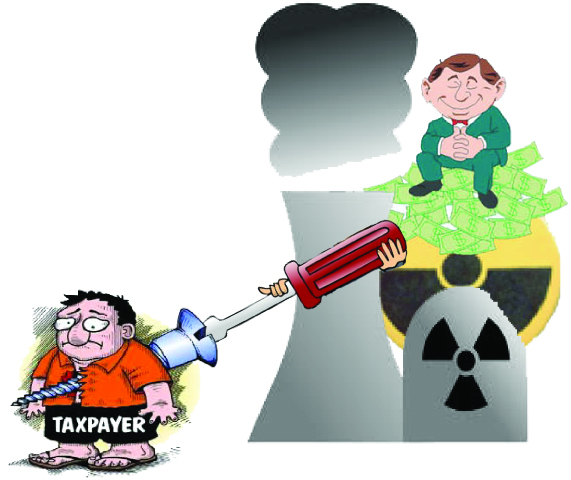
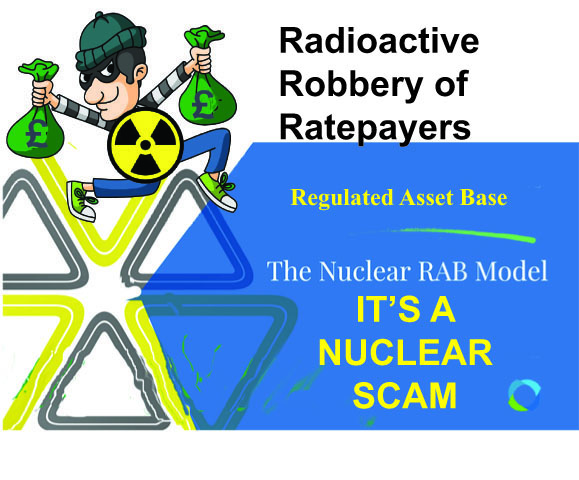
The RAB model, which has previously been used to fund Tideway and Heathrow Terminal 5, allows investors to recoup some of their money during the construction phase of the project through taxation. The taxpayer pays for the plant through monthly surcharge on their taxes before they reap the rewards. The government says that, while the taxpayer will have to pay the surcharge during construction, they will save £10 a month through this method once the plant is operational.
However, if a project suffers delays and cost increases, this means the risk falls on the shoulders of the taxpayer. As seen by continual delays and cost hikes on Hinkley Point C, nuclear plants are particularly susceptible.
In its own analysis of using the RAB model to fund Sizewell C, the government has said that over the course of the plant’s 13-17 years construction it will add an average surcharge of £1 per month to household bills. However, the University of Greenwich School of Business says that the government’s calculations are based on 2021 prices and do not account for inflation over the course of the next two decades as the plant is built.
Taking into account inflation, based on the Treasury’s target level of 2%, Greenwich Business School has determined that the cost could be up to £2.12 per month on average over the course of the construction time. However, this is a relatively conservative estimate, as inflation could be much greater than 2% over the course of the next 20 years.
The government’s calculation is based on the median expectations for the construction of Sizewell C, i.e. that it will take 15 years (midway between the projected 13-17 years) and cost £35bn (midway between the estimated £26.3bn and £43.8bn).
Greenwich Business School has also looked at the best and worse case scenarios, adding 2% inflation. If the construction were to only last 13 years and cost £26.3bn, the taxpayer would fork out an additional £148.20 over the course (an average of 95p per month). If it is to last 17 years and cost £43.8bn, the taxpayer will pay an additional £431.90 over the duration (an average of £2.12 per month).
This figure could be even higher if the project runs beyond 17 years, costs over £43.8bn and/or inflation rises by more than 2%, all of which are distinct possibilities.
The RAB model, which has previously been used to fund Tideway and Heathrow Terminal 5, allows investors to recoup some of their money during the construction phase of the project through taxation. The taxpayer pays for the plant through monthly surcharge on their taxes before they reap the rewards. The government says that, while the taxpayer will have to pay the surcharge during construction, they will save £10 a month through this method once the plant is operational.
This figure could be even higher if the project runs beyond 17 years, costs over £43.8bn and/or inflation rises by more than 2%, all of which are distinct possibilities.
Both the government’s and Greenwhich Business School’s calculations are based on illustrative figures. More accurate figures will be known once planning has been granted and investment partners found.
This presents another issue, as there are no clear investors champing at the bit. While the government is bullish about nuclear’s potential green benefits, many potential investors are uncertain of its environmental, social and governance (ESG) credentials. Aviva Investors has even called out the government for not providing enough detail for a proper assessment on nuclear’s ESG potential.
University of Greenwich emeritus professor of energy policy Stephen Thomas told NCE: “There are differences between Tideway and Sizewell C. One is scale: Tideway is said to be a huge project, but the cost is not much more than a 10th of what Sizewell C will be, so it will be a big strain on that market.
- You are here: Latest
Taxpayer contribution to Sizewell C nuclear plant could double
24 May, 2022 By Rob Hakimian
Construction of the Sizewell C nuclear plant in Suffolk could cost taxpayers more than double what the government has suggested, according to new research.
Construction of Sizewell C has not yet been confirmed, with the planning decision having recently been pushed back to July.
However, with the UK set to lose all of its functional advanced gas-cooling reactor (AGR) nuclear plants by 2028, the government is keen to push through plans for new plants as it has made nuclear energy a crux point of its net zero strategy and energy security strategy. It has already committed £100M to Sizewell C and, crucially, agreed to use the regulated asset base (RAB) funding model to pay for it.
The RAB model, which has previously been used to fund Tideway and Heathrow Terminal 5, allows investors to recoup some of their money during the construction phase of the project through taxation. The taxpayer pays for the plant through monthly surcharge on their taxes before they reap the rewards. The government says that, while the taxpayer will have to pay the surcharge during construction, they will save £10 a month through this method once the plant is operational.
However, if a project suffers delays and cost increases, this means the risk falls on the shoulders of the taxpayer. As seen by continual delays and cost hikes on Hinkley Point C, nuclear plants are particularly susceptible.
In its own analysis of using the RAB model to fund Sizewell C, the government has said that over the course of the plant’s 13-17 years construction it will add an average surcharge of £1 per month to household bills. However, the University of Greenwich School of Business says that the government’s calculations are based on 2021 prices and do not account for inflation over the course of the next two decades as the plant is built.
Taking into account inflation, based on the Treasury’s target level of 2%, Greenwich Business School has determined that the cost could be up to £2.12 per month on average over the course of the construction time. However, this is a relatively conservative estimate, as inflation could be much greater than 2% over the course of the next 20 years.
The government’s calculation is based on the median expectations for the construction of Sizewell C, i.e. that it will take 15 years (midway between the projected 13-17 years) and cost £35bn (midway between the estimated £26.3bn and £43.8bn).
Greenwich Business School has also looked at the best and worse case scenarios, adding 2% inflation. If the construction were to only last 13 years and cost £26.3bn, the taxpayer would fork out an additional £148.20 over the course (an average of 95p per month). If it is to last 17 years and cost £43.8bn, the taxpayer will pay an additional £431.90 over the duration (an average of £2.12 per month).
This figure could be even higher if the project runs beyond 17 years, costs over £43.8bn and/or inflation rises by more than 2%, all of which are distinct possibilities.
Both the government’s and Greenwhich Business School’s calculations are based on illustrative figures. More accurate figures will be known once planning has been granted and investment partners found.
This presents another issue, as there are no clear investors champing at the bit. While the government is bullish about nuclear’s potential green benefits, many potential investors are uncertain of its environmental, social and governance (ESG) credentials. Aviva Investors has even called out the government for not providing enough detail for a proper assessment on nuclear’s ESG potential.
University of Greenwich emeritus professor of energy policy Stephen Thomas told NCE: “There are differences between Tideway and Sizewell C. One is scale: Tideway is said to be a huge project, but the cost is not much more than a 10th of what Sizewell C will be, so it will be a big strain on that market.
“The second difference is that there is output to sell from Sizewell C. Thames Tideway gets its money by being there and providing a service; if it’s there and it’s not utterly failed then that’s it. Sizewell C has kilowatt hours to sell, and there are risks in that because you don’t know how reliable the plant is going to be, you don’t know what the running costs are going to be, you don’t know what the fuel costs are going to be. So there are risks involved in that.
“The RAB is a bit of an illusion, because the kilowatt hour costs that they will quote are based on whatever it costs to ensure investors make their agreed return, no matter how high the price. It will ignore the surcharge paid during the construction phase, which is a huge subsidy by consumers. It is a blank cheque signed by consumers. It’s a dreadful model.”
A Sizewell C spokesperson said: “The RAB model is a proven financing arrangement which has already been used to raise funds for more than £160bn of infrastructure. Applied to Sizewell C, it will bring the cost of finance down and deliver significant savings to consumers.”
A government spokesperson said: “We firmly stand by our assessment that a large-scale project funded under our Nuclear Act would add at most a few pounds a year to typical household energy bills during the early stages of construction, and on average about £1 a month during the full construction phase of the project.”
Ukraine war briefing: France flies nuclear-capable missile as Russia holds drills
Guardian, Warren Murray and agencies, Thu 23 May
- France has carried out its first test firing of an updated nuclear-capable missile, the ASMPA-R, designed to be launched by a Rafale fighter jet, according to the French defence minister, Sebastien Lecornu. It came a day after Russia said it began nuclear drills in its southern military district, which stretches from Russia into occupied Ukrainian territory. The announcement of Russian drills is partly directed at France after its president, Emmanuel Macron, said he would not rule out sending in troops on Ukraine’s side.
- Lecornu said the missile was fired without a warhead by a plane in an exercise “above national territory … at the end of a flight representing a nuclear air raid”. He congratulated “all the forces, [defence] ministry teams and industrial partners involved” in a “long-planned” operation. France plans to spend about 13% of its military budget over the coming years on its independent nuclear capability, including upgrading to next-generation air-launched missiles by 2035. ……………………………………..
- Russia said there were Ukrainian attacks on its Belgorod region across the border from Ukraine, and in the occupied eastern Ukrainian city of Lysychansk, killing up to three people.
- The Swedish government has announced additional military support to Ukraine totalling 75 billion crowns (US$7bn) over three years. Ukraine’s defence minister, Rustem Umerov, said Swedish-made weapons had “already proven themselves on the battlefield … Archers and CV-90s help Ukrainian defenders drive the enemy out of our land.” https://www.theguardian.com/world/article/2024/may/23/ukraine-war-briefing-france-flies-nuclear-capable-missile-as-russia-holds-drills
In 1939 the Soviet Union ‘planned to send a million troops to stop Hitler if Britain and France agreed pact’
Nick Holdsworth in Moscow, The Telegraph, Sat, 18 Oct 2008 https://www.sott.net/article/491642-Stalin-planned-to-send-a-million-troops-to-stop-Hitler-if-Britain-and-France-agreed-pact
Stalin was ‘prepared to move more than a million Soviet troops to the German border to deter Hitler’s aggression just before the Second World War’
Papers which were kept secret for almost 70 years show that the Soviet Union proposed sending a powerful military force in an effort to entice Britain and France into an anti-Nazi alliance.
Such an agreement could have changed the course of 20th century history, preventing Hitler’s pact with Stalin which gave him free rein to go to war with Germany’s other neighbours.
The offer of a military force to help contain Hitler was made by a senior Soviet military delegation at a Kremlin meeting with senior British and French officers, two weeks before war broke out in 1939.
The new documents, copies of which have been seen by The Sunday Telegraph, show the vast numbers of infantry, artillery and airborne forces which Stalin’s generals said could be dispatched, if Polish objections to the Red Army crossing its territory could first be overcome.
But the British and French side – briefed by their governments to talk, but not authorised to commit to binding deals – did not respond to the Soviet offer, made on August 15, 1939. Instead, Stalin turned to Germany, signing the notorious non-aggression treaty with Hitler barely a week later.
The Molotov-Ribbentrop Pact, named after the foreign secretaries of the two countries, came on August 23 – just a week before Nazi Germany attacked Poland, thereby sparking the outbreak of the war. But it would never have happened if Stalin’s offer of a western alliance had been accepted, according to retired Russian foreign intelligence service Major General Lev Sotskov, who sorted the 700 pages of declassified documents.
“This was the final chance to slay the wolf, even after [British Conservative prime minister Neville] Chamberlain and the French had given up Czechoslovakia to German aggression the previous year in the Munich Agreement,” said Gen Sotskov, 75.
The Soviet offer – made by war minister Marshall Klementi Voroshilov and Red Army chief of general staff Boris Shaposhnikov – would have put up to 120 infantry divisions (each with some 19,000 troops), 16 cavalry divisions, 5,000 heavy artillery pieces, 9,500 tanks and up to 5,500 fighter aircraft and bombers on Germany’s borders in the event of war in the west, declassified minutes of the meeting show.
But Admiral Sir Reginald Drax, who lead the British delegation, told his Soviet counterparts that he authorised only to talk, not to make deals.
“Had the British, French and their European ally Poland, taken this offer seriously then together we could have put some 300 or more divisions into the field on two fronts against Germany – double the number Hitler had at the time,” said Gen Sotskov, who joined the Soviet intelligence service in 1956. “This was a chance to save the world or at least stop the wolf in its tracks.”
When asked what forces Britain itself could deploy in the west against possible Nazi aggression, Admiral Drax said there were just 16 combat ready divisions, leaving the Soviets bewildered by Britain’s lack of preparation for the looming conflict.
The Soviet attempt to secure an anti-Nazi alliance involving the British and the French is well known. But the extent to which Moscow was prepared to go has never before been revealed.
Simon Sebag Montefiore, best selling author of Young Stalin and Stalin: The Court of The Red Tsar, said it was apparent there were details in the declassified documents that were not known to western historians.
“The detail of Stalin’s offer underlines what is known; that the British and French may have lost a colossal opportunity in 1939 to prevent the German aggression which unleashed the Second World War. It shows that Stalin may have been more serious than we realised in offering this alliance.”
Professor Donald Cameron Watt, author of How War Came – widely seen as the definitive account of the last 12 months before war began – said the details were new, but said he was sceptical about the claim that they were spelled out during the meetings.
“There was no mention of this in any of the three contemporaneous diaries, two British and one French – including that of Drax,” he said. “I don’t myself believe the Russians were serious.”
The declassified archives – which cover the period from early 1938 until the outbreak of war in September 1939 – reveal that the Kremlin had known of the unprecedented pressure Britain and France put on Czechoslovakia to appease Hitler by surrendering the ethnic German Sudetenland region in 1938.
“At every stage of the appeasement process, from the earliest top secret meetings between the British and French, we understood exactly and in detail what was going on,” Gen Sotskov said.
“It was clear that appeasement would not stop with Czechoslovakia’s surrender of the Sudetenland and that neither the British nor the French would lift a finger when Hitler dismembered the rest of the country.”
Stalin’s sources, Gen Sotskov says, were Soviet foreign intelligence agents in Europe, but not London. “The documents do not reveal precisely who the agents were, but they were probably in Paris or Rome.”
Shortly before the notorious Munich Agreement of 1938 – in which Neville Chamberlain, the British prime minister, effectively gave Hitler the go-ahead to annexe the Sudetenland – Czechoslovakia’s President Eduard Benes was told in no uncertain terms not to invoke his country’s military treaty with the Soviet Union in the face of further German aggression.
“Chamberlain knew that Czechoslovakia had been given up for lost the day he returned from Munich in September 1938 waving a piece of paper with Hitler’s signature on it,” Gen Sotksov said.
The top secret discussions between the Anglo-French military delegation and the Soviets in August 1939 – five months after the Nazis marched into Czechoslovakia – suggest both desperation and impotence of the western powers in the face of Nazi aggression.
Poland, whose territory the vast Russian army would have had to cross to confront Germany, was firmly against such an alliance. Britain was doubtful about the efficacy of any Soviet forces because only the previous year, Stalin had purged thousands of top Red Army commanders.
The documents will be used by Russian historians to help explain and justify Stalin’s controversial pact with Hitler, which remains infamous as an example of diplomatic expediency.
“It was clear that the Soviet Union stood alone and had to turn to Germany and sign a non-aggression pact to gain some time to prepare ourselves for the conflict that was clearly coming,” said Gen Sotskov.
A desperate attempt by the French on August 21 to revive the talks was rebuffed, as secret Soviet-Nazi talks were already well advanced.
It was only two years later, following Hitler’s Blitzkreig attack on Russia in June 1941, that the alliance with the West which Stalin had sought finally came about – by which time France, Poland and much of the rest of Europe were already under German occupation.
1 This Month

22 June – Virtual Event –Climate Change: New Data, New Debate

Monday, June 22, 2026 2:30 p.m. – 3:15 p.m. CT
YouTube. Register here
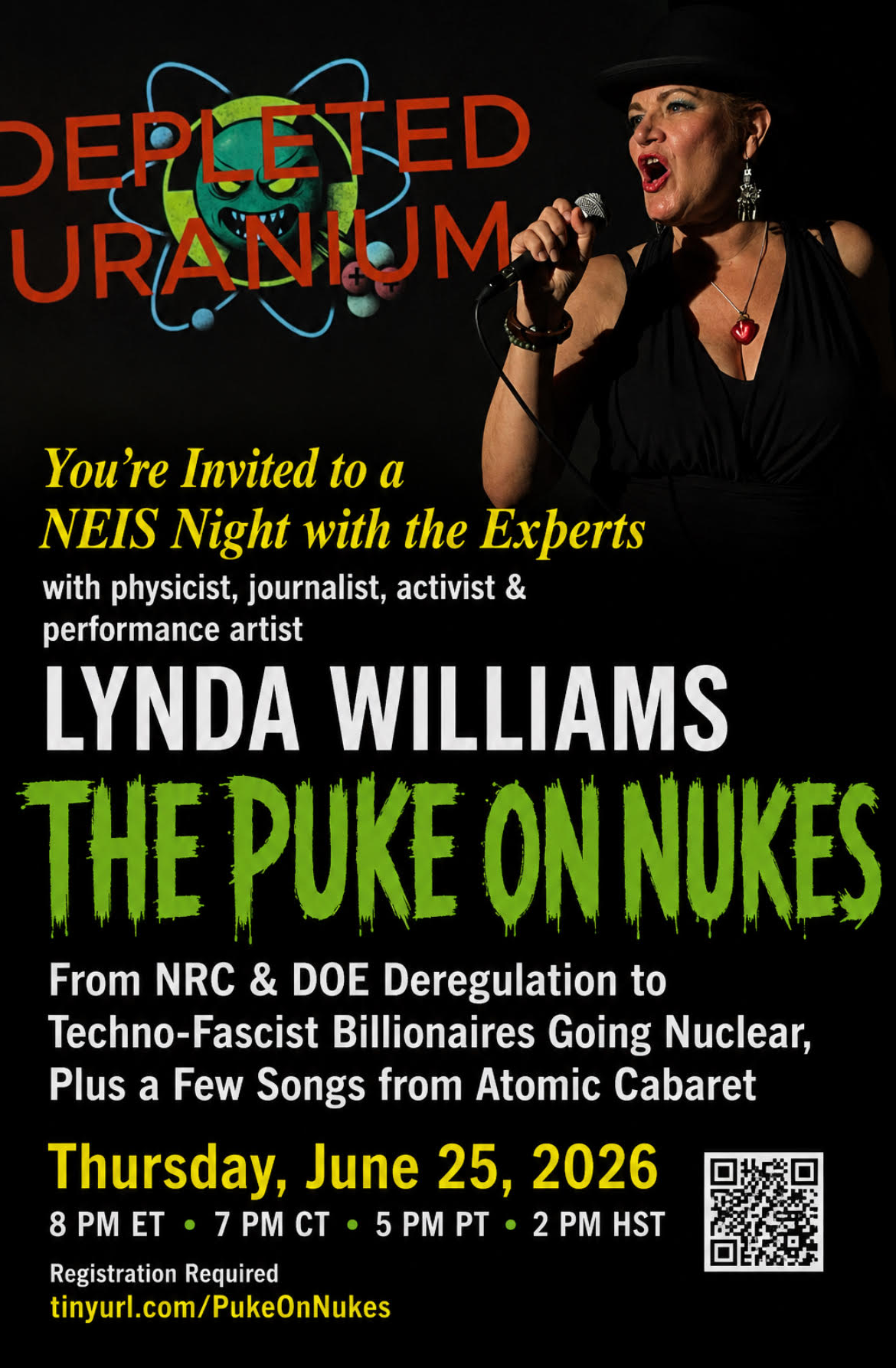
25 June- THE PUKE ON NUKES
Thursday, June 25, 2026
7pm Central Time (8pm ET, 6pm MT, 5pm PT) UTC – 5
From NRC & DOE Deregulation to Techno-Fascist Billionaires Going Nuclear, Plus a Few Songs from Atomic Cabaret REGISTER
26 June – Radiation Trainwreck at the NRC / Join the Protect Better Campaign – https://us02web.zoom.us/meeting/register/4ZlZ5_qLSHGiLSCg8FF6Bg#/registration
1st July – Webinar Waste of Space: The Environmental Harm of Military and Civil Space Activity st July, 7 pm

Report Launch Online: We are seeing an increasing exploitation of space for military and commercial purposes. This must change.

Protect Sazan Island from the Trump family! https://secure.avaaz.org/campaign/en/protect_sazan_island_from_the_trump_family_loc/?bqFCVab&v=174511&cl=22707147157&_checksum=5e9dde668860e8231c33699735e16a1fbf22ab2cb01da50c999fe8732b9775ef&utm_source=email&utm_medium=blast_email&utm_campaign=174511


Cuba Is Not a Failed State – It Is a Besieged State
PETITION: “Global Appeal to Endorse Palestinian Right of Return of Refugees”
To see nuclear-related stories in greater depth and intensity – go to https://nuclearinformation.wordpress.com
-
Archives
- June 2026 (221)
- May 2026 (306)
- April 2026 (356)
- March 2026 (251)
- February 2026 (268)
- January 2026 (308)
- December 2025 (358)
- November 2025 (359)
- October 2025 (376)
- September 2025 (257)
- August 2025 (319)
- July 2025 (230)
-
Categories
- 1
- 1 NUCLEAR ISSUES
- business and costs
- climate change
- culture and arts
- ENERGY
- environment
- health
- history
- indigenous issues
- Legal
- marketing of nuclear
- media
- opposition to nuclear
- PERSONAL STORIES
- politics
- politics international
- Religion and ethics
- safety
- secrets,lies and civil liberties
- spinbuster
- technology
- Uranium
- wastes
- weapons and war
- Women
- 2 WORLD
- ACTION
- AFRICA
- Atrocities
- AUSTRALIA
- Christina's notes
- Christina's themes
- culture and arts
- Events
- Fuk 2022
- Fuk 2023
- Fukushima 2017
- Fukushima 2018
- fukushima 2019
- Fukushima 2020
- Fukushima 2021
- general
- global warming
- Humour (God we need it)
- Nuclear
- RARE EARTHS
- Reference
- resources – print
- Resources -audiovicual
- Weekly Newsletter
- World
- World Nuclear
- YouTube
-
RSS
Entries RSS
Comments RSS
 nuclear-news