How much will the AWE Aldermaston build cost West Berkshire in consultants?
By Niki Hinman Local Democracy Reporter, 19 October 2026, https://www.newburytoday.co.uk/news/questions-raised-over-council-ability-to-approve-nuclear-wea-9487315/
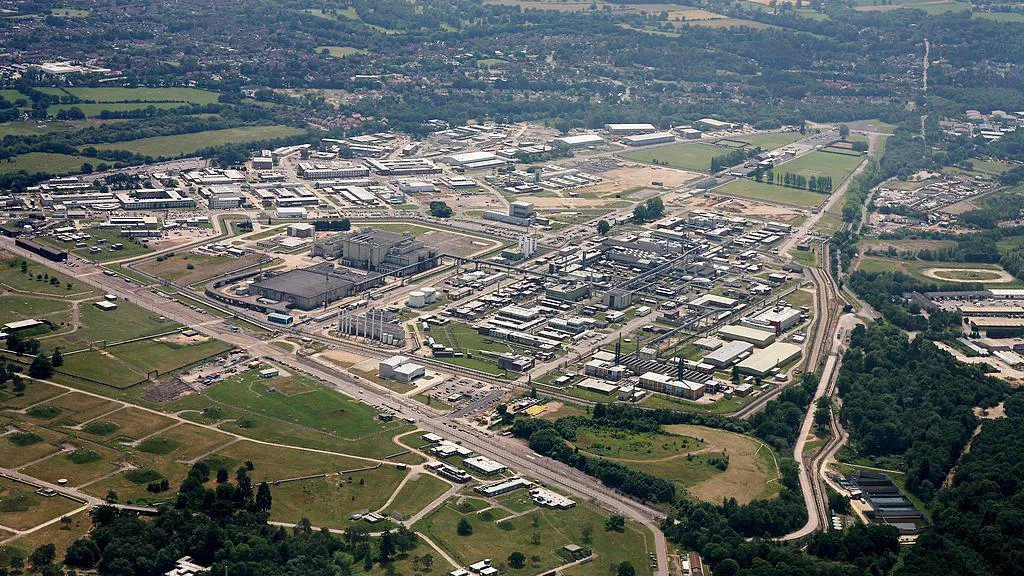
Questions over West Berkshire Council’s ability to scrutinise forthcoming planning applications into a multi-billion pound upgrade to AWE Aldermaston have been raised.
The plans are likely to cost the authority tens of thousands of pounds in specialist consultants to evaluate the proposal to upgrade the nuclear weapons facility into a state-of-the-art science park.
The council will have to handle the massive application in the coming weeks, and has said it will need specialist help to deal with it.
The Government’s £15bn defence investment is dedicated specifically to the UK’s nuclear warhead programme as a whole – which encompasses both the Atomic Weapons Establishment (AWE) Aldermaston and its sister site at Burghfield.
Security-cleared consultants working on defence or submarine programmes command a notable market premium.
A Google search puts them upwards of £1,000 per day.
The nuclear weapons factory is soon to submit plans described as ‘being on the scale of London 2012 in complexity’ to the authority, which must then figure out whether they pass planning policies.
The person leading the project from the AWE side is Andrew McNaughton CBE – a prominent British civil engineer.
He led on delivering key components for the London 2012 Olympics and is on record as saying the Future Materials Campus is on the same scale.
The matter came up before West Berkshire Council last night (Thursday).
“Government-funded plans for the multi-billion pound Future Materials Campus (FMC) at AWE’s Aldermaston site will see planning applications coming forward soon,” said Dominic Boeck (Con, Aldermaston).
“How will the council support and engage constructively with residents, local councils and businesses on this enormous development?
“AWE have compared the scale and complexity of the proposed FMC development with London 2012
“What specific assurance can the lead member give that council has sufficient planning, emergency planning and other relevant technical resources and expertise to undertake a thorough and independent assessment of the application, including its implications for residential safety, emergency preparedness and amenity within and around the Aldermaston DEPZ?”
Deputy council leader Denise Gaines (Lib Dem, Hungerford and Kintbury) said: “We take the safety of residents and people at AWE very seriously.
“The anticipated planning application is going through the process.
“At this stage of the proposal it is a pre application.
“This is a confidential part of the process between council officers and the applicant.
“This sets out a clear timetable for a major and complex application.
“As with any planning application it will be assessed by a team of qualified professionals to ensure that all relvant technical and environmental matters are considered and evaluated either in house or by specialist external consultants.”
There is a statement of community involvement.
And the consultation will involve talks with the council’s emergency planning service and the Office for Nuclear Regulation.
“My concern and my community’s concern is the scale of this project,” added Mr Boeck.
“Of course we understand it is a matter of national security, but there are concerns about how this multi-billion pound project will impact us here.
“I appreciate much will be done behind the wire, but the trucks have got to roll.”
When local authorities deal with ‘enormous’ or hyper-scale planning applications like the London 2012 Olympic Games or major urban regenerations, the standard local planning mechanisms are usually adapted, bypassed, or heavily augmented.
Because these applications are far too large, complex, and politically sensitive for a standard local authority planning department to process normally, they are managed through a combination of special purpose vehicles, and strategic planning frameworks
Stop Japan’s Failed Nuclear Plant Waste Coming to Cumbria
Please sign the petition here: https://www.change.org/p/stop-japan-s…
Cumberland Council plans to import sodium coolant, a type of nuclear waste, thousands of miles from Japan to Cumbria, for processing at the Port of Workington, just 885m from Northside Primary School and nearby residential areas including many towns and villages.
Sodium coolant is extremely hazardous, and carries a high risk of violent explosion or fire if exposed to air or water.
It may also contain radioactive elements.
Further concerns include:
- Less than a mile from Northside Primary School, the chemical plant is being designed to convert the hazardous coolant into caustic soda.
- Caustic soda is also a hazardous material and carries enormous risks to the environment over decades if spilled.
- £4.5m of the Workington Town Deal government funding is being used to develop this site, despite the development planning to employ just 20 people over a period of 7 years.
- The Workington Town Deal was promoted as being for the public benefit, not for creating profit for a handful of private businesses.
- The £25m that the site construction phase is predicted to generate is meaningless compared to the certain risk our children and local environments would face as a result of the site’s operation and the £Billions that would likely be required for clean up following operation of this proposed chemical plant for Japan’s failed fast breeder nuclear reactor wastes.
Further Info
Japan’s prototype fast-breeder reactor (FBR), ‘Monju’, was a disaster from the start. It was shut down due to an accident less than 9 months after achieving criticality, and remained closed for 15 years. Reopening in 2008, a second accident closed it for good. Overall, Monju generated electricity for exactly one hour after achieving criticality in 1994 and will cost £Billions to decommission.
Fast breeder reactors use liquid metal as a coolant – usually liquid sodium, which violently explodes on contact with air water. Dounreay, which ran the UK’s own Fast Breeder Reactors, processed the coolant onsite at both reactors. Sodium coolant at Dounreay did contain radioactive caesium.
Cumberland Council are partners in the plan to bring the Monju’s sodium coolant to the Port of Workington.
Ironically, ‘Monju’ was named to represent transcendent wisdom in Buddhist tradition. It has achieved neither wisdom nor its stated aim of electricity generation apart from one hour’s worth.
It has produced tonnes of chemical and radioactive waste some of which the operators the Japan Atomic Energy Agency want to ship thousands of miles to Cumbria instead of dealing with in Japan..
The Language of Extermination: NAZA, Artificial Intelligence and Gaza
18 October 2026 Dr Binoy Kampmark AIM Extra, https://theaimn.net/the-language-of-extermination-naza-artificial-intelligence-and-gaza/
The 80-minute documentary NAZA, directed by Yuval Abraham and Rachel Szor, is chastening. It examines the conduct of the Israeli Defense Forces (IDF) during its ferocious, unremitting war in Gaza, drawing upon the interviews of 24 anonymised military and intelligence personnel. The interviews were filmed on Tel Aviv rooftops at night, with profiles and voices appropriately altered. The name of the documentary draws on a Hebrew acronym for nezek agavi or collateral damage, an obscene term used when counting the estimated number of civilians who will perish in a military strike. Last month, the film won the Special Jury Prize at the 83rd Venice International Film Festival, receiving a standing ovation lasting 25 minutes.
The interviewees focus on the terrifyingly relevant role played by artificial intelligence (AI) targeting systems used in guiding the bombing campaign launched in response to the Hamas-led attacks of October 7, 2023. In Abraham’s words, “the Israeli intelligence officers we spoke with talked to us about how this mass killing is systemic: not by accident, but by design, actions of murder and policies that are based on the total dehumanization of Palestinians.” One of the interviewed subjects speaks of the goal being “quantity, not quality.” Another notes the conscious decision to target Hamas members, some even in the lower echelons, when they would be at home even if it meant killing family members and neighbours. In one recalled instance, the phone of a 12-year-old girl was hacked to learn when her father would arrive home. The subsequent strike killed her. The cold logic is revealed in the rhetorical question posed by one of the interviewees: “When people talk about ‘flattening Gaza,’ what do you mean if not executing people?’
Despite being placed in a “too hot to handle” category by prominent indie studios, the self-distributed documentary managed to pass the US$500,000 mark in the United States after two weeks of release. Eight days after premiering at New York’s IFC Center, it went on to earn US$125,000. A further 85 theatres across 30 cities across North America then showed the film. Michelle Goldberg, writing in The New York Times, was impressed by the drawing power of the production when attending Walter Reade Theater for a screening. The venue, seating 268, was at capacity. “This is, in my experience, very unusual for documentaries of any sort, even those that, like ‘NAZA,’ win the Special Jury Prize at the Venice Film Festival.”
Militaries specialise in euphemised killing. A dedicated process of terminology and assessment sanitises and exsanguinates: death and murder become justifiable, necessary measures against an enemy bloated with wickedness and venality. In that process, mock tributes are paid to the canon of international law, notably international humanitarian law and doctrines of targeting. The more honest generals do us a favour by boasting about high casualty figures and mass mortality: they are not hiding matters and lurking behind worn ceremonies and the emperor’s non-existent clothes. Take the remarks of a former head of Israeli military intelligence made in a leaked audio: “For every one person [killed] on Oct. 7, 50 Palestinians must die.” Those militaries with a heavily staffed legal department supposedly providing guidance in striking a target, largely to reassure the squeamish that they are not implicated in acts of murder, are always suspect. In that regard, the IDF provides a model example, always claiming to do things differently from other powers in the region, yet resorting to the selective language of exculpation.
The reception of the film in Israel has been markedly hysterical. This was to be expected: the film unmasks and discomfits. It demolishes shibboleths. The IDF chief of staff Eyal Zamir vowed to use “every tool at our disposal” against the production. The Israeli Culture Minister Miki Zohar thought the film treasonous. Abraham and Szor were “willing to harm their homeland in order just to get applause from antisemites around the world.” The irate minister was keen to “act immediately to revoke the Israeli citizenship of these despicable creators for treason against the state,” he thundered in a social media post. Israeli Prime Minister Benjamin Netanyahu also called upon the passing of legislation stripping the duo of their citizenship, a curious point given the existing provisions of Israel’s Citizenship Law. (Making German Jews stateless was a specialty of the Third Reich: that the Jewish state would consider this to its citizens is a distinct, bitter irony, yet sadly permissible in light of the Israeli Supreme Court ruling in 2022 validating revocation for acts done in “breach of loyalty to the State of Israel”.)
Activists and members of the far-right party Jewish Power (Otzma Yehudit) led by National Security Minister Itamar Ben-Gvir protested outside the parents of Szor’s house, with a speaker calling for both directors to be executed and the homes of their families to be demolished (collective punishment remains a great inspiration for tribal sentiment).
The IDF has marshalled its own response in a document accusing the filmmakers of presenting “a distorted, misleading and disingenuous picture of the IDF’s target planning and striking process.” The narrative of the documentary drew upon “substantial factual errors stemming from manipulative misrepresentations of reality.” Worth noting here is the lower register of critique that does not entirely repudiate the targeting practices of the IDF, dressed up in the apologetics of collateral damage. Concessions and confessions are always evident from those in and of power who resort to such dismissive language as “misrepresentative” and “disingenuous.”
Be that as it may, the agitated response is illuminating. The Lavender database, to take one objection, was apparently not one of targets, merely “a database that assists intelligence analysts.” This represents a distinction without a difference. The faith placed by militaries in the divinities of technology are hard to shake; there is nothing here to say that such analysts do not treat these data sets as unimpeachable. AI and religious deities serve to do the imagination for others; they discourage independent thinking and verification. Why bother when you have someone, or something else, doing it for you?
The response remains weak in claiming that the IDF believes itself “bound by and committed to international humanitarian law, its operational procedures are designed to implement those legal obligations, and it operates dedicated units and mechanisms to mitigate civilian harm.” The staggering death toll in Gaza, always sneered and jeered at by the Israeli authorities and their defenders, would suggest otherwise. NAZA serves to, as the Israeli American historian Omer Bartov points out, address a “state of denial” by “actually speaking about the issue of what happened in Gaza rather than refusing to speak about it.”
Congress has the power to fix the Trump-Saudi nuclear deal

By Alan J. Kuperman, Bulletin of Atomic Scientists, October 13, 2026
Press reports claim that Congress cannot stop the Trump administration’s nuclear agreement with Saudi Arabia, despite significant proliferation concerns, because it will enter force automatically in a mere 90 days after its August 24 submittal to Capitol Hill. Democrats and a handful of dissenting Republicans could try to pass a disapproval resolution that was introduced recently in both houses. But President Donald Trump could veto it, and Republicans in Congress would not override that veto, which means the deal is essentially a fait accompli.
In reality, however, the prospects of Congressional action are not so bleak. Because of the US Atomic Energy Act’s fine print and the deal’s legal shortcomings, Congress has at least 9 months and considerable leverage to make things right.
Proliferation concerns. Three aspects of the Saudi deal are most objectionable. First, the agreement explicitly refers to uranium enrichment “technologies that could be deployed in the Kingdom of Saudi Arabia.” The danger is that any enrichment technology provided for peaceful purposes could also make weapons-grade uranium or be duplicated to do so secretly elsewhere in the country. Moreover, allowing Saudi enrichment could spur similar demands from other countries in the region and beyond, spreading the risks.
Second, the Saudis have refused to sign the Additional Protocol of the International Atomic Energy Agency (IAEA), which allows “environmental sampling” to detect illicit nuclear activity at sites “other than those” disclosed by the country. Riyadh instead has signed a bilateral safeguards agreement with Washington, which does not permit such inspections of undeclared facilities. This feeds suspicion that the Saudis are contemplating secret bomb plants.
Third, the Saudis have said repeatedly that if Iran were to get nuclear weapons, they would pursue them too, which would violate their promises under the Nuclear Non-Proliferation Treaty. This means their commitment in the US deal to exclusively “peaceful uses” is, at best, conditional.
An illegal deal? Fortunately for Congressional Democrats, the Atomic Energy Act does not allow nuclear agreements to enter force automatically unless they are fully compliant with the law’s nonproliferation requirements. If such an agreement violates even one of those requirements, according to Section 123d of the act, it “shall not become effective unless the Congress adopts, and there is enacted, a joint resolution stating that the Congress does favor such agreement.” The Saudi deal currently appears not to comply on four grounds……………………………………………………………………………………………………………………………….
https://thebulletin.org/2026/10/congress-has-the-power-to-fix-the-trump-saudi-nuclear-deal/
European Bank for Reconstruction and Development (EBRD) welcomes G7 commitment to finance urgent repairs to Chornobyl’s protective shield
EBRD 15th Oct 2026,
https://www.ebrd.com/home/news-and-events/news/2026/ebrd-welcomes-g7-commitment-to-finance-urgent-repairs-to-chornob.html
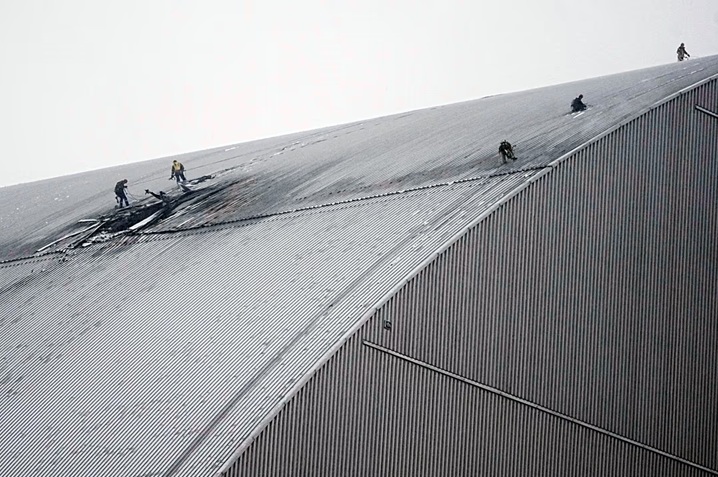
The European Bank for Reconstruction and Development (EBRD) welcomes the announcement by the Group of Seven (G7)that as leading industrialised nations, they will provide €260 million to fund urgent repairs to the New Safe Confinement at the Chornobyl Nuclear Power Plant in Ukraine, following the Russian drone strike that severely damaged the structure in February 2025.
The G7 (Canada, France, Germany, Italy, Japan, the United Kingdom and the United States) expressed grave concern over the nuclear safety risks caused by the strike and pledged to mobilise funding to repair the New Safe Confinement. The structure contains the remains of Reactor Four and enables the safe dismantling of the original containment sarcophagus built after the 1986 accident.
The G7 also called on other international partners to join the effort and contribute to covering the remaining financing needs.
The announcement was made at the International Monetary Fund and World Bank Autumn Meetings in Bangkok, following a meeting of the G7 finance ministers.
EBRD President Odile Renaud-Basso said: “The EBRD is grateful to the G7 nations for their continued leadership and commitment to nuclear safety at Chornobyl. We join the G7 in calling on the wider international community to contribute to these efforts at a donor conference we are convening in Paris on 9 November 2026, co-chaired by France, Ukraine and the EBRD.”
Chornobyl’s New Safe Confinement was severely damaged by a Russian drone strike on 14 February 2025. The attack breached the structure’s inner and outer cladding, damaged critical systems and severely compromised its two primary functions: containing radioactive material and enabling the safe dismantling of the unstable original sarcophagus over Reactor Four.
Preliminary assessments indicate that at least €500 million will be needed to repair the damage and restore the structure to full functionality. The work needs to be completed by 2030 to limit the risk of corrosion of the steel arch and safeguard the structure’s 100-year design life.
The EBRD has led global efforts to stabilise and manage risks at Chornobyl since 1995, mobilising over €2.5 billion in international contributions – much of it from the G7 nations – and providing more than €700 million of its own resources to fund nuclear safety and decommissioning projects linked to the site.
The Bank is now leading international efforts to restore the full functionality of the New Safe Confinement and to mobilise the remaining funding needed for urgent repairs.
Why Putin Is Threatening Nuclear War Over Kaliningrad
If an increasingly vulnerable Kaliningrad holds strategic value for Russia and can only be defended by nuclear weapons, then perhaps Western leaders shouldn’t threaten it—and perhaps Western analysts should take more seriously Moscow’s repeated warnings that such threats could meet a nuclear response.
Russia experts shed light on the Kremlin’s calculations.
Andrew Day, Oct 3, 2026, https://www.theamericanconservative.com/why-putin-is-threatening-nuclear-war-over-kaliningrad/
If the world blows up in a conflict over Kaliningrad—the diminutive Russian exclave sandwiched between Poland, Lithuania, and the Baltic Sea—at least there would be a silver lining for survivors to appreciate: It would be darkly humorous and ironic.
Kaliningrad—or Koenigsberg, as the formerly German city was called before its capture in 1945 by the Soviet Union—was the birthplace of the philosopher Immanuel Kant, whose most enduring contribution to political theory was a long essay on international relations, Toward Perpetual Peace. In it, Kant outlines some big-brained ideas that governments should implement to not only end active hostilities but create the political conditions for, well, perpetual peace.
Old Kant published that hopeful essay 231 years ago and would certainly be disturbed and disappointed by this week’s headlines. The most riveting came from the New York Post: “Moscow threatens nuclear response over tiny fortress wedged between US allies as clash fears grow.” (The Post really has a knack for this kind of thing, doesn’t it?)
The one from the Associated Press more aptly, if less dramatically, described the latest development. “Russia warns NATO of a possible nuclear response if Kaliningrad is cut off,” it blared.
So, what’s got the Russians so worked up? Top Russia experts told The American Conservative that Moscow assigns profound strategic significance to the exclave and perceives a Western threat against it.
“Kaliningrad gives Russia another warm water port on the Baltic Sea,” said Thomas Graham, a fellow at the Council on Foreign Relations and former White House expert under President George W. Bush. “It also holds major military assets to defend Russia’s interest in the region, including access routes to St. Petersburg.”
Anatol Lieven of the Quincy Institute noted an even more straightforward Russian interest than that. “Russia cares about this because it is internationally-recognized Russian national territory,” Lieven said. “Any attack on it or blockade is therefore legally an act of war against the Russian Federation, to which the Russian government would have to respond or face deep humiliation.”
Those are important points with which few experts would quibble. But what really distinguishes Graham and Lieven is their ability to discern—from Russia’s point of view—a Western threat against Kaliningrad, and to take it seriously. Judging by the comments both men provided, Russia’s President Vladimir Putin didn’t issue the nuclear threats lightly.
“In some NATO countries there has been talk of blockading Kaliningrad, that is, isolating the region from the rest of Russia by land and sea,” Graham said. “Putin would see a blockade as an act of war against Russia. So he is making sure that Europe understands that he will defend Russian land with all necessary means, which could include nuclear weapons.”
Moscow had already been inclined, even before the latest tensions exploded between Russia and the West, to view Kaliningrad as exposed to NATO’s predations. “NATO expansion to Poland, Lithuania, Sweden, and Finland means that Kaliningrad is now surrounded by NATO countries both by land and sea,” Lieven noted.
Sadly, not all Western experts perform such acts of perspective taking. Consider a recent article in The Hill, which, in the view of this editor-cum-columnist at least, actually brought the week’s most disturbing headline: “Kaliningrad is just Putin’s red herring.”
The coauthors—Mark Toth and Jonathan Sweet—write that the Kremlin is engaged in “nuclear bluffing” designed to intimidate the West and distract from its own military failures in Ukraine. Early in the piece, the only context they provide for Moscow’s warnings is a new British television miniseries called The Wargame, in which the UK launches retaliatory strikes on Kaliningrad after a Russian attack.
A casual reader of their article could be left with the impression that this TV show was the main thing, perhaps the only thing, motivating Putin’s threatening rhetoric. But a careful reader would learn otherwise, for the authors inadvertently illuminate the kinds of Western behavior that prompted Putin’s warnings.
“Kaliningrad is a hollowed-out shell of what it was before Russia’s invasion of Ukraine,” they write. “As Polish Foreign Minister Radosław Sikorski pointed out earlier this month, ‘There are hardly any [Russian] troops [in the Kaliningrad exclave].’”
But that’s not all that Sikorski said. Toth and Sweet link to an article in Defense News, the first sentence of which is this:
NATO allies could hold drills in proximity of Russia’s Kaliningrad exclave in an attempt to push Moscow to weaken its military posture in Ukraine and withdraw some of its troops there, said Radosław Sikorski, Poland’s deputy prime minister and foreign minister
Clearly, Sikorski went far beyond merely commenting on Russia’s force posture in the region. The article emphasizes that he didn’t recommend “offensive” actions against Kaliningrad, but you could hardly blame Putin for failing to appreciate the distinction. Indeed, in the relevant quotes, Sikorski recommends that NATO “aggressively” exercise around Kaliningrad and start treating the exclave as a front in the confrontation between Russia and the West.
Toth and Sweet’s article continues: “Although Kaliningrad is still the headquarters of the Russian Baltic Fleet, the Baltic Sea itself has effectively become a NATO-controlled lake, after the accession of Sweden and Finland as the newest members of NATO.” Kaliningrad, they write, “is highly vulnerable,” and these days it merely hosts nuclear missiles, its conventional forces having been deployed to Ukraine.
Thus, “Moscow’s nuclear Armageddon bluffing is simply the latest attempt by Putin and his Kremlin cronies to paper over this problem.”
Here the premises lead to the conclusion only in the sense that they crash violently into it. If an increasingly vulnerable Kaliningrad holds strategic value for Russia and can only be defended by nuclear weapons, then perhaps Western leaders shouldn’t threaten it—and perhaps Western analysts should take more seriously Moscow’s repeated warnings that such threats could meet a nuclear response.
And those analysts should understand that the Russian political establishment in general—not just Putin—perceives a Western threat against Kaliningrad that, if acted upon, could precipitate a devastating Russia–NATO conflict. Referring to Sikorski’s apparent suggestion that NATO might isolate the exclave, forcing its surrender, Lieven said, “If this did happen, every Russian with whom I have spoken has said that Russia would have credibly to threaten the use of nuclear weapons, followed by their actual use if NATO failed to back down.”
Tensions between Russia and the West are worse than they’ve been since the Cold War, and mutual understanding perhaps worse than even then. In our age, Kant’s dreams of perpetual peace may seem naive if not delusional, but surely our leaders have enough wisdom not to let inexcusable miscalculations over his homeland on the Baltic lead to nuclear war. Right?
Worried About Russian Meddling In UK Politics? Wait Till You See What Israel Is Up To

Burnham’s exclusive focus on Russian influence almost laughably beside the point. This furious finger-pointing at the Kremlin is designed with one purpose in mind only: to distract the British public from where the real external meddling in our politics is coming from.
October 16, 2026, Jonathan Cook Substack
Andy Burnham’s government is rolling out a new “Centre for Information Defence”. But the outside actors most aggressively undermining what little remains of British democracy are nowhere in its sights
Russia “interfered” in the 2016 Brexit vote by running some “anti-EU” articles on its RT channel and promoting a few internet trolls. Even MI5 has to admit that this activity had no tangible impact on the referendum campaign.
No matter. British prime minister Andy Burnham has once again revived the incendiary claim that Russian disinformation is an especial threat to British democracy. At the United Nations a few weeks ago he announced plans for a National Centre for Information Defence “to detect, attribute and disrupt these kinds of hostile state information attacks”.
For the new British prime minister, as for his predecessors, this is all about Moscow and the UK’s favourite bogeyman, Vladimir Putin. At the UN, Burnham promised British expertise to other European nations to protect them from Kremlin disinformation.
Meanwhile, evidence continues to mount that another foreign actor is meddling even more aggressively in British politics – and neither Burnham nor MI5 have a word to say about it.
Any evidence of Russia disinformation-peddling in the UK pales in comparison to Israeli influence operations – and that’s just the ones we know about. The head of MI5, Ken McCallum, noted that Russian disinformation was neither sophisticated nor successful. The same cannot be said for Israel’s handiwork.
Israel has been using “hasbara” trolls on social media platforms to manipulate public debates in Britain for years – the thrust of the accusation against Russia. But in Israel’s case, it goes much further than that.
This year the Israeli state massively increased its public diplomacy budget to $730 million to expand its influence operations. That includes flying even more politicians, clergy, academics and influencers to bombard them with pro-Israel propaganda they are then likely to spread back home. According to foreign minister Gideon Saar, Israeli advocacy should be treated “like investing in jets, bombs, and missile interceptors”.
”.
There was already plenty of evidence through the late 2010s, as I reported at the time, that Israel was helping to organise, stoke and amplify a campaign to smear its arch-critic, Jeremy Corbyn, as an antisemite, in order to prevent him from reaching No 10 Downing Street.
Not least, Israel did so by advancing a new, bogus definition of Jew hatred through the International Holocaust Remembrance Alliance (IHRA). Usefully, for Israel, that definition largely ignores hatred of Jews to focus instead on criticism of Israel.
That was the most blatant meddling possible in what remains of Britain’s democratic processes. UK politicians and media not only failed to oppose it, but actively sought to amplify the smears.
Civil war
This week the fanatically pro-Israel US lobby group the Anti-Defamation League revealed that it had been working with leading AI firms, which are increasingly being integrated into social media platforms, to suppress what it calls “antisemitism” – or what the rest of us would refer to as criticism of Israel.
CEO Jonathan Greenblatt observed: “We’ve had excellent collaboration with Silicon Valley.” The platforms, he said, would tackle content the ADL doesn’t like “right in the source code” – that is, before users can see it.
That is likely not only to remove criticism of Israeli atrocities and criticism of western governments, such as the UK’s, for colluding in Israel’s genocide but turn social media into a playground for bots and Israel apologists, giving them free reign to spread their propaganda without challenge.
We also know, thanks to the work of the French security services – maybe MI5 was too busy chasing Russian bots to notice – that an Israeli cyber agency called Blackcore targeted the SNP in May’s Scottish elections, as well as meddling in elections in France and New York.
Israeli tech firms, especially those dealing in spyware, intelligence and influence operations, are typically closely aligned with the Israeli state and its military. Most of the founders of tech start-ups are alumnae of the Israeli army’s 8200 intelligence unit.
Alongside the SNP, New York mayoral candidate Zohran Mamdani and a leftwing French party headed by Jean-Luc Melenchon were targeted. Why? Because, unlike their political rivals, all had dared to speak out against Israel’s genocide in Gaza
With echoes of what happened to Corbyn, Blackcore’s campaigns were designed to smear candidates. In the case of the French elections, fake accounts were created to accuse one candidate of rape and another of paedophilia.
A new documentary, NAZA, shows how Israel has paved the way in using AI in pioneering new ways to kill on a mass scale in Gaza. It selected banks of targets for assassination, often by murdering those “suspects” when they are in family compounds, slaughtering large numbers of bystanders in the process.
It is therefore hardly surprising that tech firms in Israel have been caught using AI in similarly innovative and indiscriminate ways online, to target western publics with disinformation.
In the summer it emerged that the Israeli government had created a website for a fake “scholarly” think-tank. In a short period of time, it produced prodigious quantities of AI-generated content on Israel, optimised for common search terms, that promoted Israeli talking points and constantly suggested criticism of Israel risked fuelling antisemitism.
It was set up not only to influence internet chatbots into echoing its pro-Israel disinformation but also to integrate its content into what experts call the “underlying training data”: that is, the unquestioned assumptions on which chatbots operate.
Back in May 2024 Meta identified fake Israel-based accounts, “posing as Jewish students, African Americans and other concerned citizens”, peddling pro-Israel content in the US and Canada in support of Israel’s slaughter of Palestinians in Gaza.
Two months ago, Meta again found the same kind of dirty tricks emanating from Israel, this time targeting Britain, France and Australia among other countries. The AI-generated accounts posed “as local, civically-engaged brands, news sources, religious organizations, and political activists”.
Notably in the case of the UK and France, the influence campaigns were designed to stoke “anti-immigrant and anti-Muslim” sentiment. Israel has been critically involved in advancing Islamophobic content, fuelling fears of a supposed “Muslim takeover” of Europe to mobilise support for Israel as a bulwark in the Middle East against Islam, and thereby encourage sympathy for its genocidal attacks on Gaza.
As a consequence, the political landscape in Britain has been disfigured. Support for the far-right has been artificially inflated, polarising British society. The path is being paved towards deeper authoritarianism and the possibility of civil war.
Death knell
None of these dire outcomes, the death knell for what little remains of British democracy, is attracting even the mildest interest from the Burnham government or MI5. Instead, they are chasing what so far appears to have been far more marginal Russian output.
But it isn’t just the influence of Israel we should be worried about. The problem runs much deeper, with a host of other noxious outside actors trying to warp and disfigure British politics in ways that closely accord with Israel’s malign intent. Burnham’s Centre for Information Defence will do precisely nothing to tackle any of it.
Here are two other powerful external actors aligned with Israel in distorting British politics.
The billionaire class, a transnational elite that has no loyalty to Britain, interfere in our politics by making our political parties dependent on their donations. They use their money to buy influence with the main parties – which is why for decades it has made little difference whether we vote for the Conservatives or Labour. We get austerity either way, while the billionaires get permission for their forever wars, directing public wealth away from public services into the arms industries and resource grabs.
Jeremy Corbyn tried to break with this model by funding Labour with small donations from ordinary people instead of the billionaires. As a result, he was destroyed by a confected campaign run by the billionaires, in association with Israel and its trolls, to smear him as an antisemite.
Sir Keir Starmer, Corbyn’s successor, went right back to begging for money from Big Business, got the billionaires behind him, and rolled on with the austerity programme.
Is Nigel Farage’s Reform different? Of course, not. Even before reaching power, he’s dependent on crypto-billionaires living in Thailand and Hong Kong.
Meanwhile, the sometime US trillionaire Elon Musk is busy rallying Britain’s new blackshirts, led by serial fraudster Tommy Robinson, to chase after a few “illegal” migrants rather than identifying the real criminals tearing apart Britain: the super-rich like Musk.
The billionaires both wield and conceal their influence through their ownership of the corporate media. They use the media to aggressively promote their own causes – political and economic policies ensuring their further enrichment – by normalising the extreme ideology of neoliberal capitalism, with its promotion of endless resource extraction through forever wars and the fuelling of needless consumption.
The consequence is the destruction of the conditions for human life on the planet. The billionaires hope they can ride out the catastrophe in their bunkers, or cryogenically freeze their bodies until a point in the future when they can be uploaded to the cloud.
One of the media’s most important jobs is to use smear campaigns to destroy anyone, such as Corbyn and now Zack Polanski, who threatens the billionaires’ privileged position by offering a mildly socialist programme of wealth redistribution..
Vassal state
If the UK media wasn’t entirely captured by the billionaire class – serving as its PR division – then we might know more about the role of the United States in meddling in our politics.
The recent claims of a supposed “terrorist plot” outside RAF Fairford – really a US airforce base pretending to be a British base and one from which the US has waged an illegal war of aggression against Iran – should have reminded us that the Pentagon is largely in charge of UK foreign policy.
The US has some 15 major military bases on British soil, plus half a dozen smaller intelligence sites. As the rightwing US podcaster Tucker Carlson recently observed, the fact that Britain has foreign troops crawling all over it makes us little more than an occupied “vassal state”.
The US recently announced a $4 billion upgrade of its UK bases, including establishing storage sites for its nuclear arsenal. The plan caused barely a ripple of interest among British politicians or the media .
Although our political and media class pretend the UK is an equal partner in a western defence alliance, the North Atlantic Treaty Organisation, the reality is very different. Nato takes its orders from the US, doing Washington’s bidding. That’s why Nato has been pivoting towards America’s biggest economic rival, China, which is, of course, nowhere near the North Atlantic.
When the US snaps its fingers, Britain stands to attention and hikes its spending on the war industries. Along with European governments, the UK is willing to drain its national coffers and scythe through public spending with yet more austerity cuts to support Washington’s military agenda for “full-spectrum global dominance”.
Hidden influence
Much of the US influence on British politics is carefully concealed from view, operating behind closed doors.
In the early 2010s, the US was desperately seeking a pretext to extradite Julian Assange from the UK and lock him up in a super-max jail, hiding him out of sight after his organisation Wikileaks revealed US and British war crimes in Afghanistan and Iraq. It was during this period that Starmer, as the director of public prosecutions, repeatedly jetted off to Washington for secret meetings with US officials.
We will never know what was discussed. Freedom of information requests discovered that his own officials destroyed all records of those meetings.
Once he became a politician, Starmer was recruited to the shadowy Trilateral Commission, originally founded in the 1970s by officials in Jimmy Carter’s administration to deal with the supposed problem of “an excess of democracy” in the US. The commission’s view was that voters were becoming dangerously less passive, at that time over the Vietnam war, and ways needed to be found to return them to docility.
A similar British-American Project cements ties between rising stars in British politics, business and journalism and Washington elites. The power imbalance between the two sides ensures up-and-coming British leaders are readily groomed into an Atlanticist worldview in which the UK is very much the junior partner.
There are a plethora of other “respected’ think-tanks and organisations whose chief role is to embed US policy ideas, especially those relating to foreign policy, in the thinking of British elites. They include the Bilderberg Group, Chatham House, the Council on Foreign Relations, the Atlantic Council, The British-American Parliamentary Group, and BritishAmerican Business.
The US uses its financial muscle through these organisations and many others to manufacture consent for its extreme neoliberal and neoconservative ideologies. The latest example are massive grants to organisations willing to export Trump’s MAGA ideology to the UK, masquerading as a “public education” initiative.
There is plenty of evidence to show that it was pressure from the Trump administration that led to the unprecedented decision by Starmer’s government to proscribe a civil disobedience group, Palestine Action, for the first time in Britain’s history as a terrorist organisation.
Palestine Action had incensed Israel by targeting its weapons factories on UK soil, highlighting another aspect of British collusion in the Gaza genocide, and had infuriated Trump personally by spraying one of his golf courses in Scotland with the words “Gaza is not 4 sale”.
In truth, the ways that the US meddles directly in British politics are so numerous it is virtually impossible to quantify them. Britain is little more than a colony of the US, receiving diktats on important foreign policy issues – especially regarding US and Israeli interests – that the UK is invariably too frightened to oppose.
Burnham is already rolling over to reverse the UK’s decision to honour a ruling from the International Court of Justice and other international tribunals that Britain has no claim to sovereignty over the Chagos Islands and must return them to Mauritius. The UK has faced a temper tantrum from Trump on the matter because the US operates an illegal military base on one of the islands.
Disobedience by the UK is the exception, not the rule. Which makes Burnham’s exclusive focus on Russian influence almost laughably beside the point. This furious finger-pointing at the Kremlin is designed with one purpose in mind only: to distract the British public from where the real external meddling in our politics is coming from.
Why Boris Johnson Must Answer for Ukraine’s Destruction — and Why the Public Should Decide on Future Ukraine Aid
A conversation with Mary Dejevsky and Commodore RN (Ret’d) Steve Jermy
Ian Proud, Oct 15, 2026, https://thepeacemonger.substack.com/p/why-boris-johnson-must-answer-for?utm_source=post-email-title&publication_id=3221990&post_id=220504822&utm_campaign=email-post-title&isFreemail=true&r=1ise1&triedRedirect=true&utm_medium=email
In this wide-ranging discussion, I am joined by two of Britain’s most experienced and independent voices on the Ukraine war and European security: Mary Dejevsky, former Moscow correspondent for The Times and long-time foreign affairs commentator, and Commodore Steve Jermy RN (Rtd), a decorated naval officer with combat experience dating back to the Falklands War and the author of Strategy for Action.
Prompted by Mary’s powerful Substack essay J’Accuse – Boris Johnson, we examine Boris Johnson’s role in the early phase of the war, the collapse of the April 2022 Istanbul talks, the broader strategic failures of Western policy, the gap between political narrative and military reality, and what a realistic security architecture for Europe might look like once the fighting ends. We also discuss Steve’s support for a petition calling for a pause in UK military aid and a proper public debate (and possible referendum) on Britain’s involvement.
In this conversation we discuss:
– Mary Dejevsky’s case for holding Boris Johnson to account after the war
– The Istanbul negotiations of April 2022 and why the draft agreement collapsed
– Johnson’s Churchillian framing of Zelensky and the early Western response
– Military analysis of Russia’s initial operation and the West’s strategic misjudgements
– The role of other key figures (Liz Truss, Ben Wallace, Tony Radakin)
– Why the West continues to rely on one-sided information and propaganda
– Russia’s actual security objectives versus the “restore the empire” narrative
– Neutrality for Ukraine and the case for reforming or replacing NATO
– A possible future European security architecture centred on the OSCE
– The petition to pause UK support and open a national debate on aid spending
– What a post-war reckoning in Britain might look like.
BRIEFING sent to all Cumberland Councillors Partners in Plan to Bring Failed Japanese Nuclear Reactors Sodium Coolant Process Plant to the Port of Workington
Conclusion The Sodium Coolant Process Plant at the Port of Workington would be an unprecedented and dangerous development, putting residents and primary school children in direct danger of both chemical and potential radiological hazards.
These hazards have not been explained to the public by the developers, which includes the regional planning authority, Cumberland Council, as an enthusiastic and facilitating ‘partner.
There has been a lack of clarity on issues

The following briefing has been shared with all Cumberland Councillors. Cumberland Council are partners in the scheme to bring sodium coolant from the Japanese failed Monju fast breeder nuclear reactors to Cumbria. The council has, we believe, not voted on this so the councillors are unwitting partners (much the same as Cumberland’s partnership with the nuclear dump plan).
For the original briefing with full links not reproduced here please contact: wastwater @ protonmail.com
BRIEFING: Failed Japanese Nuclear Reactors Sodium Coolant Process Plant for the Port of Workington?
by Radiation Free Lakeland 12th October, 2026
History
The Japanese Atomic Energy Agency is proposing to send sodium coolant from the failedMonju Fast Breeder Reactor to the Port of Workington in the UK for processing. A company in the UK has been set up to facilitate this.
ALKALI METAL PROCESSING LIMITED was incorporated at Companies House on 26 July, 2023 by Jacobs Clean Energy Ltd. (the name of this company was changed to Amentum Clean Energy Ltd. on 30 September, 2023) and Cavendish Nuclear.
According to the Director’s Report for the year ending 31 March, 2025: “The company’s sole purpose is to deliver a single contract to design, manufacture, construct, operate and decommission a Sodium Treatment Facility in the United Kingdom,” and,
“the entity, via Cavendish Nuclear Ltd., has beenawarded the next phase of work by the Japanese Atomic Energy Agency (JAEA) to support the decommissioning of the Monju Prototype Fast Reactor (PFR), in Fukui Prefecture, Japan. The next phase of work covers the construction, commissioning, and securing of regulatory permissions for a new facility in the UK which will treat the sodium coolant removed from the Japanese reactor.”
Democratic Deficit:
Cumberland Council Responsible for Regulatory Oversight while also Development Partner.
There has been no standard planning assessment, or democratic scrutiny of technical details, or vote by Cumberland Council to justify Leader Mark Fryer’s enthusiastic promotion of the plan to import and process Japanese nuclear and chemical waste to the Port of Workington.
“This is fantastic news for the port as this new development, subject to the necessary approvals, will bring good quality jobs to Workington and support the wider supply chain and local economy. We’re extending a warm welcome to our new partners and look forward to working with all those involved over the coming weeks and months.“ Cllr Mark Fryer, Leader of Cumberland Council
Meanwhile the developers, “Cavendish Nuclear and Amentum are grateful to Cumberland Council and the Port’s management team for their support in enabling our design and construction programme to move to the next phase. We are fully committed to adding real social value to West Cumbia and this new venture will contribute to the regeneration of the Port of Workington and support the local economy. ” Cavendish Nuclear and Amentum
The Monju Fast Breeder Reactor, Fire and Accidents.
The Monju Fast Breeder Reactor, in Fukui Prefecture, Japan, has had a history of safety failures, cover ups, and operational redundancy.
In 1995, just months after achieving criticality (power transmission), 640 kg of liquid sodium leaked from a cooling system, causing a fire so hot that it buckled steel girders. The reactor was shut down for 15 years, after the operator was found to have covered up the scale of the damage.
Monju was restarted in May 2010 after a public battle in the courts and a number of safety repairs. However, it never connected to the electrical grid.
“Operations were again suspended in August 2010 after a fuel handling machine was accidentally dropped in the reactor during a refuelling outage. The device was retrieved almost one year later.”
Alkali Metal Processing’s client, the Japanese Atomic Energy Agency, was declared in 2015, “not fit to operate the Monju Fast Breeder Reactor” by the Japanese Nuclear Regulation Authority, following failure to carry out regular inspections on almost 10,000 out of 39,000 pieces of equipment at the Monju.” Source: Nucnet Independent Nuclear News.“
Violently Reactive,” requiring “Chemically Resistant Bunds”and “Nuclear Licenced Zones”
The “Nature of business” is listed on Companies House by Alkali Metal Processing Ltd (AMP Ltd) as “Treatment and disposal of non-hazardous waste.”
While legal definitions of ‘hazardous’ and ‘non-hazardous’ waste are necessarily complex and prevaricated, a reasonable definition of ‘non-hazardous’ would be ‘that which does not constitute a direct threat to human and environmental health’
.The description of Alkali Metal Processing Ltd as “Treatment and disposal of non-hazardous waste” is very much at odds with the Technical Brief published by Geomechanics which states:
● Sodium coolant’s violent reaction with water and air drives stringent segregation of drainage, fire and ventilation systems.
● Port (of Workington) siting demands blast- and fire-resisting structures around offloading and treatment units to contain exothermic events.
● Marine berths and transfer lines must be designed to prevent any seawater ingress intosodium-bearing systems.
● Civil design will likely require chemically resistant bunds and sumps to capture and neutralise any sodium leaks.
● Construction phasing must separate conventional port works from nuclear-licensed zones with controlled access and radiological monitoring.
● Emergency planning will centre on sodium fire scenarios, with specialised extinguishing media and exclusion distances.
● Similar import-treatment concepts could be replicated at other UK ports, but only where nuclear licensing constraints are manageable.
Source: Technical Brief from Geomechanics July 28th 2026
Experience of Dounreay’s Sodium Coolant.
The UK has experience of decommissioning the Dounreay fast breeder reactors. The two Dounreay reactors were fast breeder types, similar to the Japanese Monju reactor, and also used alkali metal coolant. The Dounreay Fast Reactor (DFR) shut down in 1977, while the larger Prototype Fast Reactor shut down in 1994.
Jason Casper, the reactors’ project director at Dounreay, has written at length about the hazardous nature of disposal of sodium coolant. In previous roles, he led clean-up projects in Idaho in the US, and has experience developing and implementing new technologies for sodium treatment, waste monitoring, and characterisation. He writes, at NS Energy that:
“Dealing with the nature of the coolant—commonly sodium or the sodium-potassium alloy NaK—is a major consideration and one of the most demanding and potentially hazardous aspects in decommissioning liquid metal-cooled reactors. Sodium metal reacts vigorously when exposed to water, releasing hydrogen and large quantities of heat, thereby providing not only an explosive gas mixture but also a source of ignition.
2Na + 2H2O = 2NaOH + H2+ Heat
NaK + 2H2O = NaOH + KOH + H2 + Heat
“The products of combustion are also toxic, and can cause severe caustic and thermal burns on coming into contact with skin, as well as being hazardous to ingest or inhale. Methods of destruction or disposal can range from a purpose-built sodium disposal plant (which essentially treats and neutralises the sodium to produce salt water) to high-temperature incineration, among others.
Around 130 m3 of hydrogen gas and 1100 MJ (30 kW) of heat is generated in the ten-hour process to destroy 160 kg of NaK”
Caustic soda production, however, is not a risk-free venture, especially near to residential areas.
A proposed housing development in Runcorn was cancelled over its proximity to a chemical plant producing caustic soda and chlorine.
The housing development masterplan for the Heath Park Development won two national awards, and the plans were approved by Halton Borough Council in May 2024. However, less than 1 km away, the Inovyn ChlorVinyls chemical plant posed a risk to the people who would live on the development that was too severe to ignore.
The Health and Safety Executive (HSE) lodged an objection to the plans based on modelling scenarios such as chemical leaks and spills, and the potential impact on local residents. Information published following a site visit in 2023 warned that an accident at the INEOS Inovyn site may produce a toxic gas cloud or smoke plume, or a “drifting cloud of flammable gas” that “may ignite”
.The HSE report added: “Fires may generate smoke clouds which may lead to breathing difficulties and deposition of soot on property and vegetation.“
The HSE warned that the consequences of a major accident would be a “potential for burns to body” that would be “possibly life threatening”, and that gas could be “potentially fatal if inhaled.“
Despite the accolades for much-needed housing in Runcorn, the development was cancelled by the Secretary of State, Steve Reed, following a public inquiry held in 2025.
Inovyn ChlorVinyls Ltd claims: “Our operations at the Runcorn site are of strategic national importance to the UK and focus mainly on the production of chlorine, caustic soda and chlorinated derivatives” INEOS
The Dounreay experience of dealing with sodium coolant did not include the production of “usable caustic soda.”
While the Waste Hierarchy encourages re-use and recycling of industrial waste, the production of caustic soda represents an additional risk to the local area on top of the already discussed risks of managing sodium coolant.
The inference is that the ‘production of caustic soda’ is a fig leaf attempt to justify bringing Japanese chemical/nuclear all the way across the sea, from the failed Monju reactor, to Cumbria.
Radioactive Elements: High Level Waste and Low Level Waste. Press reports play down the presence of radioactive elements in the sodium coolant earmarked for delivery to Workington from Japan. However a 2020 ‘White Paper:
Disposition Options for Sodium-Cooled Fast Reactors’ from Idaho National Laboratory states:
“The sodium wastes from Sodium Fast Reactor operations will be in two forms, the bulk sodium from the primary and secondary coolant loops and the residual sodium on Spent Nuclear Fuel (SNF), piping, and other such components. Sodium bearing wastes not considered SNF or High Level Waste will require disposition at Low Level Waste disposal sites. These wastes will also require chemical deactivation or physical removal prior to disposal. The bulk sodium coolant can often be decontaminated and reused.
The wastes from this decontamination will require storage until disposal either as High Level Waste or Low Level Waste.
The (EBR-II) bulk sodium measured a final concentration of cesium within the primary coolant of approximately 370 Bq/g of cesium before it was decommissioned (Newton et al. 2002). The contamination can be remediated with a suitable cesium trap system. The traps act as a filter for the sodium passing through it, trapping the cesium. Successive traps are installed until acceptable levels of cesium are achieved. The cesium traps will require shielding and storage and eventual disposition either as LLW or Greater Than Class C depending on the activity limits. The bulk sodium can then be drained and converted into anhydrous sodium hydroxide, which is a solid form that can be stored indrums.”
Close Proximity of Sodium Coolant Chemical/Nuclear Plant to Schools and Residential Areas.
The Port of Workington is surrounded by schools and residential areas. Northside Primary School for example, is less than 1 km from the proposed chemical/nuclear process plant
As described above, at Runcorn a housing development was turned down last year following a public inquiry as the residential area would have been just over 1 km away from the INEOS caustic soda and chlorine plant. The refusal, citing safety concerns, was without the additional concern of radioactivity.
As well as being close to schools and residential areas the proposed nuclear waste/chemical plant would be around 1km from “Siddick Ponds … a Site of Special Scientific Interest (SSSI), Local Nature Reserve and one of Cumbria’s most important bird sites. ”
Questions remain
Democratic Deficit
The proposal to import Japanese sodium coolant from the failed Monju reactor is being presented to the public as a fait accompli. The regional regulatory planning authority, Cumberland Council is acting as a promotional and facilitating arm of the nuclear industry rather than as an independent local authority responsible for planning oversight. We urge both Parish and Cumberland councillors to question this “partnership” with the developers.
How can Cumberland be both “partner” and planning authority especially on such a controversial, dangerous and largely experimental development?
Questions both here and in Japan
The lack of detailed information from the developers and their partner Cumberland Council has led to questions being asked in Japan by civic society groups of the JAEA and the Office for Nuclear Regulation.
These questions include:
● Media reports and the website of the receiving company state that the receiving plant does not handle radioactive materials. How, then, will the primary system sodium be handled?
Cavendish/Amentum JV win Monju D&D contract:
“Alkali Metal Processing Ltd., a joint venture between Cavendish Nuclear and Amentum, will construct, commission, and secure regulatory permissions for a new facility in the U.K. to treat nonradiological sodium coolant removed from the reactor. The sodium coolant is to be converted into sodium hydroxide for general industrial reuse.”
Cavendish Nuclear and Amentum awarded next phase of contract to support Japan’s Monju reactor decommissioning:
“The material, which presents no radiological hazards, will be safely converted into sodium hydroxide for general industrial reuse.”
And in many ways, a more pressing question, is:
● Given the supposed radiation-free nature of the sodium coolant, why is it being transported allthe way to the UK for processing?
In the UK, Radiation Free Lakeland asked the Office of Nuclear Regulation to detail the volume of sodium being transported; its chemical content; and its radiological content.
In reply, the ONR explained: “we understand that the Port of Workington will handle secondary sodium coolant, which is not radioactive and therefore not in scope of ONR’s purposes.”
However, according to Geomechanics July 28th 2026 Technical Brief, which discusses these exact proposals for the Port of Workington: “Construction phasing must separate conventional port works from nuclear-licensed zones with controlled access and radiological monitoring.”
The only reason for a nuclear-licensed zone is the presence of radioactive materials.
Radiation Free Lakeland have asked the Japanese Atomic Energy Authority the following questions:
●“Why is the sodium coolant proposed to be shipped to the UK when the companies involved are already working with their client, JAEA in Japan at the Monju?
●We would like to know:
a) the quantity of sodium coolant proposed to be imported.
b) details of the chemical content of the sodium coolant proposed to be imported
c) details of the radiological content of the sodium coolant proposed to be imported.
Conclusion
The Sodium Coolant Process Plant at the Port of Workington would be an unprecedented and dangerous development, putting residents and primary school children in direct danger of both chemical and potential radiological hazards.
These hazards have not been explained to the public by the developers, which includes the regional planning authority, Cumberland Council, as an enthusiastic and facilitating ‘partner.
There has been a lack of clarity on issues such as:
● Whether or not the sodium coolant will have radiological content
● Why the development needs to be a nuclear-licensed zone if it does not (as claimed) have radiological content.
● Why the coolant needs to be processed in the UK when the companies involved are already working with JAEA in Japan.
● Why the processing must turn one difficult-to-handle product (sodium coolant) into another which is potentially harmful in the event of an accident (caustic soda), given its proximity to residential areas.
● How a caustic soda plant can be considered safe to develop within 1 km of primary schools and residential areas in Workington when previously such areas have been prevented from development due to the presence of such a plant.
There is also a large question around the democratic processes in local government. Cumberland Council is the planning authority yet, without considering the safety aspects, has gone ahead to welcome the development without scrutiny or due process.
Briefing prepared by Radiation Free Lakeland
EDF Aiming For 70-Month Construction Target For New EPR2 Nuclear Plants
Schedule would see huge reduction from much-delayed Flamanville-3 project
By Nigel Davies • 15 October 2026
French state utility and nuclear plant operator EDF says optimisation work
is continuing as it aims to meet a 70-month construction time for its new
generation of EPR2 nuclear power plants. In an update posted by French
nuclear society Sfen, EDF said it was still working on a number of key
projects to optimise the EPR2 construction schedule and make the target
possible. France’s most recent commercial reactor project, the
Flamanville-3 EPR, was hit by years of delays and cost overruns and took 17
years from the start of construction to operation.
Nucnet 15th Oct 2025,
https://www.nucnet.org/news/edf-aiming-for-70-month-construction-target-for-new-epr2-nuclear-plants-10-4-2026
Russia’s Rosatom says truce in place for Zaporizhzhia power supply repairs.
Russia’s state nuclear corporation Rosatom said a truce agreement
was in place as of Thursday to allow repairs at a thermal power station
supplying power to the Russian-controlled Zaporizhzhia nuclear power plant
in southeastern Ukraine. It said the agreement was mediated by the
International Atomic Energy Agency.
Reuters 15th Oct 2026, https://www.reuters.com/world/russias-rosatom-says-truce-place-zaporizhzhia-power-supply-repairs-2026-10-15/
Bridging Geopolitical Divides: International Physiciansfor the Prevention of Nuclear War (IPPNW) Revitalizes Dialogue in Russia and China

IPPNW is one of very few professional associations that has not abandoned dialogue with Russian colleagues. Since the summer of 2021, a new, energized cohort of Russian and American medical students and young doctors has hosted informal monthly Zoom calls to build relationships and trust.
Michael Christ, IPPNW Executive Director. September 29, 2026, https://peaceandhealthblog.com/2026/10/14/bridging-geopolitical-divides-ippnw-revitalizes-dialogue-in-russia-and-china/
This month marks the 40th anniversary of the 1986 Reykjavík Summit, the historic meeting where Ronald Reagan and Mikhail Gorbachev came astonishingly close to completely abolishing the nuclear arsenals of the two superpowers. While the meeting concluded without an official accord due to US insistence on pursuing the Strategic Defense Initiative (“Star Wars”), it nevertheless laid the critical diplomatic foundation for future landmark nuclear disarmament treaties. It also proved that even bitter adversaries can sit at the negotiating table to tackle head-on the greatest immediate threat to human survival.
Tragically, these hard-fought gains have been lost to a steady breakdown in international diplomacy, a dangerous arms race in nuclear weapons and artificial intelligence, and a resort to threats and war to prosecute disputes. This has made the risk of catastrophic miscalculation higher than at any point since the Cold War.
As we did throughout the 1980s, IPPNW is bridging geopolitical divides by engaging our network of physicians and health partners around the world on the growing threat of nuclear war—especially with colleagues in Russia and China—not as an abstract political calculation, but as the final, untreatable global health epidemic.
Monthly Russian-American Exchanges
IPPNW is one of very few professional associations that has not abandoned dialogue with Russian colleagues. Since the summer of 2021, a new, energized cohort of Russian and American medical students and young doctors has hosted informal monthly Zoom calls to build relationships and trust.
Participants in these discussions have gone on to publish relevant articles in medical literature, attended key nuclear disarmament meetings at the UN, and become active in local and national campaigns opposing the threat of nuclear war.
Russian Nonproliferation Conference
At the invitation of the Russian Center for Energy and Security Studies (CENESS), IPPNW’s Chuck Johnson traveled to Moscow to participate in high-level discussions on nuclear weapons. CENESS is a think-tank that fosters dialogue and cooperation on nuclear policy, nonproliferation, and nuclear energy issues. Chuck previously served as the founding director of the IPPNW Geneva Liaison Office before transitioning to his role as policy director.
The 2026 Moscow Nonproliferation Conference took place on March 12–14, 2026, bringing together 289 experts—including diplomats, researchers, academics, and advocates—from 49 countries. Roughly half of the participants were Russian. The event also drew high-level officials from key UN agencies and international organizations, such as Russian Deputy Foreign Minister Sergey Ryabkov, UN High Representative for Disarmament Affairs Izumi Nakamitsu, and IAEA Director General Rafael Grossi.
During closed-door sessions, participants tackled the major global security challenges in nuclear nonproliferation and disarmament. A special “New Generation Experts Segment” also gathered approximately 40 young professionals from 20 countries to explore the associated risks and opportunities.The effort was the brainchild of Dr. Joe Hodgkin, an attending hospitalist at Massachusetts General Hospital, and Dr. Olga Trushina, a cardiologist at the Russian Cardiology Research and Production Complex (which was founded by her grandfather, IPPNW co-founder Eugene Chazov). Dr. Hodgkin serves on the Board of Directors of IPPNW’s US affiliate, Physicians for Social Responsibility, and Dr. Trushina is a Co-President of IPPNW. Together, they have renewed and re-imagined IPPNW’s founding mission using modern technologies that are integral to their social and professional lives.
This marked the first time IPPNW was invited to this flagship biennial event. The conference provided a rare, high-value opportunity for IPPNW to engage directly with top Russian and international officials and experts—both during the formal panels and in private meetings on the margins.
Renewed Outreach to China
Chuck Johnson has also been at the leading edge of IPPNW’s efforts to strengthen cooperation and dialogue with health professionals, academics, and professional associations in China.
His consistent outreach to Chinese colleagues during international health partner and UN disarmament meetings in Geneva led to an invitation to lecture at the China Foreign Affairs University in Beijing in the fall of 2025.
While in Beijing, he also met with members of the Chinese Medical Association at their headquarters, securing a commitment from them to invite IPPNW doctors to present to medical professionals in China in the coming year. As a result, an IPPNW delegation attending the annual meeting of the Chinese Medical Association’s Medical Ethics Branch in Hefei, the capital of Anhui province, in July 2026. Chuck was joined by Dr. Joe Hodgkin (PSR-USA) and Dr. Tilman Ruff (MAPW-IPPNW Australia).
This visit was our most significant engagement with China since the 2004 IPPNW World Congress in Beijing. The delegation delivered three plenary lectures at the national medical conference, highlighting the critical role of medical and public health professionals in addressing the growing threat of nuclear war.
Following the conference, the team held multiple high-level meetings with dozens of senior academics, health officials, and organizational leaders in both Hefei and Beijing. These discussions were aided significantly by Dr. Hodgkin’s deep cultural knowledge and fluency in Mandarin, as well as Dr. Ruff’s extensive history and leadership within IPPNW.
The delegation discussed several concrete follow-on activities, including planning additional meetings and co-authoring joint publications in prominent Chinese health and science journals focused on the prevention of nuclear war.
By reviving these critical channels of communication, IPPNW ensures that even in times of intense global friction, the medical community remains a vital bridge toward peace. The US, Russia, and China would do well to revive the “spirit of Reykjavík”, returning to the negotiating table to complete what Reagan and Gorbachev came so close to achieving—saving humankind from the growing threat of nuclear war.
“Russia cannot lose”
Dmitri Trenin on the Ukraine Proxy War and Why the West Won’t Win
Ian Proud, Oct 14, 2026, https://thepeacemonger.substack.com/p/russia-cannot-lose?utm_source=post-email-title&publication_id=3221990&post_id=220332256&utm_campaign=email-post-title&isFreemail=true&r=1ise1&triedRedirect=true&utm_medium=email
I bumped into Dmitri Trenin for the first time in eight years at the Valdai Discussion Club in Moscow. He was sat behind me during a session and we renewed our acquaintances. When I was based at the British Embassy in Moscow, Dmitri was Director of the Carnegie Moscow Centre. He was one of the most valued interlocutors for the Embassy, and seen as a person who always offered a balanced Russian perspective on world events. He is now the President of the Russian International Affairs Council, and I was pleased that he agreed to talk to me on my Peacemonger channel.
Trenin offered a clear-eyed view from Moscow of why the Ukraine war has lasted so long and why a diplomatic settlement remains so difficult. He framed the conflict as existential for Russia. From the Kremlin’s perspective, this is not a limited dispute with Ukraine but a proxy war waged by the West, which has invested hundreds of billions of dollars into the war effort.
Russia, he said, cannot afford to end the fighting without achieving the core objectives it set out with: securing the territories of the Donetsk and Luhansk republics, upholding its constitutional obligations after the 2022 referenda in those oblasts, and establishing a security arrangement that prevents Ukraine from becoming a permanent platform for pressure against Russia.
Trenin stressed that Russia does not aim to conquer the whole of Ukraine or invade Europe. Indeed, in an article published early in the war he made the case for Russia not seeking to conquer all of Ukraine and so tie itself into a costly insurgency in the west, while permanently damaging prospects for normalisation with Europe.
He pointed to the years before 2014, when Moscow largely accepted a sovereign Ukraine within its Soviet-era borders, and to the early 2022 talks in which Russia was prepared to accept Ukrainian neutrality and discuss the status of the Donbas, along the lines earlier set out in the Minsk Agreements.
In his telling, Russia’s position hardened in response to Western and Ukrainian actions, not because of a pre-existing plan to absorb more territory in Ukraine.
Security concerns, particularly over NATO expansion and the treatment of Russian speakers and Russian culture in Ukraine, remain central to Putin’s calculus.
The interview also highlighted the very different stakes for the other parties. For the Biden administration the war was cast in ideological terms—democracy versus authoritarianism. For Donald Trump, Trenin argued, it is one piece of a broader effort to rebalance U.S. power and reduce commitments to allies. For Europe, however, the conflict has become existential in a different way.
Trenin said European elites are using the image of a Russian threat to hold the European Union together, justify remilitarization, and brand political opponents as pro-Russian. He described talk of an imminent Russian invasion of Europe as hollow propaganda that serves domestic political purposes more than it reflects actual Russian intentions.
On the question of NATO, Trenin returned to the proposals Russia made in late 2021: permanent Ukrainian neutrality, written into the Ukrainian constitution and international agreements, with no NATO bases, exercises, or military cooperation. He also noted Russia’s earlier call for NATO military infrastructure to be pulled back to 1997 lines.
Any lasting European security arrangement, he suggested, would eventually require some form of military-technical equilibrium and mutual assurances, but that discussion remains secondary to the outcome of the current war.
Looking further ahead, Trenin was cautious but not wholly pessimistic about relations with individual European countries. He said the ball is largely in Europe’s court. If political changes in Germany, France, Britain, and elsewhere weaken the current supranational approach and restore a greater role for national interests, a basic transactional or “neighborly” relationship could become possible.
He does not expect a return to the Greater Europe ideas of the 1990s and 2000s; too much has changed. But he argued that nationalism and the interests of individual states will eventually reassert themselves across Europe, as they have elsewhere in the world.
The conversation reinforced an assessment I’ve held for some time that the war in Ukraine will ultimately be decided by the inescapable mathematics of attrition and whether Europe’s political direction shifts back towards the sovereignty of its members.
Trenin’s account makes plain why Russia will not walk away from the war in Ukraine and why it expects the confrontation with Europe to outlast the fighting itself. As Trenin said to me when we met in Moscow, ‘the relationship with Europe is over’. It was clear during the conversation that that split was as regrettable to him, as it is to me.
America’s BFF Saudi Arabia likely won’t be forever
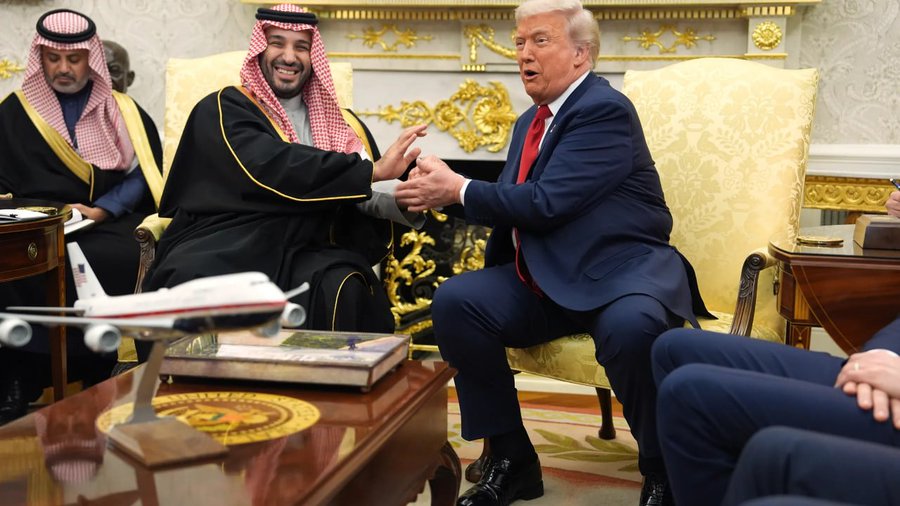
13 October 2026AIMN Editorial, ByWalt Zlotow, West Suburban Peace Coalition, Glen Ellyn IL, https://theaimn.net/americas-bff-saudi-arabia-likely-wont-be-forever/
A disastrous unintended consequence of Trump’s lost war on Iran is the impending destruction of its best Middle East ally: Saudi Arabia. Both Iran and now Ansah Allah (Houthis) in Yemen are pounding Saudi infrastructure and oil facilities, drastically degrading the Saudi economy. No oil revenue may signal the end of Saudi Arabia as an economic power. Saudi Arabia may wind up a failed state with its hated rulers fleeing for safe havens.
The head of Aramco, the Saudi oil company, advised it will take at least two years for oil production and delivery to return to normal. And that’s if no further damaging attacks occurs.
Back in 2015 Saudi strongman Mohammed bin Salman (MBS) jumped into the Yemen civil war to prevent the Houthis from polishing off the Saudi backed Presidential Leadership Council (PLC) which was a minority element with no chance of prevailing.
But even with hundreds of billions in US bombs, jets, intelligence, logistics that kept the killing going for 7 years, the Saudis gave up in futility in 2022. Over a quarter million Yemenis dead simply for Uncle Sam to protect its Saudi ally against the Houthis who controlled 80% of Yemen – including the capital – couldn’t stop the popular Houthis.
Last year the Houthis came to the aid of Gaza’s Palestinians undergoing genocide by Israel. When they disrupted Israeli Red Sea shipping, the US launched over a thousand air strikes costing over a billion dollars during a 7-week air campaign that failed miserably.
Having failed twice to deter the Houthis, the US stupidly greenlighted the Saudis to attack Yemen’s main airport in Saana last July 13, reigning the Yemen, Saudi war that ended 4 years ago. Big mistake. The results have been so devastating to Saudi Arabia that MBS called up Trump begging for US air strikes on Yemen. But bogged down in his lost war on Iran, Trump demurred squandering his dwindling drone and missile stockpile to bail outhe incompetent Saudis. He’s left his former BFF MBS to face Houthi attacks that cannot be stopped.
Wise foreign policy analysts foresee Saudi Arabia collapsing politically along with their collapsing oil gravy train. MBS may have slaughtered his last political opponent such as Kamal Khashoggi, the Washington Post columnist MBS had chopped up in the Saudi consulate in Turkey in 2018.
MBS may soon be MIA. Can’t come soon enough.
The Tech Oligarchs Have Captured Washington — Now They’re Pivoting to the States

David Sacks, former AI and crypto czar for the Trump administration, has described Anthropic as running a “sophisticated regulatory capture strategy based on fear-mongering.”
As Big Tech and corporate media set false terms of debate — innovation vs. regulation — we must remember, there are plenty of laws on the books to tackle the harms of AI. What we’re lacking is enforcement.
October 15, 2026, By Jai Dulani, This article was originally published by Truthout, https://scheerpost.com/2026/10/15/the-tech-oligarchs-have-captured-washington-now-theyre-pivoting-to-the-states/
AI and crypto firms have spent record amounts on the 2026 midterms.
Late last month, the wealthiest tech executives on the planet smiled next to President Donald Trump after essentially pinky-swearing they would voluntarily adopt safety policies around AI. While Trump described the agreement as “morally binding,” legal liability or enforcement measures were not explicit parts of the accord. The key takeaway from this handshake deal is that the people with the most amount of political power sit in Silicon Valley, not in Washington, D.C.
With the midterm elections just weeks away, it’s a good time to reflect on what Big Tech’s actions during this election season have revealed about its agenda and the larger context of the industry’s political influence. From CNN to The New York Times to NPR, there has been extensive news coverage of the hundreds of millions of dollars Big Tech has spent on the midterm elections. Months before Election Day, corporate spending this election cycle had already exceeded total disclosed corporate spending in the 2024 presidential election by 12 percent. The top two industries setting this record — with over half a billion dollars spent and counting — are crypto and AI. This unprecedented corporate spending on midterm elections is key to the tech industry’s plan to rig every level of government to work for the industry, from state legislatures to Congress.
Crypto’s Spending in the Primaries Was About More Than Crypto Regulation
The crypto industry is the largest political spender this election cycle, having spent over $200 million so far. The race it spent the most on was Felix Barry Moore’s campaign for U.S. Senate in Alabama. Crypto super PACs spent over $12 million supporting Moore, who has a pro-crypto track record; as the U.S. representative for Alabama’s 1st district, Moore co-sponsored a bill that prohibits the Federal Reserve from developing or issuing a central bank digital currency for U.S. monetary policy. This leaves digital assets under private control, away from federal scrutiny, which is what the industry wants.
In Illinois, crypto-related PACs spent over $10 million against former Lt. Gov. Juliana Stratton, who is running for a seat in the U.S. Senate. Stratton has been vocal against the crypto industry. Politico reported that Stratton is endorsed by two prominent industry critics: Sen. Elizabeth Warren (D-Massachusetts) and Illinois Gov. JB Pritzker. Pritzker signed a digital assets law last year establishing regulatory oversight and protections for consumers against scams and fraud. In 2025, the FBI reported over $11 billion in losses related to cryptocurrency fraud in its Internet Crime Report.
Crypto corporations were also the dominant corporate political spenders in 2024 and gave $18 million to Trump’s 2025 inauguration. These contributions have paid off many times over the course of Trump’s second term. Trump removed Biden-era regulators and replaced them with crypto industry business partners or former industry insiders. In April 2025, the Trump administration shuttered the Department of Justice’s crypto enforcement team. Trump pardoned several crypto companies and billionaires that were under investigation for criminal money laundering and fraud, often after receiving investments in his own crypto empire. In June of this year, it was revealed that the Trump family has made at least $2.3 billion from crypto-related ventures during Trump’s second term.
This election season, Trump and the crypto industry were pushing for Congress to pass the Clarity Act, a bill essentially written by the crypto industry that locks in deregulation. From 2025 through August 2026, crypto companies Coinbase and Ripple spent a combined $18 million on lobbying Congress. Crypto donors gave Trump’s primary super PAC, MAGA Inc., over $88 million, more than any other industry. On September 15, the Clarity Act failed to advance through the Senate by a vote of 49-50. However, the attempt shed light on what the industry is seeking in terms of legislation: exemption from robust oversight, weak consumer and investor protections, and no prevention of conflicts of interest for self-enrichment and corruption.
One doesn’t need to be invested in crypto to be harmed by the industry. Crypto is increasingly making its way into banks, retirement plans, and payment systems. As economic expert Tonantzin Carmona has noted, when it comes to crypto, “Fundamental public interest questions remain underexplored in current policy discussions. … From financial instability to investor fraud to environmental and public safety risks, the potential consequences are real and growing.” Indeed, Black and Latino communities are disproportionately harmed by the volatility and predatory targeting of the crypto industry. Chastity Murphy, a former economic policy adviser to Rep. Rashida Tlaib, said the fight around regulation is “about who controls money, and whether digital infrastructure serves the public or entrenches private power.”
Crypto’s political spending is about entrenching private power and extracting wealth, leaving everyday people vulnerable to a destabilized financial system with no recourse when scammed.
The AI Debate: Two Sides of the Same Coin
As Alex Hanna and Emily M. Bender describe in their book, The AI Con, there are two camps in the AI world: AI doomers and AI boosters. Each camp is part of the same AI hype machine, in which, as scientists and advocate Timnit Gebru states, “the utopia and doom is still a marketing ploy.” Over the course of the AI industry’s massive spending leading up to the midterms, the two forces that have embodied this debate are OpenAI and Anthropic. The Leading the Future super PAC network, often referred to as OpenAI’s super PAC, and the Public First Action super PAC network, backed by Anthropic, have been framed as pro-innovation and pro-safety respectively.
A look at super PAC spending in North Carolina exemplifies the difference between the two super PAC networks, as well as how they ultimately advance the same outcome. Anthropic’s super PAC spent over $1.6 million on ads backing Rep. Valerie Foushee in the primary for North Carolina’s 4th congressional district. Foushee is one of three co-chairs of the House Democratic Commission on AI and the Innovation Economy, to which she was appointed in December 2025. Foushee has supported regulation such as a requirement to label when content is made by generative AI. Also in North Carolina, Leading the Future spent over $500,000 on ads promoting Republican Laurie Buckhout in North Carolina’s 1st district Republican primary. Buckhout has promised to maintain “American dominance in AI.” While the “innovation” camp tends to spend more on Republicans and the “safety” camp on Democrats, these two sides are fundamentally the same; focusing on future hypothetical hype or doom leads to the public ignoring the current harms of AI: surveillance, data centers, labor exploitation, pollution, and discrimination.
David Sacks, former AI and crypto czar for the Trump administration, has described Anthropic as running a “sophisticated regulatory capture strategy based on fear-mongering.” In many ways, Sacks is right. As Lina Khan, who served as chair of the Federal Trade Commission from 2021 to 2025, has pointed out, “Much of the commentary from the executives suggests they currently operate in a legal vacuum, as if AI has wiped clean the regulatory map. In fact, their business practices — including how they develop and deploy their technologies — are already subject to longstanding laws.” As Big Tech and corporate media set false terms of debate — innovation vs. regulation — we must remember, there are plenty of laws on the books to tackle the harms of AI. What we’re lacking is enforcement.
Crypto and AI’s Political Spending Pivot to States
Last year, Trump and the AI industry pushed for federal preemption, proposing to block states from regulating AI for a decade. Crypto exchange Coinbase also asked the Department of Justice to submit a “views letter” to Congress arguing that any new federal crypto legislation should include strong preemption provisions, meaning that when federal law is explicit, it overrides conflicting state crypto regulations. The tech industry didn’t win preemption. Now, in response to the growing wins in the grassroots movement to resist data centers, the industry has pivoted to political spending in state and local races.
California has been a major battleground of this pivot. Just this past year, nearly 30 AI-related measures have been enacted in the state, with Gov. Gavin Newsom having recently signed 11 AI regulatory bills into law. Crypto and AI corporations have poured money into lobbying efforts as well as California state PACs. Meta launched its own California PAC, Mobilizing Economic Transformation Across (Meta) California, pouring in $20 million solely for local elections in the state. The result has largely been watered-down bills and some vetoes, with some notable exceptions. Workers were able to claim victory as bills were passed that protect workers against surveillance and the ability to be fired by an algorithm. Overall, the industry is running the same playbook at the state level that it ran federally: game the system to ensure there is little to no meaningful regulation.
Research reveals that the policies Meta and Google opposed via super PAC spending include AI safety laws like California’s Senate Bill 53 (S.B. 53), which would require companies to disclose how various safety issues are approached, how “catastrophic” risks are inspected, and how “critical safety incidents” are responded to. S.B. 53 would also make it easier for members of the public and company whistleblowers to report potential safety risks.
Another law Meta and Google opposed via super PAC spending is California’s Assembly Bill 2013 (A.B. 2013), also known as the Generative AI Training Data Transparency Act. The law requires AI developers to clearly explain which dataset sources were used to train models and if personal information or synthetic data was used to train the model.
Crypto billionaires Chris Larsen and Tim Draper also funded the Grow California PAC, which focused on electing corporate-friendly candidates as a “counterforce” to the state’s labor movement. In District 67 (Los Angeles and Orange County), Grow California spent nearly $1.5 million opposing UNITE HERE Co-President Ada Briceño. This was the highest spending in any state assembly race in California. The tech billionaires outspent organized labor almost 7 to 1. Briceño lost in the primary. Big Tech is not just protecting its industry; it is also funding opposition to worker organizing.
Big Tech is also funding broader attacks on democracy. Larsen is funding a ballot measure in San Francisco that would make it harder to advance public proposals via petitions. Proposition D would increase the number of signatures required to qualify ballot initiatives from 2 percent to 8 percent of the city’s registered votes, or roughly 10,000 to 42,000. Previously, Larson has also personally spent over $9 million expanding police surveillance in San Francisco through a fleet of drones and 2,700 private cameras that cops can watch in real time.
What has been revealed this election cycle is that, in the age of crypto and the AI boom, Silicon Valley has carried out a near-total capture of our federal government. Meanwhile, Big Tech has pivoted to state elections in an attempt to undermine the levels of government where our organizing still has leverage. Our best tool is to continue organizing people — fighting data centers, fighting flock cameras, fighting the tech companies that are destroying our lives. It is only through this grassroots power that we can show politicians and political parties that they need to be more afraid of organized people than they are of upsetting tech donors.
1 This Month
23-25 October – on Zoom – World BEYOND War’s annual global conferenc


Shut down the radiation-damaged Heysham nuclear reactors now
To see nuclear-related stories in greater depth and intensity – go to https://nuclearinformation.wordpress.com

Say No to NASA’s Reckless Nuclear Reactor on the Moon
Say No to NASA’s Reckless Nuclear Reactor on the Moon

-
Archives
- October 2026 (247)
- September 2026 (339)
- August 2026 (330)
- July 2026 (355)
- June 2026 (287)
- May 2026 (306)
- April 2026 (356)
- March 2026 (251)
- February 2026 (267)
- January 2026 (308)
- December 2025 (358)
- November 2025 (359)
-
Categories
- 1
- 1 NUCLEAR ISSUES
- business and costs
- climate change
- culture and arts
- ENERGY
- environment
- health
- history
- indigenous issues
- Legal
- marketing of nuclear
- media
- opposition to nuclear
- PERSONAL STORIES
- politics
- politics international
- Religion and ethics
- safety
- secrets,lies and civil liberties
- spinbuster
- technology
- Uranium
- wastes
- weapons and war
- Women
- 2 WORLD
- ACTION
- AFRICA
- Atrocities
- AUSTRALIA
- Christina's notes
- Christina's themes
- culture and arts
- Events
- Fuk 2022
- Fuk 2023
- Fukushima 2017
- Fukushima 2018
- fukushima 2019
- Fukushima 2020
- Fukushima 2021
- general
- global warming
- Humour (God we need it)
- Nuclear
- RARE EARTHS
- Reference
- resources – print
- Resources -audiovicual
- Weekly Newsletter
- World
- World Nuclear
- YouTube
-
RSS
Entries RSS
Comments RSS

