No Joke: US considering nuclear power for Saudi in grand bargain

Surprise — the Trump team’s latest bid for Saudi-Israel normalization goes way too far and appears to be a one-way street.
Ivan Eland, Apr 21, 2025, https://responsiblestatecraft.org/no-joke-us-considering-nuclear-power-for-saudi-in-grand-bargain/
The Trump administration is reportedly pursuing a deal with Saudi Arabia that would be a pathway to developing a commercial nuclear power industry in the desert kingdom and maybe even lead to the enrichment of uranium on Saudi soil.
U.S. pursuit of this deal should be scrapped because the United States would bear all the increased commitments, costs, and risks with very little in return.
In the Abraham Accords of 2020 and early 2021, the first Trump administration brokered bilateral agreements between Israel and the Middle Eastern countries of Bahrain, United Arab Emirates, Morocco, and Sudan to normalize diplomatic relations. The administration also attempted to get Saudi Arabia to recognize Israel as a sovereign state and open similar relations, to no avail.
The Biden administration carried the torch in this regard but it became even more difficult to get Riyadh on board after the 2023 Hamas attacks on Israel and ensuing war in Gaza. The rising civilian death toll and humanitarian crisis led to an elevation of the Palestinian cause and engendered region-wide animosity toward Israel. The Saudis demanded at that point that Israel commit to meaningful steps toward the creation of an independent Palestinian state before any normalization would occur.
That continued into this year as the Saudi government denied President Donald Trump’s assertion that it had dropped its demand for a Palestinian state in order to normalize relations with Israel.
Even though efforts aimed at ending the war in Gaza have been unsuccessful, the second Trump administration is seemingly now reviving its efforts toward brokering an Israel-Saudi rapprochement, albeit beginning with a new U.S.-Saudi agreement first, as hinted by U.S. Secretary of Energy Chris Wright.
The problem is that all the countries would benefit from such a grand bargain except the one brokering it — the United States, which would also absorb all of the costs. Israel and Saudi Arabia would gain the most. The Saudis have desperately wanted a nuclear power deal for some time. Meanwhile, if there is eventual normalization, Israel would neutralize what is now a powerful Arab rival and likely even gain a new ally in its quest to counter Iran (but it had better do it fast as Riyadh and Tehran have been approaching some level of detente for some time now).
Saudi Arabia has also sought formal security guarantees, which were reportedly on the table during the Biden administration. This would supplant the long-standing informal agreement between President Franklin Roosevelt and Saudi King Abdul Aziz Ibn Saud, which provided security for the desert kingdom in exchange for U.S. access to cheap oil supplies.
Yet, with a $37 trillion national debt, why would the United States take on another ward that doesn’t pay its fair share for security (a common Trump gripe about other U.S. allies)? With fracking, the United States is no longer running out of oil, as FDR assumed would be the case, and is again the world’s largest oil producer. A formal defense pact with Saudi Arabia would incur yet more costs, further entrench the U.S. in the region, and put our own troops in harm’s way if Washington is expected to defend and bail out Riyadh in any military dispute with its neighbors.
In addition, what could go wrong if Saudi Arabia was given a nuclear program? Talks on an Israel-Saudi agreement previously faltered when the Saudis opposed restrictions that would have prevented them from using a commercial nuclear program to build nuclear weapons (to counter any Iranian nuclear capability), or to assist other countries in obtaining them.
The truth is, the Saudis have wanted to be able to enrich uranium — perhaps to bomb-grade levels — on their own soil rather than import uranium already enriched only to a level capable of generating commercial energy, for some time.
Some in the United States insist that the Saudis could get nuclear technology from other nations like Russia or China, but if they resist safeguards to prevent them from getting a weapon, then it wouldn’t matter who gave them the technology that would allow them to do it.
Thus, the Trump administration should desist in reaching any such agreement with the Saudis in its (right now) futile quest for Israel-Saudi grand rapprochement. Normalization of relations between the two countries would be a fine aspiration for the region (if it is not merely to isolate and poke Iran), but the United States meeting the Saudis’ exorbitant demands to achieve it would come at too great a cost.
After all, bilateral normalization should be in the interest of both countries, so they should negotiate it on their own without being coddled by the United States.
Sam Altman steps down as chair of nuclear power supplier Oklo to avoid conflict of interest.

The modular reactor company he funded and led is in
talks to deliver energy to OpenAI. OpenAI chief executive Sam Altman is
stepping down as chair of Oklo to avoid a conflict of interest ahead of
talks between his company and the nuclear start-up on an energy supply
agreement, as the race to power artificial intelligence intensifies.
Altman, who was an early-stage investor in Oklo, will step down immediately
and be replaced by Jacob DeWitte, the group’s CEO and co-founder. The
move comes as the AI industry strives to procure high-wattage, low-carbon
energy supplies. Although it may be years before tech companies can benefit
from nuclear power, the launch of DeepSeek, the less energy-intensive
Chinese large language model competitor, has underscored the urgency for
western companies such as OpenAI to compete.
Oklo has yet to enter into any firm partnerships or receive approval for any of its designs from the Nuclear Regulatory Commission in the US.
FT 22nd April 2025,
https://www.ft.com/content/a511bae0-d19f-4ebd-9520-69d3f89d8556
Locals call for transparency after nuclear drill
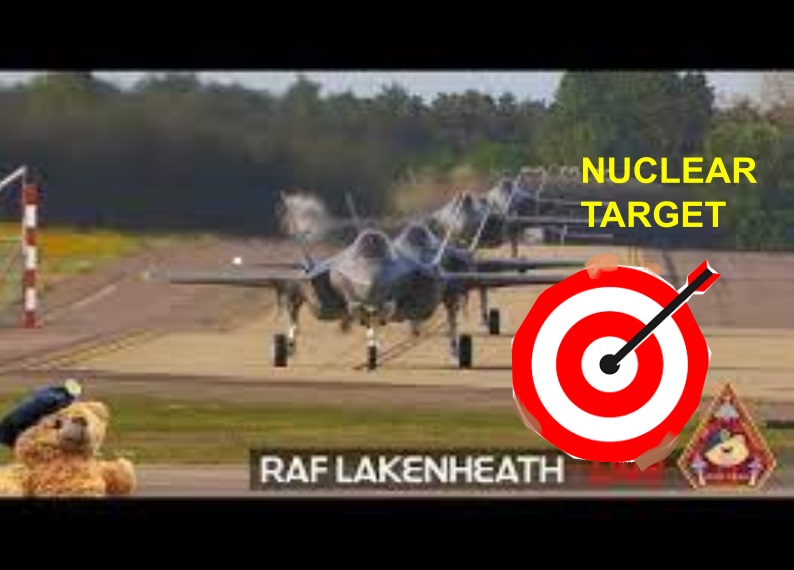
Vikki Irwin, BBC political reporter, Suffolk, Matt Precey, Suffolk,
BBC 22nd April 2025
People living near a US airbase earmarked to house nuclear weapons say they are being left in the dark about what would happen in the event of a radiation alert.
It comes after a drill simulating an accident involving such material was held, with personnel from RAF Lakenheath in Suffolk taking part.
Nick Timothy, Conservative MP for West Suffolk, said while the US military was “welcome”, there needed to be “transparency as far as possible on issues like this exercise”.
A Ministry of Defence (MoD) spokesman said: “Exercise Diamond Dragon demonstrated our preparedness to respond to any incident, no matter how unlikely”……………………………………….
The Suffolk Resilience Forum, which leads on emergency planning in the county, confirmed the scenario in both instances was a simulated crash in the UK of a US aircraft carrying “defence nuclear materials”.
Lakenheath Parish Council chairman Gerald Kelly said he had been told informally about the latest drill.
He said the area had an emergency plan, but added: “There is nothing in there about this sort of incident.”
The MoD should inform residents “what it wants us to do” if the event of an incident, he said.
Mr Kelly called for a siren system to be installed and for the local community to be involved in any future exercises.
https://www.bbc.co.uk/news/articles/cde2dyk5rjpo
Iran-US talks wrap up in Rome with agreement to establish framework for potential nuclear deal
Omani officials stated that the indirect talks are ‘gaining momentum’ after Tehran and Washington agreed to establish technical delegations to draft a potential replacement for the Obama-era JCPOA
The second round of indirect talks between Iranian and US officials concluded in the Italian capital, Rome, on 19 April, with both sides agreeing to establish working groups to draft a “general framework” for a potential new nuclear deal.
“In this round of talks, senior Iranian and US negotiators outlined the general framework for the talks and exchanged views on some important issues in the areas of sanctions relief and the nuclear issue. The two sides agreed to continue the next round of indirect talks next Saturday in Muscat,” the Iranian Foreign Ministry said in a statement.
Tehran also stated that talks to limit the country’s uranium enrichment program in exchange for sanctions relief “require more detailed discussion and examination at the expert level.” As such, the two sides agreed to send technical delegations to the Omani capital next Wednesday for detailed discussions.
Following Saturday’s talks, Iranian Foreign Minister Abbas Araghchi described the atmosphere as “positive” and said that officials “made clear how many in Iran believe that the [2015 Joint Comprehensive Plan of Action] is no longer good enough for us.”
“For now, optimism may be warranted but only with a great deal of caution,” he told reporters.
The Omani Foreign Ministry said the second round of talks “led to the parties agreeing to move to the next phase of targeted negotiations to achieve a fair, permanent, and binding agreement that ensures Iran is free from nuclear weapons and the full lifting of sanctions while preserving the country’s right to develop nuclear energy for peaceful uses and purposes.”
“Dialogue and clear communication are the only way to achieve a credible and reliable understanding that will benefit all parties in the regional and international context,” Omani officials said.
There was no immediate comment from the US side following the talks.
Nevertheless, soon after Saturday’s talks ended, Israeli TV broadcast a pre-recorded address by Prime Minister Benjamin Netanyahu, in which he reiterated his commitment to preventing Iran from developing a nuclear weapon.
“I am committed to preventing Iran from attaining nuclear weapons. I won’t give on this, I won’t let up on this, and I won’t withdraw from this — not a millimeter,” Netanyahu said.
Earlier in the day, Reuters reported that Tel Aviv “has not ruled out” launching an attack on Iran’s nuclear facilities in the near future without US involvement.
Bribery at Hinkley Point
A claim for unfair dismissal by project director Garrick Nisbet against Notus Heavy Lift Solutions – one of the heavy lift subcontractors working for EDF on the construction the Hinkley Point C nuclear power station in the UK – has highlighted cases of bribery and corruption at the site, relating to the supply of heavy lift and rigging services.
An employment tribunal held last year was told that Ashley Daniels – at the time EDF’s head of lifting and temporary works at Hinkley Point C – accepted gifts from Nisbet on the basis that it would help ensure more business for him and his employer Notus. The ‘gifts’ included an £11,000 quad bike, £2,000 worth of tickets for a boxing match and of all things a refill for a Montblanc pen. Daniels’ activities are reportedly the subject of an ongoing investigation by EDF.
Notus Heavy Lift dismissed Nisbet without notice in April 2023 when evidence came to light, indicating that he had given the quad bike to Daniels in exchange for more work or to retain existing work levels. Daniels had apparently told Nisbet that the quad bike would give “Notus a bit of breathing space”.
In evidence given by the former managing director of Notus Heavy Lift, the tribunal heard that Daniels had “the full authority to decide who came on site and that without Ashley’s approval, Notus would not have any work on the site”.
Nisbet claimed that the ‘favours’ he had offered Daniels were limited to lunches, coffee and biscuits, and argued that he had nothing to do with the boxing tickets, adding that the Montblanc refill was simply a spare he had bought, which Daniels had asked for.
Employment judge Colm O’Rourke found that Nisbet’s use of the word “favours” was “disingenuous”, adding that the items given were “clearly bribes”………………………
………………………….More information on the ruling and evidence
This case was concluded in October last year but updated earlier this month.
To see the full list of reasons and evidence in this case go to: https://assets.publishing.service.gov.uk/media/673c76869a48a5ab14acc394/Mr_G_Nisbet_-vs-_Notus_Heavy_Lift_Solutions_Limited_-_6001564.2023_-_Written_Reasons.pdf
Vertikal 24th April 2025
https://vertikal.net/en/news/story/46007/bribery-at-hinkley-point
Security fears over mini nuclear plant network with ‘1,000s more police needed’.

Keir Starmer’s plans for a ‘proliferation’ of small reactors – potentially nearer UK towns – would require an urgent rethink of how armed officers protect them, experts warn.
Government plans to build a network of
“mini” nuclear power stations across the country have failed to
adequately assess major security threats to the public, top policing
experts have warned.
Sir Keir Starmer has pledged to “rip up the rules”
governing the nuclear industry to fast-track so-called Small Modular
Reactors (SMRs) to generate affordable low-carbon electricity, boosting the
economy and powering energy-intensive technology such as AI data centres.
However, security analysts caution that arrangements for guarding SMRs from
terrorists, enemy states and criminal groups need radical rethinking to
protect the public. They told The i Paper that thousands more armed
officers could be required to defend these facilities – which may be
located nearer towns and cities – plus the vehicles carrying their
radioactive fuel.
They believe these policing operations would be so much
larger, more complex and more costly than existing arrangements that a new
force may be required – yet fear ministers are overlooking or
underestimating the challenges ahead.
The Government hopes the first SMRs
will open in less than 10 years, probably at some of the country’s eight
existing nuclear sites, but the network may later expand to other locations
in England and Wales. Professor Fraser Sampson, a national security expert
at Sheffield Hallam University, said these will necessitate “a very
different policing and security model,” especially if they are located
“much nearer or even within areas of significant population, and you have
many more of them.”
Sampson, a former solicitor and police officer who
recently served as the UK’s biometrics and surveillance camera
commissioner, worries the Government is not focusing enough on security.
Anticipating a “proliferation of smaller sites,” he said: “The thing
that I think is missing, and Two researchers at King’s College London, Dr
Zenobia Homan and Dr Ross Peel, have warned that SMRs increase the
possibility of “insider threat.”
iNews 20th April 2025
https://inews.co.uk/news/crime/security-fears-mini-nuclear-plant-network-police-3648464
Iran to brief China as it accuses Israel of ‘undermining’ US nuclear talks
Tehran official’s Beijing trip comes before third round of talks with the US and follows consultations with Russia.
Iran says it will brief China this week in advance of a third round of talks with the United States on its nuclear programme, as Iranian officials separately accused Israel of seeking to “undermine and disrupt the diplomatic process”.
Iranian Foreign Minister Abbas Araghchi will visit Beijing on Tuesday to discuss the latest talks with the administration of US President Donald Trump on the country’s nuclear programme, spokesman Esmaeil Baqaei said on Monday.
The trip echoes “consultations” Iran held with Russia last week, before the second round of direct US-Iran talks was held over the weekend. A third round of talks between Araghchi and US envoy Steve Witkoff is scheduled to take place in Oman on Saturday.
Araghchi has previously said Tehran always closely consults with its allies, Russia and China, over the nuclear issue.
“It is natural that we will consult and brief China over the latest developments in Iran-US indirect talks,” Baqaei said.
Russia and China, both nuclear-armed powers, were signatories to a now-defunct 2015 deal between Iran, the US and several Western countries intended to defuse tensions around Tehran’s nuclear programme.
The 2015 deal, known as the Joint Comprehensive Plan of Action (JCPOA), from which Trump withdrew in 2018, saw Tehran curtail its nuclear programme in exchange for sanctions relief.
The US and Israel have accused Iran of seeking to use the programme to develop nuclear weapons. Tehran has staunchly denied the claim, saying the programme is for civilian purposes.
On Monday, the Chinese Ministry of Foreign Affairs stressed close ties between Beijing and Tehran, but did not confirm the Iranian minister’s planned visit.
“China and Iran have maintained exchanges and contacts at all levels and in various fields. With regard to the specific visit mentioned, I have no information to offer at the moment,” Guo Jiakun, spokesperson for the ministry, said.
Strengthened alliance
Israel’s war in Gaza has seen Iran pull closer to Russia and China. Recent diplomatic moves surrounding the US-Iran talks have further underscored the strengthened ties.
Araghchi met his Russian counterpart, Sergey Lavrov, last week, just before his second round of negotiations with Witkoff.
On Monday, Russian President Vladimir Putin signed off on a 20-year strategic partnership treaty agreed earlier this year with his Iranian counterpart, Masoud Pezeshkian.
Meanwhile, Iran’s already fraught relations with Israel and its “ironclad” ally, the US, have nosedived amid the war. Since taking office, Trump has reinstated a “maximum pressure” sanctions campaign against Tehran, while repeatedly threatening military action if a new nuclear deal is not reached.
Speaking on Monday, Foreign Ministry spokesman Baqaei accused Israel of trying to disrupt the nascent negotiations to open the way for military action.
In comments carried by the AFP news agency, he declared that Israel is behind efforts from a “kind of coalition” to “undermine and disrupt the diplomatic process”.
“Alongside it are a series of warmongering currents in the United States and figures from different factions,” the spokesman said.
Last week, Prime Minister Benjamin Netanyahu reiterated that Israel would not allow Iran to acquire nuclear weapons.
His statement came a day after The New York Times reported that Trump had dissuaded Israel from striking Iran’s nuclear sites in the short term, saying Washington wanted to prioritise diplomatic talks.
‘Consultations must continue’
Baqaei added that “consultations must continue” with countries that were party to the JCPOA.
Iran has gradually breached the terms of the treaty since Trump abandoned it, most notably by enriching uranium to levels higher than those laid out in the deal.
The International Atomic Energy Agency says Iran has enriched uranium to 60 percent, close to the 90 percent level needed to manufacture weapons. The JCPOA had restricted it to 3.67 percent, the level of enrichment needed for civilian power.
Speaking last week, Witkoff sent mixed messages on what level Washington is seeking. He initially said in an interview that Tehran needed to reduce its uranium enrichment to the 3.67 percent limit, but later clarified that the US wants Iran to end its enrichment programme.
Moscow may gain key role in Iran nuclear deal as US talks progress
Russia touted as possible destination for Iran’s uranium stockpile and could also act as arbiter of deal breaches
Russia could play a key role in a deal on the future of Iran’s nuclear
programme, with Moscow being touted not only as a possible destination for
Iran’s stockpile of highly enriched uranium, but also as a possible
arbiter of deal breaches.
Donald Trump, who abandoned a 2015 nuclear pact
between Tehran and world powers in 2018 during his first term, has
threatened to attack Iran unless it reaches a new deal swiftly that would
prevent it from developing a nuclear weapon.
Four hours of indirect talks
between the US and Iran in Rome on Saturday, under the mediation of Oman,
made significant progress, according to US officials. Further technical
talks are due in Geneva this week, followed by another high-level
diplomatic meeting next weekend in Oman.
Guardian 20th April 2025 https://www.theguardian.com/world/2025/apr/20/moscow-may-gain-key-role-in-iran-nuclear-deal-as-us-talks-progress
80 years after atomic bombs devastated Japan, Donald Trump’s actions risk nuclear proliferation
The Conversation 20th April 2025
- Jamie LevinAssociate Professor of Political Science, St. Francis Xavier University
- Youngwon ChoAssociate Professor of Political Science, St. Francis Xavier University
The policy of every American president since Harry S. Truman has been to limit the proliferation of nuclear weapons.
They have not always been successful. The world’s most powerful weapons spread, with nine countries now possessing them. But no United States president has actively sought their further proliferation, as the belligerent policies of Donald Trump are now set to do.
In 2018, during his first term as president, Trump tore up the Iran nuclear deal, which had successfully placed limits on the enrichment of weapons-grade materials in exchange for sanctions relief.
Iran has since accelerated its nuclear weapons program. Estimates now put Iran within months or even weeks of producing several bombs.
A short time later, after a series of escalating threats, Trump suggested that North Korea had agreed to denuclearize. Talks ensued, but a deal never materialized.
In fact, Trump failed to stop, let alone roll back, North Korea’s ambitious nuclear weapons programs. North Korea is now said to possess at least 50 warheads as well as the means to deliver them.
No longer an ally
Under the second Trump administration, the world is facing a rapidly growing proliferation risk of a different kind, one that is found not only among the usual suspects in Iran and North Korea, but also among a long list of U.S. allies who once basked in American security guarantees.
Merely two months into Trump’s second term, America’s European allies have grown increasingly concerned that the U.S. is no longer a reliable ally.
That’s due to his suspension (and then reinstatement) of weapons transfers and intelligence sharing with Ukraine, an explicitly prioritized rapprochement with Russia, open denigration of its NATO allies, suggestions that the U.S. would not come to their defence if attacked, and his active and repeated threats to the sovereignty and territorial integrity of Canada, Greenland and Panama.
Against this backdrop, Trump’s guiding Project 2025 principles advocate escalating nuclear testing, breaking a long-held taboo.
Once protected by its nuclear umbrella, America’s closest allies are now threatened by it. Europe’s loss of confidence in the U.S. is so severe that finding alternatives has now become part of serious discussions in capitals across the continent. France and the United Kingdom are poised to fill the void by extending their nuclear deterrence to the likes of Germany and Poland.
The scene in Asia
But the risk of proliferation is greatest in East Asia. On the campaign trail in 2016, Trump mused that Japan and South Korea might need to develop nuclear weapons. “It’s only a matter of time,” he said.
That time is unfortunately now…………………………………………………………………………………………………………
Catastrophic dangers
While going nuclear may be individually rational for the East Asian countries, the collective outcome for the region and beyond is fraught with catastrophic risks.
The world is now grappling with the most dangerous collective action problem because the solution that has worked so well for decades — credible American security assurance — is eroding.
In upending the very international order that the U.S. established, the Trump administration is not merely chipping away at the global security architecture underpinned by myriad American security guarantees. It’s imploding the post-Second World War security order from within and the moral, political and institutional bulwark against nuclear proliferation.
In this predatory, zero-sum world of Trumpian foreign policy, putting America First necessarily means putting everyone else last — and, along the way, inadvertently fuelling nuclear proliferation. https://theconversation.com/80-years-after-atomic-bombs-devastated-japan-donald-trumps-actions-risk-nuclear-proliferation-254459
Small nuclear reactors are no fix for California’s energy needs
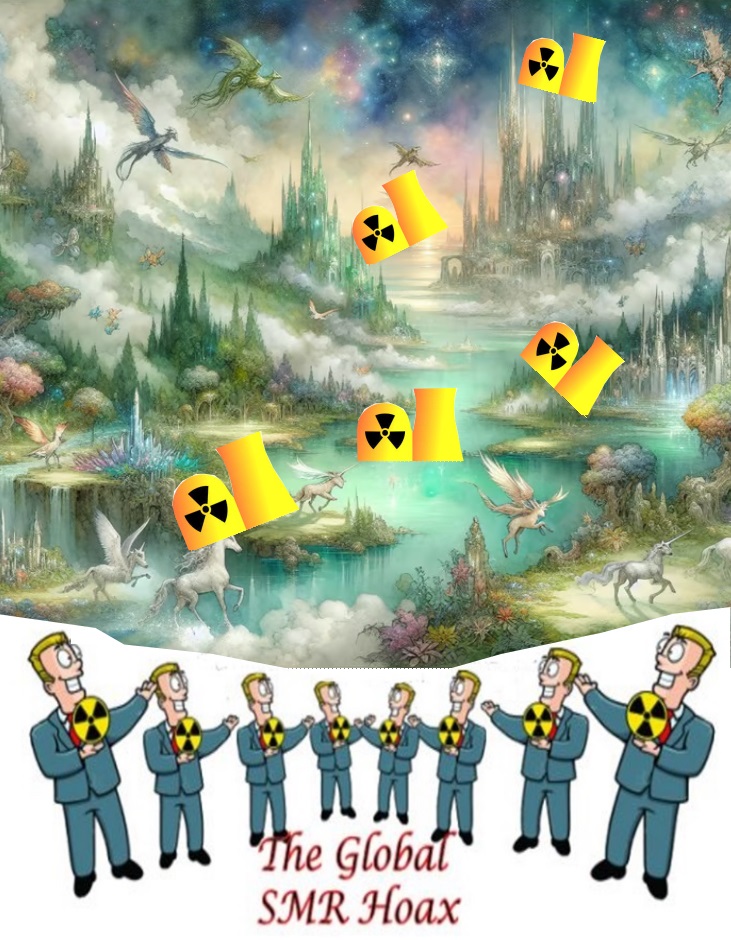
I know all too well that the hype is built on quicksand …….. many of those “building support for small modular reactors” are putting forward “rhetorical visions imbued with elements of fantasy.”
SMRs are just one of several wildly overhyped false promises on which the world is poised to spend hundreds of billions of dollars by 2040
Joseph Romm, April 18, 2025 , https://www.latimes.com/opinion/story/2025-04-18/small-modular-reactors-cost-california
It might seem like everyone from venture capitalists to the news media to the U.S. secretary of Energy has been hyping small modular reactors as the key to unlocking a nuclear renaissance and solving both climate change and modern data centers’ ravenous need for power.
On Monday, the Natural Resources Committee of the California Assembly will consider a bill to repeal a longstanding moratorium on nuclear plants in the state, which was meant to be in place until there is a sustainable plan for what to do with radioactive waste. Defeated multiple times in the past, this bill would carve out an exception for small modular reactors, or SMRs, the current pipe dream of nuclear advocates.
SMRs are typically under 300 megawatts, compared with the combined 2.2 gigawatts from Diablo Canyon’s two operating reactors near San Luis Obispo. These smaller nukes have received so much attention in recent years mainly because modern reactors are so costly that the U.S. and Europe have all but stopped building any.

The sad truth is that small reactors make even less sense than big ones. And Trump’s tariffs only make the math more discouraging.
I’ve been analyzing nuclear power since 1993, when I started a five-year stint at the Department of Energy as a special assistant to the deputy secretary. I helped him oversee both the nuclear energy program and the energy efficiency and renewable energy program, which I ran in 1997.
So I know all too well that the hype is built on quicksand — specifically, a seven-decade history of failure. As a 2015 analysis put it, “Economics killed small nuclear power plants in the past — and probably will keep doing so.” A 2014 journal article concluded many of those “building support for small modular reactors” are putting forward “rhetorical visions imbued with elements of fantasy.”
But isn’t there a nuclear renaissance going on? Nope. Georgia’s Vogtle plant is the only new nuclear plant the U.S. has successfully built and started in recent decades. The total cost was $35 billion, or about $16 million per megawatt of generating capacity — far more than methane (natural gas) or solar and wind with battery storage.
As such, Vogtle is “the most expensive power plant ever built on Earth,” with an “astoundingly high” estimated electricity cost, noted Power magazine. Georgia ratepayers each paid $1,000 to support this plant before they even got any power, and now their bills are rising more than $200 annually.
The high cost of construction and the resulting high energy bills explain why nuclear’s share of global power peaked at 17% in the mid-1990s but was down to 9.1% in 2024.
For decades, economies of scale drove reactors to grow beyond 1,000 megawatts. The idea that abandoning this logic would lead to a lower cost per megawatt is magical thinking, defying technical plausibility, historical reality and common sense.
Even a September report from the federal Department of Energy — which funds SMR development — modeled a cost per megawatt more than 50% higher than for large reactors. That’s why there are only three operating SMRs: one in China, with a 300% cost overrun, and two in Russia, with a 400% overrun. In March, a Financial Times analysis labeled such small reactors “the most expensive energy source.”

Indeed, the first SMR the U.S. tried to build — by NuScale — was canceled in 2023 after its cost soared past $20 million per megawatt, higher than Vogtle. In 2024, Bill Gates told CBS the full cost of his 375-megawatt Natrium reactor would be “close to $10 billion,” making its cost nearly $30 million per megawatt — almost twice Vogtle’s.
All of this has played out against a backdrop of historically cheap natural gas and a rapid expansion of renewable energy sources for electricity generation. All that competition against nuclear power matters: A 2023 Columbia University report concluded that “if the costs of new nuclear end up being much higher” than $6.2 million per megawatt, “new nuclear appears unlikely to play much of a role, if any, in the U.S. power sector.” R.I.P.
SMRs are just one of several wildly overhyped false promises on which the world is poised to spend hundreds of billions of dollars by 2040, including hydrogen energy and direct air carbon capture.
But nuclear power is the original overhyped energy technology. When he was chairman of the Atomic Energy Commission, Lewis Strauss — the Robert Downey Jr. character in “Oppenheimer” — predicted in 1954 that our children would enjoy nuclear power “too cheap to meter.”
Yet by the time I joined the Department of Energy in 1993, nuclear power costs had grown steadily for decades. Since then, prices for new reactors have kept rising, and they are now the most expensive power source. But solar, wind and battery prices have kept dropping, becoming the cheapest. Indeed, those three technologies constitute a remarkable 93% of planned U.S. utility-scale electric-generating capacity additions in 2025. The rest is natural gas.
China is the only country building many new nuclear plants over the next five years — about 35 gigawatts. Less than 1% of this projected capacity would be from small reactors — while more than 95% will be from reactors over 1,100 megawatts. Now compare all that to the 350 gigawatts of solar and wind China built — just in 2024.
For the U.S., President Trump’s erratic tariffs make small modular reactors an even riskier bet. If the U.S. economy shrinks, so does demand for new electric power plants. And the twin threats of inflation and higher interest rates increase the risk of even worse construction cost overruns.
Also, China, Canada and other trading partners provide critical supply chain elements needed to mass-produce SMRs — and mass production is key to the sales pitch claiming this technology could become affordable. That logic would apply only if virtually all of the current SMR ventures fail and only one or two end up pursuing mass production.
So, can we please stop talking about small modular reactors as a solution to our power needs and get back to building the real solutions — wind, solar and batteries? They’re cheaper and cleaner — and actually modular.
Joseph Romm is a former acting assistant secretary of Energy and the author of “The Hype About Hydrogen: False Promises and Real Solutions in the Race to Save the Climate.”
Sellafield Construction of new “Box Encapsulation Plant” Requires Dumping Nearly 1 Million Litres of Contaminated Water into the River Calder Every Day For An Unknown Length of Time
And they already use the River Calder as a sewer for radioactive crapola, there is sacrifice and then there is sacrifice.
Marianne Birkby, Apr 21, 2025, Radiation Free Lakeland
If anyone can make sense of this document received from the Environment Agency then please do get in touch – the deadline for comments to the EA is 23rd April.
From what I can see the plan is to dig a tunnel and drive multiple piles into the alluvium sandstone below Sellafield for a “Box Encapsulation Plant Product Store 2 (BEPPS2)”. This new build would be just 700 metres from the coast and would facilitate transfer of the Magnox wastes including from the silos that have been leaking at a rate of knots for decades into the groundwater.
This is the information below, no-one begrudges the nuclear industry repackaging the wastes – we are relying on them to repackage the wastes again and again into eternity but we should absolutely begrudge them the label of “clean energy.” An industry that produces wastes that should be isolated from the biosphere and has polluted an existing major aquifer (and more) as they admit in this document is not “clean.” The tone of this Sellafield application to the Environment Agency is one of: “we have you over a barrel so you need to allow us to do this no matter the cost to the River Calder or the major aquifer that we have already polluted.” Any help on our response to the Environment Agency about this application would be really welcome. People can contact me here: wastwater@protonmail.com
The application by Sellafield to the Environment Agency is for a full licence to abstract water from the Alluvium Sandstone Deposit at Sellafield, Cumbria, within the area marked by National Grid References NY 03193 03004, NY 03240 02991, NY 03175 02939 and NY 03223 02927. [Map here on original]
The application is to abstract water as follows:
· 40 cubic metres an hour
· 960 cubic metres a day
· 350,400 cubic metres a year
· between 1 April and 31 March inclusive in each year.
“The water will be used for the purpose of dewatering to aid construction.
The Box Encapsulation Plant Product Store 2 (BEPPS2) facility is one in a series of Intermediate Level Waste (ILW) stores required to provide future storage and enable operational continuity for High Hazard Risk Reduction work at Sellafield. BEPPS2 construction excavations will generate construction waters – rainfall, infiltration through soil, and groundwater due to digging and piling required for construction. This will initially require an Abstraction Licence to dewater excavations and transfer the collected water for discharge.” Environment Agency
Documents and tables …………………………………………………………………………………………………………………………….. https://radiationfreelakeland.substack.com/p/sellafield-construction-of-new-box?utm_source=post-email-title&publication_id=2706406&post_id=161731523&utm_campaign=email-post-title&isFreemail=true&r=ln98x&triedRedirect=true&utm_medium=email
Why Is The BBC Middle East Desk Run By A Mossad Collaborator?
Dorset Eye, 14th April 2025
A senior figure at the BBC’s Middle East desk, Raffi Berg, has been exposed as a former employee of a CIA propaganda division and a collaborator with Israel’s intelligence agency Mossad, according to a detailed investigation by MintPress News.
Berg, who currently heads the BBC’s Middle East coverage, is facing growing internal criticism. At least thirteen BBC journalists have reportedly accused him of holding an overt bias in favour of Israel. Staff allege that Berg’s influence is so extensive that his role essentially revolves around “watering down” any reporting that might be overly critical of Israel. One source described him as wielding a “wild” degree of power within the newsroom.
A separate investigation published by Drop Site News in December disclosed that an atmosphere of “extreme fear” prevails at the BBC when it comes to covering stories critical of Israel, with Berg allegedly playing a central role in steering the network’s output towards what has been described as “systematic Israeli propaganda”.
Links to U.S. Intelligence
Before joining the BBC in 2001 as a writer and producer on the world news desk, Berg worked for the U.S. State Department’s Foreign Broadcast Information Service (FBIS), according to MintPress News, which cited his LinkedIn profile and other corroborating sources.
The FBIS was part of the CIA’s Directorate of Science and Technology, tasked with monitoring, translating, and distributing open-source international news and information for U.S. government consumption. According to its publicly available profile, the FBIS played a key role in U.S. intelligence gathering.
Berg himself confirmed his association with the CIA during a 2020 interview with The Jewish Telegraph. Recounting his time at the FBIS, he revealed, “One day, I was taken to one side and told, ‘You may or may not know that we are part of the CIA, but don’t go telling people.’” I was absolutely thrilled. It wasn’t too much of a surprise because the application process was enormous — it took 10 months. They scrutinised my character and background meticulously, even asking whether I had visited communist countries and, if so, whether I had formed any relationships there.”
Mossad Collaboration
The revelations do not stop with Berg’s past ties to the CIA. The MintPress News investigation uncovered a significant professional entanglement between Berg and Mossad, Israel’s intelligence service. This relationship emerged during his work on Red Sea Spies: The True Story of Mossad’s Fake Diving Resort — a book recounting Mossad’s covert mission to smuggle Ethiopian Jews into Israel.
Berg openly acknowledged that the book was written “in collaboration” with Mossad commander Dani Limor…………………..
A Pattern of Pro-Israel Editorial Bias
According to MintPress News, Berg has consistently demonstrated overt sympathies towards Israel since the beginning of his tenure at the BBC. He was elevated to head of the Middle East desk shortly after instructing colleagues during Israel’s 2012 “Operation Cast Lead” to avoid language that could place “undue emphasis” on Israel’s role in the violence.
Operation Cast Lead saw Israel accused of widespread human rights violations, including indiscriminate attacks on civilians, the use of Palestinians as human shields, and the deployment of prohibited munitions such as white phosphorus.
Leaked emails revealed that Berg encouraged reporters to present the military assault as a response to rocket fire from Gaza, thus framing Hamas as the primary aggressor. MintPress noted this editorial slant as a clear effort to deflect blame from Israel.
More recently, during Israel’s ongoing military offensive in Gaza — described by critics as a genocidal campaign — Berg is said to have transformed the BBC’s coverage into “systematic Israeli propaganda”, according to a journalist cited by the Drop Site investigation.
“Almost every correspondent you know has an issue with him,” one journalist revealed. “He has been named in multiple meetings, but [management] just ignore it.”
Berg has also been accused of making extensive editorial changes to reporters’ work before publication, frequently reframing narratives to downplay Israel’s culpability. A stark example involved the killing of Mohammed Bhar, a Palestinian man with Down’s syndrome who was fatally attacked by Israeli military dogs and denied medical assistance as he bled to death.
Under Berg’s direction, the BBC originally ran the headline: “The Lonely Death of Gaza Man with Down’s Syndrome”. Only after significant international backlash did the broadcaster amend the headline to acknowledge the circumstances of Bhar’s death.
Despite repeated internal grievances highlighting Berg’s bias and unprofessional conduct, the BBC has “offered unequivocal support for him and his work,” according to the MintPress report.
Media Whitewashing of Israeli Atrocities
The controversy surrounding Berg comes amid broader criticism of Western media outlets for whitewashing or downplaying Israeli war crimes in Gaza. The BBC is not alone in facing scrutiny; other networks have been accused of propagating misleading narratives supplied by Israeli officials.
An investigation by Al Jazeera in October last year revealed that CNN broadcast false claims that Hamas fighters had hidden captives inside Gaza’s al-Rantisi Children’s Hospital — claims that were based on documents presented by the Israeli military. In reality, the documents turned out to be an ordinary calendar showing the days of the week in Arabic, a fact that CNN’s own Palestinian producer had flagged internally.
Nevertheless, CNN aired the footage, with correspondent Nic Robertson uncritically accepting the Israeli army’s account.
For more info: Raffi Berg: BBC Middle East Editor Exposed as CIA, Mossad Collaborator https://dorseteye.com/why-is-the-bbc-middle-east-desk-run-by-a-mossad-collaborator/
Israel’s escalating West Bank assault is part of a larger plan to split the territory in two
Israel is expanding its “Iron Wall” offensive in the West Bank as it approves plans to separate the northern West Bank from the south. The plan is an accelerated prelude to Israel’s expected annexation of the West Bank.
Mondoweiss, By Qassam Muaddi April 14, 2025
Israeli forces escalated their offensive in the occupied West Bank last week across Palestinian cities and refugee camps, killing three Palestinians. The escalation came amid renewed Israeli plans to expedite annexation plans to solidify the expansion of key new settlement projects in the central West Bank, including connecting one of the largest Israeli settlements, Maale Adumim, to Jerusalem.
Last Monday, April 7, Israeli forces opened fire at three children in the town of Turmusayya, northeast of Ramallah, killing 14-year-old Palestinian-American citizen Omar Saadeh. On Tuesday, April 8, Israeli forces shot and killed a Palestinian woman, Aminah Yaaqoub, 30, at an Israeli checkpoint near Salfit in the northern West Bank.
These killings raised the number of Palestinians killed by Israeli forces or settlers since October 2023 to more than 800, as the Israeli army increased its use of lethal force as part of an ongoing military crackdown on the West Bank’s cities and refugee camps………………………………………………………………………………………………………………………………..
The plan to bifurcate the West Bank
The launching of the “Iron Wall” offensive has been described by the families of Israeli captives held in Gaza as compensation offered to Smotrich in exchange for accepting the signing of the ceasefire and refraining from quitting Netanyahu’s right-wing governing coalition.
In reality, Smotrich’s agenda of crushing Palestinian refugee camps is part of the Israeli government’s broader stated agenda for annexing the West Bank. The escalation of Israel’s military campaign against Palestinian cities came as an echo to developments in Gaza, as Israel announced the expansion of its ground invasion in the strip last week, especially in Rafah. This West Bank escalation was also coupled with the expansion of new settlement projects.
On March 30, the Israeli cabinet approved a new settlement roads project east of Jerusalem. The project includes a road that circumvents the center of the West Bank between Jerusalem and the Jordan Valley, allegedly allowing Palestinians to drive directly from Bethlehem to Jericho and isolating both areas definitively from Jerusalem. The current highway, one of the few Israeli highways on parts of which Palestinians are allowed to drive, will be exclusively reserved for Israelis, connecting Jerusalem with Israeli settlements that expand from the east of Jerusalem to the Jordan Valley. Most central to this annexation project is the second-largest Israeli settlement, Maaale Adumim, which houses 40,000 Israelis.
Linking Jerusalem with settlements to the east would separate the south and the north of the West Bank and create a geographical continuity between Israel’s 1948 boundaries, Jerusalem, and Israeli settlements. Most crucially, the West Bank would be bifurcated. It’s a plan that Israel has had in the works for years but has now gained official approval……………………………………………………………………………….
Both Katz and Smotrich belong to the Israeli far right, whose voting base comes largely from the settler movement. Smotrich has been leading calls to annex the West Bank since 2015 and has labeled his plan “the definitive solution.” This plan, according to Smotrich, would “end the conflict” by imposing Israeli control over the West Bank and annexing it to Israel’s 1948 boundaries, killing any chances for establishing a Palestinian state. This vision aligns with Israeli Prime Minister Benjamin Netanyahu’s longtime effort to undermine a two-state solution and prevent the establishment of a Palestinian state…………………………………
Settler violence in the West Bank has displaced no less than 20 Bedouin communities in the West Bank since October 2023, while the Israeli army and settler attacks have killed more than 800 Palestinians in the same time period. According to UNRWA, Israel’s “Iron Wall” offensive has so far displaced well over 40,000 Palestinians and completely depopulated the Jenin and Tulkarem refugee camps, with Israel’s Defense Minister saying that its residents would not be allowed to return for at least a year. https://mondoweiss.net/2025/04/israels-escalating-west-bank-assault-is-part-of-a-larger-plan-to-split-the-territory-in-two/
Ministry of Defence awards £2.6m contract for nuclear apprentice training

The Ministry of Defence has awarded a contract worth nearly £2.6 million
to Bridgwater & Taunton College for the provision of nuclear degree
apprentice training, according to a contract award notice published on 15
April 2025. The contract supports the enrolment of up to 30 students per
year, over three annual cohorts, into the ST0289 Nuclear Scientist and
Nuclear Engineer integrated degree programme—an apprenticeship standard
recognised by the Institute for Apprenticeships and Technical Education
(IfATE).
UK Defence Journal 19th April 2025,
https://ukdefencejournal.org.uk/mod-awards-2-6m-contract-for-nuclear-apprentice-training/
US proposes leaving former Ukrainian territories under Russian control – Bloomberg
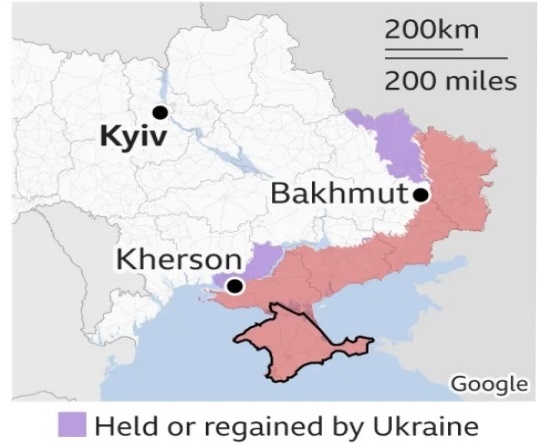
18 Apr,25 – https://www.rt.com/news/615961-russia-ukraine-peace-us/
Washington’s offer also reportedly envisions easing sanctions on Moscow and ending Kiev’s NATO aspirations.
The US has presented its allies with details of its peace plan to bring the conflict between Russia and Ukraine to an end, Bloomberg reported on Friday, citing European officials familiar with the matter.
The proposal, outlined during a meeting in Paris on Thursday, reportedly includes easing sanctions on Russia, as well as terminating Ukraine’s aspirations to join NATO. The roadmap would effectively freeze the conflict and leave former Ukrainian territories that are part of Russia under Moscow’s control, the sources suggested.
One of the officials told Bloomberg that the proposal still had to be discussed with Kiev, adding that the plan would not actually amount to a definitive conflict settlement. Kiev’s European backers would not recognize the territories as Russian, the source suggested.
The US delegation at the Paris meetings, which involved senior officials from several countries, was led by Secretary of State Marco Rubio and White House special envoy Steve Witkoff. They met with French President Emmanuel Macron and also held discussions with top officials from France, Germany, the UK, and Ukraine.
Earlier on Friday, Rubio signaled Washington was ready to “move on” if a way to end the hostilities between Moscow and Kiev could not be found “within days.”
“We need to figure out here now, within a matter of days, whether this is doable in the short term. Because if it’s not, then I think we’re just going to move on,” Rubio told reporters before departing from France.
Moscow has signaled a full ceasefire with Ukraine was highly unlikely, citing Kiev’s violations of previous deals. Speaking to reporters at the UN headquarters on Thursday, Russian envoy Vassily Nebenzia said there are “big issues with the comprehensive ceasefire,” recalling the fate of the now-defunct Minsk agreements, which were “misused and abused to prepare Ukraine for the confrontation.”
The diplomat also cited repeated Ukrainian violations of a US-brokered 30-day moratorium on energy infrastructure strikes, implemented on March 18.
“How close we are to the ceasefire is a big question to me personally, because, as I said, we had an attempt at a limited ceasefire on energy infrastructure, which was not observed by the Ukrainian side. So, in these circumstances, to speak about a ceasefire is simply unrealistic at this stage,” Nebenzia said.
1 This Month

Read the Public Inquiry Report, the Commissioners’ report, Surrendering Australia: The AUKUS Deception is available to download for free at aukuspublicinquiry.com. Or just watch the replay of the National Press Club Luncheon.



19 November – Webinar – The Reality of Reprocessing
Time: 11:00 AM Pacific Time (US & Canada) / 2:00 PM Eastern / 7:00 PM UK / 8:00 PM CET
Register for the Zoom Event Here



Shut down the radiation-damaged Heysham nuclear reactors now
To see nuclear-related stories in greater depth and intensity – go to https://nuclearinformation.wordpress.com

Say No to NASA’s Reckless Nuclear Reactor on the Moon
Say No to NASA’s Reckless Nuclear Reactor on the Moon
-
Archives
- November 2026 (109)
- October 2026 (302)
- September 2026 (339)
- August 2026 (330)
- July 2026 (355)
- June 2026 (287)
- May 2026 (306)
- April 2026 (356)
- March 2026 (251)
- February 2026 (267)
- January 2026 (308)
- December 2025 (358)
-
Categories
- 1
- 1 NUCLEAR ISSUES
- business and costs
- climate change
- culture and arts
- ENERGY
- environment
- health
- history
- indigenous issues
- Legal
- marketing of nuclear
- media
- opposition to nuclear
- PERSONAL STORIES
- politics
- politics international
- Religion and ethics
- safety
- secrets,lies and civil liberties
- spinbuster
- technology
- Uranium
- wastes
- weapons and war
- Women
- 2 WORLD
- ACTION
- AFRICA
- Atrocities
- AUSTRALIA
- Christina's notes
- Christina's themes
- culture and arts
- Events
- Fuk 2022
- Fuk 2023
- Fukushima 2017
- Fukushima 2018
- fukushima 2019
- Fukushima 2020
- Fukushima 2021
- general
- global warming
- Humour (God we need it)
- Nuclear
- RARE EARTHS
- Reference
- resources – print
- Resources -audiovicual
- Weekly Newsletter
- World
- World Nuclear
- YouTube
-
RSS
Entries RSS
Comments RSS

