Stabilizing the U.S.-China Rivalry.

| RAND think tank, famous for its influential policy papers which have shaped US-Russian relations, has released an eye-opening call for a change of course on China. This comes by way of the latest Trump-China escalations which, it appears, have greatly worried insiders of the ‘deep state’ system; enough so that for once they have begun swallowing their pride and envisioning a calmer, more placating approach toward China so as not to upset the global status quo too much. |
Michael J. Mazarr, Amanda Kerrigan, Benjamin Lenain, Oct 14, 2025, https://www.rand.org/pubs/research_reports/RRA4107-1.html?utm_source=substack&utm_medium=email
The geopolitical rivalry between the United States and China embodies risks of outright military conflict, economic warfare, and political subversion, as well as the danger that tensions between the world’s two leading powers will destroy the potential for achieving a global consensus on such issues as climate and artificial intelligence. Moderating this rivalry therefore emerges as a critical goal, both for the United States and China and for the wider world.
The authors of this report propose that, even in the context of intense competition, it might be possible to find limited mechanisms of stabilization across several specific issue areas. They offer specific recommendations both for general stabilization of the rivalry and for three issue areas: Taiwan, the South China Sea, and competition in science and technology.
Key Findings
Several broad principles can guide efforts to stabilize intense rivalries
- Each side accepts that some degree of modus vivendi must necessarily be part of the relationship.
- Each side accepts the essential political legitimacy of the other.
- In specific issue areas, especially those disputed by the two sides, each side works to develop sets of shared rules, norms, institutions, and other tools that create lasting conditions of a stable modus vivendi within that domain over a specific period (such as three to five years).
- Each side practices restraint in the development of capabilities explicitly designed to undermine the deterrent and defensive capabilities of the other in ways that would create an existential risk to its homeland.
Each side accepts some essential list of characteristics of a shared vision of organizing principles for world politics that can provide at least a baseline for an agreed status quo.- There are mechanisms and institutions in place — from long-term personal ties to physical communication links to agreed norms and rules of engagement for crises and risky situations — that help provide a moderating or return-to-stable-equilibrium function.
Recommendations
Six broad-based initiatives can help moderate the intensity of the U.S.-China rivalry
- Clarify U.S. objectives in the rivalry with language that explicitly rejects absolute versions of victory and accepts the legitimacy of the Chinese Communist Party.
- Reestablish several trusted lines of communication between senior officials.
- Improve crisis-management practices, links, and agreements between the two sides.
- Seek specific new agreements — a combination of formal public accords and private understandings — to limit the U.S.-China cyber competition.
Declare mutual acceptance of strategic nuclear deterrence and a willingness to forswear technologies and doctrines that would place the other side’s nuclear deterrent at risk.- Seek modest cooperative ventures on issues of shared interest or humanitarian concern.
More-specific strategies should guide efforts to stabilize the issues of Taiwan, the South China Sea, and competition in science and technology
- Stabilizing the Taiwan issue should focus on creating the maximum incentive for Beijing to pursue gradual approaches toward unification.
- For the South China Sea, combine deterrence of military escalation with intensified multilateral and bilateral diplomacy to create a medium-term route to a peaceful solution as the default international process and expectation.
- In the U.S.-China science and technology rivalry, manage the worst aspects of emerging technologies for mutual security and the condition of the rivalry, and step back from the most extreme versions of efforts to undermine the other side’s progress.
ED MILIBAND’S NUCLEAR NIGHTMARES
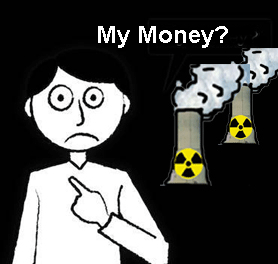
Jonathon Porritt, 22 Oct 25, https://jonathonporritt.com/uk-nuclear-subsidies-desnz-spending/
Meanwhile, in a parallel universe, the legions of nuclear fat cats residing here in the UK are smiling very broadly indeed. It would appear that both Rachel Reeves and Ed Miliband have nothing better to do with our money, as taxpayers, than to go on filling up their subsidy saucers more or less on demand.
Taxpayers really don’t know very much about how DESNZ spends our money. More problematically, not a lot of the UK’s more or less mis-informed energy correspondents are particularly interested in helping taxpayers to understand what’s really going on – for the most part because they’re ‘ideologically captured’, with very little interest in the truth.
A bit harsh? Well, why is it, for instance, that not one of them provides any serious analysis of DESNZ’s annual expenditure? Not least as the details of this (on p.18 of its 2024-2025 Annual Report & Accounts) are completely mind-blowing. To summarise:
DESNZ TOTAL DEPARTMENTAL SPEND
Total departmental spend: £8.6 billion
Total spend on nuclear power: £5.1 billion (60%)
Total spend on everything else: £3.5 billion (40%)
See what I mean? Literally mind-blowing! A few more details on the nuclear side of things:
*Great British Nuclear: £26 million (the more or less useless quango overseeing this fiasco).
*Nuclear Decommissioning Agency : £3 billion (dealing with the legacy of past nuclear programmes).
*Support for Sizewell C power station: £1.67 billion.
*UK Atomic Energy Agency (UKAEA): £400 million (doing bonkers stuff like nuclear fusion).
That’s the size of the nuclear sink hole: roughly £5.1 billion! Leaving roughly £3.5 billion for everything else, including all direct support for renewables, ‘delivering affordable energy’, science, research and ‘capability’, as well as other arm’s length bodies. Moreover, even that low figure is not quite what it seems: roughly £450 million is set aside for another of Ed Miliband’s sink holes, namely Carbon Capture and Storage.
Do you need any more persuading that this is obviously a completely mis-titled Department: instead of DESNZ, it really should be called DNPB&B – the Department of Nuclear Power and Bits & Bobs.
Where the hell are you, Rachel Reeves? For those sick of your hangdog ‘black hole blathering‘, it would be wonderful to think you might instruct just a few of your civil servants to instruct the ever-well-meaning Ed Miliband to undertake an exercise in zero budgeting for FY 25/26. Great British Nuclear could go at a stroke of a pen – no one would notice. The UKAEA’s budget could be halved, leaving it to focus on decommissioning redundant reactors and dealing with nuclear waste. Subsidies for Sizewell C could be massively reduced – although the Department did such a poor deal with various private sector investors that there will be significant compensation to be paid.
Sadly, of course, there is nothing that can be done about the £3 billion set aside, EVERY YEAR, for dealing with the legacy of earlier nuclear programmes – decommissioning, site security, managing nuclear waste and so on. Nuclear campaigners have struggled for years to explain that our ‘nuclear legacy’ is in fact our ‘current nuclear reality’, and that this is a figure which can only grow and grow over the years. The Public Accounts Committee looked recently at the cost of decommissioning many of the facilities at Sellafield, currently assessed at £396 million through to 2070, and couldn’t have made their incredulity any clearer. On top of that, we have the looming additional cost of building a long-term Geological Disposal Facility, for which taxpayers will be paying hundreds of billions of pounds through to the end of this century.
Ask the Treasury or officials at DNPN&B what they believe that total legacy figure will be in FY2030/2031,or FY2040/2041, and you can be absolutely guaranteed to get literally no answer at all.
And yet – AND YET – we go on pouring yet more billions into NEW waste-generating nuclear monstrosities like Hinkley C and now Sizewell C.
It’s nearly 50 years since the highly influential Flowers Report was published in 1976. Its single most important recommendation was as follows:
“There should be no commitment to a large programme of nuclear fission power until it has been demonstrated beyond reasonable doubt that a method exists to ensure the safe containment of long-lived, highly radioactive waste for the indefinite future.”
We are, truly, led by nuclear donkeys.
Meanwhile, back in the real world, all this never-ending filling-up of the industry’s subsidy saucers has massive opportunity costs for what we should really be doing with precious taxpayers’ money.
As in:
- getting as enthusiastically as possible behind the potential for tidal power (see yesterday’s blog).
- getting as enthusiastically as possible behind retrofitting and the green economy (see tomorrow’s blog).
I’ll return to the whole question of just how many billions Rachel Reeves could divert from these nuclear sink holes as we get a little closer to the budget in November.
Managing our ‘Energy Legacy’: £85 million (roughly half the total figure).
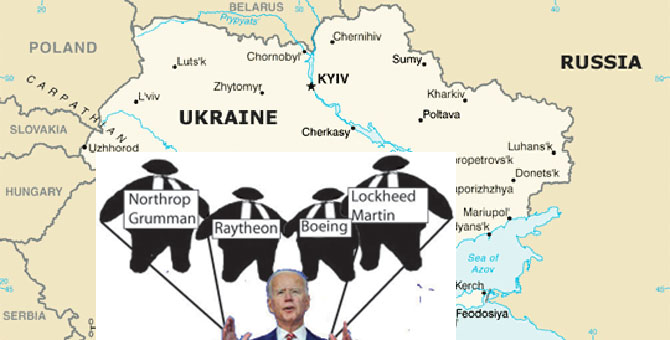
Biden hands off Ukraine war to Trump…who now owns it.
Walt Zlotow, West Suburban Peace Coalition, Glen Ellyn IL, 25 Oct 25
President Biden provoked the Russian invasion of Ukraine for 13 months with reckless NATO expansion before Russia said ‘enough’ and pushed back violently. Biden then spent his last 37 months pouring over $150 billion in military aid which proved worthless in achieving Ukrainian victory. All it did was prolong Ukraine’s suffering with hundreds of thousands dead and wounded in a shattered country.
2024 candidate Trump called out this senseless stupidity for what is was, Biden’s war that Trump wouldn’t have provoked had he won in 2020. He further boasted he’d end it on first day of second term.
Tho Trump largely stopped the direct funding that Biden kept squandering till his last sorrowful day, he’s still selling weapons to the European dead-enders UK, France, Germany and others to gift Ukraine. One day Trump says Ukraine should quit without return of a single lost square mile; next day he claims Ukraine can retrieve it all. One day he ponders sending Ukraine Tomahawk missiles likely to provoke nuclear war; next day he tells Ukraine President Zelensky, who flew 4,867 miles to beg for them…’Faggedaboudit.’
Trump’s got bigger war fish to fry than the lost cause of Ukraine. He’s still supporting Israel’s genocidal ethnic cleansing of Gaza, his fake ceasefire notwithstanding. He’s getting ready to bomb Venezuela, not content with just blasting small, unarmed Venezuelan boats to smithereens. He may be planning another round of air strikes on Iran in his quest at regime change and destabilization there.
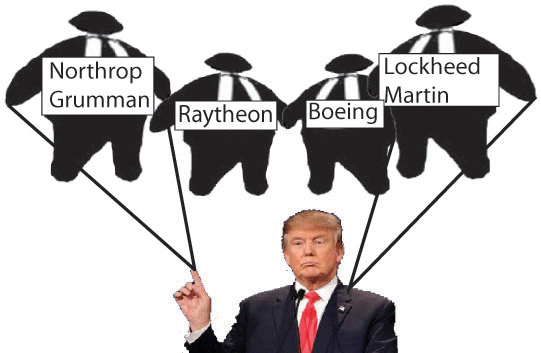
Ukraine will collapse on Trump’ watch. Biden never wavered in support of a war impossible to win. Trump, however, wavered in his boast he would end Biden’s war, allowing it to continue incurring hundreds of thousands more casualties and more lost Ukrainian territory. By so doing, history will record Trump’s ownership of America’s failed proxy war to weaken Russia at the end, as surely as it records Biden’s ownership at the beginning.
Pentagon Creates New Legion of PR Toadies

Malcolm Ferguson (New Republic, 10/22/25): “It should alarm every American that the defense secretary is making an effort to fill the press corps with people who will never hold him accountable.”
Ari Paul, October 24, 2025, https://fair.org/home/pentagon-creates-new-legion-of-pr-toadies/
When the Pentagon announced that reporters would only be credentialed if they pledged not to report on documents not expressly released by official press handlers, free press advocates, including FAIR (9/23/25), denounced the directive as an assault on the First Amendment.
The impact of this rule cannot be understated—any reporter agreeing to such terms is essentially a deputized public relations lackey.
Many journalists, thankfully, displayed solidarity with each other and the idea of a free press when they resisted the state’s new censorship efforts. “Dozens of reporters turned in access badges and exited the Pentagon…rather than agree to government-imposed restrictions on their work,” reported the AP (10/15/25).
CNN’s Brian Stelter (10/15/25) reported:
A flyer with the words “journalism is not a crime” appeared Tuesday on the wall outside the “Correspondents’ Corridor” where journalists operate at the Pentagon. It was a silent protest of Defense Secretary Pete Hegseth’s new policy that severely restricts press access.
The policy criminalizes routine reporting, according to media lawyers and advocates, so news outlets are refusing to abide by it. Instead, they are giving up their access to the building, while vowing to continue thoroughly covering Hegseth and the military from outside the Pentagon’s five walls.
Reuters (10/15/25) noted that it and at least 30 other outlets refused to sign the pledge, citing the others:
Associated Press, Bloomberg News, the New York Times, the Wall Street Journal, the Washington Post, CNN, Fox News, CBS, NBC, ABC, NPR, Axios, Politico, the Guardian, the Atlantic, The Hill, Newsmax, Breaking Defense and Task & Purpose.
Good on these outlets for showing some spine against an administration for whom anti-media bellicosity has been a central feature of its authoritarian impulse. It’s a sign that perhaps at least some of them can toughen up against the administration’s threats against democratic and constitutional order. Even some outlets on the right–Murdoch properties Fox News and Wall Street Journal, and Christopher Ruddy’s Newsmax–declined to be part of Hegseth’s captive news corps.
‘The new Pentagon press corps’
However, the Pentagon is touting the success of its draconian order. “Today, the Department of War is announcing the next generation of the Pentagon press corps,” Pentagon spokesperson Sean Parnell announced on X (10/22/25):
Over 60 journalists, representing a broad spectrum of new media outlets and independent journalists, have signed the Pentagon’s media access policy and will be joining the new Pentagon press corps….
New media outlets and independent journalists have created the formula to circumvent the lies of the mainstream media and get real news directly to the American people. Their reach and impact collectively are far more effective and balanced than the self-righteous media who chose to self-deport from the Pentagon. Americans have largely abandoned digesting their news through the lens of activists who masquerade as journalists in the mainstream media. We look forward to beginning a fresh relationship with members of the new Pentagon press corps.
In fact, this “broad spectrum” of outlets represents the fringes of the right, including One America Network, Epoch Times, Gateway Pundit, Human Events, LindellTV, Frontlines and the National Pulse (New York Times, 10/22/25).
These outlets are old and new. Human Events shaped its worldview in early Cold War nationalism. Frontlines is a project of the late Charlie Kirk’s Turning Point USA. LindellTV is the brainchild of MyPillow CEO and 2020 election denialist Mike Lindell (Guardian, 5/4/25; BBC, 6/19/25).
The Times quoted LindellTV bragging about its elevation into the halls of power in twisted, Orwellian speak: “We are officially part of the new Pentagon press corps, this is a major win for free speech and real journalism.”
The Gateway Pundit blog has been around since 2004, long enough to have pushed birther conspiracy theories before it promoted 2020 stolen election theories. National Pulse (slogan: “radically independent”) is more recent, founded and edited by a former chief advisor to British far-right leader Nigel Farage.
One America Network, which FAIR founder Jeff Cohen observed “makes Fox News sound like Democracy Now!,” was founded in 2013 so that AT&T could add a second right-wing network to its DirecTV platform (FAIR.org, 10/15/21). Epoch Times is affiliated with China’s Falun Gong movement, and comes to its Trumpy politics through Chinese anti-Communism.
Conspiracy outlet InfoWars—famous for losing a $1.4 billion defamation judgement for falsely stating the Sandy Hook Elementary School shooting was faked (Reuters, 10/14/25), as well as something about chemicals turning frogs gay (InfoWars, 8/28/24)—is also reportedly in the revamped press pool. “Breanna Morello is responsible for covering the Pentagon on behalf of Infowars and will do so from outside of DC,” the Hill (10/23/25) reported.
‘Maximum lethality
This new directive didn’t come about in a vacuum; the Pentagon is closing its doors to the press, and by extension the rest of the public, at a time of ramping up violence off the coasts of South America (AP, 10/22/25) and elsewhere. Hegseth couldn’t have been clearer in his recent speech to the military’s top officers when he said the Pentagon’s only mission was “warfighting, preparing for war and preparing to win, unrelenting and uncompromising in that pursuit,” highlighting a focus on “common sense, maximum lethality and authority for warfighters.”
President Donald Trump, despite his claims of ending wars (CNN, 10/17/25), is certainly acting like he wants more war in the future, a crucial development for the public. “Trump Beats the Drums of War for Direct Action in Venezuela,” rang a headline in the Washington Post (10/22/25), with the subhead:
The administration has surged warships, planes and troops to the Caribbean for drug interdiction. Some see the ultimate goal as toppling Venezuelan President Nicolás Maduro.
The Trump administration has already carried out attacks on Iran (Axios, 6/22/25) and Yemen (BBC, 4/18/25). And the administration “continues to expand troop deployments to US cities, escalating a campaign to assert military power at home with little precedent in US history” (Bloomberg, 10/6/25).
The Economist (10/23/25) warned that the Trump administration, which has invoked cartel violence to justify the president’s lethal hostility toward Venezuela (Center for Strategic and International Studies, 10/3/25), was turning the War on Drugs into a full-scale, international military campaign with little restraint. The magazine said:
Past presidents have also stretched their powers to wage wars and even to start them. Indeed, Mr. Trump is gesturing at precedents they set. But “this administration is going further, and going further with less public, detailed defense of what they’re doing,” says Peter Feaver, a political scientist at Duke University. “I think the biggest difference is that Congress is not holding this administration to account in the way that they did even to Trump 1.0, let alone to Biden and to Bush.”
Just because Mr. Trump has labeled some migrants and even leftist opponents as “terrorists” does not mean he will use the armed forces against them. But right now, it’s not clear what, besides his own inclinations, might prevent him.
This new loyalty pledge has now chipped away at another restraint: the press. It is true, as many FAIR readers know, that the Pentagon has sold wars to the public through the establishment media without these draconian credentialing pledges (Extra!, 1–2/90, 11–12/90, 7–8/99; FAIR.org, 3/19/07). However, what we are likely to see now is an army of meme-obsessed, MAGA sycophants posing as independent journalists obediently copy-and-pasting Pentagon press releases into articles, selling an imperialist agenda to the president’s right-wing, nationalist base. That’s chilling news for those of us living here, and for any country that might sit in the crosshairs of the Trump administration’s imperial ambitions.
There is some hope that military reporters will continue to do their jobs and receive information from the inside via channels that exist outside the actual walls of the Pentagon. Atlantic correspondent Nancy Youseff (10/15/25), one of the recently departed from the official pool, said “mid-level troops have been reaching out to me, unsolicited, and promising that they would keep providing journalists with information” in order to “uphold the values embedded in the Constitution.”
If legacy publications are truly horrified by these developments, they will get more creative in their methods of reporting when it comes to the Pentagon’s advances. That can result in more critical and less obedient coverage of the war machine, which would be a good thing, for once.
Trump says he will inform Congress of plans to strike land-based cartel targets in Venezuela

CLG News, Oct 24, 2025. https://legitgov.substack.com/p/trump-says-he-will-inform-congress?utm_source=post-email-title&publication_id=3203936&post_id=176990365&utm_campaign=email-post-title&isFreemail=true&r=1ise1&triedRedirect=true&utm_medium=email
Trump says he will inform Congress of plans to strike land-based cartel targets in Venezuela | 23 Oct 2023 | President Trump said Thursday he will inform Congress of his plans to attack land-based cartel targets in Venezuela as he looks to expand his thus-far seaborne military campaign.
“We’re going to go [to Congress]. I don’t see any loss in going — no reason not to,” Trump told reporters at a White House event touting a federal crackdown that’s arrested roughly 3,200 alleged drug cartel members over the past month. “You know they will always complain, ‘Oh, we should have gone.’ So we’re going to definitely,”
Trump said. Trump has threatened land-based strikes for weeks after the administration on Sept. 2 began targeting vessels smuggling drugs off the Caribbean coast of Venezuela. “I don’t think we’re going to necessarily ask for a declaration of war. I think we’re just going to kill people that are bringing drugs into our country. Okay? We’re going to kill them, you know, they’re going to be like dead, okay?” Trump said.
Trump announces military strike kills narcoterrorists, destroys drug submarine | 18 Oct 2025 | President Donald Trump said Saturday that a U.S. military strike destroyed a “very large drug-carrying submarine” in the Caribbean this week, killing two suspected narcoterrorists and capturing two others alive, while releasing video of the strike.
In a statement posted to Truth Social, Trump said the vessel was carrying mostly “fentanyl and other narcotics” toward the U.S. on a “well known narcotrafficking transit route.” He claimed the interdiction prevented as many as 25,000 American overdose deaths.
“It was my great honor to destroy a very large DRUG-CARRYING SUBMARINE,” Trump wrote. “U.S. Intelligence confirmed this vessel was loaded up with mostly Fentanyl… There were four known narcoterrorists on board. Two of the terrorists were killed. The two surviving terrorists are being returned to their Countries of origin, Ecuador and Colombia, for detention and prosecution.”
Iran, Russia, China question IAEA’s mandate after end of UN resolution.

Iran International 25th Oct 2025
Iran, Russia and China have told the International Atomic Energy Agency that its monitoring and reporting linked to the 2015 nuclear deal should end following the expiry of the UN resolution that endorsed it, Iranian media said on Friday.
Kazem Gharibabadi, Iran’s deputy foreign minister, said the three countries sent a joint letter to IAEA Director General Rafael Grossi arguing that Resolution 2231, which endorsed the 2015 Joint Comprehensive Plan of Action (JCPOA), formally expired on Oct. 18.
He said the letter followed a previous joint message the countries had sent to the UN secretary-general and the president of the Security Council, declaring the resolution terminated. “All provisions of Resolution 2231 have now lapsed, and attempts by European countries to reactivate sanctions through the so-called snapback mechanism are illegal and without effect,” Gharibabadi said, according to state media………………………………………………..
Grossi urges diplomacy, notes Iran stays in NPT
IAEA chief Rafael Grossi said earlier this week that diplomacy must prevail to avoid renewed conflict and noted that Iran had not withdrawn from the Nuclear Non-Proliferation Treaty despite tensions. He said continued cooperation between Iran and the agency was vital to prevent escalation.
Grossi told Le Temps newspaper on Wednesday that Iran holds enough uranium to build ten nuclear weapons if it enriched further, though there is no evidence it seeks to do so. He said Israeli and US airstrikes in June had caused “severe” damage to Iran’s nuclear facilities in Isfahan, Natanz and Fordow, but that the country’s technical know-how “has not vanished.”
Tehran and the IAEA have yet to agree on a framework to resume full inspections at the bombed sites. Grossi said Tehran was allowing inspectors access “in dribs and drabs” for security reasons, adding that efforts were continuing to rebuild trust and restore routine monitoring. https://www.iranintl.com/en/202510255409
Miliband starts fight with SNP over deploying new nuclear in Scotland
By Tom Pashby
Miliband starts fight with SNP over deploying new nuclear in Scotland.
Energy secretary Ed Miliband has asked Great British Energy – Nuclear to
explore deploying new nuclear at Torness, Hunterston and potentially other
parts of Scotland, despite the fact that the SNP-run Scottish Government
does not allow new nuclear developments in Scotland.
New Civil Engineer 24th Oct 2025, https://www.newcivilengineer.com/latest/miliband-starts-fight-with-snp-over-deploying-new-nuclear-in-scotland-24-10-2025/
MPs ‘deeply concerned’ about government’s proposed new nuclear siting policy
By Tom Pashby
MPs ‘deeply concerned’ about government’s proposed new nuclear
siting policy. MPs have said they are “deeply concerned” that the
government’s proposed new siting policy for new nuclear reactors “fails
to present a truly joined-up approach across planning, safety and
environmental regulation”.
New Civil Engineer 24th Oct 2025, https://www.newcivilengineer.com/latest/mps-deeply-concerned-about-governments-proposed-new-nuclear-siting-policy-24-10-2025/
Early engagement launched on £360m nuclear waste capping scheme
By Harmsworth
Nuclear Waste Services (NWS), the state-owned body responsible for
managing the UK’s radioactive waste, has launched early market engagement on a £360m programme to cap and extend the Low Level Waste Repository (LLWR) in Cumbria.
NWS operates the repository on behalf of the Nuclear
Decommissioning Authority (NDA), a non-departmental public body sponsored by the Department for Energy Security and Net Zero.
The scheme will involve installing a permanent engineered cap over disused trenches and Vault 8 at the LLWR site near Drigg. Capping is a method used to isolate radioactive waste from the environment. It involves layering materials such as clay, concrete and geomembranes to prevent water from reaching the waste and to contain any gas emissions.
Construction News 24th Oct 2025,
https://www.constructionnews.co.uk/civils/early-engagement-launched-on-360m-nuclear-waste-capping-scheme-24-10-2025/
Nuclear construction workers plan third strike.
Construction workers employed by contractors at a nuclear site are to go
on strike for a third time in two months in a dispute over pay. Unite
members at Sellafield in Cumbria will take action from Monday until 2
November after previously striking earlier in October and for four days in
September.
The union said it was because construction workers at other
nuclear projects received pay premiums that contractors at Sellafield did
not match. Sellafield Ltd said it did not directly employ those taking part
in the action but “safety and security” would continue to be its priority
throughout the strike.
BBC 24th Oct 2025,
https://www.bbc.co.uk/news/articles/cwy16l08eldo
To Media, Gaza Ceasefire Holds Despite Repeated Israeli Strikes.

the media unceasingly grant Israel space to present deceitful arguments as credible, without ever emphasizing that Hamas is not the one that is dropping 153 tons of bombs in one day during a supposed “ceasefire.”
Belén Fernández, October 21, 2025, https://fair.org/slider/to-media-gaza-ceasefire-holds-despite-repeated-israeli-strikes/
On October 10, a ceasefire was declared in the Gaza Strip, where more than 67,000 Palestinians were officially killed in just over two years of Israel’s United States-backed genocide. With an estimated 10,000 bodies still buried under the all-consuming rubble, and indirect deaths unaccounted for, this number is almost certainly a drastic underestimate. Shortly after the ceasefire took effect, US President Donald Trump pronounced the war in Gaza “over,” proclaiming that “at long last we have peace in the Middle East.”
In the ten days following the implementation of the ostensible truce, the Israeli military reportedly killed at least 97 Palestinians in Gaza and wounded 230, violating the ceasefire agreement no fewer than 80 times. One might have expected, then, to see a headline or two along the lines of, I dunno, “Israel Violates Ceasefire”—or maybe “So Much for ‘Peace’ in Gaza.”
No such headlines turned up in the Western corporate media—not that there weren’t some pretty spectacular violations to choose from. On October 17, for example, 11 members of the Abu Shaaban family, including seven children and three women, were blasted to bits in Gaza City’s Zeitoun neighborhood while attempting to reach their home. According to the Israelis, the family’s vehicle had trespassed over the so-called “yellow line,” the invisible boundary arbitrarily demarcating the more than 50% of Gazan territory still occupied by the genocidal army.
Then on October 19, Israel bombed the living daylights out of central and southern Gaza and killed dozens after alleging a ceasefire violation by Hamas—an allegation that not even Trump found convincing, but that enabled such impressively passive headlines as “Strikes Hit Gaza After Truce Violations Alleged” (Guardian, 10/19/25). Once the carnage was complete, the BBC (10/19/25) assured readers that “Israel Says It Will Return to Ceasefire After Gaza Strikes.” For his part, Israeli Prime Minister Benjamin Netanyahu informed the Knesset that the Israeli military had dropped 153 tons of bombs on Gaza during this particular, um, pause in the ceasefire.
While most media outlets consistently describe the ceasefire as “fragile” (NBC News, 10/20/25) and “delicate” (ABC News, 10/20/25), they somehow can’t bring themselves to state the obvious: If you don’t cease firing, it’s not a ceasefire. Of course, the refusal to call a spade a spade should perhaps come as no surprise from an industry that continues to peddle the narrative of a “ceasefire” in Lebanon despite acknowledging “near-daily strikes” (New York Times, 7/9/25) on the country by Israel and the killing of some 250 people in the first seven months following the truce declaration last Novemberin the first seven months following the truce declaration last November.
‘Both sides have accused the other’
There is also the pernicious media tendency of allowing equal weight to ceasefire breach allegations by Israel and Hamas given the former’s mendacious—not to mention genocidal—track record. This mendaciousness has been on display for decades, most prominently in Israel’s eternal claim to be fighting “terrorists”—a fight that somehow never fails to kill thousands upon thousands of civilians; at least 20,000 of those killed in the latest two-year showdown were children, with a whole lot more presumed to be buried beneath the rubble. In the episode involving the Abu Shaaban family, the Israelis invoked a typical lie from their vast arsenal: a “suspicious vehicle” had approached Israeli troops “in a way that caused an imminent threat to them”—so they killed the family, and that was that.
And yet the media unceasingly grant Israel space to present deceitful arguments as credible, without ever emphasizing that Hamas is not the one that is dropping 153 tons of bombs in one day during a supposed “ceasefire.”
Case in point: an NBC News dispatch (10/19/25) titled “Israel and Hamas trade accusations of ceasefire violations,” in which we are told that “both sides have accused the other of violating the terms of the deal.” The next sentence outlines Israel’s primary ongoing gripe regarding Hamas’s alleged ceasefire transgressions: “Israel says Hamas is delaying the release of the bodies of hostages held inside Gaza, while Hamas says it will take time to search for and recover remains.”
In accordance with the ceasefire agreement, Hamas promptly returned all living hostages in its possession to Israel, and it has returned the remains of several more. But the group has said it is unable to recover the remaining bodies because they lie under formidable quantities of rubble, thanks to Israel’s recent pulverization of the enclave. Rather than allowing the necessary machinery into Gaza to assist with excavating the remains that Israel so urgently demands, Netanyahu has instead announced that the Rafah border crossing between Gaza and Egypt will remain closed until Hamas “fulfills” its part of the deal.
Any logical observer might conclude that Israel is actively endeavoring to sabotage the “ceasefire.” But the corporate media are not in the business of logical observation. In its writeup, titled “Hamas Returns Bodies as Fragile Gaza Ceasefire Holds,” the Financial Times presents as entirely legitimate an arrangement in which “Israeli officials have accused Hamas of returning the bodies too slowly, and threatened to limit the amount of humanitarian aid allowed into Gaza in an effort to pressure the militant group to accelerate the returns” (10/19/25).
Anyway, nothing to see here: just some more casual enforced starvation and illegal aid deprivation in an already famine-stricken territory. It’s all in a day’s work during a “fragile ceasefire.”
Ceasefire ‘holding’?
In the aftermath of the Abu Shaaban family massacre, CNN reported (10/17/25) that the ceasefire was “holding”—albeit not without “coming under strain,” naming as the first culprit the “failure of Hamas to return all the bodies.” The question of the return of the bodies occupied the first 10 paragraphs of the piece, so that when CNN also named “the initially slow entry of aid” into Gaza and the “continued, if isolated, incidents of killings of Palestinians in Israeli strikes” as contributing to the “strain,” it had already been made clear to the reader which facet of the alleged violations was the most important.
The next day, NBC News employed a similarly diplomatic approach to Israel’s ongoing lethal operations, noting that “even as the ceasefire between Hamas and Israel holds, Palestinians have been killed by Israeli forces” (10/18/25). Again, the media are apparently incapable of coming right out and stating that Israel has unequivocally violated the ceasefire, or that a ceasefire is not a ceasefire if one side is permitted to engage in continued slaughter.
According to the delusions of the Washington Post (10/15/25), meanwhile, Israel is “largely restrained from attacking Hamas under the ceasefire sponsored by Trump,” resulting in a situation in which “Hamas’s enduring grip has significant implications for the future of Gaza and President Donald Trump’s peace plan.” As usual, Israel is let off the hook for its campaign to literally annihilate Gaza’s future.
And yet this particular intervention by the Post is at least less batshit crazy than another one courtesy of columnist George F. Will (10/13/25), who has determined that “primary credit for the Gaza ceasefire” goes to the Israeli army and Netanyahu.
I would advise anyone with blood pressure problems to avoid so much as glancing at the column in question, but the gist of his argument is basically that genocide was a “necessary precondition for the cessation of warfare.” (Secondary credit goes to the US for “enabl[ing] Israel’s victory by not restraining its self-defense.”) It would seem, of course, that not launching a genocide in the first place might be an easier way to avoid warfare—a “cessation” of which has not been achieved in Gaza anyway.
“Greatest threat” to peace?
Indeed, while most corporate media commentary is not as transparently deranged as Will’s, there persists the notion that it is Hamas, not Israel, that is the greatest obstacle to peace—see, for instance, CNN‘s (10/17/25) “Why Hamas Remains the Greatest Threat to Trump’s Gaza Plan.” When Reuters (10/19/25) listed the “formidable obstacles to Trump’s plan to end the war,” it named “Hamas disarming, the governance of Gaza, the make-up of an international ‘stabilization force,’ and moves towards the creation of a Palestinian state” that have yet to be resolved. Notice which actor is missing.
A typical Associated Press dispatch (10/13/25) headlined “Despite Momentous Ceasefire, the Path for Lasting Peace and Rebuilding in Gaza Is Precipitous” explains that “how and when Hamas is to disarm, and where its arms will go, are unclear, as are plans for Israel’s withdrawal from Gaza.” Never do such articles find the need to point out that Israel is a state whose very existence is predicated on ethnic cleansing and perpetual war—or to cite such relevant findings as the determination by a United Nations commission of inquiry that Israel has committed genocide in Gaza.
The Genocide Convention defines the phenomenon as “acts committed with intent to destroy, in whole or in part, a national, ethnical, racial or religious group.” Such acts include “killing members of the group,” “causing serious bodily or mental harm to members of the group,” and “deliberately inflicting on the group conditions of life calculated to bring about its physical destruction in whole or in part.”
The inconceivable bodily and mental devastation that Israel has deliberately inflicted on the people of Gaza clearly continues despite Trump’s announcement that the war in Gaza is “over.” And as Israel continues to violate the so-called “ceasefire” while attempting to redirect blame to justify its own unceasing aggression, the media’s lack of scrutiny only abets those violations.
Trump orders CIA to attack Venezuela: US military kills innocent people in war based on lies
The USA is waging war on Venezuela. Trump authorized CIA “lethal operations” to try to overthrow President Nicolás Maduro. The US military is killing innocent fishermen from Colombia and Trinidad.
Geopolitical Economy, by Ben Norton. 19 Oct 25
The United States is waging war on Venezuela. This is not a hypothetical; it is happening.
The Donald Trump administration is using extreme violence to try to overthrow Venezuela’s President Nicolás Maduro.
The US military has killed dozens of Venezuelans in strikes on boats in international waters without charge or trial. UN experts have publicly condemned these attacks as “extrajudicial executions” that violate international law.
It is not only Venezuelans who have been executed by the US military. Among the victims of these illegal US attacks have been fishermen who were citizens of Colombia and Trinidad and Tobago.
Family members of the victims, from a Trinidadian fishing village, were interviewed by The Guardian, and they condemned Trump for “killing poor people”, arguing that he simply wants to take their “gas and their oil”.
In other words, the Trump administration is killing innocent people from multiple countries as part of its war on Venezuela.
US military threatens Venezuela with B-52 bombers
Week by week, Trump is ratcheting up the US war on Venezuela.
The US military has approximately 10,000 troops in the Caribbean, along with eight warships and a submarine, all preparing to escalate.
The Trump administration has ordered three B-52 bombers to fly off the coast of Venezuela, threatening to bomb the country.
ABC News published a report on 16 October, writing (all emphasis added):
In less than a week, President Donald Trump has threatened to attack inside Venezuela, confirmed ongoing covert operations inside the country, and ordered bombers capable of dropping nuclear weapons to fly in circles off its coast in what appears to be an unprecedented show of force intended to pressure the Venezuelan president to step down.
Trump orders the CIA to carry out “lethal operations” to provoke regime change in Venezuela
Meanwhile, Trump has admitted that he has authorized the CIA to carry out destabilization operations inside Venezuela.
The public narrative of the US government is that it is supposedly targeting “drug traffickers”. This is not true. The real goal is regime change.
The New York Times interviewed members of the Trump administration, and reported, “American officials have been clear, privately, that the end goal is to drive Mr. Maduro from power”.
Trump has ordered the CIA “to carry out lethal operations in Venezuela”, the Times noted.
“The Trump administration’s strategy on Venezuela, developed by Secretary of State Marco Rubio, with help from John Ratcliffe, the C.I.A. director, aims to oust Mr. Maduro from power”, the Times added.
Rubio is a lifelong neoconservative war hawk. He has spent his entire political career pushing for regime change not only in Venezuela, but also in Cuba and Nicaragua.
During Trump’s first term, when the US launched another coup attempt, Rubio was not in the administration, but he lobbied Trump to invade Venezuela.
Trump discussed his attacks on Venezuela in a press conference at the White House on 15 October.
“Why did you authorize the CIA to go into Venezuela?” a journalist asked the US president.
Trump gave two excuses, falsely claiming that it is because Venezuela is supposedly sending criminals to the US and that he wants to stop “drug trafficking”. Both allegations are not true. They are demonstrable lies that the Trump administration is using to try to justify a war of aggression.
The journalist then asked Trump, “Does the CIA have authority to take out Maduro?”
The US president replied, “Oh, I don’t want to answer a question like that. That’s a ridiculous question for me to be given. Not really a ridiculous question, but wouldn’t it be a ridiculous question for me to answer? But I think Venezuela is feeling heat”.
The CIA’s history of terrorism and coups in Latin America
The CIA has carried out myriad crimes against humanity in Latin America. The US spy agency has armed and trained death squads who have burnt down schools and hospitals and tortured and massacred civilians, like the Contras in Nicaragua in the 1980s.
The CIA has also committed war crimes directly. The CIA put mines in Nicaragua’s ports in the 1980s, in a flagrant violation of international law……………………………………………………………………….
Trump lies about “drug trafficking” to push regime change
The false narrative that the Trump administration is using is that it is attacking Venezuela supposedly in order to stop the “flow of drugs” into the US. This is a lie that has been debunked by multiple sources.
The Financial Times published a lengthy report, citing US officials and Venezuelan opposition figures who have been working closely with the Trump administration, and they admitted that the real goal is regime change.
The US government’s priority “is to force the departure of top Venezuelan government figures, preferably via resignation or an arranged handover — but with the clear threat that if Maduro and his inner circle cling to power, the Americans may use targeted military force to capture or kill them”, the FT wrote.
The Trump administration’s unsubstantiated accusations that Venezuela is a major center of drug production are clearly contradicted by the data compiled by UN experts.
Venezuela is not a major source of drugs, nor is it a key transit country.
According to 2022 data from the United Nations Office on Drugs and Crime (UNODC), 65% of the cocaine in the world is produced in Colombia, which has historically been the closest US ally in Latin America and has been dominated by right-wing, pro-US politicians linked to cartels.
Peru is the second-largest source of cocaine, providing 27% of the global total, followed by Bolivia at 8%. Venezuela’s role is so minor it is insignificant.
US government-funded coup leader María Corina Machado pledged to privatize Venezuela’s oil
The Financial Times noted, “At stake in Venezuela are the world’s largest proven oil reserves and valuable deposits of gold, diamonds and coltan”.
The FT cited an anonymous “American businessman with interests in the country” who revealed, “What Trump wants in Venezuela is oil, minerals and gold… He wants US companies down there investing”.
Far-right Venezuelan coup leader María Corina Machado has openly called for privatizing her country’s natural resources and handing them over to US corporations.
Machado, who has been funded by the US government for more than 20 years, was awarded a so-called “Nobel Peace Prize” due to her violent, US-sponsored regime-change efforts.
Even CNN and ex Biden officials are skeptical of Trump’s “drug trafficking” lies about Venezuela
Immediately after the US government-funded extremist María Corina Machado won the so-called “Nobel Peace Prize”, she was interviewed by CNN.
Machado proudly stated that she supports Trump and the murderous war he is waging against her country. In fact, she called for further military escalation.
“We totally support it”, Machado said, in reference to the US military attacks in the Caribbean…………………………………………………………………………….
Today, the Trump administration is falsely claiming that the Venezuelan government is run by drug cartels. This is totally preposterous and is not supported by any evidence.
In her interview with US government-funded Venezuelan coup plotter María Corina Machado, CNN host Christiane Amanpour pushed back against these false claims.
Amanpour cited a previous interview she did with Juan Sebastián González, who helped oversee US policy toward Latin America in the Joe Biden administration, as the senior director of the National Security Council for the Western Hemisphere.
González admitted that Venezuela is not a major producer of drugs…………………………………………………………..
Trump’s lies about Venezuela are so transparent that even CNN and former Biden administration officials are willing to call them out. But their obvious fraudulence is not stopping the US government from escalating its war of aggression in the Caribbean https://geopoliticaleconomy.com/2025/10/20/trump-cia-attack-venezuela-us-war/
International Court of Justice Finds Israelis Broke Law by Starving Palestinians of Gaza

Juan Cole10/23/2025. https://www.juancole.com/2025/10/israelis-starving-palestinians.html
Ann Arbor (Informed Comment) – The International Court of Justice, established by the UN to adjudicate issues among nations, issued an advisory opinion on Wednesday branding the Israeli blockade on food and medical aid into the occupied Gaza Strip illegal.
I mean, surely this conclusion is simple common sense. You can’t starve people. That’s not only illegal, that is the height of immorality and cruelty. The war criminals who head up the Israeli government hold that they can do whatever they want to people on the grounds that they are Palestinians, or that millions are terrorists, or that there are no innocents among certain populations. No one with a heart and a mind agrees with them. Unfortunately, there are lots of heartless mindless people in the world, some of them extremely powerful.
In a world where International Humanitarian Law is increasingly brazenly flouted, as a way of undermining it and ensuring that its violators retain impunity, the Court upheld the Fourth Geneva Convention of 1949 on occupied populations, as well as the International Covenant on Economic, Cultural and Social Rights of 16 December 1966 (hereinafter the “ICESCR”), a UN instrument that Israel signed.
The Court reminds us, “As an occupying Power, Israel is obliged to ensure the basic needs of the local population, including the supplies essential for their survival. Obligations to this effect are set out in Articles 55 and 56 of the Fourth Geneva Convention.” The obligation is also implied by the UN Charter, to which Israel is a signatory.
The Court adds, “Israel is not only required to perform the positive obligation to ensure essential supplies to the local population “to the fullest extent of the means available to it”, but it is also under a negative obligation not to impede the provision of these supplies or the performance of services related to public health.”
Instead of fulfilling these obligations, the Israeli government created a famine in Gaza by blocking the entry of UN food trucks: “According to the IPC, by 12 May 2025, half of the population of the Gaza Strip faced emergency levels of food insecurity . . . and nearly half a million people faced catastrophic levels of food insecurity.”
Israel also has an obligation to avoid killing aid workers. Even where an aid worker might engage in resistance activities, Israel can only kill this person while they are actively engaged in warfare, not while they are in scrubs operating on a patient. The ICJ notes, “that, according to the United Nations, between 7 October 2023 and 20 August 2025, at least 531 humanitarian workers, including 366 United Nations personnel, were killed in the Gaza Strip . . .”
That is, Israeli has a positive obligation to ensure that the population it occupies is well-fed and gets health care. But it also has a negative obligation, where it fails in the positive one, to avoid interfering with the provision of such aid by the UN, UNRWA and other aid agencies, to ensure Palestinians are not malnourished or deprived of medical care.
The Court notes that the Geneva Convention prohibits the forcible expulsion of civilian populations from occupied territories, as does the UN Charter.
But, “According to some participants, including the United Nations, the Israeli military has issued numerous displacement orders, ‘forcing hundreds of thousands of people into overcrowded areas and restricting the United Nations’ ability to deliver urgently needed essential supplies.”
The Court upheld the UN-mandated role of the United Nations Relief and Works Agency (UNRWA) in providing aid to Palestinian refugees. It quotes a UN document that
Israeli officials alleged that UNRWA was extensively penetrated by Hamas. The Court did not find these allegations credible, writing, “the Court finds that Israel has not substantiated its allegations that a significant part of UNRWA employees ‘are members of Hamas . . . or other terrorist factions.’” UNRWA had 17,000 employees in Gaza and the Court could not rule out that a handful were dirty, but it finds that the UN and UNRWA investigated all credible charges and that the organization’s neutrality is not in doubt.
The Likud-led government of Israel throws the accusation of “terrorist” around without any evidence at all almost as indiscriminately as it does the accusation of “antisemitism.” In fact, virtually anyone who gets in the way of Likud schemes is smeared with both adjectives. The problem for this extremist Israeli propaganda is that it cannot stand up in the eyes of seasoned jurists, who make their judgments not out of fear or tribalism or emotion but out of a gimlet-eyed review of the evidence.
From my own point of view — the ICJ did not come out and say this, though it perhaps implies it — the Likud officials wanted to starve the Palestinians of Gaza. UNRWA got in the way of this genocidal project. They therefore slandered and banned UNRWA.
The Court pointed out that no other organization has UNRWA’s capacity to deliver aid to the Palestinians in Gaza. It admits that it would be permissible for Israel, as the occupying power, to ensure the health and well-being of the Palestinians it occupies using other organizations. The ICJ points out, however, that Israel has not in actuality provided any such mechanism, and that the now-disbanded “Gaza Humanitarian Foundation” was fairly useless and certainly did not replace UNRWA. The Israelis cared so little about actual food aid that this past summer the UN concluded that they had fostered a famine in Gaza.
In the end the Court concurred with UN Secretary-General António Manuel de Oliveira Guterres that ” “there is currently no realistic alternative to UNRWA that could adequately provide the services and assistance required by Palestine refugees.”
“The Peace Palace in The Hague, Netherlands, the seat of the International Court of Justice.” Public Domain. Via Wikimedia Commons.
Israel may also not keep out other aid organizations (as it has done): “Article 59 of the Fourth Geneva Convention refers to aid provided by ‘States or by impartial humanitarian organizations’. Thus, as long as the population remains inadequately supplied and Israel is not itself operating a system of humanitarian support that is in accordance with its obligations under international humanitarian law, Israel is obliged under Article 59 to agree to and facilitate relief schemes provided by third States or impartial humanitarian organizations such as the ICRC.”
In the end, the Court found that it has jurisdiction over Gaza; that it has the prerogative of issuing this advisory opinion; and that it is doing so.
It unanimously finds that Israel has the duty:
“to ensure that the population of the Occupied Palestinian Territory has the essential supplies of daily life, including food, water, clothing, bedding, shelter, fuel, medical supplies and services;”
It also finds that Israel has an obligation to let UNRWA do its job in Gaza.
Of 11 justices, only the Ugandan Christian Zionist Julia Sebutinde dissented on this one.
Also, Israel has to stop destroying hospitals and killing or abducting doctors (this one was also unanimous.)
The Israelis have to stop mass expulsions of Palestinians (unanimous).
Basically, the ICJ found that the entire conduct of the war on Gaza by Israel has been carried out in an illegal manner.
Shamefully, the US State Department under Marco Rubio denounced the ICJ advisory opinion. The US after WW II showed itself a leader in erecting the structure of International Humanitarian Law, in hopes of forestalling another global conflict. Some 64 million people were killed in WW II, almost the entire population of today’s UK or France. Now America is tearing down the edifice of law that it helped build. And that will come back to bite us on the posterior.
About the Author
Juan Cole is the founder and chief editor of Informed Comment. He is Richard P. Mitchell Professor of History at the University of Michigan He is author of, among many other books, Muhammad: Prophet of Peace amid the Clash of Empires and The Rubaiyat of Omar Khayyam. Follow him on Twitter at @jricole or the Informed Comment Facebook Page
Senate should invoke War Powers Act to prevent Trump invasion of Venezuela
23 October 2025 AIMN Editorial, By Walt Zlotow , https://theaimn.net/senate-should-invoke-war-powers-act-to-prevent-trump-invasion-of-venezuela/
The Trump administration is already at war with Venezuela. Trump’s Navy has sent 7 small, unarmed Venezuelan boats to Davy Jones Locker, killing 29 innocents. Trump claims he’s just killing Venezuelan drug smugglers sent by Venezuelan President Nicholas Maduro to kill Americans with illegal drugs. That is not law enforcement. It is premeditated mass murder.
Falsely claiming Maduro is a narco terrorist, Trump has put a $50 million bounty for his arrest. Trump has also sent 8 warships, including a sub, 10,000 troops, 2 B-52 bombers and 10 F-35 fighter jets into the region around Venezuela. That sure looks like a prelude to violent regime change, if not outright invasion.
A few principled senators, disgusted by Trump’s extra-legal war preparations, are pushing back. Senators Tom Kaine (D-VA), Rand Paul (R-KY) and Adam Schiff (D-CA) introduced Senate Joint Resolution 90 which would invoke the War Powers Act of 1973 to prevent Trump from invading Venezuela without authorisation from Congress. Such authorization from Congress will never come.
Their resolution may be voted on next week. Every morally centered American seeking to head off an extralegal, unconstitutional invasion of Venezuela should contact their senators to support that noble effort.
Why there can be no peace for Palestinians.

For those governments looking for means of controlling restive populations, the Gaza war of the last two years is nothing more than a gruesome marketing tool, the continued harassment of people in the West Bank and East Jerusalem becomes another marketing tool, selling the means of control, of surveillance, of remote controlled killing.
22 October 2025 , Bert Hetebry, https://theaimn.net/why-there-can-be-no-peace-for-palestinians/
At the end of 2024, according to UNHCR, there were estimated to be 123.2 million people world wide, forcibly displaced due to persecution, conflict, violence human rights violations and events seriously disturbing public order. That is 1.5% of the world population. Or if you want to make it real numbers instead of a percentage, for every 1,000 people in the world there are 15 people who are displaced, superfluous to needs, unwanted.
These people form a long line, an almost endless stream of desperation, seeking a safe refuge, seeking work, seeking dignity, yet they are shunned, shoved aside and when they do make it to a ‘promised land’ of sorts, they are remain vulnerable, able to be exploited, yet some make it, find a new home, but many do not.
In 2017, the Chinese artist and humanitarian Ai Weiwei produced a documentary The Human Flow, documenting the march to nowhere, people unwanted, pushed aside, rejected from from the Middle East, from Myanmar, from Africa, from Central America. Millions of people looking for somewhere, anywhere they could make a life. Since that time, the problem has increased, and nation after nation is trying to find ways of controlling this human flotsam.
And that can bring us to Gaza.
No one asks what drove Hamas to mount the attack of 7 October 2023 which killed 1200 Israeli people who were partying at a music festival, and no body asks why Hamas took 250 people as hostages. Hamas are a terrorist organisation, and what ever they do, is an act of terrorism.
That appears to be the conventional wisdom.
What makes a terrorist? Are all Palestinians terrorists?
And despite the best efforts of Donald Trump, what chance is there of peace for the Palestinians in Gaza, in East Jerusalem, in the West Bank?
After eighty years of Israeli occupation, after a hundred years of war against Palestinians, I hold very little hope that the current cease fire will result in peace for Palestinians.
Despite the cost of war, the Israeli economy is in very good shape. This is not in Israel’s interests to stop the war.
The reason is economics.
Israel, with a Jewish population of around 7.7 million represents about 1% of the world’s population, but is a major supplier in the sale of military and surveillance products and services. Over one third of Israeli exports are arms and surveillance equipment and services. Where for most nations military industries are essentially for local markets, Israel’s military and surveillance industries rely on export, constituting as much as 80% of their revenues according to Taylor & Francis online, vol 25, 2025.
It is hard to imagine, from the relative safety of the lives we live, of the freedoms we have, that the freedom to travel around whether it is just locally, near where we live or even to hook up a caravan and do a 20,000km trip ‘around the block’, what it would be like to have a constant awareness that you are being watched. The sort of scenario depicted in the novel, 1984, where Big Brother is watching, where every step you take is noticed, where every word you utter is heard. Where, it seems, even your thoughts are somehow monitored.
I had a sense of that recently. I don’t much like the self checkout at the supermarkets, but used one when buying just three items. It was busy, and as I am scanning my items, placing them carefully on the correct side of the checkout I was using, an attendant came and swiped her card, I asked he what she was doing, apparently she had be warned by the electronic surveillance camera that I might be stealing stuff. Bunnings are using camera surveillance to address theft from their stores, have considered using face recognition, but got into a spot of bother regarding that, but have been a bit quiet on that front lately, so perhaps it’s there, and then there is the profiling of people, certain people look like thieves, right?
The surveillance systems in supermarkets has become so ubiquitous, so sophisticated that any unusual activity is noticed and monitored. In this case, I bought three items, I did not have a trolley but carried them by hand to the check out, and from there followed normal procedure… Except I did not have nor did I purchase a bag to carry them home, I used my hands. So the camera thought perhaps I was trying to steal stuff, or at least looked ‘different’ enough to be possibly suspicious.
The cameras will pick up any behaviour which is considered unusual, any person which fits a specified criteria can be followed through their shopping expedition, monitoring behaviour, and security personnel are advised and will greet the person before they leave the store. And yes, it is easy to justify that sort of surveillance in a supermarket or other retail environment where shop lifting is an issue. And yes, although it would be denied, there is a profiling of shoppers through the surveillance system.
In Israel, the surveillance of Palestinians is not in shops, it is constant, ever-present, it is part of life as a Palestinian… As a ’terrorist’.
To define a group as ‘terrorist’ is dehumanising. It takes away the sense of individuality, the thought that those ‘terrorists’ cannot think for themselves, but are almost mechanically filled with evil intent. It also denies the ability to consider what makes those people subject to such categorisation. And there-in lies the actual juxtaposing of the term, that the so called ‘terrorists’ are being terrorised.
It is difficult to think that with the sophisticated surveillance that Palestinians both in Gaza and the West Bank are subjected to that the Israelis did not know that Hamas were planning, in fact training for the 7 October attack which was the catalyst for the two years destruction of Gaza. Antony Loewenstein in his 2023 book The Palestine Laboratory writes:
“The most effective example of separatism is the encirclement of Gaza, trapping more than 2 million Palestinians behind high fences, under constant drone surveillance, infrequent missile attack, and largely closed borders enforced by Israel and Egypt. When Israel completed the sixty-five-kilometer high-tech barrier along the entire border with Gaza in late 2021, at a cost of US$1.11 billion, a ceremony in southern Israel took place to mark the occasion.” (The barrier was a rebuilding of a barrier fence which had been destroyed in 2001.)
Facial recognition technology, developed by Israeli firms, AnyVision and Corsight AI among others is used extensively through a growing network of cameras both in Gaza and throughout the West Bank as well as through mobile phones, means that the IDF and other government departments effectively follow interested subjects. Big Brother is constantly watching.
The technologies are sold at various marketing shows, with the mantra that these products are ‘conflict proven’, often with videos of ‘terrorists’ being arrested or otherwise dealt with as evidence of their effectiveness.
The growing use of drones both for surveillance and as means of delivering explosive devices is another export industry, again, proven effectiveness as a marketing tool is demonstrated through videos of the fight against terrorism, in Gaza and the West Bank.
Other means of ‘following’ people is through mobile phone technology. A programme ‘Pegasus’ developed by the Israeli NSO Group was instrumental in monitoring members of the drug cartels resulting in a reduction of murders committed in the drug wars which raged during the early 2000s.
NSO were blamed for being an accessory to the murder of Jamal Khashoggi in 2018, enabling him to be ‘followed’, tracking his movements before his death.
The sale of exploding communication devices used by Hezbollah across Lebanon last year was another surreptitious use of technology, selling ‘safe’ communications devices, safe, in that they could not be tracked like mobile phones can be tracked, proved to be nothing less than selling murder weapons to be operated remotely; murder by remote control.
But that is part of the technology, the means of remote controlled murder. Israeli industry is at the cutting edge of drones, both for surveillance and for delivering bombs, delivering death and destruction. Not just in controlling Palestinians, but unwanted people, people seeking a better life, somewhere, anywhere but where they are unwanted. Surveillance drones are sent over the Mediterranean Sea, through the sale of surveillance systems to European countries struggling with the influx of stateless and unwanted people, the drones send images to a central, remote site where the images are viewed, and when a boat is in trouble, can message ships, coast guards, officials to help should such a boat be in trouble. Many are inflatable boats and because of overcrowding, deflate, and with the crisis of too many unwanted people, may choose to send the emergency message at a time when the boat has sunk and there is little chance of survivors. Other technologies monitor the movement of mobile phones, tracking the signals as the phones are carried on the journeys to a hoped for freedom.
Client states of these technologies are many, and particularly those states which have ethnic and religious divides, states where civil uprisings are feared, where authoritarian governments need to increase control over populations.
In dealing with the troubles in Gaza during the current conflict, searching for Hamas, drones deliver ordinance to blow up suspected places Hamas may or may nor be hiding, hospitals, schools for example because we know that in that small enclave, where over 2.3 million people are crammed together, Hamas is using human shields, right?
Using technology as an instrument of control, of surveillance, of murder is demonstrated time and again, and that has been a major tool of control Israel has used and continues to use, and the people in Gaza know they are being watched, they cannot escape the surveillance, and so in their preparation for the attack on 7 October 2023, every move had been watched, had been recorded. Could it be that Israel actually wanted the attack to occur, thinking that perhaps a small attack could happen but an excuse for another conflict, another punishment, but when the number of fatalities, the number of injuries, the number of hostages, it became the ultimate excuse for the devastation we have seen over the past two years.
For those governments looking for means of controlling restive populations, the Gaza war of the last two years is nothing more than a gruesome marketing tool, the continued harassment of people in the West Bank and East Jerusalem becomes another marketing tool, selling the means of control, of surveillance, of remote controlled killing.
And the means used, the technology of terrorising is exported, the industry being a huge component of the Israeli economy.
The importance of Gaza and The West Bank is to use it as a marketing tool for other nations needing to control populations, to ensure conformity, to quell dissent. There can be no peace for Palestinians in the marketing of surveillance mechanisms.
There can be no peace for Palestinians while they can be used to sell the means of population control. To sell the Big Brother tools and the armaments and explosives for when needed to ‘mow the grass’, as Prime Minister Netanyahu used to say during his earlier term in power, to keep the anxiety level in Gaza heightened.
How can there ever be peace for Palestinians?
1 This Month
26 September – International Day for the Total Elimination of Nuclear Weapons





PLEASE OPPOSE HR 8255 AND S.3639 – bills would accelerate satellite deployment, with no environmental review or safeguards – https://ncstd5li.quorum.us/campaign/169331/
To see nuclear-related stories in greater depth and intensity – go to https://nuclearinformation.wordpress.com
-
Archives
- September 2026 (313)
- August 2026 (330)
- July 2026 (355)
- June 2026 (287)
- May 2026 (306)
- April 2026 (356)
- March 2026 (251)
- February 2026 (267)
- January 2026 (308)
- December 2025 (358)
- November 2025 (359)
- October 2025 (375)
-
Categories
- 1
- 1 NUCLEAR ISSUES
- business and costs
- climate change
- culture and arts
- ENERGY
- environment
- health
- history
- indigenous issues
- Legal
- marketing of nuclear
- media
- opposition to nuclear
- PERSONAL STORIES
- politics
- politics international
- Religion and ethics
- safety
- secrets,lies and civil liberties
- spinbuster
- technology
- Uranium
- wastes
- weapons and war
- Women
- 2 WORLD
- ACTION
- AFRICA
- Atrocities
- AUSTRALIA
- Christina's notes
- Christina's themes
- culture and arts
- Events
- Fuk 2022
- Fuk 2023
- Fukushima 2017
- Fukushima 2018
- fukushima 2019
- Fukushima 2020
- Fukushima 2021
- general
- global warming
- Humour (God we need it)
- Nuclear
- RARE EARTHS
- Reference
- resources – print
- Resources -audiovicual
- Weekly Newsletter
- World
- World Nuclear
- YouTube
-
RSS
Entries RSS
Comments RSS


