UK’s Geological Disposal Facility Community Partnership operates under restrictive government guidance and the management of Nuclear Waste Services
An interesting article recently sent to the NFLAs prompted a reply by our
Secretary identifying the limitations placed upon members of the Geological
Disposal Facility Community Partnerships wishing to source independent
information or commission bespoke research.
Such Community Partnerships operate under restrictive government guidance and the management of Nuclear Waste Services.
The Author and Article: A Quiet Resistance is run by a
writer, author, and marketing copywriter, living with her small family near
Millom. Understanding how language is used to persuade, convince, and
influence the decisions of mass populations, she set out to unpack the
messaging around the unfolding climate catastrophe, to help others decode
truth from fiction for themselves, and to open up critical thinking
pathways through the consumerism.
A Quiet Resistance documents this journey of discovery. AQuietResistance.co.uk –
https://aquietresistance.co.uk/the-media-scientific-consensus-toxic-nuclear-waste
23 April 2025. The media, scientific consensus, and toxic nuclear waste
When government agencies are hard to trust, who do we look to? Scientists. But
what job is the concept of scientific consensus doing in the marketing of
the GDF? ‘Scientific consensus’ carries a lot of weight in news media
discussing the proposed Geological Disposal Facilities (GDFs) (nuclear
waste dumps) in West Cumbria.
This consensus is also being used as a
persuasion tool in the official literature handed out to communities by
Nuclear Waste Services (NWS). Since most of us aren’t scientists in either
the nuclear industry or geodisposal, we have to turn to those who are if
we’re to understand what’s going to happen to our community. Alongside the
regular newsletters and other marketing from NWS, we usually access those
people through articles in the news and on the internet. But it’s important
to keep asking questions about what we’re reading. ‘Scientific consensus’
doesn’t mean the science is settled; articles can contain facts and still
be biased.
NFLA 16th May 2025, https://www.nuclearpolicy.info/wp/wp-content/uploads/2025/05/A431-NB317-The-media-scientific-consensus-and-toxic-nuclear-waste-May-2025.pdf
Trump’s “wins” on nuclear power are losses for taxpayers and public safety

Many in the industry expected President Trump to be an even bigger booster of nuclear power than his predecessor. They must now be confused by the mixed signals coming out of the new administration.
To really “unleash” nuclear power, far greater subsidies would be required.
But this is not looking too likely in the current frenetic cost-cutting environment.
The future of other incentives, such as the tax credits under the Inflation Reduction Act, also remains uncertain, causing consternation within the nuclear industry.
By Edwin Lyman | May 19, 2025, https://thebulletin.org/2025/05/trumps-wins-on-nuclear-power-are-losses-for-taxpayers-and-public-safety/?utm_source=ActiveCampaign&utm_medium=email&utm_content=Russian%20nuclear%20arsenal%20today&utm_campaign=20250519%20Monday%20Newsletter
The US nuclear power industry is justifiably apprehensive about its future under the second Trump administration. President Donald Trump’s predilection for taking a sledgehammer to both the federal budget and the administrative state would appear to be the exact opposite of what the industry crucially needs to move forward: a predictable, long-term expansion of the billions of dollars in public funding and tax benefits it received under Joe Biden, arguably the most pro-nuclear power president in decades.
With little attention to safety and security concerns, President Biden and Congress made available an array of grants, loans, and tax credits to both operating and proposed nuclear plants, hoping to make them more appealing to risk-averse private investors. Now, at least some of these programs, which stimulated the emergence of a vast bubble of nuclear startups funded by token amounts of venture capital, may be on the chopping block. But this would not be bad news for the industry in the long run. The Biden administration’s “all of the above” support for nuclear power was on shaky ground even before Trump took office, and it needed a critical evaluation and reset.
However, if made final, the draft White House executive orders meant to bolster nuclear power growth that were leaked earlier this month would be a huge lurch in the wrong direction. By focusing on the wrong issues—namely, by scapegoating the Nuclear Regulatory Commission (NRC)’s oversight over the industry’s own inability to raise sufficient capital and competently manage large, complex projects—the orders would undermine the regulatory stability that investors demand, not to mention create the potential for significant safety and reliability problems down the road.
Trump’s mixed messages. Many in the industry expected President Trump to be an even bigger booster of nuclear power than his predecessor. They must now be confused by the mixed signals coming out of the new administration.
On the first day of his second term, Trump ordered an immediate pause and review of all appropriations provided through the 2022 Inflation Reduction Act and the 2021 Infrastructure Investment and Jobs Act. The decision initially swept up grants and loans for nuclear power along with other low-carbon energy projects, including a $1.52 billion loan guarantee that the Biden administration had awarded to Holtec International to restart the Palisades nuclear plant in Michigan, as well as billions in grants for the two so-called “advanced demonstration power reactor projects” proposed for construction: the TerraPower Natrium sodium-cooled fast reactor in Kemmerer, Wyoming and the X-Energy Xe-100 high temperature gas-cooled reactor complex in Seadrift, Texas.
Despite giving lip service to the need to “unleash” nuclear power, the actions of Energy Secretary Chris Wright, a former fossil fuel industry executive, have not matched the rhetoric. As part of the Trump administration’s self-congratulatory celebration of its first 100 days, the Energy Department posted a list of “11 big wins for nuclear.” However, these were typically continuations of programs from previous administrations rather than radically new initiatives.
The first claimed “big win” was restarting the Palisades nuclear plant. It referred to a March announcement that the Energy Department’s Loan Projects Office was going to release additional installments of the Palisades loan guarantee. But this had already been approved under the Biden administration. Even so, the future of the nuclear-friendly office, which in the past had awarded $12 billion in loan guarantees to prop up the two new (and wildly over-budget) reactors at the Vogtle plant in Georgia, remains in doubt under the new administration’s effort to shrink federal agencies. After reports of major staff cuts at the Loan Projects Office—or maybe rather “at the loan office”—surfaced in April, panicked nuclear advocates wrote to Secretary Wright in protest, and there are indications that the department may be moving to shrink the office even though some level of support for nuclear projects could remain.
The second so-called “win” on the Energy Department’s list—“unleashing American-made SMRs” (small modular reactors)—was simply a reissuance of a 2024 solicitation making available $900 million in repurposed funding provided by the Infrastructure Investment and Jobs Act. The funding redirection seeks to support the development of light-water SMRs, minus the Biden administration’s requirements for advancing societal goals, such as community engagement, that could help facilitate siting unpopular facilities. But this amount of funding is inconsequential considering the billions of dollars that likely would be needed to build even a single SMR facility. The first light-water SMR to receive a design certification from the Nuclear Regulatory Commission (NRC), NuScale, was estimated to cost $9.3 billion for a plant with six modules of 77 megawatts of electric power each.
The third nuclear so-called “win” was the submission in March by X-Energy and Dow of a construction permit application to the NRC to build the Long Mott plant (four Xe-100 reactors) in Seadrift, Texas. This can only be considered a win for the Trump administration if one forgets that the application was filed at least a year later than originally anticipated.
The fourth so-called “win”—high-assay low-enriched uranium (HALEU) for advanced reactor developers—would be better characterized as an admission of failure. HALEU is the fuel that most non-light-water reactors under development with Energy Department funding would use, which means it must be available if these reactors are ever going to operate. But because the United States has failed to date to enable industrial-scale enrichment of HALEU to support the new reactor projects, the Energy Department must instead draw from stockpiles of “unobligated” enriched uranium that is not constrained by peaceful-use agreements. These stockpiles were originally preserved for other uses, such as fueling operating reactors that produce tritium for the nuclear weapon stockpile. The decision to tap into this reserve is essentially a loan to the commercial sector, but it will likely have to be repaid in the future.
The remaining seven “big wins” are primarily incremental technical milestones in ongoing research programs: interesting, perhaps, but hardly major achievements.
What is missing from the Trump administration’s “nuclear wins” list, unfortunately, is any mention of a National Academies of Sciences, Engineering, and Medicine (NASEM) study that was announced in the final days of the Biden administration by former National Nuclear Security Administrator Jill Hruby to assess the proliferation risks of HALEU. Hruby ordered the study in response to an article in Science magazine last year in which my colleagues and I raised concerns about the potential usability of HALEU for nuclear weapons. The study was suspended by the Trump administration, and its future remains uncertain.
The cost of “winning.” With the Trump administration determined to cut trillions of dollars from the federal budget, the mere survival of any program might be considered a “win” by the program’s supporters. But simply staying the course is not going to be nearly enough to see the nuclear projects already underway to completion, much less pay for all the new reactors that nuclear advocates hope will spring up to meet the huge increases in demand, such as from the deployment of data centers.
Since 2020, the costs of the Xe-100 Seadrift and Natrium projects have ballooned due to inflation and supply chain problems. In 2023, X-Energy revised the cost of its four-reactor Long Mott plant upward to $4.75 to $5.25 billion, and in 2024, Bill Gates, the founder of TerraPower, estimated the cost of the Natrium project as “close to ten billion” dollars. Yet, these estimates were made before factoring in the potential impacts of the Trump tariffs on commodity prices and the supply chain. In total, the cost of these two projects has more than doubled, even as the original authorized amount of $3.2 billion of government support has not changed.
If the pipeline for providing previously appropriated funding continues and Congress does not provide billions of additional dollars for these projects, the remaining cost burden will fall on the companies themselves. It is not at all clear if TerraPower is going to be willing to pony up.
Similarly, the tax credits provided by the Inflation Reduction Act for new nuclear plants (if they survive) are not likely to be enough to make them commercially viable. Even factoring in the tax credits, NuScale’s “Carbon Free Power Project” was still too expensive, and the project was cancelled in 2023.
To really “unleash” nuclear power, far greater subsidies would be required.
But this is not looking too likely in the current frenetic cost-cutting environment. In its proposed budget for the next fiscal year, the White House plans to cut funding for the Office of Nuclear Energy by $408 million (over a quarter of its current annual budget), which it says corresponds to “non-essential research on nuclear energy.” The future of other incentives, such as the tax credits under the Inflation Reduction Act, also remains uncertain, causing consternation within the nuclear industry.
Looking at the “nuclear loss” side of the ledger is the Trump administration’s assault on independent federal agencies, including the NRC. Only last year, there was bipartisan concern as to whether the NRC would have enough experienced personnel to efficiently handle a projected onslaught of new applications. Now, the succession of attacks on the NRC’s workforce—from DOGE’s fork-in-the-road e-mail offering voluntary departure to federal workers, to the end of remote work, to the termination of its collective bargaining agreement—will have predictably devastating effects on employee morale, retention, and recruitment. Moreover, Trump’s burdensome and confusing executive orders—including requirements that agency actions be reviewed in secret by White House political appointees, and all energy permitting regulations be periodically reissued or scrapped—are recipes for delays and chaos.
Being serious about supporting safe and economical nuclear energy. What would a genuine “win” look like for the US nuclear energy industry and the public, then?
A good start would be a comprehensive and objective reassessment of the technical viability and realistic costs versus benefits of the Energy Department’s ambitious nuclear power and fuel cycle programs. The focus of these programs must be on their safety, security, proliferation, and waste management implications. While the leaked draft executive orders display a predictable hostility to science-based analysis and environmental protection, President Trump—as a self-proclaimed savvy businessman—may appreciate when taxpayers are getting a bad deal. After all, during his first administration, he terminated the $100 billion “mixed-oxide” (or MOX) Fuel Fabrication Facility project in South Carolina. Trump terminated the MOX fuel program despite the entreaties of some of his most loyal supporters, such as Sen. Lindsey Graham, a Republican from South Carolina. Trump would be right to question, for example, whether a company founded by Bill Gates—one of the richest people in America—needs to continue receiving countless billions of dollars of federal subsidies.
A nuclear power program based less on hype and more on fiscal realities and genuine safety improvements could ultimately be a win not just for the corporate recipients of government largesse, but for the public at large.
Trump should not threaten sanctions when he talks to Putin

It is clear to me that further US sanctions on Russia would kill stone dead any chance of a ceasefire in Ukraine at a time when Russia still has the upper hand.
Europe has neither the political capital nor the funds to maintain a losing war in Ukraine at enormous expense without massive domestic political blowback in their own countries.
Russia will keep fighting, Ukraine will lose all of the Donbass and Europe will pay the price
Ian Proud, May 18, 2025, https://thepeacemonger.substack.com/p/trump-should-not-threaten-sanctions?utm_source=post-email-title&publication_id=3221990&post_id=163841246&utm_campaign=email-post-title&isFreemail=true&r=1ise1&triedRedirect=true&utm_medium=email
Trump should not threaten Putin with sanctions during their planned phone call on Monday 19 May. This would only lock in the fighting for the rest of the year and leave Europe on the hook for a massive bill and political disruption that it cannot afford.
In the run up to the Russia-Ukraine bilateral peace talks which finally took place in Istanbul last week, both the EU and the UK imposed new sanctions on Russia. On 9 May, as Russian commemorated victory Day, Britain imposed sanctions on Russia’s shadow fleet and the EU followed suit with its 17th package of Russia sanctions on 14 May, the day before the Istanbul talks were due to start. Both the UK and EU have threatened further sanctions should Russia not agree a full and unconditional ceasefire in Ukraine and, with Zelensky, have actively urged the US to follow suit, which it has not done, so far. However, the Americans have spoken increasingly about the possibility of massive new sanctions against Russia: this would be a huge mistake.
Sanctioning a country before peace talks have already started, or while they are still going on, is already a bad look. Very clearly, the Ukrainians, Europeans and British hope that new sanctions will apply such pressure on Russia that it agrees to terms that are more favourable to the Ukrainian side. I.e. that Ukraine does not have to go back to the Istanbul 1 commitment to adopt permanently neutral status. The western mainstream press has been carpet bombing their intellectually degraded readers with the latest press line that Ukraine should not have to go back to the Istanbul 1 text as a starting point for talks. This is unrealistic.
But, in any case, there’s a problem. For this strategy to be effective, the sanctions have to work.
As I’ve pointed out before, sanctions against Russian have had limited impact, not just since 2022, but since 2014. Nothing about the glidepath of sanctions since February 2014 suggests that new sanctions will work now.
This latest round of UK and EU sanctions aimed to apply more pressure on enforcement of the G7 oil price cap of $60 which was first imposed in December 2022. Since the war started, that policy has failed.
Between 2021 and 2024, total volumes of Russian oil exported fell by just 0.2 million barrels per day, or 2.6%. After a bumper year for tax receipts in 2022 caused by Russian tumbling rouble and skyrocketing energy prices, Russia pulled in current account surpluses of $49.4bn and $62.3bn in 2023 and 2024. This was on the back of still strong goods exports of $425bn and $433bn respectively.
There are several reasons why the oil price cap didn’t work, the biggest being that Russia diverted 3 million barrels per day, around 39.5% of total oil exports to India (1.9 mbd), Türkiye (0.6 mbd) and China (0.5 mbd). Türkiye and India boosted exports of refined fuels to Europe providing a backdoor route for Russian oil to Europe. The second reason the oil price cap didn’t work is the near ten month time lag between war starting and the limit being imposed, which gave Russia space to readjust before punitive measure had been imposed. During this period, oil prices also dropped sharply from the high of $120 in the summer of 2022, to around $80 when the measure was imposed: the G7 missed the boat to impose maximum damage; this reinforces the point I make all the time that coalitions cannot act with speed and decisiveness.
Today, the Russian Urals oil price is below the $60 G7 cap meaning that any registered shipping company can transport it without penalty, which renders the British and European sanctions as pointless in any case.
Let’s be clear, western nations imposing sanctions against Russia that don’t work is not a new phenomena. As I have pointed out many times before, the vast majority (92%) of people that the UK has imposed assets freezes and travel bans upon have never held assets in the UK nor travelled here. For companies, the figure is just 23. The same, I am sure, is true of EU and US sanctions, which cover largely the same cast list of characters and companies, as we all share and compare the same lists of possible designations. Financial sector sanctions prompted a massive readjustment of Russia’s financial sector. Energy and dual use sanctions drove self-sufficiency in technology production, through Rosnet, Gazprom and RosTec: i.e. these companies invested more in R&D on component production while sourcing components from alternative markets, in particular China.
At well over 20,000 sanctions imposed so far, Russia’s economy has proved remarkably robust and its key export sectors still find ways to deliver similar volumes across the world. At some point, I hope policy makers in London, Brussels and Washington will start to ask whether this policy is working. We long ago passed the point of diminishing marginal returns. I fear, however, they have their heads in the sand or, possibly another, darker, place.
So, coming back to Trump’s phone call with Putin on Monday 19 May you might ask yourself, ‘so what if he imposes a few more sanctions if they won’t work anyway?’
Putin would see the imposition of new US sanctions as a complete 180, destroying any emerging trust he had in Trump or any belief in America’s stated intentions to end the war in Ukraine.
It is clear to me that further US sanctions on Russia would kill stone dead any chance of a ceasefire in Ukraine at a time when Russia still has the upper hand. Russia has increased the pace of its advance since the Victory Day ceasefire and seems to be adding new blocks of red to the battle map each day. At the current rate of advance, even without a catastrophic Ukrainian collapse, it seems realistic to expect that Russia would paint out the remaining territory in Donetsk and Luhansk during the remainder of this year. In the process they would need to overcome the heavily fortified towns of Pokrovsk, Kramatorsk and Sloviansk, in what would likely be brutal and attritional battles killing many thousands more on both sides.
Moreover, dragging out the war for longer would simply add to Europe’s contingent liability to fund Ukraine’s war effort at a time when it is only ever going to lose. Ukraine is spending over 26% of GDP on defence in 2025 and 67.5% of its budget expenditure is on defence and security, leaving a budget black hotel of $42bn that has to be filled. America under Trump isn’t going to fill this hole. And, as Ukraine is cut off from international lending markets, that black hole is being filled by Europe.
There is no money for this.
Europe has neither the political capital nor the funds to maintain a losing war in Ukraine at enormous expense without massive domestic political blowback in their own countries.
Notwithstanding the possibly understandable fear among European leaders of failing and being seen to fail in Ukraine, keeping the war going is at best, a gesture in cynical self-preservation, pushing their eventual political demise further down the track.
Unfortunately, we have been here so many times before. Right back to the Minsk II agreement, Ukraine has been pushing for ever more sanctions against Russia that only ever served to ramp up resentment and exacerbate the conflict. European leaders have invested too much in Zelensky and his self-serving demands aimed primarily at staying in power. He is quickly becoming the gun that shoots European elites in the head.
If Trump really wants to be seen as a peacemaker, he should avoid doing what every other western leader before him including Sleepy Joe did and resist the temptation to impose more sanctions. Instead, he should continue to press the President Putin to continue to engage with bilateral peace talks that finally recommences in Istanbul last week. He must also tell the Eurocrats and Zelensky that they must make compromises rather than plugging the same old failed prescriptions.
Don’t vent tritium gas
Lab should explore credible alternatives say Nuclear Watch New Mexico and Tewa Women United
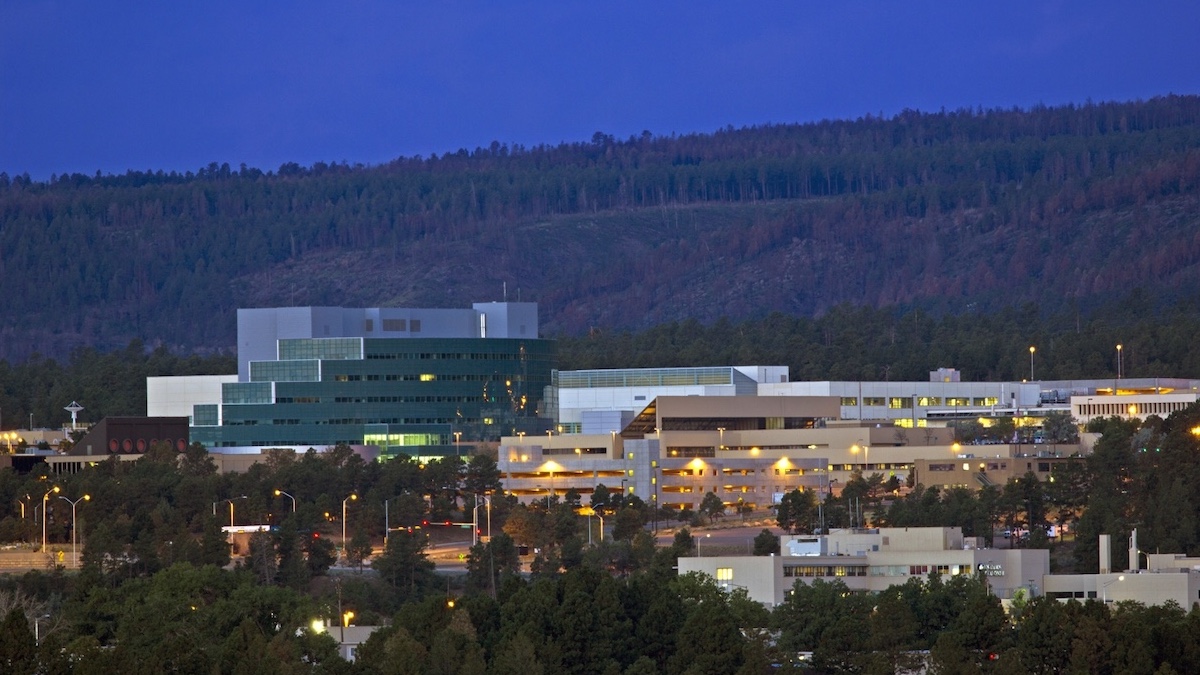
The Los Alamos National Laboratory plans to begin large releases of radioactive tritium gas any time after June 2, 2025. The only roadblock to the Lab’s plans is that it needs a “Temporary Authorization” from the New Mexico Environment Department to do so.
Reasons why the New Mexico Environment Department should deny LANL’s request are:
1. The state Environment Department has a duty to protect the New Mexican public. As it states, “Our mission is to protect and restore the environment and to foster a healthy and prosperous New Mexico for present and future generations.”
2. Why the rush? LANL explicitly admits there is no urgency. According to the Lab’s publicly-released “Questions and Answers” in response to “What is the urgency for this project?” “There is no urgency for this project beyond the broader mission goals to reduce onsite waste liabilities.”
3. In addition, the National Nuclear Security Administration (NNSA) admits that the end time frame for action is 2028, not 2025. Therefore, there is time for deliberate consideration.
4. Contrary to NMED’s Resource Conservation and Recovery Act permit for LANL, the Lab has not fulfilled its duty to inform the public via NMED of possible alternatives to its planned tritium releases. According to Tewa Women United, “LANL has told EPA there are 53 alternatives; that list of alternatives, initially requested in 2022, has not yet been disclosed. Tewa Women United has repeatedly asked LANL to provide the public with that list.”
5. Despite extensive prompting by the Environmental Protection Agency on possible better alternatives, the NNSA categorically rejected any modifications.
6. NNSA’s January 2025 draft LANL Site-Wide Environmental Impact Statement had no substantive discussion of the planned tritium releases, much less the required “hard look” at credible alternatives. Further, LANL and NNSA included these planned releases in the “No Action Alternative,” with the specious justification that “The Laboratory and NNSA have been integrating with the EPA and NMED to obtain approval to move forward with the plan to vent the Flanged Tritium Waste Containers currently located in TA-54.” Seeking approval makes them No Action? NNSA and LANL are legally required to consider public comments submitted for the LANL SWEIS. These planned tritium releases should not proceed until NNSA issues a Record of Decision on the final LANL Site-Wide Environmental Impact Statement.
7. NNSA’s publicized maximum release of 30,000 curies is merely an administrative decision point at which LANL will stop the venting process to avoid exceeding the Clean Air Act’s 10 millirem public exposure limit for radioactive air emissions. It is not the potential total quantity of tritium that will have been released. LANL’s radioactive air emissions management plan sets an annual administrative limit of 8 millirem for the tritium releases, meaning venting will cease once this limit is reached but may resume in subsequent periods.
8. In addition, these planned releases are not necessarily a one-time event, as indicated above, contrary to what the LANL Site-Wide Environmental Impact Statement falsely states.
9. Nor are these planned releases strictly confined to just Area G, as claimed.
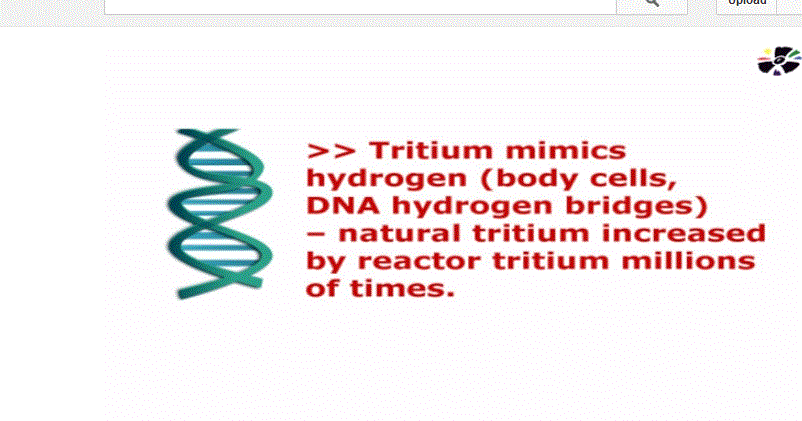
10. LANL declares “There are no cumulative impacts from this operation. All limits are conservative, and well within regulatory limits that are protective of the public.” However, one independent report calculates that the effective dose to infants could be three times higher than to adults (therefore likely violating the 10 millirem Clean Air Act standard for “any member of the public”) and all of LANL’s calculated doses would be higher in the event of low wind speeds and low humidity.” Another independent report noted how tritiated water can pervade every cell in the body while the planned LANL tritium releases are three times the amount of tritium that the crippled Fukushima nuclear power plant would release to the ocean over 30 years.
11. LANL claims “This critical milestone [the planned tritium releases] furthers \ the cleanup of Area G.” But what so-called cleanup means to LANL is “cap and cover” of ~200,000 cubic yards of existing toxic and radioactive wastes at Area G, leaving them permanently buried in unlined pits and shafts as a permanent threat to groundwater. NMED knows this all too well given the draft order it issued to the Lab to excavate and treat all wastes at the smaller Area C waste dump, which LANL categorically opposes. NMED should carefully consider the extent to which approving these planned tritium releases is consistent with its desire for full comprehensive cleanup at the Lab, including Area G.
Recommendation: Given the self-admitted lack of urgency and remaining uncertainties in potential doses, times, locations and ultimate purpose of these planned tritium releases,NMED should deny LANL’s request for a “Temporary Authorization” to proceed until there has been an open and transparent analysis of alternatives and all possible public health impacts.
This fact sheet is available here. For more contact Nuclear Watch New Mexico and Tewa Women United.
And please sign the petition — Petition to Deny LANL’s Request to Release Radioactive Tritium into the Air.
US mainstream media still censoring US enabled Israeli genocide in Gaza

May 18, 2025 AIMN Editorial, By Walt Zlotow, https://theaimn.net/us-mainstream-media-still-censoring-us-enabled-israeli-genocide-in-gaza/
For the past 586 days US mainstream media refuses to condemn US enabling Israeli genocide of 2,300,000 Palestinians in Gaza.
The word genocide never appears in their print or pixels. They barely cover the genocide. But when they do make oblique references to it, simply calling it ‘Israel’s war on Hamas.’
US enabling of Israel’s genocide is bipartisan, with not a single pushback from the 535 congresspersons who, like the genocide enabling Biden and Trump administrations, betray their oath to protect life by promoting peace.
Special Trump Middle East envoy Steve Witkoff brushed off inquiries when the US will stop supporting Israeli genocide saying:
“We’re not the Israeli government. We don’t disagree. The Israeli government is a sovereign government. They can’t tell us what to do, and we can’t tell them what to do.”
Witkoff conveniently omitted that without America’s $20 billion providing over 50,000 tons of genocide weapons, Israel would be powerless to carry out 586 days of genocidal ethnic cleansing of Gaza with no end in sight.
Trump is even more ghoulish in promoting Israel’s genocide. On his Middle East trip Trump said.
“I’d be proud to have the United States have it (Gaza), take it, make it a freedom zone, let see good things happen. Put people in homes where they can be safe.”
Those people in safe homes won’t be Palestinians whom Trump has been lobbying African countries to take in so they don’t have to all be killed off.
With their bombs, planes and drones, Biden and Trump have made the Israeli genocide possible. It is no different than if FDR was supplying the Nazis with Zyklon B gas to complete their genocide 80 years ago.
With mainstream media compliance, the US enabled genocide will continue to its completion so Trump can build his ultimate real estate development on the bodies and destroyed homes of 2,300,000 Palestinians.
But if mainstream media began the first story of every day condemning America and Israel’s genocide body count from bombs and forced starvation, it might just galvanize the 535 congresspersons to acknowledge and resist the genocide they’re ignoring. It might even force the grotesque Trump administration to turn back from inflicting the worst horror on helpless people ever inflicted by the self-proclaimed greatest nation on earth.
Tomorrow is Day 587 of mainstream media genocide denial. Unless they pivot to peace in Gaza, mainstream media moguls will follow the Biden Trump administrations and Congress down the rabbit hole of genocide infamy.
President Trump to unleash atomic power

May 15, 2025, https://beyondnuclear.org/president-trump-unleashes-atomic-power/
On May 14, 2025, E&ENews updated reports on President Donald Trump’s four “pre-decisional” White House Executive Orders to radically alter the historic role of the US Nuclear Regulatory Commission’s (NRC) to oversee the performance of reactor design safety reviews and the regulatory approval of reactor siting, construction and operation of commercial atomic power plants.
In President Trump’s view, the NRC’s overly burdensome regulations are the primary obstacle to guaranteeing the development and deployment of a national “nuclear renaissance.” As a result, The White House is eyeing a “wholesale regulatory revision” of the federal agency that includes mandatory “reductions in force.” Simultaneously, the White House envisages authorizing the US Department of Energy and Department of Defense to instead take charge of quadrupling the current domestic nuclear energy capacity to 400 gigawatts by 2050. In order to achieve this goal, the draft Executive Orders outline 1) “overhauling NRC”; 2) significantly accelerating “nuclear R&D”; 3) redefining commercial nuclear power development as critical infrastructure for the “national security,” and 4) dramatically building out the domestic “nuclear supply chain” to include significantly ramping up domestic uranium mining, milling, enrichment and fabrication of US nuclear fuel.
While no energy generation system is entirely domestically sourced, the US nuclear fuel supply is predominantly sourced through foreign imports. According to the U.S. Energy Information Agency reporting in 2025, US domestic uranium mines produce roughly 1% of the uranium concentrate (U3O8) needed to fuel the current US nuclear fleet in 2023. Foreign imports accounted for 99% of our nation’s U3O8 with 48% coming from Russia and Russia-influenced Kazakhstan and Uzbekistan. Presently, Russia is the only commercially viable global supplier of high-assay low enriched uranium (HALEU fuel is less than 20% enriched uranium-235) as is rated for advanced Small Modular Reactor designs, including Bill Gate’s TerraPower Natrium reactor liquid sodium-cooled fast reactor and X-Energy’s Xe-100 high-temperature gas-cooled pebble-bed reactor.
The Trump Administration has declared by a Executive Order in February 2024 that it will no longer recognize any federal agencies as “independent” but rather all federal agencies are now in the President’s wheelhouse and subject to his supervision and control. All “significant regulatory actions” of the NRC would be reviewed by the White House’s Office of Information and Regulatory Affairs, or OIRA, opening the process to the White House review for comments, edits and influence. E&E news observed the new process “obscures the public record of internal commission deliberations” and is an apparent violation of the Atomic Energy Act which clearly states that it is expressly for the NRC to decide.
The draft order to overhaul the NRC would also require the agency to reconsider its standard for radiation exposure where it now understands that there is no safe dose of radiation. Dr. Edwin Lyman, a physicist and Director of the Nuclear Power Safety for the Union of Concerned Scientists is quoted in the E&E article to say, “Documented scientific evidence has only indicated that [low-level radiation exposure] is more dangerous than was known decades ago, when these standards were set.” Furthermore, Dr. Lyman adds, “Evidence has emerged about the impact of the level of radiation exposure on cardiovascular disease.”
The White House draft order to reframe nuclear power deployment for “national security” sets up the US Department of Energy and Department of Defense to “work around the NRC-led licensing and safety review processes” by providing the Secretaries of Defense and Energy accelerated schedules to “identify 9 military facilities at which advanced nuclear technologies can be immediately installed and deployed.” Those military base sited nuclear power plants can then provide transmission to the electric grid for commercial power.
It should be alarming that the Trump Executive Orders to fast track the still elusive and unpredictably costly construction of unproven Generation IV reactors by decommissioning the NRC comes at precisely the wrong time.
This is the still the 50th Anniversary Year of the creation of the NRC following the abolition of the U.S. Atomic Energy Commission by Congress for its blatant fast track promotion of atomic power plant licensing and a dangerous disregard of public health and safety. Least we forget, too many of those aging and now deteriorating nuclear power stations that are approaching and have exceeded 50 years of very harsh operating experience of radioactive neutron bombardment, embrittlement and cracking in base metal and dissimilar weld materials, fatigue, corrosion and a combination of extreme heat, pressure and vibration. Nobody knows better the growing level uncertainty, the multitude of technical knowledge gaps and innumerable shrinking reactor safety margins than those NRC nuclear engineers. Certainly, not Trump.
A home guard to protect British nuclear power plants against enemy attacks
A home guard will be established to protect British power plants and
airports against attack from enemy states and terrorists, under plans put
forward in the government’s strategic defence review (SDR).
It will be modelled on the citizens’ militia created in 1940, when Britain faced the
prospect of invasion by Nazi Germany during the Second World War. It would
be made up of several thousand volunteers, who would be deployed to
safeguard assets such as nuclear power plants, telecommunications sites and
the coastal hubs where internet cables connecting Britain to the rest of
the world come onto land. Guards could also be deployed to other sensitive
sites, such as energy stations providing power to major airports, with
senior sources pointing to the recent fire that shut down Heathrow as
evidence more resources are needed to guard them.
The home guard plan is a central part of the review, which focuses heavily on homeland security, national resilience and the need for the public to realise that Britain has
entered a pre-war era, as tensions heighten with an axis of Russia, Iran
and North Korea.
Times 17th May 2025 https://www.thetimes.com/uk/politics/article/home-guard-to-protect-uk-from-attack-lg2wf0slx
How Donald Trump’s Crypto Dealings Push the Bounds of Corruption.

With the meme coin $TRUMP and the company World Liberty Financial, the President is using an underregulated industry to enrich himself and court foreign influence.
By Kyle Chayka, May 14, 2025, https://www.newyorker.com/culture/infinite-scroll/how-donald-trumps-crypto-dealings-push-the-bounds-of-corruption?cndid=30183386&bxid=5be9d23d24c17c6adf3bf435&esrc=subscribe-page&hashc=ac5a1f5526e7292c73f49dfa8fb6d5d0cb87d8773cec3b9b03d38a4ce482d7c8&hashb=e1c24f6a6459c7d1d625eb2ea55d9dfbbb4633bf&hasha=432fc0d0ad6543e820e2dfcd39f76c35&mbid=CRMNYR012019&utm_campaign=aud-dev&utm_term=TNY_Science_Tech&utm_source=nl&utm_medium=email&utm_brand=tny&utm_mailing=TNY_Science_051725
Imagine that someone in a position of great political power created a hundred billion raffle tickets and made them available for public purchase. If you buy the tickets, eventually you will receive a reward: a proportional quantity of magic beans—and eventually each magic bean will be exchangeable for one United States dollar. What’s more, if you buy the raffle tickets early, you can get them for less than a dollar, perhaps for as little as five cents apiece. Not only will the raffle tickets eventually gain you more traditional currency; you can also vote on company matters with your raffle tickets and help manage the magic-bean supply, and the more tickets you purchase, the more say you have. Oh, and the creator of the raffle will keep a bunch of the tickets for himself, and much of the revenue generated by the magic-bean economy will also go back to him.
This effectively describes the workings of a new cryptocurrency created by World Liberty Financial, a company affiliated with the Trump family, with President Donald Trump serving as its “Chief Crypto Advocate.” The cryptocurrency, a so-called governance token called WLFI, is the raffle ticket, and another cryptocurrency, a “stablecoin” called USD1, is the magic bean. World Liberty deals in the nascent industry of “decentralized finance,” in which cryptocurrency instruments allow users to circumvent the traditional, regulated banking ecosystem for moving, storing, and lending money. Stablecoins are cryptocurrencies that are pegged to a single currency value, such as one U.S. dollar, though they are not always so stable: Terra, a once successful stablecoin, lost its peg and suffered a collapse in 2022. Stablecoins fall nebulously within the bounds of the law, so long as they don’t appear to function as securities (as, for instance, stock in a publicly traded company does). A banner on the World Liberty website serves as a legal disclaimer: “World Liberty Financial does not consider the tokens to be securities.” Donald Trump et fils quietly assumed a controlling stake of World Liberty, in January, through a company called DT Marks Defi. Though fine print specifies that no member of the Trump family is an “officer, director or employee” of World Liberty, DT Marks Defi receives seventy-five per cent of its subsidiary company’s net revenue. (The remaining twenty-five per cent goes to Axiom Management Group, which is connected with two of World Liberty’s official leaders, Chase Herro and Zachary Folkman, a pair of self-described “crypto-punks,” whose other ventures include, in Folkman’s case, a company called Date Hotter Girls.)
Trump is a onetime crypto skeptic who announced, in a tweet in 2019, “I am not a fan of Bitcoin.” Yet in recent years, he has touted several varieties of magic beans, bringing a P.R. boost to an industry in which new ventures are often dead on arrival. In 2022, he released Trump Digital Trading Cards, a series of non-fungible tokens that has continued to produce new batches, including a January, 2024, “Mugshot” edition, featuring his glaring police photo. (Bulk buyers of the mug-shot N.F.T. received invitations to Mar-a-Lago.) Three days before his Inauguration, he launched a so-called meme coin, cryptocurrencies based on online notoriety that become de-facto pyramid schemes as early buyers sell off to later ones at higher prices. $TRUMP consists of a billion coins, eighty per cent of which were kept by Trump-related companies, and the remainder sold to the public. It reportedly made around three hundred and fifty million dollars in revenue in its sale and has a market capitalization of nearly three billion dollars; Trump’s business earns a fee for every $TRUMP transaction.
The price of the meme coin is now down to less than a fifth of its all-time high, and the majority of its buyers have seen their purchases lose value. An official Melania Trump meme coin released soon after Trump’s has fared even worse. But $TRUMP was given a recent bump when Fight Fight Fight, a business associated with the Trump Organization and its crypto projects, ran a contest in which the two hundred and twenty largest holders of the meme coin won invitations to a gala dinner with Donald Trump, to be hosted at the Trump National Golf Club near Washington, D.C. (Black tie is optional.) The top twenty-five will get access to a more private reception with the President. The contest offers an explicit way to buy Trump’s attention, lending magic beans a new appeal as a lobbying tool. Many of the meme-coin investors are based abroad, and some have been unequivocal about their goal of influencing Trump’s agenda. (One Australian entrepreneur told the Times that he hopes to talk to the President about crypto policy; a Mexican buyer said that he would like Trump’s ear on tariffs.) On Tuesday, a small Chinese company that operates an e-commerce business on TikTok announced plans for a three-hundred-million-dollar purchase of $TRUMP and Bitcoin—at a time when the Trump Administration is considering whether to follow through on a TikTok ban.
The World Liberty operation has far vaster implications than the meme coin, however, because its stablecoin, which can be easily and reliably exchanged for U.S. dollars, creates something like an entire Trump-sponsored underground economy. It’s as if a new bank had opened under the sitting President’s name, and it was being sent large quantities of funds by various foreign businesses and political élites. Major buyers of WLFI have included Justin Sun, a Chinese crypto entrepreneur, who bought seventy-five million dollars’ worth, and DWF Labs, an Abu Dhabi-based cryptocurrency trading firm, which bought twenty-five million dollars’ worth. In March, World Liberty announced that it had sold more than half a billion dollars’ worth of its token. Earlier this month, another Abu Dhabi-based investment firm announced that it would use USD1, the stablecoin controlled by World Liberty, for a two-billion-dollar investment in Binance, the largest cryptocurrency exchange in the world.
Buying the Trumpian magic beans provides a way of purchasing influence, not unlike how foreign dignitaries could rent rooms at the Trump International Hotel in D.C. during Trump’s first Administration. But World Liberty makes renting hotel rooms look quaint by comparison. The more money that flows into WLFI and USD1, the more legitimate and valuable these currencies appear, and the higher their market capitalizations creep. Tether, the world’s largest stablecoin, has a market capitalization nearing a hundred and fifty billion dollars, with more than thirty billion dollars in daily trading volume. World Liberty aspires to create something similar.
The American public has been inundated with news of the Trump family’s self-enrichment for so long that many of their dealings now barely create a stir. Just this week, it was revealed that the Administration is preparing to accept the gift of a luxury Boeing 747-8 jet offered by the royal family of Qatar, to be used as a new Air Force One, at least until a new Air Force One is completed by Boeing. The Department of Defense will receive the jet, but when Trump leaves office it will reportedly be donated to his Presidential library, effectively turning the plane, worth four hundred million dollars, into a private possession—never mind that this arrangement would seem to blatantly contradict the foreign-emoluments clause, which prevents U.S. officials from accepting gifts from foreign leaders and governments. (Trump has dismissed ethical concerns by saying that declining a gift would be “stupid.”) In the realm of crypto, though, a backlash against Trump’s ventures may be mounting in Congress. Last week, some Senate Democrats balked at passing a popular crypto-friendly bill in light of the President’s naked profiteering. In a bit of almost farcical understatement, Senator Cynthia Lummis, Republican of Wyoming, recently told the Times, “The optics are challenging.” But the Trump family has so far wagered correctly that no one will stop them. ♦
Kyle Chayka is a staff writer at The New Yorker. His column, Infinite Scroll, examines the people and platforms shaping the Internet. His books include “Filterworld: How Algorithms Flattened Culture.
80% of Ontarians want the province to cancel its contract for GE-Hitachi nuclear reactors.

Ontario Clean Air Alliance, https://www.cleanairalliance.org/poll-report/
Polling conducted in May 2025 by Oraclepoll Research shows that 80% of Ontarians want the province to cancel its contract for GE-Hitachi nuclear reactors, while 70% prefer lower cost solar and wind power.
The poll also finds majority support for Great Lakes offshore wind power; expansion of Canada’s east-west electricity grid to increase Ontario’s ability to import water, wind and solar power from Manitoba, Quebec and the Maritimes; and no-money-down, zero-interest financing for electric heat pumps to reduce our dependency on American gas for home heating.
Why SNP national council must pass this motion on nuclear weapons.
Bill Ramsay: I’M puzzled as to why any proponent of Scottish nationalism
would be daft enough to tamper with a key tenet of SNP policy, the removal
of Broken Britain’s broken Vanguard fleet from Scotland.
The four Vanguard submarines carry the Trident nuclear missiles Britain rents at the
pleasure of President Trump. It’s been an axiom of Scottish politics that
although the SNP’s anti-nuclear policy is not in the SNP constitution,
it’s in the party’s DNA.
In recent weeks, though, there’s been a rash
of reports that some people who were once important in the SNP want to back
a British bomb. The timing of this has an air of panic. Those who wish to
hold fast to the crumbling totem of a British bomb are normally motivated
not by real security threats or concerns but by a delusional iteration of
British greatness. Bear in mind this off-stage pining for retention of the
British bomb (they dare not reveal themselves) is taking place at precisely
the same time as a central tenet of UK nuclear strategy is disintegrating
before our eyes.
The National 17th May 2025, https://www.thenational.scot/politics/25170582.snp-national-council-must-pass-motion-nuclear-weapons/
China and Russia plan to build nuclear power station on moon
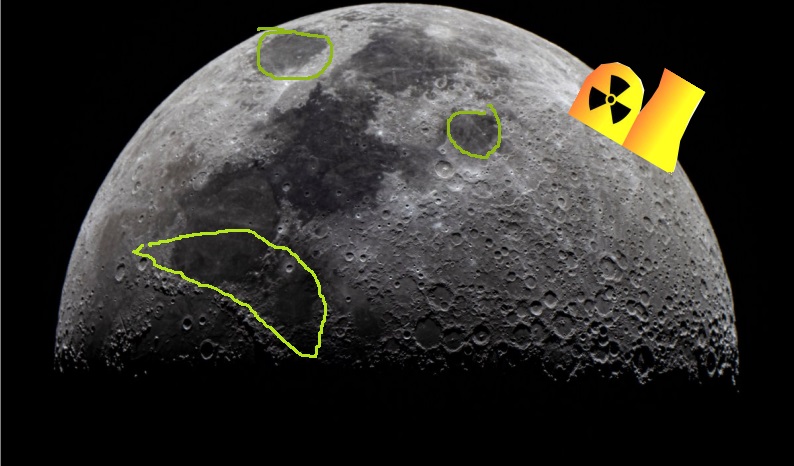
China and Russia plan to build a nuclear reactor on the moon by 2035 to
power a permanent lunar base. The International Lunar Research Station
(ILRS) will rely on the power plant for its scientific research. The IRLS
involves over a dozen international partners and is seen as a rival program
to NASA’s Artemis Program.
Deutsche Welle 16th May 2025, https://www.dw.com/en/china-and-russia-plan-to-build-nuclear-power-station-on-moon/a-72565465
The US buried millions of gallons of wartime nuclear waste – Doge cuts could wreck the cleanup

Guardian, Andrew Buncombe in Richland, Washington. 16 May 25
Hanford made the plutonium for US atomic bombs, and its radioactive waste must be dealt with. Enter Elon Musk
Andrew Buncombe in Richland, WashingtonThu 15 May 2025 23.00 AESTShare
In the bustling rural city of Richland, in south-eastern Washington, the signs of a nuclear past are all around.
A small museum explains its role in the Manhattan Project and its “singular mission – [to] develop the world’s first atomic bomb before the enemy might do the same”. The city’s high school sports team is still known as the Bombers, with a logo that consists of the letter R set with a mushroom cloud.
Richland lies just 30 miles from the Hanford nuclear site, a sprawling plant that produced the plutonium for America’s atomic weapons during the second world war – and later the bomb dropped over Nagasaki. Over the decades, thousands of people in the Tri-Cities area of southern Washington worked at the plant, which shuttered in 1989.
Residents have long spearheaded an operation to deal with 56m gallons of nuclear waste left behind in dozens of underground tanks – a cleanup that is expected to cost half a trillion dollars and may not be completed until 2100. The government has called it “one of the largest and most expensive environmental cleanup projects worldwide”.
In recent weeks, what has already been a costly and painstakingly slow process has come under renewed scrutiny, following an exodus of experts from the Department of Energy (DoE) that is overseeing the cleanup being executed by thousands of contract workers.
According to local media, several dozen staff, who reportedly include managers, scientists and safety experts, have taken early retirement or been fired as part of a broader government reduction overseen by Elon Musk and his “department of government efficiency”. The government has refused to provide a specific figure for how many people involved with cleanup efforts have left. The top DoE manager at the Hanford site, Brian Vance, who had many years of experience, resigned at the end of March without giving a reason.
The changes have thrown the communities around the Hanford plant into limbo. And while the Department of Energy has said that only six staff have been fired, and reiterated its commitment to the cleanup, that hasn’t managed to assuage locals’ concerns.
Those raising the alarm include politicians from both parties, environmental activists, and Indigenous communities who have historically owned the land on which the 560 sq mile (1,450 sq km) site sits.
The US senator for Washington Patty Murray said workers were already understaffed, and that cutting further positions was “reckless”.
“There is nothing ‘efficient’ about indiscriminately firing thousands upon thousands of workers in red and blue states whose work is badly needed,” the Democrat said.
Dan Newhouse, the local Republican congressman is similarly concerned. “A strong, well trained federal workforce is essential,” he wrote in a weekly newsletter to constituents.
Concerns have also been raised by some over the difficulty former workers face in making medical compensation claims to the government for everything from cancer to acute pulmonary disease linked to their time at the plant.
Taken together, there is fresh anxiety in a community, where many are still living with the health and environmental effects of Hanford.
Richland, part of the Tri-Cities, was obtained by the army in 1943 to house workers engaged in top-secret efforts to produce plutonium used in the world’s first nuclear explosion – the-so-called “Trinity” device tested near Los Alamos, New Mexico, in 1945. Though the city was returned to the public a decade later, it can still feel like a company town.
To get anywhere near what is known as Hanford’s B-reactor, the world’s first full-scale plutonium production reactor, you need to sign up for an official tour. Yet a view of its grey, single tower, looming from the hillside, can be seen from state route 24, close to the Columbia River.
Those expressing concern about the federal government downsizing include local Indigenous groups who historically owned the land where the site is located and were pushed off it by the government. The Hanford plant area contains the location of several sacred sites, among them Gable Mountain, which were used for ceremonies, and the area of Rattlesnake Mountain, or Lalíik, which has for centuries been used to hunt elk.
The site is also located close to the Yakama Indian Reservation, home to 11,000 people, and the tribe has long pushed to be central to decisions about the cleanup and what it is eventually used for. The tribe recently signed a deal to carry out their first elk hunt in the area for seven decades.
“One of the biggest fears is that without proper manpower, there might not be a very good crew for the cleanup of the property,” says Gerald Lewis, chairman of the Confederated Tribes and Bands of the Yakama Nation. “Without this cleanup, that’s been happening for a number of years, we’re afraid of a nuclear mishap.”
Dr Elizabeth McClure, a health data specialist with the Union of Concerned Scientists, is currently conducting research in the communities around Hanford. She says there is a history of government-led cover-ups over the years at the site, including what is known as “the Green Run”, the intentional release of 8,000 so-called curies of iodine-1 into the atmosphere in 1949……………………………………………………………………………………………………………….. https://www.theguardian.com/us-news/2025/may/15/us-government-nuclear-waste-doge
Nuclear in decline: EDF accumulates excesses, the State takes the hit and the French pay the bill without flinching.

The Hinkley Point EPR project, a symbol of budgetary excesses and opaque management, raises crucial questions about the future of French nuclear energy and the State’s financial commitment
 , 05/09/2025,
 IN BRIEF
The Hinkley Point EPR project has become a financial disaster, with a budget that has ballooned to €54 billion.
EDF, now entirely state-owned, bears 85% of the costs , effectively committing public money without sufficient parliamentary control.
The Hinkley Point construction site is a logistical disaster , with working conditions criticized and significant delays to the schedule.
This project raises questions about French
energy policy and the future of nuclear power, calling for a thorough democratic debate.
This project raises questions about French
energy policy and the future of nuclear power, calling for a thorough democratic debate.
The National Assembly recently witnessed a heated debate surrounding the Hinkley Point EPR project, a project that has crystallized tensions surrounding the French nuclear industry. This project, initially presented as a technological showcase, has turned into a financial drain for EDF, and by extension, for French taxpayers. As the bill continues to mount, MPs are questioning budgetary overhangs and the lack of parliamentary oversight. Far from being a simple isolated incident, Hinkley Point raises crucial questions about the management of nuclear projects internationally.
When the bill explodes
The European Pressurized Power Plant (EPR) at Hinkley Point was supposed to be the flagship of the French nuclear industry. However, over the years, the project has accumulated delays, technical complications, and cost overruns. Initially estimated at £18 billion in 2016, the budget has now reached €54 billion. This cost explosion is symptomatic of poor management and an underestimation of risks from the outset. Aurélie Trouvé, a member of parliament for La France Insoumise, described the project as a “financial abyss” during a speech in the National Assembly .
The consequences of this financial drift are serious for EDF, a company now entirely owned by the State.
With 85% of the costs at its own expense, EDF is effectively committing public money without any real parliamentary safeguards . This situation is all the more worrying as it reveals a democratic anomaly: Bercy, the Ministry of Finance, does not have the construction contract, thus depriving MPs of a key element of control. The debate surrounding Hinkley Point is thus going beyond the technical sphere to become a major political issue.
EDF and the taxpayer’s hostage
The full nationalization of EDF in 2023 has redefined the stakes surrounding Hinkley Point. As the sole shareholder, the French state finds itself on the front line when it comes to the project’s budgetary implications. Aurélie Trouvé pointed out that the state was already an 85% shareholder during the initial negotiations in 2015 , making the lack of oversight over such a binding contract incomprehensible.
The withdrawal of Chinese partner CGN, initially planned to co-finance the project, left EDF alone to face the additional costs. In April 2025, Energy Minister Marc Ferracci called on the United Kingdom to assume its financial responsibilities. However, the British silence leaves uncertainty surrounding the future of the financing. This situation calls into question the role of the state in managing major industrial projects and the relevance of committing public money to such risky undertakings.
Symbol of an industrial shipwreck
Beyond the financial issues, Hinkley Point is also the scene of numerous logistical and human setbacks. The construction site, which was initially scheduled to be operational in 2025, has now seen its commissioning postponed to 2029, or even 2031. Working conditions on the site have also been singled out, with workers denouncing appalling conditions , as reported by the Guardian in a Guardian investigation.
The impact on EDF is significant. In 2024, the company had to record a €12.9 billion impairment charge due to the project’s difficulties. Moody’s has also downgraded EDF’s credit profile, highlighting the growing financial pressures on the company . These challenges illustrate the complexity of nuclear investments and the need for rigorous and transparent management.
A turning point for French nuclear energy
The management of Hinkley Point raises questions about the future of nuclear energy in France. As the country prepares to define its energy roadmap for the next ten years, the failure of this international project could influence future choices. Members of Parliament, such as Charles de Courson, are calling for a broader democratic debate on these issues, emphasizing that decisions made today will have lasting consequences for public finances and national energy policy.
This complex picture of Hinkley Point’s challenges and failures calls for a broader reflection on the state’s role in the nuclear sector. How can technological ambitions be reconciled with financial responsibilities? What lessons can be learned to prevent such projects from becoming financial disasters in the future? These essential questions must be answered to ensure a sustainable and responsible energy transition.
The Balance of Power in the Russo-Ukraine War- Russia is in the driving seat.

NATO WATCH, By Steven Jermy, 12 May 2025.
Political passion for the cause, never strong in ethnically Russian areas, appears now to be eroding amongst the war weary and the victims of Ukrainian Army press gangs.
On this analysis, the balance-of power – on the battlefield and at the negotiating table – overwhelmingly favours Russia. Despite this, European leaders – with reducing support amongst Americans – appear to believe that the losers should dictate the terms of ceasefire or surrender.
Our continued calls for Russia to accept terms that the West is unable to impose will need to cease. We will need to shift our position on the negotiation fundamentals. Russia too has legitimate security interests. Pushing NATO to Russia’s borders whilst wilfully ignoring their interests was always likely to lead to conflict.
Theodore Roosevelt said: “Speak softly but carry a large stick.” European leaders are doing the opposite yet offended when not invited to Russo-Ukraine negotiations. Instead, and from the side lines, Europeans have been insisting that Russia accepts ceasefire conditions that neither they nor the Americans have the political or the military means to impose. So, it’s no surprise that Russians continue patiently to insist on their own conditions, nor that Americans may be slowly coming round to Russia’s position. Yet European leaders are affronted. Why?
At the most fundamental level, I fear they lack the ability to calculate the balance-of-power, a skill so critical in war. If we Europeans are to play an intelligent part in bringing the Russo-Ukraine war to a close, we must get back to the basics of strategy formulation and calculate the relative balance of power in the Russo-Ukraine War, to in turn allow us to understand the West’s true leverage – or lack of it – over Russia.
An excellent starting point is the work of Professor John Mearsheimer, particularly given his unusual Russo-Ukraine prescience – that stands in stark contrast to the forecasts of conventional Western commentators. Mearsheimer emphasises economic wealth and population size as fundamental determinants of national power. All other things being equal, larger populations are more powerful than smaller populations, richer ones more powerful than poorer ones.But economic wealth is routinely – and lazily – assessed using GDP figures, a particularly poor way to calculate national military power. The service economy counts for little on the battlefield – in military affairs it is industrial capacity, not economic output, that matters.
There is another equally fundamental factor to add to Mearsheimer’s list – energy. Industrial capacity is critically dependent on reliable supplies of cheap, high quality and plentiful energy – as Europeans have found to their self-inflicted cost – as do military operations. Indeed, in war and operations, combat and logistics are both extremely energy intensive.
[Ed note – Here the author explains the importance of energy, and of geography – the distance from home involves not only the relative passion, determination of the people, but also the burden and cost of transporting munitions over long distances.]
………………………………………………………………………………..Foundationally, Ukraine started the war in a weak position. With NATO’s sustained support from 2014, it had formed a large army, but its industrial capacity was constrained, and it depended on external energy supplies, including Russian oil. Its foundational position is now much worse, after Russia’s deliberate targeting of its industrial and energy infrastructures.
The geopolitical utility of Ukraine’s power is also dissipating. Political passion for the cause, never strong in ethnically Russian areas, appears now to be eroding amongst the war weary and the victims of Ukrainian Army press gangs. Ultranationalists will no doubt stay true to their cause, perhaps to an apocalyptic end, but otherwise it’s easy to envisage a failed popular consensus as the Russian Army rolls westward.
A few may say it is self-evident that power’s foundations and utility be framed in this way. But “Clearly not!”: at least to American and European leaders engaged in the Ukraine War, who are demonstrating – with words and actions – not a scintilla of such understanding.
Bellicosity aside, Europe is foundationally weak. To get anywhere near Cold War industrial capacity levels, Europeans will need to double defence spending to higher than 5% of GDP – in 1986, at the culmination of the Cold War, Britain was spending 6% on defence.
Furthermore, as the world’s largest regional hydrocarbon importer, at 12.8 million barrels 3 per day of oil, Europe’s situation is one of acute energy vulnerability. The geopolitical utility of Europe’s limited military power is also questionable. Hungary, Slovakia, Bulgaria and Serbia have always been sceptics, neutral Austria’s position has remained nuanced, but political support amongst others, such as Italy and Spain is weakening. As national resources are redirected, away from constructive capital expenditure or societal goods toward an unwinnable arms race to support a lost war, it’s difficult to imagine matters improving.
Foundationally, the United States is much more powerful than Europe or Ukraine, but this is not a high bar. Industrially, the whole world knows there is a problem – a primary logic for tariffs is reindustrialisation. Energy is a much better, albeit far from perfect, story. Although an exporter of refined hydrocarbons, the United States is a net oil importer, to the tune of nearly 3 million barrels per day.
More immediately pertinent, Ukraine is a long way from the American home, Trump’s electoral base is generally against the war and the prospects of Congressional funding beyond June are uncertain. Inter-administration politics play their part too. Primary responsibility for the United States initial support for the war lies with the Biden administration. But the longer the American hand is kept in the Ukraine mangle, the more likely the Trump administration will take over the blame.
Russia, meanwhile, is demonstrating on the battlefield the analytic value of balance-of power calculation. Industrially mobilised for its ‘special military operation’, Russia’s production of 155mm shells is larger than the US, Europeans and Ukrainians combined. The country is also a hydrocarbons superpower, wholly energy independent and watching on – bemusedly? – as Europeans accelerate their industrial suicide with more boomerang energy sanctions. The geopolitical utility of Russia’s power is also clear. A major land power, it is operating on interior logistics lines that play to its strengths. Politically, Russians believe they are fighting an existential war against an expansionist West. As far back as 2008, Bill Burns’ Nyet means Nyet diplomatic telegram described NATO expansion as a ‘neuralgic’ issue for all Russians, not just Putin. Their cause is Russia’s existence and Putin’s 85% political approval figures reflect the commitment of his people to win.
Implications: Russia is in the driving seat.
So what?
On this analysis, the balance-of power – on the battlefield and at the negotiating table – overwhelmingly favours Russia. Despite this, European leaders – with reducing support amongst Americans – appear to believe that the losers should dictate the terms of ceasefire or surrender. Then protest loudly when neither history nor Putin agree. In war, it is the winners who dictate terms, and this war will largely end on Russia’s terms. Although the spin-doctors will no doubt try, it will be no good trying politically to present this as anything other than a NATO defeat, because that is what it is.
Much better to acknowledge and accept this strategic inevitability, show some European political humility, and begin – finally – to work constructively with Americans and Russians. So that we can, in turn, address the more important immediate question for us all. Whether the war is concluded more slowly, brutally and expensively, on the battlefield? Or more quickly, humanely and cheaply at the negotiating table?
If we recognise the West’s relative lack of power and accept the geopolitical realities on the ground, we Europeans can start to make a positive difference, rather than seeking to cling to our failed political narrative and delay the inevitable.
Our continued calls for Russia to accept terms that the West is unable to impose will need to cease. We will need to shift our position on the negotiation fundamentals. Russia too has legitimate security interests. Pushing NATO to Russia’s borders whilst wilfully ignoring their interests was always likely to lead to conflict. Wars are brought to a close by diplomacy – which means European leaders starting to talk personally to Putin, and foreign ministers Lavrov, and trying better to understand firsthand what they and all Russians want.
This latter question ought not be too difficult – because the Russians have been telling us what they want for at least three years. Fundamentally, they are seeking a security solution that removes the war’s primary cause and leads to long-term peace on the European continent. When there is broad agreement on how this can be achieved, then – and only then – will they be ready to talk about a ceasefire. And start to bring an end to Ukraine’s catastrophic infrastructure destruction, the loss of yet more Russian and Ukrainian lives, and the expenditure of good European monies to follow the bad already squandered.
In 1965, General Andres Beaufre said: ‘In war, the loser deserves to lose because his defeat must be due to failures in thinking either before or during the campaign.’ I agree. It may go against conventional European thinking, but history will soon show that, with Americans, we Europeans bear substantial responsibility for this war and for NATO’s defeat. With competent strategic thinking, we could have avoided the war in the first place. With competent balance-of-power thinking, we could – and should – now help bring it more rapidly to a humane close. https://natowatch.org/default/2025/balance-power-russo-ukraine-war?utm_source=substack&utm_medium=email
The stakes are high for these important Ukraine-Russia-US talks.
Istanbul 2.0: Know when to hold ’em, know when to fold ’em.
Here’s hoping no one walks away — or runs — as the stakes today are high for these important Ukraine-Russia-US talks.
Ian Proud, May 15, 2025, https://responsiblestatecraft.org/ukraine-russia-istanbul-talks/?utm_source=substack&utm_medium=email
The biggest achievement of today’s Istanbul talks is that they are even taking place. U.S. engagement will remain vital to getting a peace deal over the line. Russia’s desire for a reset with Washingtonmay keep them on track.
I have a sense of déjà vu as I contemplate these long-overdue peace talks between Ukraine and Russia in Istanbul. In April 2022, Ukraine and Russia were close to agreeing a peace treaty, less than two months after war started. However, this came crashing down amid claims that western governments, in particular the United States and the United Kingdom encouraged Ukraine to keep fighting.It’s worth recapping very briefly what was close to having been agreed. By far the best summary of negotiations between both sides was produced by the New York Times in June 2024. Those negotiations ran for almost two months. The talks started with Ukrainian officials being spirited over the border into Belarus on February 29, 2022 while the fighting raged around Kyiv, and eventually led to the now famous talks in Istanbul in March and April.
What has changed since then?
Ukraine will enter the Istanbul talks in a weaker position than it held in 2022.
Western support for Ukraine financially and economically is not as sound as it was then. No big ticket economic aid and assistance has been made available since the G7 agreement of a $50 billion package of loans, in June 2024. While European states scratched together new economic aid to Ukraine in April, this cannot make up for the reduction in US support.
In territorial terms, Russia withdrew from Kyiv as a concession to the first Istanbul talks and lost ground in Kharkiv and in Kherson in late 2022. However, Russia has gone on steadily to gain further territory in the Donbas since the end of 2023. So while both sides have scores on the board, Russia now maintains the military upper hand on the battlefield and that seems unlikely to change. These two factors in particular were behind President Trump’s February assertion that Ukraine has no cards to play.
What has stayed the same?
NATO membership is still off the table
The verified documents shared by the New York Times last June confirmed that Ukraine’s neutrality and non-membership of NATO was the central issue agreed upon in 2022. Ukraine was ready to become a “permanently neutral state” that would never join NATO or allow foreign forces to be based on its soil.
There seems no route for Ukraine to resile from that given its currently weakened negotiating position and President Trump’s stated view that NATO membership for Ukraine is not practical. Although Germany’s new foreign Minister, Johann Wadephul recently repeated the line that Ukraine’s path to NATO is irreversible, most have agreed, privately and publicly, that Ukraine’s path to NATO is a fraught if not impossible one.
Right now, just having the talks is a huge breakthrough
The Istanbul talks would not be happening had the Trump administration not pushed for it so hard. We don’t need to rehash the “did they or didn’t they” debate around why Ukraine abandoned the Istanbul agreement in April 2022. What is clear, is that Ukraine became entrenched, not only in not negotiating with Russia, but in excluding Russia from all discussions on peace in Ukraine from then onward.
Having agreed in principle for Ukraine to accept neutral status Zelensky was soon pushing his own ten point peace plan. This included, among other things, Russia withdrawing its troops to the pre-2014 border, i.e. giving up Crimea and the Donbass and creating a Euro-Atlantic Security Architecture, by which he meant Ukraine joining NATO. Peace summits were organized in various countries that explicitly excluded Russia, culminating in the Switzerland event on June 15, 2024.
At this event, President Zelensky was dug in deeper on resisting any engagement with Russia until a full withdrawal of its troops from Ukraine, which was a completely unrealistic proposal. “Russia can start negotiations with us even tomorrow without waiting for anything – if they leave our legal territories,” he said.
Even after President Trump was elected, European leaders clung to the line that “only Ukraine can decide what peace means.”’ I see no circumstances in which a Kamala Harris presidency would have cajoled President Zelensky to enter into negotiations. The talks wouldn’t be happening unless the Trump administration broke a whole load of Ukrainian and European eggshells to get to this point.
The biggest issue now is territory
Even though he was wrongly derided at the time by mainstream media, Steve Witkoff correctly pointed out in his March interview with Tucker Carlson that the territorial issues in Ukraine will be most intractable. Russia’s decision in October 2022 to formally annex the four oblasts of Kherson, Zaporizhzhia, Donetsk, and Luhansk changed the calculus. However, Russia does not have full territorial control of any of those oblasts, which are cut through the middle by a hotly contested front line.
Resolving the line of control when the war ends is, by some margin, the most problematic challenge. This will be a hugely sensitive topic, and European allies will shoot down any major concessions to Russia, as they did when the idea surfaced that the U.S.might de jure recognise Russia’s occupation of Crimea.
The most obvious settlement is a de facto recognition of occupation, a Cyprus-style scenario, that does not stand in the way of Ukraine’s future membership of the European Union. Even that will require detailed agreement on issues around demilitarization of the line of control and enforcing any ceasefire.
Sanctions are probably tricky, but also tractable
As I have said before, there is enormous scope to a plan that allows for the immediate lifting of the bulk of zero-impact measures, phasing out the remainder at points agreed to by both sides. The toughest issue remains the $300 billion in frozen Russian assets, mostly held in Belgium. Russia has shown a willingness to concede this funding to support reconstruction in Ukraine, including those parts that Russia occupies.
But there is texture here. Freeing up those funds for reconstruction would immediately remove the source of interest payments that are meeting Ukraine’s obligations on its $50 billion in debt to the G7, agreed to in June 2024. But the more general policy question arises, how much of the freed up funding would be spent in Ukraine itself and how much in Russian-occupied Ukraine, where most of the war damage has occurred? The U.S. must keep the pressure on to ensure the talks stay on track.
A U.S. presence in Istanbul will be vital, to prevent, in particular, Ukraine from bailing on the talks. That’s why sending Steve Witkoff and Keith Kellogg makes sense. The former is trusted by the Russian side while the latter has built relationships in Ukraine. Their presence serves to keep the process moving forward until a deal can be pushed over the line and the fighting can stop.
Bear in mind that the 2022 talks ran for a month and a half and the circumstances have materially changed as I have indicated above. While there has been speculation that President Trump might drop into Istanbul, I am not sure that this is necessary if President Putin doesn’t himself attend. Knowing the Russians, I assess that Putin will want his own “‘meeting moment” with the U.S. President on terms that the Russian side can better choreograph. Indeed, that may be a prize for Russia’s engagement in the process, given its desire for a more comprehensive reset of relations with the U.S.
1 This Month
26 April – Chernobyl: Inside the Meltdown airs on National Geographic on Sunday 26th April from 4pm


29 April – Nuclear Expert Webinar #1 – Radiation Impacts on Families with Mary Olson and Cindy Folkers
- 12:15 PM MT – 1:45 PM MT
- Location: Virtual – REGISTER TODAY

4 May -West Suburban Peace Coalition to discuss Iran war at May Educational Forum
Monday, May 4, 7:00 – 8:00 PM Central Standard Time
Title: : How Trump’s Narrative Tries to Shape the Reality of the War on Iran.
Contact Walt Zlotow, zlotow@hotmail.com 630 442 3045 for further information
14 May – online event From Bombs to Data Centres: the Face of Nuclear Colonialism

Pine Ridge Uranium is the real threat, not Tehran- Tell Burgum: Stop the Extraction.
Chernobyl: The Lost Tapes – A good documentary on Chernobyl on SBS available On Demand for the next 3 weeks– https://www.sbs.com.au/ondemand/tv-program/chernobyl-the-lost-tapes/2352741955560
To see nuclear-related stories in greater depth and intensity – go to https://nuclearinformation.wordpress.com
-
Archives
- April 2026 (327)
- March 2026 (251)
- February 2026 (268)
- January 2026 (308)
- December 2025 (358)
- November 2025 (359)
- October 2025 (376)
- September 2025 (257)
- August 2025 (319)
- July 2025 (230)
- June 2025 (348)
- May 2025 (261)
-
Categories
- 1
- 1 NUCLEAR ISSUES
- business and costs
- climate change
- culture and arts
- ENERGY
- environment
- health
- history
- indigenous issues
- Legal
- marketing of nuclear
- media
- opposition to nuclear
- PERSONAL STORIES
- politics
- politics international
- Religion and ethics
- safety
- secrets,lies and civil liberties
- spinbuster
- technology
- Uranium
- wastes
- weapons and war
- Women
- 2 WORLD
- ACTION
- AFRICA
- Atrocities
- AUSTRALIA
- Christina's notes
- Christina's themes
- culture and arts
- Events
- Fuk 2022
- Fuk 2023
- Fukushima 2017
- Fukushima 2018
- fukushima 2019
- Fukushima 2020
- Fukushima 2021
- general
- global warming
- Humour (God we need it)
- Nuclear
- RARE EARTHS
- Reference
- resources – print
- Resources -audiovicual
- Weekly Newsletter
- World
- World Nuclear
- YouTube
-
RSS
Entries RSS
Comments RSS
 nuclear-news