SpaceX and Blue Origin abruptly shift priorities amid US Golden Dome push

Thursday, Feb 19, 2026, https://www.defensenews.com/space/2026/02/19/spacex-and-blue-origin-abruptly-shift-priorities-amid-us-golden-dome-push/?utm_source=sailthru&utm_medium=email&utm_campaign=dfn-space
Just a year ago, SpaceX majority owner Elon Musk dismissed going to the moon as a “distraction.” Now, SpaceX and Jeff Bezos’ Blue Origin are racing toward it, and the Pentagon may be the reason why.
Within weeks of each other, the two largest U.S. commercial space companies abruptly shifted their priorities toward lunar development. The moves came as the Department of Defense accelerates plans for a next-generation missile shield known as the Golden Dome, raising questions about whether America’s return to the moon is as much about defense as it is exploration.
In early February, SpaceX announced it would redirect plans for a future city on Mars to establishing one on the moon. The reversal was striking, as Musk previously insisted Mars was the only meaningful destination.
Just days prior to this announcement, Blue Origin quietly paused its New Shepard tourism program for at least two years to increase focus on lunar development, framing the move as part of the nation’s goal of returning to the moon.
However, the timing may suggest a more strategic approach.
In December 2025, the White House issued an executive order calling for a missile shield prototype by 2028, critical for the Golden Dome initiative.
This order also set a timeline for an American lunar return by 2028, with elements of a permanent moon presence targeted for 2030.
Defense officials, such as Space Force Vice Chief of Operations Gen. Shawn Bratton, have emphasized that commercial partnerships will be essential to achieving these goals.
SpaceX is reportedly in line for a $2 billion Pentagon contract to build a 600-satellite constellation supporting Golden Dome tracking and targeting, though the award has not been formally confirmed.
The project would rely on low Earth orbit satellites capable of rapid, near-real-time missile detection. Such systems improve coverage, but remain vulnerable to anti-satellite attacks from adversaries.
The company’s shift to the moon could change that equation. Lunar-based infrastructure would sit far beyond the reach of most anti-satellite capabilities, offering more resilient communications and sensing layers.
In this scenario, the moon could become a strategic “high ground,” which could offer the Pentagon a more durable and far-reaching view for missile detection and surveillance.
Just 15 days before Blue Origin announced its shift toward the moon, the Missile Defense Agency added the company to its $151 billion SHIELD contract, a Pentagon program allowing firms to compete for Golden Dome-related work.
While no specific awards are guaranteed, the timing is noteworthy. Blue Origin is now putting lunar logistics front and center, pausing the New Shepard program to focus resources on that effort.
The company’s Blue Ring vehicle is designed for orbital maneuvering and refueling, capabilities that could one day support sensor deployment and flexible positioning beyond Earth’s orbit, where they are less vulnerable to attack and can provide broader global coverage.
Meanwhile, its Blue Moon MK1 and MK2 landers can deliver multi-ton payloads to the lunar surface, which could be enough to deploy communications systems, sensors or other infrastructure to remote locations, potentially supporting Golden Dome-like operations.
Taken together, these developments could suggest a broader transformation in the strategic landscape of space, one that increasingly intersects with homeland defense and global security.
Schumer, Jeffries blink…Senate, House to vote on War Powers Resolution next week to stop Trump’s criminal war on Iran

Walt Zlotow West Suburban Peace Coalition, 27 Feb 26
The two Democratic leaders in Congress failed in their attempt to quash a bi partisan War Powers Resolution demanding Trump hold off any war on Iran till he makes the case before Congress. That’s not just morally required, it’s constitutionally required.
Senate Minority Leader Chuck Schumer and House Minority Leader Hakeem Jeffries would much prefer Congress to remain constitutionally silent. They both would like to see Trump demolish Iran on behalf of Israel, while self-destructing his presidency when the toll of senseless war visits the homeland. But they’re now on board, bowing to pressure from congressional Democratic peace advocates and the majority of Americans who loathe the rush to war to serve Israel’s regional hegemonic interests, not America’s national security interests.
Alas, the vote next week could be seven long days from now, plenty of time for Trump to act unilaterally, the Congress, the Constitution, the American people be damned.
DOOMSDAY: The Suicide Pact Nobody Voted For

COMMENT. I really do not know what to think about this one.
I am aware that Russia busily does lots of propaganda – which we must read with a sceptical eye. But so does the West.
And I’m sorry to say it -but the idea that the West might supply Ukraine with some sort of covert nuclear weaponry – that’s not such a wayout idea.
Islander Reports, Gerry Nolan, Feb 25, 2026, https://islanderreports.substack.com/p/doomsday-the-suicide-pact-nobody
Russia accuses Ukraine of seeking to acquire nuclear weapon with help from UK and France
Reuters, Wed, February 25, 2026, https://www.reuters.com/world/europe/russia-accuses-ukraine-seeking-acquire-nuclear-weapon-with-help-uk-france-2026-02-24/
DOOMSDAY is the only word that fits — but let’s name the madness with the surgical clarity this moment demands. On the fourth anniversary of a war they have already lost, London and Paris have apparently decided the answer is not negotiation, not dignity, not the elementary statecraft of knowing when you are beaten — but nuclear escalation into the abyss. We are well past the point of any strategy on NATO’s part — there is only one word to describe the insanity, and that word is pathology.
Russia’s SVR names the weapon with the kind of clinical specificity that cannot be dismissed as propaganda: France’s TN75 miniaturized thermonuclear warhead, the crown jewel of the M51 submarine-launched ballistic missile — to be covertly dismembered, smuggled in components, transferred to Kyiv, and cosmetically disguised as a Ukrainian “indigenous development.”
A lie so architecturally transparent it insults every arms inspector, every treaty signatory, every breathing human being who has spent eighty years constructing the fragile scaffolding of nuclear non-proliferation. Kiev on cue calls it an absurd lie. Paris calls it blatant disinformation. London says there is “no truth to this.” And yet not one of them has called an emergency press conference to repudiate. Not one has or will provide anything of material and consequence to clear their name. They have issued banal statements — the diplomatic equivalent of a man caught with his hand in the vault saying he was simply checking the lock.
And here is the question that neither London nor Paris can answer — because no democratic process on earth has ever asked it. No voter in France went to the polls to authorise the covert transfer of thermonuclear warheads to an active war zone. No British citizen marked a ballot for a policy that Russian doctrine formally classifies as a joint act of war against a nuclear power. No electorate in Europe or America — not one — was consulted on the decision to sleepwalk their children to the edge of the nuclear precipice. Power of this magnitude, exercised in this darkness, over consequences this irreversible, was simply taken — pocketed in the corridor of an intelligence briefing, ratified by no one, answerable to nothing.
These are not the moves of men who believe they are winning. These are the desperate, clock-burning sacrifices of players who have already lost the board — and are now reaching across the table to upturn it entirely, praying the chaos spares them the humiliation of checkmate. Four years of weapons, treasure, blood, and Western credibility fed into the Ukrainian furnace — and the front line tells the only truth that matters. The empire of narrative cannot survive contact with artillery mathematics. They know the position is lost. This is what lost looks like when the men responsible have nuclear access and no accountability.
And Germany — Germany, the nation that carries within its civilizational bone marrow the precise and irreversible cost of catastrophic military hubris — said no. Berlin walked. The SVR records it with almost contemptuous brevity: Germany “wisely refused to participate in this dangerous adventure.” Let that land like a sentence from a war crimes tribunal. The country that gave the twentieth century its two defining lessons in what happens when European leaders mistake belligerence for strategy — that country looked at the plan, looked at the men presenting it, and quietly pushed back its chair. The defeated always betray themselves in their final moves. Nothing in the entire arc of this conflict has announced strategic bankruptcy with more devastating eloquence than the moment your most historically scarred, most catastrophe-literate ally looks at your masterstroke and walks out without a word.
Russia’s nuclear posture requires no interpretation, no Kremlinology, no specialist decoder. It is written in language so unambiguous that ignorance is impossible and innocence is forfeit: aggression by a non-nuclear state backed by a nuclear power constitutes a joint attack — on both. Not metaphor. Not negotiating flourish. A published military-legal framework with four years of enforced red lines behind it. A wall of iron. The Federation Council has formally called on London, Paris, the UN Security Council, and the IAEA to investigate. Peskov has confirmed it enters the Geneva room. Medvedev has said what follows in language requiring no translation. They are not bluffing. They have never needed to. And yet here are Starmer and Macron — Dr. Strangelove without the self-awareness, without the dark comedy, without even the saving grace of fictional distance — triggering, knowingly, what their own doctrine names as nuclear war.
Look at the photograph used by Reuters capturing the arrogance and incompetence like so many other photos do. Four incompetent men outside the black door of Number 10 — handshakes, dark suits, the performance of gravity. They do not look like men who know they are already ghosts. That is the most terrifying thing about them — they never do. What we are witnessing in real time, on the precise anniversary of the war’s ignition, is not statecraft. It is not strategy. It is not even desperation with a plan. It is a collective suicide pact authored by a defeated establishment so hollowed out by its own mythology, so physically incapable of absorbing the verdict of the battlefield, that they are still pushing pawns across a board with no squares remaining — too blind to see the checkmate, too arrogant to hear the piece hit the floor.
History will not struggle to name what this was. The tragedy is that there may be no historians left to write it.
Nuclear power station workers ‘failed to ensure safety’ after incident.

Nuclear watchdog said the electrical cabling failing presented a ‘significant potential risk’
Matthew Fulton, STV News, Feb 25th, 2026
Workers at a nuclear station in Ayrshire “failed to ensure safety” after an electrical cabling incident, according to the Office for Nuclear Regulation (ONR).
The ONR issued an improvement notice to EDF Energy following the incident at its Hunterston B site near West Kilbride.
In November, workers failed to ensure that the electrical cabling was “deployed safely” while undertaking work on the cooling water valves in one of the facilities on the site.
The independent nuclear regulator said that although no injuries were sustained, the incident presented a “significant potential risk to worker safety”.
The notice requires EDF Energy to review, revise and implement arrangements to ensure that all 415V portable equipment at Hunterston B is appropriately constructed, maintained, tested and controlled.
ows an incident at Hunterston B .
Feb 25th, 2026 at 10:59
Share this story
Posted in
Last updated Feb 25th, 2026 at 11:02
Workers at a nuclear station in Ayrshire “failed to ensure safety” after an electrical cabling incident, according to the Office for Nuclear Regulation (ONR).
The ONR issued an improvement notice to EDF Energy following the incident at its Hunterston B site near West Kilbride.
In November, workers failed to ensure that the electrical cabling was “deployed safely” while undertaking work on the cooling water valves in one of the facilities on the site.
The independent nuclear regulator said that although no injuries were sustained, the incident presented a “significant potential risk to worker safety”.
The notice requires EDF Energy to review, revise and implement arrangements to ensure that all 415V portable equipment at Hunterston B is appropriately constructed, maintained, tested and controlled.
Ad
The ONR called for EDF to “strengthen its risk assessment processes” and improve arrangements for personnel undertaking electrical work on the site.
Tom Eagleton, ONR’s Head of Safety Regulation, Decommissioning, Fuel and Waste sites, said: “The safety of workers at nuclear licensed sites is a key priority for us. While no one was hurt on this occasion, the potential for serious harm was significant.
“It’s essential that EDF Energy implements the necessary improvements to ensure this cannot happen again.”
The energy firm is required to comply with the notice by March 20……………….. https://news.stv.tv/west-central/hunterston-nuclear-station-workers-failed-to-ensure-safety-after-electrical-cabling-incident
National analysis of cancer mortality and proximity to nuclear power plants in the United States
Nature Communications volume 17, Article number: 1560 (2026) , 23 February 2026 [Excellent graphics and tables]
Abstract
Understanding the potential health implications of living near nuclear power plants is important given the renewed interest in nuclear energy as a low-carbon power source. Here we show that U.S. counties located closer to operational nuclear power plants have higher cancer mortality rates than those farther away.
Using nationwide mortality data from 2000-2018, we assess long-term spatial patterns of cancer mortality in relation to proximity to nuclear facilities while accounting for socioeconomic, demographic, behavioral, environmental, and healthcare factors. Cancer mortality is higher across multiple age groups in both males and females, with the strongest associations among older adults, males aged 65–74 and females aged 55–64. While our findings cannot establish causality, they highlight the need for further research into potential exposure pathways, latency effects, and cancer-specific risks, emphasizing the importance of addressing these potentially substantial but overlooked risks to public health.
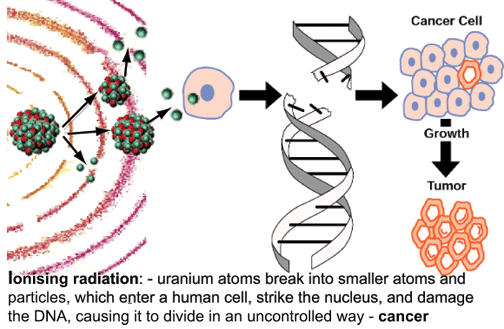
…………………………………………………………….Nuclear power plants emit radioactive pollutants that can disperse into the surrounding environment, leading to potential human exposure through inhalation, ingestion, and direct contact. These pollutants can be transported through air, water, and soil, contributing to long-term environmental contamination1. Populations residing near nuclear power plants may experience low-level chronic exposure to ionizing radiation via environmental release pathways. While our study does not include dosimetry, ionizing radiation is a well-established carcinogen2,3,4,5,6,7 and thus motivates investigation into proximity-based exposure patterns.
………………………Despite the importance and prevalence of nuclear power plants in the U.S., epidemiologic research regarding their health impacts remains rare. Most U.S. studies have focused on individual plants or limited regions, with only a few national assessments to date – many of which relied on fixed distance cutoffs to classify exposed populations8,9,11,12,19,21,22,23,24,25. These studies often focus on a single facility and its surrounding communities, which restricts their statistical power to detect effects and ability to capture broader exposure patterns. Furthermore, differences in study design, exposure assessment methods, and geographic scope make it difficult to draw generalizable conclusions.
In this work, we assess the association between county-level proximity to nuclear power plants and cancer mortality across the United States from 2000 to 2018. We find that counties located closer to operational nuclear power plants have higher cancer mortality rates, with stronger associations observed among older adults. These associations remain consistent across multiple sensitivity analyses and proximity definitions. The results highlight spatial patterns of cancer risk in relation to nuclear power generation and emphasize the importance of evaluating potential long-term health implications of nuclear energy infrastructure in population-scale studies…………………………………………………………………………………………………………………………………………………………………. https://www.nature.com/articles/s41467-026-69285-4
Sizewell C power to cost almost double today’s prices
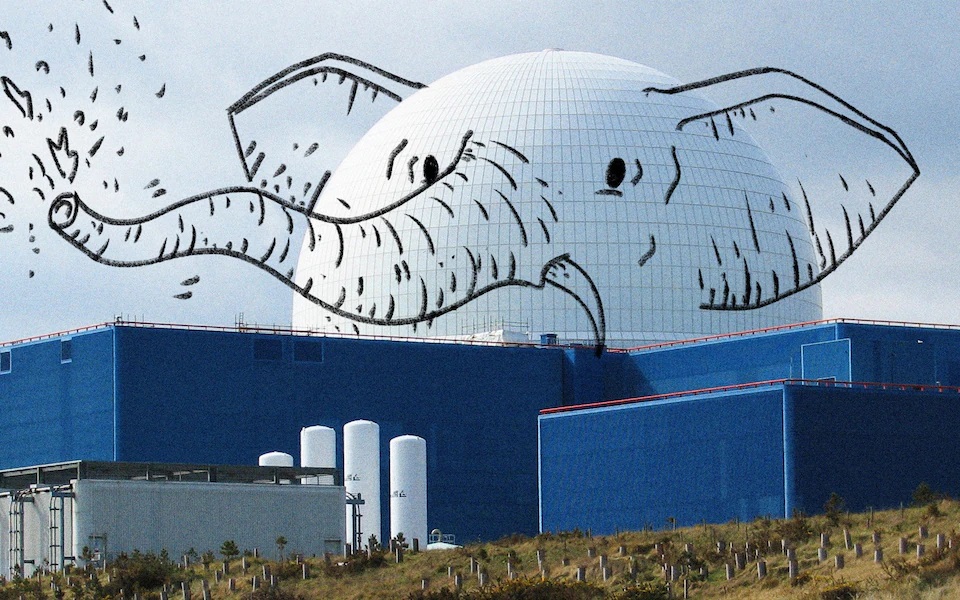
Nuclear plant is an ‘appalling waste of electricity consumers’ and taxpayers’ money’, experts claim
Electricity generated by the Sizewell C nuclear power station will
cost roughly double the normal price of power, according to a new
Government report.
Estimates suggest that the power Sizewell C produces
will cost £120 per megawatt hour (MWh) in today’s prices, compared with the
current wholesale price of about £60 to £70. The extra costs will be added
to energy bills.
The disclosure was made in a review of the business case
for Sizewell C published by the Department for Energy Security and Net
Zero. It is understood to be the first time Sizewell C’s power output has
been costed. It refers to the so-called “strike price”, which is likely
to be awarded to the nuclear power station under the contracts for
difference system. This is where generators get a guaranteed minimum price
for electricity, whatever the market value.
The cost is then covered by a
levy on consumer bills, meaning it effectively acts as an energy subsidy.
Nuclear supporters, including Ed Miliband, the Energy Secretary, have
argued that nuclear power is worth the extra money because it acts as a
secure energy source for decades – potentially a century in the case of
Sizewell C.
However, critics have raised concerns that prices for nuclear
will continue to rise, arguing that early estimates for constructing power
stations are always significant underestimates. They have pointed to
Sizewell C’s predecessor, Hinkley Point C, where original costs of £18bn
have soared to £50bn – a figure announced last week – with start-up delayed
from 2026 to 2031.
The Government report for Sizewell C said estimates
assumed no escalation in costs, which would be a first for UK nuclear
construction projects. The report also warned that consumers were likely to
be charged more than the £120 per MWh rate because the strike price was
calculated net of all the tax, business rates and other payments to the
Government.
Prof Stephen Thomas, the editor-in-chief of Energy Policy, an
academic journal, said: “Sizewell is an appalling waste of electricity
consumers’ and taxpayers’ money. If you want to justify a premium price for
nuclear, you have to estimate the costs of achieving the same factors –
energy security and reliability.
“Of course, nuclear power plants aren’t
always reliable and the most insecure power source is the one that isn’t
built yet. Without the assumptions behind these cost guesses [of £120 per
MWh], they are worthless and far from transparent.” Alison Downes, of
Stop Sizewell C, a local campaign group, said: “Hinkley’s cost has soared
to £50bn with completion dates slipping and five years still to go.
Sizewell C’s costs will rise higher still when it inevitably overruns its
£40bn construction budget.”
Telegraph 25th Feb 2026, https://www.telegraph.co.uk/business/2026/02/25/sizewell-c-power-to-cost-almost-double-todays-prices/
Israeli troops fired 900+ rounds at Gaza medics – report

24 Feb, 2026, https://www.rt.com/news/632982-israel-gaza-medics-killing/
Hundreds of rounds were fired at aid workers during a March 2025 massacre at Tal as-Sultan, an independent investigation says
Israeli soldiers fired over 900 rounds at a convoy of clearly marked emergency vehicles in Rafah in 2025, killing 15 Palestinian aid workers, some of them shot at close range, an independent investigation has found.
The attack took place on March 18, 2025 in the Tal as-Sultan area of southern Gaza, where local responders had been dispatched to collect wounded civilians. Fifteen Palestinian aid workers were killed, including medics from the Palestine Red Crescent Society and members of the Civil Defense.
The victims were traveling in five ambulances and one fire truck, all clearly marked and operating with emergency lights, when they came under sustained gunfire, according to a report released on Monday by independent research agency Forensic Architecture and audio investigation group Earshot.
Investigators reconstructed the incident using audio recordings, satellite imagery, video footage, and witness testimony. Some of the victims were reportedly “shot ‘execution-style’ from close range.”
Investigators analyzed footage recovered from the phone of one of the slain paramedics and identified at least 910 gunshots during the attack, with 844 bullets fired over five and a half minutes. “During this time, at least five shooters fired simultaneously, and witness testimonies suggest as many as thirty soldiers were present in the area,” according to the report.
The report said Israeli forces later crushed the vehicles with heavy machinery and tried to bury them along with the bodies. The victims, all wearing identifying uniforms or volunteer vests, were recovered from a mass grave nearby, the researchers said.
One of the two survivors was abducted by Israeli forces, and were held without charge for 37 days at the Israeli Sde Teiman detention facility and released in poor health. He testified that soldiers confiscated and buried his phone. The other was used as a “human tool” at an Israeli military checkpoint near the site, the report added.
The Israel Defense Forces said the area was an active combat zone and that troops believed they were facing security risks. They later claimed that one vehicle may have been linked to Hamas, which was disputed by the survivors and humanitarian organizations. An internal Israeli inquiry launched in April 2025 cited “professional failures” but rejected allegations of deliberate killings or criminal conduct and recommended no criminal action against the units involved.
The UN, Red Cross, and a number of human rights groups condemned the killings.
Hundreds of medical and emergency personnel have been killed or injured since October 2023, when the IDF began its campaign in the enclave in response to a Hamas incursion into Israel that left at least 1,200 people dead and 250 taken hostage. According to the Palestinian Health Ministry, more than 72,000 people have been killed since the war began.
EDF pledges new £15bn UK investment as falling energy prices hit profits

The energy firm reported a 12 per cent decrease in nuclear output
Anna Wise, Independent UK, Monday 23 February 2026
French energy giant EDF saw its UK profits decline last year, attributed to a combination of falling energy prices and a significant outage at one of its nuclear power stations.
Despite this setback, the company has announced plans for a substantial £15 billion investment in the country over the next three years.
The energy firm reported a 12 per cent decrease in nuclear output from its five operational power stations during the period.
While its Sizewell B facility in Suffolk and Torness in Scotland performed strongly, the overall output was significantly impacted by an extended outage at the Hartlepool power station.
The Teesside-based station, which began generating power 43 years ago and supplies electricity to approximately two million homes, experienced a prolonged shutdown.
Despite these operational challenges, Hartlepool recently secured a one-year extension to its operational lifespan, now expected to generate electricity until March 2028.
This extended downtime, primarily due to issues affecting one of its two reactor systems, was identified as the main driver for EDF‘s overall decline in nuclear generation last year.
Furthermore, a decline in earnings was also down to the prices it charges for nuclear power being lower than in 2024.
It is understood that average prices were down by approximately 20 per cent.
Energy prices in the UK have been gradually coming down after spiking in the aftermath of Russia’s invasion of Ukraine in 2022.
EDF said that in its UK business, earnings before
interest, tax, depreciation and amortisation (EBITDA) were £1.9 billion for 2025, down about a third from £2.9 billion in 2024……………………………………………………….. https://www.independent.co.uk/news/business/edf-hinkley-point-energy-prices-profits-b2925974.html
‘Making America Unsafe Again’: Alarm Over Environmental Review Exemption for Nuclear Reactors
“I think the DOE’s attempts to cut corners on safety, security, and environmental protections are posing a grave risk to public health, safety, and our natural environment,” said one expert.
By Jessica Corbett, February 18, 2026, https://worth.com/trump-nuclear-safety-changes/
ess than a week after NPR revealed that “the Trump administration has overhauled a set of nuclear safety directives and shared them with the companies it is charged with regulating, without making the new rules available to the public,” the U.S. Department of Energy announced Monday that it is allowing firms building experimental nuclear reactors to seek exemptions from legally required environmental reviews.
Citing executive orders signed by President Donald Trump in May, a notice published in the Federal Register states that the DOE “is establishing a categorical exclusion for authorization, siting, construction, operation, reauthorization, and decommissioning of advanced nuclear reactors for inclusion in its National Environmental Policy Act (NEPA) implementing procedures.”
NEPA has long been a target of energy industries and Republican elected officials, including Trump. The exemption policy has been expected since Trump’s May orders—which also launched a DOE pilot program to rapidly build the experimental reactors—and the department said in a statement that even the exempted reactors will face some reviews.
“The U.S. Department of Energy is establishing the potential option to obtain a streamlined approach for advanced nuclear reactors as part of the environmental review performed under NEPA,” the DOE said. “The analysis on each reactor being considered will be informed by previously completed environmental reviews for similar advanced nuclear technologies.”
“The fact is that any nuclear reactor, no matter how small, no matter how safe it looks on paper, is potentially subject to severe accidents.”
However, the DOE announcement alarmed various experts, including Daniel P. Aldrich, director of the Resilience Studies Program at Northeastern University, who wrote on social media: “Making America unsafe again: Trump created an exclusion for new experimental reactors from disclosing how their construction and operation might harm the environment, and from a written, public assessment of the possible consequences of a nuclear accident.”
Foreign policy reporter Laura Rozen described the policy as “terrifying,” while Paul Dorfman, chair of the Nuclear Consulting Group and a scholar at the University of Sussex’s Bennett Institute for Innovation and Policy Acceleration, called it “truly crazy.”
As NPR reported Monday:
Until now, the test reactor designs currently under construction have primarily existed on paper, according to Edwin Lyman, director of nuclear power safety at the Union of Concerned Scientists, a nonprofit environmental advocacy group. He believes the lack of real-world experience with the reactors means that they should be subject to more rigorous safety and environmental reviews before they’re built.
“The fact is that any nuclear reactor, no matter how small, no matter how safe it looks on paper, is potentially subject to severe accidents,” Lyman said.
“I think the DOE’s attempts to cut corners on safety, security, and environmental protections are posing a grave risk to public health, safety, and our natural environment here in the United States,” he added.
Lyman was also among the experts who criticized changes that NPR exposed last week, after senior editor and correspondent Geoff Brumfiel obtained documents detailing updates to “departmental orders, which dictate requirements for almost every aspect of the reactors’ operations—including safety systems, environmental protections, site security, and accident investigations.”
While the DOE said that it shared early versions of the rules with companies, “the reduction of unnecessary regulations will increase innovation in the industry without jeopardizing safety,” and “the department anticipates publicly posting the directives later this year,” Brumfiel noted that the orders he saw weren’t labeled as drafts and had the word “approved” on their cover pages.
In a lengthy statement about last week’s reporting, Lyman said on the Union of Concerned Scientists website that “this deeply troubling development confirms my worst fears about the dire state of nuclear power safety and security oversight under the Trump administration. Such a brazen rewriting of hundreds of crucial safeguards for the public underscores why preservation of the Nuclear Regulatory Commission (NRC) as an independent, transparent nuclear regulator is so critical.”
“The Energy Department has not only taken a sledgehammer to the basic principles that underlie effective nuclear regulation, but it has also done so in the shadows, keeping the public in the dark,” he continued. “These long-standing principles were developed over the course of many decades and consider lessons learned from painful events such as the Chernobyl and Fukushima disasters. This is a massive experiment in the deregulation of novel, untested nuclear facilities that could pose grave threats to public health and safety.”
“These drastic changes may extend beyond the Reactor Pilot Program, which was created by President Trump last year to circumvent the more rigorous licensing rules employed by the NRC,” Lyman warned. “While the DOE created a legally dubious framework to designate these reactors as ‘test’ reactors to bypass the NRC’s statutory authority, these dramatic alterations may further weaken standards used in the broader DOE authorization process and propagate across the entire fleet of commercial nuclear facilities, severely degrading nuclear safety throughout the United States.”
Proximity to nuclear power plants associated with increased cancer mortality

The study found that U.S. counties located closer to nuclear power plants experienced higher cancer mortality rates, even after accounting for socioeconomic, environmental, and health care factors. The researchers estimated that over the course of the study period, roughly 115,000 cancer deaths across the U.S. (or about 6,400 deaths per year) were attributable to proximity to NPPs.
By Maya Brownstein, February 23, 2026, https://hsph.harvard.edu/news/proximity-to-nuclear-power-plants-associated-with-increased-cancer-mortality/
Boston, MA—U.S. counties located closer to operational nuclear power plants (NPPs) have higher rates of cancer mortality than those located farther away, according to a new study led by Harvard T.H. Chan School of Public Health.
The study is the first of the 21st century to analyze proximity to NPPs and cancer mortality across all NPPs and every U.S. county. The researchers emphasized that the findings are not enough to establish causality but do highlight the need for further research into nuclear power’s health impacts.
The study was published Feb. 23, 2026, in Nature Communications.
Numerous studies on the potential link between NPPs and cancer have been conducted around the world, with conflicting results. In the U.S., these studies have been rare and limited in their scope, focused on a single NPP and its surrounding community.
To expand the evidence base, the researchers conducted a national assessment of NPPs and cancer mortality between 2000 and 2018 using “continuous proximity.” They used advanced statistical modeling that captured the cumulative impact of all nearby NPPs, rather than just one. The locations and dates of operation of U.S. NPPs—as well as some nearby in Canada—were obtained from the U.S. Energy Information Administration, and county-level data on cancer mortality was obtained from the Centers for Disease Control and Prevention. The researchers controlled for potential confounders in each county, including educational attainment, median household income, racial composition, average temperature and relative humidity, smoking prevalence, BMI, and proximity to the nearest hospital.
The study found that U.S. counties located closer to nuclear power plants experienced higher cancer mortality rates, even after accounting for socioeconomic, environmental, and health care factors. The researchers estimated that over the course of the study period, roughly 115,000 cancer deaths across the U.S. (or about 6,400 deaths per year) were attributable to proximity to NPPs. The association was strongest among older adults.
“Our study suggests that living near a NPP may carry a measurable cancer risk—one that lessens with distance,” said senior author Petros Koutrakis, Akira Yamaguchi Professor of Environmental Health and Human Habitation. “We recommend that more studies be done that address the issue of NPPs and health impacts, particularly at a time when nuclear power is being promoted as a clean solution to climate change.”
The researchers noted that the results are consistent with the results of a similar study they conducted in Massachusetts, which identified elevated cancer incidence among populations living closer to NPPs.
They also noted some limitations to the study, including that it did not incorporate direct radiation measurements and instead assumed equal impact by all NPPs.
Article information
“National Analysis of Cancer Mortality and Proximity to Nuclear Power Plants in the United States,” Yazan Alwadi, Barrak Alahmad, Carolina L. Zilli Vieira, Philip J. Landrigan, David C. Christiani, Eric Garshick, Marco Kaltofen, Brent Coull, Joel Schwartz, John S. Evans, Petros Koutrakis, Nature Communications, February 23, 2026, doi: 10.1038/s41467-026-69285-4
Rapid UK coastal erosion throws spotlight on £40bn nuclear plant
More than 27 metres of cliff lost over a year in area just 2km from Sizewell C.

Swaths of the eastern UK coastline are eroding faster than expected,
forcing the demolition of homes and putting the spotlight on the risks
surrounding a £40bn nuclear power plant being built at Sizewell.
The coast
around Norfolk and Suffolk is one of the fastest eroding in Europe but the
disintegration has intensified in several parts in recent months including
an area just 2km from the Sizewell C construction site.
More than 27 metres
of cliff at the village of Thorpeness has been lost since December 2024,
compared with an erosion rate of 2 metres a year on average, according to
East Suffolk Council, which said the “sudden and significant pace”
meant safety levels were breached far more quickly than expected. Ten homes
in the upmarket area, including two flats that sold within the last few
years for more than £600,000, have been knocked down since October.
FT 24th Feb 2026,
https://www.ft.com/content/7f093296-41cd-498c-ba81-f3707204eca9
Fuel shortage threatens US nuclear resurgence, warns top supplier.
Centrus Energy says rising demand and ban on Russian imports risks uranium
enrichment ‘supply gap’.
One of the largest suppliers of enriched
uranium fuel to US nuclear power plants has warned of a looming supply
crunch because of fast-rising demand and a ban on Russian imports. Centrus
Energy chief executive Amir Vexler told the FT the company is racing to
build enrichment capacity at its Ohio plant to meet a $2.3bn backlog in
sales of enriched uranium to customers.
But the restart of several US
nuclear plants and upgrading of the reactor fleet to boost electricity
output would put pressure on the handful of western suppliers of enriched
uranium — a critical component in nuclear fuel, he said.
FT 23rd Feb 2026,
https://www.ft.com/content/717ed9ab-d6c0-4d4f-b2c6-386edfa5e71c
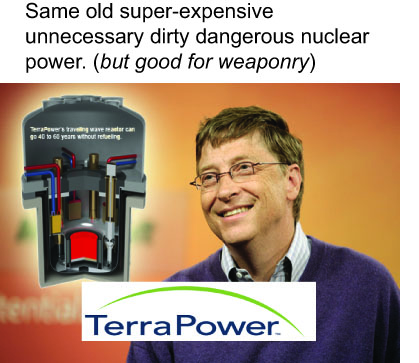
UK regulators to begin formal assessment of TerraPower’s 345MWe sodium-cooled fast reactor.
New Civil Engineer 23rd Feb 2026, By Thomas Johnson
UK regulators have been asked to begin a formal assessment of the Natrium nuclear reactor design developed by US company TerraPower.
The Department for Energy Security and Net Zero (DESNZ) told the Office for Nuclear Regulation (ONR), the Environment Agency and Natural Resources Wales to prepare for a Generic Design Assessment (GDA) of the sodium-cooled fast reactor after a readiness review concluded the design is prepared to enter the regulatory process. The GDA will not start until the regulators have agreed timetables and resourcing.
The GDA is a multi-year scrutiny process in which regulators examine the safety, security and environmental arrangements for a reactor design before any site-specific consents or construction are made. It has been used for previous new-build designs and is intended to give investors and potential operators clearer regulatory certainty.
TerraPower, co-founded by Microsoft’s Bill Gates, is developing the Natrium design as part of a US public–private partnership. The company’s first demonstration plant is being built with support from the US Department of Energy’s Advanced Reactor Demonstration Program (ARDP). The ARDP allows up to $2bn (£1.5bn) in federal funding for the project on a 50:50 cost-share basis; TerraPower and its partners are expected to match that investment……………………………………………………………………………………
sodium-cooled reactors pose different technical and regulatory challenges to light-water designs. Liquid sodium reacts chemically with water and air, which requires specialised handling, testing and safety arrangements…………………………..
https://www.newcivilengineer.com/latest/uk-regulators-to-begin-formal-assessment-of-terrapowers-345mwe-sodium-cooled-fast-reactor-23-02-2026/
Hinkley Point C faces further delays as costs continue to mount
Hinkley Point C, the UK’s first nuclear plant in a generation, is now not expected to start generating electricity until 2030 at the earliest in yet another delay to the project.
French energy giant EDF, which has been overseeing construction on the nuclear plant, blamed the delay on lower-than-expected productivity on its major electromechanical installation programme.
The programme includes installation works such as piping, cabling and system integration for both reactor units – although only Unit 1, the first reactor, is expected to begin generating in 2030.
Unit 2 is generally expected to come online about one year after Unit 1, which suggests it will be the early 2030s based on how the project timeline is currently understood. Workers only lifted the 245-tonne steel dome onto Unit 2 in July 2025, roughly 18 months after Unit 1.
Last month, Hinkley Point C received the second and final nuclear reactor that will be welded into place in the coming years. The power station received its first nuclear reactor in 2023, which has subsequently been installed in Unit 1……………………………………………………………………………………..https://eandt.theiet.org/2026/02/23/hinkley-point-c-faces-further-delays-costs-continue-mount
Iran will not bow down to US pressure in nuclear talks, Pezeshkian says

Iranian president vows to stand firm as Trump threatens strikes and the US bolsters its military presence in the Gulf.
By Al Jazeera Staff and News Agencies, 22 Feb 2026
Iran’s President Masoud Pezeshkian has pledged not to fold to pressure from the United States after his American counterpart, Donald Trump, said he was considering limited strikes to force a deal on Tehran’s nuclear programme.
Pezeshkian’s comments on Saturday came amid high tensions in the Gulf, with the US continuing to grow its military presence with the deployment of two aircraft carriers and dozens of jets.
“We will not bow down in the face of any of these difficulties,” Pezeshkian said at a ceremony to honour members of the Iranian Paralympics team.
“World powers are lining up with cowardice to force us to bow our heads. Just as you did not bow down in the face of difficulties, we will not bow down in the face of these problems,” he said.
Iran and the US resumed indirect talks on Tehran’s nuclear programme in Oman earlier this month, and held a second round in Switzerland last week.
Although Washington and Tehran described the talks in overall positive terms, they failed to achieve a breakthrough.
Iranian Foreign Minister Abbas Araghchi said on Friday that a diplomatic solution appeared within “our reach” and that his country was planning to finalise a draft deal in “the next two to three days” to send to Washington.
Crossroads
Al Jazeera’s Tohid Asadi, reporting from Tehran, said the two countries appear to be at a “crossroads once again” and that residents of the Iranian capital were watching closely for signs of diplomatic progress.
“How can anyone not worry about war?” one woman told Al Jazeera. “Even if we don’t worry about ourselves, we worry about our children’s future.”
A businessman said he believed military confrontation was eventually inevitable “because what the Americans want is surrender, and the Iranian state won’t accept that”………………………………………………………….
Trump issued new threats of military action in January following a deadly Iranian crackdown on antigovernment protesters. Tehran responded by threatening to strike US military bases in the region and warning that it could close the Strait of Hormuz, a vital waterway for oil exports for the Gulf Arab states.
Greatest air power since 2003
According to the US media, the airpower Washington is amassing in the region is the greatest since its invasion of Iraq in 2003. In the past few days, Washington has deployed more than 120 aircraft to the Middle East, while the world’s largest aircraft carrier, the USS Gerald R Ford, is on its way to join the USS Abraham Lincoln carrier strike group already positioned in the Arabian Sea…………………………………………………………………. https://www.aljazeera.com/news/2026/2/22/iran-will-not-bow-down-to-us-pressure-in-nuclear-talks-pezeshkian-says
1 This Month

of the week – Shut Down Drone Warfare!


Tell the Ukrainian Government to Drop Prosecution of Peace Activist Yurii Sheliazhenko

Petition to revoke the licensing of the Near Surface Nuclear Disposal Facility (NSDF) at Chalk River. https://www.ourcommons.ca/petitions/en/Petition/Details?Petition=e-7247
To see nuclear-related stories in greater depth and intensity – go to https://nuclearinformation.wordpress.com
-
Archives
- April 2026 (57)
- March 2026 (251)
- February 2026 (268)
- January 2026 (308)
- December 2025 (358)
- November 2025 (359)
- October 2025 (376)
- September 2025 (257)
- August 2025 (319)
- July 2025 (230)
- June 2025 (348)
- May 2025 (261)
-
Categories
- 1
- 1 NUCLEAR ISSUES
- business and costs
- climate change
- culture and arts
- ENERGY
- environment
- health
- history
- indigenous issues
- Legal
- marketing of nuclear
- media
- opposition to nuclear
- PERSONAL STORIES
- politics
- politics international
- Religion and ethics
- safety
- secrets,lies and civil liberties
- spinbuster
- technology
- Uranium
- wastes
- weapons and war
- Women
- 2 WORLD
- ACTION
- AFRICA
- Atrocities
- AUSTRALIA
- Christina's notes
- Christina's themes
- culture and arts
- Events
- Fuk 2022
- Fuk 2023
- Fukushima 2017
- Fukushima 2018
- fukushima 2019
- Fukushima 2020
- Fukushima 2021
- general
- global warming
- Humour (God we need it)
- Nuclear
- RARE EARTHS
- Reference
- resources – print
- Resources -audiovicual
- Weekly Newsletter
- World
- World Nuclear
- YouTube
-
RSS
Entries RSS
Comments RSS
 nuclear-news