Weapons in Space

The cost for the Golden Dome system would runs as high as $3.6 trillion as estimated by the American Enterprise Institute. Taxpayers for Common Sense, also based in Washington, in its report this year titled “Missing the Mark: Why Golden Dome is Bad for American Taxpayers” says: “Pursuing Golden Dome also poses serious strategic risks, including the potential to accelerate nuclear arms and space arms races and to undermine opportunities to secure verifiable arms control agreements that reduce the nuclear threat. The program has also raised troubling conflict-of-interest concerns involving individuals within the Trump Administration and companies vying for Golden Dome contracts.”
“Taxpayers should be wondering who will pay for the trillions of dollars” for this and other “offensive space programs—especially when the U.S. is $40 trillion in debt.”
Karl Grossman, CounterPuchSeptember 21, 2026
“U.S. says for 1st time it now has weapons in space” was the headline last week in USA Today. The subhead: “Air Force Secretary Troy Meink became the first U.S. official to publicly announce that the military has deployed weapons to space.” The article Tuesday began: “The U.S. has confirmed in a landmark revelation that the nation has deployed operational weapons in space.”
It was news that swept the world.
The headline in the British newspaper, The Guardian: “U.S. confirms for first time it has deployed weapons in space.” The subhead: “Analysts warn of an acceleration in high-risk arms race with Russia and China in Earth’s orbit.”
It should not have come as a surprise.
As the Associated Press reported Wednesday: “The revelation comes as the Trump administration puts a growing focus on space. In 2019, during his first term, Trump created the Space Force as a separate military branch. In his second term, he has announced the ‘Golden Dome’ missile defense system, which includes plans to put U.S. weapons in space.”
An earlier AP story published just after Donald Trump took office a second time, also reported on “plans to put U.S. weapons in space” as part of its planned “Golden Dome” program. This article by Tara Copp, an AP Pentagon and national security correspondent, said the “system was ordered by Trump during his first week in office, and if successful, would mark the first time the U.S. would place weapons in space that are meant to destroy ground-based missiles within seconds of launch.”
Trump is seeking U.S. “superiority” in space as he stated in an executive order titled “Ensuring American Space Superiority.” Issued in December 2025, in it Trump asserted: “Superiority in space is a measure of national vision and willpower.”
In his Secretary of War Peter Hegseth, Trump has a highly aggressive partner in this aim. As Hegseth said in a tour of U.S. aerospace companies in February 2026: “We have to dominate the ultimate high ground.” He also declared on that speaking tour: “The fight for space is the fight for the future of the world as we know it” and “We cannot afford to have a fair fight in space—I’m not interested in orbital parity. We demand orbital dominance plain and simple. Whoever controls space controls the fight.”
Adding to the acknowledgement of the U.S. deploying weapons in space, the AP also reported last week: “American troops need to prepare for combat not only in Earth’s orbit but around the moon, President Donald Trump’s top military adviser said Wednesday, looking ahead to a new frontier in warfare after the U.S. revealed for the first time that it has deployed weapons in space. Gen. Dan Caine, chairman of the Joint Chiefs of Staff, told service members and industry figures at the Air, Space and Cyber Conference outside Washington that the U.S. military should adapt now so it “is prepared to fight, endure and win … from the seabed to cislunar space.” Cislunar space, AP added, “is a term that described the region between the Earth’s surface and the moon.”
Not only is none of this new or going back just a few days or years. It goes back many years.
As Bruce Gagnon, coordinator of the Global Network Against Weapons & Nuclear Power in Space, noted in an interview, plans by the U.S. for dominating space go back decades. The Trump administration is conducting a major replay of these plans.
Gagnon cited, as an example, the “Vision for 2020” plan released in 1998 by the U.S. Space Command, the predecessor of the U.S. Space Force. It’s best to be seen to be believed. It can be viewed here.
“Vision for 2020” opens with a photo of four-star General Howell M. Estes, commander in chief of the Space Command, saying the publication “serves as a bridge in the evolution of military space into the 2lst Century.”
Below those words of Estes and presented like the crawl in the “Star Wars” movies is: “U.S. Space Command—dominating the space dimension of military operations to protect U.S. interests and investment. Integrating Space Forces into warfighting capabilities across the full spectrum of conflict.”
Yes, “to protect U.S. interests and investment.”…………………………………………………………………………………………………………….
The weaponization of space is a violation of the intent of the Outer Space Treaty of 1967. Created by the U.S., United Kingdom and former Soviet Union—it. as The Planetary Society, based in Pasadena, California, explains, “is an international agreement that governs how nations act in space. Formally known as the ‘Treaty on Principles Governing the Activities of States in the Exploration and Use of Outer Space, including the Moon and Other Celestial Bodies,’ it is one of international space law’s foundational documents. The overall purpose of the Outer Space Treaty is to keep space peaceful.”
There have been repeated attempts since at the United Nations to pass a resolution titled “Prevention of an Arms Race in Outer Space” (PAROS) to assure that space be used for peaceful purposes. As notes the Federation of American Scientists, based in Washington, PAROS “reaffirms the fundamental principles of the 1967 Outer Space Treaty and advocates for a ban on the weaponization of space.” It was first passed at the U.N. General Assembly in1981 by a vote of 129 in favor, zero against and 13 abstentions.
But the PAROS agreement to be enacted requires a unanimous vote in favor by the UN’s Conference on Disarmament which consists of 65 nations based on global regions. The U.S. has continually balked on supporting PAROS, and without unanimity it cannot be approved. I have been in Geneva and watched, as at a meeting of the Conference, the U.S. representative announcing the U.S. would not support PAROS.
Meanwhile, the argument by the U.S.—including in recent days with the acknowledgement by the U.S. of it deploying weapons in space—is that there is a threat of Russia and China doing this.
“This is a flagrant in-your-face lie,” says Alice Slater, a member of the board of the Global Network Against Weapons & Nuclear Power in Space and an attorney.
She faults media generally for “parroting” the U.S. claim and “disregarding the constant effort” by Russia and China to get the PAROS agreement enacted.
She also cites the “joint statement” by Russia and China last year upon, as its heading notes, the “80th anniversary of the victory in the Second World War,” in which the U.S., Soviet Union and China were allies. “The two sides [Russia and China] oppose the attempts of individual countries to use outer space for armed confrontation,” says their statement. It cites the need for the PAROS agreement “that would provide fundamental and reliable guarantees of preventing an arms race in outer space, weaponization of outer space.”
Immediately following the acknowledgement by the U.S. of having weapons in space, The New York Times reported a Russian government spokesperson saying, “We believe that space must be free of any weapons,” and a spokesperson for China’s Foreign Ministry saying: “We urge the U.S. side to stop…preparing for war in outer space,” and that China opposed an “outer space arms race.”
Gagnon, the coordinator of the Maine-based Global Network Against Weapons & Nuclear Power in Space, said he believes the U.S. has acknowledged its deployment of weapons in space in a move to “make Golden Dome sound inevitable thus forcing Congress to appropriate the massive funds to secure the controversial project in the Pentagon pipeline.”
The cost for the Golden Dome system would runs as high as $3.6 trillion as estimated by the American Enterprise Institute. Taxpayers for Common Sense, also based in Washington, in its report this year titled “Missing the Mark: Why Golden Dome is Bad for American Taxpayers” says: “Pursuing Golden Dome also poses serious strategic risks, including the potential to accelerate nuclear arms and space arms races and to undermine opportunities to secure verifiable arms control agreements that reduce the nuclear threat. The program has also raised troubling conflict-of-interest concerns involving individuals within the Trump Administration and companies vying for Golden Dome contracts.”
Said Gagnon: “Taxpayers should be wondering who will pay for the trillions of dollars” for this and other “offensive space programs—especially when the U.S. is $40 trillion in debt.” He said “the aerospace industry long ago identified the ‘entitlement programs’ as their preferred source of funds” and “taking from Social Security, Medicare, Medicaid and the now tattered social safety net.”
As to consequences of war in space, he told of Apollo Astronaut Edgar Mitchell—“the sixth person to walk on the moon”—speaking at a “peace in space rally I organized in the now re-named Cape Canaveral Space Force Station. Mitchell told the assembled that a war in space would be the ‘one and only’ because so much space junk would be created—on top of the existing huge debris field—that we would not be able to get a rocket through the deadly trash orbiting the Earth. He said it would be like trying to ‘get through a piranha-laced river’ in the Amazon.”
Gagnon spoke of “a spiritual disconnection in the minds and hearts of those ‘leaders’ in Washington who believe that 4% of the global population in the U.S. should be the ‘Masters of Space’ [the motto of the Space Delta 8 unit of the U.S. Space Force]. It is a deep sickness. The time has come for the American people to take the toys away from the boys.”
The Global Network Against Weapons and Nuclear Power in Space was formed at a meeting in Washington, D.C. in 1992. Each year it holds a “Keep Space for Peace Week,” this year between October 3 to 10, with events. The 2026 theme is “Space Is a Global Commons—Not To Be Dominated.” The Global Network’s website is at space4peace.org.
A book I authored, published in 2001, Weapons in Space, quotes Gagnon as saying: “If the U.S. is allowed to move the arms race into space, there will be no return. We have this one chance, this one moment in history, to stop the weaponization of space from happening.”
Similar warnings are made by Gagnon and others in TV documentaries I wrote and presented: Nukes In Space: The Nuclearization and Weaponization of the Heavens, first out in 1995 and viewable now, and Star Wars Returns, out in 2012, which can be seen here.
I concluded another book I wrote, The Wrong Stuff, published in 1997, with: “As for space weaponry, we are living at an historic junction. We have the opportunity now to halt the expansion of a new round of the arms race into space. The Star Wars of the Reagan administration is clearly not over, as the U.S. military seeks to attain the ‘ultimate high ground’ and with nuclear-powered weaponry to dominate space and the Earth below. We have a chance to stop something wrong and dangerous before it happens, before it is too late.”
Karl Grossman, professor of journalism at State University of New York/College at Old Westbury, and is the author of the book, The Wrong Stuff: The Space’s Program’s Nuclear Threat to Our Planet, and the Beyond Nuclear handbook, The U.S. Space Force and the dangers of nuclear power and nuclear war in space. Grossman is an associate of the media watch group Fairness and Accuracy in Reporting (FAIR). He is a contributor to Hopeless: Barack Obama and the Politics of Illusion.
Simon Daigle lists the public concerns that must be addressed in planned development of BWRX-300 small nuclear reactors – Submission to Canadian Nuclear Safety Commission


Submission Concerning the Proposed Development of BWRX-300 – multiple reactors at the Darlington Site (Ontario)
Submitted November 19,2023 by Simon J Daigle, Simon J Daigle, B.Sc., M.Sc., M.Sc(A) Montreal, Quebec Canada
Response to the proposed development of OPGs BWRX-300 reactors at the Darlington CANDU reactors site and the items below are all real public concerns and must all be addressed independently and individually, as per the following categories:
CNSC licensing of the BWRX-300 reactors & Multiple Reactors nearby a NPP is inadequate [References: 1, 2, 4, 5]
- BWRX-300 stands for Boiling Water Reactor eXperimental 300 and developed by GE Hitachi Nuclear Energy (GEH) and will not aim to address any key challenges faced by traditional nuclear power plants. In fact, they will be costly, and generate extremely toxic nuclear wastes more than what would be expected by traditional NPP plants. [Ref. 4].
- This experimental compact design will not reduce construction costs, will not simplify operation nearby one NPP, or will ever enhanced safety measures. In fact, it will do the exact opposite as per IAEA [Ref. 1 and 5].
- It is questionable to say the least that by utilizing natural circulation and passive safety systems you will eliminate the need for external pumps and active cooling mechanisms because during a meltdown, fire or catastrophic event (lightening, flooding, extreme air temperatures over decades because of climate change), who will shut it off? A worker? I’m more reassured when a Pilot on commercial flight is present when he or she is using the auto-pilot function [Ref. 1].
- CNSC license to built an experimental reactor based on the CNSC’s decision that OPG has met the recommendations of the 2011 Environmental Assessment Report by the JRP is not objectively verifiable or can be validated based on the 2023 Update report [Ref. 2].
- No objective evidence is available to validate what specific recommendations of the JRP have been adopted, analysed and/or implemented by OPG or CNSC. [Ref. 2].
- No BWRX-300 reactors are operating anywhere in the world and is a real public concern for the citizens living nearby as well as the potential impacts of a catastrophic environmental event that could be transboundary across many municipalities.
Engineering Design Risks: Experimental, Natural water cooling & neutron leakage [4,5].
- Water cannot be used to cool a reactor as it is experimental design reactor that will use use low pressure water to remove heat from the core. A distinct feature of this reactor design is that water is circulated within the core by natural circulation and yet no data is measured or validated by any laboratory confirmed analysis or modelling study.
- Neutron leakage will be problematic for any SMR design as well as for the BRMX-300 reactor as no proof of any safe SMR reactor system can be validated or compared too to this very day.
- This is no experimental data to elude or conclude that this experimental reactor will work in terms of an internal cooling system of the core.
- BWRX-300 is by all means not small as it covers a full football field.
- No BWRX-300 reactors are operating anywhere in the world.
- The proposed design and operation of a BWRX-300 is entirely different from the CANDU design and involves a structure and a method of operating which is, in large part, below ground level.
- No data on any potential meltdown of the core of any modular nuclear including BWRX-300 including catastrophic events cascading located nearby a Nuclear Power Plant.
- Neutron leakage is a huge problem with SMRs and will be as well with the BWRX-300.
- SMR Neutronics and Design: [Ref. 4].
- “A nuclear reactor is designed to sustain criticality, a chain reaction of fission events that generates energy (∼200 MeV per fission event) and extra neutrons that can cause fission in nearby fissile nuclides.
- The neutron “economy” of a reactor depends on the efficiency of the chain reaction process; the fate of neutrons absorbed by abundant nuclides, such as 238U or 232Th; the fission of newly generated fissile nuclides, such as 239Pu and 233U; and the loss of neutrons across the fuel boundary.
- These “lost” neutrons can activate structural materials that surround the fuel assemblies. Each of these physical processes generates radioactive waste.
- Thus, the final composition of the SNF and associated wastes depend on the initial composition of the fuel, the physical design of the fuel, burnup, and the types of structural materials of the reactor.
- The probability of neutron leakage is a function of the reactor dimensions and the neutron diffusion length, the latter of which is determined by the neutron scattering properties of the fuel, coolant, moderator, and structural materials in the reactor core.
- The neutron diffusion length will be the same in reactors that use similar fuel cycles and fuel–coolant–moderator combinations; thus, the neutron leakage probability will be larger for an SMR than for a larger reactor of a similar type.”
- Public Consultation, indigenous peoples and social acceptability: [Ref. 2].
- No objective evidence has been elucidated or clearly documented with transparency.
- EIA Impact statement: page 84 of [Ref. 2].
- EIA impact statement, nor final PPE parameters, did not follow IAEA Multi-Unit Probabilistic Safety Assessment required for 1 or 4 experimental reactors nearby a Nuclear Power Plant despite the fact that EIA significance analysis had assessed all the residual adverse effects [Ref. 1, 5]. Please refer to the list of EIA and PPE selected quotes below as the reference to compare with the IAEA Multi-Unit Probabilistic Safety Assessment that is lacking [Ref. 1, 5].
EIA and PPE selected quotes:
“EIS significance analysis had assessed all the residual adverse effects to be “Not Significant”. Of the likely residual adverse effects that were forwarded for assessment of significance in the EIS:
• Seven (7) were also determined to result in minor residual adverse effects from the BWRX-300 but less than that described in the EIS,
• Four (4) were not applicable to the BWRX-300 reactor,
• Five (5) were determined to have residual adverse effects not significant after completion of additional studies to assess the likely effects to retained terrestrial features not considered in the EIS.
- The PPE Of the 198 PPE parameters, 60 PPE parameters were not applicable to the BWRX-300. Of the 138 applicable PPE parameters evaluated, eight (8) BWRX-300 parameters are currently not within their respective PPE parameters. These are largely due to characteristics inherent to the design of the GEH reactor technology. These eight parameters are related to the following topics:
- The rate of fire protection water withdrawal and the quantity of water in storage,
- Deeper foundations (38 m below grade) than the reactors previously assessed in the EIS (13.5 m),
- Airborne releases of radioactive contaminants and normal operation minimum release height above finished grade,
- The different proportions of radionuclides in solid wastes generated by the operation of the BWRX-300,
- The weight of the cask used to transport the BWRX-300 spent fuel on site, and
- The multiplication factors applied to basic wind speed to develop the plant design.
- A full environmental impact assessment is required to fulfill provincial and federal jurisdiction best practices for air, water and soil & biosphere impacts during a catastrophic event or meltdown of this experimental reactor as well as maritime and lake biosphere impacts.
Nuclear accidents, incidents, multiple explosion risks or 1 or 4 BMRX-300 reactors nearby a NPP, Soil Stability, hydrogeology, lithospheric & seismic Risks: [Ref. 1,2, 5].
- No objective risk assessment has been completed by OPG or CNSC as per the required IAEA Multi-Unit Probabilistic Safety Assessment required for 1 or 4 experimental reactors nearby a Nuclear Power Plant. [Ref. 1,5].
- The appropriateness of building 1 or 4 untested reactors next to the 4 existing CANDUs at Darlington as well as the current and potential stored nuclear waste is questionable given the fact that the probabilistic safety assessment was not completed according to the IAEA methodology [Ref. 1].
- JRP recommendations concerning the physical conditions of the Darlington site need to be applied with transparency by OPG and the CNSC. [Ref. 2].
Other public and safety concerns: these issues need to be addressed
- Climate change impacts have not been included in the EIS report.
- Unknown: reliability data to reduce the risk of potential accidents.
- Unknown: demonstrating that the BMRX-300 is a clean and reliable source of electricity, capable of generating vast amounts of energy without producing greenhouse gas emissions as it is only an experimental design.
- Concerns surrounding safety, waste disposal, and cost have hindered its widespread adoption globally. A handful of countries have adopted this design but no data on the true financial costs to governments or to that taxpayer. [Ref. 4].
Unknown: BWRX-300 did not address safety concerns, efficiency, efficacy as a cost-effective alternative compared to renewables such as hydro, solar or wind energy generation.
Unknown: sustainability and reliability compared to wind and solar energies to meet the growing demand for electricity.- BWRX-300 represents a significant step backwards in power technology. It is not compact, it does not meet nuclear wastes (as per the IAEA ALARA principle) that will last for thousands of years, and most certainly, it is not cost effective over time to store and monitor SMR or BWRX-300 nuclear wastes based on the probability of any heat instability of the nuclear core over time and the generation of highly toxic nuclear waste. You cannot turn off radioactivity like an electrical light bulb as there are no fuse switch off for ionizing radiation.
The United States claims to now have space weapons and to prepare to fight around the Moon

Voltaire International Newsletter
Fri, 18 Sep 2026, https://www.sott.net/article/508501-The-United-States-claims-to-now-have-space-weapons-and-to-prepare-to-fight-around-the-Moon
US Secretary of the Air Force Troy Meink said on September 14, 2026, at the National Harbor Air, Space & Cyber Conference that:
“The United States now has space control weapons in orbit capable of defending joint forces against hostile action.
“For more than a decade, we have expressed our concern about the development of space weapons by the Chinese, Russians and other countries. We are working to ensure our protection and our ability to operate in this environment, as we have done for decades.”
Contrary to Troy Meink’s statements, Russia and China have always claimed that they do not deploy weapons in space. By signing the 1967 Outer Space Treaty, the United States committed itself not to place weapons of mass destruction in Earth orbit.
Chairman of the Joint Chiefs of Staff General Dan Caine said at the end of the conference:
“Our task, my friends, is to adapt right now, so the Joint Force is prepared to fight, endure, and win in global contested environments, from the seabed to cislunar space.
“Our United States Space Force must provide unrivaled space superiority and sustain the associated networks, domain awareness, data advantage that the joint force needs to win in space both now and in the future.
“We must now assume that our forces will be tracked by autonomous systems, scrambled across the entire spectrum and tracked in real time.
“AI is already a reality and it is transforming the way the armed forces perceive, analyze, decide and act.”
Comment: USA has deployed first space-based weapon:
The United States now has an “on orbit” space weapon and will use it to protect American forces, Air Force Secretary Troy Meink announced Monday, in a not-so-subtle warning to China and Russia.
It marked the first time the United States has acknowledged it has its own offensive capability in space after years of warning that China and Russia have been practicing offensive maneuvers in orbit, such as using lasers or jamming that put U.S. satellites at risk.
Meink would not specify what type of weapon is now in space but hinted that it will be used for “space control.” A U.S. official said it could include the military taking out an enemy’s satellite if it’s being used to target American troops or a U.S. satellite.
The United States also is developing a web of space-based missiles that are envisioned as part of the future Golden Dome missile defense system.
Meink would not elaborate on why the disclosure of the new U.S. capability was being made now, saying only that “there’s a lot of factors that go into how we talk about these things. It’s important from a deterrence perspective.”
Iran sends peace terms to US

Tehran is awaiting US President Donald Trump’s response to its conditions for restarting negotiations, security chief Mohsen Rezaei has said
19 Sep, 2026 , https://www.rt.com/news/645996-iran-sends-peace-terms-us/
Iran has conveyed its peace terms to the US through Qatari mediators, the country’s top security official, Mohsen Rezaei, has said, arguing that it is in America’s interests to accept them.
The 60-day period provided under the US-Iranian memorandum of understanding to negotiate a settlement expired last month without a deal, while disrupted maritime traffic through the Strait of Hormuz continues to drive up energy prices.
“Seven conditions set by Iran for the start of any negotiations have been conveyed to the US administration. Tehran’s message is clear and unambiguous: If Washington wants to escape the predicament it has created for itself and avoid becoming further entangled in it, it has no choice but to recognize Iran’s rights and accept its conditions,” Rezaei wrote on X on Saturday.
In an interview with Al Jazeera, Rezaei, the secretary of Iran’s Supreme National Security Council, said the terms include “an end to the war on all fronts, the release of our frozen funds and an end to the naval blockade.”
Iranian officials previously said they are also seeking the withdrawal of US forces from the region and compensation for the US and Israeli strikes launched on February 28.
“Trump’s threats will not achieve any results. We are prepared for a decisive war,” Rezaei added.
US President Donald Trump said on Wednesday that “hopefully we are toward the end of the war” and suggested that Iran wants to make a deal. The following day, however, he once again threatened to “annihilate” the Iranian leadership if the conflict does not end on his terms.
The US military revealed on Friday that the nearly seven-month conflict has cost $43.6 billion, with nearly two-thirds of the bill going toward replenishing depleted munitions.
According to Bloomberg, widely reported ammunition shortages could delay arms deliveries to US allies by several years. Trump and Secretary of War Pete Hegseth have denied that the conflict has left the US short of missiles and bombs.
Swiss to vote on referendum against new nuclear power plants

the public has “clearly” spoken out three times in favour of a future based on renewable energy: through the adoption of the Energy Strategy 2050 in 2017, the Climate Protection Act in 2023 and the Electricity Act in 2024.
the public has “clearly” spoken out three times in favour of a future based on renewable energy: through the adoption of the Energy Strategy 2050 in 2017, the Climate Protection Act in 2023 and the Electricity Act in 2024.
20 September 2026, https://www.swissinfo.ch/eng/energy-transition/swiss-referendum-against-new-nuclear-power-plants/92088172
The Swiss are set to vote against the possibility of building new nuclear power stations. In a span of three months, more than 125,000 people signed the referendum petition against the government proposal that was approved by parliament in June.
“The success of this petition shows that the public rejects a return to nuclear power, a costly and dangerous technology that increases our dependence on uranium imports, particularly from Russia,” wrote the “No to New Nuclear Power Stations” coalition in a press release.
During the summer session, parliament had approved the government’s indirect counter-proposal to the “Stop the Blackout” (Electricity for All at All Times) popular initiative. The proposal aims to lift the ban on building new nuclear power stations in Switzerland.
With this proposal, the government and parliament are “ignoring the will of the people”, the coalition for the referendum protested. It points out that the public has “clearly” spoken out three times in favour of a future based on renewable energy: through the adoption of the Energy Strategy 2050 in 2017, the Climate Protection Act in 2023 and the Electricity Act in 2024.
For the referendum committee, “this approach is bearing fruit: Switzerland is increasingly meeting its energy needs through locally produced solar, wind and hydro power.” Conversely, the costs and risks associated with nuclear power are considered “too high”.
The “No to New Nuclear Power Stations” coalition brings together the Greens, the Social Democrats, the Green Liberals, part of the Centre Party and around thirty organisations such as WWF, Greenpeace, Pro Natura and Swissolar.
Designation of Nuclear Waste Management Organization’s Deep Geological Repository as Project of National Recklessness
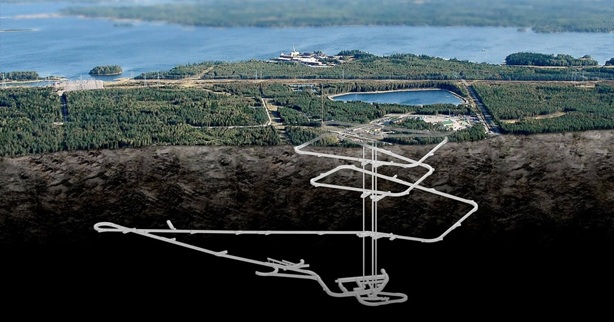
| Ottawa – An announcement on Friday that the federal government has taken the next step to short-circuit the review of a contentious nuclear waste project is receiving pushback from critics and Indigenous leaders who are demanding a comprehensive and independent review before any federal approvals can be granted. |
We the Nuclear Free North, 20 Sept 26
Notice was posted in the Canada Gazette that the Nuclear Waste Management Organization’s (NWMO’s) Deep Geological Repository (DGR) project for all of Canada’s nuclear fuel waste is proposed for designation as a “Project of National Interest” under the Building Canada Act. This designation would guarantee project approval and would circumvent the Impact Assessment process. The Notice also proposes a reduced scope of the project, eliminating long-distance transportation and long-term safety from whatever evaluation the federal government might employ in developing their conditions for the approval.
Opposition to the project’s designation as a Project of National Interest centres around the recognition that if so designated, the project will not receive a comprehensive impact assessment and key areas of concern – namely transportation and long-term safety – will escape scrutiny.
“If the NWMO’s project was sound and they could make the safety case for their nuclear waste transportation and burial project there would be no hesitation on the part of the nuclear industry or the federal government to have it subject to a comprehensive and independent assessment”, commented Brennain Lloyd, project coordinator with Northwatch.
“This move to shield the deep geological repository scheme from scrutiny says it all – the NWMO’s concept can’t stand up to technical or public review. But limiting its review will not limit its impact.”
The proposal to designate the NWMO’s DGR as a project of national interest has been put forward by the federal government despite strong opposition expressed by Indigenous and non-Indigenous organizations, and evidenced by public protests, lawn signs, letters to newspapers and public agencies, and most especially by the more than 1,000 comments submitted by Canadians during the planning phase of the federal impact assessment’s, expressing either opposition to the project or significant concerns about how it would be carried out. The first phase of the federal review began in January and on July 3 the federal government announced the commencement of the impact assessment process.
Canadians fought hard to ensure that the project would receive a full impact assessment including a comprehensive examination of long-distance waste transportation,” said Wendy O’Connor, volunteer with Nuclear Free Thunder Bay.
“The Impact Assessment Agency agreed. That the federal government could now ignore Canadians’ wishes and sidestep the full assessment process Canadians were promised is shocking, unjust and unwise.”
“Considering the project’s novelty, scale, duration and potential for long-lived and irreversible effects from transporting and burying such an unprecedented volume of highly radioactive nuclear waste, it would be absolutely reckless for the government to fast track the approval of this project. The Impact Assessment Agency of Canada is the sole body with the mandate and expertise to evaluate the environmental, health, social, economic, cumulative, and rights-related impacts of major federal industrial projects. It must remain the lead authority for nuclear-related impact assessments,” said Mary Veltri of Environment North.
In May the federal government proposed in its ‘Getting Major Projects Built in Canada’ discussion paper that nuclear projects be vetted by the Canadian Nuclear Safety Commission (CNSC) rather than the Impact Assessment Agency of Canada. Canadians’ response was noted their resulting report, “What We Heard”. The report specifically mentions nuclear projects as one where opponents argued that having the assessment carried out by the sector regulator alone would weaken the scrutiny of cumulative effects, species at risk, and Indigenous rights, and diminish public participation.
The Notice in the Canada Gazette invites the public to comment on the proposal that NWMO’s DGR project be designated as a Project of National Interest. We the Nuclear Free North strongly urges Canadians to do so, and will be providing analysis and more information to support public engagement.
Comments may be emailed to DGRComment-CommentaireDSCGP@mpo-bgp.gc.ca, with a deadline of October 26.
Massive drone attack on Moscow marks new stage of US-NATO war with Russia

A de facto state of war now exists between Russia and the NATO powers……… Ukraine is attacking Russian cities with weapons paid for, jointly developed and often directly supplied by the NATO powers, which are also providing satellite imagery and targeting intelligence. Since June the European Union has put 8.5 billion euros into drones and missiles for Ukraine.
The greatest danger in the political situation is the chasm between the scale of the threat and the understanding of it among the population. Masses of people sense the danger, but they cannot believe that their governments would risk nuclear war. The governments are exploiting this incredulity. The media and political establishment are doing everything possible to prevent the population from knowing and understanding the dangers.
WSWS Editorial Board, 20 Sept 26
Ukraine attacked Moscow overnight Saturday in the largest strikes on the Russian capital in the war thus far. Moscow’s mayor said 450 drones headed for the city were shot down. Three people were killed in the Moscow region, and the refinery that normally supplies 40 percent of the city’s fuel was set on fire.
The attack followed Russia’s drone attack one week earlier on a passenger train at Yahodyn station in western Ukraine, about 2 kilometers (1.2 miles) from Poland, minutes after a train carrying former British Prime Minister Boris Johnson and security advisers of several European governments had passed through.
Ukrainian President Volodymyr Zelensky said Sunday that the attack had also included Ukraine’s Flamingo cruise missile and the Pelican, the country’s first domestically built ballistic missile. The Flamingo carries a 1,150-kilogram warhead, against 50 to 60 kilograms for the Liutyi drones Ukraine has relied on, and uses a guidance system provided by the French company Safran.
A de facto state of war now exists between Russia and the NATO imperialist powers, whose policy is relentless escalation.
Ukraine is attacking Russian cities with weapons paid for, jointly developed and often directly supplied by the NATO powers, which are also providing satellite imagery and targeting intelligence. Since June the European Union has put 8.5 billion euros into drones and missiles for Ukraine.
The financing and arming of attacks on Moscow go beyond recklessness. The European leaders know that a major Russian counterattack can follow, and their actions are intended to provoke just such retaliation. Polish Prime Minister Donald Tusk told his parliament on Thursday that intelligence on Russian plans for drone and missile strikes on countries supporting Ukraine is now “highly consistent and, unfortunately, convincing.” Two days later came the attack on Moscow.
Yet there are no calls by the leaders of any of the European NATO powers for negotiations, for a stepping back from the brink. European Commission President Ursula von der Leyen said on September 2 of Europe’s pressure on Russia: “We will increase it. And we will not stop.”
The NATO powers calculate that by escalating the war they can bring about the collapse of the government of Russian President Vladimir Putin. They may believe that it will not come to a nuclear exchange. But they are willing to risk one, and there is a logic to events that is independent of what any government intends.
What drives the imperialist powers to such actions? The answer lies in the social, economic and political crises of their own rule, for which they have no solution. The criminal intentions of those who carry out these policies are real enough. But they are themselves the product of the objective logic of imperialism.
The European powers face slow growth, lagging productivity and a widening technology gap with the United States and China, which Mario Draghi, the former president of the European Central Bank, has called “an existential challenge.” German imperialism plays the central role in the escalation. Berlin is the largest European financier of the war, and Chancellor Friedrich Merz has declared that there will be “no restrictions” on the range of the weapons used against Russia. Germany will raise its defense budget 32.7 percent next year, to €109.7 billion, while cutting €38.3 billion from healthcare and pensions by 2030.
Twice in the 20th century German imperialism marched east. In 1941, Hitler launched a war of annihilation against the Soviet Union for what he called Lebensraum, “living space,” the conquest of the land, resources and labor of the east, which cost 27 million Soviet lives. Eight decades after the defeat of the Third Reich, the German ruling class, confronting the erosion of its industrial base and export markets, again sees a way out of its crisis in the east.
The United States, for its part, is driven by a massive and unsustainable federal debt and a deepening crisis of the dollar system accelerated by the surge in borrowing costs. Interest on the $40 trillion debt cost $1.052 trillion in the first 11 months of the fiscal year, more than the Pentagon spent. The yield on the 10-year Treasury note closed Friday at 5.01 percent, its highest since July 2007. American imperialism is seeking to offset its economic decline by military means.
The escalation by the European powers is in part a response to the shift in American foreign policy under Trump. The administration’s attention is fixed, at least for now, on the war against Iran, which began on February 28, and on the conflict with China, whose president, Xi Jinping, arrives in Washington this week.
At the same time, dominant sections of the American ruling establishment are egging the Europeans on. Fifty-eight House Democrats voted on September 16 for a bill authorizing tariffs of up to 100 percent on the biggest buyers of Russian oil, and House Minority Leader Hakeem Jeffries, who voted “no,” objected that it was too weak. If the Democrats win control of Congress on November 3, they will pursue a still more aggressive program of war against Russia.
The US and European imperialist powers have arrived at a position analogous to that of the great powers in 1914. In the weeks after the assassination of the Austrian archduke at Sarajevo on June 28, 1914, the governments of Germany, Austria-Hungary, Russia, France and Britain concluded that war, with all its terrible consequences, was the least bad option before them. As in 1914, and as with Hitler in 1939, the ruling classes see war as a means of suppressing problems that they cannot solve. None of these governments is prepared to retreat, and there is no red line they are not willing to cross.
The governments have chosen escalation, but they do not control its consequences. If they could be shown what their cities will look like in two years, it would not stop them. Leon Trotsky, the co-leader of the Russian Revolution, wrote in the 1938 founding program of the Fourth International: “The bourgeoisie, of course, is aware of the mortal danger to its domination represented by a new war. But that class is now immeasurably less capable of averting war than on the eve of 1914.” This assessment is even more true today.
The war, now in its fifth year, was instigated by the NATO powers. Three decades of NATO expansion to Russia’s borders and the arming of Ukraine as a NATO proxy were aimed at provoking the conflict that began with Putin’s invasion in February 2022.
The Ukrainian regime, which is waging the war on behalf of the imperialist powers, faces perhaps the deepest crisis of all. The Zelensky dictatorship rules by martial law, holds no elections and has banned opposition parties. It fills its army by seizing men on the streets, and it faces mounting resistance to forced conscription in Lviv, Ternopil, Lutsk and other cities.
On August 10, a Ukrainian court sentenced the socialist Bogdan Syrotiuk, 27, to 15 years in prison for opposing the war and calling for the unity of Ukrainian and Russian workers against it.
The reactionary invasion of Ukraine was the response of a regime that is itself the product of the dissolution of the Soviet Union in 1991. The Russian government is a government of oligarchs who enriched themselves through the plunder of state property, and its policies have been bankrupt from the beginning. Putin’s strategy in invading Ukraine was to pressure the NATO powers, which he constantly called his “Western partners,” into an accommodation with Russia. Instead, they used the invasion as a pretext for a massive military escalation.
The greatest danger in the political situation is the chasm between the scale of the threat and the understanding of it among the population. Masses of people sense the danger, but they cannot believe that their governments would risk nuclear war. The governments are exploiting this incredulity. The media and political establishment are doing everything possible to prevent the population from knowing and understanding the dangers……………………………………….. https://www.wsws.org/en/articles/2026/09/21/sskp-s21.html
Walt Zlotow – How does US fund Israeli genocide? Let us count the billions
Walt Zlotow West Suburban Peace Coalition Glen Ellyn IL, 21 Sept 26, https://theaimn.net/how-does-us-fund-israeli-genocide-let-us-count-the-billions/
President Biden hopped on the Israeli genocide campaign to destroy Gaza and its Palestinian population the day after the October 7, 2023, Hamas attack on Isreal.
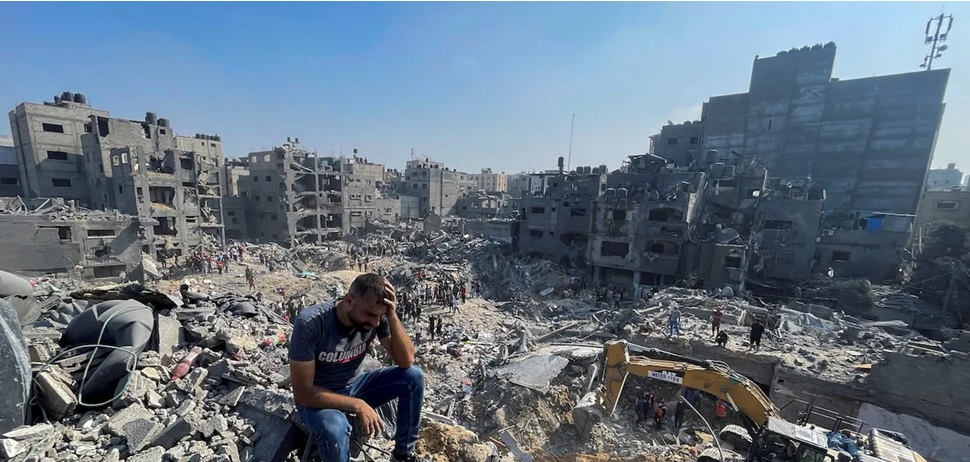
Approaching three years this October 8, Gaza’s 141 square miles are a pile of rubble covering up tens of thousands of dead Palestinians among the hundred thousand plus dead. The remaining 2.2 million survive agony in an ever tightening area as Israeli forces occupy over half of Gaza and shoot any Palestinian who get close to the Israeli zone.
None of this genocidal atrocity would have been possible without President Bidenn gifting Israel with over $20 billion in weapons to inflict the most grotesque genocide this century.
Even after the January 2025 ceasefire which released the remaining Israeli hostages, Israel continues to bomb and kill Palestinians daily.
Now President Trump, even tho running out of weapons to fight his lost war on Iran, plans to gift Israel with another $2.8 billion in 2,000 lbs. bombs to continue the slaughter of Palestinians in Gaza and Lebanese in Lebanon.
“The Trump administration’s proposed sale of 40,000 2,000-pound bombs, some of the most destructive munitions in our arsenal, raises grave, unresolved concerns about how these munitions could be used in densely populated areas of Gaza and Lebanon. The Trump administration has not provided sufficient assurances that these weapons will be used by the Netanyahu government in accordance with US law and with appropriate protections for civilians. I therefore will not clear this sale at this time.”
Rep. Meeks knows full well that the proposed $2.8 billion, just like the previous $20 plus billion from Biden, will be used to further obliterate Gaza and Southern Lebanon in furtherance of expanding Greater Israel.
Why Trump continues the weapons flow to Netanyahu after he suckered Trump into launching his disastrous attack on Iran will forever remain a mystery.
The US economy is facing disaster, possibly even collapse over Trump’s lost war against Iran. We’re not bombing Iran anymore because we’ve largely run out of weapons. Our debt has raced past $40 trillion. Inflation is out of control. Yet, Trump has enough loyalty to his masters in Israel to find $2.8 billion in genocide weapons for Israel to complete the project his predecessor enabled 3 years ago.
That is not ‘America First’. It is ‘Genocide First…America Last.’
NATO is Working on a New Finnish-Russian War
Neutrality Studies, Sakari Linden, 17 Sept 26, https://www.youtube.com/watch?v=kvj1Ha2jveU
Neocons never give up. As project Ukraine is faltering, the forces of war are working on the next battlefield with Finland in their cross-hairs.
Sakari Linden, a board member of Finland’s Freedom Alliance Party and its foreign policy board, discusses Finland’s abandonment of neutrality, NATO membership, growing military tensions, economic consequences, media pressure, and the prospects for an independent and neutral Finnish foreign policy.
Polish Polarization Over Ukraine Is Likely The New Normal

Andrew Korybko, Aug 07, 2026, https://korybko.substack.com/p/polish-polarization-over-ukraine
What was once one of the most Ukrainophilic societies on earth in recent years is now becoming one of the most critical.
The spiraling Polish-Ukrainian dispute that was sparked by Zelensky’s state-level glorification of the Volhynia Genocide’s OUN-UPA culprits has polarized Poles over Ukraine in unprecedented ways that would have been unthinkable just several months ago. Nowadays nearly 60% of Poles oppose Ukraine’s membership in the EU, slightly over half no longer want to accept more Ukrainian refugees, and a little less than half want to stop arming Ukraine. All of this is directly due to their political tensions.
As difficult as it may be for astute observers to accept, few Poles knew about Ukraine’s glorification of the OUN-UPA till recently, and those who were aware of it were told by their ruling duopoly and “NGOs” that they’re a “Russian footwrap” (“Ruska onuca”) for believing this. It wasn’t till conservative President Karol Nawrocki threatened to revoke Poland’s highest honor from Zelensky, actually went through with it, and then Ukrainian society and the state viciously reacted that this finally became public knowledge.
Nawrocki raised the greatest awareness of Ukraine’s glorification of the OUN-UPA among his compatriots, around which time the conservative opposition with which he’s affiliated (he’s officially an independent) did the same for electioneering reasons ahead of fall 2027’s next Sejm elections. For background, they donated Poland’s entire stockpile to Ukraine and spent 4.91% of their country’s GDP on supporting it (mostly supporting refugees), all without any Volhynia-related political strings attached.
Shortly after, the ruling liberal coalition was then pushed by public pressure into hardening their own approach to Ukraine as well, but they too already discredited themselves on this issue. That’s why the two libertarian-nationalist opposition parties now have more support (26.3%) than the newly divided conservative one (24.3%) per reputable polling since they consistently advocated for strings-attached aid and condemned Ukraine’s cult of Bandera. They could all possibly form a coalition if this trend persists.
While it’s difficult to predict how fall 2027’s next Sejm elections will play out, the trend is that Poles are polarized over Ukraine like never before, and this will almost certainly remain a major political issue. The newfound awareness among them over Ukrainians’ support for the OUN-UPA genocidaires of their ancestors contributed to more of them feeling uncomfortable with so many of these refugees remaining in Poland. Highly publicized crimes by this community haven’t helped their reputation either.
On the foreign front, “Poland Finally Realizes The Geostrategic Challenge Posed By Ukraine”, namely as a German–backed rival for leadership over Central & Eastern Europe. Poles are also unsettled by Ukrainian trolling on social media, which includes justifying the Volhynia Genocide, and Ukraine’s plans to build a “national pantheon” that’ll likely inter the remains of OUN-UPA leaders. The negative impressions of Ukraine and its people that the latest developments have made upon them won’t be forgotten.
For these reasons, Polish polarization over Ukraine is likely the new normal, one that’ll also have far-reaching electoral consequences ahead of fall 2027’s next Sejm elections. What was once one of the most Ukrainophilic societies on earth in recent years is now becoming one of the most critical. Zelensky is entirely to blame for setting this process into motion with his unnecessary state-level glorification of the Volhynia Genocide’s OUN-UPA leaders aimed solely at boosting his people’s sagging morale.
China Will Dominate Global Nuclear Energy Through 2035, Analyst Says.

COMMENT. This all sounds great for the nuclear industry.
But let’s not forget – China Keeps Beating Renewable Targets And Missing Nuclear Ones
Oil Price, By Haley Zaremba – Sep 20, 2026
- China added 34 gigawatts of nuclear capacity over the last decade while the US added just one plant, Georgia’s long-delayed Plant Vogtle.
- Beijing signed a new deal with the IAEA to share its expertise on high-temperature gas-cooled reactors, a rare opening from a historically secretive sector.
- Analysts expect China to overtake the US as the world’s top nuclear energy producer within the next decade, with AI’s power demand adding urgency.
The future of nuclear energy is in China’s hands. While the United States remains the world’s largest producer of nuclear energy, China’s sector is growing at such a rapid clip that it is expected to overtake France as well as the United States to become the world’s leading nuclear power producer within the next decade. In addition to this rapid expansion of traditional nuclear power capacity, Beijing has also quickly become the global leader in a broad and diverse range of advanced nuclear power technologies.
“By a wide margin, China will have the world’s most dynamic and significant nuclear industry through 2035,” Damien Ma, energy lead analyst for Gavekal Technologies, wrote in a recent report, as quoted by the South China Morning Post. “Construction efficiencies mean China can build a new plant in about six years, compared with more than a decade for the latest Vogtle reactors in the US,” Ma went on to say.
The United States has added just one nuclear plant in the last decade, Georgia’s long-delayed, over-budget, and controversial Plant Vogtle. Over the same time, China added a staggering 34 gigawatts of capacity. And, Beijing’s latest five year plan shows that China has no intentions of slowing down……………………………………………………………………………………………………………………………………………………………………………………….
while China is historically quite secretive about its technological advancements and cutting-edge energy sector developments, this week Beijing made a surprising move to share its expertise with the rest of the world. This week, China signed a deal with the International Atomic Energy Agency (IAEA) to more freely share its knowledge on high-temperature gas-cooled reactors (HTGRs) with other countries. HGTRs are a form of advanced fourth-generation reactor that is capable of producing nuclear energy at extremely high temperatures, opening avenues for use in a variety of industrial applications.
The new deal “covers cooperation in HTGR research and development, reactor design, construction, commissioning and operation,” as well as the exchange of “information on supply chains and personnel training,” according to a recent Interesting Engineering report. “The deal could give other countries greater access to China’s engineering experience with HTGRs as interest grows in nuclear systems that can provide both electricity and high-temperature industrial heat.”………….https://oilprice.com/Alternative-Energy/Nuclear-Power/China-Will-Dominate-Global-Nuclear-Energy-Through-2035-Analyst-Says.html
France’s EDF plans 10 small nuclear plants in Europe by 2035

the entire project would require “tens of billions” of euros in investments
By Francesca Landini, September 19, 2026
- Summary
- Companies
- First SMR to be built in France, with another expected in Italy
- EDF says 10-reactor project would require tens of billions of euros in investment
- Nuward reactor is expected to produce 400 megawatts of power and heat
MILAN, Sept 18 (Reuters) – France’s EDF plans to build 10 small modular nuclear reactors (SMRs) in the European Union by 2035 under a project aiming to help the bloc reduce its dependency on fossil fuel imports, an EDF executive said on Friday.
The state-owned French power group plans to use a technology developed by its NUWARD subsidiary for the SMRs, EDF Senior Vice President Vakisasai Ramany said at an event hosted by its Edison unit and attended by Italian companies that will be part of the supply chain.
The first SMR is due to be built in France with another expected to be located in Italy with assistance from Edison (EDNn.MI), opens new tab and potential support from energy contractor Saipem (SPMI.MI), opens new tab and construction group Webuild (WBD.MI), opens new tab among others.
Ramany added that EDF was also in discussions with governments over the possibility of building some of the small nuclear plants in Poland, Belgium and Finland.
CATCHING UP ON SMALL MODULAR REACTORS
EDF, Europe’s largest nuclear power developer, is rushing to catch up with the United States and others that already have plans in place to start manufacturing by the end of the decade.
The French group was originally planning a more ambitious reactor project. But design issues and fears of delays and cost overruns prompted a rethink and switch to a simpler, more proven technology.
“It is not the best technology that hits the market, it is the technology that addresses as best as possible a number of expectations,” Ramany said.
NUWARD SMR TO PRODUCE POWER AND HEAT
NUWARD’s small reactor is expected to produce 400 megawatts of power and have the flexibility to deliver heat too, making it suited to providing stable baseload power for industry.
Ramany said the entire project would require “tens of billions” of euros in investments and added that construction of 10 reactors would help to spread the costs and be more efficient.
“The targeted cost for electricity (from NUWARD SMRs) is about €100 ($115) per megawatt hour … We are talking about dispatchable energy, which should not be compared with the cost of renewable energy, but rather with gas generation,” said Edison CEO Nicola Monti.
Italy’s government is expected to give its final approval next week to a law on nuclear power generation, opening the way to nuclear power stations in a country that banned them almost 40 years ago following a referendum.
US military had close call after using AI for false intelligence report, sources say

the episode with the Chinese ship underscores a different, and more immediate risk: human beings making disastrous decisions based on inaccurate or misleading information generated by AI or other automated systems. Sources said that the military is rapidly turning to AI to help with targeting, an area which holds the obvious risk of fatal mistakes.
ByKatie Bo Lillis, and Zachary Cohen
The intelligence report, circulated across the US military this spring in the midst of the war with Iran, immediately set off alarm bells: A Chinese ship in the Middle East was transporting components of a nuclear weapons program.
The US military swung into action with plans to intercept the vessel, according to four sources familiar with the episode. According to two of the sources, armed members of the US military were preparing to board the ship. Military planes were in the air, one of those sources and another source familiar with the incident said.
It was only just before the planned operation that officials dug deeper into the report put together by a special operations command analyst and found it had been generated with the help of artificial intelligence (AI) — and that a chatbot the analyst had used inaccurately identified the material the ship was carrying. CNN was not able to learn what the misidentified cargo was.
The report, according to one of the sources, was “entirely false.” But it also “almost started a war,” the source said. Any US operation against a Chinese vessel could have risked spiraling into an armed conflict between the two nations.
Across the US military and the intelligence community, officials are pushing to weave AI into nearly every facet of their work, from analyzing the huge volumes of raw intelligence the US collects and selecting targets for strikes, to more mundane applications like managing budgeting, logistics and supply chains.
But the episode underscores the profound risks of using this powerful, new and relatively poorly understood technology for targeting in the middle of a war. Analysts have long feared that AI could lead to a catastrophic miscalculation if nation states are relying on poor or corrupted data — the kind of miscalculation that might lead the United States to fire on a Chinese ship based on inaccurate information.
In this particular instance, the analyst queried a chatbot about some intelligence reporting on the ship’s manifest that originated with US Special Operations Command Pacific, based in Hawaii. It was not clear whether the chatbot was a commercially available one or a US government product.
“The internal tools are mostly just copies of the commercial stuff wearing lipstick,” a former senior US official familiar with the AI systems used by military and intelligence analysts.
The bot fused together open-source intelligence with secret signals intelligence in government holdings and reached its fateful conclusion about the material the ship was carrying.
The analyst then used AI again to package the findings into a standard intelligence report — the kind that is trusted by military officials — and disseminated it.
US Special Operations Command Pacific and the Pentagon did not respond to a request for comment.
The rationale for the rapid adoption of AI is that it can help the military make battlefield decisions, like which targets to strike or which military assets to move where, faster. Officials say the US can’t afford to fall behind in integrating AI in case it must one day fight China or another adversary who would potentially be able to stay one step ahead of the US.
In January, Defense Secretary Pete Hegseth released his agency’s “Artificial Intelligence Acceleration Strategy” in a bid to speed up the military’s use of AI.
“We will unleash experimentation, eliminate bureaucratic barriers, focus our investments and demonstrate the execution approach needed to ensure we lead in military AI,” Hegseth said in a speech announcing the strategy.
The strategy also pushes for its broad use across the military, ordering the department to make AI available via several programs with the aim of “democratizing AI experimentation and transformation across the Department by putting America’s world-leading AI models directly in the hands of our three million civilian and military personnel, at all classification levels,” a memo announcing the strategy said.
But the effort is decentralized, multiple US officials familiar with the dynamic said, with different parts of the government using different tools under different orders and safety standards. There’s no one set of standards for how the US verifies the information generated by these tools. The constellation of different AI systems being deployed by disparate corners of the military and intelligence community means that the relative reliability and functionality vary widely.
For weeks, Washington policymakers have been intensely debating AI after a series of dire warnings from Silicon Valley engineers and tech CEOs of the possibility that AI could break free of human constraints, with potentially civilization-ending consequences.
But the episode with the Chinese ship underscores a different, and more immediate risk: human beings making disastrous decisions based on inaccurate or misleading information generated by AI or other automated systems. Sources said that the military is rapidly turning to AI to help with targeting, an area which holds the obvious risk of fatal mistakes.
“AI in targeting is definitely something that is ramping up and there is no real guidance for how having a human in the loop will prevent civilian casualties or fratricide,” another source familiar with the military’s current policies said.
The kind of “hallucination” that the tool used by the analyst in this case conjured has not been an isolated incident across the intelligence community since these tools began proliferating across government, according to one of the sources.
For some older intelligence officials — even those who broadly support the use of AI inside the military — AI has put pressure on analysts to produce and disseminate intelligence faster, opening the door for mistakes. Young analysts in particular, several sources said, are natives on these tools and more likely to trust them uncritically.
“AI allows you to get to a bad idea faster,” one of the sources said.
Idaho is covering up nuclear dump plan as “innovation”

Idaho is being asked to accept a permanent nuclear burden in exchange for a few temporary construction jobs and mythical money. The waste isn’t leaving. The feds and the nuclear industry have had decades to solve this, and they haven’t.
A dump, not a future
by beyondnuclearinternational, https://beyondnuclearinternational.org/2026/09/13/a-dump-not-a-future/
The “innovation” pitch for Idaho doesn’t match the radioactive reality, writes Leigh Ford
The Department of Energy (DOE) has a problem. They have a nuclear addiction and a growing mountain of toxic, radioactive waste. To solve it, they are eyeing Idaho once again. Governor Little recently signed a Memorandum of Understanding (MOU) with the DOE, and they are trying to sell it to us as a “Nuclear Lifecycle Innovation Hub.”
We’re not buying it. This is a nuclear dump dressed up as an “innovation campus,” and DOE is simply hoping that the temptation of jobs and billions of dollars will convince us to turn Idaho into America’s nuclear waste dump.
Recently, I sat down with Roland Beres, who wanted to get the Snake River Alliance’s reaction to the governor’s signing the MOU with DOE. Roland has a lot of experience following nuclear issues.
Notably, he covered events leading up to the Idaho Settlement Agreement, when Govenors Batt and Andrus were fighting the feds for sending out-of-state radioactive waste into Idaho. That history matters, because it tells us this isn’t a new fight — it’s the same fight, with slicker marketing.
Today’s political machinery is quickly paving the way for Manhattan Project 2.0, endangering our health and silencing local opposition. Per Executive Order 14300, the Nuclear Regulatory Commission is revising radiation standards and reducing protections for workers and communities. Idaho’s Senate passed SCR 120 to claim that reprocessing nuclear waste fits into the Idaho Settlement Agreement framework. Not to be left out, Idaho’s House passed HB 714, which prohibits local governments from saying “NO” to these dumps and reprocessing facilities in their communities.
The Nuclear Myths

The first myth is money. The DOE isn’t handing Idaho billions of dollars. According to their own request for proposals, they are looking for projects that *prioritize private and state capital*. They offer “targeted, conditional, and time‑limited federal support.” In other words, Idaho taxpayers are on the hook for the cost, while the feds offer a loan and a promise to protect themselves from “open-ended liabilities.”

The second myth is the jobs. Idaho’s response to DOE’s request states we already have the infrastructure and can start fast. That translates to fewer construction jobs. And while the Tech bros designing these untested reactors are boasting that they “practically run themselves,” that means they aren’t going to hire many permanent workers. The promise of “thousands of jobs” is a mirage. We might fix a few roads, but beyond that, thousands of long-term jobs are far-fetched.

The third myth is the waste. Our radioactive legacy can still be seen out at the site in the Arco Desert. Last year, when the Snake River Alliance visited Idaho National Lab I noticed the waste we got from the Three Mile Island meltdown in 1979 is still there, sitting in huge concrete sarcophagi. We saw a warehouse stacked with barrels of waste, much from the Rocky Flats bomb factory—barrels that needed to be recategorized because we have no idea what Colorado actually shipped us. We drove around the 90-acre burial grounds, where a “thousand-year cap” will be placed.
Governor Little might say “that’s all been cleaned up,” but that is dangerously deceptive. We can’t completely clean up nuclear waste. INL has done a good job mitigating a lot of it, but the truth is there is no permanent nuclear waste repository in the country. The waste just keeps piling up, mostly at nuclear power plants back east, and if that waste comes here, it will stay in Idaho permanently. The DOE has a track record of broken promises, and they are not to be trusted.
A Dangerous Bet

Some politicians and nuclear cheerleaders claim we can reprocess our way out of this. We cannot. Some point to the DOE’s Waste Isolation Pilot Project (WIPP) facility in New Mexico, but it only takes defense-related transuranic waste, and was never meant to be permanent. There have already been two 10-year extensions since 2010, and New Mexico isn’t a solution for Idaho’s burden. New Mexicans don’t want a permanent nuclear dump either.
Idaho is being asked to accept a permanent nuclear burden in exchange for a few temporary construction jobs and mythical money. The waste isn’t leaving. The feds and the nuclear industry have had decades to solve this, and they haven’t. We shouldn’t be the dumping ground for their failures. It is time to reject this dangerous bet and demand a real plan that doesn’t put our people, water, and land at further risk.

Idaho is not America’s dumping ground – not for cash, not for jobs, and not for nuclear waste that outlives our great, great grandchildren’s grandchildren.
Leigh Ford is the executive director of the Snake River Alliance.
Ending the nuclear arms race starts with cities doing their part

A recent study from the People’s Liberation Army Rocket Force Characteristic Medical Centre, which was published in the Chinese Journal of Radiological Health, was a stark reminder that while low, the probability of a nuclear attack on cities is not zero. Any such attack would overwhelm emergency services.
More than 1,000 cities in 24 countries have called on their national governments to join the TPNW as a way to halt the nuclear arms race. Cities such as New York, Canberra, Berlin, Paris, Rome and Washington have all encouraged their governments to join the TPNW and eliminate their nuclear arsenals.
As cities are the main targets of nuclear weapons, they have a responsibility to speak out and encourage efforts to eliminate them
Susi Snyder, 18 Sep 2026, Susi Snyder is director of programmes for the International Campaign to Abolish Nuclear Weapons (ICAN), the 2017 Nobel Peace Prize winner.
The catastrophic danger posed to cities by nuclear weapons is nothing new. Putting major urban areas at risk across generations is, in fact, the point of these weapons of terror. The practice of doing so is benignly called nuclear deterrence, but it requires holding the cities of adversaries – real and imagined – under constant threat.
The use of even the smallest nuclear weapons in today’s arsenals would cause a humanitarian emergency in cities. That is why city leadership should have a voice in nuclear policymaking.
Attacking cities or other densely populated areas has always been part of warfare. Whether it’s medieval sieges to unseat ruling powers or drone attacks on Kyiv, cities are not safe from war. Efforts to restrict or limit civilian suffering in cities and populated areas have included the endorsement by 91 countries of a political declaration on explosive weapons in populated areas.
Through this, nations are looking for ways to reduce and prevent the known reverberating effects of explosive ordnance contamination in urban areas, effects which are compounded and made long-lasting by the destruction of cultural, educational, commercial, infrastructure and healthcare facilities. Nuclear weapons are highly explosive weapons which also leave a lasting radioactive legacy.
No country is prepared to respond to the use of nuclear weapons. A 2014 report from the United Nations Institute for Disarmament Research showed that there are unique problems associated with nuclear weapon use, including radiation and radioactive fallout, large numbers of injured people with multiple trauma, serious burn injuries and radiation-related illness. They also found “there are inadequate specific procedures and systems appropriate to nuclear weapon detonation events as these differ from civil nuclear accidents in significant ways”.
A recent study from the People’s Liberation Army Rocket Force Characteristic Medical Centre, which was published in the Chinese Journal of Radiological Health, was a stark reminder that while low, the probability of a nuclear attack on cities is not zero. Any such attack would overwhelm emergency services.
The International Campaign to Abolish Nuclear Weapons (ICAN) published a study looking at the response capacity in key global cities, including Beijing. In that study, we found even if just one average-sized, 100-kiloton nuclear weapon was detonated over Beijing today, the immediate health impact would be catastrophic. There are not enough medical personnel or hospital facilities to treat what could amount to 1.2 million casualties.
The International Committee of the Red Cross (ICRC) put it succinctly, saying: “There is no adequate humanitarian response capacity in case of use of nuclear weapons.” The ICRC, UN humanitarian agencies and more than 100 governments recognise the only way to ensure protection from nuclear weapons is by preventing their accidental or intentional use.
The legal framework to do so exists. The framework of nuclear weapons-related agreements, from the Treaty on the Non-Proliferation of Nuclear Weapons to the Treaty on the Prohibition of Nuclear Weapons (TPNW), offers a way to move towards verifiable and irreversible nuclear disarmament.
As cities are the main targets of nuclear weapons, municipalities have a special responsibility to their populations to speak out against any role for nuclear weapons in national security doctrines and encourage efforts to eliminate the risk of nuclear weapons. Mayors and other municipal leaders are rising to the challenge.
More than 1,000 cities in 24 countries have called on their national governments to join the TPNW as a way to halt the nuclear arms race. Cities such as New York, Canberra, Berlin, Paris, Rome and Washington have all encouraged their governments to join the TPNW and eliminate their nuclear arsenals.
Through the ICAN Cities Appeal, these cities are empowered to act locally on global issues such as nuclear disarmament, stand up for the protection of those living in their cities and demand action. The gruesome images of the two cities destroyed by nuclear weapons, Hiroshima and Nagasaki, are a reminder of everything at risk from nuclear dangers.
In efforts to protect civilians, leadership might not always come from the highest levels of government. Instead, it might rise from the cities, the communities and the people who see nuclear weapons as a threat. The growing support for the ICAN Cities Appeal and the TPNW, especially in countries where national governments are clinging to outdated policies that allow for the use of nuclear weapons, shows that leadership.
1 This Month



Shut down the radiation-damaged Heysham nuclear reactors now
To see nuclear-related stories in greater depth and intensity – go to https://nuclearinformation.wordpress.com

Say No to NASA’s Reckless Nuclear Reactor on the Moon
Say No to NASA’s Reckless Nuclear Reactor on the Moon
-
Archives
- October 2026 (247)
- September 2026 (339)
- August 2026 (330)
- July 2026 (355)
- June 2026 (287)
- May 2026 (306)
- April 2026 (356)
- March 2026 (251)
- February 2026 (267)
- January 2026 (308)
- December 2025 (358)
- November 2025 (359)
-
Categories
- 1
- 1 NUCLEAR ISSUES
- business and costs
- climate change
- culture and arts
- ENERGY
- environment
- health
- history
- indigenous issues
- Legal
- marketing of nuclear
- media
- opposition to nuclear
- PERSONAL STORIES
- politics
- politics international
- Religion and ethics
- safety
- secrets,lies and civil liberties
- spinbuster
- technology
- Uranium
- wastes
- weapons and war
- Women
- 2 WORLD
- ACTION
- AFRICA
- Atrocities
- AUSTRALIA
- Christina's notes
- Christina's themes
- culture and arts
- Events
- Fuk 2022
- Fuk 2023
- Fukushima 2017
- Fukushima 2018
- fukushima 2019
- Fukushima 2020
- Fukushima 2021
- general
- global warming
- Humour (God we need it)
- Nuclear
- RARE EARTHS
- Reference
- resources – print
- Resources -audiovicual
- Weekly Newsletter
- World
- World Nuclear
- YouTube
-
RSS
Entries RSS
Comments RSS

