 Residents of nuclear crisis hit Namie to sue TEPCO, gov’t after settlement talks fail
November 19, 2018 (Mainichi Japan) KORIYAMA, Fukushima — Residents of the town of Namie, Fukushima Prefecture, are set to sue the government and the operator of nearby Fukushima Daiichi Nuclear Power Station for more compensation over damages caused by the plant’s March 2011 triple core meltdown, lawyers for the residents said on Nov. 18.
The lawyers told a press conference here that the residents decided to take the case to the Fukushima District Court on Nov. 27 after the operator, Tokyo Electric Power Co. (TEPCO), repeatedly rejected settlement proposals offered in an alternative dispute resolution (ADR) process.
The lawyers said roughly 100 people from the town in northeastern Japan are expected to launch the suit, but the number will likely reach about 2,000. Participating residents held a meeting on Nov. 18 to establish a group of plaintiffs in the prefectural city of Koriyama.
This will be the first time that a group of residents has filed a class action lawsuit after an ADR effort over the nuclear disaster was discontinued, according to the attorneys…….
In the suit, the residents will demand compensation for being forced to evacuate from their neighborhoods, having their communities destroyed by the disaster and having their expectations for a settlement betrayed by the utility.
Evacuation instructions have been lifted in Namie except in areas designated as zones where it will be difficult for residents to return in the foreseeable future. However, the residents will demand a uniform amount of damages in the suit they will launch. They will also sue the government in order to clarify the state’s responsibility for the nuclear accident in March 2011……….
(Japanese original by Toshiki Miyazaki, Fukushima Bureau) https://mainichi.jp/english/articles/20181119/p2a/00m/0na/015000c
November 22, 2018
Posted by Christina Macpherson |
Japan, Legal |
Leave a comment

Revival hopes as Olympics chief set to visit Fukushima https://www.france24.com/en/20181121-revival-hopes-olympics-chief-set-visit-fukushimaTOKYO (AFP) 21 November 2018 Olympics chief Thomas Bach will visit Japan’s Fukushima this weekend, a region devastated by the 2011 tsunami and resulting nuclear disaster that officials hope to revive by bringing some events to the region.
International Olympic Committee President Bach will on Saturday visit a stadium set to host 2020 Olympics baseball and softball games, and meet 60 students who play the sports, organisers said in a statement.
Bach will also speak with local high school students and meet Fukushima Governor Masao Uchibori. Japanese Prime Minister Shinzo Abe has expressed hopes of showing the world the recovery of Fukushima and other disaster-hit areas during the sporting event, for which Tokyo is the designated host city.
Fukushima was also chosen as the starting point for the Olympics torch relay.
The passing of the flame is scheduled to start on March 26, 2020, and the torch will head south to the subtropical island of Okinawa — the starting point for the 1964 Tokyo Games relay — before returning north and arriving in the Japanese capital on July 10.
The March 2011 tsunami, triggered by a massive undersea quake, killed around 18,000 people and swamped the Fukushima nuclear plant, sending its reactors into meltdown and leading to the world’s worst nuclear disaster since Chernobyl.
Tens of thousands of people evacuated their homes. Authorities have been working to rebuild the region, about 240 kilometres (150 miles) north of Tokyo, although areas near the crippled plant remain uninhabitable because of radiation dangers.
November 22, 2018
Posted by Christina Macpherson |
Japan, spinbuster |
Leave a comment
 Sir David Attenborough to speak for the people at UN climate summit https://www.theguardian.com/environment/2018/nov/21/sir-david-attenborough-to-speak-for-the-people-at-un-climate-summit
Filmmaker takes new ‘people’s seat’ and will form speech with input from social media Sir David Attenborough is to address the UN’s climate change summit in Poland in December, taking up a newly established “people’s seat” at the negotiations.
The people’s seat initiative, which launched on Wednesday, will give citizens around the world the opportunity to send their messages to leaders via social media, using the hashtag #TakeYourSeat. These views and information from opinion polling will then form the basis of Attenborough’s speech to leaders.
“We all know climate change is a global problem – and for that it requires a global solution,” said Attenborough. “This is an opportunity for people from across the globe, regardless of their nationality or circumstances, to be part of the most important discussion of this century; the unprecedented action needed to reach the Paris agreement targets.”
“I encourage everyone to take their seats and to add their voice so that the ‘people’s address’ truly represents a mix of voices from across the world,” he said.
The world’s governments are meeting in Poland to negotiate how to implement the Paris agreement on climate change, secured in 2015. They will also discuss how to increase global action to meet its goals to curb global warming.
The summit follows a warning in October from the UN Intergovernmental Panel on Climate Change that urgent and dramatic action across the whole of the economy and society is needed to cut emissions and prevent dangerous climate change.
The people’s address will also trigger the launch of the Facebook Messenger “ActNow” bot on the United Nations’ central Facebook account. This is intended to make it easier for people to understand the actions they can take personally in the fight against climate change by making recommendations, such as taking public transport and eating less meat. The number of actions will be tracked to highlight the impact collective action could make.
“The challenge to humanity that climate change represents is of such epic proportions that only through collective global action will we have a chance to combat it successfully,” said Michael Moller, director-general of the United Nations Office at Geneva, who first suggested the new initiatives.
“Every single human being on our severely stressed planet has to take responsibility,” he said. “If we don’t, we all fail with catastrophic consequences. The people’s seat initiative provides the impulse for seriously ramping up global solidarity, especially among the young who, at the end of the day, are the ones who will have to deal with the mess we have left them with.”
November 22, 2018
Posted by Christina Macpherson |
2 WORLD, climate change |
Leave a comment
Gender Differences in Public Understanding of Climate Change, Yale Program on Climate Change Communication By Matthew Ballew, Jennifer Marlon, Anthony Leiserowitz and Edward Maibach , 21 Nov 18, While political views play a strong role in Americans’ opinions on climate change, there are many other individual, social, and cultural factors that influence public understanding of the issue. Here we explore how views on climate change differ between men and women. A large body of research shows a small—but consistent—gender gap in environmental views and climate change opinions. On average, women are slightly more likely than men to be concerned about the environment and have stronger pro-climate opinions and beliefs. Scholars have proposed several explanations for this gender gap, including differences in gender socialization and resulting value systems (e.g., altruism, compassion), perceptions of general risk and vulnerability, and feminist beliefs including commitment to egalitarian values of fairness and social justice. Some researchers also note that some of the strongest gender differences are found in concern about specific environmental problems, particularly local problems that pose health risks.In our research, we find that, although a similar proportion of men and women think global warming is happening and is human-caused, women consistently have higher risk perceptions that global warming will harm them personally, and will harm people in the U.S., plants and animals, and future generations of people (Fig. 1 on original). Also compared with men, a greater proportion of women worry about global warming, think that it is currently harming the U.S., and support certain climate change mitigation policies, specifically regulating CO 2 as a pollutant and setting strict CO 2 limits on coal power plants……….
on average, women scored lower than men in scientific knowledge on climate change ……..Women were also more likely than men to express uncertainty about a variety of questions. For instance, respondents were asked how much several factors contribute to global warming (e.g., deforestation, nuclear power plants, burning fossil fuels, the sun, cars and trucks). Across many of these questions, a greater proportion of women said “don’t know” than did men
Closing gender gaps in knowledge and understanding of the problem, therefore, ought to receive more attention in climate education and outreach efforts to further engage and empower women in climate issues. This is especially important because women are more likely than men to be harmed by environmental problems like climate change—both nationally and globally. In a recent BBC News Science & Environment article, U.N. data show that globally women make up 80% of people who are displaced by climate change. Because women in many countries tend to have roles as primary caregivers and food providers—and tend to have less socioeconomic power than men—they are more vulnerable to climate problems including natural hazards like flooding, droughts, and hurricanes. In the U.S., for instance, the Institute for Women’s Policy Research reported that 83% of low-income, single mothers did not return to their homes in New Orleans after Hurricane Katrina hit in 2005. In terms of public health, air pollution is considered a leading threat to pregnant women and their babies-to-be.
Women play an essential role in responding to climate change. In fact, out of 100 substantive climate solutions identified through rigorous empirical modeling, improving the education of women and girls represents one of the top solutions (#6) to reducing greenhouse gas emissions that cause global warming—similar in ranking to restoring tropical forests and ranking above increased solar energy generation. Women in leadership positions can also foster climate policy solutions. A study on gender equality and state-level environmentalism found that, across 130 countries, women in government positions were more likely to sign on to international treaties to reduce global warming than men. Promoting the participation of diverse women in leadership positions, as well as climate science, can also inspire young women to participate too.
……… For more information on survey methods, please review the 2010 Americans’ Knowledge of Climate Change report and 2018 Climate Change in the American Mind report. http://climatecommunication.yale.edu/publications/gender-differences-in-public-understanding-of-climate-change/
November 22, 2018
Posted by Christina Macpherson |
climate change, USA, Women |
1 Comment
France could shut down nuclear plants in energy plan due next week https://www.reuters.com/article/us-france-nuclearpower/france-could-shut-down-nuclear-plants-in-energy-plan-due-next-week-idUSKCN1NQ17V, PARIS (Reuters) 21 Nov 18 – France could shut down up to six nuclear reactors by 2028 among other options, French media reported, as part of its medium-term energy policy to be presented next week.
“I can confirm that there are three scenarios on the table that we are looking at, we are making final adjustments and all will be presented next week,” French Environment Minister Francois de Rugy told France Inter radio, without specifying a date.
The so-called PPE energy plan will lay out France’s energy goals over the next 10 years with the aim of reducing the share of nuclear power in its energy mix to 50 percent from 75 percent by 2035, curb carbon emissions and boost renewables.
French news agency AFP reported on Tuesday, citing government working documents, that the government could shut down up to six nuclear reactors by 2028, including the planned closure of France’s oldest Fessenheim nuclear plant which is scheduled to stop production in 2021, according to one scenario.
It said another six reactors could close by 2035, which could set France on the path to curb nuclear generation by 50 percent.
The second intermediate scenario does not foresee any additional closures beside Fessenheim until 2028, and then 12 reactors would be shutdown between 2028 and 2035, AFP quoted the document saying.
The final option would also see no additional closures until 2028 after which, only nine reactors would be halted by 2035, which could miss the 50 percent nuclear target.
Jefferies analysts, who have a “buy” rating on the shares of state-controlled utility EDF, said in a research note that two out of the three options seem to favor EDF, which operates all of France’s 58 nuclear reactors.
Even the accelerated nuclear phase-out option appears to offer some protection, via compensation, wrote Jefferies.
Reporting by Bate Felix and Mathieu Rosemain
November 22, 2018
Posted by Christina Macpherson |
France, politics |
Leave a comment
Noam Chomsky: Moral Depravity Defines US Politics BY C.J. Polychroniou, Truthout, NOVEMBER 21, 2018
The US midterm elections of November 6, 2018, produced a divided Congress and essentially reaffirmed the existence of two nations in one country. But they also revealed, once again, the deep state of moral and political depravity that prevails in the country’s political culture — at least insofar as political campaigns go. In the exclusive interview below, world-renowned scholar and public intellectual Noam Chomsky discusses how the major issues confronting the United States and the world at large were barely addressed by the majority of candidates of both parties.
……..Noam Chomsky: The most striking features are brutally clear.
Humanity faces two imminent existential threats: environmental catastrophe and nuclear war. These were virtually ignored in the campaign rhetoric and general coverage. There was plenty of criticism of the Trump administration, but scarcely a word about by far the most ominous positions the administration has taken: increasing the already dire threat of nuclear war, and racing to destroy the physical environment that organized human society needs in order to survive.
These are the most critical and urgent questions that have arisen in all of human history. The fact that they scarcely arose in the campaign is truly stunning — and carries some important, if unpleasant, lessons about our moral and intellectual culture.
To be sure, not everyone was ignoring these matters. They were front and center for those who are constantly vigilant in their bitter class war to preserve their immense power and privilege. Several states had important ballot initiatives addressing the impending environmental catastrophe. The fossil fuel industry spent huge, sometimes record-breaking, sums to defeat the initiatives — including a carbon tax in the mostly Democratic state of Washington — and mostly succeeded.
We should recognize that these are extraordinary crimes against humanity. They proceed with little notice.
The Democrats helped defeat these critically important initiatives by ignoring them. They scarcely mentioned them “in digital or TV ads, in their campaign literature or on social media,” a New York Times surveyfound. Nor, of course, were they mentioned by the Republicans, whose leadership is dedicated to driving humanity off the cliff as soon as possible — in full knowledge of what they are doing, as easily demonstrated……….
The concentration of wealth and enhancement of corporate power translate automatically to decline of democracy. Research in academic political science has revealed that a large majority of voters are literally disenfranchised, in that their own representatives pay no attention to their wishes but listen to the voices of the donor class. It is furthermore well established that elections are pretty much bought: electability, hence policy, is predictable with remarkable precision from the single variable of campaign spending, both for the executive and Congress. Thomas Ferguson’s work is particularly revealing, going far back and including the 2016 election. And that is a bare beginning. Legislation is commonly shaped, even written, by corporate lobbyists, while representatives who sign it have their eyes on funding for the next election………..
How do we explain the fact that while US politics seems nastier, more polarized and more divided than any other time in recent history, both parties stay away from addressing the most critical issues facing the country and the world at large?
In 1895, the highly successful campaign manager Mark Hanna famously said: “There are two things that are important in politics. The first ismoney, and I can’t remember what the second one is.”
Those who control the wealth of the country have their own priorities, primarily self-enrichment and enhancement of decision-making power. And these are the priorities that prevail in a neoliberal democracy with the annoying public dismissed to the back rooms where they belong.
The CEOs of major banks surely understand the extraordinary threat of environmental catastrophe but are increasing investment in fossil fuels because that’s where the money is. Like the energy corporations, they are hardly eager to support candidates warning of the serious crimes they are committing. Lockheed-Martin and its cohorts are quite happy to see vast increases in the military budget and are surely delighted with such declarations as the Trump administration’s new National Defense Strategy, just released by the US Institute of Peace (lacking a sense of irony, the bureaucracy is quite happy to caricature Orwell).
This somber document warns that our dangerously depleted military, which almost overwhelms the rest of the world combined, might not be able to prevail in a two-front war against Russia and China. Of course, neither military industry nor the distinguished authors of the report believe that such a war could even be fought without terminal destruction, but it’s a great way to siphon taxpayer dollars away from absurdities like health and education and into the deserving pockets of the captains of industry and finance……….
the actual constituency of the Republican Party remains great wealth and corporate power, even more dramatically so under Trump. It is quite an achievement to serve this actual constituency with dedication while maintaining a hold on the voting base.
As their voting base shrinks, Republican leaders understand that the GOP is becoming a minority party, which is why they are so dedicated to finding modes of voter suppression and packing the courts with reactionaries who will support their efforts……….. https://truthout.org/articles/noam-chomsky-moral-depravity-defines-us-politics/
November 22, 2018
Posted by Christina Macpherson |
Religion and ethics, USA |
2 Comments
 Nuclear power station contest winners announced – after project is axed, Architects Journal UK, 21 NOVEMBER, 2018 BY MERLIN FULCHER Reiach and Hall Architects and K2 Architects have been named winners of the RIBA’s Moorside contest to provide a visitor centre and workers accommodation for the Cumbrian nuclear power station that was cancelled earlier this month
The contest, launched by the RIBA almost three years ago, sought proposals for the 200ha site’s visitor centre and for a workers’ accommodation campus nearby.
On Monday (19 November) NuGen finally announced Reiach and Hall Architects had won the contest for the workers’ accommodation campus while K2 Architects had been chosen for the visitor centre. Neither project will go-ahead.
A shortlist was revealed in May 2016 but the announcement of winners was postponed. Last year the troubled £10 billion project was placed under review after joint-funder ENGIE withdrew and the reactor manufacturer Westinghouse filed for bankruptcy.
Earlier this month, the project’s sole remaining backer Toshiba announced it had failed to bring its preferred bidder Korea Electric Power Corporation on board and would be winding up its subsidiary NuGen, which had been tasked with delivering the ambitious scheme.
In a statement, NuGen said: ‘Though prizes for the competition itself have been awarded, NuGen had hoped to be able to announce the intention to work with winning entrants, regrettably though as NuGen is the process of being wound up, there will not be the opportunity.
‘NuGen thanks all entrants to the competitions and wishes them the best of success in their future projects.’
………. A separate competition, organised by the Landscape Institute, was also launched in January 2016 to find ‘creative and sustainable’ proposals for the facility’s surroundings but no winner has been announced…
……The two competitions together had a £20,000 prize fund, with the winning architect and landscape architect receiving £5,000 each and a chance to bid for work on the scheme.
Reiach and Hall confirmed to the AJ that they had been paid the honorarium……. https://www.architectsjournal.co.uk/news/nuclear-power-station-contest-winners-announced-after-project-is-axed/10037412.article
November 22, 2018
Posted by Christina Macpherson |
business and costs, UK |
Leave a comment
http://focustaiwan.tw/news/asoc/201811200015.aspx Taipei, Nov. 20 (CNA) Taiwan is set to host the annual No Nuke Asia Forum (NNAF) next year, the Taiwan Environmental Protection Union (TEPU) said Tuesday.
Founded in 1993, the NNAF is an annual gathering that brings together experts and academics from various anti-nuclear groups across Asia to discuss and share their visions on how to counter nuclear energy.
Taiwan’s upcoming referendum on the government’s policy of phasing out nuclear power in Taiwan by 2025 has been a topic of popular discussion at this year’s NNAF, which was held in the Philippines Nov. 11-15, the TEPU said.
TEPU Chairman Liu Chih-chien (劉志堅), who attended the event, said Taiwan’s efforts to phase out nuclear energy also garnered widespread support from members from Japan, South Korea, Vietnam and India.
During the forum, the union also came to share Taiwan’s past experiences, including a referendum that helped stop the ongoing construction of the country’s fourth nuclear plant in 2014, Liu said.
According to the TEPU, the 26th Asian anti-nuclear forum is scheduled to be held toward the end of 2019.
(By Wu Hsin-yun and Ko Lin)
Enditem/J
November 22, 2018
Posted by Christina Macpherson |
ACTION, Taiwan |
Leave a comment
More Nuclear Energy Is Not The Solution To Our Climate Crisis http://www.wbur.org/cognoscenti/2018/11/19/nuclear-energy-climate-change-philip-warburg, November  19, 2018 Philip Warburg
Faced with the Intergovernmental Panel on Climate Change’s latest report, some environmental leaders are all too ready to toss a lifeline to aging, uneconomic nuclear power plants. The Union of Concerned Scientists (UCS), long venerated as America’s most rigorous nuclear watchdog group, joined this chorus in early November.
The UCS report, “The Nuclear Dilemma,” proposes that we single out “safe” but financially ailing nuclear plants and subsidize their operations, so that they might remain open — thus avoiding additional carbon emissions from coal or natural gas plants that might replace them. America gets about 20 percent of its electricity from nuclear power, but only 17 of the 99 reactors that generate this power are unprofitable, according to UCS. Those reactors account for just 3 percent of overall U.S. power generation, though UCS says the share of unprofitable nuclear plants could grow in future years if the price of natural gas drops or the costs of maintaining older nuclear facilities rise.
 What do we gain by breathing some extra life into these plants? Proponents say “zero-carbon emissions.” That’s if we choose to ignore the emissions associated with mining and processing uranium, building nuclear power stations, managing nuclear waste, and — on those rare but horrific occasions — dealing with the consequences of a major nuclear disaster.
Bailing out old, financially shaky nuclear plants is a short-sighted response to a huge challenge that requires much bigger, much more transformative thinking. Instead, we ought to invest big in our leading zero-carbon alternatives — solar and wind — which offer far cheaper electricity and, unlike nuclear, have life-cycle costs that have steadily dropped over the past  several years.
Setting aside the questionable economics of boosting the bottom lines of unprofitable power plants, how would we determine if a nuclear plant is “safe”?
The UCS recommends that we rely upon the Nuclear Regulatory Commission’s five-tier performance matrix, and offer financial support only to plants that have earned the NRC’s highest rating. In 2002, the Davis Besse Nuclear Power Station in Ottawa County, Ohio, enjoyed that rating, but in March of that year, its reactor vessel — which contains the nuclear reactor coolant and shrouded reactor core — was found to be a fraction of an inch away from a potentially catastrophic rupture. Years of undetected corrosion had worn a football-sized hole in the vessel wall.
If the vessel had ruptured, the plant’s backup water pump (which was known to be impaired) would not have been able to re-flood the reactor vessel, an essential step in stabilizing the reactor core. In a recent interview, UCS scientist Dave Lochbaum, a seasoned reactor engineer, told me he remembers telling residents near Davis Besse: “You can stop buying lottery tickets. Your luck has been used up.”
Hundreds of thousands of people in Central Europe and Japan didn’t fare so well in the nuclear safety lottery.
Following the Chernobyl disaster in 1986, some 350,000 people were evacuatedfrom parts of Ukraine and Belarus, and to this day 1,000 square miles of territory remain off-bounds to human habitation. In Japan, some 100,000 people had still not returned home five years after the March 2011 meltdown at the Fukushima Daiichi plant. Utterly different circumstances precipitated these two nuclear disasters, as well as the earlier meltdown at Three Mile Island, but all three proved the statistician’s axiom that rare events do happen.
And then there’s the question of security at nuclear plants.
 Shortly after the 9/11 attacks on the World Trade Center and the Pentagon, word got out that unnamed nuclear plants were on al-Qaida’s list of potential terror targets. This was particularly alarming to people living near the Pilgrim power station in Plymouth, Massachusetts, situated on the flight path of the hijacked planes departing from Logan Airport.
Suicide air attacks were one concern post-9/11; saboteurs carrying rocket-propelled grenades and other portable weapons were another. To help plant operators prepare for potential threats, the NRC increased the frequency of “force-on-force” mock confrontations with plant infiltrators. It also required plant personnel to be trained in the use of portable pumps, generators and other devices that could fill in for safety equipment knocked out by sabotage.
Yet, at Pilgrim, this added training didn’t engender lasting vigilance.
Diane Turco, executive director of the volunteer watchdog group Cape Downwinders, brought attention to gaping holes in Pilgrim’s plant security when she and another activist visited the plant unannounced in 2014. She explained to me how they walked by an empty guardhouse, down the plant’s interior roadway, and into the access control building, where they observed employees punching in their security codes. No one stopped them, questioned them or searched for weapons. In 2012, a member of the same group, Paul Rifkin, circled Pilgrim in a friend’s helicopter and took detailed aerial photos of the plant. He encountered no response from plant security, the FAA or the U.S. armed forces.
To be sure, Pilgrim is not on the NRC’s list of star performers. Burdened by a backlog of operational problems, it will be shutting down next spring. That said, the security deficits plaguing this plant are, to some degree, a warning about the broader vulnerability of nuclear plants.
We need to cut carbon emissions drastically if we are to have any hope of avoiding the very worst of climate change. Were there no better low-carbon electricity choices, groups like UCS might be on the right track in calling for a bailout of financially strapped nuclear plants. But we do have safer, more economically viable options.
 The National Renewable Energy Laboratory projects that renewable energy, combined with a more flexible electric system, would be “more than adequate to supply 80 percent of total U.S. electricity generation in 2050, while meeting demand on an hourly basis in every region of the country.” Keeping our least- profitable nuclear plants online is a distraction from meeting — or exceeding — this goal.
Follow Cognoscenti on Facebook and Twitter, and sign up for our twice-weeklynewsletter.
November 19, 2018
Posted by Christina Macpherson |
2 WORLD, climate change |
Leave a comment
 Another Nuclear Megaproject Bites The Dust, Oil Price, By Leonard Hyman & William Tilles – Nov 19, 2018,Toshiba, the troubled Japanese electrical and electronics conglomerate and former owner of the bankrupt Westinghouse, Corp., decided last week cancel its Moorside nuclear project in the UK. If completed, this large nuclear power station would have provided about 7 percent of the UK’s electricity needs. Not that this announcement was a surprise.
Toshiba’s announcement follows word of a breakdown in negotiations with prospective buyer, Korea Electric Power (KEPCo). It appears the Koreans, like others, are rethinking their commitment to nuclear energy worldwide.
Absent the cancellation decision, Toshiba is likely to have had trouble financing a project of this magnitude especially given the stress on its finances from its troubled venture into American nuclear construction. The Moorside project in Cumbria will have cost Toshiba over £400 million and management announced it was taking a write off of £125 million. Toshiba described its decision as “economically rational.” Amen to that.
A government spokesperson commented, “All proposed nuclear projects in the UK are led by private sector developers and … this is entirely a commercial decision for Toshiba.” This is an interesting statement. The only UK nuclear construction project currently underway is owned by French and Chinese state controlled entities, financed with liberal debt guarantees provided by the UK government.
But let’s review the UK’s nuclear energy plans. There were at a minimum three large facilities planned. One for Cumbria, the Toshiba NuGen entity, is now cancelled. The Hinkley Point C units, being built by a French and Chinese consortium, are under construction and slated for commercial service in 2025-27. Lastly, Hitachi had a planned nuclear site in Wylfa.
Given the turmoil surrounding new nuclear construction, we have our doubts about the financial viability of Wylfa. This plant would cost at least 20 billion pounds ($26 billion). Press reports indicate government support would be necessary for close to two thirds of that amount. To further encourage developers, a government minister said in June that the government might directly invest 5 billion pounds into the project for a one third ownership share.
A little over three decades ago, Prime Minister Margaret Thatcher wanted her government to end state ownership of power producers. And she privatized the UK’s electricity industry. Her successors, who still call themselves Conservatives, seem to have reversed course. https://oilprice.com/Alternative-Energy/Nuclear-Power/Another-Nuclear-Megaproject-Bites-The-Dust.html
November 19, 2018
Posted by Christina Macpherson |
politics, UK |
Leave a comment
 U.S. Nuclear Fleet’s Dry Docks Threatened by Storms and Rising SeasDamage to key military shipyards would undermine the Pentagon’s ability to respond to military crises and counter China’s ambitions. Inside Climate News, By Nicholas Kusnetz NOV 19, 2018 PORTSMOUTH, Va
. — At the foot of the Chesapeake Bay in southeast Virginia lies a Naval shipyard older than the nation itself. One of the country’s first warships was built here in 1799. So was the first battleship, and decades later the first aircraft carrier.Over a quarter millennium, Norfolk Naval Shipyard has been blockaded and burnt to the ground by the British, the Union and the Confederates, only to be rebuilt again and again to evolve into a hub of Naval power.
Today, it’s an essential maintenance facility for the nation’s fleet of nuclear-powered submarines and aircraft carriers, and it’s facing a threat that could shut it down permanently.
Rising seas will likely engulf the shipyard by century’s end, but the reckoning for Norfolk and nearby military installations could come much sooner.
“They’re going to disappear” unless the Pentagon acts quickly to protect them, said Ray Mabus, Navy secretary under President Barack Obama.
The most immediate worry is a direct hit from a major storm. “It would have the potential for serious, if not catastrophic damage, and it would certainly put the shipyard out of business for some amount of time,” Mabus said. “That has implications not just for the shipyard, but for us, for the Navy.”
The shipyard is among the American military sites most vulnerable to climate change. Because of its role in maintaining the fleet, damage to the aging facility could undermine the Pentagon’s ability to respond to military and humanitarian crises and to counter China’s growing naval ambitions. …….
The dry docks “were not designed to accommodate the threats” of rising seas and stronger storms, according to a 2017 report by the Government Accountability Office. Navy officials warned the GAO that flooding in a dry dock could cause “catastrophic damage to the ships.”
Already, high-tide flooding is contributing to extensive delays in ship repairs, the GAO said, disrupting maintenance schedules throughout the nuclear fleet.
The Navy has erected temporary flood walls to protect the dry docks and has begun elevating some equipment. It also recently proposed a more permanent barrier and other projects to address flooding, part of a 20-year, $21 billion plan the Navy submitted to Congress this year to modernize its four shipyards.
But the new projects have yet to be approved by lawmakers……….
Climate change is threatening to impair the military’s ability to respond to crises and defend the nation, not only at the shipyard but throughout its operations. The Defense Department has publicly recognized this risk for at least 15 years. The Navy, in particular, understands what is at stake, with so many facilities along the coasts and its forces often the first to arrive on the scene of humanitarian crises triggered by extreme weather……….
Addressing climate change has become more difficult under President Donald Trump. His administration omitted mention of climate change in its first National Security Strategy and instead called for greater fossil fuel development. Trump rescinded an Obama executive order that, in part, sought to provide intelligence analysts with the most current climate science to better monitor potential global hotspots. Nearly all references to climate change were also stripped from the final draft of a survey about the effects of climate-driven weather on facilities.
Military officials have become reluctant to work openly on climate change in the current political environment, said Joan VanDervort, former deputy director for ranges, sea and airspace at the Pentagon. “They have gone underground. They’re doing the same work but calling it something different. They try to stay away from the words ‘climate change,’ and use words like natural resources and resiliency and terms like weather, hurricanes,” she said. When you omit “climate change as a priority related to our national security, it’s very difficult to get funding.”…………
Every Year You Wait, the Risk Goes Up
A decade ago, the chief of naval operations commissioned the National Research Council to study the implications of climate change on the Navy’s mission. The 2011 report warned that global warming would strain the service’s capabilities. More severe weather would trigger famine and mass migration, requiring more humanitarian aid. A thawing Arctic would stress the Navy’s fleet by opening a vast new arena to police in particularly harsh conditions. Rising seas and harsher storms would put bases at risk: 56 facilities worth a combined $100 billion would be threatened by about 3 feet of sea level rise (the list has not been made public).
It warned that the Navy needed to begin investing in protections immediately at facilities facing the greatest climate risks, and had only 10 to 20 years to begin work on the rest. Seven years later, there’s been little progress, said retired Rear Adm. Jonathan White, who led the Navy’s Task Force Climate Change before retiring in 2015.
“Many of those recommendations, most if not all, have gone unanswered,” he said. “Every year you wait to make decisions and take actions, the risk goes up. And I think the expense also goes up.”………..InsideClimate News reporter Neela Banerjee contributed to this story.
Read this next: Dangers Without Borders: Military Readiness in a Warming World https://insideclimatenews.org/news/19112018/military-ships-nuclear-fleet-norfolk-shipyard-climate-change-threat-hurricane-sea-level-rise
November 19, 2018
Posted by Christina Macpherson |
climate change, USA |
Leave a comment

Nuclear Advocates Set Sights on Advanced Reactors for Puerto Rico
With big push of meetings with key officials, nuclear industry hopes to be part of Puerto Rico’s energy future, Morning ConsultBY JACQUELINE TOTH November 19, 2018
- Supporters are highlighting the energy, climate and safety benefits of advanced reactor concepts.
- Puerto Rico’s House of Representatives passed a resolution to study nuclear energy.
- Details are sparse this early in the discussions, and Puerto Rico has no concrete plans for nuclear, instead focusing on other sources.
Nuclear industry professionals have launched a long-term bid to convince Puerto Rico they may have the solution for the island’s energy woes. ………
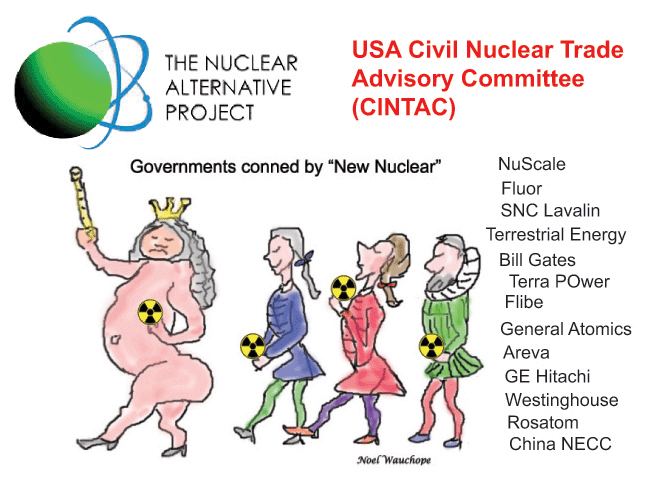
A group of nuclear industry professionals, who have formed The Nuclear Alternative Project nonprofit organization, recently hosted a group of nuclear executives to meet with Puerto Rican lawmakers and officials to discuss new nuclear concepts.
“We were in Puerto Rico for four days, and we were able to take the conversation from, ‘You guys are nuts,’” to something Puerto Ricans would consider if it would lower their energy bills, said Jesabel Rivera, the nonprofit’s community impact and engagement consultant.
But a host of questions over when, where, how and at what cost these reactors would be deployed and operated in Puerto Rico remains unanswered at this early stage. Some groups have also raised environmental concerns.
Officials from companies that included small modular reactor and micro-reactor developers NuScale Power LLC, X-Energy LLC, Westinghouse Electric Co. and GE-Hitachi Nuclear Energy Inc., attended the meetings on the island.
“A lot of folks didn’t know anything about nuclear other than what they had kind of seen in movies,” said Jose Reyes, chief technology officer of NuScale, who attended the trip. “One person mentioned Homer Simpson.”
Another participant was Donald Hoffman, president and chief executive of nuclear consultancy EXCEL Services Corp., founder of the United Nuclear Industry Alliance, a former adviser to now-President Donald Trump and a member of the Commerce Department’s Civil Nuclear Trade Advisory Committee.
Several of the recent tour’s other participants are CINTAC members.
After the tour, Puerto Rico’s House of Representatives on Nov. 7 approved a resolution that calls on the House Government Commission to investigate the need for nuclear energy reactors on the island and report back within 180 days.
SMRs are billed as faster-to-construct, safer technologies with longer refueling cycles compared to older nuclear reactors, though no U.S. designs have yet undergone construction. The U.S. SMR furthest along in the Nuclear Regulatory Commission licensing process is NuScale, which has completed phase one of design review……
But discussions are at a nascent stage.
“There’s not enough detail yet. There’s no site,” design or cost determination for nuclear in Puerto Rico, Carlos Fernández-Lugo, chairman of the environmental, energy and land use practice group at law firm McConnell Valdés LLC, said during an Oct. 30 public panel discussion on nuclear energy held at the Mayagüez campus of the University of Puerto Rico.
It also remains unclear whether the customer for a nuclear plant would be the Puerto Rico Electric Power Authority, the struggling government-owned utility that is undergoing restructuring.
The Nuclear Alternative Project is looking for funding to move forward with a feasibility study, Rivera said.
On Friday, however, a spokeswoman from the Department of Energy said the department does not have plans for a study on advanced nuclear in Puerto Rico at this time.
Puerto Rico does not currently have any operating nuclear reactors, but it once had the Boiling Nuclear Superheater Reactor Facility, an experimental reactor in Rincón, which operated at full power in 1965 but stopped about three years later due to technical difficulties and the resulting expensive changes that would be required. It was decommissioned, and decontamination work continued into the early 2000s.
https://morningconsult.com/2018/11/19/nuclear-advocates-set-sights-advanced-reactors-puerto-rico/
November 19, 2018
Posted by Christina Macpherson |
marketing, spinbuster, USA |
Leave a comment

Delay in Dalgety Bay radiation remediation work ‘due to Brexit’, Courier UK by Aileen RobertsonNovember 19 2018 A further delay in the project to contain radiation at Dalgety Bay has been blamed on Brexit.
It was hoped remediation work to contain radioactive particles at the contaminated shore would be complete by the end of next summer.
But it has been revealed the work will not even be started in 2019 after the UK Government took longer than expected to give the plans final approval.
“I think every government department is focused on Brexit, and I think that’s potentially the problem,” said Labour councillor Bobby Clelland.
David Barratt, SNP councillor for Inverkeithing and Dalgety Bay, said: “It’s extremely disappointing that an entirely avoidable delay is now likely to occur and even more frustrating that this may be down to it sitting in someone’s inbox.
“I am writing to Lesley Laird as the MP for Dalgety Bay to express this frustration and to ask her to seek answers on why such a delay occurred in seeking ministerial approval.”
Radioactive particles were first discovered at the headland near Dalgety Bay Sailing Club in 1990.
The particles were found to contain radium-226 which was in paint used to make aircraft dials luminous. Studies of the coastline suggest incinerated radioactive waste was dumped prior to 1959, when the nearby airbase HMS Merlin was decommissioned.
After years of refusing to accept liability, the Ministry of Defence (MoD) was named as the polluter by the Scottish Environment Protection Agency more than two decades after the radiation was found.
The MoD has drawn up an action plan, including removing some of the contaminated debris and containing the rest by building a wall and new slipway, which is with UK ministers for approval.
Stephen Ritchie from the MoD’s Defence Infrastructure Organisation (DIO) told South and West Fife Area Committee the delay was “very frustrating for everybody”……….. https://www.thecourier.co.uk/fp/news/local/fife/766779/delay-in-dalgety-bay-radiation-remediation-work-due-to-brexit/
November 19, 2018
Posted by Christina Macpherson |
environment, politics, UK |
Leave a comment
https://www.hulldailymail.co.uk/news/hull-east-yorkshire-news/nuclear-bomb-threat-yorkshire-village-2228206
It was, understandably, opposed by residents By Alex Grove 18 NOV 2018
It is a quaint rural hamlet on the coast of East Yorkshire with around 600 people and a few small amenities.
Life in Skipsea is peaceful, sleepy and quiet, but a controversial proposal put forward by scientists 65 years ago threatened to effectively wipe out the village from existence and change the face of the seaside village forever.
In 1953, almost 240 miles away from Skipsea in another similarly small Berkshire village called Aldermaston, scientists at the Atomic Research Establishment seriously considered detonating a nuclear weapon next to Skipsea.
At the time it had a medieval church and the remains of a Norman castle but not much else, and its close proximity to the RAF base at Hull made it an ideal spot to explode an atomic bomb.
In the midst of the Cold War, the UK wanted to find a coastal site for an above-ground atomic bomb explosion after detonating under the sea off a group of islands near Australia in 1952.
They first opted for a Scottish beauty spot called Duncansby Wick near Caithness in the Highlands of Scotland, but this plan was halted by the damp.
They turned their attention to Donna Nook in Lincolnshire before settling on Skipsea.
However, the people of the small East Riding village were not going to relinquish their hamlet without a fight. Unsurprisingly, community leaders rallied to protest against the idea arguing the site chosen was too close to bungalows and beach huts. The area’s MPs encouraged the government to reconsider the radical plan and with opposition to the idea too fierce, the government backed down and secured Skipsea’s future with the bomb test carried out at Emu Field – a desert area in South Australia.
The village was still used later on by The Royal Observer Corps as a site for a Cold War observation post on the east coast of England. The site remained active from October 1959 until its decommissioning in September 1991. It gathered dust for years before being restored by an enthusiast ten years ago.
People may not think there is much to do in Skipsea with the village home to a couple of churches and post offices, a village hall a pub and a few shops.
However, this tale of old will just make you appreciate the fact that this quiet, sleepy village even exists at all.
November 19, 2018
Posted by Christina Macpherson |
history, UK, weapons and war |
Leave a comment
 Saudi Arabia’s Investigation of Jamal Khashoggi’s Murder Is a Tragic Farce, New Yorker, By Robin Wright, November 16, 2018
Despite six weeks of ferocious denials by Saudi Arabia, U.S. intelligence has concluded that the kingdom’s ambitious young crown prince, Mohammed Bin Salman, personally ordered the execution of journalist Jamal Khashoggi, who was killed in Istanbul last month, the Washington
Postreported late Friday. The U.S. assessment was reportedly based on a growing array of hard data as well as a psychological study of the thirty-three-year-old prince. The most damning and specific intelligence was provided by Turkey, including audio recordings of the murder inside the Saudi consulate and a call from the diplomatic mission back to Saudi Arabia immediately afterwards. Turkey shared both with the C.I.A. director Gina Haspel. But the United States also had its own electronic intercepts of conversations, some retrieved in a search of its electronic archives after Khashoggi’s murder on October 2nd, the
Post reported. One was reportedly between the crown prince’s brother Khalid, who was the Saudi Ambassador to Washington at the time, and Khashoggi, who was told to go to Istanbul to get official papers proving his divorce so he could remarry.
The C.I.A. assessment contradicts the Saudi version of events, which was released just a day earlier.
With a straight face, the Saudi foreign minister, Adel al-Jubeir, explained the murder of Jamal Khashoggi to a group of journalists on Thursday by saying, dismissively, “Sometimes mistakes happen.” The kingdom wrapped up its investigation by charging eleven men—five face the death penalty—and offering yet a fourth (or is it now the fifth?) version of the Washington Postcolumnist’s execution. The Saudis initially claimed that Khashoggi left the Saudi consulate alive. It later admitted that he’d died—but only after he initiated a fistfight and succumbed to a choke hold meant simply to subdue him. At the time, al-Jubeir insisted that Khashoggi’s body had been rolled up in a carpet and taken out of the consulate in one piece. The government later admitted that he’d been dismembered. Now it’s claiming that Khashoggi was tied up and injected with an overdose of a sedative that accidentally killed him.
“May Allah rest his soul,” the Saudi investigation concluded.
The announcement generated more questions than answers. The suspects were not named. The kingdom still claims not to know where Khashoggi’s body is, since its agents gave his remains to a “local collaborator” whose name it allegedly does not know. (It said it provided a rough “sketch” to Turkish officials.) It offered no explanation of why one of the fifteen men—the same height and girth as Khashoggi—donned the journalist’s clothing after his death and walked around Istanbul, then switched back to his clothing in a public restroom, after which he tossed what appeared to be Khashoggi’s trousers and jacket into a dumpster. And then there is the inconvenient issue of the bone saw revealed in a security X-ray of the Saudis’ luggage.
The kingdom’s investigation is increasingly becoming a farce. Reading between the lines, the report seemed determined most of all to counter a widespread suspicion that Saudi Arabia’s young de facto ruler, Crown Prince Mohammed, or M.B.S. as he’s popularly known, was behind the operation……..https://www.newyorker.com/news/news-desk/saudi-arabias-investigation-of-jamal-khashoggis-murder-is-a-tragic-farce?mbid=nl_Daily%20111618&CNDID=35537674&utm_source=nl&utm_medium=email&utm_campaign=Daily%20111618&utm_content=&utm_brand=tny&utm_mailing=Daily%20111618&hasha=4b5cd80c0ff359f3043679dfee3a5e07&hashb=d9177a4afc21a296a46a8d1268a8277000d132ab&spMailingID=14634830&spUserID=MTMzMTgzNzUxNjAwS0&spJobID=1521277836&spReportId=MTUyMTI3NzgzNgS2
November 19, 2018
Posted by Christina Macpherson |
Reference, Saudi Arabia, secrets,lies and civil liberties |
Leave a comment