Four times a year, Angela Hays Carey visits Wyoming to find former uranium workers who could qualify for federal health benefits.
Every year, she finds some who didn’t know about federal compensation and health care support, or who never realized their illness was tied to exposure decades ago from their work in uranium mining, milling or transportation of ore……..
Hays Carey is the community outreach manager for Nuclear Care Partners, a group that assists former uranium and atomic workers with the red tape of federal benefits from the Energy Employee Occupational Illness Program Act and offers in-home care for former atomic workers who suffered serious illness from exposure.
Cold war mining
There are hundreds of Wyomingites who worked in uranium mining, milling and ore hauling prior to 1972, and as such, may qualify for one of the branches of coverage offered by the federal government. The benefits are tied to federal employment, but not directly. Most miners and atomic workers pre-1972 were essentially subcontractors for the federal government, she said.
The federal government has a number of compensation programs for former workers whose sickness today is tied to the Cold War arms race and the atomic bomb studies that fueled the uranium and atomic industries. A number of initiatives have attempted to secure compensation for uranium miners, millers and ore haulers following the 1972 cutoff.
There are nearly 30,000 former workers receiving benefits nationally, and more than 300 Wyomingites who have filed claims, Hays Carey said.
But every year there are more workers that Hays Carey runs into in Wyoming. She is based in Idaho, but travels to Wyoming for programs such as Wednesday’s luncheon in Casper.
Many of the workers she meets are aware of the benefits but have been denied.
That’s usually what I deal with when I come,” she said. “They didn’t file correctly; they didn’t turn in the right information. I love to look at those because it is easy to get the right information.”
Lying in wait
The health concerns tied to exposure to radiation and other toxins can be severe, but they can also lie dormant. People get older, they have health issues and they don’t always realize that the root cause could be from their past jobs, Hays Carey said.
Someone will come down with pneumonia and their lungs can’t properly fight it. That’s when the doctor may notice a more serious underlying issue……
Chronic lung issues, cancer and fibrosis are among the most common illness tied to historic uranium mining, inhaling uranium decay products or repeated exposure to gamma radiation.
Times 13th Jan 2019 Ministers will be forced to pioneer a new way of financing nuclear power after Hitachi walked away from a £16bn plant in north Wales. The suspension of the Japanese giant’s Horizon project on Anglesey, expected to be confirmed at a board meeting tomorrow, will force the government to lure investors with a financing method that would pile costs on to consumers, even before a plant has been built.
Ministers are expected to accelerate plans to introduce regulated asset base (RAB) financing, which is popular in the water and infrastructure sectors, for nuclear plants including the Horizon site. Hitachi’s mothballing of its scheme, which could cost about 400 jobs, will be a damaging blow to Britain’s energy policy.
In November, its Japanese counterpart Toshiba scrapped plans to build a nuclear plant at Moorside in Cumbria. Japan’s withdrawal from the UK market will kill the country’s ambitions to sell reactors around the globe.
It leaves Britain dependent on France’s EDF and the Chinese company CGN. Together they are
building the £20bn Hinkley Point power station in Somerset, and CGN has ambitions to build its own reactors on the Essex coast at Bradwell-on-Sea. Industry insiders said state-controlled CGN could swoop on Anglesey if Hitachi puts the project up for sale. Kepco of South Korea would also be interested.
The project’s collapse follows years of negotiations between Tokyo and London. Last summer Britain agreed to split the equity equally with the Japanese government and Hitachi. Ministers were keen to avoid a repeat of the deal struck with EDF, which guarantees at least £92.50 per
megawatt hour for Hinkley Point’s electricity for 35 years. The Horizon deal would have guaranteed about £75 per megawatt hour, falling to the £50s for future reactors on the site.
However, the Japanese government balked at the risk, and tried to pass the equity on to Japanese utility companies. That triggered nervousness at Hitachi, a conglomerate with interests from train manufacturing to power grids. Nuclear power makes up just 4% of its business.
Shares in Hitachi surged almost 9% on Friday amid speculation about Horizon being halted, despite the company having spent more than £2bn on the plans.
EDF is keen to use RAB financing for Sizewell C in Suffolk, its next UK plant. The funding method, which allows investors to earn a set return, has been used for a huge new sewer beneath London and Terminal 5 at Heathrow. However, the pre-funding formula passes some of the risk of cost overruns on to consumers, and their bills rise even before a project has been completed. https://www.thetimes.co.uk/article/fce4e714-169e-11e9-9e09-701e9f424b2e
U.K’s Nuclear Future Fades as Hitachi Exit Follows Toshiba, Bloomberg, By Lars Paulsson and Mathew Carr January 11, 2019,
EDF’s atomic plants need to be replaced by new generation
Offshore wind could be the winner from withdrawal, RBC says
…….Japanese conglomerate Hitachi Ltd. will halt work on the Wylfa project and take a one-time charge as negotiations with the British government over funding stalled, the Nikkei newspaper reported. After Toshiba Corp.’s withdrawal from its Moorside plant in November, it leaves the nation with just Electricite de France SA’s Hinkley Point project underway and that’s been mired in controversy because of delays and the cost to the U.K. consumer.
……..The Nikkei report said the company’s board will make a decision next week and cited an unidentified executive saying the project isn’t being abandoned entirely and could be restarted in the future.
Toshiba said in November it planned to liquidate NuGeneration Ltd., its U.K. nuclear power developer, after failing to find a partner or a buyer for the Moorside project. In September, China General Nuclear said it may give upthe chance to operate a nuclear plant at Bradwell amid political sensitivities over Chinese investments, the Financial Times reported.
As the U.K. is running out of nuclear options, other technologies stand to benefit.
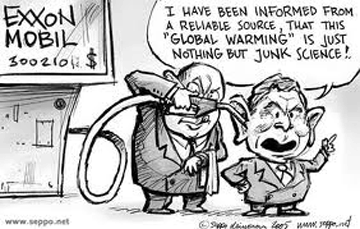
By demanding “balance,” the industry transformed climate change into a partisan issue. We know that was a deliberate strategy because various internal documents from ExxonMobil, Shell, the American Petroleum Institute and a handful of now-defunct fossil fuel industry groups reveal not only the industry’s strategy to target media with this message and these experts, but also its own preemptive debunking of the very theories it went on to support.
many took the industry’s bait, routinely inserting denialist claims into stories about climate science in the interest of providing balance:
How the fossil fuel industry got the media to think climate change was debatable, WP, By Amy Westervelt, Amy Westervelt is an audio and print reporter who covers climate and gender, and sometimes the intersection of the two. Her podcast Drilled is about the creation and spread of climate denial and her first book “Forget ‘Having It All'” was published by Seal Press in November 2018., January 10 2019
Late last year, the Trump administration released the latest national climate assessment on Black Friday in what many assumed was an attempt to bury the document. If that was the plan, it backfired, and the assessment wound up earning more coverage than it probably would have otherwise. But much of that coverage perpetuated a decades-old practice, one that has been weaponized by the fossil fuel industry: false equivalence.
Although various business interests began pushing back against environmental action in general in the early 1970s as part of the conservative “war of ideas” launched in response to the social movements of the 1960s, when global warming first broke into the public sphere, it was a bipartisan issue and remained so for years. On the campaign trail in 1988, George H.W. Bush identified as an environmentalist and called for action on global warming, framing it as a technological challenge that American innovation could address. But fossil fuel interests were shifting as the industry and its allies began to push back against empirical evidence of climate change, taking many conservatives along with them.
Documents uncovered by journalists and activists over the past decade lay out a clear strategy: First, target media outlets to get them to report more on the “uncertainties” in climate science, and position industry-backed contrarian scientists as expert sources for media. Second, target conservatives with the message that climate change is a liberal hoax, and paint anyone who takes the issue seriously as “out of touch with reality.” In the 1990s, oil companies, fossil fuel industry trade groups and their respective PR firms began positioning contrarian scientists such as Willie Soon, William Happer and David Legates as experts whose opinions on climate change should be considered equal and opposite to that of climate scientists. The Heartland Institute, which hosts an annual International Conference on Climate Change known as the leading climate skeptics conference, for example, routinely calls out media outlets (including The Washington Post) for showing “bias” in covering climate change when they either decline to quote a skeptic or question a skeptic’s credibility.
Data on how effective this strategy has been is hard to come by, but anecdotal evidence of its success abounds. In the early 1990s, polls showed that about 80 percent of Americans were aware of climate change and accepted that something must be done about it, an opinion that crossed party lines. By 2008, Gallup found a marked partisan divide on climate change. By 2010, the American public’s belief in climate change hit an all-time low of 48 percent, despite the fact that those 20 years saw increased research, improved climate models and several climate change predictions coming true.
By demanding “balance,” the industry transformed climate change into a partisan issue. We know that was a deliberate strategy because various internal documents from ExxonMobil, Shell, the American Petroleum Institute and a handful of now-defunct fossil fuel industry groups reveal not only the industry’s strategy to target media with this message and these experts, but also its own preemptive debunking of the very theories it went on to support.
It need not have been such a successful strategy: If news purveyors really wanted to be evenhanded on coverage of climate change, they could certainly weave in the insights of more conservative scientists — those whose predictions err on the sunnier side of apocalypse. Instead, many took the industry’s bait, routinely inserting denialist claims into stories about climate science in the interest of providing balance: In an analysis of 636 articles covering climate change that appeared in “prestige U.S. outlets” from 1988 to 2002, researchers from the University of California at Santa Cruz and American University found that 52.65 percent presented climate science and contrarian theories as equal. The practice continued into the mid-2000s. As recently as 2007, PBS NewsHour invited well-known (and widely debunked) former weatherman Anthony Watts on to counterbalance Richard Muller, a former Koch-funded skeptic who had shifted his view…………
Derek AbbottNuclear Fuel Cycle Watch South Australia, 13 Jan 19,Something that is never discussed about dry cask storage (before it is transferred into a repository canister) is that the fuel rods have been emitting alpha particles for 40 years in the dry cask.
The nuke enthusiasts who don’t understand physics naively think those alpha particles are impotent. They say “a piece of paper can block an alpha particle.” True but misleading.What actually happens is that alpha particles do indeed get blocked and don’t go far within a fuel rod, but they get converted to back to helium. [Remember an alpha particle is a helium nucleus anyway].So you get helium bubbles building up inside the fuel rod. Over 40 years this can fracture the fuel rod into pieces. So transferring the rods into a repository canister may not be possible. Because no one has actually opened up a bunch of old dry casks to get the rods into a repository yet, there isn’t much experience on exactly how much alpha particle damage affects the rods. I’m not sure there has even been a proper study of this. I am searching and will post it here if I find a study. https://www.facebook.com/groups/1021186047913052/
Question: Can America live with an atomic North Korea, and could any presidential administration openly admit it can? The answer: Yes it can, and no it couldn’t.
by James Holmesfriend asks: can America live with an atomic North Korea, and could any presidential administration openly admit it can? Yes it can, and no it couldn’t. The Trump administration and its successors can live with a North Korean doomsday arsenal because living with it represents the least bad option at hand. Military action is the other apparent alternative to the administration’s “ maximum pressure ” strategy of stifling the North into compliance through diplomacy and UN-approved economic sanctions . Yet the hazards, costs, and sheer uncertainty of war abound. Few presidents would embrace armed force barring an unambiguous and egregious provocation from Kim Jong-Un & Co.
Forcibly disarming Pyongyang could and probably would involve sacrificing thousands of American and Korean lives. Here’s a crude yardstick. The Korean War, a conventional conflict to preserve an independent South Korea, cost the United States some 37,000 military lives. Many more service folk suffered wounds. Thirty-seven thousand. That’s more than fivefold the combined American military death toll from the Afghanistan and Iraq wars since 9/11. And that leaves aside countless more Korean military and civilian lives expended fighting to the current standstill along the inter-Korean border.
It’s hard to see how war could be waged more cheaply than it was in 1950-1953 when the principal combatants, not to mention North Korea’s ally China and neighbor Russia, all boast nuclear weapons to accompany formidable conventional forces. And Washington must not delude itself into thinking air and sea power can do the job alone, any more than aviators and mariners repulsed the North Korean invasion in 1950. It took land forces back then—and today, in all likelihood, ground combat would be required to destroy the dug-in North Korean nuclear complex.
Any military strategy worth the name would demand that U.S. Army and Marine forces again seize and control ground—allowing them the leisure to ferret out underground facilities and armaments.
In short, a new Korean War would not be a come-and-go affair. Such a forecast is solidly grounded in the classics of strategy. For instance, Admiral J. C. Wylie points out that the proper goal of military strategy is to impose control on the foe. Aircraft and missiles flit by overhead while ships remain offshore. Though formidable, their presence is too intermittent to qualify as control. That being the case, he pronounces the soldier slogging through mud the “ultimate determinant” of who emerges the victor. The soldier goes and stays. “He is control,” proclaims Wylie. No control, no strategic success.
Or as the historian T. R. Fehrenbach puts it regarding the Korean War: “you may fly over a land forever; you may bomb it, atomize it, pulverize it and wipe it clean of life—but if you desire to defend it, protect it and keep it for civilization, you must do this on the ground, the way the Roman legions did, by putting your young men in the mud.” Wylie says much the same thing when he observes that— aviators’ and rocketeers’ assumptions notwithstanding—the ability to destroy something from aloft does not equate to controlling it.
Nor is it obvious that winning control is crucial in Northeast Asia………
Ecuador has begun a “Special Examination” of Julian Assange’s asylum and citizenship as it looks to the IMF for a bailout, the whistleblowing site reports, with conditions including handing over the WikiLeaks founder.
Former Ecuadorian President Rafael Correa tweeted an image of the letter he received from the State Comptroller General on December 19, which outlines the upcoming examination by the Direction National de Auditoria.
The audit will “determine whether the procedures for granting asylum and naturalization to Julian Assange were carried out in accordance with national and international law,” and will cover the period between January 1, 2012 and September 20, 2018.
Assange has been in the Ecuadorian Embassy in London since he sought asylum there in 2012. He was granted Ecuadorian citizenship last December in a bid to protect him from being extradited to the US where he fears he faces secret charges for publishing US government cables and documents.
WikiLeaks tweeted the news on Wednesday, joining the dots between the audit and Ecuador’s consideration of an International Monetary Fund bailout. The country owes China more than $6.5 billion in debt and falling oil prices have affected its repayment abilities.
According to WikiLeaks, Ecuador is considering a $10 billion bailout which would allegedly come with conditions such as “the US government demanded handing over Assange and dropping environmental claims against Chevron,” for its role in polluting the Amazon rainforest.
Assange’s position has increasingly been under threat under Correa’s successor, President Lenin Moreno, with Ecuadorian authorities restricting his internet access and visitors.“I believe they are going to turn over Assange to the US government,
Senate doesn’t have the votes to sell Santee Cooper after nuclear fiasco, leaders say,BY AVERY G. WILKS, JANUARY 13, 2019 BUT EVEN THE HIGHEST BIDDER MIGHT NOT WIN THE STATE’S APPROVAL TO TAKE OVER THE 85-YEAR-OLD UTILITY.
A proposed sale, which needs the S.C. General Assembly’s approval, seems likely to die in the state Senate, where senators are skeptical that selling Santee Cooper is the best solution to the agency’s nuclear woes.
Entergy sells Vermont Yankee nuclear plant, signaling what’s to come for Indian Point, Lohud, Thomas C. Zambito, Rockland/Westchester Journal News Jan. 11, 2019
Entergy sold its Vermont Yankee nuclear power plant to a dismantling firm, a first-of-its-kind deal that offers a blueprint for Indian Point’s future
STORY HIGHLIGHTS
The Nuclear Regulatory Commission approved the deal in October
Towns near Indian Point are hoping for a similar deal so Indian Point can be opened to development after it shuts down in 2021
Deal with dismantling firm a first for dismantling of a nuclear plant
Entergy sold its Vermont Yankee nuclear power plant to a New York dismantling firm Friday, finalizing a deal that could offer the blueprint for Indian Point’s future after it shuts down in 2021.
The deal with NorthStar Group Services represents the first time a nuclear power plant has transferred its license to a company that take over the lengthy process of dismantling nuclear reactors and securing spent radioactive fuel.
Students tasked to develop dishes with Fukushima produce to promote prefecture’s recovery, Japan Times, 13 Jan 19
A group of elementary, junior high and high school students in the city of Fukushima are taking part in an initiative to develop original recipes using local agricultural products as part of a broader project to highlight the city’s recovery from the 2011 Great East Japan Earthquake.
Russia’s Rosatom wins two bids for accident management at Fukushima NPP http://tass.com/world/1039631, January 12, 2019, MOSCOW, Russia’s state nuclear corporation Rosatom has been engaged in the nuclear control plan at Japan’s stricken Fukushima nuclear power plant and has already won two bids in that project, Rosatom CEO Alexei Likhachev said in a televised interview with Rossiya’24 news channel on Saturday.
“We have been engaged by Japan to implement the nuclear accident management plan at the Fukushima NPP. We have won two tenders and are getting ahead,” he said.
In September 2017, Rosatom’s First Deputy CEO Kirill Komarov said that Rosatom offered help to Japanese counterparts in handling the crippled Fukushima NPP.
The nuclear disaster at the Fukushima-1 power plant in March 2011 was triggered by an earthquake-induced tsunami that knocked out vital reactor cooling systems. This resulted in three nuclear meltdowns, hydrogen explosions and a massive release of radioactive waste, which contaminated the surrounding area. Clean-up operations continue at the power plant and adjacent territories. According to the current action plan, full decommissioning of the station may take place only around 2040.
Wales Online 11th Jan 2019, The campaigning group People Against Wylfa B (PAWB) said in a statement: “Should the news be confirmed at a meeting of the Hitachi Board next week
then it will be a relief for all of us who worry about the future of our
island, our country, our language, our environment and indeed renewable
energy.
PAWB has warned for years that the costs associated with the Wylfa
project would be likely to prove fatal to the project, but we were ignored.
“Consequently, millions of taxpayers’ money from the island, Wales and
the UK was invested to back Wylfa B. In addition huge political capital has
been invested, and there has been a failure to have a mature public
discussion about the project other than in terms of cash and jobs.
“The legacy of this, if the reports from Japan prove to be true, is that over a
decade has been wasted on Wylfa, with very little alternative economic
planning in evidence. Our young people have been promised jobs on very
shaky foundations. “Good land has been destroyed to create infrastructure
to back the project. It is time for politicians and officials from the UK
Government, the Welsh Government and Anglesey to admit that they were
wrong. “Wales is rich in natural resources which can be used to create a
vibrant and sustainable energy future, and above all else create more jobs
in less time than Wylfa would have done.” https://www.walesonline.co.uk/news/politics/hitachi-to-pull-plug-angleseys-15663299
TEAGS 11th Jan 2019 Locals and campaigners create ‘Sizewell Hero’ – a tribute to the film
‘Local Hero’ – to launch a new online campaign, urging EDF to change
its approach. Theberton and Eastbridge Action Group on Sizewell [TEAGS]
today launched a new video and online campaign.
Made by local people, it is aimed at increasing awareness and concern about the impacts of the proposed Sizewell C&D nuclear power station to audiences beyond east Suffolk. EDF
launched its Stage 3 consultations on the twin-reactor development last
week. ‘Sizewell Hero, hosted on YouTube and Facebook, is a three-minute
homage to the award-winning 1980s film ‘Local Hero’, and shows a
company executive transformed and inspired by the beauty of Minsmere and
the coast at Sizewell to think again about the company’s plans.
The video is entirely a local initiative, starring Middleton actor Simon Bridge and
featuring other residents from Theberton and Middleton. The film was shot
and produced by Steve Sutton and crew from UK Aerial Photography Ltd, based
in Peasenhall. Permission to use the famous ‘Local Hero’ theme music
was kindly granted by Mark Knopfler’s management, Crockford Management
and the project was made possible by a grant from Lush Charity Pot. Stills
and ‘making of’ photos are available. https://teags.org/sizewell-hero-video-and-online-campaign-launched/
Green New Deal Has Broad Bipartisan Support (Though Most Voters Haven’t Heard of It), DESMOG, By Justin Mikulka • Wednesday, January 9, 2019 A version of the Green New Deal (GND) — an FDR-style plan to address climate change by shifting America to a just and renewably powered 21st century economy — is widely popular with American voters of both parties, according to a recent survey.Perhaps unsurprisingly, this proposal has stronger support among Democrats but still polls well with Republicans. The survey found that 81 percent of registered voters said they either “strongly support” or “somewhat support” a rapid transition to 100 percent renewable electricity and other green technology initiatives.
However, the poll, conducted by the Yale Program on Climate Change Communication (YCCC), also found that very few voters were aware of the Green New Deal: 82 percent said they “knew nothing” of the proposal. Notably, the poll’s language focused on renewable electricity and job creation, but made no mention of the full decarbonization and social overhaul of the American economy that also are central tenets of the full Green New Deal.
In reporting the results, the YCCC noted the likelihood that once Republican voters became aware that the Green New Deal is being championed by Democrats, their support for the idea will decrease. This survey asked respondents about support for some of the basic concepts of the Green New Deal without associating it with either major political party.
Even though polls have shown that the majority of Republicans believe in climate change, research shows that if a proposal is made by the Democrats, Republican voters are less likely to support it. The same was true of Democratic voters and proposals made by Republicans.
Naturally, climate deniers and right-wing media like Fox News and The New York Post already are attacking the concept and its most visible champion, Rep. Alexandria Ocasio-Cortez (D-NY), foreshadowing the GND‘s slide into the partisan.
In the Yale survey, however, respondents were told that members of Congress say the Green New Deal “will produce jobs and strengthen America’s economy by accelerating the transition from fossil fuels to clean, renewable energy.”
Survey respondents were given some specifics for how this would be accomplished, which included generating 100 percent of America’s electricity from renewable sources within 10 years, upgrading the nation’s energy grid, focusing on energy efficiency, and training for jobs in the new green economy.
The Biggest Nuclear Threats of 2018 Will Follow Us into the New Year , Defense One, BY JOE CIRINCIONE, DECEMBER 29, 2018 WE WHISTLED PAST THE GRAVEYARD THIS YEAR. LET’S BE SMARTER IN 2019.
There was some positive news this year — most importantly the decreased possibility of war in Korea — but, overall it was bleak. Let’s get right to it.
1. The New Nuclear Arms Race is the clear winner as the greatest global nuclear threat of 2018. Each of the nine nuclear-armed states is building new weapons and the United States, instead of strengthening the global nuclear safety net, is actively shredding it.
In March, Russian President Vladimir Putin announced five new nuclear weapons he said Russia was building in response to the U.S. decision to abrogate the Anti-Ballistic Missile treaty. All are designed to circumvent defenses. Russia has also deployed a small number of ground-based cruise missiles whose range exceed that permitted by the Intermediate Nuclear Forces (INF) Treaty that President Ronald Reagan negotiated. In October, President Donald Trump said he would pull out of this arms elimination pact, despite the objections of NATO allies.
Destruction of the INF Treaty is likely a prelude to allowing the New START treaty to die. This pact, negotiated by President Barack Obama, limits long-range strategic forces. If both go, it will be the first time since 1972 that U.S. and Russian nuclear forces have been completely unconstrained.
“The untimely death of these two agreements would add fuel to a new arms race and further undermine stability and predictability between Washington and Moscow,” warned former National Security Council senior director Jon Wolfsthal.
In mid-December, 26 Democratic senators wrote Trump “out of deep concern that your administration is now abandoning generations of bipartisan U.S. leadership.” They feared that Trump and his administration wanted “to double down on new, unnecessary nuclear weapons while scraping mutually beneficial treaties.” This, they said, “risks the United States sliding into another arms race with Russia and erodes U.S. nonproliferation efforts around the world.”
Some countries, perhaps many of them, may see the building of new arsenals and the killing of restraining treaties as a material breach of the U.S. and Russian pledges in the nuclear Non-Proliferation Treaty, up for review in 2020. “Today, pessimism about the future of the nuclear nonproliferation regime is again on the rise,” writes Harvard professor Rebecca Davis Gibbons. More countries, armed with more nuclear weapons would likely encourage greater risk-taking, leading to more conventional conflicts and the great risks of escalation.
2. President Trump remains a unique global nuclear threat. The danger comes from the combination of his nuclear policies, his ability to command the launch of a nuclear weapon at anytime, for any reason, and his intensifying domestic political crises.
Any president in this period would face the problems of restraining nuclear-armed adversaries, maintaining a U.S. nuclear deterrent, and rolling back the nuclear programs in North Korea and Iran. But Trump’s policies have made several of these problems worse. His Nuclear Posture Review would build new, and more usable, nuclear weapons at a price tag of almost $2 trillion while abandoning any effort to restrain global arsenals. This not only fuels an arms race, it breaks the deal with the Senate that “investments in the U.S. nuclear weapons deterrent…must be accompanied by pursuit of continued arms control measures,” as the 26 senators wrote.
Tell Congress: Prevent Nuclear Catastrophe in Iran
Read the Public Inquiry Report, the Commissioners’ report, Surrendering Australia: The AUKUS Deception is available to download for free at aukuspublicinquiry.com. Or just watch the replay of the National Press Club Luncheon.