 US senators seek probe of Trump admin nuclear energy talks with Saudi Arabia https://www.middleeastmonitor.com/20190315-us-senators-seek-probe-of-trump-admin-nuclear-energy-talks-with-saudi-arabia/A Democratic US senator and his Republican counterpart on Friday asked Congress’ investigative arm to probe Trump administration talks with Saudi Arabia over sharing nuclear power technology, Reuters
reports.
In the latest effort by lawmakers to shed light on the potential deal, Democratic Senator Bob Menendez and Republican Senator Marco Rubio asked the Government Accountability Office, or GAO, to investigate the talks as soon as possible. They also asked the GAO to review executive branch negotiations with Saudi Arabia on nuclear energy since 2009, when Democrat Barack Obama was president.
Rubio and Menendez, members of the Senate Foreign Relations Committee, want to ensure any agreement “includes rigorous nonproliferation safeguards and other conditions to prevent nuclear cooperation with Saudi Arabia from undermining or threatening regional or international security,” said their letter to the GAO, a copy of which was seen by Reuters.
Saudi Arabia, which is seeking to build at least two nuclear power plants, has been in talks with the United States for years on importing technology.
The OPEC member, which is also in talks with countries including Russia, China and France, has at times resisted US standards on sharing nuclear technology that prevent uranium enrichment and spent fuel repossessing.
Both of those techniques are potential paths to clandestinely making fissile material for nuclear weapons.
Nonproliferation experts worry that if Saudi Arabia is not held to such a “gold standard,” in what is known as a 123 agreement, it could risk a nuclear arms race in the Middle East. The United Arab Emirates, which recently built reactors, could renegotiate its nonproliferation agreements if Saudi Arabia is allowed to bypass the standards.
Concerns in Congress rose last year after Saudi Crown Prince Mohammed bin Salman told CBS News his kingdom would develop nuclear weapons if archrival Iran did. The killing of journalist and US resident Jamal Khashoggi in a Saudi consulate in Istanbul last year has also sparked backlash against any deal.
US Energy Secretary Rick Perry has had quiet talks with Saudi officials, including his friend, Energy Minister Khalid al-Falih, on nuclear power.
The Department of Energy and the National Security Council did not immediately respond to requests for comment.
The senators said the negotiations are occurring in a “very opaque manner” and that the Trump administration is not keeping their committee informed.
Perry has said he told Saudi Arabia it is important for the kingdom to be seen around the world as strong on nonproliferation. He also said that part of the talks center on making sure any nuclear inspections would not be intrusive for sensitive areas in the kingdom.
Perry told the Financial Times this week that talks with Saudi Arabia were at a pace “closer to one mile an hour than to Mach 1.2.”
Last month, Democratic House members alleged in a report that top White House aides ignored warnings they could be breaking the law as they worked with former U.S. officials in a group called IP3 International to advance a multibillion-dollar plan to build nuclear reactors in the Middle East, including Saudi Arabia.
March 16, 2019
Posted by Christina Macpherson |
politics, USA |
Leave a comment
The Air Force is now arming its fleet of B-52 Bombers with prototype nuclear-armed cruise missiles to prepare the aircraft for the possibility of launching the Long Range Stand Off (LRSO) weapon. National Interest,
Through a $250 million deal, the Air Force will work with B-52 manufacturer Boeing to build missile carriage hardware and software, and “test” LRSO integration.
The Air Force has been working with industry on prototyping and design work on the emerging Long Range Stand-Off weapon nuclear-armed cruise missile, set to enter into a new phase of construction by 2022, service officials said. Raytheon and Lockheed, are now working on a $900 million Technology Maturation and Risk Reduction deal for the LRSO……… https://nationalinterest.org/blog/buzz/b-52-bomber-getting-ready-carry-nuclear-armed-cruise-missiles-47582
March 16, 2019
Posted by Christina Macpherson |
USA, weapons and war |
Leave a comment
Thyroid cancer caused by low-level radiation has a different “mutational signal” than most thyroid cancer, Goldenberg said. He and his colleagues used molecular research that had been pioneered after the Chernobyl nuclear disaster to find that genetic marker.
************************************************************
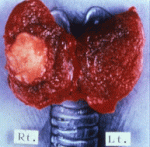 Three Mile Island and thyroid cancer: Debates continue over health issues after nuclear plant accident
Penn Live By Brett Sholtis/PA Post, 15 Mar 19
On March 28, 1979, Chris Achenbach-Kimmel was a 14-year-old freshman at Cedar Cliff High School in Camp Hill, Cumberland County. Fourteen miles away, on the Susquehanna River, staff at Three Mile Island Nuclear Generating Station were trying to contain the damage from an accident at one of its reactors.
“I just remember being in class, and just getting the news, and wondering, what does this mean?”……
Her mother kept her and her siblings inside as much as possible. TV news reports echoed through the house as her mother waited for an “all clear” from authorities. ……
For Achenbach-Kimmel, the accident became merely one more high school memory. She graduated in 1982 and went on to a career in occupational therapy.
It wasn’t until her thyroid cancer diagnosis in 2010 that she thought again about Three Mile Island.
“I think as soon as I got over the initial shock, it’s like, oh my gosh, I wonder if these two things are related,” said Achenbach-Kimmel, now a 54-year-old academic fieldwork coordinator at the Elizabethtown College occupational therapy department.
Her doctor wasn’t surprised when Achenbach-Kimmel mentioned TMI.
“She said, ‘oh yeah, we see an increased incidence in the area compared to what my colleagues see around the country.’”
Pennsylvania has had one of the highest thyroid cancer rates in recent years, according to Centers for Disease Control.
For those who grew up in central Pennsylvania, Chris’s story is a common one. People blame TMI for their illnesses, and some doctors accept it could have been the case.
Yet, the nuclear industry’s position has been that there has been no conclusive link between the accident and adverse health effects…….
Dr. David Goldenberg, a surgeon and thyroid researcher, launched the Penn State College of Medicine Study after years of hearing his patients bring up the nuclear plant accident.
…… thyroid cancer caused by low-level radiation has a different “mutational signal” than most thyroid cancer, Goldenberg said. He and his colleagues used molecular research that had been pioneered after the Chernobyl nuclear disaster to find that genetic marker.
The scientists screened out many thyroid cancer patients, limiting their study to 44 people who were born in counties around Three Mile Island, were present during the accident and were treated at Penn State Hershey Medical Center.
“We found a shift, which absolutely can be attributed to exposure to radiation, during the correct time frame of the Three Mile Island accident,” he said, adding that this does not prove that TMI caused the cancer. It just shows a correlation.
Goldenberg is quick to point out the study’s limitations, emphasizing that he’s working on a larger follow-up study. Still, it has put him in the middle of a 40-year-old debate: Did the accident at TMI release more radiation than the government says? Did it harm people? https://www.pennlive.com/news/2019/03/three-mile-island-and-thyroid-cancer-study-ignites-debate-over-health-issues-after-nuclear-plant-accident.html
March 16, 2019
Posted by Christina Macpherson |
health, USA |
Leave a comment
During protracted evacuations, many child-rearing families rebuilt their lives in new locations, leading to the sharp fall in the number of students in Fukushima.
As a result, the local governments are facing difficulties in school operations.
In the Yamakiya district of the town of Kawamata, the evacuation advisory was removed in March 2017, six years after the nuclear accident at Tokyo Electric Power Company Holdings Inc.’s <9501> Fukushima No. 1 plant, heavily damaged by the 9.0-magnitude earthquake and the ensuing tsunami.
Elementary and junior high schools reopened in the town in April 2018, but five six-graders are the only elementary school children. With no freshman joining this spring, the elementary school plans to suspend its operations in April.
March 16, 2019
Posted by Christina Macpherson |
Japan, social effects |
Leave a comment
https://www.scirp.org/journal/PaperInformation.aspx?PaperID=54828#.VuSFAXQrkCs.twitter Full-Text HTML  Download as PDF (Size:336KB) PP. 76-89 [multiple references supplied]
ABSTRACT
Radioactive fallout after the March 2011 Fukushima nuclear meltdown entered the U.S. environment within days; levels of radioactivity were particularly elevated in the five western states bordering on the Pacific Ocean. The particular sensitivity of the fetus to radiation exposure, and the ability of radioisotopes to attach to cells, tissues, and DNA raise the question of whether fetuses/newborns with birth defects with the greater exposures suffered elevated harm during the period after the meltdown. We compare rates of five congenital anomalies for 2010 and 2011 births from April-November. The increase of 13.00% in the five western states is significantly greater than the 3.77% decrease for all other U.S. states combined (CI 0.030 – 0.205, p < 0.008). Consistent patterns of elevated increases are observed in the west (20 of 21 comparisons, 6 of which are statistically significant/borderline significant), by state, type of birth defect, month of birth, and month of conception. While these five anomalies are relatively uncommon (about 7500 cases per year in the U.S.), sometimes making statistical significance difficult to achieve, the consistency of the results lend strength to the analysis, and suggest fetal harm from Fukushima may have occurred in western U.S. states.
March 16, 2019
Posted by Christina Macpherson |
children, Reference, USA |
Leave a comment
Nuclear safety expert says it’s time to consider moving risky icebreaker operations out of Murmansk
Rosatomflot’s service base is not sized for all the planned new nuclear-powered icebreakers, says Andrey Zolotkov, who previously worked as engineer onboard one of the service vessels storing spent nuclear fuel. Barents Observer By Thomas Nilsen March 13, 2019
«So far, so good, but what if something goes wrong one day. Then questions will come in terms of why such operations take place within the city limits of Murmansk,» says Andrey Zolotkov, head of the autonomous non-commercial organization Bellona.
Before he started working for the nuclear safety watchdog group, Zolotkov worked for decades onboard «Imandra», a service ship storing spent nuclear fuel from the fleet of icebreakers. The vessel is berthed at Rosatomflot’s service base less than two kilometers north of the nearest blocks of flats in the Rosta district in Murmansk, a city with 300,000 inhabitants.
There are few cities in the world where more reactors’ maintenance work, change- and storage of uranium fuel, handling and storage of radioactive waste takes place within the boundaries of such big city.
«Look at the bases of the [military] Northern Fleet,» Andrey Zolokov illustrates. «There, all the maintenance and repair work with nuclear submarines take place outside and away from the towns where people are living.»
Every three to four years, the uranium fuel in the reactors of the icebreakers have to be replaced. Such high-risk operations are carried out with the most comprehensive safety precautions in the nuclear industry. Additionally, due to heat and high radiation, the fuel elements have to be temporarily stored for a few years before being transported away by train. At the base in Murmansk, such interim storage takes place onboard the two ships «Imandra» and «Lotta», as well as in spacial designed casks onshore.
An accident with release of radioactivity could reach densely populated areas in Murmansk long before anyone manage to trigger the emergency evacuation alarm.
«Considering the many new icebreakers coming the most risky parts of the nuclear maintenance operation should be moved further away from the city centre,» Andrey Zolotkov argues. He, however, underlines that there has never been any accidents at the service base.
Currently, Russia has four nuclear-powered icebreakers and one container carrier. Rosatomflot is the world’s only fleet of civilian nuclear powered vessels and when not sailing in icy waters, they are all moored at the quays in Murmansk…….. https://thebarentsobserver.com/en/2019/03/nuclear-safety-expert-says-high-time-consider-moving-risky-icebreaker-operations-out
March 16, 2019
Posted by Christina Macpherson |
EUROPE, safety |
Leave a comment
WIPP workers trapped underground during power outage
Adrian C Hedden, Carlsbad Current-ArgusPublished 1:14 p.m. MT March 13, 2019 A group of 36 miners at the Waste Isolation Pilot Plant were trapped underground in an elevator for about three hours, Tuesday due to a power outage during heavy wind and storms.
The facility also ceased operations Wednesday due to an ongoing threat of heavy, damaging winds.
Tornadoes were confirmed Tuesday night in the Dexter and Loving areas.
Bobby St. John, spokesman for Nuclear Waste Partnership said an initial investigation showed WIPP’s utility provider lost power due to the “extreme weather.”……..
Work stoppage a safety measure
James Mason, acting public affairs manager with the U.S. Department of Energy’s Carlsbad Field Office said pausing WIPP operations on Wednesday was meant to ensure worker safety for commutes to and from the facility during the ongoing heavy winds.
The National Weather Service predicted winds in the area could reach up to 80 mph.
“The decision not to work today was based the prediction of 80 mph wind gusts,” Mason said. “With the community out there, with high-profile traffic, it’s a safety measure.”…….https://www.currentargus.com/story/news/local/2019/03/13/wipp-workers-trapped-underground-during-power-outage-tornado/3151570002/
March 16, 2019
Posted by Christina Macpherson |
climate change, USA |
Leave a comment
Nuclear test guinea pigs study announced – then Government admits it’s lost half of them https://www.mirror.co.uk/news/government-announces-study-nuclear-test-14134958
Veterans say the research is meaningless, and demand a long-promised medal review By Susie Boniface, 14 MAR 2019
The government has “lost” all trace of almost half its nuclear veterans – making a mockery of a planned health study.
Defence Secretary Gavin Williamson is now facing calls to cancel the expensive and “meaningless research” which survivors of the bomb tests say has no chance of proving their claims to have been irradiatedduring Cold War radiation experiments.
It comes after officials at Public Health England, which is conducting the six-figure study, admitted they have no way of checking the health of all 22,000 servicemen who took part in the 1950s tests.
Alan Owen, chairman of the British Nuclear Test Veterans’ Association, said: “We have been palmed off with meaningless research that has no chance of being definitive or accurate. The only reason for continuing it is shameless PR.
“Mr Williamson should cancel this useless study immediately, and use the money to provide our veterans with a medal for their exemplary service.”
Several studies have been carried out since the 1980s into the veterans’ rate of cancer, which if accurate could indicate radiation exposure.
But veterans says they are flawed because they compare the health of scientists with soldiers, and the health effects of smaller weapons that had fewer eyewitnesses with massive hydrogen bombs. Many of the servicemen lived in the fallout of such weapons for more than a year.
In 1983 the MoD said it could find records of only 85 per cent of those present, and now PHE staff have admitted they have lost almost half.
An official has now said privately to campaigners that they can trace 12,000 deaths of veterans for the research, but details for the remaining 9,400 people – or 44 per cent of the total – are missing from the records.
Those who have moved abroad, not registered with a GP after moving home, or who use private doctors will not be included. If a veterans’ NHS number becomes inactive they cannot be tracked for the study.
The Ministry of Defence did not confirm the figures that were leaked to the veterans.
A spokesman MoD said: “Around 2,000 [of the veterans] have emigrated and around 100 have not yet been traced. We continue to follow up with the remainder and are confident this study will bring the current information up to date.”
March 16, 2019
Posted by Christina Macpherson |
health, UK |
Leave a comment
 Restarting No. 4 nuclear plant project could cost NT$70 billion: AEC Focus Taiwan, 2019/03/14 Taipei, March 14 (CNA) It could cost an estimated NT$60-70 billion (US$1.94-2.26 billion) and take at least 10 years to revive the mothballed fourth nuclear power plant at Longmen in New Taipei’s Gongliao District, Atomic Energy Council (AEC) Minister Hsieh Shou-shing (謝曉星) said Thursday.
However, Hsieh said that a decision to search for a final disposal repository for radioactive waste has not been reached and he declined to answer the question of when the location of a final repository can be determined, because no cities or counties in the country are willing to have such a facility in their localities.
Hsieh was responding to a legislator’s questioning about restarting the nuclear plant project during a legislative hearing, as the topic has sparked considerable debate after pro-nuclear energy activists recently proposed a referendum on the issue……..
the ministry also cited Taipower estimates that it would require about NT$47.8 billion to revive the nuclear plant and put it into commercial operation, adding that the amount could be even higher than that.
(By Liu Lee-jung and Evelyn Kao) http://focustaiwan.tw/news/aeco/201903140013.aspx
March 16, 2019
Posted by Christina Macpherson |
business and costs, Taiwan |
Leave a comment
Preaching World Peace by Day, Peddling Lethal Weapons By Night By Thalif Deen UNITED NATIONS, Mar 11 2019 (IPS) – The Middle East, one of the world’s most politically-volatile and war-ravaged regions, has doubled its arms imports during the past five years, according to the Stockholm International Peace Research Institute (SIPRI).
The sharp increase in arms purchases has been triggered – directly or indirectly—by several conflicts and civil wars in the region, primarily the devastating four-year-old military conflict in Yemen which has resulted in “the world’s worst humanitarian crisis” with more than 5,000 civilians either killed or wounded in 2018.
The latest figures on military sales released by SIPRI March 11 also identifies the world’s five largest arms exporters in 2014–18, namely, the United States, Russia, France, Germany and China. (with the exception of Germany, all four are permanent members of the UN Security Council, along with UK, the sixth largest arms exporter).
Together, they accounted for a hefty 75 per cent of the total volume of arms exports in 2014–18.
The Security Council, the most powerful UN body dealing largely with conflict-resolution, relentlessly preaches the message of peace to the world at large– while all five of its permanent members (P-5s) are peddling arms and sustaining conflicts – in Yemen, Syria, Iraq, Afghanistan, Libya, and fuelling the longstanding Israeli-Palestinian conflict.
The warring parties in all of these conflicts are using weapons either from the US, France, UK, China or Russia—or are receiving military intelligence and air support from the five big powers.
One Asian diplomat put it this way: “They are retailing peace while wholesaling arms”.
SIPRI said arms imports by states in the Middle East increased by 87 per cent between 2009–13 and 2014–18 and accounted for 35 per cent of global arms imports in 2014–18.
Saudi Arabia became the world’s largest arms importer in 2014–18, with an increase of 192 per cent compared with 2009–13.
Arms imports by Egypt, the third largest arms importer in 2014–18, tripled (206 per cent) between 2009–13 and 2014–18 while arms imports by Israel (354 per cent), Qatar (225 per cent) and Iraq (139 per cent) also rose between 2009–13 and 2014–18, according to SIPRI.
However, Syria’s arms imports fell by 87 per cent, despite an ongoing eight-year-old civil war in that country which is militarily supported by Russia and China……… http://www.ipsnews.net/2019/03/preaching-world-peace-day-peddling-lethal-weapons-night/
March 16, 2019
Posted by Christina Macpherson |
2 WORLD, weapons and war |
Leave a comment
The Department of Energy needs better financial oversight of the subcontractors hired at sites like Hanford, concluded a Government Accounting Office report released Tuesday.
It found issues with a lack of audits covering costs charged to the federal government and conflicts of interest — citing a Hanford nuclear reservation civil case as an example of what could allegedly go wrong.
Most of the $30 billion DOE budget goes to contractors, most of which spend money on subcontracts, the GAO said.
“Yet (the Department of) Energy has not clarified which subcontracts should be audited and what an audit should entail,” said the report.
March 16, 2019
Posted by Christina Macpherson |
business and costs, politics, USA |
Leave a comment
As population declines, Fukushima Prefecture to lose 15 of its 96 high schools, Japan Times , FUKUSHIMA MINPO, MAR 15, 2019
The mergers will be implemented over the span of three years from fiscal 2021 and will reduce the number of high schools in the prefecture from 96 to 81.
Twenty-five schools will be merged and reorganized into 13 under the plan, which will integrate schools located in close proximity of one another. Each school will retain four to six classes per grade.
With the merger, the prefecture’s 88 day schools and seven night schools will be reduced to 74 and six, respectively, by the end of March 2024, according to the education board’s reform plan revealed Feb. 8. Fukushima’s only correspondence school will remain open……… https://www.japantimes.co.jp/news/2019/03/15/national/population-declines-fukushima-prefecture-lose-15-96-high-schools/#.XIwdDSIzbGg
March 16, 2019
Posted by Christina Macpherson |
Fukushima continuing, social effects |
Leave a comment
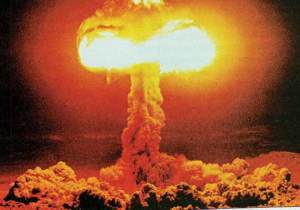 Top general opposes shift to ‘no first use’ nuclear doctrine https://www.washingtontimes.com/news/2019/mar/14/dunford-oppose-shift-no-first-use-nuclear-doctrine/ By Lauren Meier – The Washington Times – Thursday, March 14, 2019
The chairman of the Joint Chiefs of Staff came out forcefully against a change in U.S. military policy which say the U.S. would not be the first to use nuclear weapons on a conflict with an adversary.
The “no first use” policy has been embraced by several Democratic candidates running for president in 2020, including Massachusetts Sen. Elizabeth Warren, who co-sponsored a bill in January that would establish in law that the U.S. would not be the first to use nuclear weapons.
But Gen. Joseph Dunford told a Senate Armed Services Committee hearing Thursday that “I absolutely believe that the current policy is the right policy.”
The Pentagon has long resisted adopting a blanket “no first use” doctrine in its nuclear strategy.
“I wouldn’t make any decisions to simplify an adversary’s decision-making calculus,” Gen. Dunford told lawmakers. “I can also imagine a few situations where we wouldn’t want to remove that option from the president.”
March 16, 2019
Posted by Christina Macpherson |
politics international, United Arab Emirates, weapons and war |
Leave a comment
A budding nuclear threat, from more than just the usual suspects, Christian Science Monitor ,By Howard LaFranchi Staff writer,Peter Ford Staff writer, Ann Scott Tyson Staff writer, Fred Weir Correspondent. 15 Mar 19WASHINGTON
WHY WE WROTE THIS
As the U.S. and Russia back away from arms control, how worried should the world be? Says an expert in China, which has the world’s largest arsenal of ground-launched missiles: ‘We are looking at a global arms race now.’
………. The recent flare-up of tensions between India and Pakistan has served as a reminder that even conflicts between regional rivals can pose a global threat when the antagonists possess nuclear weapons. A growing alarm has spread across Asia as an increasingly assertive China expands its nuclear arsenal and deploys missiles around its periphery at a pace that has given it the world’s largest ground-launched missile arsenal.
Moreover, the advent of cybersecurity risks and the specter of nuclear powers hacking into and controlling adversaries’ arsenals adds a new element of uncertainty and instability to the already worrisome prospects of a post-arms control world.
Still it’s largely the U.S. and Russia, which together possess more than 90 percent of the world’s nuclear weapons, that are setting the tone. And the two nuclear giants appear to be dismantling, step by step, the arms control regime that has limited their deployment of new weapons systems and indeed had them reducing nuclear weapons stockpiles over recent decades. The risk is not just that the two major nuclear powers get back into an arms race, but that other states respond to rising tensions by joining the buildup. A Japan rattled by a nuclear buildup already has the technology and material to “go nuclear” with a weapon in a matter of months, experts say, while the decades-old specter of a Middle East nuclear arms race has been revived by Trump administration efforts to sell nuclear technology to Saudi Arabia that could be used to build a bomb.
“We’re pulling down the last pillars of the arms control building that has provided us with some degree of security and stability for five decades,” says Joseph Cirincione, president of the Ploughshares Fund in Washington and a longtime nuclear policy expert. “If the small and medium states decide to take their cue from the big boys,” he adds, “it’s ‘Gentlemen, start your engines!’ ”
After dropping hints for months, the U.S. announced in February its withdrawal from the Intermediate-Range Nuclear Forces (INF) Treaty, which since 1987 has banned the deployment in Europe of all intermediate-range nuclear and conventional ground-launched ballistic and cruise missiles. These are considered among the most destabilizing weapons systems because of the short time it takes (average six minutes) from launch to hitting their target.
The U.S. said it was pulling out of the Cold War-era accord over Russian violations. While arms control experts agree that Russia has been violating the treaty for a half-decade, most also say the U.S. withdrawal hands President Vladimir Putin the double-headed political victory he wants – an excuse to free Moscow from the INF Treaty’s limitations while blaming its demise on Washington.
ndeed, Mr. Putin wasted no time in ratcheting up the Cold War “we will bury you” rhetoric. In his Feb. 20 state of the nation address, he told members of the Russian Duma that if the U.S. deploys intermediate-range missiles in Europe, Russia will not only do the same – but will deploy its new Zircon hypersonic missile to target “those regions … where decisions are taken on using those missile systems threatening us” – meaning, of course, the U.S.
More worrying still for many in the arms control community, both in and out of government and among America’s allies, is what follows INF’s demise. A White House that came into office withdrawing the U.S. from the Iran nuclear deal is now debating whether to extend the New Strategic Arms Reduction Treaty (New START) with Russia beyond its expiration in 2021.
If New START – which puts a cap of 1,550 on the long-range nuclear weapons each power can deploy – is also allowed to lapse, it will be the first time since 1972 that the world’s two nuclear-weapons behemoths have no arms control constraints holding them back from a new arms race.
“We have destroyed the old framework of arms control without having anything to replace it with,” says Andrey Kortunov, director of the foreign ministry-linked Russian International Affairs Council. “It’s my hope that big powers will realize that they need arms control, perhaps in a multilateral rather than the old bilateral form, but something that will roll back the most destabilizing weapons and build trust.” ………
The next big test of arms control diplomacy’s flagging fortunes will be New START and whether the U.S. and Russia decide to extend the decade-old treaty or let it die. The provision for a five-year extension of the treaty’s terms is already in the document, so “it would just take Putin and Trump sitting down and signing an agreement,” Mr. Kimball says. “It could be done with a big Sharpie pen. But it does require the will to sign something that is not just in your interest but is in the other side’s as well.”
Beyond agreements between the U.S. and Russia, experts say ways must be found to convince China and other regional powers that nuclear reductions are in their interest as well. Moreover, perhaps the biggest challenge on the horizon will be bringing emerging technologies such as cyber- and space weaponry under the umbrella of international limits and prohibition.
……….. Europe has been the biggest beneficiary of the INF Treaty. It eliminated thousands of nuclear missiles from the continent and helped end the Cold War. Even so, European governments have made remarkably little fuss about the treaty’s imminent demise. ……. https://www.csmonitor.com/World/2019/0314/A-budding-nuclear-threat-from-more-than-just-the-usual-suspects?cmpid=editorpicks
March 16, 2019
Posted by Christina Macpherson |
2 WORLD, weapons and war |
Leave a comment
Bloomberg, By Sabrina Valle March 15, 2019,
- Minister says he wants Brazil open to uranium mining companies
- Government also supports construction of new nuclear plants
Brazil’s energy minister said the country plans to sign an accord next week with President Donald J. Trump that could pave the way for U.S. companies to explore the Latin American country for uranium and invest in new nuclear-power plants.
Bento Albuquerque, a former admiral who once ran the Brazilian Navy’s atomic program, met with U.S. Energy Secretary Rick Perry in Houston this week and discussed creating a bilateral forum on energy cooperation that would include nuclear projects. That’s expected to be part of a memorandum signed by Brazilian President Jair Bolsonaro on his first trip to the White House next week, Albuquerque said Thursday in an interview.
March 16, 2019
Posted by Christina Macpherson |
Brazil, marketing, USA |
Leave a comment