
nuclear-news

The News That Matters about the Nuclear Industry Fukushima Chernobyl Mayak Three Mile Island Atomic Testing Radiation Isotope

  • Home
  • 1 This Month
  • ACTION !
  • Disclaimer
  • Links
  • PAGES on NUCLEAR ISSUES

How the nuclear industry abuses tax-payers’ subsidies

Is The Nuclear Industry Abusing Subsidies?  https://oilprice.com/Energy/Crude-Oil/Is-The-Nuclear-Industry-Abusing-Subsidies.html By Haley Zaremba – Mar 27, 2019,  Although nuclear is often touted as an ultra-efficient and therefore affordable as well as clean alternative to fossil fuels, some states are beginning to discover that this is not necessarily the case as their local governments pour more and more money into nuclear plant subsidies only to see the nuclear industry come back with palms outstretched again and again.One such state is Connecticut, where local news source the Connecticut Mirror just published a direct-to-the-point op-ed aptly titled “Nuclear plants will require ever-increasing subsidies”. The author Joel Gordes, a Connecticut-based energy and environmental strategist, argues that since the very beginning of nuclear energy in their country, when the argument for the resource was that nuclear energy was dirt cheap, nuclear has been deceptively pricey and getting pricier all the time.

“Please consider,” Gordes implores the reader, “the very basic fact that we have gone from nuclear technology sold in the 70s on the basis of being ‘too cheap to meter’ to one where they have been begging and receiving for what amounts to yet more subsidies. Even with the ‘too cheap to meter’ claim, in its heyday the nuclear industry was the recipient of huge amounts of subsidy in numerous forms.”

Gordes goes on to finish his denunciation of his state’s nuclear policy by imploring the government to rethink their history handouts: “With that, I suggest our leaders and regulators very carefully consider any actions contemplated to further subsidize this technology since that might add to its eventual stranded cost that will hold up newer, lower cost decentralized, modular and more secure options. Even more important is that aging plants may, themselves, present an existential danger to the citizens of the state.”

Meanwhile, energy insiders in Illinois are singing a similar tune. Chicago-based nuclear electric power generation company Exelon won ratepayer-funded subsidies for two nuclear plants in its home state just three years ago, and now it’s back in Springfield to ask for similar monetary support for other cash-strapped nuclear plants that have not yet had the benefit of a bailout. The bill will be voted on by the State of Illinois’ House Public Utilities Committee this week.

While Exelon is lobbying hard for more government support, however, it is receiving a fair amount of scrutiny and backlash. Just this month Monitoring Analytics released a “bombshell report” with the surprising findings that all five of Exelon’s nuclear plants in Northern Illinois are not in dire financial distress, but are in fact profitable, and are projected to continue to be so through 2021–by conservative estimates.

According to the Monitoring Analytics report, Exelon’s five Illinois-based nuclear plants will see a total estimated profit of approximately $472 million this year alone. What’s more, each individual plant will turn its own profit. Even in 2021, when it is anticipated that revenue will begin to decline, altogether the plants are still projected to earn a profit of $228 million–much lower, to be sure, but still a far cry from bankruptcy. The report has thrown doubt upon Exelon’s stance that the subsidy bill up for vote this week, which would legislate a very complex matter with massive consequences for Illinois’ power industry and energy market, is a matter of both urgency and necessity.

From Exelon’s point of view, positive profit margins notwithstanding, the nuclear industry needs help, and they are no exception. Exelon executives use the fact that neither their Morris, Illinois-based plant nor most of the Byron station near Rockford could clear the 2021-22 capacity auction as evidence for their financial need. In a Securities & Exchange Commission filing this year, Exelon claimed that these two plants as well as the Will County-based Braidwood station could be contenders for “early retirement” in light of their deteriorating financial circumstances.

Exelon’s search for ratepayer-funded subsidies is not just limited to Illinois. They have appealed to the State of Pennsylvania as well, underscoring the fact that while nuclear subsidies may operate on a state by state basis, it is far from an isolated issue. With nuclear becoming more and more of a buzzed about energy alternative in the wake of the Green New Deal and innumerable op-eds lavishing praises on the energy-efficient fuel source, nuclear subsidies will have to become a bigger part of the conversation as well.

May 23, 2019 Posted by Christina Macpherson | business and costs, politics, USA | Leave a comment

New nuclear power is not competitive, and not a viable way to deal with climate change

Former U.S. Nukes Chief: “New nuclear is off the table”    https://www.ewg.org/energy/22657/former-us-nukes-chief-new-nuclear-tableFrom 2009 to 2012, Gregory Jaczko was chairman of the Nuclear Regulatory Commission, which approves nuclear power plant designs and sets safety standards for plants. But he now says that nuclear power is too dangerous and expensive – and not part of the answer to the climate crisis.

“Nuclear power was supposed to save the planet,” Jaczko wrote in a recent op-ed for The Washington Post. As an atomic physicist, he once endorsed that view. But his years on the NRC ­changed his mind:

This tech is no longer a viable strategy for dealing with climate change, nor is it a competitive source of power. It is hazardous, expensive and unreliable, and abandoning it wouldn’t bring on climate doom. The real choice now is between saving the planet and saving the dying nuclear industry. I vote for the planet.

Jaczko describes how his experience revealed the pervasive political influence of the nuclear power industry in Congress and among his fellow commissioners. Their opposition derailed much of the safety measures he proposed in the wake of the Fukushima nuclear disaster in Japan. In 2011 an investigative series by The Associated Pressdetailed the collusion between regulators and the industry to weaken safety standards to keep existing plants economically viable.

Jaczko’s efforts to protect the American public likely cost him his careerat the NRC. He now leads an offshore wind power startup and is speaking out at an important juncture for the nation’s energy future.

Electric utilities that operate nuclear plants are boasting of being “carbon free” by mid-century. They insist that their aging nuclear plants must be part of the equation to keep costs down. But even though Japan closed most of its reactors after Fukushima, carbon emissions went down, because the Japanese ramped up energy efficiency and solar investments.

“It turns out that relying on nuclear energy is actually a bad strategy for combating climate change,” Jaczko wrote. “One accident wiped out Japan’s carbon gains. Only a turn to renewables and conservation brought the country back on target.”

Jaczko’s heightened concern for a nuclear accident in the U.S. is also well founded. The former director of the nuclear safety project at Union of Concern Scientists, David Lochbaum, determined that the industry’s efforts to continue to run aging nuclear plants 20 to 30 years or even longer than their initial licenses allowed for is akin to playing Russian roulette.

Since Fukushima, Germany has ordered the shutdown of all nuclear plants by 2022. Japan has reopened only a few reactors. Even France, long a champion of nuclear power, is ramping down its nuclear fleet because of safety concerns. But in the U.S., the Trump administration and lawmakers in some states continue to support taxpayer-financed subsidies to bail out money-losing nuclear plants. On grounds of both economics and safety, that’s a fool’s bet.

May 23, 2019 Posted by Christina Macpherson | 2 WORLD, climate change | Leave a comment

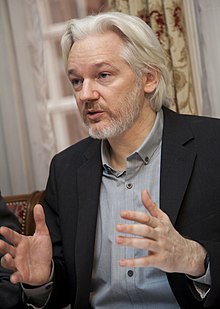
Ecuador will hand over Julian Assange’s entire legal defense to the United States

  1. Ecuador to hand over Assange’s entire legal defense to the United States  20 May 2019  https://wikileaks.org/Ecuador-to-hand-over.html
  • [en] Ecuador to hand over Assange’s entire legal defense to the United States
  • [es] Funcionarios ecuatorianos entregan la defensa jurídica y pertenencias de Julián Assange a Estados Unidos

Three weeks before the U.S. deadline to file its final extradition request for Assange, Ecuadorian officials are travelling to London to allow U.S. prosecutors to help themselves to Assange’s belongings.

Neither Julian Assange nor U.N. officials have been permitted to be present when Ecuadorian officials arrive to Ecuador’s embassy in London on Monday morning.

The chain of custody has already been broken. Assange’s lawyers will not be present at the illegal seizure of his property, which has been “requested by the authorities of the United States of America”.

The material includes two of his manuscripts, as well as his legal papers, medical records and electronic equipment. The seizure of his belongings violates laws that protect medical and legal confidentiality and press protections.

The seizure is formally listed as “International Assistance in Criminal matters 376-2018-WTT requested by the authorities of the United States of America”. The reference number of the legal papers indicates that Ecuador’s formal cooperation with the United States was initiated in 2018.

Since the day of his arrest on 11 April 2019, Mr. Assange’s lawyers and the Australian consul have made dozens of documented demands to the embassy of Ecuador for the release and return of his belongings, without response. Continue reading →

May 23, 2019 Posted by Christina Macpherson | civil liberties, SOUTH AMERICA, USA | Leave a comment

Responsible journalism would be covering the climate chaos like we did the start of the second world war

What if we covered the climate crisis like we did the start of the second world war?  Bill Moyers  Guardian, 22 May 19    In the war, the purpose of journalism was to awaken the world to the catastrophe looming ahead of it. We must approach our climate crisis the same way

I have been asked to bring this gathering to a close by summing up how we can do better at covering the possible “collapse of our civilizations and the extinction of much of the natural world,” to quote the noted environmentalist David Attenborough, speaking at the recent United Nations climate summit in Poland.

I don’t come with a silver bullet ……

Many of us have recognized that our coverage of global warming has fallen short. There’s been some excellent reporting by independent journalists and by enterprising reporters and photographers from legacy newspapers and other news outlets. But the Goliaths of the US news media, those with the biggest amplifiers—the corporate broadcast networks—have been shamelessly AWOL, despite their extraordinary profits. The combined coverage of climate change by the three major networks and Fox fell from just 260 minutes in 2017 to a mere 142 minutes in 2018—a drop of 45%, reported the watchdog group Media Matters.

Meanwhile, about 1,300 communities across the United States have totally lost news coverage, many from newspaper mergers and closures, according to the University of North Carolina School of Media and Journalism. Hundreds of others are still standing only as “ghost newspapers.” They no longer have resources for even local reporting, much less for climate change. ……

he networks put their reporters out in raincoats or standing behind police barriers as flames consume far hills. Yet we rarely hear the words “global warming” or “climate disruption” in their reports. The big backstory of rising CO2 levels, escalating drought, collateral damage, cause and effect, and politicians on the take from fossil-fuel companies? Forget all that. Not good for ratings, say network executives.

But last October, the UN Intergovernmental Panel on Climate Change, a scientifically conservative body, gave us 12 years to make massive changes to reduce global greenhouse-gas emissions 45 percent below 2010 levels and to net zero by 2050. On his indispensable site, TomDispatch.com, Tom Engelhardt writes that humanity is now on a suicide watch.

Soon, some of you will be traveling to the ends of the earth to report on this Great Disruption. To Indonesia, where oil-palm growers and commodities companies are stripping away forests vital to carbon storage. To the Amazon, where President Bolsonaro’s government plans to open indigenous reserves to industrial exploitation, threatening the lungs of the Earth. To India, where President Modi pretends to be an environmentalist even as he embraces destructive development. To China, where President Xi’s Belt and Road initiative, the biggest transportation-infrastructure program in the history of the world, threatens disaster for earth systems. You will go to the Arctic and the Antarctic to report on melting ice, and to the shores of African cities, Pacific atolls, and poor Miami neighborhoods being swallowed by rising oceans. And to Nebraska, and Iowa, and Kansas, and Missouri, where this spring’s crop is despair as farmers and their families grieve their losses.

And some of you will go to Washington, to report on the madness—yes, I said madness—of a US government that scorns reality as fake news, denies the truths of nature, and embraces a theocratic theology that welcomes catastrophe as a sign of the returning Messiah.

Madness! Superstition! Destruction and death.

Can we get this story right? Can we tell it whole? Can we connect the dots and inspire people with the possibility of change?

What’s journalism for? Really, in the war, what was journalism for, except to awaken the world to the catastrophe looming ahead of it?

Here’s the good news: While describing David Wallace-Wells’s stunning new book The Uninhabitable Earth as a remorseless, near-unbearable account of what we are doing to our planet, The New York Times reports it also offers hope. Wallace-Wells says that “We have all the tools we need…to aggressively phase out dirty energy…”; [cut] global emissions…[and] scrub carbon from the atmosphere…. [There are] ‘obvious’ and ‘available,’ [if costly,] solutions.”

What we need, he adds, is the “acceptance of responsibility.”
Our responsibility as journalists is to tell the story so people get it……..   https://www.theguardian.com/commentisfree/2019/may/22/climate-crisis-ed-murrow-bill-moyers


May 23, 2019 Posted by Christina Macpherson | 2 WORLD, climate change, media | 1 Comment

Companies like Holtec planning to make $billions by a quick fix for nuclear wastes

Companies are buying defunct nuclear reactors, planning to demolish them quickly https://www.latimes.com/business/la-fi-nuclear-reactors-fast-decommission-radioactive-20190522-story.html BOB SALSBERG, 22 May 19 Companies specializing in the handling of radioactive material are buying retired U.S. nuclear reactors from utilities and promising to clean them up and demolish them in dramatically less time than usual — eight years instead of 60, in some cases.

Turning nuclear plants over to outside companies and decommissioning them on such a fast track represents a completely new approach in the United States, never before carried to completion in this country, and involves new technology as well.

Supporters say the accelerated method can get rid of a hazard more quickly and return the land to productive use sooner. But regulators, activists and others question whether the rapid timetables are safe and whether the companies have the expertise and the financial means to do the job.

“We were up in arms that it was 60 years,” Janet Tauro, head of the environmental group New Jersey Clean Water Action, said of the initial plans for decommissioning the Oyster Creek plant in Forked River, N.J. “And then we hear it’s going to be expedited to eight years. It’s great to get it over with, but are there corners that are going to be cut?”

Once a reactor is shut down, the radioactive mess must be cleaned up, spent nuclear fuel packed for long-term storage and the plant itself dismantled. The most common approach can last decades, with the plant placed in a long period of dormancy while radioactive elements slowly decay.

Spent fuel rods that can no longer sustain a nuclear reaction remain radioactive and still generate substantial heat. They are typically placed in pools of water to cool, staying there at least five years, with 10 years the industry norm, according to the Nuclear Regulatory Commission. After that, they are removed and placed in giant cylindrical casks, typically made of steel and encased in concrete.

But Holtec International, which in the last year has been buying up several retired or soon-to-be-retired nuclear plants in the United States, has designed a cask it says can accept spent fuel after only two years of cooling.

Holtec, a corporation with more than 30 years of experience in handling radioactive waste, struck a deal last year to buy the Oyster Creek plant.

It also has deals in place to buy several plants owned by Entergy Corp., including Pilgrim, in historic Plymouth, Mass., closing May 31; Palisades, in Covert, Mich., set to shut down in 2022; and two reactors expected to close within two years in Buchanan, N.Y.

“Our commitment to the nuclear industry includes taking ownership of shut-down nuclear plants so that we can safely and efficiently decommission the plants so that the land can be returned to productive use,” Holtec spokeswoman Joy Russell said in an email.

The proposed sales await NRC approval, with decisions expected in the coming weeks and months.

Similarly, in January, NorthStar Group Services, a specialist in nuclear demolition, completed the purchase of Vermont Yankee from Entergy with plans for its accelerated decommissioning.

The full financial details of the pending deals have not been disclosed. But if the agreements are approved, Holtec will inherit the multibillion-dollar decommissioning trust funds set up by the utilities for the plants’ eventual retirement.

The company could keep anything left over in each fund after the plant’s cleanup. Holtec and Northstar are also banking on the prospect of recouping money from the federal government for storing spent fuel during and after the decommissioning, because there is no national disposal site for high-level nuclear waste.

The companies jumping into the business believe they can make a profit. For the utilities, such deals free them from having to oversee long, complex projects involving decades of work and round-the-clock guarding of the dangerous waste.

While there are risks in transferring spent fuel too quickly, experts also note there are dangers while the fuel rods are sitting in the pools, including the chances of a catastrophic fire or leak resulting from a natural disaster, terrorist attack or other event.

There’s a natural tendency to say, ‘Oh, they’re doing it fast, they’re going to make mistakes, it’s not going to be safe,’” said Rod McCullum, senior director of decommissioning and used fuel at the Nuclear Energy Institute, a Washington-based advocacy group for nuclear power. “You’re actually getting safer by getting faster.”

In legal briefs filed with the NRC, however, Massachusetts state officials have expressed skepticism about Holtec’s plan to decommission Pilgrim on an expedited schedule “never before achieved.” Holtec has never managed a decommissioning start to finish.

Holtec has come under scrutiny over its role in a mishap last August during the somewhat less aggressive decommissioning of the San Onofre Nuclear Generating Station on the northwestern edge of San Diego County, where two reactors were retired in 2013 and the estimated completion date is 2030.

Holtec contractors were lowering a 45-ton spent fuel cask into an underground storage vault at San Onofre when it became misaligned and nearly plunged 18 feet, investigators said. No radiation was released.

Federal regulators fined Southern California Edison, the plant’s owner, $116,000, and an investigation found that some Holtec procedures had been inadequate or not properly followed.

Massachusetts officials have stopped short of asking the NRC to block Pilgrim’s sale but have cited the San Onofre incident while questioning whether the money in Pilgrim’s decommissioning trust fund is sufficient to cover unexpected delays or overruns.

By Holtec’s accounting, the Pilgrim decommissioning will cost an estimated $1.13 billion, leaving $3.6 million in the fund. State officials have described that cushion as “meager” and have warned of “significant health, safety, environmental, financial and economic risks.”

Holtec said its equipment has never been involved in a major accident and stands by its cost estimates.

Pilgrim, which is along scenic, environmentally sensitive Cape Cod Bay and is being retired after 47 years, has a history of unscheduled shutdowns and was only recently removed from an NRC list of the nation’s least safe reactors.

The citizen group Pilgrim Watch, which has long pushed for the closing of the plant, is leery of what lies ahead during the decommissioning.

“The story isn’t over. There’s a sequel,” said Mary Lampert, the organization’s director. “And sometimes the sequel, like in the movies, is worse than the main show.”

May 23, 2019 Posted by Christina Macpherson | business and costs, USA, wastes | 1 Comment

Hibakusha: Nagasaki activist, 79, looks to entrust nuclear movement to next generation


https://mainichi.jp/english/articles/20190522/p2a/00m/0na/013000c

May 22, 2019 (Mainichi Japan) NAGASAKI — On May 9, there was a sit-in hibakusha gathering in front of the Peace Statue at Nagasaki Peace Park. The meeting takes place on the ninth of every month, marking the Aug. 9, 1945, U.S. atomic bombing of Nagasaki. This month’s congregation marked the 444th time for such an event.

Koichi Kawano, 79, took to the microphone to speak about the stand-off between the United States and Iran. “This is a crisis,” he said to the around 100 people in attendance, continuing, “Our hearts are one when wishing for the abolition of nuclear weapons.”

Born in North Pyongan Province on the Korean Peninsula, now part of North Korea, Kawano was brought back to his parents’ hometown Nagasaki as a child. Aged 5 in August 1945, he was around 3.1 kilometers away from the atomic bomb’s hypocenter. Now a resident of the nearby town of Nagayo, he has been an activist for the end of nuclear weaponry in roles including his long tenure as chairman of the Hibakusha Liaison Council of the Nagasaki Prefectural Peace Movement Center.

“While enduring untold misery, we have won our rights with our own strength,” he says, looking back on the messages their hibakusha meetings have sent against the government’s constitutional amendment policies and security legislation designed to allow Japan to exercise the right to collective self-defense in a limited manner.

“Perseverance is power” has been Kawano’s guiding motto in engaging in the movement’s activities, but this spring he faced a difficult reality. Masanori Nakashima, president of the Nagasaki Prefecture A-bomb Health Handbook Friendship Society, died aged 89 on March 15. The two men were allies in peace activism. Representatives of five local hibakusha groups, including Nakashima and Kawano, announced a joint statement on peace issues and handed a written request to the prime minister on Aug. 9.

Of the five hibakusha group representatives who were alive in 2015 on the 70th anniversary of the bombing, three including Nagasaki Atomic Bomb Survivors Council chair Sumiteru Taniguchi have passed away. Taniguchi died in 2017 at 88 years of age. “Even with his limp, he dragged himself to that office to hear other hibakusha speak,” Kawano reminisced, while looking ahead to an uncertain future, saying, “What will happen to these groups after we die?”

Kawano himself underwent surgery for esophageal cancer in 2017. Due to ill health he was forced to pull out of a survey of hibakusha in North Korea as a member of the Japan Congress Against A- and H-Bombs in fall 2018. Despite setbacks, his drive for peace remains unchanged. Kawano confronted Prime Minister Shinzo Abe over the Japanese government’s disinclination to sign and ratify the United Nations Treaty on the Prohibition of Nuclear Weapons in a face-to-face meeting in 2017, asking, “What country’s prime minister are you?”

As time marches on from the events of August 1945, Kawano is putting his faith in the next generation. “The increasingly quiet voices of the hibakusha must not be drowned out,” he says. At the monthly sit-ins in Nagasaki Peace Park, the number of high school age attendees has increased. As he welcomes the last summer of his 70s, Kawano’s resolve remains strong. “Peace activism is powered by people. I want the movement to continue, to carry on the wish never to see another generation of hibakusha in this world.”

(Japanese original by Yuki Imano, Nagasaki Bureau)

May 23, 2019 Posted by Christina Macpherson | Japan, opposition to nuclear, PERSONAL STORIES, Reference, weapons and war | Leave a comment

Nothing to stop angry, entitled Donald Trump, from making a nuclear attack

There Is No Check on Trump’s Rage Going Nuclear  An angry, entitled man has total control over devastating weapons. Foreign Policy, BY ANNE HARRINGTON, CHERYL ROFER,  MAY 22, 2019, DONALD TRUMP IS TAKING THE UNITED STATES BACK TO AN EARLIER TIME – ONE MOST PEOPLE THOUGHT HAD BEEN LEFT BEHIND. HIS AGGRESSIVE BOORISHNESS, ENTITLEMENT, AND BELIEF THAT HE CAN DO WHATEVER HE WANTS ARE QUALITIES FROM AN AGE WHEN MEN’S CONTROL WAS ASSUMED, AND OTHERS STAYED SILENT. AND NOWHERE IS HIS RETROGRADE MASCULINITY MORE DANGEROUS THAN IN HIS CONTROL OF THE NUCLEAR BUTTON.

As president of the United States, Trump has absolute authority to launch nuclear weapons – without anyone else’s consent. In the past, it was taken for granted that the president would follow an established protocol that included consultation with the military, his cabinet, and others before taking such a grave step, but Trump is not legally bound to these procedures. Presidential launch authority is a matter of directive and precedent rather than specific law.

Trump’s bravado, penchant for inflated rhetoric, and impulsive decision-making style—including catching his leadership off guard by informing them of policy directives via tweet—have stoked old fears about placing the authority to launch in the wrong hands. So has his constant violation of once cherished presidential norms, including refusing to make public his tax returns and failing to read his daily intelligence brief.

Debates about launch authority have always been intimately bound up with whether we consider nukes’ function to be primarily military or political. Nuclear weapons are so destructive that, since the bombs were dropped on Hiroshima and Nagasaki, even the explicit threat of their use has been sparing. They have been used as political deterrents and levers, instead of direct weapons of war.

Reserving launch authority for the president was a key way to emphasize the political nature of the nuclear mission.

Historians trace the precedent of presidential launch authority to President Harry Truman’s decision to check his generals’ use of nuclear weapons.

After destroying  Hiroshima and Nagasaki, they planned to bomb a third Japanese city, but Truman forbade them to carry out the attack without his express consent and ultimately decided against it. According to Truman’s commerce secretary, Henry Wallace, the president thought killing “another 100,000 people was too horrible.” By assuming personal responsibility for the launch order, Truman started a tradition of differentiating this new technology from conventional weapons.

Reserving launch authority for the president not only underscored the special status of nuclear weapons as a political asset, but it also took them out of the hands of the generals—men like Gen. Curtis LeMay. LeMay was a laconic man’s man, known for his ruthlessness and impolitic statements. During World War II, he directed the firebombing of 63 Japanese cities, killing hundreds of thousands of people. It was LeMay who relayed the orders for the atomic bombing of Hiroshima and Nagasaki and later, as the head of Strategic Air Command (SAC), oversaw the war plans for an all-out nuclear attack against the Soviet Union. LeMay had no patience for subordinating operational effectiveness to moral concerns, or what he referred to as an American “phobia” against the use of nuclear weapons.

LeMay resented the fact that SAC was subject to presidential launch authority. According to the historian Richard Rhodes, he had his own launch plans, ignoring national policy. While LeMay continued to believe that the United States could obliterate the Soviet Union while minimizing its own losses, in the civilian world ideas about the use of nuclear weapons were evolving. A new breed of defense intellectual was pushing the idea that the primary purpose of nuclear weapons was not to decimate U.S. adversaries but to prevent such weapons being used at all. Anchored in a game theoretic approach, these intellectuals assumed that the holders of nuclear weapons would be rational and that what each side believed about the other—credibility—was central to deterring nuclear use.

Robert McNamara, who served as President John F. Kennedy’s defense secretary, was emblematic of this new approach and responsible for introducing this new breed of defense intellectual into the Pentagon. …….

Where LeMay’s approach openly celebrated slaughter, McNamara’s bloodlessness could lead to just as much destruction. The fact that teams of scientists provided mathematical justifications for the Cold War buildup in nuclear arms did not make the possibility of their use any less brutal……….

McNamara’s approach prevailed—not only politically but culturally. The 1964 movie Dr. Strangelove rejected LeMay’s approach to nuclear weapons. The cigar-chomping Gen. Jack D. Ripper is portrayed as insane, his paranoia leading him to release an airborne nuclear strike against the Soviet Union. Maj. T.J. “King” Kong rides the bomb down, brandishing his cowboy hat.

LeMay and McNamara not only represent two different approaches to nuclear strategy but two different ideals of masculinity.  The election of Trump has reversed the usual stereotypes of generals and civilians. In the Trump White House, generals like H.R. McMaster and James Mattis inspired confidence in their respect for social norms and display of restraint, while Trump represents the rejected LeMay model of masculinity—without the virtues of actual service and endurance that LeMay also exemplified.

Trump’s personal manner is like LeMay’s—belligerent, inarticulate, refusing meaningful discussion, and deflecting criticism. And, like LeMay, his statements about nuclear weapons prioritize use over doctrine………

Trump’s focus on the individual, the leader is not just narcissistic but also deeply patriarchal. For Trump’s supporters, it is precisely the hope that Trump might “make America great again” by restoring their social world to its “natural” order, one in which the (white) man’s home is once again his castle. His masculine bravado and willingness to eschew social norms in favor of social aggression and emotional combativeness are his attractive qualities, but it is precisely these characteristics that lead to senseless and irrational conflicts—conflicts that could quickly become global catastrophes in the nuclear era. These days Trump not only brags about grabbing women by the pussy but also boasts about how his nuclear button is bigger than North Korean leader Kim Jong Un’s………..
‘
Would Trump be willing to use nuclear weapons? That’s unknowable—but he certainly doesn’t need your, or anyone else’s, consent to do it.
Anne Harrington is a Lecturer in International Relations at Cardiff University.
Cheryl Rofer writes scientific and political commentary. She was a chemist at the Los Alamos National Laboratory for 35 years. https://foreignpolicy.com/2019/05/22/theres-no-check-on-trumps-rage-going-nuclear/

May 23, 2019 Posted by Christina Macpherson | politics, USA, weapons and war | Leave a comment

Renewable energy, replacing nuclear plans with solar, is the obvious way forward for Jordan

Since renewable sources of energy are getting more promising in the country, and domestic gas production has risen, it is time to close the door on nuclear projects and rely more on other sources of energy.

Replace nuclear with renewables  http://www.jordantimes.com/opinion/editorial/replace-nuclear-renewables May 22,2019  Head of the Lower House’s Energy and Mineral Resources Committee Haytham Ziadin raised recently, and rightly so, the viability of the plan to build a nuclear plant to satisfy the energy needs of the country. Ziadin went as far as calling for ending altogether all plans to build such a plant, and called them simply as squandering of badly-needed funds.


The comments of the head of the Lower Houses’ Energy and Mineral Resources Committee must be seen against the backdrop of an earlier ambitious plan to construct a huge nuclear plant, by signing first an agreement to do so with Russia’s Rosaton agency in 2015 for this purpose that would cost $10 billion at a time when the country is dry of funds and nearly broke! The defunct nuclear plant project would have generated only 2,000 Megawatts of electricity anyway. The cancelled deal was replaced by a less ambitious project to build smaller nuclear reactors.

In retrospect though, the idea to go nuclear in the country was marred with strong objections from several well-informed sources in the country, which raised the spectrum of its safety and the non-availability of sufficient amounts of water anywhere in the country for cooling purpose.

The economic feasibility of any such project was always on the minds of various shades of opinion on a national nuclear plant. When Aqaba was dropped as a site for this purpose due to strong objections from different circles, the sponsors of the nuclear plant project shifted their attention to other regions of the country, despite the fact that water resources are scant and the country can ill-afford depleting whatever is left of precious water on a dubious nuclear plant.

An increasing number of developed countries with a wide experience in nuclear energy have begun to phase out nuclear energy plants for safety reasons, among them Germany, so why would Jordan opt to go the other way?

When all is considered, the limited financial resources available to the country, in addition to rising safety hazards associated with nuclear plants, Ziadin and like-minded cautious people are right in objecting to the construction of even small nuclear reactors.

According to the Minister of Energy and Minerals Resources Hala Zawati, the country is now producing 11 per cent of our electricity by renewable energy sources and is projected to produce no less than 20 per cent of its energy needs by solar and wind sources of energy by 2021.

On balance, whatever benefits that nuclear plants may have for Jordan, they are outweighed by lack of financial resources, high safety risks associated with nuclear plants, shortage of water resources in all parts of the country and the lack of an appropriate geographic area for any such nuclear project.

Since renewable sources of energy are getting more promising in the country, and domestic gas production has risen, it is time to close the door on nuclear projects and rely more on other sources of energy.


May 23, 2019 Posted by Christina Macpherson | Jordan, renewable | Leave a comment

UN arms research c hief warns that nuclear war risk is at highest since WWII

Nuclear war risk highest since WWII, UN arms research chief warns   https://www.aljazeera.com/news/2019/05/nuclear-war-risk-highest-wwii-arms-research-chief-warns-190522010914869.html  22 May 19, 

Senior UN security expert says all states with nuclear weapons have nuclear modernisation programmes under way.  A top security expert at the United Nations has warned that the risk that nuclear weapons could be used is at its highest since World War II, calling it an “urgent” issue that the world should take more seriously.

Speaking to reporters in the Swiss city of Geneva on Tuesday, Renata Dwan, director of the UN Institute for Disarmament Research (UNIDIR), said the arms-control landscape was changing – partly due to strategic competition between the United States and China – and noted that all states with nuclear weapons have nuclear modernisation programmes under way.

Traditional arms-control arrangements were also being eroded by the emergence of new types of war, with an increasing prevalence of armed groups and private sector forces and new technologies that blurred the line between offence and defence, Dwan said.

With disarmament talks at a stalemate for the past two decades, 122 countries have signed a treaty to ban nuclear weapons, partly out of frustration and partly out of a recognition of the risks, she said.

“I think that it’s genuinely a call to recognise – and this has been somewhat missing in the media coverage of the issues – that the risks of nuclear war are particularly high now, and the risks of the use of nuclear weapons, for some of the factors I pointed out, are higher now than at any time since World War II”.

The nuclear ban treaty, officially called the Treaty for the Prohibition of Nuclear Weapons, was backed by the International Campaign to Abolish Nuclear Weapons (ICAN), which won the Nobel Peace Prize in 2017.

The treaty has so far gathered 23 of the 50 ratifications that it needs to come into force, including from South Africa, Austria, Thailand, Vietnam and Mexico. It is strongly opposed by the US, Russia and other states with nuclear arms.

Cuba also ratified the treaty in 2018, 56 years after the Cuban missile crisis, a 13-day Cold War face-off between Moscow and Washington that marked the closest the world had ever come to nuclear war.

Dwan said the world should not ignore the danger of nuclear weapons.

“How we think about that, and how we act on that risk and the management of that risk, seems to me a pretty significant and urgent question that isn’t reflected fully in the (UN) Security Council,” she said.

May 23, 2019 Posted by Christina Macpherson | 2 WORLD, weapons and war | Leave a comment

New research into plutonium workers’ internal radiation exposure.

Job-exposure matrix sheds light on plutonium workers’ radiation exposure  https://physicsworld.com/a/job-exposure-matrix-sheds-light-on-plutonium-workers-radiation-exposure/

22 May 2019 Tami Freeman  Researchers in the UK have developed a new method for evaluating plutonium workers’ historical internal radiation exposure. They focused their study on workers employed at the start of plutonium operations at the Sellafield (formerly Windscale) nuclear reprocessing facility (J. Radiol. Prot. 10.1088/1361-6498/ab1168).

Internal exposure to plutonium, which decays via alpha particle emission, is a recognised health hazard. But with little specific information available, potential risks from plutonium exposure have largely been assessed through knowledge of radiation exposure risks in general, much of which comes from external exposure to photon radiation such as gamma and X-rays. However, due to its high linear energy transfer rate, alpha particle radiation exhibits significantly enhanced biological effects at the cellular level, creating a specific need to investigate the associated exposure risks.

To obtain more direct estimates of potential internal exposure risks, epidemiological studies of plutonium workers need to be conducted,” explains lead author Tony Riddell, from Public Health England’s Centre for Radiation, Chemical and Environmental Hazards. “These studies require individual plutonium exposure estimates that are as accurate and unbiased as possible.”

The Sellafield workforce includes one of the world’s largest cohorts of plutonium workers. Through the support of the workforce, this group has been comprehensively monitored for internal exposure to plutonium, primarily through inhalation.

However, for 630 workers employed there at the start of plutonium operations, from 1952 to 1963, the historical urinalysis results available do not provide sufficiently accurate and unbiased exposure assessments. These results were based on a threshold level of urinary plutonium excretion, which was suitable for operational protection purposes at the time, but tended to overestimate exposure, leading to underestimation of any risks if used in epidemiological analyses.

“This means these early workers are excluded from epidemiological studies of exposure risks, which significantly reduces the power of these studies,” says Riddell. “Early workers are important for assessing potential exposure risks because they usually received some of the highest plutonium exposures and, due to the passage of time, health outcomes for these workers will now be largely known.”

To solve this problem, Riddell and colleagues employed an approach called a job-exposure matrix (JEM). The JEM approach uses exposure data from other sources to estimate the average exposure that a typical worker (in the same work group) would have received in a given period. Substituting the missing data with these JEM estimates allowed the researchers to build a more reliable picture of the early workers’ radiation exposure.

“To overcome the problem of missing or deficient exposure data, we used more reliable data from other relevant workers (‘exposure analogues’) along with statistical, mathematical and empirical analyses to estimate the average exposures for a typical worker at Windscale/Sellafield for all combinations of specific occupation and year required to build the JEM,” explains principal investigator Frank De Vocht from the University of Bristol.

The authors note that the exposure analogues approach developed in this study provides a generic methodological advance that is potentially transferable to other internally exposed workers, and which may permit other epidemiological cohorts to include significant groups of workers who otherwise might have been excluded due to the lack of reliable exposure information.

“It’s likely that replacing the missing or unreliable exposure data with JEM-derived values in future epidemiological studies could have considerable impact on the risk estimates which can be produced,” adds De Vocht.

May 23, 2019 Posted by Christina Macpherson | - plutonium, employment, Reference, UK | 1 Comment

Risky incident at South Korean nuclear reactor

Hankyoreh 21st May 2019 According to South Korea’s nuclear power regulator, a nuclear reactor whose thermal output exceeded safety limits was kept running for nearly 12
hours when it should have been shut down manually at once.
Furthermore, the regulator said, an individual who wasn’t licensed to operate the reactor
was holding the control rods, which regulate the reactor’s output, at the
time. A continuing increase in output could have led to a thermal runaway,
potentially causing the reactor to explode.

May 23, 2019 Posted by Christina Macpherson | incidents, South Korea | Leave a comment

Pike County residents protest nuclear facility after Uranium detected at school

https://myfox28columbus.com/news/local/pike-county-residents-protest-nuclear-facility-after-uranium-detected-at-school, by Rachael Penton, May 22nd 2019  PIKE COUNTY, Ohio (WSYX/WTTE) 

 Marilyn Ison goes to the doctor next week to find out if the nodules on her thyroid are cancerous, but on Tuesday, she protested against the Pike County nuclear waste facility outside the YMCA.

Inside the YMCA, a bi-annual Department of Energy open house is happening, where people can learn more about the project.

Ison’s mother has cancer, as do many other friends and family, but she says it’s the children she’s here for today.

“I’m scared for all the kids. I’m the voice of the kids,” Ison said. “They can’t speak for themselves (or) the kids inside that are scared. And they are, they know.”

Ison says her grand kids attend Zahn’s Corner Middle School that closed early for the year after enriched uranium was detected. She says it’s simply not fair to Pike county’s kids, so she’s protesting.

“I never feared that,” she said. “I feared a tornado but not radioactive waste in my school and home and my friend’s dying.”

Crystal Glass came out to protest with her family in matching t-shirts.

“It’s just what we want- don’t dump on us,” Glass said. “Don’t dump on our future.”

Glass grew up next to the nuclear facility and went to Zahn’s Corner, and was diagnosed with a tumor at age 14 and cancer 20 years later.

“We’ve been sick for a long time and it seems like nothing is happening.”

Now she too is worried her kids will one day suffer, and hopes the 

recent publicity and Tuesday’s protest will get someone’s attention.

“I’m most concerned about the people that live around the plant,” Glass said. “At what point do they realize they’re so sick in that area? Why don’t the buy them out? They can’t afford to move.”


May 23, 2019 Posted by Christina Macpherson | opposition to nuclear, PERSONAL STORIES, USA | Leave a comment

A nuclear accident in one of Switzerland’s old reactors would be devastating to the health of other European countries.

What a Swiss nuclear disaster could do to Europe, Swissinfo.ch , By Susan Misicka, MAY 21, 2019 – If there were to be a serious accident at one of Switzerland’s nuclear reactors, many of the radiation victims would be residents of other countries.

A Swiss-led study has calculated the potential effect of nuclear meltdowns on the health of people living nearby. Its focus is on how meteorology and geography would influence the movement of a radioactive cloud.

For example, this clip [on original] illustrates how the weather conditions on January 19, 2017 would have shaped the aftermath of an accident at the Gösgen reactor between Bern and Zurich.

The study was led by Frédéric-Paul Piguet at Institut Biosphèreexternal link, an interdisciplinary research institute in Geneva. Piguet and his team examined the accident risk at Switzerland’s five nuclear power plants, which fall between Fukushima and Chernobyl in terms of size. This includes 50-year-old Beznau I in northern Switzerland, the oldest nuclear reactor in the world.

The research team used the weather conditions throughout 2017 to calculate the fallout of disasters at the Swiss reactors and concluded that 16-24 million Europeans would be affected by a nuclear meltdown in Switzerland, which itself has a population of 8.5 million. They reckoned that 12,500-31,100 people would die on account of cancer and heart problems caused by the radiation. On top of that, there would be additional health problems, including genetic maladies and sterility.

According to the study, wet weather would nearly double the number of severe radiation-related illnesses. In 2017, there were 36 such “bad weather” days. The study is being presented in detail on Tuesday in Bern……….  https://www.swissinfo.ch/eng/worst-case-scenarios_what-a-swiss-nuclear-disaster-could-do-to-europe/44977606

May 23, 2019 Posted by Christina Macpherson | safety, Switzerland | Leave a comment

The US demanded the closure of five atomic facilities during the Hanoi summit, but Kim offered only two

Trump clarifies nuclear gulf between US, North Korea  The US demanded the closure of five atomic facilities during the Hanoi summit, but Kim offered only two, Asia Times, By ANDREW SALMON 22 May 19, President Donald Trump, speaking to US broadcaster Fox News on Sunday evening, said Washington had sought, during a February summit with North Korean leader Kim Jong Un, to shutter five nuclear sites, but Pyongyang was only willing to close two.

Trump’s comments were among the clearest indications yet on why that summit, held in Hanoi, Vietnam, broke up without any agreement being reached. The future of further talks – and indeed, the future of North Korea’s promised denuclearization process – have been uncertain ever since. ………

What constitutes Yongbyon?

North Korea’s nuclear sites are necessarily shrouded in mystery. The secretive state is known to have two programs producing weapons-grade fissile materials – a processed plutonium-based program and a highly enriched uranium (HEU) based pr has been expanded since six-party denuclearization talks foundered in 2008.

There are two complicating factors. Firstly, the second program may be dispersed over multiple sites, and secondly, it is not entirely clear to researchers what or where the limits of Yongbyon are, which has been expanded since six-party denuclearization talks foundered in 2008.

The latter point suggests that it is not clear whether Kim, in his reported offer to dismantle Yongbyon, was referring to the facility itself, or to an extended complex of facilities in the Yongbyon area – which could, feasibly, explain the two sites Trump mentioned. ……

given Trump’s lack of detail and the speculation required to analyze it, one expert dismissed his televised comments entirely.

“I have no opinion as to those numbers, it is irrelevant,” Chun In-bum, a retired South Korean general, told Asia Times. “It is very difficult to know how many really credible nuclear facilities there are – I would not even venture to try to guess.”  https://www.asiatimes.com/2019/05/article/trump-clarifies-nuclear-gulf-between-us-north-korea/

May 23, 2019 Posted by Christina Macpherson | North Korea, politics international, USA | Leave a comment

Chernobyl’s spent nuclear fuel to be stored (Holtec’s in on this one, too)

Final trials begin on a facility to store Chernobyl’s spent nuclear fuel    The Chemical Engineer Amanda Jasi 2 May 19,   ON 6 May the final system-wide trials of a new dry storage facility at Chernobyl began. ISF2, located at the site of the Chernobyl nuclear power plant, will process and store spent nuclear fuel to allow for decommissioning of the plant……..

“Dismembering more than 21,000 RBMK spent fuel assemblies in a special purpose “hot cell” [shielded nuclear radiation containment chamber], packaging those fuel assemblies in double walled canisters, and transferring them from (open) water-cooled pools into hermetically sealed rugged helium-filled storage systems inside ventilated modules will mark a huge safety milestone for Ukraine,” said Holtec International, the diversified energy company responsible for the project. RBMK is a nuclear reactor type developed by the Soviet Union.

Units 1, 2, and 3 of the Chernobyl plant were important for Ukraine’s electricity needs and continued to operate for some years before shutting down in 1996, 1991, and 2000 respectively, reported World Nuclear News (WNN). The last damaged spent fuel assembly from units 1-3 was removed from the cooling pool of unit 1in 2016 and transferred to an interim wet storage facility, ISF1, says WNN. 1SF2 is to accept used fuel from ISF1 and store it on site for 100 years, the news service added. According to Holtec, transfer will be expedited. 

Holtec said it would complete “stem-to-stern” functional demonstrations of spent fuel handling and storage processes over the next two months. Following the demonstrations, the facility will be handed over to Ukraine’s state-owned enterprise Chernobyl Nuclear Power Plant (ChNPP), which will initiate commissioning.

WNN reported that the Chenobyl nuclear power plant entered decommissioning last year after gaining approval from Ukraine’s State Nuclear Regulatory Inspectorate. According to the news service, the first stage of decommissioning – the so-called final shutdown and preservation stage – is expected to take ten years.

The ISF2 project began in the 1990s but stalled for nearly a decade when the previous contractors’ technology proved to be “inadequate to meet the facility’s functional and regulatory requirements”. Holtec was awarded the project contract in 2011.

Principal contactors on the ISF2 project are UTEM, BNG, and Maloni, reports WNN. It is funded by a group of Western countries and Japan, and administered by the European Bank for Reconstruction and Development (EBRD). …..

In partnership with Energoatom, Holtec is also constructing the Central Spent Fuel Storage Facility (CSFSF), which will receive and store spent nuclear fuel assemblies from Ukraine’s pressurised water reactors (VVERs). The facility will mean Ukraine will no longer have to spend US$200m/y to store nuclear fuel in Russia, says WNN. Full operation is expected in 2020. https://www.thechemicalengineer.com/news/final-trials-begin-on-a-facility-to-store-chernobyl-s-spent-nuclear-fuel/

May 23, 2019 Posted by Christina Macpherson | business and costs, Ukraine, wastes | 1 Comment

« Previous Entries     Next Entries »

1 This Month

Tell Congress: Prevent Nuclear Catastrophe in Iran

Tell Congress: Prevent Nuclear Catastrophe in Iran

Read the Public Inquiry Report, the Commissioners’ report, Surrendering Australia: The AUKUS Deception is available to download for free at aukuspublicinquiry.com. Or just watch the replay of the National Press Club Luncheon.

​

Shut down the radiation-damaged Heysham nuclear reactors now

To see nuclear-related stories in greater depth and intensity – go to https://nuclearinformation.wordpress.com

Say No to NASA’s Reckless Nuclear Reactor on the Moon

Say No to NASA’s Reckless Nuclear Reactor on the Moon

  • Categories

    • 1
      • Arclight's Vision
    • 1 NUCLEAR ISSUES
      • business and costs
        • employment
        • marketing
      • climate change
      • culture and arts
      • ENERGY
        • renewable
          • decentralised
          • energy storage
      • environment
        • oceans
        • water
      • health
        • children
        • psychology – mental health
        • radiation
        • social effects
        • women
      • history
      • indigenous issues
      • Legal
        • deaths by radiation
        • legal
      • marketing of nuclear
      • media
        • investigative journalism
        • Wikileaks
      • opposition to nuclear
      • PERSONAL STORIES
      • politics
        • psychology and culture
          • Trump – personality
        • public opinion
        • USA election 2024
        • USA elections 2016
      • politics international
      • Religion and ethics
      • safety
        • incidents
      • secrets,lies and civil liberties
        • civil liberties
      • spinbuster
        • Education
      • technology
        • reprocessing
        • Small Modular Nuclear Reactors
        • space travel
      • Uranium
      • wastes
        • – plutonium
        • decommission reactor
      • weapons and war
        • Atrocities
        • depleted uranium
      • Women
    • 2 WORLD
      • ANTARCTICA
      • ARCTIC
      • ASIA
        • Burma
        • China
        • India
        • Indonesia
        • Japan
          • – Fukushima 2011
          • Fukushima 2012
          • Fukushima 2013
          • Fukushima 2014
          • Fukushima 2015
          • Fukushima 2016
          • Fukushima continuing
        • Malaysia
        • Mongolia
        • North Korea
        • Pakistan
        • South Korea
        • Taiwan
        • Turkey
        • Vietnam
      • EUROPE
        • Belarus
        • Bulgaria
        • Denmark
        • Finland
        • France
        • Germany
        • Greece
        • Ireland
        • Italy
        • Kazakhstan
        • Kyrgyzstan
        • Russia
        • Spain
        • Sweden
        • Switzerland
        • UK
        • Ukraine
      • MIDDLE EAST
        • Afghanistan
        • Egypt
        • Gaza
        • Iran
        • Iraq
        • Israel
        • Jordan
        • Libya
        • Saudi Arabia
        • Syria
        • Turkey
        • United Arab Emirates
      • NORTH AMERICA
        • Canada
        • USA
          • election USA 2020
      • OCEANIA
        • New Zealand
        • Philippines
      • SOUTH AMERICA
        • Brazil
    • ACTION
    • AFRICA
      • Kenya
      • Malawi
      • Mali
      • Namibia
      • Niger
      • Nigeria
      • Somalia
      • South Africa
    • Atrocities
    • AUSTRALIA
    • Christina's notes
    • Christina's themes
    • culture and arts
    • Events
    • Fuk 2022
    • Fuk 2023
    • Fukushima 2017
    • Fukushima 2018
    • fukushima 2019
    • Fukushima 2020
    • Fukushima 2021
    • general
    • global warming
    • Humour (God we need it)
    • Nuclear
    • RARE EARTHS
      • thorium
    • Reference
      • Reference archives
    • resources – print
    • Resources -audiovicual
    • Weekly Newsletter
    • World
    • World Nuclear
    • YouTube
  • Pages

    • 1 This Month
    • ACTION !
    • Disclaimer
    • Links
    • PAGES on NUCLEAR ISSUES
      • audio-visual news
      • Anti Nuclear, Clean Energy Movement
        • Anti Nuclear movement – a success story
          • – 2013 – the struggle for a nuclear-free, liveable world
          • – 2013: the battle to expose nuclear lies about ionising radiation
            • Speakers at Fukushima Symposium March 2013
            • Symposium 2013 Ian Fairlie
      • Civil Liberties
        • – Civil liberties – China and USA
      • Climate change
      • Climate Change
      • Economics
        • – Employment
        • – Marketing nuclear power
        • – Marketing Nuclear Power Internationally
        • nuclear ‘renaissance’?
        • Nuclear energy – the sick man of the corporate world
      • Energy
        • – Solar energy
      • Environment
        • – Nuclear Power and the Tragedy of the Commons
        • – Water
      • Health
        • Birth Defects in the Chernobyl Radiation Affected Region.
      • History
        • Nuclear History – the forgotten disasters
      • Indigenous issues
      • Ionising radiation
        • – Ionising radiation – medical
        • Fukushima FACT SHEET
      • Media
        • Nuclear Power and Media 2012
      • Nuclear Power and the Consumer Society – theme for December 2012
      • Peace and nuclear disarmament
        • Peace on a Nuclear Free Earth
      • Politics
        • – Politics USA
      • Public opinion
      • Religion and ethics
        • -Ethics of nuclear power
      • Resources – print
      • Safety
      • Secrets and lies
        • – NUCLEAR LIES – theme for January 2012
        • – Nuclear Secrets and Lies
      • Spinbuster
        • 2013 nuclear spin – all about FEAR -theme for June
        • Spinbuster 1
      • Technology
        • TECHNOLOGY Challenges
      • Wastes
        • NUCLEAR WASTES – theme for October 2012
        • – Plutonium
      • Weapons and war
      • Women
  • Archives

    • November 2026 (214)
    • October 2026 (302)
    • September 2026 (339)
    • August 2026 (330)
    • July 2026 (355)
    • June 2026 (287)
    • May 2026 (306)
    • April 2026 (356)
    • March 2026 (251)
    • February 2026 (267)
    • January 2026 (308)
    • December 2025 (358)
  • Categories

    • 1
      • Arclight's Vision
    • 1 NUCLEAR ISSUES
      • business and costs
        • employment
        • marketing
      • climate change
      • culture and arts
      • ENERGY
        • renewable
          • decentralised
          • energy storage
      • environment
        • oceans
        • water
      • health
        • children
        • psychology – mental health
        • radiation
        • social effects
        • women
      • history
      • indigenous issues
      • Legal
        • deaths by radiation
        • legal
      • marketing of nuclear
      • media
        • investigative journalism
        • Wikileaks
      • opposition to nuclear
      • PERSONAL STORIES
      • politics
        • psychology and culture
          • Trump – personality
        • public opinion
        • USA election 2024
        • USA elections 2016
      • politics international
      • Religion and ethics
      • safety
        • incidents
      • secrets,lies and civil liberties
        • civil liberties
      • spinbuster
        • Education
      • technology
        • reprocessing
        • Small Modular Nuclear Reactors
        • space travel
      • Uranium
      • wastes
        • – plutonium
        • decommission reactor
      • weapons and war
        • Atrocities
        • depleted uranium
      • Women
    • 2 WORLD
      • ANTARCTICA
      • ARCTIC
      • ASIA
        • Burma
        • China
        • India
        • Indonesia
        • Japan
          • – Fukushima 2011
          • Fukushima 2012
          • Fukushima 2013
          • Fukushima 2014
          • Fukushima 2015
          • Fukushima 2016
          • Fukushima continuing
        • Malaysia
        • Mongolia
        • North Korea
        • Pakistan
        • South Korea
        • Taiwan
        • Turkey
        • Vietnam
      • EUROPE
        • Belarus
        • Bulgaria
        • Denmark
        • Finland
        • France
        • Germany
        • Greece
        • Ireland
        • Italy
        • Kazakhstan
        • Kyrgyzstan
        • Russia
        • Spain
        • Sweden
        • Switzerland
        • UK
        • Ukraine
      • MIDDLE EAST
        • Afghanistan
        • Egypt
        • Gaza
        • Iran
        • Iraq
        • Israel
        • Jordan
        • Libya
        • Saudi Arabia
        • Syria
        • Turkey
        • United Arab Emirates
      • NORTH AMERICA
        • Canada
        • USA
          • election USA 2020
      • OCEANIA
        • New Zealand
        • Philippines
      • SOUTH AMERICA
        • Brazil
    • ACTION
    • AFRICA
      • Kenya
      • Malawi
      • Mali
      • Namibia
      • Niger
      • Nigeria
      • Somalia
      • South Africa
    • Atrocities
    • AUSTRALIA
    • Christina's notes
    • Christina's themes
    • culture and arts
    • Events
    • Fuk 2022
    • Fuk 2023
    • Fukushima 2017
    • Fukushima 2018
    • fukushima 2019
    • Fukushima 2020
    • Fukushima 2021
    • general
    • global warming
    • Humour (God we need it)
    • Nuclear
    • RARE EARTHS
      • thorium
    • Reference
      • Reference archives
    • resources – print
    • Resources -audiovicual
    • Weekly Newsletter
    • World
    • World Nuclear
    • YouTube
  • RSS

    Entries RSS
    Comments RSS

Site info

nuclear-news
Blog at WordPress.com.
Privacy & Cookies: This site uses cookies. By continuing to use this website, you agree to their use.
To find out more, including how to control cookies, see here: Cookie Policy
  • Subscribe Subscribed
    nuclear-news
    Join 2,034 other subscribers

    Have a WordPress.com account? Log in now.

  • nuclear-news
    View site in Reader
    Manage subscriptionsSign upLog in
    Report this content
    Collapse this bar
Loading Comments...