nuclear-news

The News That Matters about the Nuclear Industry Fukushima Chernobyl Mayak Three Mile Island Atomic Testing Radiation Isotope

  • Home
  • 1 This Month
  • ACTION !
  • Disclaimer
  • Links
  • PAGES on NUCLEAR ISSUES

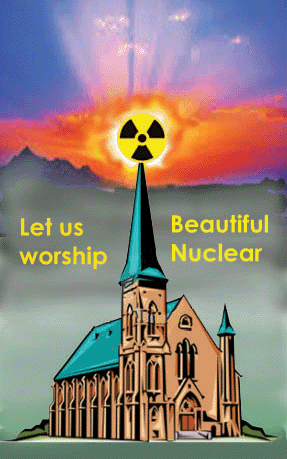
How Russia’s nuclear industry co-opted religion

How the Russian Church Learned to Stop Worrying and Love the Bomb https://www.foreignaffairs.com/articles/russian-federation/2019-06-14/how-russian-church-learned-stop-worrying-and-love-bomb

Orthodoxy’s Influence on Moscow’s Nuclear Complex

By Dmitry Adamsky  very year on May 9, Russia celebrates Victory Day—the day on which Nazi Germany surrendered to the Soviet Union in 1945—with its biggest annual military parade. This year, the ceremonies opened as they always do, with the Russian defense minister entering Red Square to inspect the troops and report to the president. When passing through Spasskaya Tower, the Kremlin’s main ceremonial gate, Defense Minister Sergei Shoigu’s cabriolet stopped. The minister took off his peaked cap and made the sign of the cross according to Orthodox tradition. Shoigu was the first minister to introduce this gesture into the ceremony in 2015. Whether he did so as a genuine expression of his faith, a public relations gambit, or both, his crossing himself on such an occasion reflects the tightening of bonds between church and state in today’s Russia.
Since the Soviet collapse, the Russian Orthodox Church (ROC), and the Orthodox faith more broadly, has exerted a growing influence on public and private life. Although relatively few Russians are actual practitioners, the majority of the population (about 80 percent) identifies as Orthodox, and many citizens consider the religion to be a defining element of Russian national identity. Officials across the Russian government—including ministers, members of the State Duma and of the Federation Council, senior military commanders, and President Vladimir Putin himself—have taken to openly professing their Orthodox faith. At times, some parts of the public have objected to the state’s privileging of the ROC, but such criticism has done little to diminish the church’s status.

That the church carries extraordinary weight on Russia’s domestic scene is well-known and not that unusual. What is more surprising, and less often explored, is the church’s influence within Russia’s nuclear weapons complex—the most significant wing of one of the world’s most powerful militaries. There the nexus between church and state runs deepest, widest, and longest. During the last three decades, the priesthood has entered all levels of command and positioned itself as a guardian of Russia’s nuclear potential. It’s impossible to fully understand the strategic reality in Russia today without scrutinizing the remarkable conjunction between the Kremlin, the ROC, and the nuclear weapons community.

THE TRINITY AND THE TRIAD

In Russia, each of the three components of the nuclear force structure—air, land, and sea—has its own patron saint. Icons adorn the walls of the sanctified headquarters, the command posts, and even the nuclear weapons platforms. Each large military base houses a garrison church, chapel, or prayer room. Aerial, ground, and naval processions of the cross are routine. Supplication services and the sprinkling of holy water mark oaths of allegiance, parades, exercises, and space and nuclear launches. Pilots of strategic bombers sanctify their jets prior to combat sorties and attach icons to the maps they take to the cockpit. Mobile temples accompany land-based intercontinental ballistic missiles, and nuclear-armed submarines house portable churches.

The military clergy provides regular pastoral care to the nuclear corps’ servicemen and function as official assistants to the commanders. The nuclear priesthood and servicemen jointly celebrate religious and professional holidays, and religious instruction is integral to the higher education of both military and civilian nuclear personnel. Priests participate in professional activities through the whole chain of command and join their flock in operational missions on the ground and underwater. Within the Russian military, in particular within the nuclear forces, clerics so frequently lead activities to boost morale and foster patriotism that they play a role nearly equivalent to that of Soviet-era political officers, who were responsible for the ideological education of troops and for ensuring the Kremlin’s control over the military.

Russia’s nuclear theory and practice have become increasingly assertive over the last decade, as ties between the military and the church have deepened. Russian strategists more readily incorporate nuclear tools into their planning and use Russia’s status as a nuclear power to coerce the behavior of others. The church is not the only or even the main force behind this posturing, but its open backing burnishes the domestic legitimacy of the Kremlin’s gambits, generating public support both for Moscow’s foreign policy and for the modernization of the nuclear arsenal.

At first glance, the Russian Orthodox Church’s support for the current Russian nuclear posture may seem counterintuitive. The Russian stance condones escalation for the sake of de-escalation and first use of nuclear weapons in some circumstances. These positions run counter to the principles of most Western branches of Christianity and Catholic “just war” theory, which stress discriminating between combatants and noncombatants, weighing the military value of an attack against the civilian destruction it may cause, and viewing nuclear weaponry as malum in se (an evil in itself). The Orthodox Church, however, seems to brook no such concerns and has promoted a pro-nuclear worldview in Russia.

THE POWER AND THE GLORY

With each passing decade since the fall of the Iron Curtain, the church’s influence on Russia’s nuclear establishment has grown stronger. In the early 1990s, the disarmament agreements that followed the collapse of the Soviet Union made nuclear weapons much less of a priority. The nuclear wing of Russia’s military-industrial complex found itself adrift—and the Russian Orthodox Church, seeking to expand its base of influence, saw a target of opportunity. The church shielded the nuclear establishment from political and social ostracism, lobbied for its funding, and helped it to reinvent itself, injecting new meaning into its professional life. Over the course of the decade, the nuclear corps of the military introduced religious ceremonies into its everyday activities, designated patron saints for its institutions, and built churches into its installations and garrisons. Clergymen, from the patriarch on down to priests, openly interacted with nuclear force commanders and industry officials.

Official state policy converged with the grassroots embrace of Russian Orthodoxy in the first decade of this century. The Kremlin restored property to the church, established a military clergy, and enhanced the church’s role in educational, social, and foreign policies. By 2010, the church had become part and parcel of the nuclear officialdom. The commanders of the nuclear corps and senior members of the nuclear industry signed cooperation agreements with the Russian Orthodox Church and established close contacts with the patriarch and clergy. From this nexus emerged the belief, which Putin himself seems to hold, that Orthodoxy and the nuclear deterrent are equally important bulwarks of Russian statehood, guaranteeing the nation’s security internally, in the case of the church, and externally, in the case of the nuclear arsenal.

Since 2010, Russia’s clergy has reached a new peak of influence over the state. Putin’s religious, ideological, and philosophical views seem to have matured and become integrated into his geopolitical vision and policy choices. He and his entourage express a religiosity that seems to a certain extent genuine and has created favorable conditions for the church to expand its influence in all dimensions of social and political life. In turn, the church lends moral authority to the Kremlin’s foreign policy initiatives. The clergy has become part and parcel of the military, primarily within the nuclear command, where the priests are now integrated at the tactical and operational levels, working in immediate proximity to the weapons and participating in exercises by land, air, and sea.

A LASTING INFLUENCE

That the Russian Orthodox Church has so deeply penetrated the country’s nuclear complex will likely have significant and lasting effects. When nuclear organizations compete for resources within and outside the Russian military, the church may become a tool of influence. It already helps recruit qualified youth to elite units, and nuclear corps commanders may come to see Orthodox draftees as particularly reliable and motivated, and so to seek them out. Indeed, the Orthodox faith has become so associated with national identity and patriotism that those seeking the fast track to promotions within the military and foreign policy communities may see fit to profess the faith. Ambitious military officers and even politicians can similarly enhance their careers by associating with influential senior clerics within the Kremlin’s court.

There are, of course, limits to the influence of religion within Russia’s foreign policy establishment. But the theocratization of Russia’s military and foreign policy establishment is real and significant, and the trend has flown under the radar for too long. We can no longer understand the Kremlin’s political mentality and strategic culture without factoring in the influence of the Orthodox Church and faith.

June 15, 2019 Posted by Christina Macpherson | Reference, Religion and ethics, Russia | Leave a comment

U.S. military intelligence agency increases accusations against Russia about nuclear testing

U.S. military intelligence steps up accusation against Russia over nuclear testing, WP,    By Paul Sonne,  14 June 19 The U.S. military intelligence agency stepped up its accusations against Russia over low-yield nuclear testing on Thursday, saying that the country has conducted nuclear weapons tests that resulted in nuclear yield.

The new statement from the Defense Intelligence Agency amounted to a more direct accusation against Russia, compared to hedged comments about Russian nuclear testing that DIA Director Lt. Gen. Robert P. Ashley Jr. made in a speech in Washington in late May.

“The U.S. Government, including the Intelligence Community, has assessed that Russia has conducted nuclear weapons tests that have created nuclear yield,” the DIA statement released Thursday said. The agency didn’t give any details about the alleged tests or release any evidence backing the accusation.

Previously, the agency’s director said that Russia “probably” was not adhering to the “zero-yield” standard the United States applies for nuclear testing. He suggested that Russia was probably conducting tests with explosions above a subcritical yield as part of its development of a suite of more-sophisticated nuclear weapons.

Russia has vehemently rejected Washington’s accusations, with Russian Foreign Minister Sergei Lavrov describing them as delusional.

“We consider claims that Russia may be conducting very low-yield nuclear tests as a crude provocation,” Russia’s Foreign Ministry said in a statement after the DIA first aired the allegations. “This accusation is absolutely groundless and is no more than another attempt to smear Russia’s image.”

DIA’s latest accusation came a day after Under Secretary of State for Arms Control and International Security Andrea L. Thompson met with Russian Deputy Foreign Minister Sergei Ryabkov in Prague to discuss arms control.

The meeting didn’t result in any significant decisions. After the meeting, Thompson said in a message on Twitter that she raised a range of issues on which the United States would like to engage in a more constructive dialogue with Russia. …… https://www.washingtonpost.com/world/national-security/us-military-intelligence-steps-up-accusation-against-russia-over-nuclear-testing/2019/06/13/2dadf2e2-8e26-11e9-b162-8f6f41ec3c04_story.html?utm_term=.9b2400d2dfbe

June 15, 2019 Posted by Christina Macpherson | politics international, Russia, USA, weapons and war | Leave a comment

The continuing and ever-increasing costs of America’s nuclear wastes

Americans Are Paying More Than Ever to Store Deadly Nuclear Waste as Plants Shut Down  https://www.bloomberg.com/news/articles/2019-06-14/u-s-bill-to-store-nuke-waste-poised-to-balloon-to-35-5-billion, By Will Wade June 14, 2019, The Maine Yankee nuclear power plant hasn’t produced a single watt of energy in more than two decades, but it cost U.S. taxpayers about $35 million this year.Almost 40 years after Congress decided the U.S., and not private companies, would be responsible for storing radioactive waste, the cost of that effort has grown to $7.5 billion, and it’s about to get even pricier.

With no place of its own to keep the waste, the government now says it expects to pay $35.5 billion to private companies as more and more nuclear plants close down, unable to compete with cheaper natural gas and renewables. Storing spent fuel at an operating plant with staff and technology on hand can cost $300,000 a year. The price tag for a closed facility: More than $8 million, according to the Nuclear Energy Institute.

The U.S. Energy Department “has been clinging to unrealistic expectations,” said Rodney McCulllum, senior director for decommissioning and used fuel at the institute, an industry trade group. “The industry was never supposed to have this problem.”

Higher and Higher

DOE’s estimates of its nuclear-waste storage liabilities increase every year

The issue has been long-discussed. Initially, the plan was to store the radioactive waste deep underground at Yucca Mountain in Nevada, starting in 1998. But the project faced strong opposition from environmental groups, state residents and Democratic Senator Harry Reid of Nevada, who served as the U.S. Senate majority leader.

After years of legal challenges, President Barack Obama cut funding for the project in 2009. Since then, there have been few realistic alternatives. Lawmakers in Washington held a hearing Thursday to evaluate bills aimed at how best to handle the waste.

In the meantime, the U.S. has no permanent place of its own to store radioactive material that will remain deadly for several thousand years.

About 80,000 metric tons of nuclear waste have been stored at 72 private locations across the U.S., or enough to cover a football field to a depth of 20 meters (66 feet), according to the Government Accountability Office. While most are at operating plants, incorporated into the plant’s daily activities, 17 are at closed facilities, with seven at sites — including Maine — where the plant itself has been demolished.

In those cases, only the storage casks remain, and keeping them monitored and protected as they get older can be an expensive operation.

After a legal battle with the U.S., the Maine Yankee plant and two sister facilities in Connecticut and Massachusetts — responsible for 123 casks of nuclear waste — were awarded $103 million from a U.S. Treasury Department fund in February, covering their expenses from 2013 through 2016.

“We only remain in business because the federal government has not met its obligation to remove the fuel,” said Eric Howes, director of public and government affairs at Maine Yankee. “Our only purpose is to store the fuel.”

Meanwhile, the growing number of shuttered plants, along with the aging of existing facilities, means these costs are about to surge. Once a storage site hits the 20-year mark it has to be relicensed. Older ones require more thorough inspections and additional paperwork, including submitting a so-called aging management plan.

About 30 of these licenses have been renewed, and that figure will more than double by the end of next year, according to the NEI. Some sites have more than one license.

“As we shut down more plants, the costs of used-fuel storage is going to go up,” McCulllum said by telephone.

A Shrinking Fleet

U.S. nuclear reactors are losing ground

Most of the waste involves spent fuel rods, and some sites include casks with radioactive components from reactors that have been torn down. Even though the government is legally responsible for storage expenses, it doesn’t make it easy for companies to recover the costs. The Yankee companies have had to file four lawsuits over the years, and the Energy Department sometimes pushes back.

In the most recent case, the agency challenged about $1 million in legal fees and administrative costs that it successfully argued weren’t related to fuel-storage expenses.

“They’ve contested every step of the way,” Howes, the Yankee spokesman, said.

June 15, 2019 Posted by Christina Macpherson | USA, wastes | Leave a comment

Oyster Creek Nuclear Station’s nuclear waste, and opposition to the Holtec plan

What about the nuclear waste left behind at Oyster Creek?   https://www.app.com/story/opinion/columnists/2019/06/14/nuclear-waste-oyster-creek-yucca-mountain-holtec/1454375001/

Janet Tauro  June 14, 2019 After decades of warning that the continued operation of the nation’s nuclear plants would leave behind mountains of atomic waste that would remain highly radioactive for tens of thousands of years, the day of reckoning has arrived.

As older nuclear plants around the country close for economic and age-related reasons, we are moving away from the age of nuclear generation to the age of handling and storing nuclear waste.

Private companies are emerging, like Camden-based Holtec International, which apparently view dinosaur nuclear plants and atomic waste as a good business opportunity. They are buying shuttered nuclear reactors, and the purchase includes hefty decommissioning funds.

The Oyster Creek Nuclear Generating Station in Lacey is one of those dinosaurs whose day is done, but its toxic legacy of over 1.2 million pounds of highly radioactive waste lives on.

Its decommissioning fund, generated through surcharges on ratepayer bills, contains about $980 million.  The fund would be transferred from Exelon Corp. to Holtec International if the pending sale is approved by federal officials.

Congress has taken notice. Bills are pending for transportation of nuke waste to consolidated interim storage (CIS) facilities. Discussions also have been revived about a central repository at Yucca Mountain. One proposed CIS facility would be owned and operated by Holtec in New Mexico. Holtec’s board of directors includes former Republican Congressman James Saxton and South Jersey Democratic party leader George Norcross III. The other CIS is in Texas.

New Mexico Gov. Michelle Lujan Grisham reportedly opposes the proposed Holtec project.

Holtec has put together a complex, layered limited liability corporate structure to take it through the Oyster Creek decommissioning, which would happen on an accelerated time frame. The speedy timetable seems attractive for redevelopment of the site. But, is haste safe? Will safety corners be cut to get the job done quickly? With limited liability in place, who will take care of emergency response and planning if there is a mishap? Who will be financially responsible?

Holtec has proposed removing the radioactive waste from the elevated fuel pool within three and a half years rather than the usual five, packing it into concrete casks, and eventually shipping it offsite to the company’s proposed storage facility thousands of miles away.

Holtec has been cited by the Nuclear Regulatory Commission for safety problems at the San Onofre nuclear plant in California. In New Jersey, a state task force is reportedly investigating economic development awards to the company. It might be prudent for the NRC to delay a license transfer until any investigation and cask safety considerations are fully vetted and completed.

A permanent solution to nuclear waste storage has never been found and is unlikely to occur in the near future. We are left with choosing a least=bad option, which could be hardened on-site storage to higher ground, away from rising seas and worsening storm surges until a permanent repository is established. Moving the waste by truck, barge and rail thousands of miles out west to a temporary facility from which it would have to be moved again doubles the risk of a catastrophic accident.

On-site storage includes a berm around storage casks, concealing them from possible terrorist attack, which makes sense and increases public safety. The current plan at Oyster Creek calls for about 30 casks to be lined up like bowling pins near Route 9.

Maximizing safety must be a congressional focus, particularly since the NRC has allowed Exelon, or any future owner of Oyster Creek, to discontinue emergency planning around the plant once the fuel pool is emptied. Exelon tested its warning sirens for the last time only two weeks ago.

Local, state, and federal representatives should determine whether the emergency planning reductions include disbanding the plant’s fire brigade, leaving a nuclear fire to local volunteer fire departments unequipped and untrained to handle such a catastrophe. If that’s the case, Lacey’s elected representatives should use every ounce of their authority and power to reverse it.

Congress should also scrutinize whether it is a national security risk for any private company to be in possession of vast quantities of nuclear materials, rather than the federal government.

The unadulterated, unfortunate truth is that a permanent solution for storage of deadly, highly radioactive nuclear waste does not exist. It never did during the past half century it was being produced and generating corporate profits.

Janet Tauro is New Jersey board chair for Clean Water Action.

June 15, 2019 Posted by Christina Macpherson | politics, USA, wastes | Leave a comment

Japanese PM Shinzo Abe says Iran has ‘no intentions’ to make or use nuclear weapons

Iran has ‘no intentions’ to make or use nuclear weapons, Abe says, Aljazeera, 13 June 19
Japanese PM Shinzo Abe said Iran’s Supreme Leader made the comment during a meeting in Tehran.Iran’s Supreme Leader Ayatollah Ali Khamenei has assured Japanese Prime Minister Shinzo Abe that Iran has no intention to make, hold or use nuclear weapons, while saying that the country will not negotiate with the United States.

Abe met Khamenei – Iran’s top decision-maker – on Thursday during a trip to Iran in an attempt to ease tensions between the Islamic republic and the US.

Following the meeting, which Iranian President Hassan Rouhani appeared to have also attended, Abe told reporters that Khamenei had told him that Iran “will not and should not make, hold or use nuclear weapons, and that it has no such intentions”.

Shortly after, Iranian state news agency FARS confirmed the comment, but added that Khamenei had said Iran will not negotiate with the US and did not consider President Donald Trump “worthy” of a message from Tehran.

“I do not see Trump as worthy of any message exchange, and I do not have any reply for him now or in the future,” Khamenei was quoted as saying.

The supreme leader also reportedly said that he does not believe Trump’s offer of honest negotiations and that he thinks the US president’s promise not to seek regime change in Iran is a lie.

The comments likely came as a blow to Abe, who told reporters at a joint press conference with Rouhani on Wednesday, that helping to ease tension in the region was “the one single thought that brought me to Iran”.

Abe is completing a two-day visit to Iran, becoming the first sitting Japanese premier to visit the country since its 1979 Islamic Revolution. ……….   https://www.aljazeera.com/news/2019/06/iran-intentions-nuclear-weapons-abe-190613064055043.html

June 15, 2019 Posted by Christina Macpherson | Iran, politics international | Leave a comment

Multibillion dollar plutonium pit factory – jobs, jobs – yeah – but is it safe, or even necessary?

Atomic bomb factory could produce more than 1,000 jobs for SC. But how safe is it?   https://www.charlotteobserver.com/news/state/south-carolina/article231568153.html, BY SAMMY FRETWELL. JUNE 14, 2019     Anti-nuclear activists fired away Friday at what they said is a dangerous and little known plan to produce deadly atomic weapons components at the Savannah River Site near Aiken.

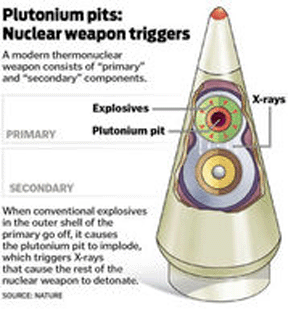
The federal government has proposed a multibillion dollar plutonium pit factory that could create as many as 1,700 jobs as part of an effort to make fresh plutonium, a major ingredient in atomic bombs.

But the proposed factory is raising concerns about its risk to the environment and the public, in addition to how it would be viewed by world leaders. Critics say the government may use the pits in a new type of nuclear weapon, instead of only replenishing the existing stockpile with fresh plutonium.

Savannah River Site Watch, a nuclear watchdog organization that tracks SRS, planned a public meeting Friday night in Aiken County to brief people on the government’s plan at SRS, a 310-square-mile complex in western South Carolina.

“We don’t think people are really aware of what is going on: that this new mission is fraught with risk that could come to SRS,’’ Savannah River Site Watch director Tom Clements told The State.

Nuclear watchdog groups from New Mexico and California joined SRS Watch for the forum in Aiken County, where many SRS workers live. Before the Friday meeting, the groups held a news conference to voice concerns. The U.S. Department of Energy plans its own forum on the proposal June 27 in North Augusta.

The Energy Department is proposing to convert its failed and unfinished mixed oxide fuel plant at SRS for use as a plutonium pit plant. The cost to convert the plant could be up to $5 billion, nuclear watchdogs said.

Federal records show the new SRS plant would produce at least 50 pits for nuclear weapons each year. A federal site in Los Alamos, N.M., would produce another 30 pits, according to the government’s plan. Part of the reason for needing more pits is to refresh the nation’s aging stockpile of atomic weapons, federal officials have said.

Officials with the U.S. Department of Energy were not immediately available Friday for comment, but a public notice this week said the pits it wants to replace were made from 1978-89. Most plutonium cores were produced at the Rocky Flats, Colo., nuclear site decades ago, but that site has since closed.

“Today, the United States’ capability to produce plutonium pits is limited,’’ according to a DOE public notice. The notice said producing 80 pits per year, beginning in 2030, would “mitigate the risk of plutonium aging.’’

“The security policies of the United States require the maintenance of a safe, secure and reliable nuclear weapons stockpile,’’ the public notice said.

Pro-nuclear groups say the pit plant is a good replacement for the MOX facility. Not only will it provide jobs, but it will help keep the United States safe, they say.

“We are 100 percent supportive,’’ said Jim Marra, director of Citizens for Nuclear Technology Awareness. ‘’From a national defense standpoint, it is vitally important. Quite frankly, there’s no better place to do it, at least part of it, than Savannah River Site. The expertise in dealing with plutonium, and the existing work now going on with plutonium, is huge.’’

Clements and Jay Coghlan, who directs Nuclear Watch New Mexico, don’t see it that way.

“It will be a great waste of taxpayer’s money,’’ Coghlan said. “There also is a long history of chronic safety problems and environmental or waste problems associated with pit production.’’

Clements said plutonium, one of the most dangerous parts of a nuclear weapon, is toxic and a potential threat to the environment. Workers would be exposed to plutonium at SRS, and the public could be exposed to plutonium if an accident occurs, he said.

SRS was a vital cog in Cold War weapons production. Built in the early 1950s, it produced materials, such as tritium, that were used for nuclear weapons. It has been largely in a cleanup mode and looking for new missions since the early 1990s. More than 10,000 people work there.

One of the biggest questions raised by pit project critics is whether the pits are needed as badly as the DOE contends.

Existing plutonium pits, essentially the cores of nuclear bombs, have a longer shelf life than the government has recently said they have, said Marylia Kelley, executive director of Tri-Valley CARES in California. She said past government studies have shown that. One study shows that plutonium pits can last 85- 100 years, about 25-40 years longer than previously thought.

But the government today is working on a new type of nuclear weapon the pits could be used in — and nuclear proliferation is a bad idea, critics say.

“If you don’t design new nuclear weapons, you will need to do very few pits every year,’’ Kelley said. “This enterprise is not necessary, and I would argue that we need a very robust discussion here.’’

She said if the U.S. develops a new weapon and tests it, other countries may do the same, potentially leading to an escalation of nuclear arms.

Marra said he’s not opposed to plutonium pits being used for new weapons.

“’If that includes new weapons systems, I think that’s the right thing to do,’’ he said. “Our adversaries are not standing still in this regard. China and Russia are continuing to modernize their nuclear weapons, and we all know about North Korea.’’

Plans to develop the plutonium pit factory are not final. A bill in the U.S. House of Representatives, discussed recently in a key committee, would derail the plan.

The Department of Energy plans to conduct an environmental impact statement on how the plant would affect the environment and human health. The current proposal isn’t the first time the DOE has brought up the matter of a new pit plant. The agency proposed a pit factory more than 17 years ago, but the plan never went anywhere.

Reach Fretwell at 803-771-8537. @sfretwell83

June 15, 2019 Posted by Christina Macpherson | USA, weapons and war | Leave a comment

Escalating collapse of global insect populations

The Great Insect Dying: How to save insects and ourselves, MONGABAY,  BY JEREMY HANCE   13 JUNE 2019  

  • The entomologists interviewed for this Mongabay series agreed on three major causes for the ongoing and escalating collapse of global insect populations: habitat loss (especially due to agribusiness expansion), climate change and pesticide use. Some added a fourth cause: human overpopulation.
  • Solutions to these problems exist, most agreed, but political commitment, major institutional funding and a large-scale vision are lacking. To combat habitat loss, researchers urge preservation of biodiversity hotspots such as primary rainforest, regeneration of damaged ecosystems, and nature-friendly agriculture.
  • Combatting climate change, scientists agree, requires deep carbon emission cuts along with the establishment of secure, very large conserved areas and corridors encompassing a wide variety of temperate and tropical ecosystems, sometimes designed with preserving specific insect populations in mind.
  • Pesticide use solutions include bans of some toxins and pesticide seed coatings, the education of farmers by scientists rather than by pesticide companies, and importantly, a rethinking of agribusiness practices. The Netherlands’ Delta Plan for Biodiversity Recovery includes some of these elements……….. https://news.mongabay.com/2019/06/the-great-insect-dying-how-to-save-insects-and-ourselves/

June 15, 2019 Posted by Christina Macpherson | 2 WORLD, environment | Leave a comment

“Chernobyl” TV series gets high rating, highly viewed in Russia and Ukraine

BBC 12th June 2019 , Hours after the world’s worst nuclear accident, engineer Oleksiy Breus
entered the control room of the No. 4 reactor at the Chernobyl nuclear
power plant in Ukraine. A member of staff at the plant from 1982, he became
a witness to the immediate aftermath on the morning of 26 April 1986.

The story of the reactor’s catastrophic explosion, as told in an HBO/Sky
miniseries, has received the highest ever score for a TV show on the film
website IMDB. Russians and Ukrainians have watched it via the internet, and
it has had a favourable rating on Russian film site Kinopoisk. Mr Breus
worked with many of the individuals portrayed and has given his verdict of
the series.      https://www.bbc.co.uk/news/world-europe-48580177

June 15, 2019 Posted by Christina Macpherson | Kazakhstan, media, Resources -audiovicual, Russia | Leave a comment

Climate change denier makes big donations to Boris Johnson and Jeremy Hunt.

Open Democracy 12th June 2019  Revealed: Climate change denier makes big donations to Boris Johnson and
Jeremy Hunt. Tory hopefuls under fire for accepting cash from company
linked to major ‘climate science denial’ group. Johnson has yet to
declare the funding, ‘raising questions about who else is bankrolling
him’.
A prominent climate change sceptic’s company has donated £25,000
each to both Boris Johnson and Jeremy Hunt’s leadership campaigns,
openDemocracy has discovered. Foreign Secretary Jeremy Hunt’s largest
donation was £25,000 on May 22 from First Corporate Shipping, according to
the register of MPs’ interests.
First Corporate Shipping is the trading
name of Bristol Port, which is co-owned by Tory donors Terence Mordaunt and
Sir David Ord. Mordaunt is a director of the Global Warming Policy Forum,
the advocacy arm of the climate sceptic Global Warming Policy Foundation.

June 15, 2019 Posted by Christina Macpherson | climate change, UK | 1 Comment

The clean-up of the Chernobyl nuclear wreck- the costs and international effort

Viewpoint: Chernobyl and a very modern safety culture, WNN, 10 June 2019

The European Bank for Reconstruction and Development (EBRD) has led international efforts to transform the site of the Chernobyl nuclear power plant in Ukraine. Here, Balthasar Lindauer, director of the London-headquartered bank’s Nuclear Safety Department, gives an insight into the change in safety culture at the plant.

The HBO/Sky mini-series Chernobyl is a stark reminder of the immensity of the accident that destroyed unit 4 in 1986. It vividly recalls the pain and suffering of those people, in particular, who tried to address the consequences of the accident in the first few days and weeks. But Chernobyl also clearly highlights how a culture of secrecy and obedience contributed to the accident and hampered efforts to deal with its aftermath.

Soviet authorities knew about precursors to the Chernobyl accident but did not share this vital information with operators, who were ordered to run the fatal test without sufficient knowledge about unstable core conditions. A key reminder, if one was needed, is that an effective nuclear safety culture requires well-informed and empowered operators and transparency as well as competent, independent oversight.

While Soviet authorities eventually managed to get unit 4 into a relatively stable state by using hundreds of thousands of ‘liquidators’ to cover the reactor with what became known as the ‘object shelter’, the site remains a radiological and technical challenge to this day. If one good thing came out of the Chernobyl disaster, it was the unprecedented international cooperation and solidarity to tackle the consequences of the accident and the cooperation on nuclear safety issues in general. The international community, including the EBRD, has engaged with Ukraine on the various challenges posed by the Chernobyl site since the mid-1990s.

One of the first tasks was to finance safety and security upgrades at the sister unit, immediately adjacent to the shelter, which almost unbelievably continued producing electricity until the year 2000. Permanent closure of units 1 to 3 was a clear demand by the international community and, when achieved, it was the first major improvement at the site.

In 1997, the EBRD agreed to set up a Donor Fund to finance the Shelter Implementation Plan – a strategy to transform unit 4 and the shelter into an environmentally safe condition. This task came to be supported by 45 donor governments and the EBRD, even though at the time the exact scope, schedule and cost were tentative. The first phase consisted of studies to determine the radiological situation in various parts of the object, the structural stability of the shelter (which had been built quickly using remote technologies as far as feasible), and the possibility of criticality in the destroyed core. What slowly emerged was the outline for a strategy including the construction of a New Safe Confinement (NSC) to enclose unit 4, including the old shelter.

A possible collapse of the shelter was the biggest risk to the success of the programme and it could have jeopardised finding a sustainable solution for decades. A priority, therefore, was the design and implementation of measures to stabilise the shelter to minimise that risk. Before the sliding of the NSC, the most visible feature in recent years was a gigantic yellow steel structure to stabilise the western wall of the shelter and to take off most of the weight of its roof. That was one of a dozen measures implemented inside and outside of the shelter, and carried out under extremely difficult radiological conditions, which helped extend the lifetime of the old structure.

In parallel, the design for the NSC took shape. One of the requirements was to assemble this structure of more than 100 meters high and 250 meters wide, away from the shelter and to slide it into place once completed. This was necessary to keep radiation exposure to workers to a minimum. A consortium of French companies, Vinci and Bouygues, accomplished this feat. By the end of 2016, the arch-shaped steel structure, complete with a sophisticated crane system, ventilation ducts and cabling for monitoring and control systems, was slid into position over unit 4. The completion of the structure’s sealing and commissioning of all systems was achieved in April 2019.

This successful operational test is a game changer for Chernobyl. Now, with the NSC in place and with a design life of 100 years, the conditions have been created to take the next steps…….

Thanks to this international effort, Chernobyl is now in a much better shape than it has been for the last 33 years. But it remains a challenging place. Used fuel from units 1 to 3 is stored in a Soviet-era wet storage facility that needs to be decommissioned. Transport of fuel assemblies to a new dry interim storage facility, also funded through an EBRD-managed Donor Fund and EBRD’s own resources, is expected to start before the end of this year. Ukraine will have to decommission Chernobyl units 1 to 3, operate the NSC and waste management facilities (most of which have been funded by international donors), develop an integrated waste management strategy and manage the exclusion zone, large parts of which will not be released for general use for decades to come…….

Future work in Chernobyl would greatly benefit from continued international cooperation due to the scale of the task, and including a number of unique challenges. Today, Ukraine would of course no longer be the recipient of technical assistance in dire need of international solidarity that it was when the country emerged from the Soviet Union with the worst nuclear legacy in the history of mankind. Future cooperation will need to be a partnership, the foundation of which has been successfully created by Ukraine and the international community by solving key technical challenges in Chernobyl.

The European Bank for Reconstruction and Development is an international financial institution founded in 1991. As a multilateral developmental investment bank, the EBRD uses investment as a tool to build market economies. Read more about the EBRD’s work at Chernobyl.  http://world-nuclear-news.org/Articles/Viewpoint-Chernobyl-and-a-very-modern-safety-cultu

June 15, 2019 Posted by Christina Macpherson | politics international, Ukraine, wastes | Leave a comment

Japan’s restarted nuclear reactors could be forced to shut down for safety measures to be implemented

World Nuclear News 13th June 2019 Nuclear power reactors in Japan that have resumed operation could be forced
to temporarily shut down again if back-up safety measures are not in place
by specified deadlines under new rules approved by the country’s Nuclear
Regulation Authority (NRA). Operators of restarted units have already said
they expect delays in the completion of such facilities.

http://www.world-nuclear-news.org/Articles/Safety-upgrade-delays-could-take-Japanese-units-of

June 15, 2019 Posted by Christina Macpherson | Japan, politics, safety | Leave a comment

Shelby Surdyk, Alaska’s nuclear disarmament youth campaigner

From NYC to Sitka, this Alaskan is taking on nuclear disarmament https://www.ktoo.org/2019/06/13/alaskans-chip-away-at-nuclear-disarmament/  

By Sheli DeLaney, KRNN,  June 13, 2019   On Wednesday’s Juneau Afternoon, the Treaty on the Non-Proliferation of Nuclear Weaponswas a topic of discussion as host Sheli DeLaney sat down with nuclear disarmament advocate Shelby Surdyk.Nuclear disarmament became Surdyk’s cause when she was in high school in Skagway and met a new teacher who had previously taught at the U.S. military base on Kwajalein Island in the Marshall Islands. The central Pacific Ocean nation was the site of U.S. nuclear testing between 1946 and 1958.

The teacher educated students about the history and impact that nuclear weapons testing had on the Marshallese people, and their story left a lasting impression on Surdyk.

“I think that once you become connected to people whose lives have been touched by nuclear weapons testing, it’s a path you can’t turn back from,” she said.

Today, Surdyk is the project manager for HOPE: Alaska’s Youth Congress for the Global Elimination of Nuclear Weapons, a five-day conference for high school students to be held in Sitka in April 2020. The idea for the youth congress was introduced by Veterans for Peace, an organization that opposes the proliferation of nuclear weapons as part of their philosophy.

Surdyk recently attended the 2019 NPT PrepCom, a conference held at the United Nations headquarters in New York City this spring. She will be speaking about her experience over a brown-bag lunch hosted by Veterans for Peace this Friday at noon at the Juneau Arts and Culture Center.

June 15, 2019 Posted by Christina Macpherson | opposition to nuclear, PERSONAL STORIES, USA | Leave a comment

U.S. Department of Energy moves to redefine ‘high-level’ nuclear waste. More waste coming to WIPP?

More waste coming to WIPP? DOE looks to redefine ‘high-level’ nuclear waste  https://www.currentargus.com/story/news/local/2019/06/14/doe-looks-redefine-high-level-nuclear-waste/1444488001/

Adrian C Hedden, Carlsbad Current-Argus  June 14, 2019  The U.S. Department of Energy moved forward with its plans to adjust how it classifies high-level nuclear waste, potentially bringing more waste streams to the Waste Isolation Pilot Plant in southeast New Mexico.

The DOE published a notice in the Federal Register on June 10, updating a request for comment made in October 2018 to address comments received and adjustments to the initial proposal.

No plans to propose any changes to current policies or legal requirements regarding high-level waste (HLW) were made, but the Department but will address how its interpretation of HLW will apply to existing waste streams and whether or not they be managed as HLW.

The interpretations of HLW was revised in the notice following 5,555 comments received, which the Department broke down to about 360 distinct comments, read the notice.

Comments came from stakeholders, members of the public, Native American tribes and lawmakers, along with the federal Nuclear Regulatory Commission.

Previously, any nuclear waste generated directly from the reprocessing of spent nuclear fuel, including any liquids or solid material was classified as HLW, records show.   But the DOE amended that definition to specify that waste can be determined as non-HLW if it does not exceed radioactivity levels for Class-C low-level radioactive waste, or required disposal in a deep geological repository.

Re-interpreting the definition could reduce the length of time nuclear waste is held onsite at DOE facilities, read a news release from the Department’s Office of Environmental Management, potentially increasing safety for workers and the public. It could also allow for the removal of reprocessing waste from generator sites where it’s been held for decades, the release read, by allowing the waste to go disposal sites, such as WIPP, designed for non-HLW.

The proposal would also align the U.S. with international guidelines that call of management and disposal to be based on the actual radiological risk, and shorten mission completion schedules – saving taxpayer dollars, read the release.

TRU waste is typically clothing items such as gloves or vests that are used during nuclear activities at various laboratories, but if other waste streams could be downgraded from HLW to TRU waste they could be sent to WIPP.

There is no permanent repository for HLW, as the facility proposed in Yucca Mountain, Nevada was blocked by state lawmakers and the federal government cut its funding.

The proposal did not mention WIPP specifically.

But John Heaton, chair of the Eddy-Lea Energy Alliance said the change could increase the time frame for WIPP’s mission, keeping the facility open longer and accepting more kinds of waste.

He said the proposal would ultimately classify nuclear waste based on its level of radioactivity, not its origin.

“A lot of would pass the waste acceptance criteria at WIPP,” Heaton said. “It would extend the life of WIPP for sure. They’re spending billions of dollars on this stuff a year. The only risk reduction that’s happening is in what’s coming to WIPP.”

The DOE also published a notice on June 10 of its intent to develop and environmental assessment of plans to dispose of about 10,000 gallons of waste water from the Savannah River Site’s Defense Waste Processing Facility (DWPF) in South Carolina.

That waste would be disposed of at a commercial low-level radioactive waste (LLW) disposal facility outside of South Carolina.

“The DWPF recycle wastewater would be treated, characterized, and if the performance objectives and waste acceptance criteria of a specific disposal facility are met, DOE could consider whether to dispose of the waste as LLW under the Department’s high-level radioactive waste (HLW) interpretation published elsewhere in this issue of the Federal Register,” read the notice.

But Don Hancock, director of the Nuclear Waste Program at the Southwest Research and Information Center said the DOE has no right to rewrite federal law and regulations passed by Congress.

He said reclassifying the waste as less dangerous was intended to move it from the generator sites, but if it is truly less dangerous, Hancock said, it could be left where it is.

“What it seems like they’re proposing is illegal,” Hancock said. “They say they get to rewrite the law, not Congress. They’re a lot of opposition to this nationally.”

June 15, 2019 Posted by Christina Macpherson | politics, USA, wastes | Leave a comment

NUCLEAR ENERGY LEADERSHIP ACT Some USA politicians push legislationfor USA to be global chieftan in new nuclear reactors

NUCLEAR ENERGY LEADERSHIP ACT  Key Nuclear Legislation Gaining a House Version    https://morningconsult.com/2019/06/11/key-nuclear-legislation-gaining-house-version/  

Bipartisan Virginia pair to be lead sponsors of NELA  BY JACQUELINE TOTH, June 11, 2019 

A bipartisan House version of key Senate nuclear legislation could be introduced by a Democratic representative, alongside at least one co-sponsor, as soon as next week.

Freshman Rep. Elaine Luria (D-Va.) will introduce the Nuclear Energy Leadership Act, according to multiple people familiar with the bill’s pending introduction.

Rep. Denver Riggleman (R-Va.), also a freshman, will be the lead Republican co-sponsor on the House version, his spokesman confirmed by email.

One person with knowledge of the matter said the House version could include additional co-sponsors.

The Senate version of the bill calls on the Energy Department to create a 10-year strategic plan for nuclear energy and to demonstrate at least two advanced reactor projects by the end of 2025, as well as two to five additional advanced reactor designs by the end of 2035.

We had been told not to expect any really large, substantive changes” from the Senate version, and that while there could be some minor tweaks, “substantial portions would be identical,” said the person with knowledge of the matter. The person also expects that provisions in the bill would be referred not solely to the House Energy and Commerce Committee but also to others, including House Science, Space and Technology — a dispersion that could require further effort ahead of passage.

Luria, a U.S. Naval Academy graduate who served 20 years in the Navy, worked as a nuclear engineer and surface warfare officer in combatant ships and subsequently started a small business. Her district includes Virginia Beach and Naval Station Norfolk.

“As an engineer who operated nuclear reactors on aircraft carriers, I know that ensuring a thriving civilian nuclear industry is vital not only for our economy, but for our national security,” Luria said through a spokesman via email. “Nuclear energy must be part of any solution to transitioning to a clean energy future because nuclear power provides over 55% of our carbon-free energy. That’s why I’m proud to introduce this critical bill.”

“This bill will help position the United States as a global energy leader in a responsible and bipartisan way and break down barriers to the development necessary to achieve that goal,” Riggleman said through a spokesman by email.

NELA is popular across much of the U.S. nuclear community, which would like to see clear-cut goals enshrined in law for the federal government to help commercialize new nuclear technology.

“Republicans and Democrats recognize that nuclear energy is a critical national asset to provide clean, reliable and affordable electricity to Americans,” Nuclear Energy Institute President and Chief Executive Maria Korsnick told the Senate Energy and Natural Resources Committee at an April 30 hearing on the measure. Committee Chairman Lisa Murkowski (R-Alaska) re-introduced the Senate bill in March, and the bill now has nine Republican and eight Democratic co-sponsors in the chamber.

Advocates of the current Senate version of the bill say it would help bring about the next generation of nuclear reactors, not only through demonstrations but also by creating a potential customer in the federal government. NELA would extend the allowable length of federal power purchase agreements and attempt to secure an initial supply of high-assay low-enriched uranium — blends of uranium with higher concentrations of fissionable uranium, which multiple new nuclear designs will require to operate.

Passage of NELA would build on several legislative victories for the nuclear energy community since the start of last year, including the extension and expansion of a production tax credit for nuclear energy and enactment of two other nuclear bills.

An industry person familiar with the matter said that a markup of the Senate measure is projected for late June.


June 13, 2019 Posted by Christina Macpherson | politics, USA | 1 Comment

In US House, Democrats stop Republicans’ push for low-yield nuclear weapons

Democrats rebuff GOP push for low-yield nuclear weapons, By SUSANNAH GEORGE, 12 June 19, WASHINGTON (AP) — House Democrats rebuffed attempts by Republicans Wednesday to authorize funding for so-called low-yield nuclear weapons that the Trump administration says are key to deterring Russia.

Republicans put forward two amendments to fund the weapons in a defense bill, but both were rejected in a voice vote Wednesday. A formal roll-call vote on the amendments was planned for later.

Armed Services Committee Chairman Adam Smith, D-Wash., eliminated funding in the legislation for low-yield nuclear weapons that could be placed on submarines. He said the weapons increase the likelihood of nuclear conflict. …..

Nuclear policy issues will likely reemerge in the Republican-controlled Senate. The House and Senate will have to negotiate a final version of the annual policy bill before it becomes law……

Republicans and Democrats also disagree over the total amount of money needed to properly fund the Pentagon and nuclear elements of the Energy Department. The White House requested a $750 billion budget, but Smith said a slightly smaller budget of $733 billion would promote efficiency…..https://www.apnews.com/d04a6f8f5edb4c4490013aa32e78417f

June 13, 2019 Posted by Christina Macpherson | USA, weapons and war | Leave a comment

« Previous Entries     Next Entries »

1 This Month

Tell Congress: Prevent Nuclear Catastrophe in Iran

Tell Congress: Prevent Nuclear Catastrophe in Iran

Read the Public Inquiry Report, the Commissioners’ report, Surrendering Australia: The AUKUS Deception is available to download for free at aukuspublicinquiry.com. Or just watch the replay of the National Press Club Luncheon.

​

Shut down the radiation-damaged Heysham nuclear reactors now

To see nuclear-related stories in greater depth and intensity – go to https://nuclearinformation.wordpress.com

Say No to NASA’s Reckless Nuclear Reactor on the Moon

Say No to NASA’s Reckless Nuclear Reactor on the Moon

  • Categories

    • 1
      • Arclight's Vision
    • 1 NUCLEAR ISSUES
      • business and costs
        • employment
        • marketing
      • climate change
      • culture and arts
      • ENERGY
        • renewable
          • decentralised
          • energy storage
      • environment
        • oceans
        • water
      • health
        • children
        • psychology – mental health
        • radiation
        • social effects
        • women
      • history
      • indigenous issues
      • Legal
        • deaths by radiation
        • legal
      • marketing of nuclear
      • media
        • investigative journalism
        • Wikileaks
      • opposition to nuclear
      • PERSONAL STORIES
      • politics
        • psychology and culture
          • Trump – personality
        • public opinion
        • USA election 2024
        • USA elections 2016
      • politics international
      • Religion and ethics
      • safety
        • incidents
      • secrets,lies and civil liberties
        • civil liberties
      • spinbuster
        • Education
      • technology
        • reprocessing
        • Small Modular Nuclear Reactors
        • space travel
      • Uranium
      • wastes
        • – plutonium
        • decommission reactor
      • weapons and war
        • Atrocities
        • depleted uranium
      • Women
    • 2 WORLD
      • ANTARCTICA
      • ARCTIC
      • ASIA
        • Burma
        • China
        • India
        • Indonesia
        • Japan
          • – Fukushima 2011
          • Fukushima 2012
          • Fukushima 2013
          • Fukushima 2014
          • Fukushima 2015
          • Fukushima 2016
          • Fukushima continuing
        • Malaysia
        • Mongolia
        • North Korea
        • Pakistan
        • South Korea
        • Taiwan
        • Turkey
        • Vietnam
      • EUROPE
        • Belarus
        • Bulgaria
        • Denmark
        • Finland
        • France
        • Germany
        • Greece
        • Ireland
        • Italy
        • Kazakhstan
        • Kyrgyzstan
        • Russia
        • Spain
        • Sweden
        • Switzerland
        • UK
        • Ukraine
      • MIDDLE EAST
        • Afghanistan
        • Egypt
        • Gaza
        • Iran
        • Iraq
        • Israel
        • Jordan
        • Libya
        • Saudi Arabia
        • Syria
        • Turkey
        • United Arab Emirates
      • NORTH AMERICA
        • Canada
        • USA
          • election USA 2020
      • OCEANIA
        • New Zealand
        • Philippines
      • SOUTH AMERICA
        • Brazil
    • ACTION
    • AFRICA
      • Kenya
      • Malawi
      • Mali
      • Namibia
      • Niger
      • Nigeria
      • Somalia
      • South Africa
    • Atrocities
    • AUSTRALIA
    • Christina's notes
    • Christina's themes
    • culture and arts
    • Events
    • Fuk 2022
    • Fuk 2023
    • Fukushima 2017
    • Fukushima 2018
    • fukushima 2019
    • Fukushima 2020
    • Fukushima 2021
    • general
    • global warming
    • Humour (God we need it)
    • Nuclear
    • RARE EARTHS
      • thorium
    • Reference
      • Reference archives
    • resources – print
    • Resources -audiovicual
    • Weekly Newsletter
    • World
    • World Nuclear
    • YouTube
  • Pages

    • 1 This Month
    • ACTION !
    • Disclaimer
    • Links
    • PAGES on NUCLEAR ISSUES
      • audio-visual news
      • Anti Nuclear, Clean Energy Movement
        • Anti Nuclear movement – a success story
          • – 2013 – the struggle for a nuclear-free, liveable world
          • – 2013: the battle to expose nuclear lies about ionising radiation
            • Speakers at Fukushima Symposium March 2013
            • Symposium 2013 Ian Fairlie
      • Civil Liberties
        • – Civil liberties – China and USA
      • Climate change
      • Climate Change
      • Economics
        • – Employment
        • – Marketing nuclear power
        • – Marketing Nuclear Power Internationally
        • nuclear ‘renaissance’?
        • Nuclear energy – the sick man of the corporate world
      • Energy
        • – Solar energy
      • Environment
        • – Nuclear Power and the Tragedy of the Commons
        • – Water
      • Health
        • Birth Defects in the Chernobyl Radiation Affected Region.
      • History
        • Nuclear History – the forgotten disasters
      • Indigenous issues
      • Ionising radiation
        • – Ionising radiation – medical
        • Fukushima FACT SHEET
      • Media
        • Nuclear Power and Media 2012
      • Nuclear Power and the Consumer Society – theme for December 2012
      • Peace and nuclear disarmament
        • Peace on a Nuclear Free Earth
      • Politics
        • – Politics USA
      • Public opinion
      • Religion and ethics
        • -Ethics of nuclear power
      • Resources – print
      • Safety
      • Secrets and lies
        • – NUCLEAR LIES – theme for January 2012
        • – Nuclear Secrets and Lies
      • Spinbuster
        • 2013 nuclear spin – all about FEAR -theme for June
        • Spinbuster 1
      • Technology
        • TECHNOLOGY Challenges
      • Wastes
        • NUCLEAR WASTES – theme for October 2012
        • – Plutonium
      • Weapons and war
      • Women
  • Archives

    • November 2026 (202)
    • October 2026 (302)
    • September 2026 (339)
    • August 2026 (330)
    • July 2026 (355)
    • June 2026 (287)
    • May 2026 (306)
    • April 2026 (356)
    • March 2026 (251)
    • February 2026 (267)
    • January 2026 (308)
    • December 2025 (358)
  • Categories

    • 1
      • Arclight's Vision
    • 1 NUCLEAR ISSUES
      • business and costs
        • employment
        • marketing
      • climate change
      • culture and arts
      • ENERGY
        • renewable
          • decentralised
          • energy storage
      • environment
        • oceans
        • water
      • health
        • children
        • psychology – mental health
        • radiation
        • social effects
        • women
      • history
      • indigenous issues
      • Legal
        • deaths by radiation
        • legal
      • marketing of nuclear
      • media
        • investigative journalism
        • Wikileaks
      • opposition to nuclear
      • PERSONAL STORIES
      • politics
        • psychology and culture
          • Trump – personality
        • public opinion
        • USA election 2024
        • USA elections 2016
      • politics international
      • Religion and ethics
      • safety
        • incidents
      • secrets,lies and civil liberties
        • civil liberties
      • spinbuster
        • Education
      • technology
        • reprocessing
        • Small Modular Nuclear Reactors
        • space travel
      • Uranium
      • wastes
        • – plutonium
        • decommission reactor
      • weapons and war
        • Atrocities
        • depleted uranium
      • Women
    • 2 WORLD
      • ANTARCTICA
      • ARCTIC
      • ASIA
        • Burma
        • China
        • India
        • Indonesia
        • Japan
          • – Fukushima 2011
          • Fukushima 2012
          • Fukushima 2013
          • Fukushima 2014
          • Fukushima 2015
          • Fukushima 2016
          • Fukushima continuing
        • Malaysia
        • Mongolia
        • North Korea
        • Pakistan
        • South Korea
        • Taiwan
        • Turkey
        • Vietnam
      • EUROPE
        • Belarus
        • Bulgaria
        • Denmark
        • Finland
        • France
        • Germany
        • Greece
        • Ireland
        • Italy
        • Kazakhstan
        • Kyrgyzstan
        • Russia
        • Spain
        • Sweden
        • Switzerland
        • UK
        • Ukraine
      • MIDDLE EAST
        • Afghanistan
        • Egypt
        • Gaza
        • Iran
        • Iraq
        • Israel
        • Jordan
        • Libya
        • Saudi Arabia
        • Syria
        • Turkey
        • United Arab Emirates
      • NORTH AMERICA
        • Canada
        • USA
          • election USA 2020
      • OCEANIA
        • New Zealand
        • Philippines
      • SOUTH AMERICA
        • Brazil
    • ACTION
    • AFRICA
      • Kenya
      • Malawi
      • Mali
      • Namibia
      • Niger
      • Nigeria
      • Somalia
      • South Africa
    • Atrocities
    • AUSTRALIA
    • Christina's notes
    • Christina's themes
    • culture and arts
    • Events
    • Fuk 2022
    • Fuk 2023
    • Fukushima 2017
    • Fukushima 2018
    • fukushima 2019
    • Fukushima 2020
    • Fukushima 2021
    • general
    • global warming
    • Humour (God we need it)
    • Nuclear
    • RARE EARTHS
      • thorium
    • Reference
      • Reference archives
    • resources – print
    • Resources -audiovicual
    • Weekly Newsletter
    • World
    • World Nuclear
    • YouTube
  • RSS

    Entries RSS
    Comments RSS

Site info

nuclear-news
Blog at WordPress.com.
Privacy & Cookies: This site uses cookies. By continuing to use this website, you agree to their use.
To find out more, including how to control cookies, see here: Cookie Policy
  • Subscribe Subscribed
    nuclear-news
    Join 2,034 other subscribers

    Have a WordPress.com account? Log in now.

  • nuclear-news
    View site in Reader
    Manage subscriptionsSign upLog in
    Report this content
    Collapse this bar
Loading Comments...



