Tokyo monitoring USA-North Korea negotiations, hoping that there will be some real improvement
Japan hopes latest Trump-Kim meeting will help get nuclear, abduction talks moving again, Japan Times , 29 June
KYODO, Japan hopes the third meeting between U.S. President Donald Trump and North Korean leader Kim Jong Un on Sunday will reinvigorate stalled denuclearization talks and help resolve the issue of past abductions of Japanese citizens.
“The meeting could serve as an opportunity for North Korea to come out of its shell,” a senior Japanese Foreign Ministry official said.
Trump and Kim held talks in the Demilitarized Zone dividing the two Koreas and agreed to restart denuclearization talks within weeks following the rupture of their last summit in Hanoi in February.
Tokyo is closely monitoring whether the two countries will move forward negotiations on the denuclearization of North Korea and improve their ties, which could help the U.S. government set up a summit between Prime Minister Shinzo Abe and Kim, as the Japanese leader is hoping for……….https://www.japantimes.co.jp/news/2019/06/30/national/japan-hopes-latest-trump-kim-meeting-will-help-get-nuclear-abduction-talks-moving/#.XRkibT8zbGg
Doubts on the “usability” of Russia’s Submarines Armed with Nuclear Drone-Torpedoes
Russia Plans to Build Four Submarines Armed with Nuclear Drone-Torpedoes, Should America be worried? National Interest,
The Poseidon is the largest torpedo ever built, measuring approximately twenty-four meters long and 1.6-meters in diameter. Using a tiny nuclear reactor to power a pump-jet propulsion system, the Poseidon can traverse thousands of miles across oceans, autonomously navigating around obstacles and evading interception. U.S. intelligence estimates the Poseidon will complete testing by 2025 and enter operational service in 2027.
There remain large question-marks on the Poseidon’s exact capabilities and its operational concept.The Poseidon has been claimed to be capable of blistering-fast speeds of 100 knots, acoustic stealth, and diving as deep as 1,000 meters.
Of these claims, Poseidon’s low operating depth is considered most credible. By itself, this would render interception extremely difficult with current technology. For comparison, U.S. attack submarines (officially) operate down to 240 meters and travel up to 30 knots. Their Mark 48 torpedoes can accelerate to 55 knots and are not rated for much deeper than 800 meters………
In an email in 2018, Kofman wrote me that the Poseidon amounted to a “third-strike” revenge weapon, guaranteeing annihilation of an adversary’s coastal cities, even should Russia’s own nuclear forces be annihilated in a first strike.
While the Poseidon doesn’t fundamentally alter the balance of power, nor the horrifying destructiveness of nuclear war, it does show that humanity is inclined to continue devising ingenious but largely redundant new weapons of mass destruction.
Gaps revealed in Scotland’s nuclear convoy crash preparations

Gaps revealed in nuclear convoy crash preparations, A series of shortfalls in Scotland’s emergency arrangements for coping with a nuclear bomb convoy crash have been exposed by a Scottish Government review. The Ferret, Rob Edwards on June 28, 2019
Leaking radioactivity from an accident would put “strains” on the resources for monitoring the contamination of people, food and the environment, it says. Monitoring may be required “at scale” because of the large number of people involved.
The review reveals that the fire service hasn’t finalised its emergency procedures for convoy crashes, the police need to be better briefed and vetted, while the ambulance service is not told about convoy movements.
The emergency services have also failed to properly record the lessons they learn from emergency exercises, it adds.
Convoys comprising up to 20 or more military vehicles transport Trident nuclear warheads by road at least six times a year between the Royal Naval Armaments Depot at Coulport on Loch Long, near Glasgow, and the bomb factory at Burghfield in Berkshire. The warheads have to be regularly maintained at Burghfield.
Though the Ministry of Defence attempts to keep them secret, the convoys are often photographed, filmed and followed on social media. They travel close to major centres of population such as Glasgow, Edinburgh, Newcastle, Manchester and Birmingham.
The Ferret revealed on 23 June 2019 that an emergency exercise in Scotland called Astral Climb in 2016 had suffered communication breakdowns that could have put people at risk.
A report by campaigners in August 2017 warned that Scotland was “wholly unprepared” to deal with an accident or an attack on a convoy. When the issue was raised in the Scottish Parliament in May 2018, Scottish ministers promised to ask the police and fire inspectorates to conduct a review. ……..
According to the review, the hazards from a bomb convoy crash come from the “explosive, radioactive and toxic materials” that are transported. “The explosive hazard is the same as that which is associated with any chemical high explosive,” it said.
“The main radioactive materials are plutonium and uranium. Plutonium and uranium are both toxic and radioactive. The convoy may also contain other toxic (but not radioactive) materials such as beryllium and lithium. Beyond the immediate hazard area, the potential dispersion of airborne plutonium particles represents the dominant radioactive hazard.”The Scottish Government’s review listed five emergency procedures that have still to be “finalised” by the Scottish Fire and Rescue Service, including operational guidance and intelligence sharing. They should be completed “as a matter of priority”, the review concluded.
Police Scotland were criticised for only conducting a “verbal briefing” for officers prior to convoy movements. “There would be merit in considering a more formal process to provide a record of the information given to officers,” the review said.
“We found that Police Scotland uses appropriate measures to secure information but there was a lack of clarity regarding vetting and which staff and officers have access to sensitive information.”
The fire and police services were both upbraided for failing to record the lessons learned from emergency exercises such as Astral Climb in 2016. They were urged to introduce new systems to ensure that that improvements were made. ……….. https://theferret.scot/nuclear-convoy-safety-scotland-review/
UK’s Department for Business, Energy and Industrial Strategy reports solely on England’s responses re nuclear waste issues
BEIS 27th June 2019 The final policy is published in Implementing geological disposal: working
with communities, which updates and replaces the 2014 white paper,
Implementing Geological Disposal in England.
This consultation was on
behalf of the UK government and the Department of Agriculture, Environment
and Rural Affairs (DAERA) in Northern Ireland. The Department of
Agriculture, Environment and Rural Affairs (DAERA) has published separately
a summary of responses from respondents in Northern Ireland.
Future policy decisions in relation to geological disposal in Northern Ireland would be a
matter for the Northern Ireland Executive, which is currently suspended.
Accordingly, the summary of the responses and consequential final policy
decisions referred to in this document, apply solely to England. The Welsh
Government consulted in parallel with the UK government on policy proposals
for working with communities as part of a consent-based approach to finding
a location for a GDF for higher activity radioactive waste. The Welsh
Government will publish its response to the consultation shortly.
UK’s Department for Business, Energy and Industrial Strategy reports on progress in Radioactive Waste Management
BEIS 27th June 2019 Department for Business, Energy & Industrial Strategy, Eighth annual report explaining the background to the Geological Disposal Programme and covering progress between April 2017 and April 2019. In its
November 2010 response to the House of Lords Science and Technology Select
Committee’s report, Radioactive Waste Management: a Further Update (March
2010), the UK government committed to producing an annual report to
Parliament, setting out progress in relation to the management of higher
activity radioactive waste.
The eighth report sets out progress made in
relation to the management of higher activity radioactive waste for the
period April 2017 to April 2019. Following the publication of the updated
policy framework for higher activity radioactive waste in December 2018,
and the launch of the process to identify a location to develop a
geological disposal facility (GDF), this will be the last report produced
under our 2010 commitment.
What really went wrong at WIPP: An insider’s view of two accidents at the only US underground nuclear waste repository?
February 2014, two accidents happened at the Waste Isolation Pilot Plant
(WIPP) in New Mexico – the United States’ only underground repository
for nuclear waste.
key equipment and disabled the repository’s air monitoring system. Then a
chemical reaction breached a waste drum, causing a radiological release
that contaminated large areas of the repository.
Boards and a Technical Assessment Team identified the immediate causes of
the accidents and recommended remedial actions.
accidents and during the three years WIPP was closed, examines the larger
problems within the Energy Department and its contractors that set the
stage for the accidents. He places the blame on mismanagement at the Los
Alamos National Laboratory; structural problems created by a statutory
“fence” between the National Nuclear Security Administration and the
rest of the Energy Department, including the Office of Environmental
Management, which is responsible for disposing of the waste from more than
60 years of nuclear weapons production; and a breakdown of the “nuclear
culture.”
Argument made for US Navy to reject large submarines in favour of small ones
Time to Downsize the Nuclear Attack Sub, The Maritime Executive BY CIMSEC 2019-06-28 [By Duane J. Truitt]
It is clear that U.S. Naval Sea Systems Command (NAVSEA) needs to re-engineer the next generation of SSNs. The bloated SSN(X) (now “New SSN”) concept should be rejected entirely because it is more of the same, but bigger and more expensive. Instead, the Navy should go for a new class of SSN that is far smaller and cheaper than the current Block 5 Virginias. …….. https://www.maritime-executive.com/editorials/op-ed-time-to-downsize-the-nuclear-attack-sub
Chernobyl survivors confirm the accuracy of the TV series, about nuclear radiation
Chernobyl survivors assess fact and fiction in TV series,
Nuclear power limited by climate change: France’s nuclear reactors can’t cope with the heat
 EDF to curb Bugey nuclear reactor output as Rhone river flow slows https://www.reuters.com/article/us-france-weather-nuclearpower/edf-to-curb-bugey-nuclear-reactor-output-as-rhone-river-flow-slows-id Reporting by Bate Felix; Editing by Geert De Clercq, PARIS (Reuters) 29 June 19 – French utility EDF said on Friday that power generation at its 3,600 megawatt (MW) Bugey nuclear power plant in eastern France could be curbed from Tuesday July 2 due to a lower flow rate of the Rhone river.The plant near the Swiss border has four 900 MW reactors and uses water from the river for cooling.
EDF’s use of water from rivers as coolant is regulated by law to protect plant and animal life. It is obliged to reduce output during hot weather when water temperatures rise, or when river levels and the flow rate are low.
France saw new all-time record temperatures about 45 degrees Celsius in the south of the country on Friday afternoon as a sweltering heatwave engulfed much of southern and central Europe.
Climate change’s new normal? Heat waves, wildfires, in Europe
 ‘Worst is still to come’: Sizzling Europe battles wildfires, health risks, New records are being set as Europe swelters, sparking forest fires – and debates over public nudity. SBS News, 28 June 19 Wildfires raged across Catalonia and French authorities stepped up restrictions on water use and driving in cities as swathes of western Europe remained in the grip of an intense heatwave.
Temperatures climbed towards 44 degrees Celsius (111 degrees Fahrenheit) in parts of northern Spain and southern France, driving many people to seek relief in the sea, rivers, lakes, fountains and swimming pools.
Grid operator RTE said French electricity demand on Thursday was close to a summer record seen two years ago, as people turned on fans and coolers to full blast for relief from the scorching temperatures……….
The stifling heat has elsewhere prompted traffic restrictions in France and fanned debate in Germany over public nudity as sweltering residents stripped off. …….
Exceptional for arriving so early in summer, the heatwave will on Thursday and Friday likely send thermometers above 40 degrees in France, Spain and Greece.
In Spain, hundreds of firefighters and soldiers, backed by water-dropping aircraft, battled on Wednesday to put out a wind-fuelled forest fire that erupted in Torre del Espanol in the northeastern region of Catalonia…….
Scientists warn that global warming linked to human fossil fuel use could make such scorchers more frequent.
“Global temperatures are increasing due to climate change,” said Len Shaffrey, professor of climate science at the University of Reading.
“The global rise in temperatures means the probability that an extreme heatwave will occur is also increasing.”……… European heatwave could be the norm in a climate change affected world…….. https://www.sbs.com.au/news/worst-is-still-to-come-sizzling-europe-battles-wildfires-health-risks
Progress in diplomatic talks with Iran, but might not save the nuclear deal
 Nuclear talks progress ‘not enough’ for Iran to change course, INSTEX payment system now operational, but Iran says needs to be used for oil purchases to be useful. Aljazeera, 29 June 19
Diplomats meeting in Vienna in a bid to save a 2015 nuclear deal between Iran and world powers made progress but it was “not enough” to stop Tehran scaling back compliance with the accord, according to the Iranian deputy foreign minister.
Officials from the deal’s remaining signatories – China, Russia, the United Kingdom, France, Germany and Iran – as well as the European Union, held talks in the Austrian capital on Friday after Tehran warned that it would soon breach a limit on the amount of enriched uranium set out in the agreement.
“It was a step forward, but it is still not enough and not meeting Iran’s expectations,” Iran’s Deputy Foreign Minister Abbas Araqchi told reporters. “I don’t think the progress made today will be enough to stop our process but the decision will be made in Tehran.”…….https://www.aljazeera.com/news/2019/06/nuclear-talks-progress-iran-change-190628160308104.html
No climate change leadership at G20 summit, and Trump is a disruptive disaster
|
The Guardian view of the Osaka G20 summit: bad as he is, Trump is not the only problem, Editorial, Guardian 268 June 19 The climate crisis underlines the need for effective global economic leadership. The US president makes this harder, but so do China and several others.Ever since the G20 of leading global economies was founded, its summits have mostly been convergent occasions, marked by attempts to find common ground and remembered for nothing more unseemly than a bit of jostling among the heads of government to be on the front row of the group photograph. Japan’s prime minister Shinzō Abe clearly takes this traditional view about the G20 summi twhich he will host in Osaka on Friday and Saturday. “We want to make it a meeting that focuses on where we can agree and cooperate rather than highlighting differences,” he said recently.
But there is a balloon-puncturing problem with Mr Abe’s approach, and it answers to the name of Donald Trump. If there is one issue on which this year’s summit clearly ought to be showing global leadership, it is the climate crisis. The subject is indeed on the Osaka agenda but, in spite of efforts by countries including France, there is no prospect of serious or effective action. That is no surprise from a group of nations which almost tripled the subsidies they gave to coal-fired power plants between 2013 and 2017, with China, India and Japan itself leading the way. But it is Mr Trump’s decision to walk away from climate accords and to back fossil fuels that creates the wider permission for these other terrible derelictions. Mr Trump’s disruptions do not end there. The US president uses these gatherings not to build alliances to solve common problems but to knock his adversaries – and sometimes his supposed allies – off their stride. He is not looking for general agreement, which he thinks is for wimps. He is looking for American advantage over friend and foe. That’s the reason why the summit is already overshadowed by the increasingly serious trade war between the United States and China (Mr Trump will have an all-smiles bilateral with Xi Jinping on Saturday). And it is certainly the reason why Mr Trump has used the run-up to Osaka to have a pop at his hosts, whom he claimed would respond to an attack on the US by watching it “on a Sony television”, attacking India for raising tariffs and then, inventing false figures, berating Germany as a “security freeloader”. Since Mr Trump’s Friday schedule involves one-on-ones with Mr Abe, India’s Narendra Modi and Germany’s Angela Merkel, it seems these mind games are part of a deliberate strategy of disruption. This is not a novel conclusion. Mr Trump used the same approach before his recent visit to Britain, when he praised Boris Johnson and attacked Sadiq Khan and the Duchess of Sussex. If Mr Johnson becomes prime minister and Britain were to back off from supporting European opposition to the White House’s Iran strategy, Mr Trump would count this a job well done. Mr Trump’s bullying is also selective. Among the world leaders whom Mr Trump has not attacked in advance – but with whom he will also be meeting in Osaka bilaterals – are Vladimir Putin of Russia, whose country systematically interfered in the 2016 US election, and Mohammed bin Salman of Saudi Arabia, who has just been accused by the United Nations of orchestrating the murder and dismemberment of the opposition journalist Jamal Khashoggi……… https://www.theguardian.com/commentisfree/2019/jun/27/the-guardian-view-of-the-osaka-g20-summit-bad-as-he-is-trump-is-not-the-only-problem |
|
|
A film that reminded the world of the nuclear danger
The China Syndrome (1979) ORIGINAL TRAILER [HD 1080p]
How THE CHINA SYNDROME Brought Down The Nuclear Power Industry, The film that predicted Three Mile Island and affected the response to Chernobyl. Birth, Movies, Death. By ANDREW TODD Jun. 28, 2019 When we think about nuclear power, we tend to think about disasters. Real life has given us plenty of reason to do so: between Three Mile Island, Chernobyl, and Fukushima, three major global powers have each seen their nuclear industries fall subject to catastrophe. People died; economies crashed; whole sections of Earth were rendered uninhabitable. Hell, Chernobyl arguably ended the entire Soviet Union.
Entertainment, too, has played a significant role in creating this image of nuclear power. Dozens of movies, TV miniseries, and documentaries over the years have played off and magnified real-life fears, often drawing a direct connection between the “peaceful atom” and its destructive wartime counterpart. One of the first, and most influential, was James Bridges’ 1979 atomic energy thriller The China Syndrome.
“The China Syndrome” is a colloquial term for a very real threat in the event of a nuclear accident. It refers to a reactor accident wherein reactivity becomes so supercritical that operators cannot control it. The fuel gets so hot, it melts its mounting channels, control rods, and even exterior housing, burning through concrete and steel to seep unstoppably downwards – in fanciful terms, all the way to China (hence the name). This actually happened, to a degree, at Chernobyl: the reactor transformed into hundreds of tons of corium lava, eating through multiple basement levels and nearly breaching the building’s foundations before it cooled sufficiently to stop melting concrete. The danger, as with any China Syndrome situation, was that the fuel would reach groundwater, poisoning the land or creating a steam explosion that would blast radioactive material across an enormous area.
Curiously, there is no China Syndrome in The China Syndrome. Based primarily on a 1970 accident at the Dresden Nuclear Power Station in Illinois, the film follows reporter Kimberly Wells (Jane Fonda) and cameraman Richard Adams (Michael Douglas) after they witness an accident while reporting at a California nuclear power plant. ………….
Predictably, the nuclear industry had a fiery reaction. Westinghouse executive John Taylor described the film as “an overall character assassination of an entire industry.” Nuclear experts generally agreed that the film’s specific events were highly improbable (if not entirely impossible), but also that an inherent clash exists between earning corporate profits and spending the money required to keep reactors safe. The industry may have been correct to debate the film’s finer technical points or melodramatic ending, but it’s hard to argue that unchecked capitalism doesn’t encourage corner-cutting.
On that note, it’s worth noting, that The China Syndrome’s institutional failure is near-identical to that which contributed to the Chernobyl disaster. Both saw powerful organisations covering up disastrous mistakes made in the name of cost-efficiency, but they come from opposite ends of the ideological spectrum. One comes from American capitalism, where making money and gaining power comes first and safety regulations are a costly hassle. The other comes from Soviet communism, where saving money and maintaining power came first and safety regulations were a costly hassle. Personal and institutional selfishness knows no political boundaries, and both all-powerful states and all-powerful corporations are prone to malfeasance.
All the industry’s rebuttal ultimately proved ill-advised, of course, as less than two weeks after the film’s release, a reactor underwent a partial meltdown at the Three Mile Island Nuclear Generating Station. Still the most serious nuclear accident in US history, the accident caused no immediate deaths, but the radiation leakage may have contributed to cancers, and the fourteen years of cleanup cost a billion dollars. More importantly, it caused opinion to solidify around the The China Syndrome’s thesis: that the nuclear energy industry could not be trusted with nuclear energy……… https://birthmoviesdeath.com/2019/06/28/how-the-china-syndrome-brought-down-the-nuclear-power-industry
U.S. senators agonise over nuclear waste debacle, (but with no thought of stopping producing radioactive trash)
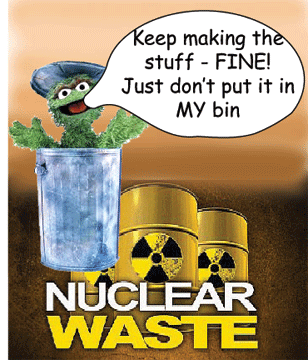 SENATORS TRY—AGAIN—TO SOLVE THE NUCLEAR WASTE DEBACLE, WIRED, RIC NIILER, 28 June 19
The place that the government picked to store all the nuclear waste back in 1987, a repository in Yucca Mountain, Nevada, was canceled in 2009 by the Obama administration. Since then, the project has been in a bureaucratic limbo. The Trump administration moved to take another look at Yucca Mountain and restart the licensing process, but Congress removed funds to do that from last year’s budget.
“It is long, long past time to figure this out, and the sooner we find a path the better,” said Senator Lisa Murkowski (R–Alaska) as she opened a hearing on the issue Thursday in the Senate’s Energy and Natural Resources Committee. Murkowski is sponsoring a bill that would both create a new agency in charge of handling nuclear waste and develop a way for local consent to become part of the decision-making process, although insulated from pressure by members of Congress. That means that the local residents living near a selected site—either temporary or permanent—would get some say in the matter, although perhaps not a veto.
Murkowski’s bill would set up a new agency outside of Congress to pick a place for a new temporary nuclear waste site to take the spent fuel right away (well, within 10 years). The big holdup is “consent.” While some local communities or native tribes might want the money or jobs that go along with hosting a nuclear waste site, state politicians have blocked such attempts in Nevada, Utah, and Tennessee.
Some noteworthy comments on the diseconomics of nuclear power
 Nuclear Power’s Economic Crisis, Friends of the Earth, Australia, 29 June 19
- Letter to Australian Politicians (FoE has sent this to all federal MPs and Senators)
- Nuclear Power’s Economic Crisis
‒ An Escalating Crisis
‒ Recent Experience in North America and Western Europe: New Reactors Cost A$14‒24 Billion Each
‒ Small Modular Reactors and ‘Generation IV’ Nuclear Power Concepts
———————-
Here are some fun quotes from the paper:
- “I don’t think we’re building any more nuclear plants in the United States. I don’t think it’s ever going to happen. They are too expensive to construct.” ‒ William Von Hoene, Senior Vice-President of Exelon, 2018.
- Nuclear power “just isn’t economic, and it’s not economic within a foreseeable time frame.” ‒ John Rowe, recently-retired CEO of Exelon, 2012.
- “It’s just hard to justify nuclear, really hard.” ‒ Jeffrey Immelt, General Electric’s CEO, 2012.
- “I don’t think anybody’s pretending you can take forward a new nuclear power station without some form of government underwriting or support.” ‒ Sir John Armitt, chair of the UK National Infrastructure Commission, 2018.
- France’s nuclear industry is in its “worst situation ever”, a former EDF director said in November 2016 ‒ and the situation has worsened since then.
- Nuclear power is “ridiculously expensive” and “uncompetitive” with solar. ‒ Nobuo Tanaka, former executive director of the International Energy Agency, and former executive board member of the Japan Atomic Industrial Forum, 2018.
- Compounding problems facing nuclear developers “add up to something of a crisis for the UK’s nuclear new-build programme.” ‒ Tim Yeo, former Conservative parliamentarian and now a nuclear industry lobbyist, 2017.
- “It sometimes seems like U.S. and European nuclear companies are in competition to see which can heap greater embarrassment on their industry.” ‒Financial Times, 2017, ‘Red faces become the norm at nuclear power groups’.
- “I don’t think a CEO of a utility could in good conscience propose a nuclear-power reactor to his or her board of directors.” ‒ Alan Schriesheim, director emeritus of Argonne National Laboratory, 2014.
- “New-build nuclear in the West is dead” due to “enormous costs, political and popular opposition, and regulatory uncertainty” ‒ Morningstar market analysts Mark Barnett and Travis Miller, 2013
- “Nuclear construction on-time and on-budget? It’s essentially never happened.” ‒ Andrew J. Wittmann, financial analyst with Robert W. Baird & Co., 2017.
- “The mooted nuclear renaissance has clearly stalled.” ‒ Steve Kidd, former World Nuclear Association executive, 2014.
- “Nuclear power and solar photovoltaics both had their first recorded prices in 1956. Since then, the cost of nuclear power has gone up by a factor of three, and the cost of PV has dropped by a factor of 2,500.” ‒ J. Doyne Farmer, Oxford University economics professor, 2016. more https://nuclear.foe.org.au/wp-content/uploads/Nuclear-power-economic-crisis-June-2019-FoE-Aust.pdf
1 This Month
Tell Congress: Prevent Nuclear Catastrophe in Iran

Tell Congress: Prevent Nuclear Catastrophe in Iran

Read the Public Inquiry Report, the Commissioners’ report, Surrendering Australia: The AUKUS Deception is available to download for free at aukuspublicinquiry.com. Or just watch the replay of the National Press Club Luncheon.


Shut down the radiation-damaged Heysham nuclear reactors now
To see nuclear-related stories in greater depth and intensity – go to https://nuclearinformation.wordpress.com

Say No to NASA’s Reckless Nuclear Reactor on the Moon
Say No to NASA’s Reckless Nuclear Reactor on the Moon
-
Archives
- November 2026 (202)
- October 2026 (302)
- September 2026 (339)
- August 2026 (330)
- July 2026 (355)
- June 2026 (287)
- May 2026 (306)
- April 2026 (356)
- March 2026 (251)
- February 2026 (267)
- January 2026 (308)
- December 2025 (358)
-
Categories
- 1
- 1 NUCLEAR ISSUES
- business and costs
- climate change
- culture and arts
- ENERGY
- environment
- health
- history
- indigenous issues
- Legal
- marketing of nuclear
- media
- opposition to nuclear
- PERSONAL STORIES
- politics
- politics international
- Religion and ethics
- safety
- secrets,lies and civil liberties
- spinbuster
- technology
- Uranium
- wastes
- weapons and war
- Women
- 2 WORLD
- ACTION
- AFRICA
- Atrocities
- AUSTRALIA
- Christina's notes
- Christina's themes
- culture and arts
- Events
- Fuk 2022
- Fuk 2023
- Fukushima 2017
- Fukushima 2018
- fukushima 2019
- Fukushima 2020
- Fukushima 2021
- general
- global warming
- Humour (God we need it)
- Nuclear
- RARE EARTHS
- Reference
- resources – print
- Resources -audiovicual
- Weekly Newsletter
- World
- World Nuclear
- YouTube
-
RSS
Entries RSS
Comments RSS

