UK’s energy industry plans, especially nuclear, stalled while waiting for new Prime Minister
spending implications for a new prime minister, people familiar with the
matter said.
that the business department has been working on for months, according to
the officials, who asked not to be identified because the policies
haven’t been announced.
both incomplete and too sizable a policy plan to put forward just before a
new premier takes over, according to two of the people familiar. One option
being considered is to publish more urgent sections before recess leaving
the rest for the next government to handle.
That’s because Johnson has said his cabinet members will have to be
prepared for the U.K. leaving the European Union without a Brexit deal —
something that Hammond and Clark have said they can’t support. The new
prime minister will be announced on July 23.
Wyoming lawmakers quietly see $billions in storing spent nuclear fuel.
 Lawmakers quietly explore storing spent nuclear fuel. Wyo File, July 12, 2019 by Wyoming legislative leadership voted by email Monday to explore temporarily storing spent nuclear fuel rods in the state, a prospect one senator says could bring in $1 billion a year.
The state is looking for other revenue options, Anderson said, and “this is a way.” The federal government could pay up to $1 billion a year for the temporary storage, he said, depending on the size and scope of a Wyoming project. That’s the amount the federal government offered last time Wyoming considered the issue about 15 years ago, he said.
Anderson couldn’t immediately name the six members who serve on the subcommittee that will engage DOE, but he said it’s unlikely the group would report at the next minerals committee meeting in August. More likely there would be a presentation in November, he said……….
The spent fuel rod casks would be temporarily stored in Wyoming on their way to a permanent storage site at Nevada’s Yucca Mountain. ….
The Wyoming effort is specific regarding fuel rods only, he said. “There’s nothing here about storing nuclear waste,” Anderson said. Storage might be for 5-10 years, he said……..
The old uranium sites are out of the way, Anderson said.
“Nobody will ever see it,” he said of a storage site. “Nobody even knows where it is,” he said of the locations at Gas Hills and the Shirley Basin. “They’ll never see it and there’s no danger from the casks.”
Wyoming might have to build some infrastructure, he said, like a fence around the casks. The state could offer both the old mine sites, he said, potentially increasing revenue.
“Environmental terrorists” sure to object
Wyoming’s previous attempts to bring some types of nuclear storage to the state were blocked by environmental groups, Anderson said.
During an earlier effort to bring nuclear material to Wyoming “the environmental terrorists came out against it and stopped it in its tracks,” he said. That opposition likely remains.
“I think they’ll be back terrorizing us again,” Anderson said.
Wyoming people will likely welcome such a project, Anderson said, given the potential $1 billion or more annual revenue stream. …….
On the Management Council, Sens. Ogden Driskill (R-Devils Tower), Dan Dockstader (R-Afton), Drew Perkins (R-Casper) and Bill Landen (R-Casper) plus Reps. Greear, Albert Sommers (R-Pinedale), and Speaker of the House Steve Harshman (R-Casper) supported the minerals committee request, Obrecht wrote.
Sens. Mike Gierau (D-Jackson), Liisa Anselmi-Dalton (D-Rock Springs, Chris Rothfuss (D-Laramie) opposed the measure along with Reps. Eric Barlow (R-Gillette), John Freeman (D-Green River) and Kathy Connolly (D-Laramie), according to Obrecht’s email.
The Management Council vote was taken by email, Obrecht said. The motion includes funds to support the investigation, but WyoFile could not immediately ascertain how much.
Gierau outlined his opposition to the measure. “I like a billion dollars as much as the next guy, but some things are not for sale,” he told WyoFile. He pointed to efforts through the state’s Economically Needed Diversity Options for Wyoming and other programs to diversify the state’s economy.
“Of all the things we want to do… I just don’t see this as a winning proposition, on an environmental, social or personal level,” he said.
He noted the close vote on the Management Council and said he would continue his opposition.
“I will do my best to make sure it’s not as close on the floor,” he said. https://www.wyofile.com/lawmakers-quietly-explore-storing-spent-nuclear-fuel/
Dangerously unacceptable nuclear waste dump plans for Texas
which was sold to J.F. Lehman, and French State owned Orano (formerly
Areva). The only good things that we can say about this plan, as opposed to
competitor Holtec, is that in the event of a nuclear waste disaster, we
know where France can be found, whereas we may not be able to find
Holtec’s Krishna Pal Singh. In the event of a leak, it will be easier to
recover an above ground canister. Both plans are dangerously unacceptable,
however.
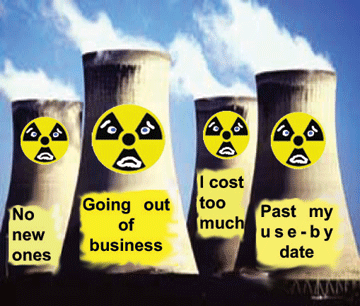
Future of the nuclear industry in Britain is far from clear
Times 14th July 2019 If all goes to plan Hinkley Point C should start powering 6m homes from
2025, earning its developers the hefty, taxpayer-backed price of £92.50
per megawatt-hour of electricity produced.
Hinkley is a rare dash of activity in a sector battered by bad news and government inactivity. This week, business and energy secretary Greg Clark will try to sketch out a
future for the new nuclear industry with a funding blueprint that will pass
some of the risks and costs on to bill-payers.
He has been spurred intoa ction by Japan’s Hitachi and Toshiba, which have both pulled the plug on new nuclear projects in Britain. Clark’s paper was meant to appear
alongside a broader revamp of energy policy, but sources suggest political
turmoil and Treasury concerns are expected to delay the full white paper
until autumn, when a new energy secretary is in post.
In a sector being upended by technological change, from electric cars to smart power grids,
every delay in devising a coherent, long-term policy further weakens the
power system and Britain’s competitiveness. For now, the industry is likely
to have to settle for Clark’s nuclear blueprint. Even if a full energy
paper emerges, it could be torn up by his successor. Many tip the current
chief secretary to the Treasury, Liz Truss. If they are right, Truss will
arrive to a full in-tray.
https://www.thetimes.co.uk/article/a8f5d97c-a589-11e9-97a3-6b6d400e533

Taiwan about to close second nuclear reactor
Taiwan to shut down 2nd nuclear reactor within days, July 12, 2019 (Mainichi Japan) TAIPEI (Kyodo) — Taiwan’s Atomic Energy Council agreed on Friday to shut down a second nuclear reactor on Monday when its 40-year operating license expires, moving the island a step closer to nuclear-free status.
The decommissioning of the No. 2 reactor of the No. 1 nuclear power plant in Shimen, New Taipei City, follows that of the plant’s No. 1 reactor, closed for the same reason last December.
Taiwan still has two other nuclear power plants, each with two reactors.
In a statement, the council said it issued the decommission license Friday to Taiwan Power Co., the builder and operator of the facility, after the state-owned power utility submitted relevant documents.
Li Chi-ssu, deputy director of the council’s Department of Nuclear Regulation, told Kyodo News that with the license, the company can now begin the lengthy process of discharging and storing spent fuel rods.
It originally planned to store them at an outdoor dry storage facility, but cannot do so due to the opposition of the New Taipei City government……….
The operating licenses of the two reactors at the No. 2 nuclear power plant in Wanli, New Taipei City, will expire in December 2021 and March 2023, and those of the other two reactors at the No. 3 facility in Pingtung, southern Taiwan, in July 2024 and May 2025. https://mainichi.jp/english/articles/20190712/p2g/00m/0in/095000c
Even the nuclear industry itself is pretty pessimistic about its future
 Viewpoint: Building a belief in nuclear, financially and emotionally, WNN, 08 July 2019 “………. . Nuclear technology remains emotive and controversial in some countries, and public pressure can ultimately move policy, as has been seen in Germany, which is abandoning nuclear generation entirely, despite the impact this has on its ability to meet CO2 reduction targets.Delivering projects, on time and to budget
The nuclear industry is also susceptible to wavering investor confidence, as has been evident recently in the UK. Nuclear plants are exceptionally large and long-term investments, so private-sector investors set the bar very high when it comes to incentives and the reassurances they need before making final investment decisions.
When Hitachi suspended work on its Wylfa Newydd project, it cited the size of the financial burden as one of the main factors, while the high cost of Hinkley Point has, in part, been explained by the fact that EDF could only borrow capital funding at high interest rates. That’s because this project is deemed ‘risky’, and well over half the cost was attributed to raising the money over the lifetime of the project.
Following the publication of the UK National Infrastructure Assessment last year, these high borrowing costs for nuclear have come into even sharper focus. This report recommended that the Government restrict support to “one more nuclear plant before 2025” as the costs of renewable technologies were “far more likely to fall, and at a faster rate”.
Delays and cost increases don’t help public perception. ………… It’s our responsibility as an industry to work together to change perceptions and provide stakeholders with the confidence that nuclear projects will be delivered on time and to cost, and to set out the evidence that demonstrates why nuclear energy must form part of the future energy mix. If we can’t do this then the trust simply won’t be there, and neither will the investment……..
we’re working alongside other leading industry bodies including Korea Hydro and Nuclear Power, the Electric Power Research Institute, the International Atomic Energy Agency and the Organisation for Economic Co-operation and Development’s Nuclear Energy Agency to deliver events like the Innovation for the Future of Nuclear Energy – A Global Forum, which took place in Korea last month………
Present a more positive future
There are many exciting possibilities for nuclear, from innovation in waste management and recycling to the emergence of small modular reactors. But, in order to realise this future, the industry has some short-term hurdles that it must overcome. And in particular we must drive efficiencies into existing programmes and onto existing plants.
EDF has said that, by applying lessons learned at Hinkley Point, huge economies of scale can be achieved if a second pair of EPR reactors are built at Sizewell. Even so, the confidence may not be there yet for stakeholders and investors to appreciate where the returns lie. We need to focus on what can make a real difference now, in order to bring  about that future.
It’s a crucial time for the nuclear sector. ……. can we work together to drive transformative change and help persuade all those who will need to invest in its future, both emotionally and financially, to believe in it too? http://world-nuclear-news.org/Articles/Viewpoint-Building-a-belief-in-nuclear,-financiall
Unrepentant, Catholic anti-nuclear activists face gaol for breaking into a nuclear base
|
In April of last year, on the 50th anniversary of the assassination of the Rev. Martin Luther King Jr., a group of seven aging Catholic activists assembled outside the Kings Bay Naval Submarine Base in St. Marys, Ga., and cut a padlock at a maintenance gate. They were in no rush. It was nighttime. No one was around. And they knew from previous actions that stealing their way onto a nuclear weapons facility was actually quite easy. So before cutting the padlock, they stopped to pray and to photograph themselves carrying three banners protesting nuclear arms. They proceeded to the next security fence, assembled for another photo and then, using bolt cutters, cut the fence. At that point, they had broken into a U.S. Navy base that houses six Trident submarines carrying hundreds of nuclear weapons, many of which have up to 30 times the explosive power of the bomb that destroyed the Japanese city of Hiroshima in 1945. The activists split into three groups: One headed to the base’s administrative building, where the members spilled blood on Navy insignia affixed to a wall and spray-painted anti-war slogans on the walkway; another ran to a monument to nuclear warfare to bang the statuary with hammers. The third group went to an area near a set of storage bunkers for nuclear missiles, where the activists prepared to cut the heavily electrified fence with bolt cutters fitted with rubber handles. At that point, roughly an hour after they first entered the base, emergency lights started flashing and they knew they had been caught. The Kings Bay Plowshares 7, as they are known, each faces a possible 25-year prison sentence, charged with three felonies and a misdemeanor. On Aug. 7, they are scheduled to appear in federal court for oral arguments, followed by a trial at a later date. At a time when many faith-based social activists have moved on to other issues — refugees, poverty, abortion and climate change — these Catholic pacifists aim to draw attention to the most ominous threat facing human civilization: nuclear weapons and the danger of global annihilation. “What kind of world are leaving our children?” asked Patrick O’Neill, 63, one of the activists, who runs a Catholic Worker house in Garner, N.C., and is out on bail but wearing an ankle monitor. “Now is a good time to say, ‘Don’t go to sleep. Don’t think these weapons are props.’ We’re on alert 24/7.” Crusading against nuclear weapons has become a lonely battle. For most Christians, like most Americans, it is a distant concern. “Those who do take this seriously are few and far between and wouldn’t represent anything like a mass movement within American Christianity,” said Tyler Wigg-Stevenson, an Anglican priest who formerly led the World Evangelical Alliance’s nuclear weapons task force. “Then you have these incredible saints that believe so strongly they’re willing to do these prophetic acts.” A vision of peace The Kings Bay Plowshares 7 are part of a 39-year-old anti-nuclear movement called Plowshares, inspired by the pacific prediction of the biblical prophet Isaiah that the nations of the world shall “beat their swords into plowshares.” Its activists have made a signature of breaking into nuclear weapons bases to hammer on buildings and military hardware and pour human blood on them. They’ve been at it since 1980, when a group led by the brothers Philip and Daniel Berrigan, both Catholic priests, broke into Building No. 9 at a General Electric weapons plant in King of Prussia, Pa. The Plowshares 8, as they were called, hammered on some missile nose cones and spilled blood on some blueprints. They were found guilty and sentenced to prison. The Berrigans had first come to national attention during the anti-Vietnam protests of the 1960s for burning draft records. But by the 1980s, the era of direct nonviolent action had peaked, replaced by more conventional tactics such as rallies, petitions and media campaigns. Plowshares remained one of the only groups to extend their confrontational but nonviolent tactics into the no-nukes activism. All seven of the Kings Bay defendants are members of the Catholic Worker movement, a collection of about 200 independent houses across the country that feed and house the poor. Among them are the Rev. Stephen Kelly, 70, a Jesuit priest; Elizabeth McAlister, 79, a former nun; and Martha Hennessy, 64, granddaughter of Dorothy Day, who founded the Catholic Worker in 1933 and was an ardent pacifist. The seven spent nearly two years plotting their invasion of the base, planning between rounds of prayer. There was no one event that prompted the group, though some have cited the U.S. withdrawal from the 2015 Iran nuclear weapons treaty and escalating tensions with that country as a factor. More than anything, the group wanted to bring renewed attention to an issue that no longer inspires much public concern: the possibility of a nuclear weapons catastrophe, whether through war, terrorism or human error. The seven set their sights on Kings Bay, about 40 miles north of Jacksonville, Fla., because it houses a quarter of the nation’s nuclear weapons cache and because there had never been a Plowshares action there. “I have no doubt that nuclear weapons will be detonated,” said O’Neill. “I don’t know if it’s going to be by a terrorist or by accident. How do we wake people up?” Several said they had no regrets. All seven had been jailed before and were fully aware they faced yearslong prison sentences this time around, too. “There’s never been a single case in which I’ve been arrested that I’m not proud of what I’ve done or would not defend to this day,” said Carmen Trotta, one of the seven who has participated in numerous civil rights demonstrations. He helps run the St. Joseph Catholic Worker House in New York, one of the original sites established by Day in the area of Manhattan historically known as the Bowery. Facing jail time To these Catholics, church teachings on nuclear weapons are clear: They are morally unacceptable. The group welcomed Pope Francis’ recent statement in which he appeared to say that even possession of nuclear weapons for deterrence purposes was wrong. “Do we really want peace?” Francis tweeted last year. “Then let’s ban all weapons so we don’t have to live in fear of war.” So determined is the group that three of the seven activists — Kelly, McAlister and Mark Colville — declined to accept the conditions of the bail offered them (an ankle monitor and $50,000 bail) and have remained in the Glynn County Detention Center in Brunswick, Ga., since the break-in 15 months ago. That’s not to say they welcome their prison sentence. They have asked for dismissal of the charges because they say nuclear weapons are illegal under U.S. treaty law as well as international law and, using the Religious Freedom Restoration Act, they argue the government must take their assertions of sincere religious exercise seriously. Judges have never imposed maximum sentences against Plowshares activists, and the defendants are praying for the same leniency this time. With the exception of Trotta, who is 56, the others are in their 60s and 70s and dealing with various medical problems. “I’ll be relieved if I get one year,” said Trotta. “Two years is a lot harder. Three years is hard to imagine. Five years is unimaginable. But it’s quite possible. ” Still, they view any prison sentence as a form of witness to what Colville called the “criminal justice industrial complex” and as a way to minister to those confined in it. Prison, Colville wrote in a letter from jail, “provides the incredible daily privilege of walking with Jesus in the person of the prisoner, and of seeing the world the way he did: from the perspective of the bottom.” Prophetic witness or pride?Plowshares actions — there have been about 100 — take planning and volunteer expertise. “You can’t pull it off, just the seven of us,” said O’Neill. Others helped with logistics, too, but the defendants deflected questions about details, careful not to tip off the government to their conspirators. They took equal care in every detail of the action. Hennessy carried a copy of Pentagon-official-turned-peace-activist Daniel Ellsberg’s 2017 book, “The Doomsday Machine: Confessions of a Nuclear War Planner,” in her raincoat pocket. As planned, she left it in the base’s administrative building. O’Neill secured hammers from Christian social activist Shane Claiborne that were made of steel melted down from guns returned through law-enforcement exchange programs. O’Neill used one on the nuclear monument display at the base, which he refers to as a shrine to an idol. Even the words the activists spoke as security forces arrived to arrest them were carefully selected and memorized: “We come in peace. We mean you no harm. We’re American citizens. We are unarmed.” All seven served two months in jail after their arrests April 5, 2018, before the federal courts allowed them the option of bail. Now they turn their sights to the upcoming trial. Magistrate Benjamin Cheesbro of the Southern District Court of Georgia has recommended that the motions to dismiss the charges, including the Religious Freedom Restoration Act argument, be denied. The seven are appealing. O’Neill, who is representing himself, said he doesn’t want an adversarial relationship with Cheesbro. And when he meets U.S. District Court Judge Lisa Godbey Wood before their trial, he’ll tell her what he told Cheesbro: “The way I feel is, there’s a fine line between prophetic witness and pride. If what we have done is prophetic witness, then it’s of God. But if it’s a matter of pride, then this whole act was fraudulent,” he said. “I spent a year and a half with these people prayerfully preparing for this action, and I believe our intention was to serve God.” https://www.sltrib.com/religion/2019/07/10/awaiting-trial-breaking/ |
|

Planetary catastrophe – was not likely from the Russian nuclear submarine accident
Russian Navy Claims Sailors Prevented ‘Planetary Catastrophe’
Was the damaged submarine’s reactor in danger of causing a nuclear accident? https://www.popularmechanics.com/military/navy-ships/a28340271/submarine-nuclear-reactor-accident/ By Kyle Mizokami, Jul 10, 2019 A senior Russian Navy official said that accident on the nuclear-powered submarine Losharik was nearly a “planetary catastrophe,” were it not for the fourteen sailors killed in the incident. The submarine, widely believed to be a spy sub capable of operating on the deep ocean floor, was damaged in an accident on July 1st. The Kremlin denied there was risk of such a “catastrophe.”
An aid to the head of the Russian Navy, Sergei Pavlov, stated at a funeral for the sailors lost in the accident, “With their lives, they saved the lives of their colleagues, saved the vessel and prevented a planetary catastrophe.” Pavlov reportedly did not elaborate.
The Kremlin denied that the reactor had been at risk, stating that it had been “totally sealed off” and there were no problems with it. Radiation monitoring stations in Norway relatively near where the incident took place have not reported any spikes in radioactivity.
The accident, according to Russian Defense Minister Sergei Shoigu, started in the sub’s battery compartment and spread. This suggests a fire that was the result of a buildup of hydrogen gasses inside the ship. Submarines, even nuclear ones, carry banks of batteries to provide a temporary source of power, and hydrogen is produced as a byproduct of the battery charging process. If the gas reaches a critical level of concentration, a spark onboard the ship could set off a fire.
According to Shoigu, the crew battled the fire for an hour and a half. Although the automatic fire extinguishers kicked in, they proved insufficient. The surviving crew managed to initiate an emergency blow procedure and the ship surfaced off the coast of the Kola Peninsula, where the remaining crew members were rescued.
Losharik, named after a cartoon horse made of interconnected juggling balls, got its name because the interior of the ship is made of seven interconnected steel or titanium spheres. The spheres give the ship its deep diving capability, with the sub reportedly capable of reaching depths of at least 1,000 meters (3,280 feet).
It is not clear where Losharik’s 5 megawatt nuclear reactor resides, but the ship is only 230 feet long with all personnel, propulsion systems, and mission equipment inside the seven spheres. The fire could not have been far from the reactor, but if the reactor and batteries resided in different spheres they could have been closed off from one another. Shoigu seems to be stating that was the case.
Even if the fire did reach the reactor it seems unlikely that the ejection of radioactive materials could cause a “planetary catastrophe” on the scale of the 1986 Chernobyl accident. Losharik’s reactor generated just five megawatts, the RBMK reactor at Chernobyl was much more powerful and used much more nuclear material to generate up to 3,200 megawatts.
War with “small” nuclear weapons – No Such Thing As a ‘Small’ Nuclear War
A really bad idea? National Interest, he Democratic lawmakers who control the U.S. House of Representatives are pushing back against Pres. Donald Trump’s plan to expand the United States’ nuclear arsenal with new and smaller “tactical” weapons.
The Democrats’ version of the 2020 National Defense Authorization Act, which funds the military, faces opposition in the Republican-controlled Senate, as well as from the president himself. Trump has threatened to veto the NDAA, potentially setting up a budgetary showdown that could force the Pentagon to operate on so-called “continuing resolutions” that essentially copy previous years’ budgets.
Trump in 2017 laid out a plan for a host of new and modernized nuclear weapons, including less-powerful nukes that some hardliners believe are more useful than larger-yield weapons are and could make limited atomic wars feasible and survivable on a planetary level.
But many nuclear experts disagree. No nuclear war is “small,” they argue. And any nuclear war would be devastating for the entire human race and the only planet that’s known to support life.
The House bill “signals a new, much-needed change in direction for U.S. nuclear weapons policy, one that would reduce the nuclear threat and cut some spending on these weapons,” wrote Eryn MacDonald, an expert with the Union of Concerned Scientists in Massachusetts.The House bill stands in stark contrast with the version the Senate passed easily in late June [2019], which would fully fund the Trump administration’s nuclear programs and in some cases even increase funding.
We support passage of the House version of the NDAA; if its version becomes law, it will be a victory not only for U.S. security, but also for common sense.
The W76-2 “would thrust U.S. ballistic-missile submarines into regional conflicts instead of reserving them for their crucial role as a nuclear deterrent, providing a secure means of retaliation if they should ever be needed,” MacDonald added.
The Trump administration requested $19.6 million for the Navy to begin installing these new warheads on missiles later this year. The House defense authorization bill sensibly zeros out this money, but Republicans plan to offer an amendment to the bill on the House floor that would restore that funding……….https://nationalinterest.org/blog/buzz/there-no-such-thing-small-nuclear-war-trump-wants-mini-nukes-66431
A Fukushima Ghost Town Seeks Rebirth Through Renewable Energy
 A Fukushima Ghost Town Seeks Rebirth Through Renewable Energy
Devastated by Japanese nuclear plant’s meltdown in 2011, Namie hopes a new hydrogen-fuel facility can generate a turnaround. WSJ, By River Davis, July 12, 2019
NAMIE, Japan—Fukushima prefecture, a place synonymous in many minds with nuclear meltdown, is trying to reinvent itself as a hub for renewable energy.
One symbol is just outside Namie, less than five miles from the nuclear-power plant devastated by an earthquake and tsunami in 2011. At the end of a winding road through miles of barren land, construction is nearing completion on one of the world’s largest hydrogen plants.
The government hopes to show that hydrogen, a hard-to-handle fuel that hasn’t been used for large-scale power generation, can supplement intermittent solar and wind power.
……….. By 2040, Fukushima aims to cover 100% of its energy demand with non-nuclear renewable energy. Since 2011, the prefecture’s generating capacity from renewable energy, excluding large-scale hydropower, has more than quadrupled. More than a gigawatt of solar-energy capacity has been added—the equivalent of more than three million solar panels—while other projects are under way in offshore wind power and geothermal energy……… https://www.wsj.com/articles/a-fukushima-ghost-town-seeks-rebirth-through-renewable-energy-11562923802
USA nuclear industry in the doldrums – desperate efforts to revive it
 U.S. to extend nuclear reactor lifespans http://the-japan-news.com/news/article/0005869248 PARIS (Reuters) 12 July 19 — The United States plans to extend the lifespans of existing nuclear reactors and support new technologies as it seeks to revive an industry seen as crucial to its energy security, a senior U.S. official said on Thursday.U.S. Deputy Secretary of Energy Dan Brouillette told an International Energy Agency conference on nuclear and hydrogen in Paris that both technologies were crucial for reducing carbon emissions and boosting energy security.
The U.S. nuclear industry has been in the doldrums for years because of competition from cheap natural gas and falling wind and solar power costs.
Several nuclear plants have closed while a project to build two reactors in South Carolina was abandoned in 2017 with the reactors half-built and billions of dollars in sunk costs.
“We believe strongly that a strong domestic nuclear energy [industry], enabled by our existing fleet and enhanced by game-changing advanced nuclear technologies is critical to our nation’s energy security, our national security, our environmental sustainability,” Brouillette said.
The U.S. Department of Energy agrees with the IEA that extending the life of existing reactors is perhaps the most competitive way to produce low-carbon electricity, he said. The department was working to help extend the licenses for the existing fleet out to 80 years, he added
U.S. Congress setting a more reasonable course for nuclear weapons policy
 The House is Setting a New, More Rational Direction for US Nuclear Policy, Union of Concerned Scientists ERYN MACDONALD, ANALYST | JULY 10, 2019, The House today began debating its version of the Fiscal Year 2020 National Defense Authorization Act, Congress’ annual effort to oversee US security policy and set defense program funding levels. What’s different this year is the bill signals a new, much-needed change in direction for US nuclear weapons policy, one that would reduce the nuclear threat and cut some spending on these weapons.
The House bill stands in stark contrast with the version the Senate passed easily in late June, which would fully fund the Trump administration’s nuclear programs and in some cases even increase funding. We support passage of the House version of the NDAA; if its version becomes law, it will be a victory not only for US security, but also for common sense. The House bill is chock-full of positive provisions. For example, it would prohibit deployment of the Trump administration’s new “low-yield” nuclear warhead; cut funding for an unnecessary replacement for the current ground-based intercontinental ballistic missile; and reduce the excessive, but congressionally mandated, requirement for the number of plutonium pits that the National Nuclear Security Administration (NNSA) has been told to produce. This new, rational direction in nuclear policy is being spearheaded by Rep. Adam Smith (D-Wash.), the new chair of the House Armed Services Committee and an outspoken critic of many of the Trump administration’s nuclear weapons policies. He and his like-minded colleagues are using their newly minted majority power to rethink the role that nuclear weapons play in US security policy. Defunds W76-2 “low-yield” warhead……. Cuts funding for Ground-Based Strategic Deterrent……. Reduces pit production requirements The House defense authorization bill also reduces a congressionally mandated requirement for the NNSA to produce plutonium pits, the fissile core of nuclear weapons….. Reconsiders the Trump administration’s proposed new nuclear warhead …….. Considers a ‘no-first-use’ policy There’s even more to like about the House defense authorization bill. For example, it would require a federally funded research and development center to assess the risks and benefits of a US no-first-use nuclear policy, including gauging the potential reactions by US allies. …….. https://allthingsnuclear.org/emacdonald/rational-nuclear-policy
|
|
Russia’s grandiose nuclear ambitions – expressed in its floating nuclear plant for the Arctic
Russian floating nuclear plant prepares for towing into Arctic seas, Plant to support 50,000-person Chukotka region with power for oil and gas industries Katie Toth · CBC News Jul 10, 2019 Russia’s controversial nuclear barge is ready to travel through the Arctic seas — and observers across the globe are watching.
Greenpeace has called it a “floating Chornobyl.”
But the Akademik Lomonosov, which will dock in the Eastern Siberian town of Pevek, also provides a small glimpse into Russia’s northern ambitions and the role of nuclear power in achieving them.
Russia’s atomic energy agency, the Rosatom State Atomiс Energy Corporation (ROSATOM), has said in news releases that the future floating nuclear power plant will be a key piece of infrastructure as it develops its Arctic shipping route.
Meanwhile, the agency has started work on a fleet of nuclear-powered icebreakers to keep that route open. Its latest three ships can cut through three metres of ice, and each can produce 350 megawatts of power.
It’s a lot more difficult to counter a catastrophe there than anywhere else on the globe.– Jan Haverkamp, Greenpeace
Rebecca Pincus, an assistant professor with the U.S. Naval War College, says Russia’s vision for itself as a global superpower in the 21st century hinges on the far North.
Russia’s grand strategy for the century is centred on developing Arctic resources,” Pincus said. “That economic engine [is] … integral to Russia relaunching its place in the world.”
According to statements by ROSATOM, the plant will supply the 50,000-person Chukotka region with power and it will support “key industries” in this oil-and-gas rich region.
‘It’s a classical Russian solution’
The choice to build a floating nuclear power station is “a fabulous little encapsulation of all the challenges Russia faces in developing its Arctic zone,” Pincus said. “Floating a nuclear power plant to a tiny little city in the Russian Arctic is colossally challenging, colossally expensive … it’s a classical Russian solution.”
………. Jan Haverkamp, a nuclear energy expert with Greenpeace, says his organization is right to be worried. The Lomonosov will be docking in one of the most remote places in the world.
The Lomonosov, prior to a paint job. Greenpeace is concerned about the plant and its isolated location, saying that it would be difficult to counter a catastophe in the remote region. (ROSATOM)
“It’s a lot more difficult to counter a catastrophe there than anywhere else on the globe,” he said.
Haverkamp is also concerned about the power being used to extract fossil fuels.
“Climate change is a given.… Opening up new fossil projects at the moment, when the world needs to be fossil-free in 2050, does not seem to make very much sense.”
Meanwhile, ROSATOM says this barge is only a small piece of a new future for floating nuclear power. It’s building a second generation of the floating nuclear units, and it’s in talks with several countries looking to buy nuclear barges of their own.
Emails to ROSATOM’s media contact were not returned before publication.
The barge will start getting towed to Pevek in August. https://www.cbc.ca/news/canada/north/russia-floating-nuclear-plant-1.5206448
In the 1980s Hungarian villagers defeated a nuclear waste dump plan. Can they do it again?
|
This is how Hungarian villages fought back against planned nuclear waste repositories in the 1980s https://globalvoices.org/2019/07/10/this-is-how-hungarian-villages-fought-back-against-planned-nuclear-waste-repositories-in-the-1980s/#
It has been reported several times that geological research is being conducted near the Hungarian village of Boda in order to determine whether the area is suitable for a long-term nuclear waste repository. Hungary needs a repository where it can place the spent fuel from Paks Nuclear Power Plant and the new Paks2 reactors because spent nuclear fuel cannot be transported back to Russia anymore. The research about Boda and its suitability is not conclusive yet; however, only a few people remember that the “perfect” place for a nuclear repository has been found twice already in Hungary. But neither of them was built because locals organized and stood up against the state and the powerful nuclear plant. Here is the story of how the “small” managed to fight the huge powers over the last decade of socialism in Hungary. Anti-nuclear waste activism behind the Iron CurtainSince 1960, Hungary has had two nuclear waste repositories to store the waste produced by healthcare, education facilities and some of the waste produced by the nuclear plant in Paks. The Solymár repository worked from 1960 until 1974 and another was built in Püspökszilágy, which is still in operation.
However, more nuclear waste repositories were needed and the search for another location was started – the process is documented by journalist and lawyer János Havasi, who published a book about the topic in 1989. A study published in 1981 recommended four possible locations. Three were eliminated and one remained: the village of Magyaregregy. This would have been the place for low and medium-level radioactive material from Paks.
Locals were shocked and surprised – especially that they were not officially notified. They’ve heard about the plan from hearsay. Some of them secretly started to organize. One of them was Lajos Bihari, a local doctor. This is the first time he spoke about the events since then. He told Atlatszo that the area considered for the nuclear waste repository was rich in coal and other minerals, which could not have been mined if a nuclear cemetery was built in the area. He thought that for the future of his children and grandchildren, the mineral resources needed to be protected. He convinced the local party secretary responsible for the industry to support the cause. They convinced a deputy minister, László Kapoly to go and inspect the area; during the visit, locals convinced Kapolyi that the village was unsuitable for the nuclear waste repository.
In 1982, a study commissioned by the Ministry of Industry concluded that the area was not fit for the nuclear facility. The reason was that the soil easily moved, water was seeping through, and there were several water springs in the area; all of these made it unfit for the facility. It is obvious now that the decision to cancel the plans was scientifically well-founded at the time, backed by geological research. However, some locals remember it differently. Some of the older inhabitants mentioned that some of the communist party elite liked to hunt in the area, and if nuclear waste was dumped there, the hunting would have been impossible. Another village fights backFollowing Magyaregregy, the attention turned towards another village, Ófalu. Locals living near the new proposed location were not informed about the decision either. They simply noticed several heavy machines appearing in their area doing geological research. After a few town hall meetings, the plans were revealed.
Even though many scientists questioned the suitability of the area, the works proceeded, and 150 million Hungarian forints were spent on research and construction preparations. It seemed like it was a done deal. However, a few locals started a petition, including Ferenc Wekler and his wife. According to an interview he gave to journal Beszélő, his wife pressed him to step up. First, they tried to establish an NGO, but that proved to be impossible in 1985. However, his wife did not give up; she organized town hall meetings, asked scientists to write independent opinions and founded a “social committee” with locals in the four villages near the proposed site. “We’ve done a lot of things that were very new at that time,” he said. Wekler says that many things contributed to their success. One of them was that the political environment was already changing in 1987. Also, they managed to find renowned experts who stood up for their opinions and who were so well-known that they could not be ignored.
Wekler also mentions the role of the press that supported the locals in Ófalu. “The press finally had a story where they could tell the story of the small guy standing up to power,” he said. The locals even asked for an opinion from Hans Blix, then-director general of the International Atomic Energy Agency. In the end, the nuclear waste repository was not built. The final word was said after a group of independent experts concluded that the area was geologically unsuitable for the facility. The final decision not to grant a permit to the proposed facility was announced in April 1988 and the minister of health and social affairs stated in 1990 that there wouldn’t be a nuclear cemetery in Ófalu.
Representatives of the Paks nuclear plant held a press conference in February 1990 where they said that “the locals in Ófalu were better at politics and were better at using the current political realities of Hungary to their advantage.” They added that they learned their lessons and that they will never try to construct such a waste repository without winning the support of the local population. They stressed, however, that they think that the decision to cancel the construction of the facility was political, and not scientific. Village of Boda as the next location for nuclear waste dumpDuring the same press conference, it was announced that the government is starting research near the village of Boda to determine whether it is suitable for a long-term facility. Also, a short-term waste repository was built in Bátaapáti, only a few kilometers from Ófalu. The facility officially opened in 2012. However, the Bátaapáti construction was also controversial. Energiaklub, an NGO working on energy issues, asked the Ombudsman for Future Generations to look into the Bátaapáti construction in 2008. According to Energiaklub project director Eszter Mátyás, the Ombudsman found irregularities in the licensing procedure of Bátaapáti – officials several times granted permits unlawfully. Also, barrels of nuclear waste had been placed in the facility before its geological suitability was proven, and before the construction of the underground holding facilities was finished. Mátyás said that Energiaklub is closely watching what is happening in Boda as well. The stakes are high because, until now, Hungary built nuclear waste repositories for low- or medium-level nuclear waste.
Representatives of the Paks nuclear plant held a press conference in February 1990 where they said that “the locals in Ófalu were better at politics and were better at using the current political realities of Hungary to their advantage.” They added that they learned their lessons and that they will never try to construct such a waste repository without winning the support of the local population. They stressed, however, that they think that the decision to cancel the construction of the facility was political, and not scientific. Village of Boda as the next location for nuclear waste dumpDuring the same press conference, it was announced that the government is starting research near the village of Boda to determine whether it is suitable for a long-term facility. Also, a short-term waste repository was built in Bátaapáti, only a few kilometers from Ófalu. The facility officially opened in 2012. However, the Bátaapáti construction was also controversial. Energiaklub, an NGO working on energy issues, asked the Ombudsman for Future Generations to look into the Bátaapáti construction in 2008. According to Energiaklub project director Eszter Mátyás, the Ombudsman found irregularities in the licensing procedure of Bátaapáti – officials several times granted permits unlawfully. Also, barrels of nuclear waste had been placed in the facility before its geological suitability was proven, and before the construction of the underground holding facilities was finished. Mátyás said that Energiaklub is closely watching what is happening in Boda as well. The stakes are high because, until now, Hungary built nuclear waste repositories for low- or medium-level nuclear waste.
The new facility, planned in Boda, will be a long-term repository for highly radioactive material including spent nuclear fuel from the Paks nuclear plant – and later, from the Paks2 reactors. This story, written by Eszter Katus and adapted into English by Anita Kőműves was produced by Atlatzo.hu in cooperation with Energiaklub, as part of a joint investigative series on energy issues in Hungary. Company information was provided by Opten.
|
|
1 This Month
Tell Congress: Prevent Nuclear Catastrophe in Iran

Tell Congress: Prevent Nuclear Catastrophe in Iran

Read the Public Inquiry Report, the Commissioners’ report, Surrendering Australia: The AUKUS Deception is available to download for free at aukuspublicinquiry.com. Or just watch the replay of the National Press Club Luncheon.


Shut down the radiation-damaged Heysham nuclear reactors now
To see nuclear-related stories in greater depth and intensity – go to https://nuclearinformation.wordpress.com

Say No to NASA’s Reckless Nuclear Reactor on the Moon
Say No to NASA’s Reckless Nuclear Reactor on the Moon
-
Archives
- November 2026 (202)
- October 2026 (302)
- September 2026 (339)
- August 2026 (330)
- July 2026 (355)
- June 2026 (287)
- May 2026 (306)
- April 2026 (356)
- March 2026 (251)
- February 2026 (267)
- January 2026 (308)
- December 2025 (358)
-
Categories
- 1
- 1 NUCLEAR ISSUES
- business and costs
- climate change
- culture and arts
- ENERGY
- environment
- health
- history
- indigenous issues
- Legal
- marketing of nuclear
- media
- opposition to nuclear
- PERSONAL STORIES
- politics
- politics international
- Religion and ethics
- safety
- secrets,lies and civil liberties
- spinbuster
- technology
- Uranium
- wastes
- weapons and war
- Women
- 2 WORLD
- ACTION
- AFRICA
- Atrocities
- AUSTRALIA
- Christina's notes
- Christina's themes
- culture and arts
- Events
- Fuk 2022
- Fuk 2023
- Fukushima 2017
- Fukushima 2018
- fukushima 2019
- Fukushima 2020
- Fukushima 2021
- general
- global warming
- Humour (God we need it)
- Nuclear
- RARE EARTHS
- Reference
- resources – print
- Resources -audiovicual
- Weekly Newsletter
- World
- World Nuclear
- YouTube
-
RSS
Entries RSS
Comments RSS

